
What Is a Munchkin Cat, and What Does Its Short-Leg Gene Actually Do?
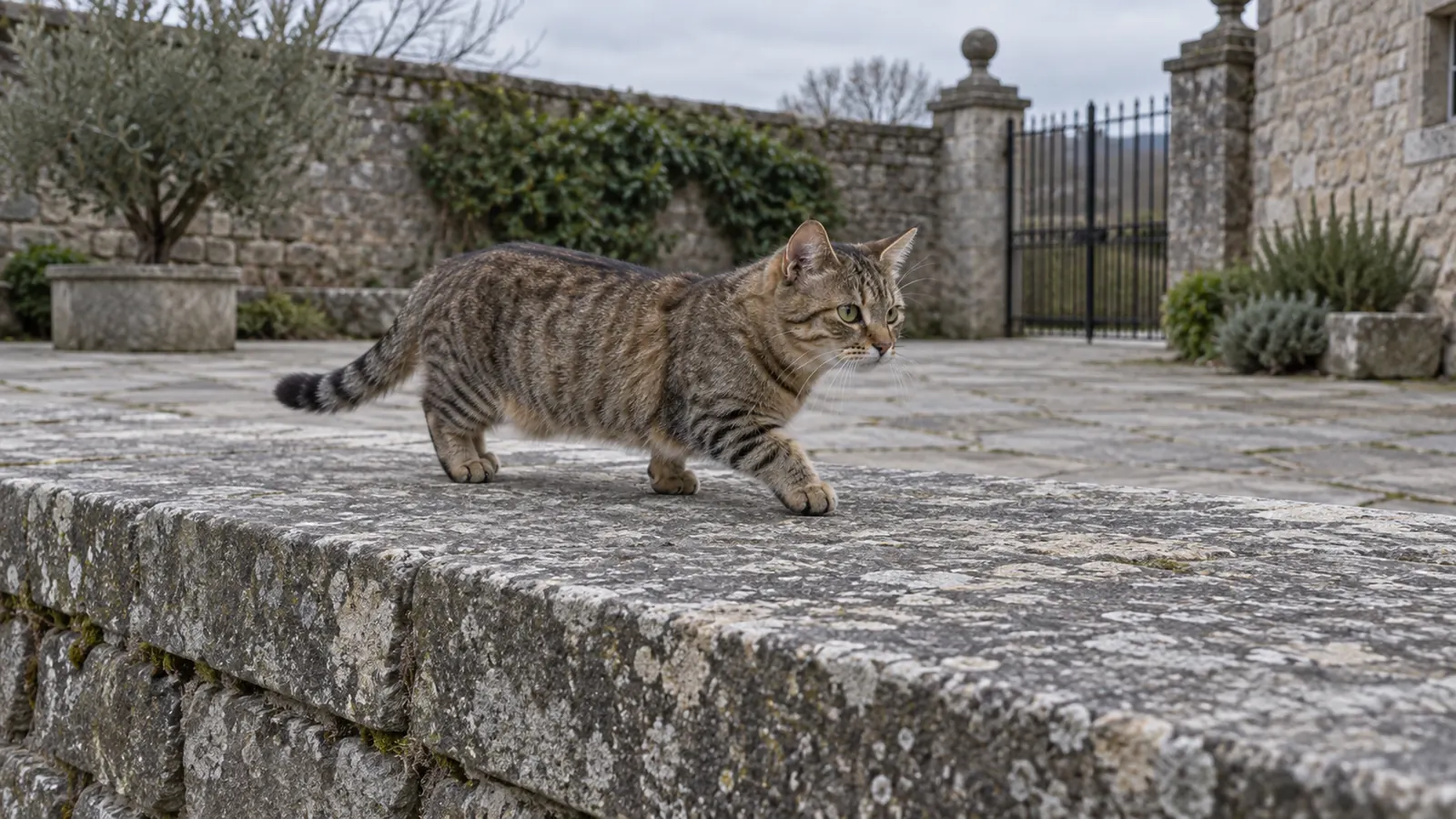
A Munchkin is a small to medium cat whose defining feature is shortened legs caused by a dominant UGDH gene variant. TICA granted championship status in 2003, while CFA and FIFe do not recognise the breed, and welfare concerns about the variant's effect on the skeleton sit behind that split. Imaging has found deformity in all four limbs of short-legged cats, and that evidence is the most important thing a prospective owner can weigh.
- Origin
- United States, bred from naturally occurring short-legged domestic cats documented from the 1980s onward
- Coat
- Short or long, in all colours and patterns
- Size
- Small to medium, with shortened forelegs and hindlegs; the body is otherwise normally proportioned
- Typical weight
- Secondary sources commonly cite 6 to 9 pounds
- Life expectancy
- No Munchkin-specific population study was found; secondary sources cite 12 to 15 years
- Activity level
- Active, curious and playful within the limits of its leg structure
- Grooming
- Depends on coat length; short coats need minimal care, long coats need regular combing
- Suits
- Households that understand the skeletal implications, provide low-level enrichment and plan veterinary monitoring for mobility
A Munchkin is a cat whose most visible feature is shortened legs on an otherwise normally proportioned body.
The short legs come from a dominant variant in the UGDH gene, and the same variant runs through the breeds developed from the Munchkin.
Registries disagree about whether breeding for this variant is acceptable. TICA recognises the Munchkin for championship, while CFA and FIFe do not recognise it at all. The argument turns on whether the skeletal changes the variant causes, which imaging has documented in all four limbs, are an acceptable cost of the look.
What Is a Munchkin, and Where Does the Disagreement Stand?
Short-legged cats have been documented in several countries across the twentieth century. The modern breeding programme traces to a short-legged cat named Blackberry, found in Louisiana in 1983 by Sandra Hochenedel.
TICA granted the Munchkin championship status in 2003, which made it the first short-legged breed to reach that level. Because of that status it can be shown in competition against a published standard, and a DNA test for the variant now lets a breeder confirm that a short-legged cat carries the standard Munchkin mutation.
- Registry status
- TICA Championship (2003)
- CFA
- Not recognised
- FIFe
- Not recognised
- WCF
- Not listed
- Origin
- United States, from naturally occurring short-legged cats
- Defining mutation
- Autosomal dominant UGDH gene variant
- Homozygous status
- Appears lethal before birth
- Key disagreement
- Whether breeding for this mutation is an acceptable practice
Both sides work from the same small body of evidence. The authors of the UGDH gene study described their short-legged cats as having reduced leg length without impaired health, while the later imaging study found deformity in every limb it measured and called for long-term follow-up. How much weight each finding deserves is the judgement the registries answer differently.
What Does the UGDH Mutation Actually Do?
The short-leg trait was identified as a structural variant in the UGDH gene by Struck and colleagues in 2020. The variant is autosomal dominant: one copy produces shortened legs, and two copies appear to be lethal before birth.
That homozygous lethality is why breeders pair a short-legged cat with a standard-legged one. Two short-legged parents would be expected to lose about a quarter of their kittens before birth, which fits the smaller litters Struck and colleagues reported in standard Munchkins.
A 2021 imaging study by Anderson and colleagues examined six cats carrying the confirmed UGDH variant against twelve standard-legged cats, using radiographs of every limb and MRI of the spine in two of the short-legged cats:
| Finding | What it means |
|---|---|
| Humerus with an exaggerated S-shaped curve | The upper foreleg bone bends forward and back along its length instead of growing straight |
| Bowed and twisted radius | The main forearm bone bends in two directions along its length and is twisted outward |
| Angled femur and tibia | The hind-limb bones show angular misalignment too, so the changes are not confined to the front legs |
| Spine | No spinal disease on MRI in the two cats scanned, although one affected cat later developed a disc herniation in the lower back |
The authors concluded that the variant produces significant deformity in all four limbs and noted a possible higher risk of arthritis. Whether that deformity causes pain or arthritis over a lifetime is still unknown, because no study has followed short-legged cats from kittenhood to old age.
Lordosis (excessive inward curvature of the spine) and pectus excavatum (inward depression of the chest) have been described in Munchkins in breed and secondary sources. Neither appeared among the imaging study's findings, and no controlled study has compared how often they occur with other cats.
What Does a Munchkin's Body Look Like Apart From the Legs?
Apart from the shortened legs, the Munchkin is a normally proportioned, small-to-medium cat.
The body is not elongated like a Dachshund's. The torso length, chest depth and overall proportions are standard; only the limb length is reduced.
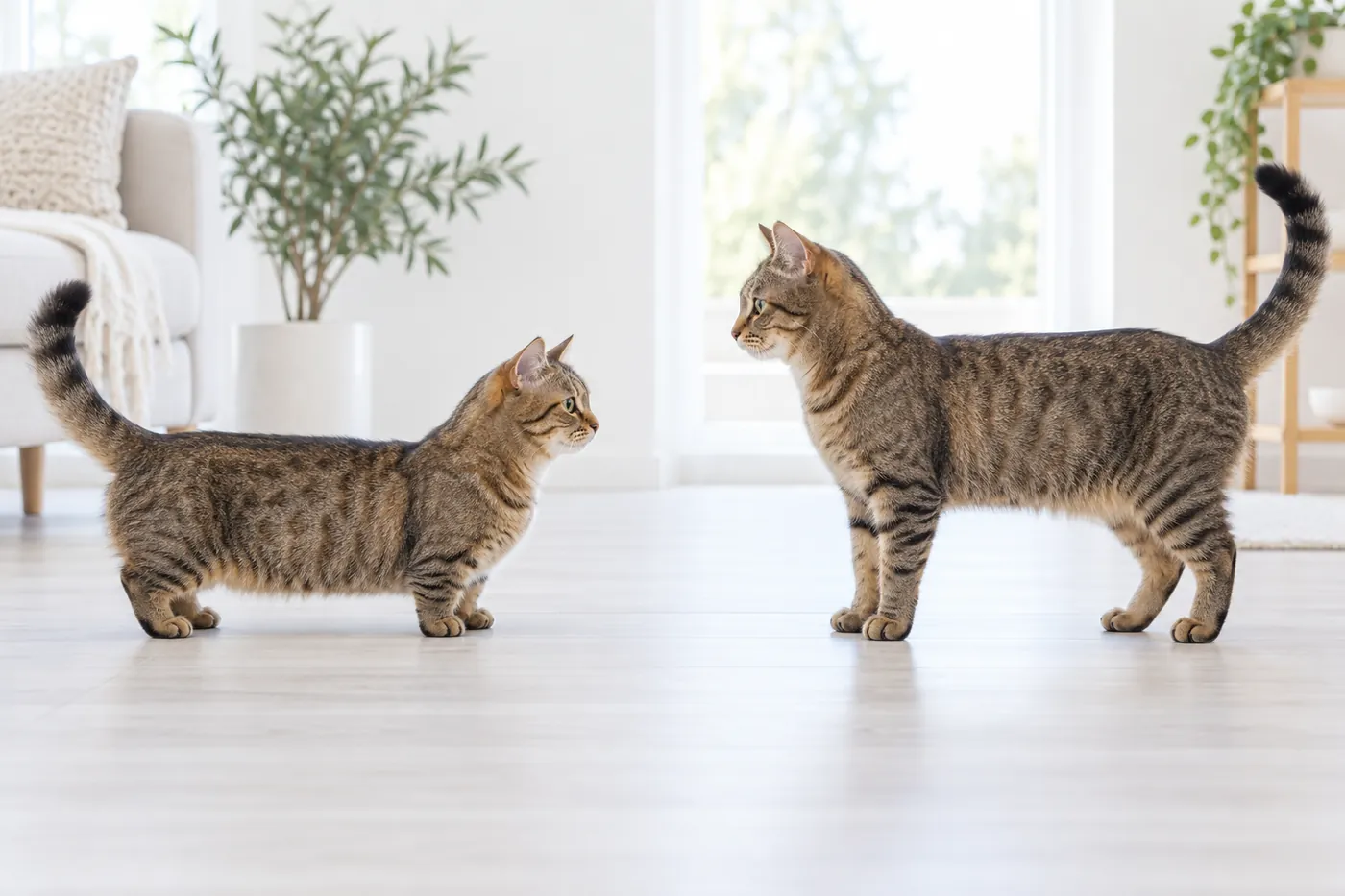
The coat comes in both short and long varieties, in all colours and patterns. The standard does not restrict colour.
Secondary sources commonly cite 6 to 9 pounds. Females are typically smaller than males.
Leg length varies between individuals. Some Munchkins have very short legs, while others are only moderately shortened.
Because the variant is dominant and breeders pair a short-legged cat with a standard-legged one, a litter can contain both types. A kitten that inherits the standard-leg version from both parents has normal-length legs and is sometimes called a non-standard Munchkin.
What Temperament Comes From a Domestic Foundation?
TICA describes the Munchkin as outgoing, intelligent and playful.
The breed's domestic shorthair and longhair foundation means temperament variation is wider than in breeds with a narrow gene pool. Individual differences in confidence, sociability and activity are common.
Breed club descriptions often emphasise the Munchkin's curiosity and tendency to collect and stash small objects. These behaviours are plausible but anecdotal rather than studied.
A kitten raised with calm handling and varied experiences is more likely to develop into a confident adult. Persistent hiding, aggression or sudden behavioural change should prompt a veterinary check rather than being attributed to breed character.
Short reward-based training sessions can build practical behaviours. When a Munchkin swipes during handling, petting-related aggression from overstimulation and a reaction to pain can look identical from the outside.
How Should You Set Up a Home for a Munchkin?
The most important adjustment is low-level access. A Munchkin can still jump, but its maximum height is reduced and the stress on altered limb structures may be greater.
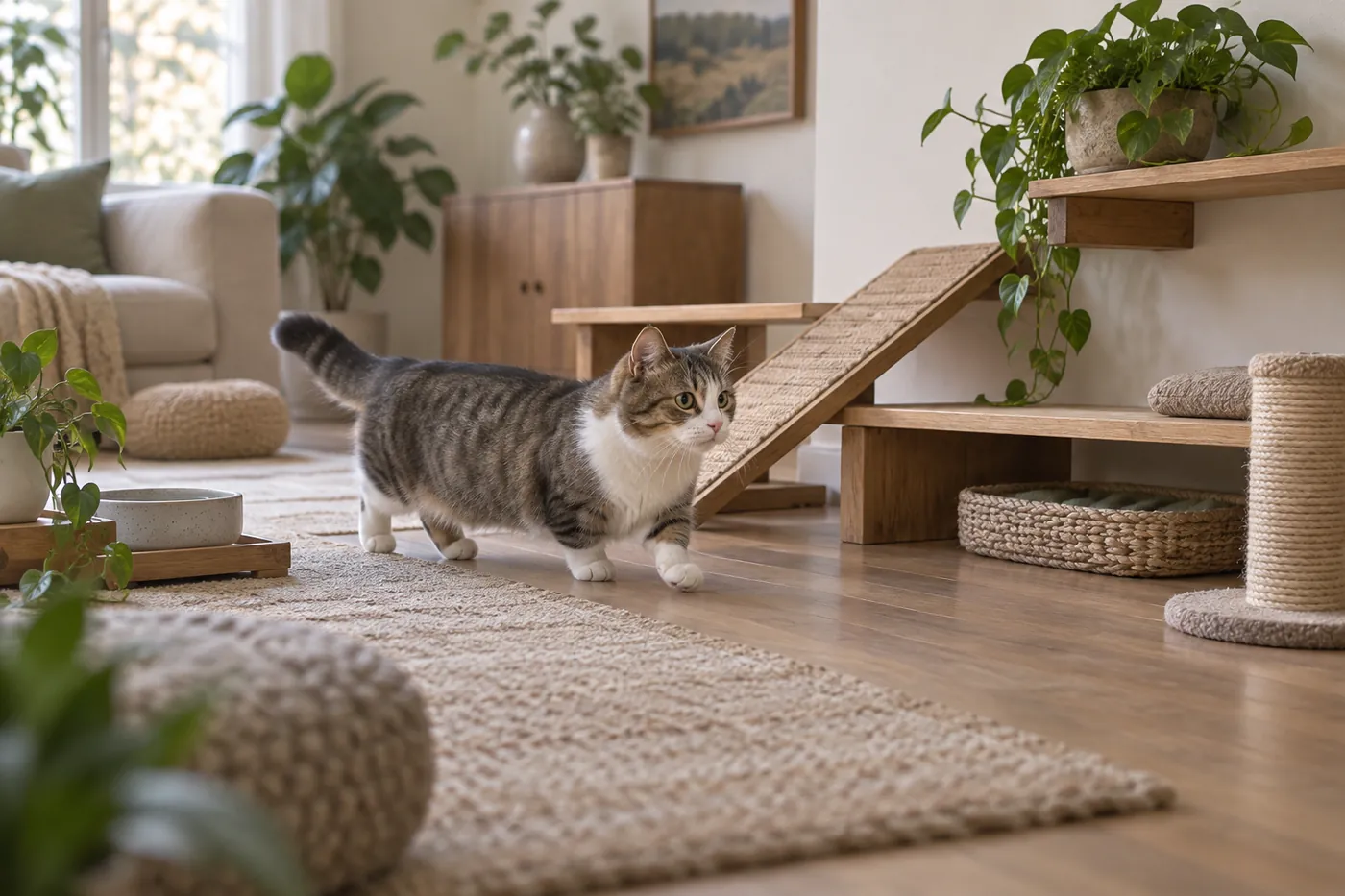
- Stable low shelves connected by ramps rather than requiring jumps
- A litter tray with a low entry wall
- A scratching post at a reachable height
- Interactive play at floor level
- Separate food, water, litter and resting spots at accessible heights
Willingness to jump is the early signal to watch over time. A Munchkin that stops using a previously accessible surface, hesitates before moving or avoids stairs may be showing joint discomfort.
Exercise needs change with age in every cat, and that shift matters more on an altered skeleton.
How Should You Groom a Munchkin?
Grooming depends on coat length. A short-coated Munchkin needs minimal care: a weekly pass to remove loose hair and check the skin.
A long-coated Munchkin requires more frequent combing to prevent tangles, particularly under the legs and around the belly where the low carriage brings the coat closer to the ground, using the same technique as brushing a long coat on any cat.
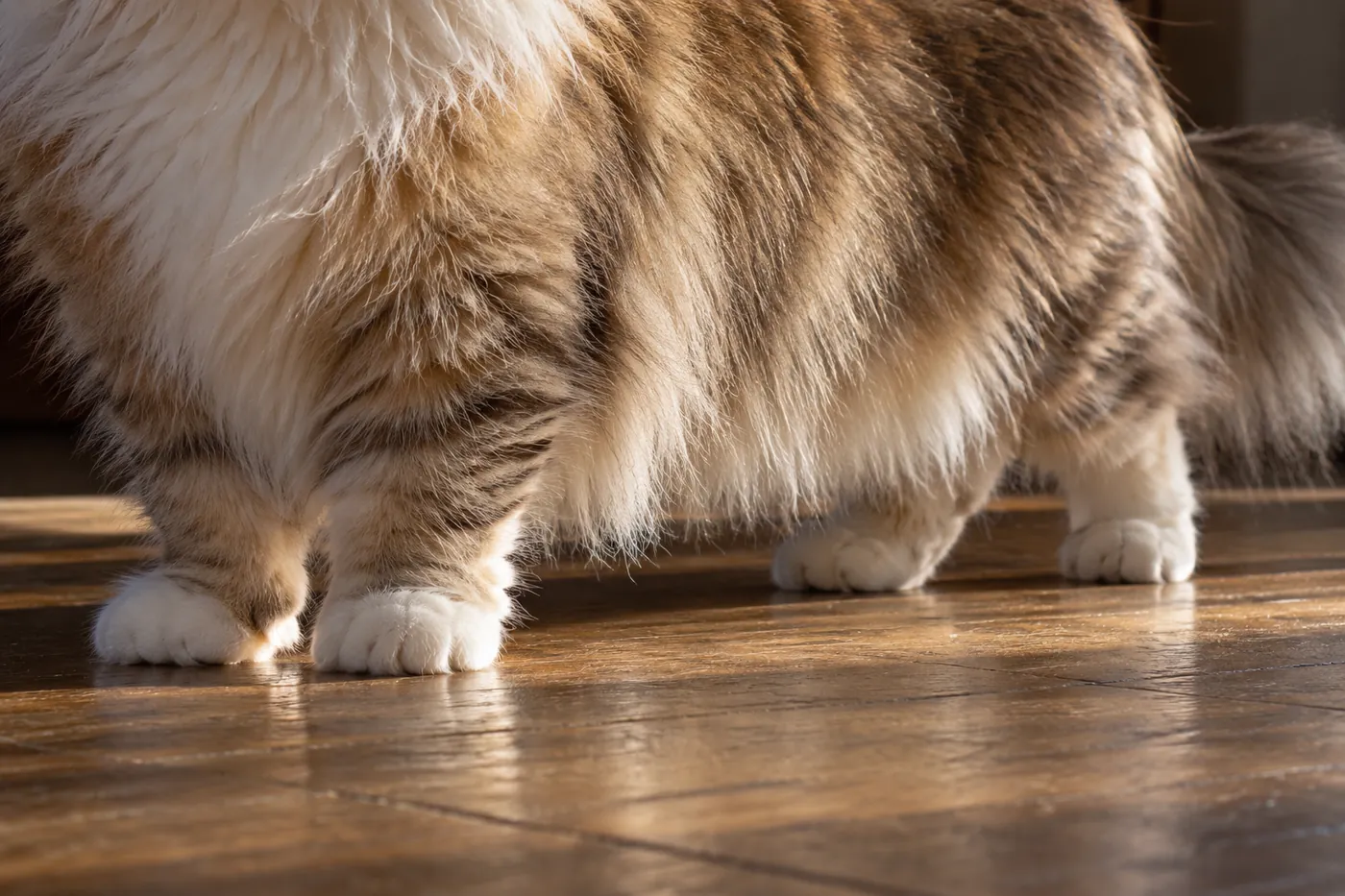
Shedding is moderate, with seasonal variation, and knowing the normal coat changes across life stages makes a coat-loss problem easier to spot.
If the altered gait reduces natural wear, the nails may need trimming more often than a standard-legged cat's.
What Is Known About Munchkin Health and Lifespan?
No Munchkin-specific population health study with controlled data on lifespan, disease prevalence or long-term skeletal outcomes has been published.
The UGDH variant and the limb deformities described above remain the breed's main health question.
Secondary sources cite a lifespan of 12 to 15 years. That range has not been confirmed by a published population study.
| Area | What to monitor | When |
|---|---|---|
| Mobility and gait | Willingness to jump, hesitation, lameness, stair avoidance | Ongoing observation |
| Limb alignment | Changes in stance or movement in the front or hind legs | Annual veterinary assessment |
| Back | Stiffness, reluctance to be handled along the spine, or signs of back pain | Annual veterinary assessment |
| Weight and body condition | Rib feel, waist view, weight trend | Every routine visit |
| Dental | Gum colour, tartar, eating changes | Annual dental check |
Body condition gives more practical information than a breed weight range, and a portion and body-condition assessment turns it into a feeding decision. The same check separates growth from fat while a young Munchkin is still filling out towards adult size.
How Does the Short-Leg Structure Affect Family Life?
A Munchkin can live successfully with respectful children and compatible animals when the household accommodates the cat's physical needs.
Children do best interacting at floor level, where the cat can leave on its own terms and is never at risk of being dropped from standing height.
Multi-cat households need staged introductions with separate resources at accessible heights for the short-legged cat.
Every animal in the household needs a retreat it can reach. For a short-legged cat, that retreat must be accessible at ground level.
What Should You Verify Before Acquiring a Munchkin?
TICA championship status provides a published standard and judging history, which is the strongest registry position any short-legged breed currently holds.
The CFA and FIFe position against recognition is equally relevant, because it reflects a different conclusion about the same evidence, and a breeder who can discuss that disagreement honestly is showing more responsible practice than one who dismisses it.
- TICA registration papers naming both parents
- Confirmation that the breeding followed the heterozygous practice (one short-legged parent, one standard)
- Health records that name the laboratory, tests, identifiers and outcomes
- The cat's mobility and gait observed in person during movement, not just while sitting
- Equipment and the home layout suit a short-legged body
- The source can explain the UGDH variant, the skeletal evidence and the reasons CFA does not recognise the breed
A cat without papers but with short legs should be described by its observable characteristics. Short legs alone do not prove Munchkin parentage without documentation.
Common Questions
Is the Munchkin a recognised breed?
TICA granted championship status in 2003. CFA and FIFe do not recognise the breed, so it is recognised by one major registry and not by the others.
Are Munchkin cats healthy?
An imaging study of cats with the UGDH short-leg variant found deformities in the bones of all four limbs. Lordosis and pectus excavatum have been described in breed sources but not measured in a controlled study, and no long-term study has followed Munchkins into old age, so changes in gait or willingness to jump are the signs to watch.
Why do some registries refuse to recognise the Munchkin?
CFA and FIFe do not recognise breeds built on the short-leg variant, and the welfare case against it rests on the skeletal changes the variant produces. TICA took a different view and granted championship status in 2003. The disagreement concerns how much risk to the cat is acceptable.
How big does a Munchkin get?
Secondary sources cite 6 to 9 pounds. The body is normally proportioned apart from the shortened legs. Females are typically smaller than males.
Do Munchkin cats suffer?
Nobody has measured it across the breed. The UGDH variant produces measurable deformity in the limb bones, and one cat in the imaging study later developed disc disease, while the gene study's authors described their short-legged cats as healthy apart from leg length. Watching mobility across the cat's life and keeping everything the cat needs within low reach are the practical responses.
Checked Against
- TICA: Munchkin breed tica.org
- Struck et al.: A structural UGDH variant associated with standard Munchkin cats (BMC Genetics, 2020) pmc.ncbi.nlm.nih.gov
- Anderson et al.: Skeletal manifestations of heritable disproportionate dwarfism in cats (Veterinary and Comparative Orthopaedics and Traumatology, 2021) pmc.ncbi.nlm.nih.gov
- CFA: Current breeds (Munchkin not listed) cfa.org
- AAHA and AAFP: Feline life stage guidelines catvets.com
Published 17 September 2026. Last updated .





