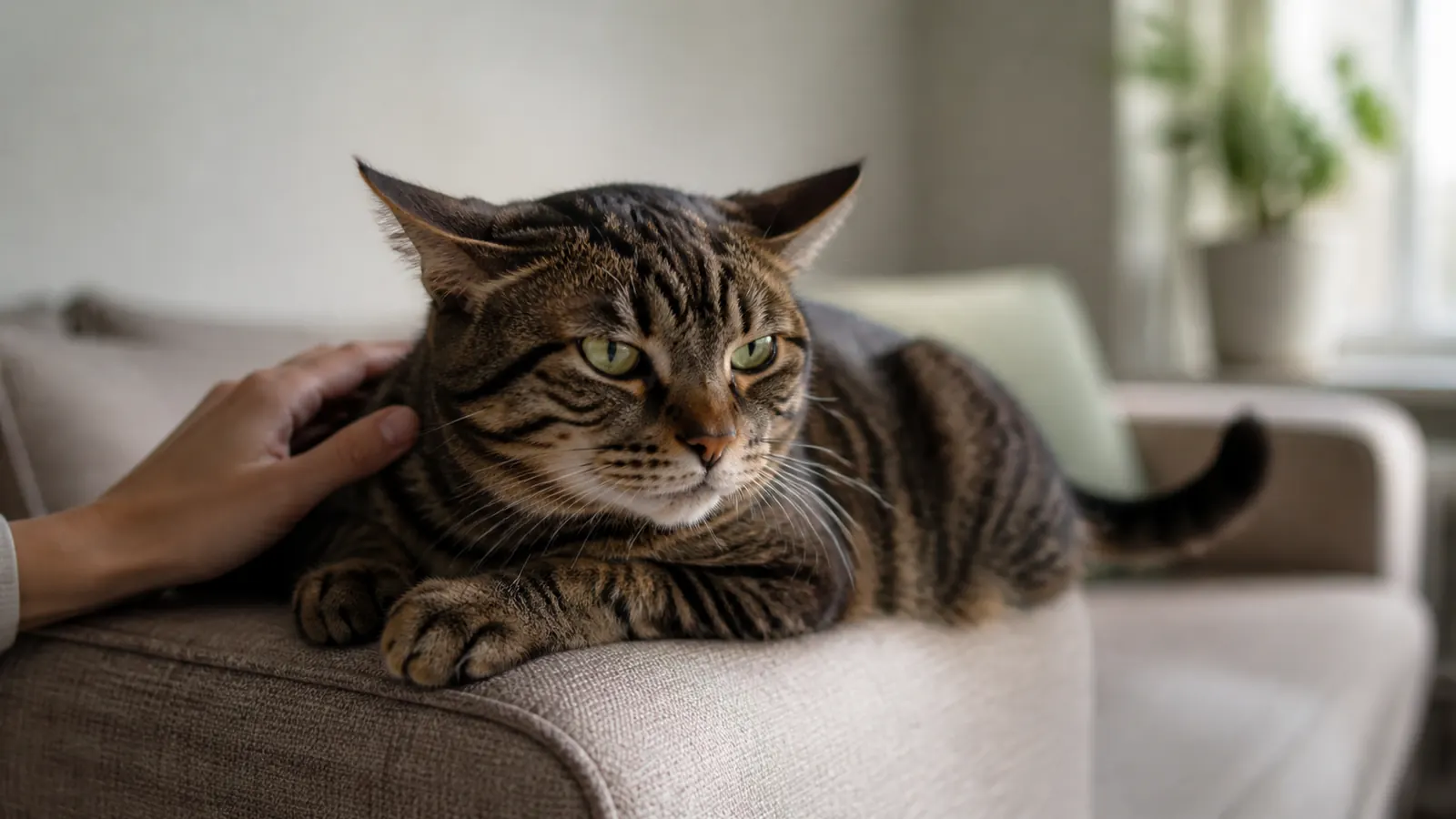
How Do You Brush a Long-Haired Cat Without a Fight?
Frequent gentle checks catch tangles before they tighten. Short sessions that work one section at a time keep the cat willing, and mats that pull on the skin need a professional.
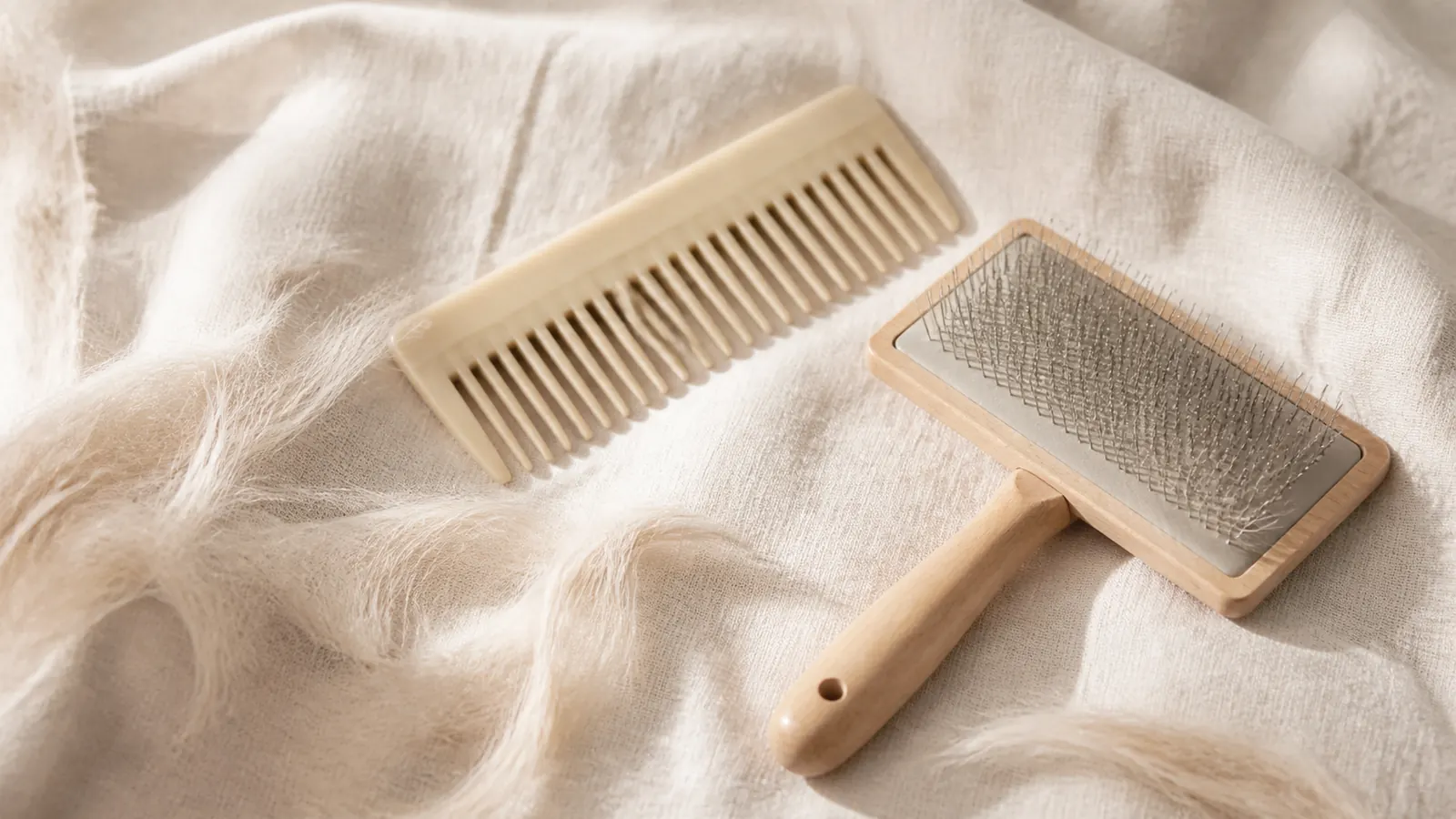
A long-haired cat needs a grooming routine that reaches through the coat without pulling on skin. Small tangles are easy to catch with frequent checks, short comfortable sessions keep the cat willing, and a tight knot or a cat that objects is the point to stop.
A badly matted coat needs professional help rather than a harder brush.
Find out what this coat needs
Coat density, shedding, activity and the cat's ability to groom all affect the workload. Many long-haired cats benefit from daily attention, but a fixed five-minute session or breed name cannot tell you whether the undercoat is clear.
Tangles usually start behind the ears, under the legs, around the ruff and near the hindquarters, where friction and movement catch hair.
A Persian and a Maine Coon can have different textures, and individuals within a breed differ too, so the condition of the coat is a better guide to frequency than the breed name. Heavier shedding is better met with extra short sessions than with one long combing that leaves the skin sore.
Choose tools that pass through comfortably
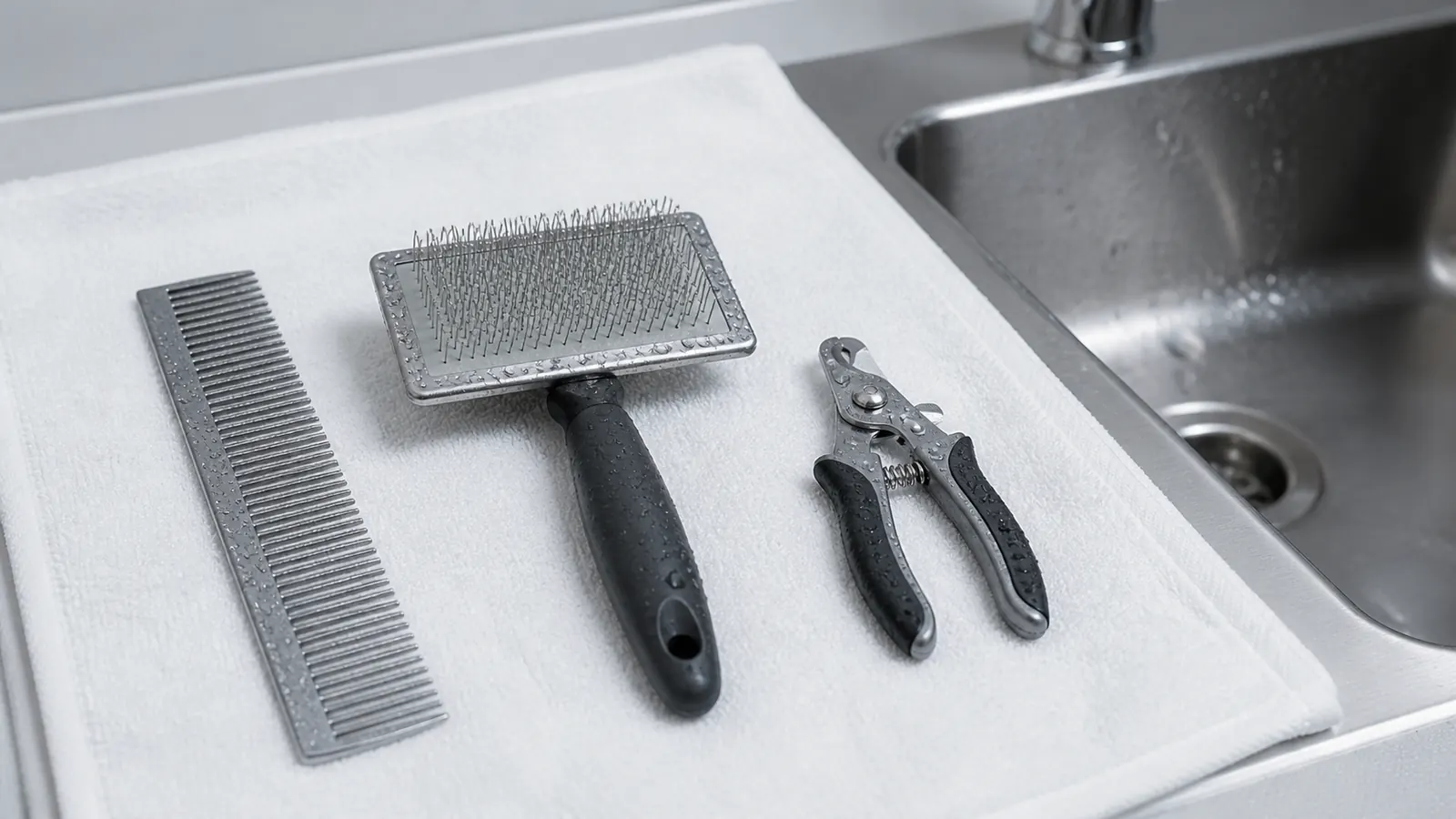
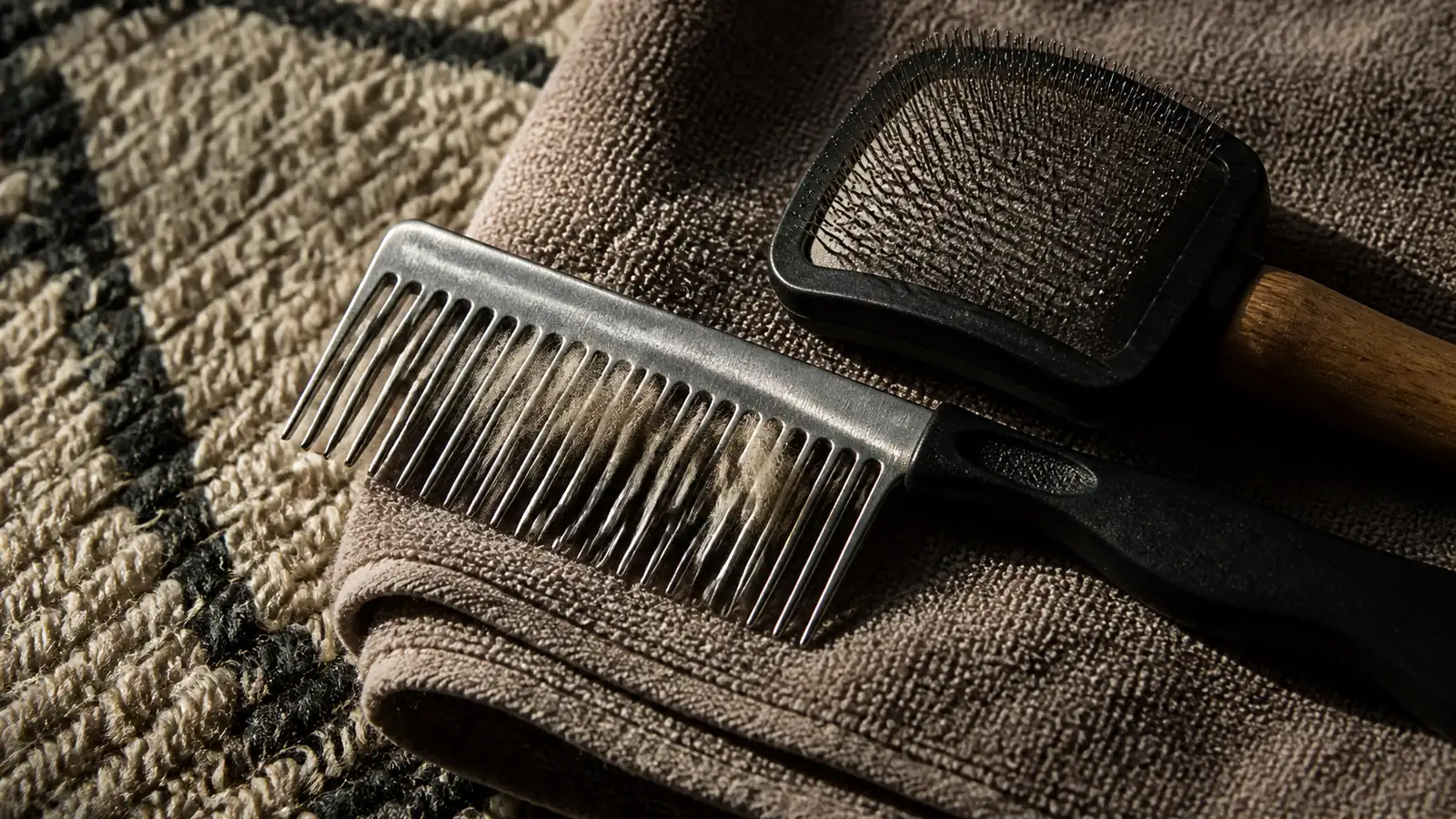
A smooth, appropriately spaced metal comb helps locate tangles beneath the surface. A brush can remove loose hair, but a glossy top layer does not prove the lower coat is clear.
Damaged teeth or pins scratch, and light pressure reaches the tangle without scraping the skin.
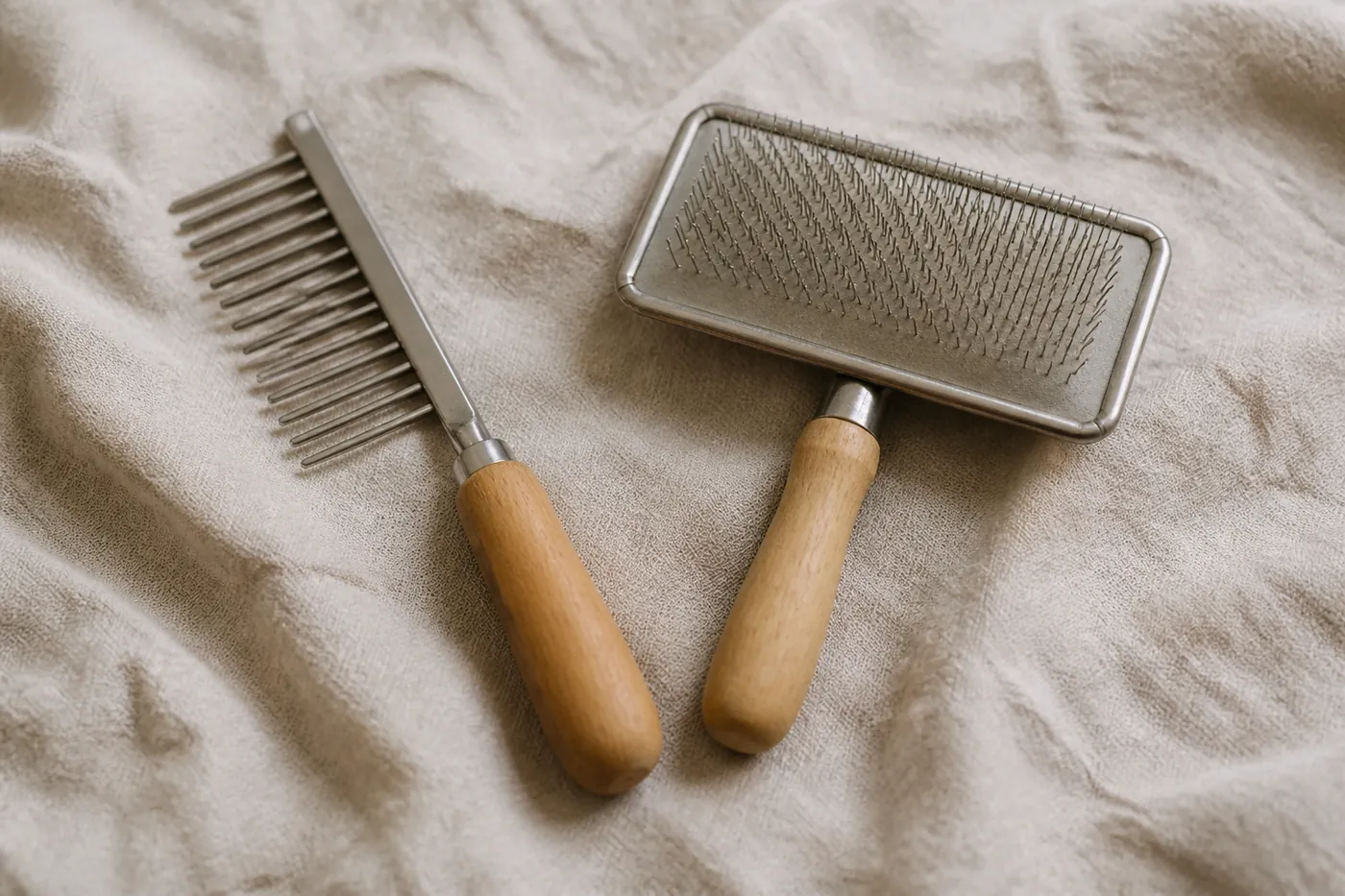
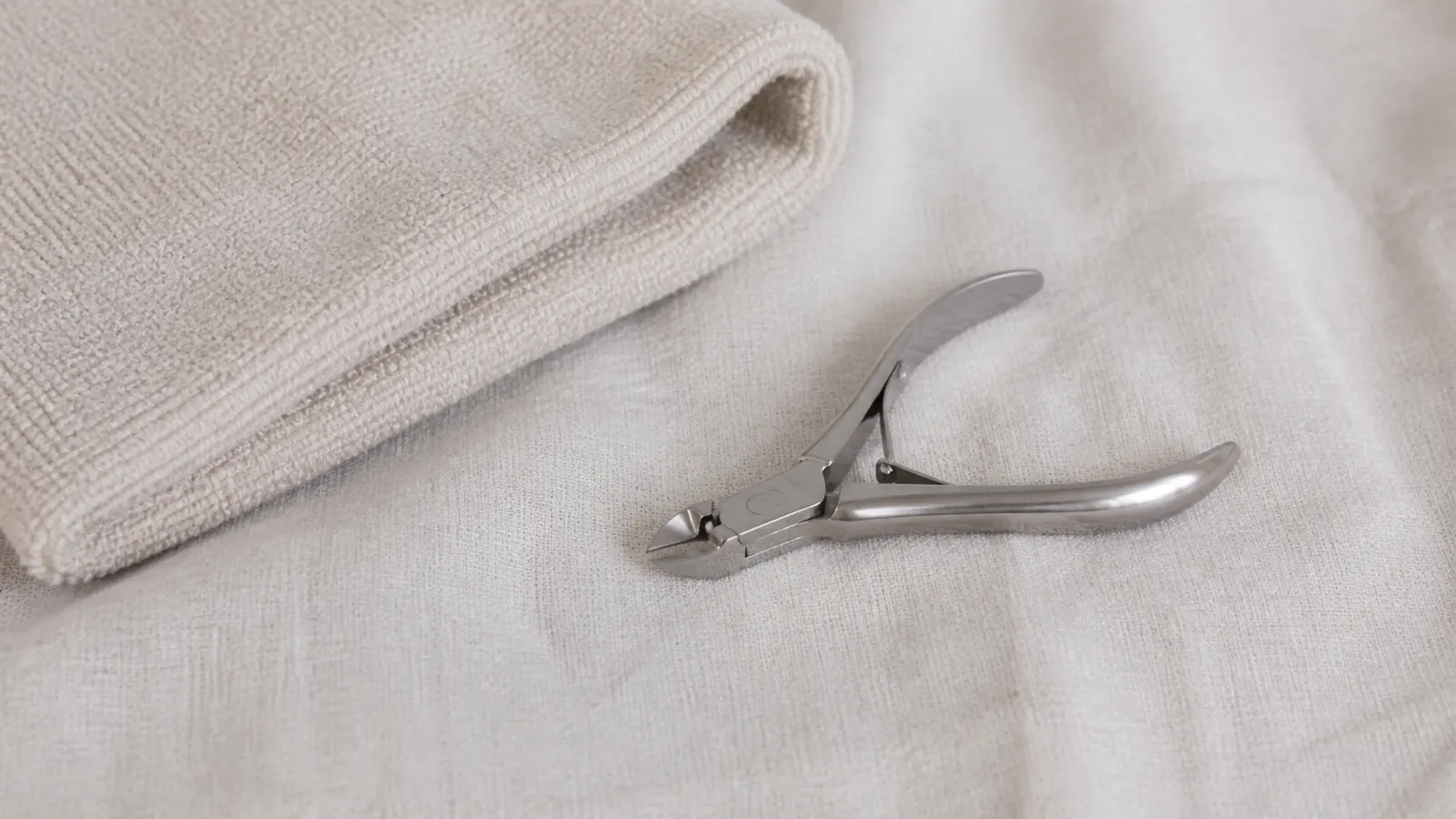
Tools marketed for deshedding vary in design, and an edged tool suits some long coats but not every one. Mat splitters and scissors close to the skin can cut it.
A cat-experienced groomer can demonstrate the tools that suit your cat. Cleaning grooming tools keeps accumulated hair and residue from interfering with their use.
Working through the coat in sections
A comfortable place with secure footing helps, and the session goes best starting where the cat already accepts touch, often the shoulders or back.
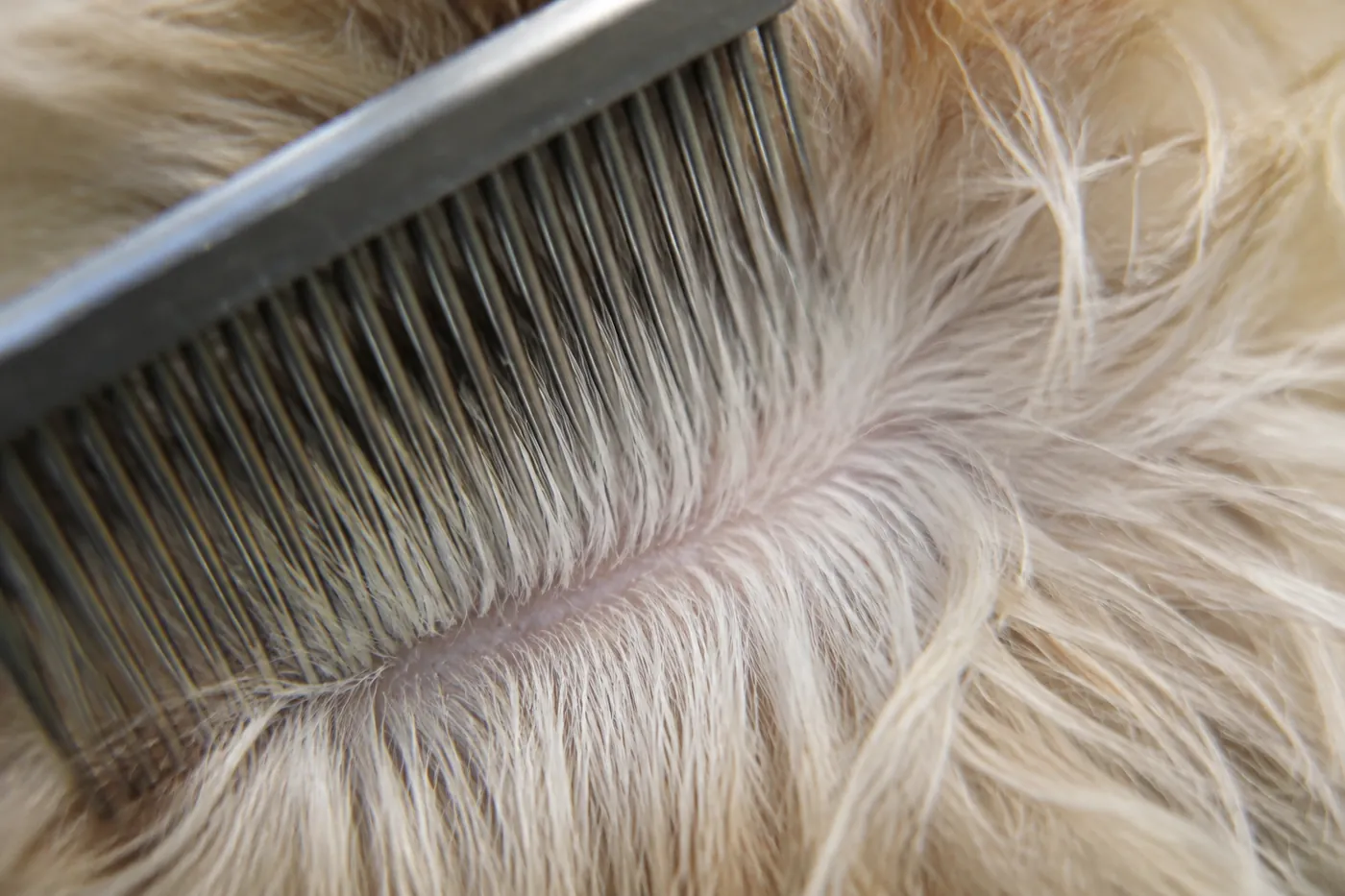
Part a small section so you can check the lower coat rather than repeatedly skimming its surface.
- Let the cat settle and introduce the tool without restraining it.
- Make short gentle passes in the direction the hair lies.
- Support the hair near its base when working on a loose tangle, keeping fingers and comb clear of the skin.
- Work a loose knot from its outer portion in small pieces; stop if it pulls or does not release easily.
- Pause and reward comfortable participation, then return to another section later if needed.
The belly and legs may need separate sessions. Rolling a cat onto its back or holding it still to finish can make the next session harder.
If the cat starts tensing, turning towards your hand or trying to leave, stop and reassess. Reluctant-cat grooming covers gradual acceptance when the coat is not painful.
When a mat should be clipped professionally
A small loose tangle that separates gently is different from a compact mat against the skin. Time spent pulling does not make a tight mat safer to tackle.
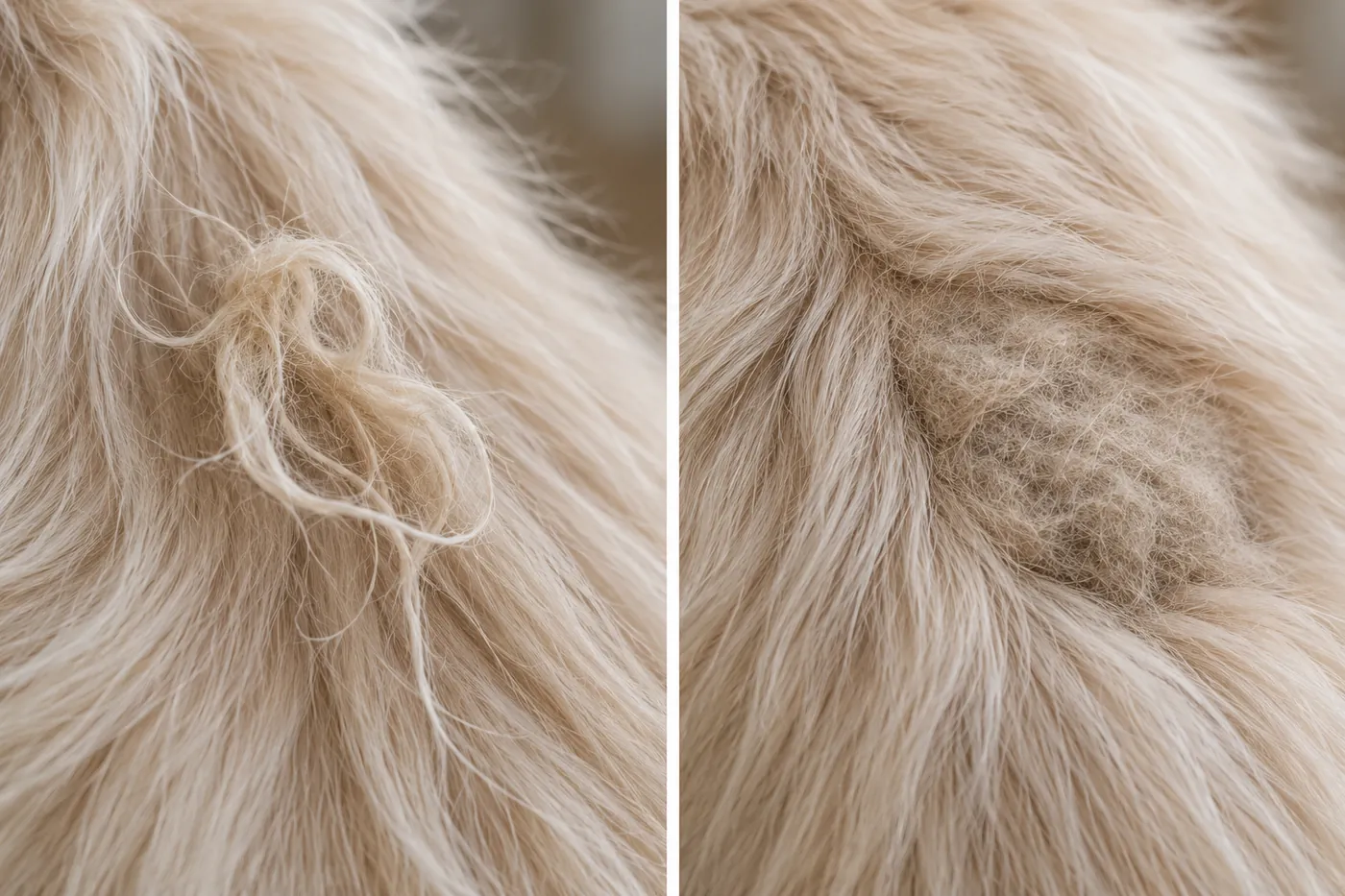
Stop before either the coat or the cat requires force; a professional can decide whether clipping and veterinary sedation are necessary.
Sedation is a veterinary decision: many grooming clips need none, and a groomer should not provide it independently. A hygiene trim may help when fur repeatedly traps faeces, but routine paw or whole-body clipping is not necessary for every long-haired cat.
Bathing and products
Most cats do not need routine baths. For ordinary soiling, the right cleaning approach depends on the coat and skin. Only products made for cats belong on the coat, used as directed, because the cat may lick residues from its fur.
Do not bathe through tight mats in an attempt to loosen them. For possible toxic contamination, contact a vet or poison service immediately and follow its decontamination instructions rather than delaying to finish a normal grooming sequence.
Keep the cat from licking the material while you obtain advice.
If a bath is appropriate, prepare towels and secure footing, rinse thoroughly and dry in a warm place without overheating the cat. Do not use a frightening dryer or force combing of damp tangled fur.
The safe method depends on what is on the coat and how the cat tolerates handling.
A new grooming problem may be a health change
A cat that suddenly develops mats, a greasy coat or difficulty reaching its back may have pain, reduced mobility, excess weight or skin disease. The pattern alone cannot distinguish those causes.
A new pattern of mats is worth a veterinary check, because it may reflect one of those causes rather than a missed brushing session.
Sessions can stay short and comfortable while the cause is assessed. A supported resting position, easy access to bedding and a shorter routine may help an older cat; signs of ageing explains the other changes to record.
Regular grooming also lets you notice lumps, wounds or parasites and removes some loose hair before it is swallowed. It does not make frequent vomiting normal or guarantee that hairballs are harmless, and repeated episodes are worth reporting together with any coat or appetite change.
Common Questions
How often should I brush a long-haired cat?
Check frequently, often daily, and adjust to shedding and how quickly the coat tangles. Short comfortable sessions are preferable to forcing a complete groom.
Should I cut out a mat?
Do not use scissors near a mat. Tight or extensive matting needs a veterinary practice or a cat-experienced groomer.
Does a long-haired cat need shaving?
Not routinely. Clipping may be appropriate for painful matting or a coat that cannot be maintained comfortably; sedation, if needed, is a veterinary decision.
Checked Against
Published 11 February 2026. Last updated .