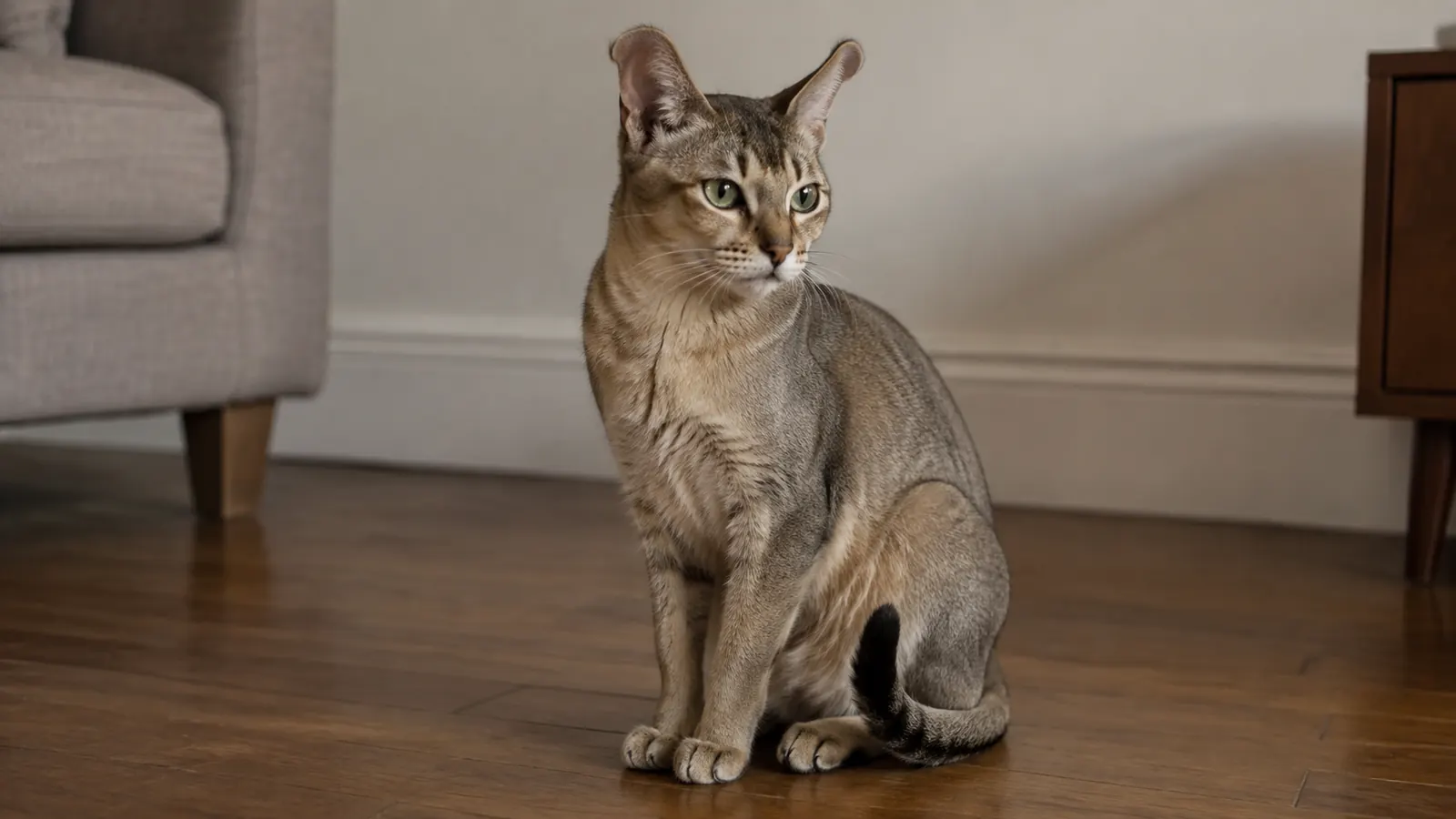
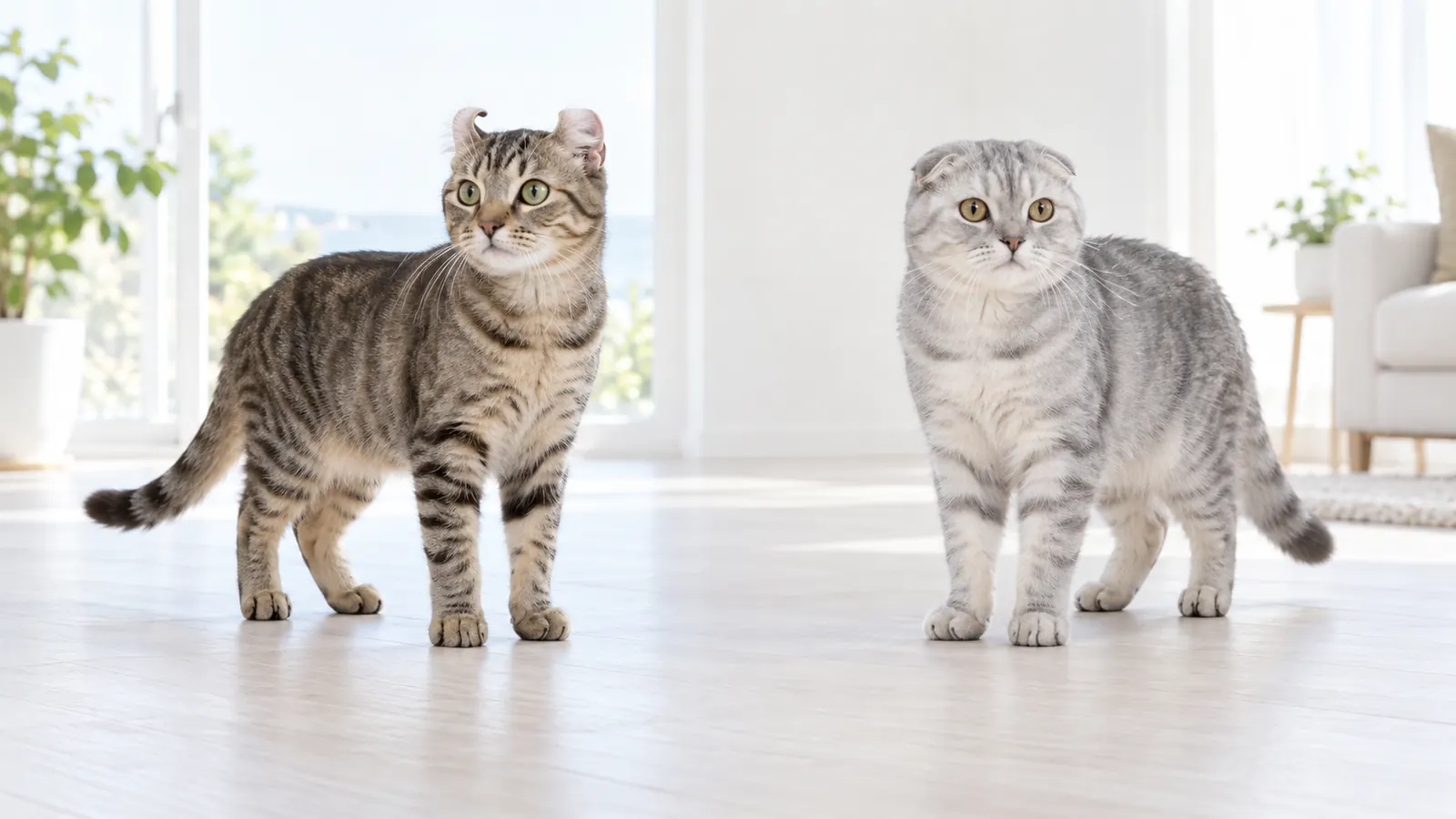
What Is an Abyssinian, and Which Health Claims Can a Breeder Prove?
The Abyssinian is chosen for the ticked coat and decided by two other things. One is the health paperwork a breeder can show you, and the other is an activity level that does not negotiate.
- Origin
- Genetic markers place the breed in Southeast Asia and the Indian Ocean coast, not Ethiopia
- Coat
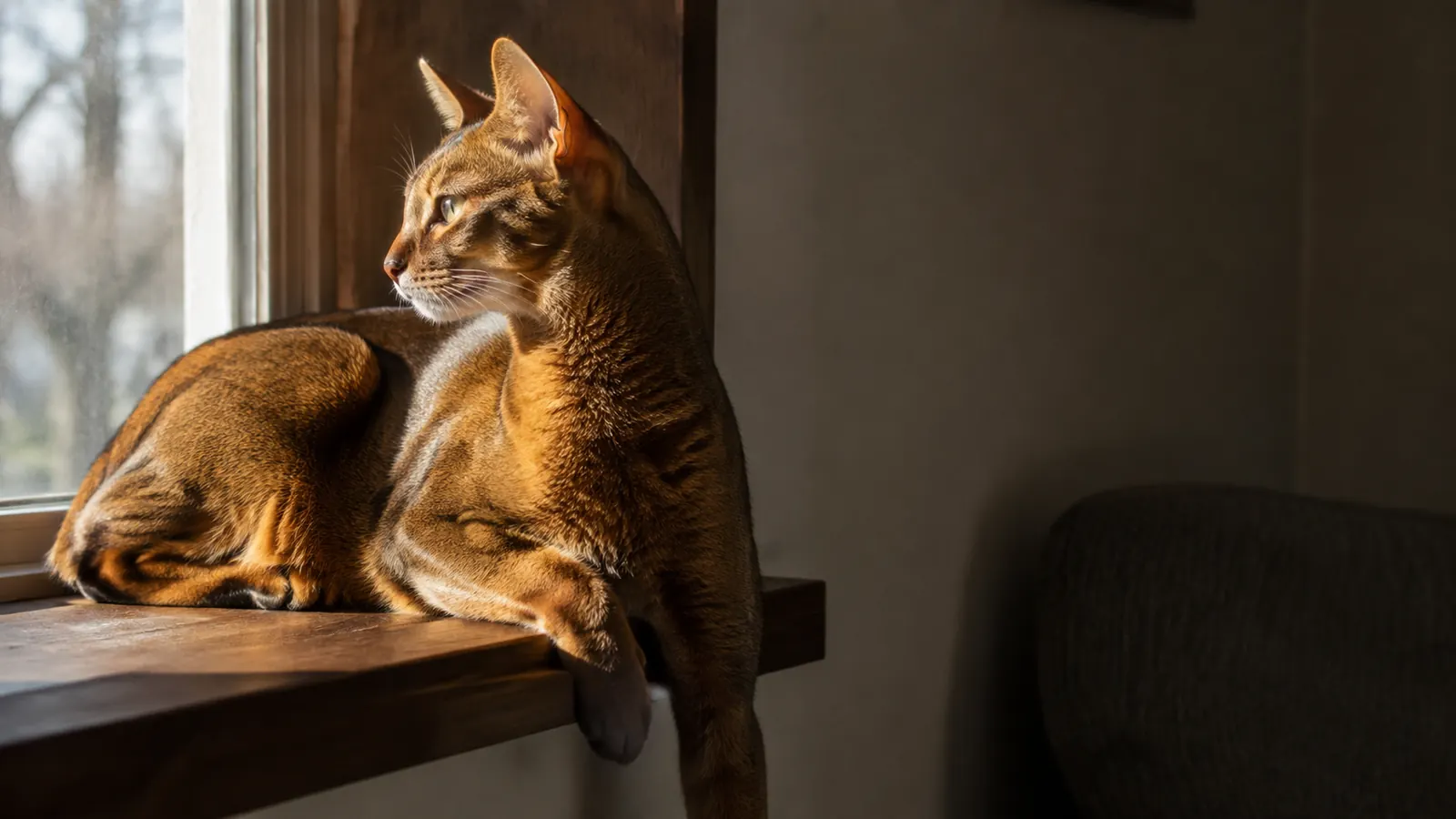
- Short, fine and close-lying, ticked with two or three dark bands to each hair
- Size
- Medium, long and lithe on fine bone, and denser in the hand than it looks
- Typical weight
- Typically 2.7 to 4 kg for females, 3.2 to 5 kg for males
- Life expectancy
- No separate figure in the UK life tables, where the all-cat average is 11.74 years
- Activity level
- Very high, sustained for years, and aimed at height rather than floor
- Grooming
- Low. A rubber curry or a grooming glove once a week
- Suits
- Households with somebody home, climbing height, and a breeder who shows test results
The Abyssinian is chosen for the coat and decided by two other things. One of them is a certificate, and the other is how much of your house the cat expects to run.
Three inherited diseases turn up in the breed often enough to matter. Two can be settled with a DNA result before you pay a deposit, and the third cannot be settled at any price.
| Inherited condition | Can a test settle it before you buy? | What the result is worth |
|---|---|---|
| Pyruvate kinase deficiency | Yes, a DNA test on both parents | Removes an anaemia that can surface at any age |
| Retinal degeneration, rdAc | Yes, a DNA test on both parents | Removes blindness at three to five years old |
| Familial renal amyloidosis | No test exists | Leaves one question to ask about the line |
That split tells you which health worries a buyer can act on and which one has to be carried. The rest of the decision is behaviour, and an Abyssinian's behaviour is hard to miss.
Why is an Abyssinian never still?
An Abyssinian arrives on top of the door before you have finished deciding whether you like cats that climb.
It reaches the door from a shelf, and it reaches the shelf from the back of a chair. Nothing along that sequence is a destination.
The breed standard is unusually blunt here. It calls the cat busy, agenda-driven and constantly on the move unless asleep, which is a temperament note doing the work of a warning.
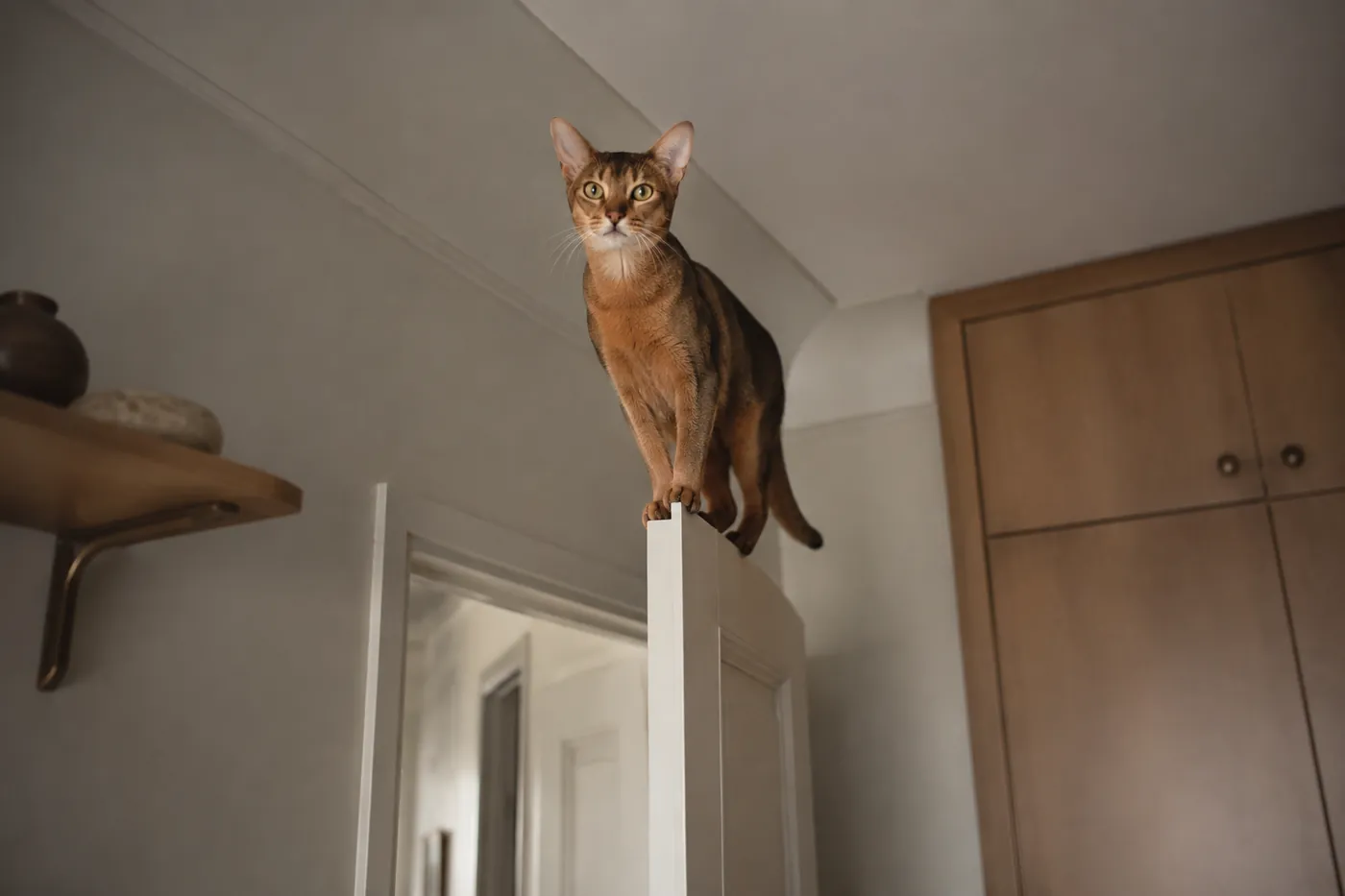
The build explains most of it. An Abyssinian stands high on fine bone with small oval paws, which is a frame assembled for surfaces rather than for laps.
The daily cost is not spread evenly across the things people budget for. Coat and dental care are small regular jobs, daily interaction and activity take most of the time, and the exact workload depends on the individual cat.
An Abyssinian shut in an empty house with no climbing route stops being charming and starts opening cupboards. That is the commonest way the breed disappoints a household, and the fix lies in the house, through company and a route to work, far more than in the cat's character.
Quiet Abyssinians exist. Planning a household around meeting one is planning for a cat you have not got.
The pressure does come off eventually. Activity eases from around eight years old, and the signs of ageing arrive gradually enough that most owners notice the calm before they notice the cause.
How do you actually tire one out?
More chasing is the obvious answer, yet an Abyssinian settles faster after work it had to think through than after distance it merely covered. The breed standard calls it an indomitable problem-solver, and a cat described that way is telling you which currency it accepts.
That points the routine at food and at training rather than at a longer session with a wand.
- Run a short shaped training session before the first meal, while the hunting drive is still up.
- Feed breakfast out of a puzzle, so the longest unsupervised stretch of the day starts as work.
- Leave a climbing route open across shelves or wall furniture, not a single free-standing tower.
- Play in the evening with a wand, and let the session end with the toy actually caught.
- Rotate a second puzzle out at night to head off the small-hours patrol.
The tower point is worth separating out. A tower is one destination, while a route across three pieces of furniture is a circuit the cat can work, and a tall scratching post is usually the anchor for it.
Two details decide whether the routine works. The first is that a hunt which never ends in a catch leaves the cat wound up rather than settled. The second is that puzzle food has to come out of the measured daily ration rather than sit on top of it.
Shaped training suits the breed unusually well, and clicker work gives you a way to spend the cat's attention on something you chose.
One more rule holds whatever else you do. An Abyssinian already rehearsing a route you dislike needs that route physically closed before any training starts, because you cannot out-train an available shortcut.
Does all that climbing make a window a real risk?
Yes, and the caution rests on published evidence. A 2025 study of 1,125 cats treated for falls from height found most were young, and that falls clustered at night and in summer, when windows are most likely to be open. Most landed on hard surfaces, and the injuries ranged from minor to fatal.
That work covers cats in general rather than this breed, but the route logic above is what makes it land harder here. A cat that reaches the top of a door from a shelf reaches an open window the same way, and for the same reason.
A closed window depends on somebody remembering, while a screen does not. That makes screens and a secured balcony rail the version of route-closing that survives a distracted evening, which is the same principle as physically shutting an indoor route you dislike.
What is a ticked coat?
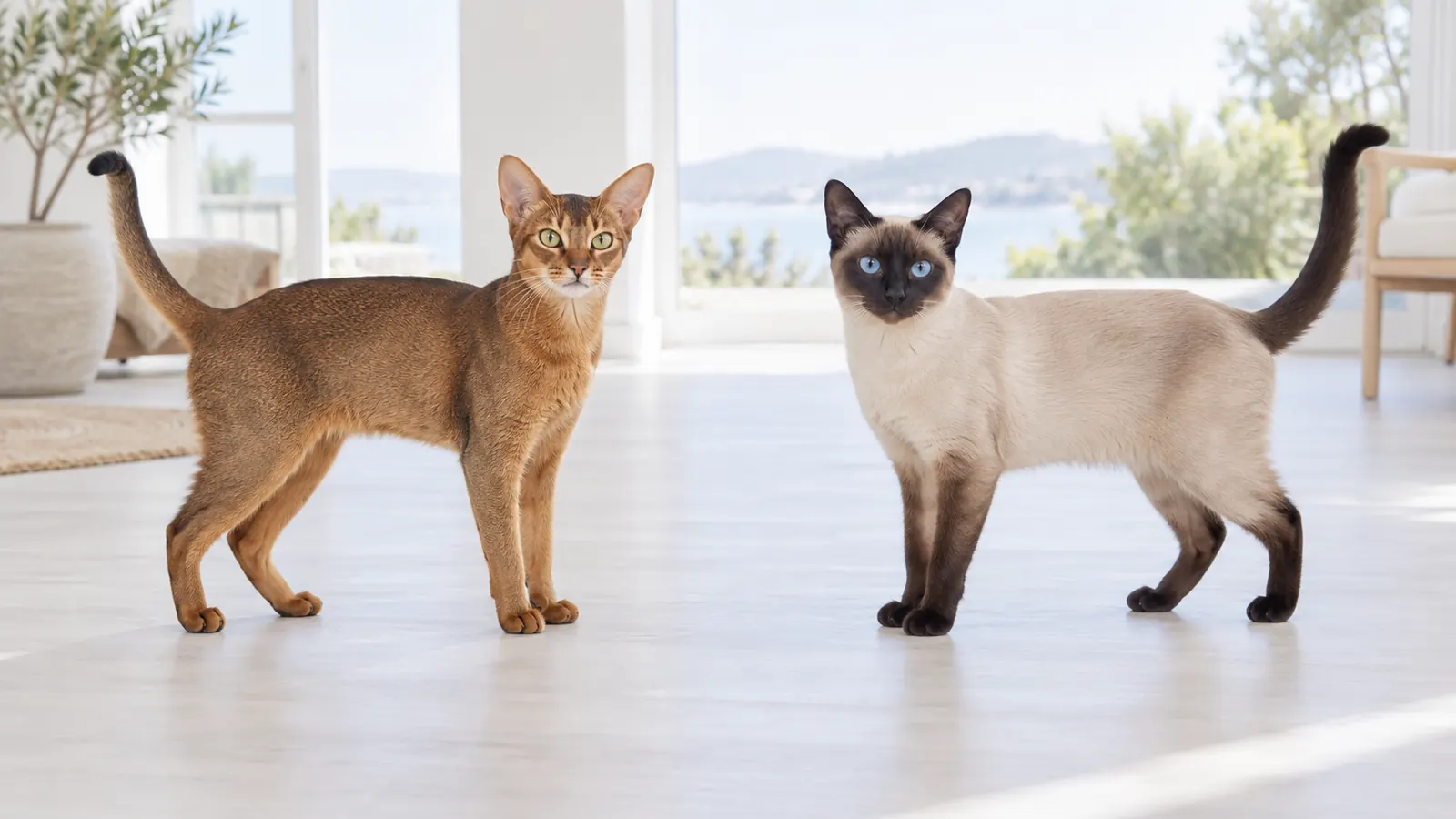
Each hair is banded, with dark sections alternating against lighter undercoat-coloured sections along its length. Across a whole cat the banding hides the body markings, which is why an Abyssinian reads as a warm solid colour that shifts as it moves.
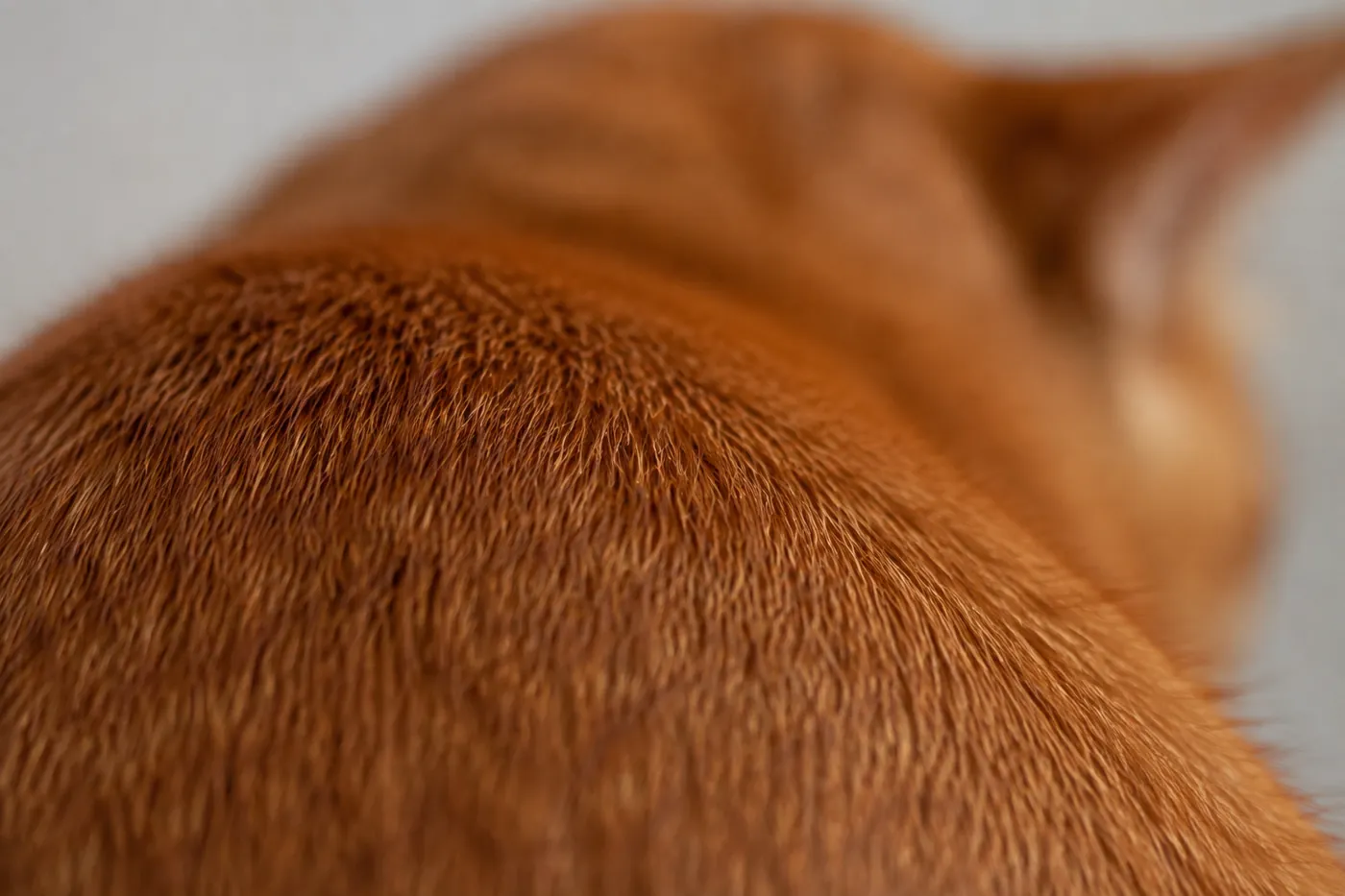
The mechanism is a dominant mutation in DKK4, the ticked locus. The Ti-A variant is the one carried by Abyssinians and Somalis.
The breed standard turns that genetics into a requirement a judge can see. It asks for hair long enough to carry two or three dark bands against undercoat-coloured bands, which is why a short-banded coat reads as flat and loses points.
Ticking clears the body but leaves the legs. Barring survives on the legs and the tail, and the tabby M stays on the forehead. None of that is a fault, and a buyer who has been told the breed has no markings will misread all three.
Four colours are accepted: ruddy, cinnamon, blue and fawn. Ruddy is the one most people picture, and cinnamon is the warm red-brown that older paperwork calls sorrel.
The practical trap is timing. Ticking develops over months, so a ten-week kitten looks muddier and less banded than the adult it becomes, and judging the colour at that age is judging an unfinished coat.
Ticking is not exclusive either. The second ticked variant, Ti-CK, turns up in several other breeds, so a ticked coat on its own identifies nothing.
How much grooming does that coat need?
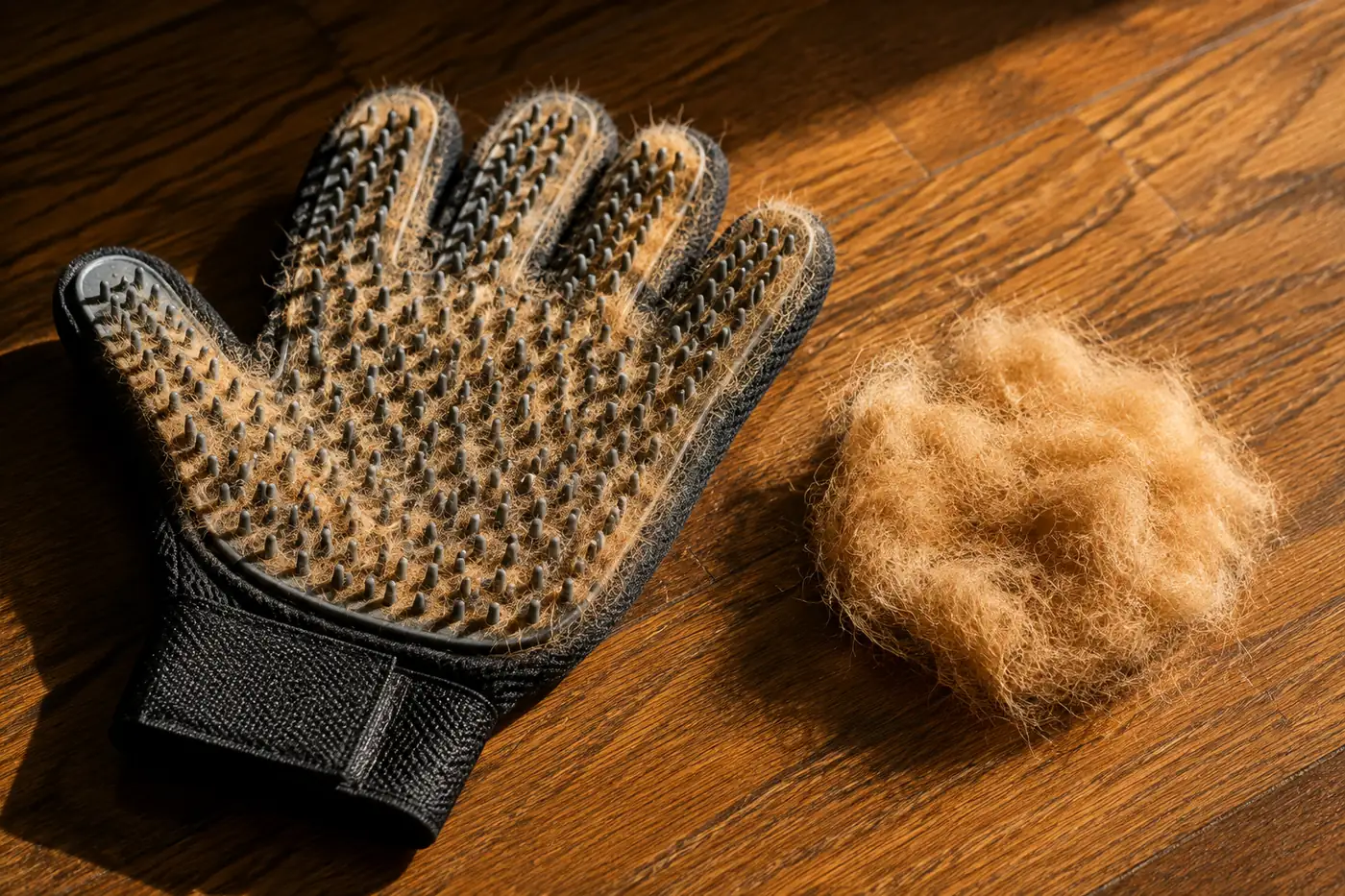
The short ticked coat usually needs light regular grooming. A soft brush or comb removes loose hair while you check the skin, and sessions become more frequent when shedding increases, because the coat can still shed more heavily at some times of year.
Coat care is generally a smaller task than daily activity. It still offers a chance to find soreness, parasites or a new patch of missing hair, and a sudden change in the coat deserves investigation rather than a more forceful tool.
How big does an Abyssinian get?
Smaller than the photographs suggest. An adult female sits around 2.7 to 4 kg and an adult male around 3.2 to 5 kg, which puts the breed squarely in the middle of the domestic range.
- Adult weight, female
- Around 2.7 to 4 kg
- Adult weight, male
- Around 3.2 to 5 kg
- Build
- Long and lithe on fine bone, with visible muscle
- Coat
- Short, close-lying, ticked, with no body markings
- Recognised colours
- Ruddy, cinnamon, blue and fawn
- Activity level
- Very high, and sustained for years
Registry standards write no weight into the Abyssinian standard at all. They rank proportion and balance above size, which is why breed pages that quote a precise average are quoting somebody's guess.
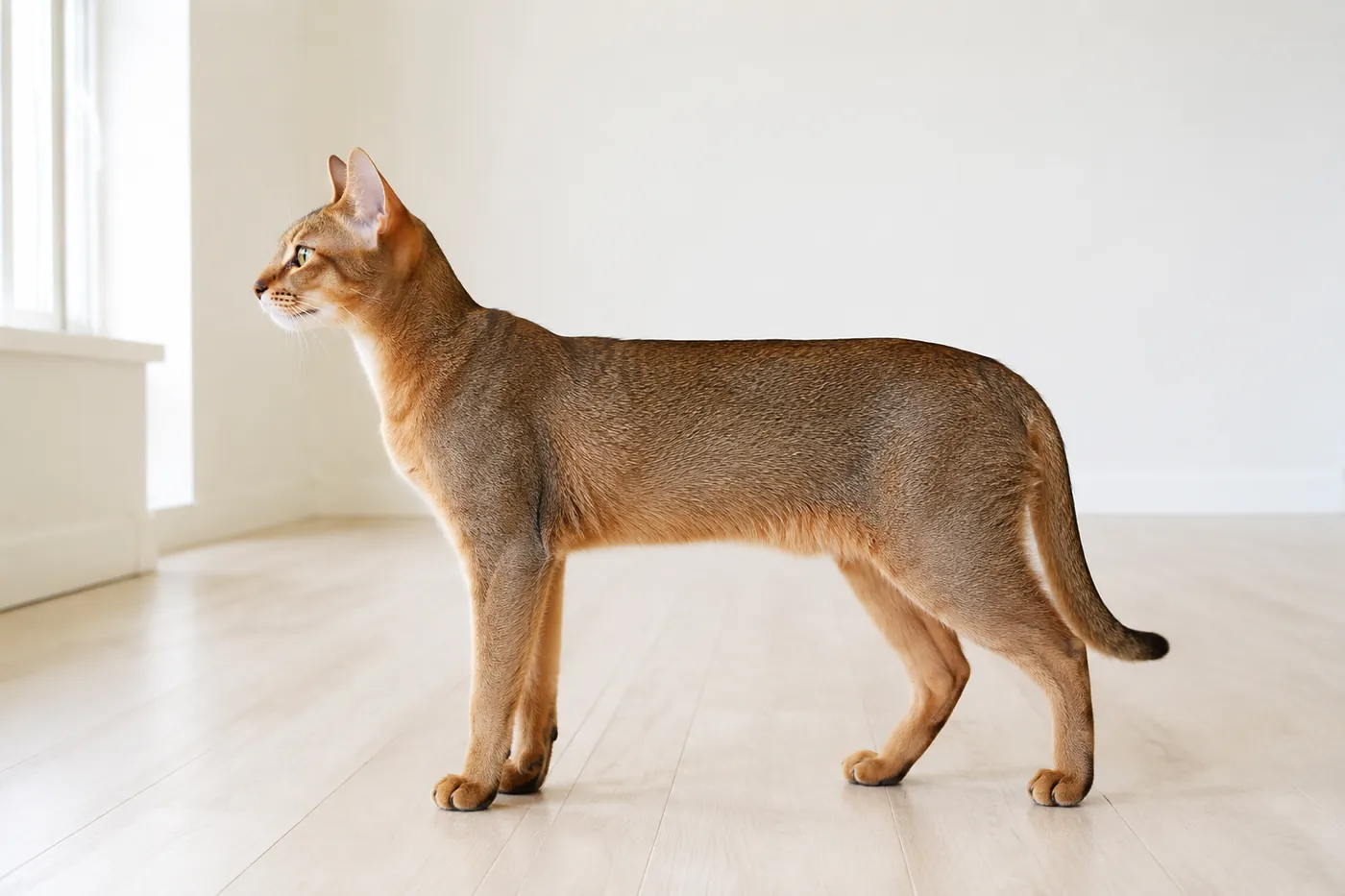
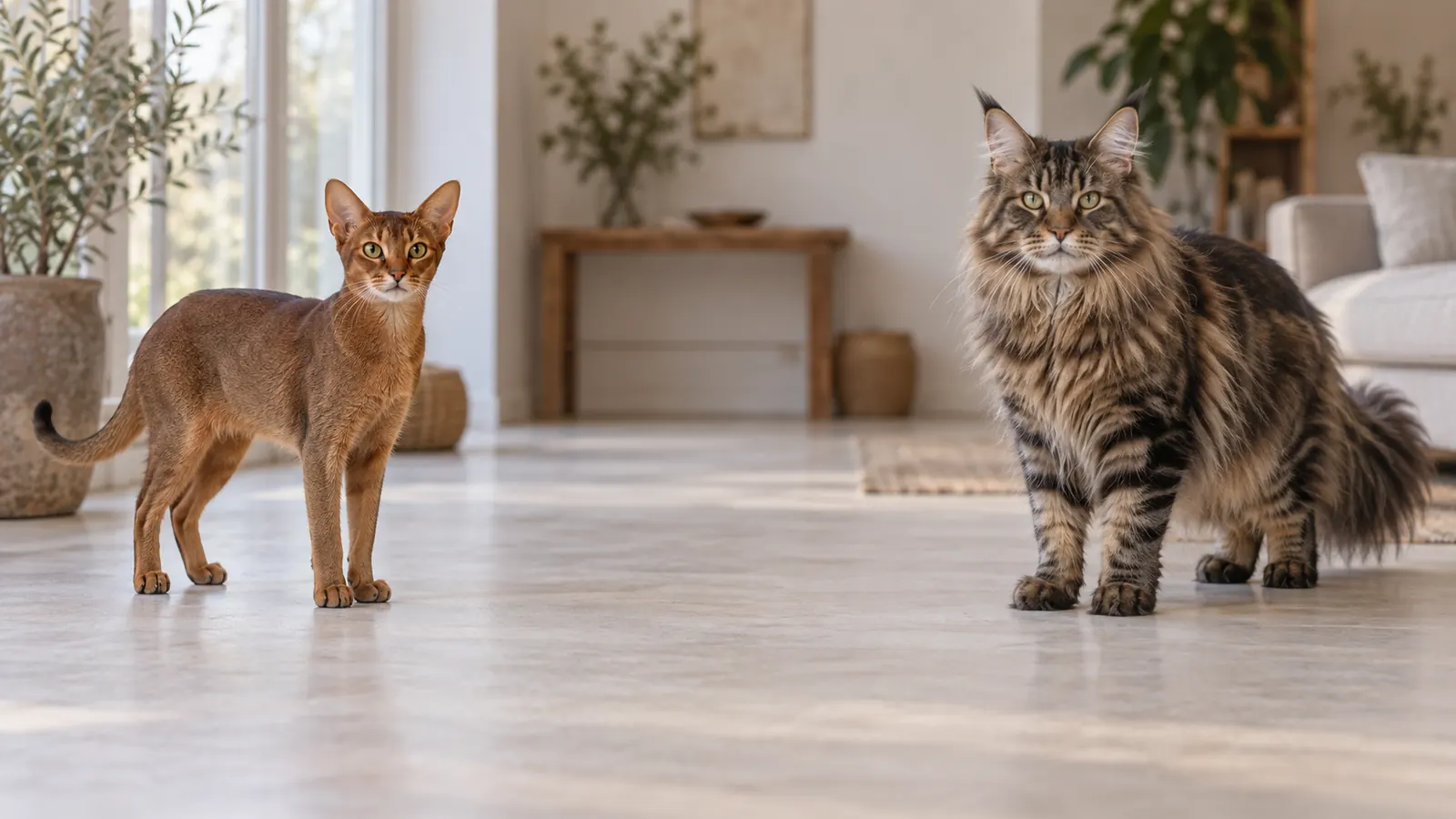
The cat is denser in the hand than it looks, because the muscle sits on fine bone and the stance stretches the outline. People who have only seen an Abyssinian on a screen consistently expect something the size of a small Maine Coon.
The medium size has one useful consequence. Equipment bought for a medium cat fits for life, so the tray, the carrier and the flap are one purchase rather than three.
It has a second, less comfortable one. A neutered adult at 6 kg is almost certainly carrying extra weight, because the male range tops out around 5 kg, and working out the daily calories is the fastest way to find out which you have.
Which Abyssinian diseases have a DNA test?
The retinal mutation is named after the breed and is commoner in several others, which is a fair warning about how breed reputations travel.
Two conditions here are genuinely settled by a test, and both are autosomal recessive. That word does the important work: a cat carrying one copy is healthy, and only two carriers bred together can produce an affected kitten.
Pyruvate kinase deficiency traces to an intron 5 SNP in PKLR. It breaks the enzyme red cells rely on for energy, and the result is an intermittent haemolytic anaemia with lethargy, pale gums and jaundice between episodes of looking entirely normal.
Onset is the awkward part. It ranges from a few months to several years, so a bright healthy kitten in front of you proves nothing at all about its next five years.
The breed has taken this seriously. In one survey across 38 breeds, Abyssinian breeders and Bengal breeders together submitted over 81 percent of all samples sent for the test.
Retinal degeneration, rdAc, comes from a single change in CEP290, written IVS50+9T>G. An affected cat is born seeing normally and goes blind on a timetable.
- Birth to about a yearVision is normal and the kitten looks entirely healthy
- One to two yearsAn eye examination can find the change, an owner still cannot
- Three to five yearsSight is lost
- After thatThe cat adapts to a fixed indoor layout, because there is no treatment
The breed's reputation gets the frequency wrong. The rdAc allele was measured at 0.07 in United States Abyssinians and 0.13 in Swedish ones, against roughly 33 percent in Siamese populations.
The mutation carries the breed's name because it was described here first, and it is far more concentrated in the Siamese. An Abyssinian buyer should still ask for the result, and should stop treating it as the breed's defining danger.
Both conditions can be kept out of a litter entirely when the parents are tested. An untested litter is therefore a decision somebody made, rather than a risk nobody could avoid.
Reading a breeder's test certificate
A certificate is only useful when it names the cat, the laboratory, the variant tested and the result. For recessive rdAc PRA and PK deficiency, a clear cat cannot pass the tested variant on; a carrier has one copy and can transmit it without being affected.
Two carriers can produce affected kittens. An affected cat paired with a carrier or another affected cat can also do so, so carrier-to-carrier mating is not the only risky combination.
A clear parent prevents affected offspring for that recessive variant, while the other parent's result still matters for carrier status.
The dominant Rdy PRA test answers a different question from rdAc, so the useful question is which variant is relevant to the line, since PRA results are not interchangeable. No panel clears every cause of blindness or anaemia.
The kidney disease no certificate answers
Familial renal amyloidosis is the breed's most serious inherited disease and the one no laboratory can rule out. The deposits are amyloid A protein, laid down in the renal interstitium, the glomeruli and the walls of the blood vessels, and they gradually replace the tissue that does the filtering.
Whole-genome work across affected Abyssinians and 195 control cats looked for the gene and did not find one. The pattern was polygenic, spread across several variants of low penetrance, which is precisely the architecture that defeats a single-locus test.
The ages in that study are the reason this matters more than the two testable conditions. Affected cats died at two, four and five years old.
Prevalence in the breed is unknown and the mode of inheritance remains undetermined, which cuts both ways. Most Abyssinians never develop it, and nobody can tell you the odds for yours.
With no test available, a buyer is left with two actions. The first is asking the breeder for ages and causes of death across the line, which is the closest available substitute for a certificate.
The second is watching for the early signs in a cat far too young for anyone to be watching. A young adult that is drinking noticeably more and losing weight on a normal appetite is a reason to check kidney values now rather than at the next annual visit.
A buyer who still wants the breed is best served by a breeder who will talk about deaths in the line, and by taking an early symptom in a three-year-old seriously instead of filing it under weather.
How long do Abyssinians live?
No study gives the Abyssinian a representative life-expectancy figure of its own. The largest UK study of the question followed 7,936 cats that died between 2019 and 2021 and put life expectancy at age zero at 11.74 years across all companion cats. Only twelve breeds recorded fifteen or more deaths, which was the threshold for a separate figure, and the Abyssinian was not among them.
That is missing data rather than bad news. It also means the twelve-to-fifteen-year range quoted on almost every breed page is not established by the studies cited here.
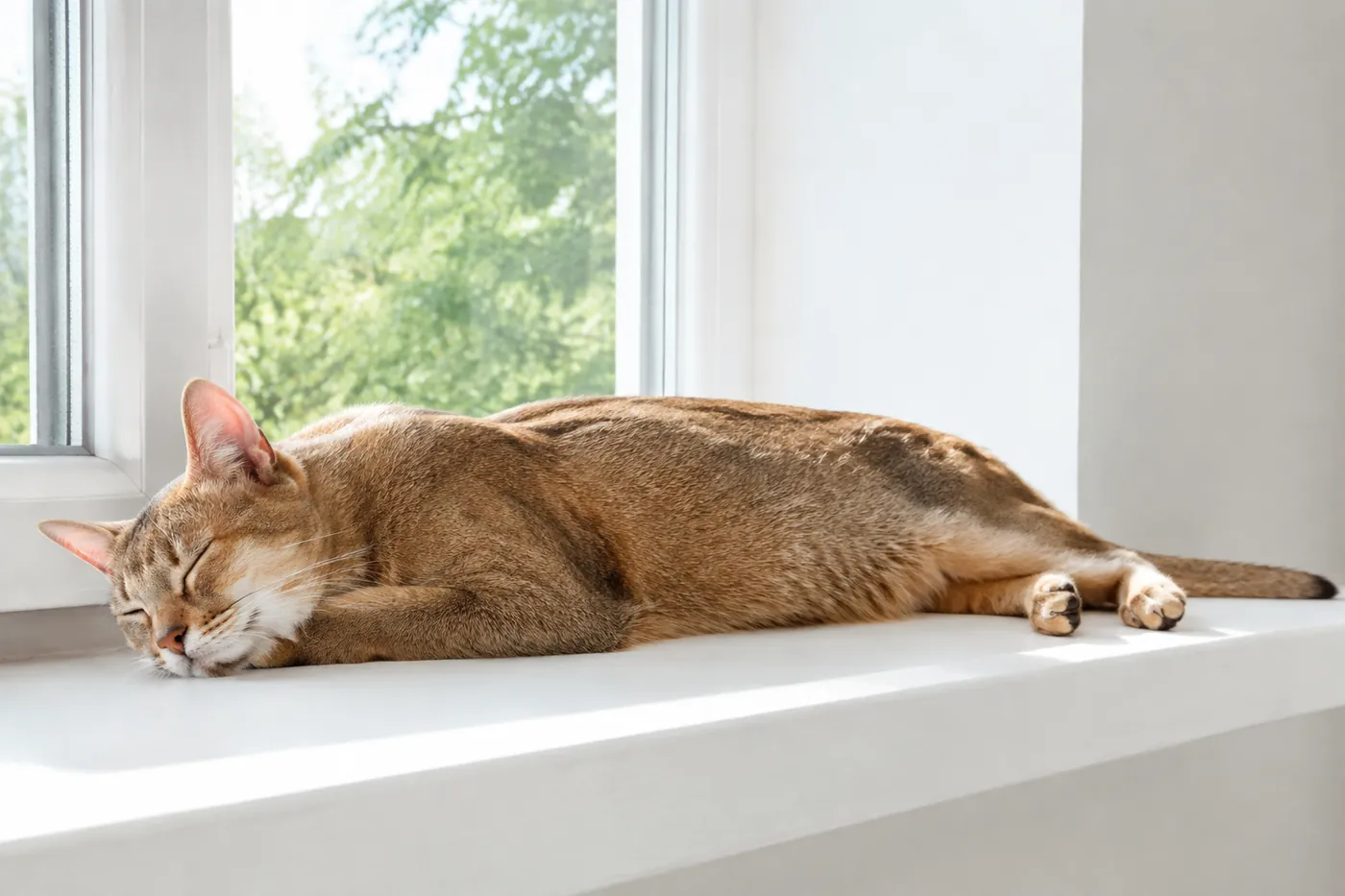
What the same study did measure is more useful anyway. Cats that were entire, cats that were purebred, and cats at a non-ideal body weight each lived shorter lives.
Two of those three are things an owner controls. Neutering is a single decision, and body weight is a monthly one, which makes them worth more than any breed figure you could look up.
Do Abyssinians really have worse teeth?
The evidence disagrees with itself. Abyssinians and Somalis are repeatedly reported as overrepresented among chronic gingivostomatitis cases in referral caseloads, which is where the breed's dental reputation comes from. A survey of almost 5,000 cats across twelve practices over twelve weeks found 34 cases and no breed bias at all.
Both can be true. A referral caseload is built from cats severe enough to be referred, and oversampling severe disease is exactly how an apparent predisposition appears where a population signal does not.
The useful thing is that the argument does not change what you do. Home tooth brushing and an annual oral check are worth the effort if the referral reading is right and cost you almost nothing if it is wrong.
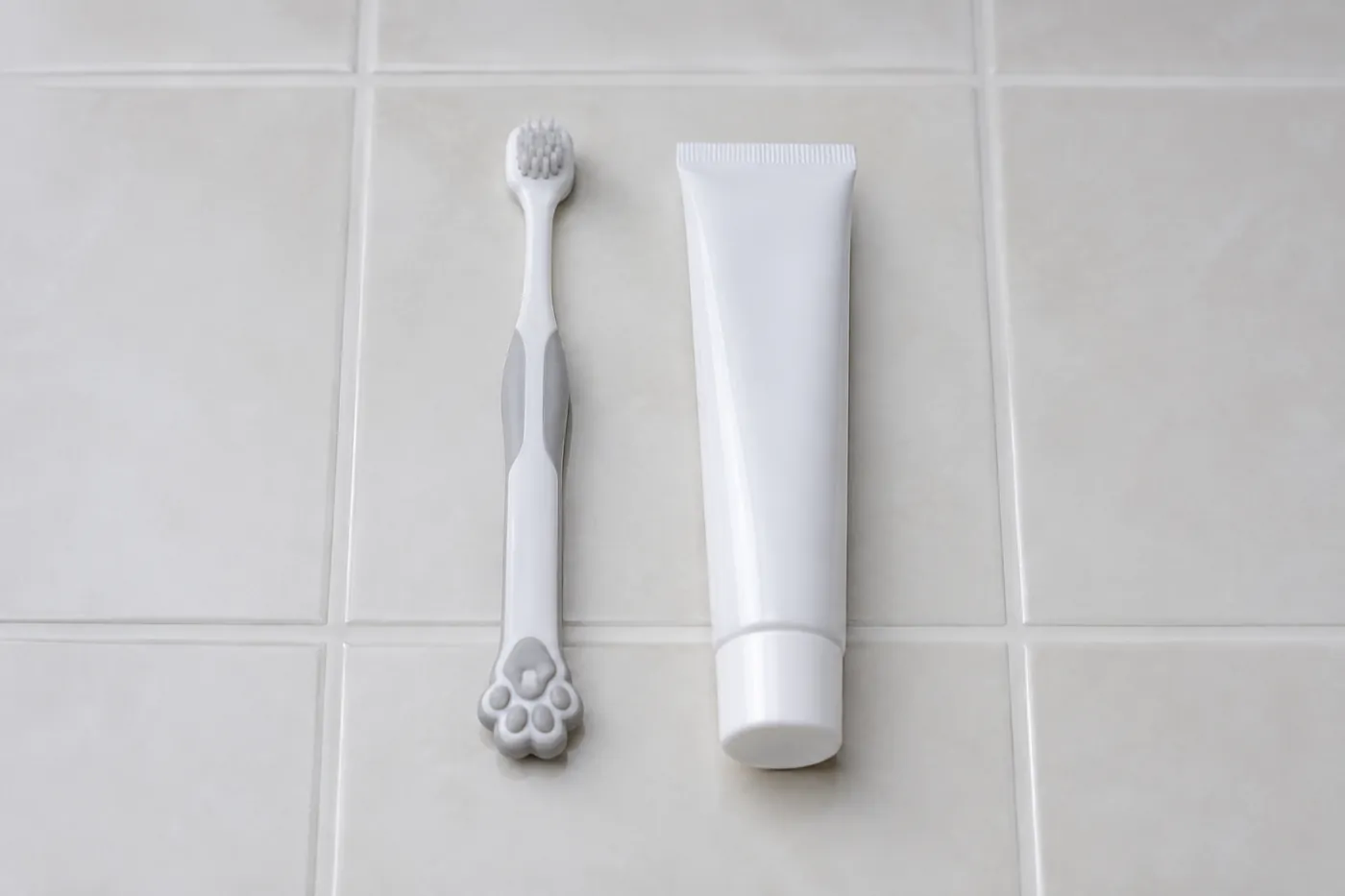
Two details sit outside the breed question. Gingivostomatitis can start at any age once the adult teeth are in, and multi-cat stress is a documented contributor regardless of what the cats are.
Abyssinian or Somali?
One recessive allele separates them. A Somali is an Abyssinian carrying two copies of the long-hair allele, with the same build, temperament, standard and list of inherited diseases.
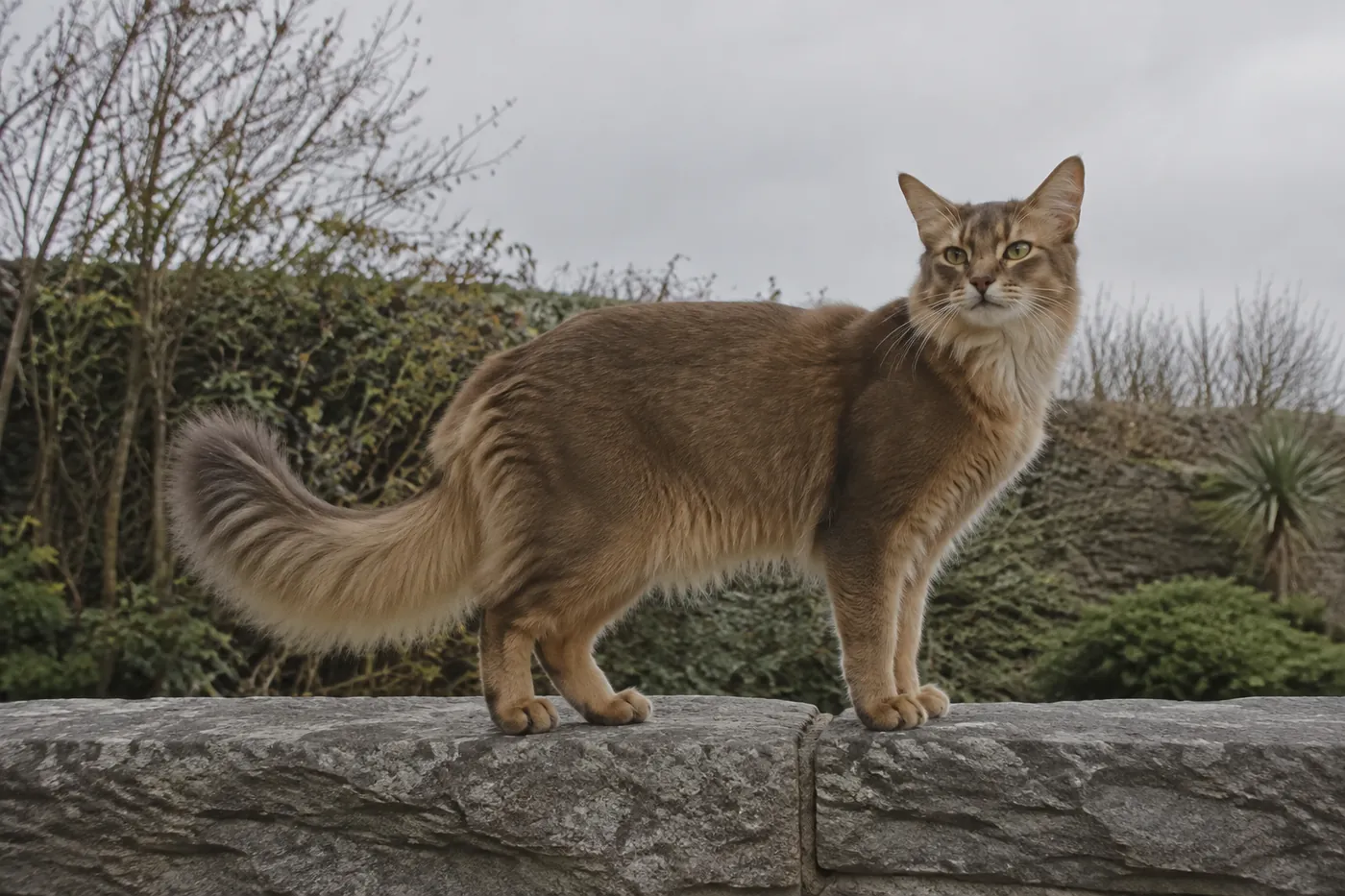
The history is recent and well documented. The first recorded long-haired Abyssinian in North America turned up in 1953, and the first Somali litter was registered in 1972 after breeders stopped treating the long coat as an embarrassment.
A short-coated kitten from an Abyssinian to Somali mating is registered as an Abyssinian Variant. It looks like any other Abyssinian and can still pass long hair to its own kittens, which is worth knowing if you are buying one to breed from.
For a buyer the choice changes exactly one thing. The Somali needs a long-coat routine two or three times a week, and the activity demand and the certificates you ask for are identical.
Where the breed actually came from
The story is that the first cats shown in Victorian England were brought back from Abyssinia, now Ethiopia, and the name has carried that claim ever since.
The genetics do not support it. A 2008 survey of breed markers placed Abyssinian populations with Southeast Asian and Indian Ocean coastal cats alongside Western breeds, which is a long way from the Horn of Africa.
| The claim | What stands behind it |
|---|---|
| Brought from Abyssinia, now Ethiopia | One Victorian exhibitor's account of a cat's origin |
| Named for that origin since the 1870s | The name, and nothing measured |
| Genetic position of the breed | Grouped with Southeast Asian and Indian Ocean coastal cats, and with Western breeds |
| Distance from the Horn of Africa | Large enough that the two findings do not reconcile |
What the name actually records is one Victorian exhibitor's account of where a cat came from. That is a provenance claim from a period when an exotic origin sold tickets, and it has outlived the evidence by well over a century.
Markers describe modern populations and cannot date a single import, so the older story is not disproved so much as unsupported. The correction changes nothing about the cat in front of you.
It is still worth carrying. A reader who knows the founding story is shaky is better placed to discount the rest of the folklore that travels with it, including the confident claims about temperament that appear in the same paragraph.
Who should think twice about one?
An empty house across a full working day is the commonest mismatch by a wide margin. This is a cat that wants company and a job, and eight hours of neither reliably produces the destructive version of the breed. A second active cat absorbs a real share of that demand, which is why Abyssinians are often easier in pairs than alone.
The second mismatch is a household that needs its surfaces respected. An Abyssinian's interest in height puts it on worktops, shelves and the tops of cupboards that other cats leave alone, and training moves that only slowly.
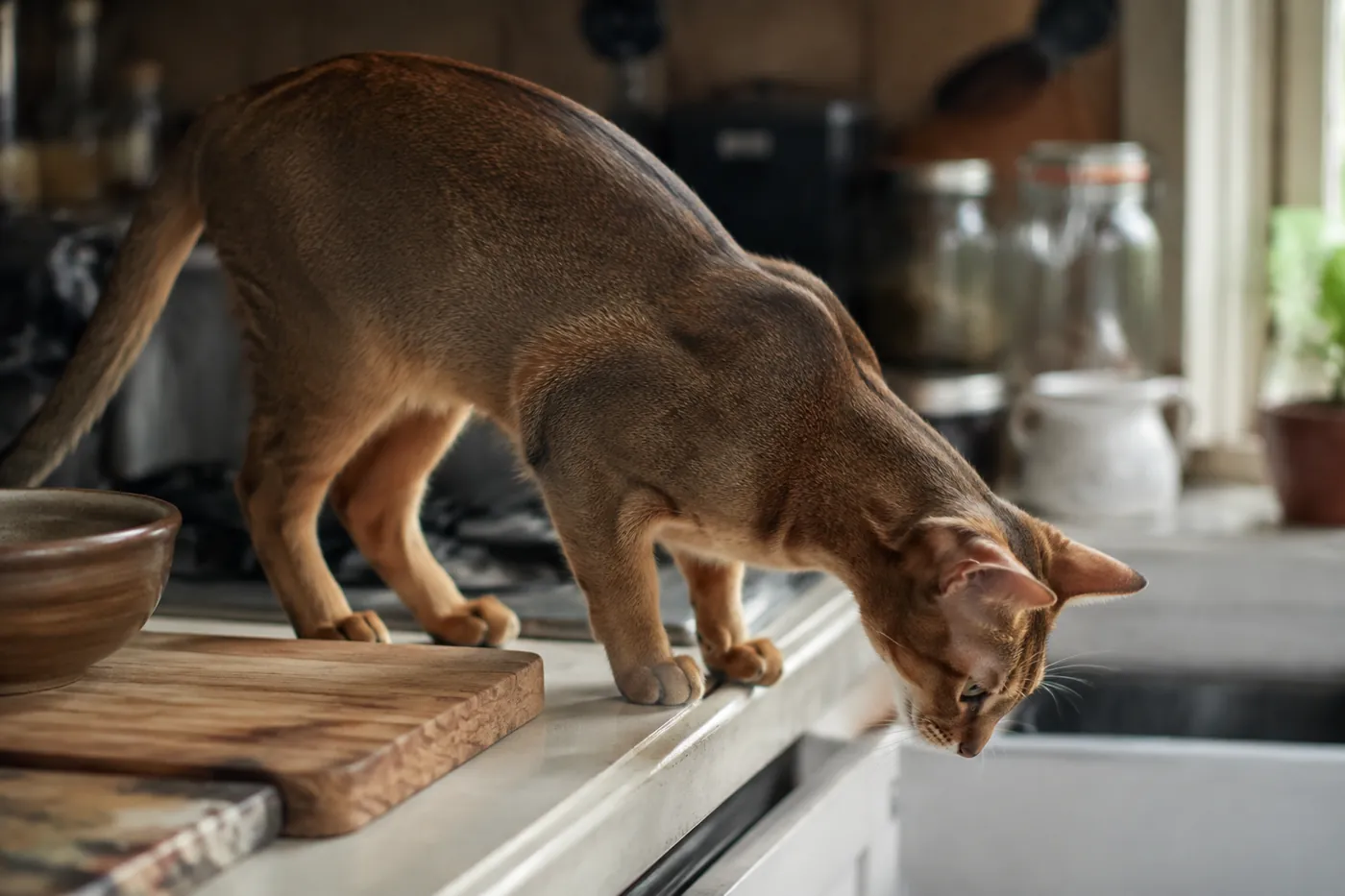
Children are usually fine, on one condition. A cat that wants height copes well with noise and handling when it has a retreat above head level that the child genuinely cannot reach, and struggles without one.
Dogs are usually fine too, though the breed gets less credit for it than it deserves. Tolerance follows early exposure rather than breed, so the socialisation window matters far more than the pedigree does.
Bengal and Abyssinian cats can both overwhelm a quiet household, but the Bengal usually adds more body mass, more forceful athleticism and a separate ancestry and containment discussion.
The harder case is a resident cat that dislikes company. Introducing a busy, confident newcomer to a settled one can set off conflict that takes months to unpick, and it is a bigger obstacle than any dog.
So the coat decides very little. If somebody is home, there is height, and a breeder will show you two certificates and talk honestly about deaths in the line, this is an easy and rewarding cat, and if any one of those is missing, the Abyssinian is the wrong breed to fix it with.
Common Questions
Are Abyssinians hypoallergenic?
No. The allergen is Fel d 1 in saliva and skin rather than hair length, so a short close-lying coat sheds less visibly without producing less of it.
Does an Abyssinian need outdoor access?
No, but it does need height and work indoors. A cat kept in with climbing routes and puzzle feeding settles better than one given a garden and nothing to solve.
Is an Abyssinian a good first cat?
It can be when the owner can provide daily interaction, safe climbing, training and preventive care. Experience alone does not settle fit; assess the actual routine and the individual cat's response to it.
Checked Against
- The Cat Fanciers' Association: Abyssinian cfa.org
- RVC VetCompass Programme rvc.ac.uk
- Retinal degeneration in the Abyssinian and Somali cat: rdAc allele frequency in two continents onlinelibrary.wiley.com
- UC Davis: PRA rdAc vgl.ucdavis.edu
- UC Davis: PK deficiency vgl.ucdavis.edu
- High-rise syndrome in cats (part 1): epidemiology and risk factors, Journal of Feline Medicine and Surgery, 2025 pmc.ncbi.nlm.nih.gov
Published 3 September 2026. Last updated .