What Is an Aegean Cat, and Is It a Recognised Breed?
The Aegean is a long-established cat population from the Greek islands and a landrace rather than a registered breed. That changes what a seller can promise, what papers can prove and how cautiously you should treat broad health claims.
- Origin
- The Cycladic islands of the Aegean Sea, where a free-living domestic cat population developed without a closed pedigree programme
- Coat
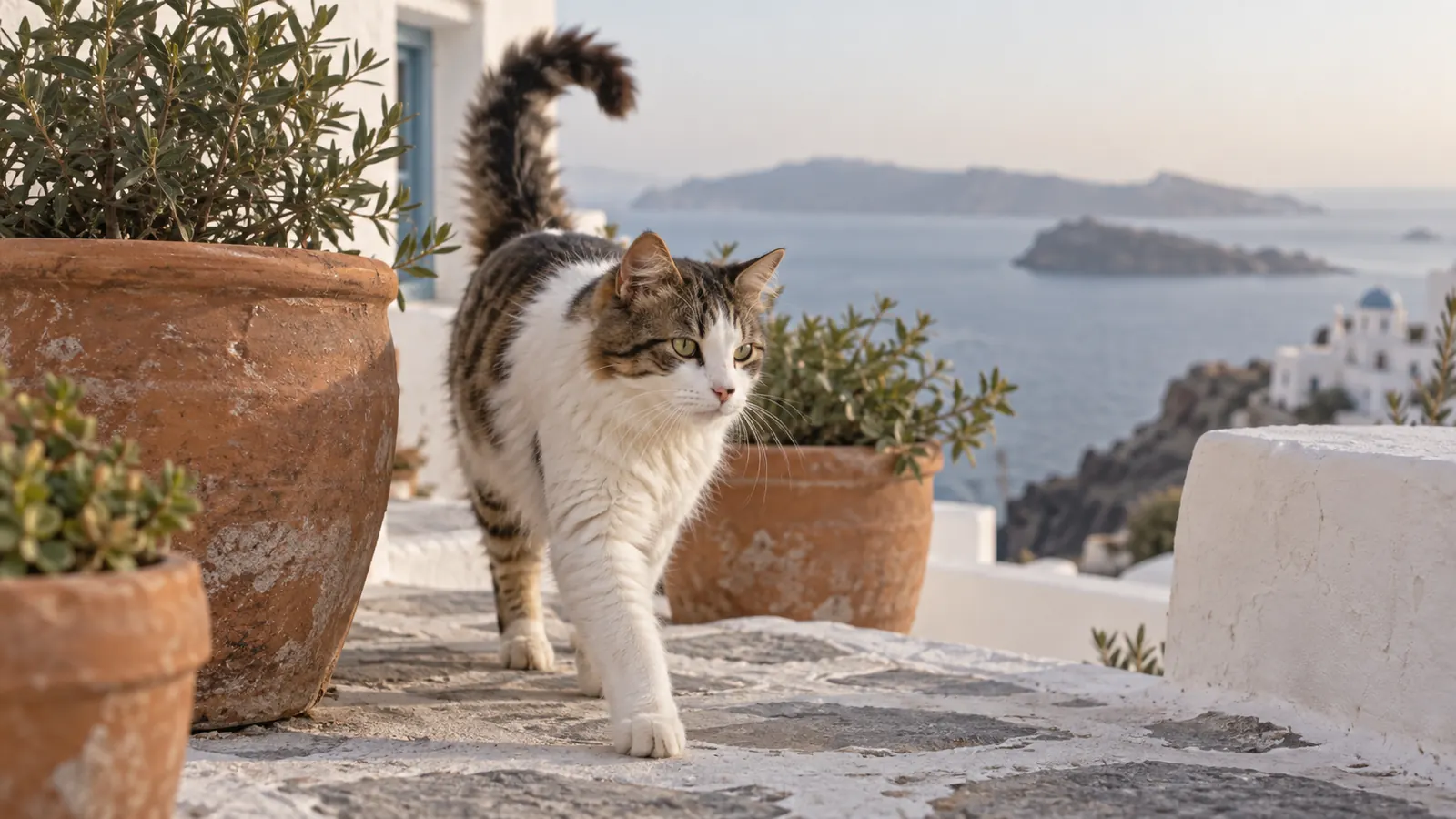
- Semi-long and moderate, most often bicolour or tricolour with white covering a quarter to nearly all of the cat
- Size
- Medium and muscular with a working build, a broad-based head and a long tail that often ends in a hook
- Typical weight
- Typically around 7 to 12 pounds, with the usual spread between males and females
- Life expectancy
- Not established by breed data. Ordinary domestic figures are the only honest guide
- Activity level
- High. Active, communicative and confident, with an unusual willingness to work around water
- Grooming
- Low. A moderate semi-long coat with no extreme length, needing a weekly comb
- Suits
- Households that want an active, vocal, adaptable cat and are content with a landrace rather than papers
The Aegean is the cat you have already seen if you have been to the Greek islands.
The first honest answer about it is about paperwork rather than about the animal.
Is the Aegean a recognised breed?
No. No major registry or fancier organisation has granted the Aegean standardised breed status.
It is a landrace: a population that developed in a place without a closed pedigree programme or an enforced breed standard.
The Arabian Mau is the same kind of population from a far hotter one.
The Chinese Dragon Li creates a different paperwork problem. It has a standardised native-breed identity, but a brown mackerel tabby from China is not automatically a pedigreed Dragon Li.
So the word Aegean names a place and a population, not a standard that a major registry enforces. There is no widely recognised breed standard to measure a cat against, and ordinary rescue or provenance records should not be presented as a pedigree.
That is not a criticism of the cats. It is a description of what you can and cannot verify.
What does the lack of recognition change for a buyer?
Several things at once, and mostly in your favour.
There is no pedigree to check, so a seller offering registration papers for an Aegean is offering something no recognised body issues. Treat papers as a warning sign rather than as reassurance.
| Question | With a registered breed | With the Aegean |
|---|---|---|
| Proof of identity | A pedigree from a recognised registry | None available; appearance and provenance are all there is |
| Predicted adult look | A written standard the cat is bred toward | Wide variation, since no standard is enforced |
| Breed-specific health tests | A named list per breed | No breed panel exists, because there is no breed to test |
| Price | Set by pedigree and show lines | No pedigree premium is justifiable |
| Where you find one | Breeders working to a standard | Rescue, Greek and Turkish shelters, and local adoption |
The practical effect is that the usual purchase checks do not apply, and a different set does. You are assessing an individual cat and its rearing rather than a line and its papers.
It also means the risk of overpaying is real. Rarity marketing works particularly well on a name that sounds like a breed, and there is no registry to contradict it.
What does an Aegean look like?
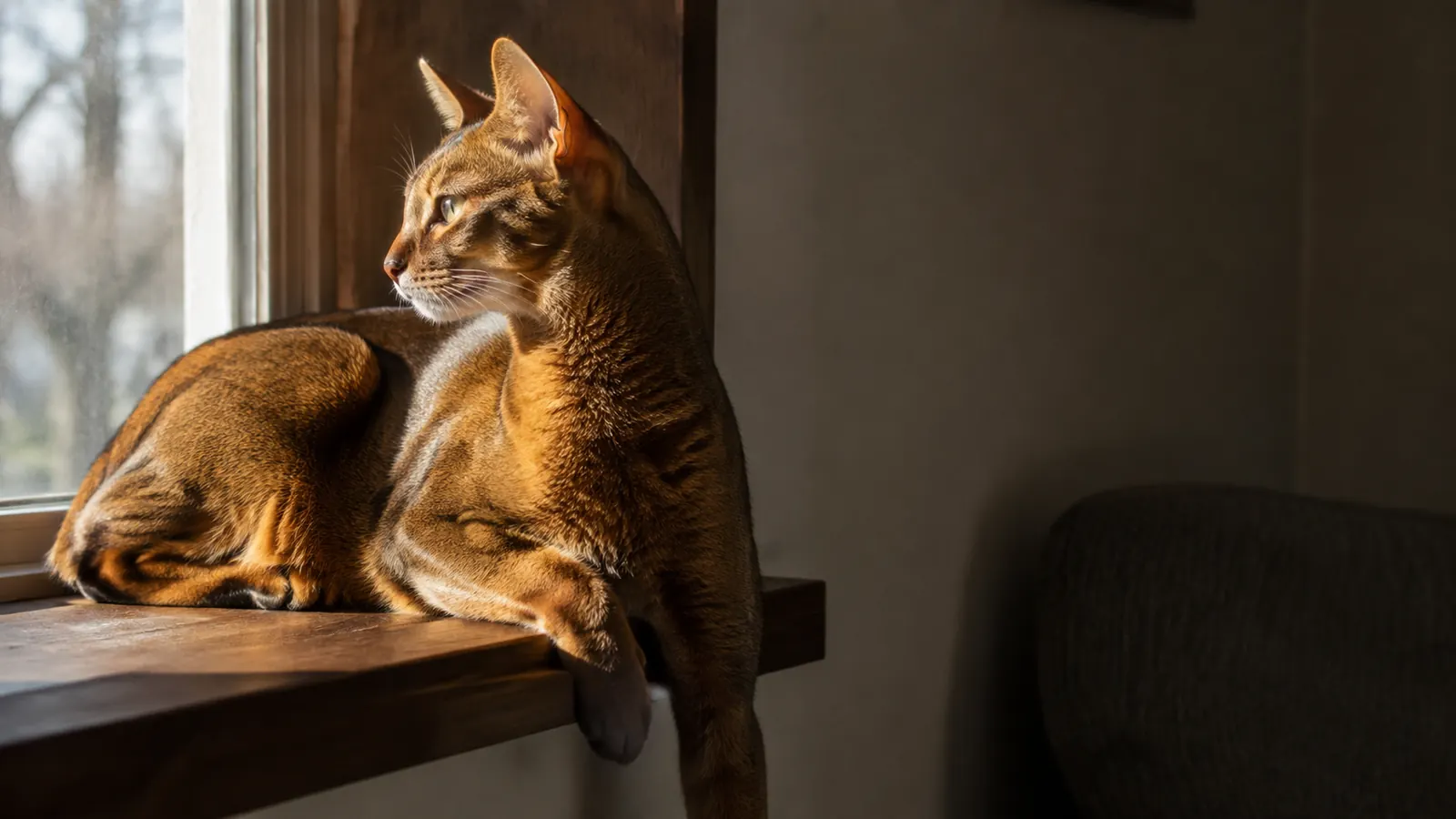
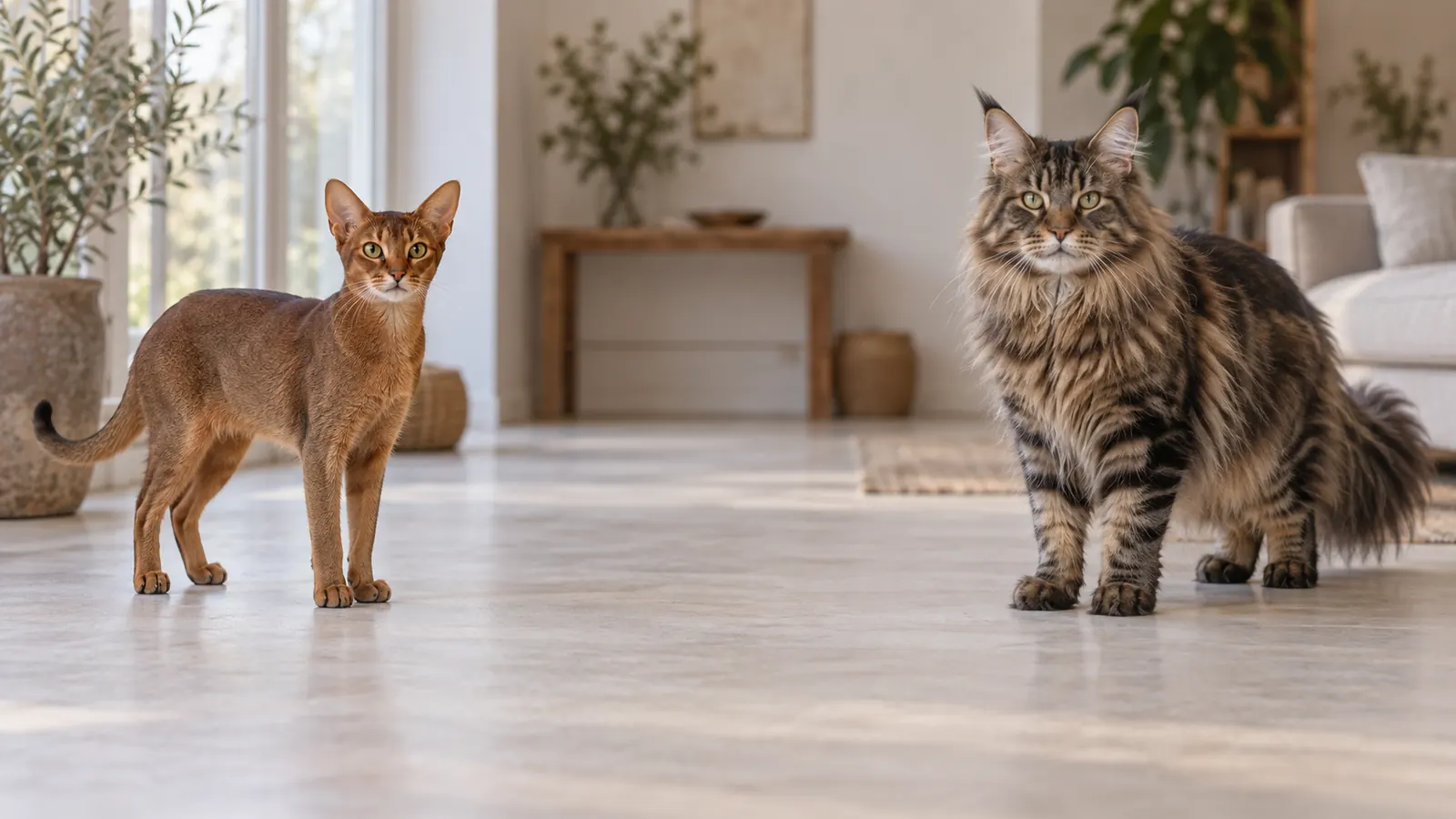
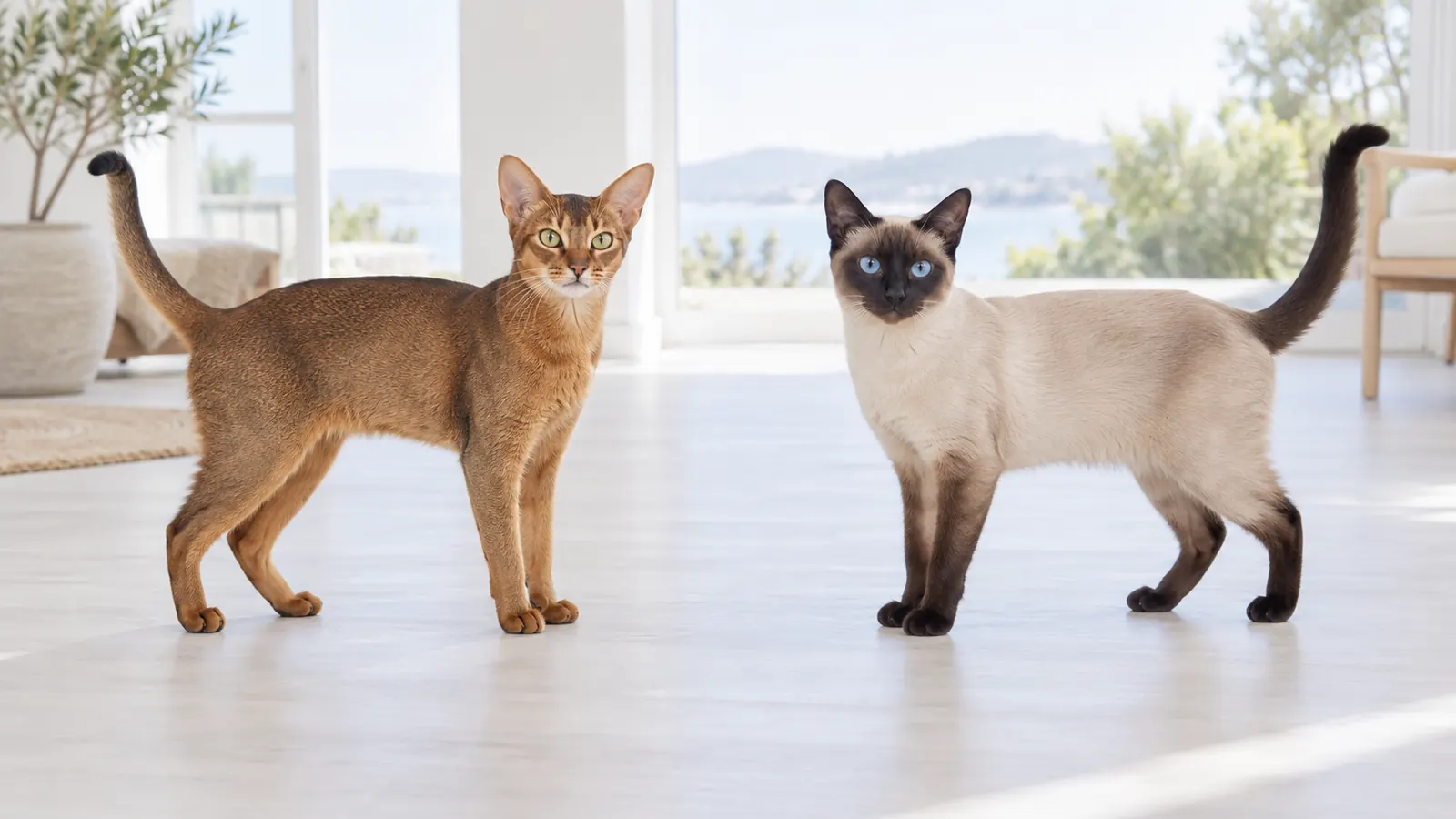
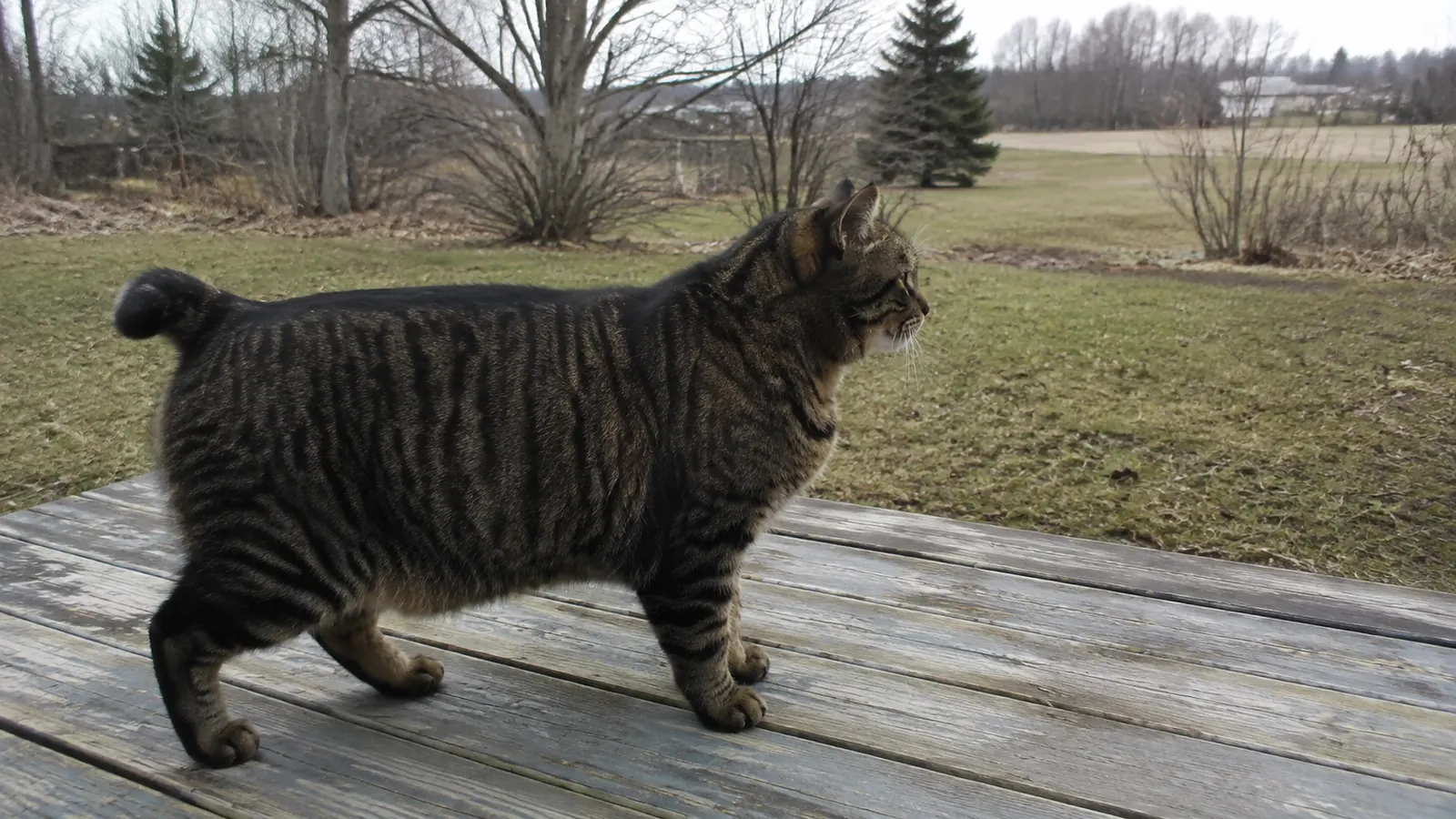
Medium, muscular and unexaggerated, which is what a working island cat looks like.
The coat is semi-long and moderate rather than dramatic, and the colouring is usually bicolour or tricolour, with white covering anywhere from a quarter of the cat to almost all of it.
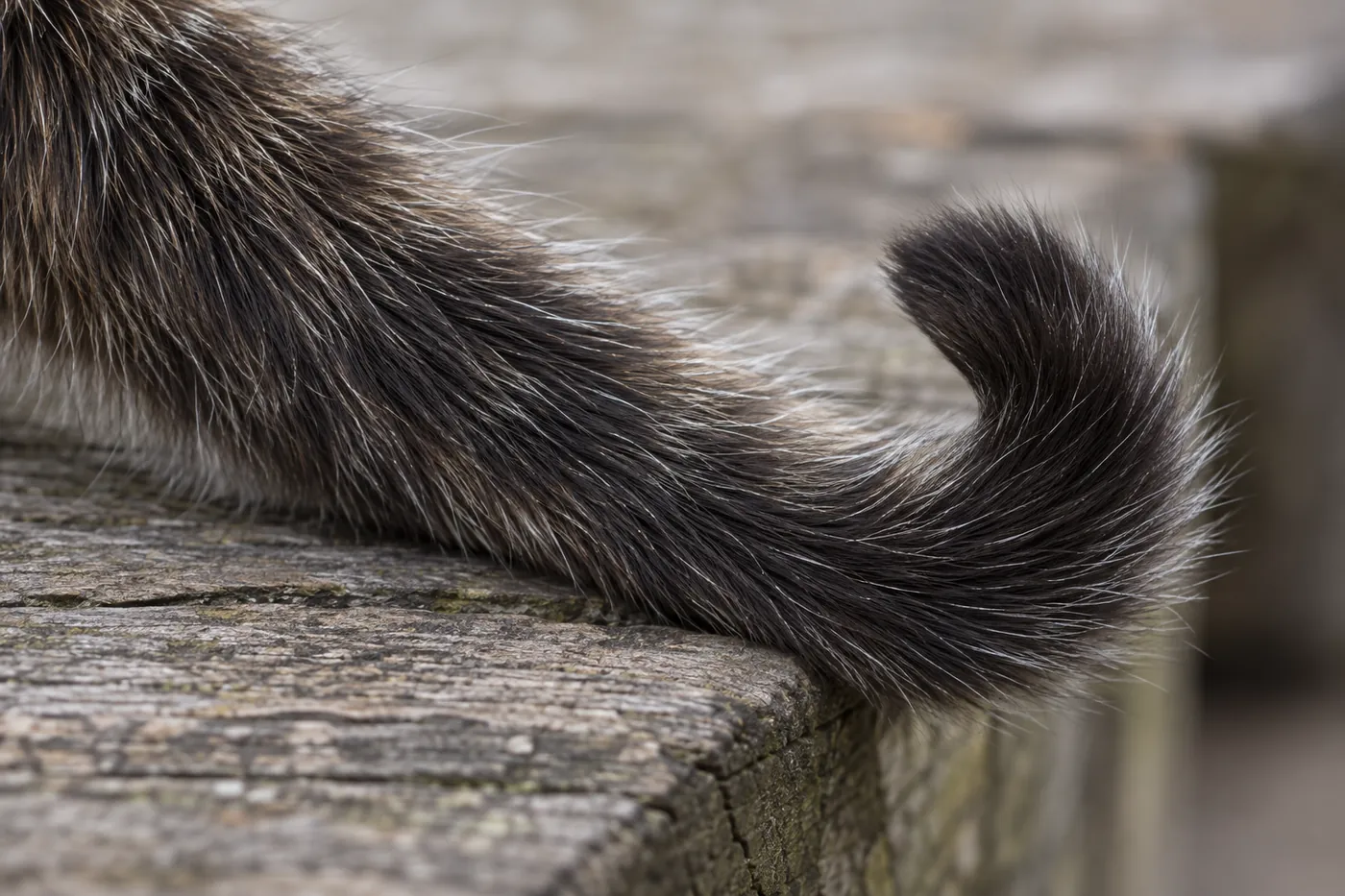
Eyes are almond-shaped and run green, blue or yellow. The ears are wide at the base with rounded, hair-covered tips, and the tail is long and often finishes in a distinct hook.
Because nothing is enforced, the variation between individuals is the point rather than a fault.
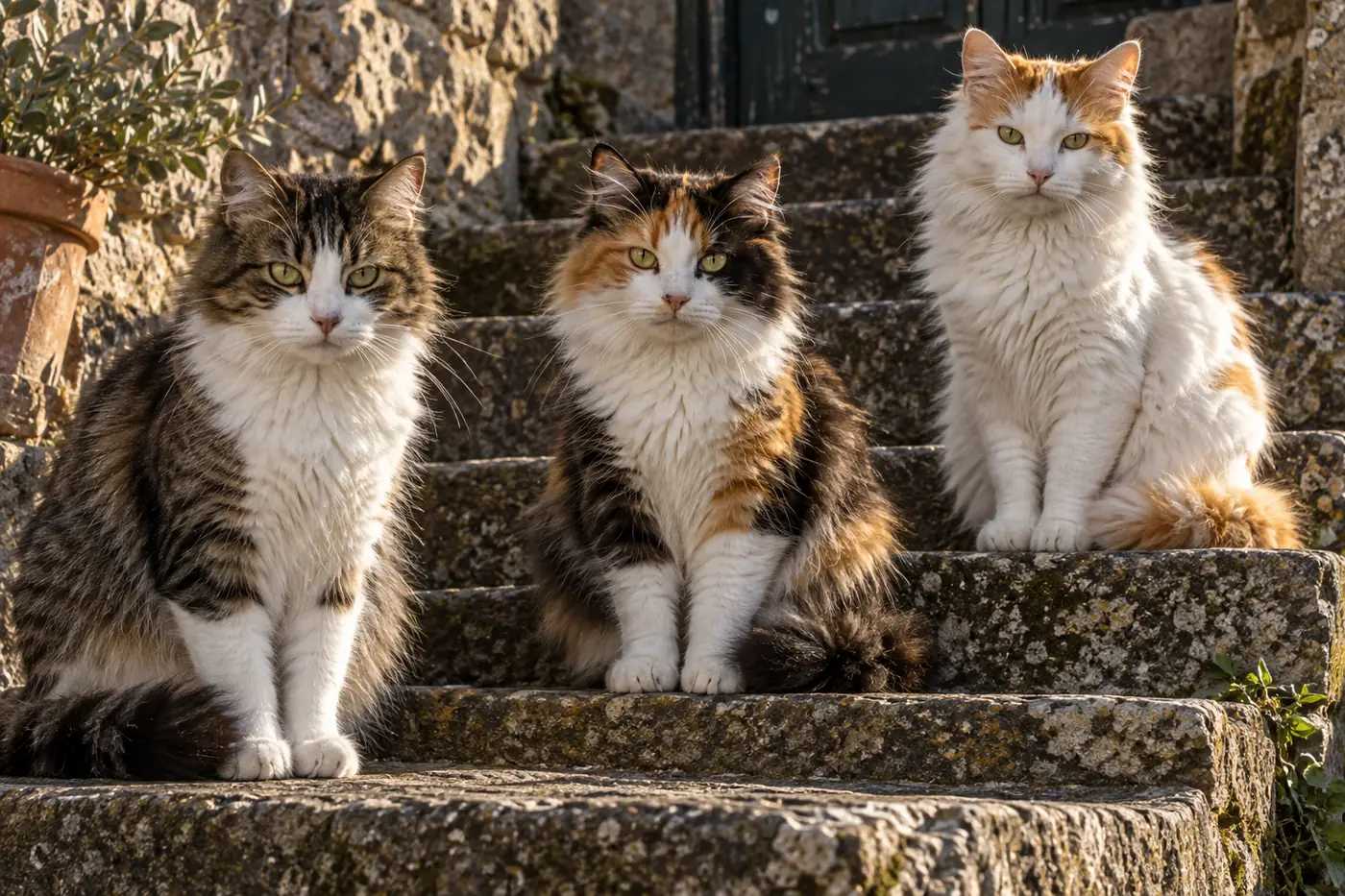
If you are shown a litter where every kitten matches a photograph, that is a sign of selection toward a look rather than evidence of the landrace.
The same logic applies to temperament, and it is the part buyers underestimate. A selected breed has been bred toward a described character for generations, and a landrace has not.
So the spread of personality across Aegean cats is wider than the spread within a pedigree breed, and the descriptions below are a central tendency rather than a specification.
That is an argument for meeting the individual cat, and a strong argument for adopting an adult whose character is already formed and observable.
How does the fishing-port history show up at home?
As a confident, talkative cat that expects to be involved.
Aegeans have lived alongside people for centuries in places where cats and fishermen shared the harbour, and the population was shaped by cats that approached people successfully. That selection means the modern cat is described as intelligent, active and communicative, and notably willing to get your attention rather than wait for it.
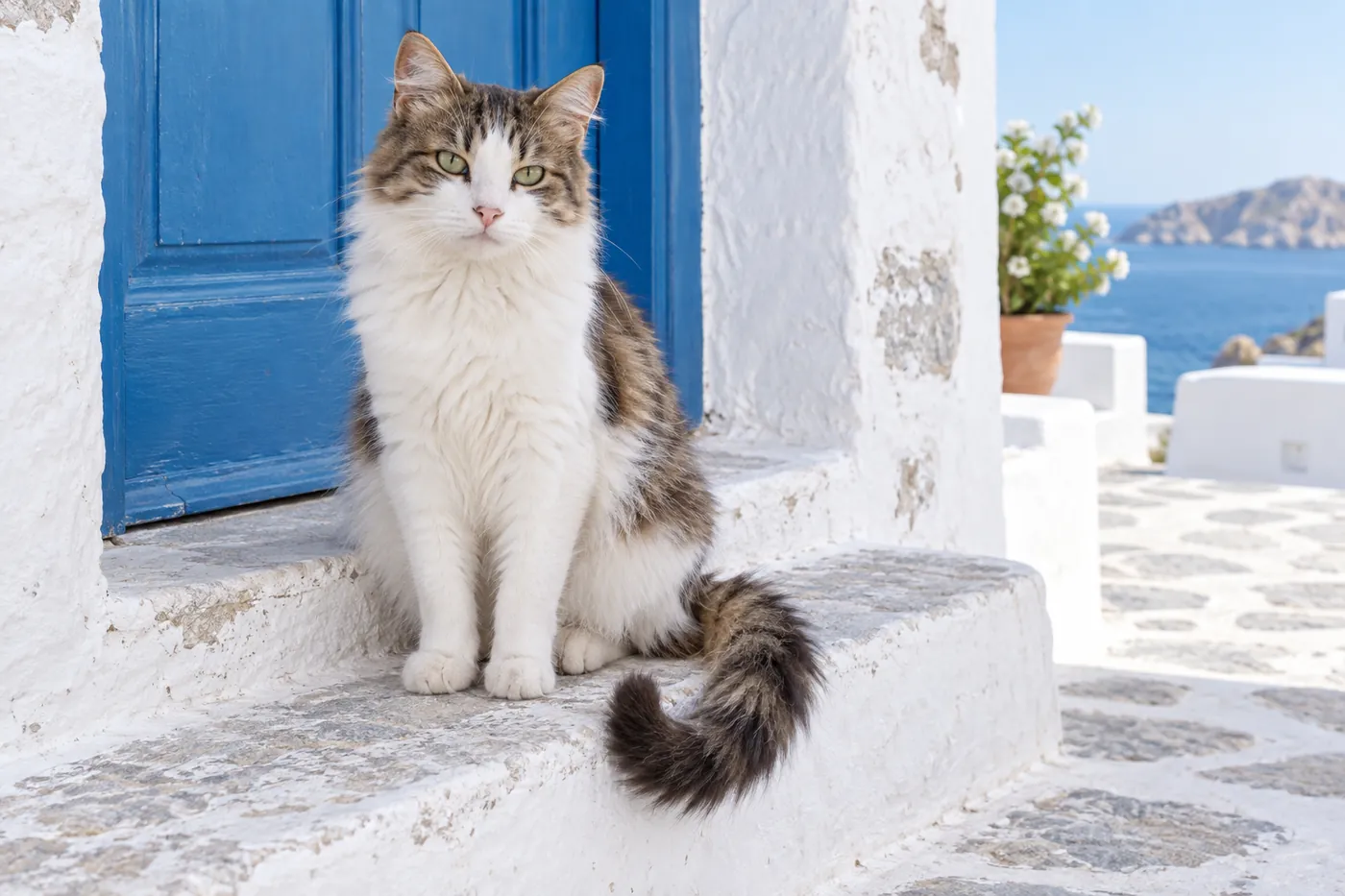
They adapt well to apartments despite the activity level, which follows from the same history: these are cats used to small, busy, enclosed spaces rather than open country.
Expect vocal negotiation about food and doors, and plan for the interactive play that an active cat needs. A scratching post tall enough for a full stretch and some height to work with covers most of it.
What does an Aegean need day to day?
Less than the semi-long coat suggests.
These are medium cats, usually somewhere around seven to twelve pounds, built for work rather than for size. Nothing about the frame is exaggerated, so the usual equipment fits without special thought.
The coat is moderate rather than long, and a weekly comb through the ruff and tail generally covers it, with a second pass during a seasonal change.
Shedding is ordinary. There is no dense undercoat to release in the way a northern longhair does, and the grooming tools that matter are a comb and a pair of clippers rather than a kit.
Activity is the real requirement. Plan for daily interactive play, because a bored active cat that is also confident and vocal becomes a household problem quickly.
With children and with other cats the reports are good, which follows from a population that survived by getting along with whatever was in the harbour. Introductions still need the ordinary care, and a cat that grew up outdoors may want more retreat space than one raised indoors.
Is there anything specific about feeding one?
No, and the honest answer matters because a landrace invites invented requirements.
There is no Aegean nutritional profile, no breed-specific sensitivity and no reason to buy anything other than a complete food appropriate to the cat's life stage.
What does apply is the history. A cat that has scavenged is often a fast, anxious eater at first, and food that disappears in seconds is a settling behaviour rather than a measure of appetite.
Measured meals at fixed times fix most of that within a few weeks. The portion-size guide covers how to convert a daily figure into portions, and puzzle feeding slows a cat that bolts.
Watch the weight in the first six months in particular. A cat that has been short of food will often gain quickly once it is not, and the gain is easy to read as thriving when it is overshooting.
Do Aegeans really fish?
They are noted for an affinity for water and for fishing, which is unusual and appears to be genuine rather than folklore.
The mechanism is straightforward. Island cats that would work a shoreline, take fish scraps and tolerate getting wet had a food supply that other cats did not, so the tolerance was selected for rather than trained into them.
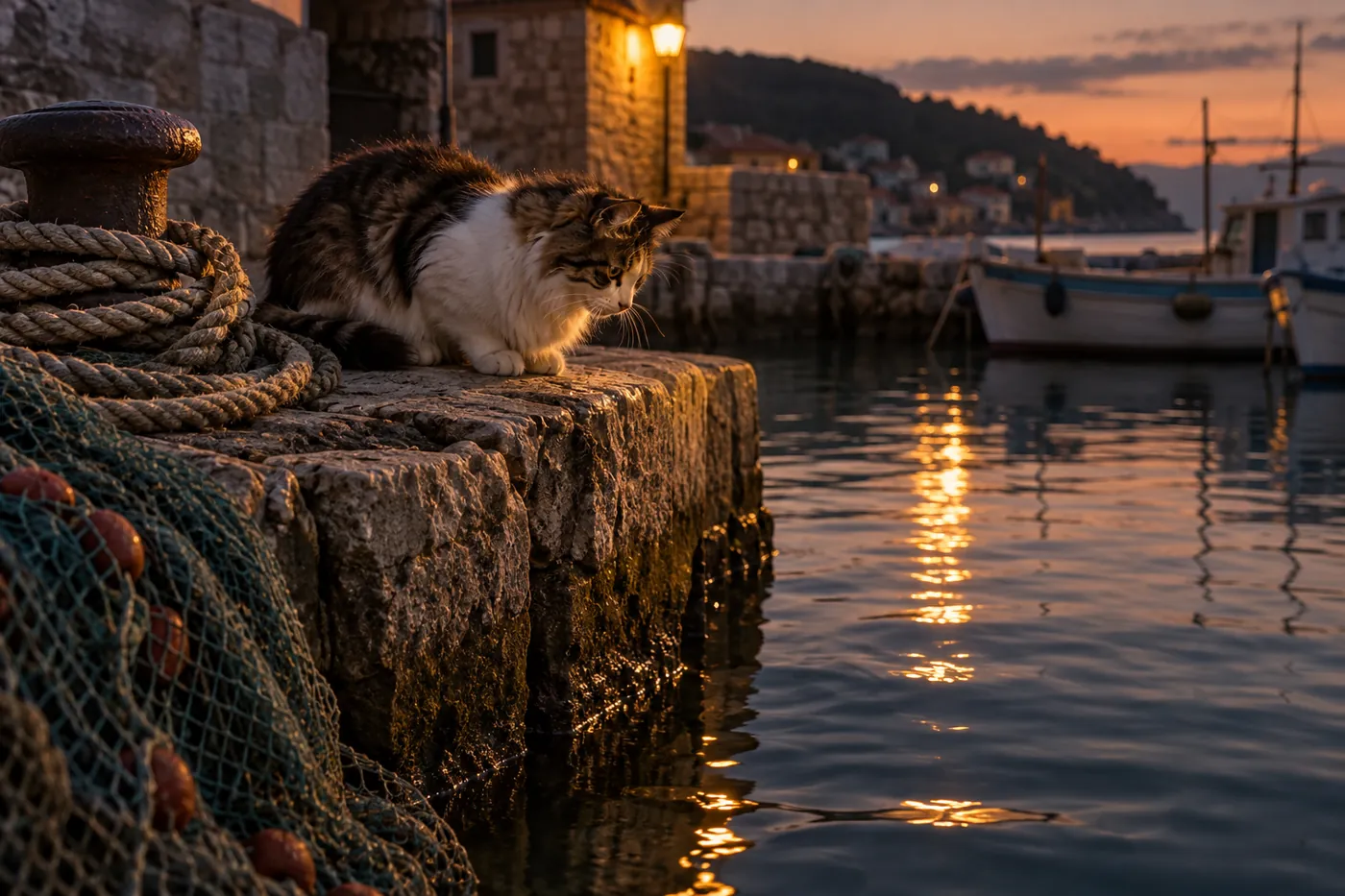
At home this shows up as interest rather than as a requirement: water bowls investigated, taps watched, and less of the flinching that most cats show around water.
It is not a reason to provide water features, and it is not a reason to bathe the cat. Treat it as a temperament note that makes routine care, including the occasional necessary wash, easier than it would otherwise be.
What is known about Aegean cat health?
Very little has been measured at breed level. Aegeans are often described as robust, but a landrace label and a broad gene pool do not prove that an individual cat is free of inherited or acquired disease.
No established breed screening panel was found for this population. That is an absence of breed-specific evidence, not evidence that the population has unusually good health.
Because there is no breed panel to run, the useful spending is on the ordinary things: a full examination, vaccination, parasite treatment, neutering, and a dental baseline.
Life expectancy has no breed figure behind it. UK primary-care records put median life expectancy across all cats at 11.74 years, with crossbred cats at 11.9, and a mixed-ancestry cat sits naturally in that picture.
The conditions that shorten a cat's life at that end are dental disease, weight and kidney function rather than anything specific to the islands.
One caveat belongs with an adopted adult. A cat of unknown age arrives with an estimate rather than a birthday, and dental wear is the usual basis for that estimate.
Dental wear is a rough guide at best in a cat that has eaten whatever it could find, so treat an age on a rescue form as a working figure and expect a veterinary opinion to move it.
Where do you actually find one?
Through rescue far more often than through a breeder.
Aegeans remain common as free-living cats across Greece and Turkey, where they are regarded as something close to a national treasure, and Greek shelters and rescue organisations regularly place them internationally. That route has a real advantage over a kitten purchase: the cat is usually an adult, so its size, coat, temperament and health are visible facts rather than predictions.
- Ask for the cat's veterinary history, vaccination record and neutering status in writing
- Confirm what import and travel paperwork the rescue handles and what you must arrange
- Ask how the cat behaves with people, other cats and confinement, and for how long it has been observed
- Budget for a full veterinary examination in the first week, whatever you were told
- Expect an adjustment period if the cat has lived outdoors
- Be sceptical of any seller offering pedigree papers or a rarity premium
What should be tested before an imported cat travels?
More than a pet passport, and this is the part the recognition question actually leads to.
A cat from a free-living Mediterranean population has a different exposure history from a kitten raised in a breeder's home, and the useful screening follows that history rather than any breed list.
A prospective Greek study of 435 cats found FeLV antigen in 3.9 percent and FIV antibodies in 9.2 percent. It included client-owned, stray and cattery cats, so those figures are not an Aegean breed estimate; they show why outdoor access, origin and individual exposure history matter.
A separate Greek study found gastrointestinal parasites across a mixed population and linked risk to factors such as outdoor access and stray status. The practical response is targeted testing and parasite control based on where the cat lived, not a diagnosis based on its name.
| Test | Why it applies to this cat | What the result cannot settle |
|---|---|---|
| FIV and FeLV | Unknown outdoor exposure and contact history can change risk | A recent exposure can still test negative, so timing matters |
| Faecal analysis | Outdoor and stray histories increase exposure to intestinal parasites | One clear sample does not clear every intermittent shedder |
| Ringworm check | Common in shelter and street populations, and transmissible to people | An unremarkable coat does not rule it out |
| Vector-borne screening | Some Mediterranean organisms are regional rather than universal | Which tests apply depends on where the cat actually lived |
The FIV and FeLV timing point is the one most often missed. A cat exposed shortly before testing may not yet have produced a detectable response, so a single negative on intake is a starting position rather than a clearance, and a retest after the recommended interval is the answer rather than a second opinion.
Ask the rescue which tests were run, on what date, and whether any are scheduled to be repeated after arrival. A reputable organisation will have the dates; the ones that matter are the dates rather than the results alone.
How do you settle a cat that has lived outdoors?
Slowly, in one closed room, and with lower expectations for the first fortnight than you would set for a kitten.
A cat that has been managing its own territory has no experience of doors it cannot open, and the transition is genuinely harder than it is for an indoor-reared animal.
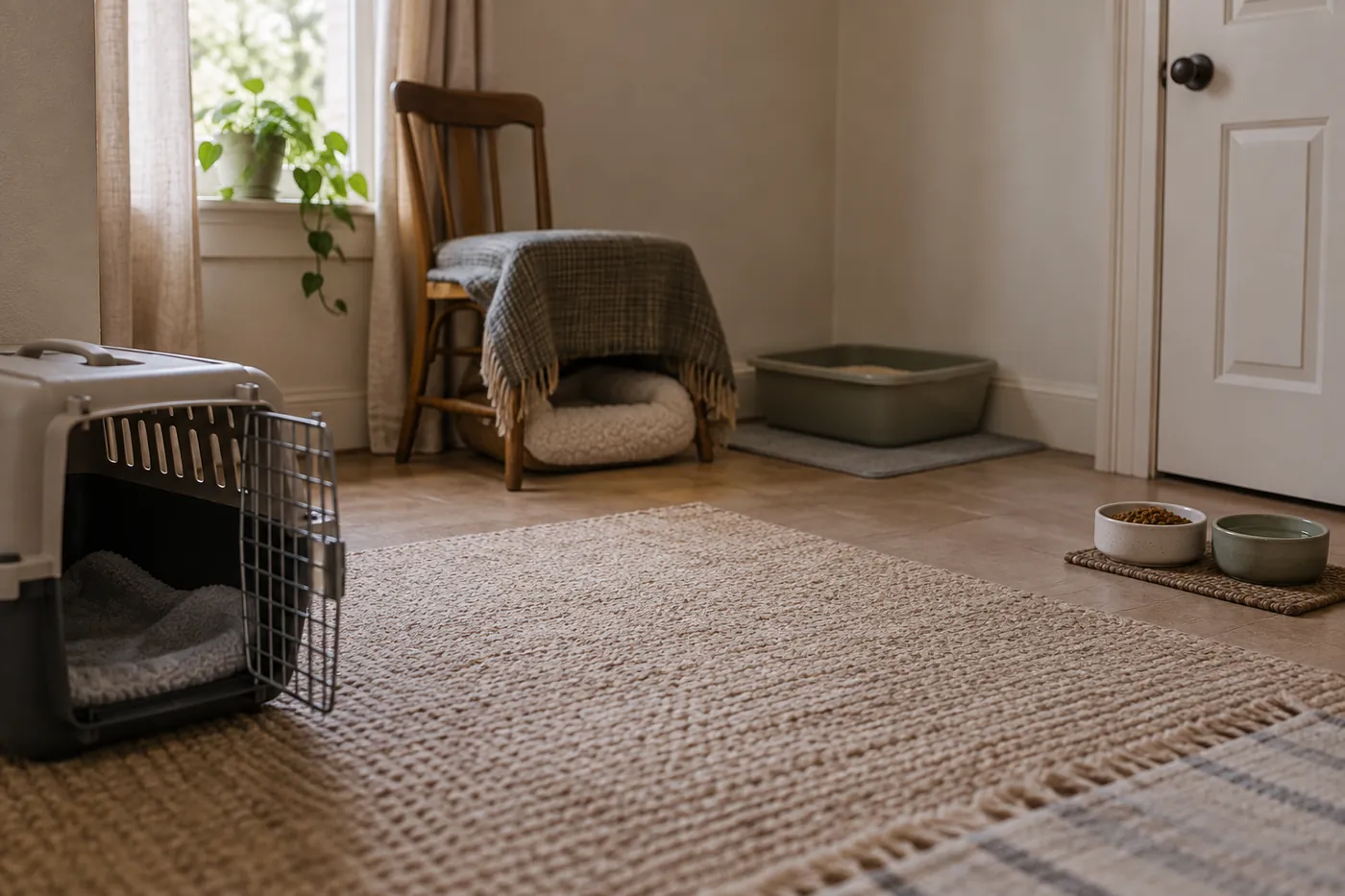
- Give the cat one closed room with a covered retreat it can get fully inside
- Put the tray in the far corner and the food and water well away from it
- Leave the carrier open in the room, because it is the only familiar object the cat owns
- Sit in the room without approaching, and let the cat decide when to come out
- Keep resident animals separated entirely until the veterinary results are back
- Swap bedding between the rooms before any face-to-face meeting
- Open the door on the cat's terms rather than to a schedule
Separation protects a slow introduction and prevents fights while the new cat's health is assessed. FIV and FeLV are not spread through air or ordinary indirect contact, but separate bowls, trays and bedding still limit exposure to other infections and parasites until a veterinarian has set the testing plan.
The indoor question then arrives, and it deserves a straight answer. A cat used to open territory will ask to go out, and letting it out into unfamiliar ground before it has bonded to the house is the commonest way these adoptions end badly.
Keep the cat in for several weeks at minimum, and if outdoor access is the plan, introduce it into a secure enclosure or under supervision rather than by opening a door.
Some cats never fully settle to indoor life, and an honest rescue will tell you which of theirs are candidates for a garden household rather than a flat.
The honest summary is that you are adopting a domestic cat with a place name attached, and the place name predicts less than the individual history. Temperament, health records, outdoor exposure and behaviour in foster care are more useful than a broad claim about the population.
Checked Against
- Life tables of annual life expectancy and risk factors for mortality in cats in the UK pmc.ncbi.nlm.nih.gov
- Feline retrovirus management guidelines pmc.ncbi.nlm.nih.gov
- Prospective study of FeLV and FIV infection in cats in Greece pubmed.ncbi.nlm.nih.gov
- Gastrointestinal parasites of cats in Greece pubmed.ncbi.nlm.nih.gov
Published 10 September 2026. Last updated .