How Much Should You Feed a Cat, and How Do You Adjust?
The feeding guide for a suitable complete food is the starting point, and actual intake, weight and body condition show how to adjust it. Mixed meals and treats count toward one daily total.

The feeding guide for a complete food appropriate to your cat's life stage gives a starting estimate, and weight, body condition and what your cat actually eats show whether the amount is right. For an overweight, underweight or unwell cat, a veterinarian should set the target before the ration changes.
Start with the whole day's food
A feeding guide usually describes the whole day's amount rather than one meal's. A cat fed both wet and dry food therefore gets a share of each allowance, never the full daily amount of both, and the shares come from how much energy each food contributes, counting treats, food used for tablets and anything supplied by other people.
For example, a cat with a vet-agreed allowance of 220 calories that eats 160 calories from wet food has 60 left for dry food and treats combined. If dry food supplies 4 calories per gram, those 60 calories would be 15 g with no treats. The example shows how to combine foods; 220 calories is not a universal feline requirement.
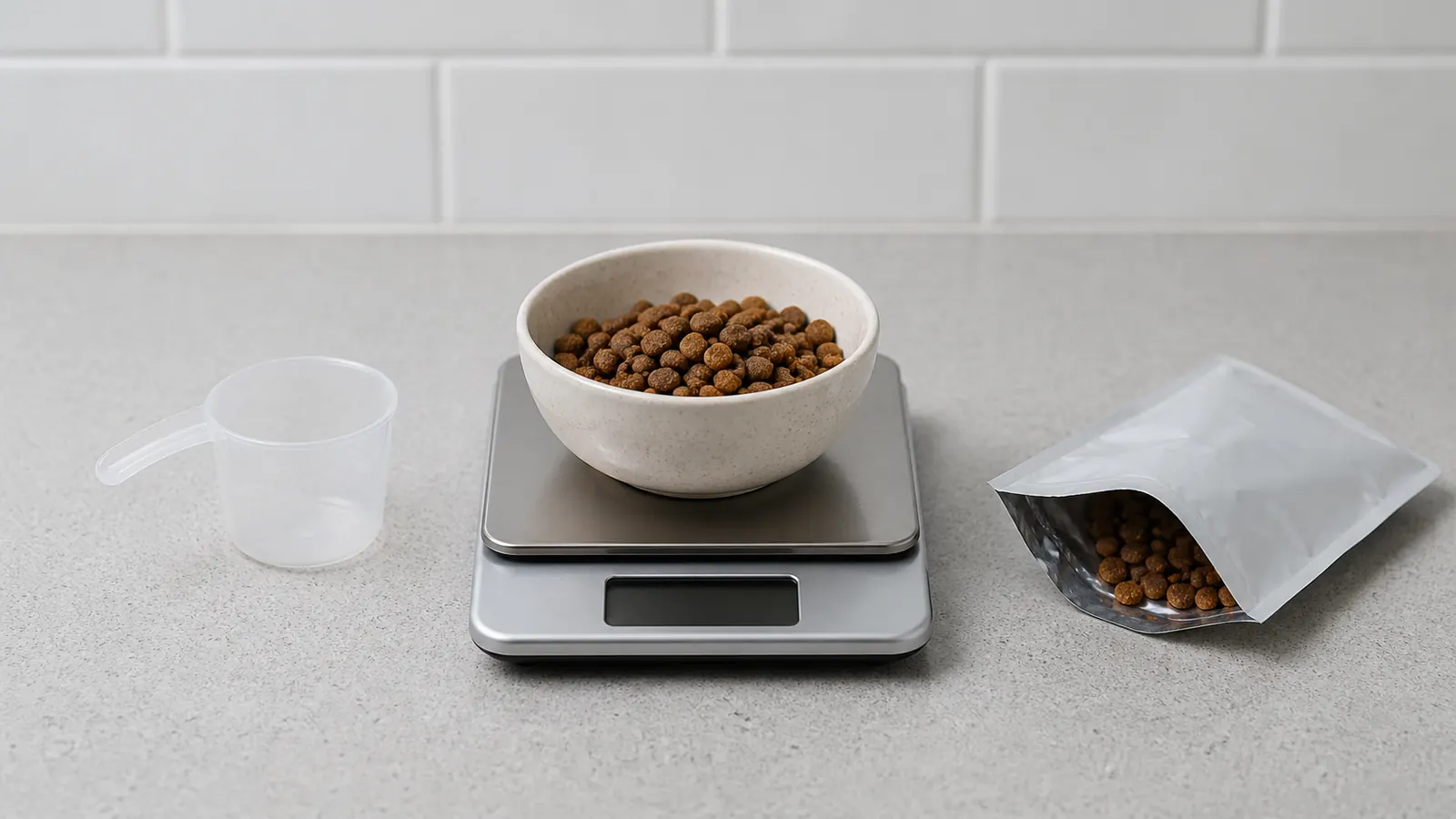
An estimate of daily calories, converted from the label's units, gives the daily quantity. Weighed into a container before the first meal, it lets everyone in the household feed from the same allowance without double-feeding.
Check body condition as well as weight
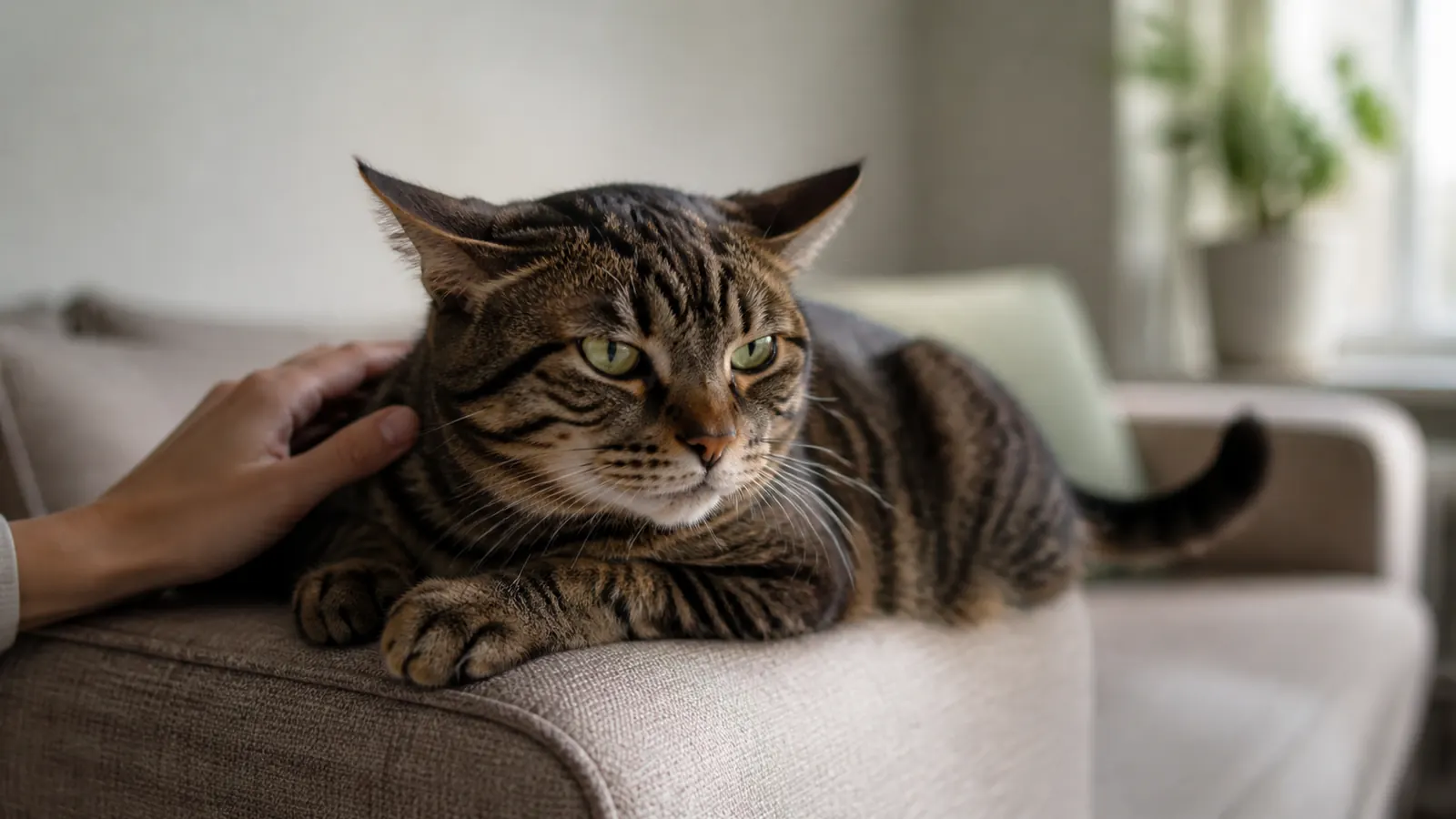
Weight tells you whether a cat is changing; body condition helps interpret what that weight means. A large-framed cat and a small-framed cat can weigh the same while carrying different amounts of fat. A long coat can hide both fat gain and muscle loss.
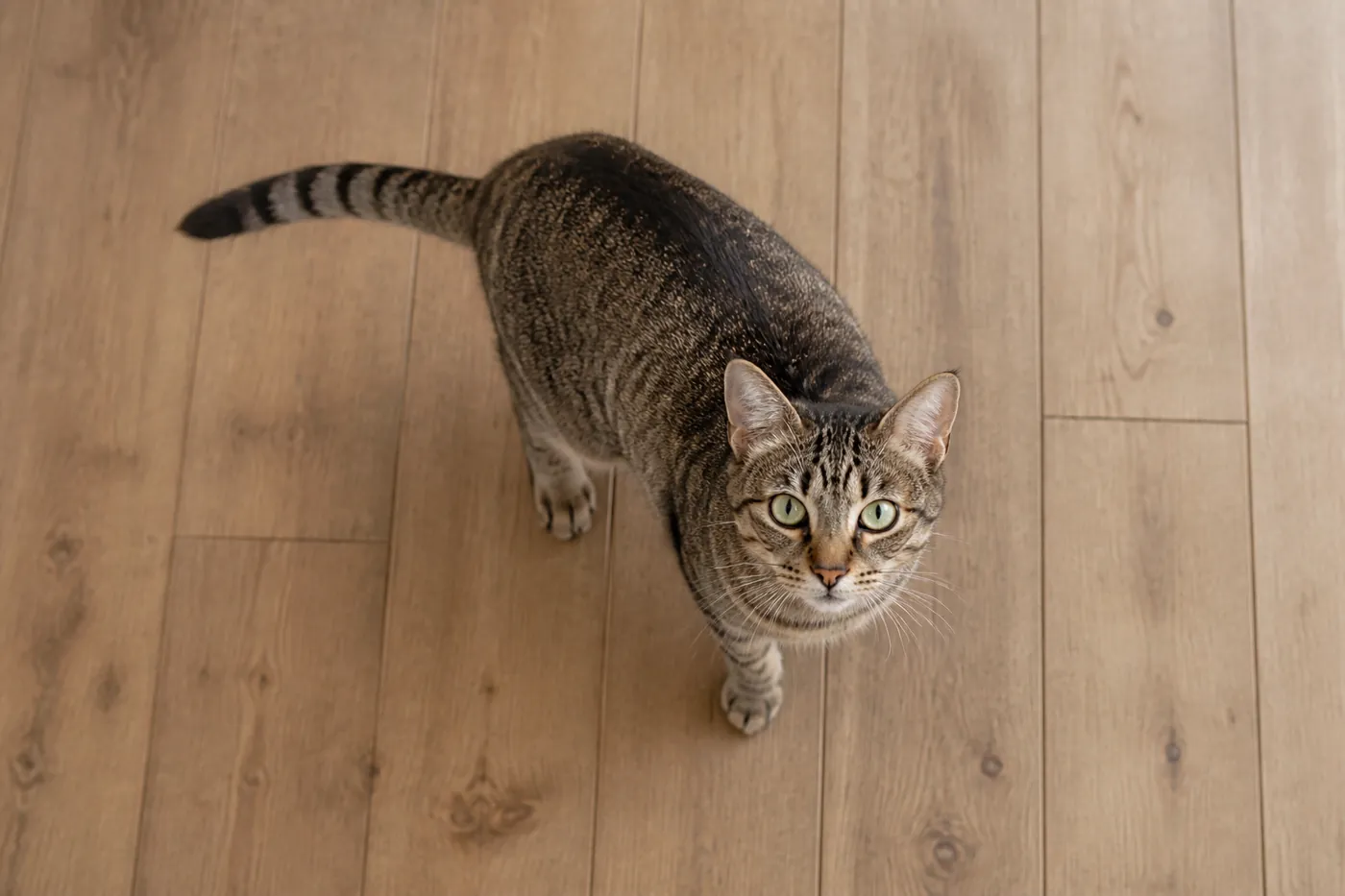
At an appropriate condition, the ribs are generally easy to feel under a light covering and there is a waist behind them when viewed from above. Ask the veterinary team to show you the nine-point body-condition chart on your own cat.
A hanging abdominal pouch alone does not establish obesity, and a prominent spine or reduced muscle also needs attention.
Record weights using the same suitable scale and arrangement so that the trend is comparable. A bathroom-scale subtraction may be too imprecise to detect a small change; your practice can advise on weighing.
Adjust without crash dieting
If a healthy adult is slowly gaining or losing condition, discuss a modest ration adjustment and an appropriate recheck interval. A change around ten percent can be a practical starting adjustment in a feeding plan, but it is not a guarantee of safety for an individual cat or a substitute for establishing why weight changed.
A weight-loss plan sets a target, a suitable complete diet and a monitored rate of change. Simply serving much less of a maintenance food can also cut essential nutrients.
Unplanned loss, increased thirst or weight loss despite a good appetite needs investigation, including possible thyroid disease, rather than another portion change.
Kittens, neutering and older cats
Kittens need a diet for growth and frequent opportunities to eat. Their portions change as they grow; a small stomach does not remove the need for enough total food.
After neutering, energy needs may fall while appetite remains strong, so review feeding with the practice rather than applying an automatic cut to every kitten.
Pregnant and nursing cats have different requirements again. Ask for a plan appropriate to the stage and litter size rather than using an adult-maintenance allowance.
Older cats vary in activity, digestion and muscle condition. A birthday is no reason to cut food, and weight loss in an older cat is not something to put down to normal ageing.
A senior that struggles to chew, groom or reach its bowl may need treatment and an easier feeding arrangement as well as a different portion.
Meals, grazing and begging
Several small meals can suit a cat while keeping the daily total unchanged. Measured grazing is also possible for some cats; the difficulty is unrestricted refilling or shared food that cannot be attributed to an individual.

Puzzle feeders and timed feeders can make the same allowance more engaging or separate breakfast from waking a person. Start with an easy puzzle the cat can solve and include its contents in the ration.
Begging alone does not prove underfeeding, but a new increase in appetite, especially with weight loss, needs a veterinary check.
Food that repeatedly comes back up cannot be put down to fast eating from its appearance, because regurgitation and vomiting have different causes and both can need examination. Smaller meals may help a fast eater, but persistent episodes are a vomiting question for a veterinarian.
Feeding more than one cat
Give each cat a place to eat without being displaced. Separate rooms or visual barriers can help; a microchip feeder may be useful when one cat needs a particular diet. Check that the intended cat can use it comfortably and that another cat cannot steal food alongside it.

Watch full meals occasionally and record each cat's weight. An empty shared bowl cannot tell you who ate enough.
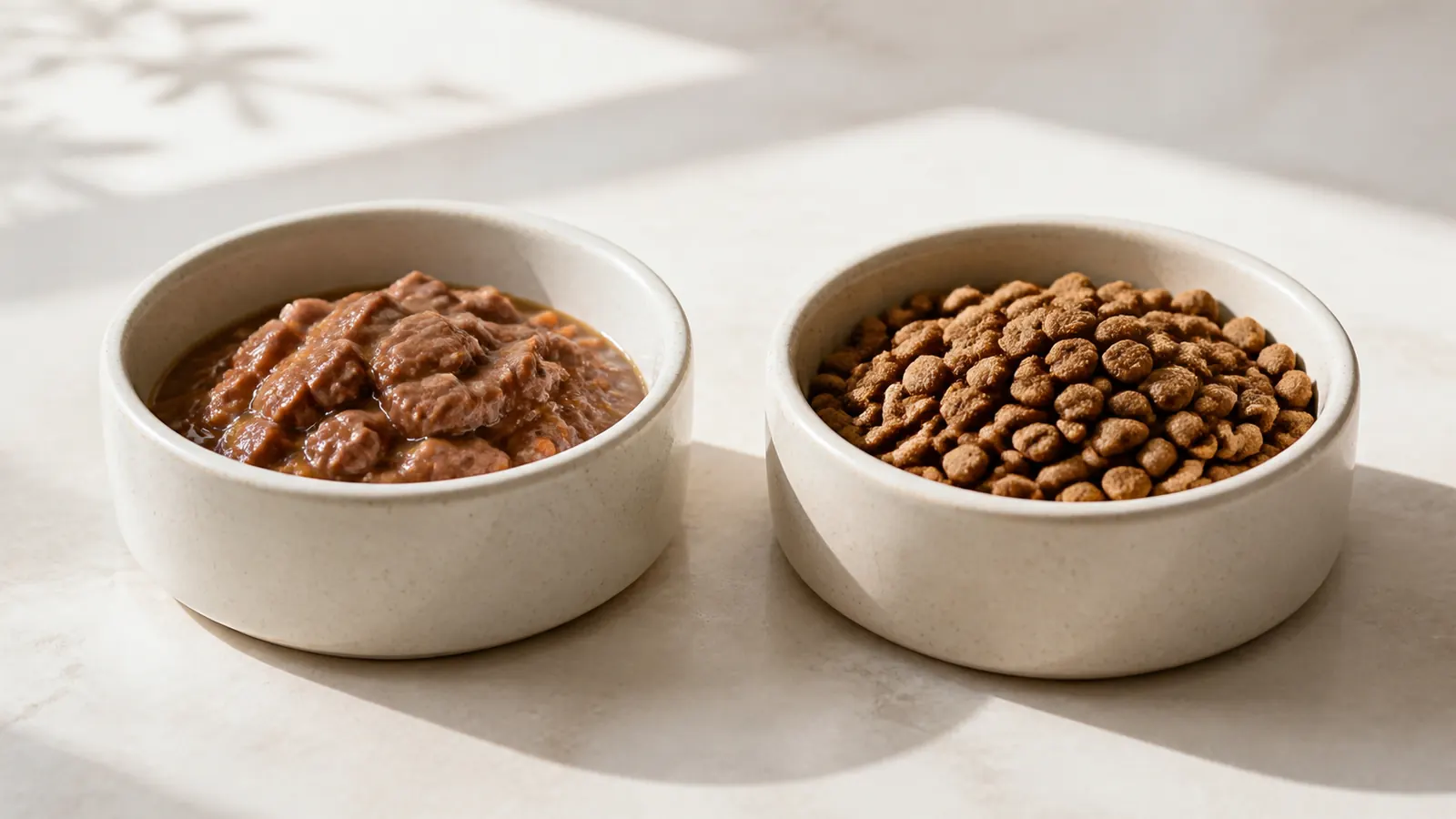
Wet and dry foods can both contribute to a complete feeding plan; their water and calorie densities determine how much of each fits the day.
Common Questions
Can I feed wet and dry food together?
Yes, if both are suitable for your cat and their combined calories fit the daily allowance. Do not serve the full daily ration of each.
Should I reduce food after neutering?
Requirements may fall. Review the portion with your vet and monitor growth, weight and condition rather than applying the same reduction to every cat.
Does begging mean I should feed more?
Not on its own. Check the planned allowance and body condition; a sudden appetite change or weight loss needs veterinary advice.
Checked Against
Published 22 May 2026. Last updated .