What Is an American Bobtail, and Does It Carry the Manx Tail Gene?
An American Bobtail can be a playful, social companion, but its short tail needs evidence rather than a blanket comparison with the Manx. Judge comfortable movement, toileting, family history and the individual's veterinary records.

- Origin
- United States, from a short-tailed cat picked up in Arizona in the 1960s
- Coat
- Double coat in two lengths, the longhair carrying its length at the ruff, britches, belly and tail
- Size
- Medium to large, moderately long and substantial, with a rectangular stance
- Typical weight
- Typically 3.2 to 5 kg for females, 5 to 7.3 kg for males
- Life expectancy
- No breed figure has been published, and the UK life tables report one for only twelve breeds
- Activity level
- Moderate. Athletic and well muscled rather than restless
- Grooming
- Low to moderate. A weekly comb, and four longer areas on a longhair
- Suits
- Buyers who can visit the litter, see the parents, and check the kitten's tail
Which bobtail gene does an American Bobtail carry?
The breed starts with one cat. A short-tailed brown tabby called Yodie was picked up in Arizona in the 1960s by John and Brenda Sanders, and every American Bobtail descends from that line.
Bred to a seal point Siamese, Yodie produced short-tailed kittens in the first litter. One copy was enough to show the tail, which made the mutation dominant rather than something that needed both parents.
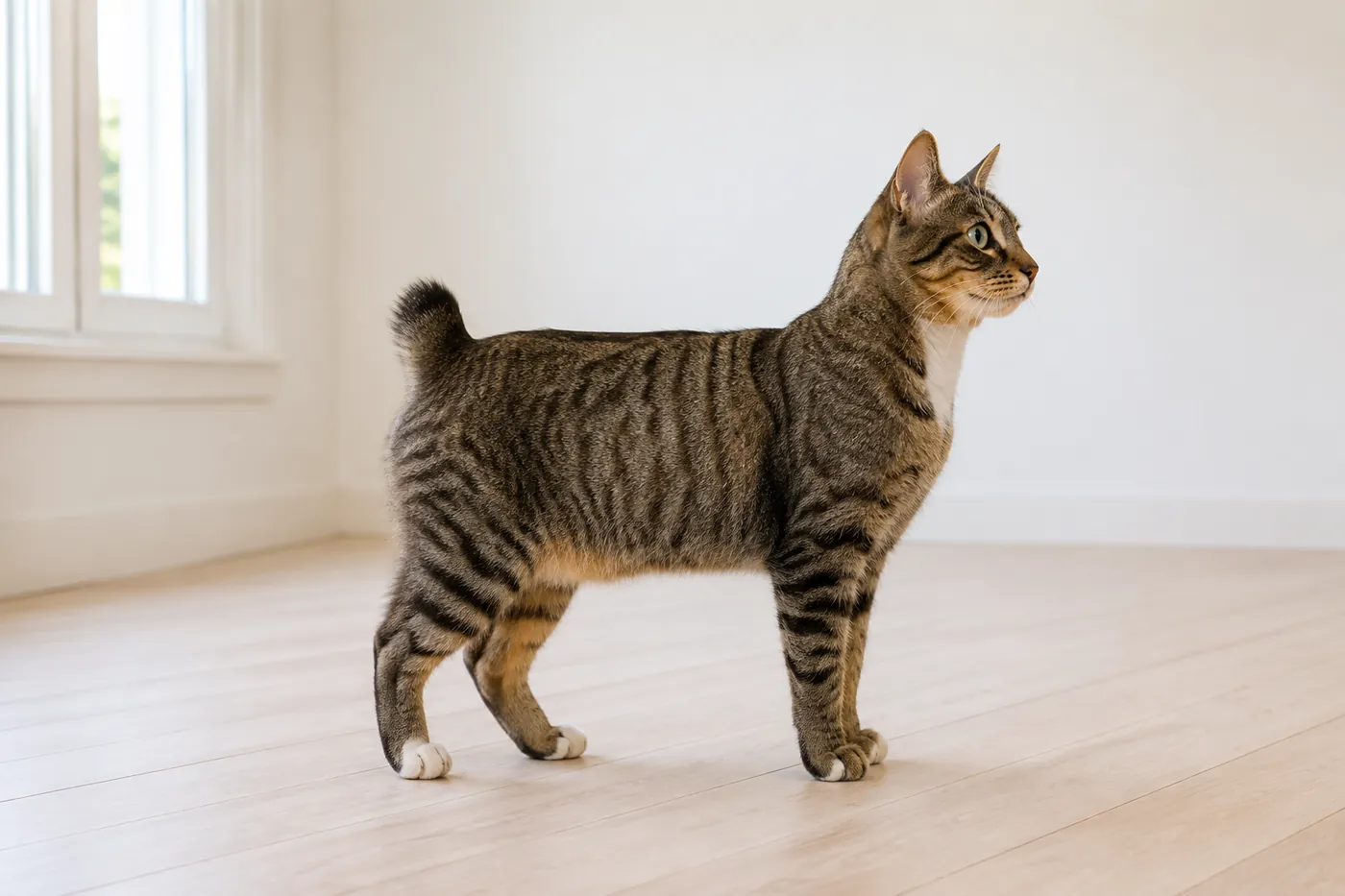
What it did not make it was predictable. Tails in the breed run roughly one to four inches and can be straight, kinked or bumped along the edge, and littermates differ from each other for reasons nobody controls.
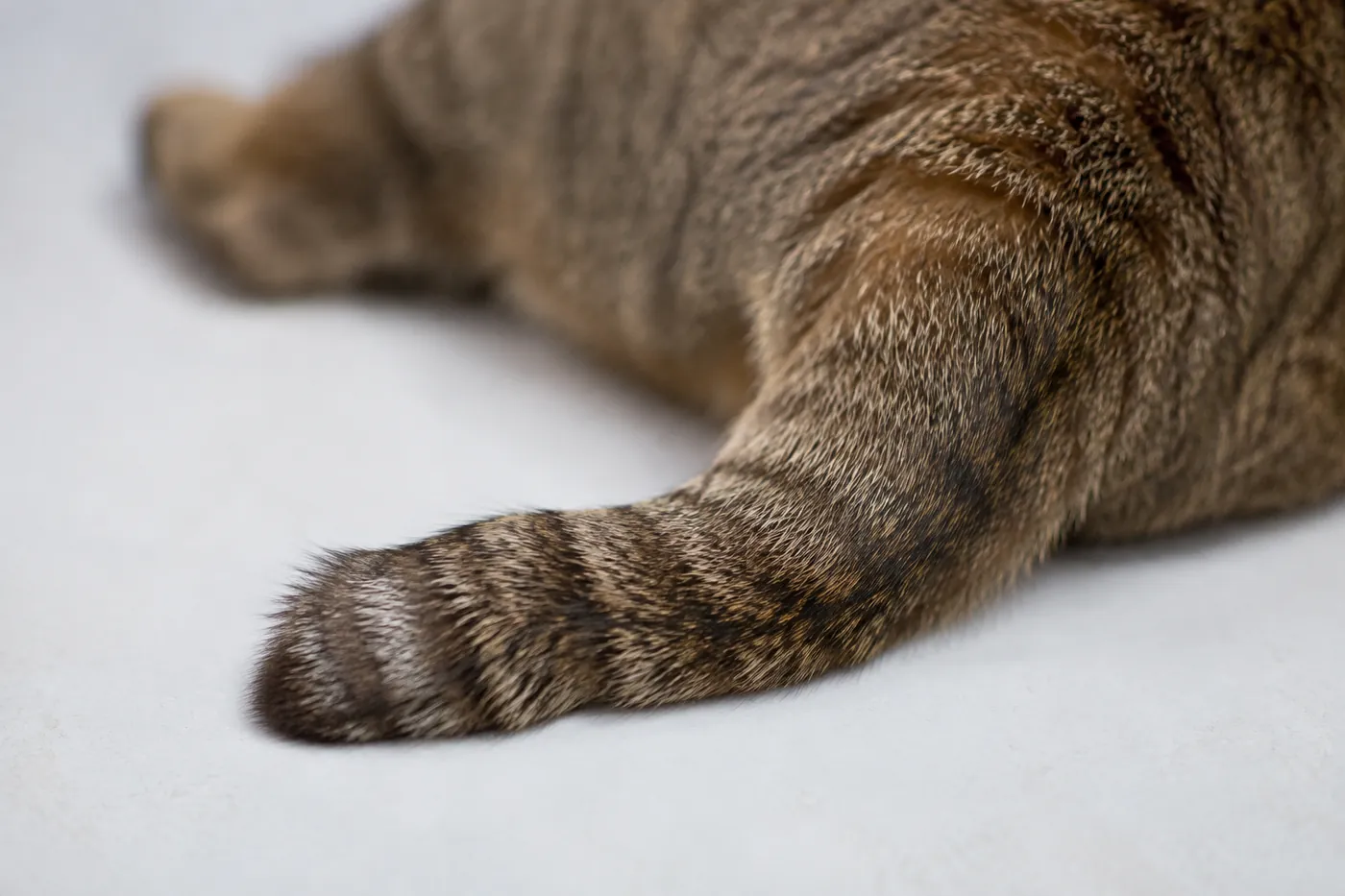
At the far end of that range a kitten arrives with no tail at all. Those are called rumpies, and no cat like that is kept in breeding.
Against that background, the same survey that observed the Manx variant here reported the opposite problem too. Photographic evidence confirmed several short-tailed American Bobtails carrying no known bobtail variant of any kind.
So the breed's tail has more than one genetic cause, and the paper's authors said plainly that they could not tell whether the three variants they tested explain every short tail. The honest position is that a pedigree tells you the breed and tells you nothing about which mutation the kitten in front of you carries.
What goes wrong in a Manx, and how much of it transfers?
Manx research links some shortened-tail variants with spinal and neurologic problems. That makes family history and function sensible questions for a bobtailed cat, but it does not supply an American Bobtail disease rate.
A tail's appearance cannot establish which variant the cat carries or whether its spinal cord is affected. Gait, tail comfort and bowel and bladder function are what a veterinarian can assess, and affected relatives and any genetic result are what the breeder can report.
A percentage from a Manx clinical or breeding sample describes the cats in that sample and cannot be carried across to every American Bobtail, because the Manx is a separate breed with its own evidence and care issues.
The American Bobtail and Manx share a shortened outline, but the evidence attached to their tails and the checks a buyer should prioritise are not interchangeable.
How can you judge an individual bobtailed kitten?
A kitten's whole-body function says more than its tail. It should walk and play comfortably and have an age-appropriate history of normal urination and defecation, because a short tail alone is neither a diagnosis nor a clearance.
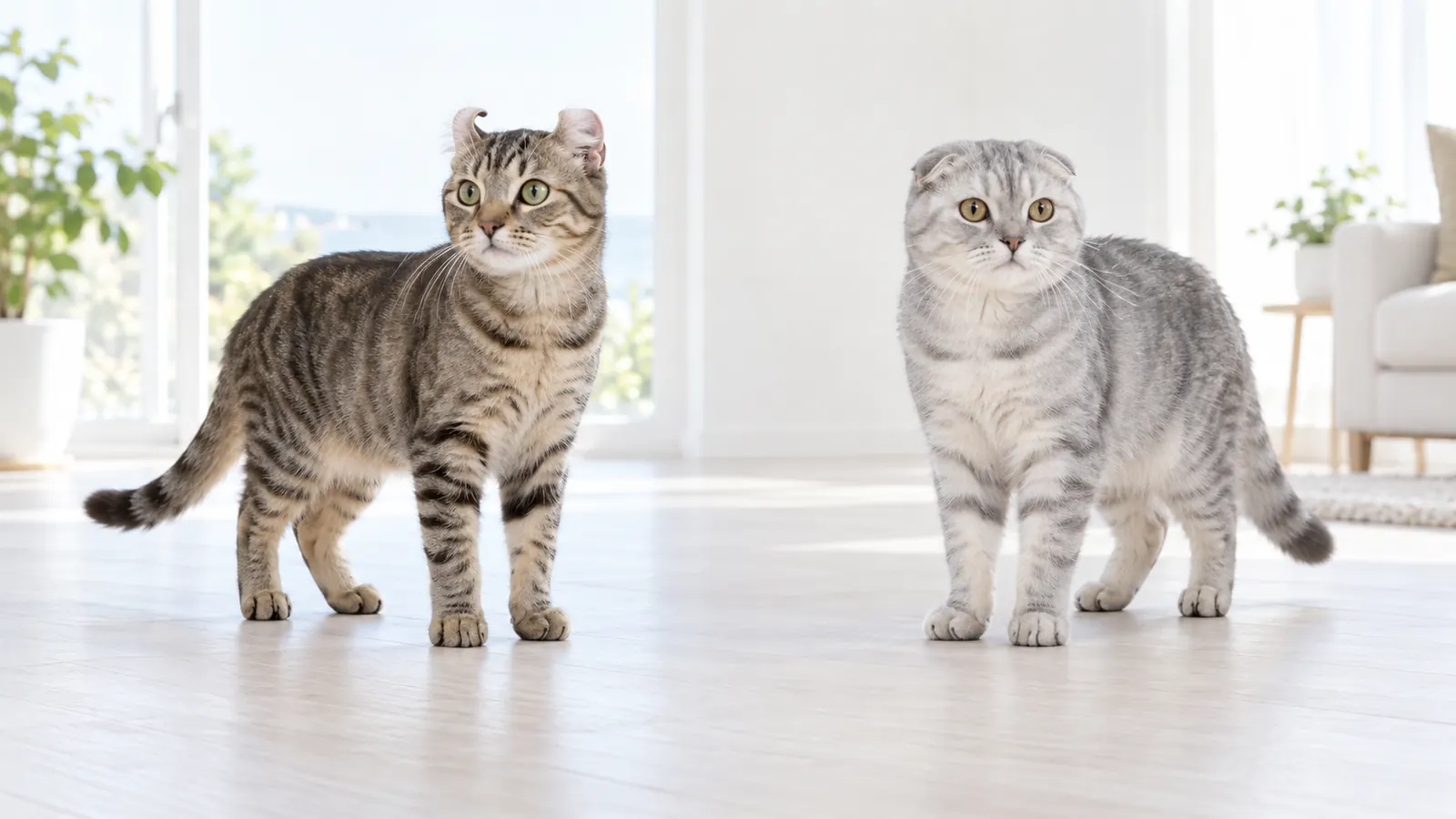
The American and Japanese Bobtails share a label rather than one tail structure or one genetic explanation. The Highlander can also have a shortened tail, but its curled ears and separate recent development do not establish American Bobtail ancestry.
Incontinence, repeated constipation, hind-limb weakness and pain in the cat or its relatives are the history worth asking about. New straining without urine, sudden weakness or marked pain needs urgent veterinary care, and a home test of tail flexibility cannot rule anything out.
A very short or absent tail deserves an individual veterinary assessment, because a Manx-like outline does not show that the risk matches a Manx.
Was the first American Bobtail really part bobcat?
Yodie looked wild enough that the story wrote itself. A local account made him the son of a bobcat and a domestic cat, and that origin has followed the breed ever since.
The mating that founded the breed is also the thing that disproves it. Yodie bred to a domestic Siamese and produced healthy, fertile offspring. First generation males from a wild and domestic cross are almost always sterile, so fertile sons rule the hybrid explanation out on their own.
The short tails in that litter finished the argument. They pointed to a spontaneous dominant mutation inside the domestic population rather than to anything inherited from a wild parent.
- The claim
- Yodie was the son of a bobcat and a domestic cat
- What happened
- He was bred to a domestic Siamese and produced healthy, fertile offspring
- Why that settles it
- First generation males from a wild and domestic cross are almost always sterile
- The tails
- Point to a spontaneous dominant mutation inside the domestic population
- Why the story survives
- The standard still rewards a wild look, so every generation seems to confirm it
The story survives because the standard still rewards a wild look, so every generation of buyers meets a cat that appears to confirm it. What a buyer is actually getting is an ordinary domestic cat with a documented mutation, and none of the paperwork or legal restriction attached to genuine hybrids applies.
How big does one get, and how long does it take?
The answer splits by sex, because a single average misdescribes both ends.
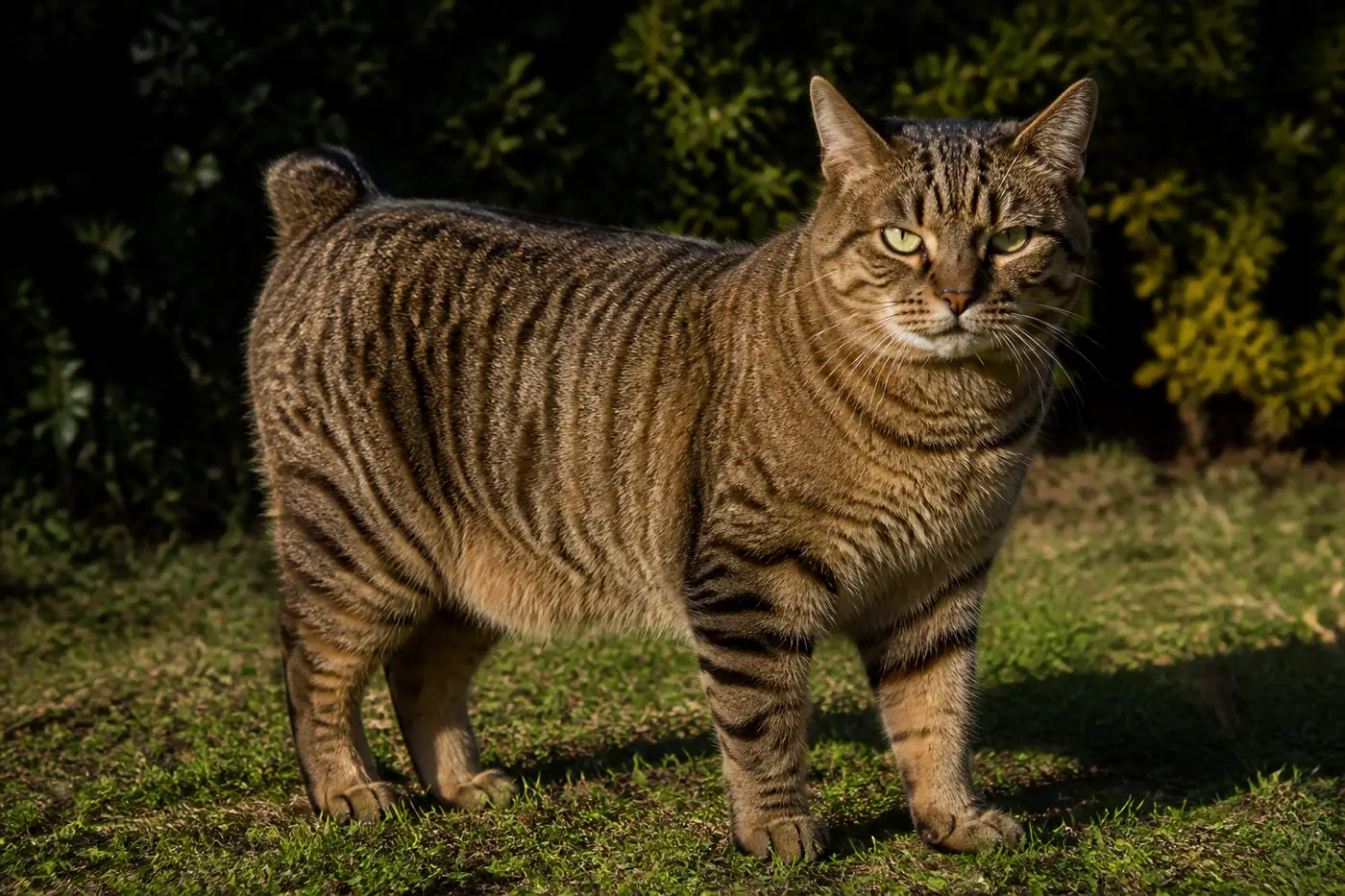
An adult female runs roughly 3.2 to 5 kg and an adult male roughly 5 to 7.3 kg. The standard calls the breed medium to large, moderately long and substantial, with a rectangular stance and noticeable muscle.
- Adult weight, female
- Around 3.2 to 5 kg
- Adult weight, male
- Around 5 to 7.3 kg
- Build
- Moderately long and substantial, with a rectangular stance
- Time to full size
- About three years
- Coat
- Double, in a shorthair and a longhair division
- Tail
- Roughly one to four inches, carried visibly above the back
The figure that changes decisions is the time to full size. The standard asks judges to allow for slow maturation because the breed fills out over about three years, which is well past the point most owners switch food.
Slow maturation does not automatically extend kitten-food feeding; the switch depends on growth and body condition, which a veterinarian can assess at routine visits.
What is the coat like to live with?
Because the breed is recognised in both a shorthair and a longhair, and both appear in the same litters, the coat is the one variable a buyer chooses rather than inherits, and it is a maintenance decision rather than a look.
The shorthair carries a medium, semi-dense double coat with a hard topcoat over a soft downy undercoat. The standard calls it non-matting and resilient, which in practice means a comb once a week and very little else.
The longhair is described as medium-longhair and slightly shaggy, and the important detail is where the length actually sits.
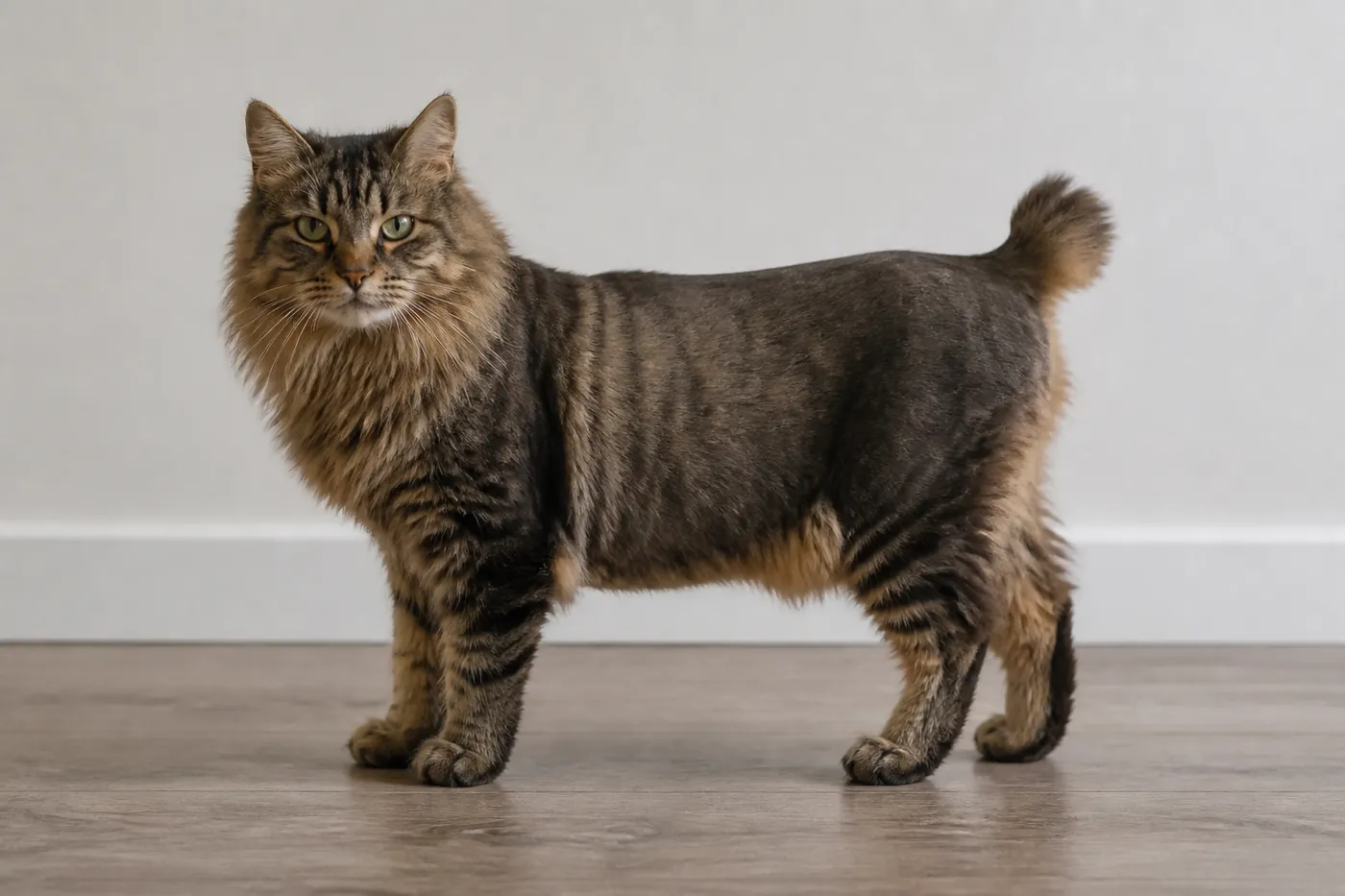
It concentrates in the ruff, the britches, the belly and the tail, and the body coat between them stays relatively close. A longhair here is therefore a comb through four named areas rather than the whole-body session a long-coat routine usually implies.
Both lengths share one consequence. A double coat sheds seasonally, so the twice-yearly moult is the same event in a shorthair and a longhair, and neither is a low-shedding cat in the sense an allergy sufferer means.
How much of the dog comparison is real?
The breed gets described as dog-like more than almost any other, and the phrase is doing at least two different jobs.
The standard's own wording is loving, intelligent, mellow and adaptable, with a very high level of intelligence and a gentle, interactive nature. It also says independent, in the same breath.
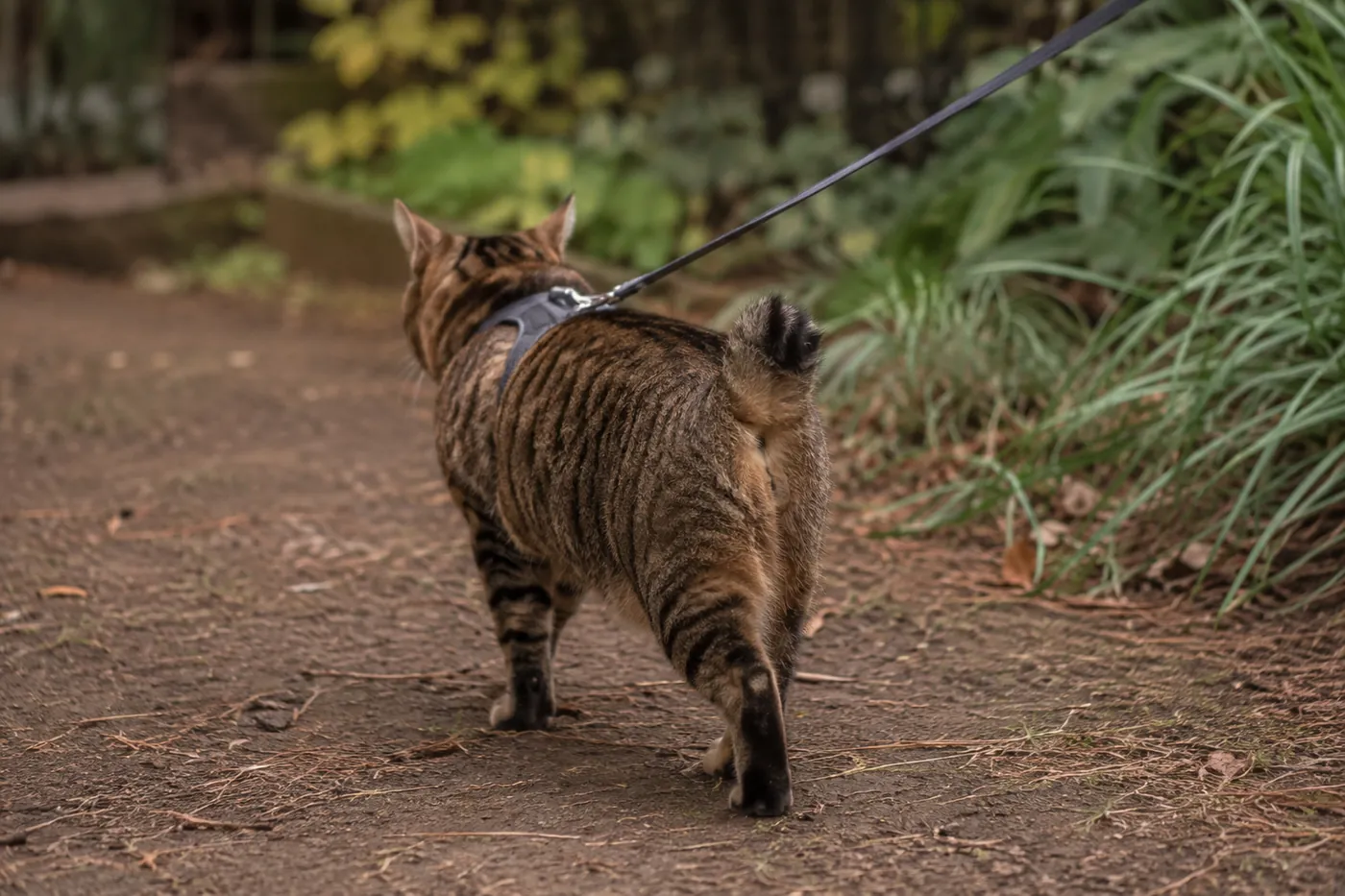
The behaviours behind the reputation are specific and plannable. Leash tolerance and travel tolerance are what people mean, and both respond to training rather than arriving by breed.
That makes clicker work a reasonable first project, and a cat that tolerates a harness usually tolerates a carrier too, which is worth more on a vet day than any amount of temperament description.
The part of the comparison that fails is compliance. A dog that has learned a cue will usually perform it because you asked, and this cat will perform it because the arrangement currently suits it, and planning around anything else will disappoint you.
How much work is one, day to day?
Less than the reputation suggests, and the work sits in two places rather than spread across the day.
- Comb once a week, and work through the ruff, britches, belly and tail if the coat is long.
- Give the cat one real job a day, whether that is a lead, a puzzle feeder or a window worth watching.
- Step the combing up for a few weeks twice a year, when the double coat drops.
Athletic and well muscled describes a working build rather than a restless one, and this is not a cat that needs an hour of chasing. It does need occupation, and an ignored one will find its own, usually somewhere inconvenient.
The demand also moves with age, and a two-year-old still filling out plays harder than the adult it becomes. Matching the routine to the stage matters more here than in a breed that finishes growing at one, since exercise needs shift with age across the whole three-year growth period.
What health evidence exists beyond the tail?
Almost none, and that absence is the finding rather than a caveat on one.
No population health study of the breed has been published. There is no prevalence figure for anything, no breed mortality data, and no screening programme of the kind a well-studied breed accumulates over decades.
The conditions that get quoted are worth naming for what they are. Hip dysplasia, hypertrophic cardiomyopathy and polycystic kidney disease appear on clinic and insurer pages about this breed without a single breed-level study behind them.
They remain possible, but they are claims with no measurement attached, which is a different thing from a documented breed risk, and a buyer is entitled to know which they are being shown.
The genotyping survey is the exception, and it is the one health finding here that comes from counted data rather than repeated copy. It is also, awkwardly, the one that complicates the breed's reputation rather than confirming it.
Compare that with a breed where the paperwork genuinely exists. An Abyssinian buyer can ask for two DNA certificates and get a real answer, and no equivalent test exists to ask an American Bobtail breeder for.
Lifespan lands in the same gap. The UK life tables published a figure for only twelve breeds and this was not among them, so the numbers quoted elsewhere have nothing behind them, and polycystic kidney disease is worth understanding as a route into chronic kidney disease rather than as a breed statistic.
Who should think twice about one?
The buying situation comes before the household here, because the tail check depends on seeing the kitten and its relatives.
A buyer who cannot visit the litter cannot run the check. Shipped kittens, photographs and video calls all remove the one thing the evidence supports doing, and that is a reason to decline rather than a minor inconvenience.
The second is timing. Anyone who wants a cat at settled adult size within a year is buying against three years of maturation, and will spend that time recalculating food and replacing things bought too early.
There is one clear refusal. A tailless kitten offered as rare, special or premium is the phenotype the Manx anomaly data points at, sold as a feature, and no price or paperwork makes that a good purchase.
On children and other animals the news is better. Gentle, interactive and adaptable is the standard's own wording, and adaptable is the word doing the real work in a house with dogs, visitors and noise.
The condition attached to that is the usual one. Early exposure rather than breed decides how a cat handles children and dogs, so the socialisation window matters more than the pedigree, and a large heavy cat plays harder than a small one, which is worth knowing with a toddler in the room.
So the decision turns on access more than on the tail. Where a buyer can visit, see the parents, watch the kitten move and get a straight answer about the line, this is a good and unusually easy-going cat.
Where any of that is refused, the breed name is not evidence, and the survey is the reason it is not.
Common Questions
Can an American Bobtail be registered without a tail?
The standard asks for a tail clearly visible above the back, so a completely tailless kitten falls outside it and is kept out of breeding programmes.
Are American Bobtails hypoallergenic?
No. The allergen is Fel d 1 in saliva and skin rather than coat length, and a double coat that sheds seasonally makes this a poor choice for that reason.
Does an American Bobtail need to be walked?
No, but many take to a harness readily, and a cat that accepts one is usually easier to move in a carrier when it matters.
Checked Against
Published 3 September 2026. Last updated .