Nutrition
Home-Cooked Cat Diets: The Risks Worth Knowing
Home cooking needs an individual, complete formulation and consistent preparation. Meat alone and unassessed recipes can leave serious nutrient gaps.
Cats are obligate carnivores, so their diet has less room for improvisation than a dog's. How much, how often, and how much water comes with it decide more than any single ingredient on the label.

A cat is not a small dog with a worse temperament. It is an obligate carnivore, which means several nutrients it cannot survive without are only reliably available from animal tissue.
Taurine is the clearest case. Cats cannot make enough of it themselves, a shortage damages the heart and the retina, and cooking destroys a good deal of what is present in meat.
Arachidonic acid and preformed vitamin A are the same story. A dog can convert plant precursors into both; a cat largely cannot.
A diet that works for a dog can slowly blind a cat, which is why the two are not interchangeable.
This is also why a complete commercial food is a reasonable default rather than a compromise. The formulation exists precisely because the margin for improvisation is narrow.
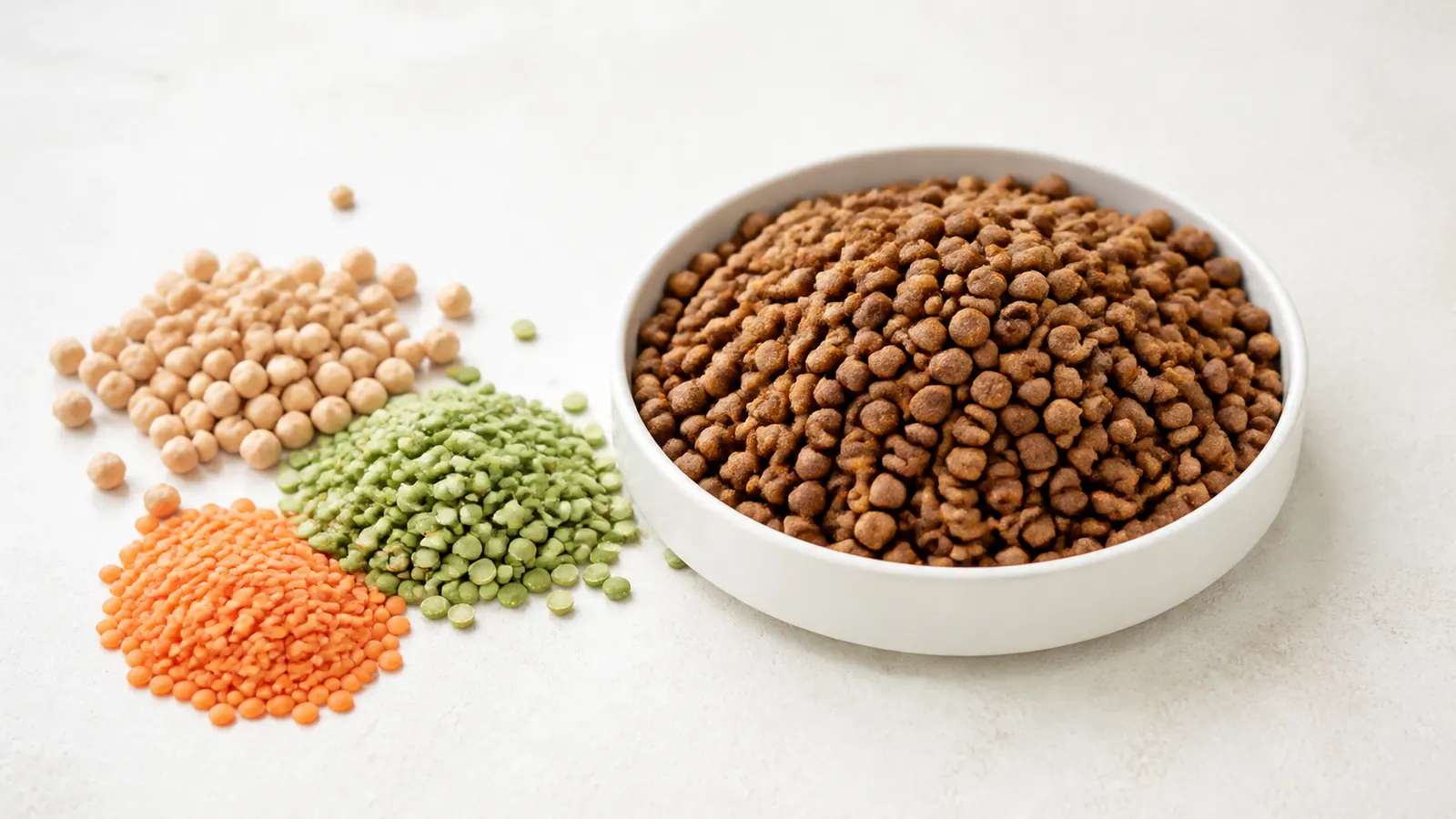
Wet against dry, grain free, and cooking at home are the three arguments an owner meets first. All three turn on water, protein, and what the cat will actually eat, rather than on what the front of the packet says.
Home cooking needs an individual, complete formulation and consistent preparation. Meat alone and unassessed recipes can leave serious nutrient gaps.
Feeding guides on packaging are averages, and they generally assume a cat more active than most pets are. Guides running twenty or thirty percent above what a given cat needs are common rather than unusual.
The number on the bag is a place to start, not an answer. What corrects it is the cat.
Body condition is felt with the hands. You should be able to feel ribs under a thin layer of covering without pressing, and see a waist from above.
Body condition beats the feeding guide every time, because the guide has never met your cat.
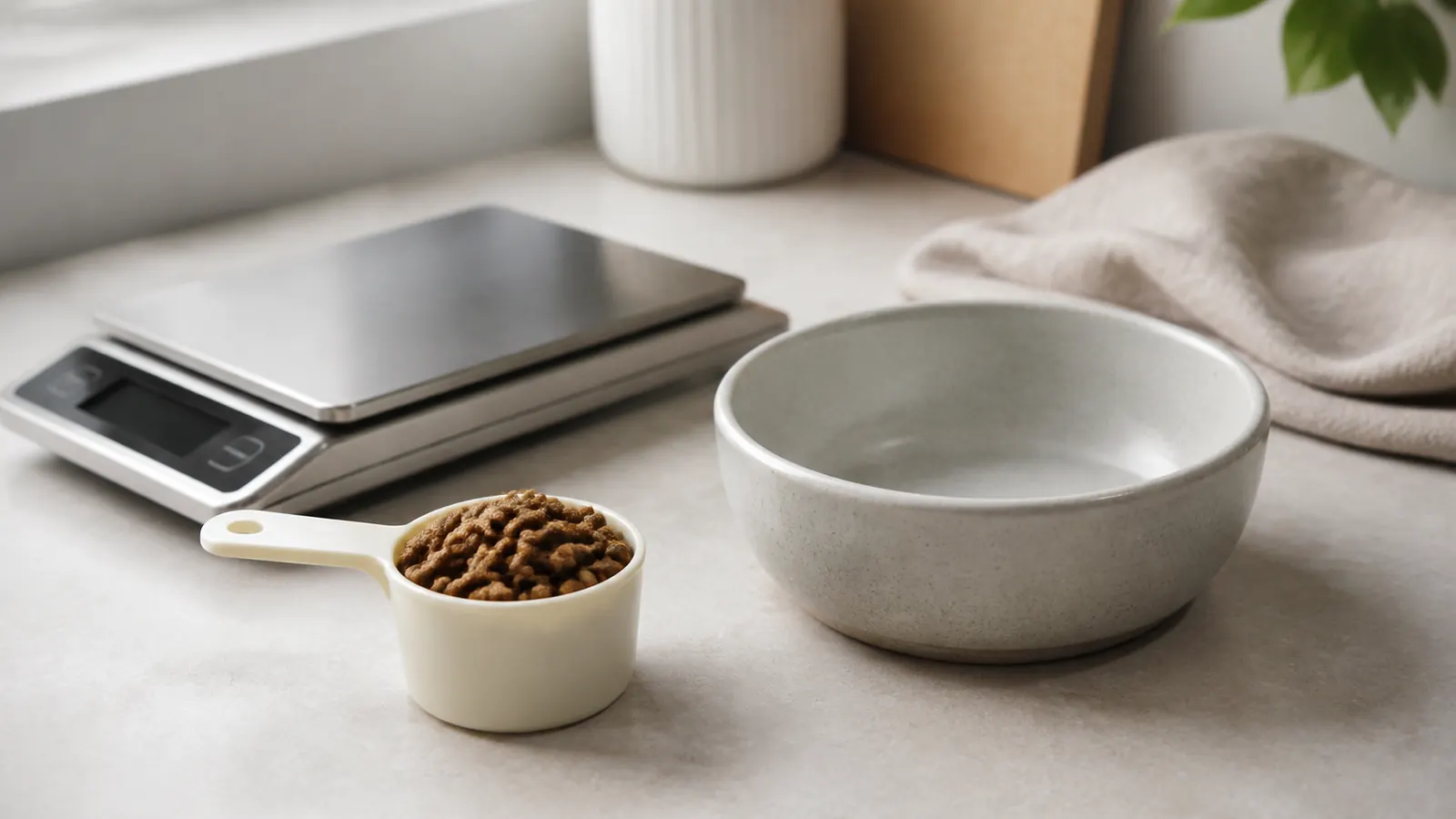
The portion size guide sets out how to convert a label figure into grams and how to adjust without starving a cat that is genuinely hungry.
Portion size is where an indoor cat quietly gains weight, because the number on the tin is written for an average cat that does not exist. Working from body weight and real activity gets much closer.
The feeding guide for a suitable complete food is the starting point, and actual intake, weight and body condition show…
Use calories to estimate a daily ration, then refine it using your cat’s condition. Correct label units matter as much…
Cats evolved from desert ancestors and carry a weak thirst drive. They do not reliably drink to make up a shortfall the way many animals do.
That matters because chronic dehydration puts load on the kidneys and contributes to urinary problems, both of which are common in cats.
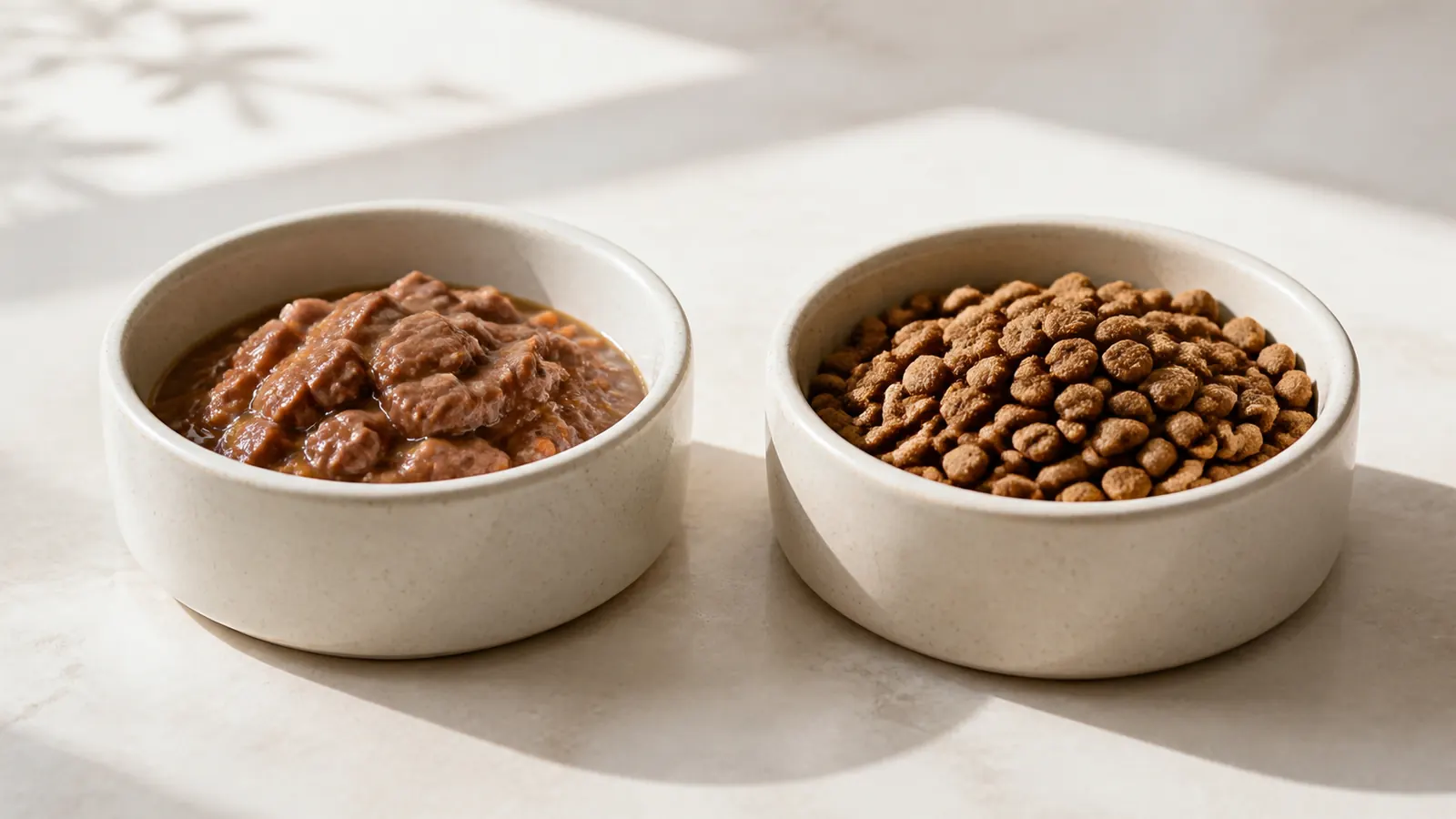
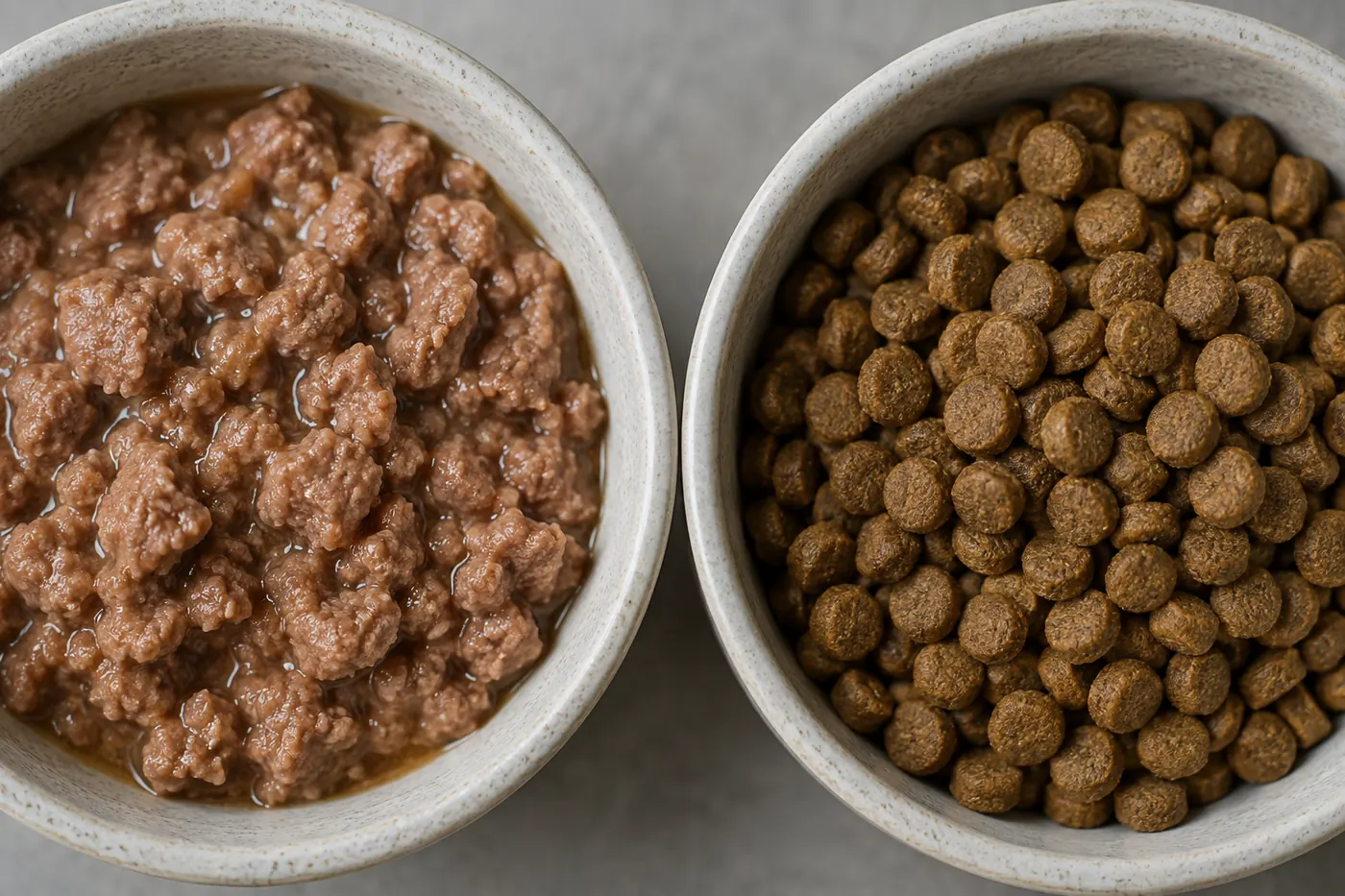
Wet food is roughly three-quarters water. Dry food is roughly a tenth. A cat eating only dry food has to make up a substantial difference by drinking, and many do not.
The most useful thing most owners can change is not the food but where the water sits.
A cat that drinks noticeably more than it used to is a separate matter entirely, and one worth measuring rather than estimating.
There is no single right answer here, and the honest position is that both formats have real advantages.
Mixing the two is entirely reasonable and is what many households end up doing. The trap is feeding a full portion of each rather than splitting one day's ration between them.
Combining wet and dry is fine. Feeding a full serving of both is how a cat gets fat.
Whichever format you choose, the food should be complete rather than complementary. A complementary food is a topper, not a diet, and the label says which it is.
A cat left with a full bowl will often eat little and often, which suits its physiology. That works while the cat is young, active, and holding a steady weight.
It stops working when a cat is overweight, when there is more than one cat, or when a medical condition needs portions counted.
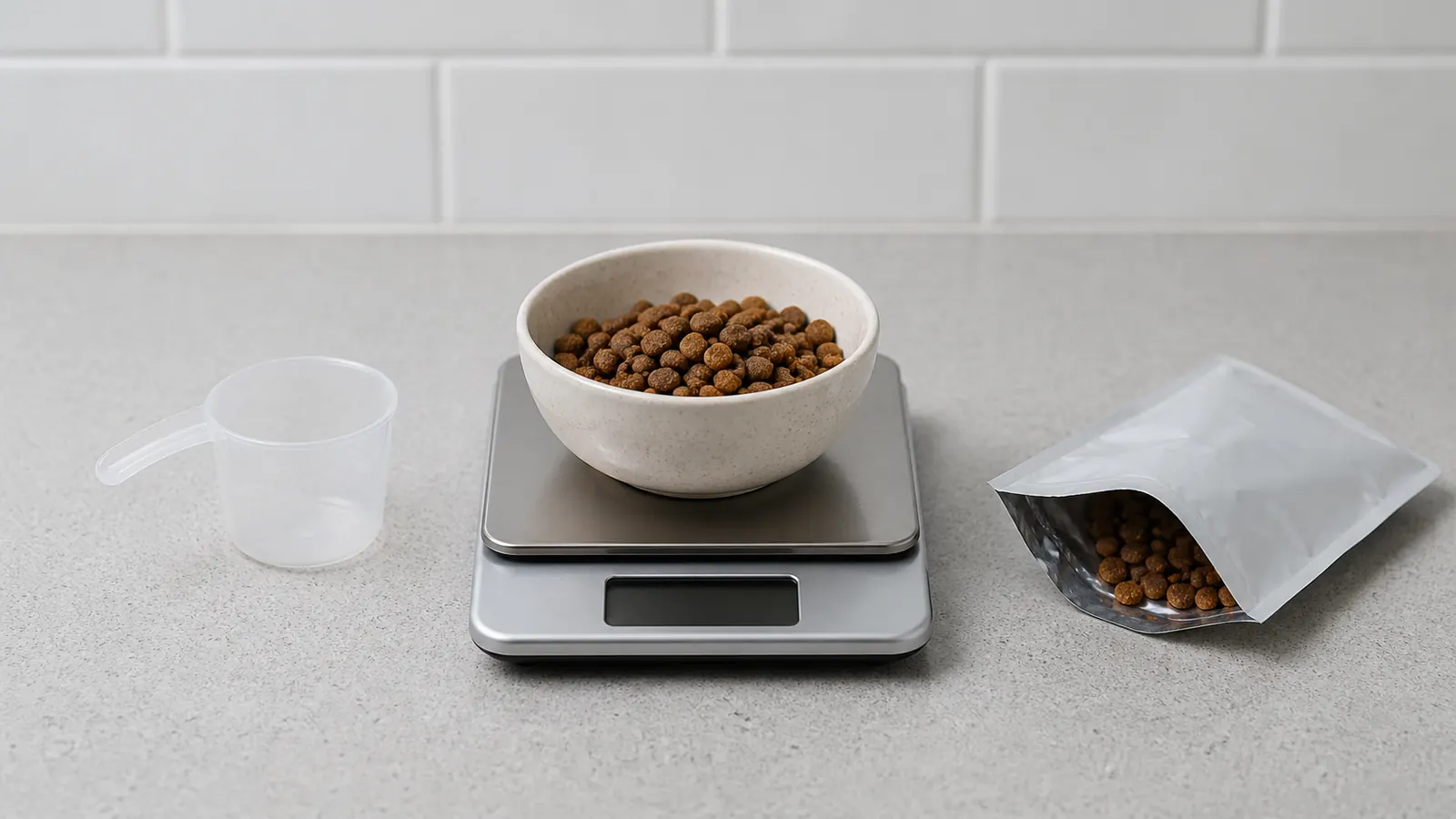
Measured meals solve three problems at once. You can see how much each cat has eaten, you notice a lost appetite on the day it happens, and portion control stops being guesswork.
For a household that grazes, weighing the day's ration into a tub in the morning and topping the bowl from it gives you the same information without changing the cat's routine.
You cannot notice a cat has stopped eating if you have never known how much it eats.
Puzzle feeders are worth mentioning here. Making a cat work for part of its food slows eating, adds activity, and does more for a bored indoor cat than most toys.
Treats are not a problem in themselves. They become one when nobody is counting them, which is most households.
The convention most vets use is that everything outside the complete diet stays under a tenth of daily calories. The other half of that rule is the part that gets skipped: the treat comes out of the ration, not on top of it.
A single dental stick or a few pieces of cheese can be a surprising share of a small cat's day.
A treat that is added rather than subtracted is how a well-fed cat becomes an overweight one.
Plain cooked meat is a better treat than most commercial ones, and the food-safety answers cover which human foods are reasonable and which are not.
Kittens need more calories per kilogram than adults and need them in a food formulated for growth. Switching to adult food is judged by whether the cat has stopped growing, not by its first birthday.
Adults need enough to hold a steady body condition, which for most neutered indoor cats is less than the bag suggests.
Older cats are the group where assumptions do the most damage. Weight loss in a cat over ten is not normal ageing. It is the single most common early sign of hyperthyroidism, diabetes, and kidney disease.
An older cat losing weight while eating well needs a blood test, not a bigger portion.
The daily calories guide sets out the arithmetic if you want a number rather than a rule of thumb.
Cats form food preferences early and defend them. An abrupt switch commonly produces a hunger strike, digestive upset, or both.
A cat that refuses the new food entirely has not been stubborn; it has told you the transition was too fast. Going back a step and moving more slowly works more often than waiting it out.
A cat that stops eating or eats markedly less needs prompt veterinary advice, not a contest over the new food.
If a diet change has been recommended for a diagnosed condition, the vet managing it should set the pace rather than a general rule.
Pet food packaging is marketing on the front and information on the back, and only one of those is regulated.
The first thing worth finding is the phrase complete. A complete food is formulated to be the whole diet; a complementary one is a topper, and feeding it alone leaves gaps.
The second is the life stage it is formulated for, since kitten, adult, and senior formulations differ in more than calorie density.
The ingredient list is ordered by weight before cooking, which is why fresh meat can head a list and contribute less than a dried protein further down.
Terms like premium, natural, and gourmet have no regulated meaning and can appear on anything.
The only two words on the front that carry a legal meaning are the species and the word complete.
Comparing wet and dry foods by percentage is misleading unless you correct for water, since a wet food is mostly water by weight.
One question usually leads to the next one.
What a change in a cat usually means, and how fast it needs looking at.
One of six verdicts per food, with the reasoning and the sources.
Setup, substrate, placement, and what the tray tells you.
Why a cat does something, explained from the cat's side.