How Do You Brush a Long-Haired Cat Without a Fight?
Frequent gentle checks catch tangles before they tighten. Short sessions that work one section at a time keep the cat willing, and mats that pull on the skin need a professional.
Cats groom themselves well, and there are still jobs they cannot finish. Long coats, older cats, and claws are where you have to help.
A healthy cat spends a large part of its waking day grooming, and it does the job well. The tongue is built for it, and most short-coated cats need very little help.
The jobs a cat cannot finish fall into a short list: long coats that mat faster than a tongue can clear, claws that grow past the point of being worn down, skin folds that trap moisture, and everything an older or overweight cat can no longer reach.
That last category is the one most often missed. A cat that has stopped reaching its lower back is not being lazy.
A previously immaculate cat with a scurfy patch over its hips has usually stopped being able to bend.
Grooming is also the cheapest health check available. Hands on a cat every few days find lumps, scabs, sore spots, and weight change earlier than looking does.
Grooming is a daily job on a long coat and a weekly one on a short coat, and that gap is the largest single difference in workload between one cat and another. A cat that hates being brushed can usually be taught to tolerate it.
Frequent gentle checks catch tangles before they tighten. Short sessions that work one section at a time keep the cat willing, and mats that pull on the skin need a professional.
The relevant question is not long or short but how the coat is built.
A dense short coat surprises people. The shed undercoat cannot fall out through the top layer, so it stays in the coat and ends up swallowed, which is where hairballs come from a few weeks later.
The places that mat first are consistent across breeds: behind the ears, the ruff, the armpits, the trousers at the back of the hind legs, and around the base of the tail.
Regular short checks catch tangles before they tighten, but the useful interval comes from the coat in front of you.
Claws and facial folds need attention on a schedule rather than when they start to look bad. Both go better in short sessions the cat can predict than in one long session it cannot.
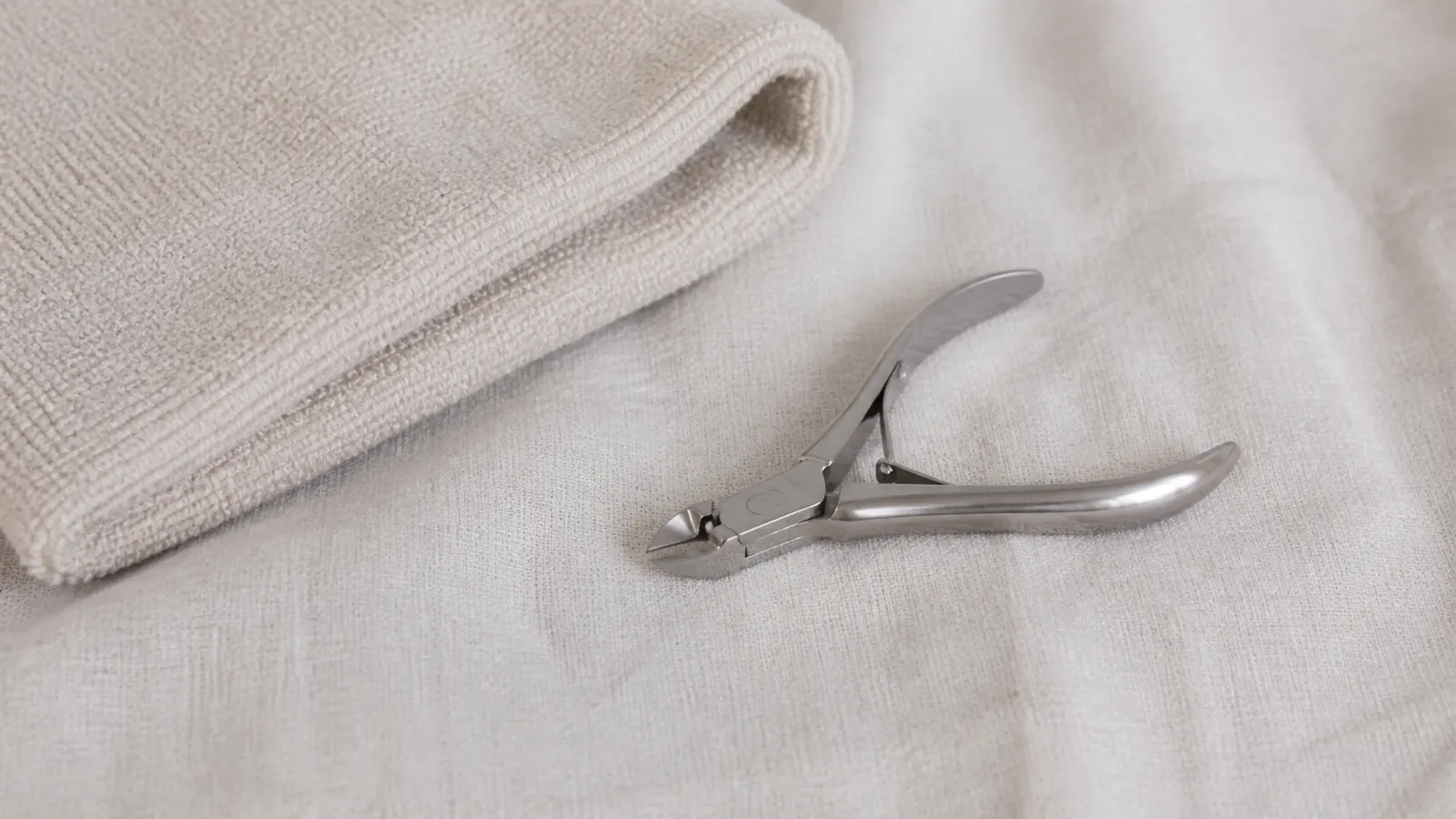
Trimming without hurting a cat means taking only the clear hooked tip you can identify safely and stopping before the…
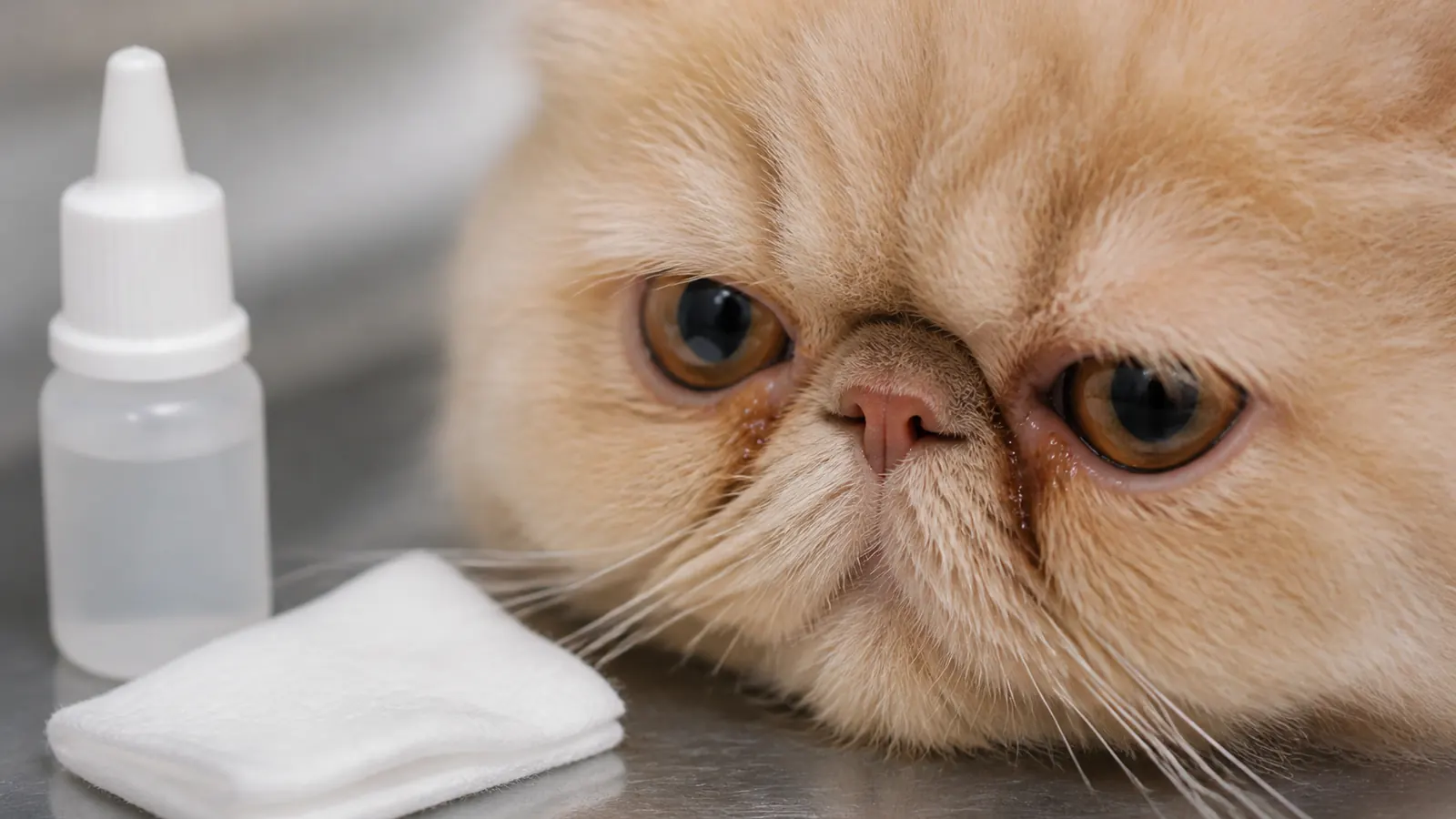
Gently clean and dry external facial folds when needed. Sore skin and uncomfortable eyes need assessment, not repeated…
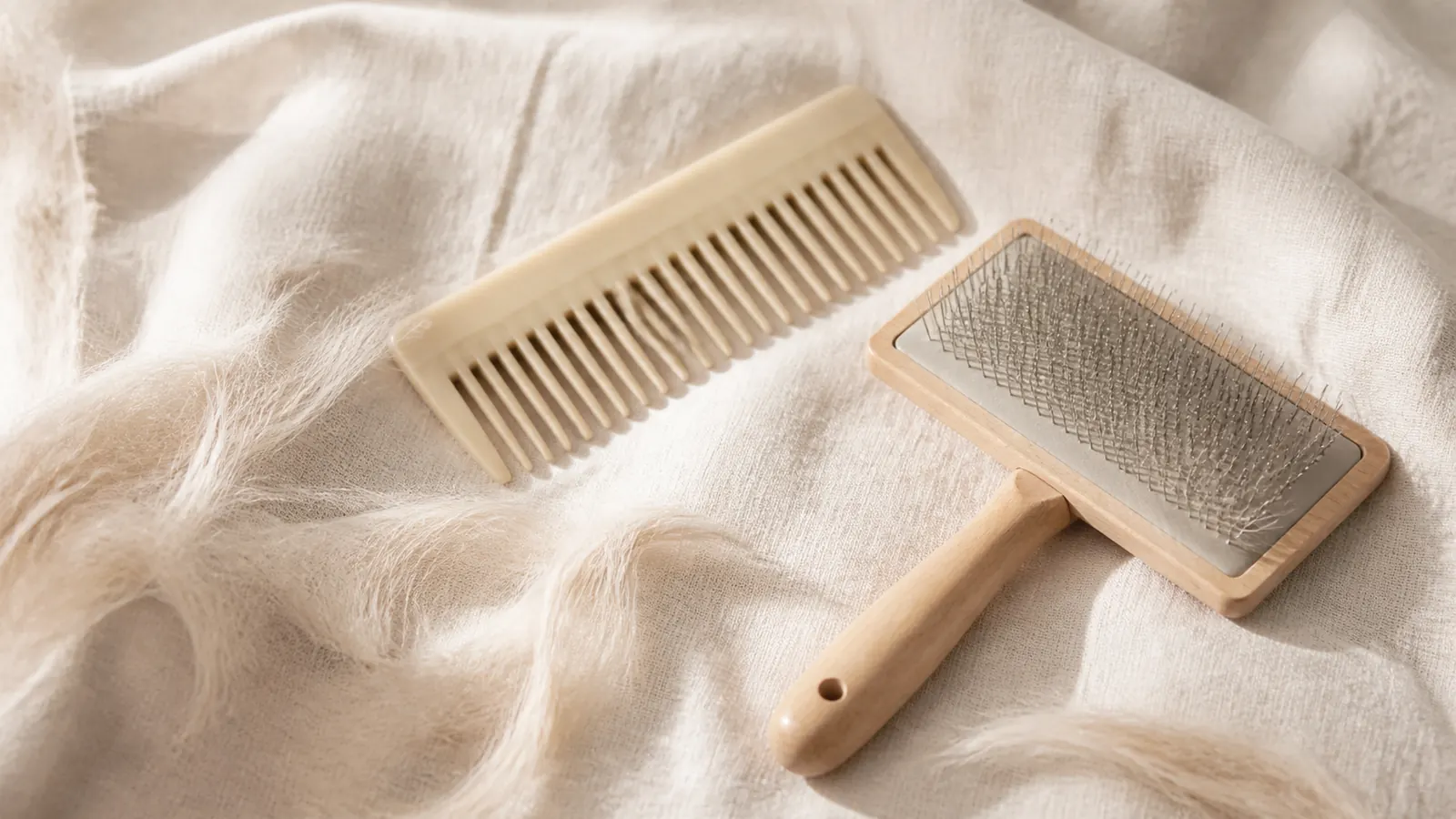
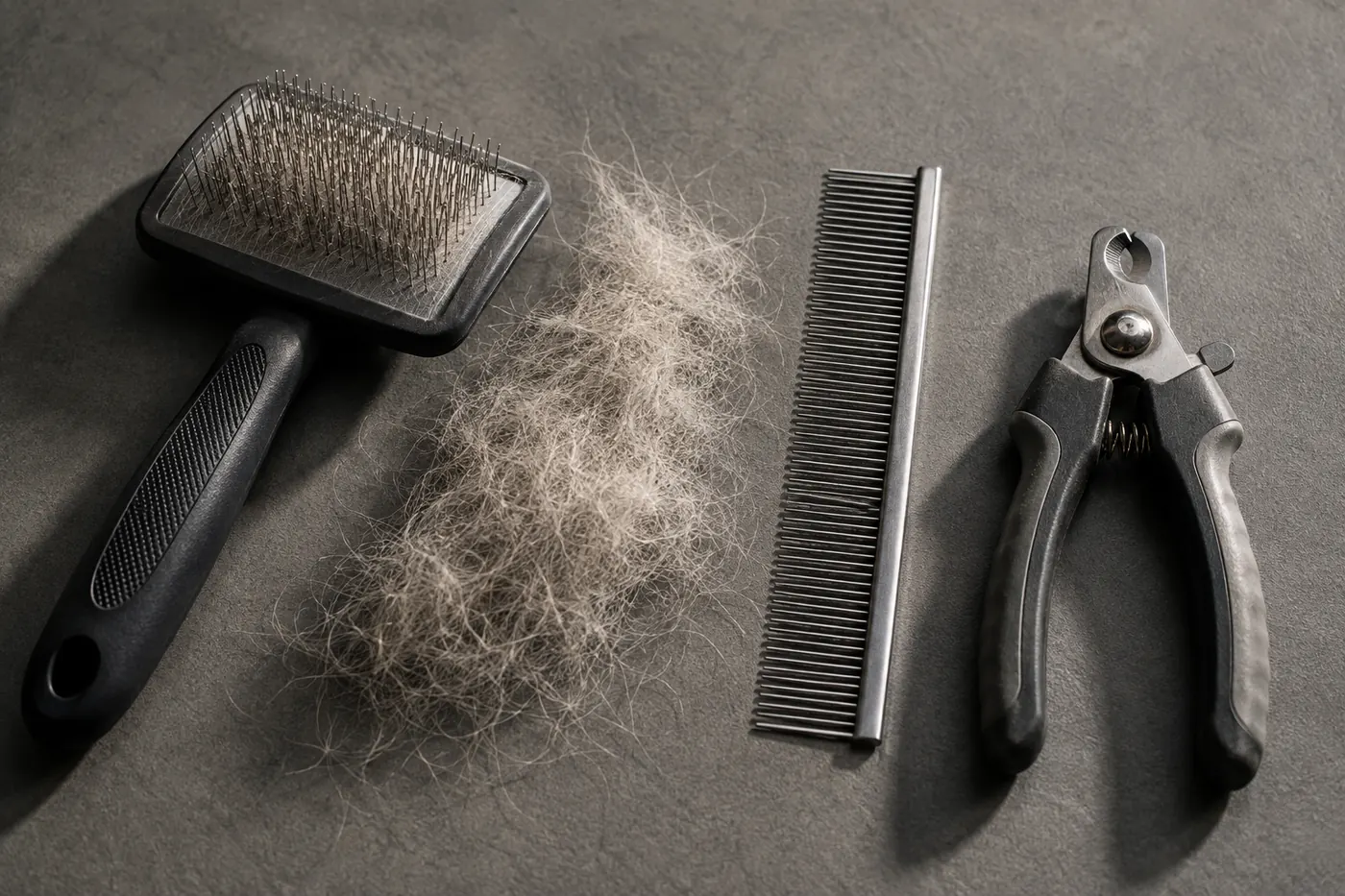
Most grooming failures are tool failures. A brush that skates over the top of a coat feels like grooming and removes nothing.
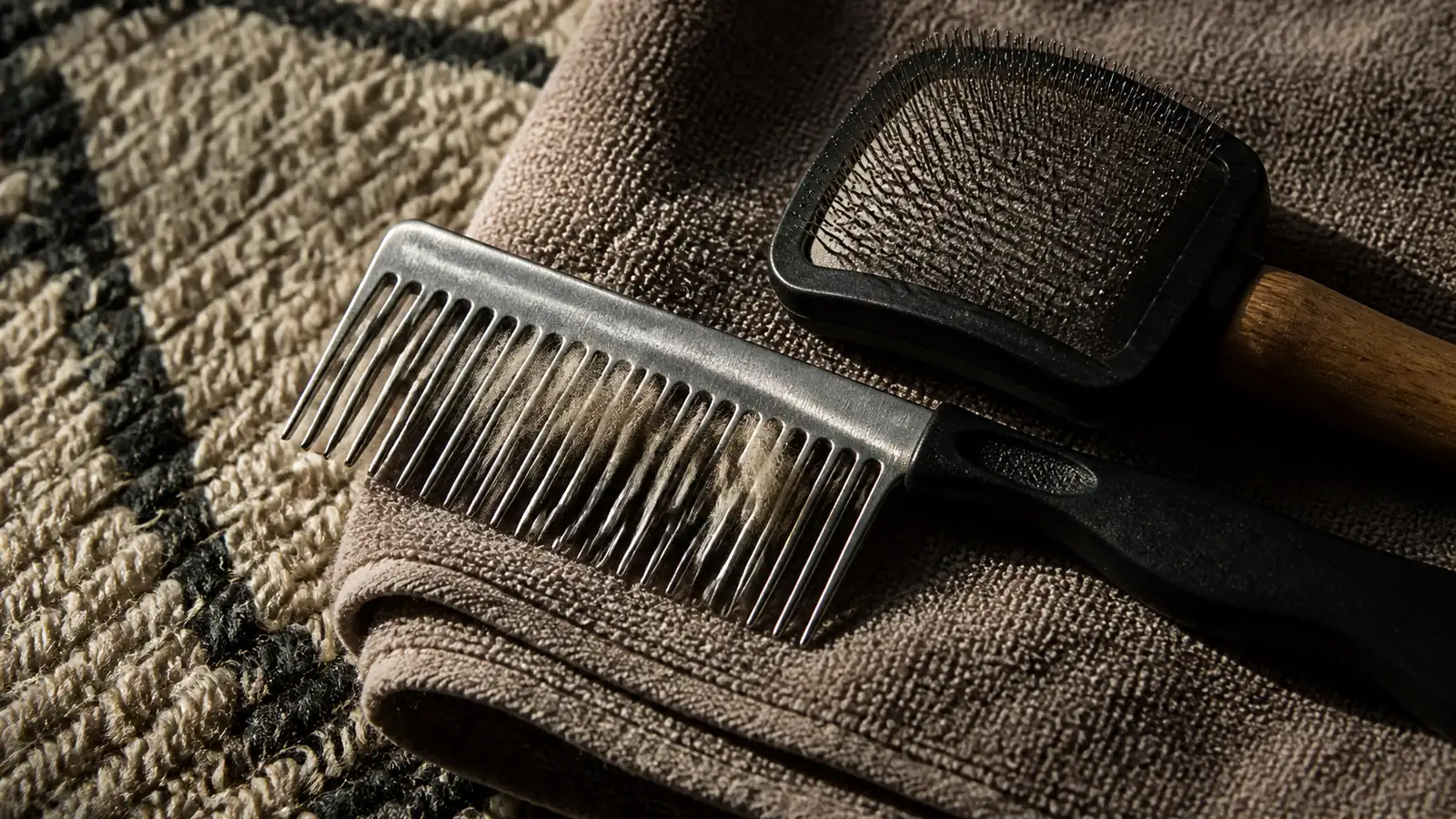
A comb is the diagnostic tool. If a comb passes cleanly from root to tip, the coat is clear, whatever a brush appears to be achieving.
Scissors near a mat are the commonest cause of a grooming injury. A cat's skin is thin and lifts with the mat, so what looks like a gap between mat and body usually is not.
If a mat will not come out with a comb and patience, it is a job for a vet or a groomer.
Almost every cat that hates being brushed was pushed past its limit early on, and the fix is to stop before the objection rather than to work through it.
Position matters more than technique. Many cats tolerate grooming better beside you on a sofa than held on a lap, because they can leave.
Stop while the answer is still yes, and let the cat come back for the next round.
The brushing a reluctant cat guide covers what to change when sessions keep failing.
Outdoor cats and active indoor cats wear claws down naturally. Older cats, sedentary cats, and cats with arthritis often do not.
An untrimmed claw on a cat that no longer scratches enough can curl round and grow into the pad, which is painful and entirely preventable.
The quick is the pink vascular core inside the claw, visible in pale claws and not in dark ones. The cut goes well outside it, taking only the sharp hook.
For dark claws, trim smaller amounts more often rather than guessing. Every few weeks is a reasonable rhythm for most indoor cats.
Trim only what can be seen safely, and check often enough that an overgrown or painful claw is found early.
The claw trimming guide covers how to hold a paw and what to do if you cut too short.
Flat-faced cats may trap moisture and debris in skin folds below the eyes. Ask a veterinarian how often that individual needs cleaning and which product is safe, especially when the skin is red, sore, smelly or persistently wet.
Ears should be barely noticeable. A little wax is normal; dark crumbly debris, a smell, or head shaking is a vet visit rather than a cleaning job.
Teeth are where the biggest gap sits between what matters and what gets done. Dental disease is one of the most common problems in adult cats, and it is largely invisible until it is advanced.
Brushing is the only home measure with real evidence behind it, and a cat that accepts it was almost always introduced to it slowly, as a handling exercise rather than a cleaning task.
Never put anything down a cat's ear canal. Clean what you can see and no further.
This is the step almost everyone skips, and it costs more than it sounds.
Sebum and skin scale build on a brush and make it drag rather than glide, which is a large part of why a cat that used to tolerate grooming stops.
Shared tools also move ringworm and fleas between cats in a multi-cat house.
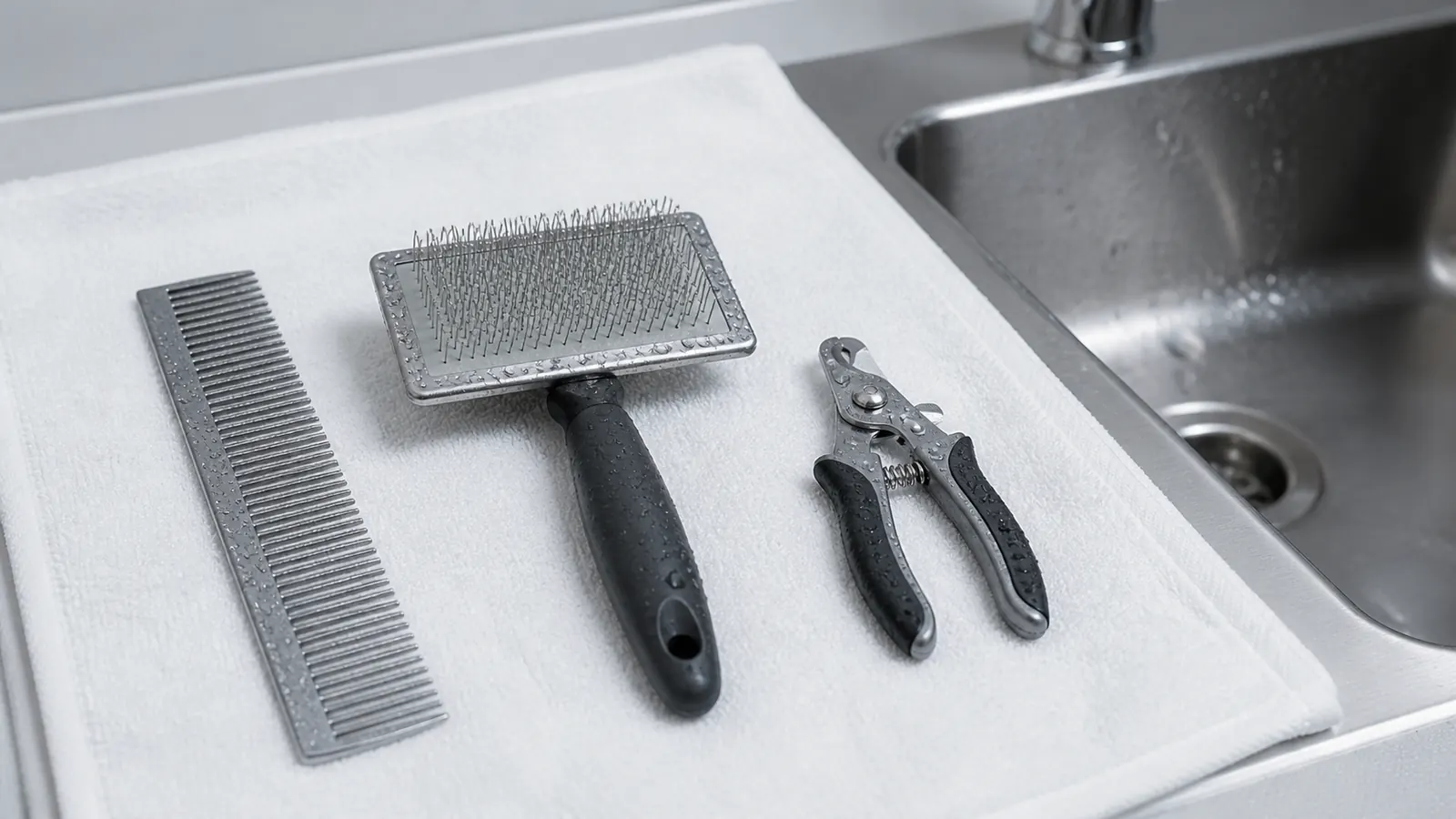
Remove hair and residue from tools after use, then follow the maker's cleaning instructions. A tool used on an infectious or suspected skin condition needs veterinary guidance on disinfection or replacement before it touches another animal.
A brush that drags is usually dirty rather than worn out.
The grooming tools guide covers the weekly clean and when to replace rather than wash.
Two changes shift grooming from shared work to your work, and both arrive gradually enough to miss.
The first is weight. An overweight cat cannot reach its lower back and hind end, and the first sign is usually a matted or greasy strip along the spine.
The second is arthritis. Twisting to groom the flanks and tail base becomes uncomfortable, and the cat quietly stops.
In both cases the coat is reporting a problem that has nothing to do with the coat, which is why the answer starts with a vet rather than with a better brush.
A change in how a cat grooms itself is information about the cat, not about its fur.
Many healthy cats do not need routine baths. A bath may be appropriate for contamination, a prescribed skin treatment or a cat that cannot groom itself, and the product and method should fit that reason.
The genuine reasons are short: something toxic or sticky on the coat, a skin condition where a vet has prescribed a medicated wash, and an old or very overweight cat that can no longer keep itself clean.
Anything contaminated with a chemical is a phone call first. Washing the wrong substance off can drive it into the skin, and the cat grooming while you decide is the bigger risk.
A cat that grooms a contaminated coat eats the contaminant, which is why stopping the grooming comes first.
For a cat that genuinely cannot clean itself any more, waterless foam and regular brushing usually do the job without a bath at all.
A cat's coat is one of the more honest indicators of general health, and it changes before most other signs do.
A dull or greasy coat in a cat that used to be glossy usually means the cat has stopped grooming properly, which points at pain, obesity, or dental disease.
Dandruff along the spine is the classic sign of a cat that can no longer reach.
Bald patches need a distinction drawn: hair that has been groomed off leaves stubble you can feel, while hair lost from the follicle leaves smooth skin. The first is behavioural or itchy, the second is usually hormonal.
Fleas show as black specks in the coat rather than as visible insects, and the specks turn red on damp paper.
A coat change is worth a vet visit rather than a better shampoo.
One question usually leads to the next one.
What a change in a cat usually means, and how fast it needs looking at.
One of six verdicts per food, with the reasoning and the sources.
How much, how often, and how a cat gets enough water.
Setup, substrate, placement, and what the tray tells you.