How Do You Choose a Scratching Post a Cat Will Use?
Cats scratch to stretch, to shed claw sheaths, and to mark. A post that is too short or too wobbly fails at the first of those, so the sofa keeps winning.
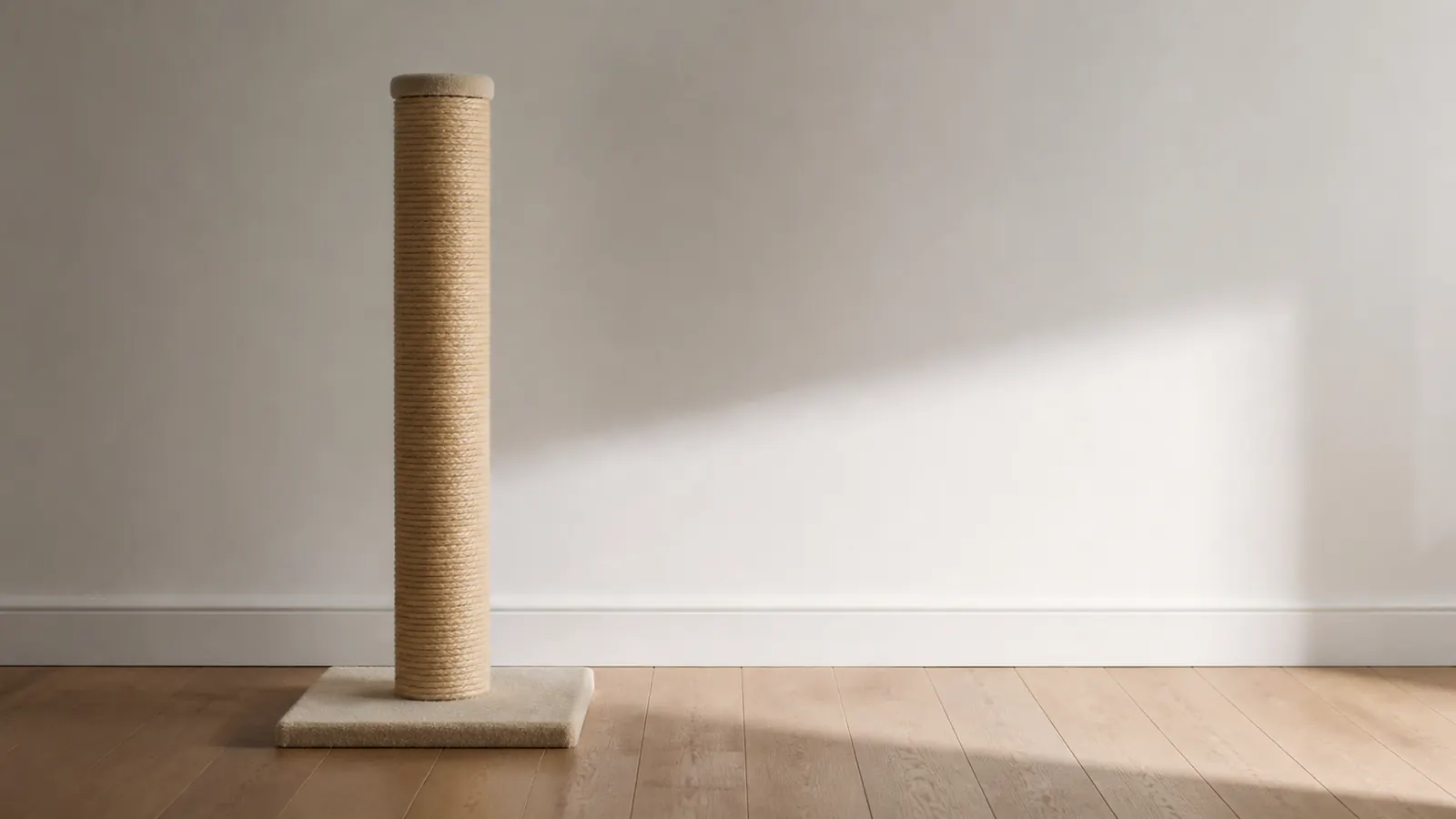
Scratching is not optional behaviour, and it is not something to train out of a cat. The realistic goal is redirecting it.
That means the post has to be better at the job than the furniture.
Why cats scratch at all
Understanding the purpose explains why a post has to meet several conditions at once rather than just one.
Scratching does three jobs simultaneously. It removes the worn outer sheath from the front claws, exposing the sharp new claw underneath, which is why shed claw husks are found around a well-used post.
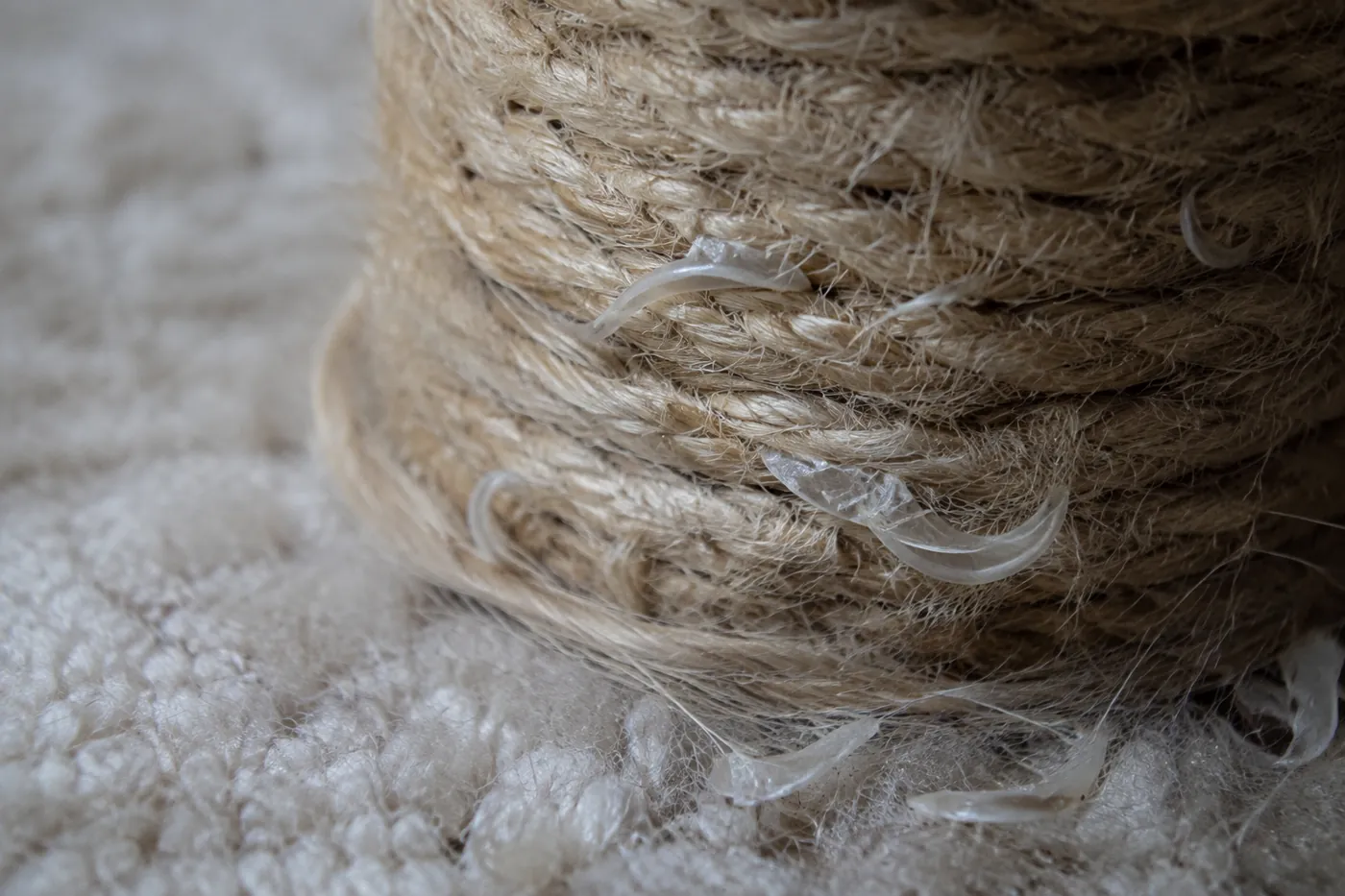
It stretches the whole body. A cat reaching up a post is extending the spine, the shoulders, and the forelimb muscles, which is why height matters as much as surface.
And it marks. Cats have scent glands between the toes, so a scratch leaves both a visible mark and a chemical one, which is why posts belong at boundaries and doorways rather than tucked out of sight.
Punishment does not provide an acceptable place for this normal behaviour and may add fear. Protect the damaged surface while offering a better-matched alternative nearby.
Height, because the point is the stretch
A cat scratching vertically is stretching its whole spine and shoulders.
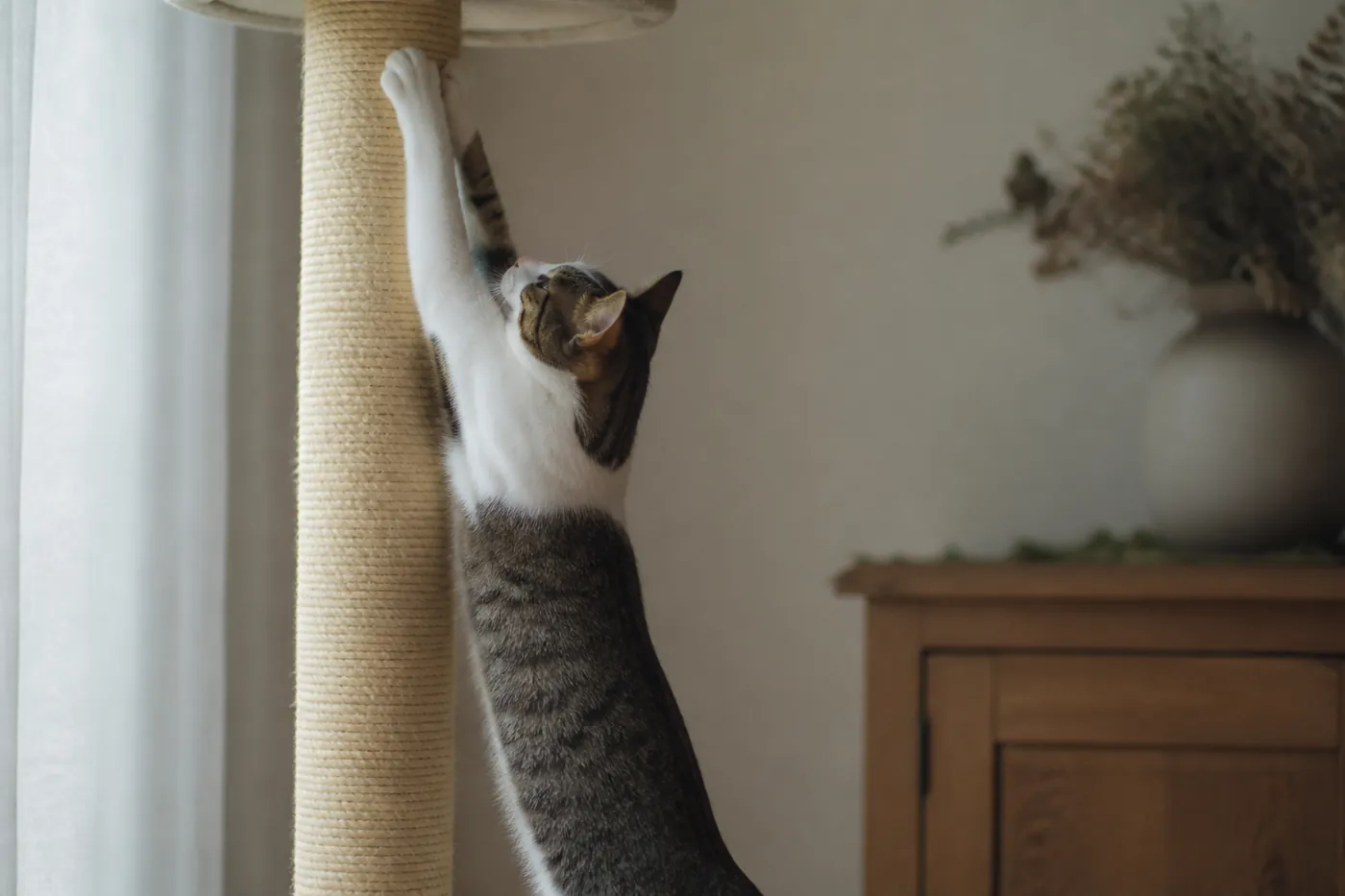
For a cat that scratches vertically, the post should provide enough usable surface for its preferred stretch. Measure the cat and watch how it uses existing surfaces rather than relying on one universal height.
Check the scratching section itself: a tall tree can still have posts too short for the cat's preferred stretch.
Scratching also involves the shoulders, spine and muscles along the back, so height can matter alongside texture, orientation, stability and location.
A short post cannot deliver any of that. The cat gets the claw maintenance and none of the stretch, which is most of what it came for.
That is why a cat with a too-short post keeps using the sofa arm. The arm is tall enough and the post is not, and the cat is choosing the one that works rather than the one it prefers the look of.
Measure the cat rather than trusting the box. Let it stretch up against a door frame after a sleep and mark the height its front claws reach, and buy above that mark rather than at it.
Stability, because a wobble ends the behaviour
A cat puts real weight into a scratch. A post that rocks or tips may make a cat reluctant to use it.
Look for a wide, heavy base, and push the top firmly before buying. If it moves, it is not sturdy enough.
Floor-to-ceiling posts and wall-mounted boards both solve stability well.
The force involved is larger than it looks. A cat scratching at full stretch is pulling much of its weight horizontally against the top of the post, and the base has to resist that as a lever.
Base width and weight both affect stability. Test the finished unit from the direction a cat will pull, because a heavy but narrow base can still tip.
Secure the post before encouraging use. A cat may need time and rewards to approach equipment that previously moved unexpectedly.
- What the base resists
- A cat's weight pulled horizontally against the top of the post
- Base width
- Helps resist tipping when the cat pulls from the top
- Base weight
- Adds resistance but does not rescue an unstable shape
- Floor-to-ceiling
- Can be stable when correctly installed and rechecked
- Wall-mounted board
- Can avoid floor movement when the wall and fixings are suitable
The shop test takes two seconds. Push the top sideways with one hand, and if it rocks at all it will rock harder under a cat.
Material
| Surface | Cats' response | Notes |
|---|---|---|
| Sisal rope | A common option; check the individual cat's preference | Durable, the usual default |
| Sisal fabric | Preferred, often more than rope | Shreds satisfyingly |
| Cardboard | Popular, especially horizontally | Cheap, messy, replace often |
| Carpet | Individual preference | Can be suitable if the cat likes it; check for snagging and wear |
| Bare wood | Some cats | Natural, less common indoors |
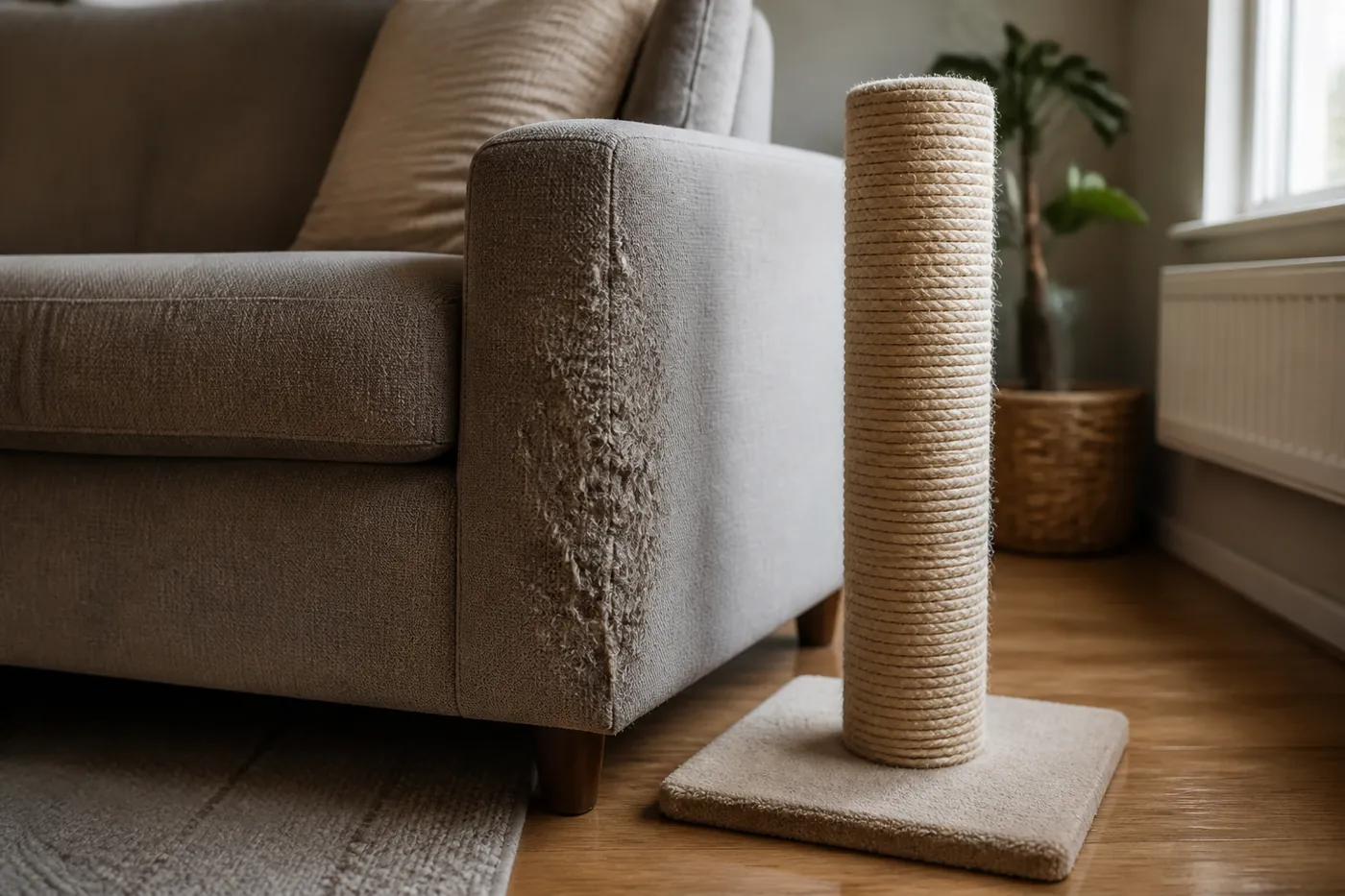
Sisal and cardboard are useful starting options, but watch your own cat. A carpet-covered scratcher does not inevitably teach a cat to damage every carpet in the home.
Surface, location, orientation and stability work together.
Orientation, because cats differ
Some cats scratch vertically, some horizontally, and some do both.
Watch what your cat already ruins. A cat wrecking the carpet wants a horizontal surface, and no vertical post will satisfy it.
Offering one of each is the cheapest way to find out.
Current scratching shows which orientation is worth offering first. Preferences can vary across locations and over time, so keep more than one suitable surface available if the cat uses both.
The damage is the evidence and it is unambiguous. Shredded carpet, a rug pulled up at one corner, or claw marks along a stair tread all mean a cat that scratches horizontally.
Vertical scratchers leave a different signature. Long parallel runs down a sofa arm, a door frame, or the corner of an armchair are a cat reaching up and pulling down.
Both is more common than either alone. A household that has damage in two orientations needs two surfaces, and offering only the one that suits the furniture explains why the other keeps getting used.
Cat trees, wall units, and the alternatives
A post is one form of the same thing, and several others suit particular houses better.
Height earns its place twice over, because the same shelf that carries a claw also carries the activity an indoor cat needs and there is rarely floor space for both separately.
Cat trees combine scratching with height and a sleeping platform, which is efficient in a small flat. The scratching surfaces on many are too short for a full stretch, so check the height of the post section rather than the tree.
Wall-mounted boards can be stable when correctly fixed to a suitable wall. Check the fixings and surface regularly.
They also use no floor space, which matters in a small home, and they can be fitted at the exact height the cat stretches to.
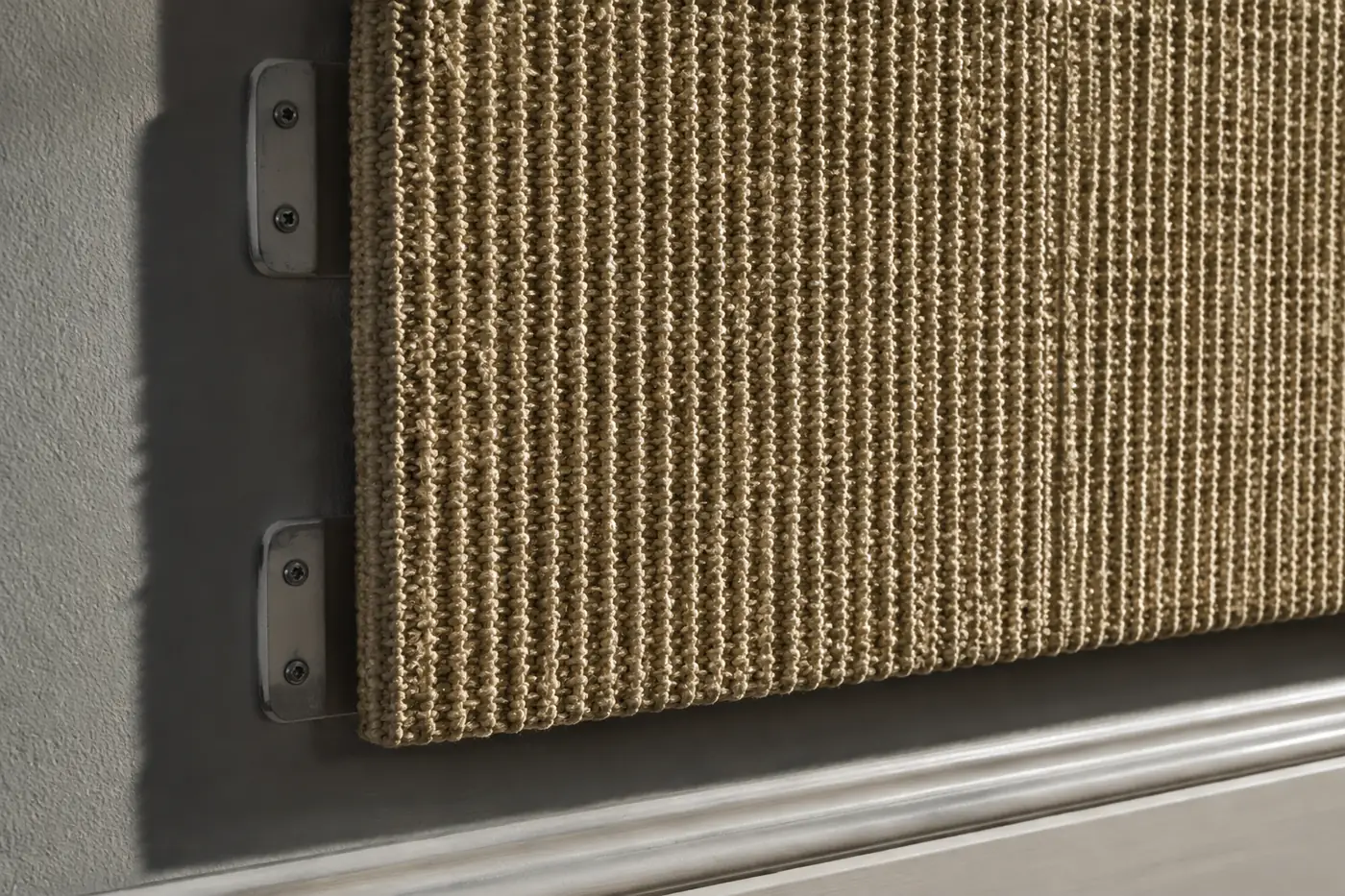
Door-hanging scratchers are a cheap version of the same idea and move with the door, which some cats dislike.
Horizontal cardboard scratchers are the cheapest of all and the most popular with cats that ruin carpet and rugs. They shed, they wear out in weeks rather than years, and they are worth having anyway.
| Type | Best for | Watch out for |
|---|---|---|
| Free-standing sisal post | Most cats, vertical scratchers | Height and base weight |
| Wall-mounted board | Small homes, stability | Fitting at full stretch height |
| Cat tree | Height plus scratching in one item | Post sections that are too short |
| Horizontal cardboard | Carpet scratchers, cheap trials | Wears out fast, sheds |
| Door hanger | Renters, no drilling | Moves when the door does |
| Bare log or plank | Cats that prefer wood | Splinters, and securing it |
Placement decides everything
A post hidden in a room the cat rarely visits may go unused.
Cats scratch to mark, so the post belongs where the cat already scratches and where the household spends time: near the sofa, near a doorway, near where the cat sleeps.
Scratching leaves two signals rather than one. The visible shredding is a mark other cats can see, and the glands between the toes leave scent at the same time.
Both are territorial statements, which is why location is not negotiable from the cat's side. A mark left in a spare room communicates nothing, so a post there fails however good the post is.
The three places that work are the ones with traffic. A doorway is a boundary, the sofa is where the household sits, and the sleeping spot is where a cat stretches on waking.
Many cats scratch after waking, so a suitable surface near a regular sleeping area is worth testing. Existing damage and observed use are stronger placement evidence than a fixed distance.
- Put the post directly beside whatever the cat is currently scratching.
- Make the furniture less appealing temporarily, with a throw or double-sided tape.
- Reward use of the post quietly when it happens.
- Once the post is being used reliably, move it gradually only if use continues; return it to the accepted position if scratching shifts back to furniture.
- Never carry the cat to the post and move its paws. It sours the association.
Multi-cat households
Adding a cat can change where and how often scratching occurs, but the useful number of surfaces depends on access and each cat's preferences rather than a one-per-cat rule.
Each cat needs posts it can reach without passing another cat, which means spread through the house rather than clustered. A post in a corridor one cat guards is a post the other will not use.
Marking increases when cats are unsettled, so a new arrival usually produces a rise in scratching from the resident cat. That is communication rather than misbehaviour, and more posts in more places is the answer.
More posts stop helping once one cat is blocking corridors and doorways rather than just the post itself. At that point the scratching is a symptom of two cats fighting over territory, and the negotiation has to be fixed before any amount of sisal will.
Watch where the new scratching appears. Furniture near doorways and near windows onto the garden usually means the cat is responding to something outside rather than to the cat indoors.
Protecting the furniture in the meantime
Redirection takes as long as the cat needs to adopt the alternative, so protect the furniture while use is still inconsistent.
The aim is to make the furniture temporarily less satisfying rather than to frighten the cat away from it. Double-sided tape on the scratched area works because cats dislike the texture on their pads, and clear vinyl guards do the same job more durably.
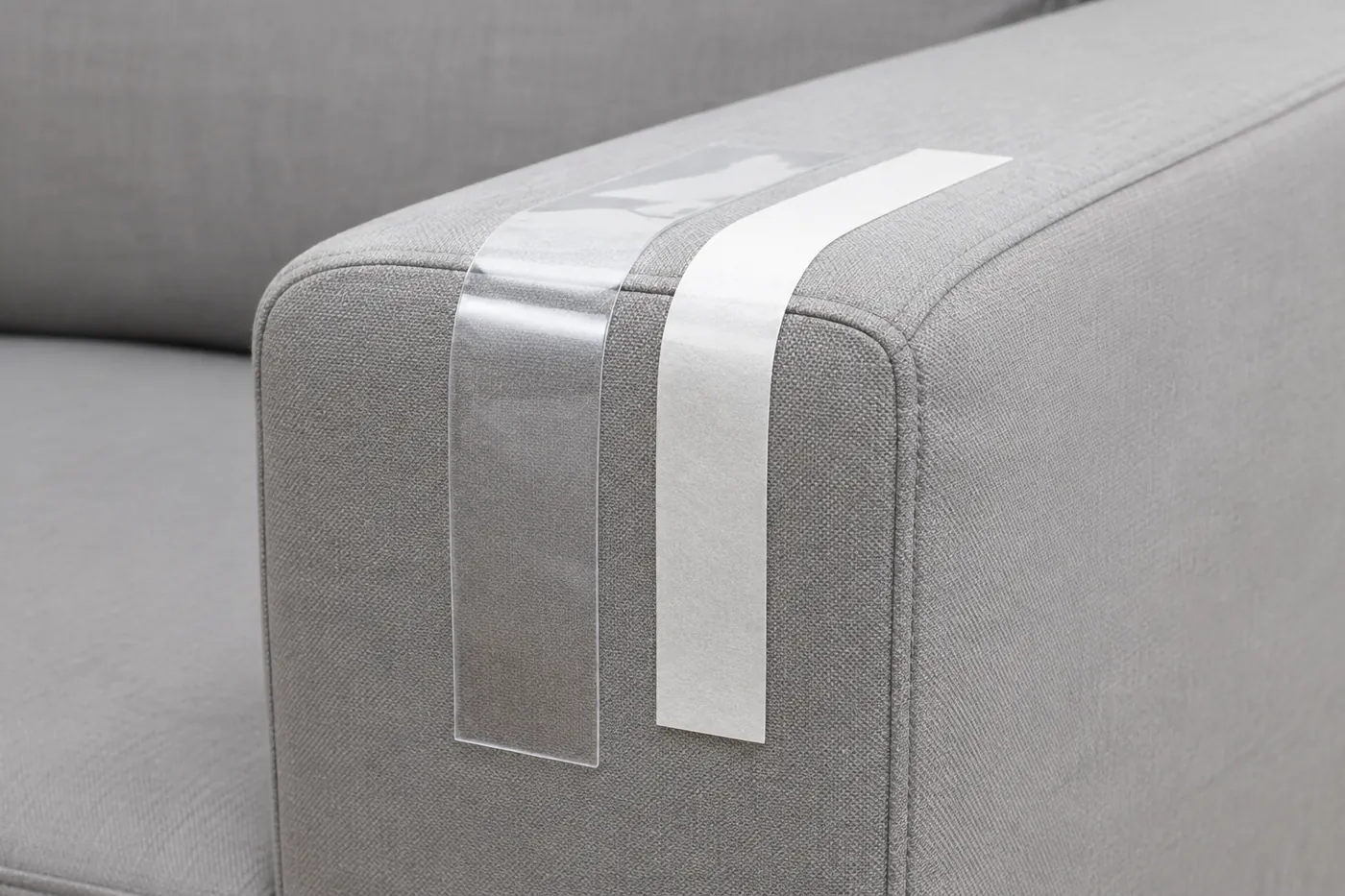
A throw or a fitted cover over the arm removes the surface entirely, and is the least confrontational option.
Avoid anything that startles. Sprays, foil, and noise deterrents can put a cat off the whole room rather than the corner, and a cat that is anxious scratches more rather than less.
Remove the protection once the post is being used reliably, and expect to put it back briefly if the cat drifts.
- Double-sided tape on the arm, which makes the surface unrewarding rather than frightening
- A throw or fitted cover, the least confrontational option and the fastest to fit
- Nothing that startles: sprays, foil and noise deterrents put a cat off the whole room
- The new post placed at the spot being defended, not across the room from it
Declawing is illegal in the United Kingdom and much of Europe and is not an option to consider. It removes the last bone of each toe rather than the claw, and it causes lasting pain and behavioural problems.
Kittens, and starting well
Early access gives a kitten suitable places to practise scratching, but it does not guarantee that furniture will never be used.
Offer suitable scratching surfaces early as part of positive socialisation, and continue introducing new surfaces at a pace the cat accepts. There is no fixed deadline after which preferences cannot change.
Kittens begin practising scratching early, but preferences can change with experience, size and location.
A stable surface with room for growth may last longer than kitten-sized equipment. Check that a small kitten can use it safely rather than assuming every adult post is suitable from the start.
Offer both a vertical post and a horizontal cardboard scratcher from the start, since preferences vary and it costs very little to find out early.
Redirect clawing or biting away from hands and onto toys or scratchers. Play biting can persist when hands repeatedly become part of the game, but one incident does not determine adult behaviour.
Keeping a post working
A post has a working life, and most are thrown away too early or kept too long for the wrong reasons.
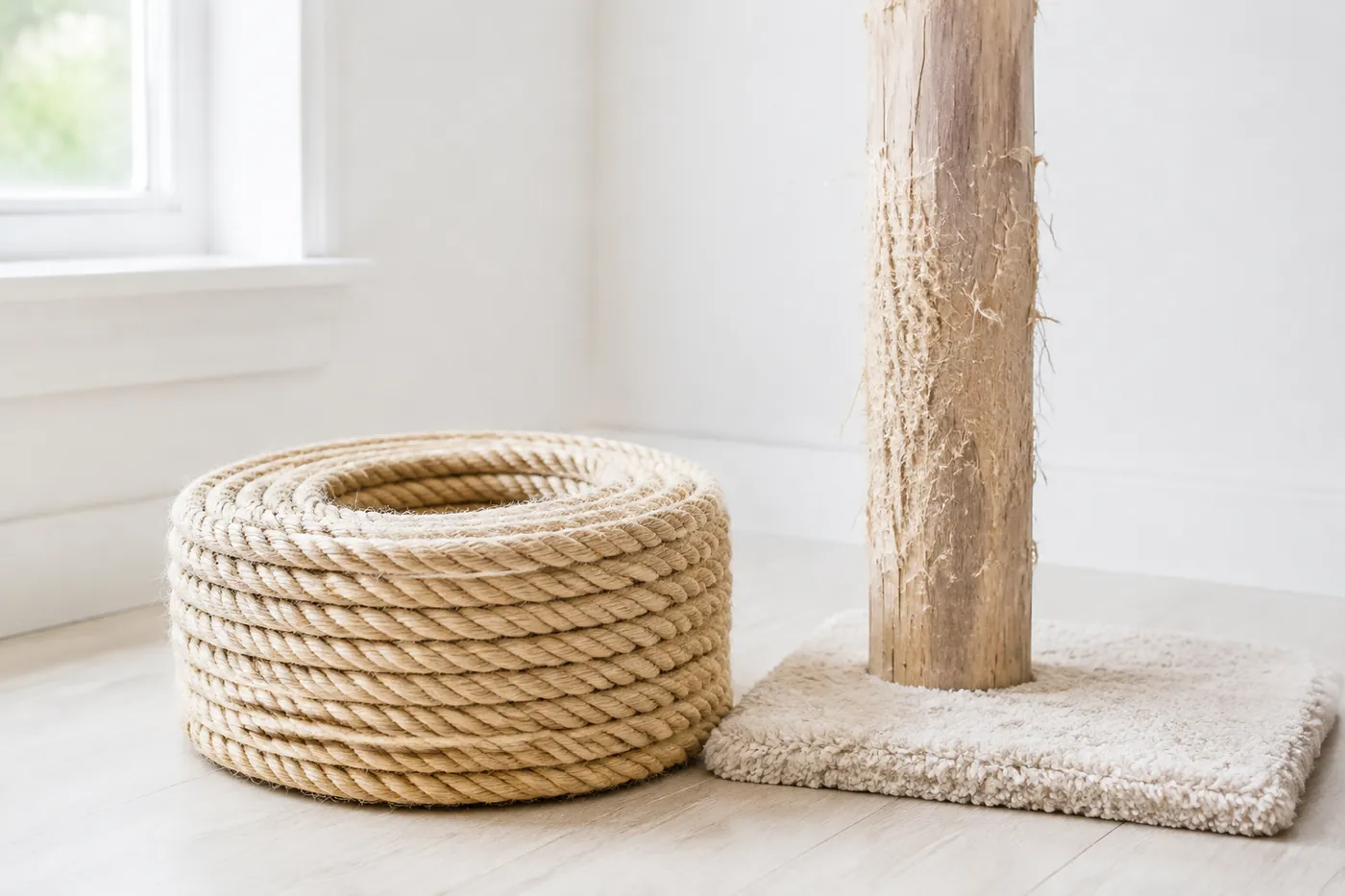
Sisal rope loosens over time. A post whose rope has started to unwind is a hazard for claws and can be retightened or rewrapped rather than replaced, since the base and the height are the expensive parts.
Rewrapping is straightforward: strip the old rope, and wind new sisal tightly from the bottom, gluing at intervals. A single roll of sisal costs a fraction of a new post.
Cardboard scratchers are consumables. Turn them over when one side is worn, and replace them when the corrugations flatten enough that claws no longer catch.
What not to do is replace a post because it looks untidy. A frayed post is a post the cat has committed to, and a brand new one smells wrong and has to be earned again.
- Rewrap sisal rather than replacing the whole post when it loosens
- Turn cardboard scratchers over, then replace once the corrugations flatten
- Leave a shredded surface alone if the cat is still using it
- Check the base regularly for movement, since fixings work loose
- Use catnip only if the cat responds, and refresh it according to the product rather than a fixed schedule
- Keep one post that never moves, so there is always a familiar one
If the post is still being ignored
Work through the four properties before buying anything else, because a post that fails on height or stability will not be rescued by encouragement.
Catnip attracts some cats. Use a cat-safe product as directed and judge it by the individual's response; placement and surface fit still do the main work.
Roughly a third of cats do not respond to catnip at all, and silvervine is worth trying with those that do not.
Play at the post rather than on it. A wand toy drawn up the surface gets claws onto it without any handling, and the cat reaches the conclusion itself.
Resist replacing a shredded post. A post that looks ruined is a post that works, and the frayed surface is part of what the cat is returning to.
Choose enough usable size for the cat's current stretch and likely growth, then recheck stability and condition as the cat matures. The same measurement-first approach applies to a litter tray.
Common Questions
How tall should a scratching post be?
Tall enough for your cat to stretch fully with its front claws on usable scratching material. Measure the cat's reach rather than relying on a universal minimum or the total height of a cat tree.
My cat scratches the carpet, not the post. Why?
It may prefer a horizontal surface, texture or location. Offer a flat scratcher at the used spot and check that other scratching options are stable and large enough.
Should I use catnip on a new post?
It can help draw a cat to it initially, though roughly a third of cats do not respond to catnip at all. Placement and stability matter far more.
Checked Against
Published 15 August 2026. Last updated .