
Training a Cat, With Rewards and Patience
Cats train well when the reward is worth having and the session ends before they lose interest. Punishment does not work, and it costs you the cat's trust.
Cats train well, for anyone who drops the dog model
The idea that cats cannot be trained comes from applying dog training to an animal it does not suit. Cats learn quickly and reliably, and they learn on different terms.
The differences are worth naming. Cats are not motivated by social approval the way dogs are, they disengage rather than persist when frustrated, and they do not generalise across situations easily.
What follows from that is a method rather than a philosophy: short sessions, a reward the cat genuinely wants, and stopping before the cat wants to.
A cat that walks away has not failed the lesson. The session ran too long.
Punishment is not merely less effective here; it is counterproductive. It makes a cat wary of the person doing the training, which removes the one thing the whole process depends on.
Teaching the Tray
A kitten normally needs showing once. An adult cat that has never had a tray needs the same lesson taught more slowly and with fewer assumptions, but it is the same lesson.
-
Training
Litter training a kitten
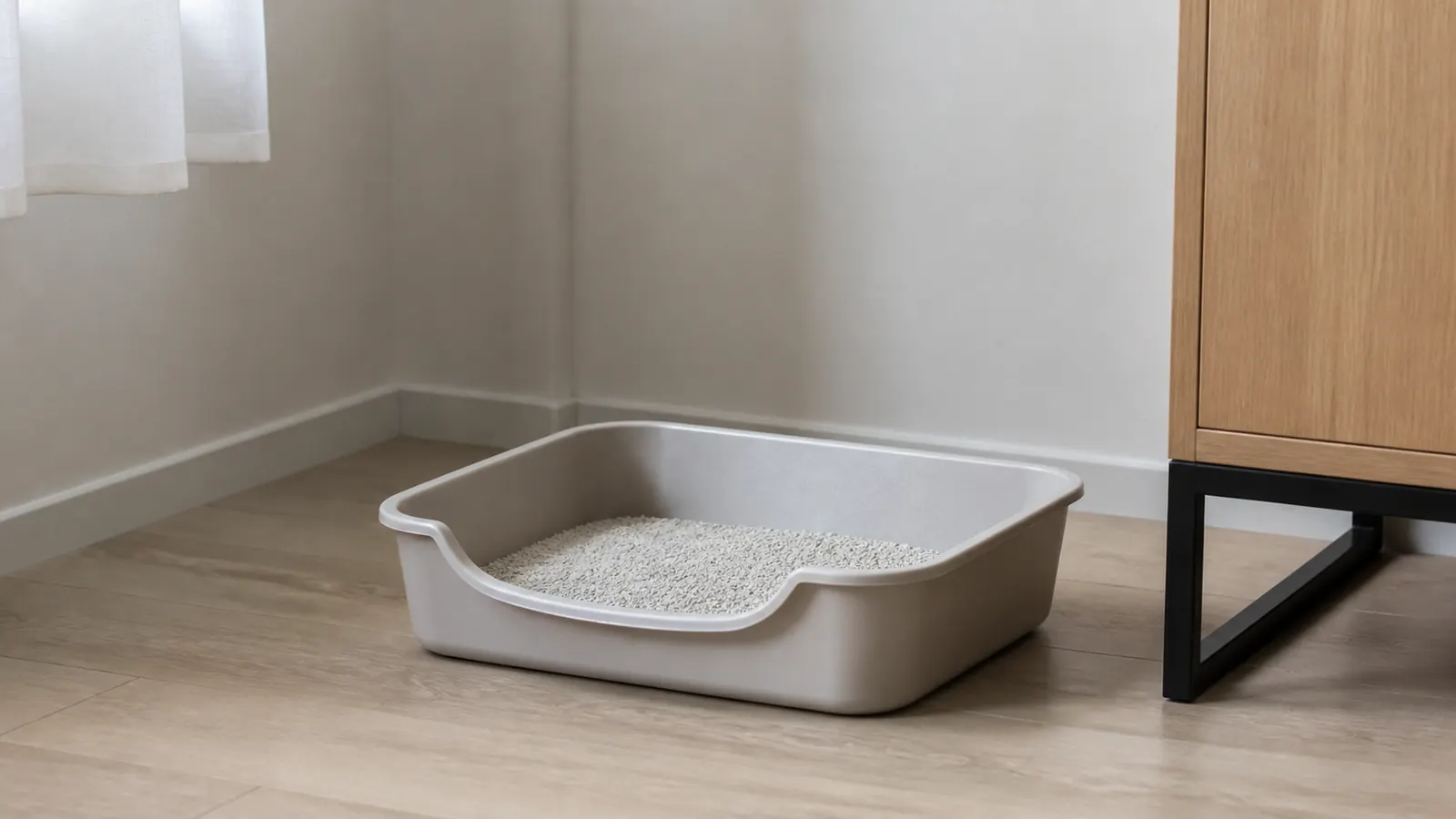
Litter training a kitten is mainly a setup task: provide an accessible tray, familiar litter and a short clear route…
-
Training
Litter training an adult
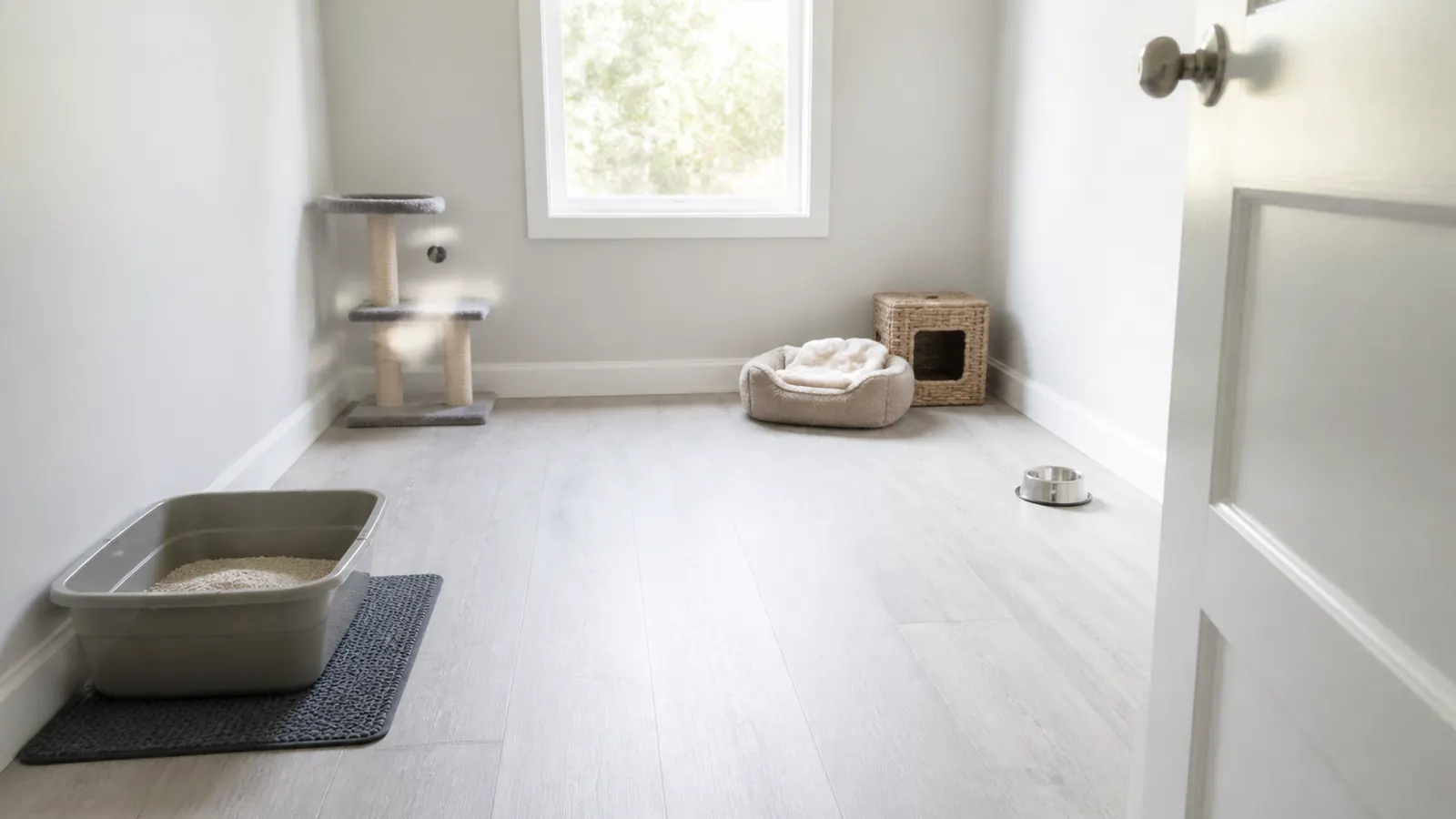
Give an adult cat a comfortable tray, familiar substrate and safe access. Let it explore voluntarily and check for…
What actually motivates a cat
The reward has to be worth working for, and food is usually the only thing reliable enough to build on.
- High value
- Small pieces of plain cooked chicken, prawn, or a lickable treat
- Low value
- The cat's regular kibble, useful for easy repetitions
- Size
- Small enough for repeated rewards without displacing the measured daily food
- Timing
- Within a second of the behaviour, or the cat learns something else
- Budget
- Comes out of the daily ration, not on top of it
Play works as a reward for some cats, particularly the very active ones, and stroking works for a smaller number. Neither is as consistent as food.
The most common practical mistake is treats that are too big. Ten repetitions with pea-sized rewards teach more than three with large ones, and the cat is still interested at the end.
A cat that has eaten enough has no reason to continue, which ends the session for you.
Teaching Skills, and Settling Fights
Cats learn a great deal from reward and almost nothing from correction. That holds for teaching a cat to touch a target and for two cats who have stopped tolerating each other.
Marker training, and why the click matters
The gap between a behaviour and a reward is where training goes wrong. A cat sits, you reach for a treat, the cat stands up, and the reward lands on standing.
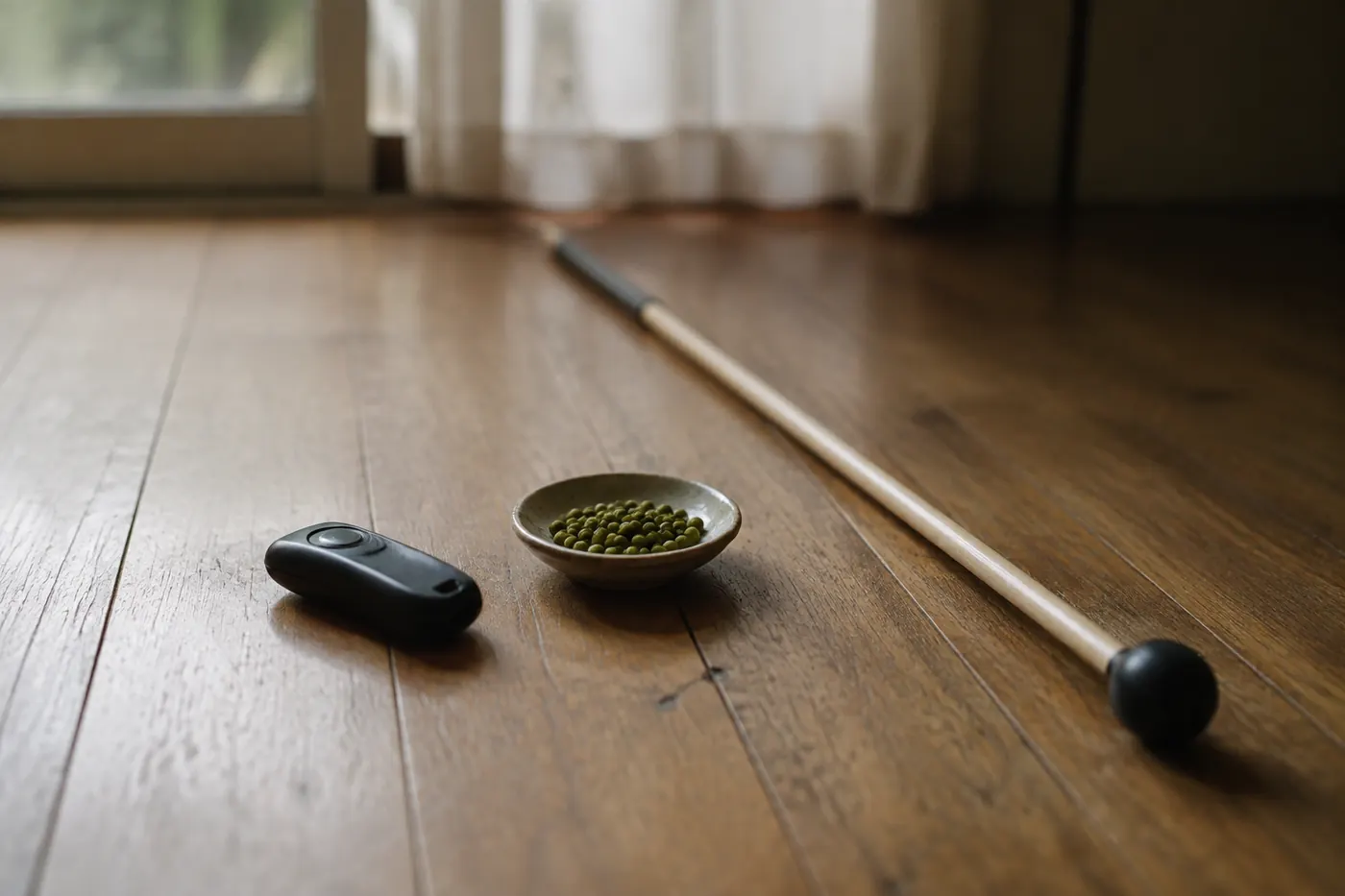
A marker closes that gap. It is a sound that means "that, exactly then, has earned something", and it buys you the seconds needed to deliver the food.
- Charge the marker first: click, then treat, twenty or thirty times with no behaviour asked.
- Wait until the cat looks for the treat on hearing the click. That is the association forming.
- Now mark the moment the behaviour happens, then deliver the treat.
- Keep the marker consistent. While teaching its meaning, follow the sound promptly with the chosen reward.
A clicker is convenient but not essential. A short spoken word or a tongue click works provided it is always the same and always followed by a reward.
The click is a promise. Break it by clicking without a treat and it stops working.
The clicker training guide covers charging the marker and building the first behaviours.
Handling, which is the training that actually pays
Trick training is enjoyable. Handling training is the one that changes a cat's life, because it removes fear from the situations a cat cannot avoid.
Useful cooperative-care skills include comfortable carrier entry, paw handling, brief mouth checks and grooming appropriate to the coat. Pain or fear can change which skill is safe to practise and how slowly it must be introduced.
Each is built the same way. Present the thing, reward calm, stop before the cat objects, and repeat over days rather than pushing through in one sitting.
The carrier is the highest-value one. A carrier left out permanently, with a blanket and occasional food in it, becomes furniture rather than a warning sign.
A carrier that only appears before a vet visit teaches the cat exactly what it means.
The claw trimming guide covers paw handling, and the brushing a reluctant cat guide covers the same approach for grooming.
Litter training, which is mostly setup
Kittens bury waste by instinct, and adult cats arrive already knowing how. Neither needs to be taught the behaviour itself.
What they need is a tray they can find, get into, and prefer to the alternatives.
- Shrink the world to one room at first, so the tray is always close
- Low sides a kitten can step over rather than climb
- Fine, unscented litter, three to four centimetres deep
- Away from food, water, and anything that makes a sudden noise
- Never carry a cat to the tray after an accident, which teaches avoidance
Litter training is a setup problem far more often than a learning problem.
The kitten tray guide and the adult tray guide cover the timelines for each.
Stopping a behaviour without punishing it
The reliable method has two halves, and skipping either one is why most attempts fail.
The first half is removing the reward the behaviour currently earns. A cat that gets attention for yowling at 5am is being paid, and any attention counts, including being told off.
The second half is giving the need somewhere else to go. A cat that ambushes ankles needs a hunt it can finish, and a cat that scratches a sofa needs a post it prefers.
Removing the reward alone produces an extinction burst: the behaviour gets worse before it stops, because the cat tries harder at something that used to work.
Ignoring a behaviour makes it louder before it makes it quieter, and that is the point most people give up.
Two cats, and reintroduction after a fight
Conflict between cats may involve fear, guarded resources, pain, arousal or an introduction that moved too quickly. A structured separation and reintroduction can help once medical causes and immediate safety have been addressed.
The process is slow on purpose. Rushing it is the most common reason it fails.
- Separate completely, with each cat having its own tray, food, water, and space.
- Swap bedding and rub a cloth on each cat, then leave it with the other.
- Feed both cats on either side of a closed door, far enough back that both still eat.
- Move the bowls slightly closer over days, going back a step at any hiss.
- Open the door only when both eat calmly at it, and keep the first sessions short.
A single hiss after a fortnight of progress means the last step was too big, and the answer is to go back one stage rather than abandon the plan.
Progress is measured by both cats still eating, not by how close together they are.
The cat aggression guide covers ruling out pain first, which comes before any of this.
What to expect, and when to get help
A simple behaviour on a marker takes a few days of short sessions. Handling tolerance takes weeks. Reintroducing two cats after a serious fight can take months.
Begin with a very short session and stop while the cat is still engaged. Frequency and length should follow the cat's appetite, comfort and progress rather than a universal timer.
Some things are outside what a training plan can fix. Sudden aggression in a previously tolerant cat, spraying that persists after resources are spread out, and self-directed behaviours like overgrooming all need a vet before a behaviourist.
A behaviour that appeared suddenly in an adult cat is a health question first.
A veterinary behaviourist is a real and useful referral, and asking for one is not an admission of failure.
Travel, and the cat that has to go somewhere
Almost every cat has to travel at some point, and almost none has been prepared for it.
The preparation is the same handling work described above, done in advance rather than on the morning of an appointment.
- Leave the carrier out permanently, with a familiar blanket in it.
- Feed or reward the cat at a comfortable distance, then gradually closer and eventually inside when it chooses to enter.
- Shut the door for a few seconds while the cat eats, then open it again.
- Carry the closed carrier a few steps and put it down, with a reward afterwards.
- Take a short car journey that ends at home rather than at a vet.
In the car, the carrier belongs on the floor behind a seat or strapped in, never loose. A towel over it reduces what the cat has to process.
Food instructions before travel depend on the cat's health, journey and veterinary or airline requirements. The carrier should prevent dangerous movement while still allowing the cat to stand, turn and rest in the position the journey requires.
A carrier that lives in the hallway is furniture. One that appears twice a year is a warning.
Sedation for travel is a veterinary decision and never something to improvise from anything in a cupboard.
Teaching a cat to accept a vet visit
The visit itself is short. What makes it difficult is everything the cat has learned about the events leading up to it.
Handling practice at home is the part that transfers. A cat used to having its paws held, its mouth briefly opened, and its body felt over will find an examination far less alarming.
Practise in steps short enough that the cat stays comfortable, paired with something it values. Progress from calm acceptance rather than from a fixed weekly schedule.
A towel is worth introducing at home too, since being wrapped is a routine part of many procedures and is much less frightening if it is familiar.
Booking a quiet appointment time, and asking whether the practice has a cat-only waiting area, both remove a large part of the stress before the cat is even out of the carrier.
Practise the handling at home, so the only new thing at the vet is the room.
More About Living With a Cat
One question usually leads to the next one.
-
Health
What a change in a cat usually means, and how fast it needs looking at.
Browse -
Food safety
One of six verdicts per food, with the reasoning and the sources.
Browse -
Nutrition
How much, how often, and how a cat gets enough water.
Browse -
Litter box
Setup, substrate, placement, and what the tray tells you.
Browse