How Do You Choose a Litter Tray That a Cat Will Use?
Choose a tray the cat can enter, turn and dig in comfortably, then check that its location and litter are acceptable. Size is a starting point, while mobility, individual preference and the cleaning routine decide whether it works.
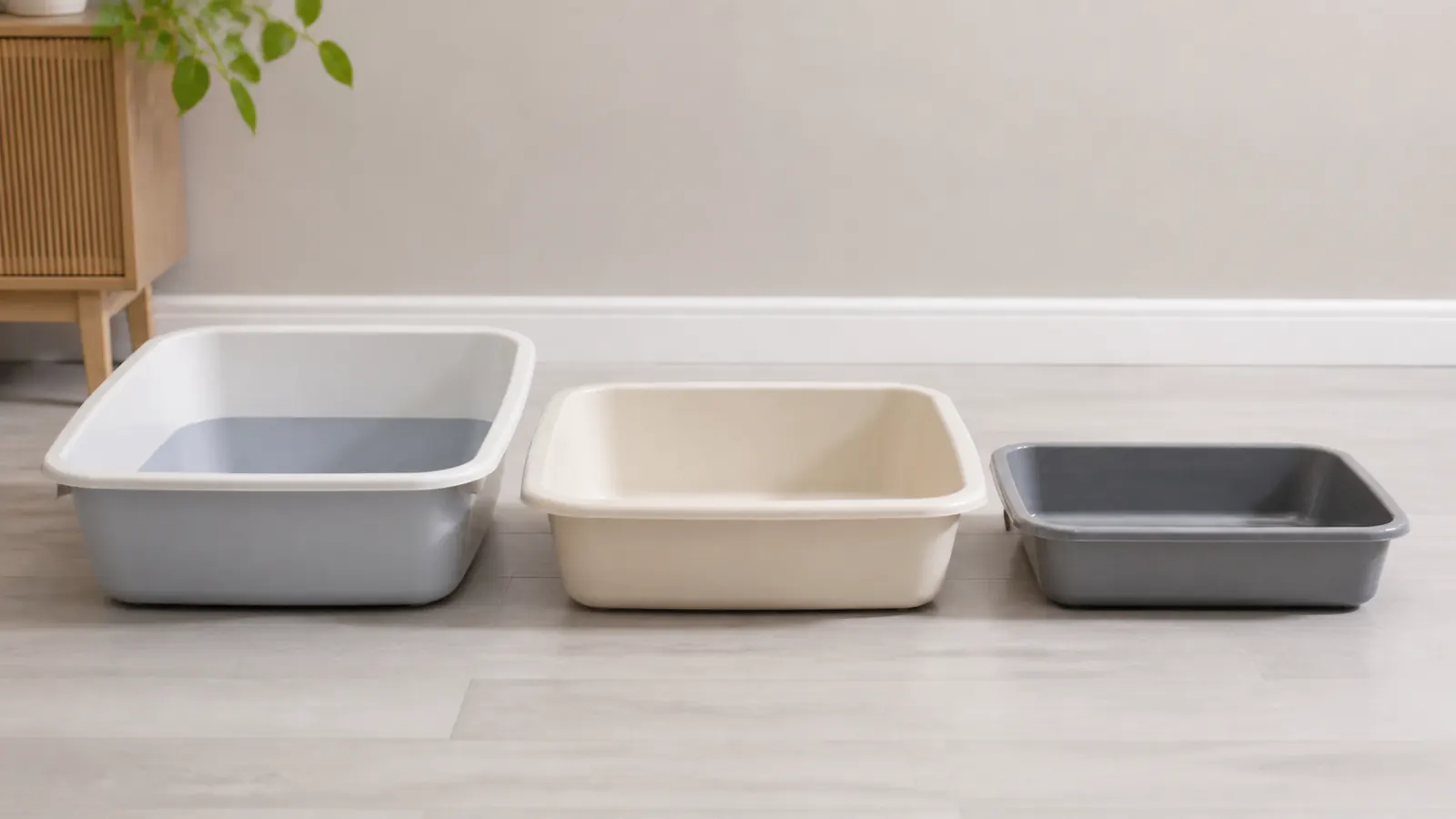
A tray has to be big enough to turn around in, open enough that a cat can see what is coming, and easy enough to clean that it actually gets cleaned.
Size is the first thing, and usually wrong
A cat needs to turn around, dig, and position itself without touching the sides.
A tray around one and a half times the cat's nose-to-tail-base length is a useful starting point rather than a universal pass mark.
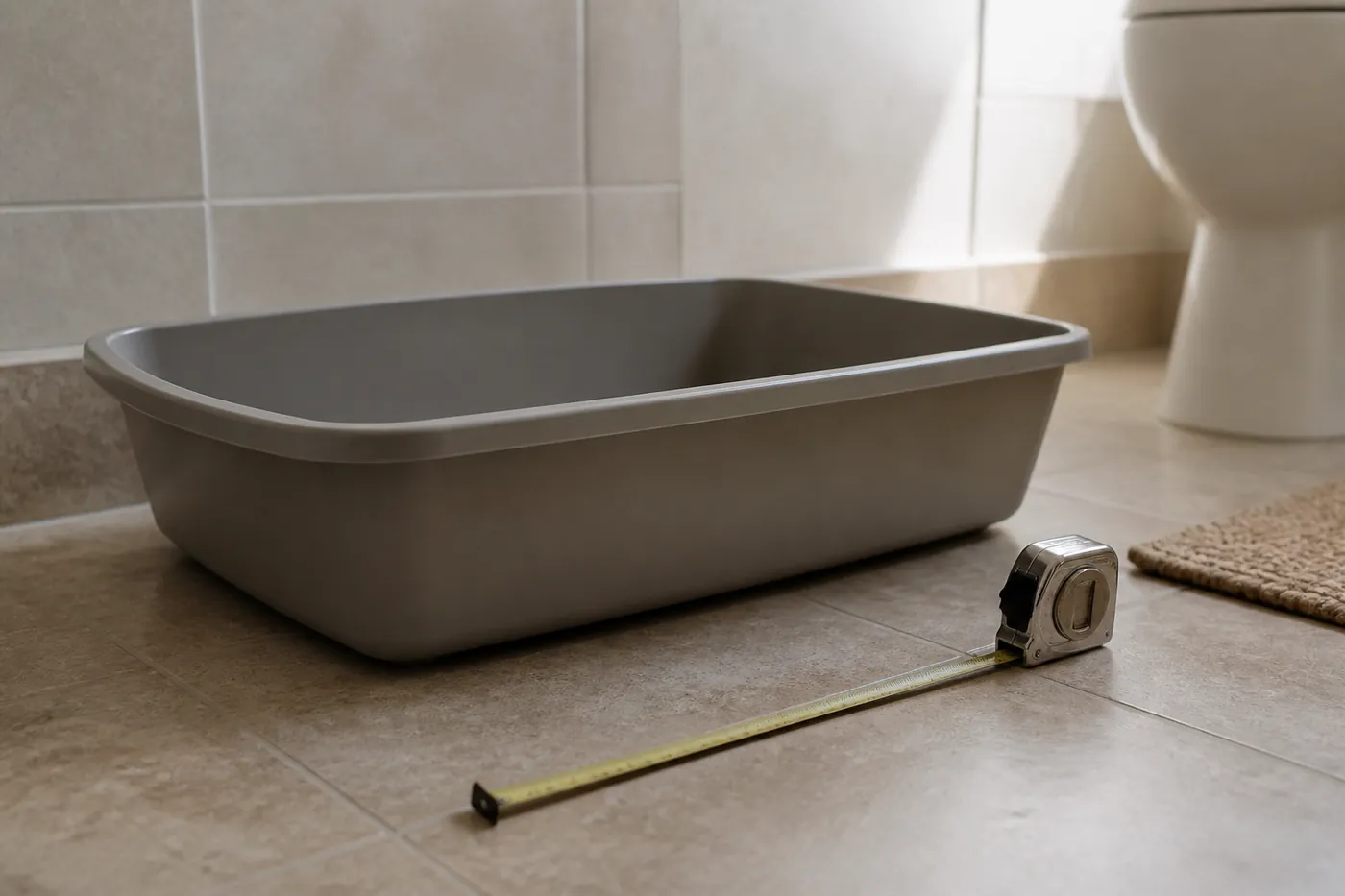
Check the internal floor area rather than the outside dimensions, because sloped sides and rims reduce the space the cat can use.
A storage box can provide more floor area, provided its material is intact, the entry is safe and it can be cleaned thoroughly. A cut edge must be smoothed and a stiff cat still needs a low way in.
Sides, and who has to climb them
High sides contain litter well and are a barrier for kittens and older cats.
One useful compromise is high sides with a lower entry point, which can contain scatter without making every approach a climb.
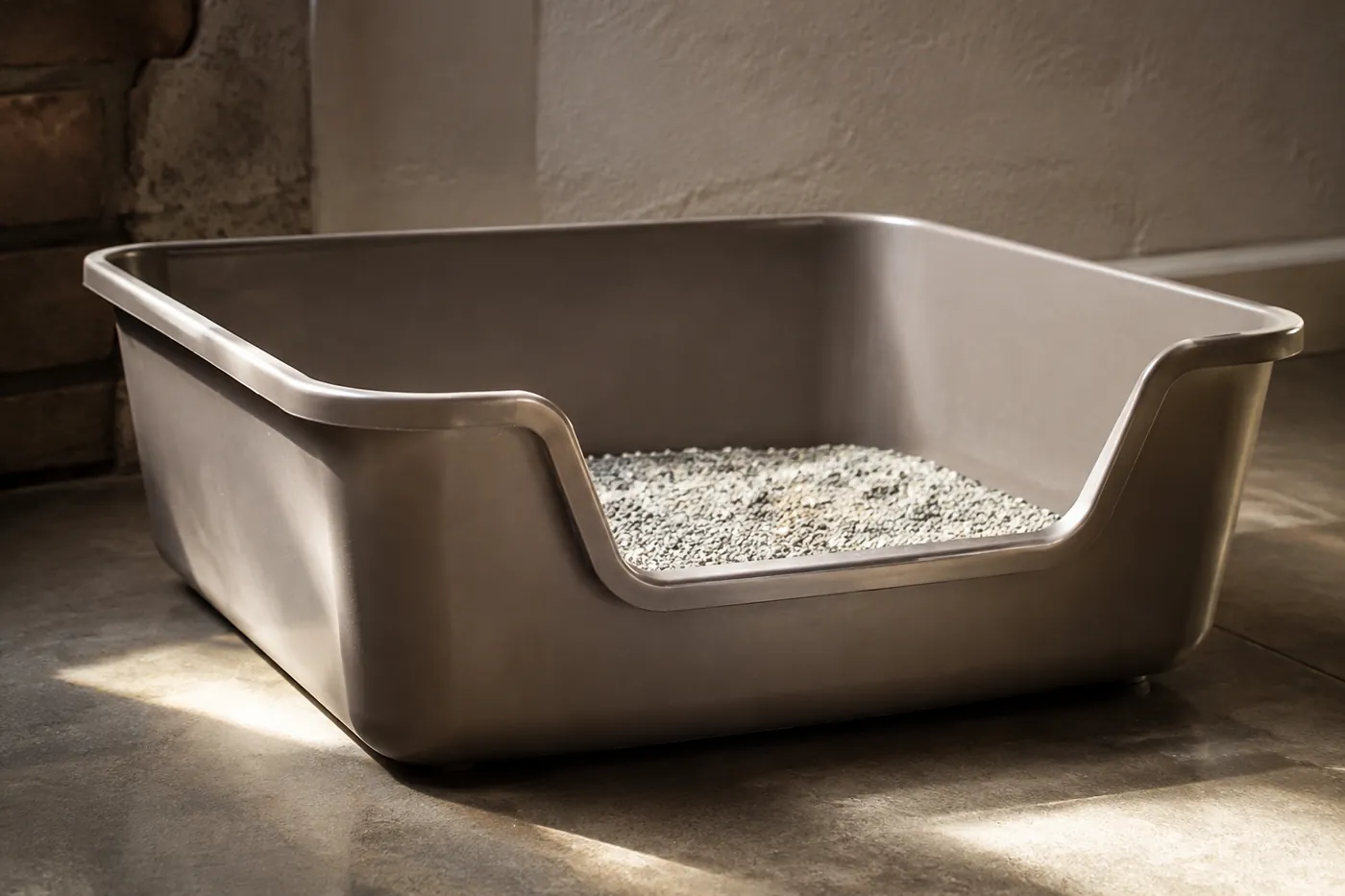
The two demands are genuinely opposed, which is why the compromise exists. Litter leaves a tray on paws and by being kicked, and a high wall is the only thing that stops the second of those.
The climb is the cost on the other side. Measure the entry height and watch the cat step in; a height a young cat clears easily may be painful or impossible for a kitten, injured cat or stiff older adult.
Age is what moves a cat across that line, usually without anybody noticing. An arthritic cat weighs the step against the discomfort each time, and the rug beside the tray wins that comparison eventually.
| Tray shape | Contains scatter | Step for a stiff cat |
|---|---|---|
| Plain open tray | Poorly | None |
| High sides all round | Well | Measure the actual entry; it may exclude a stiff cat |
| High sides, one low entry | Well | Lower, but still check comfort and clearance |
| Top entry | Very well | A climb and a drop that may exclude kittens or cats with limited mobility |
One low entry can keep three walls working while reducing a barrier. It is an option to compare with the cat's mobility and digging style rather than a shape every cat must use.
For a cat with arthritis or reduced mobility, prioritise easy entry while preserving enough floor area to turn and posture comfortably.
How much litter, and how deep
The tray is only half the equipment, and the depth inside it is the part most often set by habit rather than by the cat.
Provide enough litter for comfortable digging and follow the product's depth guidance. Around three centimetres is a common starting point, but some products need more to work properly.
A very deep tray of loose litter shifts as the cat stands, and an uncertain cat responds by not going in. That is a common and easily fixed reason a new tray is refused.
Too shallow fails differently. A cat that cannot bury will often scratch at the wall or the floor beside the tray afterwards, but the behaviour alone does not prove the depth is wrong.
Use the whole tray rather than a heap in the middle. Litter pushed to the sides during cleaning leaves a bare patch that cats notice and avoid.
Material, and why plastic wins
Almost every tray sold is plastic, and the reasons are worth knowing when a nicer-looking alternative appears.
Smooth rigid plastic is non-porous and usually tolerates routine scooping and washing. Follow the tray maker's cleaning instructions so heat or chemicals do not damage the surface.
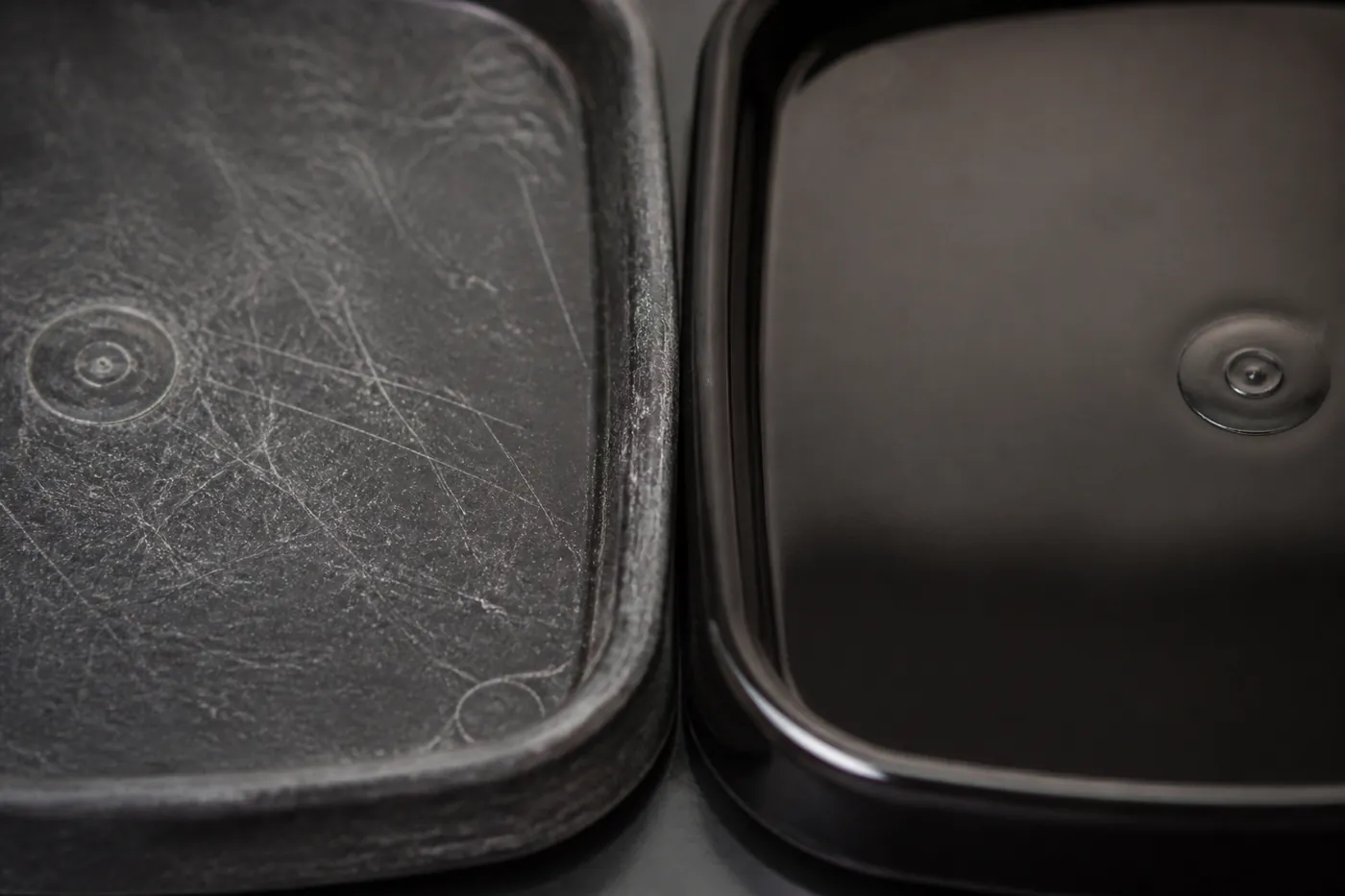
Stainless steel trays exist and are excellent on hygiene, since they never scratch into an odour-holding surface. They are expensive, noisy when litter is scratched against them, and a few cats dislike the sound.
Bare wood and wicker are difficult to clean after urine reaches them. A furniture enclosure also needs enough ventilation, usable floor area and more than one safe approach in a multi-cat home.
Avoid thin flexible plastic. It flexes when a large cat stands on the edge, and a tray that moves underfoot is a tray a cat stops trusting.
Hoods are a preference, not an upgrade
Hooded trays are sold as an improvement and many cats dislike them.
A hood traps odour inside, where the cat is, and removes the ability to see approaching threats. In a multi-cat home it creates a place a cat can be cornered.
The odour point is the one that reverses the sales pitch. A hood does keep the smell out of the room, and it does that by concentrating it in the small volume the cat has to put its head into.
A cat's sense of smell is far better than the person buying the tray. What reads as an improvement from outside is a considerably worse experience from inside.
The sightline problem is about how cats manage risk rather than about fear. A cat toileting is briefly committed and vulnerable, and it compensates by watching the room, which a hood makes impossible.
One exit turns that from a discomfort into a trap. In a household where one cat guards resources, a hooded tray is the easiest place in the house to corner another, and the cat being cornered stops using it long before anybody sees a confrontation.
Top-entry, sifting, and the other shapes
Several designs solve one problem and create another, and it helps to know which trade you are making.
Top-entry trays have a lid with a hole in it and are genuinely good at containing scatter, because the cat has to climb out through a grid that catches litter from its paws. They may be difficult for kittens, cats with limited mobility or a cat too large to turn inside.
Keep an accessible open option available.
Sifting trays differ in design. Some retain clumps while clean litter falls through; pellet systems may let used sawdust fall into a lower layer.
Match the insert to the litter material and the manufacturer's instructions.
Corner trays fit a bathroom neatly and are almost always too small for the cat, since the usable area is a triangle rather than a rectangle.
High-backed trays, tall at the rear and open at the front, are the design worth knowing about. They contain a determined digger nearly as well as a hood without enclosing the cat or trapping smell.
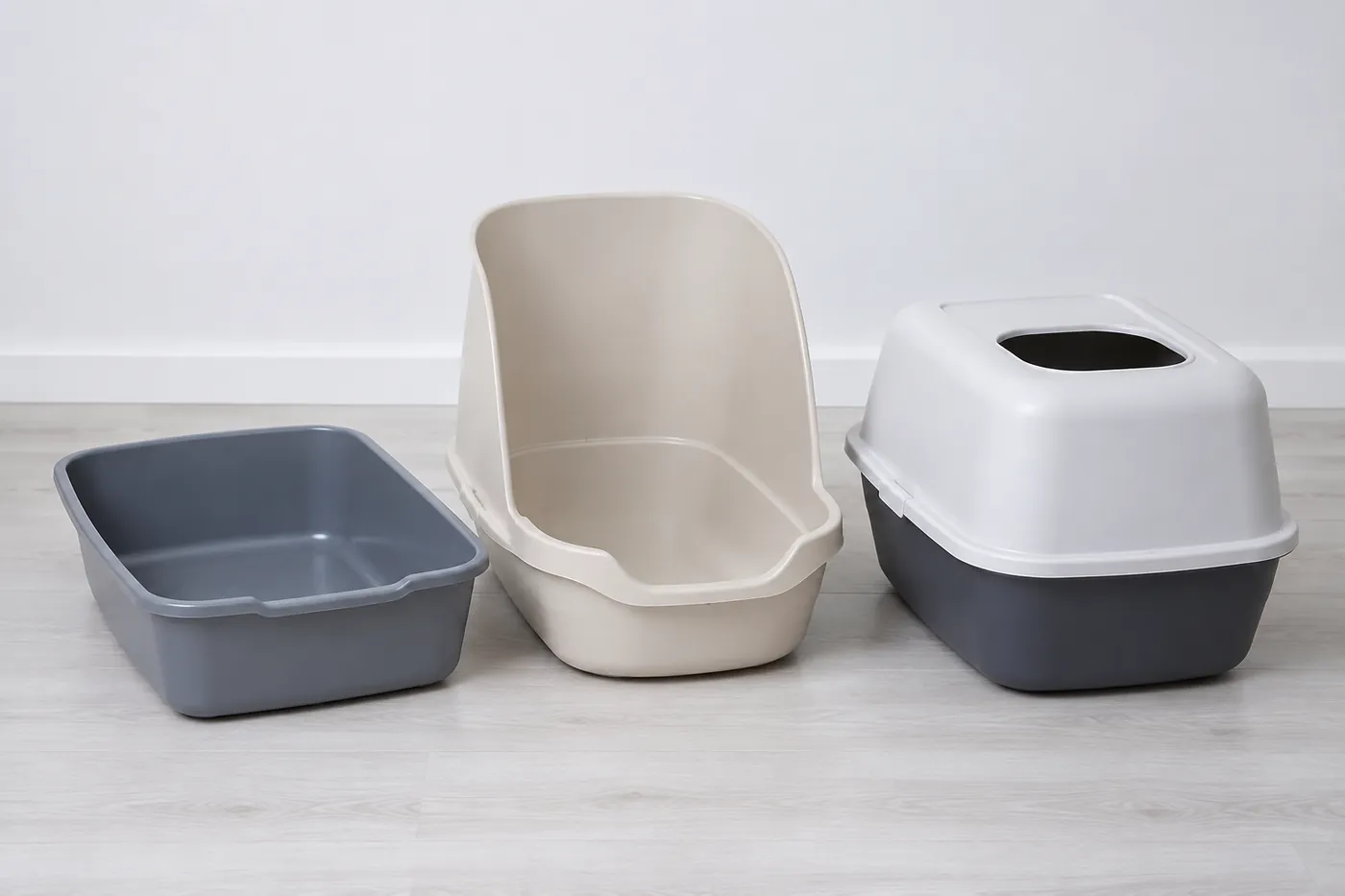
| Shape | Solves | Costs |
|---|---|---|
| Open rectangular | Clear sightlines and easy entry | Some scatter |
| High-backed, open front | Digging and spray up the wall | Slightly bulkier |
| Hooded | Odour for the household | Odour for the cat, and visibility |
| Top-entry | Scatter, almost entirely | Excludes kittens and stiff cats |
| Sifting | Separating used material | Must match the particular litter and insert |
| Corner | Uses a room corner | Usable turning area may be smaller than the footprint suggests |
Trays for kittens, and trays for old cats
The same cat's tray needs may change as its body size and mobility change, and those changes are easy to miss.
A kitten needs an entry it can cross easily, which often means a shallow open tray. Keep a usable tray close to the kitten's main living area and add locations when distance or closed doors cause accidents.
The kitten tray may be outgrown quickly. Recheck usable floor area as the kitten grows; perching on the rim or struggling to turn is more useful than a fixed replacement timetable.
An older cat may need a lower entry again. Arthritis and other mobility problems can make a high step difficult before an obvious limp appears, so watch how the cat enters and turns.
An older cat may benefit from an accessible tray on each level it still uses. The useful number and placement depend on mobility, household layout and whether another animal can block the route.
| Stage | Sides | Placement |
|---|---|---|
| Small kitten | Entry the kitten crosses easily | Close to the kitten's main living area |
| Growing cat | Recheck entry and turning room as size changes | Add access where distance or doors interfere |
| Mobile adult | Match sides to digging and entry comfort | Distribute trays so one cannot guard them all |
| Reduced mobility | Low entry with adequate turning room | On each level the cat still uses when needed |
Can a storage box work as a litter tray?
A plain plastic storage box can be larger and deeper than a purpose-made tray. It is useful only when the plastic is intact, the finished entry is safe and the box can be washed according to its material instructions.
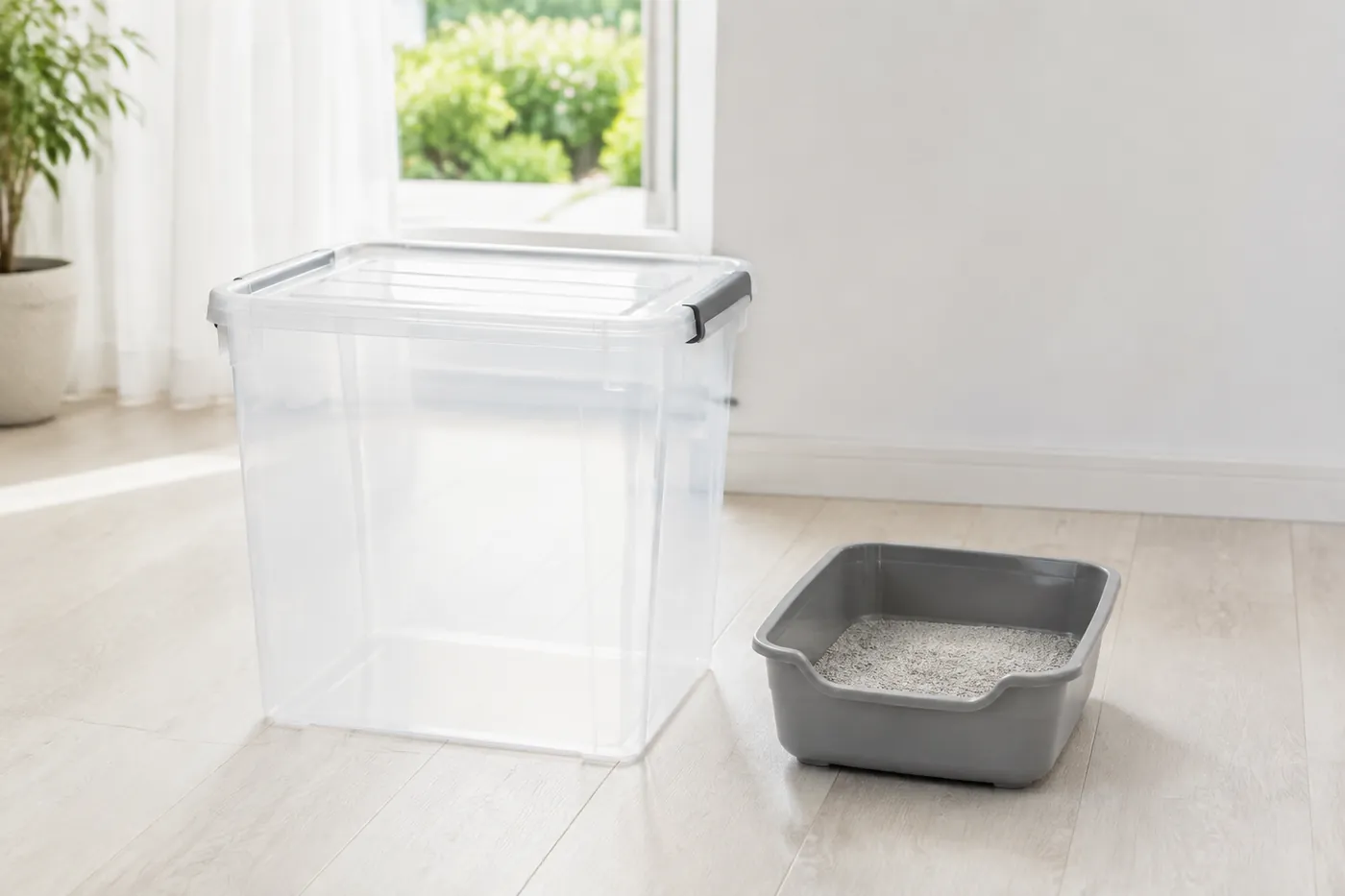
Some cats need a lower entry than the original rim provides. Set its height from the cat's comfortable step rather than an age label or fixed measurement.
- Choose a box that gives the cat room to enter, turn and dig without striking the sides.
- Mark a doorway wide and low enough for this cat to cross without squeezing or climbing.
- Cut it with a suitable cutting tool, following its safety instructions, leaving the base intact.
- Sand or file every cut edge until nothing is sharp to a finger.
- Do not use the box until every edge is smooth and secure; loose tape can peel or be chewed.
- Follow the litter maker's depth guidance and put the lid away rather than enclosing the box.
Living with the scatter
Litter on the floor is the usual complaint about a large open tray, and it is the wrong thing to solve by shrinking the tray.
A mat outside the entry catches most of it. Deep-ribbed rubber and the softer honeycomb mats both work, and both need shaking out often enough that the cat is not walking over a full one.
Placing the tray on a hard, washable floor rather than carpet makes the rest trivial, and a tray tucked into a corner with two sides against the wall throws far less into the room.
A high-backed tray, open at the front but tall behind, contains a determined digger without becoming a hood.
Cleaning it, and what never to clean it with
This is the part of tray ownership with a genuine safety consequence, and it is rarely on the packaging.
The wrong product does more than fail to clean. An ammonia-based cleaner leaves a smell a cat reads as urine and returns to, which is why cleaning up properly is a different job from wiping a tray out.
Phenol-based disinfectants are toxic to cats. Check the active ingredients and cat-safety instructions.
A milky appearance alone does not reliably identify a phenol or establish whether another product is safe.

Cats lack the liver pathway that clears phenols, which is the same shortfall that makes paracetamol so dangerous to them, and they groom whatever they have stood in.
Pine and tea tree oils belong on the same list. Both are marketed as natural and both are hazardous to cats, particularly in a confined space like a covered tray.
Hot water and washing-up liquid does almost all of the work. Where a disinfectant is wanted, use one sold as safe for animal housing and rinse it thoroughly.
- Scoop often enough that waste does not accumulate; more cats or heavy use require more frequent checks
- Empty and wash according to the litter, tray and actual soiling rather than a fixed calendar
- Use a cat-safe method compatible with the tray material, then rinse and dry as directed
- Avoid phenol-based products; read ingredients and cat-safety instructions rather than judging cloudiness
- Do not use bleach on urine or mix cleaners; follow veterinary instructions if disinfection is needed
- Do not use essential-oil cleaners unless a veterinarian and the product directions establish that use around cats is safe
- Dry the tray before refilling, since damp litter clumps to the base
The things sold beside it
Two accessories sit on the same shelf as the tray, and one of them is worth buying.
Liners are the one to leave. They are sold as a way to lift the whole bed out in one movement, and they fail because a cat digs.
Claws catch the plastic and tear it, and once it is torn the urine runs underneath and sits between the liner and the tray. What was meant to save a wash becomes a pool nobody can see.
Some cats also object to the feel of plastic sliding under the litter and simply stop digging properly, which is the first step towards not using the tray at all. A tray is easier to wash than a liner is to justify.
The scoop is the one to think about, and the slot width is the whole decision. A scoop built for fine clumping clay has narrow slots that hold the clump and let the loose grains fall through.
Run that same scoop through wood or paper pellets and it lifts the entire bed, because the pellets are wider than the gaps. Pelleted litters need a scoop with wide slots or a sifting insert instead.
Material matters at the other end of the job. Set clay welds to a tray base, and a stiff plastic scraper takes it off without scoring the surface in the way a metal edge does.
Buy the scoop that matches the litter rather than the one that came free with the tray, and keep a second one if two trays run different litters.
- Liners
- Skip them. Claws tear them and urine pools underneath
- Scoop for clumping clay
- Narrow slots, so clumps hold and grains fall
- Scoop for pellets
- Wide slots or a sifting tray, or it lifts everything
- Getting set clay off
- A stiff plastic scraper, never a metal edge
- Two litters in the house
- Two scoops, so neither tray gets the wrong one
When to replace the tray itself
Inspect the tray for cracks, deep scratches, sharp edges and persistent odour after cleaning. Replace a damaged tray or one that can no longer be cleaned adequately.
There is no universal one-to-two-year expiry. The material, cleaning method and wear determine its useful life.
If the cat starts avoiding an old tray, also assess health, access and location rather than assuming a replacement will solve it.
What to skip
Self-cleaning trays vary in noise, motion, size and waste handling, and some cats avoid them. They can also make urine and stool changes harder to notice unless you inspect the waste compartment and the cat's use deliberately.
Corner trays may have less turning room than their footprint suggests. Top-entry trays may exclude a small kitten or any cat that finds climbing painful or difficult.
The daily look is the part worth defending hardest, because nothing else in a cat's routine offers it. Urine volume, clump count, straining, blood, and a change in consistency are all visible in a tray and invisible everywhere else in the house.
That observation matters especially for older cats and cats with urinary, kidney or digestive concerns. Changes in the tray can justify a prompt veterinary call even when the cat's outward behaviour has changed little.
Corner trays fail on geometry rather than on area. The usable rectangle inside a triangle is much smaller than the footprint suggests, so a cat cannot turn or dig in the part that is actually available.
Top-entry trays solve scatter by asking for a vertical climb and a drop. That may suit an agile adult but can be unsuitable for a small kitten, a cat with painful movement or an animal recovering from surgery.
Common Questions
Are covered litter trays bad for cats?
Not universally, but many cats dislike them because they trap odour and block escape routes. If you use one, offer an open tray as well so the cat can choose.
Are self-cleaning litter trays worth it?
They suit some households, but noise, movement, usable size and the cat's response matter. Inspect the waste compartment and the cat's habits so automation does not hide a health change.
Can I use a storage box as a litter tray?
It can work when the intact box gives enough turning room and can be cleaned safely. If a lower entry is needed, every cut edge must be smooth and secure before the cat uses it.
Checked Against
Published 13 August 2026. Last updated .