Why Does My Cat Bite When Petted, and How Do I Stop It?
A cat that bites during stroking has usually had enough contact, is frightened or is in pain. Short contact the cat chooses lowers the risk, and new or severe biting needs a veterinary check.

A cat that bites during stroking may have reached its tolerance for contact, become frightened or experienced pain. Stop the interaction and give it room rather than trying to finish the stroke.
Shorter voluntary contact and attention to the whole body help prevent repeat incidents, but no signal guarantees a bite cannot occur.
Why petting can become unwelcome
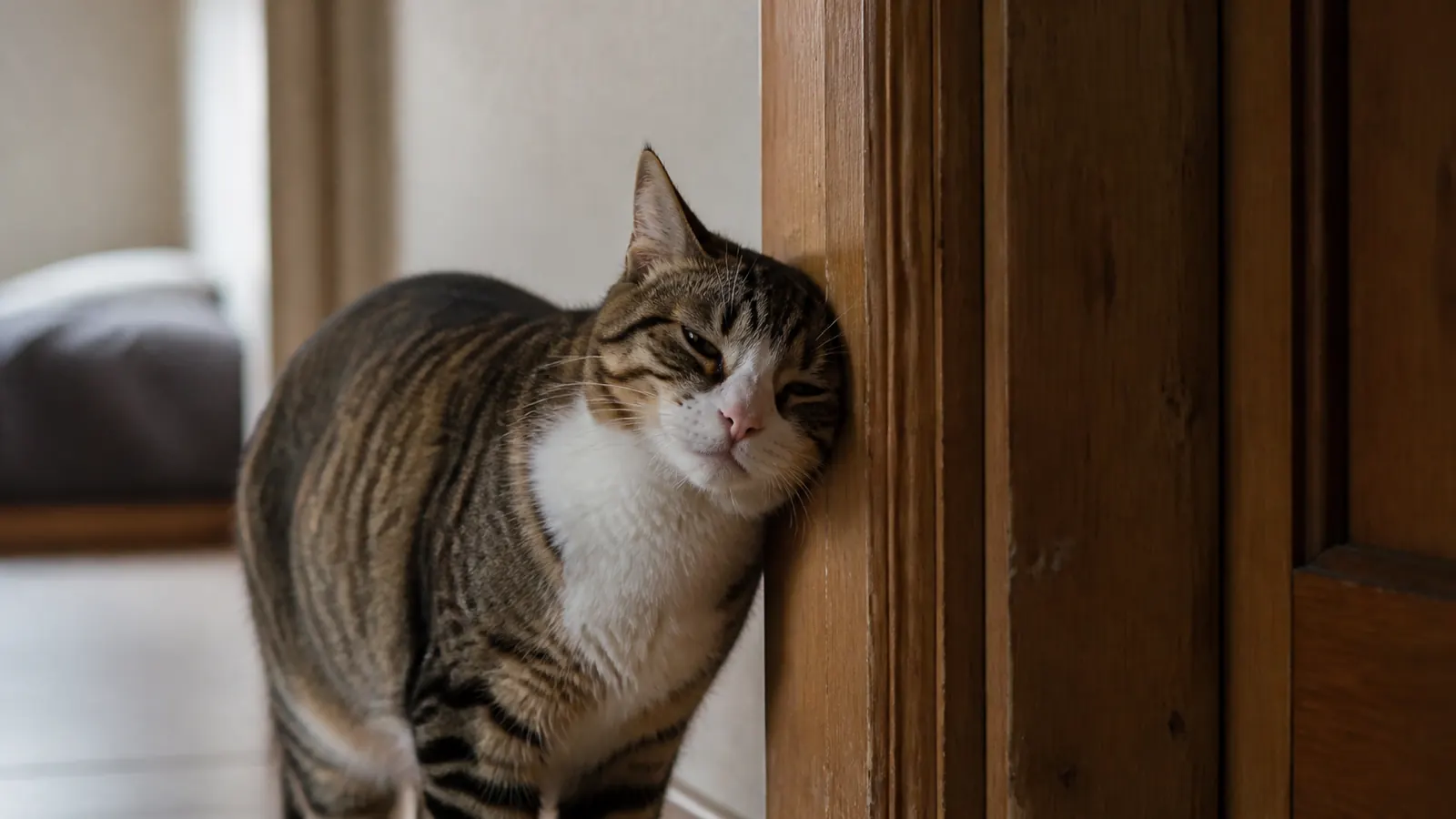
Cats differ in where, when and how long they accept touch. Some enjoy extended stroking; others prefer brief contact around the cheeks or head.
Repeated touch can become irritating, and a cat may also want to leave even while remaining near you.
The exact mechanism of petting-related aggression is not fully settled. It is not useful to assume the cat always gave three warnings or that every bite means an owner ignored it.
Pain, fear and other arousal can produce a similar incident, particularly when the behaviour is new.
Watch changes in the whole body

Tail flicking, ears rotating back, a stiffening body, skin twitching or the head turning towards your hand can be reasons to pause. The signals do not arrive in a fixed tail-then-ears sequence.
A purring cat may still want contact to stop, as purring can accompany more than one emotional state.
- Pause when the cat tenses, shifts away or watches your hand closely.
- Keep an exit open rather than holding it on your lap.
- Notice whether one area or type of touch reliably prompts a reaction.
- Stop before continuing contact becomes an argument.
A moving tail is not a stand-alone diagnosis of anger, and a still tail is not permission to keep stroking. Individual changes from the cat's comfortable posture are the useful comparison.
Offer contact, then pause
Contact goes best when the cat approaches on its own. A hand held still nearby gives it a choice to investigate, while fingers close to the face of a cat already threatening to bite are within reach of that bite.
If the cat solicits contact, try a brief gentle stroke in an area it usually accepts, then stop.
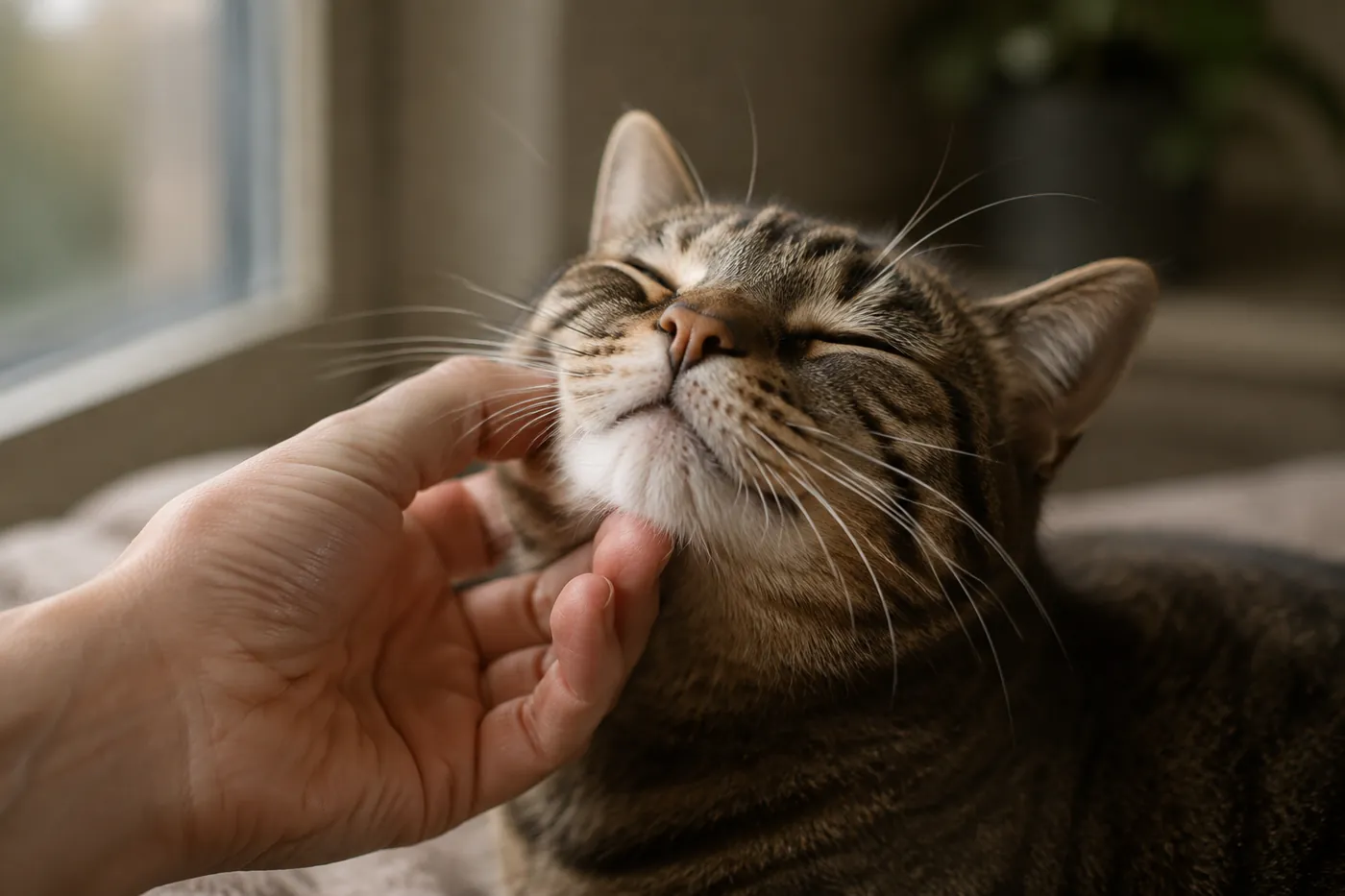
Leaning in for more, staying relaxed or moving away shows how the stroke landed. Continuing only while the cat remains comfortable gives it an alternative to escalation.
A short pause works as a check, and no fixed count of seconds suits every cat. A cat that rolls onto its back is not necessarily inviting belly contact, because for some cats the belly is sensitive or defended.
Gradual reward-based handling can improve comfort, though the realistic aim is an interaction the cat accepts rather than a longer petting session.
If the cat grabs or bites
Stop stroking and avoid a sharp tug or retaliatory movement. Give the cat a chance to release and move away.
If you cannot disengage safely, protect yourself with a barrier and seek help rather than keeping your hand in danger to prove you can stay still.
Never hit, scruff or pin the cat. Punishment can add fear and make future handling less predictable.
End the interaction and note what happened beforehand so the next plan addresses the trigger.
If a bite breaks skin, wash it promptly with soap and running water, cover it and seek medical advice, particularly for a puncture, hand or joint wound. A clinician can assess infection risk and any tetanus or rabies considerations relevant to the location and exposure.
Spreading redness, swelling, fever or worsening pain needs urgent attention.
When another trigger is involved
A cat intensely watching an outdoor animal or reacting to a frightening noise may bite whoever comes close. This redirected aggression is a reason to leave space and avoid touching or picking up the cat.
Remove the trigger only when it is safe to do so.
Readiness for handling shows in settled behaviour, and a fixed two-hour wait proves nothing on its own. Severe or recurring episodes are worth discussing with a veterinarian or behaviour professional.
If the trigger is a housemate, inter-cat conflict requires its own management plan.
Children, lifting and health changes
Children around cats need supervision, and the cat needs a retreat the child cannot follow. Brief gentle contact, with the cat free to leave, is the habit worth teaching.
A shelf or separate room supports safety, but no escape arrangement guarantees that a bite cannot happen.
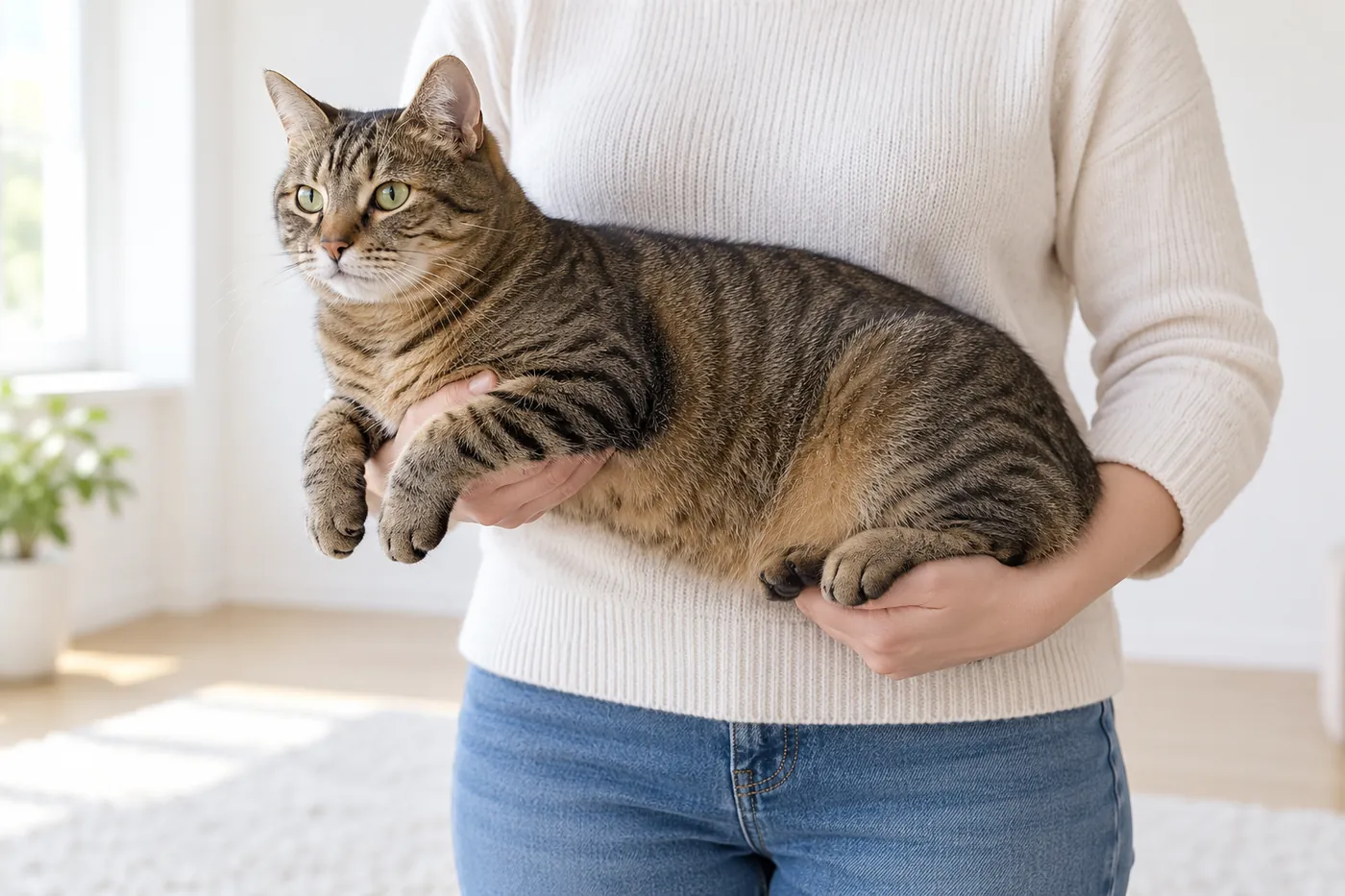
Lifting is different from petting. Support both the chest and hindquarters if lifting is necessary and accepted, keep it brief and stop if the cat struggles. Avoid lifting a cat already showing fear or aggression.
A recent loss of tolerance, pain at one area, reduced grooming or changes in appetite and movement needs veterinary assessment. Sudden aggression with disorientation, collapse or other neurological signs warrants urgent advice.
Stable dislike of some touch may be a preference; a new change should not be dismissed as age or temperament.
Common Questions
Is petting-related biting aggression?
It is commonly described as petting-related aggression. The label does not mean the cat is spiteful; contact may be uncomfortable, and a new change can indicate pain.
Can stopping earlier prevent every bite?
It can reduce risk, but no technique guarantees prevention. Keep contact voluntary and seek help for new, severe or recurring incidents.
Why does my cat suddenly object to touch?
Pain, illness, fear or a change in arousal can reduce tolerance. Arrange veterinary assessment rather than assuming it is a training problem.
Checked Against
Published 2 September 2026. Last updated .