Cat Coat Changes by Age, and When to Worry About Them
Development, temperature, season and health can all change a cat's coat. The pattern, the skin underneath and any change in weight, appetite or grooming help distinguish an ordinary coat cycle from a symptom.
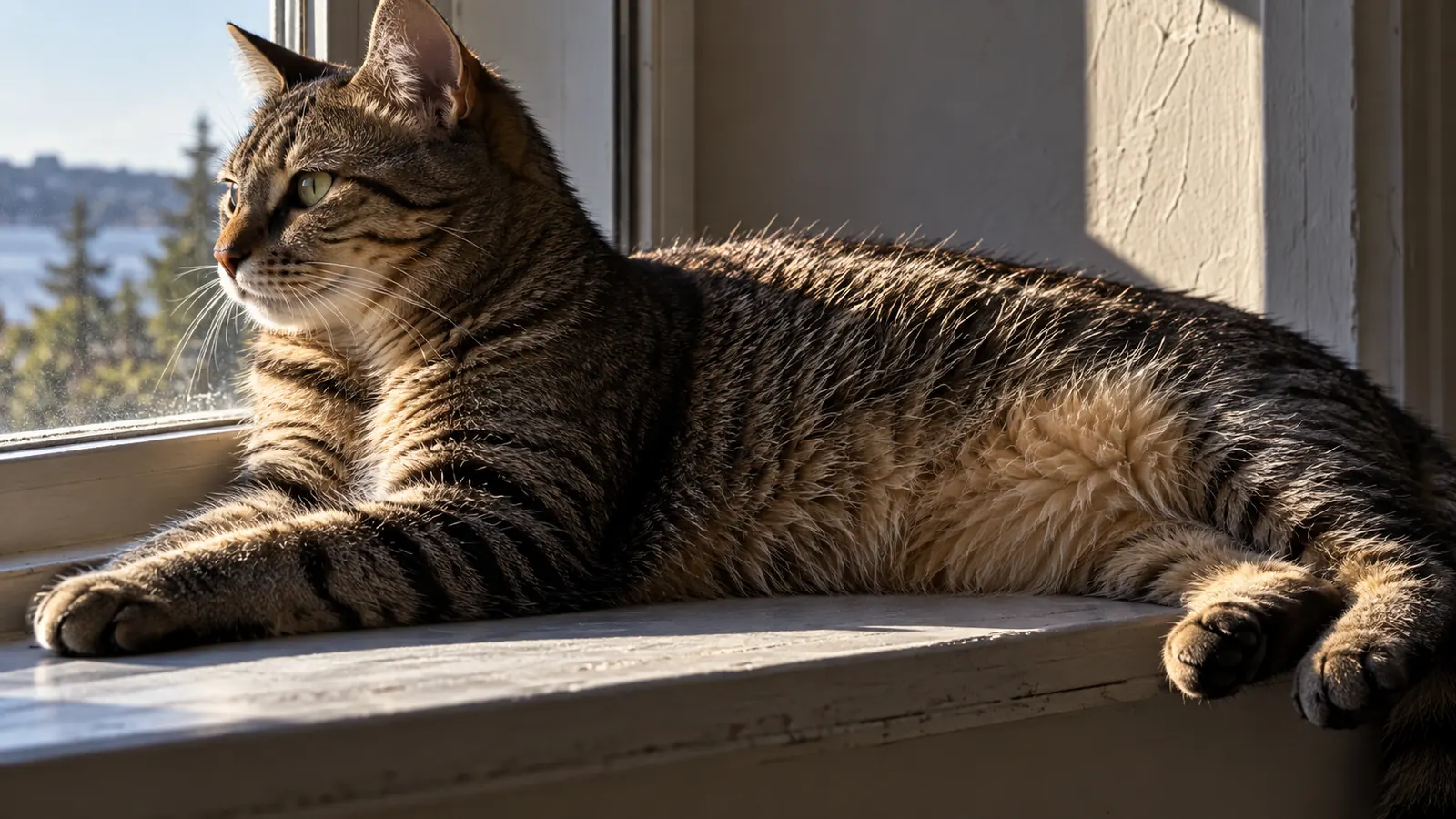
A cat's coat changes on several schedules at once. The soft kitten coat gives way to adult hair over the kitten months, colourpoint cats keep darkening for most of their lives, shedding rises and falls with season and household temperature, and in a senior cat the coat starts to show how well the cat can still groom itself. Only the last of these regularly points to a health problem, so working out which change you are looking at tells you whether the answer is a comb or a veterinary appointment.
- BirthColourpoint kittens are born white or pale, because their first coat grew in the warmth of the womb
- From about six weeksThe next coat grows in cooler air, and a pointed kitten's points begin to darken
- The kitten monthsThe fine kitten coat is gradually replaced by adult hair with a coarser outer layer, with no fixed date for the change
- Up to about three yearsSome longhaired breeds are still filling out their coat; the CFA Ragdoll standard puts full coat and colour at about three years
- Every year after thatShedding rises and falls with season and household temperature, and the coat is replaced gradually rather than all at once
- Over ten yearsThe senior stage in veterinary life-stage guidelines, when changes in grooming habits and coat texture are worth raising at a check-up
From kitten coat to adult coat
The coat a kitten grows first is soft, fine and short-lived. The next coat starts growing in the weeks after birth, and adult hair replaces the kitten coat gradually from then on. No veterinary source gives a month when the change is complete, and kittens differ in how quickly they lose the fluffy look.
The difference is in the guard hairs, the longer and coarser outer layer that gives an adult coat its lie and its water resistance. Underneath sits the down, which is what actually keeps the cat warm and what comes out in handfuls during a moult.
Markings shift as this happens, and the change catches people out. Faint ghost tabby stripes on a solid kitten commonly fade, and a tabby pattern that looked blurred can sharpen considerably.
Silver and smoke kittens can change the most. A kitten that looked plain black may show a pale undercoat as the adult hair comes through, which is an inherited pattern surfacing rather than anything new developing. Eye colour changes on its own schedule at the same time, and the two are unrelated.
Some longhaired breeds take years. The CFA standard for the Ragdoll describes a slow-maturing cat that reaches its full coat and colour at about three years of age, and that slow coat is part of why large longhaired breeds are described as slow to finish their physical growth.
Why do colourpoint cats change colour?
Siamese, Ragdoll, Birman, Himalayan and other pointed cats share the same variant of the tyrosinase gene. The Burmese and Tonkinese carry a related variant that produces a softer version of the same gradient.
Tyrosinase is the enzyme that starts pigment production, and this variant makes it temperature-sensitive. The effect is called acromelanism, and it is what produces the pointed pattern.
The altered enzyme stops working as tissue gets warmer. A dermatology review of the human form of this temperature-sensitive albinism puts the cut-off at about 35 degrees Celsius and names the Siamese cat as the best-known animal example. In practice, more pigment forms at the cooler ears, mask, paws and tail, which lose heat faster than the body.
Pointed kittens are born white or pale because their first coat grew in the warmth of the womb. The next coat grows in cooler air, and from about six weeks the points begin to darken.
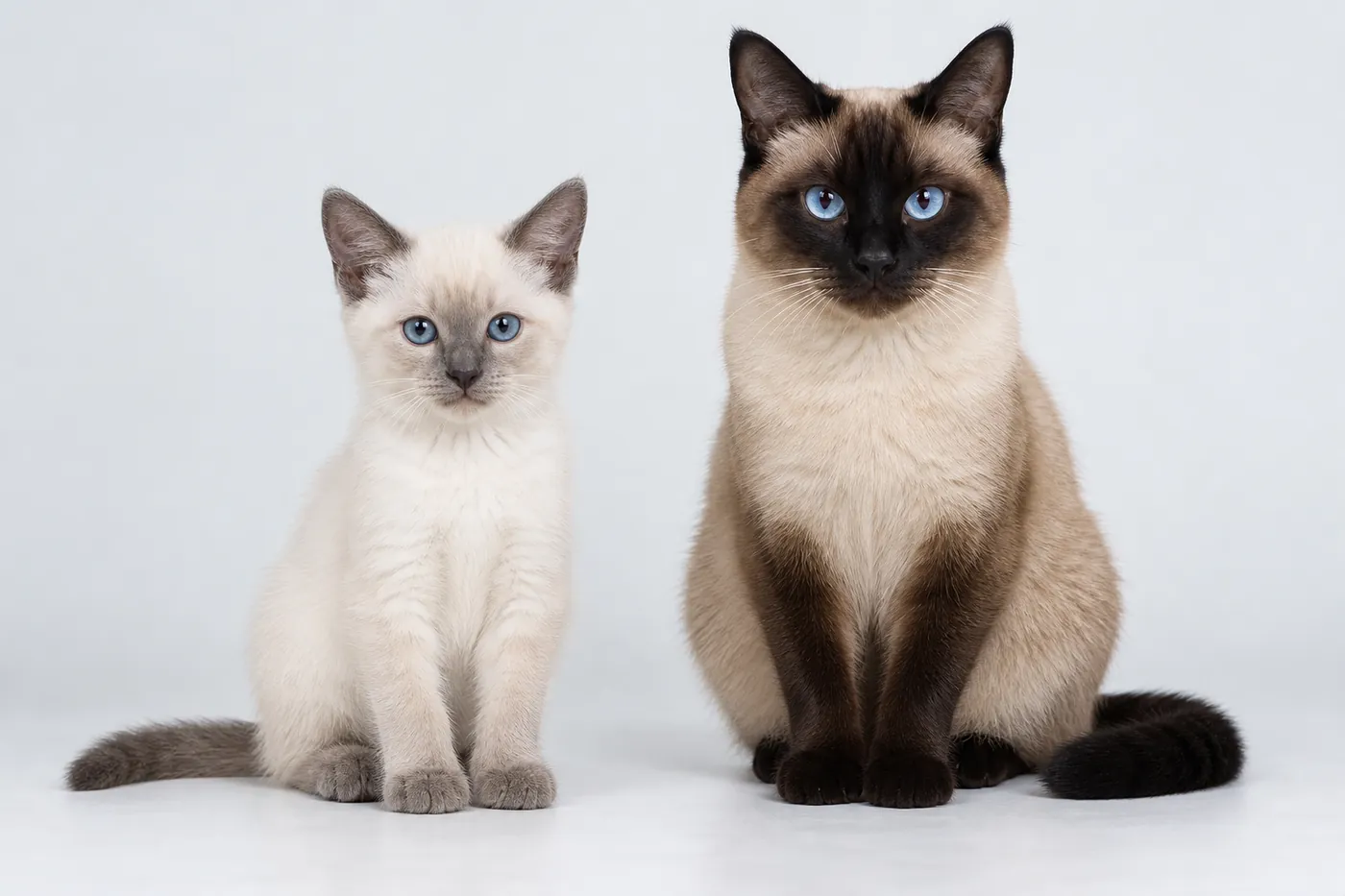
The darkening carries on through adult life. Pointed cats darken with age, possibly because circulation slows or because an older cat grooms less and so loses the cooling effect of evaporating saliva. On its own, that slow darkening is not a sign of illness.
| What happens | Why | What to expect |
|---|---|---|
| Kitten born white or pale | The first coat grew in the warm womb | Points begin to darken from about six weeks as the next coat grows |
| Points deepen as the kitten grows | The ears, face, paws and tail lose heat faster than the body | The contrast settles as the adult coat comes in |
| Coat darkens gradually with age | Possibly slower circulation, or less grooming and so less cooling from saliva | A slow whole-body darkening that is not a sign of illness on its own |
| Clipped patch grows back dark | The hair regrew while that skin was cooler | Can lighten again when those hairs are replaced under a full coat |
| Cat is darker after a cold season | Hair grown in cooler weather forms more pigment | Less marked in a cat kept at a steady indoor temperature |
Owners usually meet the clipping effect after surgery or a blood sample, when a pale flank grows back seal brown. The mechanism works the other way too: a point kept warm while the hair regrows can come back pale.
A pointed cat in a cool house also tends to be darker than one in a warm flat. The difference comes from the temperature while the hair grows, and neither cat has anything wrong with it.
How do season and indoor living change a cat's moult?
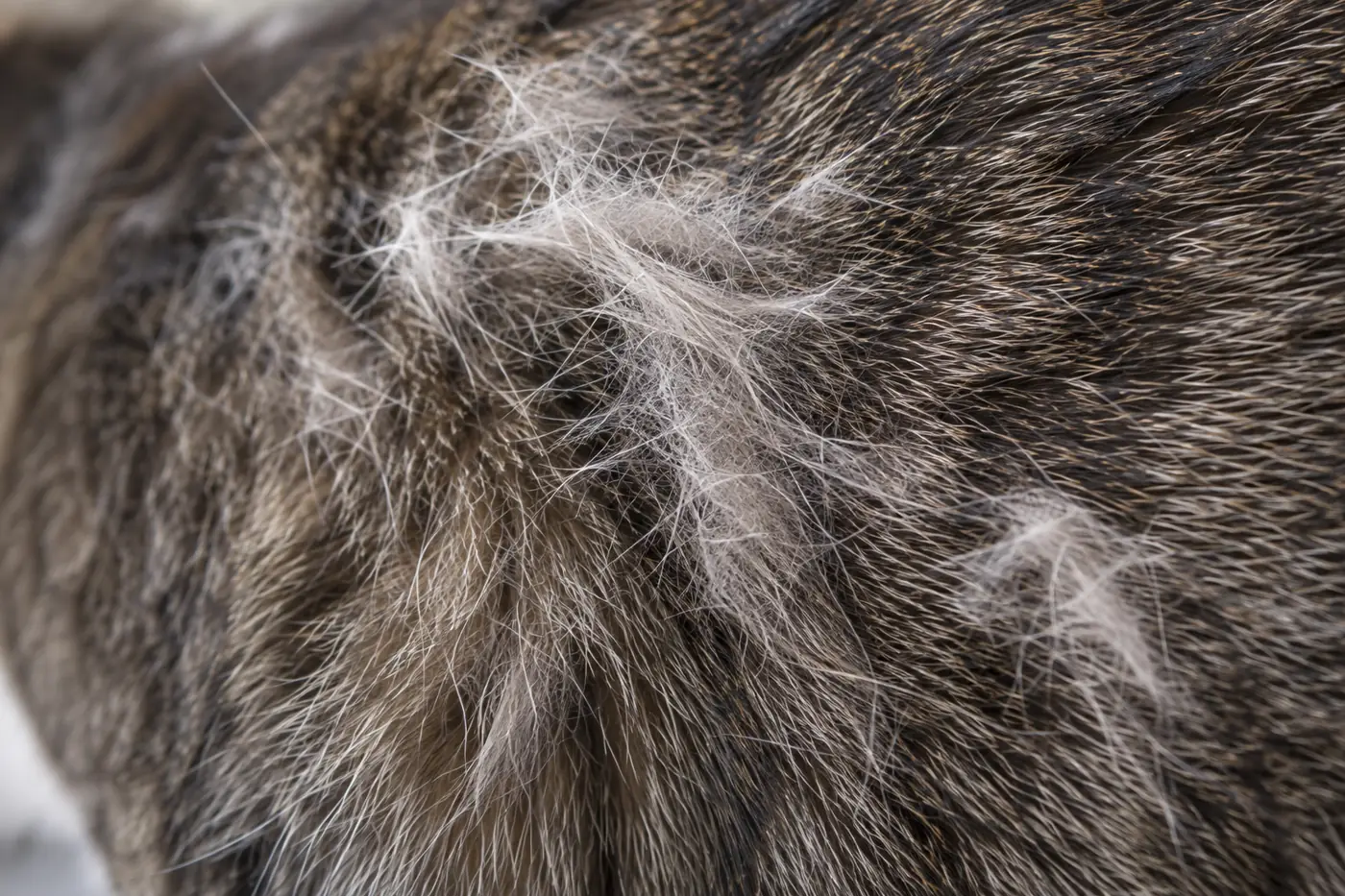
Most cats shed all year round to some degree, with more at some times of year than others. A study that followed four cats in Australia for twenty months found their coats grew longer for winter, with hair growth most active in late summer and least active in late winter. Even at the peak, no more than about seven in ten outer hairs were growing at once, so a cat replaces its coat gradually rather than dropping it in one go.
Four outdoor cats in one climate cannot give a timetable for every home. Light, temperature, breed and each cat's own hair cycle can all shift the pattern, and a centrally heated indoor cat that sheds steadily through the year is often showing its environment rather than a disease.
| Situation | Shedding pattern | What it means |
|---|---|---|
| Outdoor or conservatory access | Shedding may rise with seasonal coat replacement | Track the cat's own pattern and increase combing while loose undercoat is present |
| Indoors under artificial light | Shedding may be steadier or have a less distinct peak | Often compatible with the environment when skin and general health remain normal |
| Sudden heavy shedding out of season | Abrupt onset, often with a change in coat feel | Worth a vet appointment, particularly alongside stress, illness or a diet change |
| Persistent heavy shedding | No return toward the cat's usual pattern | Arrange an examination if it continues or appears with skin, grooming or general-health changes |
Stress produces its own version of this, short-lived and sudden. A cat at the vet or in a carrier can shed visibly within minutes, and that burst says nothing about the health of the coat.
Grooming through a moult
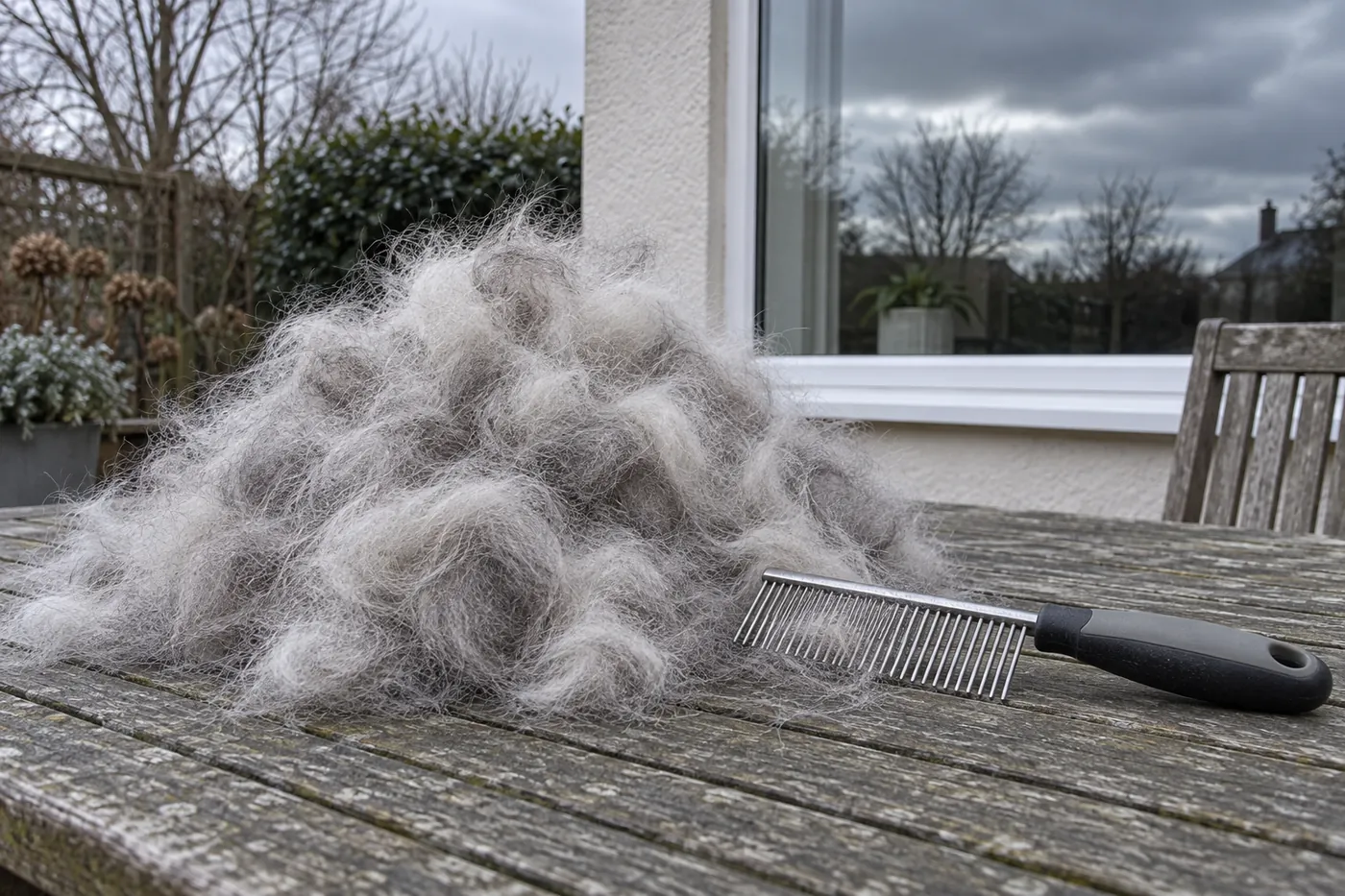
Combing more often during a heavy moult reduces how much hair the cat swallows. A cat grooming itself swallows much of the loose hair, which either passes through or comes back up as a hairball, and International Cat Care advises daily grooming while a cat is moulting so that the comb removes most of it first.
A comb that reaches down to the undercoat removes more loose hair than a soft brush that skims the top. A fine-toothed comb suits a short coat, and a wide-toothed comb a long one.
- Comb in the direction the coat lies, in short passes, rather than dragging one long stroke from shoulder to tail.
- Start on the shoulders and back where most cats accept handling, and leave the belly and hindquarters until the cat has settled.
- Stop while the cat is still relaxed rather than at the end of the coat, because a session that ends badly makes the next one harder.
- Check under the front legs, between the hind legs and between the toes, where the skin is thin and mats form most often.
A long coat needs combing every day and more care in the friction areas, which is why brushing a long-haired cat is a different job from a short coat's weekly pass. A cat that ripples its skin, swishes its tail or turns on the brush is asking you to stop, and building comfort in small steps works better than holding on. A comb clogged with undercoat stops reaching the skin and starts pulling, so cleaning grooming tools between sessions is part of the job during a moult.
Mats close to the skin should never be cut out with scissors. Cat skin is thin and lifts into the base of a mat, so it is very hard to see where skin ends and hair begins, and scissors can cut the cat. A mat that will not tease apart with the fingers needs a professional groomer or the veterinary team, and severe matting is often shaved off under sedation.
What a healthy coat feels like
A coat in good condition lies flat, springs back when you run a hand against it, and feels smooth rather than tacky. Parting the fur along the spine should show clean skin with no scale and no redness. Black grit there may be flea dirt, which turns red when it lands on damp paper.
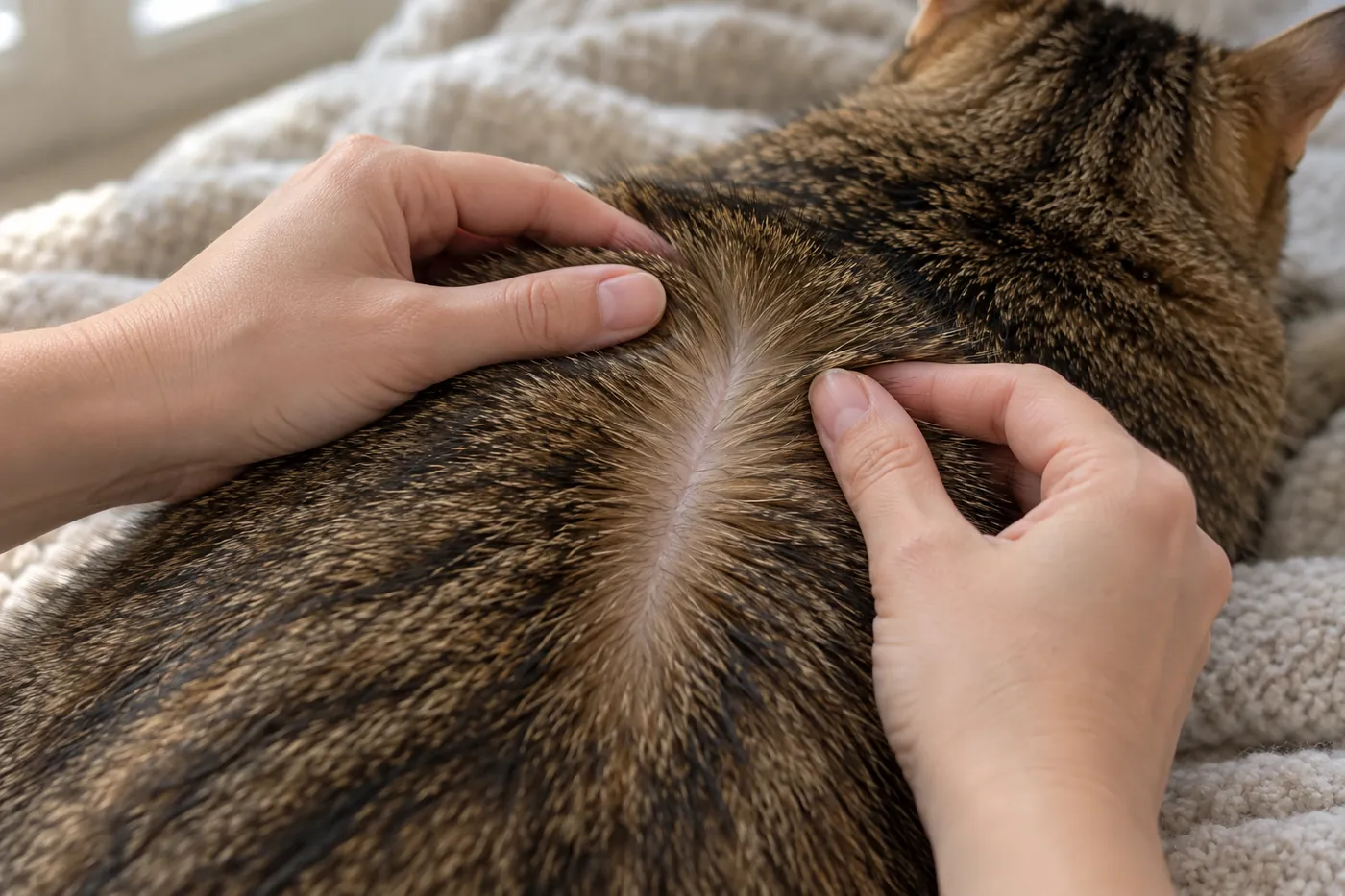
Gloss comes from the cat's own grooming spreading skin oils along the hair. A dull coat often means the cat has stopped grooming properly, and the useful question is why: in a young, healthy cat it may simply be a heavy moult, while in an older cat stiffness or illness is the more likely reason.
Skin has its own tells. Flaking along the back, a greasy feel at the tail base, or a smell that was not there before are all worth an examination rather than a bath.
Diet and coat quality
Hair is largely protein and grows continuously, so a long spell of poor eating or poor absorption can show in the coat. A complete commercial diet covers the requirement without any need for supplementation.
Where coat problems genuinely trace to diet, the usual causes are a home-prepared food missing something, a long period of poor appetite, or an underlying condition preventing absorption. Adding oil to a bowl does not correct any of those, and it can unbalance an otherwise adequate diet.
Coat changes that are not about age at all
A few colour changes have specific causes, and recognising them stops them being mistaken for the signs a cat is ageing.
White fur around the eyes, mouth and feet can take on a rusty brown stain where tears and saliva keep it damp. The staining is cosmetic on its own.
Black coats can take on a reddish cast after long exposure to sunlight, and the change is easiest to see in a long coat such as a black Persian's, where the outer lengths have had the most time in the light. A black coat can also turn reddish-brown when the diet is short of tyrosine and phenylalanine, the amino acids black pigment is made from. In feeding trials, black cats on purified low-tyrosine diets turned reddish-brown and went back to black when those amino acids were raised, and it is one of the ways an unbalanced home-cooked cat diet can show itself.
| What you see | Usual cause | What it needs |
|---|---|---|
| Rusty brown staining on white fur near the eyes and mouth | Tears and saliva keeping pale hair damp | Nothing, unless the eye is discharging more than usual |
| A black coat with a reddish cast | Sun exposure, or a diet short of tyrosine and phenylalanine | Worth checking the diet is complete, especially if it is home-prepared |
| Thin fur in front of the ears | Naturally sparser hair in that spot | Nothing |
What changes in an older cat's coat
From about ten, the age at which veterinary life-stage guidelines count a cat as senior, the coat starts to reflect what the rest of the body is doing. Some of that is simply age, and a good deal of it is not.
Grey hairs can appear around the muzzle and above the eyes, though the change is usually subtle. Fading of a dark coat to a duller or rustier shade is also common and by itself unremarkable.
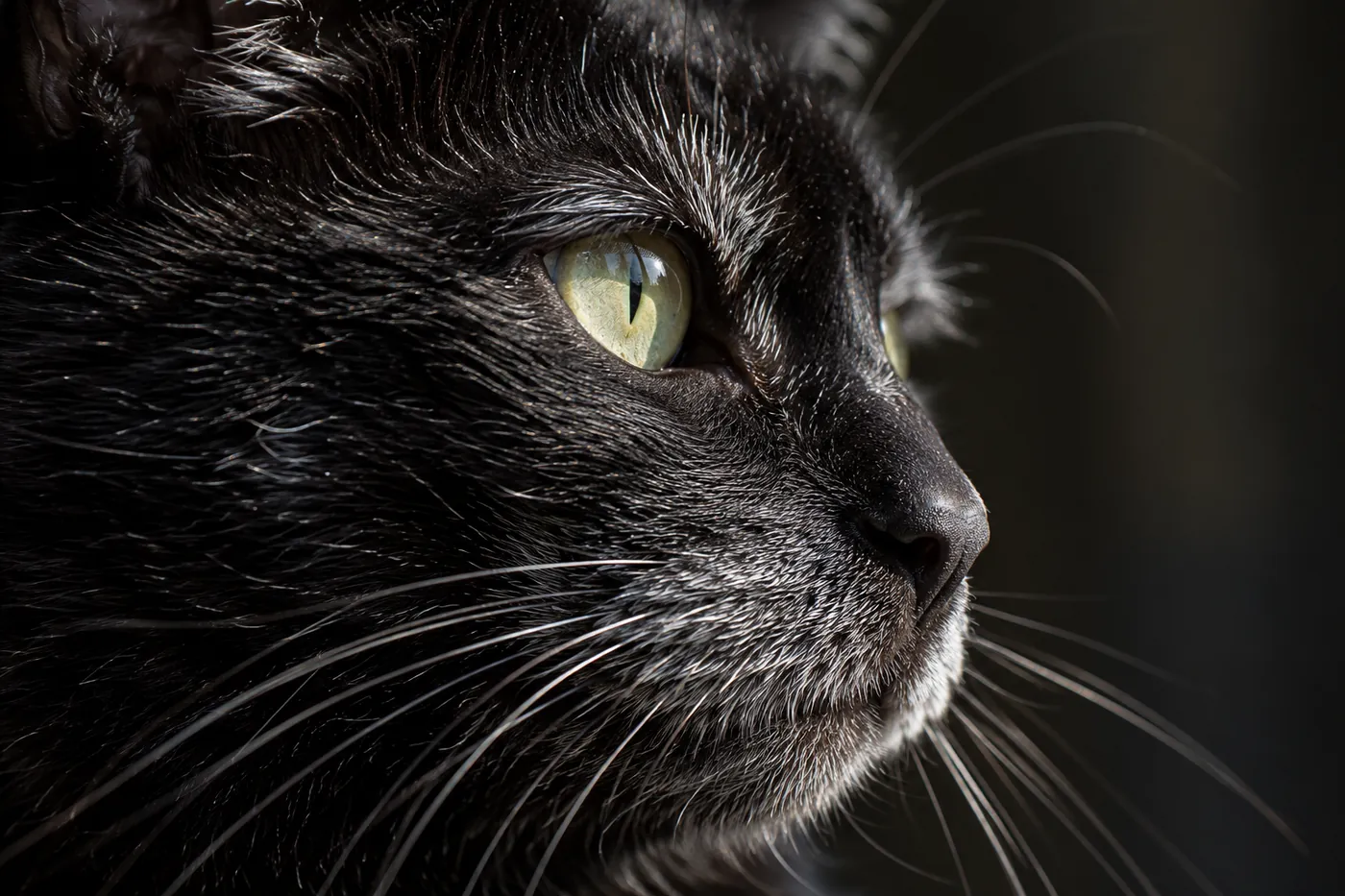
The changes worth noticing are about texture and about grooming behaviour. A coat that has become coarse, greasy, scurfy or matted along the back has usually stopped being groomed, and in an older cat the reason is more often physical than a loss of interest.
Two common illnesses of older cats often show in the coat as well. With hyperthyroidism the coat may look unkempt, matted or greasy, alongside the commonest signs: weight loss despite a bigger appetite, and more drinking and urinating. Chronic kidney disease often shows no obvious signs early on, but as it progresses a cat may drink and urinate more, lose weight, seem lethargic and look unkempt.
Over-grooming is the opposite presentation and just as informative. A bald strip on the belly, the inner thighs or one flank in an older cat usually means pain, skin disease or parasites rather than a habit. The fur is broken off rather than falling out, which a vet can confirm by looking at the hair ends.
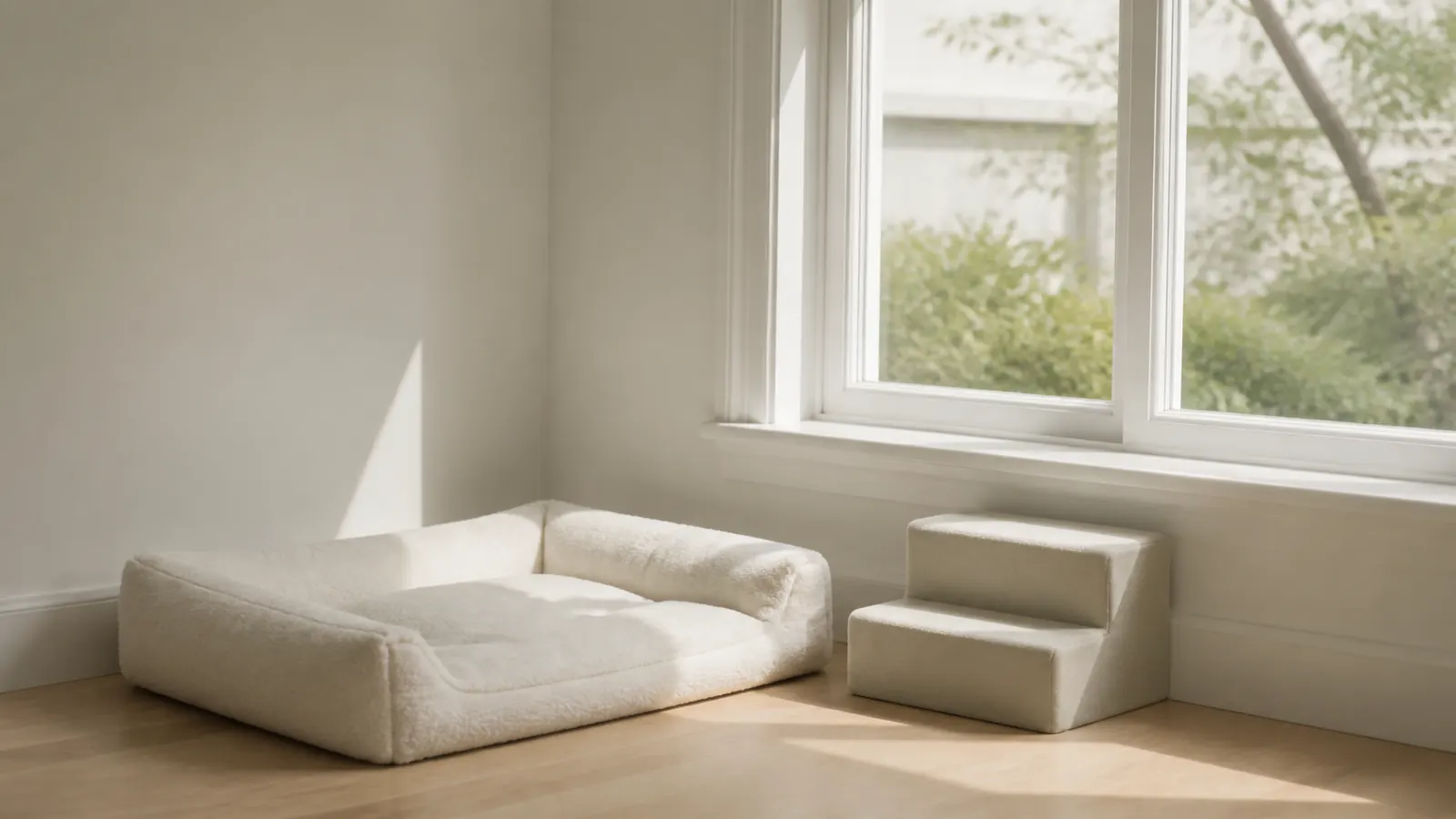
A stiff cat keeps more of its own coat when everything else takes less effort: raised bowls, steps up to favourite perches, a warm place to sleep and the other changes in adapting the home. Gentle combing then covers the parts it can no longer reach, and doubles as a chance to find lumps, sores or fleas early.
When a coat change needs an appointment
Most coat changes need nothing more than a comb. The ones below are the exceptions, because each can point to skin disease, parasites, pain or an illness elsewhere in the body.
- Bald patches, thinning, or symmetrical hair loss on both sides of the body
- Scabs, redness, black specks, a strong smell, or greasy skin under the fur
- Heavy shedding that persists without returning toward the cat's usual pattern, or starts abruptly
- A coat that has become matted or greasy in a cat that used to keep itself immaculate
- Over-grooming that has taken the fur down to the skin anywhere on the body
- Any coat change alongside weight loss, increased drinking, a changed appetite or reduced activity
Hairballs are the other thing worth watching. An occasional hairball during a heavy moult is expected, but frequent retching or vomiting needs a veterinary look, since hairballs are only one of the reasons a cat keeps vomiting.
Take a photograph of the affected area before the appointment. Skin and coat changes shift over days, and a picture of what prompted the visit is far more useful than a description of it.
Common Questions
Why is my cat shedding all year round?
Most cats moult all year round to some degree. Indoor light and a steady temperature probably blur the seasonal peaks, although the feline research is too small to prove it, and steady shedding in a cat whose skin, coat and general health are otherwise normal usually reflects its surroundings rather than illness.
Why do Siamese and other pointed cats get darker with age?
Their temperature-sensitive pigment enzyme loses activity as tissue gets warmer, so colour forms more strongly at the cooler extremities. Pointed cats darken with age, possibly because circulation slows or because an older cat grooms less and loses the cooling effect of evaporating saliva.
Why was my colourpoint kitten born white?
Its first coat grew in the warmth of the womb, where the pigment enzyme barely works, so pointed kittens are born white or pale. The next coat grows in cooler air, and the points begin to darken from about six weeks.
Will a shaved patch grow back the wrong colour?
On a pointed cat it often grows back darker, because the skin was cooler while the new hair grew. It can lighten again once those hairs are replaced under a full coat.
When is shedding a sign of illness?
Book an appointment if heavy shedding persists outside the cat's usual pattern, starts abruptly, or comes with bald patches, scabs, skin changes, weight loss or increased drinking.
Why has my old cat's coat become matted and greasy?
It usually means the cat has stopped grooming properly. Arthritis that makes twisting painful is a common reason, and hyperthyroidism can leave the coat unkempt, matted or greasy, so it warrants an examination.
Why has my white cat gone rusty around the eyes and mouth?
Tears and saliva can stain pale fur a rusty brown where they keep it damp. The staining is cosmetic on its own, though tear staining that increases is worth mentioning to a veterinarian in case the eye is producing more discharge than it should.
Checked Against
- International Cat Care: grooming your cat icatcare.org
- OMIA: tyrosinase temperature-sensitive variants in Felis catus omia.org
- Finch, Abrams and Finch: Analogs of human genetic skin disease in domesticated animals (Int J Womens Dermatol, 2017) pmc.ncbi.nlm.nih.gov
- Ryder: Seasonal changes in the coat of the cat (Res Vet Sci, 1976) pubmed.ncbi.nlm.nih.gov
- AAHA and AAFP: 2021 Feline Life Stage Guidelines (J Feline Med Surg) pmc.ncbi.nlm.nih.gov
- Cornell Feline Health Center: hyperthyroidism in cats vet.cornell.edu
- CatWatch, with the Cornell Feline Health Center: climate-controlled colour in pointed cats catwatchnewsletter.com
- Yu, Rogers and Morris: Effect of low levels of dietary tyrosine on the hair colour of cats (J Small Anim Pract, 2001) pubmed.ncbi.nlm.nih.gov
- CFA: Ragdoll breed standard (full coat and colour at about three years) cfa.org
- Cornell Feline Health Center: chronic kidney disease vet.cornell.edu
Published 10 September 2026. Last updated .