
Can Cats Eat It, and What Happens If They Do
Whether a food is safe for a cat depends on the dose, the preparation, and the individual animal far more often than on the food itself. Six verdicts cover the range, from generally safe through to toxic at any quantity.
A verdict comes from the toxicology and nutrition sources named at the foot of each answer, not from how the food sounds. Foods that seem harmless sit in the red, and foods with a bad reputation often do not.
What the Verdicts Mean
The verdict comes first, before the reasoning behind it.
- 1 Safe
- 2 Small amounts
- 3 Preparation matters
- 4 Not recommended
- 5 Toxic
Can a Cat Eat This?
-
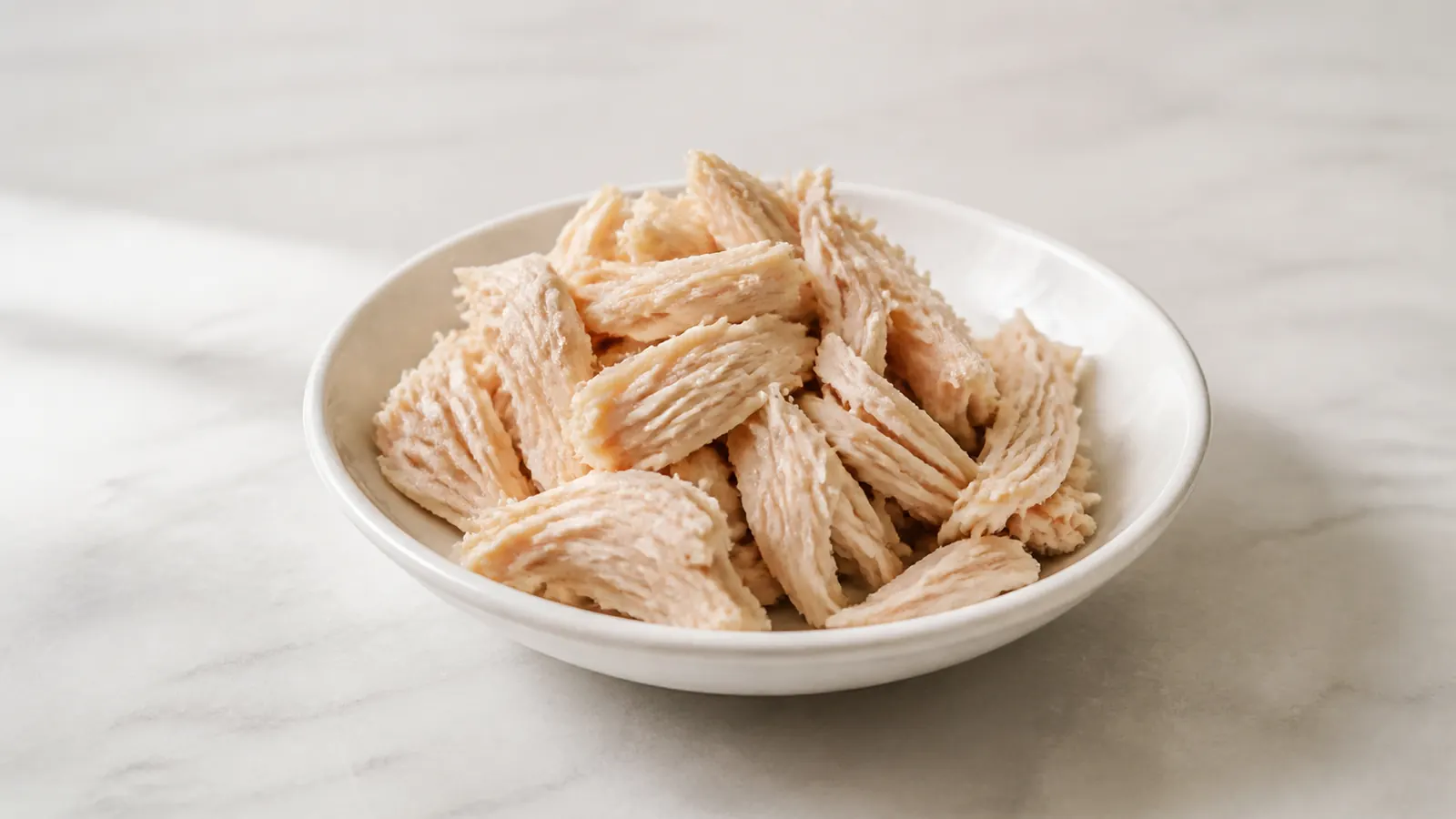
Cooked chicken Chicken is one of the few human foods where the answer is a straightforward… Generally safe
-
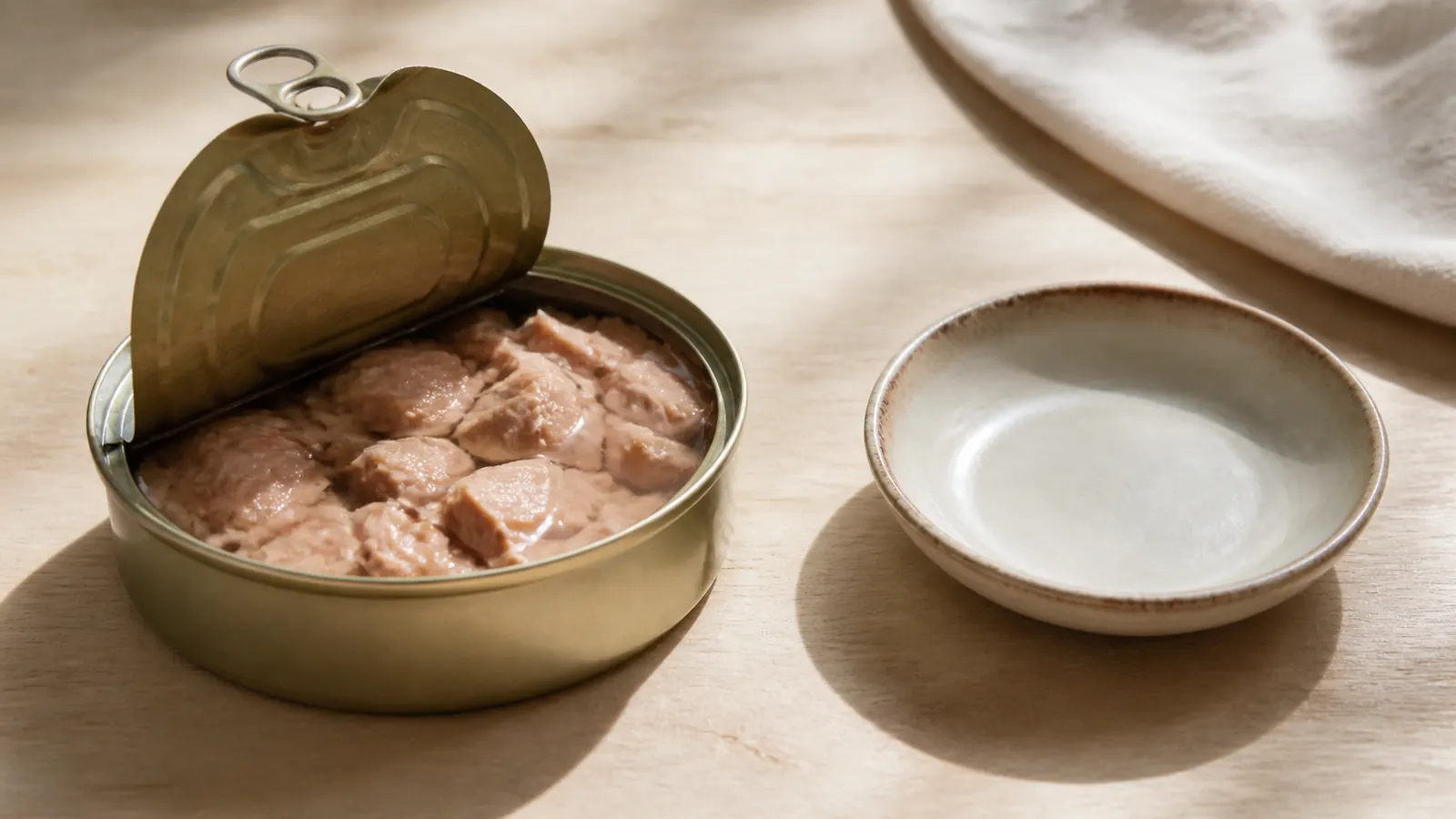
Tuna Plain canned tuna can be an occasional treat for a healthy adult cat. Check… Safe in small amounts
-
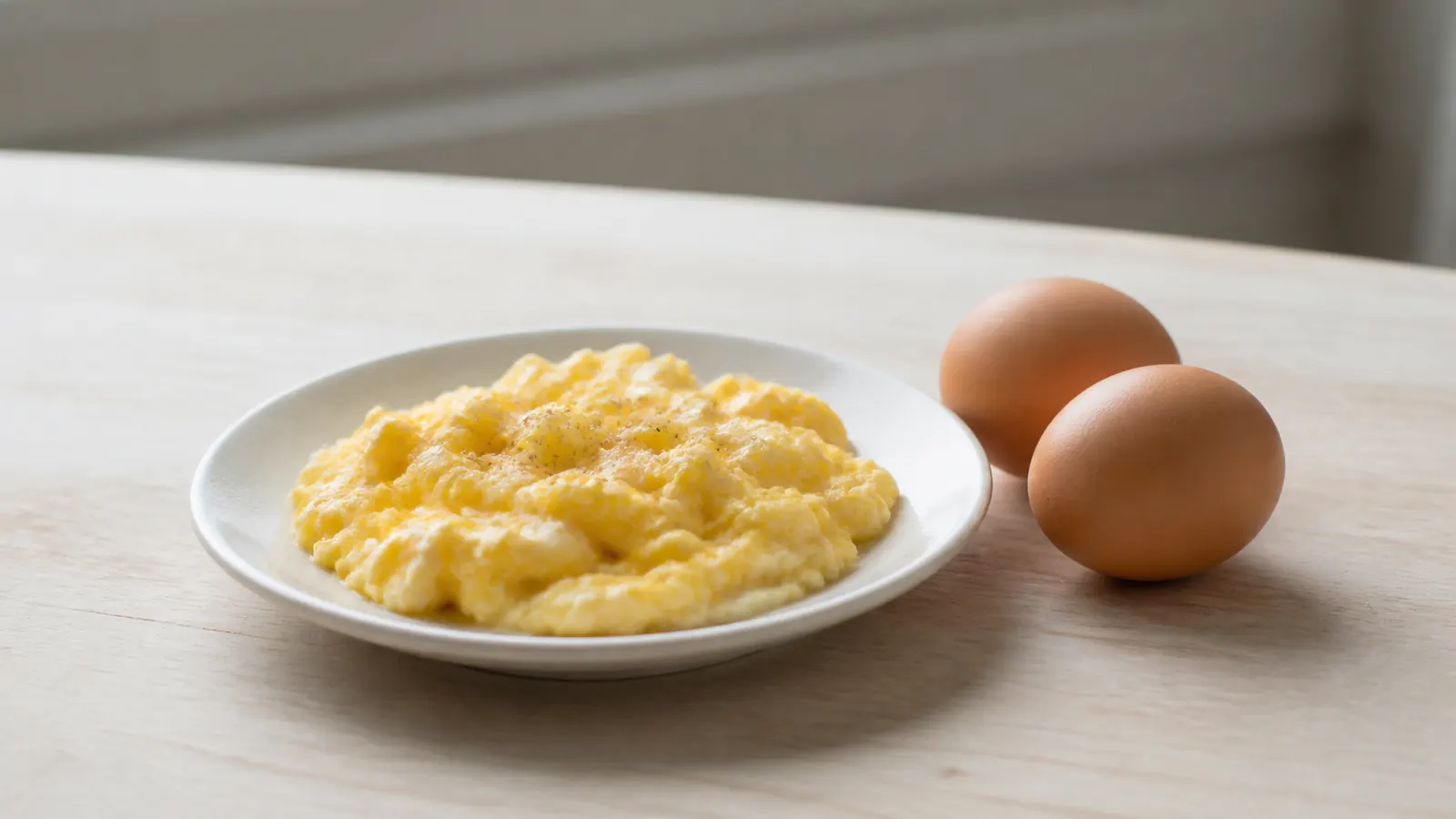
Eggs Egg is the clearest example of a food whose verdict turns entirely on how… Depends on preparation
-
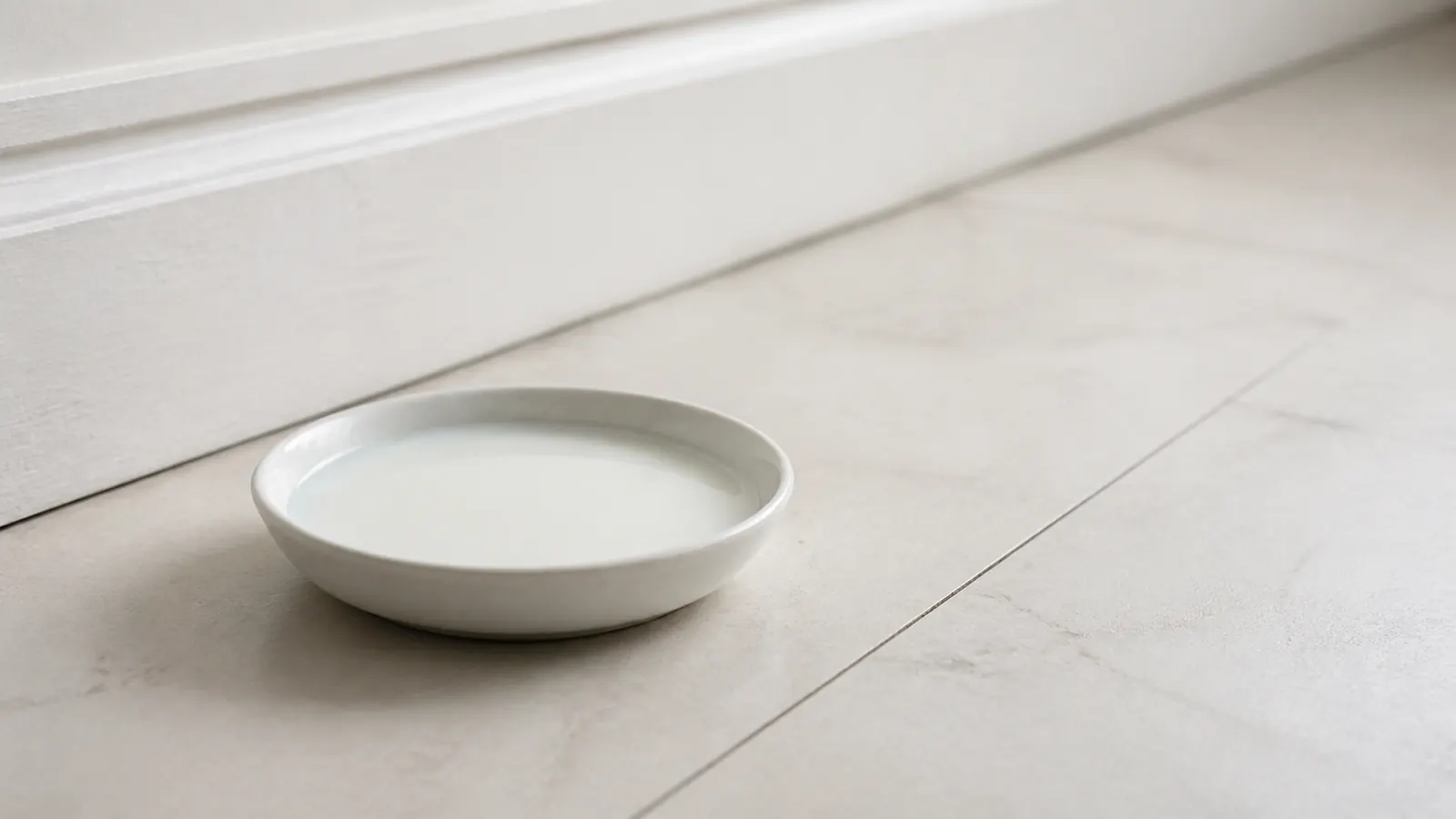
Cow's milk Many adult cats develop digestive upset after dairy. Cow’s milk is… Not recommended
-
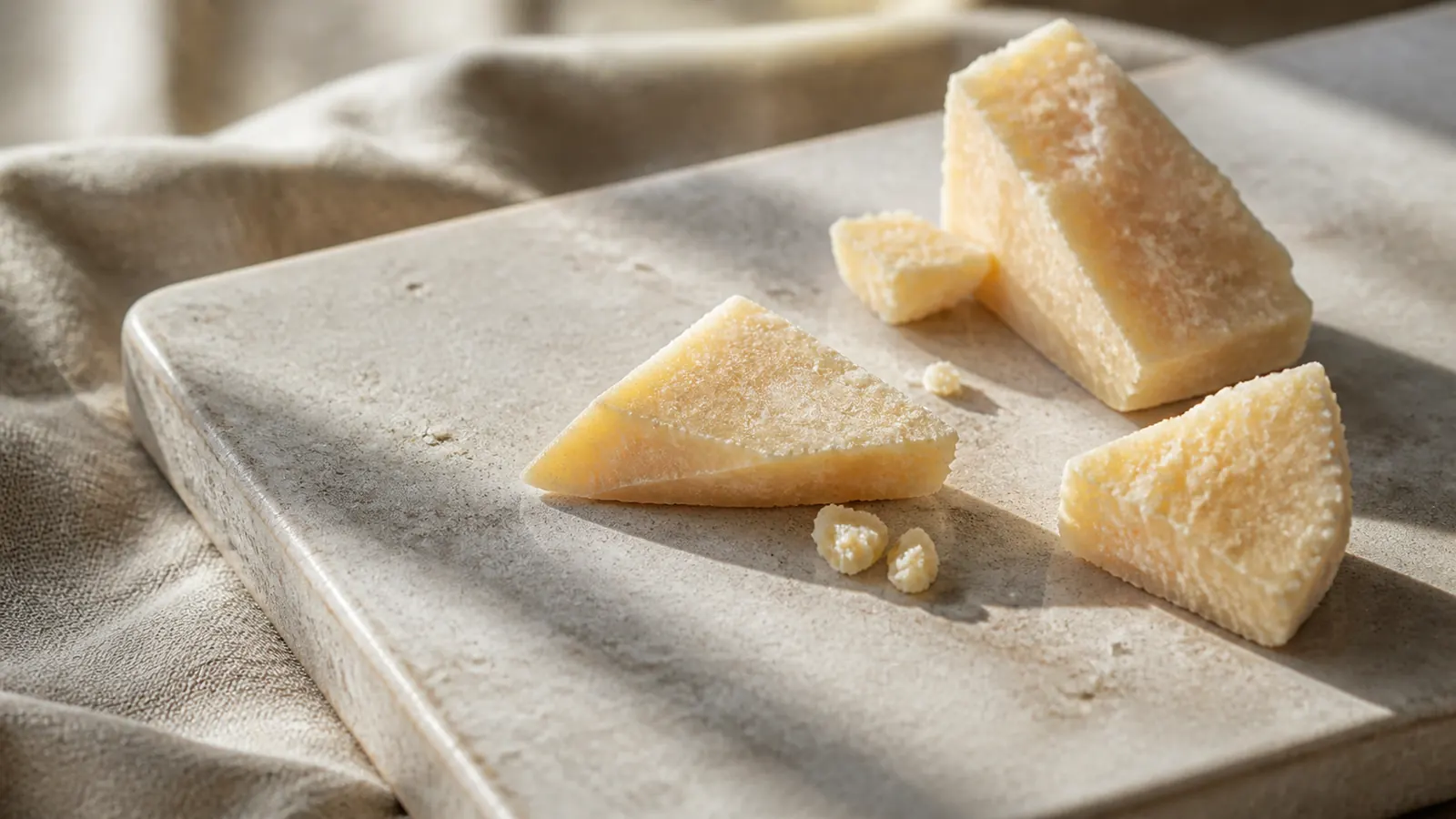
Cheese Cheese is not usually classed as a cat poison, but it is still better… Not recommended
-
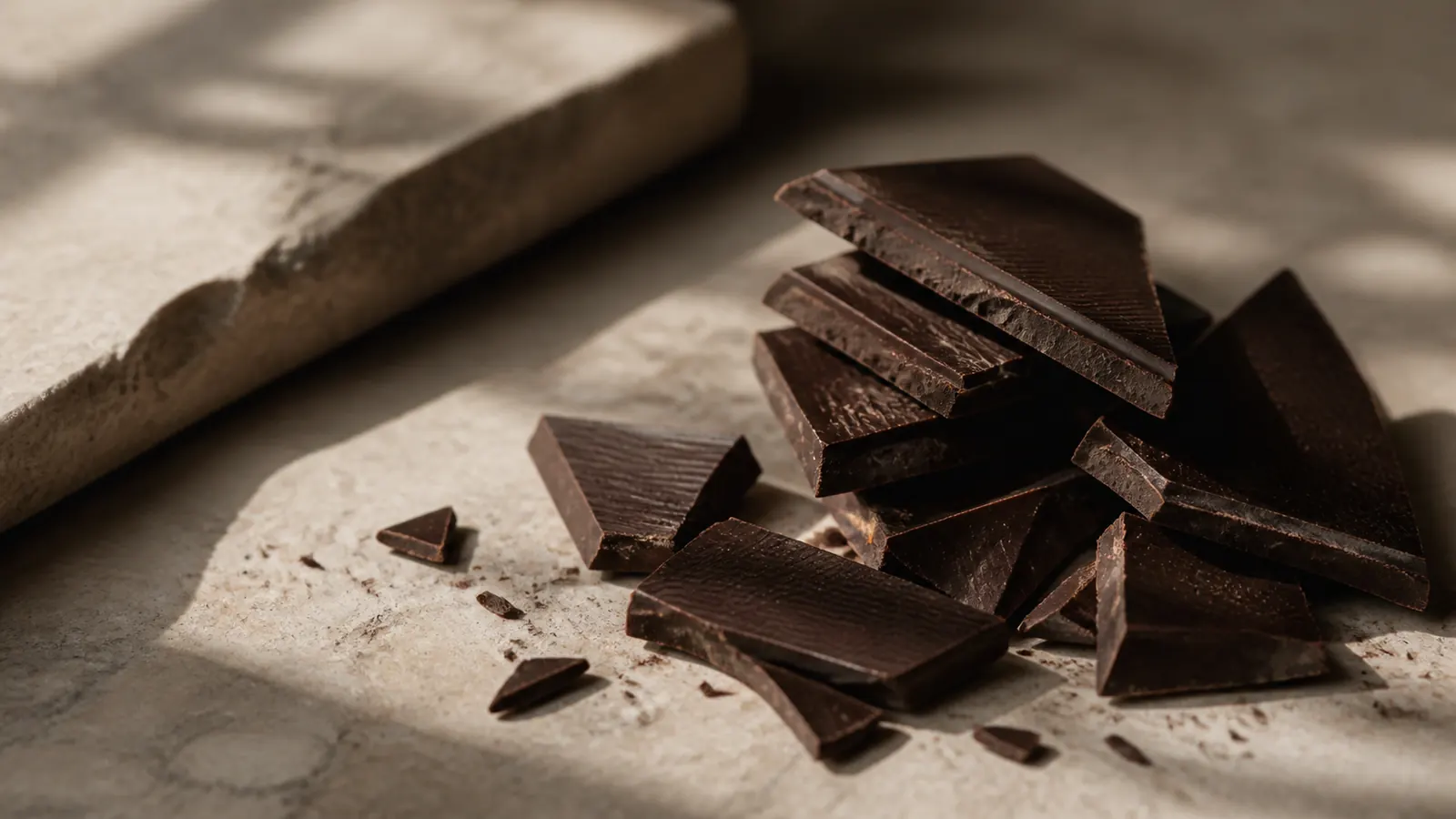
Chocolate Chocolate can poison cats. Call a veterinarian after a possible exposure… Toxic to cats
Why the honest answer is so often "it depends"
Almost every food question about cats has three variables behind it, and skipping any of them produces a wrong answer.
The first is dose. Chocolate is toxic and a crumb licked off a floor is not an emergency; a bar of dark chocolate is. The compound matters and so does the quantity.
The second is preparation. Egg is the cleanest example anywhere in feline nutrition: cooked it is a reasonable occasional food, raw it carries two separate problems.
The third is the individual cat. Lactose tolerance, food sensitivities, kidney disease, and diabetes all change what is sensible for one animal and not another.
A food is rarely safe or unsafe on its own. It is safe or unsafe in an amount, in a form, for a particular cat.
That is why a single verdict per food, with no reasoning attached, is worse than useless. The reasoning is the part that tells you whether the verdict applies to the cat in front of you.
What the six verdicts are for
Five of the verdicts sit on a ramp from green to red. The sixth sits off it deliberately.
- Generally safe
- Fine as an occasional food in sensible amounts
- Safe in small amounts
- Not harmful, but easy to overdo
- Depends on preparation
- The form decides the answer, as with egg or fish
- Not recommended
- No acute danger, but no good reason to offer it
- Toxic
- Harmful at realistic quantities, and worth a phone call
- Depends on the individual cat
- A real answer, not a midpoint
The last one exists because "it varies" is a genuine finding and not a failure to decide. Cheese is the standard case: not toxic, and most adult cats are lactose intolerant to a degree that varies from nothing to a bad afternoon.
Depends on the individual cat is a verdict, not a way of avoiding one.
Colour is doing real work here. The neutral shade on that sixth verdict is deliberate, because putting it on the amber step would tell you it is mildly risky, which is not what it means.
The short list that is genuinely dangerous
Most kitchen accidents cause nothing worse than an upset stomach. A small number cause organ damage, and knowing which is which is what stops a panic being wasted on the wrong thing.
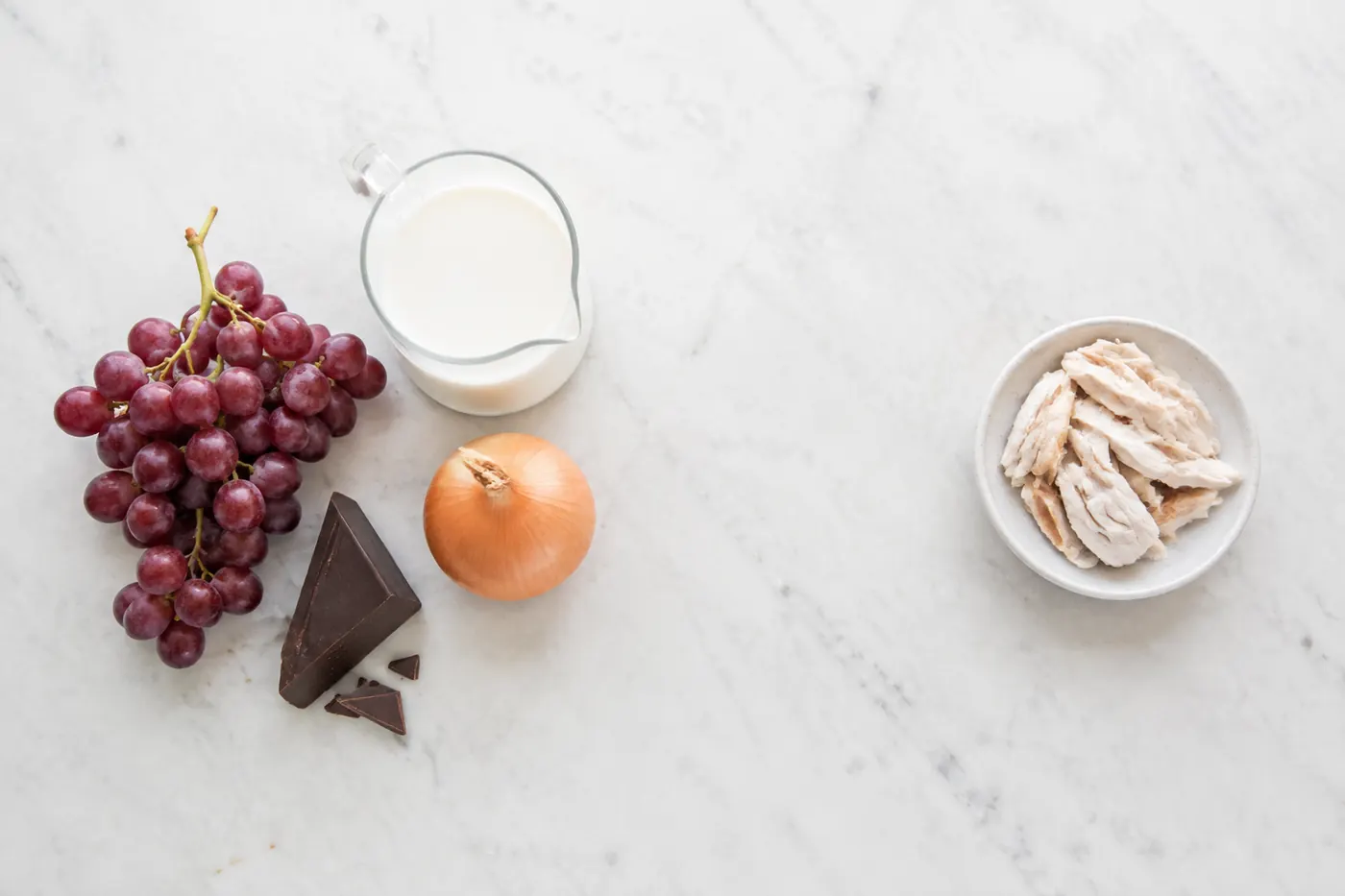
- Onion, garlic, leek, and chive, including powdered forms in cooked food
- Chocolate and cocoa, worst in dark and baking chocolate
- Alcohol in any form, including fermenting raw yeast dough
Onion is the one that surprises people, because it is a background ingredient rather than a thing you would knowingly give a cat. It damages red blood cells, and the powdered form in gravy, stock, or baby food is more concentrated than the fresh vegetable.
The ASPCA distinguishes grapes, raisins and xylitol as established hazards for dogs rather than established feline toxicants. If a cat eats a mixed product or develops symptoms, keep the package and call a veterinarian or poison service so the actual ingredients and dose can be assessed.
The dangerous ingredient is usually inside something else rather than offered on its own.
Cooked bones deserve a mention that has nothing to do with toxicity. They splinter, and a splintered bone is a surgical problem rather than a poisoning.
What to do in the first ten minutes
The single most useful thing is to stop guessing about quantity and start collecting evidence.
- Move the cat away from what is left, and keep the packaging or the plant.
- Work out the most it could have eaten, not the least. Overestimating is the safe direction.
- Phone a vet or an out-of-hours service before doing anything else.
- Do not make the cat vomit. Home methods are unreliable and some cause more damage coming back up.
- Take the packaging with you if you are asked to come in.
Timing matters more than the amount for some exposures. There are toxins where treatment is effective in the first few hours and much less so afterwards, which is why the phone call comes before the internet search.
Phone first and read second. The order is what actually changes the outcome.
If the cat is already showing signs rather than merely suspected of eating something, that is an emergency regardless of what the substance was.
Human food that is fine, in the right amount
It is worth saying clearly that most of the panic around cats and human food is misplaced. Plain cooked meat and fish are close to what a cat is built to eat.
Plain cooked chicken, with no skin, no seasoning, and no bones, is safe for most healthy adult cats as an occasional food. The word doing the work in that sentence is plain.
Tuna is safe in small, occasional portions and fails as a staple. It is not nutritionally complete, and a cat that holds out for it will refuse a balanced food.
Cooked egg is fine. Raw egg white blocks a vitamin, and raw egg carries the usual bacterial risk.
Almost every safe human food becomes a problem at the point it starts replacing a complete diet.
The practical rule most vets use is that anything outside the cat's regular food should stay under a tenth of the day's intake, and should come out of the ration rather than be added on top.
Milk, and the myth that will not die
A saucer of milk for a cat is one of the most persistent images in the culture, and it is one of the least appropriate things you can offer.
Kittens produce lactase, the enzyme that digests milk sugar. Most cats stop producing meaningful amounts of it after weaning, which is the normal mammalian pattern rather than a defect.
Cow's milk in an adult cat therefore causes digestive upset rather than poisoning. The result is loose stools and discomfort, not an emergency, which is precisely why it keeps happening.
Milk is not toxic to a cat. It is simply something most adult cats cannot digest.
Cats do not need milk at any age past weaning. A bowl of clean water, changed daily and kept away from the food, does the job that the saucer of milk was imagined to do.
Where a verdict on this site comes from
Every answer here is built from the same sequence, and it is worth knowing what sits behind the colour.
The starting point is the toxicology and nutrition guidance published by veterinary bodies and poison control services, which are named and linked at the foot of each answer.
Where the evidence is genuinely mixed, the answer says so rather than picking the tidier side. Where a number is a rule of thumb rather than a measurement, the sentence says that too.
A colour with no argument behind it is decoration pretending to be evidence.
If a cat has a diagnosed condition, particularly kidney disease, diabetes, or a food sensitivity, the vet managing it should be the one to approve any change to what it eats.
Why a cat's list differs from a dog's
A great deal of confusion comes from advice written for dogs being applied to cats, and the differences are not small.
Cats lack several liver enzymes that dogs and people use to process compounds, which is why paracetamol is survivable in a dog at a dose that kills a cat.
Cats cannot taste sweetness at all. The receptor is inactive across the species, so a cat is not tempted by sugar the way a dog is, and most sweet-food poisonings in cats are accidental rather than sought out.
Cats are far more sensitive to essential oils and to phenols, which appear in some diffusers, cleaning products, and flea treatments marketed as natural.
Cats also eat differently. A dog bolts a whole chocolate bar; a cat samples, which is why quantity estimates that work for dogs mislead for cats.
A food or product being safe for a dog tells you almost nothing about whether it is safe for a cat.
The practical rule is to check anything against feline guidance specifically, and to treat "pet safe" on a label as meaning nothing until it names the species.
More About Living With a Cat
One question usually leads to the next one.
-
Health
What a change in a cat usually means, and how fast it needs looking at.
Browse -
Nutrition
How much, how often, and how a cat gets enough water.
Browse -
Litter box
Setup, substrate, placement, and what the tray tells you.
Browse -
Behaviour
Why a cat does something, explained from the cat's side.
Browse