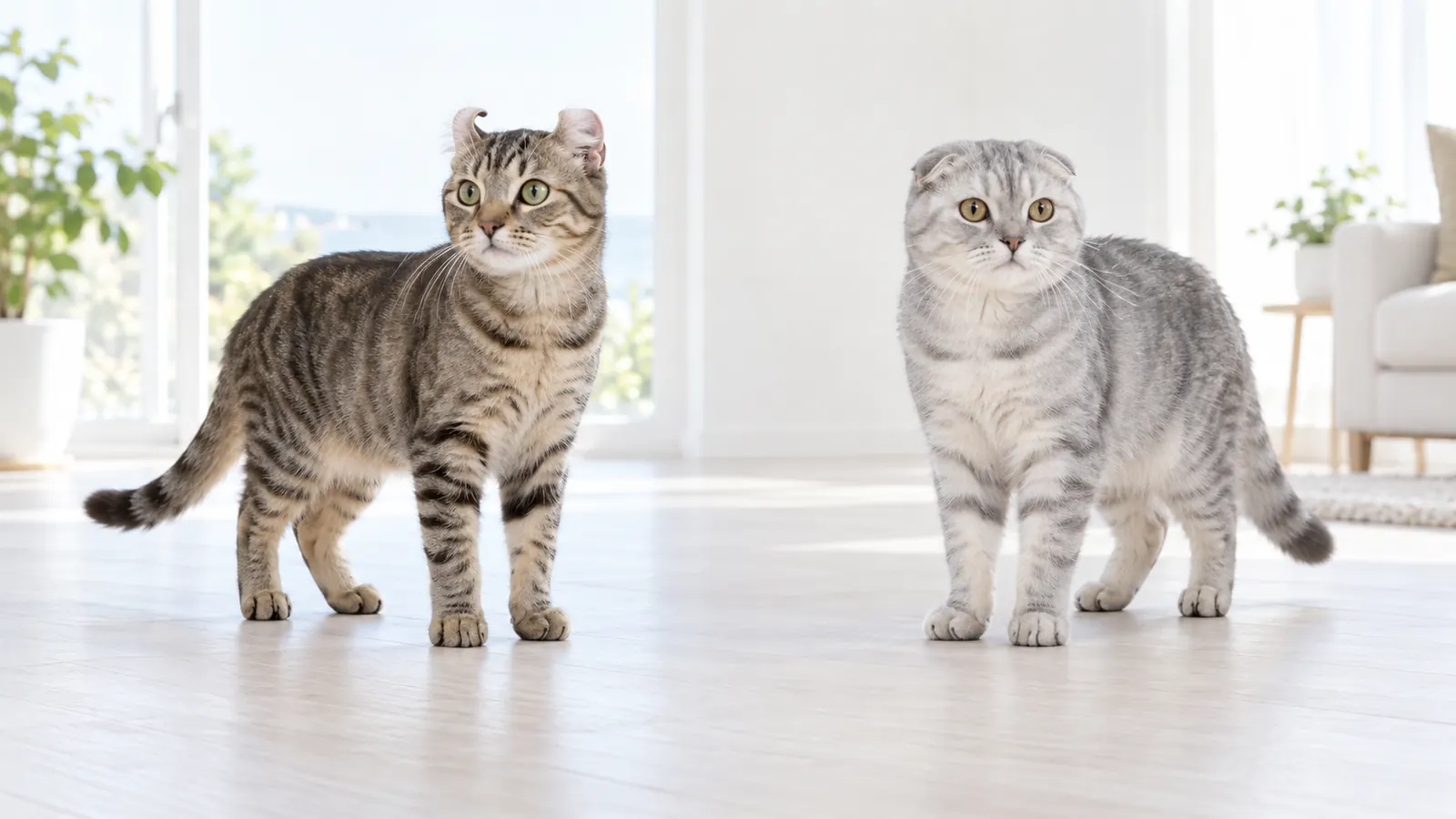
What Is an American Curl, and Is Its Curled Ear Harmless?
The American Curl has a different inherited ear trait from the Scottish Fold. Early breeding observations did not identify a comparable skeletal disorder, but this is limited evidence rather than a guarantee of harmlessness in every cat.

- Origin
- United States, from a stray found in Lakewood, California in 1981
- Coat
- Longhair and shorthair divisions in any colour, with very little undercoat in the longhair
- Size
- Medium, with a semi-foreign rectangular body and a modified wedge head
- Typical weight
- Typically 2.3 to 3.6 kg for females, 3.2 to 4.5 kg for males
- Life expectancy
- No published breed figure. The quoted 12 to 16 years has no study behind it
- Activity level
- Moderate, and playful well past kittenhood rather than settling early
- Grooming
- Low. A weekly comb for the longhair, and less for the shorthair
- Suits
- Busy households that can teach children the ear rule before the cat arrives
The American Curl's backward-curving ear is a different inherited trait from the Scottish Fold's folded ear. Early breeding observations did not identify the Fold's pattern of skeletal disease, but they cannot certify every Curl's lifelong health.
Why are American Curl kittens born with straight ears?
They are not born curled. The feature the whole breed is named for is simply absent for the first few days of life.
- At birthEars are straight, and nothing distinguishes the kitten from any other
- Two to ten daysThe ears curl back and tighten into a shape breeders call a rosebud
- About six weeksThe transition phase begins and the ears unfurl again, often alarmingly
- About four monthsThe curl settles and is permanent from then on
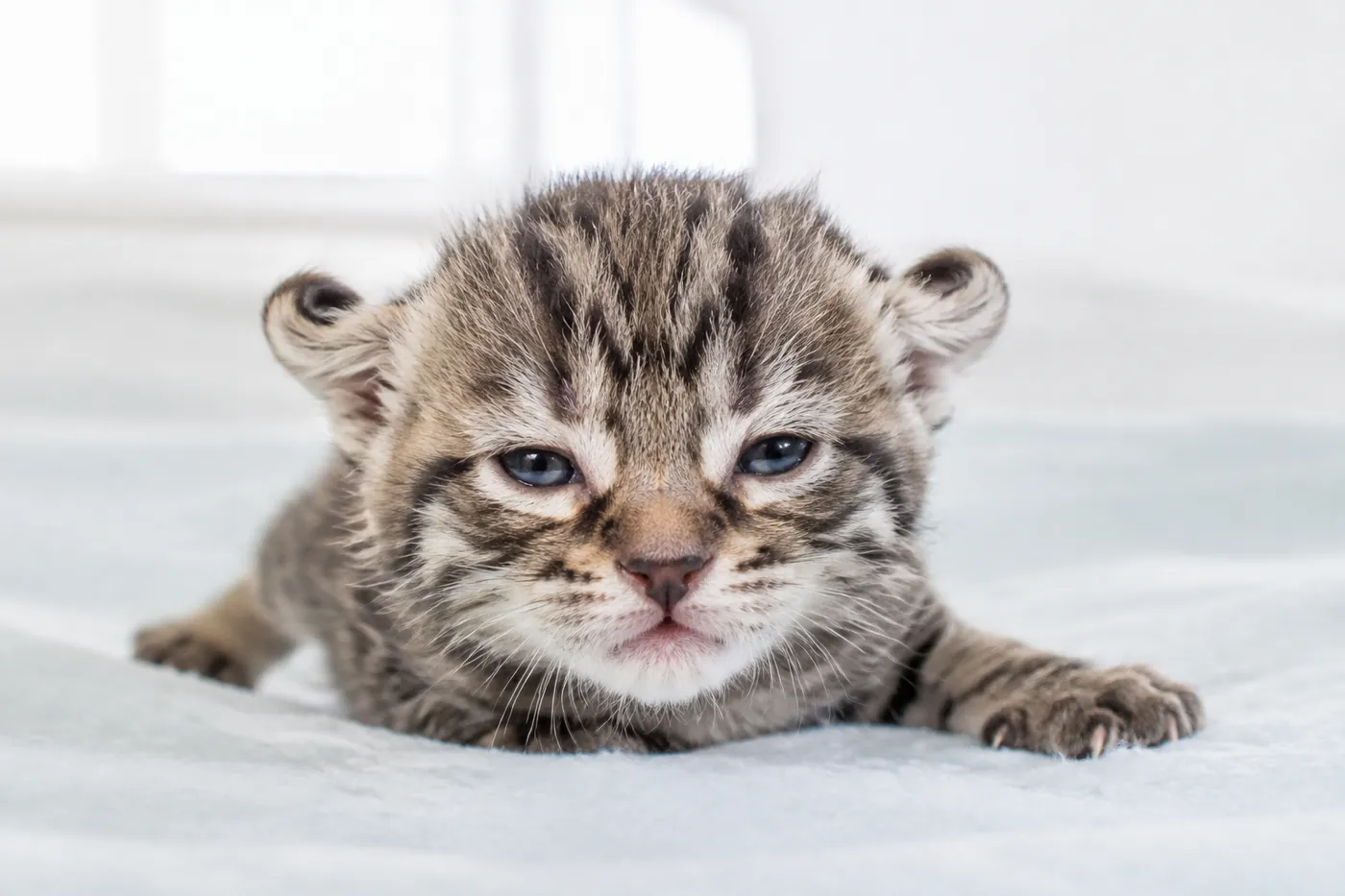
The middle of that sequence is what catches new owners out. A kitten whose ears looked beautifully curled at three weeks can look almost straight at eight, and the ears are simply mid-journey.
The curl settles only at about four months, and that collides with the age kittens are sold. A kitten leaving at eight to twelve weeks has ears that are still moving, so nobody can honestly promise a buyer the final shape, and anyone who does is guessing out loud.
The schedule applies to the ear and nothing else. The rest of the kitten develops on the ordinary timetable, and a straighter final curl is a grading outcome rather than a fault.
Is the Curl ear mutation as risky as the Scottish Fold's?
They are distinct inherited traits. Scottish Fold TRPV4 disease has clinical and genetic evidence; the early Curl study did not report a comparable skeletal disorder.
The curl was studied early. Across 81 litters and 383 kittens the trait behaved as a straightforward autosomal dominant with no associated deformities, which is a larger founding dataset than most novelty breeds ever accumulate.
The stronger evidence is what breeders did next. Curl-to-Curl matings, including cats carrying two copies of the gene, have been made for decades with no genetic abnormality reported.
Viable two-copy cats are useful observations, but viability cannot prove that an inherited variant acts only in the ears or has no other effects.
| Breed | Mutation | Two copies | What has been measured |
|---|---|---|---|
| American Curl | An autosomal dominant ear trait | Viable, with no abnormality reported | No deformities across 81 litters and 383 kittens |
| Scottish Fold | TRPV4 c.1024G>T, autosomal dominant | Consistently severely affected | Osteochondrodysplasia, with variable disease even in single-copy cats |
The Scottish Fold comparison rests on a documented disease. That breed's folded ear comes from a variant in TRPV4, and the same variant underlies osteochondrodysplasia, a painful malformation of bone and cartilage.
Single-copy Scottish Folds are variable rather than safe. Reported problems include deformed distal extremities in the worst cases and accelerated onset of osteoarthritis.
The available evidence differs between the two traits; it does not establish a universal health clearance for the Curl.
It is reasonable to ask about the welfare of any breed-defining structural trait. The Fold's variant acts on cartilage throughout the skeleton, while the Curl's has never been shown to act beyond the ear, and that matters more than how gentle either ear looks.
The cited evidence does not include a breed-wide radiographic survey. An absence of reported skeletal disease is reassuring within its limits, but it is not proof that every Curl is unaffected.
What an unusual ear does not tell you
A cat's ears cannot tell you which mutation produced them, and there is a case report to prove it.
Veterinarians examined a Scottish Fold and American Curl cross-breed that was homozygous for the TRPV4 variant. By around a year old it had severe exostosis on the hind legs, and radiographs showed osteochondrodysplasia at the tarsal joint and digits.
The authors drew the general conclusion rather than the specific one. Phenotype alone cannot reliably identify Scottish Fold ancestry in a cross-breed, and they noted that a curl-like ear could relate to chondrogenesis of the ear cartilage rather than to the curl gene.
- Registration papers from a recognised registry, not a photograph of them
- A pedigree naming both parents with their registration numbers
- No Scottish Fold anywhere in the recorded pedigree
- Both parents seen in person, with their ears and their movement watched
This case report has a limited scope. It describes what can happen when the two breeds are crossed, and no source shows the Scottish Fold variant circulating in the registered American Curl population. In an American Curl Scottish Fold cross between a single-copy Fold and a Curl without Fold ancestry, about half the kittens would be expected to inherit the fold variant, and a curled or straight ear does not show which ones did.
What it does mean is that a charming ear on a cat with no paperwork proves nothing at all, and that a buyer has no way to close that gap by looking.
Which degree of curl are you being sold?
Breeders grade the ear, and the vocabulary reaches buyers before the explanation does.
A first degree curl is nearly straight and the cat is placed as a pet. Second degree is the breeding grade, and third degree is the show grade.
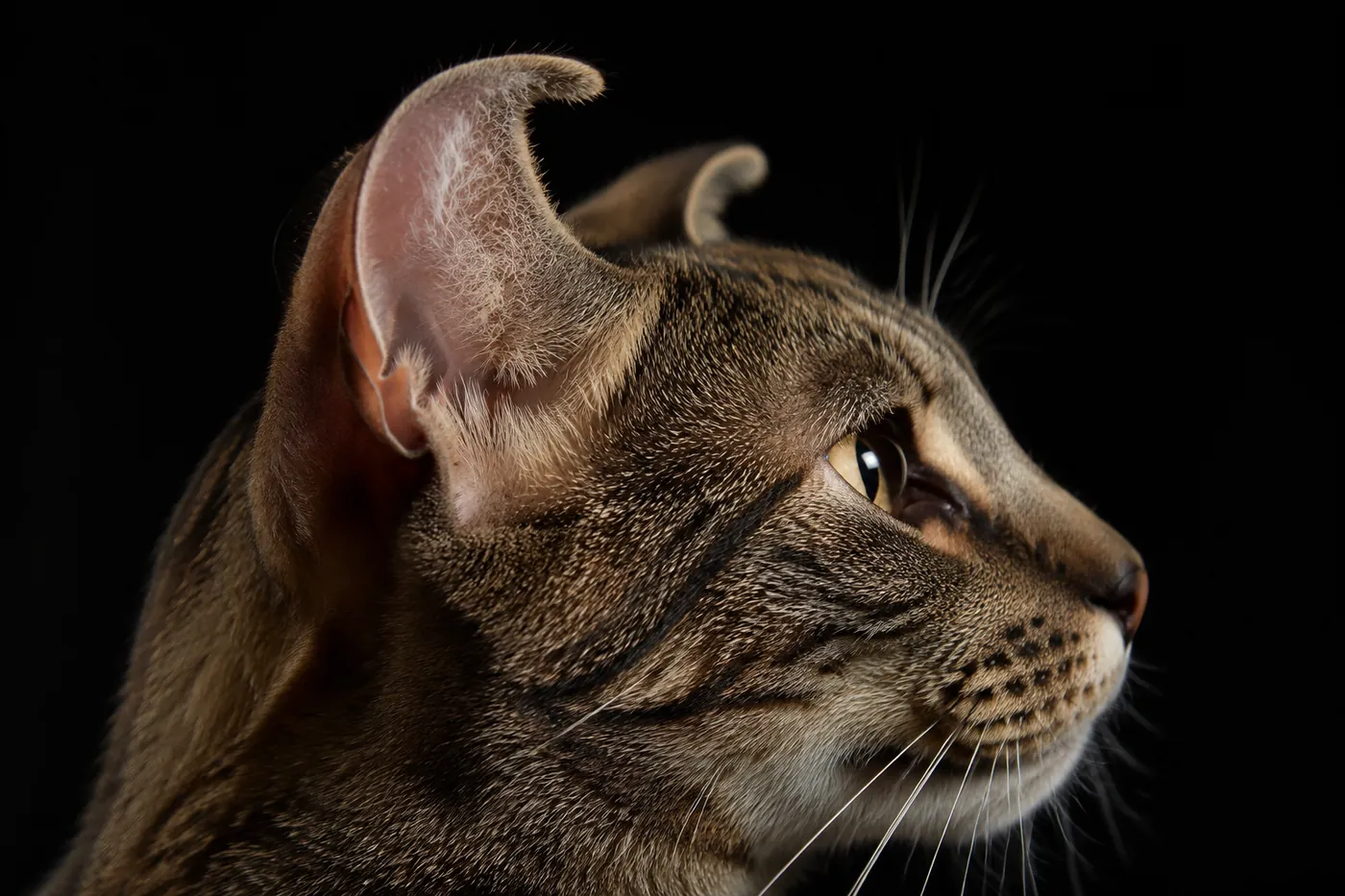
The show standard is geometric rather than impressionistic. The ear should arc between 90 and 180 degrees, with 90 preferred, and a cat is disqualified outright if the ear touches the back of the skull.
None of that is a health scale. A first degree American Curl is a completely normal cat, and the grade describes suitability for a show bench rather than quality of animal.
Set beside the four-month schedule, the grading has one consequence. A show-grade claim made about an eight-week kitten is a prediction, and an experienced breeder making it is offering a judgement rather than a fact.
How should the ears be handled?
The ears need gentle handling, and very little of it.
The anatomy explains the rule. The lower part of the ear is stiff and stable, firm from the base through at least a third of its height, while the upper part is thin and fragile.
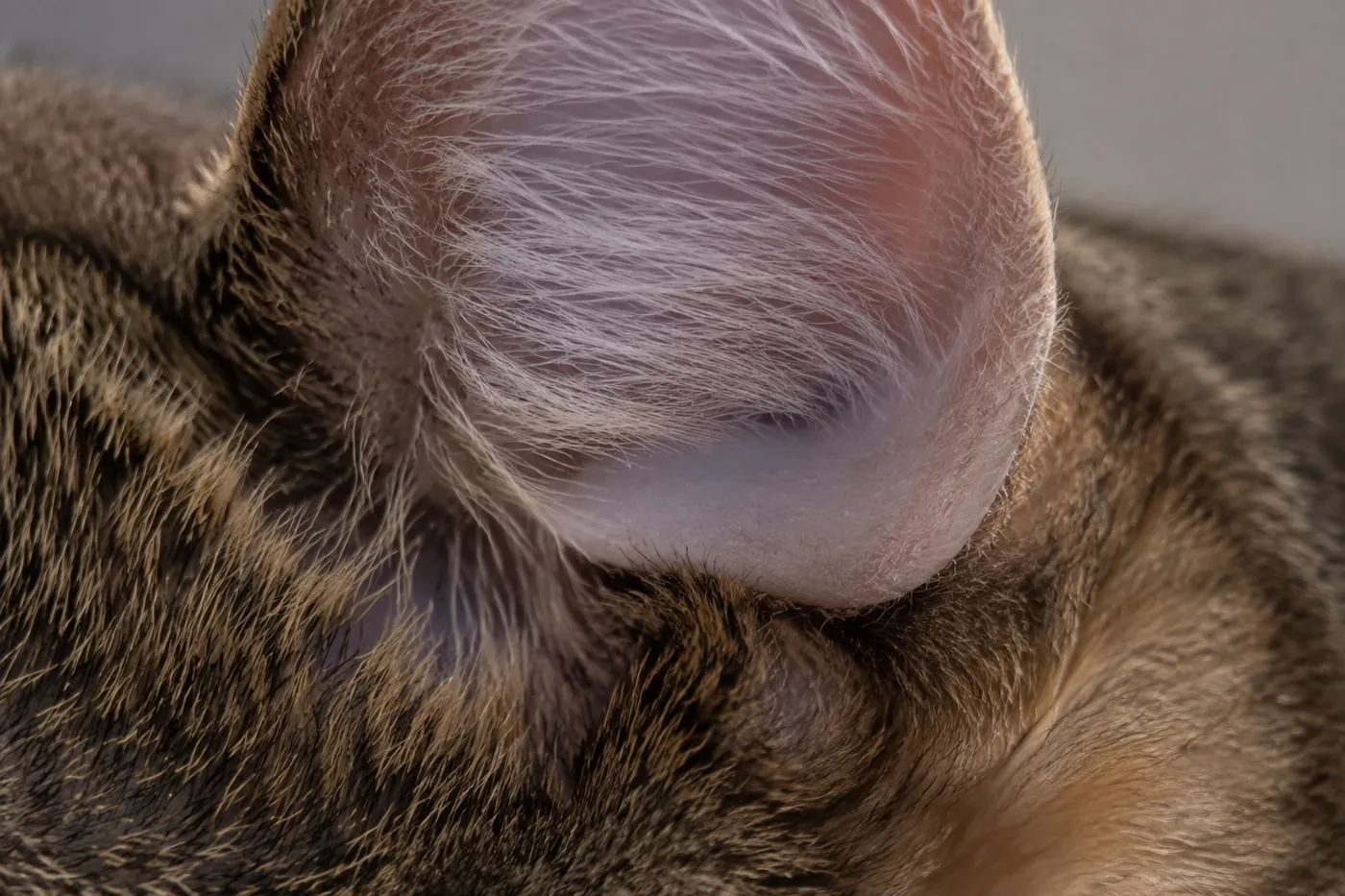
Kittenhood is when it matters most, because the cartilage is still forming. Over-handling a kitten's ears is the one avoidable harm in the whole routine.
Routine care still has a place: checking for wax and cleaning lightly is fine, because the warning is about bending rather than about touching.
How big is an American Curl?
An American Curl is smaller than its reputation implies, because unusual and large get conflated.
An adult female runs about 2.3 to 3.6 kg and a male about 3.2 to 4.5 kg, which is a medium cat by any measure.
- Adult weight, female
- Around 2.3 to 3.6 kg
- Adult weight, male
- Around 3.2 to 4.5 kg
- Body type
- Semi-foreign and rectangular, on moderate legs
- Head
- A modified wedge, moderately longer than wide
- Coat
- Longhair and shorthair divisions, any colour
- Ears set at
- About four months old
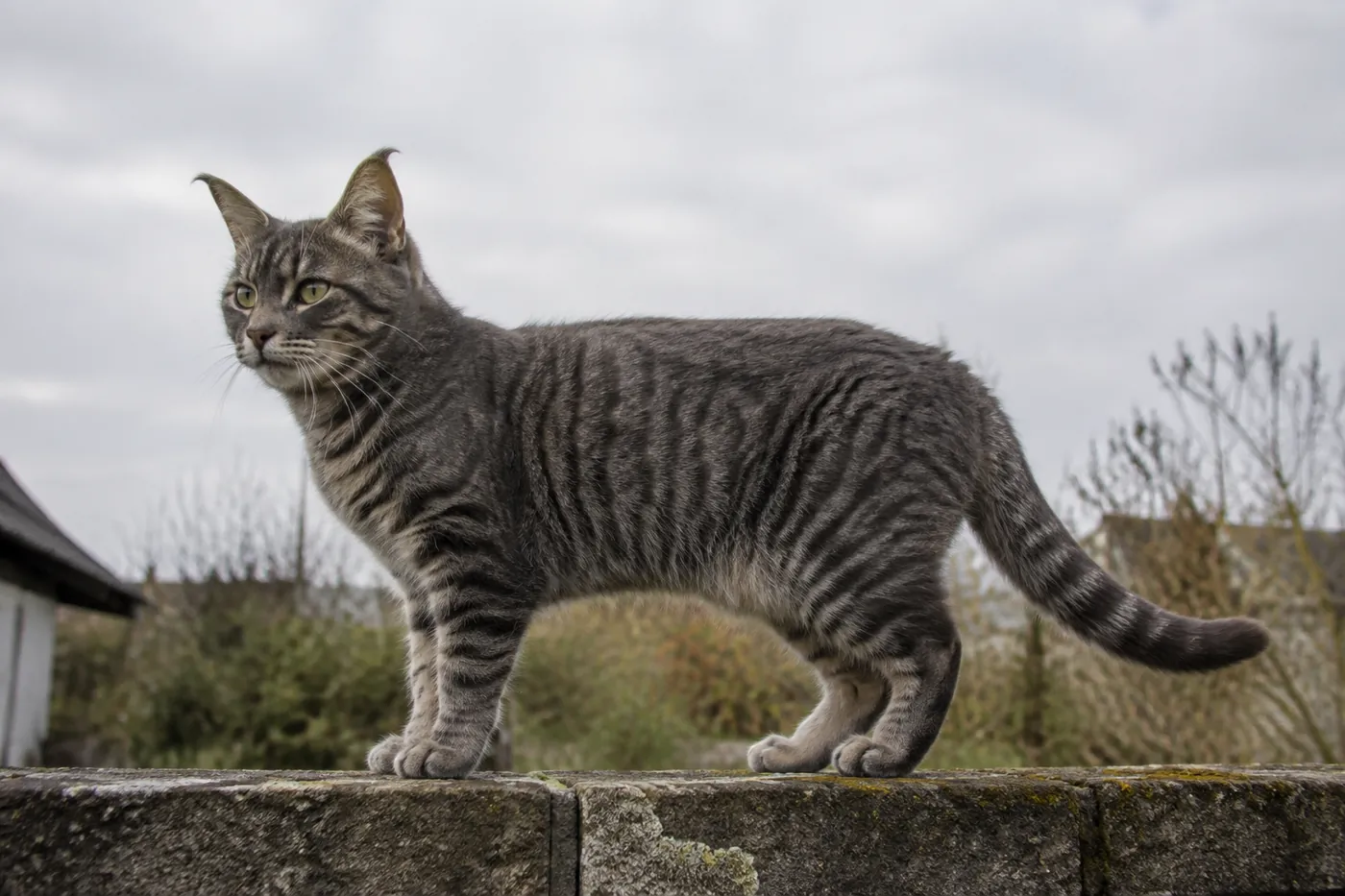
The standard asks for a semi-foreign rectangular body and a modified wedge head moderately longer than wide. That outline reads longer than the weight suggests, which is where the size impression comes from.
The practical consequence is dull and useful. Trays, carriers and flaps sized for an average cat are correct, and working out the daily ration matters more here than buying anything oversized.
What is the coat like?
The coat is barely a factor, which is unusual for a breed that comes in two lengths.
The American Curl is registered in a longhair and a shorthair division and in any colour or pattern. The longhair carries very little undercoat, and undercoat is what mats.
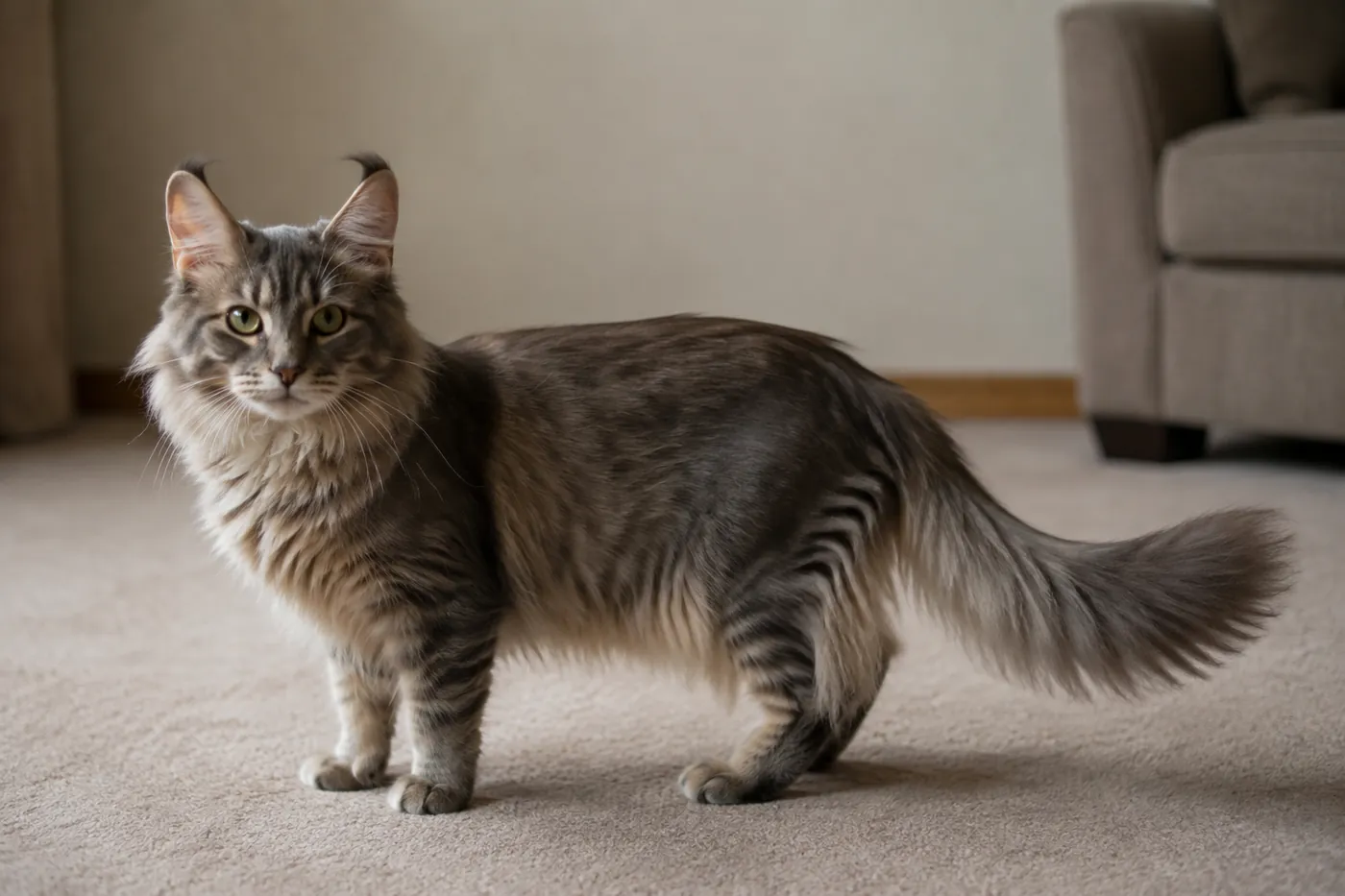
So a weekly comb covers the long version and the short one needs less than that. A long-coat routine is more than this cat requires.
Little undercoat still means shedding, just less of it in clumps. The plumed tail on a longhair is the one area worth running a comb through regularly.
What is the temperament actually like?
The breed's most repeated compliment is that it never grows up, and that is a commitment as much as a charm.
American Curls keep playful, inquisitive behaviour well into adulthood instead of settling at two like many cats. They are people-oriented and tend to follow their owners from room to room.
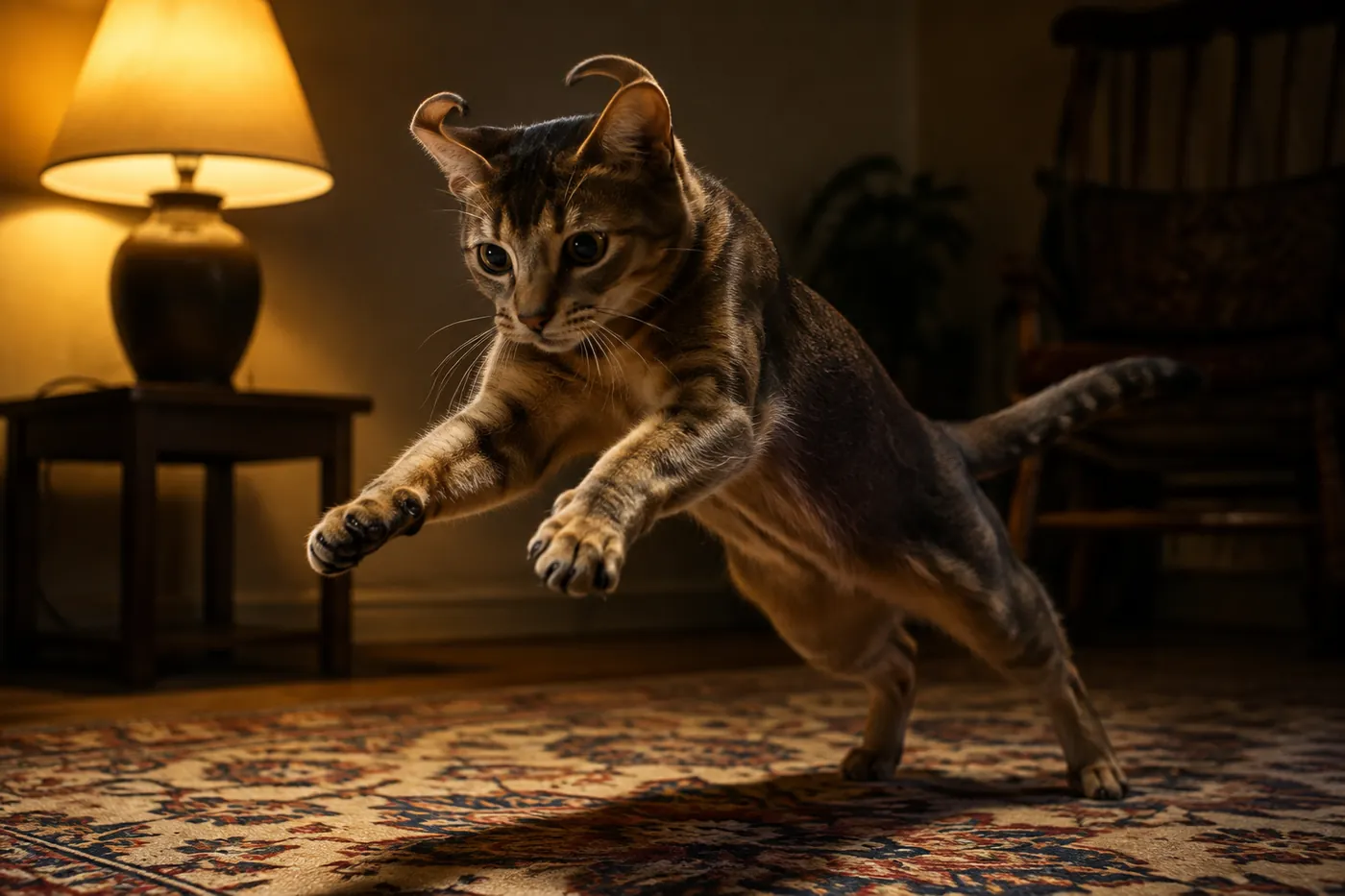
Read as a cost, that means years of daily play with an animal that expects a participant. A household that wanted a cat to become ornamental at three will find this one still bringing things to be thrown.
It also makes the breed unusually trainable, and clicker work lands well with a cat that stays curious. Matching the play to the stage helps too, and exercise needs by age is the right frame for a cat whose stage barely changes.
The play is social rather than athletic: an American Curl wants a participant more than a climbing route across the wardrobe.
One founder, and the outcross that followed
Every American Curl traces to one cat. Shulamith was a stray longhaired black female found in Lakewood, California in 1981, and the breed is her descendants.
That is a genuinely narrow beginning, and a single-founder breed is the shape that produces inbreeding problems a generation or two later.
The registries wrote the answer into the rules. The only allowable outcross is a non-pedigreed domestic cat closely matching the standard, which lets unrelated genes keep entering a pool that started with one animal.
CFA accepted the breed for registration in 1986 and granted championship status in 1993, and the outcross allowance ran alongside that recognition rather than being a concession afterwards.
What the policy does not do is prove anything. It reduces the risk that a narrow founding causes trouble, and nobody has measured whether it worked.
What is actually known about the health?
More is known about the ear than usual, and almost nothing about the cat as a whole.
The founding genetics work is the strongest evidence here, and it is genuinely good evidence for what it covers. It concerns the ear trait rather than the breed as a whole.
Beyond that the record is thin. The cited evidence does not include a representative American Curl population health study, these sources do not establish representative breed prevalence figures, and the 12 to 16 year lifespan quoted almost everywhere is not established by the studies cited here.
The UK life tables published a figure for only twelve breeds, and this was not among them. Some of that absence is rarity rather than health, because a breed nobody has in numbers is a breed nobody counts.
- The ear mutation
- Well characterised. Dominant, and the founding genetics work is sound on it
- Harm from the trait
- No reported pattern across decades, including homozygous matings
- Breed prevalence figures
- Not supplied by the cited studies
- Population health study
- Not supplied by the cited studies
- Quoted 12 to 16 year lifespan
- No study behind it, and the UK life tables did not cover this breed
- Why the record is thin
- Rarity as much as health. A breed nobody has in numbers is a breed nobody counts
The right reading is narrow and positive. Decades of breeding, including homozygous matings, have produced no reported pattern of harm, which is meaningful, and it is not the same as a study that looked and found nothing.
Compare the position with an Abyssinian buyer, who can ask for two DNA certificates and get a real answer, or with the American Bobtail, where the evidence on the defining mutation actively disagrees with itself. This breed sits in a third place: good news, lightly evidenced.
Who should think twice about one?
Two purchases are worth refusing, and neither is about the cat.
The first is a show-grade promise on an eight-week kitten. The ears are not set, the person selling knows that, and a buyer paying a premium for a grade that cannot yet exist is paying for a forecast.
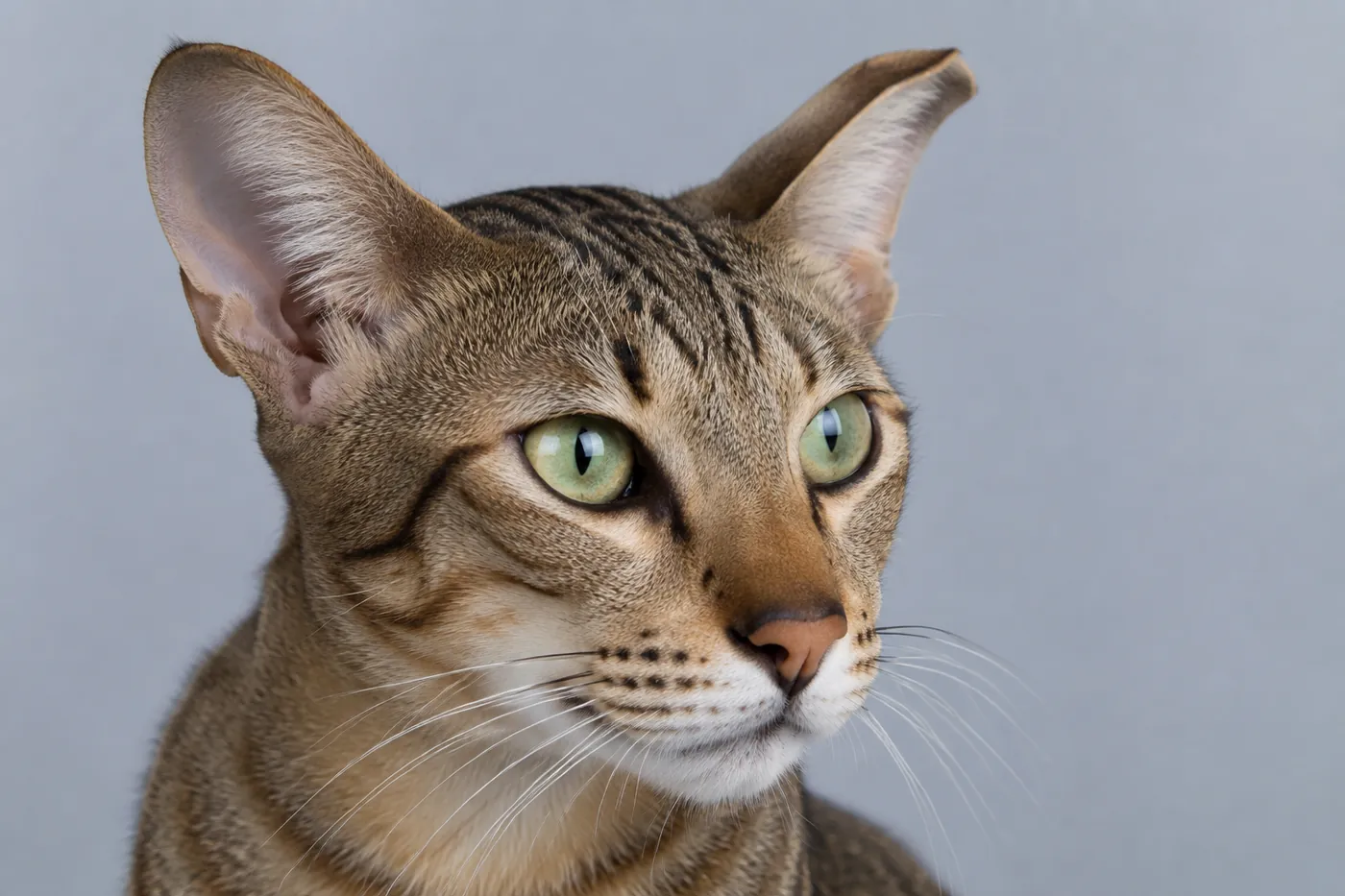
The second is a curled-eared kitten with no papers. The case report is the reason: without a pedigree there is no way to establish what produced those ears, and the ear itself will not tell you.
On households the news is good and comes with a condition. The playful, people-oriented temperament suits a busy home with children better than a quiet one, and children have to be taught the ear rule before they meet the cat rather than after.
Dogs are usually fine, and that has little to do with the breed. Early exposure decides it, so the socialisation window matters more than the pedigree does on that particular question.
The household to think hardest about is the quiet one. A cat that never stops soliciting play is a poor match for someone who wanted company rather than a participant, and that mismatch lasts the whole of the cat's life rather than a first year.
Everywhere else, the ear that worries most buyers has no reported pattern of harm, and the practical risks sit in the paperwork and the timing.
Common Questions
Do all American Curl kittens have curled ears?
No. A Curl carrying one copy of the dominant ear variant, mated to a genetically straight-eared cat, is expected to produce both ear types. A Curl with two copies passes the variant to every kitten, so a roughly half-and-half prediction does not apply to every curled parent.
Are American Curls rare?
CFA describes the breed as relatively rare in the United States and more popular in some other places. The cited health evidence is limited, but rarity alone does not prove why a particular study or result is absent.
Are American Curls hypoallergenic?
No. The allergen is Fel d 1 in saliva and skin rather than coat length, so neither the longhair nor the shorthair division helps.
Checked Against
- The Cat Fanciers' Association: American Curl cfa.org
- TICA: American Curl tica.org
- Anderson et al.: Genetic epidemiology of blood type, disease and trait variants, and genome-wide genetic diversity in over 11,000 domestic cats (PLOS Genetics, 2022) pmc.ncbi.nlm.nih.gov
- Osteochondrodysplasia in Scottish Fold cross-breed cats pmc.ncbi.nlm.nih.gov
Published 3 September 2026. Last updated .