What Is a Kanaani Cat, and How Much Can You Verify?
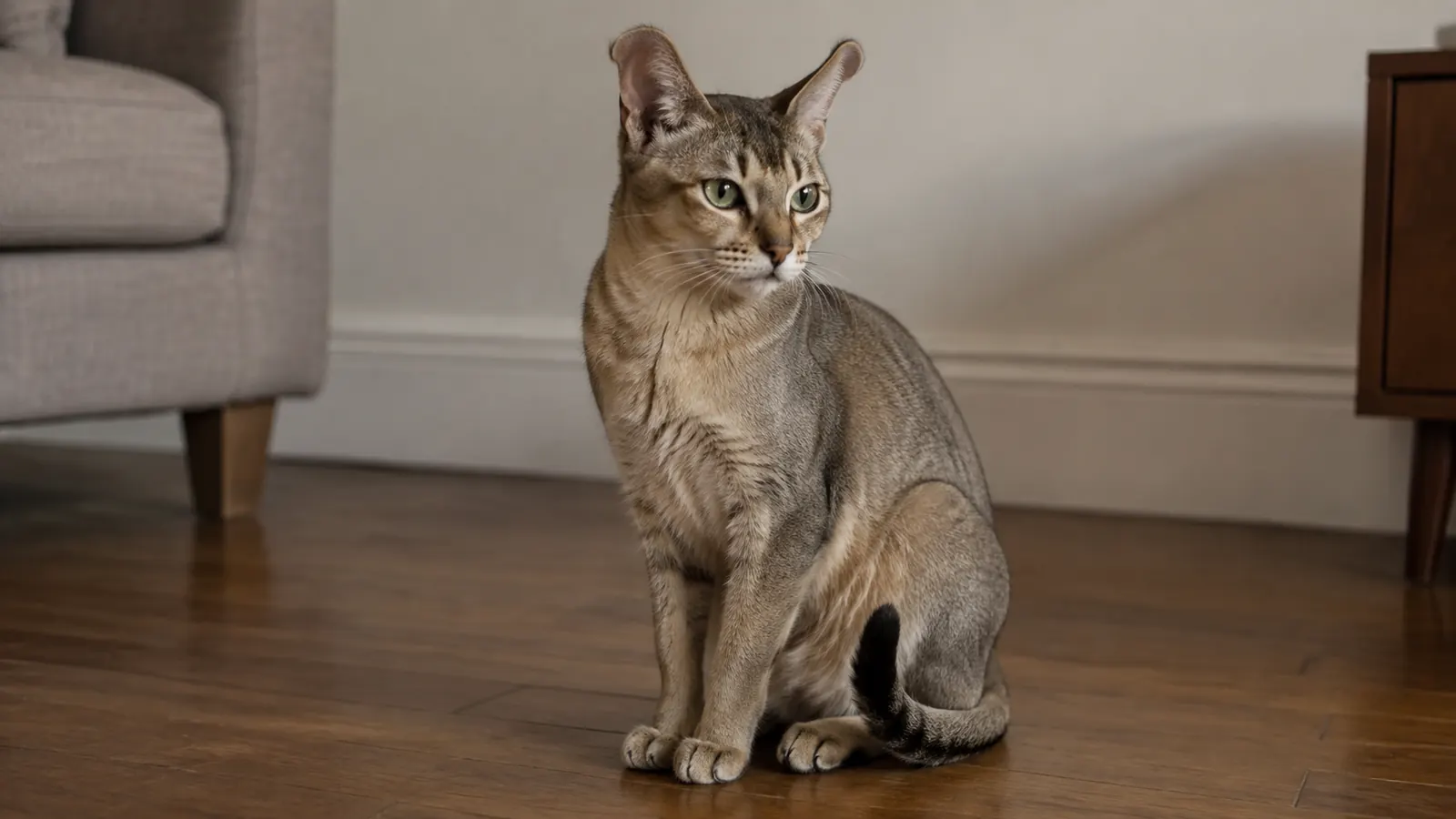
A Kanaani is a shorthaired breed recognised by the World Cat Federation under code KAN. The WCF standard describes a medium-to-large athletic cat with green eyes and a ticked coat marked by spots or marbling, while temperament, health and lifespan vary by individual and pedigree records establish ancestry.
- Origin
- A modern breed associated with Israel and recognised by the World Cat Federation under code KAN
- Coat
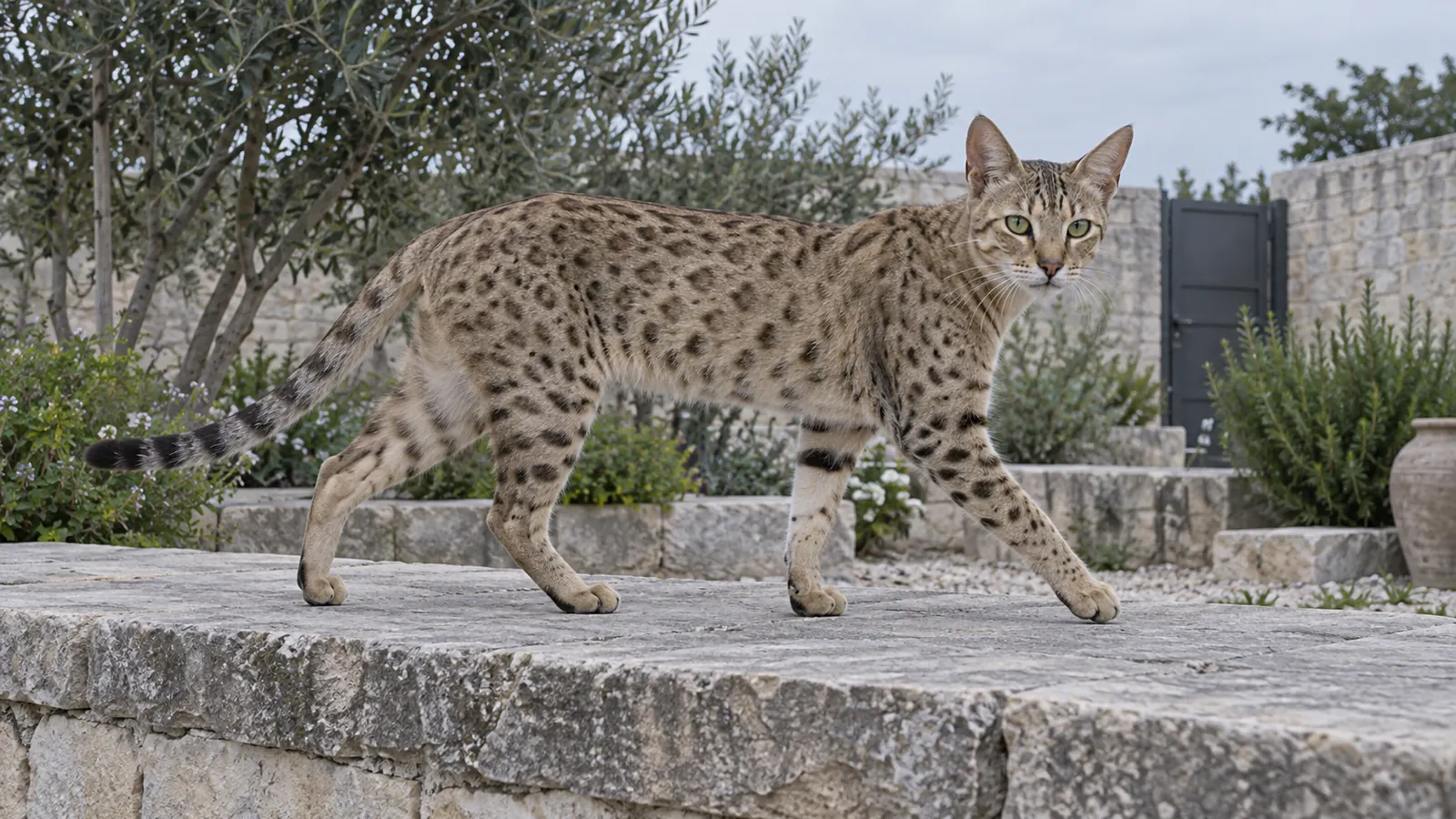
- Short, close and relatively coarse, with little undercoat and visible ticking beneath spotted or marbled markings
- Size
- Medium-to-large, slender and muscular, with long legs, oval paws and a long tapering tail
- Typical weight
- The WCF standard gives relative size but no official numeric weight range
- Life expectancy
- No robust Kanaani-specific population estimate was found
- Activity level
- Likely active in a suitable individual, although the standard defines athletic structure rather than a universal exercise quota
- Grooming
- Generally straightforward short-coat care, adjusted for the individual cat's shedding, skin and handling tolerance
- Suits
- Homes that can provide vertical routes, separated resources and evidence-based decisions about the individual cat
A Kanaani is a rare shorthaired breed currently recognised by the World Cat Federation, or WCF, under the code KAN.
The public standard defines physical type, while temperament, disease rate and lifespan remain individual questions.
That distinction matters because many online profiles present every repeated detail as equally certain. The strongest Kanaani evidence begins with the registry and pedigree, then moves to veterinary records and the behaviour of the individual cat.
What Is a Kanaani Cat, and Who Recognises the Breed?
WCF includes Kanaani in its current Easy Mind System breed list as KAN. Its public breed standard is dated January 1, 2010 and remains the clearest primary description of the recognised type.
The current public breed lists from CFA, TICA and FIFe do not include Kanaani. That does not cancel WCF recognition, because registries decide independently which breeds and names they accept.
It does mean that the phrase "registered Kanaani" is incomplete without the issuing organisation. The certificate, pedigree and registration number reveal which rules apply to that specific claim.
- Current recognition
- World Cat Federation
- WCF code
- KAN
- Published standard
- WCF Kanaani standard dated January 1, 2010
- Other current lists checked
- CFA, TICA and FIFe do not list Kanaani
- What the name can establish
- A recognised breed identity when supported by matching registry records
- What the name cannot establish
- One cat's temperament, future health or lifespan
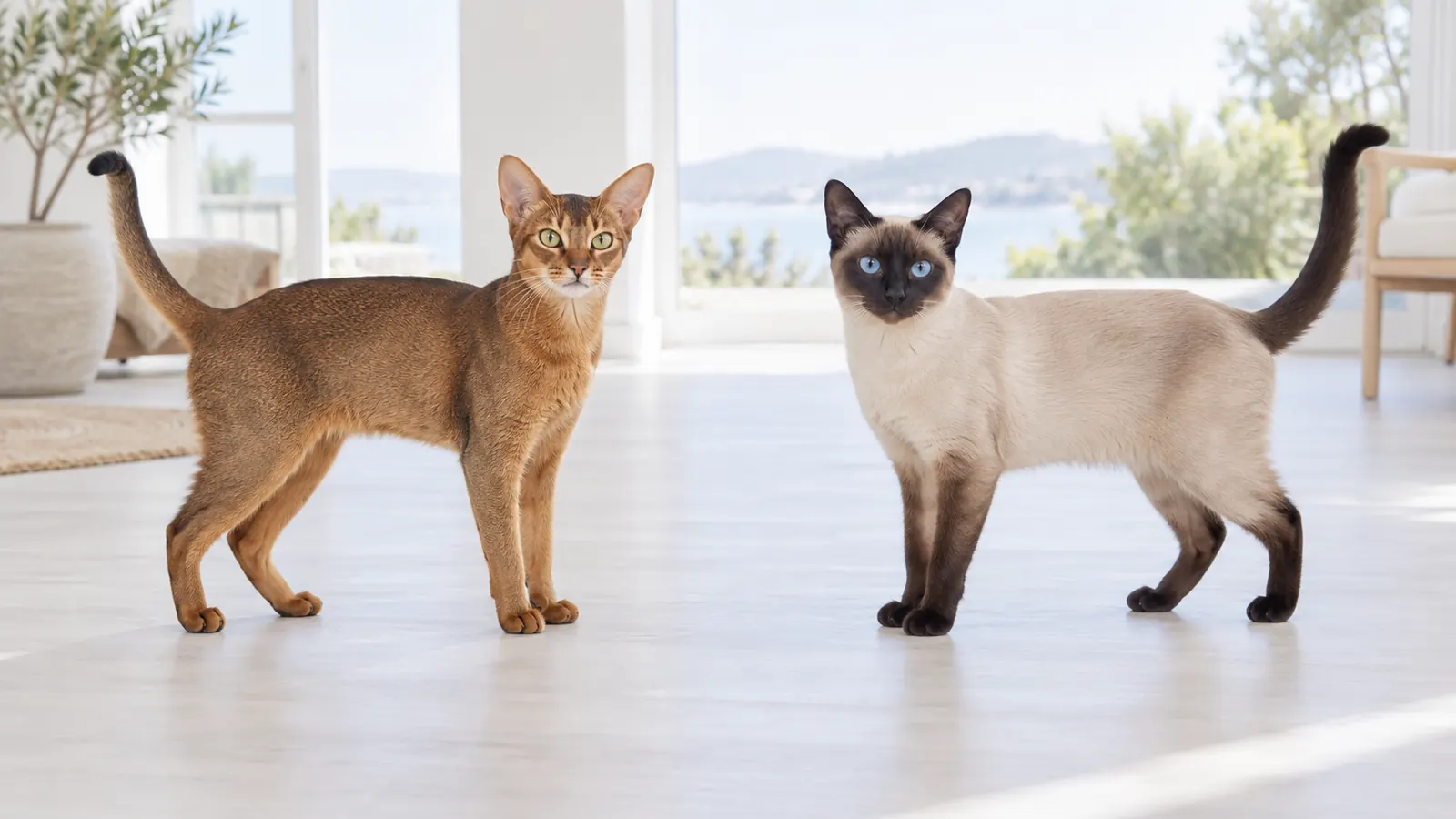
This registry distinction also appears with less familiar breeds such as the Aegean and Arabian Mau.
A registry may recognise one while another does not, so absence from a list is not proof that a cat or its documents are fraudulent.
The useful question is narrower: does the paperwork identify a Kanaani under the rules of the organisation that issued it? A photograph can support recognition of type, but it cannot answer that documentary question.
How Does the WCF Standard Describe a Kanaani?
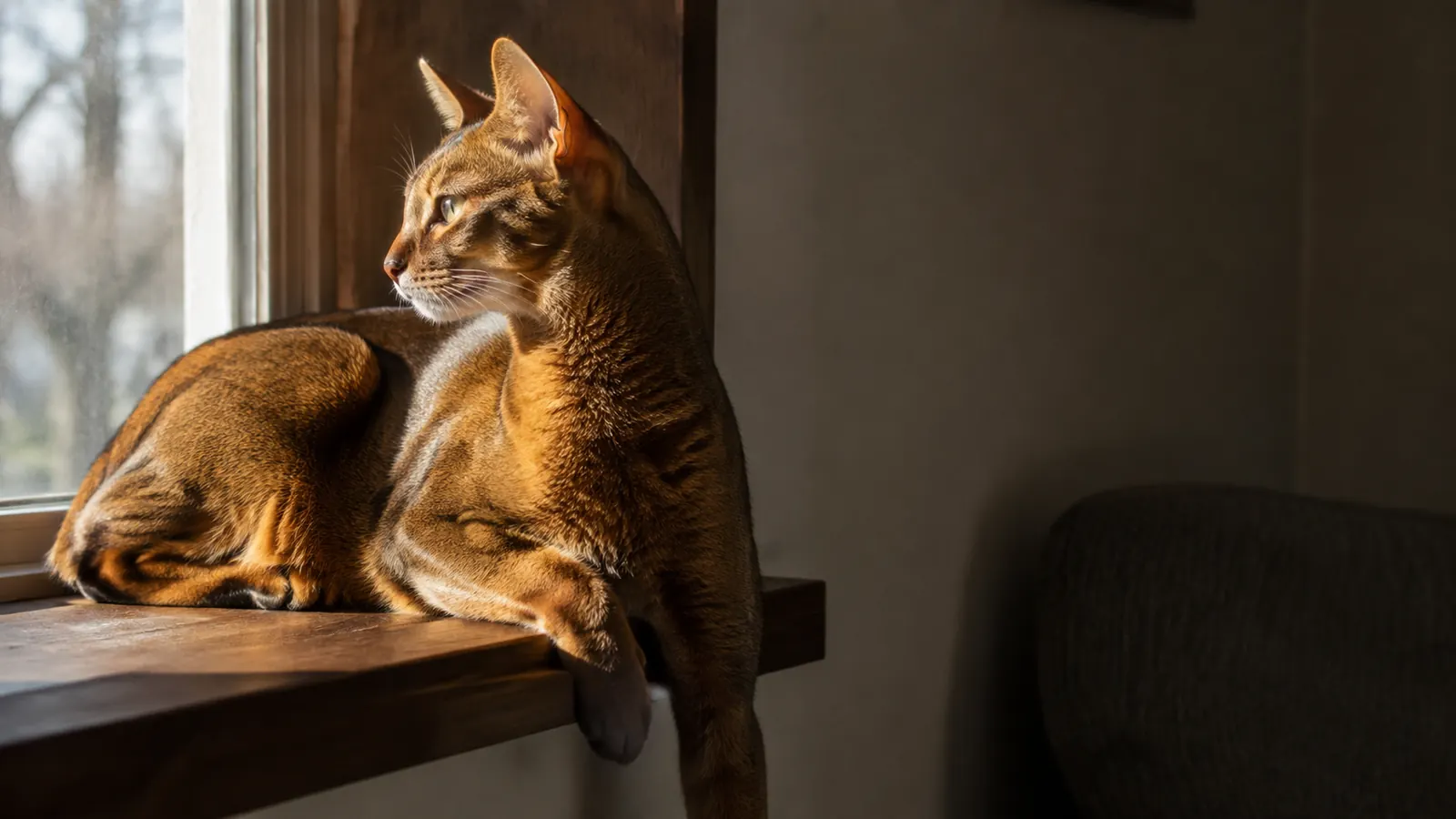
The WCF Kanaani standard describes a medium-to-large, slender, muscular and athletic body with long legs, oval paws and a tapering tail.
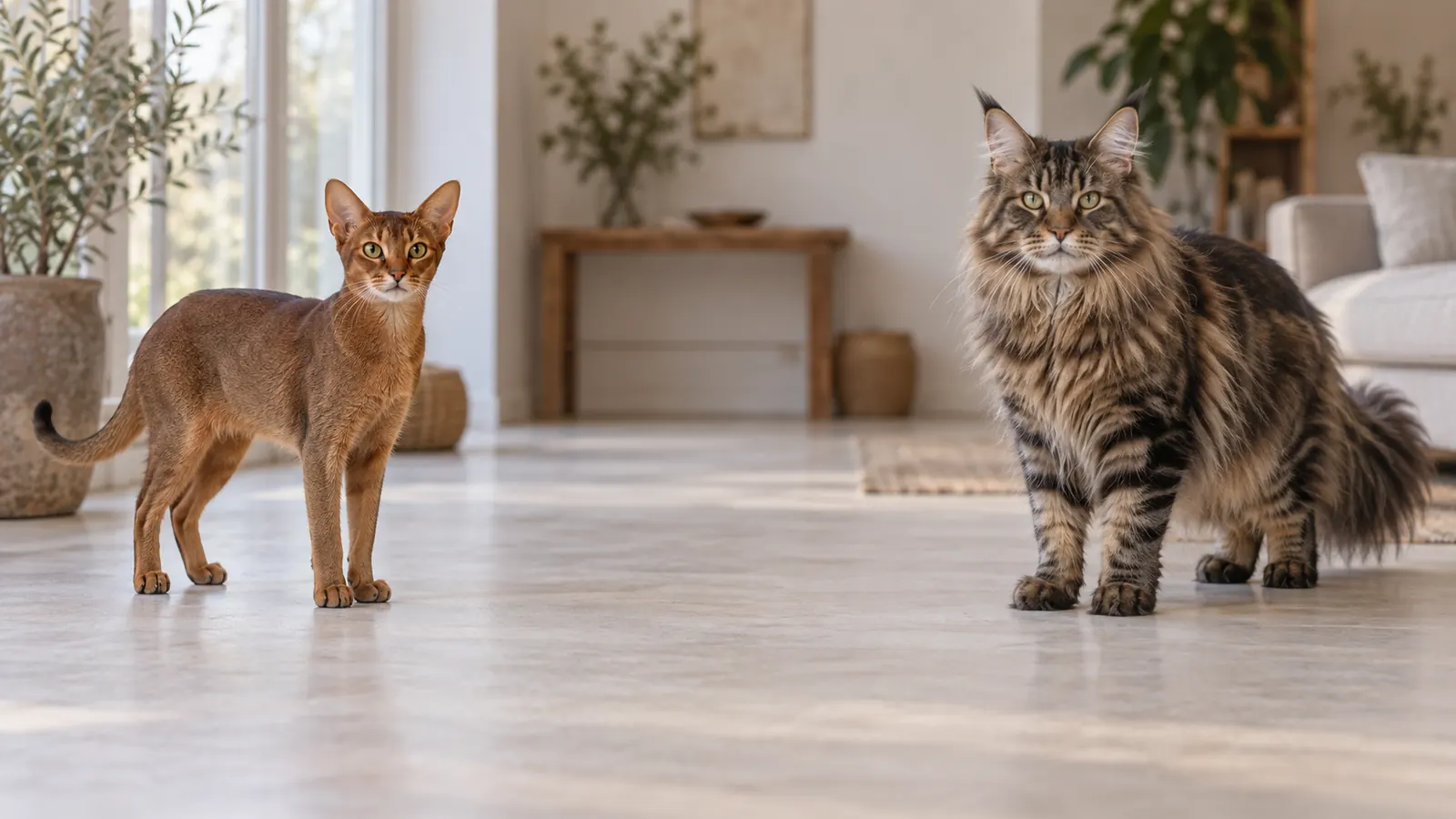
There is no official weight range in the standard. A seller's number may describe one line or one cat, but it should not be presented as the WCF definition of Kanaani size.
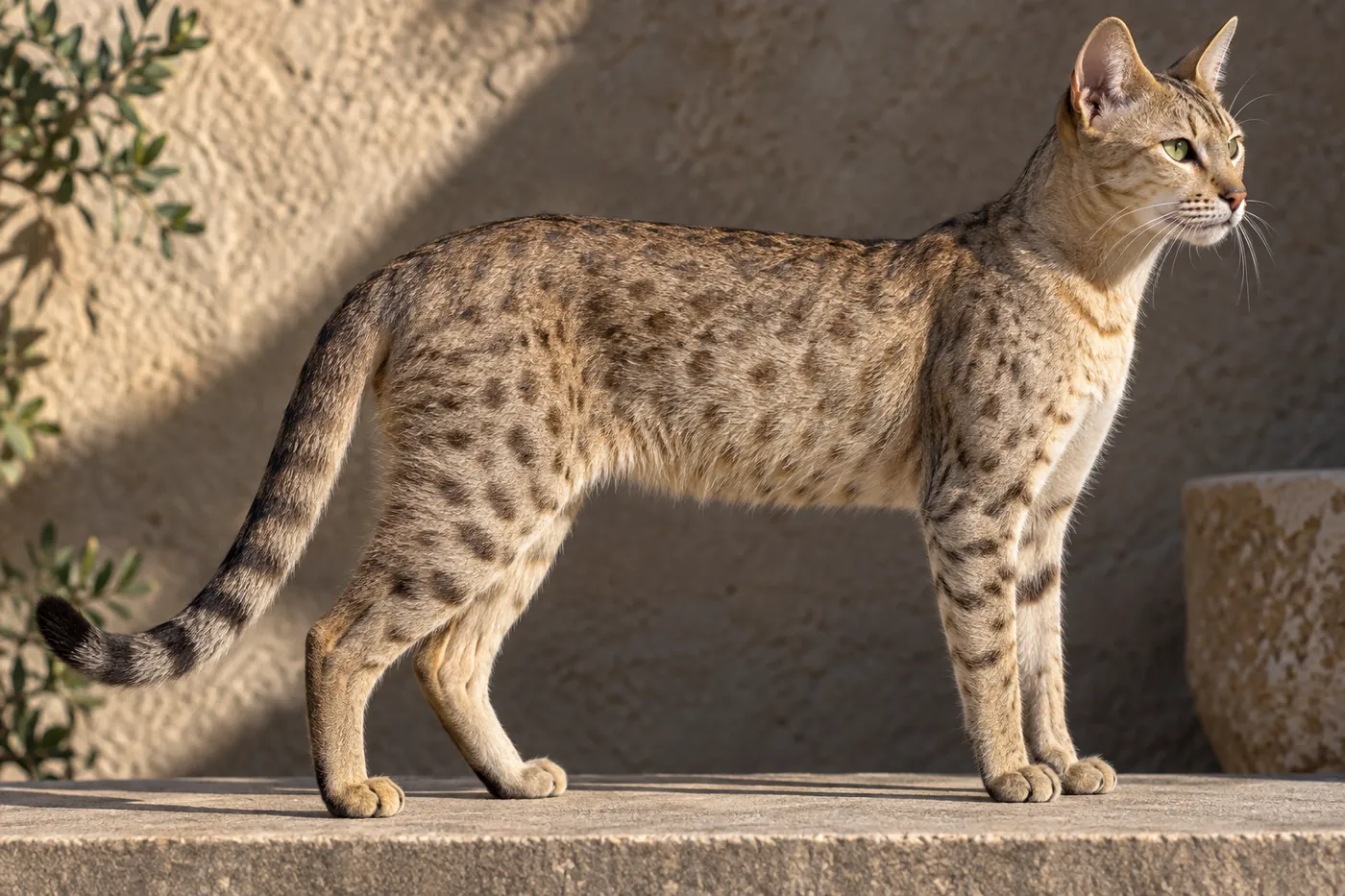
The head forms a broad triangle with a flat skull, visible cheekbones and a slightly arched forehead flowing into a straight nose without a stop. Ears are large, wide at the base and set far apart, and ear tufts are desirable rather than required proof of identity.
Adult eyes should be green, with yellow-green tolerated. The standard describes the eyes as large, almond-shaped and set at a slight slant.
| Feature | WCF description | What it does not prove |
|---|---|---|
| Body | Medium-to-large, slender, muscular and athletic | A precise adult weight |
| Head and ears | Broad triangle, flat skull, straight nose and large wide-set ears | Pedigree from facial shape alone |
| Eyes | Green, with yellow-green tolerated in adults | Breed identity without records |
| Coat | Short, close, relatively coarse and lightly undercoated, with clear ticking | A fixed shedding level for every cat |
| Pattern | Spotted or marbled on a beige-to-cinnamon ground; silver is prohibited | Wild ancestry from markings |
The coat pattern can be spotted or marbled, and the ground colour runs from beige to cinnamon. Seal, chocolate and cinnamon are named in the standard, while silver is prohibited.
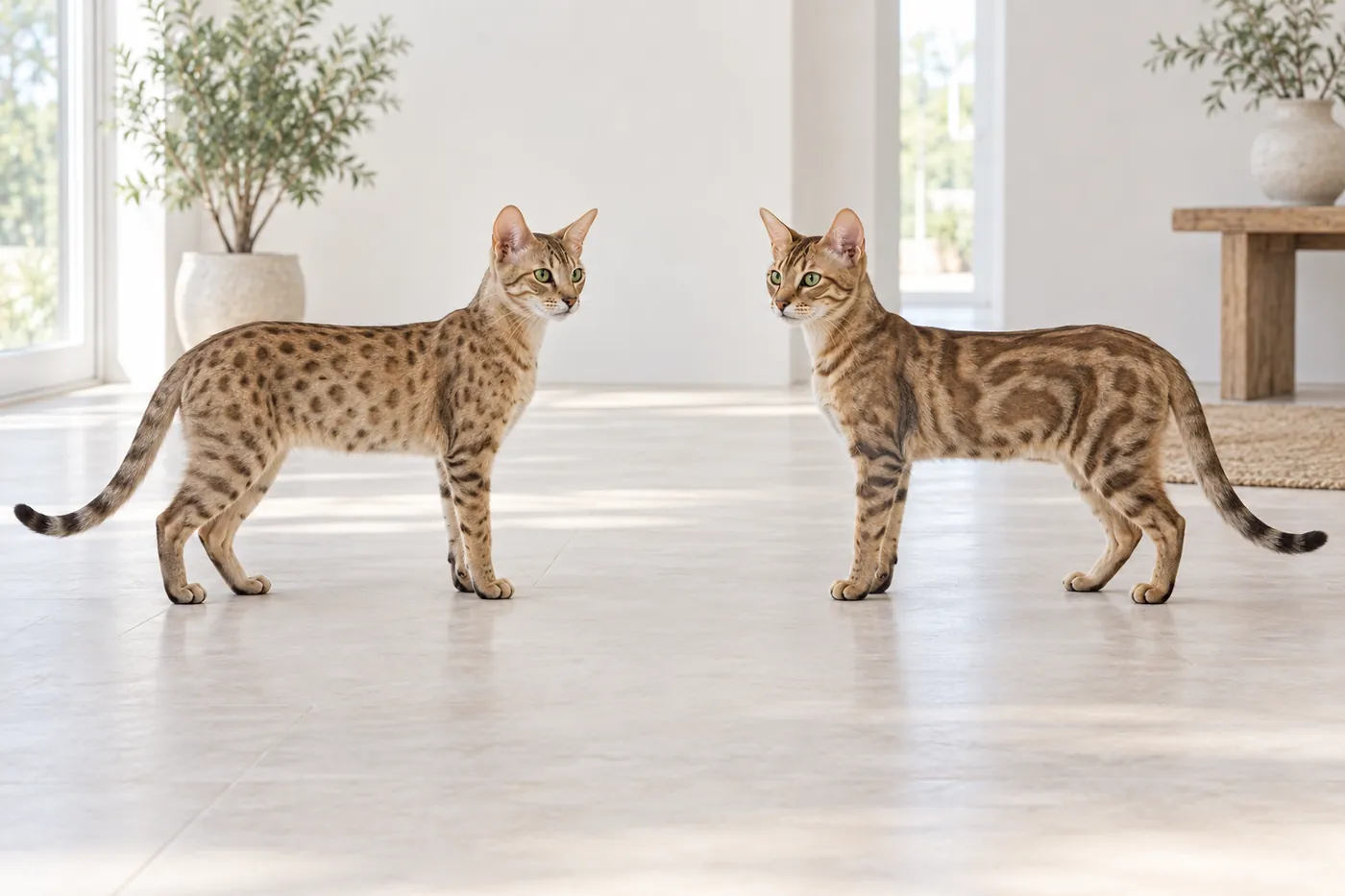
Clear ticking means individual hairs carry bands of colour, although the pattern should remain visible over that banded ground. The spots may look softened rather than sharply outlined because ticking interrupts their edges.
A Bengal or Toyger can also have a deliberately wild-looking pattern, but the breeds are not interchangeable: appearance describes type, while only a pedigree records ancestry.
What Temperament Can You Reliably Expect?
Current secondary profiles commonly describe the Kanaani as energetic, intelligent, independent and affectionate with familiar people.
Those descriptions may help form questions, but the WCF standard contains no temperament section and no robust Kanaani behaviour study was identified in the research for this profile.
The honest expectation is therefore a range rather than a fixed personality. Rearing, age, pain, previous handling and the home environment can change how readily a cat plays, approaches people or recovers after something unfamiliar.
A first greeting reveals little on its own. Three observations give a clearer picture of how the individual copes with ordinary life:
- Contact: Does the cat approach again after play ends, a door closes or food is delayed?
- Recovery: After a new sound or object, does normal eating, exploring or play resume without prolonged hiding?
- Handling: Comfort with touch along the back may not extend to paws, mouth, carrier entry or restraint at a clinic.
A string of favourable adjectives cannot settle household fit, because a person who wants frequent interaction may enjoy an active, responsive individual, while the same cat could be tiring in a home that needs long quiet periods.
Persistent irritability, hiding or a sudden change in social behaviour should not be dismissed as a rare-breed trait. The guide to petting-related aggression explains how overstimulation, fear and pain can produce similar outward behaviour for different reasons.
How Much Activity and Home Space Does a Kanaani Need?
The athletic Kanaani build in the WCF standard makes movement capacity a reasonable planning concern, but it does not create one exercise quota for the breed. A healthy young cat and an older cat with joint pain cannot be expected to use the same route at the same speed.
Useful space is more than floor area. For a Kanaani, connected height, stable landings, hiding places and separated food, water, litter and resting resources create movement and retreat choices in the home.
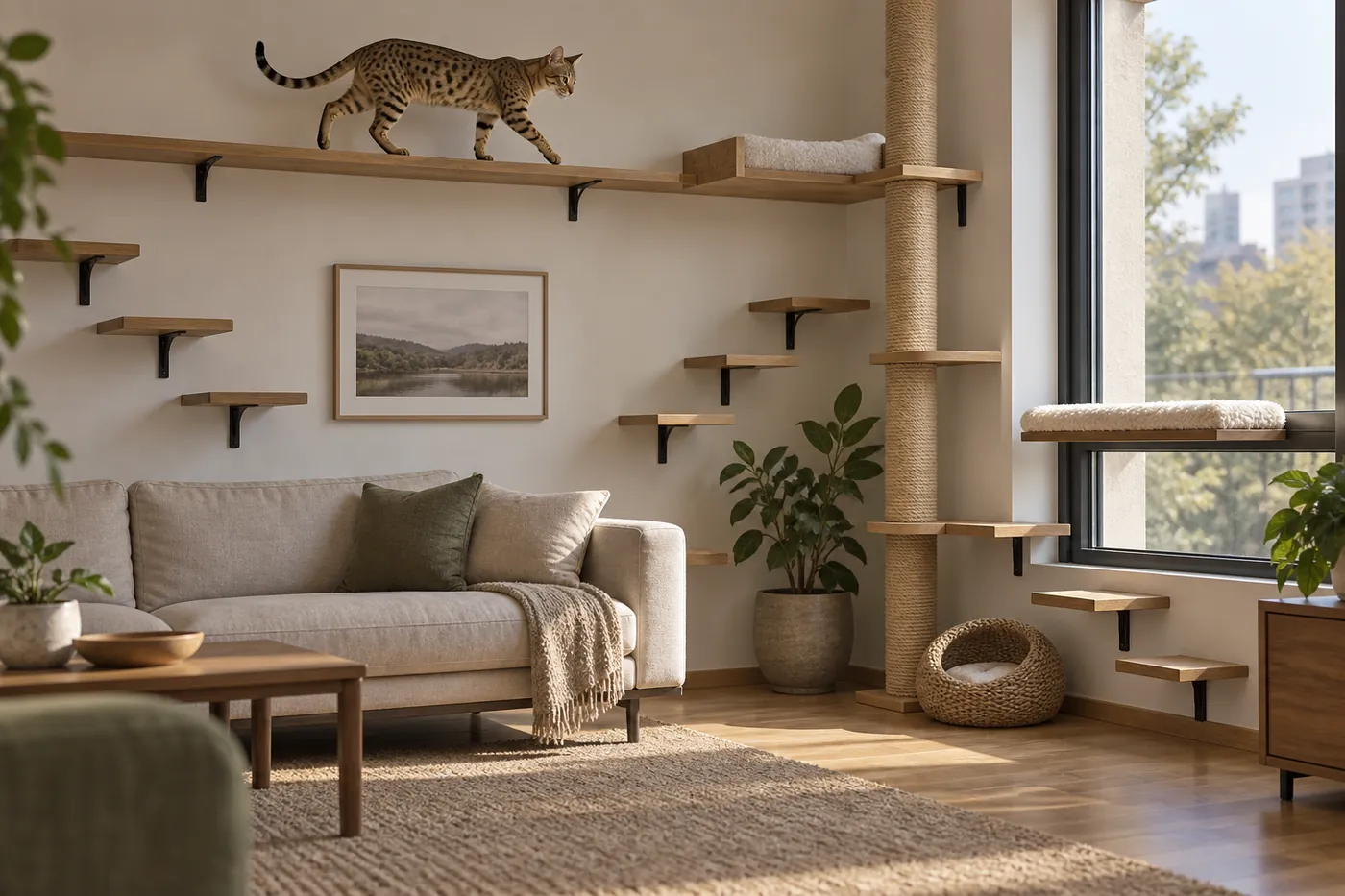
An apartment can provide those choices when the vertical route is stable and the daily routine includes interactive play, while a larger house can still work poorly when food, water, litter and rest all sit in one contested corner.
- Stable shelves or furniture create a continuous route with broad landing space
- Food, water, litter and resting resources are separated rather than crowded together
- Interactive play changes in intensity as the cat ages or its health changes
- The carrier, litter tray and scratching post fit the adult body
- Birds, rodents, reptiles and fish remain behind secure physical barriers
Play can include stalking, chasing, climbing and food searches rather than one prolonged workout. The site's guide to exercise needs by age shows why short bursts and recovery time change across a cat's life.
A daily pattern tells more than an equipment count. The cat should be able to reach resources, complete a play sequence, rest undisturbed and return to normal behaviour after ordinary interruptions.
How Much Grooming Does a Kanaani Coat Need?
The Kanaani coat is short, close and only lightly undercoated, so it does not carry the matting burden of a dense long coat.
Its relatively coarse texture and visible ticking are normal features rather than signs that the hair is dry or damaged.
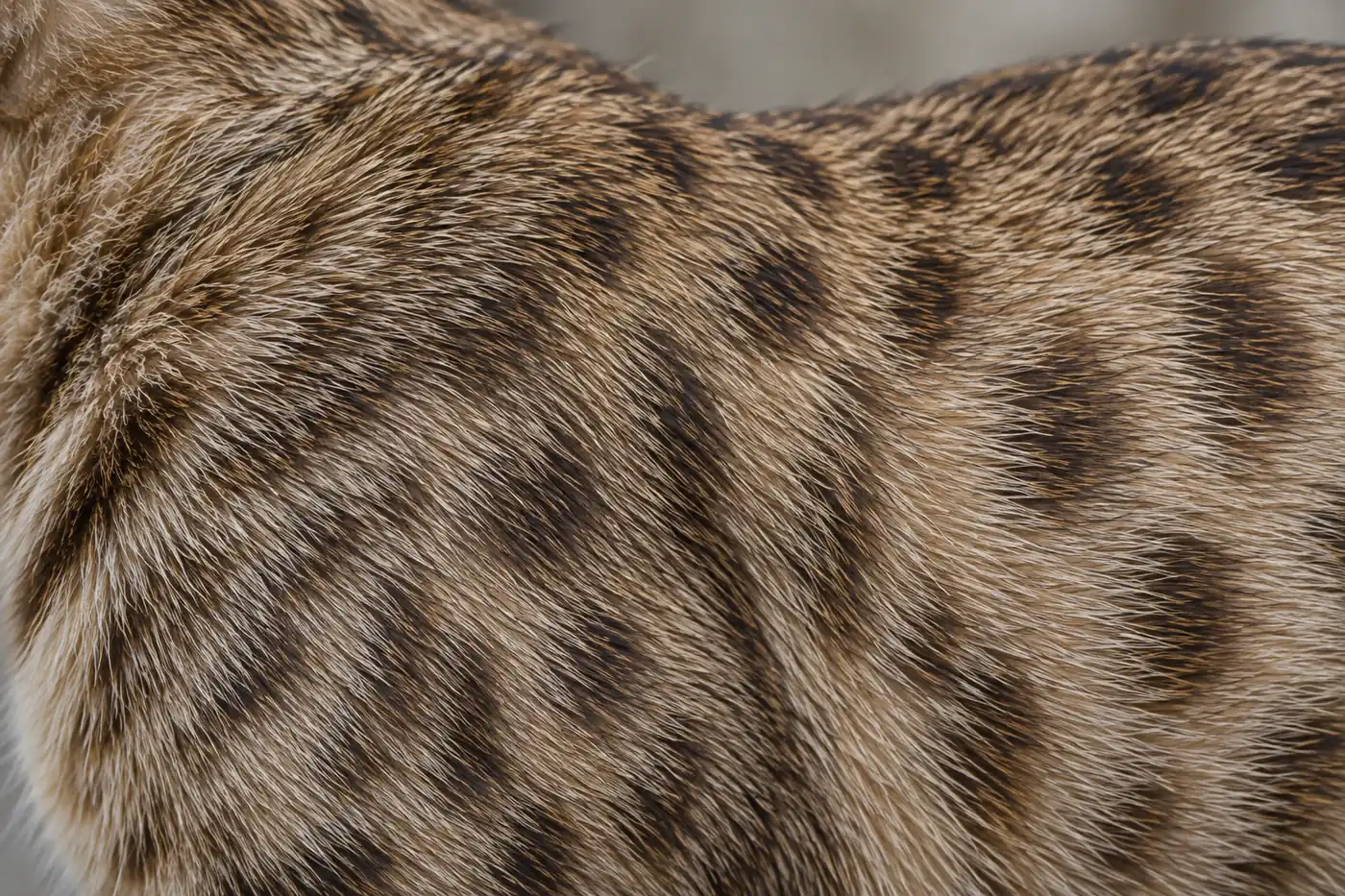
For many adults, a brief pass with the hand or a soft grooming tool removes loose hair and creates a chance to feel for skin changes. Frequency can follow the individual shedding pattern instead of an invented breed schedule.
The useful check includes the skin, coat surface and the cat's response to touch. New flakes, grease, broken hair, thinning patches or sensitivity may reflect parasites, allergy, pain, illness or reduced ability to groom.
Age can change coat condition even when the genetic coat type stays the same, and coat changes across life stages need context because kitten texture, seasonal shedding and a sudden neglected coat mean different things.
A cat that dislikes grooming may respond better when touch and tools are introduced in small predictable steps. The reluctant-cat brushing guide focuses on tolerance and consent rather than holding the cat until a routine is finished.
What Is Known About Kanaani Health and Lifespan?
No robust Kanaani-specific estimate for disease prevalence or lifespan was found in the primary and veterinary sources reviewed for this profile. Precise ranges repeated on secondary breed pages should therefore be treated as unverified unless they identify a population, sample size and method.
| Evidence | What it can answer | What remains open |
|---|---|---|
| Veterinary record | Findings, treatment and preventive care already documented for this cat | Conditions that have not developed or been detected |
| Family history | Diagnoses, ages and causes of death recorded in close relatives | The outcome for one kitten |
| Named genetic result | Status for the exact variant named on the report | Other variants, injuries and acquired disease |
| Body, dental and mobility trend | Whether measurable condition is changing over time | A breed-wide lifespan estimate |
An unlabeled "clear panel" is weak evidence because it does not reveal which variants were tested or whether the report belongs to the listed parent. A useful result names the laboratory, cat identifier, gene or condition, test date and outcome.
Family records matter even when no Kanaani-specific screening programme is established. Repeated early deaths, similar diagnoses or unexplained neurological, cardiac, kidney or eye problems in close relatives deserve a clear account rather than reassurance based on rarity.
Routine health planning still follows the individual cat's life stage. AAHA and AAFP guidance supports changing preventive care as age, lifestyle and examination findings change, rather than using one visit schedule as a lifetime promise.
Body condition gives more practical information than trying to make a Kanaani reach a number from an online profile. The portion and body-condition guide explains how weight trends, ribs, waist and veterinary assessment work together.
Growth also continues at different rates between individuals. The guide to adult size and growth timing is a better basis for adjusting equipment and food than a seller's maximum-weight claim.
A credible lifespan answer for one cat remains probabilistic. Genetics, preventive care, indoor hazards, nutrition, dental disease and prompt investigation of change all affect the outcome, while none can guarantee a particular age.
Can a Kanaani Live With Children and Other Pets?
A Kanaani can live successfully with respectful children, compatible cats or a cat-safe dog when the individual animal is comfortable and the environment protects choice. The breed name cannot guarantee that relationship.
With children, the strongest signs are voluntary approach, relaxed play and an easy exit. A cat that repeatedly leaves, flattens its ears, lashes its tail or hides after contact is giving more useful information than a profile that calls the breed family-friendly.
Another cat or dog changes access to food, litter, rest and routes through the room. Separate starting resources and gradual shared access reduce the chance that one animal quietly controls the other's movement.
Early calm does not prove the introduction is complete. The cat conflict and introduction guide explains how staring, blocking and ambushes can appear after the animals begin sharing more space.
Compatibility improves when every animal can retreat without being followed. That principle serves a shy Kanaani as well as an outgoing one, because a safe exit keeps social contact voluntary.
How Can You Verify a Kanaani Pedigree and Decide on Fit?
Lineage has one unusually clear WCF boundary: Kanaani kittens born after January 1, 2008 may have only Kanaani parents, and a current WCF pedigree claim should be consistent with that rule.
The original certificate should identify the issuing organisation, registered name, breed code, registration number and ancestry. Supporting health reports become relevant only when their names or permanent identifiers match the cats shown in that pedigree.
- The issuing organisation and registration number are visible on the original certificate
- Both registered parents comply with the WCF rule for Kanaani kittens born after January 1, 2008
- Names, dates and permanent identifiers match across pedigree and health records
- The cat's ordinary behaviour is observed during contact, play, interruption and recovery
- Every health claim names the examination, laboratory test or record behind it
- Adult equipment, retreat space and the normal household routine suit the individual cat
These checks answer different questions. Pedigree supports recorded identity, health documents support defined findings, and observation supports a decision about this cat's behaviour in this home.
None guarantees lifetime health or adult temperament. A source who explains those limits gives more useful information than one who treats rarity as evidence of quality.
An adult without pedigree records should be described by what can be observed and documented. A known foster history and veterinary examination may offer excellent evidence about household fit, but appearance alone should not be upgraded into a registered Kanaani identity.
The strongest match is a cat whose real activity, handling tolerance and social behaviour suit the household, with documents that support every claim being made. Rarity may explain the interest in a Kanaani, but it cannot replace those observations and records.
Common Questions
Is the Kanaani a recognised cat breed?
Yes. The World Cat Federation currently recognises Kanaani under code KAN, while the current CFA, TICA and FIFe breed lists do not include it. The issuing registry should therefore appear on any registration claim.
How big does a Kanaani cat get?
The WCF standard describes Kanaani as medium-to-large, slender and muscular, but it does not publish an official weight range. Use the individual cat's growth and body condition rather than a copied maximum weight.
What is a Kanaani cat's lifespan?
No robust Kanaani-specific population estimate was found in the sources reviewed for this profile. Veterinary records, family history and preventive care provide more useful evidence than an unsupported breed-wide age range.
What temperament does a Kanaani have?
Secondary descriptions often call Kanaani cats active, intelligent and independent, but the WCF standard does not define temperament and no robust breed behaviour study was identified. Observe the individual during play, handling, interruption and recovery.
Can appearance prove that a cat is Kanaani?
No. The WCF standard can help you recognise the intended body and coat type, but spotted or marbled markings also occur in other cats. A matching pedigree and registration establish the recorded breed claim.
Checked Against
- WCF: Kanaani breed standard wcf.de
- WCF: Easy Mind System breed codes wcf.de
- WCF: Online pedigree guide wcf.de
- CFA: Current breeds cfa.org
- TICA: Browse all breeds tica.org
- FIFe: Current breeds fifeweb.org
- FelineVMA: Meeting the physical and emotional needs of indoor cats catvets.com
- AAHA and AAFP: Feline life stage guidelines catvets.com
Published 14 September 2026. Last updated .