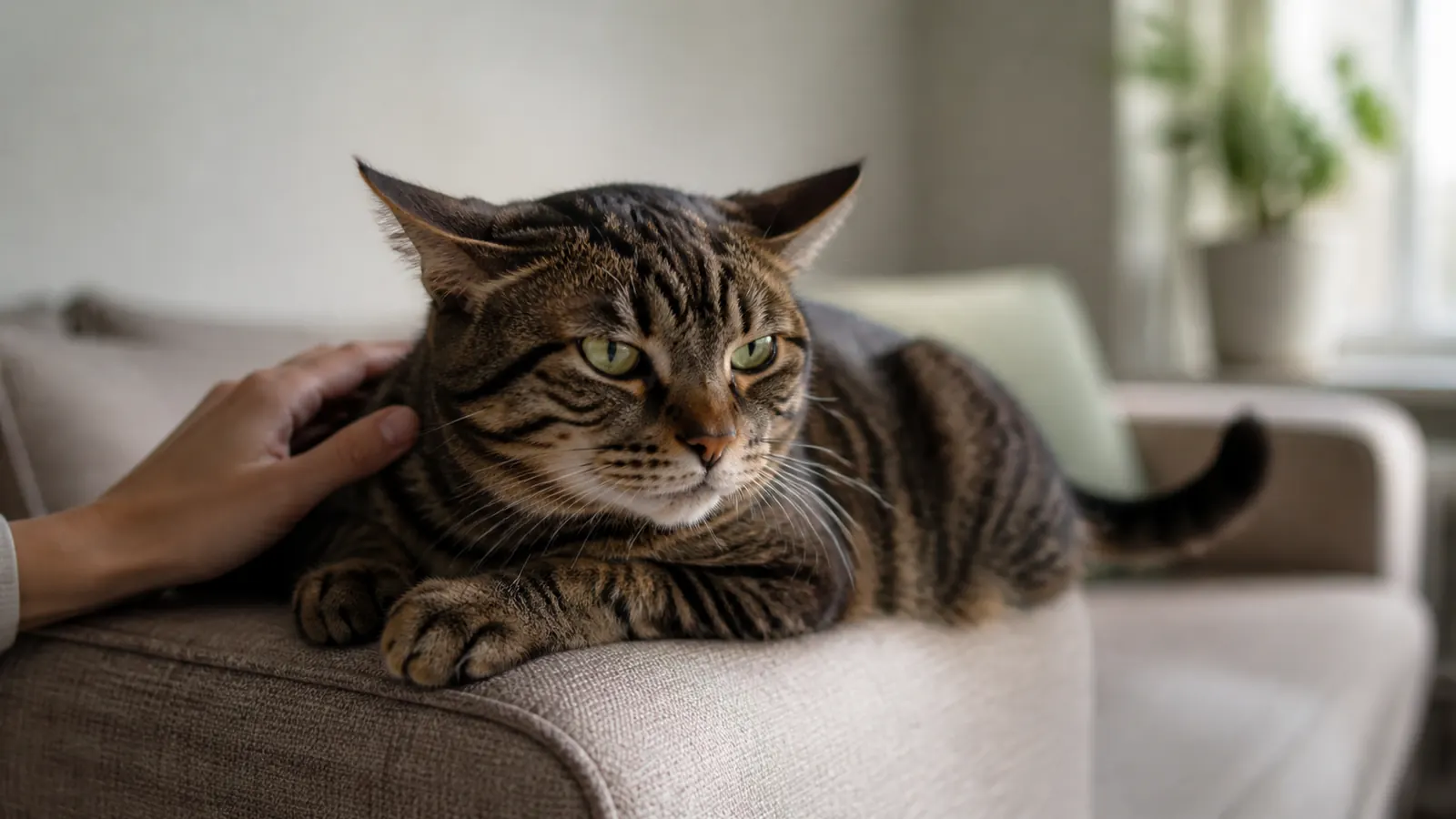
Brushing a Reluctant Cat: Build Comfort in Small Steps
Make brushing brief and voluntary, and stop when your cat is distressed. Pain or tight mats need assessment before training can solve the handling problem.
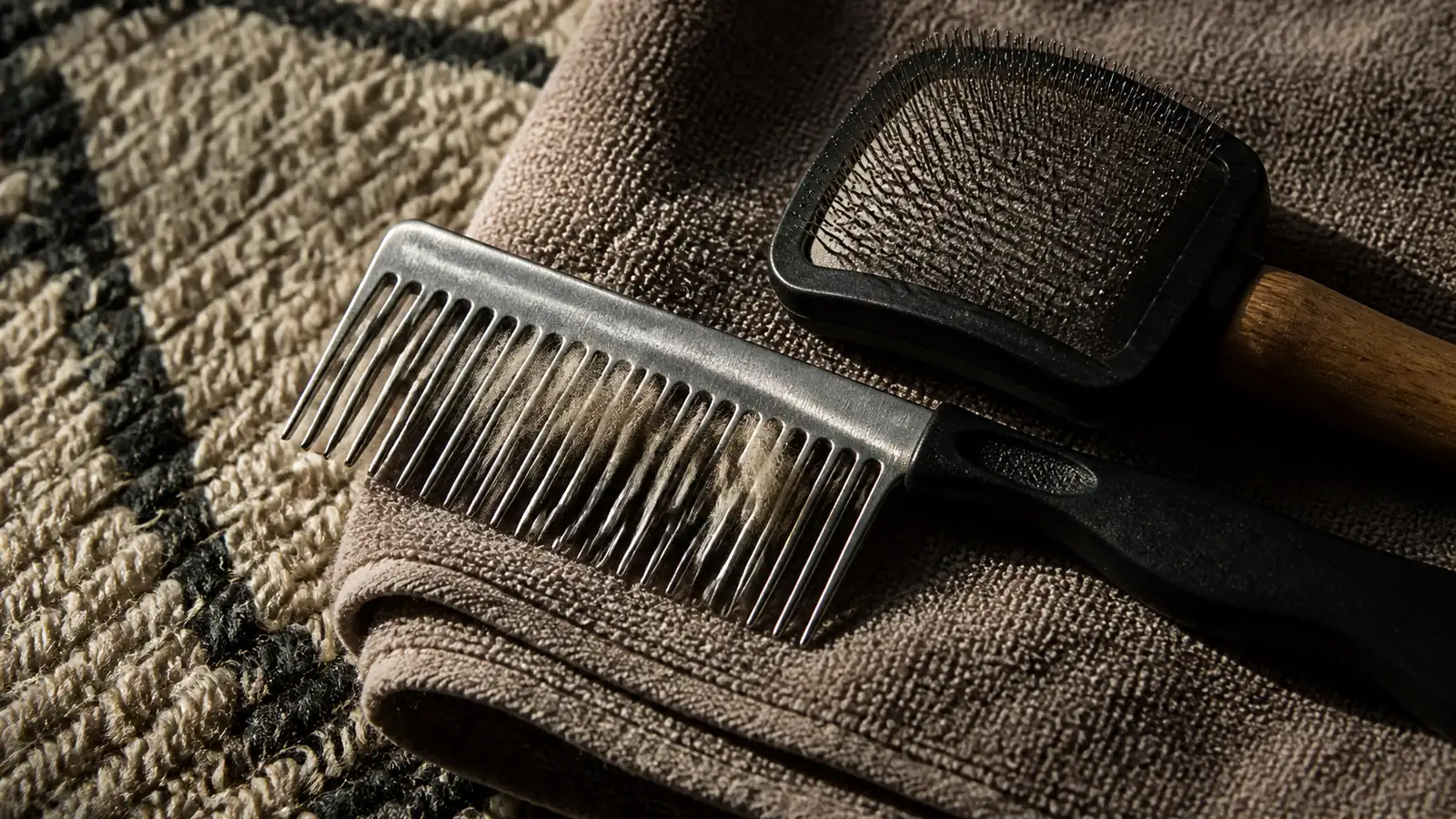
Stop brushing when your cat becomes distressed, then rebuild tolerance in smaller steps. Holding a struggling cat still until the job is finished can make the next session harder and risks injury.
A new dislike of grooming also warrants a check for pain, skin problems or mats.
Check what is making contact difficult
Notice whether the cat objects before the tool touches it, only when hair is pulled, or at one body area. Fear of restraint, a previous painful experience, sensitive skin and joint pain can produce similar-looking resistance.
Do not repeatedly test a sore spot to identify the cause yourself.
If the coat is tightly matted, the skin looks abnormal, or the cat has stopped grooming areas it once reached, contact the veterinary practice. Training cannot make a painful mat safe to pull through.
Older cats may need a more comfortable position as well as help with their coat.
Prepare a short, voluntary session
Choose a quiet place with secure footing and a way for your cat to leave. Have the tool and a small reward ready before inviting the cat over.
Start when it is calm and awake; surprising a sleeping cat with a brush is not a useful first lesson.
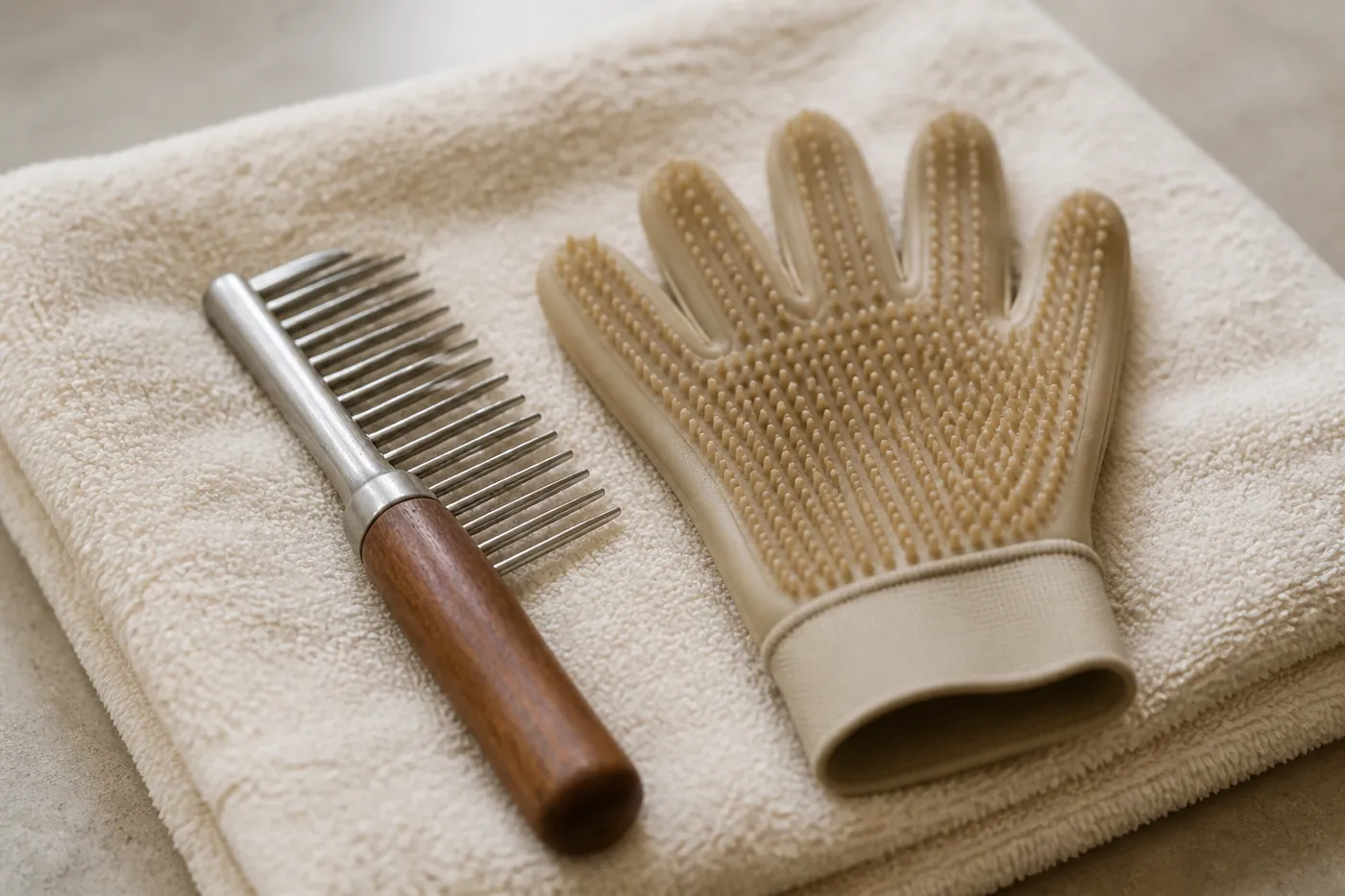
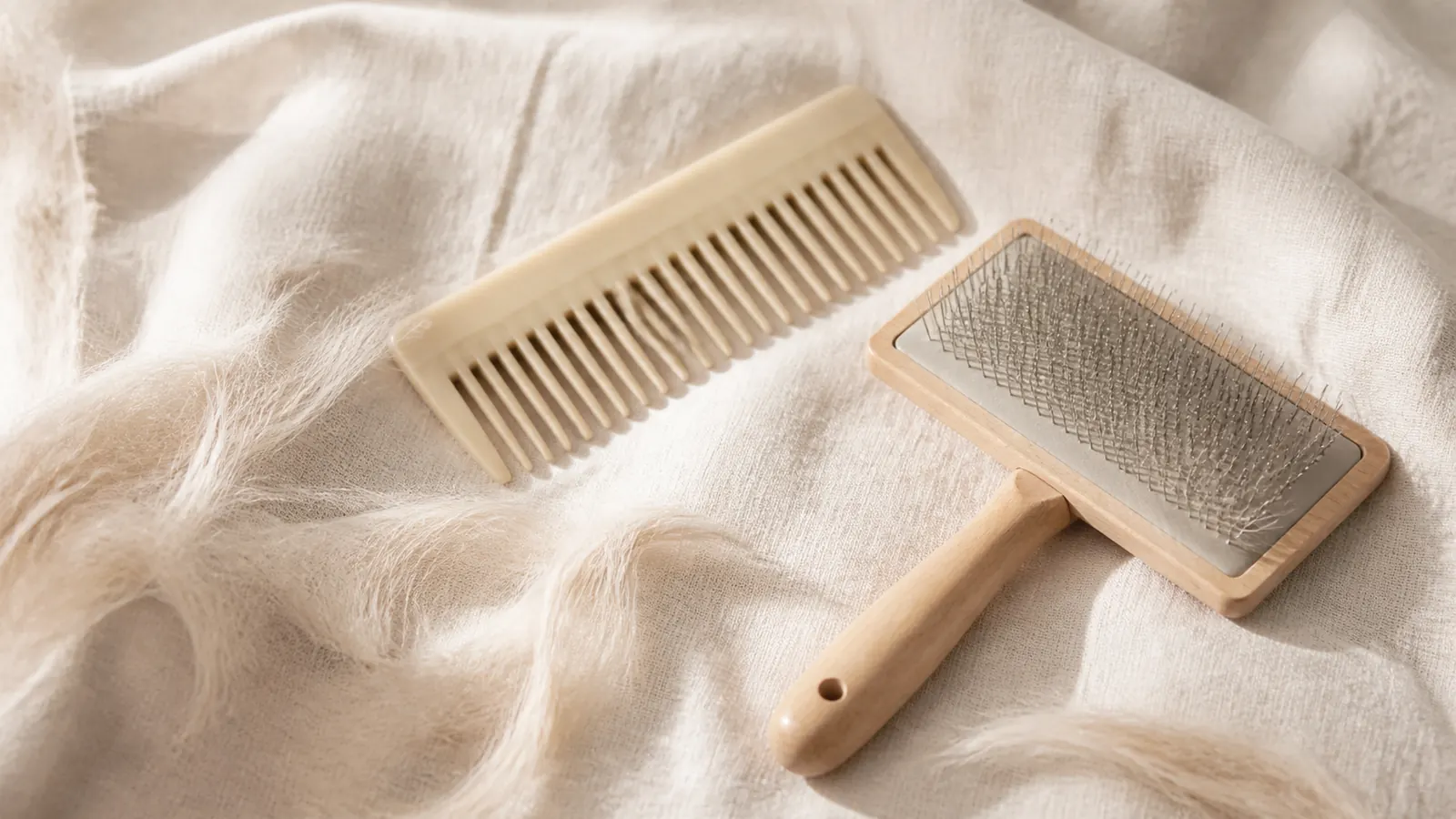
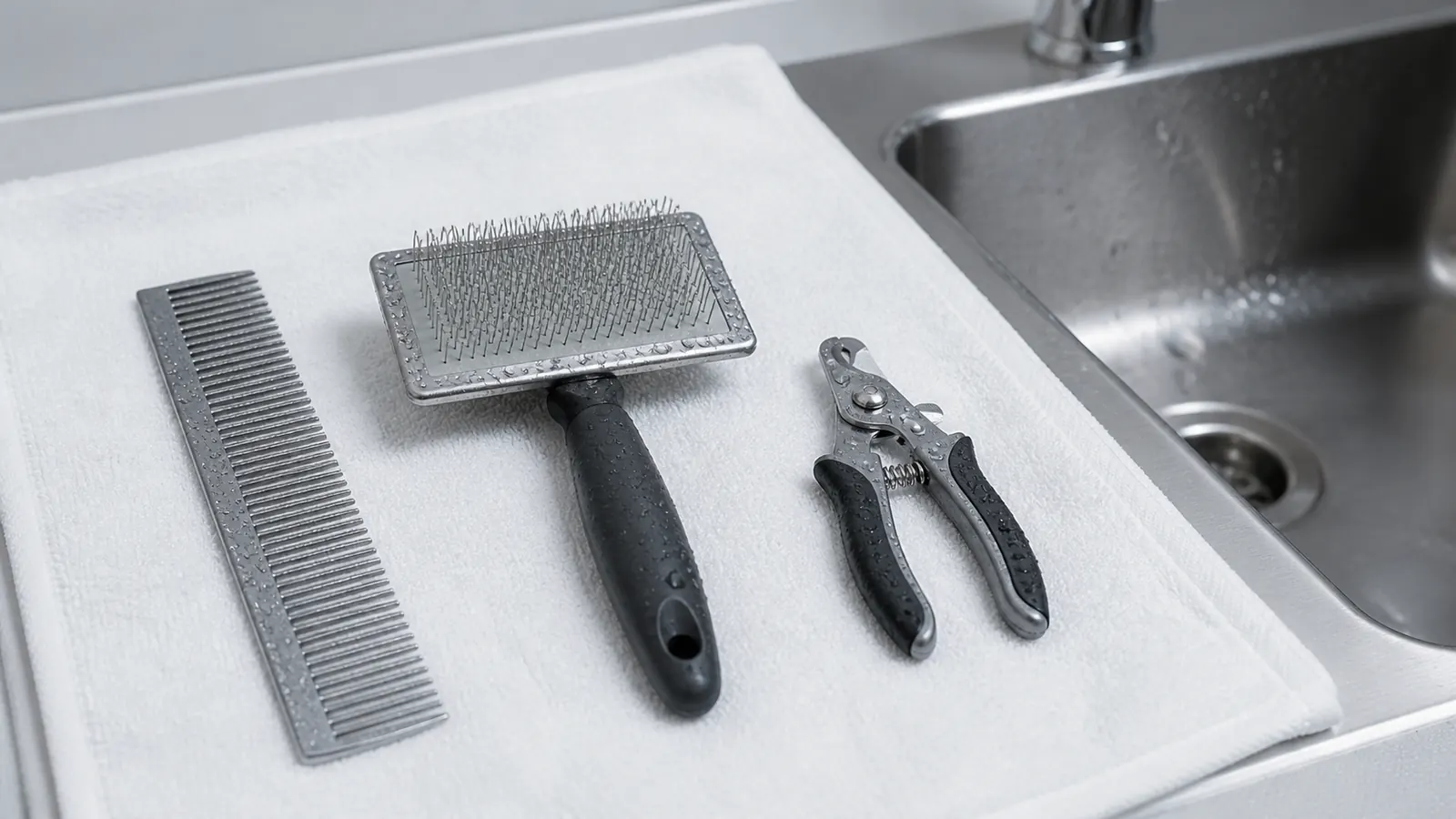
Use a tool suited to the coat and inspect it for rough teeth or damaged pins. A soft brush may be a comfortable introduction, but it will not necessarily reach tangles beneath a long coat.
The long-coat guide explains why surface smoothness does not prove the whole coat is clear.
Build one comfortable step at a time
Begin at the easiest level your cat accepts. For one cat that may mean seeing the brush nearby; another may already tolerate a single gentle stroke on the shoulder.
Pair the small step with a reward and finish before tension rises.
- Let the cat investigate the stationary tool without pushing it towards the face.
- Briefly touch a comfortable area with the back of the tool, then reward relaxed participation.
- Try one light grooming stroke in the direction of the coat and pause.
- Repeat only while the cat remains comfortable; extend the area or duration gradually.
You do not need to complete the whole sequence in one session. A cat that walks away is giving useful information about the current difficulty.
Next time, shorten the step or return to an easier one rather than restraining it to make up missed brushing.
Rewards should fit the cat's diet. Food can help create a positive association, but distracting a cat with food while continuing painful grooming defeats the purpose.
If using a marker or clicker, mark calm participation rather than waiting for the cat to endure a long session.
Read early discomfort and stop safely
Watch for stiffening, turning sharply toward the tool, skin twitching, ears moving back, tail movement or attempts to leave. These signs vary between cats and do not always appear in the same order.
Hissing, swatting or biting means the session has already become too difficult.
Set the tool down and give the cat space. Do not continue until it struggles harder on the theory that stopping rewards resistance.
The safer lesson is that small, comfortable participation ends predictably; the next session can begin below the point that caused distress.
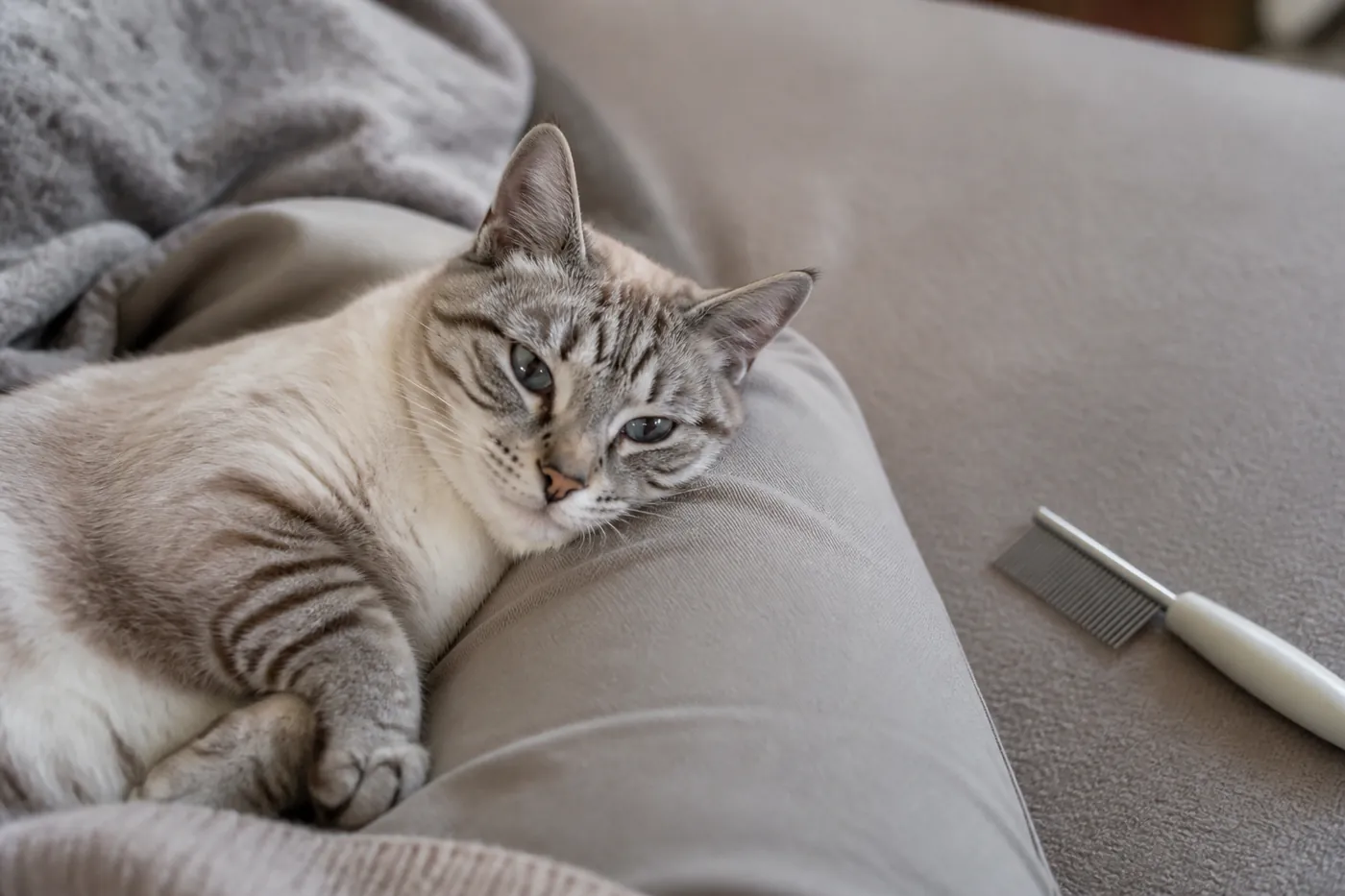
Avoid chasing, pinning or tightly wrapping a cat to finish routine brushing. Necessary medical handling is a different situation and should be planned with the veterinary team.
Keep children out of grooming sessions with a cat that may bite.
Separate training from urgent coat care
Loose coat maintenance can progress slowly, but tight mats, soiling or irritated skin may need care before training has worked. Ask the practice whether a skilled groomer, veterinary clipping or a medical assessment is appropriate.
Do not use scissors near a mat; skin can be pulled up inside it.
A veterinarian may prescribe medication to reduce fear or allow safe treatment after assessing the cat. Medication choice, timing and dose belong to that clinician, particularly when age or illness affects drug handling.
Do not give a human sedative or assume a previously prescribed dose suits a new situation.
Once the painful or urgent problem is addressed, continue brief positive sessions and a realistic maintenance routine. Progress is measured by more relaxed participation and a manageable coat, not a fixed number of days or a requirement to brush every body area at once.
Common Questions
Should I stop if my cat struggles?
Yes. Stop safely and use an easier, shorter step next time. Continuing restraint can increase fear and injury risk.
Will a grooming glove remove long-coat mats?
It may help a cat accept gentle contact, but it may not reach tangles beneath the surface. Tight mats need appropriate professional care.
Can medication help?
Sometimes a veterinarian prescribes medication for safe necessary care. The drug and dose must be chosen for the individual cat; do not use human sedatives.
Checked Against
Published 2 September 2026. Last updated .