How Do You Choose a Cat Carrier That Works at the Vet?
A secure removable-top carrier makes routine vet visits easier, and usable space, closures and transport instructions decide which one suits your cat.
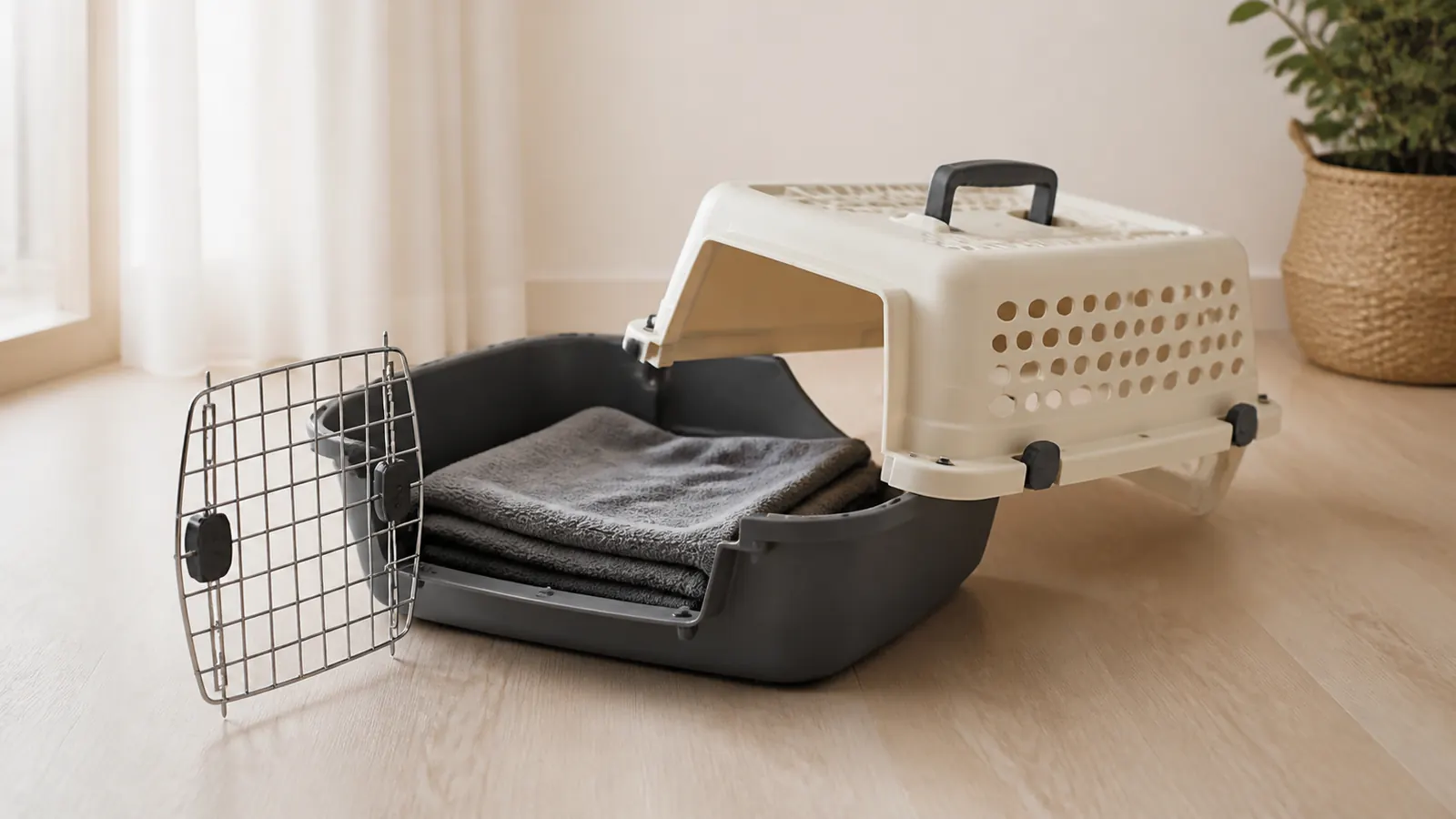
For routine veterinary trips, a secure rigid carrier with a removable top is a useful default. It lets a cat remain in the base for parts of an examination, is easy to clean and does not sag when carried. Fit, fastenings, ventilation and the manufacturer's transport instructions decide whether a particular model works.
Why the removable top helps
A frightened cat may stay at the back of a carrier rather than walk through a front opening. Removing the top can allow the veterinary team to work around it on familiar bedding instead of pulling or tipping it out.
The top and front door should open securely and predictably, without loose parts falling into the cat's space.
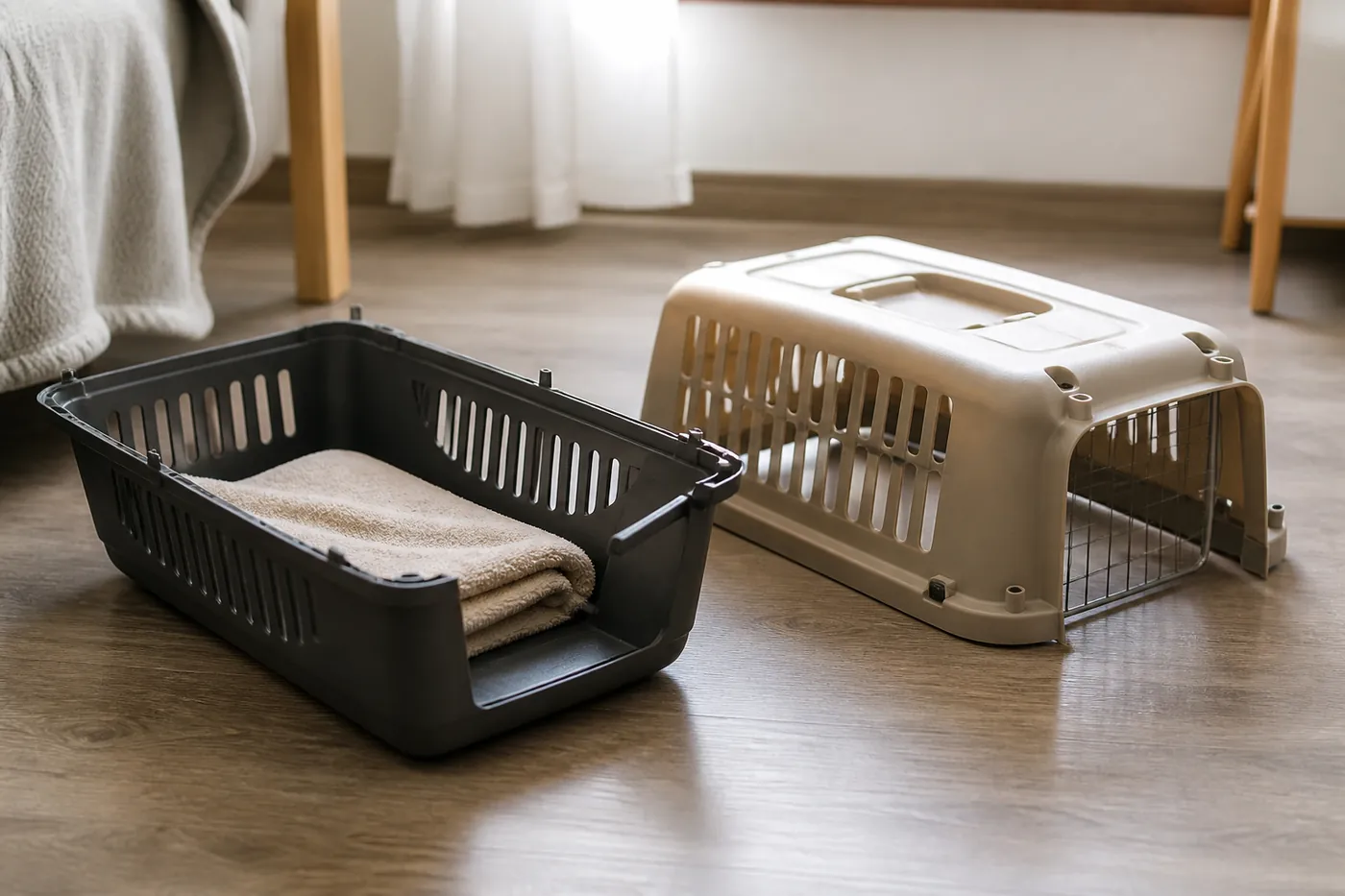
Try the fastenings empty and learn how the halves refit. Ease of opening matters, but security comes first: a single convenient latch is not automatically better than several well-designed fastenings. The door lock, seams, handle and weight limit deserve the same scrutiny.
Measure the usable space
Your cat should be able to stand normally, turn around and lie comfortably. Measure the interior rather than relying on an external size name. Check the entrance too, particularly for a large cat, and allow room for bedding without obstructing ventilation.
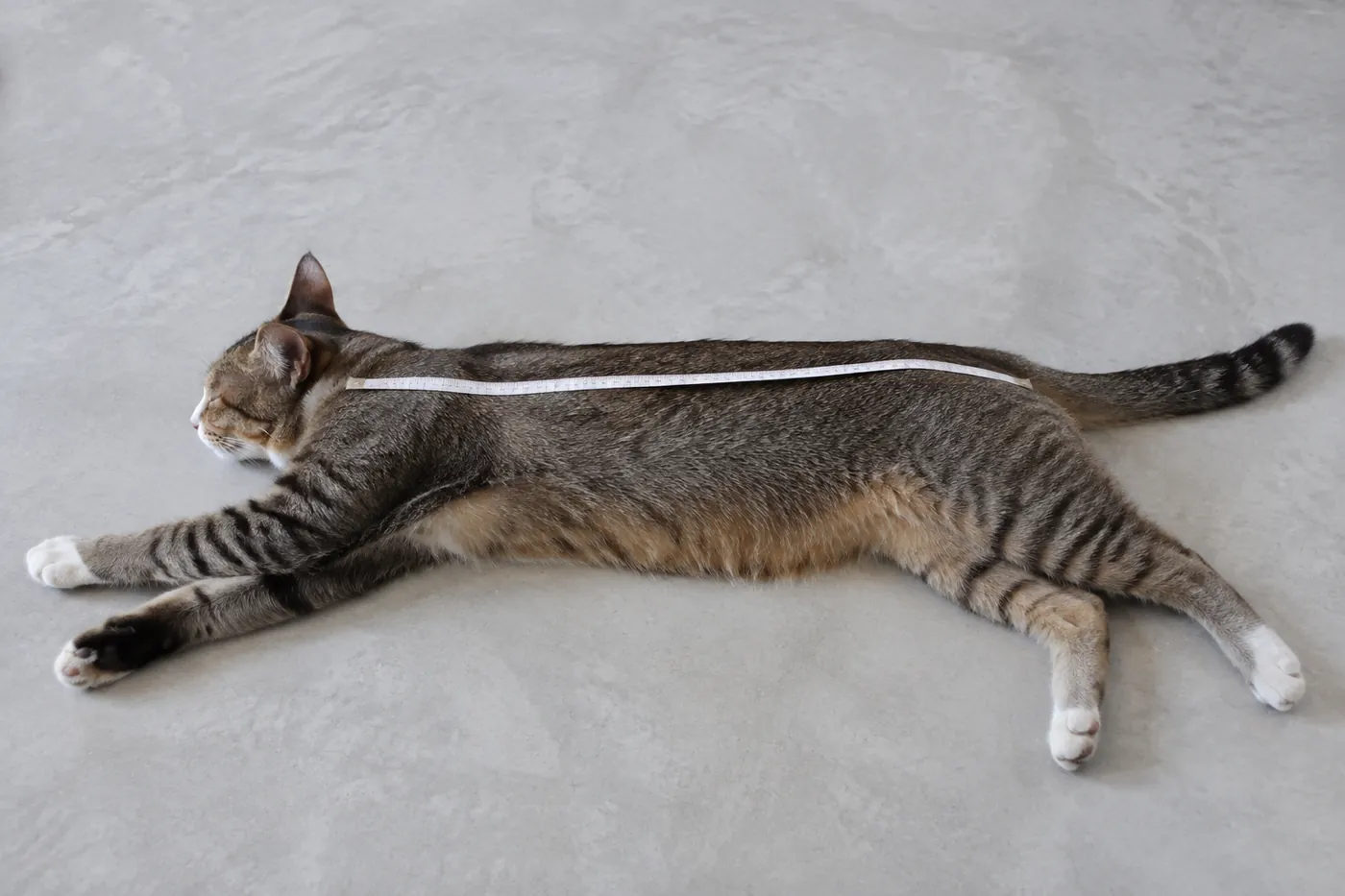
A large Maine Coon may need a different size from a smaller adult. A growing kitten will eventually need adult space.
Avoid both cramped carriers and an oversized container in which the cat cannot rest securely; stabilise the carrier according to its instructions rather than relying on a snug fit to protect it in a collision.
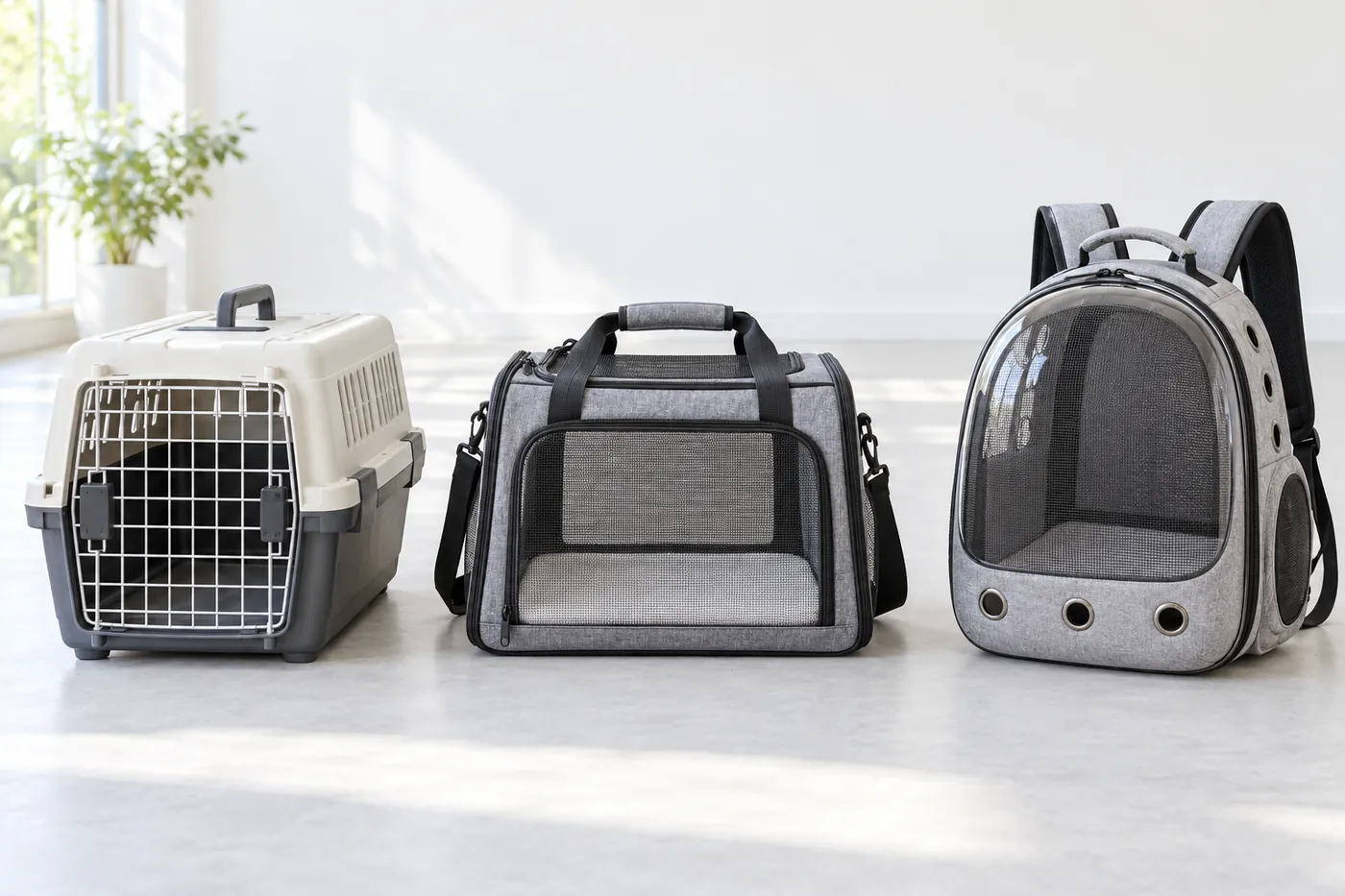
Hard, soft and backpack designs
| Design | Check before choosing |
|---|---|
| Rigid removable-top carrier | Secure fastenings, washable base, usable space and safe carrying |
| Soft carrier with a firm base | Whether it holds its shape, closes securely and can be cleaned adequately |
| Front-opening carrier | How the cat and veterinary team can access it without force |
| Backpack or enclosed capsule | Posture, usable space, ventilation, movement and whether the cat is comfortable |
Soft carriers differ: some have a firm structure and removable washable lining, so they should not all be described as collapsing or impossible to clean.
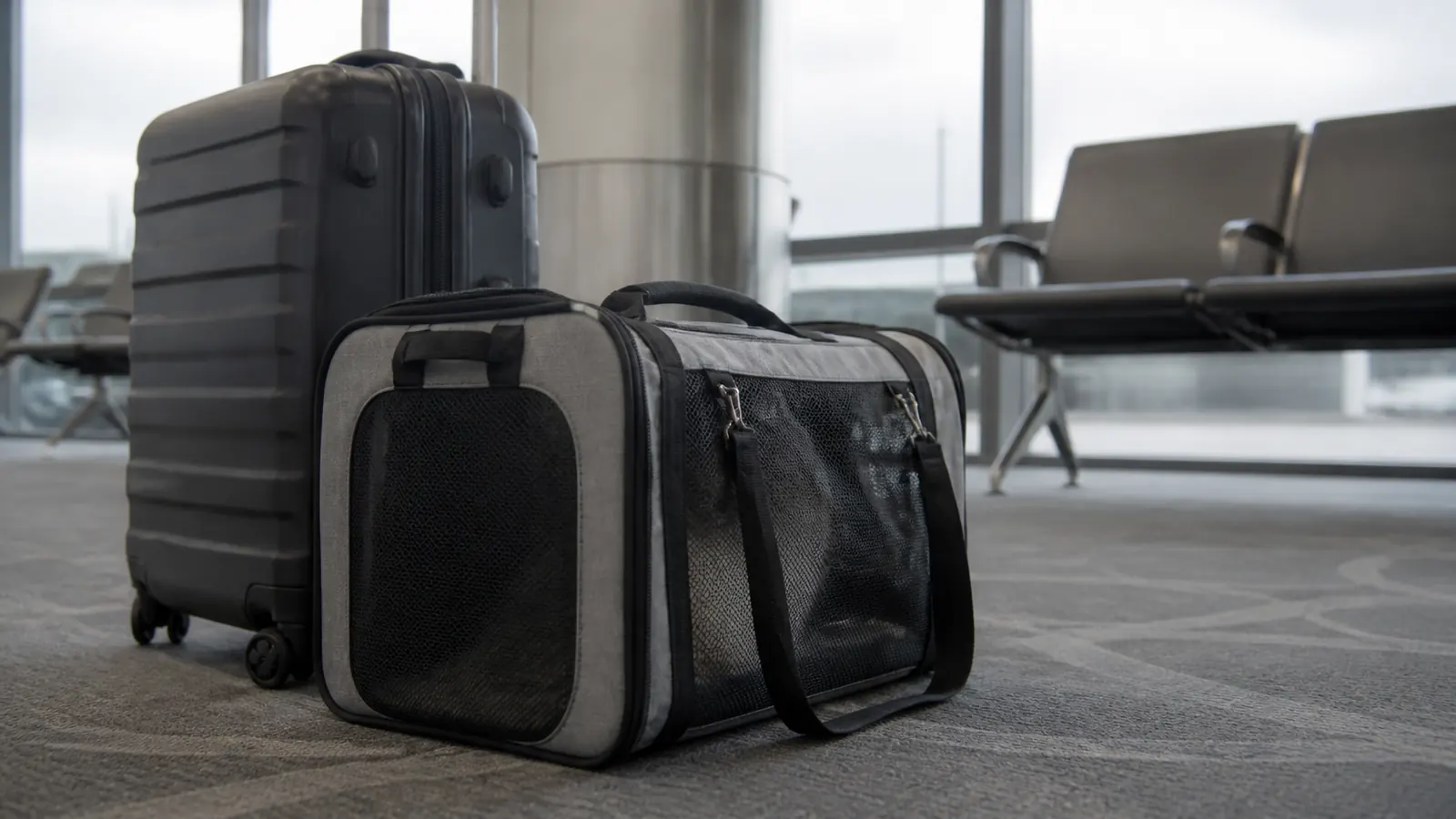
Air travel adds its own fit and approval rules, set out in airline carrier guidance and decided in the end by the actual airline.
Make it familiar before a journey
Leave the carrier accessible at home with the door secured open and comfortable bedding. Let the cat explore voluntarily, and place treats or meals near or inside it at a distance the cat accepts.
Do not close the door on the first successful entry.
- Reward comfortable investigation and voluntary entry.
- Practise brief door closure only while the cat remains relaxed.
- Build gradually to lifting and carrying with the base supported.
- Practise the next travel step in small comfortable stages.
- Return to an easier stage if the cat becomes distressed.
Marker training can help reward entry. A cat distressed by travel may also need a veterinary plan for nausea or anxiety. Neither buying a different carrier nor repeated frightening car rides will resolve every cause.
Bedding and preparation
Line the base with familiar bedding over an absorbent pad and carry clean replacements. Keep air vents clear.
If using a cat pheromone product, follow its directions and drying interval; never spray the cat directly or assume all products are interchangeable.
Ask the practice about food and medicines before travel, especially for a kitten, diabetic cat or procedure requiring fasting. A blanket rule to withhold food from every travelling cat is inappropriate.
Loading when training is not enough
Prepare the carrier in a quiet secure room before approaching the cat. Where safe, a top opening may allow supported placement rather than pushing through a front door.
A towel can help some cats, but stop if handling escalates or breathing is affected.
Do not lift an adult cat by the scruff, pull it out by a limb or rely on gravity to drop it into a carrier. Call the practice for handling advice if there is a risk of injury.
In an emergency, explain the cat's condition as well as the difficulty getting it into the carrier.
Securing it in the car
Use the carrier and vehicle manufacturer's instructions for placement and restraint. A belt threaded through an ordinary carry handle is not automatically a tested restraint, and a footwell does not guarantee crash protection.
Choose a compatible securing arrangement that prevents movement during normal travel and keeps the cat away from active airbags.
Support the base when carrying, keep the car ventilated and never leave a cat in a parked vehicle. A light cover may reduce visual stimulation if it does not block airflow.
Do not open the carrier in a moving vehicle or an unsecured outdoor place.
For longer journeys, plan access to water and toileting appropriate to the cat, route and veterinary advice. Carry contact details, needed medication and a spare pad.
Transport cats separately unless the responsible veterinary or transport professional has a specific reason for another arrangement.
Common Questions
Where should the carrier go in the car?
Follow the carrier and vehicle instructions for a compatible securing arrangement. Do not assume an ordinary handle is a safe belt attachment or that a footwell guarantees crash protection.
Are soft carriers always unsuitable?
No. Check whether the base stays firm, the closures are secure and the lining can be cleaned. A rigid removable-top carrier is a useful default for vet visits.
What if my cat will not go in?
Prepare a quiet room and ask your practice for safe handling advice. Train voluntary entry between trips; do not scruff, pull by a limb or drop the cat into the carrier.
Checked Against
Published 5 March 2026. Last updated .