What Is an American Shorthair, and What Separates It From a Shelter Cat?
The cat in a shelter listing and the cat with a four-generation pedigree can be the same animal to look at. Working out what you are actually paying for is most of this decision.
- Origin
- North America, from the short-haired working cats settlers brought over on ships
- Coat
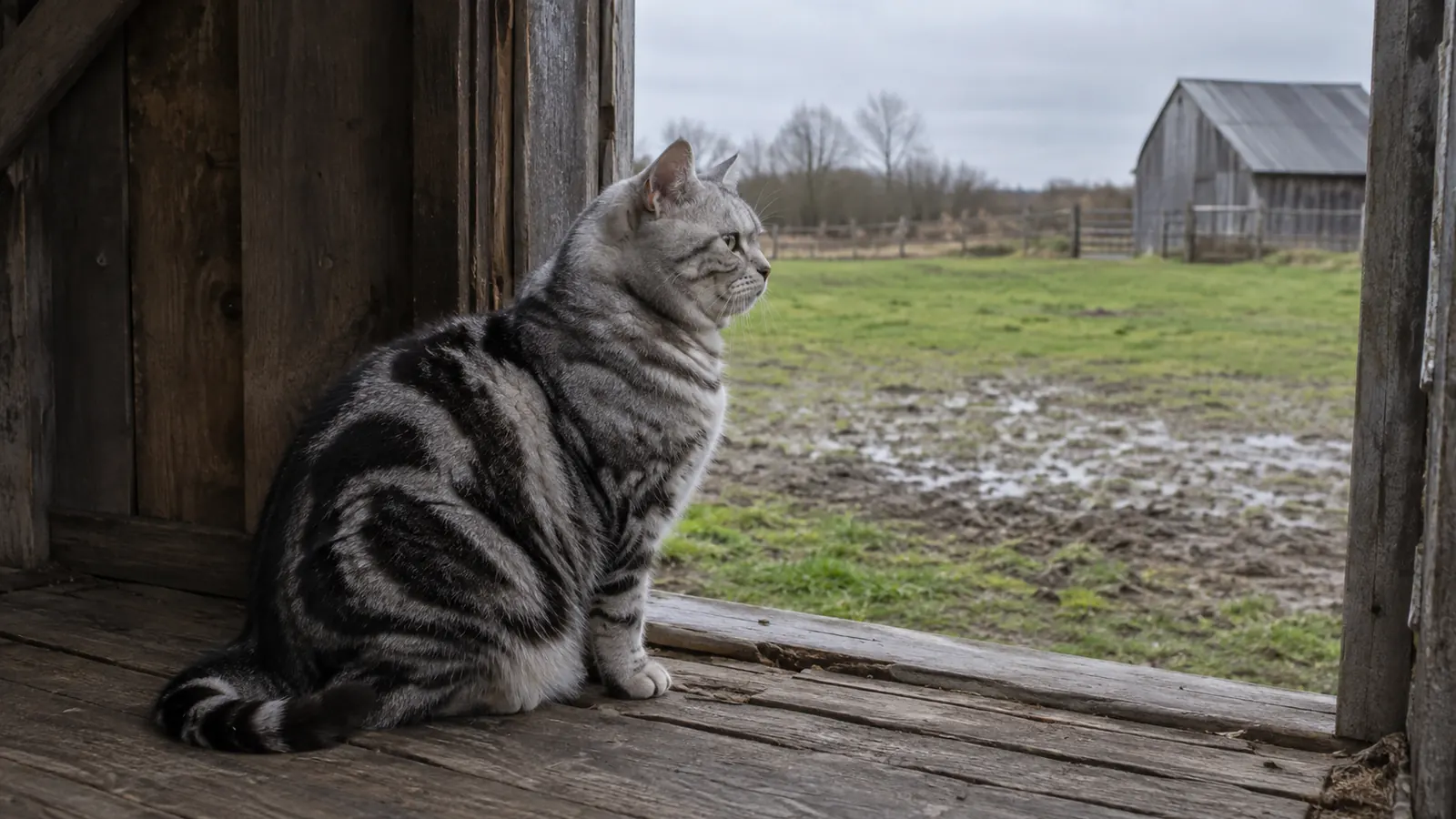
- Short, thick, even and hard, dense enough to shed weather rather than to feel soft
- Size
- Medium to large, strongly built and slightly longer than tall
- Typical weight
- The standard sets no weight, and warns against chasing size
- Life expectancy
- No published breed figure. The quoted 15 to 20 years has no study behind it
- Activity level
- Moderate to low. The standard itself calls the breed relatively sedate
- Grooming
- Low. A weekly comb is enough for the dense coat
- Suits
- Families, other animals, and anyone prepared to measure the food
An American Shorthair is a pedigreed breed selected from the short-haired working cats that came to North America with early settlers, and a cat in a shelter listing can look exactly like one. Working out what the pedigree adds, when appearance cannot show it, is most of this decision.
How do you tell one from an ordinary shorthaired cat?
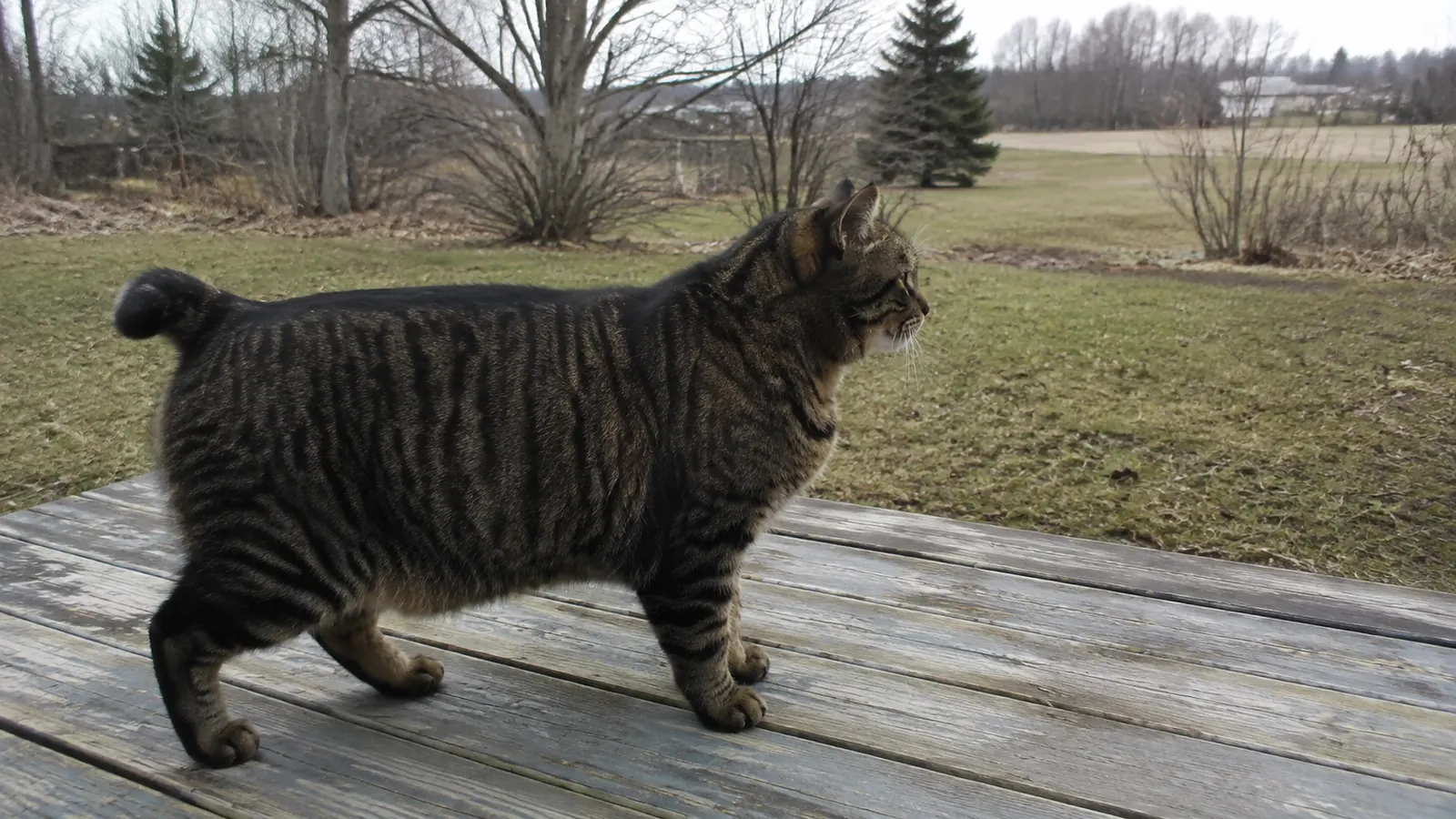
Appearance cannot do it. There is no marking, build or feature that separates an American Shorthair from a random-bred short-haired cat with any reliability.
The difference is documentary. An American Shorthair is a pedigreed breed with registered parents, and a domestic shorthair is any short-haired cat of unknown ancestry, which is a description rather than a breed.
The European Shorthair is another separately standardised pedigree breed, not a regional synonym for an American Shorthair or any short-haired cat found in Europe.
- A pedigree from a recognised registry naming both parents
- Registration numbers you can check with the registry itself
- The breeder's registered cattery name
- A direct question about the parents' heart scans, and the dates on them
The reason this matters is commercial rather than snobbish. The name gets used loosely on shelter listings and sales adverts alike, so a buyer paying a pedigree price on the strength of a photograph may be buying an ordinary cat at a premium.
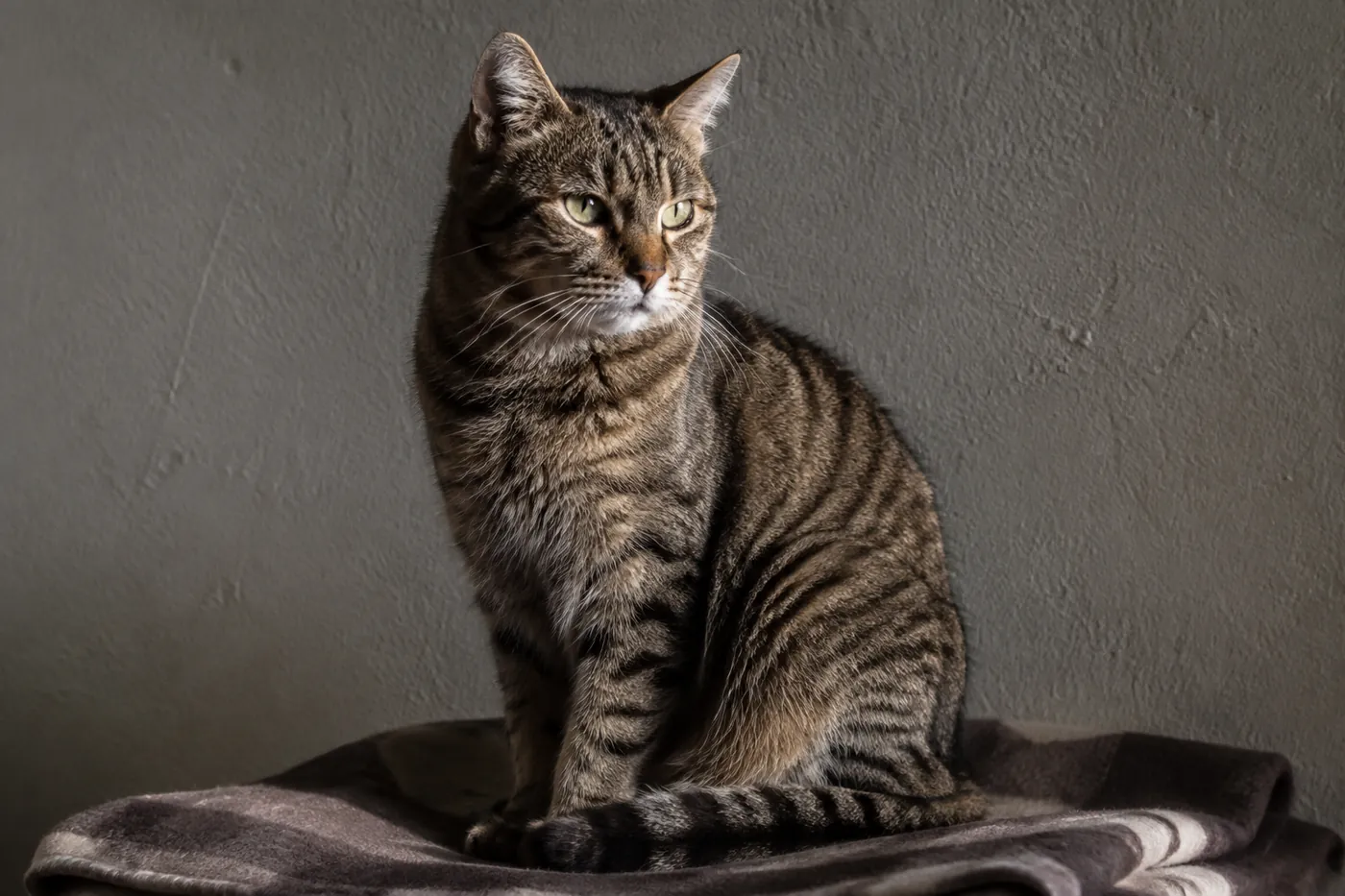
None of that makes a cat without papers a lesser animal. A shelter describing a cat as an American Shorthair is almost always describing a coat, and it is the seller charging for the name who needs checking. A listing for an American Longhair describes a coat in the same way, since neither TICA nor CFA lists that name as a breed.
Why do they look the same?
The pedigreed breed was developed from the wider domestic shorthair population, which explains their shared appearance.
Short-haired working cats arrived in North America with early settlers, on ships that carried cats to keep rodents out of the stores. Those cats spread, bred freely for three centuries, and became the ordinary cat of the continent.
The breed was then selected out of that population rather than developed away from it. It was shown as the Domestic Shorthair before receiving the American Shorthair name.
The name helps distinguish a registered breed from the general description of a shorthaired domestic cat; a name change alone did not establish its ancestry.
The genetics still show it. A survey of breeds and random-bred populations measured average heterozygosity at 0.65 for random-bred cats and 0.51 for purebreds, and found that breeds carry less overall diversity than the free-breeding cats around them.
One genome comparison also found a difference, although it cannot rank whole breeds from single reference animals. The team that assembled the first American Shorthair genome noted that the breed carries more heterozygosity than the Abyssinian, whose own reference genome came from a heavily inbred line.
- Random-bred cats
- Average heterozygosity 0.65
- Purebred cats
- Average heterozygosity 0.51
- Genome comparison
- The sequenced American Shorthair had more heterozygosity than the sequenced Abyssinian
- The Abyssinian reference genome
- Came from a heavily inbred line, which is why it sits low
- What the figure describes
- A population, never the individual kitten in front of you
That gap is what you would expect from a cat drawn out of a large open population rather than built from a handful of founders.
Two cautions belong with the figure. Heterozygosity describes a population and predicts nothing about the individual kitten in front of you, and selection has still narrowed this breed relative to the cats it came from.
What does the pedigree actually buy?
The pedigree buys three things, and health is not one of them.
It records the parents and grandparents, which makes a line traceable. That is the mechanism behind everything else, because a traceable line is what lets you ask about screening results and about what the cats in it died of.
It makes the adult more predictable. A kitten bred to a standard will land somewhere near a known size, coat and temperament, which an unknown kitten will not reliably do.
And it identifies the breeder. A registered cattery name attaches a reputation to the litter in a way an anonymous advert does not.
- Traceability
- Parents and grandparents recorded, so a line can be asked about
- Predictability
- Size, coat and temperament land near a known standard
- Accountability
- A registered cattery name attaches a reputation to the litter
- Health
- Nothing. Registration is genealogical and certifies no condition
- Screening results
- Only where the breeder ran them and will show them
What it does not do is certify anything about the cat's health. Registration is a genealogical record, and a pedigree from a breeder who screens nothing is a document with nothing recorded in it.
So the pedigree is worth paying for when you need predictability or a line you can interrogate. Predictability matters most to a buyer who needs a known temperament rather than a known look, which is a narrower group than the market implies.
Which heart screening matters?
The condition is hypertrophic cardiomyopathy, and because no American Shorthair mutation is known, the screen is an echocardiogram rather than a DNA certificate.
Familial HCM has been reported in several breeds, including the British Shorthair, the Persian and this one. Familial means it clusters in related cats, which is the pattern that usually precedes finding a gene.
The gene has not been found. No HCM-associated mutation has yet been identified in these breeds, so there is nothing for a laboratory to test for.
| Breed | Named variant | DNA test available | What screening actually means |
|---|---|---|---|
| Maine Coon | MYBPC3 A31P | Yes | A genotype, read alongside a scan |
| Ragdoll | MYBPC3 R820W | Yes | A genotype, read alongside a scan |
| American Shorthair | None identified | No | An echocardiogram, and nothing else |
DNA screening exists for the Maine Coon and the Ragdoll because named variants were found in them, and the absence of a test here is an absence of a discovery rather than an absence of risk.
So the useful question to a breeder is when each parent was last scanned by echocardiography, and by whom, since echocardiography remains the primary screening tool wherever no mutation is known. A clear scan describes that cat on that day, because HCM can develop later in life, which is why a date matters as much as a result.
How big is an American Shorthair?
The breed is medium to large, and the standard is careful about how it says so.
It calls the breed strongly built, well balanced and symmetrical, with proportions slightly longer than tall rather than square. It also warns explicitly against sacrificing quality for the sake of size, which is a standard telling breeders not to chase bulk.
- Build
- Strongly built, well balanced and symmetrical
- Proportion
- Slightly longer than tall, not square
- Size
- Medium to large, with no weight written into the standard
- Coat
- Short, thick, even and hard in texture
- Colours
- More than a hundred combinations, with silver and brown classic tabby the most familiar
- Heart screening
- Echocardiography, because no DNA test exists
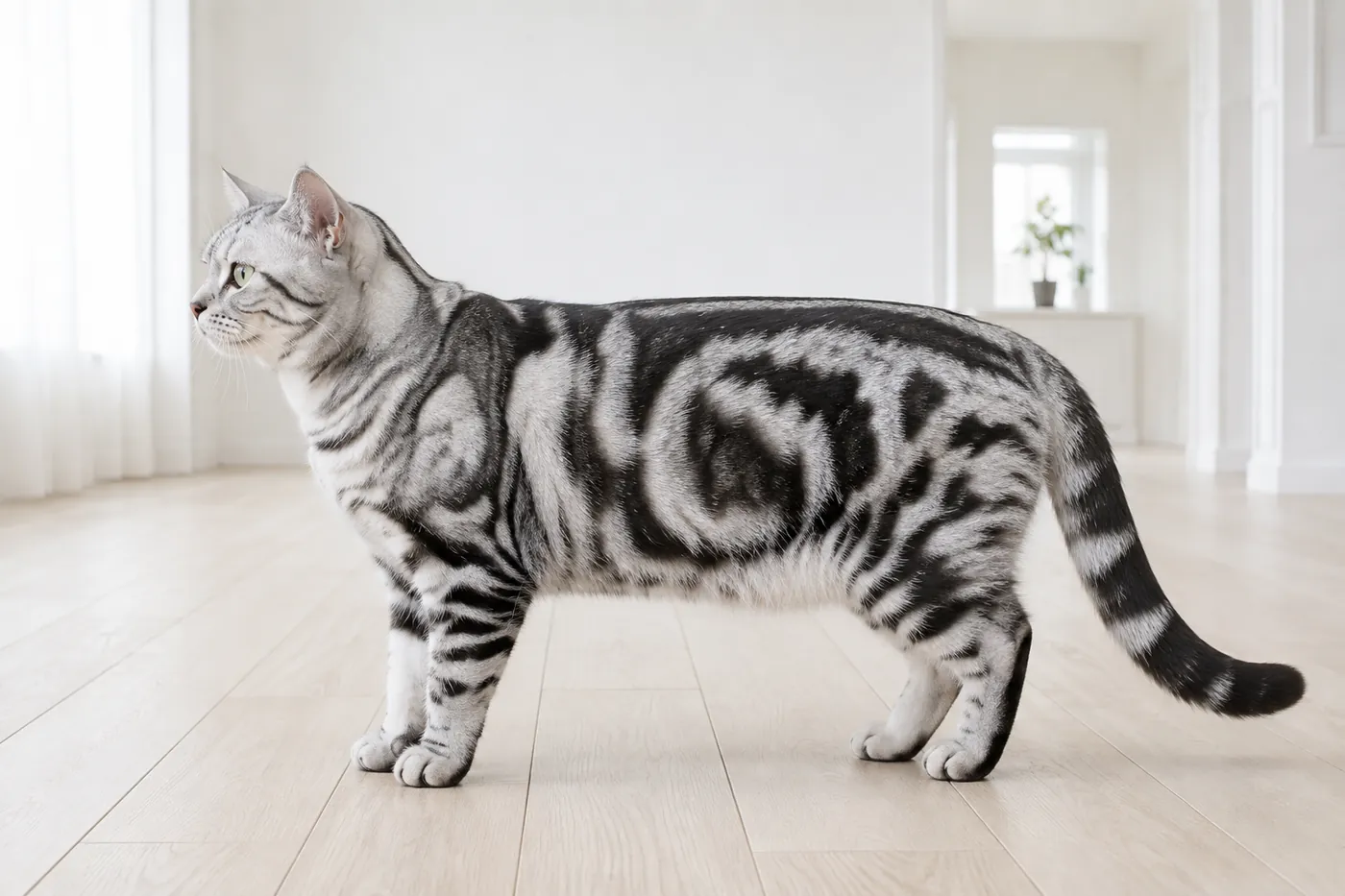
Males sit noticeably above females, so any single average figure describes neither. The impression of a big cat comes from the muscle and bone rather than from height at the shoulder.
That matters in two ways. Ordinary equipment fits a cat of this build, and a heavy one is more often overweight than large, which the section on weight deals with directly.
What is the coat actually for?
The coat was built for weather, and it still feels like it.
The standard describes it as short, thick, even and hard in texture, and says it should be dense enough to protect from moisture, cold and superficial skin injuries. That is a specification for working equipment rather than for a lap cat.
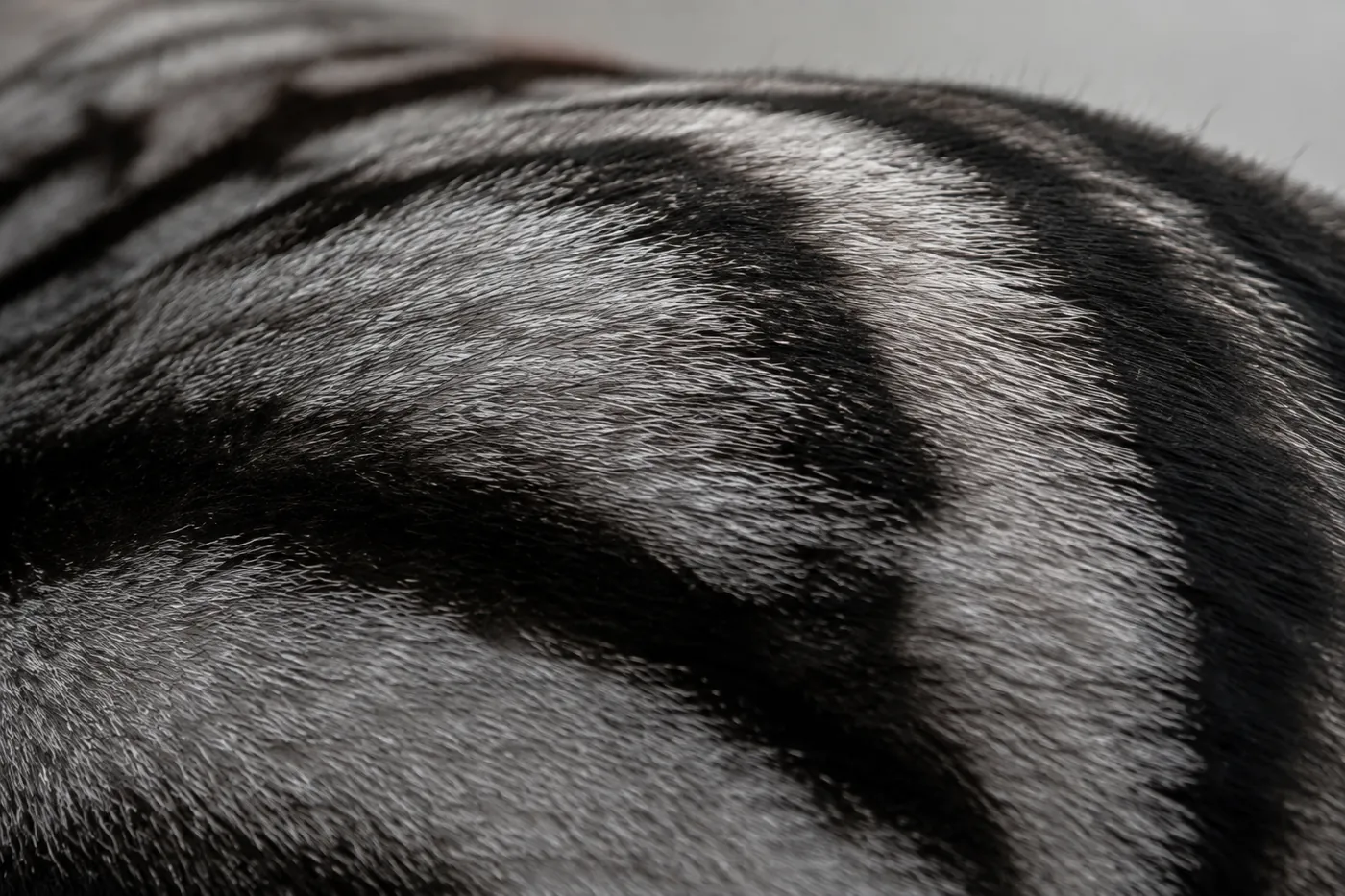
The practical consequence is a coat that surprises people who touch it expecting plush. It is dense without being soft, and it lies flat and even instead of standing up.
Grooming is correspondingly small. A weekly comb keeps the shedding manageable, and the dense coat sheds steadily all year rather than dropping in seasonal clumps.
The same coat in a crimped form belongs to the American Wirehair, which is built on this breed's type and uses it as its only permitted outcross.
Density is not the same as low shedding, and none of this makes the breed a good choice for someone reacting to cats. The allergen lives in saliva and skin rather than in coat length.
What is the temperament like?
The standard's own word is sedate, and it is worth taking at face value.
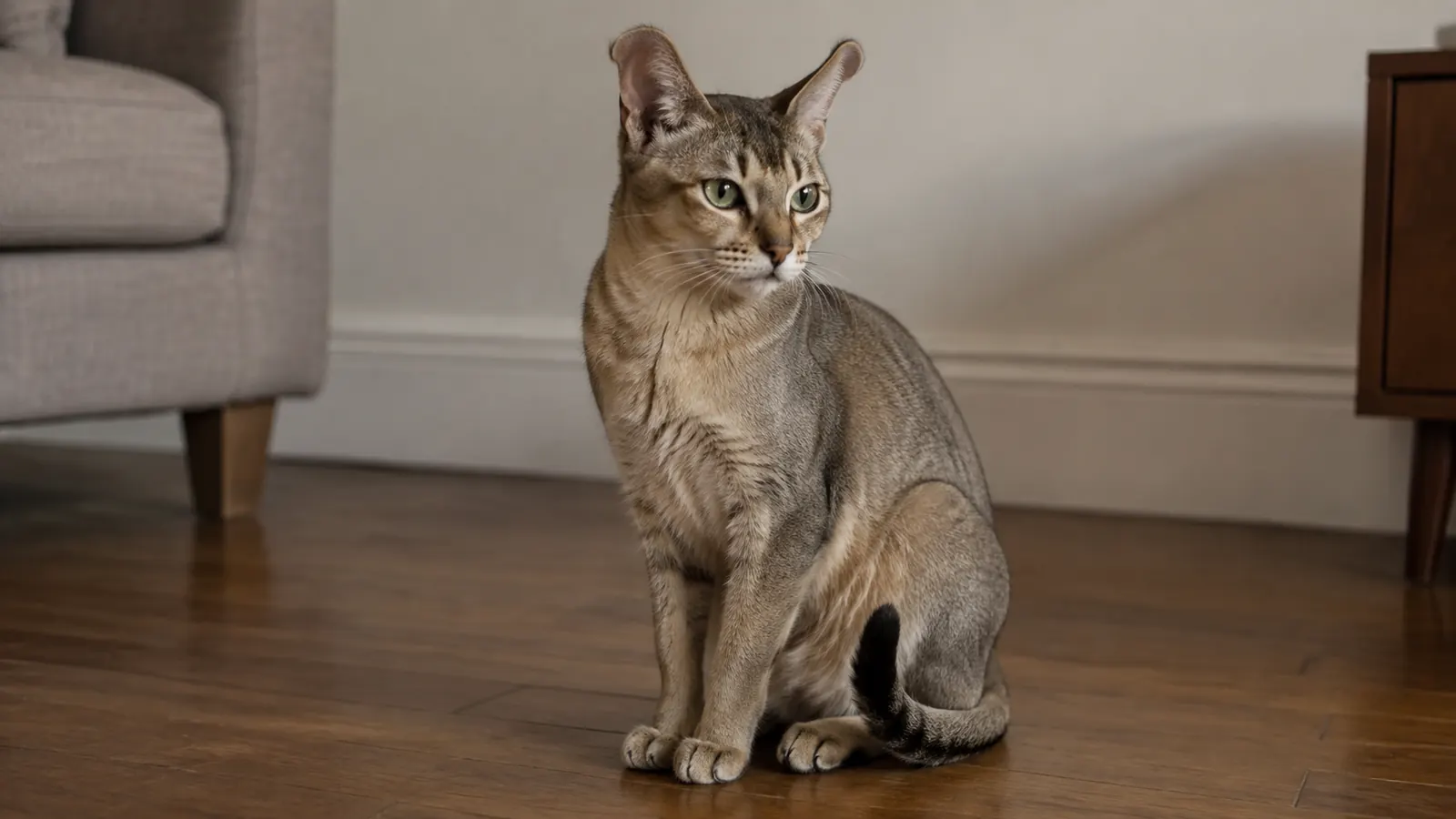
Abyssinian and American Shorthair cats can both be affectionate and trainable, but the Abyssinian usually asks for more climbing, novelty and daily participation.
It describes the breed as easygoing and relatively sedate, with an affectionate nature, and calls it easily trainable and very tolerant of other animals and small children. That is an unusually unglamorous set of claims for a breed standard, and it is broadly what owners report.
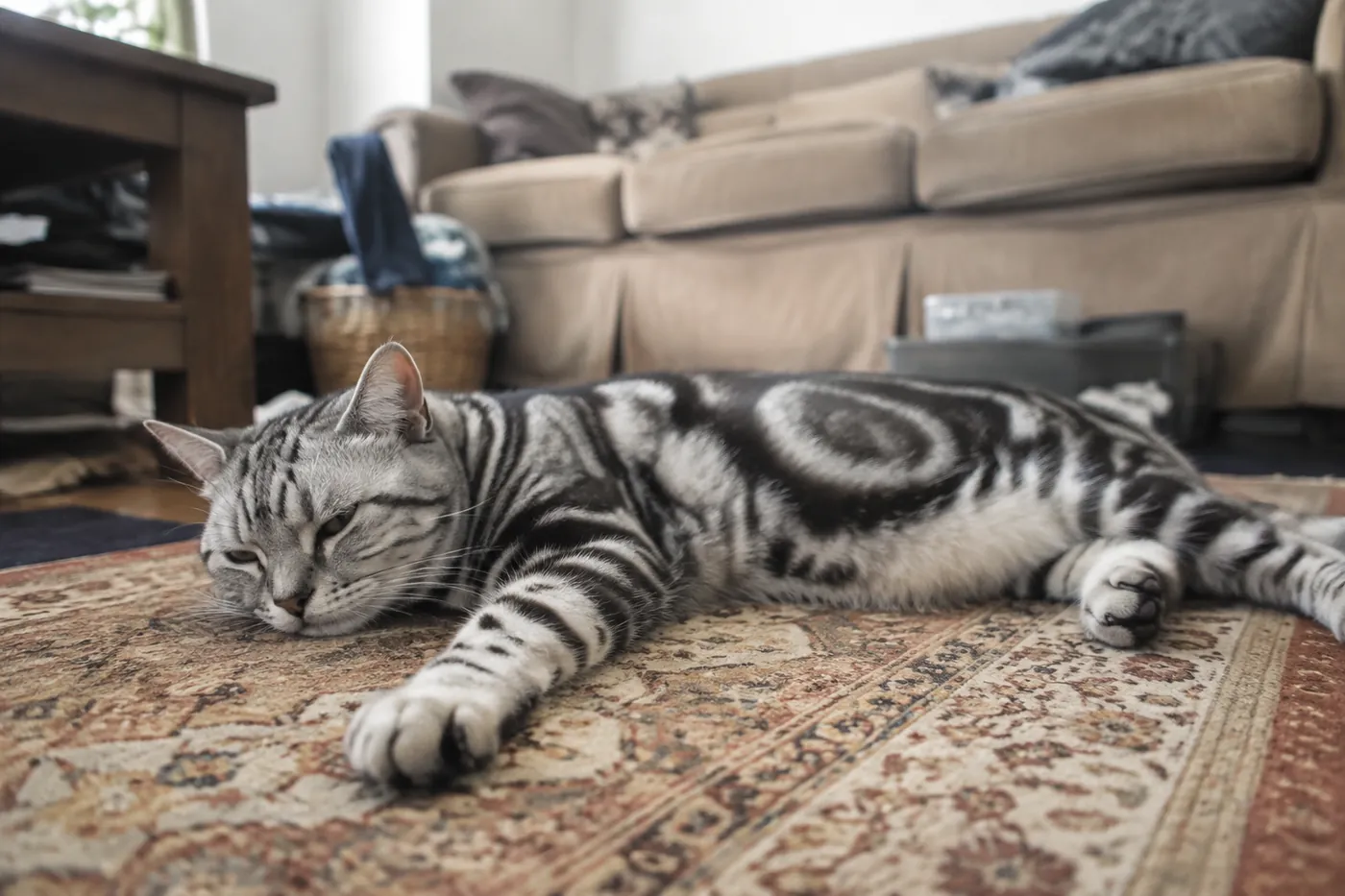
The breed is often described as adaptable, but visitors, noise, dogs and children can still cause stress. How an individual copes shows only when you meet it, and places where it can withdraw without being followed matter even in a calm breed.
The working history left something else behind. The standard credits it with patience, intelligence and a strong hunting instinct, and a cat with hunting drive and no outlet finds one, so even this calm breed needs daily hunting play matched to its exercise needs by age.
Why do they put on weight?
Two reasons compound each other: a cat that moves less still eats the same, and this one is built to hide the result.
A breed the standard itself calls relatively sedate burns less across a day than an active one on an identical ration. Nothing about the cat's appetite changes to match.
The build then conceals the result. A strongly built frame already reads solid, so several hundred grams disappear into an outline that looked substantial to begin with.
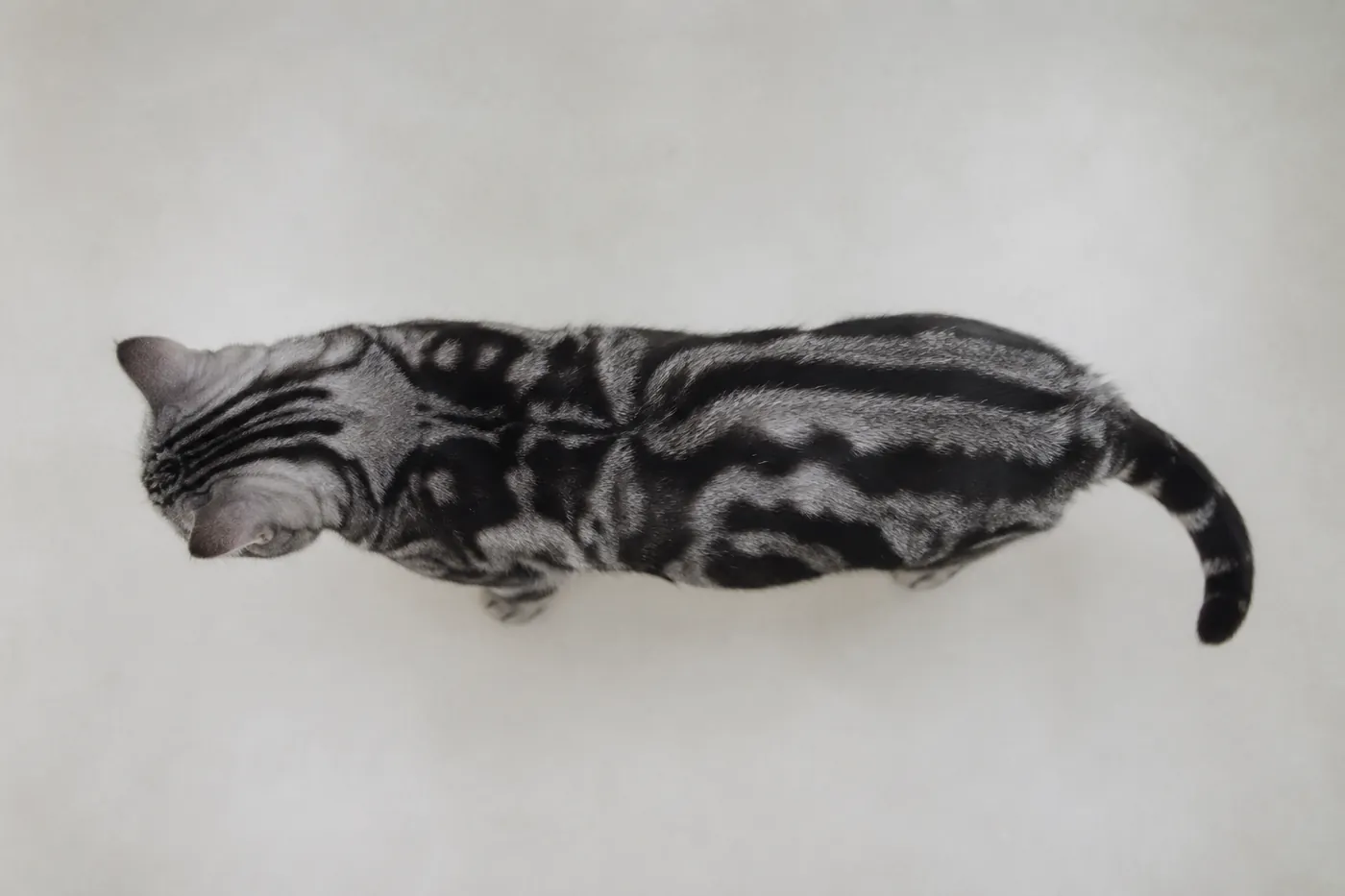
Timing is predictable. Neutering lowers the daily requirement while the portion usually stays the same, so how much to feed needs recalculating at that point rather than a year later.
If the numbers have drifted, working out the daily calories from the cat's target weight is a better starting point than the label on the bag. A genuinely solid cat exists, so this is a check rather than an accusation.
How long does one live?
The 15 to 20 years quoted almost everywhere is not established by the studies cited here. The largest UK life-table study reported a separate figure for only twelve breeds, and the American Shorthair was not among them.
What that study did measure is more useful. Body weight and neutering status were both associated with how long a cat lived, which puts the lever back in the owner's hands rather than in the breed's. Watching weight, and watching for the signs of ageing, does more for an individual cat than any breed statistic would.
Is one good with children and other pets?
Yes, and this is one of the few breed questions with a straightforward answer.
The standard calls the breed very tolerant of other animals and small children, and the temperament that produces that tolerance is the same one that makes the cat easy in a busy house.
The condition is a retreat. Tolerance still rests on early exposure rather than on a standard's wording, and a tolerant cat that cannot get away from a child eventually stops being tolerant, so the socialisation window and a high shelf do the real work.
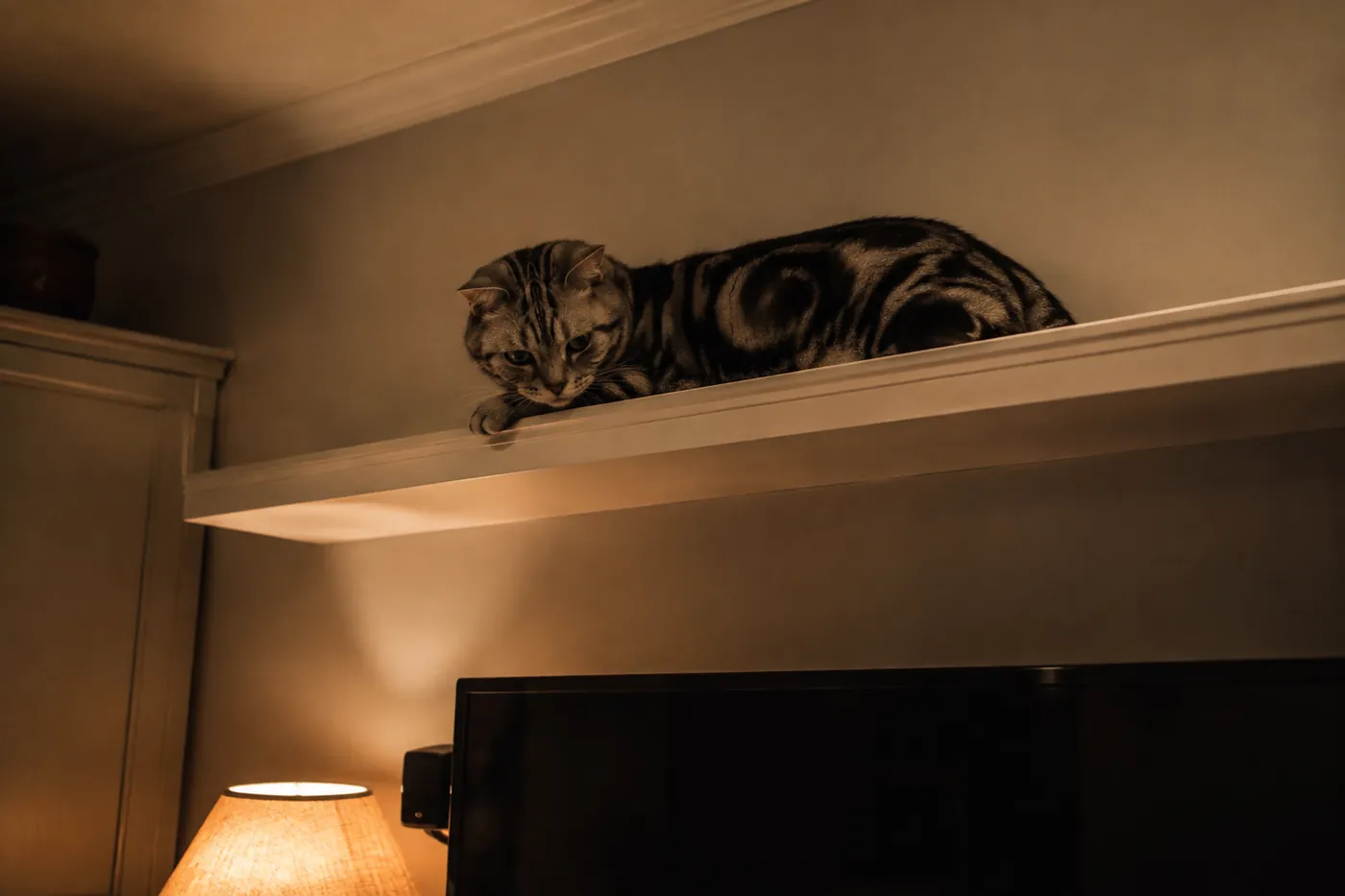
A resident cat that dislikes company remains a bigger obstacle than any dog, however easygoing the newcomer is.
Buy the breed, or adopt the look?
A random-bred short-haired cat can be visually indistinguishable from a pedigreed one. Adoption fees and included veterinary care vary by organisation.
If what you want is a solid, calm, short-coated cat that tolerates a busy house, the shelter has that cat, and it is not a lesser version of anything.
What adopting gives up is the traceable line and the parents' screening record. For a breed whose one real health question is answered by an echocardiogram on the parents, that is a genuine loss rather than a technicality.
What adopting gains is information a pedigree cannot supply. An adult cat's size, coat and temperament are already visible, which is more than any kitten offers in either direction.
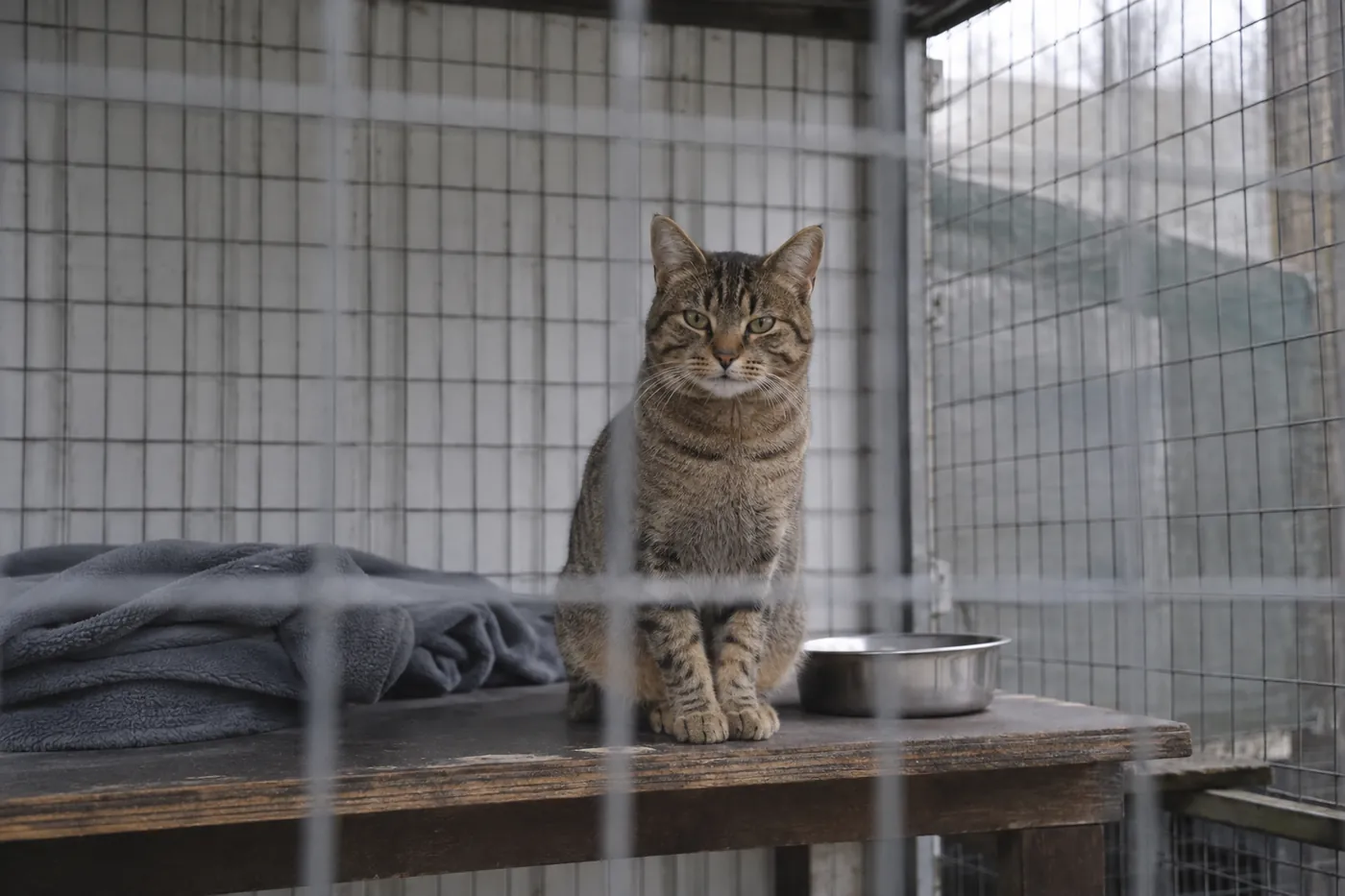
A breeder makes sense for someone who wants a known line with scan dates behind it and a predictable adult, and a shelter makes sense for someone who wants the cat this breed was made from. The purchase to avoid is the one in the middle: a pedigree with no screening behind it, sold on a photograph, at a price the paperwork has not earned.
Common Questions
Can a shelter cat be registered as an American Shorthair?
No. Registration needs known registered parents, so a cat of unknown ancestry cannot be registered however closely it matches the standard.
Do American Shorthairs need to go outside?
No, but the hunting drive the working history left behind needs somewhere to go. Indoor cats of this breed do better with daily play than with extra food.
Are American Shorthairs hypoallergenic?
No. The allergen is Fel d 1 in saliva and skin, and a dense coat that sheds all year makes this a poor choice for an allergy household.
Checked Against
- The Cat Fanciers' Association: American Shorthair cfa.org
- The ascent of cat breeds: genetic evaluations of breeds and random-bred populations pmc.ncbi.nlm.nih.gov
- AnAms1.0: a chromosome-scale assembly of a domestic cat of American Shorthair breed pmc.ncbi.nlm.nih.gov
- Screening for hypertrophic cardiomyopathy in cats pubmed.ncbi.nlm.nih.gov
- Classification of feline hypertrophic cardiomyopathy-associated gene variants pmc.ncbi.nlm.nih.gov
Published 3 September 2026. Last updated .