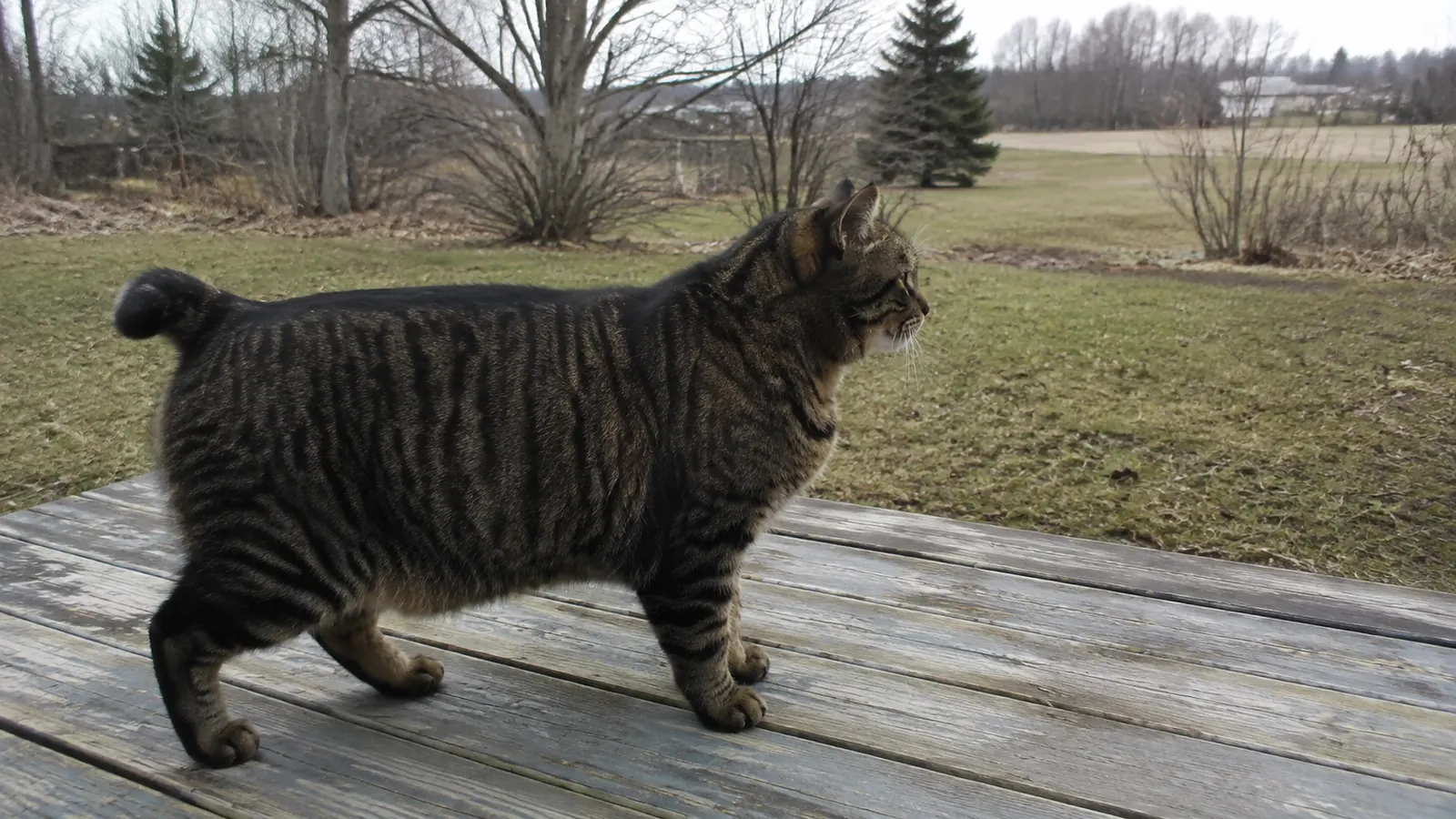
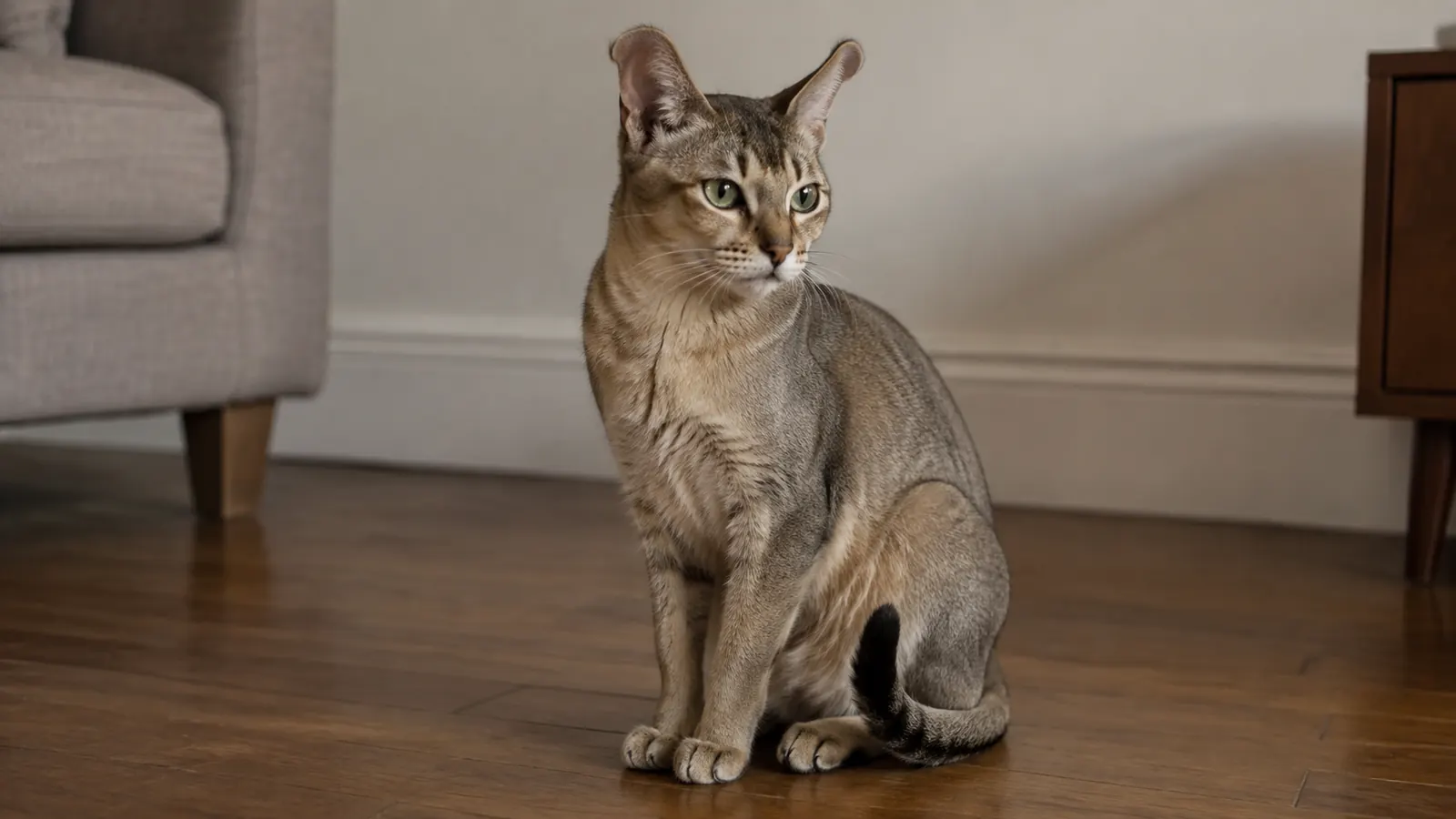
What Is a British Shorthair, and Why Is Weight Its Main Risk?
A British Shorthair often suits people who want a steady companion with an easily maintained short coat. Food portions, comfortable activity and respect for handling preferences matter more than assuming a quiet cat needs little attention.
- Origin
- United Kingdom
- Coat
- Short, very dense, crisp to the touch, with no long guard hairs
- Size
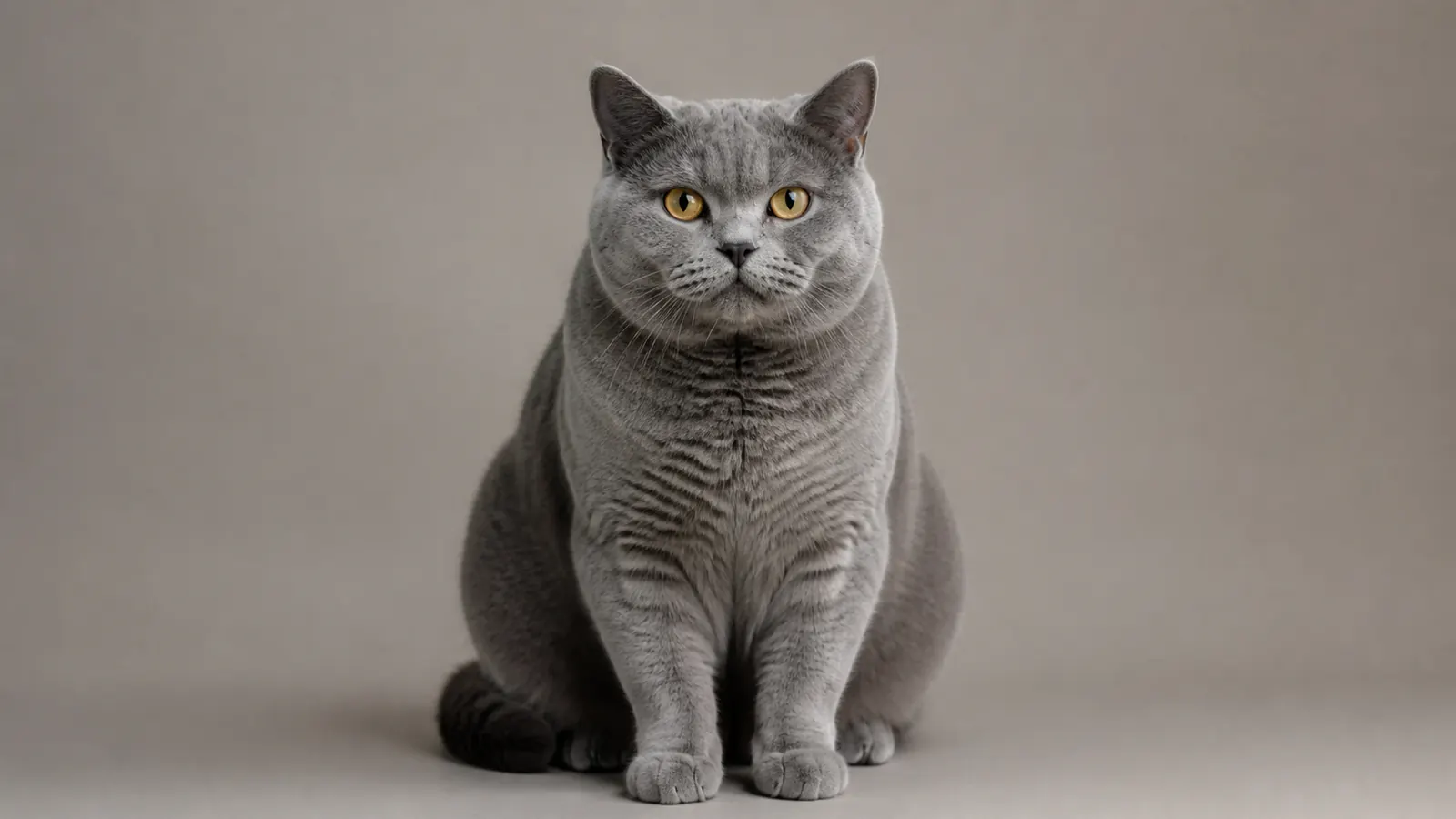
- Stocky and broad, with a rounded head and short legs
- Typical weight
- Typically 3.5 to 5.5 kg for females, 5 to 8 kg for males
- Life expectancy
- Commonly 13 to 17 years
- Activity level
- Low to moderate. Settled, and not a climber by preference
- Grooming
- Usually a quick weekly comb or brush, increased during shedding
- Suits
- Quieter households, and owners who want an undemanding cat
The coat is dense rather than long
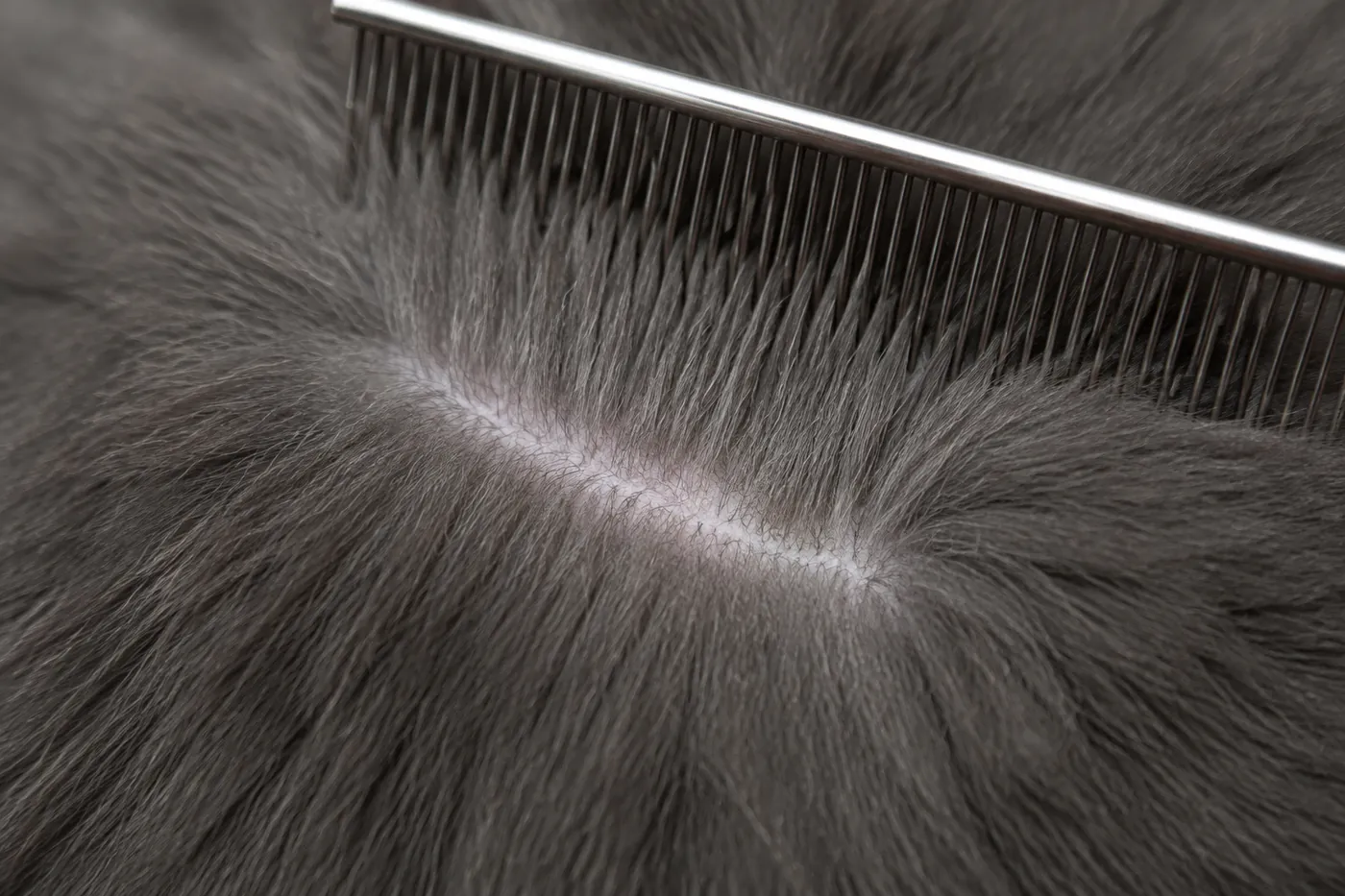
The British Shorthair has a dense, crisp short coat. CFA recommends a quick weekly comb or brush for ordinary maintenance, with closer attention when shedding increases.
A recessive gene carried since the breed's post-war Persian outcrosses can still produce a long-coated kitten in an otherwise short-coated litter, covered in full in our profile of the British Longhair.
Parting the coat gently shows the skin as you work. New tangles, greasy patches or reduced self-grooming need attention, especially if the cat has gained weight or appears uncomfortable.
What combing this coat involves
Any gentle tool the cat accepts will do, provided it does not scrape or pull the skin. A comb, soft brush or grooming mitt can lift loose hair, and a comfortable cat with an open coat afterwards shows the tool is doing its job.
Brief sessions with a reward for cooperation keep the cat willing. The places to check are behind the ears, under the forelegs and over the rear body, where pain or limited flexibility may change the cat's own grooming.
Grooming through a moult
Loose-hair removal steps up while the coat is releasing freely and drops back to the lighter routine as shedding settles. Season, indoor conditions and the individual affect timing; a short coat does not mat on a predictable fortnightly schedule.
Repeated hard brushing to remove every loose hair can make the skin sore. Sore skin, or a cat that suddenly resists a familiar tool, is a reason to stop and find out why rather than push on.
Where the breed comes from
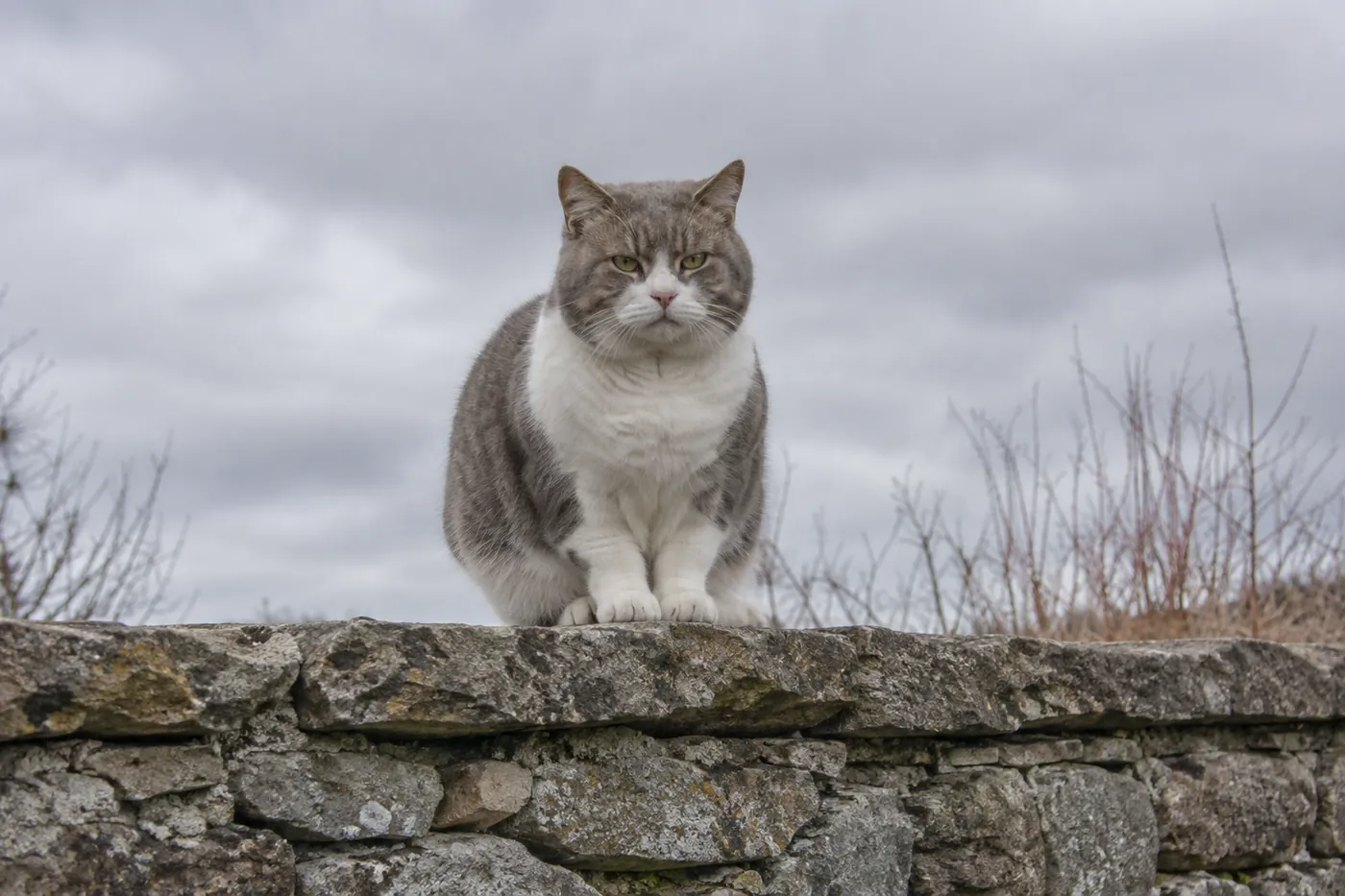
Ordinary working cats of Britain are the ancestors, selected from the late nineteenth century for the sturdy build and dense coat that suited the climate.
The breed was nearly lost in the middle of the twentieth century and was rebuilt afterwards using outcrosses, Persians among them. That is where the round face and the heavy bone come from.
British Shorthairs generally have a less extreme muzzle than flat-faced Persians. That comparison does not clear an individual of breathing problems; persistent noisy or laboured breathing needs veterinary assessment.
The colours, and what they do not tell you
The blue British Shorthair is the cat most people picture, and the breed is recognised in a long list of colours and patterns.
Blue is also the colour that causes the most misidentification. A blue British Shorthair and the Chartreux are separated by coat rather than colour, because this standard rules out a woolly double coat and the Chartreux standard requires one.
Black, white, cream, red, silver, and the tabby, tortoiseshell, bicolour, and colourpoint variations are all accepted, and the golden and silver shaded coats have become popular in recent years.
Colour has no bearing on temperament, and any claim that one colour is friendlier or calmer than another is not supported by anything, although advertisements repeat it often.
What colour can indicate is the outcross history. Colourpointed British Shorthairs carry the pattern from a Siamese ancestor somewhere in the line, and the golden and silver shaded coats trace to Persian outcrosses.
That matters only in as much as it is worth knowing what has gone into a line when asking about health testing, since the associated conditions travel with the ancestry rather than with the colour.
Weight is the real risk
This is a breed with a genuine tendency to gain weight, made worse by a low activity level. The stocky build also hides it, so a British Shorthair can be well overweight before it looks it.
Regular weighing and a hand check of body condition, both covered in the feeding guide, catch the gain early. The point at which most cats of this breed start gaining is neutering, when the requirement falls but the portion does not.
Reading the body condition through the coat
The density that makes the coat distinctive is also what hides the cat inside it.
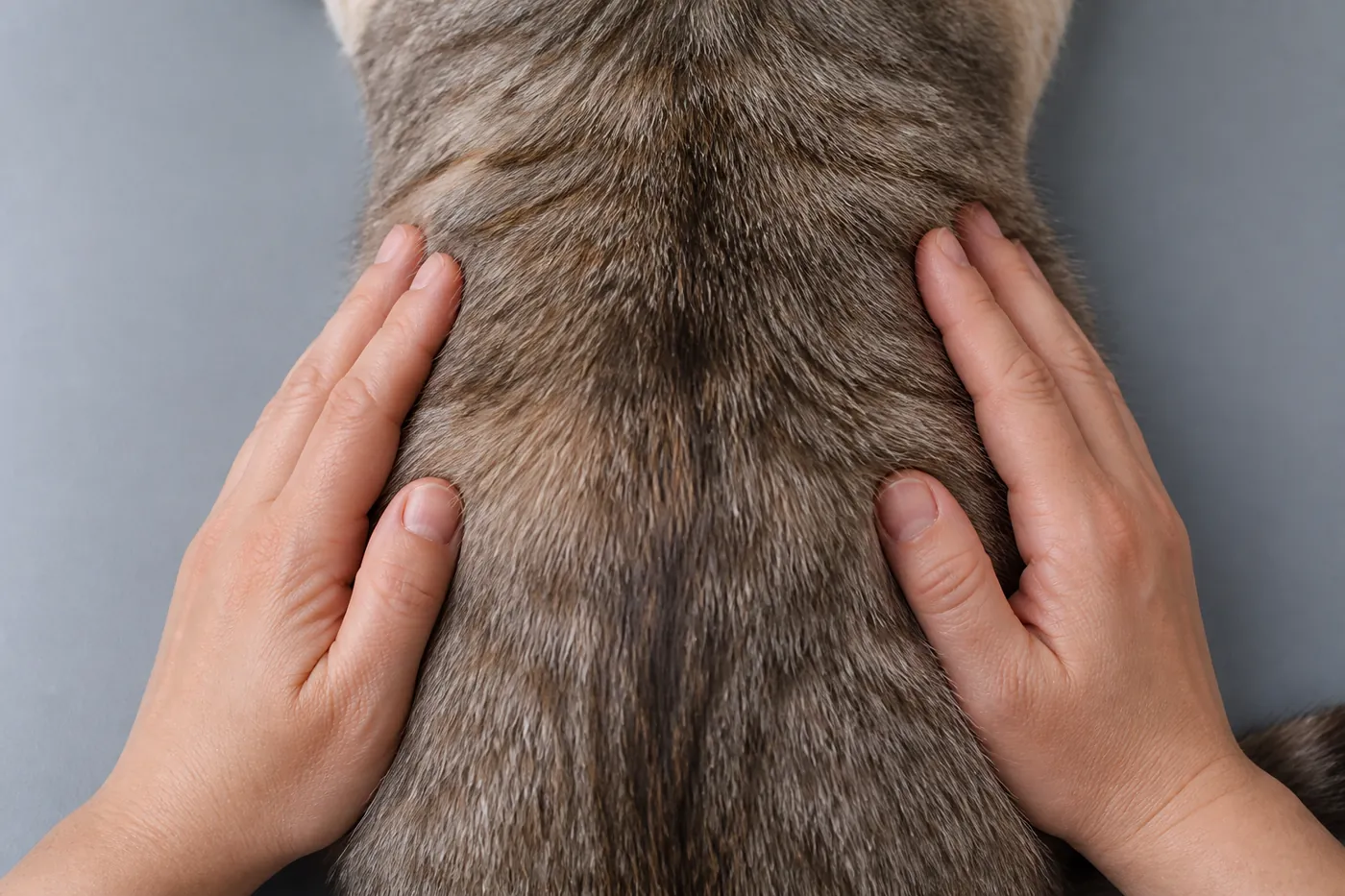
Run both hands along the ribs with light pressure. They should be easy to feel under a thin covering without pressing, and a cat whose ribs need searching for is carrying too much.
Look down from above for a waist behind the ribcage, and from the side for a belly that tucks up rather than hanging level. A British Shorthair is a broad cat and it should still have both.
Do it monthly and write the weight down, because a coat this thick disguises a gain of half a kilogram completely.
Running a manageable weight plan
A calm reputation does not make a British Shorthair untrainable or uninterested in play. Short ground-level chase games, suitable climbing and simple food-search tasks suit the build, adjusted as age and mobility change.
For a cat already carrying excess weight, the veterinarian can set a target condition, a calorie plan and a review interval. Portions are weighed, and treats and puzzle food come out of the same total.
A gradual monitored plan is safer than severe restriction or waiting for exercise alone to remove weight.
- Record starting weight and body condition with the veterinarian
- Measure food from its calorie information
- Set aside rewards from the same allowance
- Offer several kinds of comfortable activity
- Review progress and adjust the plan with the clinician
Slow to mature, in both directions
British Shorthairs take a long time to finish, and the timing catches people out at both ends.
Physically they are not fully grown until around three to five years, filling out in bone and muscle long after other breeds have settled. A two year old is still adolescent in build.
Behaviourally the opposite reputation is misleading. Kittens are playful and mischievous like any other, and the famously placid adult arrives gradually rather than at once, which surprises people who chose the breed for calm and got a kitten.
Slow physical maturation does not automatically extend kitten-food feeding. Diet and portions are reviewed around neutering and adulthood against growth and body condition.
Temperament and household fit
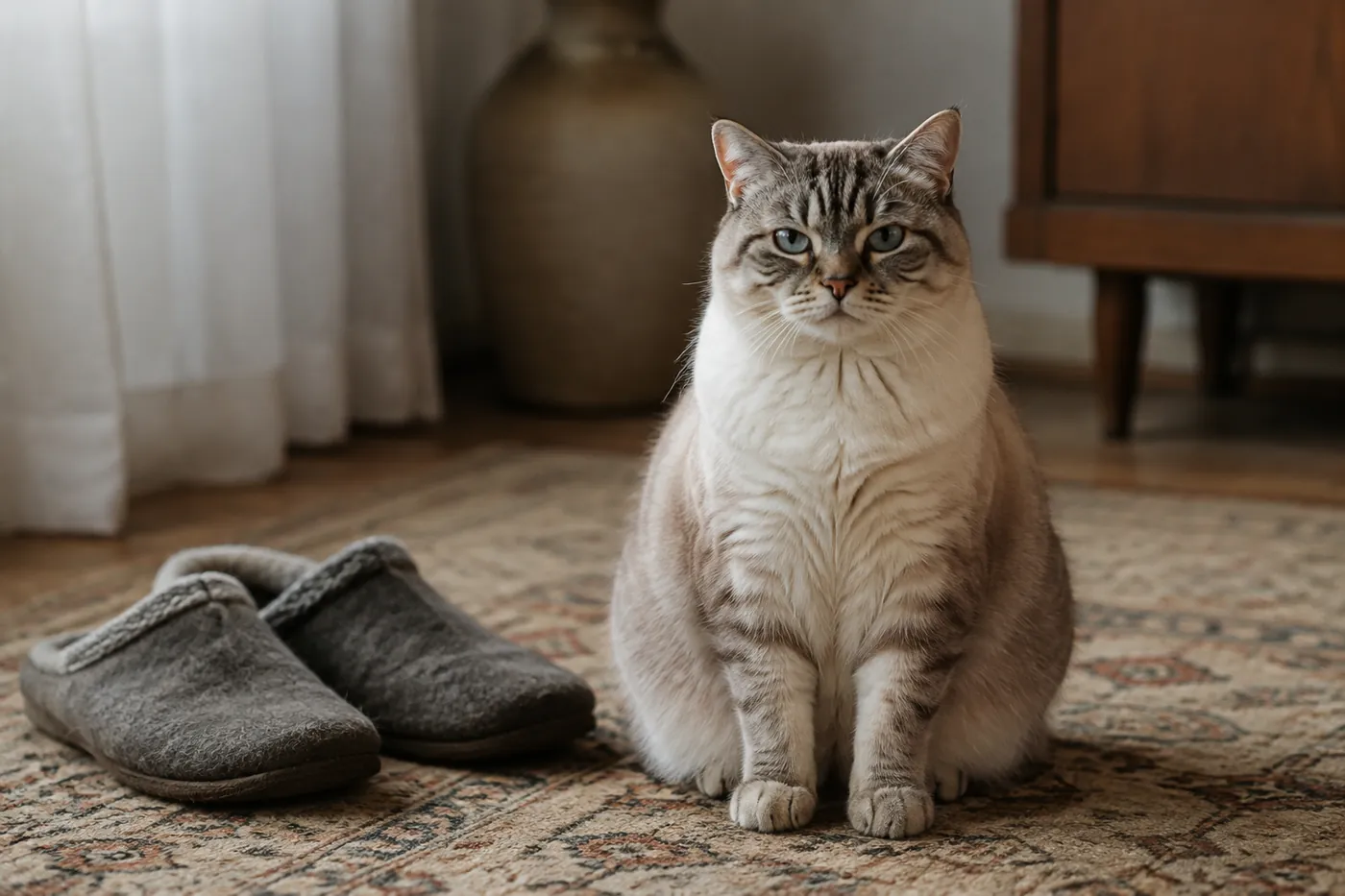
They are steady, quiet, and slow to take offence, which suits households that want an undemanding cat.
They are not natural climbers and often prefer a wide low perch to a tall tower.
They tolerate being left during a working day better than a Siamese does, though no cat should be alone indefinitely.
| Trait | What it means day to day |
|---|---|
| Slow to take offence | Walks away instead of warning, so irritation is easy to miss |
| Undemanding | Tolerates a working day better than most, and still should not be alone indefinitely |
| Dislikes being lifted | Heavy and short-legged, so it is poorly balanced off the floor |
| Not a climber | A wide low platform gets used daily where a tall tower does not |
| Quiet | Rarely asks for play, which is why play has to be offered rather than waited for |
Slow to take offence is worth unpacking, because it is the trait people most often buy this breed for. A British Shorthair that dislikes something tends to walk away rather than escalate, so the warning stage most cats give is shortened here.
That makes them forgiving of a busy household and harder to read. A cat that leaves instead of protesting is easy to keep annoying without noticing.
The breed's heavy, short-legged proportions also decide the furniture. A tall tower asks for a jump this cat is not shaped to make easily, while a wide low platform at windowsill height gets used every day.
Most of them dislike being picked up
British Shorthairs are heavy and short-legged, so they are poorly balanced when lifted and generally happier with four feet on something solid. Many will tolerate being lifted briefly and few enjoy it, and the breed's patience means a cat that dislikes it often endures rather than protests.
That matters for households with children, who read a placid cat as one that wants handling. The breed suits families well, provided the rule is that the cat comes to the person.
It also matters at the vet. A cat that has never been taught to accept handling is harder to examine, and short reward-based sessions using clicker training make that a great deal easier.
Living with other animals
A steady adult may live comfortably with compatible cats or dogs after gradual introduction. Calmness alone does not protect a cat from pursuit, and a dog may chase whether the cat runs or freezes.
Barriers and controlled distance help at first, along with separate resources and escape routes that the other animal cannot block. An interaction that leaves either animal hiding, staring or guarding access is the point to end it, well before a fight.
Who this breed suits
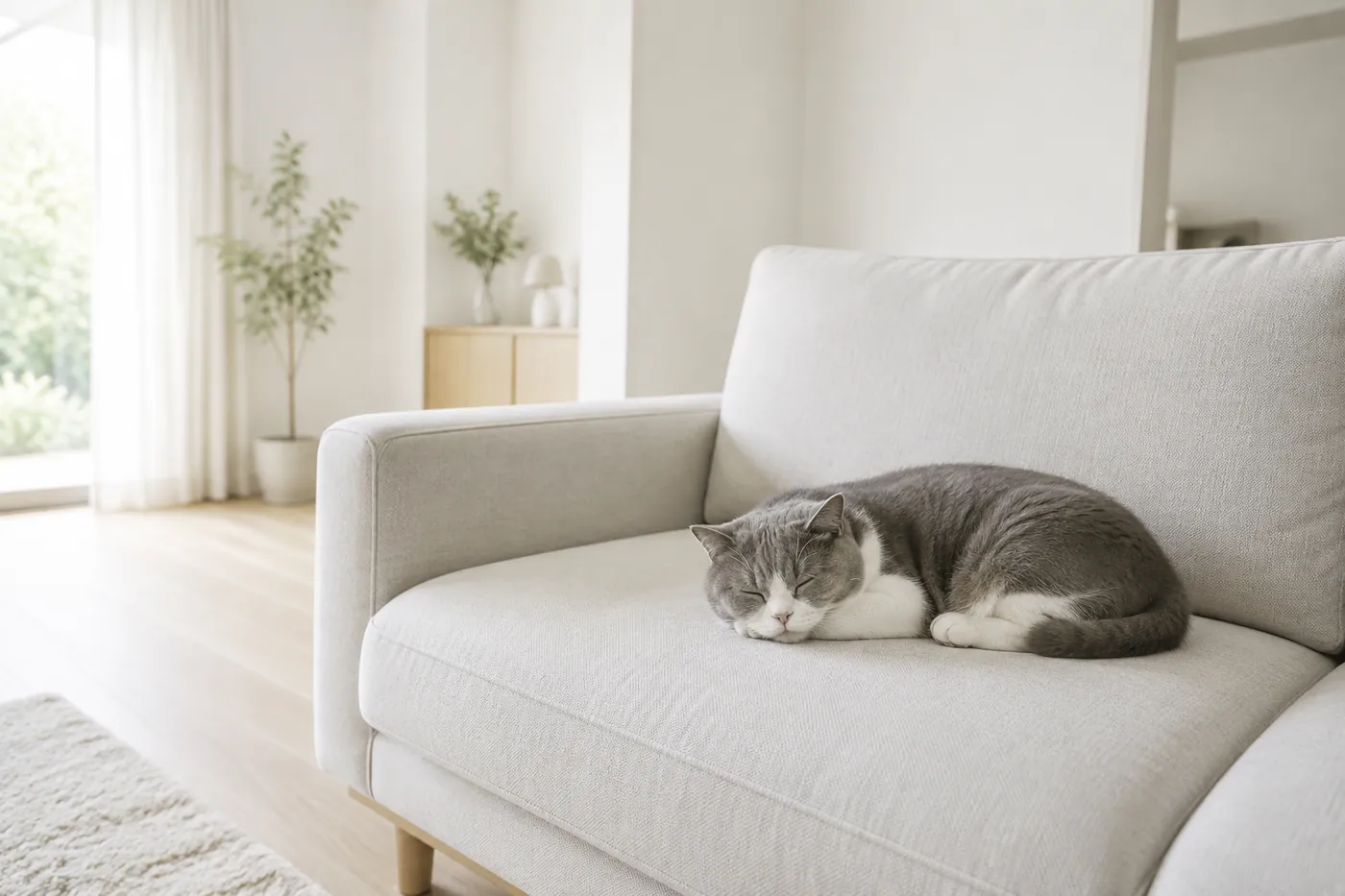
The British Shorthair fits a household that is out during the day, wants an undemanding cat, and would rather have company in the room than a cat on the lap. It tolerates being alone considerably better than most breeds.
It suits families with children, provided the rule is that the cat is not picked up. The patience is genuine, and it means a cat that endures handling rather than one that objects, which is easy to misread.
It generally lives well with dogs and with other cats, being slow to take offence and uninterested in confrontation.
| Suits | Does not suit |
|---|---|
| A household out during the day | Somebody expecting every cat to enjoy being carried |
| Anyone happy with company in the room rather than on the lap | Anyone expecting the cat to start the play |
| Families, provided the cat is not picked up | A home that wants a cat carried around |
| Homes with dogs or other cats | Somebody who reads calm as aloofness |
It does not suit somebody wanting an interactive, trainable, involved cat. That household is better matched with the Siamese or the Bengal, which bring more noise and demand along with the interaction.
Health screening
Of the four conditions below, polycystic kidney disease is settled by a DNA test and obesity is not inherited at all.
Polycystic kidney disease is dominant, so a single copy causes it, and a negative DNA result excludes the tested variant in that parent, not in an untested mate.
Cysts are present from birth and enlarge slowly, gradually replacing working kidney tissue. The cat then arrives at kidney failure in middle age rather than in old age, which is a decade of difference.
Hypertrophic cardiomyopathy has no such shortcut in this breed. There is no British Shorthair mutation to test for, so the screen is an echocardiogram and its value expires, which is why the date on the scan matters as much as the result.
Obesity belongs on the list despite not being inherited. This breed combines a naturally heavy build with a temperament that does not seek out exercise, and the two together make weight the likeliest thing to shorten a given cat's life.
The build is also what hides it. A dense coat and a cobby frame conceal a body condition change that would be obvious on a slim breed, which is why judging by hand rather than by eye matters more here.
- Hypertrophic cardiomyopathy
- Recognised in the breed; ask about cardiac screening of the parents
- Polycystic kidney disease
- A DNA test exists, and responsible breeders test for it
- Obesity
- Food intake, activity, neutering, health and individual predisposition all matter
- Dental disease
- Worth planning home care for from kittenhood
Polycystic kidney disease is the reason the DNA test matters, because affected cats develop chronic kidney disease earlier in life than they otherwise would. The parents' PKD result and the date of their cardiac screening are both documents a breeder can show.
Common Questions
Do British Shorthairs shed a lot?
Yes, particularly during seasonal moults. The coat is very dense, so loose hair stays trapped until it is combed out.
Are British Shorthairs lap cats?
Usually not in the sense of sitting on you for hours. They tend to be affectionate but independent, preferring to be in the same room rather than on your knee.
Why do British Shorthairs gain weight so easily?
A combination of a naturally low activity level, a stocky build that hides gain, and a good appetite. It is manageable with measured portions and initiated play.
Checked Against
Published 1 May 2026. Last updated .