What Is a Ragdoll, and When Does Its Placid Nature Become a Risk?
The Ragdoll is known for going limp when picked up, which is where the name comes from. That placidity is the breed's defining trait and its main practical risk.
- Origin
- United States, developed in California in the 1960s
- Coat
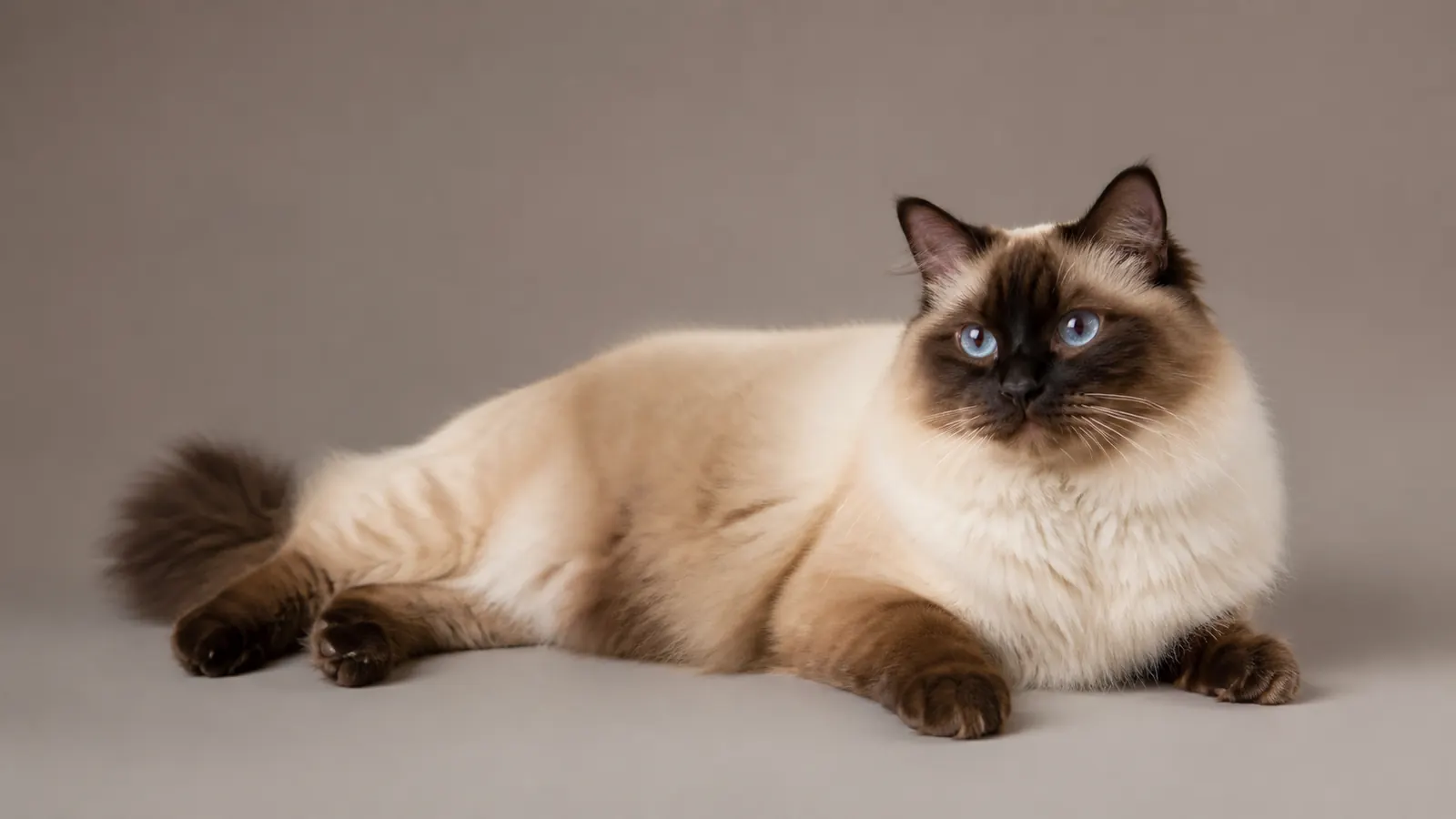
- Semi-long, silky, with little undercoat and a colourpoint pattern
- Size
- One of the largest breeds; slow to reach full size
- Typical weight
- Typically 4.5 to 7 kg for females, 6 to 9 kg for males
- Life expectancy
- Commonly 12 to 15 years
- Activity level
- Low to moderate. Calm, and not a determined climber
- Grooming
- Moderate. Two or three times a week, more during a moult
- Suits
- Indoor households, including those with children and other pets
The Ragdoll is a large, semi-longhaired breed bred deliberately for a calm temperament.
It reaches full size slowly, at three to four years, so the cat you have at one year is not the cat you will have.
What is a Ragdoll's temperament like?
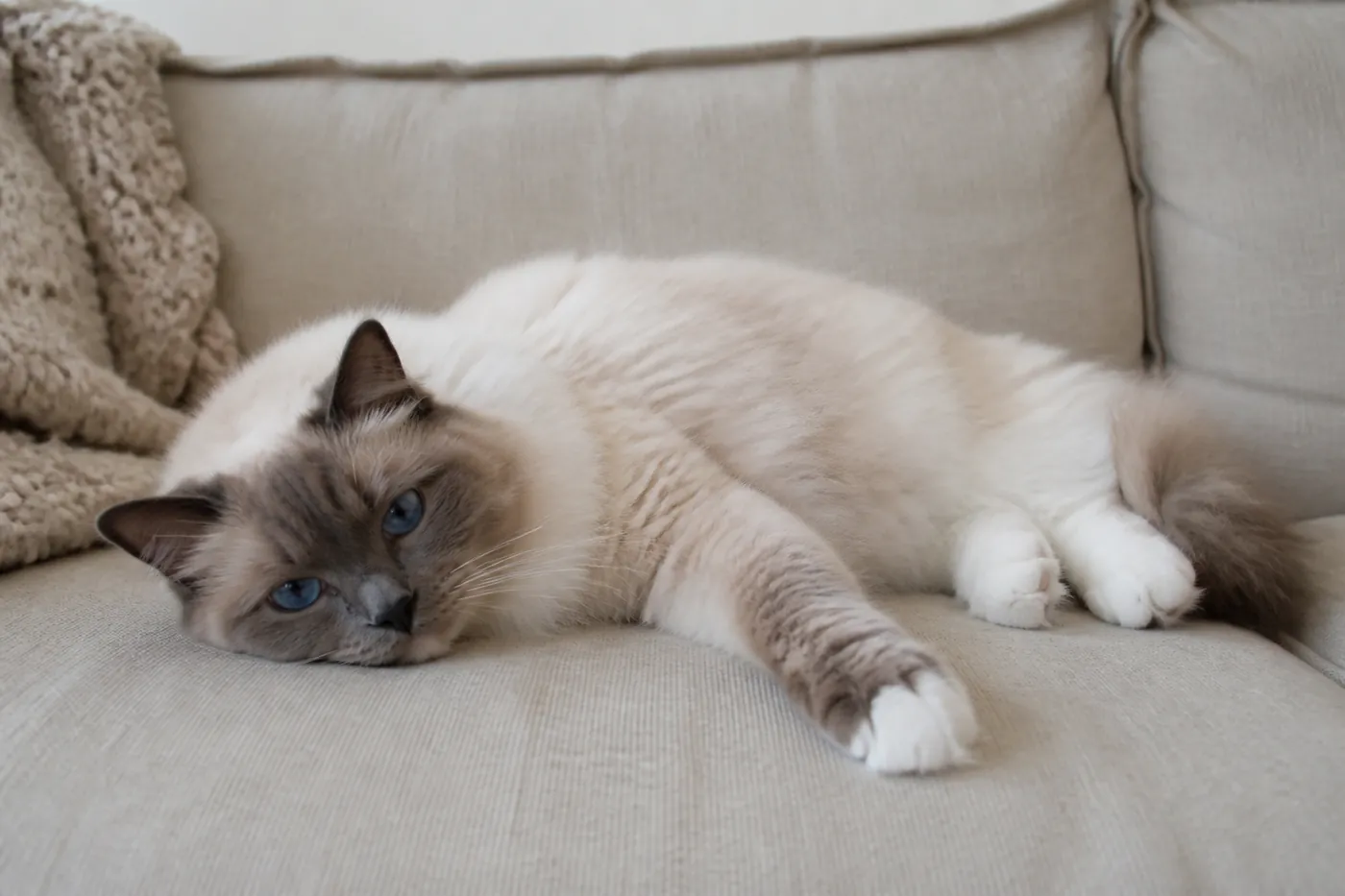
Ragdolls are commonly affectionate and relaxed around familiar people, but individuals differ in their response to lifting. Some enjoy laps, some prefer nearby company and some dislike being carried.
Children should invite contact at floor level, support the body when lifting is necessary and stop as soon as the cat shifts away. Remaining still does not prove comfort, and a Ragdoll can signal distress or bite like any other cat.
Ears, tail movement, muscle tension and attempts to leave show the cat's response, and the breed name never overrides it.
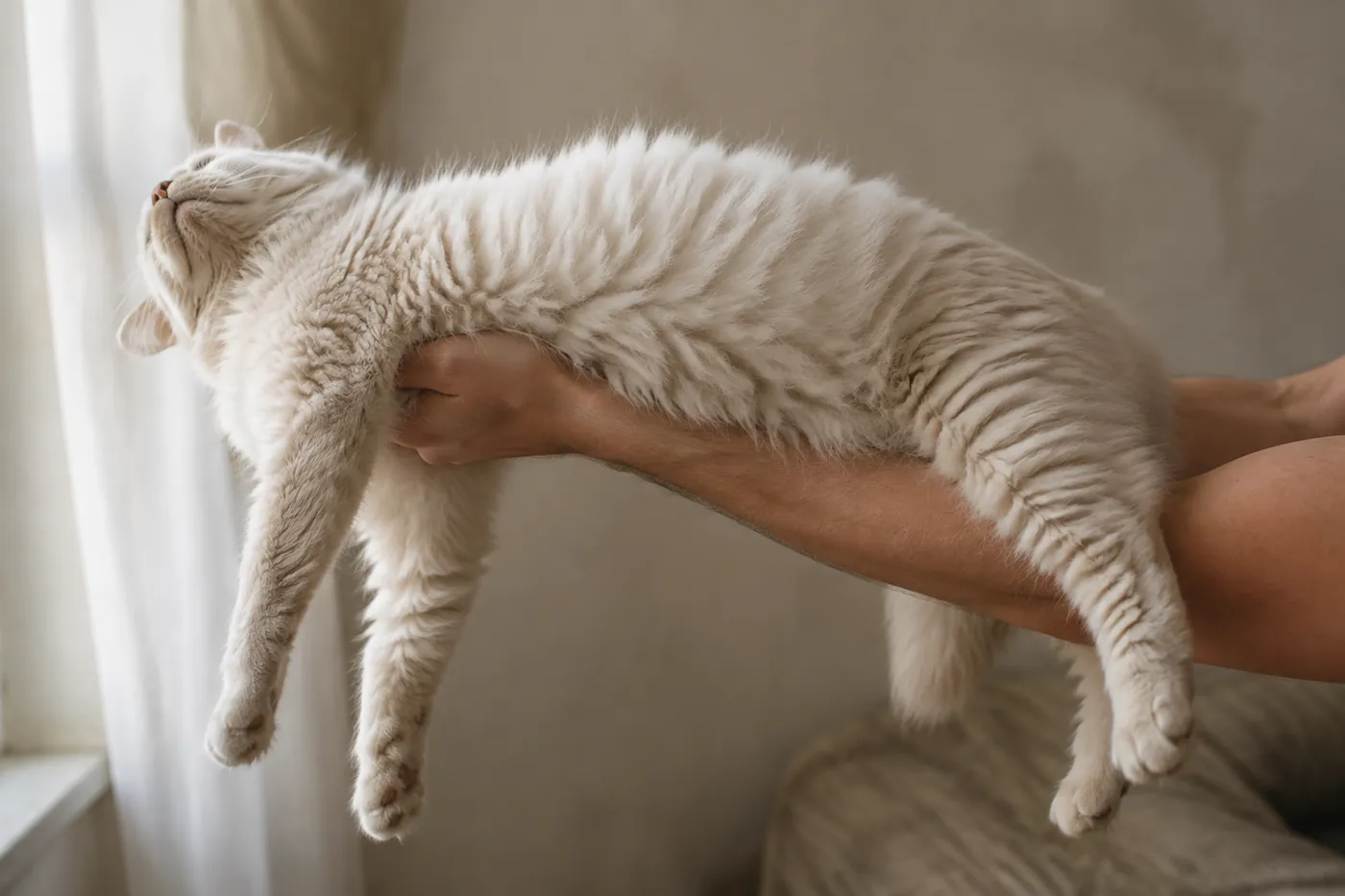
What the limpness actually is
The trait the breed is named for is worth describing accurately, since it is widely exaggerated.
Most Ragdolls relax markedly when lifted, going loose and settling into the arm rather than bracing or struggling. It is a relaxed muscle tone in response to handling rather than any kind of paralysis or trance.
It varies between individuals. Some go completely limp, many are simply unusually tolerant, and a few dislike being picked up as much as any other cat.
- What it is
- Relaxed muscle tone in response to being handled
- What it is not
- Paralysis, a trance, or anything the cat cannot control
- How much it varies
- From completely limp to no more tolerant than any other cat
- What its absence means
- Nothing about the breeding. The calm temperament is the trait
- What it does not mean
- That the cat has no limits, only that it is less likely to say so clearly
A Ragdoll that objects to being lifted is not badly bred or unusual. The temperament that matters is the general calmness, and the limpness is one visible expression of it rather than the trait itself.
What it does not mean is that the cat has no limits. A relaxed cat can still be uncomfortable, and it is less likely to say so clearly.
Bred for the trait, from a small foundation
The breed was created in California in the 1960s from a small group of foundation cats, and it was selected from the start for docility rather than for appearance.
That deliberate selection is why the temperament is more consistent than in most breeds, and the narrow founding population is why a few inherited conditions run through it.
Colourpoint markings and blue eyes come from the same temperature-sensitive pigment gene seen in the Siamese breed, which is why kittens are born white and develop their points over the following weeks.
Extravagant origin stories attach to the breed, including claims about how the limpness arose. None of them have any evidence behind them, and the trait is straightforward selective breeding.
Deliberate selection from a small foundation explains both the consistent temperament and the inherited conditions buyers now test for.
Size, and how slowly it arrives
Ragdolls are among the larger domestic breeds, and the growth is unusually drawn out.
Full size arrives at three to four years, not at one. Males in particular carry on filling out in bone and muscle long after they have reached adult length.
That matters for equipment in the same way it does for a Maine Coon. Trays, carriers, and beds bought for a yearling are frequently too small for the adult, and buying for the projected size saves doing it twice.
The move from kitten to adult food follows growth and body condition rather than the breed's final maturity date, which a veterinarian can judge at routine visits.
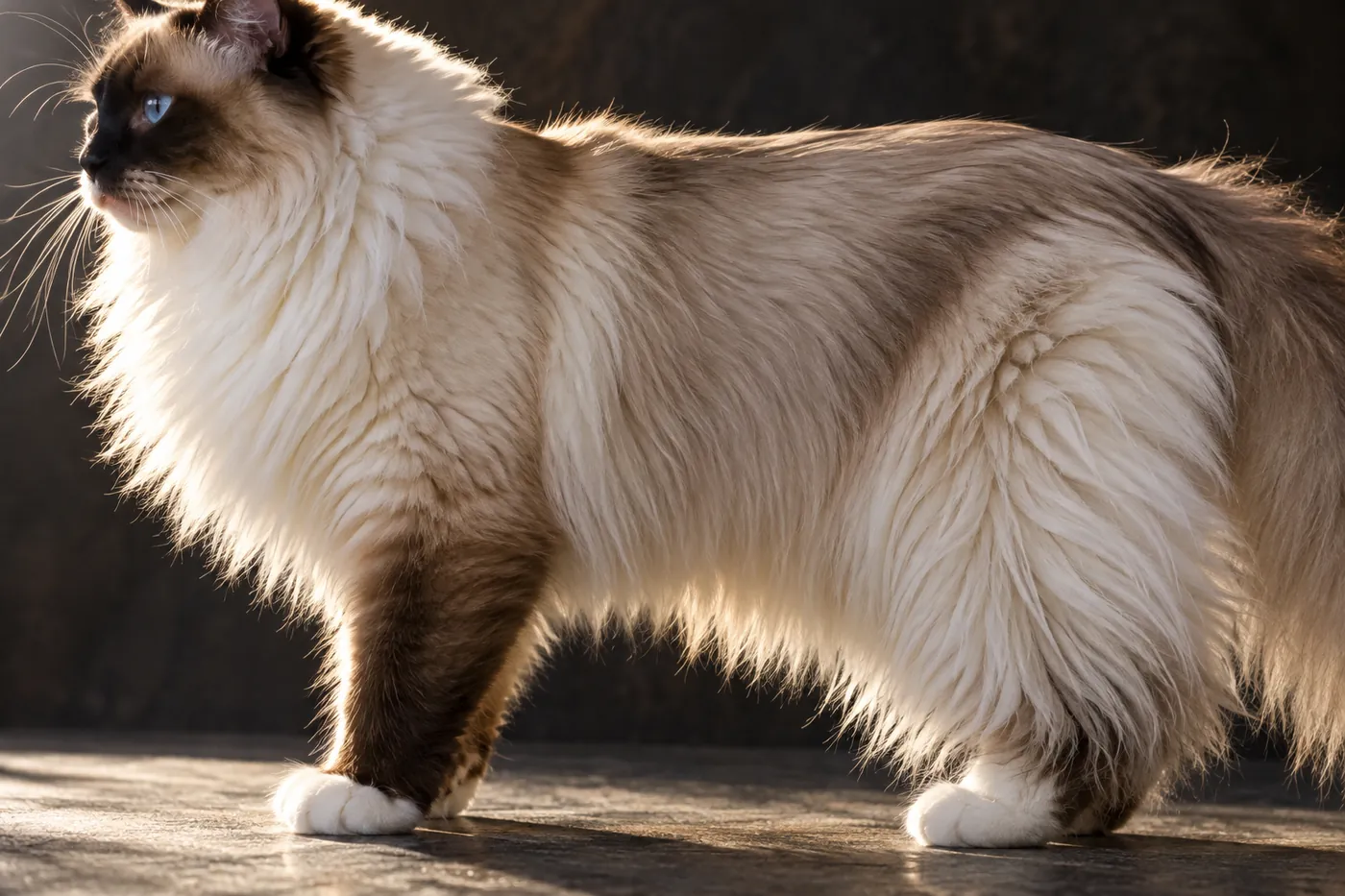
Adolescent Ragdolls commonly look lanky and unfinished for a year or more, and the substantial cat in the photographs is some way off.
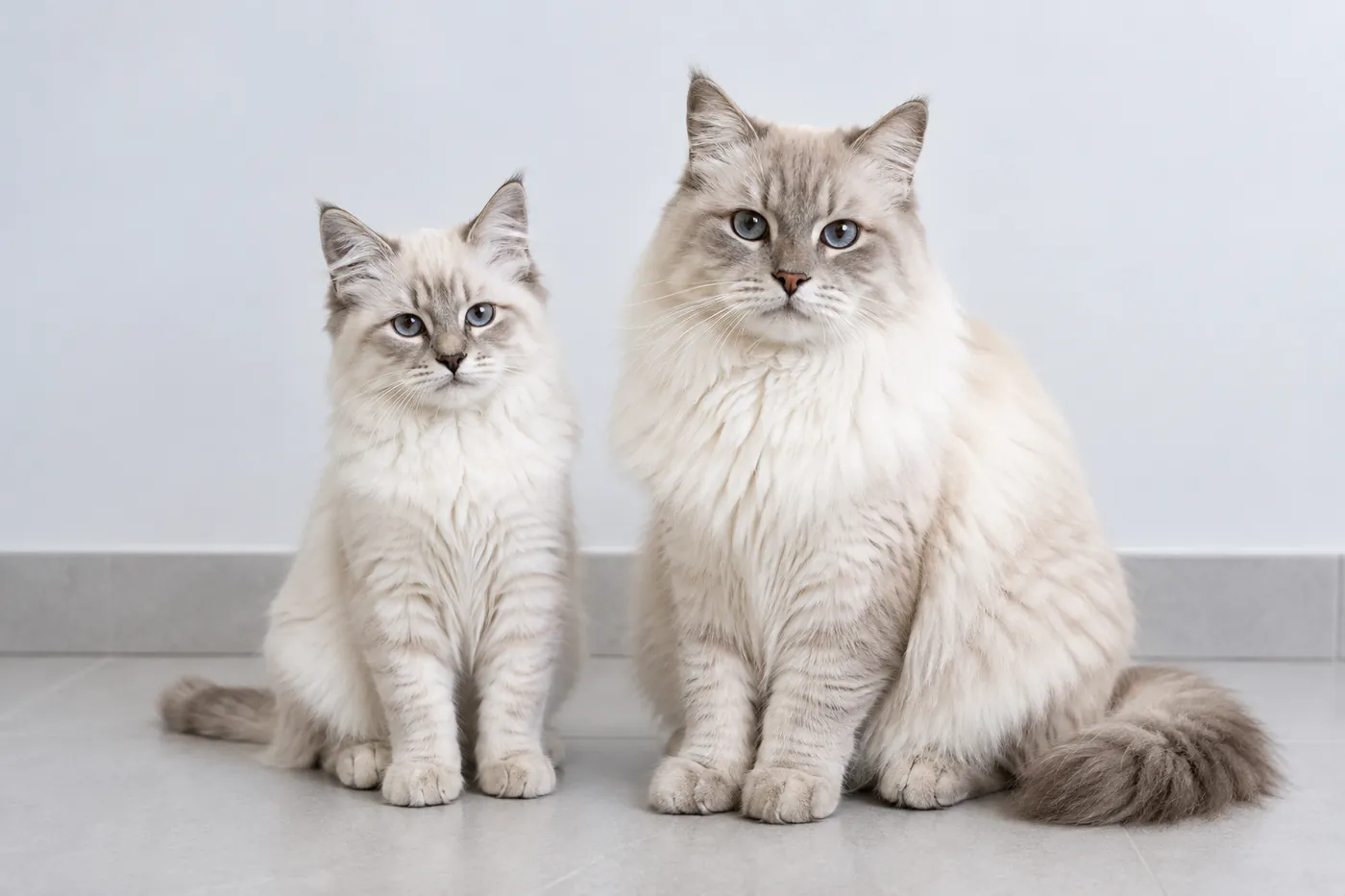
A Ragdoll at one year is still well short of its adult size, because the breed keeps filling out for several more years.
Patterns, colours, and how kittens develop
Ragdolls come in three recognised patterns, and the differences are worth knowing before looking at kittens.
The colourpoint is the classic arrangement: a pale body with darker face, ears, legs, and tail, and no white anywhere. The mitted adds white paws, a white chin, and a white stripe along the belly.
The bicolour carries an inverted white V on the face and considerably more white on the body.
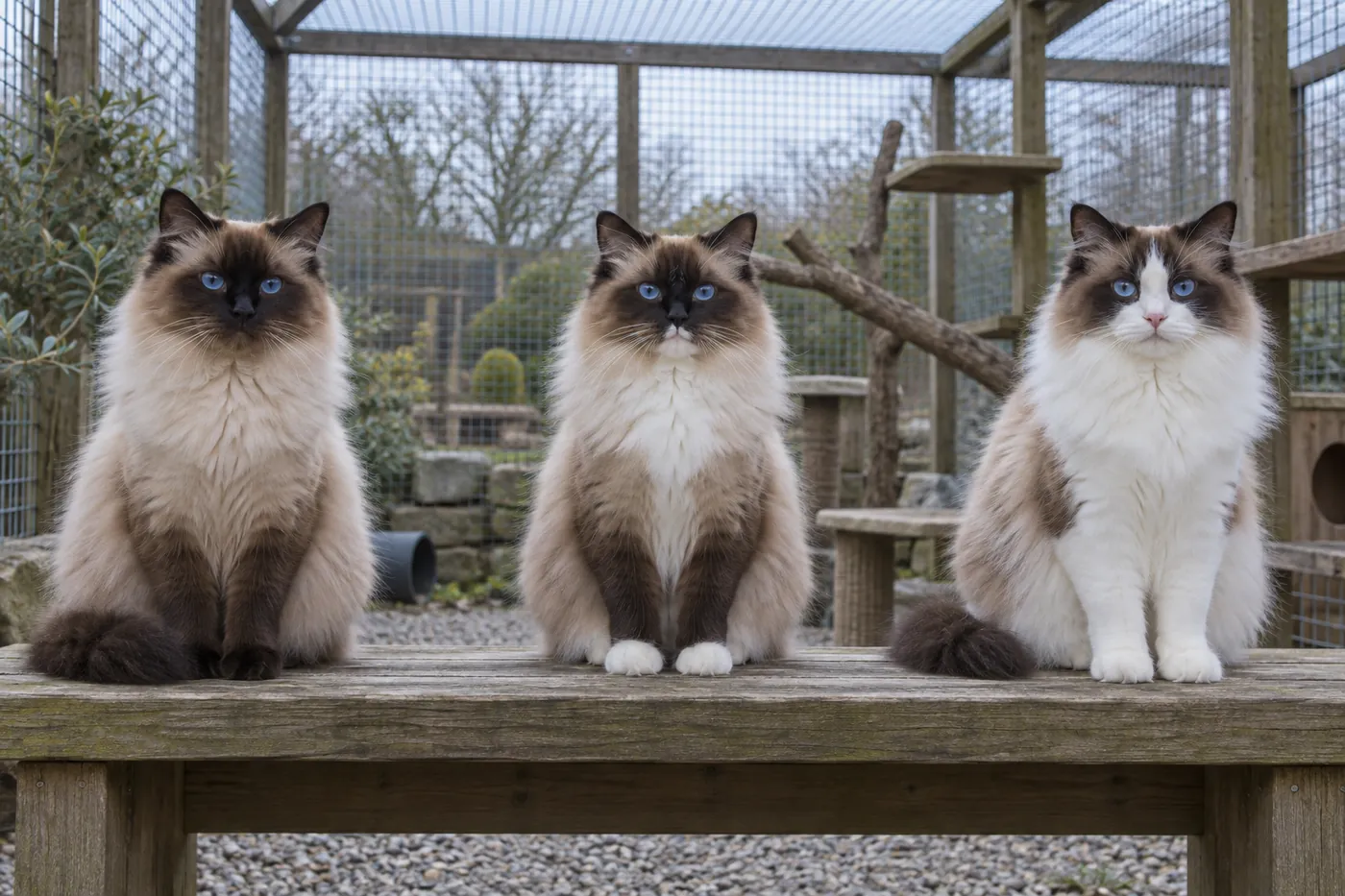
Colours include seal, blue, chocolate, lilac, red, and cream, in solid, lynx, or tortie variations. None of it affects temperament or health.
Because the pattern is temperature-sensitive, kittens are born white and the points appear over the following weeks. Colour deepens for around two years and continues to darken slowly through life.
The eyes are always blue in a true Ragdoll. A cat sold as a Ragdoll with green or gold eyes is something else, whatever the paperwork says. A kitten sold as a black Ragdoll falls outside the standard for the same reason, and its solid coat shows that at least one of its parents was not a pointed Ragdoll.
| Pattern | White markings | Notes |
|---|---|---|
| Colourpoint | None | The classic arrangement, no white anywhere |
| Mitted | White paws, chin and belly stripe | White is confined and symmetrical |
| Bicolour | Inverted white V on the face, more on the body | The most white of the three |
Is a placid Ragdoll safe outdoors?
Free roaming exposes a Ragdoll to traffic, fights, parasites, toxins and loss, as it does other cats. A calm reputation is not evidence of slower road avoidance, inability to escape a dog or a measured theft rate.
Indoor enrichment, a secure roofed enclosure or carefully introduced harness access are the safer options, and the choice between them should rest on actual containment and local hazards rather than an assumption that pedigree changes how dangerous a road is.
Secure outdoor access
A secure enclosure needs a sound roof, mesh, doors and latches, plus shade, water and a way back indoors. Gaps and wear need regular inspection, because a cat that rarely climbs today may still test a boundary tomorrow.
Begin harness training indoors, reward voluntary participation and use a properly fitted design. Stop when the cat becomes frightened; do not drag it outside to prove it can learn.
Neither a harness nor a catio removes every risk, so continue supervision appropriate to the setting.
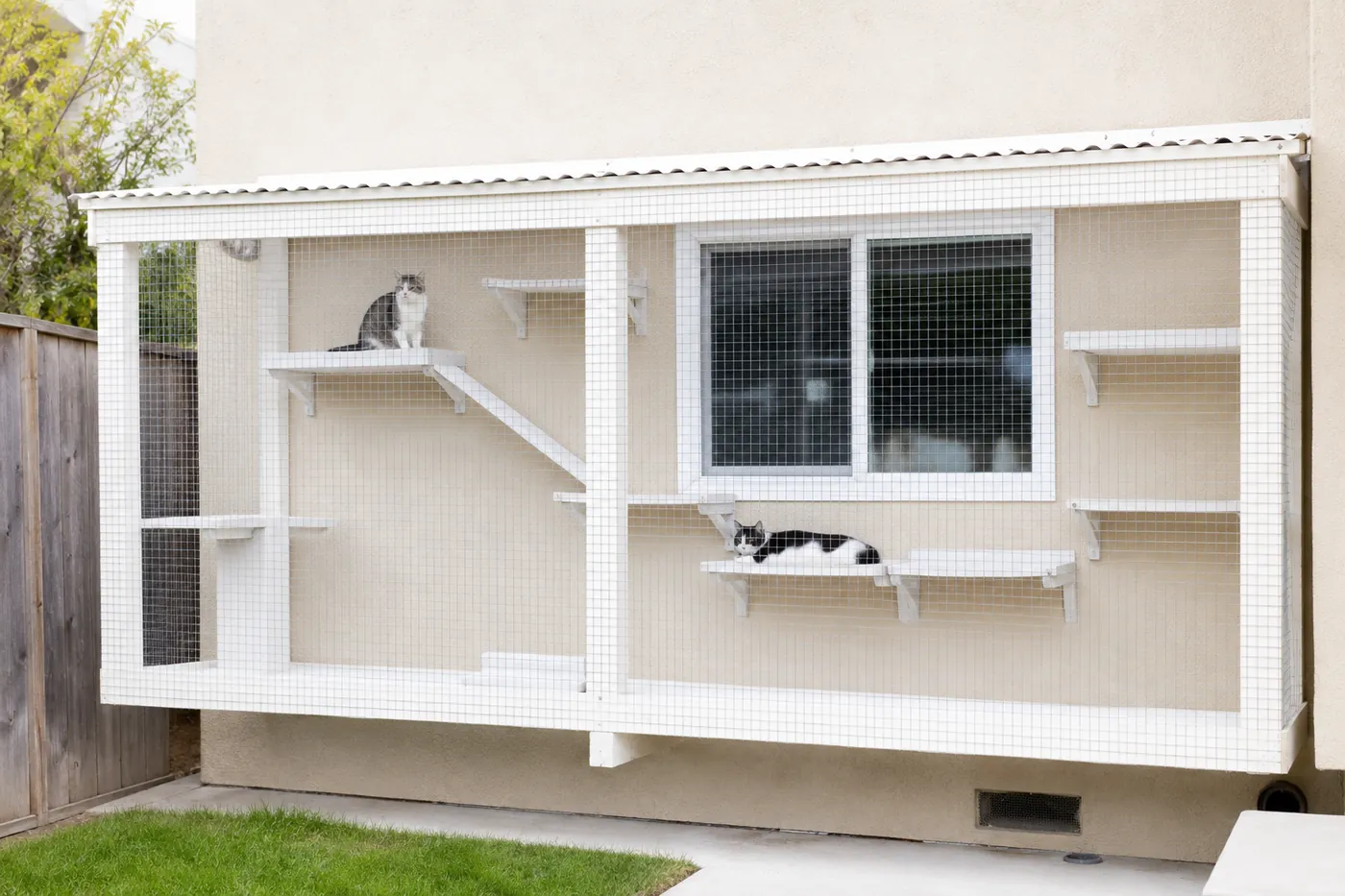
Making indoor life work
An indoor cat needs the day structured for it, and a placid breed makes it easy to forget that.
Ragdolls play readily when a person starts it and rarely start it themselves, so short wand sessions twice a day do more than a room full of toys. A cat that is never invited to move simply does not move.
Part of the ration fed through puzzle feeders and a window to watch add movement and interest that a bowl cannot. Low wide perches suit this breed better than tall towers, because a heavy cat is not an enthusiastic climber.
A secure garden or a covered run gives most of the benefit of outdoor access with none of the traffic risk, and it suits a breed that rarely climbs, although the boundary still needs checking.
A calm cat that is never invited to play becomes an overweight cat, quietly and over years.
Children, dogs, and busy households
The tolerance that defines this breed makes it a genuinely good family cat, with one caveat that matters.
A cat that rarely says no is a cat whose warnings are faint: the signals that come before biting when petted are still there, just quieter in this breed.
A cat that does not object cannot easily signal that it has had enough. Most cats teach children where the limits are by leaving or by a warning swipe, and a Ragdoll frequently just endures, which is how a child learns habits that a less patient cat will not accept later.
The rules to teach are the same as for any cat and matter more here: no picking up, no chasing, stroke the head, and let the cat leave. A cat that is always allowed to leave rarely needs to escalate.
- No picking the cat up, whatever it allows
- No chasing, and no cornering it to stroke it
- Stroke the head and cheeks rather than the back and tail base
- Let the cat leave at any point, without following it
- Nobody disturbs it in its own place, at any time
It needs somewhere children cannot follow, whether that is a high shelf, a room behind a baby gate, or a covered bed. Every cat needs an exit, and a placid one needs it as much as a nervous one.
With dogs the breed generally does well, largely because it does not bolt and trigger a chase. That is not the same as being safe with a dog that has never been introduced properly.
A cat that never objects still has limits, and the household has to enforce them on its behalf.
The coat is easier than it looks
The coat is semi-long and silky with little undercoat, which is what stops it matting the way a Maine Coon's does.
Two or three sessions a week is usually enough, rising during a seasonal moult.
The absence of undercoat is doing all the work in that sentence. Mats form when shed undercoat is held in place by longer hair above it, and a coat with very little of the first ingredient cannot make many of them.
What is left is a silky single coat that slides rather than knits. That is why a comb passes through a Ragdoll with almost no resistance while the same comb has to be worked through a Maine Coon.
The exceptions are where the coat is compressed rather than where it is longest. The ruff, the armpits and the trousers still tangle, because friction and movement do there what undercoat does elsewhere.
| Where | Why it tangles | How often |
|---|---|---|
| Ruff | Friction from the collar line and from turning the head | Every session |
| Armpits | Compressed by movement, and hard for the cat to reach | Every session |
| Trousers | Long hair on a part the cat grooms least effectively | Every session |
| Back and flanks | Little undercoat and nothing compressing it | A pass, not a job |
Shedding is a separate question from matting and does not get the same discount. This is a large cat with a lot of hair, and a low-matting coat still puts plenty of it on the furniture.
Those three areas still take the long-coat routine.
What the coat needs through a moult
The grooming load is not constant, and the two heavy sheds of the year are when mats appear.
Most cats shed heaviest in spring and again in autumn. In a semi-long coat the loosened hair does not all fall away, and what stays felts into the coat around it.
During those weeks, move from two or three sessions a week to daily. Ten minutes a day through a moult prevents what an hour of untangling afterwards has to fix.
The ruff, the armpits, and the trousers are where matting starts. They are also the areas a cat objects to most, so a short comb every day beats a long session once a week.
Weight, and why this breed hides it
A full coat can conceal both fat gain and muscle loss. Ribs and waist felt by hand and a regular weight record show what the ruff and broad chest hide, and changes are worth discussing with the veterinarian.
A complete life-stage diet is best measured by portion, with training rewards counted within the same allowance. Neutering can change energy needs, but there is no automatic quarter-ration reduction suitable for every Ragdoll.
Slow physical maturation does not mean unlimited feeding or a kitten diet for several years. Portions follow growth, activity and body condition, reviewed with a veterinarian.
Health screening
Both of the inherited conditions here have a DNA test, which makes this an unusually answerable list for a buyer.
Hypertrophic cardiomyopathy has a Ragdoll-specific mutation, and the distinction to hold on to is what a clear result actually covers. It says the cat does not carry that mutation, and it does not say the cat will not develop the disease by another route.
The disease itself thickens the heart muscle until the chamber fills poorly. The outcome that frightens owners most is a clot lodging where the aorta divides, which paralyses the hind legs suddenly and is an emergency from the first minute.
Polycystic kidney disease is the more clear-cut of the two. It is dominant and DNA testable, so two tested parents remove it from the equation entirely rather than reducing the odds.
Bladder stones sit in a different category and are managed rather than screened. Water intake is most of the defence, which makes wet food and more than one water source a practical measure rather than a preference.
Obesity is the risk that arrives quietly in a breed like this. A large, slow, agreeable cat that does not ask for exercise puts weight on without any visible change in behaviour, and the size makes it easy to explain away.
- Hypertrophic cardiomyopathy
- A specific Ragdoll gene mutation exists and can be DNA tested
- Polycystic kidney disease
- DNA test available; ask for the parents' results
- Bladder stones
- Reported somewhat more often in the breed
- Obesity
- A large, calm cat is easy to overfeed
Only a written DNA result shows whether a cat carries the known HCM and PKD variants.
Choosing a Ragdoll, and the related breeds
This is an expensive breed with two testable inherited conditions, which makes the paperwork the most important part of choosing one.
Ask for the parents' named HCM DNA result and dated cardiac scans. The DNA test addresses a known variant, an echocardiogram assesses heart structure, and neither replaces the other or guarantees lifelong freedom from HCM.
Ask for the PKD DNA result as well, and for both as documents rather than assurances. A breeder testing properly will have them ready.
See the kitten with its mother, in the home, and expect it to leave at twelve to thirteen weeks rather than eight. Large slow-maturing breeds do better with longer in the litter.
- HCM DNA result
- Breed-specific mutation, testable directly, ask for both parents
- PKD DNA result
- Dominant and conclusive, so two tested parents settle it
- Form to accept
- Documents, never a verbal assurance that the line is healthy
- Seeing the litter
- With the mother, in the home
- Age at leaving
- Twelve to thirteen weeks, not eight, for a slow-maturing breed
For a comparable size with a heavier coat and a more independent temperament, the Maine Coon is the usual alternative.
Two breeds are frequently confused with the Ragdoll. The RagaMuffin shares the origins and comes in a full range of colours rather than points, and the Birman is a separate older breed with white gloves and a different history.
Common Questions
Do Ragdolls really go limp when picked up?
Many do, and it is the trait the breed is named for. It varies between individuals, and a Ragdoll that prefers not to be lifted is perfectly normal.
Can a Ragdoll go outside?
Secure enclosed access can be an option. Free roaming creates traffic, conflict, poison and loss risks for any cat, and a relaxed breed reputation does not establish road-safety ability. Check the enclosure and introduce any harness gradually.
Do Ragdolls need as much grooming as a Maine Coon?
Less. The coat is semi-long with little undercoat, so it mats less readily. Two or three sessions a week is usually enough outside a moult.
Checked Against
Published 17 August 2026. Last updated .