
What Is a Maine Coon, and How Does Its Size Change Everyday Care?
The Maine Coon is one of the largest domestic breeds, and the size shapes almost everything about keeping one, from the litter tray to the grooming routine.
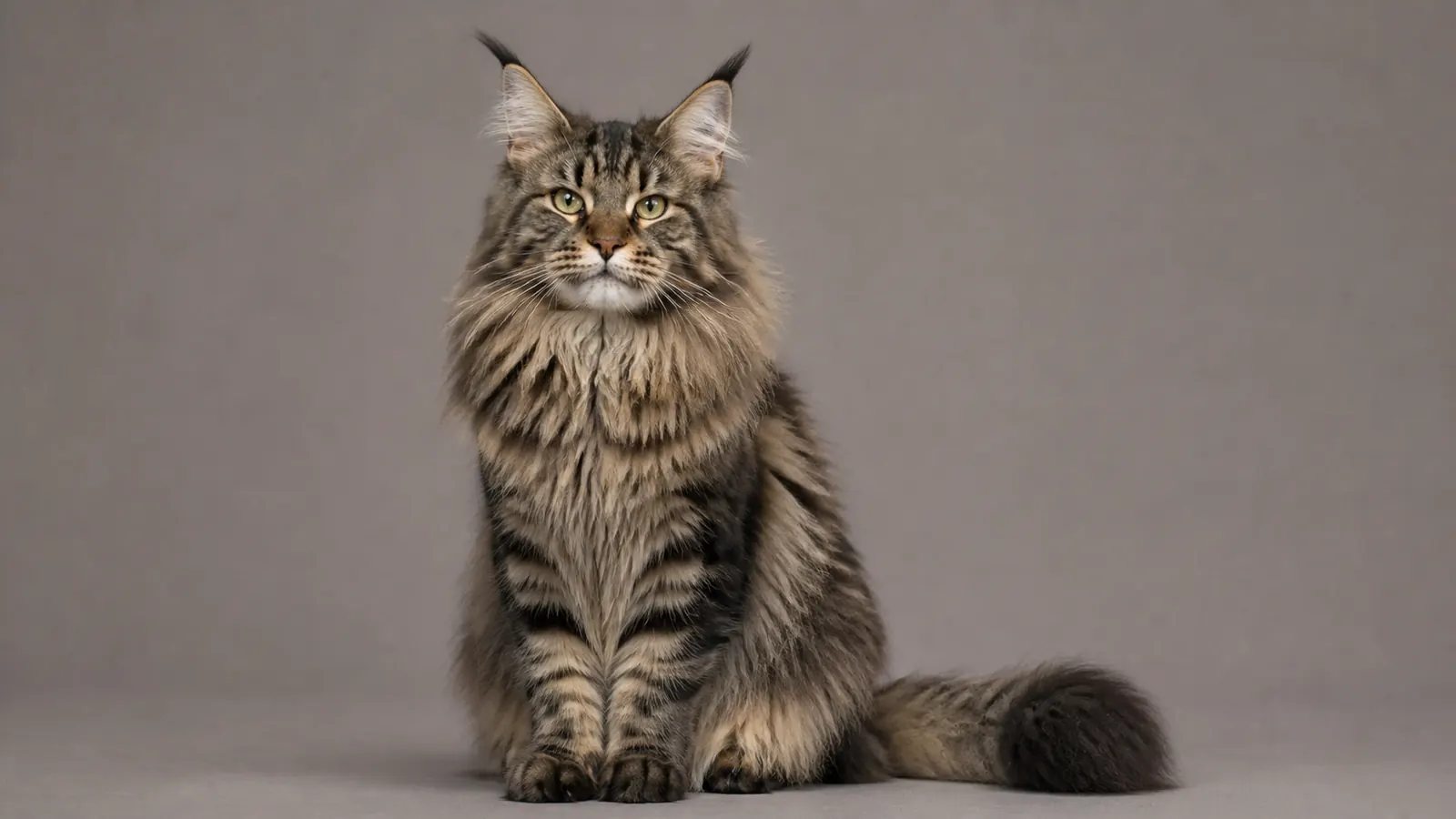
- Origin
- North America, developed in the north east of the United States
- Coat
- Long, shaggy, with a heavy undercoat and a pronounced ruff
- Size
- Among the largest domestic breeds; males noticeably bigger than females
- Typical weight
- Typically 5 to 8 kg for females, 6 to 11 kg for males
- Life expectancy
- Commonly 12 to 15 years
- Activity level
- Moderate. Playful well into adulthood without being frantic
- Grooming
- Regular combing, often two or three times weekly, with more checks during shedding or tangling
- Suits
- Households with time for daily grooming and room for a large cat
The Maine Coon is a working farm cat that became a show breed, and the build still reflects the original job.
It is heavy boned, broad chested, and slow to finish growing, which is a detail that catches new owners out.
Where the build comes from
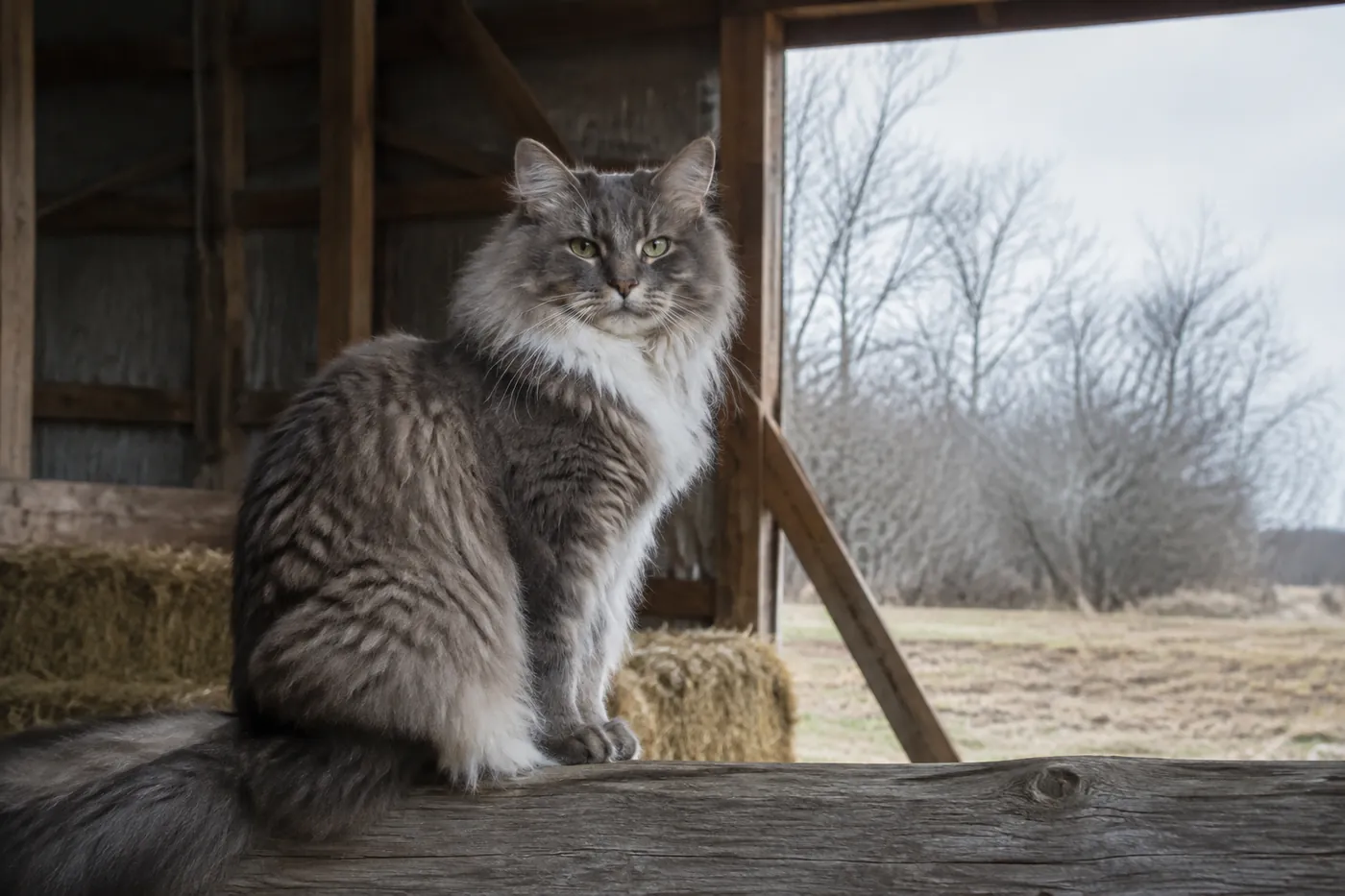
The breed developed in the north-eastern United States as a barn and ship cat, and almost every feature people admire in it was once functional.
The dense water-resistant coat, the ruff, the tufted ears, and the heavily furred paws all suit a cat working outdoors through a hard winter. The long bushy tail is thick enough to be wrapped around the body for warmth.
None of it was designed. The breed is a landrace that was formalised later, which is part of why it remains a fairly robust cat rather than an extreme one.
That history is also why the temperament is easy-going. A farm cat that could not tolerate people, dogs, and noise did not get fed.
Size changes the practical decisions
A Maine Coon reaches full size at three to four years, long after the first birthday.
That means the equipment bought for a kitten will be wrong twice before the cat is grown.
| Item | Standard size | What this breed needs |
|---|---|---|
| Litter tray | Check usable floor area | Enough room to turn and dig comfortably |
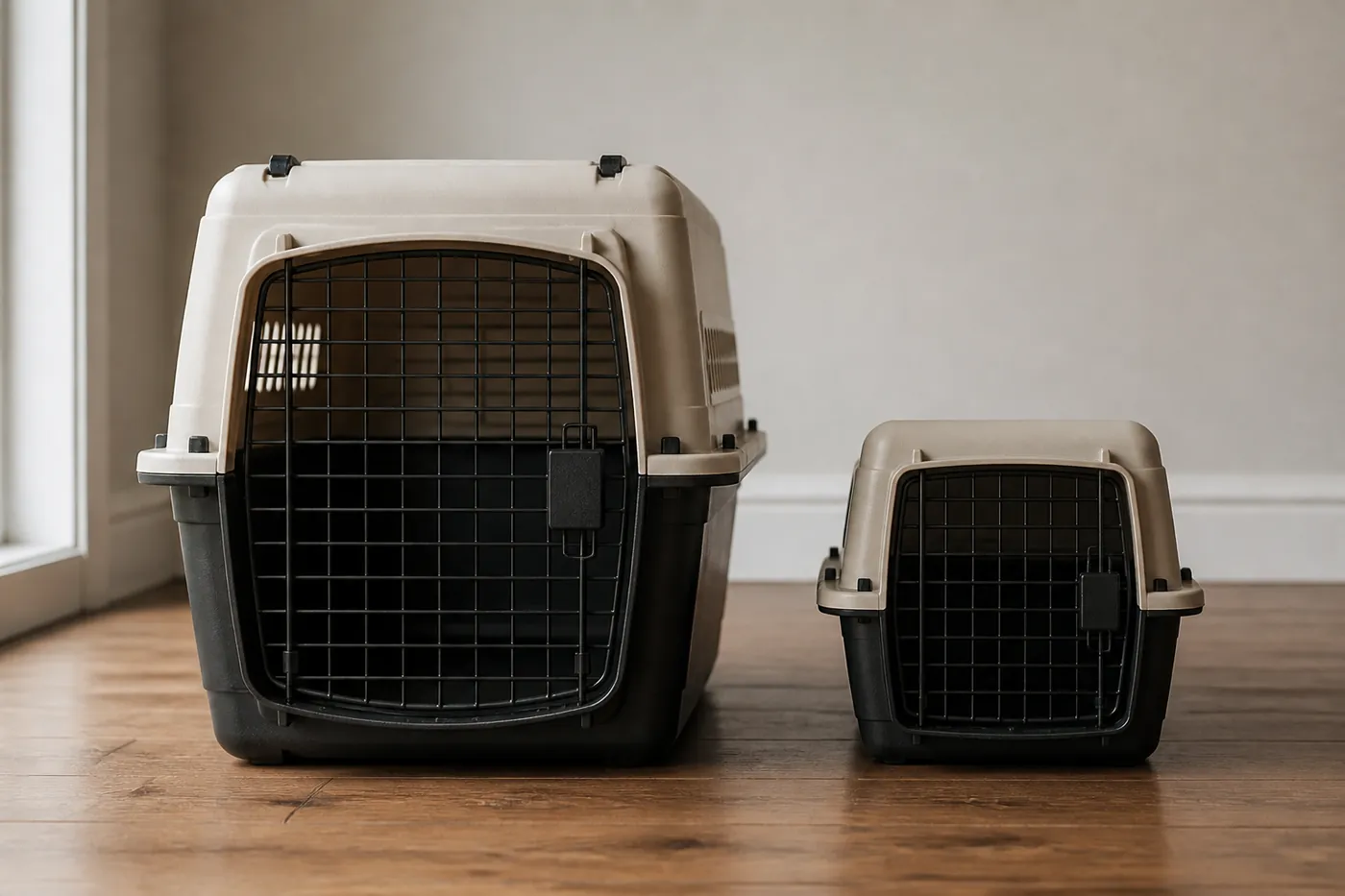
| Carrier | Check interior dimensions and load | Adult can stand, turn and lie naturally |
| Scratching post | Check usable scratching surface | Full-body stretch without instability |
| Cat flap | Standard | The large size, measured at the shoulder |
| Bowls | Standard | Wide and shallow, so whiskers stay clear |
Standard litter trays are usually too small for the adult cat, and so are most carriers and cat flaps, which is why these are worth buying at adult size from the start. A large storage box often makes a better litter tray than most sold as extra-large, and a carrier is the other common miss.
What the growth actually looks like
A Maine Coon may take several years to reach its mature proportions. That slow development does not automatically mean feeding a calorie-dense kitten diet for the whole period.
The switch to adult food is best timed with the veterinarian from age, growth, neutering and body condition, and a large-breed label is no reason to let weight keep rising.
Equipment that fitted at six months may not fit at two years, because the chest and frame keep filling out.
An adolescent's narrow appearance can be normal, but poor appetite, weak muscle or weight loss should not be dismissed as a growth phase.
How often does the coat need care?
The coat needs regular attention, with additional checks when loose undercoat collects. CFA describes combing two or three times a week as a useful routine for many Maine Coons; dense coats, shedding or difficulty with self-grooming can require more.
Feel around the armpits, belly, rear furnishings and behind the ears before combing. Work in short sections and stop if the skin pulls.
A tight mat needs skilled removal, because scissors beside folded skin can cut it.
The long-coat technique stays the same whatever the interval, and the actual coat sets how often it is needed, which for many Maine Coons is well short of a daily half-hour session.
What the coat is doing
The coat is not uniform, and knowing its structure explains where the grooming effort has to go.
It is shorter over the shoulders and longer towards the rear, with a pronounced ruff at the neck, feathered trousers on the hind legs, and a heavily plumed tail. That shape shed water off a working cat's back and kept the parts it sat on warm.
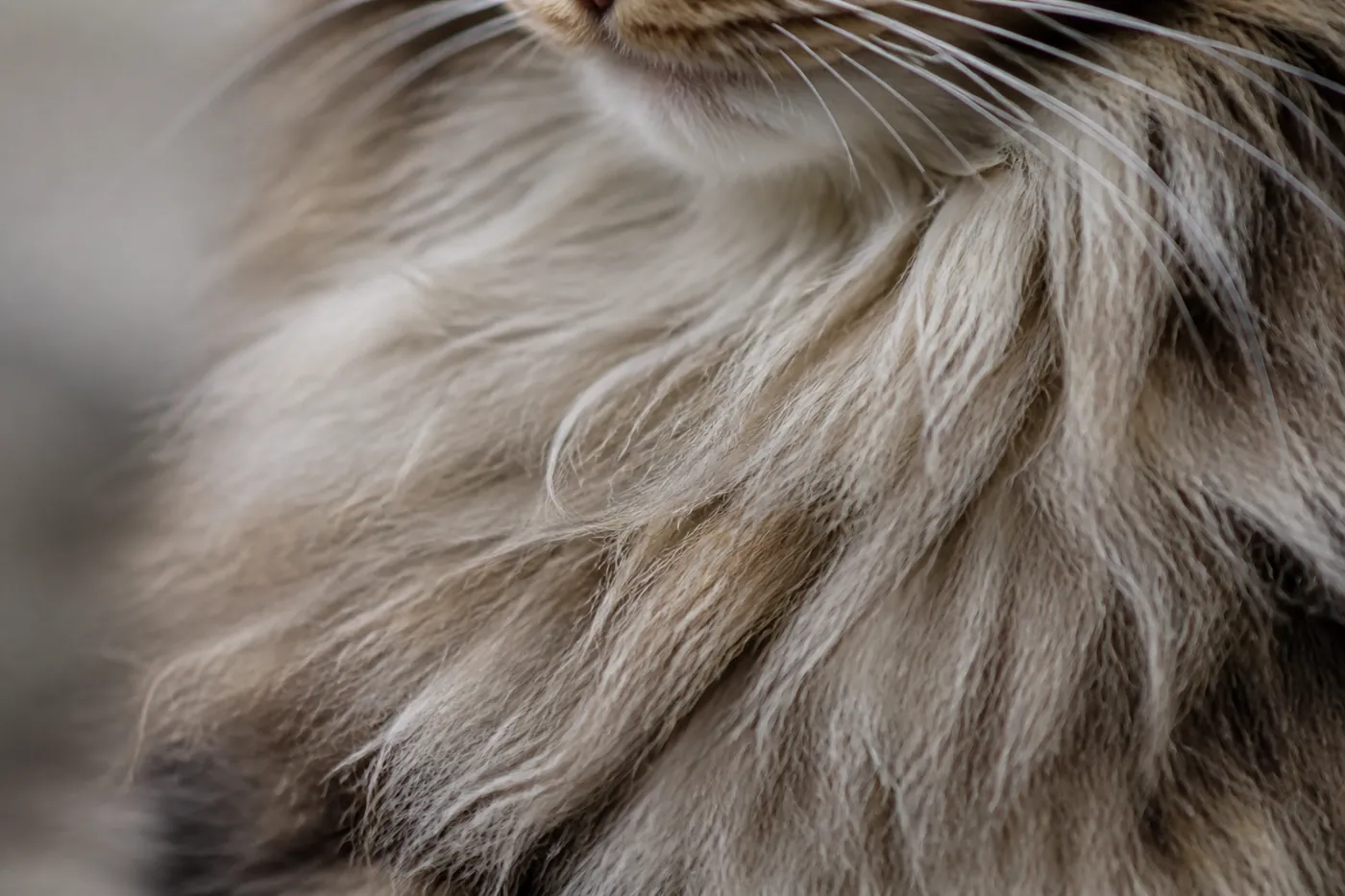
The undercoat is dense but not as fine as a Persian's, which is why a Maine Coon mats less readily than its length suggests. It still mats, and it does so in the longest areas first.
The ruff thickens noticeably in winter and drops out in spring, so the grooming load is genuinely seasonal rather than constant.
Temperament
Maine Coons are generally sociable and tolerant, and they tend to follow people around rather than demand laps.
They are often described as talkative, though the voice is usually a chirp or a trill rather than a loud meow. A trill is a greeting made with a closed mouth, so this is a cat that comments continuously and rarely demands, which is a very different thing to live with than a Siamese.
Following people has the same quality. A Maine Coon that has moved to the room you are in will usually settle a few feet away rather than climbing on.
That suits some households badly. Somebody who wants a cat that sits on them will often find this breed affectionate but slightly aloof, although some individuals do enjoy laps, which is why the individual cat matters.
Maine Coons also stay playful for longer than many breeds, and that is tied to the slow maturity rather than to temperament. A cat that is still filling out at three years old is still behaving like a young one, and the demand for games lasts well past the age it stops in most breeds.
The water thing, and other breed habits
Several behaviours turn up often enough in this breed to be worth expecting.
Many Maine Coons are unusually interested in water. They play in it, dip a paw in the bowl, drink from taps, and some will get into a shower after it has been used.
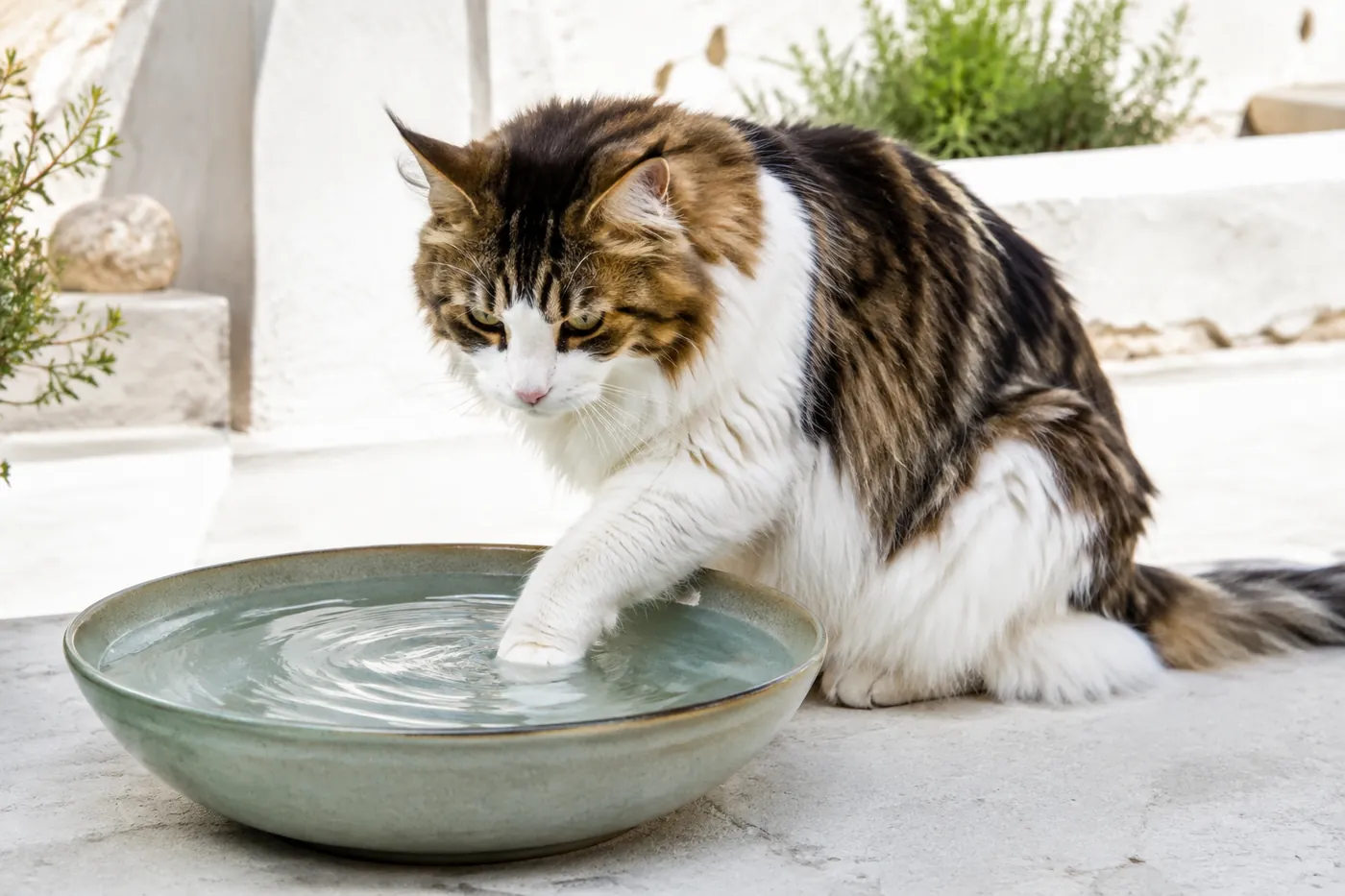
It is harmless, and it is a reason to expect a wet floor around the water bowl.
They tend to carry things, and some retrieve reliably enough to make a game of it. That is one of the easier behaviours to build on with reward-based training.
Polydactyly, meaning extra toes, was common in the original working population and is still seen. It is harmless, and it means checking more claws at each trim.
Keeping a large cat occupied
Size changes what enrichment has to look like, and most cat furniture is not built for this animal.
Most cat trees are too small and too light. A Maine Coon needs platforms wide enough to lie on properly and a base heavy enough not to shift when eight kilograms lands on it, which usually means a floor-to-ceiling unit or wall-mounted shelving.
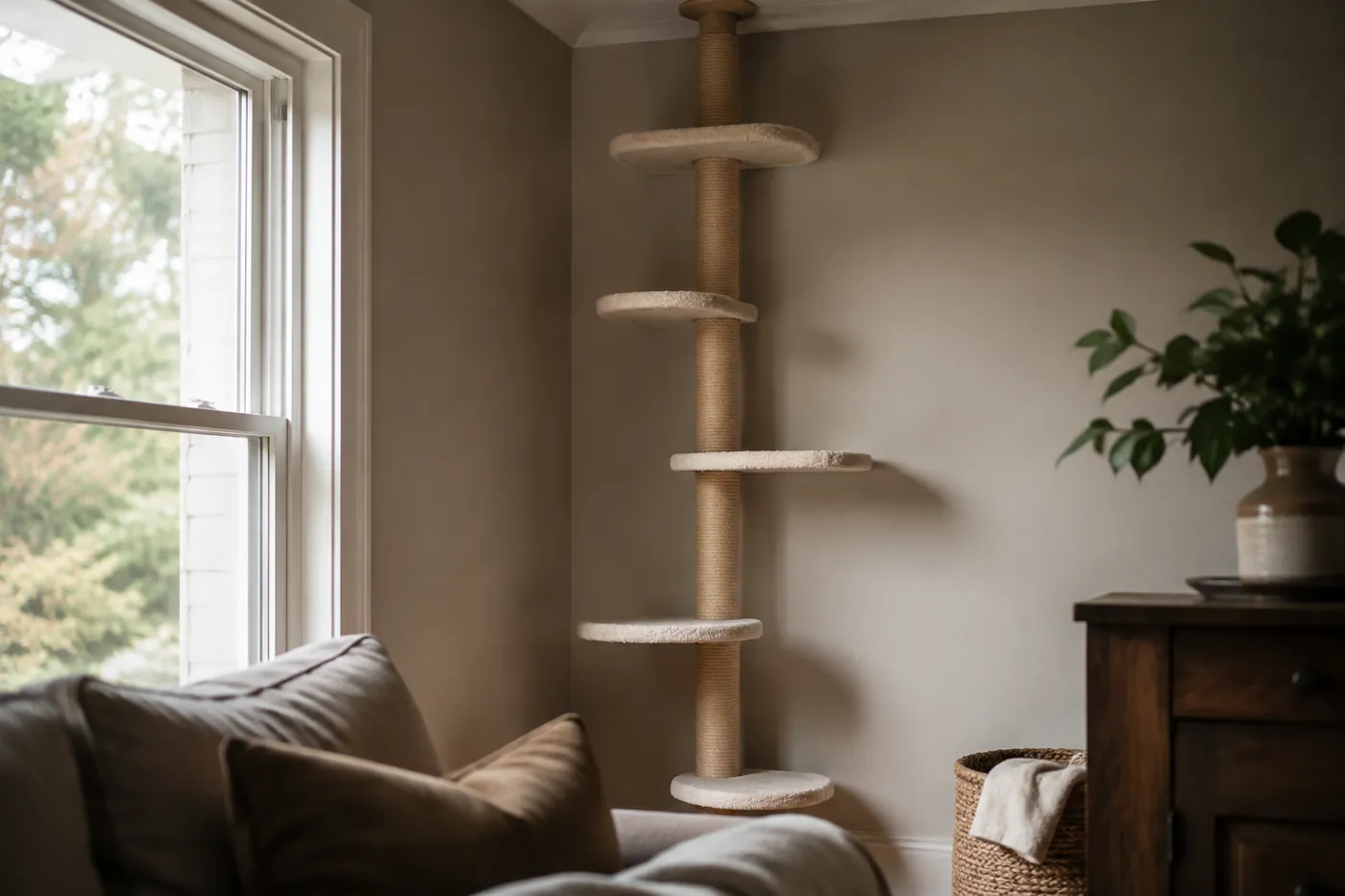
Shelf spacing matters as much as height. Gaps sized for an average cat ask a large one to make an awkward jump, and a heavy cat landing badly can injure itself.
The breed stays playful well into adulthood, so the play routine does not taper off at two the way it does in some cats. Two proper sessions a day remains reasonable for years.
Many take readily to harness training and to fetch, both of which suit a large intelligent cat that likes being involved. Neither happens without deliberate work.
What a large cat actually costs to run
Size shows up in the running costs more than in the purchase price, and it is worth working out before rather than after.
Food needs vary with body size, activity, age and condition, and the amount is judged by body condition rather than by the label. Slow maturation alone does not justify an extended growth diet.
Litter use scales with the cat, and a bigger tray takes more of it. Grooming is either your regular time or a groomer's fee several times a year.
Veterinary costs also scale, because most medication is dosed by weight and an eight-kilogram cat is not a four-kilogram one. Insurance quotes for the breed reflect both that and the cardiac screening history.
Life expectancy, and the joint question
Maine Coons live around twelve to fifteen years on average, and the size affects how those years go.
Weight management matters more in a large cat than a small one. Every extra kilogram loads joints already carrying a heavy frame, and hip dysplasia and arthritis are both more relevant in this breed than in a light one.
That makes body condition worth checking by hand from young adulthood rather than from middle age. A large cat can be overweight without looking it, because the frame absorbs the outline.
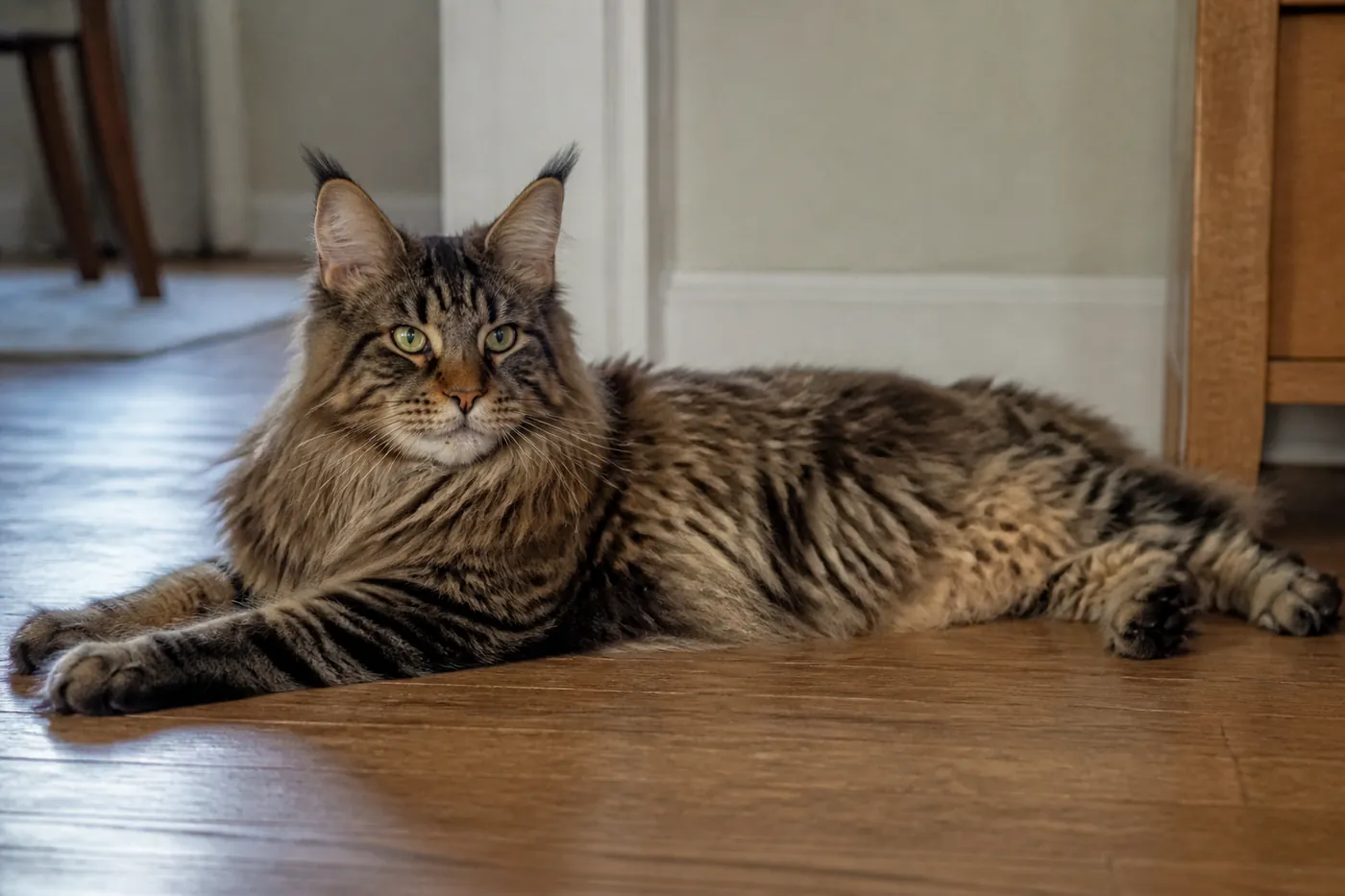
Signs of joint pain are worth watching for earlier here too. Cats show arthritis by not doing things rather than by limping, so a Maine Coon that has stopped taking a favourite jump is worth an examination rather than an assumption about age.
The frame that makes this breed impressive is also the load its joints carry for life.
Health screening that matters
This is the breed where a DNA test and a heart scan answer two different questions, and a buyer needs both.
Hypertrophic cardiomyopathy thickens the heart muscle until the chamber cannot fill properly. Some affected cats remain without signs for years; others develop heart failure or an arterial clot.
Sudden breathing difficulty or painful hind-leg weakness requires urgent veterinary care.
Maine Coons have a breed-specific mutation that can be DNA tested, and this is where the reasoning usually goes astray. A clear DNA result means the cat does not carry that one mutation, and cats without it still develop the disease.
The scan is what actually screens for it. An echocardiogram shows the muscle as it is on the day, so screening is a repeated exercise across a breeding cat's life rather than a certificate obtained once.
Spinal muscular atrophy is the cleaner case. It is recessive, DNA testable, and two parents clear of the tested SMA variant cannot pass that variant on, which is why an untested litter is a decision rather than an oversight.
Affected kittens lose the spinal nerve cells that drive the hind limb muscles from around three or four months. The cat is unsteady and weak behind rather than in pain, and it usually lives a long time as a disabled animal.
Hip dysplasia matters here for a reason that has nothing to do with genetics alone. The same joint laxity in a seven kilogram cat carries far more load than in a three kilogram one, which is why the breed is screened for a condition most cats are not.
- Hypertrophic cardiomyopathy
- A heart muscle disease seen in the breed; ask about cardiac screening
- Hip dysplasia
- More relevant in a large, heavy cat than in a small one
- Spinal muscular atrophy
- A genetic test exists; ask whether the parents were tested
- Polycystic kidney disease
- Less associated with this breed, but worth asking about
Joint load also makes the changes that come with age worth watching earlier in this breed than in a light one.
Choosing a kitten, and what to ask
This is a popular and expensive breed, which means it attracts breeders of very different standards.
Seeing the kitten with its mother, in the home matters because the mother's temperament and condition tell you more than any conversation, and an arrangement to meet elsewhere removes that evidence.
The parents' HCM screening should be a scan by a cardiologist rather than a DNA test alone, and it should carry a date. Screening is repeated periodically because the disease develops with age, so a scan from five years ago is not current.
The SMA and PK deficiency DNA results are one-off tests and should be documented, and a breeder who has them will produce them without hesitation.
Kittens of this breed usually leave at twelve to thirteen weeks at the earliest rather than eight, since larger slower-maturing breeds benefit from longer with the litter.
- Seen with the mother, in the breeder's home
- Parents' HCM scan results, with a recent date
- SMA and PK deficiency DNA test results for the parents
- A written contract, and registration paperwork if the kitten is registered
- First vaccination, worming, and microchipping already done
- A breeder who asks you as many questions as you ask them
Who this breed suits
The Maine Coon has a reputation as an easy cat, and that is true in temperament and not in workload.
It suits a household that is home reasonably often, has space for a large animal to move, and will genuinely groom most days. The sociability that makes it appealing is the same trait that makes it poor company for itself.
It suits families well. The tolerance is real, and a cat this size is less easily hurt by a clumsy child than a small delicate one.
For a cat of similar size and slow maturity with a considerably easier coat, the Ragdoll is the closer comparison.
It does not suit somebody who wants a low-effort cat. The coat needs regular hands-on care, the running costs are those of a very large animal, and a bored Maine Coon is a considerable amount of cat to have underfoot.
| Suits | Does not suit |
|---|---|
| A household home reasonably often | Somebody out all day |
| Space for a large animal to move | A flat with no room to climb |
| Someone who will groom most days | Anybody wanting a low-effort coat |
| Families, since the tolerance is real | A budget priced for an average sized cat |
Adult size, the individual coat and the company you can provide decide whether a Maine Coon fits.
Common Questions
How big does a Maine Coon actually get?
Females typically reach 5 to 8 kg and males 6 to 11 kg, with a long body and tail on top of that. They are large cats rather than the extreme sizes shown in viral photographs.
Do Maine Coons need more grooming than other long-haired cats?
Many Maine Coons do well with combing two or three times weekly, with additional checks during shedding or when the individual coat tangles. The individual coat and the cat's handling tolerance set the routine better than a fixed daily duration does.
Are Maine Coons good with children and dogs?
They are generally tolerant and sociable, which makes them a common choice for busy households. Temperament still varies by individual, so the cat itself tells you more than the breed does.
Checked Against
Published 2 April 2026. Last updated .





