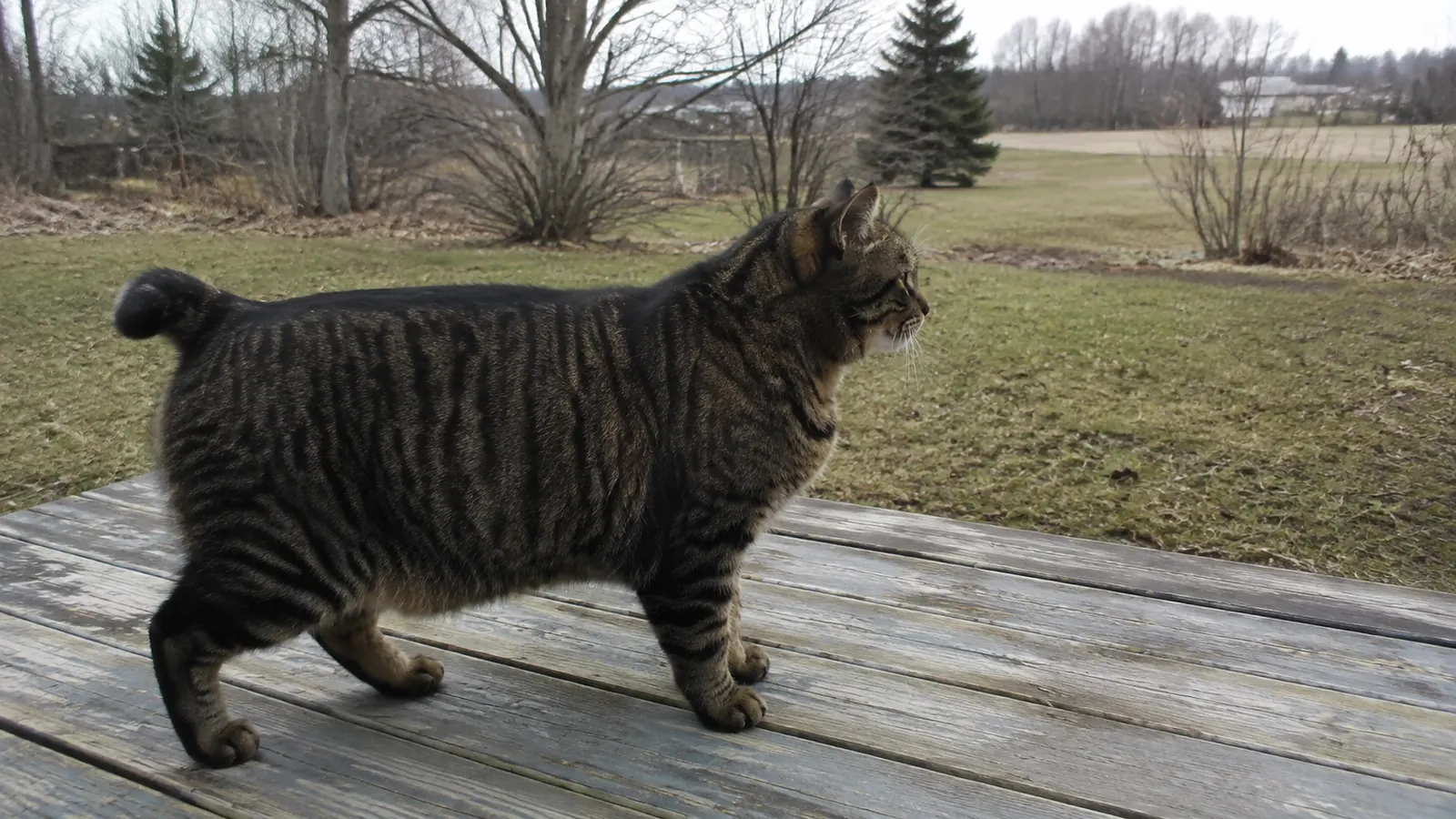
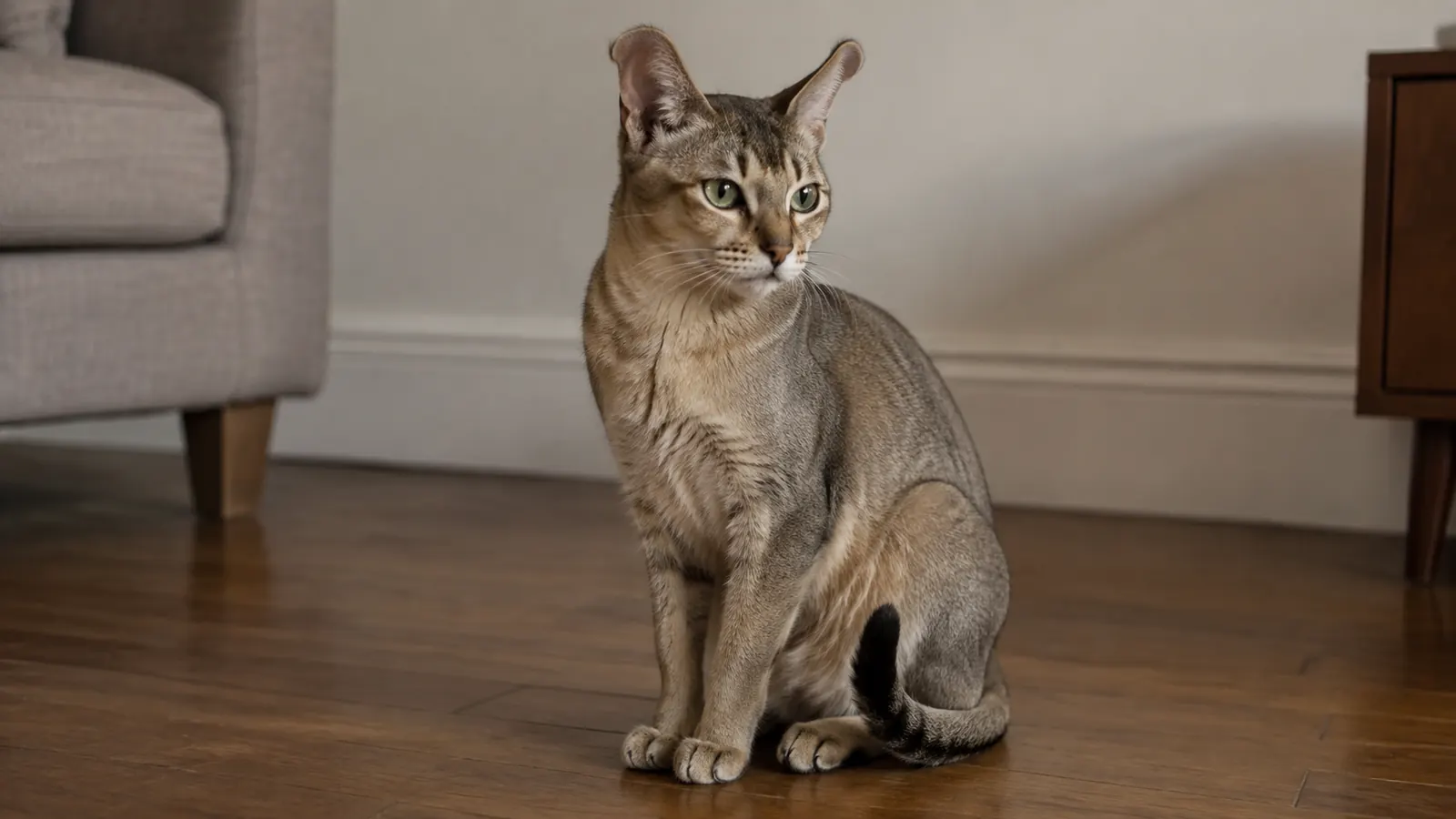
What Is an American Wirehair, and Why Is Its Coat Rare?
The American Wirehair is a fully recognised CFA breed with a written standard and an easy, people-focused temperament, and it is also the rarest breed that association registers. The two things that change your daily life are a dominant coat gene that not every kitten in a litter inherits, and skin that needs washing rather than brushing.
- Origin
- A spontaneous mutation in a litter of farm cats near Verona, New York, in 1966
- Coat
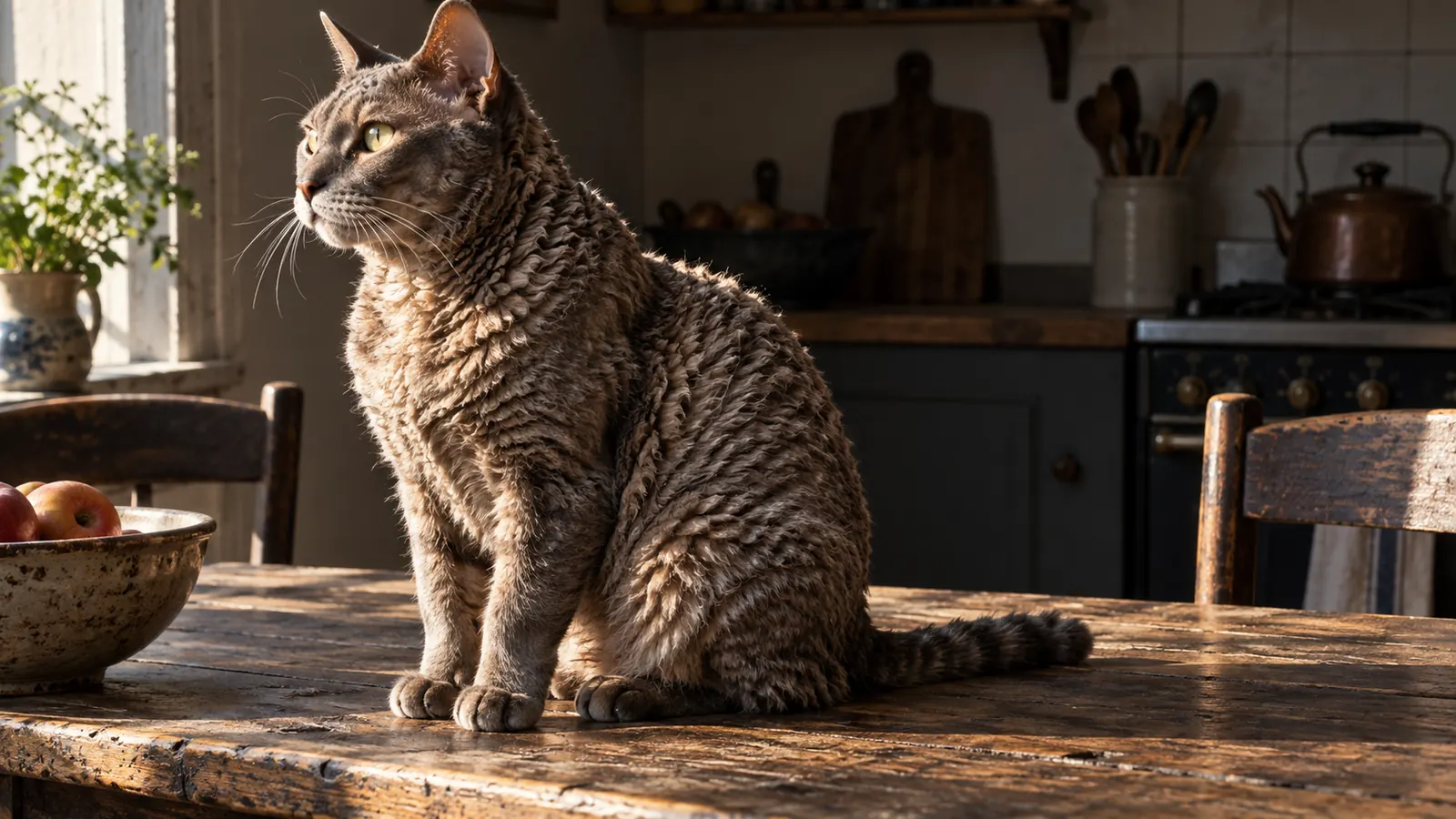
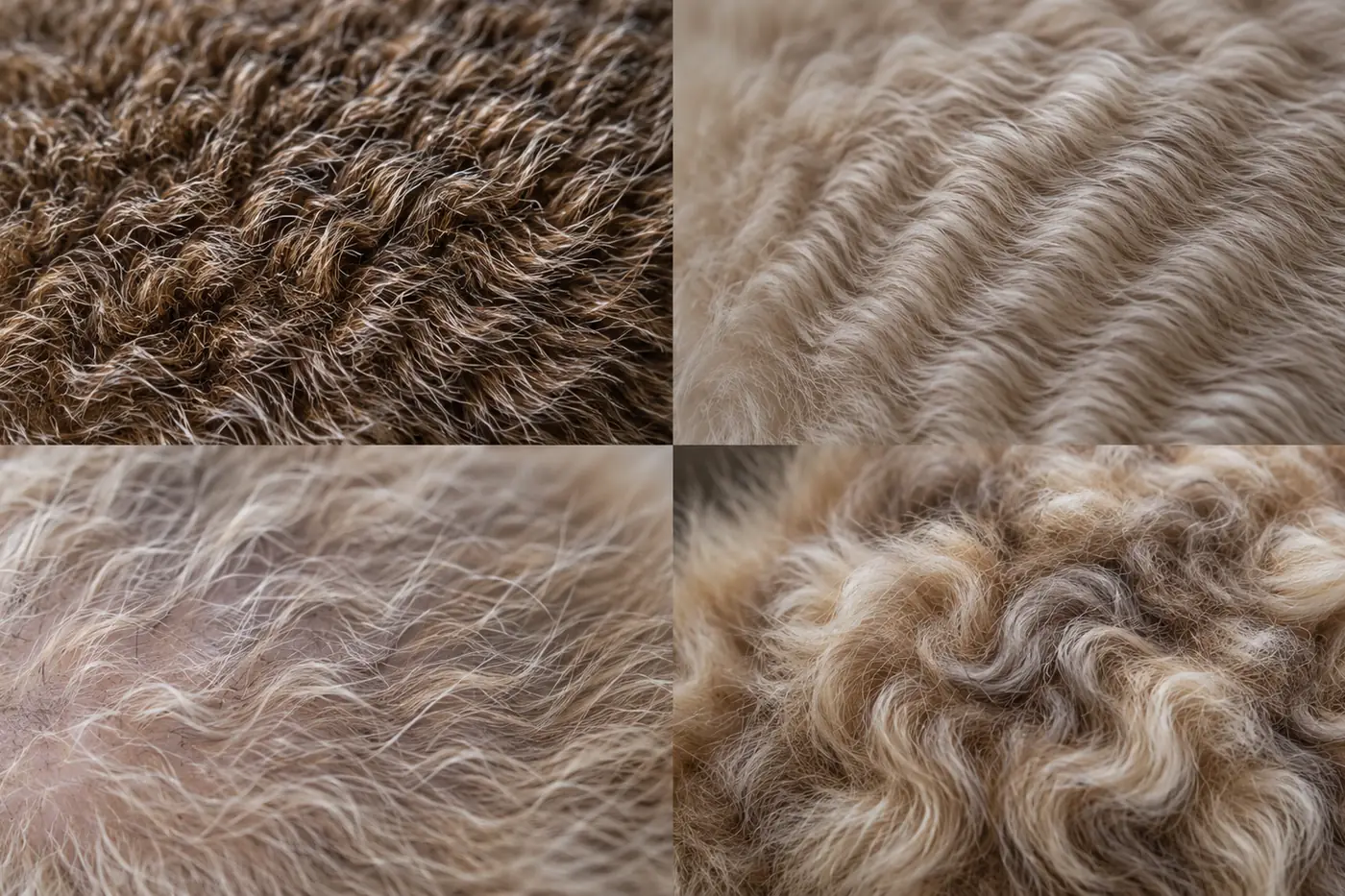
- Springy and resilient, with individual hairs crimped, hooked or bent, including the whiskers
- Size
- Medium to large and muscular, built on the American Shorthair pattern
- Typical weight
- Typically about 8 to 12 pounds, around 3.5 to 5.5 kg, with males larger than females
- Life expectancy
- Generally quoted at around 14 to 18 years, without a breed-specific study behind it
- Activity level
- Moderate. Playful and sociable, without the sustained demands of an oriental breed
- Grooming
- Low brushing, but regular bathing for oily skin and frequent ear cleaning
- Suits
- Households that want an affectionate, unfussy cat and will do a washing routine rather than a brushing one
The American Wirehair is a recognised, standardised, championship-level breed that almost nobody owns. The Cat Fanciers' Association accepted it for registration in 1967 and for championship competition in 1978, and as of 2017 it ranked as the rarest of the CFA's breeds. The World Cat Federation's list of shorthair breeds includes it too.
The evidence on this breed is solid, which is unusual for a rare cat, so the hard parts are finding one and keeping up with its skin and ears.
Where did the coat come from, and why is it still rare?
A single kitten in a barn litter near Verona, New York, in 1966 carried a coat nobody had seen before. The breeder Joan O'Shea took him on as Council Rock Farm Adam of Hi-Fi and bred him to his sister to establish the trait. That founder cross tells you the whole story of the gene pool: everything traces back to one animal, and early development ran on close line breeding. The mutation has never turned up again anywhere else in the world.
The American Shorthair remains the only permitted outcross, which has been the breed's main defence against the consequences of that narrow start. It is also why a Wirehair looks like an American Shorthair wearing a different coat, and why the standard reads like the American Shorthair standard with the hair rewritten.
Why does a Wirehair litter contain straight-coated kittens?
The wirehair gene is incompletely dominant, so a wire-to-wire mating does not guarantee wired kittens. Litters routinely contain both wired and straight-coated cats, and the straight-coated ones are ordinary, healthy, perfectly good pets that simply are not what you queued for.
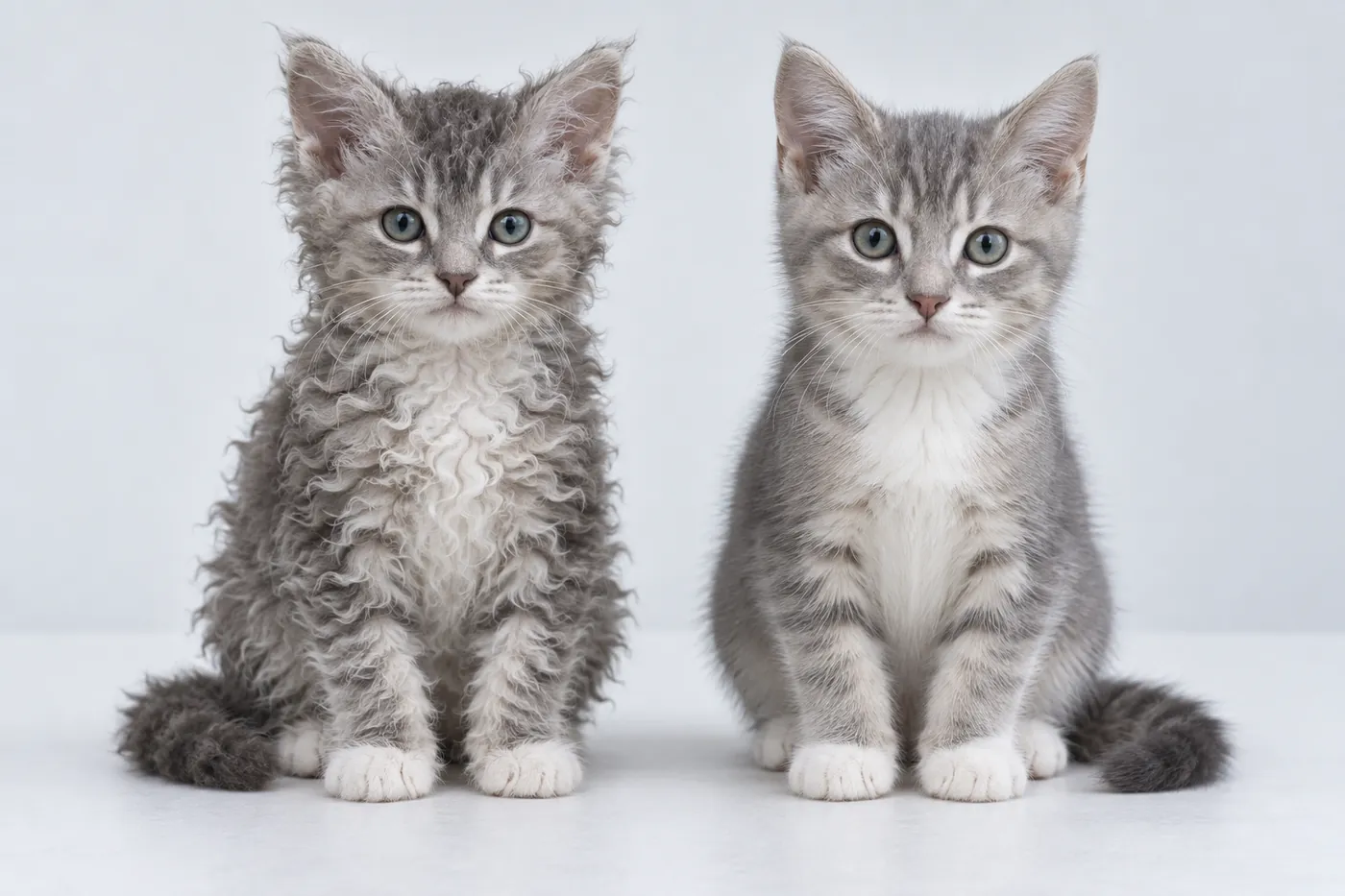
The degree of wiring varies as much as its presence does. Some cats come out dense, springy and unmistakable. Others are sparse enough to look moth-eaten, and occasional cats carry wiring only in the whiskers. Longhaired kittens turn up too, and are never shown.
| What arrives | How common | What it means for you |
|---|---|---|
| Dense, resilient, springy coat | The show ideal, and the minority | The look you are paying for; springs back when you stroke it |
| Light or patchy wiring | Common | A pet-quality cat, indistinguishable in temperament and health |
| Crimped whiskers only | Occurs | Still carries the wire factor, but does not look like the breed |
| Straight coat | Routine in any litter | An ordinary American Shorthair type in all but paperwork |
| Longhaired | Occasional | Never shown, and sold as a pet |
What does the coat actually feel like?
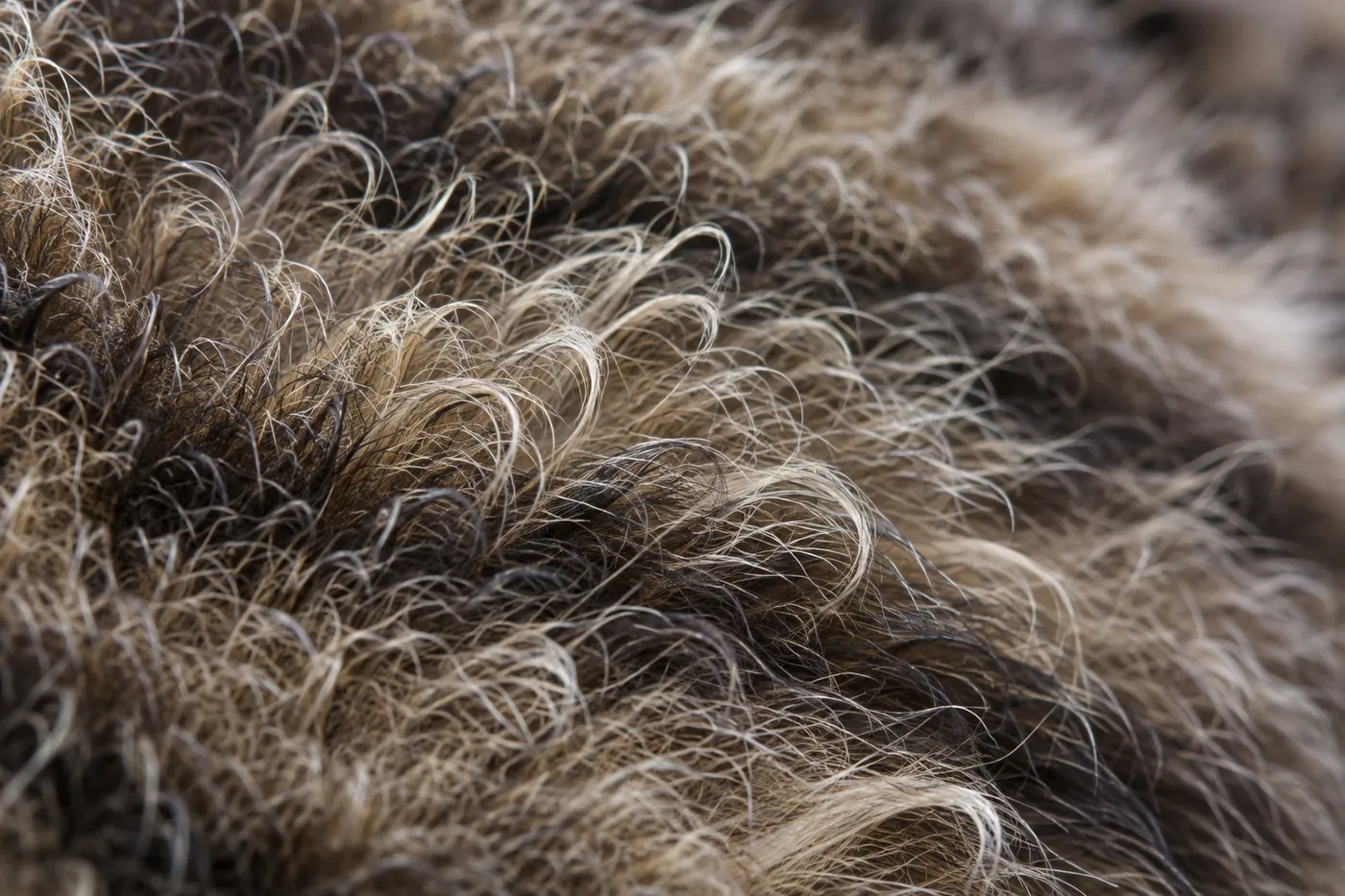
Despite the name, a dense coat feels fairly soft under the hand and springs back when you stroke it, which is the resilience the standard is looking for. Sparse coats feel closer to an ordinary short coat with texture in patches.
The whiskers are the giveaway. They crimp and bend in shallow waves rather than running straight, and even a cat with minimal body wiring usually shows it there.
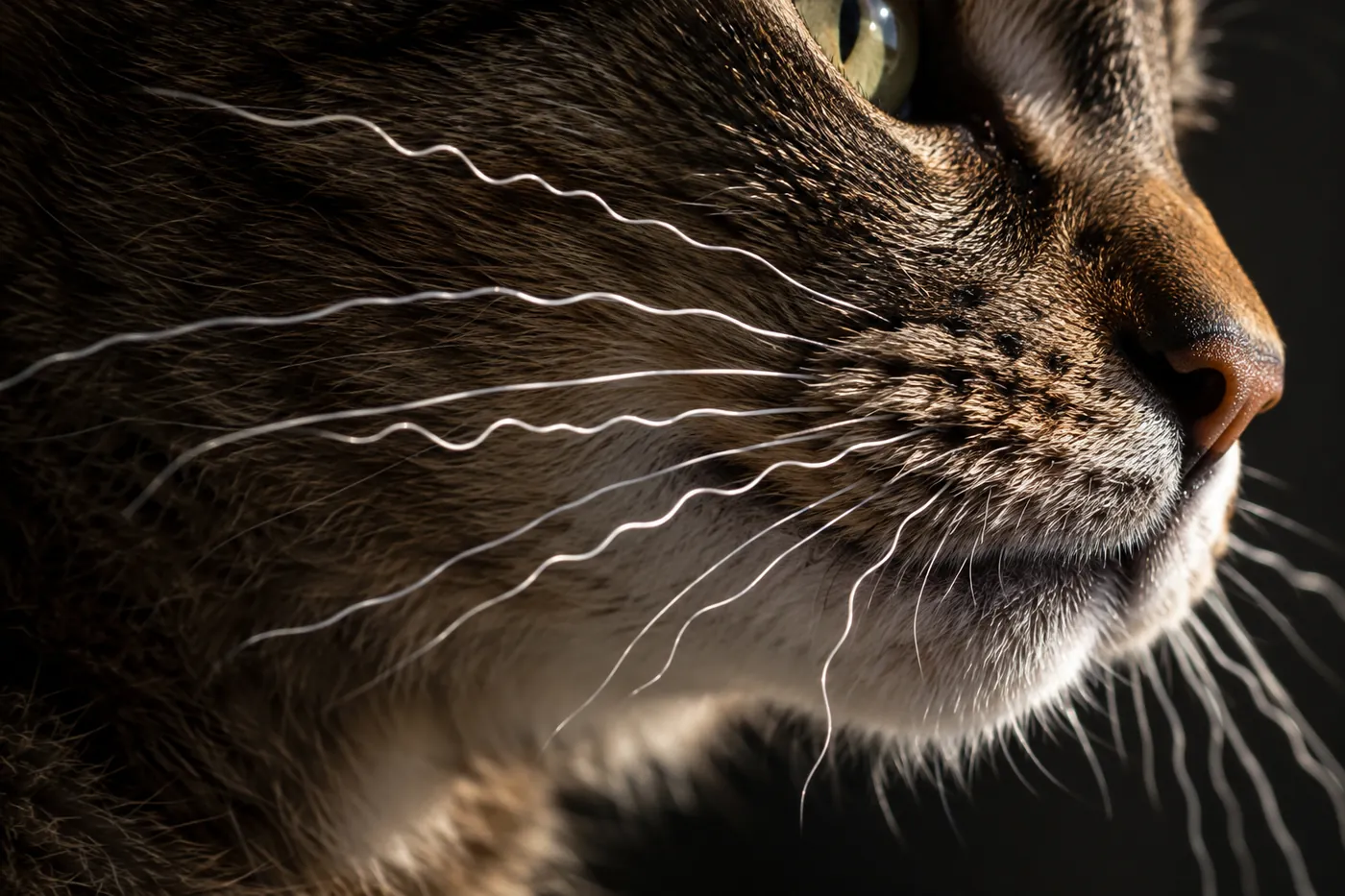
Coats also change through the year and through a moult, and a cat can look considerably better or worse depending when you see it. That is normal for the breed rather than a sign of a problem.
What do the skin and ears actually need?
Upkeep is where the Wirehair stops being a low-maintenance cat. The skin under that coat tends toward oiliness and sensitivity, so the grooming routine is a washing routine rather than a brushing one. Most Wirehairs accept baths readily, which is fortunate, and establishing that early is far easier than introducing it to a resentful adult.
Brushing is largely unnecessary and can flatten the crimp. A comb through during a heavy moult is enough.
The ears are the bigger commitment. This breed produces a great deal of dark earwax that has to be cleaned regularly, and left alone it accumulates enough to cause irritation and infection.
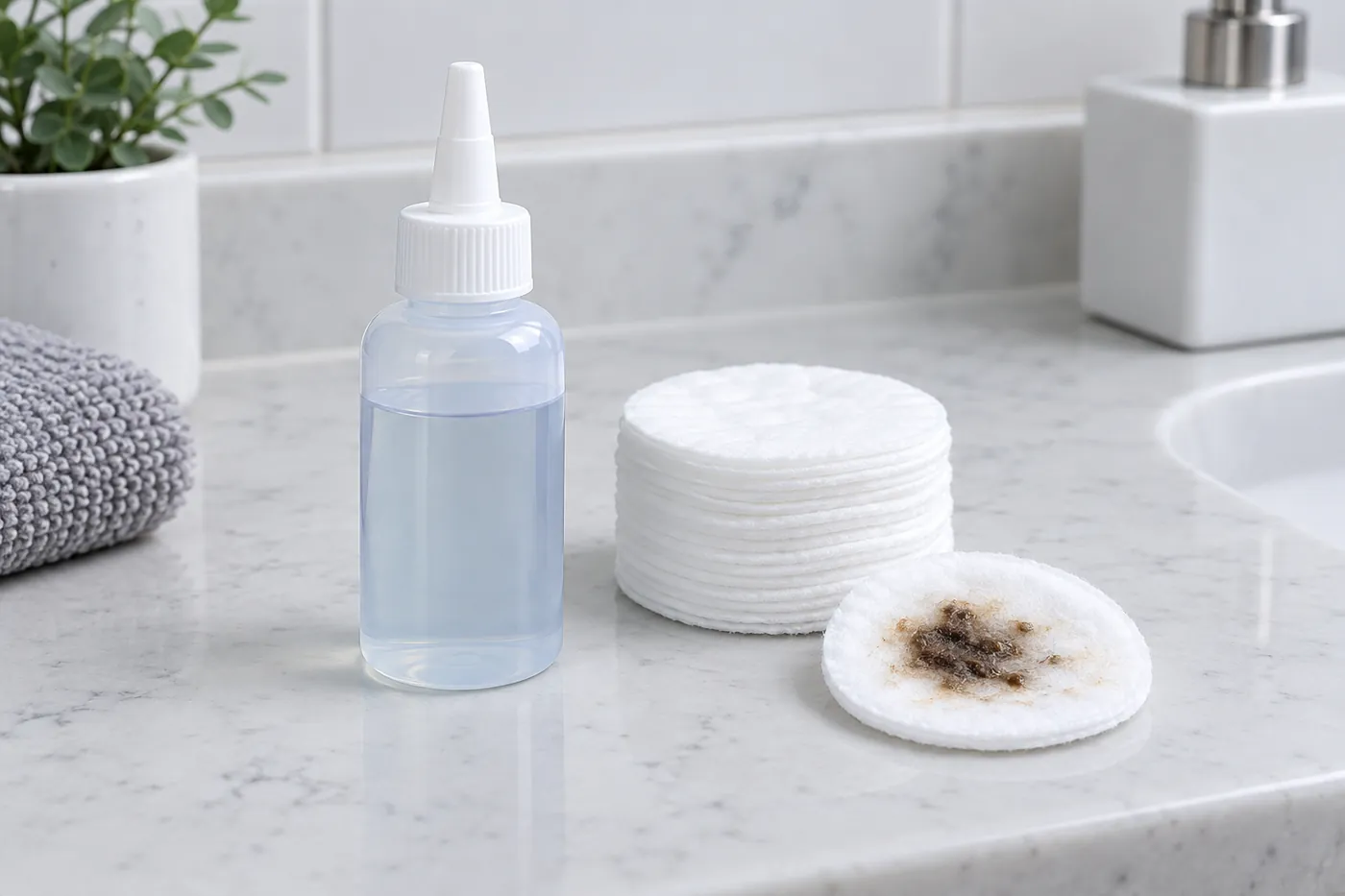
- Use a veterinary ear cleaner rather than water, alcohol or a home remedy, and warm the bottle in your hand first.
- Fill the ear canal, massage the base of the ear for several seconds until you hear it move, then let the cat shake.
- Wipe only what you can see with a cotton pad, and never push anything down into the canal.
- Do one ear per session at first, and stop while the cat is still tolerating it.
- Book a vet appointment for a head shake, a smell, redness or a cat that scratches at an ear, because wax and infection look similar from outside.
Some Wirehairs also show skin allergies, and sensitive skin is a recognised feature of the breed rather than an unlucky individual.
A cat that is scratching, over-grooming or losing coat needs a diagnosis rather than a change of shampoo, since that kind of loss falls outside the ordinary coat changes that come with age.
How does it differ from the Rex breeds?
The textured-coat breeds get confused constantly, and the confusion sends people to the wrong breed. The wirehair mutation is genetically distinct from every Rex variant, and the coats neither feel nor behave alike.
| Breed | What the coat is | What it needs |
|---|---|---|
| American Wirehair | Individual hairs crimped, hooked or bent; springy and resilient | Bathing rather than brushing, plus frequent ear cleaning |
| Cornish Rex | No guard hairs at all; a soft wavy undercoat only | Warmth, and gentle handling of a very thin coat |
| Devon Rex | A short, sparse, loosely waved coat with fragile hairs | Warmth, careful bathing, and no aggressive brushing |
| Selkirk Rex | A full coat in loose plush curls, short or long | Regular gentle combing, and curls that flatten if over-brushed |
Availability differs just as sharply: the Cornish Rex, the Devon Rex and the Selkirk Rex are all considerably easier to find than a Wirehair.
Do they shed, and what colours are there?
They do shed; the crimp just makes it less visible, because a crimped coat holds loose hair against the body instead of releasing it cleanly. That keeps hair off the sofa but leaves it in the coat. That trapped hair is why breeders raise hairballs as a concern, and it is the argument for a comb through during a heavy moult even though brushing is otherwise discouraged.
Colours and patterns follow the American Shorthair standard rather than being restricted. Silver tabbies, browns, reds, blues, tortoiseshells, bicolours and smokes all occur. No colour identifies the breed, which means the coat texture is the only reliable visual marker, and a photograph is a poor way to judge it.
What is the temperament like?
Breeders consistently describe the Wirehair as easy to live with: strongly people-oriented, gentle, playful and comfortable with children, and the temperament inherits from the American Shorthair side rather than from anything exotic.
They are not demanding in the way a Siamese or a Bengal is. A typical Wirehair follows you around, joins whatever is happening and settles when you do, without needing a structured programme, and interactive play in short bursts fits ordinary exercise needs by age.
How big does an American Wirehair get?
An American Wirehair is medium to large, muscular and heavier in the hand than it looks. Males run larger than females, and the standard asks for a well-muscled cat with a rounded head and a firm body. Small individuals do turn up, which the breed's own literature attributes to the line breeding its narrow founding made necessary.
Growth follows the ordinary pattern of when a cat stops growing rather than a slow-maturing one.
What is known about the health?
The breed is generally described as hardy, with no inherited disorder specific to it.
That is a genuinely better position than most rare breeds occupy, and it comes from the American Shorthair outcross keeping the population functional. It is not the same as a clean bill of health.
Hypertrophic cardiomyopathy is the condition to ask about, because the American Shorthair is the outcross and HCM is screened for in that population. Ask for an echocardiogram result on the breeding cats, performed by a cardiologist, with a date on it.
Hairballs are the second, and they are a practical concern rather than a genetic one. A textured coat holds more loose hair, and breeders raise it often enough that it is worth managing rather than waiting for. Frequent hairballs belong with vomiting as a question for a veterinarian rather than a grooming problem.
- Ask for
- A dated echocardiogram from a cardiologist on both parents, not a stethoscope check
- Ask about
- Skin allergies in the line, and what the breeder's bathing routine actually is
- Ask about
- The last three litters, and how many kittens came out wired
- Ask about
- Which American Shorthair lines have been used as outcrosses
- Expect
- Kittens to stay until at least twelve weeks, with a contract and a health guarantee
How much does a kitten's coat tell you about the adult?
A kitten's coat tells you something about the adult's, though less than buyers assume. Wiring is usually apparent at birth, in the sense that a kitten either has textured hair or does not. What is not apparent is how dense that texture will end up, and coats change substantially across the first year and keep changing with each moult. A kitten that looks sparse can fill in, and one that looks spectacular can thin out.
The whiskers are the more reliable early indicator of the wire factor itself, because a crimped whisker is present whether or not the body coat shows much. That is a statement about genetics rather than about how the adult will look.
For a show-quality coat, an older kitten or a young adult at a higher price is the safer purchase; for a pet, the variability does not matter.
How does a Wirehair fit with children and other cats?
The breed's own literature is unusually direct about its fit with children and other cats. Breeders describe the Wirehair as gentle, playful and comfortable with young children, and the temperament comes from the American Shorthair rather than from a highly strung line. This is a cat that was a barn cat a handful of generations ago.
The practical caution with small children has nothing to do with temperament: a busy household is one where weekly baths and ear cleaning are easy to let slide, and the skin does not forgive that. Introductions to a resident cat follow the ordinary gradual course, the same one used for stopping one cat attacking another.
Does a Wirehair's skin need a special diet?
No special diet is needed, although sensitive skin attracts plenty of supplement marketing. A complete commercial diet supplies what skin and coat require. Adding oils to the bowl of a cat already on a balanced food can unbalance it, and it does not treat an allergy.
Skin that is genuinely inflamed needs a diagnosis rather than a supplement. Food allergy, flea allergy, atopy and infection all look similar from outside and are managed completely differently, so the appointment comes before any change to the bowl.
Portions set by body condition, using the method in how much to feed a cat, keep weight steady in a moderately active indoor cat.
What will finding one actually involve?
Finding one takes patience, and probably travel: the rarest CFA breed means a handful of active catteries, small litters and waiting lists measured in months rather than weeks. Small populations are also exactly where misrepresented cats appear, because a buyer who has never seen the breed in person cannot judge a coat from a photograph.
Registration paperwork is the check. A CFA-registered cat has a pedigree you can read, which is the practical advantage of buying into a championship breed rather than an experimental one.
- Ask for the CFA registration number and check that it resolves, rather than accepting a photograph of a certificate
- Ask to see the cat in person or on a live video call, because coat texture does not survive a still image
- Ask what proportion of recent litters came out wired, and what happens to the straight-coated kittens
- Expect a waiting list measured in months, and treat an immediately available kitten as a question rather than luck
- Expect a written contract, a health guarantee and a kitten that stays until at least twelve weeks
The breed is now also bred in Japan and France, so an import is possible, and the tests an imported cat needs before it travels apply to a Wirehair as much as to any other breed.
Who should think twice about a Wirehair?
Anyone who wanted a low-maintenance cat should think twice. The Wirehair is easy in temperament and demanding in upkeep, which is an unusual combination and the opposite of what the short coat suggests. A household that will not bath a cat or clean ears weekly will struggle to keep that skin and those ears healthy.
Anyone in a hurry should also look elsewhere, and anyone who specifically wants the wiry coat should understand that the kitten they are offered may not have it.
A household that wants a textured coat with better availability has three ordinary alternatives in the Cornish Rex, the Devon Rex and the Selkirk Rex, compared in the table above.
Should you get an American Wirehair?
Yes, if you want a genuinely easy-natured, well-documented cat and the ear and bath routine sounds like something you would actually do rather than something you would intend to do.
Its health and character are sound. What holds most people back is that there are almost none of them, and that the coat which makes it worth the search is the same coat that makes the work. The buyers who do well want the cat rather than the rarity, and will accept a straight-coated sibling if that is what the litter produces.
Common Questions
How rare is the American Wirehair?
It is the rarest breed the Cat Fanciers' Association registers, as of 2017. The mutation appeared once, in a New York barn litter in 1966, and has never occurred independently anywhere else.
Will all the kittens in a Wirehair litter have wiry coats?
No. The gene is incompletely dominant, so even a wire-to-wire mating produces litters containing straight-coated kittens. The degree of wiring also varies widely, from dense and springy to whiskers only.
Does an American Wirehair need a lot of grooming?
Not brushing, which can flatten the crimp. It needs bathing instead, because the skin tends to be oily, and it needs frequent ear cleaning because the breed produces a great deal of dark wax.
Is the American Wirehair related to the Cornish or Devon Rex?
No. The wirehair mutation is genetically distinct from the Rex mutations that produce curly coats in those breeds, and the coat texture, care needs and body type are all different.
What health screening should a Wirehair breeder show me?
A dated echocardiogram from a veterinary cardiologist on both parents, because hypertrophic cardiomyopathy is screened for in the American Shorthair population used as the outcross. Ask about skin allergies in the line as well.
Are American Wirehairs hypoallergenic?
No. No cat breed is. The allergen is Fel d 1, produced in saliva and skin glands, and coat texture does not remove it.
Checked Against
- The Cat Fanciers' Association: American Wirehair cfa.org
- The Cat Fanciers' Association: American Wirehair breed article cfa.org
- The International Cat Association: American Wirehair tica.org
- Cornell Feline Health Center: hypertrophic cardiomyopathy vet.cornell.edu
- International Cat Care: grooming your cat icatcare.org
- World Cat Federation: shorthair breed standards wcf.de
Published 10 September 2026. Last updated .