What Is a Cheetoh Cat, and Which Claims About It Hold Up?
A Cheetoh may suit a household that genuinely wants an athletic, interactive spotted cat and can verify the individual cat's pedigree and health records. The important caution is that CFA does not recognise the Cheetoh, although it recognises both parent breeds, so confident claims about a standard size, temperament or health profile exceed the available evidence.
- Origin
- Described by its breeders as a Bengal and Ocicat cross begun in the United States in the early 2000s
- Coat
- Short and close, usually described in spotted or marbled patterns inherited through the founding breeds
- Size
- Intended to be a substantial athletic domestic cat, but dependable population measurements are not available
- Typical weight
- No measured population range; advertised figures have no published measurement behind them
- Life expectancy
- Not established by Cheetoh-specific population data
- Activity level
- Likely high based on the founding breeds, with meaningful individual variation
- Grooming
- Low for the short coat, with routine nail, dental and preventive care still required
- Suits
- Active households willing to verify papers, provide daily interaction and accept that evidence for this rare developing breed is limited
A Cheetoh is a spotted domestic cat bred from Bengal and Ocicat lines. It can suit a household that wants an athletic, interactive cat and is prepared to check the paperwork behind the one on offer, because the breed is still in development and much of what is said about its size and temperament comes from the programme's own promotion.
Pedigree and parent health records therefore tell you more than a sales description, alongside what you observe in the individual cat.
Is the Cheetoh a recognised cat breed?
Recognition depends on which organisation is being discussed, because each registry controls its own status terms and developing breeds can move between categories over time.
CFA's list of recognised breeds includes both the Bengal and the Ocicat but not the Cheetoh. A Cheetoh offered with papers therefore carries whatever status its issuing registry currently gives it, and that status is worth confirming with the registry itself rather than taking it from a seller's description.
- Described foundation
- Bengal and Ocicat lines, according to Cheetoh breeders
- CFA
- Not listed; the Bengal and Ocicat are both recognised
- Practical consequence
- A pedigree means only what its issuing registry currently grants the breed
Taken together, the Cheetoh is best treated as a developing breed rather than an established one. A seller who implies that it can be shown for championship alongside its parent breeds is claiming more than CFA's own list supports.
Where did the Cheetoh come from?
Cheetoh breeders describe the programme as a deliberate cross of Bengal and Ocicat lines begun in the United States in the early 2000s. No registry history that can be checked records the founding litters, so the account rests on the breeders who tell it.
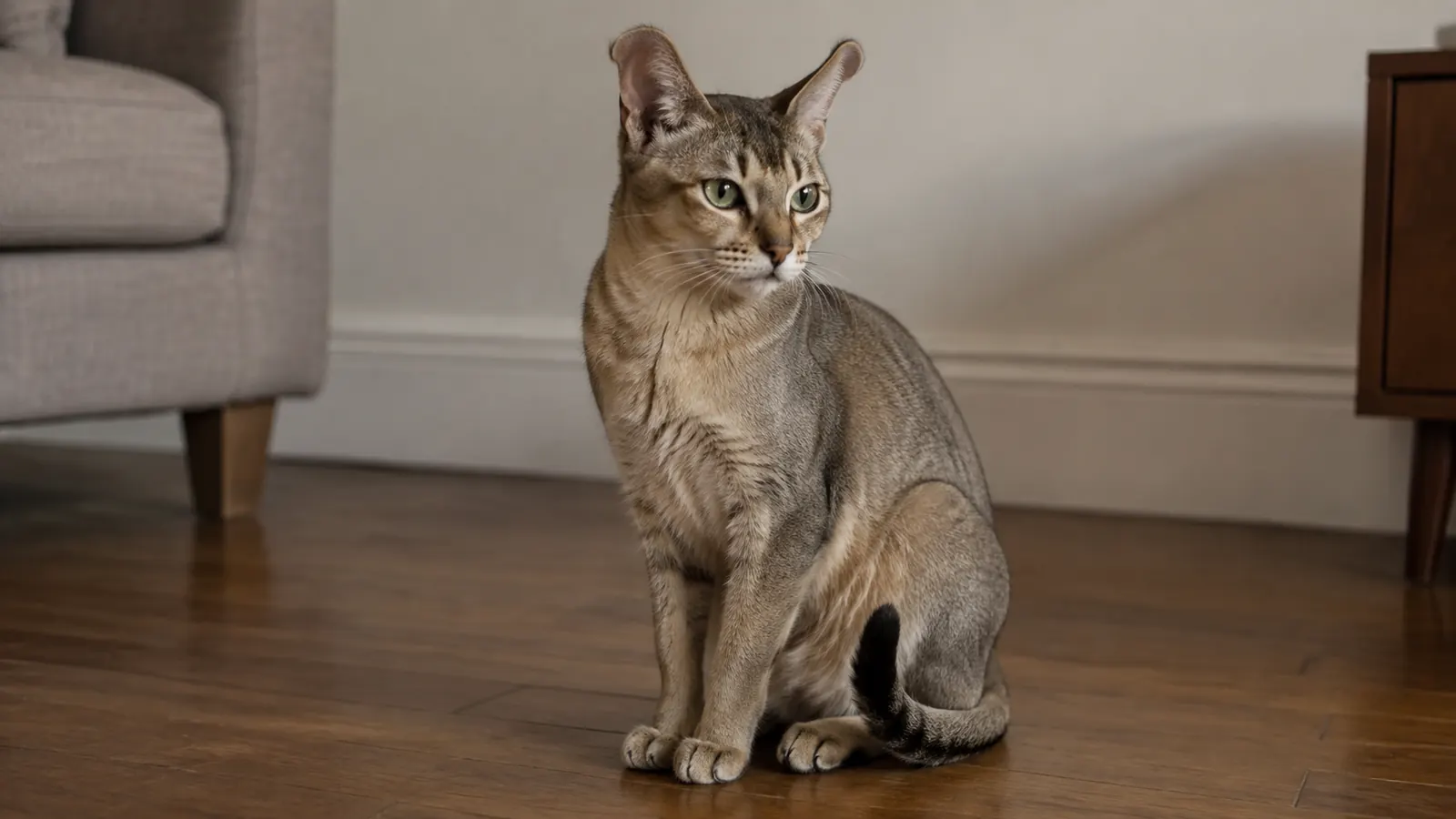
The Bengal contributes a muscular body and a rosetted or spotted coat, while the Ocicat, which CFA describes as a 100 percent domestic breed made from the Abyssinian, Siamese and American Shorthair, contributes spots, athleticism and a long record as a companion breed.
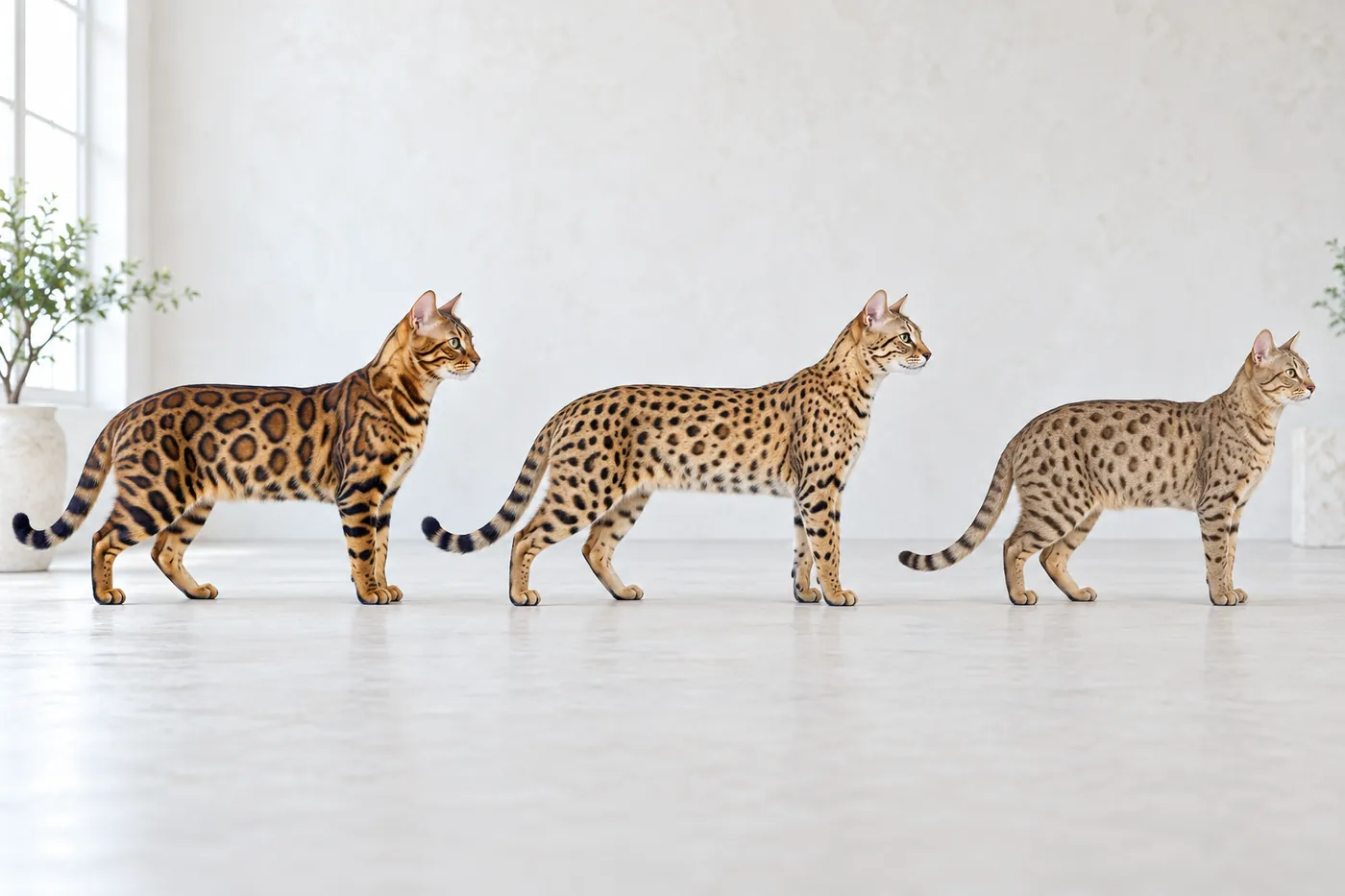
Breeders describe no new wildcat crosses in the programme itself. The wild ancestry a Cheetoh pedigree can show comes through its Bengal side, which traces back many generations to the Asian leopard cat.
How big does a Cheetoh actually get?
There is no good Cheetoh population study that establishes an adult weight distribution.
Advertisements often describe the Cheetoh as larger than either parent breed. No published measurement of adult Cheetohs supports that, and a figure quoted in a sale describes what a breeder hopes for rather than what a population has been shown to reach.
CFA describes the Ocicat as a strong, medium to large cat so muscular that it feels heavy for its size, even the females, so a substantial medium-to-large cat is a safer expectation than a guaranteed giant.
Equipment sized to the cat in front of you, and rechecked as it matures, avoids buying twice. A carrier needs enough usable length and height for standing, turning and lying flat, while a litter tray needs enough floor area for comfortable turning.
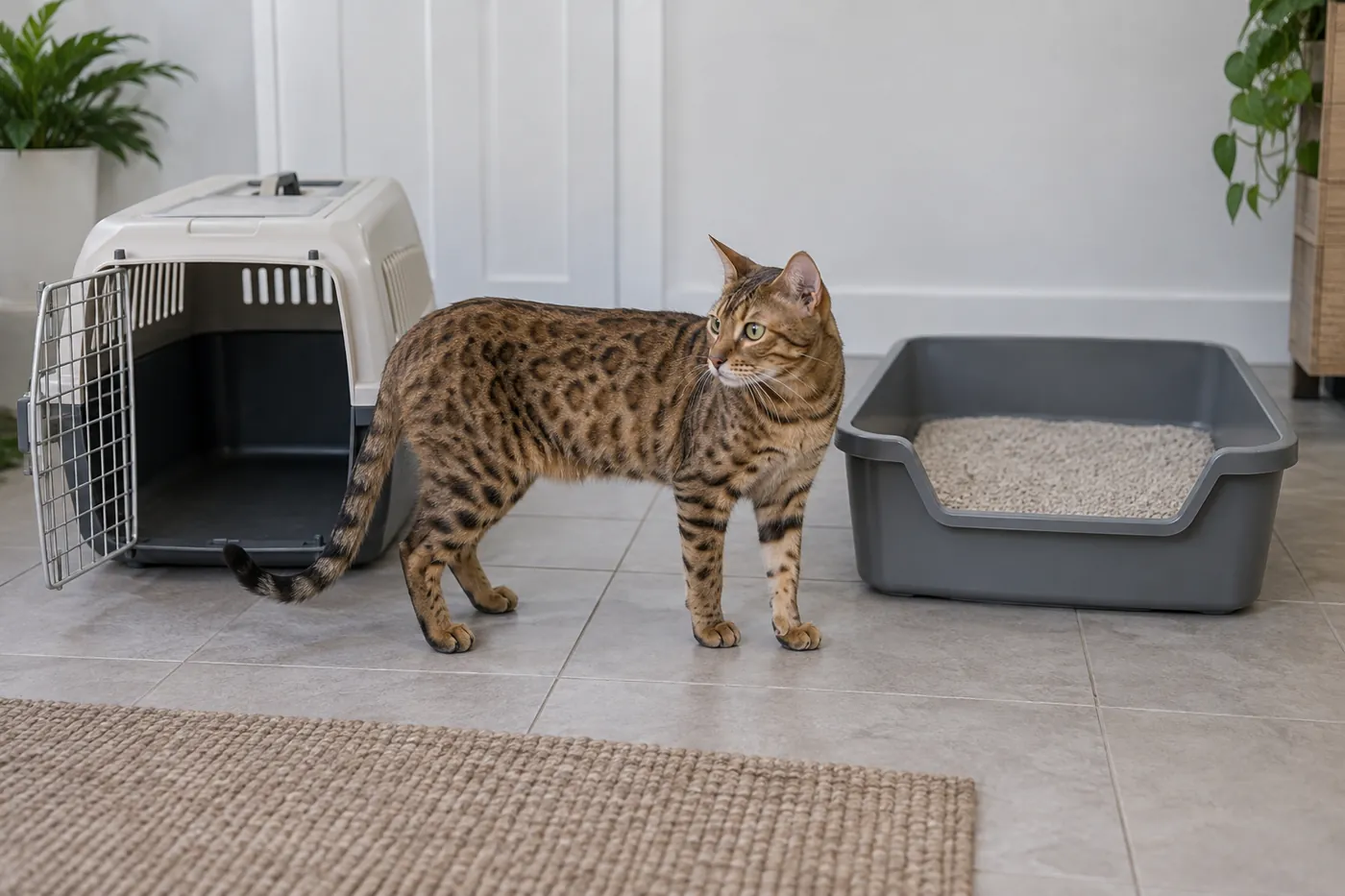
What does a Cheetoh look like?
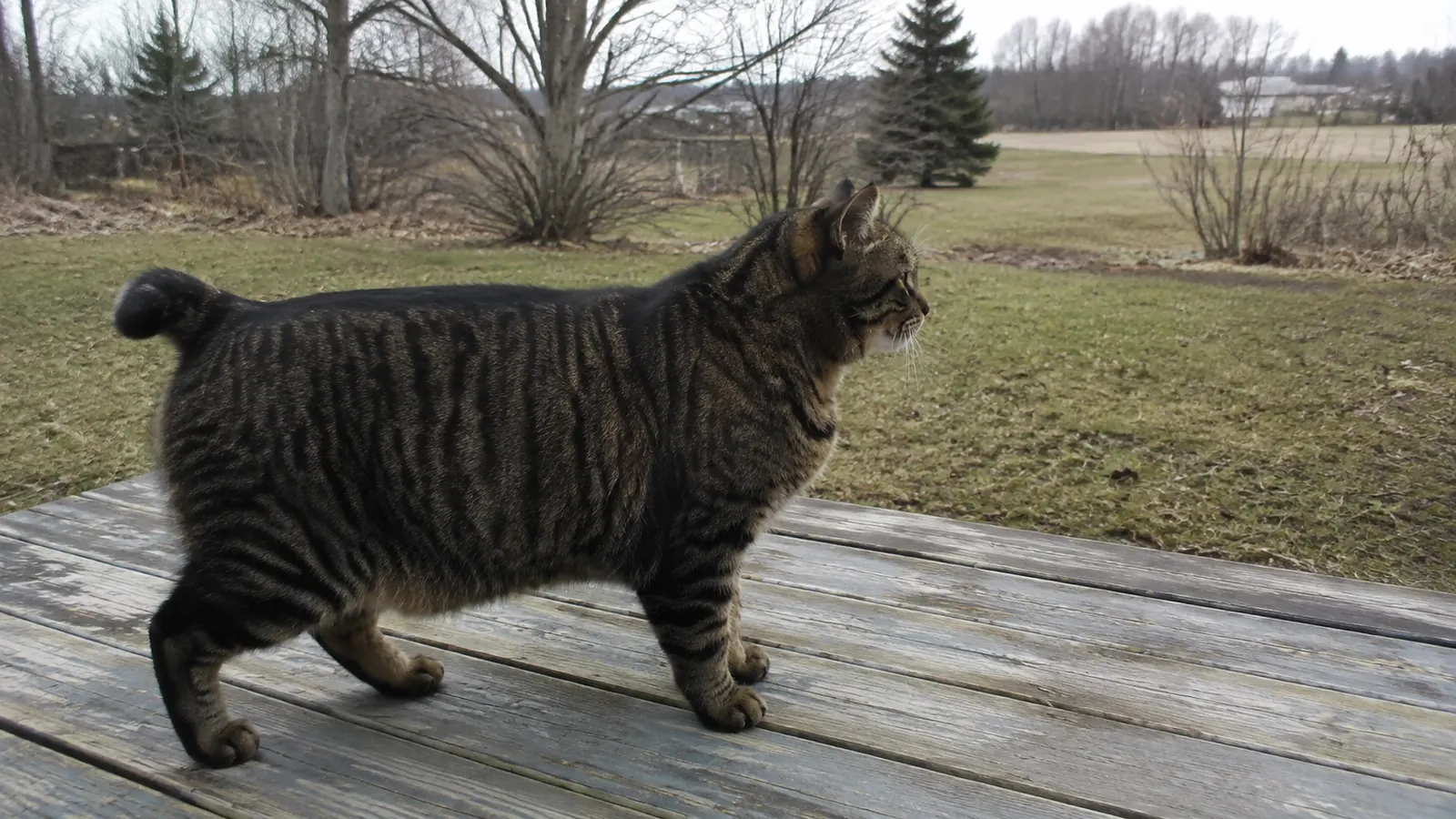
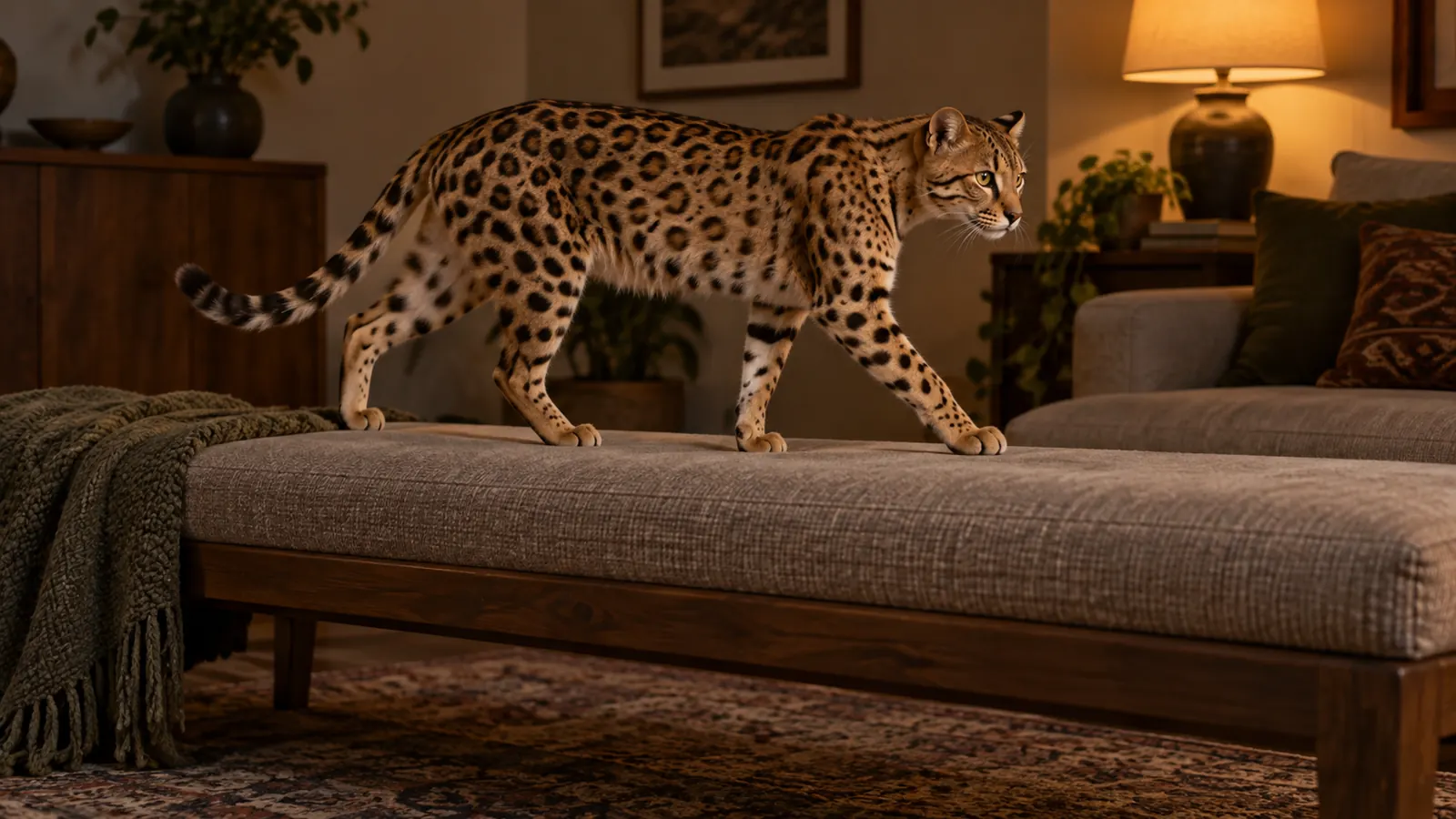
Breeders aim for an athletic, muscular spotted cat that combines the Bengal body with the Ocicat's spotting. Because CFA does not recognise the breed, no CFA standard fixes its head, ears or proportions, so two cats sold under the name can differ noticeably.
Spots and rosettes receive most of the attention, but pattern names are easily stretched in advertisements. A rosette has more than one tone and a darker outline, while a solid spot is one area of dark colour.
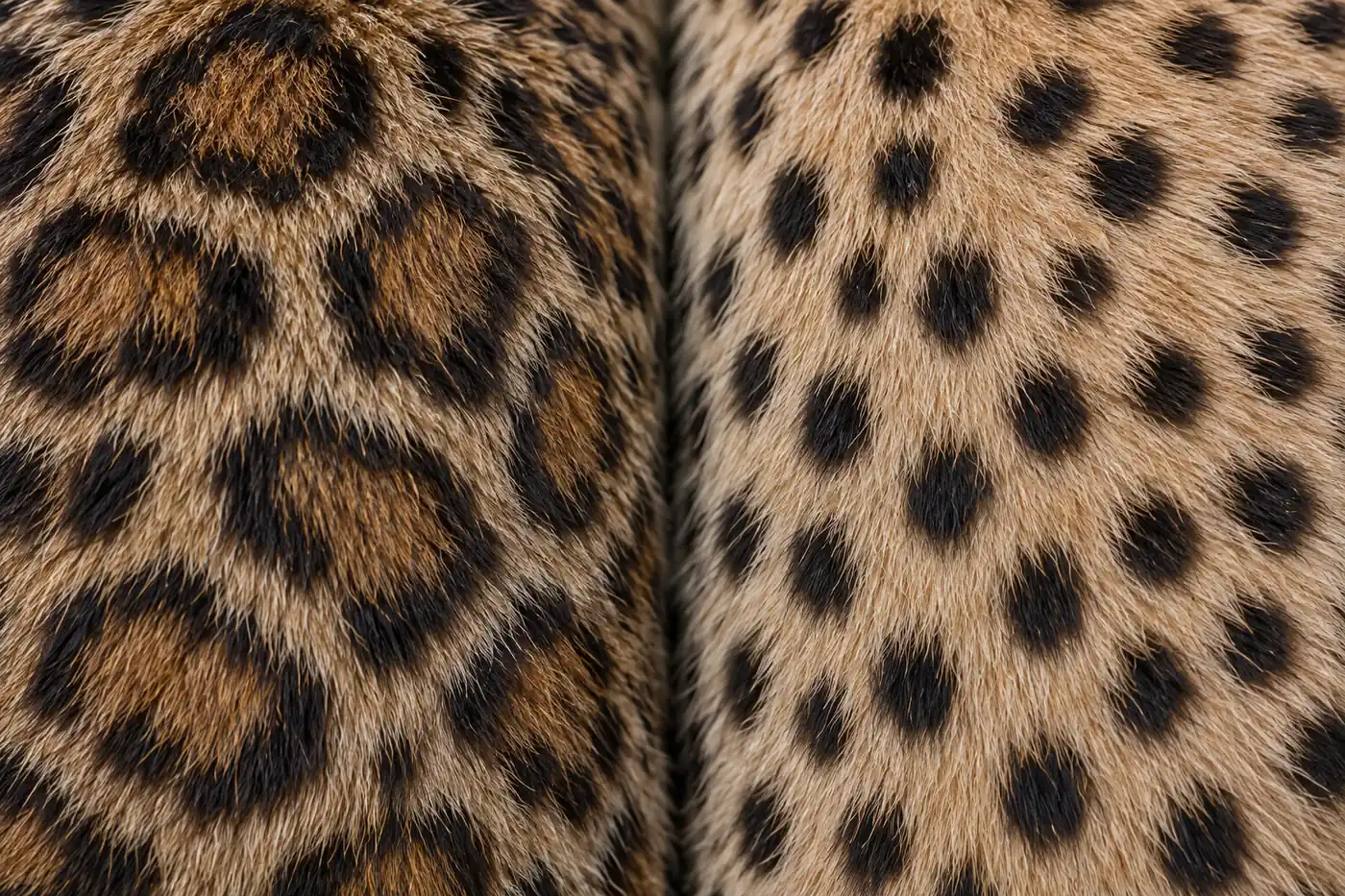
Colour and pattern also vary because the breeding population is small and the founding breeds carry different accepted coats. A spotted domestic cat is not automatically a Cheetoh.
What temperament should an owner expect?
Activity and involvement are the likely picture, but nothing supports one guaranteed Cheetoh personality.
CFA describes Bengals as confident, curious, athletic, extremely intelligent and quite trainable, and describes Ocicats as outgoing cats that respond well to training and easily adapt to household rules. A Cheetoh bred from those lines may reasonably need substantial play, climbing and company, but the evidence is an inference from ancestry and breeder selection rather than a large temperament study of Cheetohs.
| Claim | What supports it | What remains uncertain |
|---|---|---|
| Athletic build | Both documented foundation breeds are muscular and active | The intensity of one kitten as an adult |
| People involvement | Bengal and Ocicat organisations describe interactive companion behaviour | Comfort with every visitor or child |
| Trainability | CFA calls Bengals quite trainable and says Ocicats respond well to training | Reliability in distracting or outdoor settings |
| Quiet, gentle nature | Repeated in Cheetoh promotional material | No independent population evidence establishes it |
| Large adult size | Repeated in Cheetoh advertising | Typical size across a current breeding population |
The individual cat is most informative when you see it playing, recovering from excitement and choosing whether to approach. A cat that can disengage, explore and return voluntarily provides more useful information than a kitten held still for a sales visit.
How much exercise and training does one need?
A Cheetoh from these lines is most likely to grow into an active adult, and a household counting on an unusually quiet one is taking the larger risk.
Daily life should include short hunting-style play, stable vertical routes, food search and predictable social time. The length of each burst of play changes as a cat ages, while the need for regular exercise at every age does not.
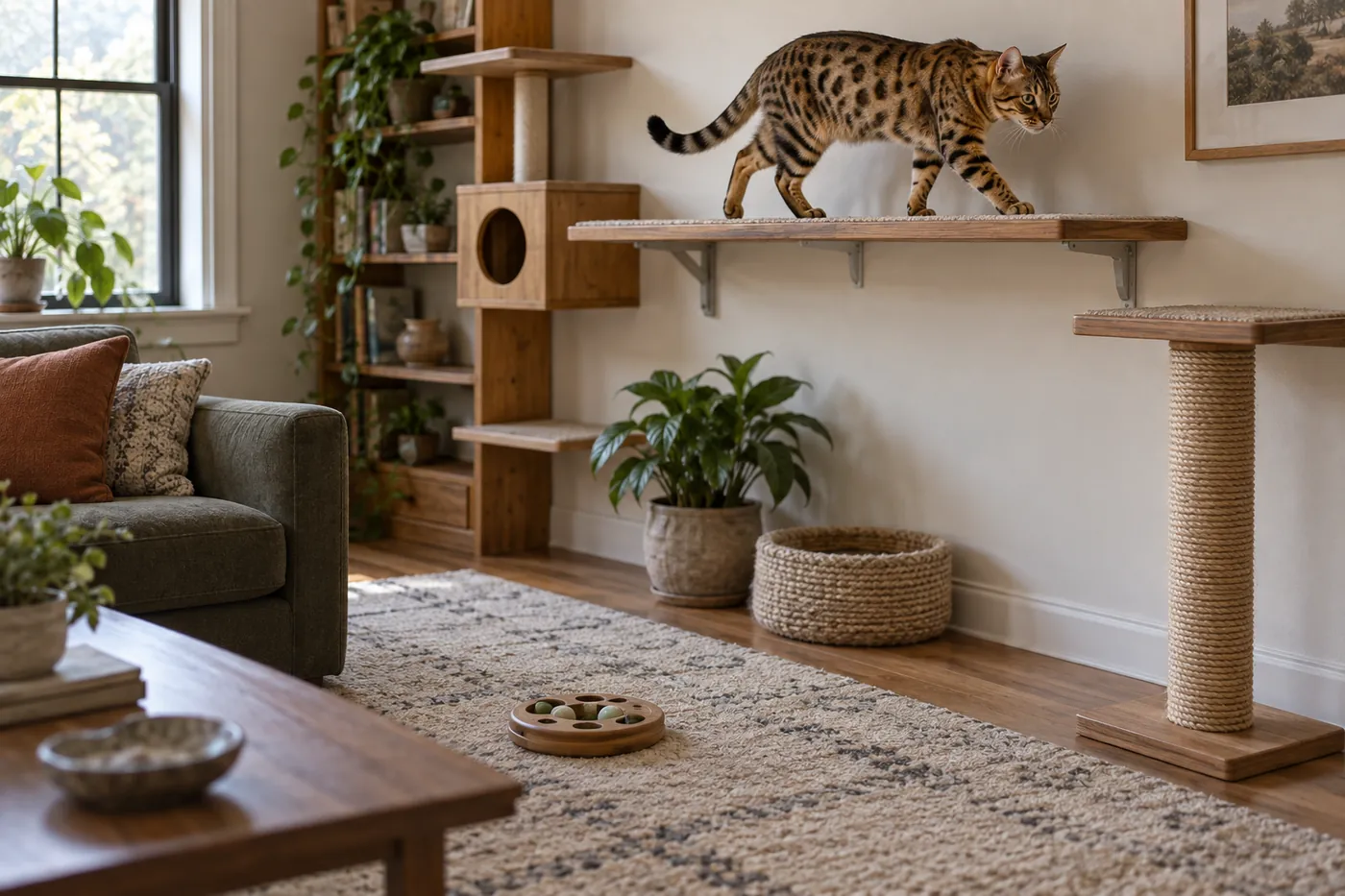
- Begin with a predictable play cue and a toy that keeps hands away from teeth and claws
- Let the cat stalk, chase and capture instead of waving the toy without an ending
- Follow the final capture with a small part of the normal meal
- Use food puzzles for search rather than adding unmeasured calories
- Teach carrier entry, a mat station and an interior recall with rewards
- End while the cat is still successful and repeat short sessions consistently
Clicker training can mark the exact action you want. Training helps communication and care, but it does not make an unsecured balcony, open door or off-leash outdoor area safe.
Is the short coat genuinely low maintenance?
The coat should be simpler than a semi-long coat because there is little length to tangle. A gentle weekly check usually removes loose hair and catches skin, ear or claw changes early.
The time goes elsewhere. Activity, company, dental care, feeding, weight tracking and preventive veterinary visits take far more of it than brushing does.
- Check the coat and skin for new lumps, scabs or overgroomed areas
- Look at the outer ears without inserting a swab into the canal
- Handle each paw briefly and keep claws at a comfortable length
- Measure body weight and note a change that persists
- Maintain daily dental care where the cat tolerates it
- Book veterinary advice for persistent itching, hair loss, discharge or a sudden grooming change
A claim that the coat is hypoallergenic is not supported. Cat allergens come from sources including saliva and skin secretions, so short hair and low visible shedding do not remove them.
What health evidence is available for a Cheetoh?
There is no Cheetoh-specific epidemiology that supports a clean health bill or a dependable lifespan range.
The useful evidence is the screening record of the Bengal and Ocicat lines behind the individual cat. CFA notes that genetic testing lets Bengal breeders screen for several heritable diseases, and that hypertrophic cardiomyopathy needs an echocardiogram to detect, so most breeders have breeding cats scanned by a cardiologist before a first litter and at intervals afterwards. On the Bengal side, a genetic survey of more than 11,000 cats tested through a commercial DNA service found the KIF3B variant linked to early-onset progressive retinal atrophy in 6.9 percent of the Bengals, and several Bengals carried two copies of the pyruvate kinase deficiency variant. Both conditions appear only in a cat with two copies, so a parent can carry either without showing it, and both are on commercial feline DNA panels.
| Evidence | Ask to see | What it can show | What it cannot promise |
|---|---|---|---|
| Pedigree | Original registry document with named parents | Whether the claimed ancestry is recorded | Adult temperament or lifetime health |
| DNA reports | Original results matched to each parent | Status for the specific variants named on the report | Diseases outside those variants |
| Cardiac assessment | Dated echocardiogram performed and interpreted by an appropriate clinician | Heart structure on that date | Permanent freedom from HCM |
| Family history | Ages, diagnoses and causes of death in close relatives | Whether illness is tracked across the line | A guaranteed outcome for one kitten |
| Veterinary record | Dated examinations, vaccination and parasite-control history | Care already received by the named cat | Future disease |
A breeder who screens with purpose can say why each test was chosen for that family and how a result changed a mating. A long panel without identity, dates or interpretation is weaker than a few relevant original reports that can be matched to the parents.
Can a Cheetoh live with children, cats or dogs?
Possibly, when the individual has been socialised well and the household can manage energetic play.
Children need to use toys rather than hands, leave sleeping cats alone and let the cat step away. Adults remain responsible for doors, introductions and handling.
Another playful cat or a cat-experienced dog may be compatible, but breed labels do not replace a gradual introduction. Spreading food, water, litter, scratching and resting places around the home stops one animal guarding the complete set.
What should you verify before committing?
Identity and classification come first, because every later claim depends on knowing what cat is actually being offered.
- Read the original pedigree and identify the issuing registry
- Check the registry's current status for the Cheetoh rather than relying on an old logo
- Match parent names or permanent identification across health reports
- Ask for adult weights and health history from several close relatives
- Observe the kitten or adult during activity, recovery and voluntary contact
- Plan climbing, play, company, carrier space and litter space for an athletic adult
- Reject guaranteed size, personality, allergy safety or lifetime health
The strongest choice is the best-documented individual, whatever its markings, because documents are the only part of a Cheetoh claim that can be checked. If clear records and a suitable daily routine are unavailable, an established Bengal, Ocicat or known adult rescue offers fewer unknowns.
Common Questions
Which registries recognise the Cheetoh?
CFA's list of recognised breeds includes the Bengal and the Ocicat but not the Cheetoh. Status at other registries can change as a developing breed advances, so a Cheetoh pedigree means only what its issuing registry currently grants the breed, and that is worth confirming with the registry directly.
How large does a Cheetoh get?
No published measurement of adult Cheetohs establishes a typical range. CFA describes the Ocicat side as medium to large and heavily muscled, which supports expecting a substantial medium-to-large cat rather than the giant size some advertisements promise.
Is a Cheetoh part wild cat?
Cheetoh breeders describe crossing Bengal and Ocicat lines rather than adding new wildcat blood. Bengal pedigrees trace back many generations to the Asian leopard cat, while CFA describes the Ocicat as 100 percent domestic.
Are Cheetoh cats hypoallergenic?
No evidence establishes the Cheetoh as hypoallergenic. Cat allergens come from saliva and skin secretions as well as material carried on hair, so a short coat does not remove exposure.
Checked Against
- CFA: recognised breeds (Chartreux to LaPerm, no Cheetoh) cfa.org
- CFA: Bengal cfa.org
- AAFP and ISFM feline environmental needs guidelines pmc.ncbi.nlm.nih.gov
- CFA: Ocicat cfa.org
- Anderson et al.: Genetic epidemiology of blood type, disease and trait variants, and genome-wide genetic diversity in over 11,000 domestic cats (PLOS Genetics, 2022) journals.plos.org
Published 13 September 2026. Last updated .