
What Is an Ocicat, and Can Your Household Give It Enough Company?
An Ocicat can suit an active home that wants a confident, trainable cat involved in daily life. Its spotted wild look comes from domestic breeds, while the larger ownership challenge is providing enough company, movement and structured interaction for a cat that commonly dislikes being left out.
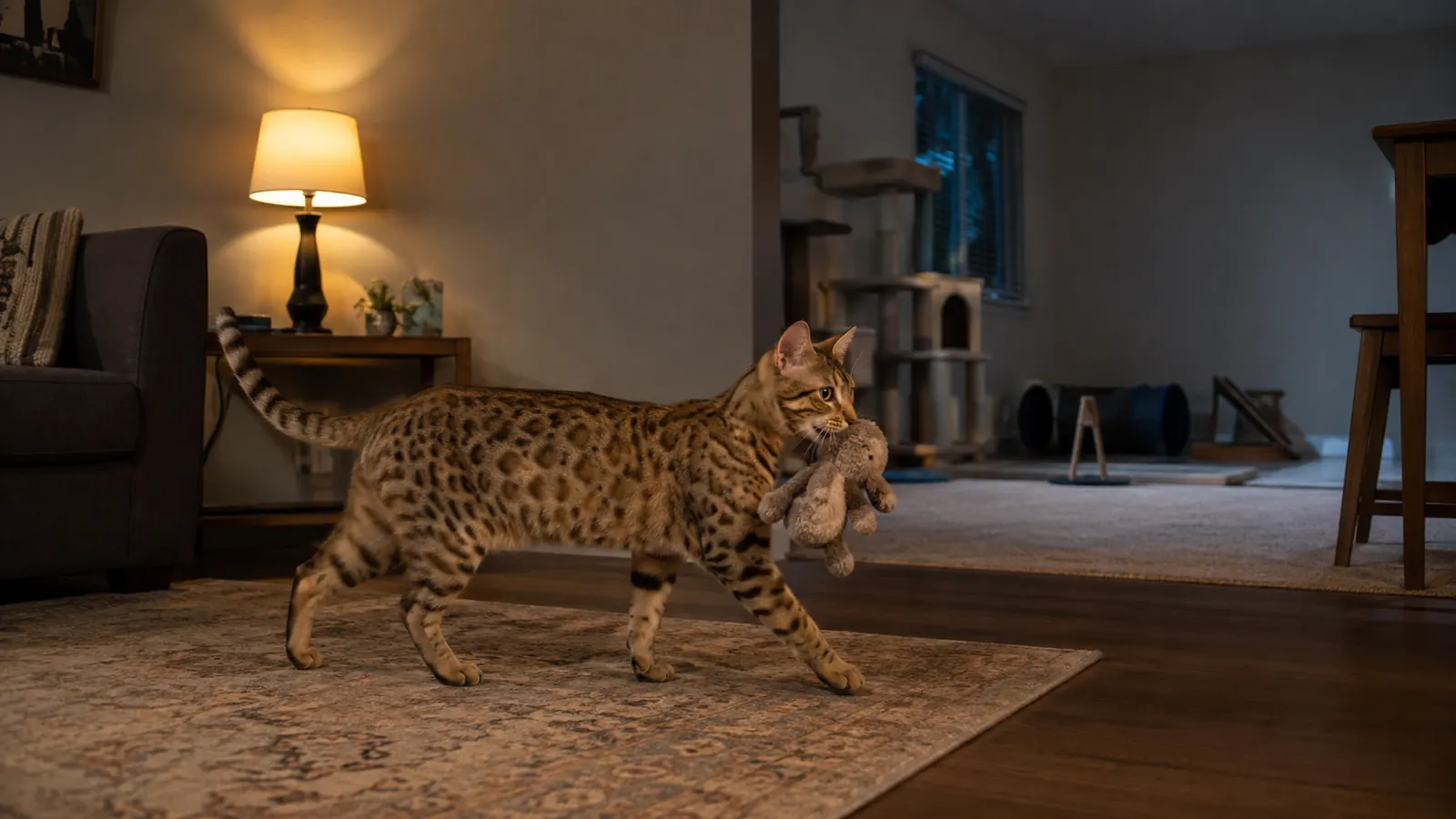
- Origin
- United States, beginning with an unexpected spotted kitten born in 1964 from Abyssinian and Siamese breeding
- Coat
- Short, smooth and satiny with thumbprint-shaped spots; no wild-cat ancestry
- Size
- Medium to large, athletic and heavily muscled without a coarse or bulky outline
- Typical weight
- TICA gives approximately 6 to 9 pounds for females and 9 to 14 pounds for males
- Life expectancy
- GCCF estimates approximately 15 to 18 years
- Activity level
- High. Social, athletic, curious and receptive to reward-based training
- Grooming
- Low. Brief weekly coat care is usually sufficient
- Suits
- Active households that provide company, training, climbing and carefully matched animal companions
The Ocicat looks like a small spotted wild cat, yet its ancestry is entirely domestic. That distinction matters because the breed's everyday demands come from an outgoing, athletic companion temperament rather than from hybrid-wild ownership requirements.
The most important decision is social fit. Ocicats are commonly described as confident, trainable and eager to participate, which can be delightful in an active household and difficult where a cat is expected to entertain itself through long quiet days.
Is an Ocicat right for your household?
An Ocicat is a strong candidate for somebody who wants to train, play and share ordinary routines with a cat. TICA and CFA both describe a people-oriented breed that often greets visitors, learns quickly and seeks involvement.
That social confidence does not make every individual fearless or endlessly tolerant. Early handling, the parents' temperaments, current health and the quality of introductions still shape how one cat lives with children, strangers or animals.
An Ocicat makes most sense when active companionship is what the household wants from a cat.
| Home pattern | Likely fit | Reason |
|---|---|---|
| People present and interactive | Strong | Social contact and short training sessions fit naturally |
| Respectful older children | Often good | Chase games and tricks can be shared safely |
| Compatible active cat or dog | Possible | Similar play style may help after gradual introduction |
| Long daily absence | Harder | The breed commonly dislikes social exclusion |
| Home wanting a quiet ornament | Poor | Athletic curiosity needs participation and outlets |
How an individual recovers after an ordinary interruption, accepts a pause in play and settles without demanding contact says more about daily fit than a confident greeting, which is only one moment.
A high-energy kitten may overwhelm an older or timid resident cat. Play style matters as much as species when matching animals, and separate resources need to be in place before the animals share space.
Does an Ocicat have wild-cat ancestry?
No. The first Ocicat, Tonga, appeared unexpectedly in 1964 during Abyssinian and Siamese crossbreeding intended to produce an Abyssinian-pointed Siamese, and later development involved Abyssinian, Siamese and American Shorthair lines. The California Spangled was also built entirely from domestic lines to look wild, and people still mistake it for a hybrid for the same reason.
The spots and muscular outline were selected within domestic cats. An Ocicat therefore does not carry the special legal or husbandry status associated with recent wild hybrids, although normal local ownership rules still apply.
- 1964Tonga is born as an unexpected spotted kitten from Abyssinian and Siamese breeding
- Early developmentSimilar matings establish the spotted appearance
- Breed expansionAmerican Shorthair contributes size and silver colour
- Modern OcicatRegistries recognize a fully domestic pedigreed breed
- Individual identityPedigree establishes ancestry more reliably than spots alone
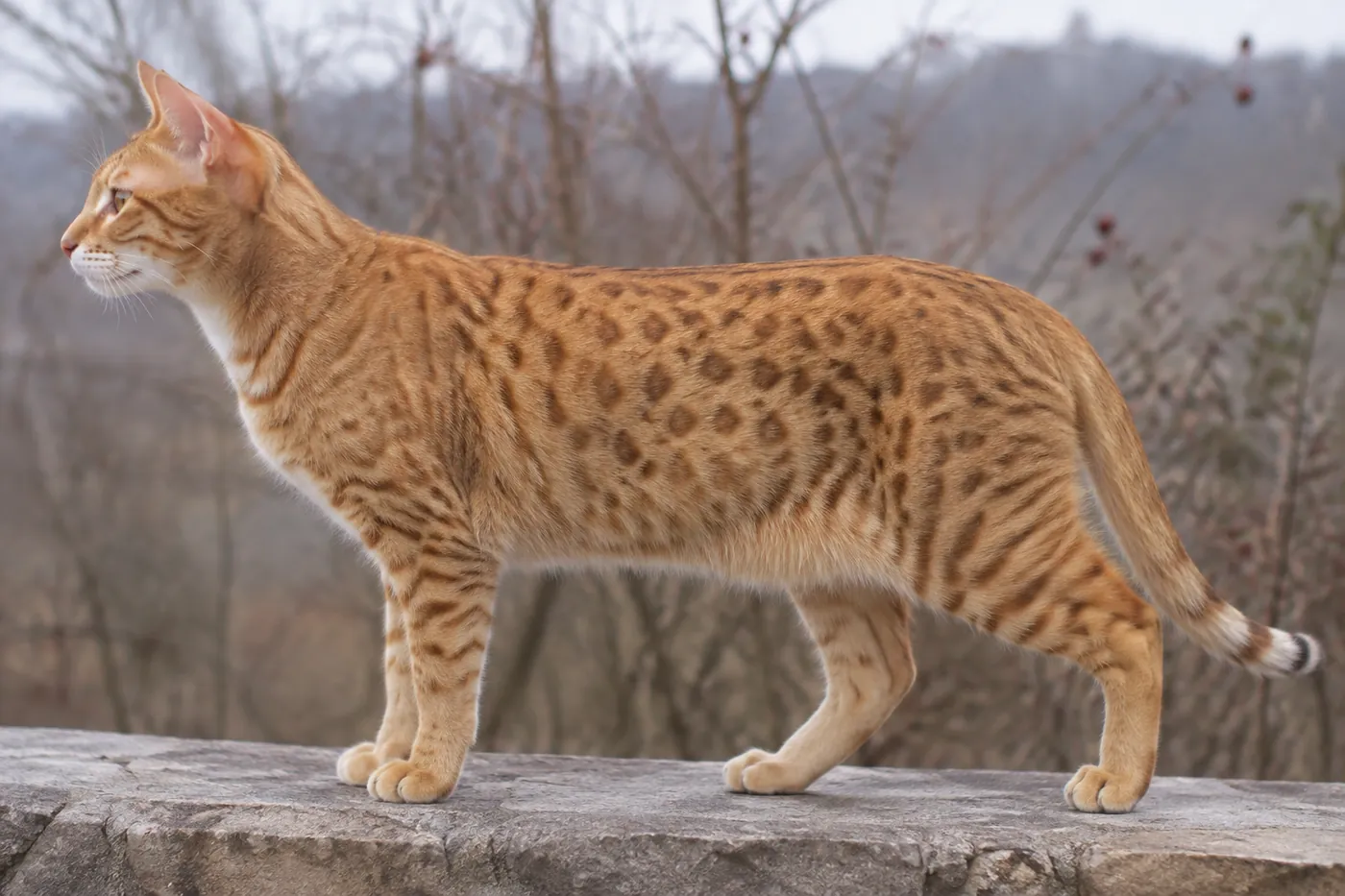
A spotted random-bred cat is not automatically an Ocicat. Colour, pattern and athletic build can suggest resemblance, while registration and traceable parentage establish pedigreed identity.
What should an Ocicat's spots look like?
Ocicat spots are distinct thumbprint marks distributed across the shoulders, sides and hindquarters. Each hair in the lighter ground colour is banded, while the darkest colour collects into the spot, facial markings and rings on the legs and tail.
Bengal rosettes commonly have a darker outline around a lighter centre, creating a paw-print or doughnut effect. That is visually different from the Ocicat's solid spots, although pattern alone still cannot confirm either breed.
The rows along an Ocicat's spine can be more closely spaced, and markings on the shoulders may stretch with movement. A classic tabby pattern, in which broad swirls replace separate side spots, does not match the spotted show pattern even though the cat may share Ocicat ancestry.
Because the pattern was developed from domestic Abyssinian, Siamese and American Shorthair lines, clear spots say nothing about wild ancestry, and pedigree records answer the ancestry question that a photograph cannot.
Colour changes contrast as well. Tawny coats show dark brown or black markings on a warm ground, while silver varieties can look much cooler and higher contrast; the underlying spot shape remains the useful feature.
What is an Ocicat's temperament like?
Ocicats are commonly sociable, curious and direct. Many follow people, inspect visitors and try to join work or play, which can make them easier to engage and harder to ignore.
Vocal style varies, despite Siamese ancestry. If noise matters, an ordinary awake period with the individual cat is the way to judge it, since a general breed description cannot predict the frequency or volume of one cat's calls.
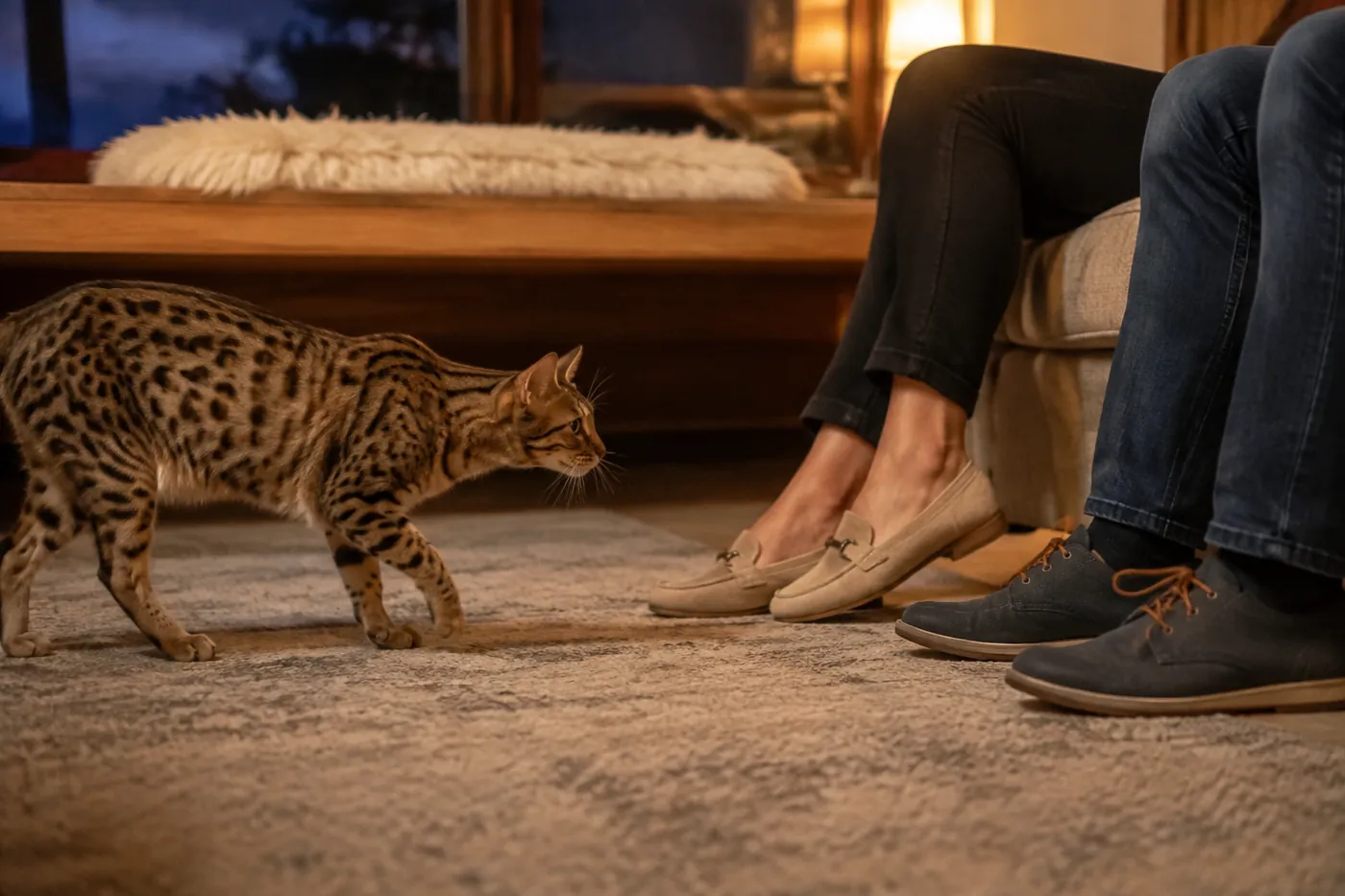
Children should use toys rather than hands for energetic play and stop when the cat turns away. Adults need to protect sleep, litter and feeding areas, because even a friendly cat needs periods without pursuit.
Dogs and other cats are introduced through scent and barriers before supervised contact. An Ocicat's bold approach is not consent to rough play, and chasing that leaves one animal hiding or unable to reach resources needs interrupting.
How much exercise and training does an Ocicat need?
Several short activity periods across the day suit the breed. Wand-toy chase, retrieval, climbing and food-search games use different skills and reduce the chance that all stimulation depends on one intense evening session.
Ocicats often respond well to rewards and clear repetition. Training carrier entry, recall, a stationing mat and cooperative handling gives the cat useful ways to participate instead of inventing attention-seeking games around doors, counters or fragile objects.
- Choose a food or toy reward the individual clearly values
- Mark one small action, such as touching a target
- Build distance or duration in tiny increments
- Use the skill in a practical place such as beside the carrier
- End while the cat is successful and return later
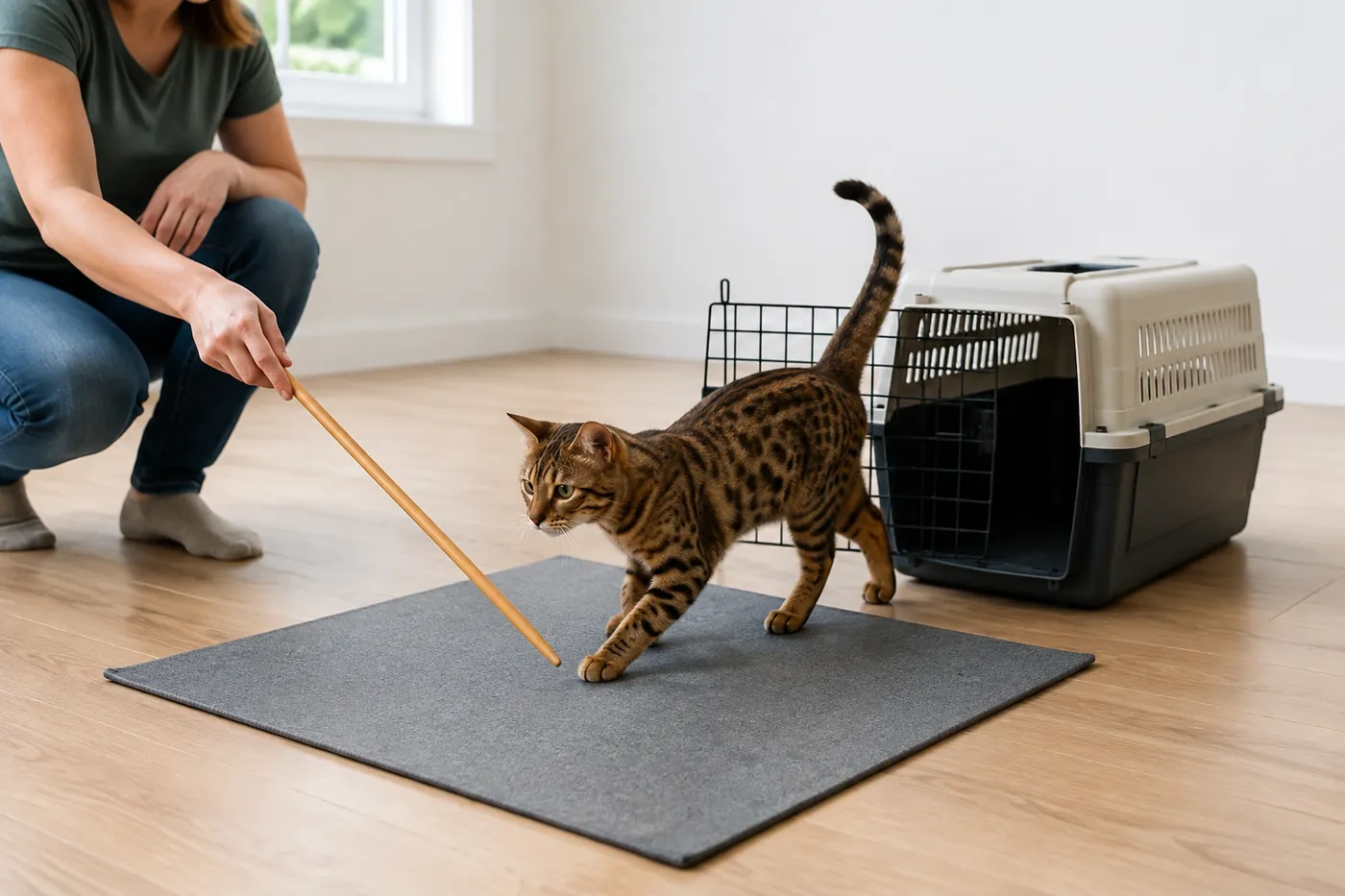
A marker helps only when it lands at the moment of the action, and the clicker training guide covers that timing. The right workload also shifts between a kitten, a mature adult and a senior, as exercise needs by age sets out.
Vertical space is valuable, but platforms must be stable under a muscular cat. More than one route down and clear landing areas keep speed from turning an ordinary jump into a collision.
Can an Ocicat stay alone during the workday?
There is no evidence-based number of hours that suits every Ocicat, because age, prior routine, other animals and individual attachment all change the answer. Absence is best built up gradually while eating, vocalising, grooming and toileting are watched.
An adult with a compatible companion may rest through a predictable work period. A kitten or newly placed cat needs more frequent care, and a second pet helps only when the relationship is genuinely comfortable.
- Play interactively before the longest routine absence
- Leave safe food-search tasks and rotate them regularly
- Provide window views, climbing routes and quiet sleep areas
- Separate key resources so one pet cannot guard them
- Increase absence gradually after adoption
- Respond to persistent distress by changing the plan and seeking advice
A remote speaker is a poor tool for surprising or commanding the cat. A camera can reveal patterns, but the solution to repeated distress is more appropriate care, a different routine or qualified behavioural help.
If long unpredictable absences are unavoidable, an adult cat with a demonstrated independent temperament may be a safer choice than selecting a breed expected to be social.
How big is an Ocicat, and how much grooming is needed?
The Ocicat is medium to large and feels solid because of its muscle. TICA gives an approximate range of 6 to 9 pounds for females and 9 to 14 pounds for males, although body condition and individual dimensions matter more than sex-based averages for equipment.
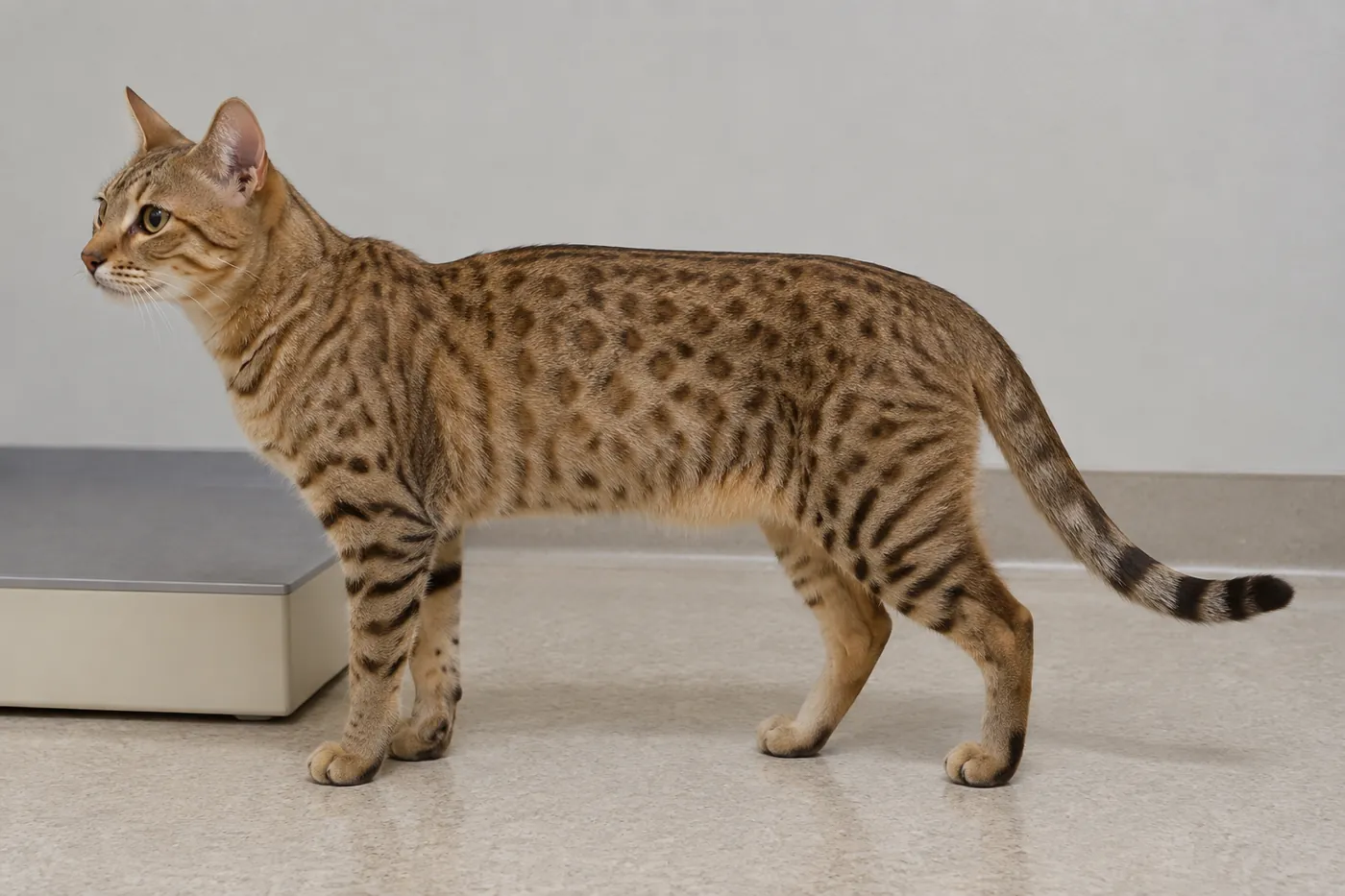
Muscle adds weight across the shoulders and hindquarters without producing the soft abdominal padding associated with excess fat. Scale readings, rib feel and waist shape tracked on the same cat over time tell more than one number compared with the top of a breed range.
The short satiny coat lies close and usually needs only a weekly pass with a soft rubber brush or grooming cloth. A bath is seldom necessary unless the coat is contaminated or a veterinarian recommends a specific product.
- Build
- Athletic, substantial and muscular
- Coat
- Short, smooth and close lying
- Shedding
- Present but usually manageable with brief weekly care
- Carrier
- Size from the measured cat and use a rigid floor
- Climbing furniture
- Check platform area and rated load
- Allergies
- No coat pattern or length guarantees low allergen exposure
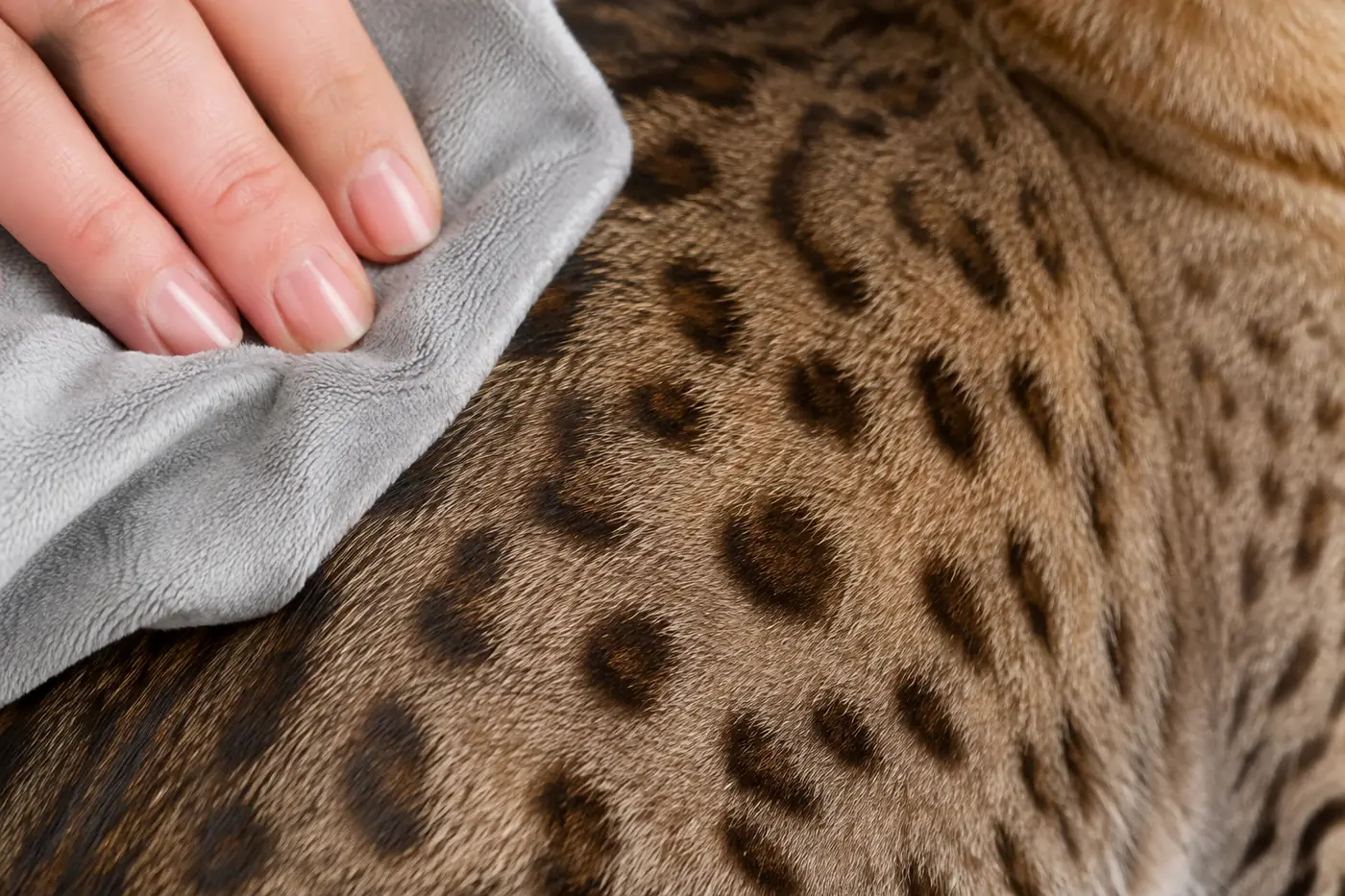
Clean grooming tools and voluntary handling keep the weekly pass comfortable, while a sudden greasy coat, bald patch, soreness or reduced self-grooming needs investigation instead of more forceful brushing.
No cat is reliably hypoallergenic. People react to proteins spread through saliva and skin flakes, so time with the individual cat before committing is the practical test when allergies are a concern.
Which Ocicat health checks matter?
Because the breed developed from Abyssinian and Siamese lines, breeding policies and feline health organizations identify pyruvate kinase deficiency and progressive retinal atrophy as relevant questions. Their presence in the ancestry does not mean every Ocicat is affected.
PK deficiency can cause hemolytic anemia and has an autosomal recessive inheritance pattern. A named DNA result clarifies status for the tested variant, while a carrier result informs breeding rather than proving that the cat is sick.
Progressive retinal atrophy refers to inherited degeneration of the retina and can lead to gradual vision loss. The useful question is which variant or eye examination applied to that family and whether the result belongs to the named parent, because a broad clear panel may answer neither.
The words health tested are useful only when the source names each test and result.
GCCF's breeding policy discusses PK deficiency and retinal risk in relation to founder breeds. Ordinary veterinary examination remains essential because DNA tests do not screen for dental disease, injury, obesity or every cause of eye and heart problems.
A cat compensating for reduced vision may hesitate in dim rooms, misjudge a changed step or become less confident after furniture is moved. Those signs have several possible causes, so they call for an eye and general examination rather than an inherited diagnosis made from breed alone.
GCCF estimates life expectancy at roughly 15 to 18 years. That figure is planning context for a potentially long relationship, which includes preventive care and later-life illness.
What does an Ocicat's ordinary week require?
The breed's short coat can make the weekly workload look small on paper. In practice, social contact, play, training and management of a confident cat occupy more time than brushing.
A workable day includes predictable meals, brief interactive activity and access to safe observation points. The exact schedule can move around work and family obligations, but the cat should not spend every awake period waiting for attention that arrives only at bedtime.
- Morning
- Measured meal, litter check and a short chase or training session
- Daytime
- Safe climbing, sleep, window views and food-search choices
- Evening
- Interactive play followed by food and a calm settling period
- Weekly
- Coat and body check, equipment cleaning and toy rotation
- Monthly
- Weight trend and home-safety review
- Yearly or advised
- Veterinary examination and preventive-care update
Changing the problem keeps activities fresh without constant buying. A cardboard box with two safe exits, a moved perch or part of a measured meal hidden in simple puzzle stations can create novelty without clutter.
Portions follow body condition and the calorie content of the diet. A muscular cat may weigh more than it appears, but muscle does not excuse a disappearing waist or ribs that are difficult to feel.
Weighing food against the portion-size guidance corrects estimates that drift. Treats used for training belong inside the daily intake, especially when several household members reward the same sociable cat.
An Ocicat may involve itself in food preparation, doors and visitors, so toxic foods and medications need securing, appliances need checking before they are closed, and a taught stationing place gives curiosity a safe alternative.
The likely financial work is ordinary but long: complete food, litter, strong climbing furniture, preventive care, dental treatment and emergency cover. An easy coat does not eliminate veterinary costs or the need to replace equipment that no longer safely supports the adult body.
A caregiver during travel needs to interact with the cat as well as refill bowls. The caregiver needs the cat's feeding amounts, normal litter pattern, veterinary contacts and instructions for noticing social withdrawal or failed eating.
Older Ocicats may keep the desire to participate after jumping becomes less comfortable. Steps and lower targets let the cat stay involved without being required to perform at its younger height or speed.
What should you verify before choosing an Ocicat?
Verification starts with domestic pedigreed identity and then turns to whether the social workload fits. A seller should not use the wild look to create mystery or avoid straightforward questions about parents, health and upbringing.
At least one parent, and an account of how both behave with unfamiliar people, handling and short separation, shows more than the kitten alone. Temperament has developmental and environmental influences, so a well-run home shows how kittens are raised instead of attributing every behaviour to the breed.
How the kitten or adult behaves after energetic play matters as much as the play, because the ability to settle is part of an active temperament, and a cat that cannot disengage may need a different routine or household than one that alternates readily between activity and rest.
Clean litter, uncluttered movement routes and places to withdraw are worth seeing in the home. Crowding can make a bold kitten appear more competitive or a quieter one disappear from view, which limits what a brief visit can tell you.
How the cat handles nail care, carrier entry and veterinary travel reveals the quality of early preparation, and those ordinary skills affect future care more directly than a rehearsed trick performed for a visitor.
- See registration or pedigree records supporting Ocicat identity
- Request named PK deficiency and relevant eye-health results
- Ask about heart disease, longevity and temperament in close relatives
- Observe the cat playing, settling and responding when attention pauses
- Ask how kittens were introduced to handling, carriers and household sounds
- Read health commitments and return terms before payment
Records establish ancestry, while observed behaviour establishes fit. A rescue may reasonably have no pedigree or family results, so that spotted cat is judged as an individual, and paying an Ocicat price for it pays for a claim appearance alone cannot support.
The best home can provide people, problems to solve and safe ways to move. If the household wants a quiet, low-involvement cat, the Ocicat's easy coat will not cancel the larger daily need for participation.
Checked Against
Published 7 September 2026. Last updated .





