
What Is a Burmese Cat, and How Much Company Does It Need?
A Burmese commonly seeks close company and active interaction. That daily fit and named health records decide the choice, while published diabetes and lifespan figures describe particular populations rather than predicting one kitten.
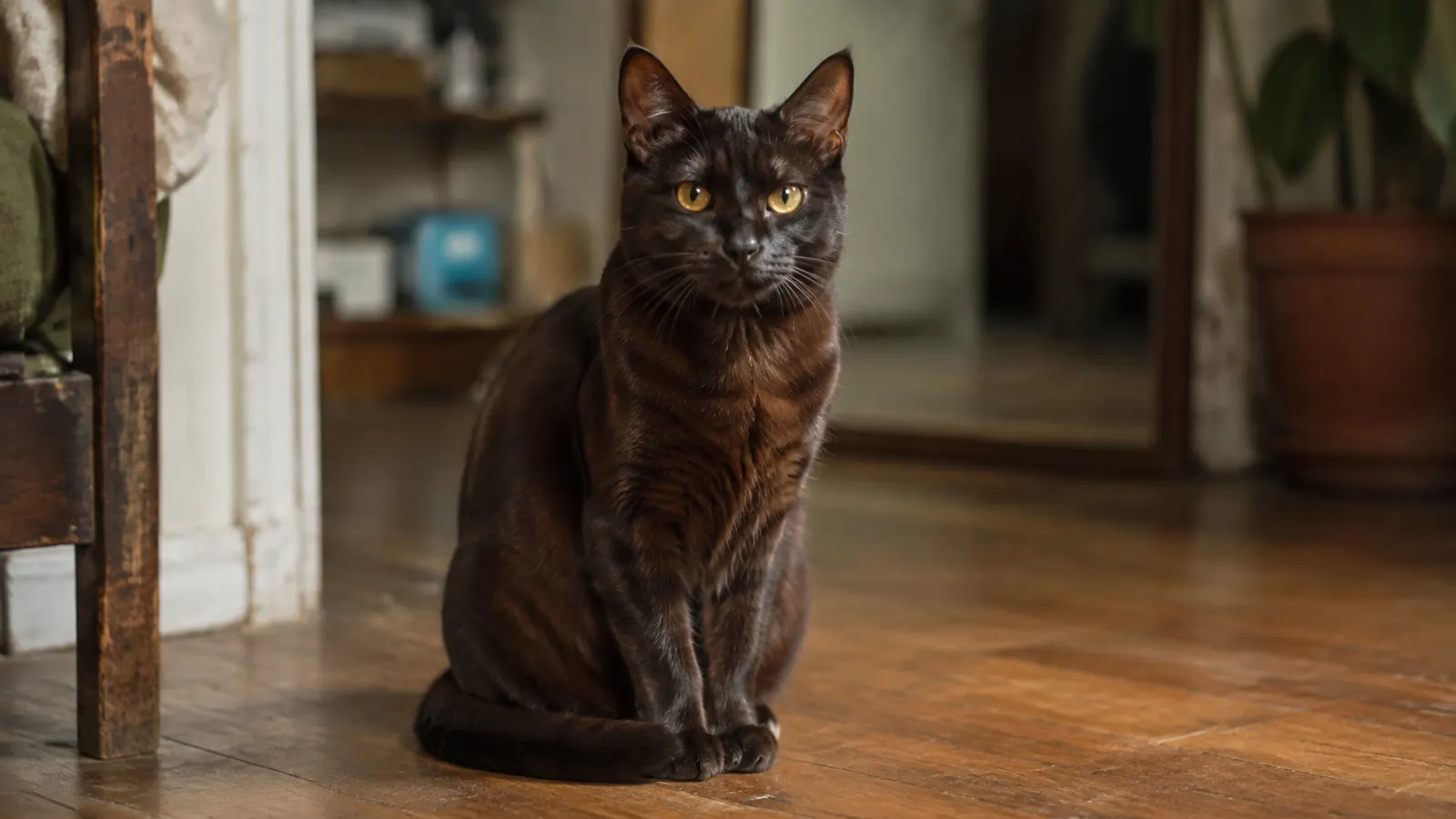
- Origin
- Foundation cat Wong Mau, America 1930, bred to Siamese. CFA registration 1936
- Coat
- Very short, close lying and satin, little undercoat. Four CFA colours, ten GCCF
- Size
- Medium outline over substantial bone and muscle, so it weighs more than it looks
- Typical weight
- A mature male may reach or exceed twelve pounds, and females are usually smaller
- Life expectancy
- 14.42 years in the UK life tables, the longest figure recorded for any breed group in that study
- Activity level
- Active and intelligent, with social contact, play and training all useful
- Grooming
- Very low. A weekly pass with a rubber glove or fine comb is the whole routine
- Suits
- Busy households rarely left empty. Ask for a hypokalaemia DNA result on both parents
Which Burmese are you actually being offered?
Two registries on two continents have spent ninety years selecting from the same foundation stock, and they now publish different colour lists and different head wording under one breed name.
| American standard (CFA) | British standard (GCCF) | |
|---|---|---|
| Colours recognised | Four: sable, champagne, platinum, blue | Ten, including red, cream and the torties |
| Head wording | "Pleasingly rounded without flat planes" | "A short, wide wedge shaped head with a rounded top" |
| Build wording | Medium size, substantial bone, "a surprising weight for its size" | "Medium in length", hard and muscular |
| What a buyer compares against | A standard that omits red and tortie entirely | A standard that contains them |
The GCCF states the position plainly on its own breed page: the American association recognises only four colours where it recognises ten. Neither registry calls the other wrong, and neither is ranking quality; the two documents describe two selections made from the same 1930 foundation.
The foundation matters only because it explains the split. Wong Mau reached America in 1930 and was bred to Siamese, the solid brown offspring bred true, and CFA began registering them in 1936. That brown survives as sable, the darkest colour a Burmese can carry, which is why a kitten advertised as a black Burmese is a sable: two copies of the sepia gene warm a genetically black coat to a rich dark brown.
The same Burmese temperament was later used deliberately as one of the three foundations of the Australian Mist.
Breeders on each side then selected for a different head. The American line moved towards the rounded skull the CFA standard describes, and the British line kept the wedge.
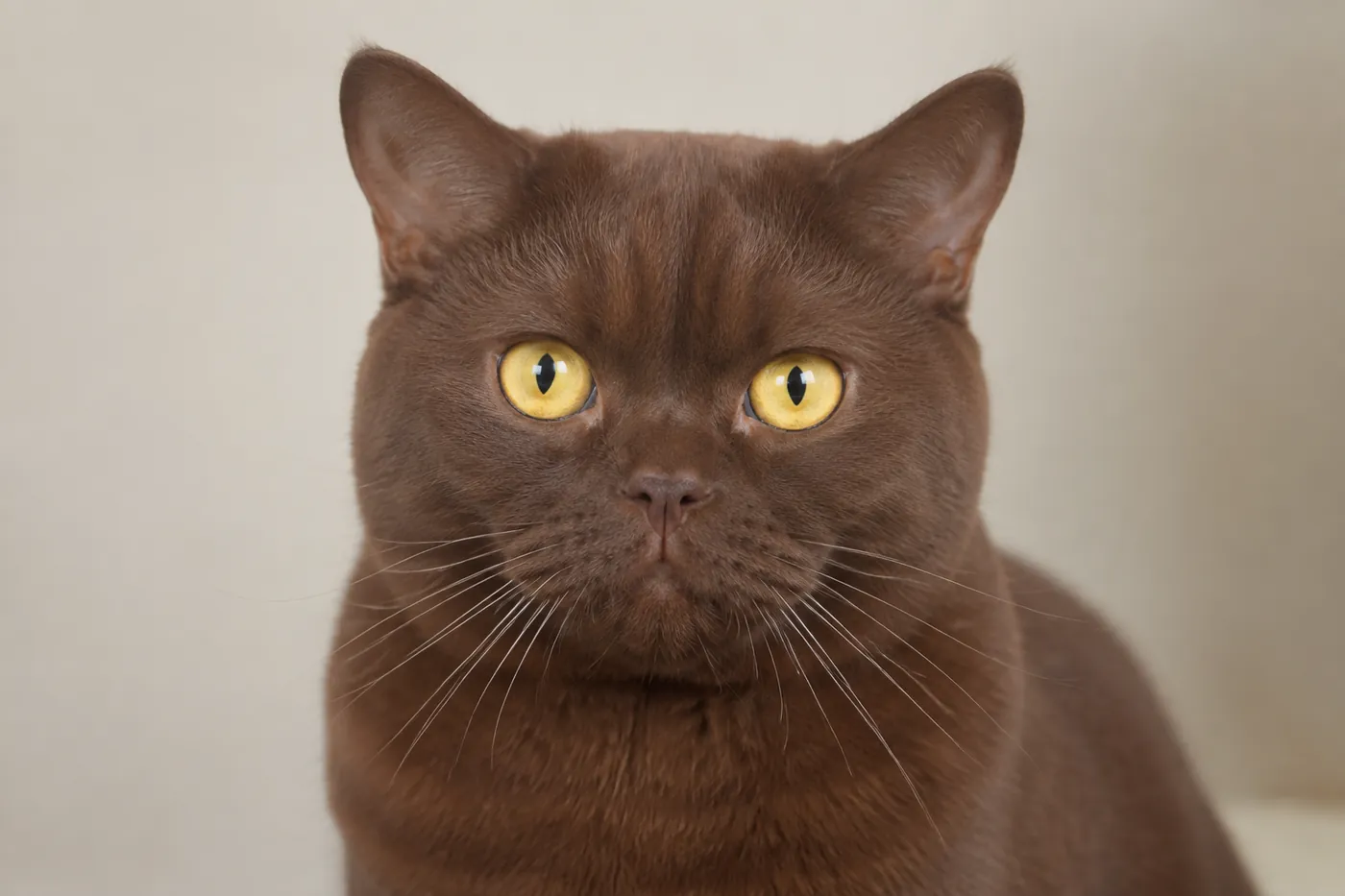
A red Burmese cannot be judged against a standard that lists four colours, so the registry a litter was bred to decides which standard applies.
How big does a Burmese get?
A Burmese is heavier than it looks, and that is the one surprising thing in its measurements.
- Mature male
- May reach or exceed twelve pounds
- Female
- Usually smaller than the male
- Frame
- Substantial bone structure with good muscular development
- The standard's own phrase
- A surprising weight for its size
- Overall impression
- Medium, never large
The CFA standard asks for a cat of medium size and then asks for substantial bone structure and good muscular development inside that outline. Because the bone and the muscle go into a medium frame, a mature male may reach or exceed twelve pounds while still reading as a medium cat, and females are usually smaller. The practical consequence is that carriers, shelves and wall units chosen by looking at the cat will be under-specified for a mature male.
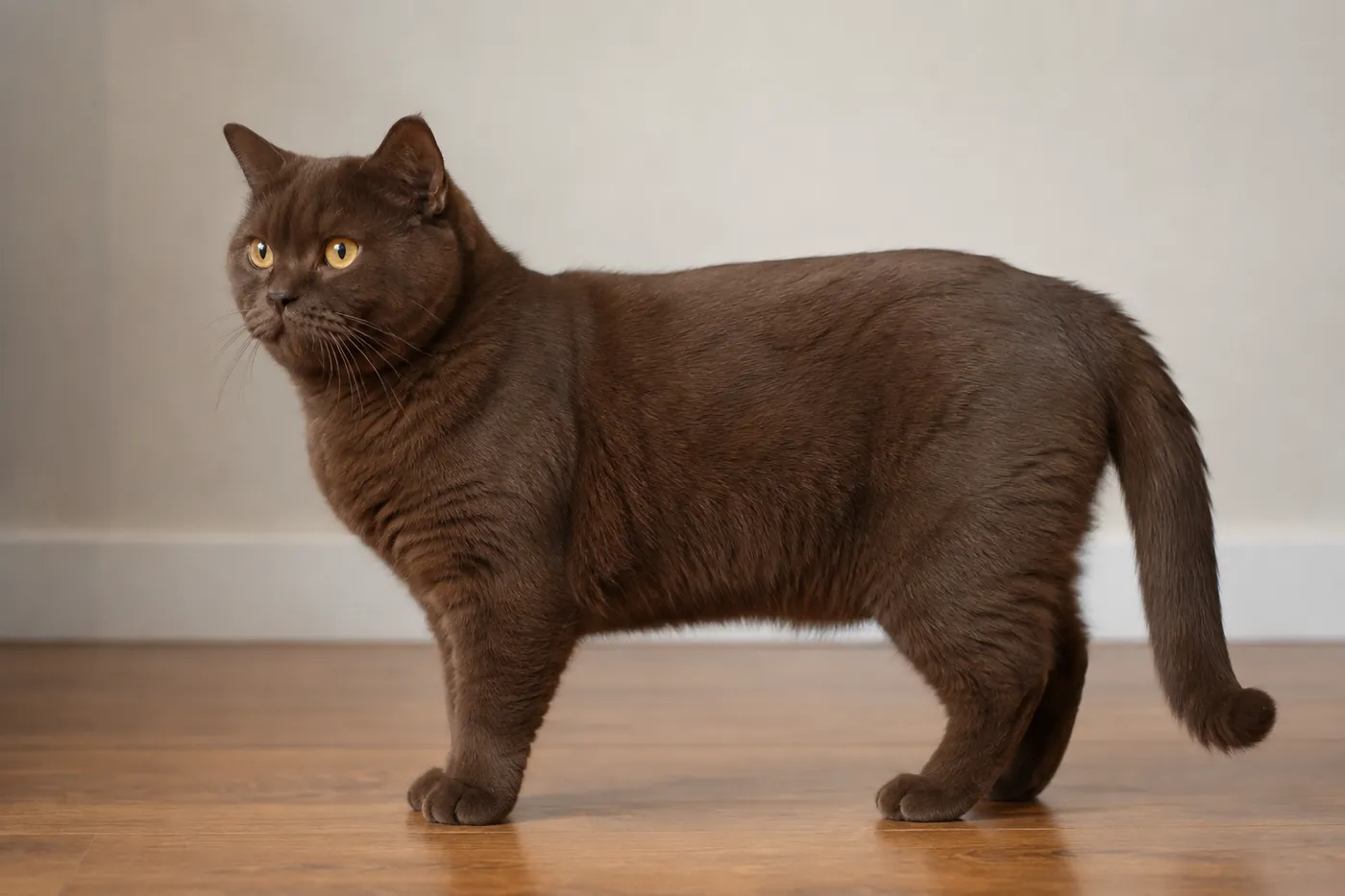
Weight above the standard is a different matter. In this breed it is almost always condition rather than frame, and the diabetes section below explains why that distinction matters more here than in most cats.
What is living with one actually like?
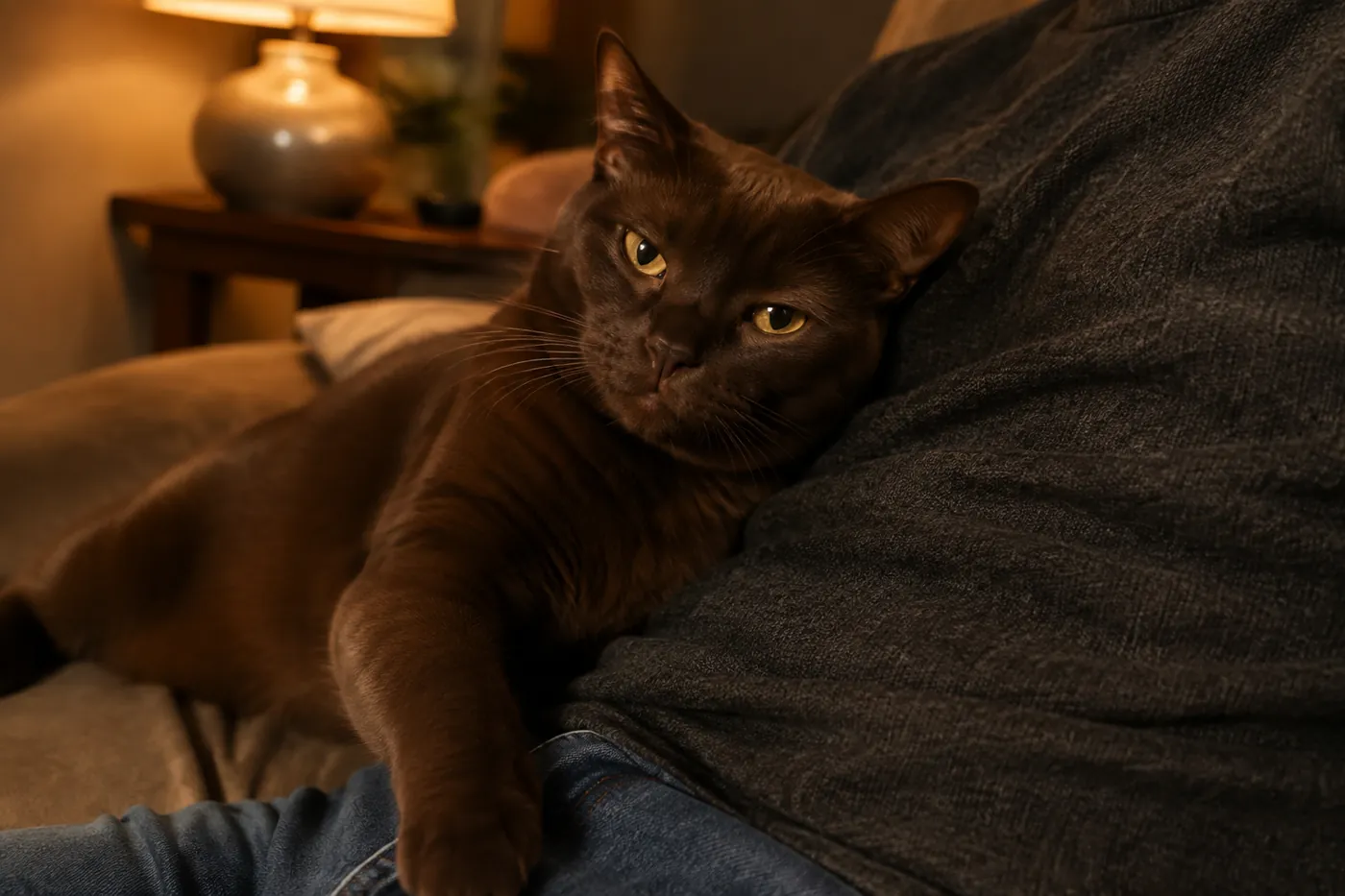
The GCCF describes the breed as confident, sociable and athletic, and calls them intensely social animals that do not like to feel neglected. The warning carries weight because it comes from a registry rather than a breeder, on a page written to present the breed.
At home that means a cat that arrives in whichever room you are in, not necessarily on your lap or asking for anything, but present.
| What the registry says | What it means at home |
|---|---|
| "Confident, sociable and athletic" | A cat that arrives in the room you are in, unprompted |
| "Intensely social animals" | Closed doors are treated as a problem rather than a boundary |
| "Do not like to feel neglected" | A full working day alone is the arrangement it handles worst |
| "A soft, sweet voice" | Conversation rather than the Siamese volume |
Closed doors are the friction point. A Burmese treats a shut door as a problem to be solved rather than a boundary, and it will work at one with its paws and its voice.
The voice is the part people over-worry about. The GCCF describes a soft, sweet voice that will hold a conversation if encouraged, which is a fair description and far quieter than a Siamese, so somebody who rejected the Siamese on noise but wants that people-focused temperament has found a closer fit here.
The Burmese asks for company far more than it makes noise.
Can one be left while you work?
Burmese cats commonly seek substantial social contact. A predictable workday may suit some adults when their needs are met around it, while kittens, newly adopted cats or distressed individuals need more care.
Sleep, appetite, litter use and vocalising during absences show how the arrangement is working. A second cat is useful only when the relationship is comfortable, which depends on a gradual introduction and separate resources, and it is not a reliable treatment for separation distress.
Overgrooming, pacing or persistent calling needs a veterinary assessment and a review of the routine, because new illness or conflict can look like a cat that simply needs more toys.
How much play and training does one need?
Two short sessions a day suit most Burmese, and one of them works best as training rather than chasing. The GCCF calls the breed athletic, playful, energetic and highly intelligent, and the last of those changes the arithmetic. A cat that solves problems is tired by solving problems, and ten minutes of reward-based work does more than half an hour with a wand toy.
- Run a wand session before you leave, so the morning energy is spent rather than stored.
- Move part of the daily ration into a puzzle feeder that occupies the hours nobody is home.
- Teach one small behaviour in the evening, ten minutes at a time, using food the cat has not already been given.
- End every session while the cat still wants more, so the next one starts from interest.
Altogether that is roughly twenty minutes split either side of work, and the alternative is a cat that finds its own occupation in your kitchen.
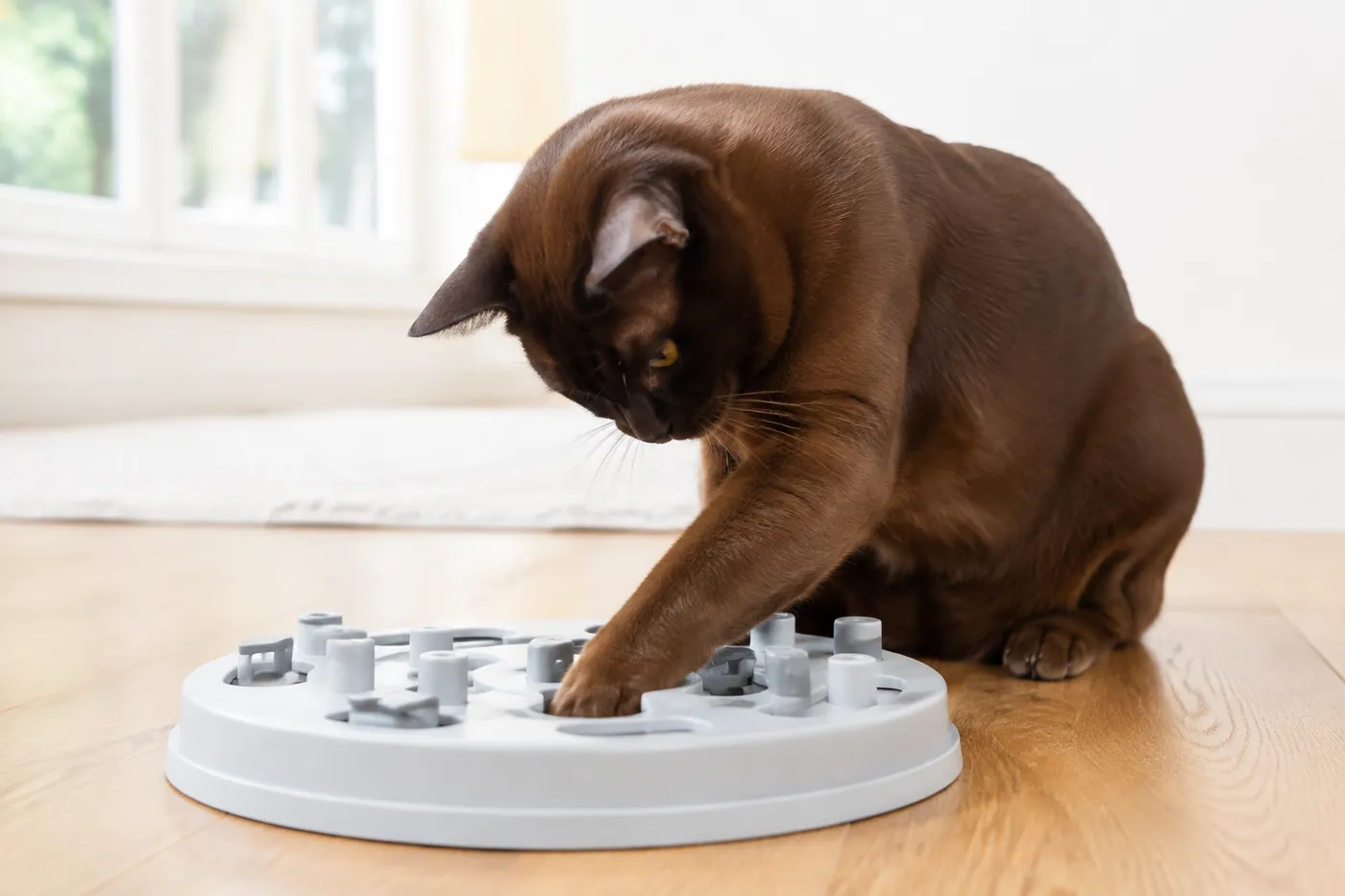
Activity does fall with age. The need for company does not fall with it, which catches out owners who assume an older Burmese will want less of everything.
What does the coat need?
A weekly pass with a rubber glove or a fine comb is the entire routine. The coat is very short, lies close to the body, and carries little undercoat, and since mats form in undercoat, a coat with almost none of it does not produce them.
That is worth stating because it removes grooming from the decision entirely. Somebody choosing between this breed and a long-coated one is comparing five minutes a week against twenty minutes a day.
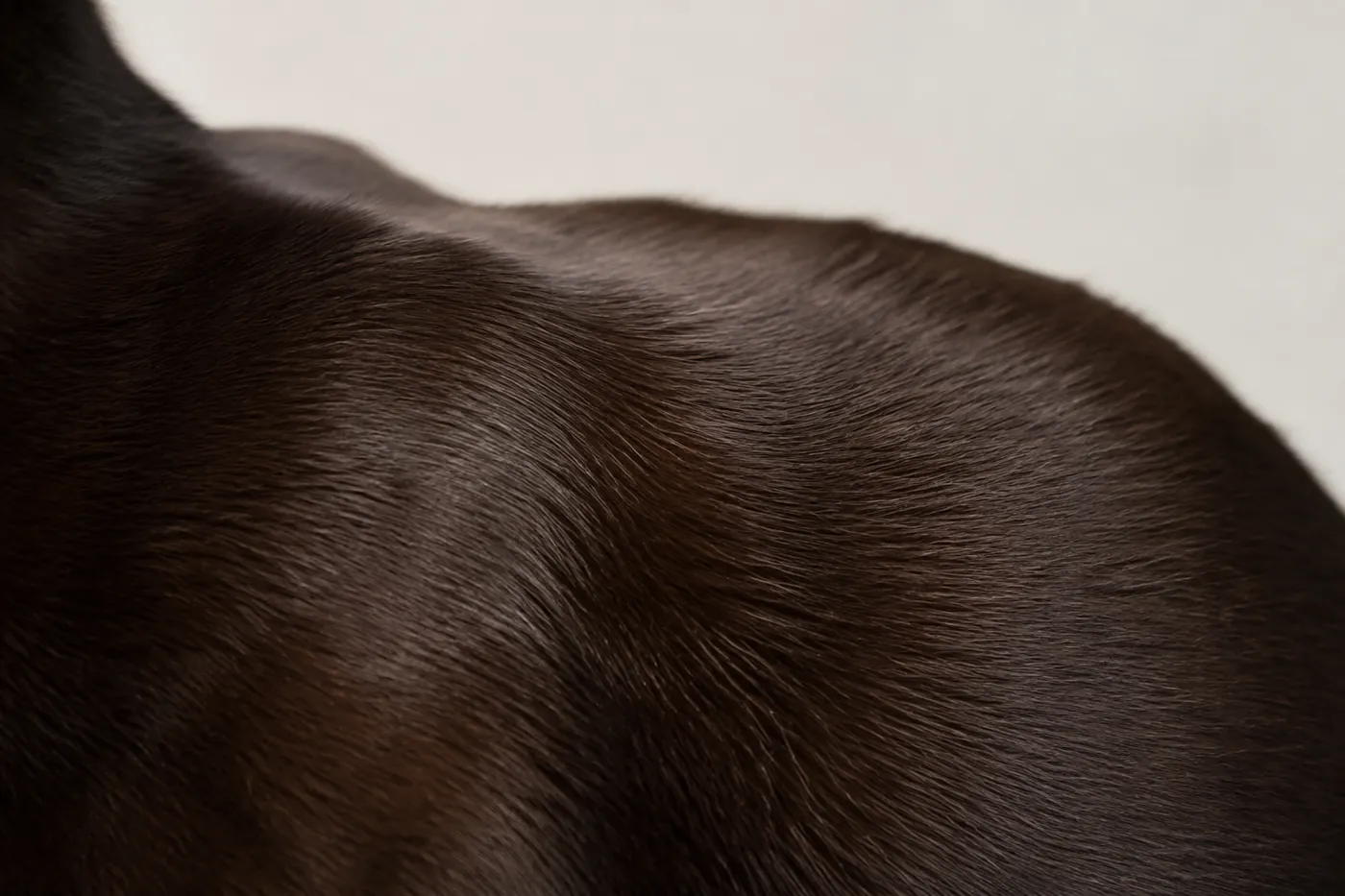
Little undercoat means little matting, but the cat still sheds onto furniture like any other cat.
The allergy assumption goes the same way. A short coat is not a hypoallergenic one, and nothing about this breed makes it suitable for a household that reacts to cats.
What should you ask about diabetes?
Diabetes susceptibility has been studied in Burmese populations, including Australian cats. Those findings make family history and preventive care relevant, but a regional breed label cannot predict whether one kitten will develop diabetes.
Affected relatives are worth asking about, and a healthy body condition kept with measured food and comfortable activity is the part an owner controls. Age, weight, other health conditions and individual biology all affect the clinical assessment; ancestry does not make husbandry irrelevant.
- Family history
- Ask whether close relatives developed diabetes and at what ages
- Body condition
- Track weight and muscle with the veterinarian
- New signs
- Increased thirst, larger urine clumps or weight loss merit a veterinary assessment
- Test limits
- A general genetic panel does not certify freedom from diabetes
The practical job is to notice change and obtain an individual assessment, because the country named in a pedigree gives no risk figure for one cat.
Which DNA results should the breeder have?
Two DNA results matter here, and between them they close more of this health list than a buyer might expect.
- Hypokalaemic polymyopathy
- Recessive, caused by a nonsense variant in WNK4, and conclusively DNA testable
- Carrier rate in tested Burmese
- 411 carriers among 2,099 cats tested, around twenty per cent
- Affected rate
- 34 cats, about 1.6 per cent
- The head defect
- A twelve base pair deletion in ALX1, lethal when a cat inherits two copies
- What one copy does
- Gives the flatter, more brachycephalic face selected for in contemporary show lines
Hypokalaemic polymyopathy is the one worth insisting on. It is recessive, so two parents clear of the tested WNK4 variant cannot pass that variant on at all, and with around one tested Burmese in five a carrier, an untested pairing carries a real chance of affected kittens.
An affected cat has episodes of muscle weakness. The recognisable posture is a head hanging low with the neck flexed downward while the legs stay planted, and it comes and goes rather than arriving once.
The ALX1 deletion is the more uncomfortable one, because it is entangled with the show ring. A cat with two copies does not survive, and a cat with one copy has the flatter face that became the winning contemporary look. That is a breed selecting towards a variant it also has to avoid doubling. It is a reason to ask what the breeder is selecting for as well as what they have tested.
A clear result covers the variant it tested and nothing else. Neither of these documents says anything about diabetes or about the pain syndrome in the next section.
Why do some Burmese paw at their mouths?
A cat lifting one paw to one side of its mouth, repeatedly, is showing something specific. Feline orofacial pain syndrome is a neuropathic pain condition, and it concentrates in this breed to a degree that is hard to overstate. A retrospective series of 113 cats included 100 Burmese.
- Pattern
- Episodic and typically one-sided, with pain free intervals between episodes
- Trigger
- Mouth movements in many cases, so eating and grooming are when it shows
- Age it appears
- Often around tooth eruption, when the trigeminal nerve endings are sensitised
- Outcome in the reported series
- Twelve per cent of those cats were euthanased as a consequence
- What the series does not give
- A prevalence figure, because it counted referred cases
Because mouth movements set it off in many cases, eating and grooming are when an owner notices it. Tooth eruption and oral disease sensitise the trigeminal nerve endings involved, so young cats getting their adult teeth are a common presentation, which is also why it is mistaken for ordinary teething.
Twelve per cent of the cats in that series were euthanased as a consequence of it, which puts it far beyond a minor dental complaint.
The series counted referred cases, so it shows where the condition concentrates rather than how many Burmese ever get it. What it does establish is that a Burmese pawing at one side of its mouth is a veterinary appointment rather than something to watch.
How long do Burmese live?
UK life tables built from veterinary records rather than from breeder reports give the Burmese a life expectancy of 14.42 years, which was the longest figure recorded for any breed group in that study. That population estimate cannot predict an individual lifespan or be compared directly with an informal longevity range.
That number is worth holding against the health list above it, because inherited risks do not determine every cat's lifespan.
| Claim | What stands behind it |
|---|---|
| Informal lifespan range | Not the same measure as life expectancy at birth |
| 14.42 years | UK life tables built from veterinary records |
| Longest of any breed group studied | The same life tables |
| What it predicts for one kitten | Nothing. It describes a population |
The reconciliation is that most of the list is manageable. Hypokalaemia is bred out with a test, diabetes is managed and often goes into remission, and the head defect is a breeding decision rather than a pet owner's problem. A population figure predicts nothing about one kitten, but it does show that the length of the health list overstates the outcome for the breed as a whole.
Is one good with children and other animals?
Usually yes. Quiet or nervous breeds are often steered towards calm adult households, but the GCCF describes the Burmese as a breed that thrives in active households, and a noisy family home gives it exactly the traffic it is looking for.
The condition attached is about handling rather than temperament. A confident cat that does not object is easy to keep handling past the point it stopped enjoying, and not objecting is different from enjoying it. The ordinary rules therefore matter as much here as with a nervous breed.
- The cat is always allowed to walk away, and nobody follows it to its own place
- Children are handed a wand toy rather than the cat itself
- Handling stops when the cat stops enjoying it, not when it objects
Other cats work well when the energy matches and the relationship is comfortable. Dogs are usually fine, largely because this is not a breed that bolts and starts a chase.
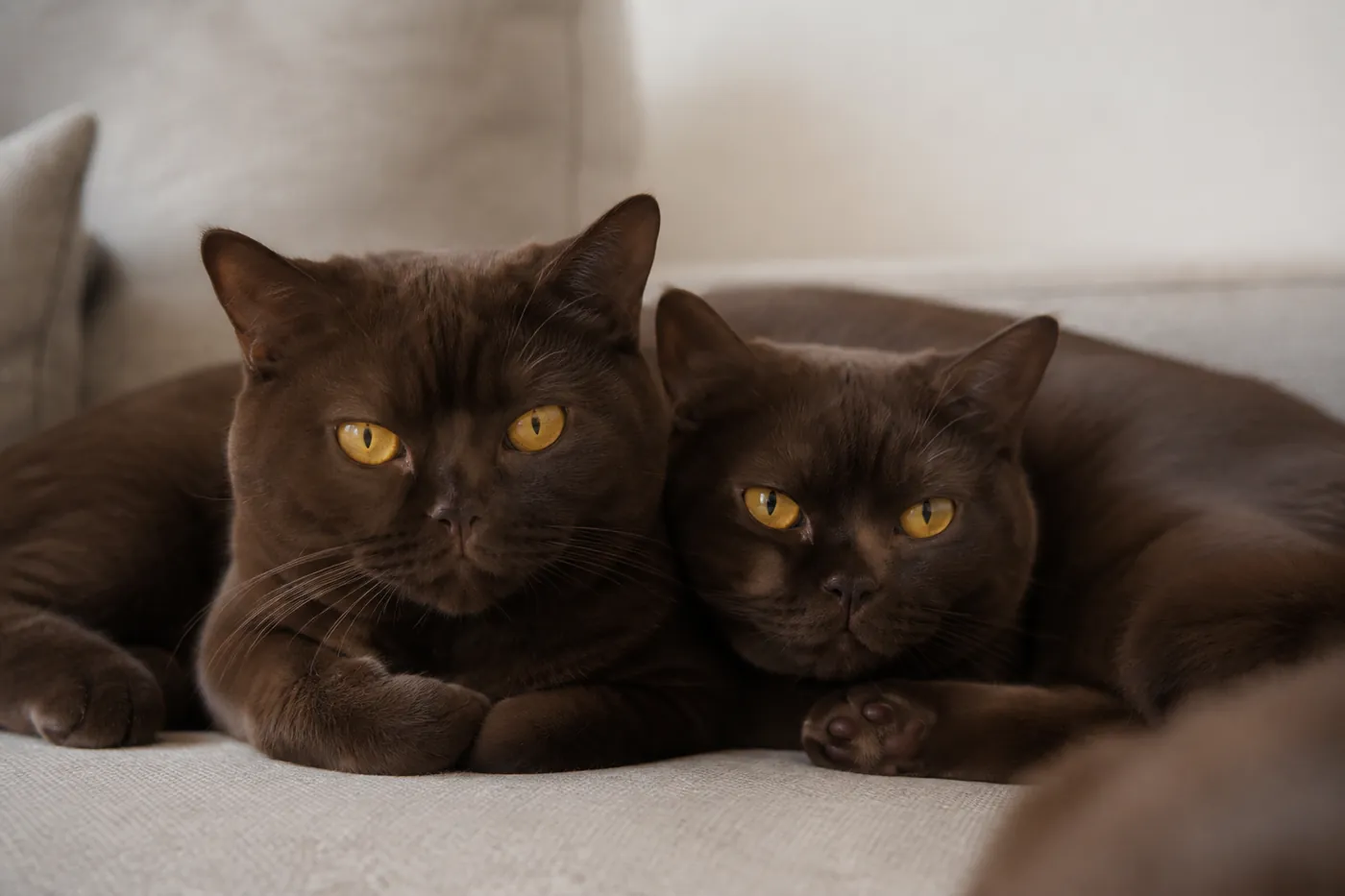
Who should think twice about one?
The household that is out all day should think twice, and it is not a close call. Everything else here is manageable, while a Burmese left alone across a full working week is the one arrangement that reliably goes wrong.
Burmese and Abyssinian cats are both active and people-oriented, but the Burmese usually presses for closer physical company while the Abyssinian channels more of its demand through climbing and investigation. Burmese and American Shorthair cats differ more clearly in how much continuous participation they expect from the household.
There is also a litter to decline. A Burmese litter offered with no hypokalaemia result on either parent leaves the single conclusively testable risk in this breed untested, and that test is cheap, available and definitive.
- The hypokalaemia DNA result for both parents, as a document rather than an assurance
- Whether close relatives developed diabetes, and how the breeder tracks family health
- Which registry standard the litter was bred to, which decides the colour and head it was judged against
- Whether anyone in the line has been treated for orofacial pain
- Who is at home during the day, asked of yourself rather than the breeder
Where somebody is home, a second cat is possible, and the breeder produces a hypokalaemia result without being pressed, this is an easy breed to recommend. It is affectionate without being fragile, short-coated, long-lived on the only figures that have been measured, and genuinely good company.
Two documents and one honest answer about your own working week decide this purchase, and the working week is the harder of the two.
Common Questions
Is the American Burmese the same as the British Burmese?
They share a 1930 foundation and have been selected apart since. The CFA recognises four colours and asks for a head pleasingly rounded without flat planes, while the GCCF recognises ten colours and describes a short wide wedge with a rounded top. Neither registry calls the other wrong, so it is a standards difference rather than a quality ranking.
Do Burmese cats really get diabetes more often?
Research has identified diabetes susceptibility in studied Burmese populations. Ask about affected relatives, maintain healthy body condition and seek veterinary assessment for increased thirst, urination or weight loss. A regional label or general genetic panel cannot predict one cat's outcome.
Which health test should I insist on before buying a Burmese kitten?
Ask for named hypokalemia results and identities for both parents, along with the other tests relevant to the line. Two parents clear of the tested WNK4 variant cannot pass that variant on; this does not exclude low potassium or weakness from other causes.
Can a Burmese be left alone during a working day?
Some adults cope with a predictable workday if contact and activity are provided around it. Monitor the individual and arrange more care if needed. A second cat helps only when both cats are comfortable together.
How long do Burmese cats live?
UK life tables built from veterinary records give 14.42 years, which was the longest figure recorded for any breed group in that study. It describes a population rather than predicting an individual cat.
Checked Against
- The Cat Fanciers' Association: Burmese breed standard and history cfa.org
- Governing Council of the Cat Fancy: Burmese breed information gccfcats.org
- Life tables of annual life expectancy and risk factors for mortality in cats in the UK pmc.ncbi.nlm.nih.gov
- Differences in metabolic profiles between the Burmese, the Maine Coon and the Birman cat, three breeds with varying risk for diabetes mellitus journals.plos.org
- Mapping of diabetes susceptibility loci in a domestic cat breed with an unusually high incidence of diabetes mellitus pubmed.ncbi.nlm.nih.gov
- Feline orofacial pain syndrome (FOPS): a retrospective study of 113 cases pubmed.ncbi.nlm.nih.gov
- First WNK4-hypokalemia animal model identified by genome-wide association in Burmese cats journals.plos.org
- OMIA: ALX1-related frontonasal dysplasia in Felis catus omia.org
- UC Davis: Burmese hypokalemia vgl.ucdavis.edu
Published 4 September 2026. Last updated .





