
What Is a Bombay Cat, and Which Burmese Health Risks Come With It?
A Bombay combines a black coat with a commonly affectionate, involved temperament. Pedigree and named health results matter because Burmese ancestry can bring inherited concerns that colour and appearance cannot settle.
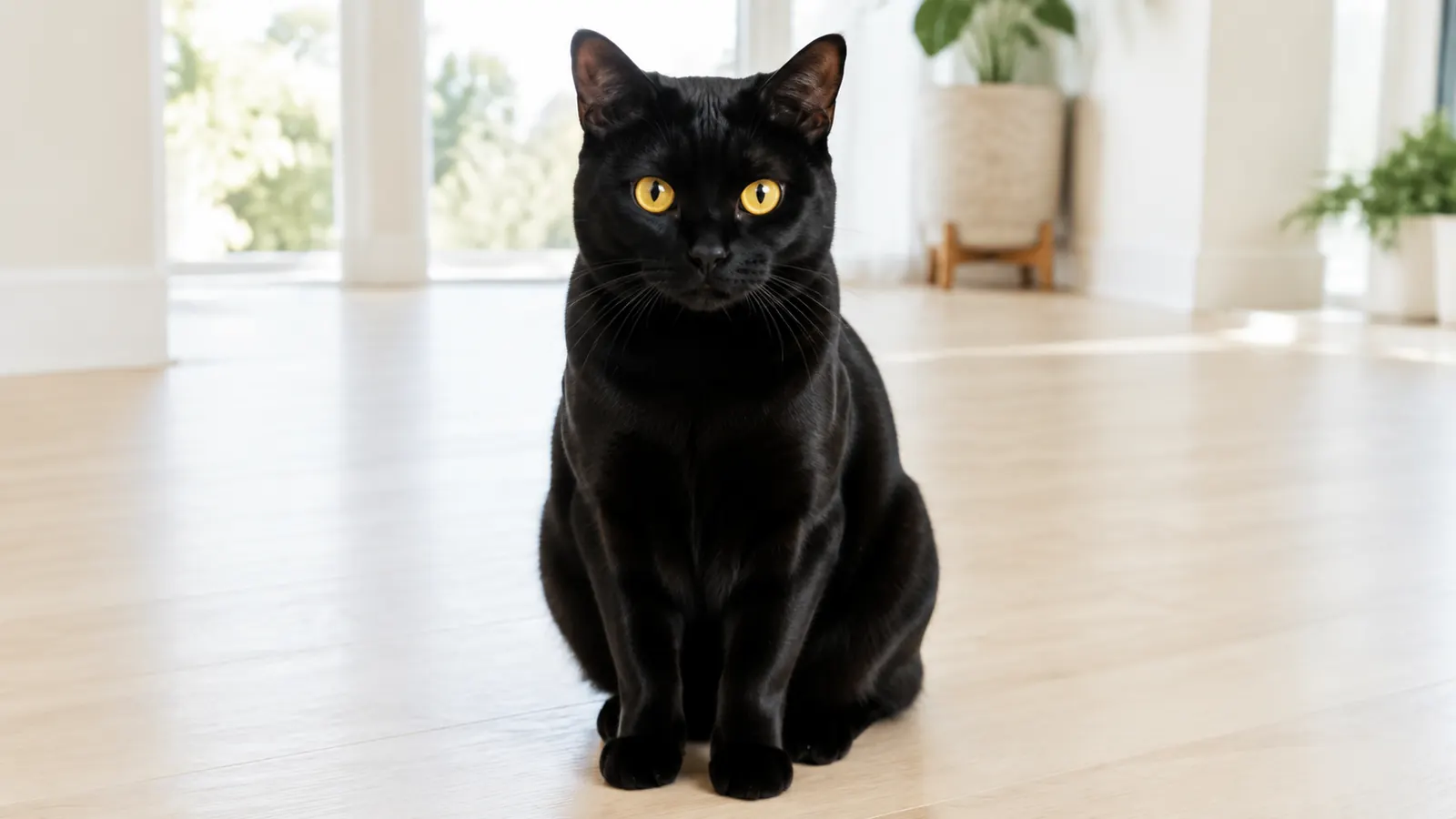
- Origin
- Louisville, Kentucky, from the 1960s, a black American Shorthair crossed to a sable Burmese
- Coat
- Short, close lying and single, black to the roots with black nose leather and paw pads
- Size
- Medium and muscular with a surprising weight for its size, and body condition hidden by the coat
- Typical weight
- Typically 2.5 to 5 kg overall, with males well above females
- Life expectancy
- Not measured. The Bombay was not among the twelve groups analysed in the UK life tables
- Activity level
- Moderate. Active and curious as a kitten, closely attached and heat seeking as an adult
- Grooming
- Very low. A short single coat with no undercoat to manage
- Suits
- Busy households that are rarely empty, and buyers who ask for both parents' genotypes
Which cat are you actually buying?
A Bombay is two breeds put together on purpose, about sixty years ago.
Nikki Horner bred the first ones in Kentucky, and the CFA granted championship status in 1976. That is recent enough that the breed is still working out what it inherited.
The American Shorthair side supplied the colour, the build and a genuinely undemanding constitution. It did not supply a disease list, because that side of the cross has almost no breed-specific one to give.
Everything a buyer needs to check therefore traces back through the Burmese parent. That is unusual, and it makes the list shorter than the usual scattergun of maybes.
Coming from the Burmese does not mean a Bombay carries every Burmese risk at the Burmese rate. A young breed also has less recorded history than an old one, so several Bombay questions still have no answer at all.
Which features distinguish Bombay type?
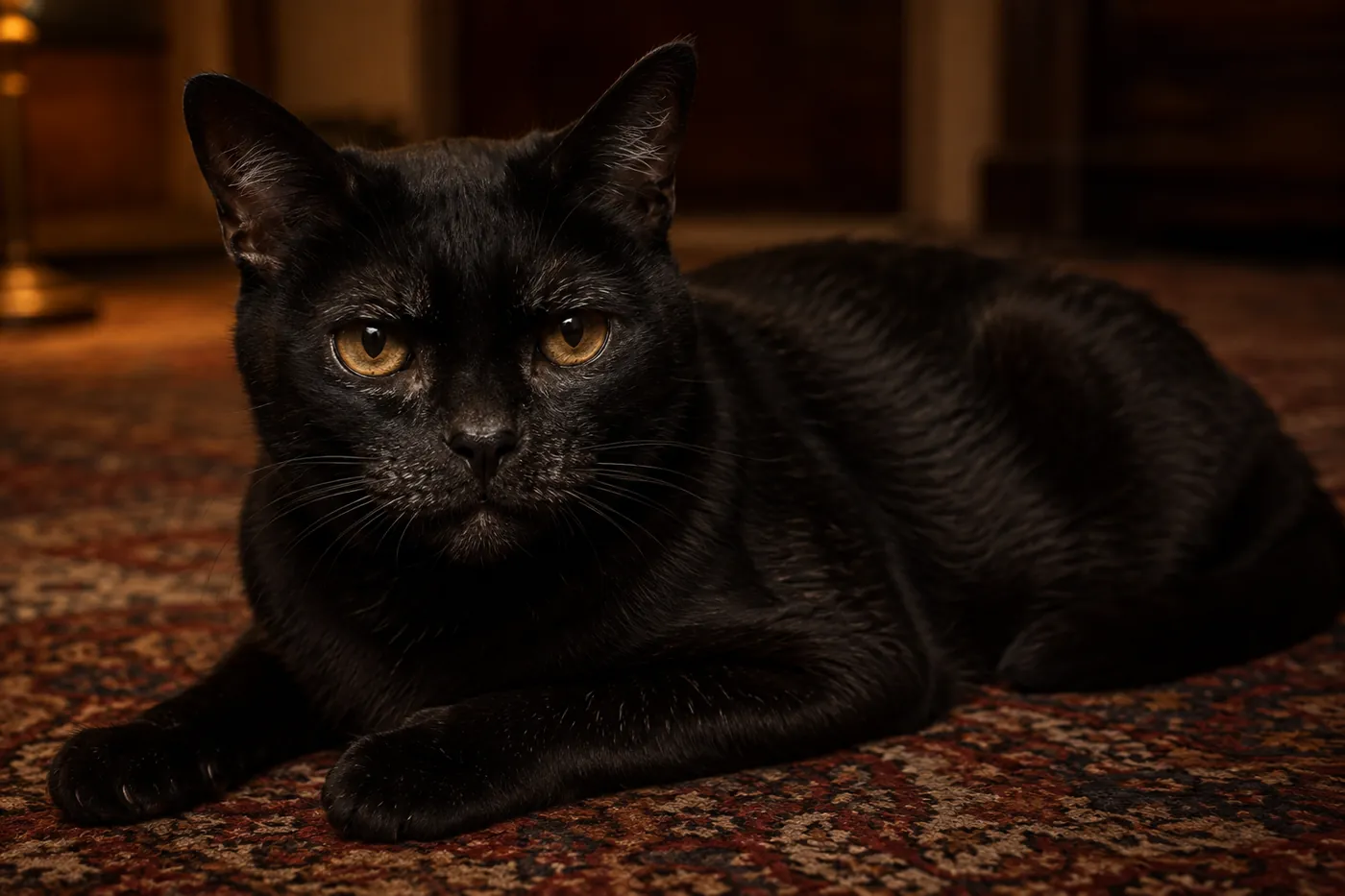
Three features do it, the roots, the pads and the eyes, and all three can be checked at a viewing.
The standard asks for a coat black to the roots, which is not what most black cats have. Part the fur on an ordinary black domestic shorthair and the hair usually pales towards the skin.
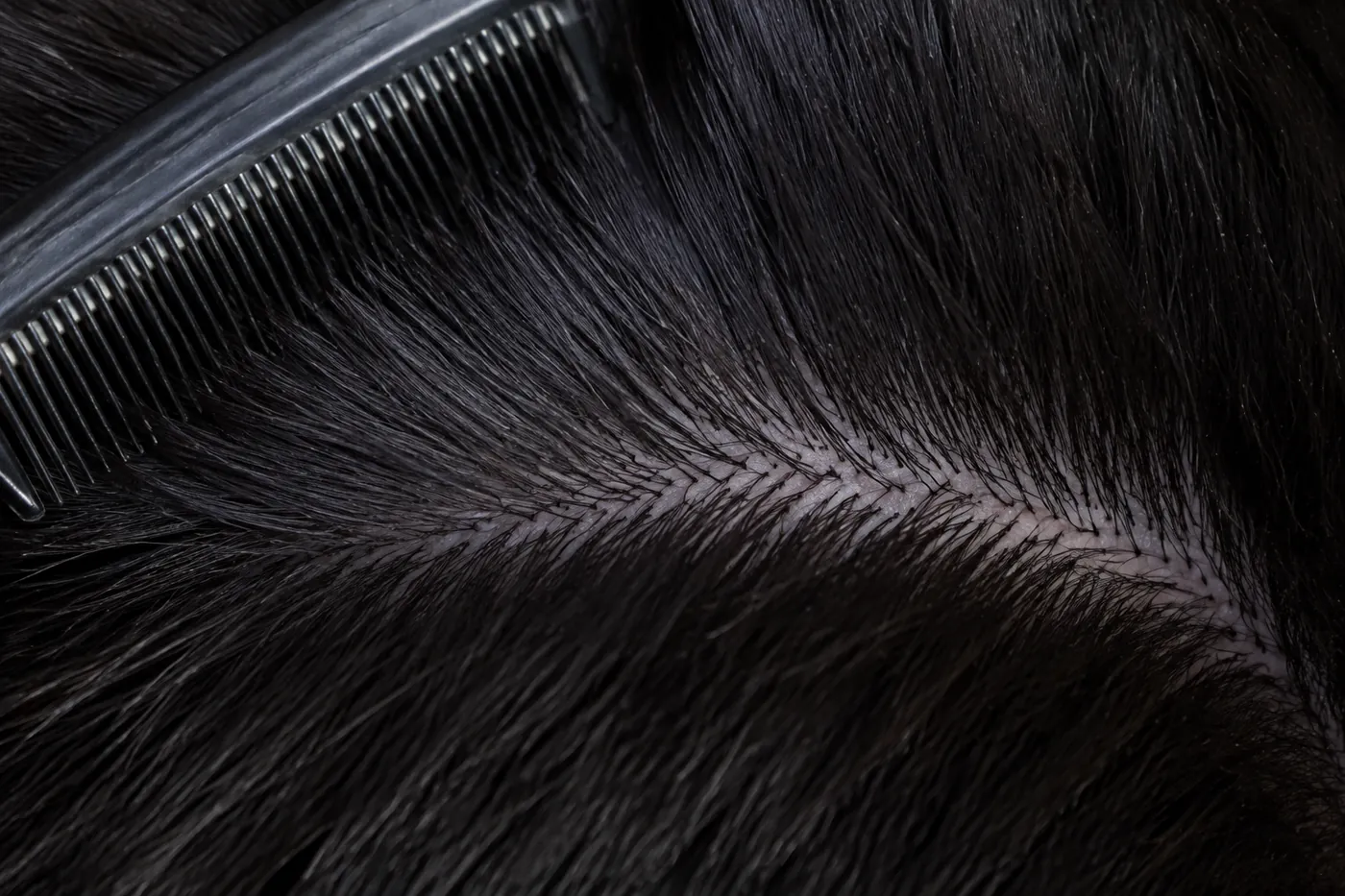
The second check is at the extremities. Bombay nose leather and paw pads are black, where a black domestic shorthair frequently has grey or pink pads.
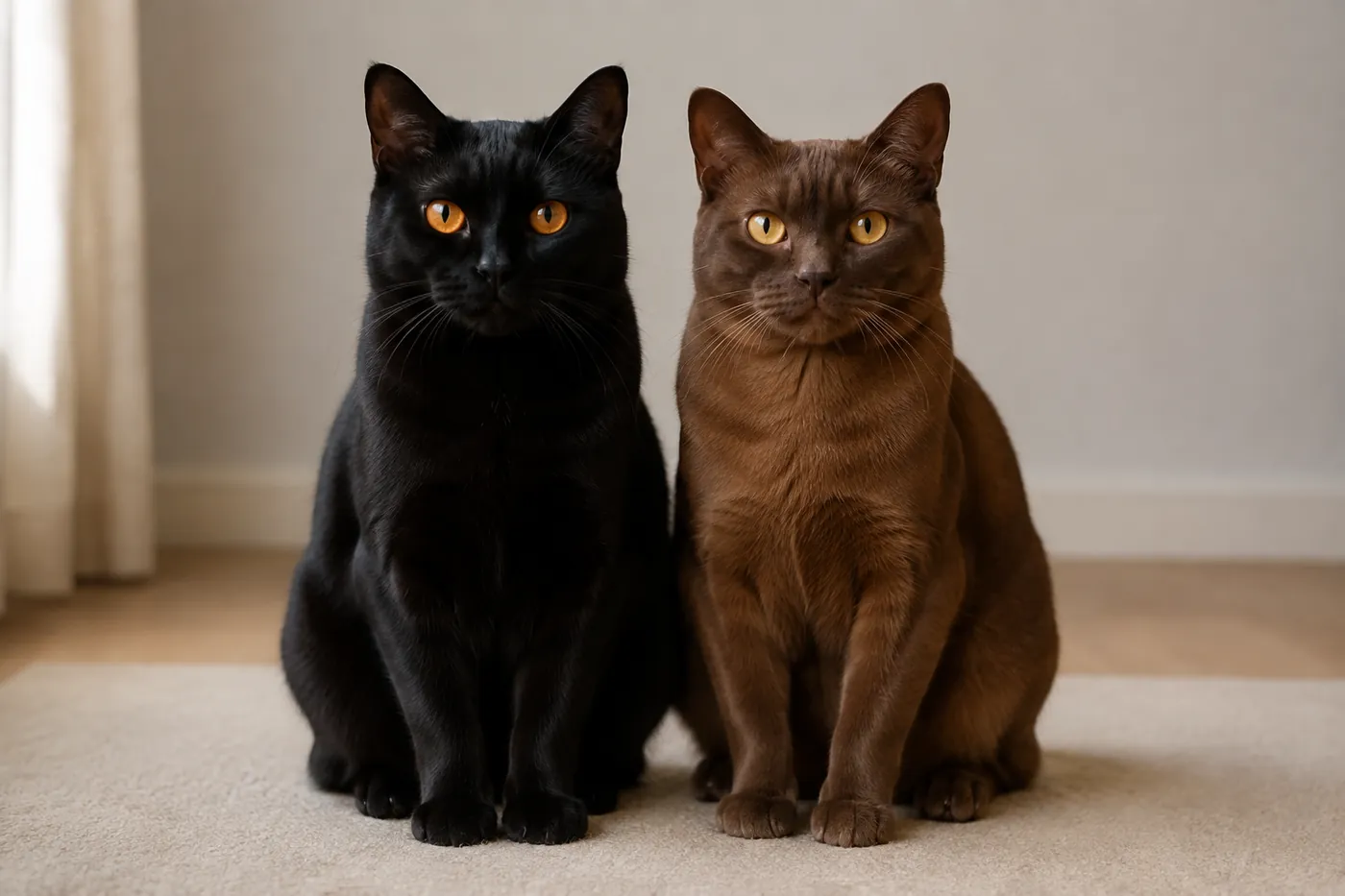
The third is eye colour. The standard runs from gold to copper and rewards depth, which rules out the green that most black cats settle into by adulthood.
| Cat | Coat | Paw pads | Eyes |
|---|---|---|---|
| Bombay | Short, close, black to the roots | Black | Gold to copper |
| Black domestic shorthair | Short, often paler at the roots | Grey, pink or black | Usually green |
| Sable Burmese | Short, close, warm brown | Brown | Gold to yellow |
Bombay kittens are often born with faint tabby ghost markings, which look like a fault but fade as the adult coat comes in.
The reason is that solid black masks a tabby pattern rather than deleting it. Every cat carries one underneath, and in a young coat it can still show through before the adult pigment fills in.
British lines complicate the eye check slightly, because they often carry a green tinge where American lines run copper. The coat itself costs almost nothing, being short and single, though short and single does not mean a Bombay sheds less than other cats or suits an allergy household.
Which risk did the breed actually concentrate?
Burmese hypokalaemia is a recessive condition caused by a nonsense variant in WNK4, and it leaves affected cats with episodes of muscle weakness. A cheap PCR test finds carriers and affected cats alike.
- Bombays genotyped
- 124
- Bombay carriers
- 26, which is 21 percent
- Bombays homozygous affected
- 9, which is 7 percent
- Burmese for comparison
- 2099 tested, 411 carriers at 20 percent, 34 affected at 1.6 percent
- Test
- An inexpensive PCR test, which finds carriers as well as affected cats
The two carrier rates match: 21 percent in Bombays against 20 percent in Burmese is the same number, which is what you would expect from a breed that took the variant across in its founding stock.
The affected rates do not. 7 percent against 1.6 percent is more than four times higher, and that gap is the finding.
The mechanism is population size rather than anything about the cats. A small founding group means relatives are bred together more often, and carrier to carrier is the only pairing that produces an affected kitten.
So the breed took an existing problem and made it far more likely to actually appear, which is the ordinary arithmetic of a young breed built from few animals.
The recessive arithmetic is worth stating, because it is what a breeder is managing. Two carriers bred together produce affected kittens in roughly a quarter of the litter, and a carrier bred to a tested clear cat produces none at all.
That is why a genotype settles more here than a family history does. One clear parent guarantees no affected kittens whatever the other parent turns out to be, which makes the test cheap insurance rather than a formality.
Two caveats belong here. 124 cats is a small sample, and cats sent for testing are not a random selection of Bombays, so the true affected rate may sit below 7 percent rather than above it.
The weakness has a posture worth recognising
Inherited hypokalemia can cause episodes of muscle weakness and difficulty holding the head up. These signs are not specific to the inherited condition: low potassium and weakness also have other causes.
A weak cat needs prompt veterinary assessment. The clinician may measure potassium and other blood values, interpret the family or DNA history and decide on treatment and monitoring, so a potassium supplement should not be started at home on the strength of a breed description.
A genetic report answers whether the tested variant is present. It does not diagnose the cause of a current collapse, and a clear cat can still become weak for another reason.
Which test does the second risk need?
The Burmese head defect comes from a 12 base pair deletion in ALX1, written c.496delCTCTCAGGACTG. It is co-dominant rather than plainly recessive, which means one copy and two copies do visibly different things.
One copy gives a flatter, more brachycephalic face. That shortened head became the winning look in contemporary Burmese show lines, and it was selected for deliberately.
Two copies produce a midline facial defect that is incompatible with life. Affected kittens are euthanased.
So the face selected for in show lines is one copy of a variant that is lethal at two. That is the reason the test exists rather than an argument against the breed: a buccal swab settles it, and two tested parents remove the defect from a litter entirely.
- A hypokalaemia genotype for each parent, because that is the risk this breed concentrated
- An ALX1 result for each parent, which is the one that is lethal at two copies
- Three generations of pedigree, which no test can substitute for
- Registration papers naming both parents, so the results can be tied to this litter
The variant is recorded in the Burmese, and the route into a Bombay pedigree is the permitted outcross. A single copy is not a disease, and a carrier bred to a clear cat produces no affected kittens, which is exactly how the Birman manages its own lethal recessive.
What do the outcross rules change?
Permitted outcrosses depend on the registry, so the current rules of the registry behind the pedigree are the ones that apply. An outcross can change ancestry and genetic diversity, but it does not automatically reset inherited risk or establish that every offspring is healthier.
Test results and family records only count when they match both parents. A black coat or an American Shorthair ancestor cannot replace the Burmese-line screening discussion, and breed membership alone does not diagnose a disease.
How big is a Bombay?
A Bombay is medium-sized and dense, smaller than the panther comparison implies and heavier than it looks.
An adult runs about 2.5 to 5 kg, with males well above females. The standard calls for a medium, muscular cat with a surprising weight for its size, and owners lifting one for the first time usually notice.
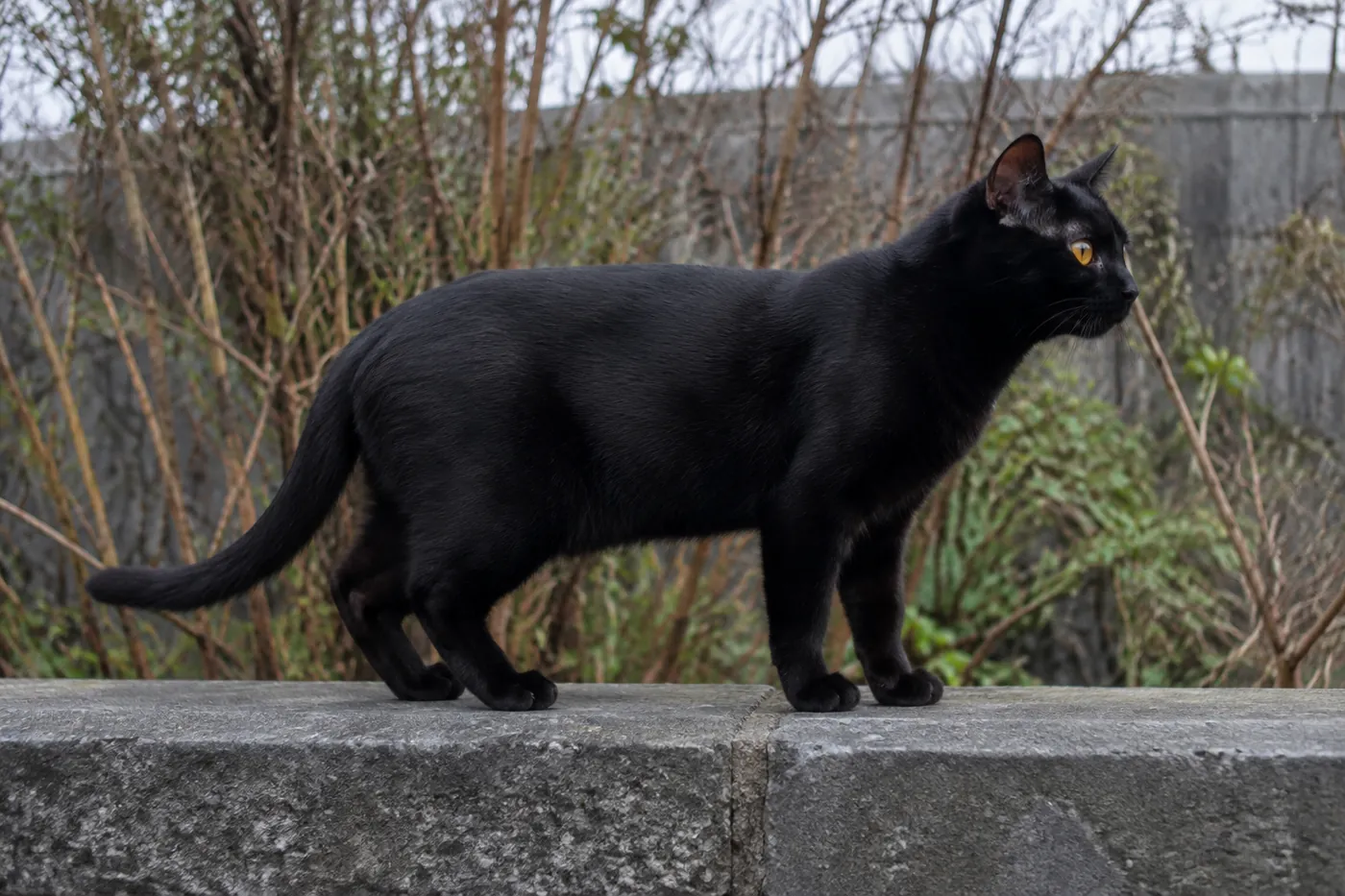
Dark fur and lighting can obscure an outline in photographs, so body condition is judged by rib feel, waist, muscle and weight trends, as for any coat colour. Scales answer that better than the eye, and getting how much to feed roughly right matters more here than in a breed whose outline you can actually see.
How long does a Bombay live?
Nobody has measured it, and the nearest figure does not transfer.
The UK life tables analysed twelve groups of cats and the Bombay was not among them. The breed is too uncommon in that dataset to produce a figure of its own, and one of those twelve groups was crossbred cats rather than a breed at all.
The nearest figure belongs to the Burmese, which recorded the longest measured life expectancy of any group in that study, at 14.42 years, and a Bombay is roughly half Burmese by ancestry.
Half the ancestry does not buy half the difference, because life expectancy is a property of a measured population rather than a trait carried on a chromosome. The Bombay has not been such a population, so no share of the Burmese figure transfers to it.
What the same study did measure applies to any cat. Neutering and body weight were both associated with how long cats lived, and watching for the ordinary signs of ageing does more for an individual than a breed average would.
What is living with a Bombay like?
Because the breed was selected for the temperament as deliberately as for the coat, what arrives is a cat that requires company, although the response to time alone varies by individual. This is a cat that wants to be on you rather than near you.
Breed descriptions settle on a kitten that is very active and curious, growing into an adult that prefers to watch rather than join. The watching is done from close range.
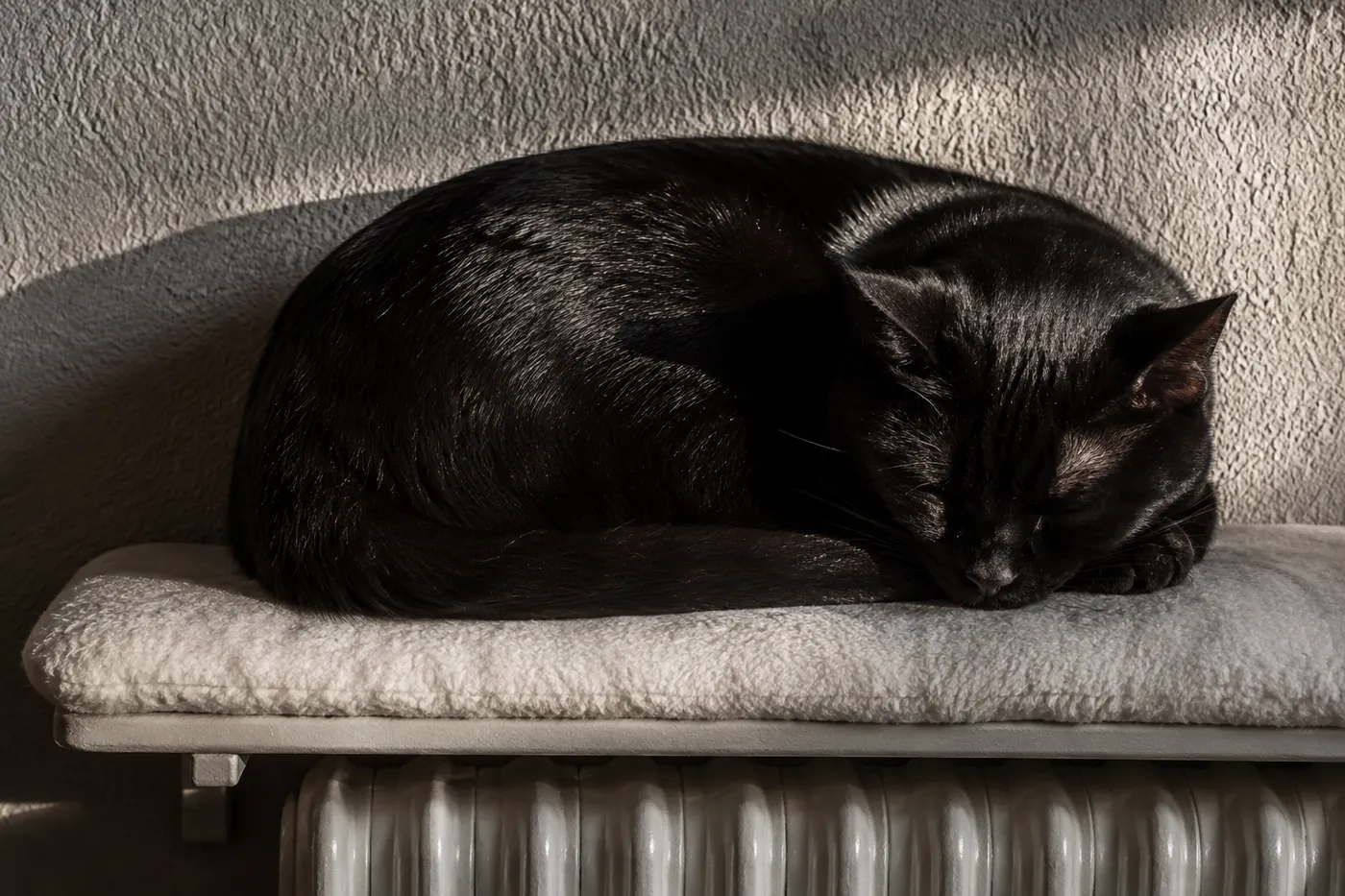
The other consistent trait is heat seeking. A Bombay will find the radiator, the laptop, the sunlit patch or the lap, and it will choose any of them over the floor.
That closeness is a genuine demand rather than a charming detail. Somebody who wants a decorative cat that keeps to itself has bought the wrong animal, and daily play by life stage is a floor rather than an extra.
The kitten is not a preview of the adult, because the breed calms noticeably. Temperament here comes from breed descriptions rather than a measured behaviour study, so individuals vary around it.
CFA says both parent breeds are quite intelligent and that the Bombay follows in their footsteps, so a Bombay usually picks up routines and games readily. Grooming is light: CFA says the short, satiny coat sheds moderately to minimally, recommends a rubber curry brush two or three times a month, and suggests a quick bath if shedding needs more control.
Is one good with children and other pets?
Yes, and the sociability that makes this breed demanding is the same trait that makes it good in a full house.
A cat that adapts easily to change handles a busy household better than a reactive one does, and early exposure rather than the breed decides how any individual manages a dog. The socialisation window is where that gets settled.
The condition is specific to this breed. A Bombay needs a warm high place it can retreat to, and a house that offers only cold floor-level hiding spots will get a cat that never really withdraws and eventually stops tolerating the noise.
Who should think twice about one?
One litter is worth declining outright, and this breed's own numbers justify it.
A Bombay litter offered with no hypokalaemia genotype on either parent leaves the single risk this breed concentrated entirely unmanaged. The test is cheap, it finds carriers as well as affected cats, and 7 percent is not a rate anyone should be guessing about.
The second refusal is quieter. A breeder who cannot produce three generations of pedigree has nothing to say about the outcross history, and that history is what predicts which parent breed's problems the kitten carries.
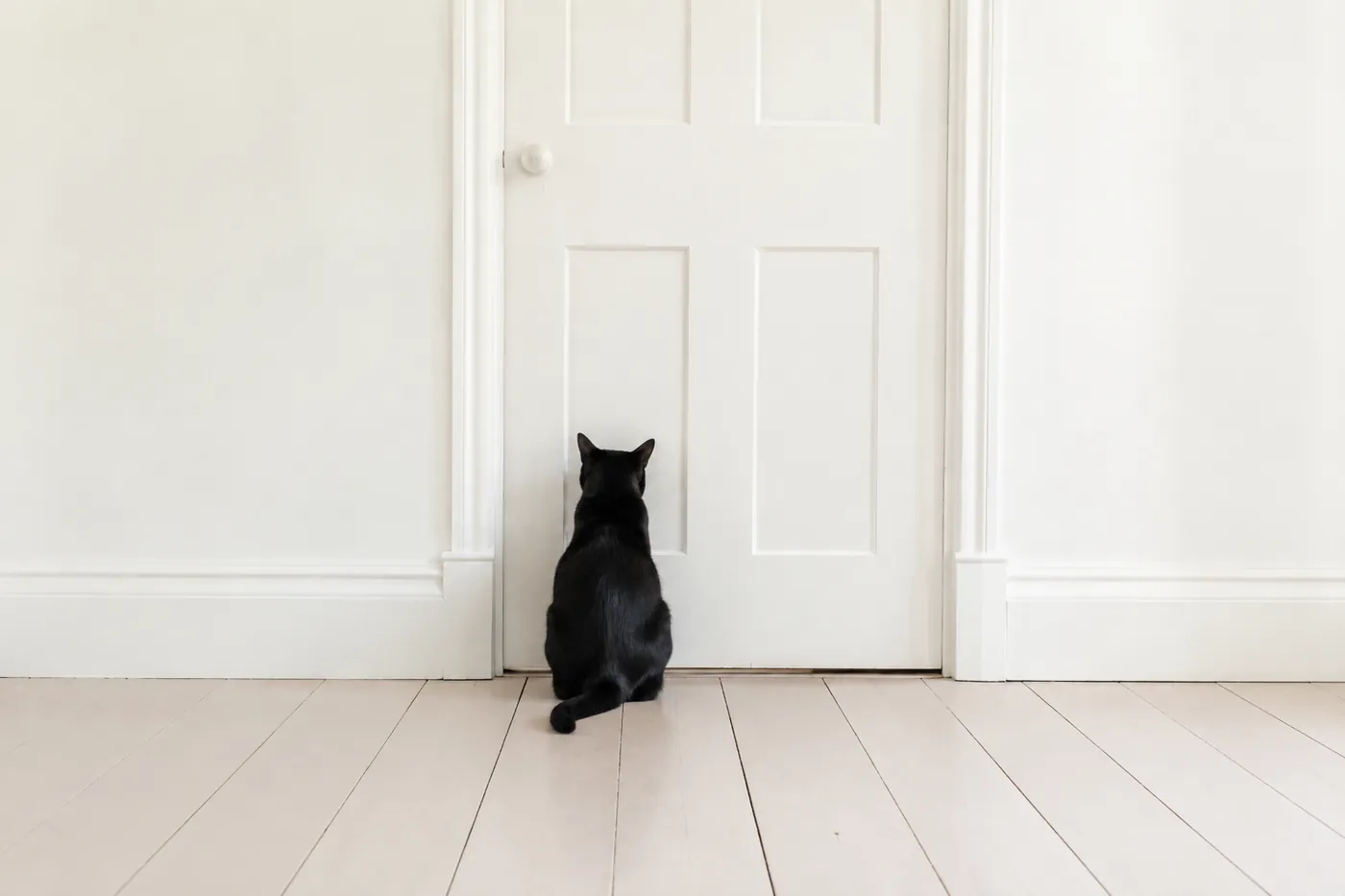
The household to reconsider is the one that is out all day. A cat this attached does not settle into an empty house, and the black coat that makes the breed look self-contained predicts nothing about how it behaves when the door closes.
Where somebody is usually home and the breeder produces a genotype, an ALX1 result and a pedigree without being pushed, this is a straightforward and unusually affectionate cat. The look is what draws people in, and it is the one thing here that never needed checking.
Common Questions
Is my black cat a Bombay?
Three things tell you. A Bombay coat is black right down to the roots rather than paling towards the skin, the nose leather and paw pads are black rather than grey or pink, and the eyes run gold to copper rather than the green most black cats settle into.
What is the single most important Bombay test?
The hypokalaemia genotype on both parents. Of 124 Bombays genotyped, 7 percent were homozygous affected against 1.6 percent of Burmese, so this is the risk the breed concentrated and the test is inexpensive.
Are Bombays still crossed with other breeds?
Yes. The CFA permits outcrossing to Black American Shorthair and to Sable Burmese, so a current pedigree can contain either founding breed, which is why three generations of pedigree answer more than the breed name does.
How long do Bombay cats live?
The cited UK life tables do not provide a separate Bombay estimate. Their Burmese value belongs to that sampled breed and cannot be reassigned to descendants. Use family records as context and plan for long-term care.
Checked Against
- The Cat Fanciers' Association: Bombay cfa.org
- Periodic hypokalaemic polymyopathy in Burmese and closely related cats pmc.ncbi.nlm.nih.gov
- First WNK4-hypokalemia animal model identified by genome-wide association in Burmese cats journals.plos.org
- OMIA: ALX1-related frontonasal dysplasia in Felis catus omia.org
- Life tables of annual life expectancy and risk factors for mortality in cats in the UK pmc.ncbi.nlm.nih.gov
Published 4 September 2026. Last updated .





