Is a Black Burmese Actually Black, or Is It the Breed's Original Sable?
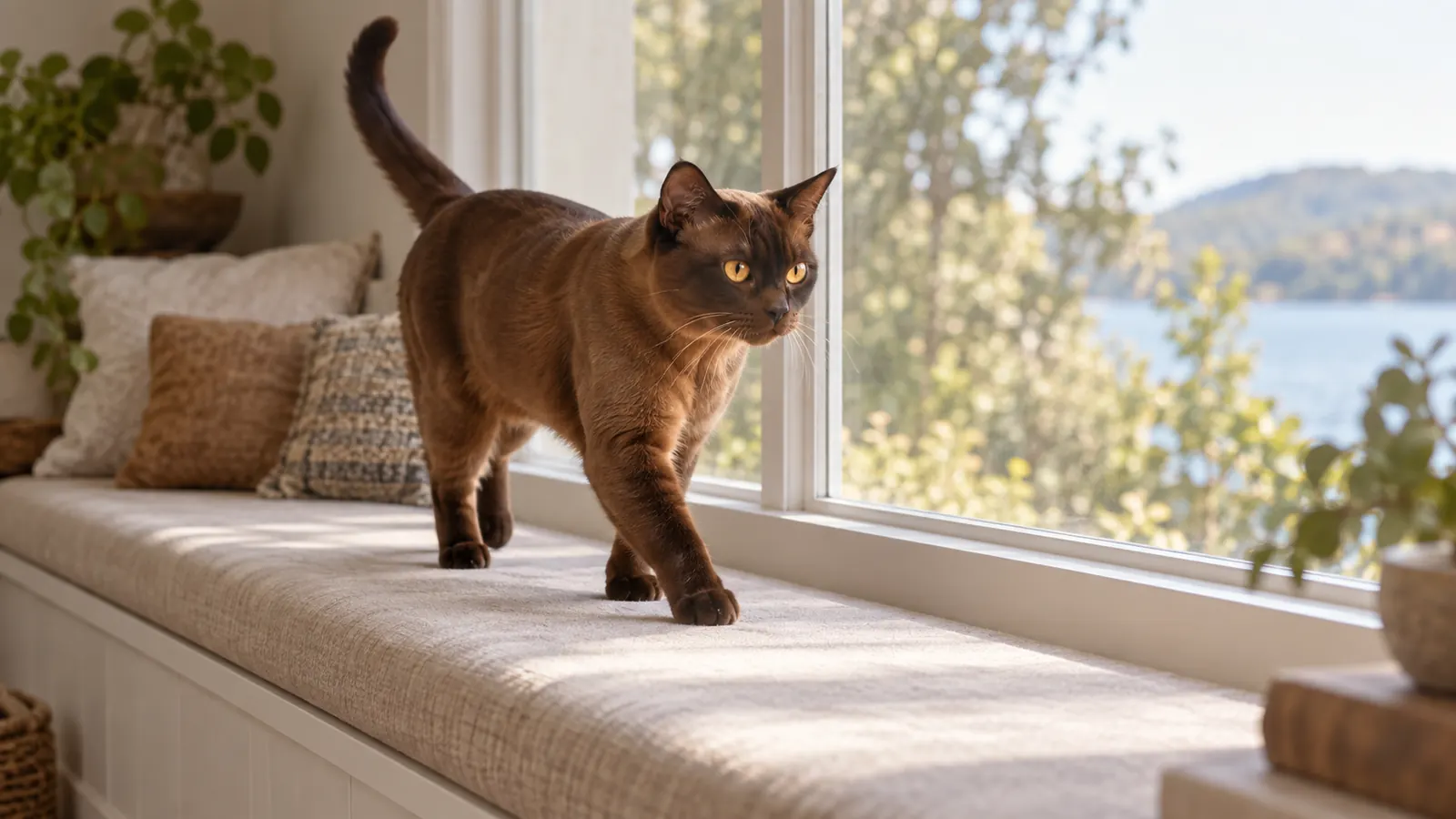
A so-called black Burmese is the breed's sable colour, a rich warm dark brown. Every Burmese carries two copies of the cb colour-restriction gene, which lightens a genetically black coat to sable, so the dense jet black of other breeds is out of reach. Sable is the colour the breed was founded on, and apart from the shade the cat is an ordinary Burmese in temperament, health and care.
- Origin
- Same as the Burmese; sable is the original breed colour
- Coat
- Short, close-lying, satin-textured in warm dark sable brown
- Size
- Same as the Burmese: medium, muscular, compact
- Typical weight
- Same as the Burmese; secondary sources cite 8 to 12 pounds
- Life expectancy
- Same as the Burmese; secondary sources cite 12 to 16 years
- Activity level
- Same as the Burmese: active, sociable, people-oriented
- Grooming
- Same as the Burmese: low
- Suits
- Same as a Burmese of any other colour
A "black" Burmese is actually the breed's original sable colour.
The Burmese cb/cb genotype produces a warm sepia dilution that prevents any Burmese from expressing the dense jet black that a breed like the American Shorthair carries. A sable Burmese is the darkest a Burmese can be, and it reads as a rich warm dark brown rather than true black.
Why Can a Burmese Never Be Jet Black?
The cb gene reduces the intensity of melanin production, particularly in the warmer areas of the body. A sable Burmese is genetically black (B at the brown locus), and it looks dark brown because the cb sepia effect warms that black.
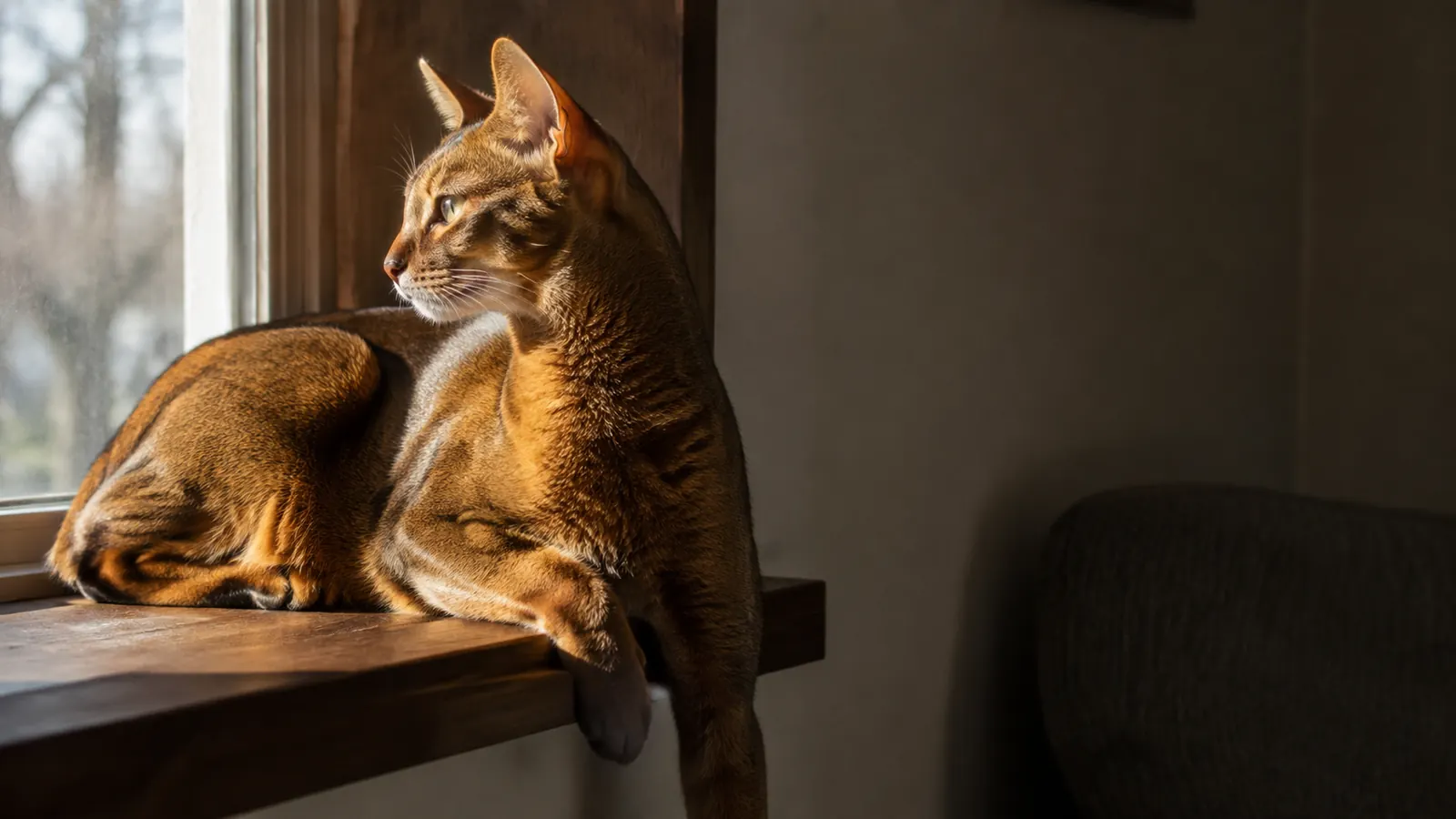
The result is a coat that appears nearly black in dim light but shows warm brown undertones in daylight. The chest and belly are often slightly lighter than the back.
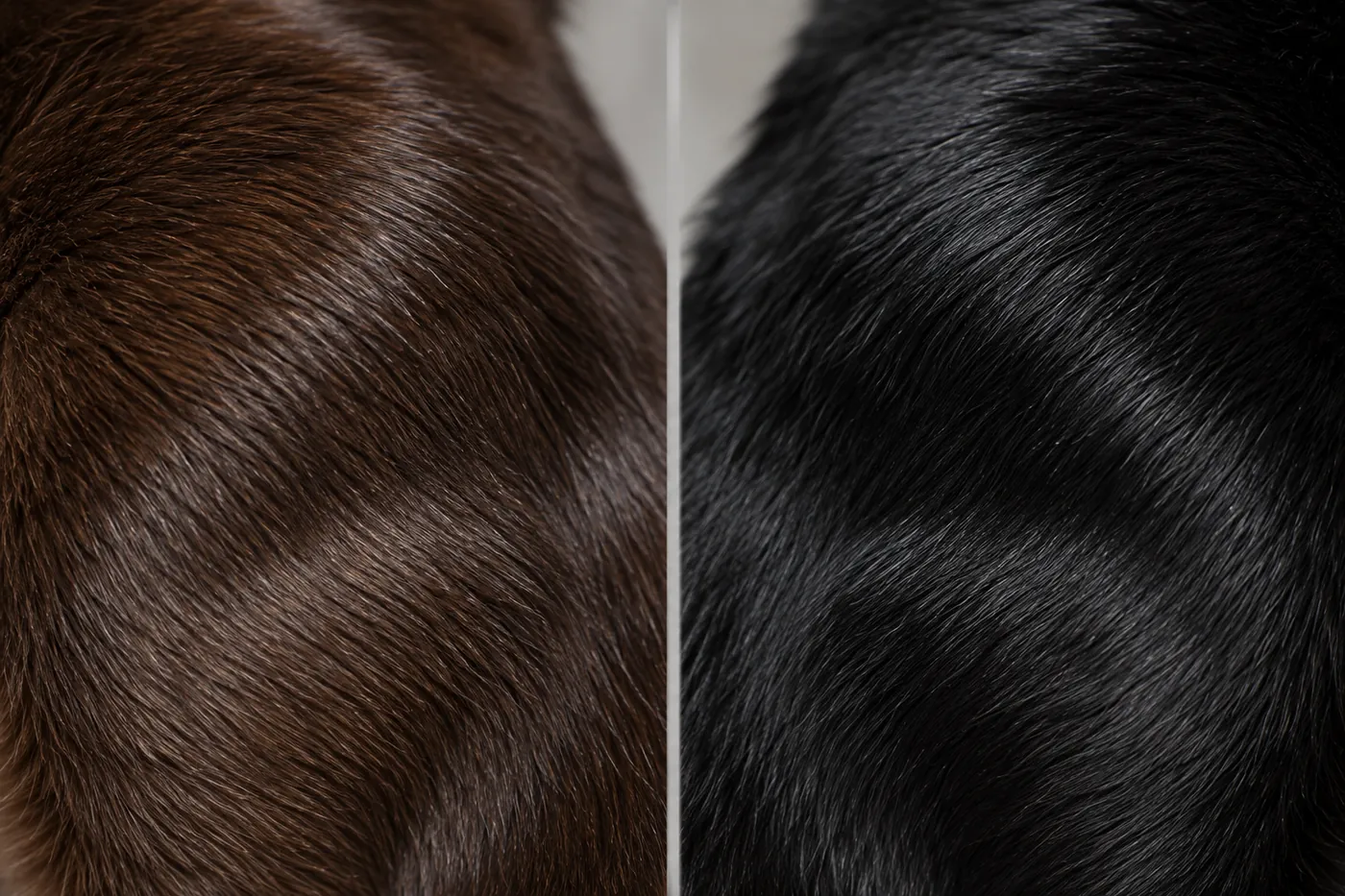
That warm cast is exactly what the standard asks for. CFA describes a mature sable as a rich, warm sable brown with no barring or markings.
Sable is also where the breed began. Wong Mau, the cat brought to America in 1930 from whom the modern Burmese descends, was described as a walnut brown female.
Is Sable a Recognised Colour?
Yes. Sable is one of the four colours CFA accepts for the Burmese, alongside champagne, blue and platinum.
Champagne, blue and platinum carry the same two copies of cb on a chocolate, blue or lilac base in place of black.
- Colour name
- Sable (CFA)
- Genetic basis
- Black (B) at the brown locus + sepia dilution (cb/cb)
- Why not jet black
- The cb gene warms all colours through sepia reduction
- Recognition
- Fully accepted, original Burmese colour
- What does not change
- Temperament, body type, health, care
Does the Dark Colour Need Different Care?
No. The satin-textured short coat behaves the same regardless of colour.
Colour changes nothing else about the cat. Temperament, daily care and the breed's known health issues, including the Burmese craniofacial defect, hypokalaemic polymyopathy and a raised risk of diabetes, are the same for a sable as for any other Burmese.
When a kitten is sold as a black Burmese, two things confirm what it is:
- Registration as a Burmese in the sable colour class
- A warm brown tone in daylight, which is the colour the standard expects
Common Questions
Is a black Burmese actually black?
No. The Burmese cb/cb gene warms the colour to a rich dark sable brown. A Burmese cannot produce the dense jet black of breeds without the sepia gene.
Is sable a recognised Burmese colour?
Yes. It is the breed's original colour and one of the four CFA accepts, alongside champagne, blue and platinum.
Does the dark coat need different care?
No. The short satin coat needs the same minimal grooming regardless of colour.
Checked Against
Published 17 September 2026. Last updated .