What Is an Australian Mist, and Was It Bred for Indoor Life?
The Australian Mist is one of very few cats whose development aimed at temperament as much as at a look: Dr Truda Straede set out to produce a companion cat, and registries describe the result as tolerant of handling and happy to live indoors. The temperament is the main reason to want one, and outside Australia the hardest part is finding one.
- Origin
- Developed in Australia by Dr Truda Straede, from an initial plan in 1977
- Coat
- Short and resilient, carrying a pale ground, a darker spotted or marbled pattern and a fine ticked veil over both
- Size
- Medium, moderate and rounded, with no exaggeration in any direction
- Typical weight
- Medium and moderately built, with no tendency to extremes in size or shape
- Life expectancy
- No breed-specific study exists; UK life-table work gives about 11.7 years across the general cat population
- Activity level
- Moderate. Playful and interactive, but content to settle and unusually tolerant of being handled
- Grooming
- Low. A weekly comb, plus ordinary nails, teeth and ears
- Suits
- Families, first-time owners, apartment households, and anyone who needs a cat that will genuinely live indoors
Most cat breeds began with an appearance somebody wanted to fix. The Australian Mist began with a temperament somebody wanted. Dr Truda Straede started planning the breed in 1977 with a large number of foundation cats and a companion cat in mind, and registries now describe the result as tolerant of handling and happy to live indoors, which in Australia also protects native wildlife.
Most of what makes the breed worth considering follows from that temperament.
What went into the breed?
Three foundation groups each contributed something specific. The Burmese made up half the foundation and brought the dilute colours, the Abyssinian made up a quarter and brought the ticking, and domestic shorthairs made up the last quarter, bringing the spotted pattern and, more importantly, genetic breadth.
That third contribution matters more than it usually gets credit for. A breed founded on a large number of cats including unrelated domestics starts with a considerably wider base than one founded on a single mutation, which is why the health picture below is comparatively unremarkable.
The result was registered as the Spotted Mist. When the marbled pattern was accepted, in the late 1990s, the name changed to Australian Mist.
- 1977Dr Truda Straede plans the breed
- 1986Full championship status in the Australian registries, as the Spotted Mist
- Late 1990sRenamed Australian Mist after the marbled pattern is accepted
- 2007The first Australian Mists arrive in the United Kingdom
- 2014Championship status with TICA
- TodayChampionship status with the GCCF in the United Kingdom
Nine years from first plan to championship in Australia, followed by championship status with TICA and the GCCF, is the strongest single fact about this breed's paperwork.
Does the indoor temperament claim hold up?
Largely, with one honest qualification. Registry descriptions call Australian Mists tolerant of handling, not inclined to scratch, good with children, other cats and dogs, and happy to live indoors, provided they have human or feline company.
What a calm temperament cannot do is remove the need for stimulation. A cat that accepts indoor life still needs that life to be worth living: the Mist is not a low-energy cat, and a bored one develops the same problems any other bored cat develops, except that it will not try to leave.
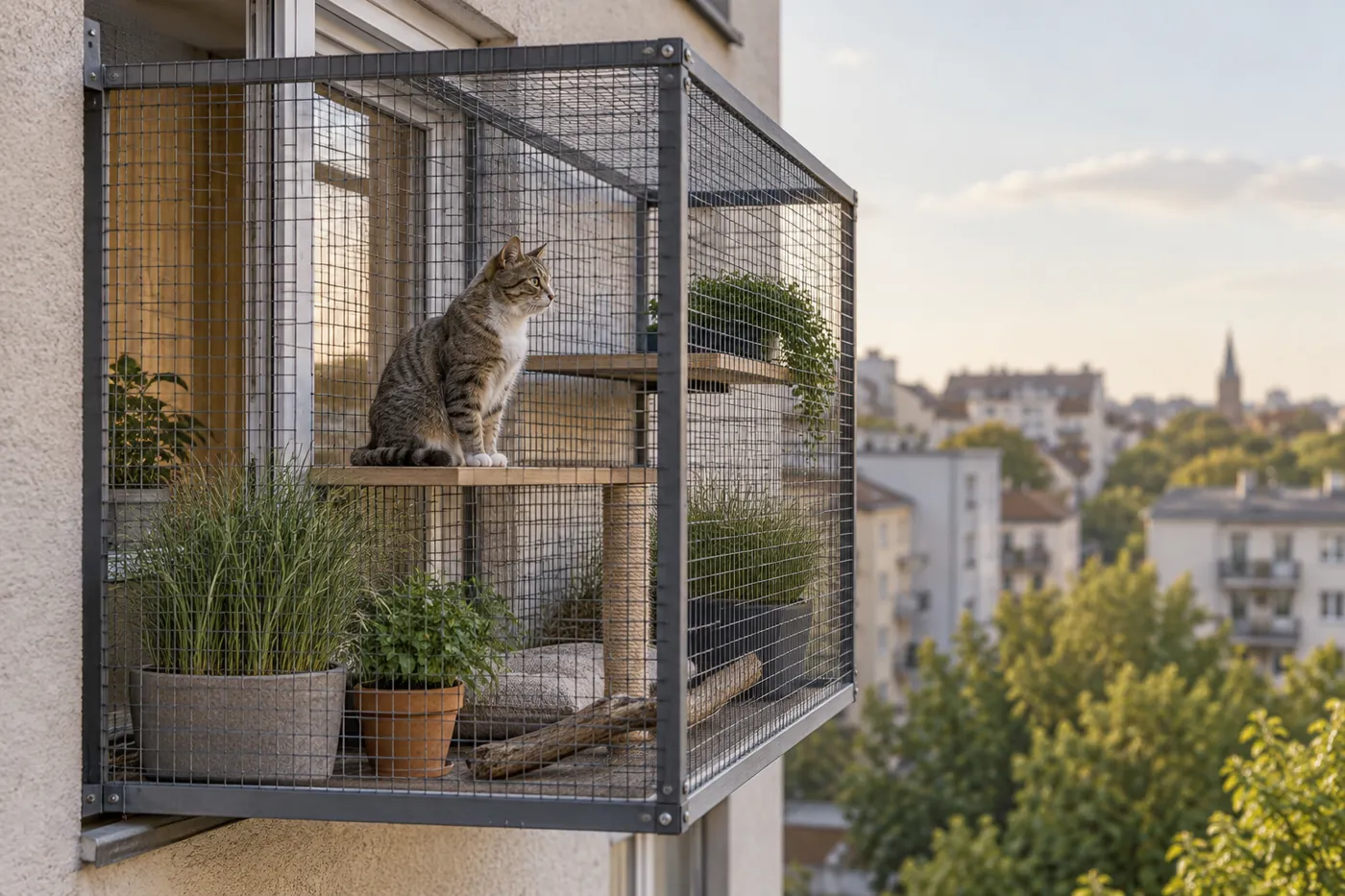
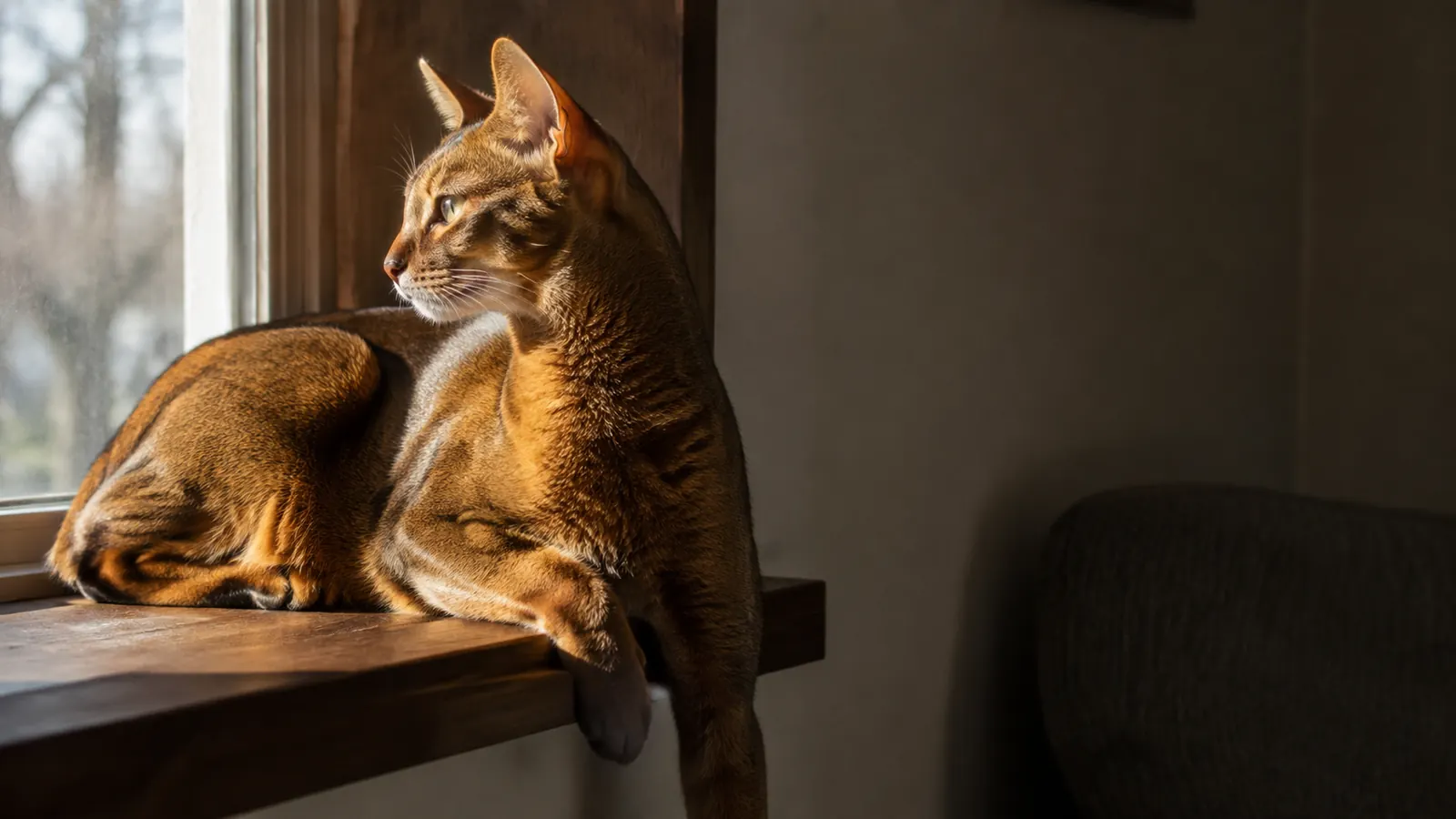
- Provide a climbing route and at least one window platform, because contentment indoors is not the same as indifference to a view
- Run interactive play sessions in the evening, which is when an indoor cat's activity peaks
- Consider an enclosed balcony or garden run, which gives outdoor interest without putting wildlife at risk
- Give a second cat serious thought if the house is empty during working hours
- Watch the weight, because a genuinely indoor cat's energy needs are lower than an outdoor cat's
The evening play an indoor Mist needs also changes over its life, as exercise needs by age shift from kitten to senior.
For a buyer outside Australia, where indoor keeping also protects native wildlife, the point is practical. The breed suits a household that wants an indoor cat, and the reason to choose it is that indoor life suits your own home, not that a rule requires it.
How is the misted coat put together?
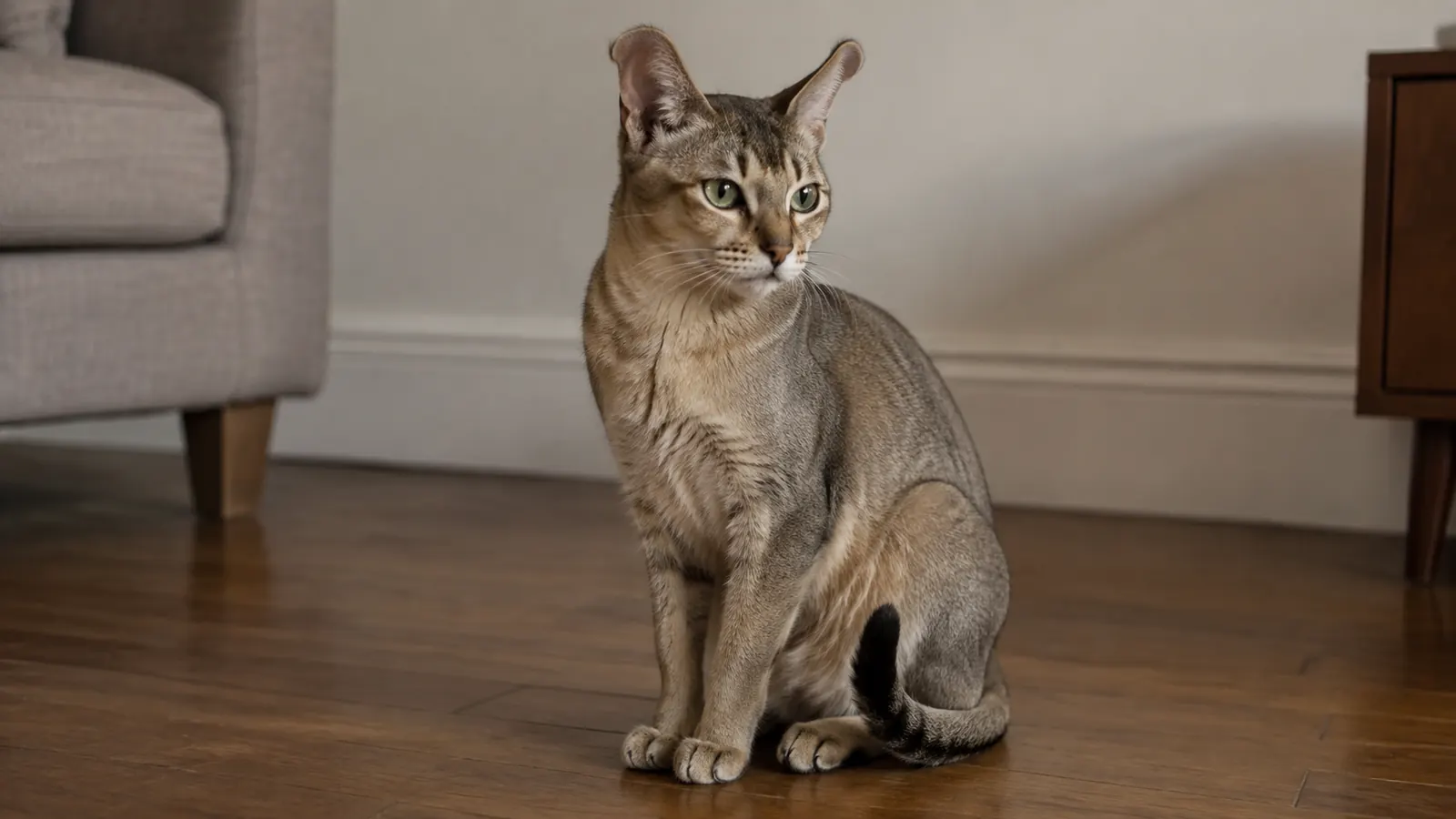
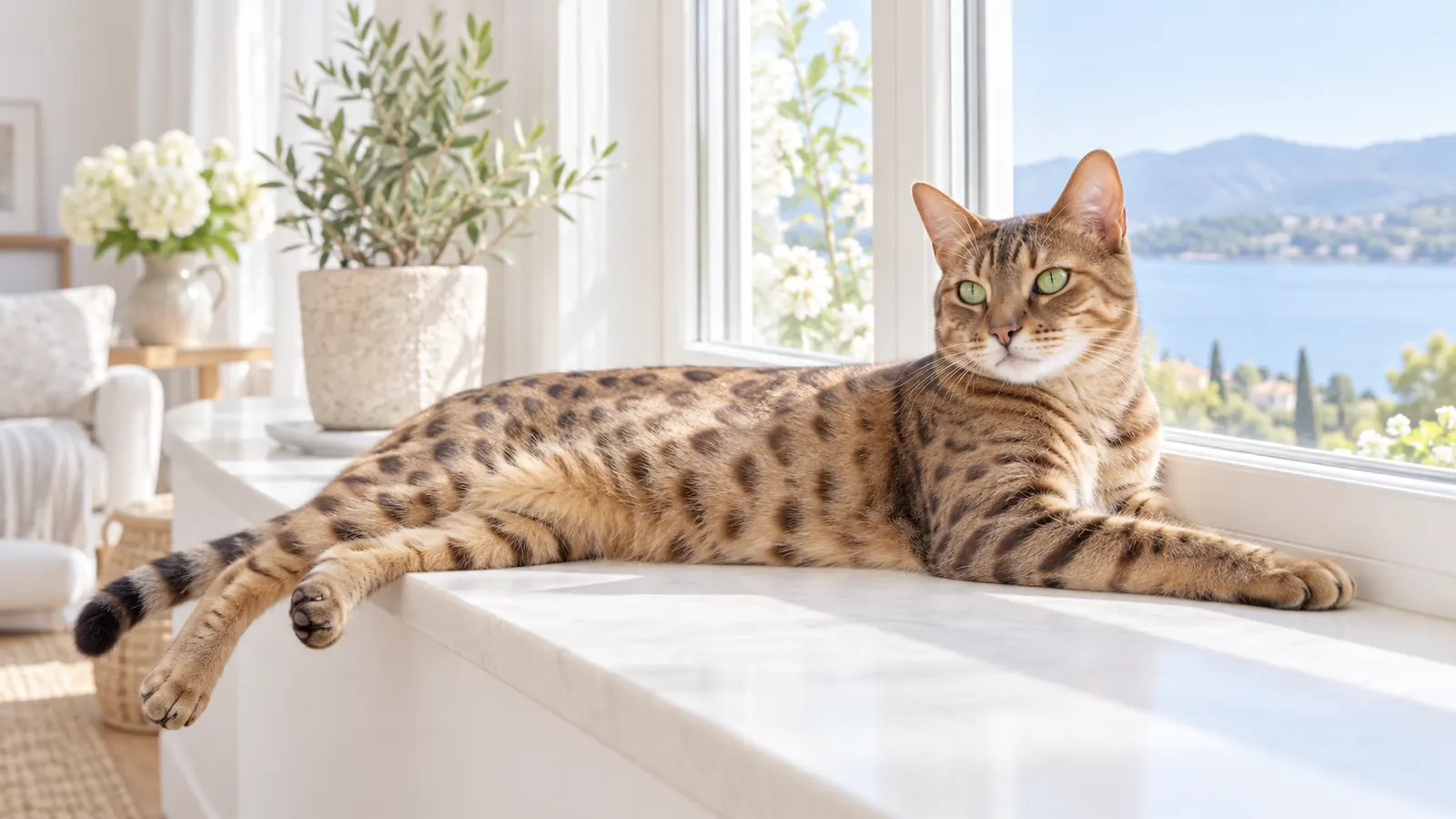
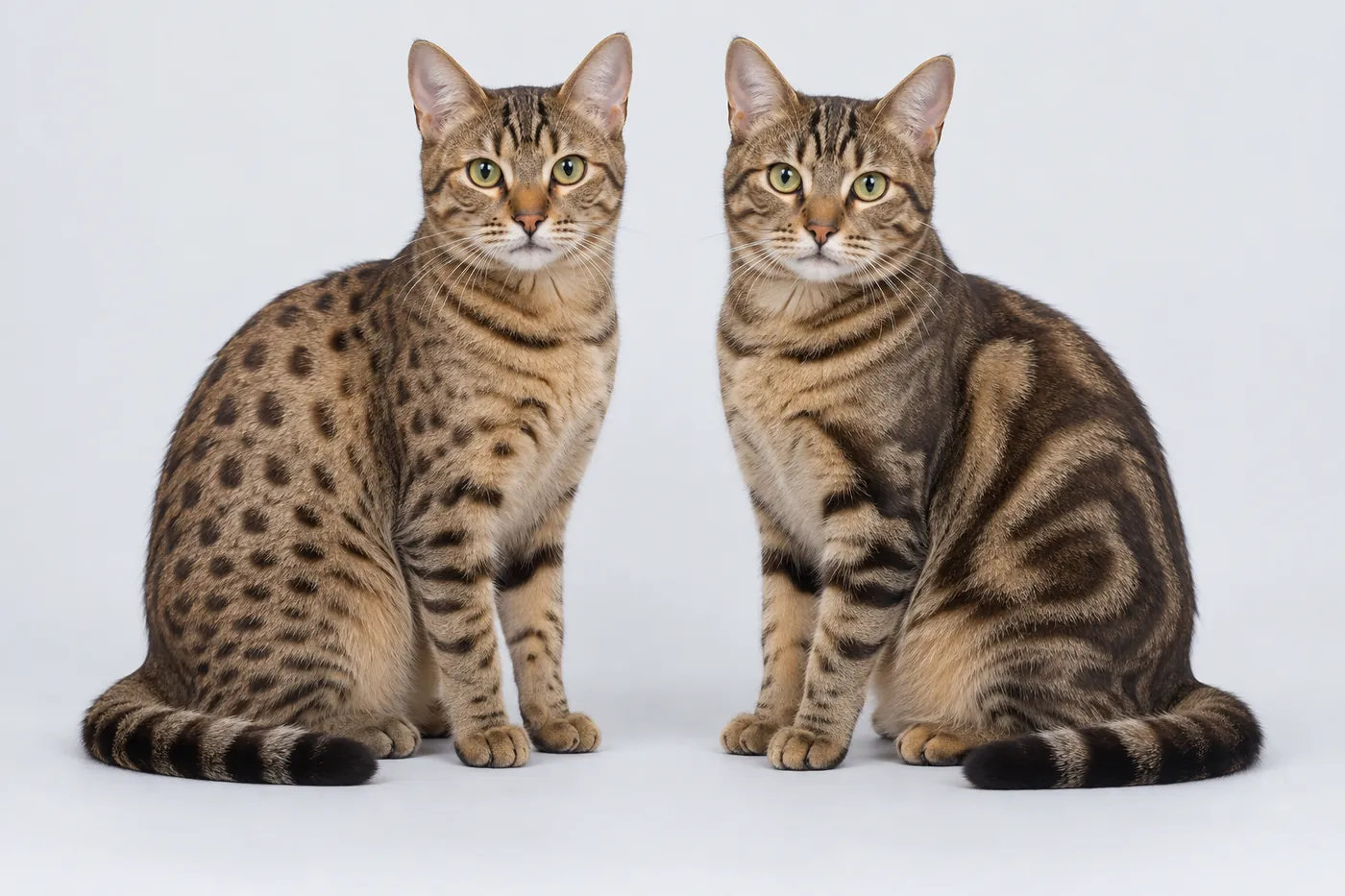
Three layers work at once, and the effect only makes sense when you see them separately. Underneath is a pale ground colour, over that sits the darker tabby pattern, either spotted or marbled, and over both lies a fine, random ticking that veils the pattern and softens its edges.
That veil is what the name refers to. A Mist looks slightly out of focus at a distance and resolves into clear markings up close.
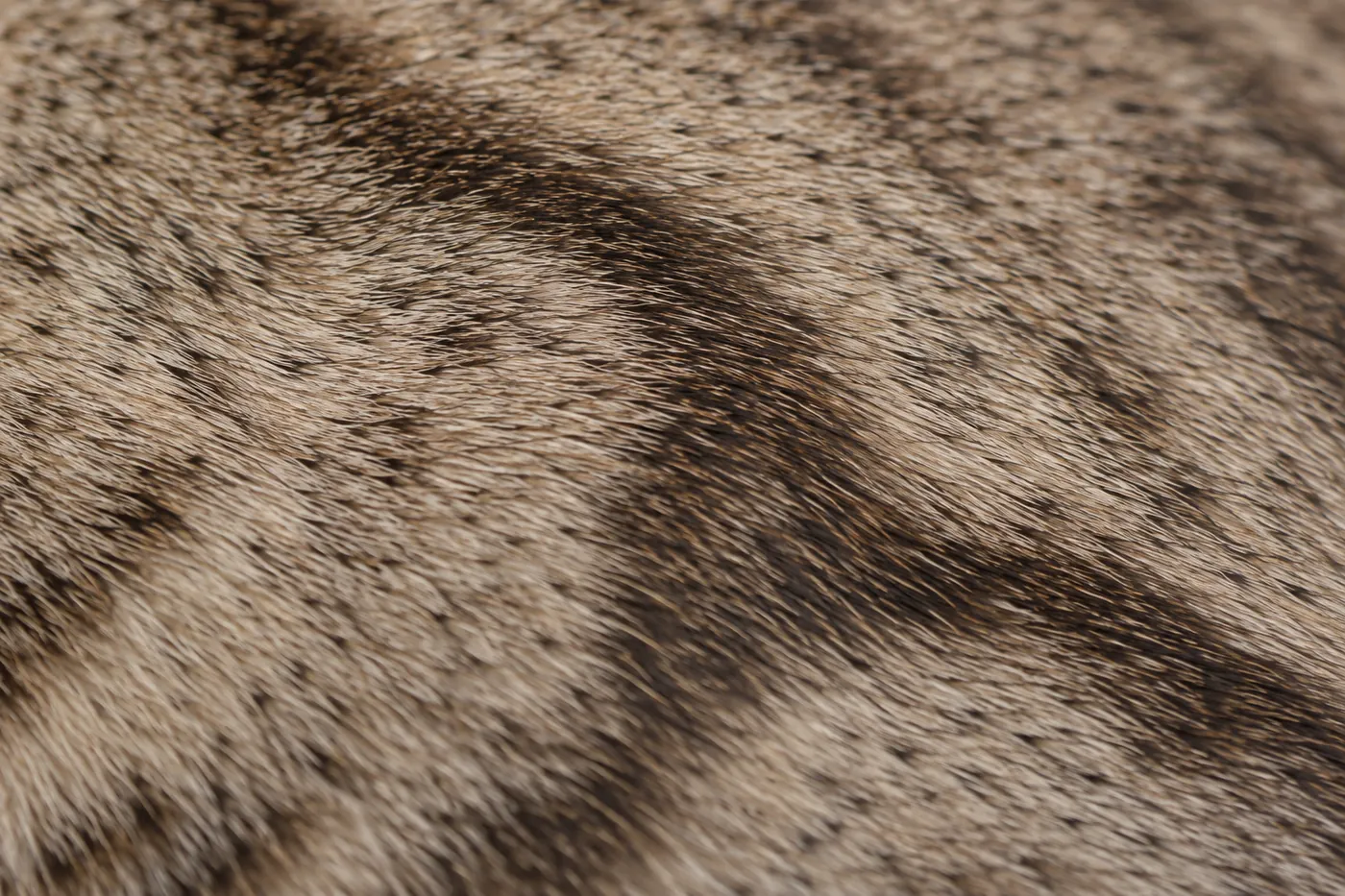
Both patterns carry the same tabby signatures: an M on the forehead, a ringed tail with a dark tip, and barred legs.
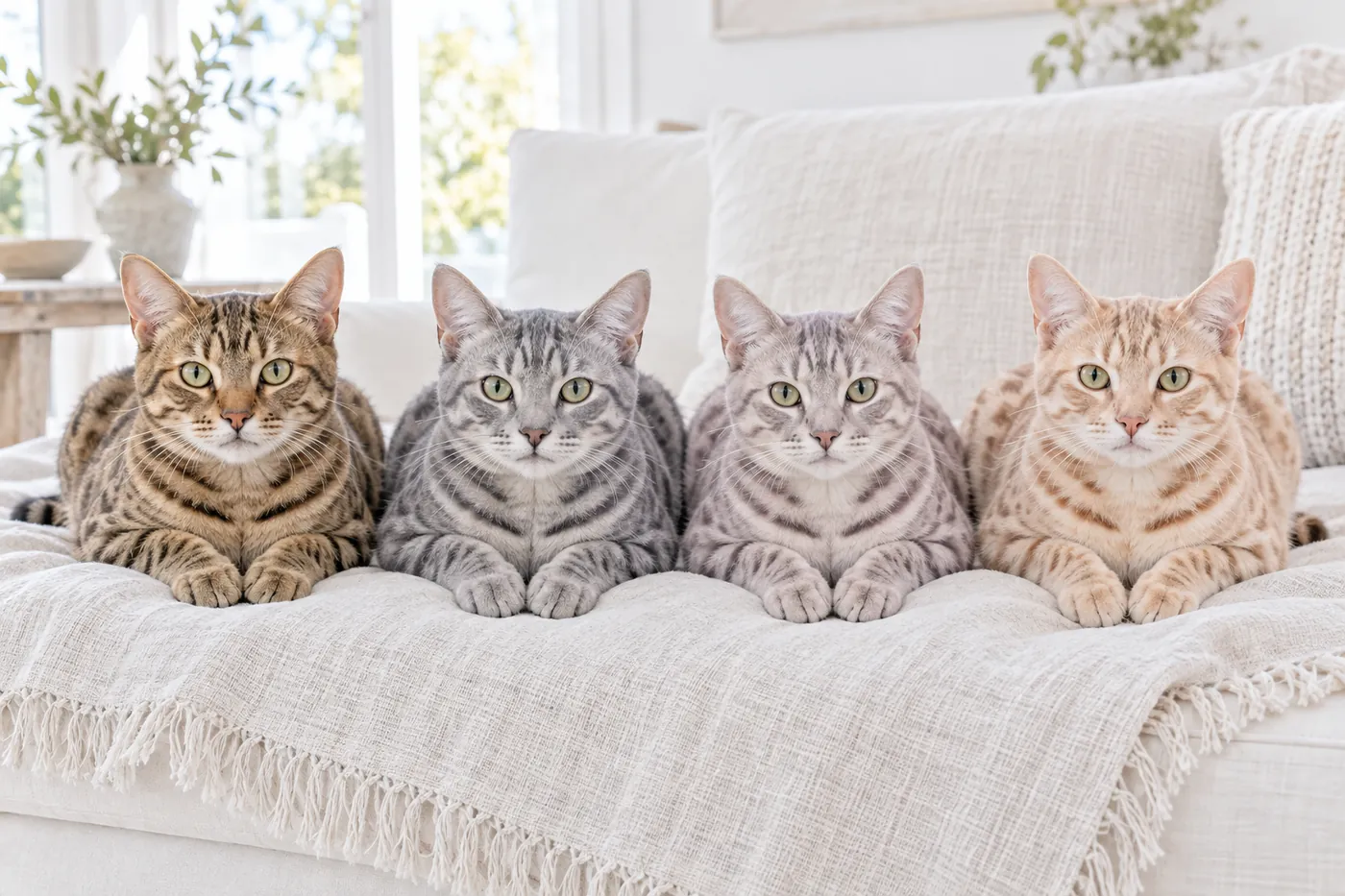
Seven colours are permitted: brown, blue, chocolate, lilac, gold, peach and caramel. Red and cream are not among them, which is why you will not find a ginger Australian Mist.
Why does a kitten's pattern look blurred?
Because it is, and this catches buyers out. Mist kittens are born with soft, indistinct markings that sharpen progressively as the adult coat comes in. The pattern a cat will actually carry is not reliably visible for a considerable part of the first two years.
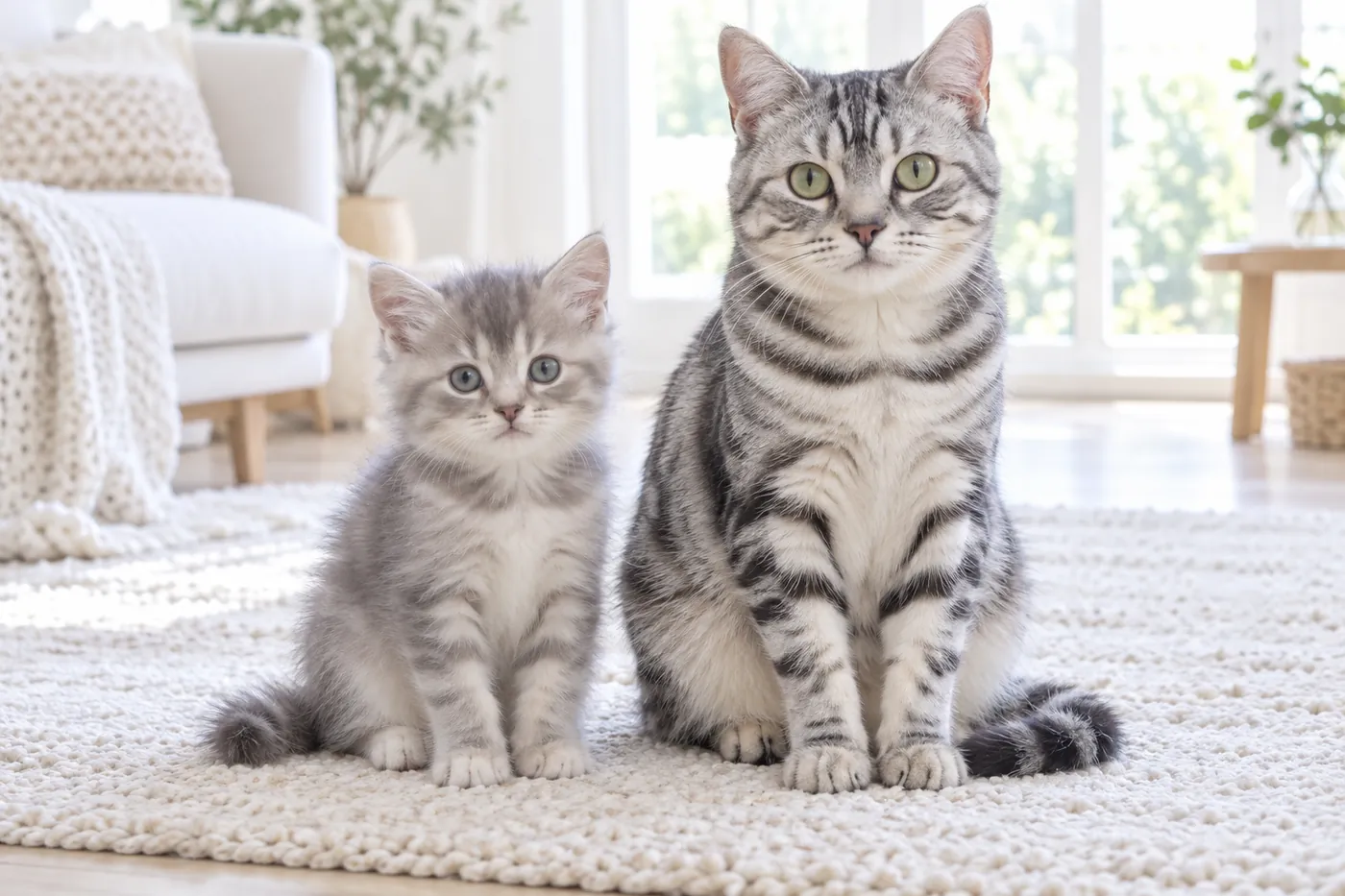
A breeder who guarantees show-quality markings on an eight-week-old kitten is promising something they cannot see yet. Eye colour, muscle and coat texture all reach their adult expression by about two years of age, part of the wider pattern of coat changes by age that every cat goes through.
Is one good with children, dogs and other cats?
This is the breed's strongest claim, and it holds up better than most. Tolerance of handling is the trait registry descriptions single out, and it is the trait that matters with children, because a cat that does not object to being picked up clumsily is a cat that never has to teach the lesson. Mists are also described as slow to use claws, which is the same trait from the other side.
None of that removes the need to teach the child the warning signs that come before biting during petting, which apply to a tolerant cat as much as to a short-tempered one.
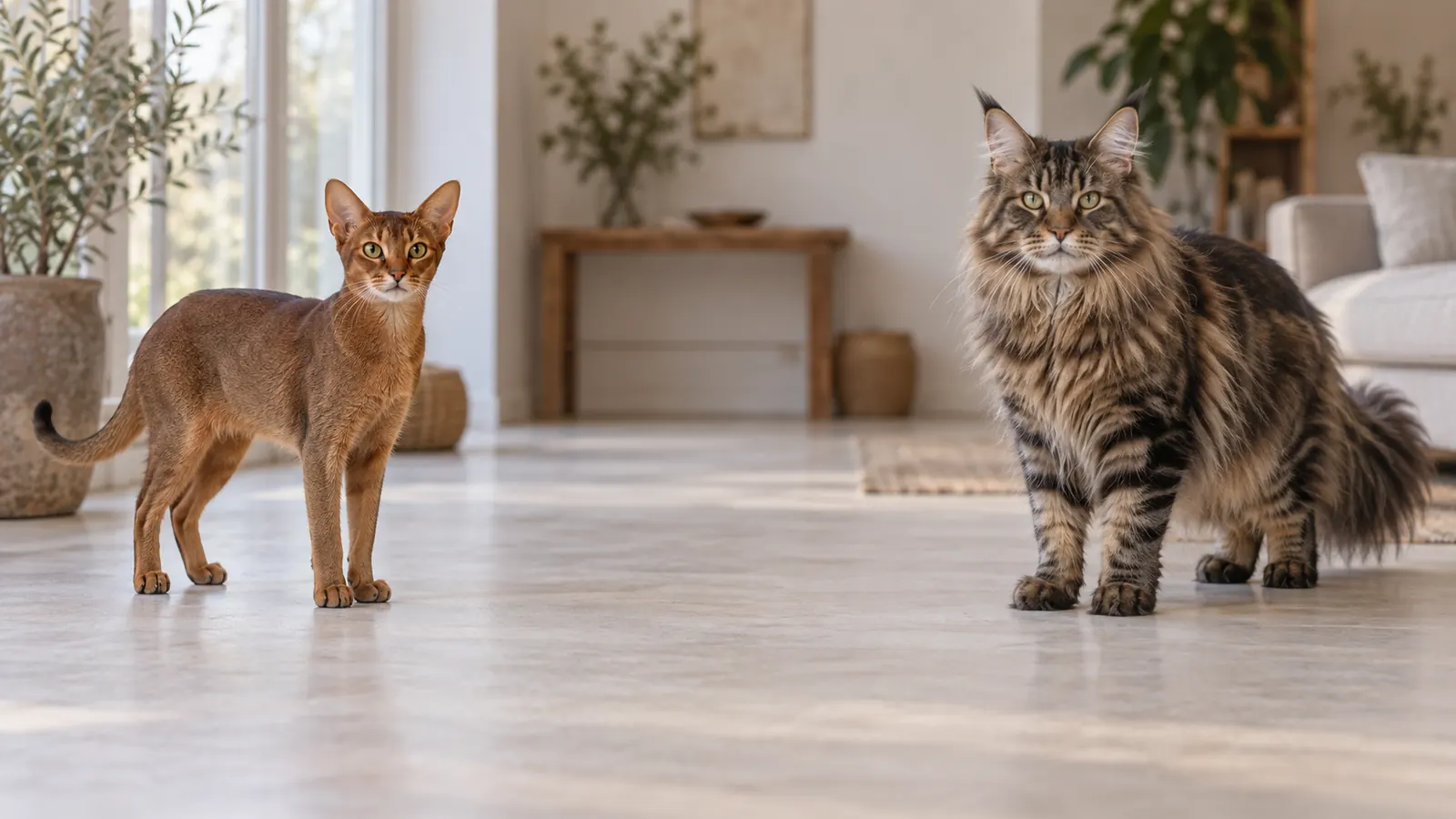
With dogs and other cats, the ordinary rules apply rather than a breed exemption. A confident, unflappable cat has an easier time of a proper introduction, but it still needs the introduction, because a rushed one can leave one cat attacking another whatever the breed.
How do you keep an indoor cat's weight right?
Watching, because this is where a contented indoor life has a cost. An indoor cat covers less ground, hunts nothing and regulates its own energy expenditure less than an outdoor one. A Mist that is content to sit is a Mist whose calorie requirement is genuinely lower than a roaming cat's, and the portion on the bag is not written for it.
Body condition scoring by hand is the check that works. Once a month, the ribs should be easy to feel under a thin layer, and a waist should show behind them when the cat is seen from above. When that waist fades the portion comes down, worked out from how much to feed a cat and the cat's daily calories rather than from the figure on the bag.
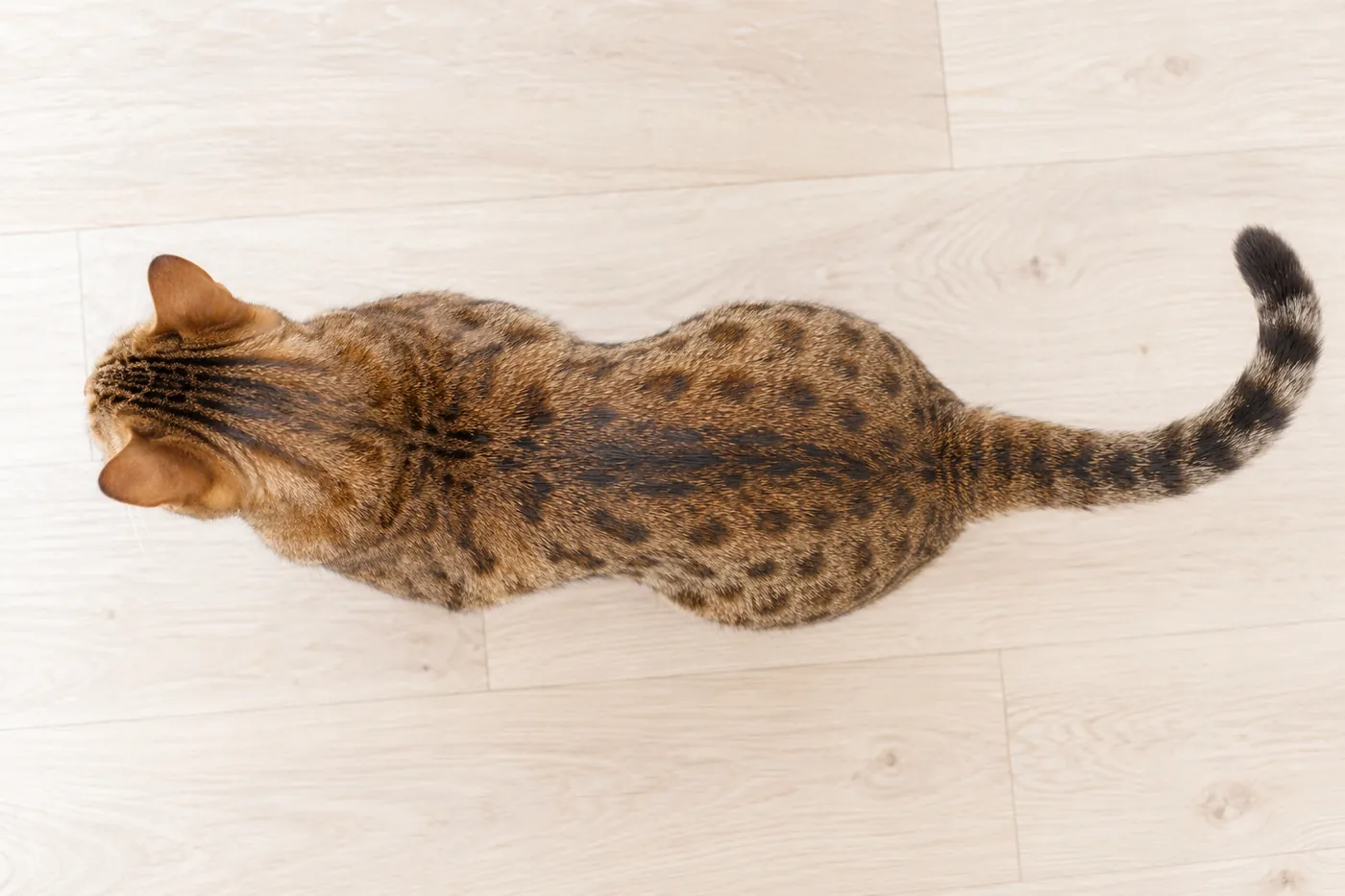
Feeding puzzles and scattered portions are worth more to an indoor cat than to an outdoor one, because they restore some of the work that finding food used to involve.
What does the coat need?
Very little, and for this breed that is a genuine selling point. A short, resilient coat with no length to mat needs a weekly comb and nothing more. There is no seasonal blowout of the kind a double-coated breed produces, and bathing is unnecessary in a healthy cat.
The routine work is claws, teeth and ears. Trimming claws matters more for an indoor cat, which does not wear them down on rough surfaces, and an indoor cat's scratching provision has to be deliberate: choosing a scratching post covers what actually gets used.
Which health tests should a breeder show you?
This breed has a specific answer, which is unusual. The two Australian Mist breed clubs make DNA testing for two inherited conditions compulsory in their breeding and registration policies, and blood typing adds a third check that is not a disease test at all.
| Test | What it is | Why it is on the list |
|---|---|---|
| Pyruvate kinase deficiency | A DNA test for an inherited enzyme defect causing anaemia | Compulsory in the breed clubs' policies, and found in Abyssinian and Somali cats |
| Progressive retinal atrophy | A DNA test for inherited degeneration of the retina | Compulsory in the breed clubs' policies |
| Neonatal isoerythrolysis | Blood typing of both parents, not a disease test | A type B queen mated to a type A tom can produce kittens that are attacked by their own mother's colostrum |
The last of those is different in kind from the others and worth understanding, because it is a mating decision rather than a genetic disease.
Neonatal isoerythrolysis kills kittens in the first days of life, and it is entirely preventable by blood typing both parents before mating. A breeder who cannot tell you the blood types of their queen and stud has not done the basic work.
Dated results carry weight that assurances do not, because a DNA test is a certificate with a laboratory name on it, and any breeder who runs them will have them to hand.
- Ask for
- Dated DNA certificates for PK deficiency and PRA on both parents
- Ask for
- Blood types for the queen and the stud, and how they were matched
- Ask about
- Whether the queen is registered, and with which body
- Expect
- Kittens vaccinated, wormed, microchipped and staying until at least twelve weeks
- Expect
- A written contract and the opportunity to see the kitten with its mother
Screening shows up in the results: in a 2012 study, all 27 UK Australian Mists submitted for PK deficiency testing came back clear. Beyond that panel, the breed is generally healthy, and the wide foundation base is the most plausible reason.
Is it a good first cat, and does it suit an apartment?
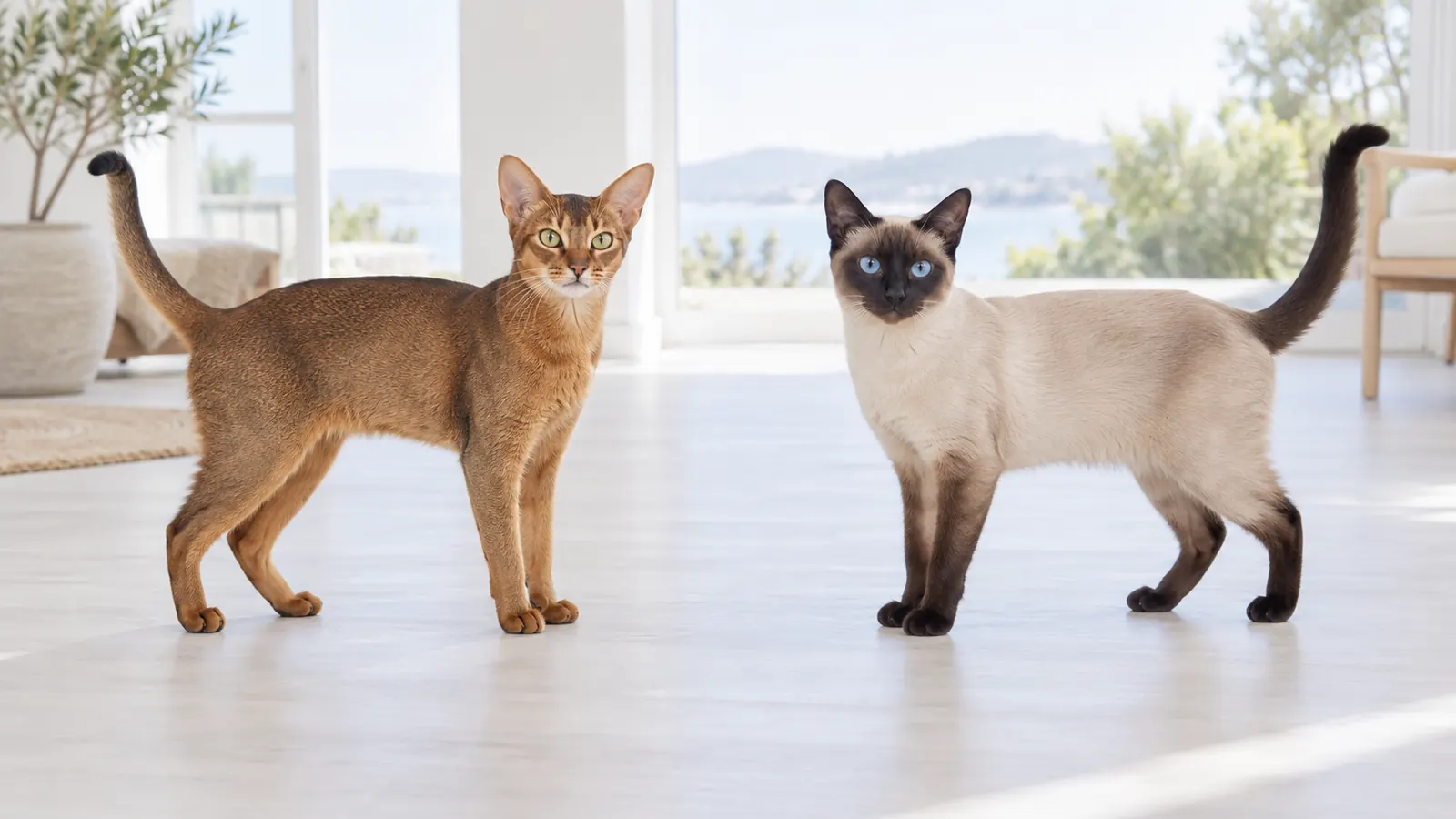
For a first-time owner, the combination of low grooming, moderate activity, a documented screening panel and no structural exaggeration is close to ideal. The Burmese and the Ragdoll are the nearest matches on temperament alone if a Mist proves impossible to find.
In an apartment the breed is in its element, since registries describe it as happy to live indoors.
What should you look for in a litter?
When you do find a litter, the assessment is the same as in any breed plus two things specific to this one. The specific ones are the screening certificates and the blood types, both covered above, and neither is optional in a breed whose whole selling point is that the work has been done properly.
The general ones are about how the kitten was raised.
- See the kitten with its mother, in the room it was reared in, rather than at a handover
- Watch how it reacts to an ordinary household noise, which tells you more than how it reacts to you
- Ask what it has been exposed to: vacuum cleaners, visitors, children, a carrier, a car
- Check eyes, ears, nose, rear and coat, and ask about any treatment the litter has had
- Expect vaccination, worming, microchipping and a stay of at least twelve weeks
Pattern quality is the one thing not to buy on, because a kitten's markings are not final and nobody can tell you what they will become.
What will finding one involve?
Outside Australia, more than you would expect. Most catteries remain in Australia. The first Australian Mists reached the United Kingdom in 2007, and GCCF championship status has made British kittens available, but numbers are still low and waiting lists are normal.
An import is possible and expensive, and the export health requirements are country-specific rather than breed-specific.
If availability defeats you, the closest substitutes for the spotted coat are the Ocicat and the Egyptian Mau, though neither has the Mist's reputation for contentment indoors.
Who should think twice about one?
Anyone who wants a cat with outdoor access. That sounds contradictory, but it is the point: the breed's main advantage is contentment indoors, and a Mist that is let out has had that advantage discarded. If your plan involves a cat flap, almost any other breed suits you equally well.
Anyone who wants a red or cream cat should also look elsewhere, because those colours are excluded from the standard.
Should you buy one for the coat or the temperament?
The Australian Mist is the rare case of a breed whose main appeal is behaviour rather than appearance, with decades of deliberate breeding and championship status in Australia, with TICA and with the GCCF behind it.
The misted pattern is genuinely attractive and genuinely unusual, but the temperament is the better reason to wait for one. What Truda Straede built was a companion cat that is content at home.
Common Questions
Was the Australian Mist really bred to live indoors?
Largely. Dr Truda Straede developed it as a companion cat, and registries describe the result as tolerant of handling and happy to live indoors, which in Australia also protects native wildlife.
What makes an Australian Mist's coat look misty?
Three layers together: a pale ground colour, a darker spotted or marbled tabby pattern over it, and a fine random ticking veiling both. The ticking softens the pattern's edges, which produces the misted look at a distance.
Why does my Australian Mist kitten's pattern look blurred?
Because it has not finished developing. Mist kittens are born with indistinct markings that sharpen as the adult coat comes in, and the final pattern is not reliably visible for a large part of the first two years.
Which health tests should an Australian Mist breeder have done?
DNA tests for pyruvate kinase deficiency and progressive retinal atrophy, which the breed clubs make compulsory, plus blood typing of both parents to avoid neonatal isoerythrolysis. Ask for dated certificates rather than assurances.
Can Australian Mists be ginger?
No. The seven permitted colours are brown, blue, chocolate, lilac, gold, peach and caramel, and red and cream are not among them.
Is the Australian Mist recognised outside Australia?
Yes. It holds championship status with TICA, granted in 2014, and with the GCCF in the United Kingdom.
Checked Against
- The International Cat Association: Australian Mist tica.org
- Governing Council of the Cat Fancy: Australian Mist breed information gccfcats.org
- International Cat Care: blood groups and blood incompatibility in cats icatcare.org
- Journal of Feline Medicine and Surgery: life tables of annual life expectancy and mortality for cats in the UK pmc.ncbi.nlm.nih.gov
- BMC Veterinary Research: erythrocyte pyruvate kinase deficiency mutation identified in multiple breeds of domestic cats pmc.ncbi.nlm.nih.gov
Published 10 September 2026. Last updated .