What Is a Siamese Cat, and Can Such a Vocal Breed Be Left Alone?
A Siamese can suit a home that welcomes frequent conversation and close interaction. The individual's voice, its need for daily company and how it copes with time alone decide the fit, and an easy short coat does not remove those social needs.
- Origin
- Thailand, formerly Siam
- Coat
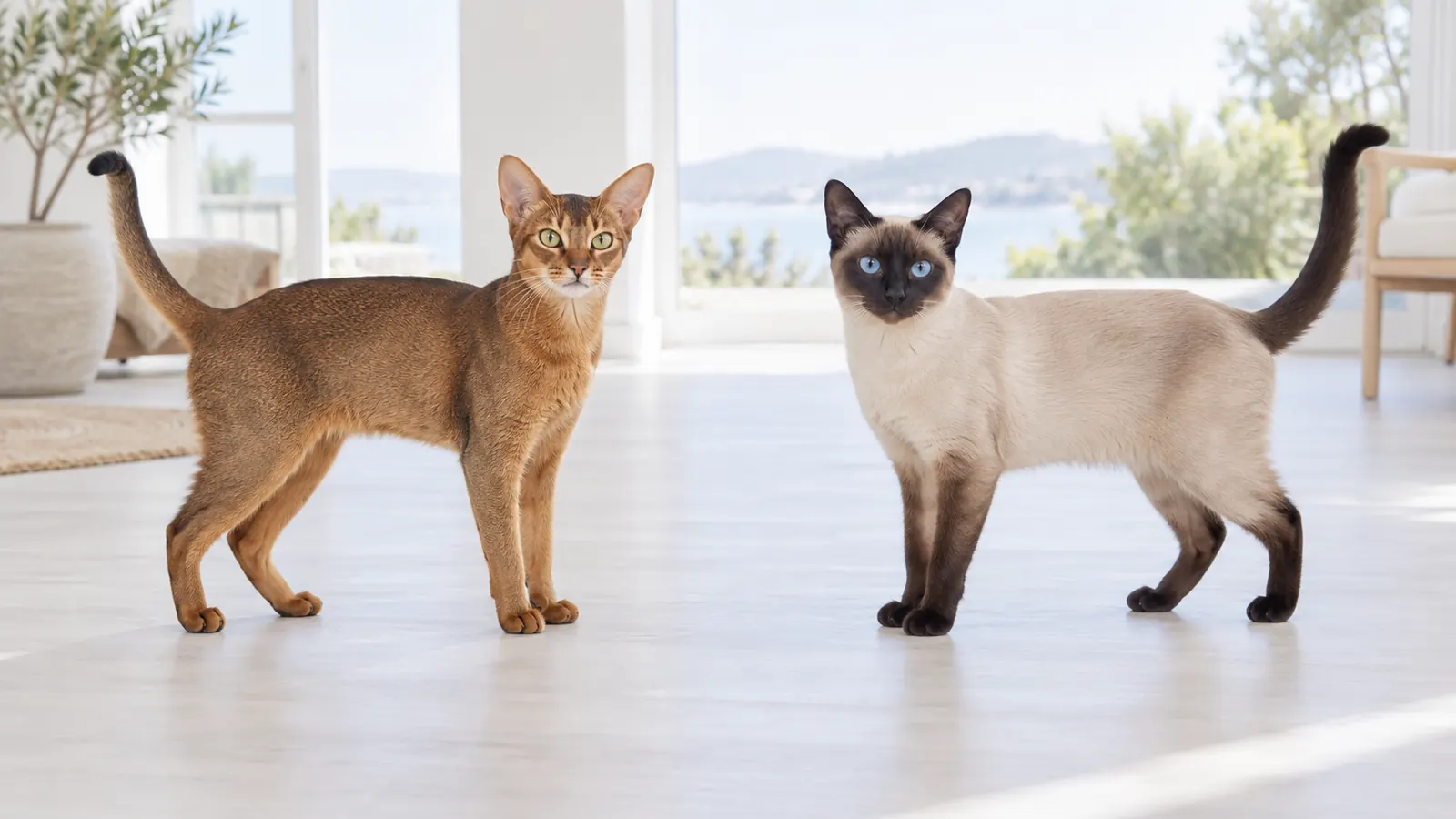
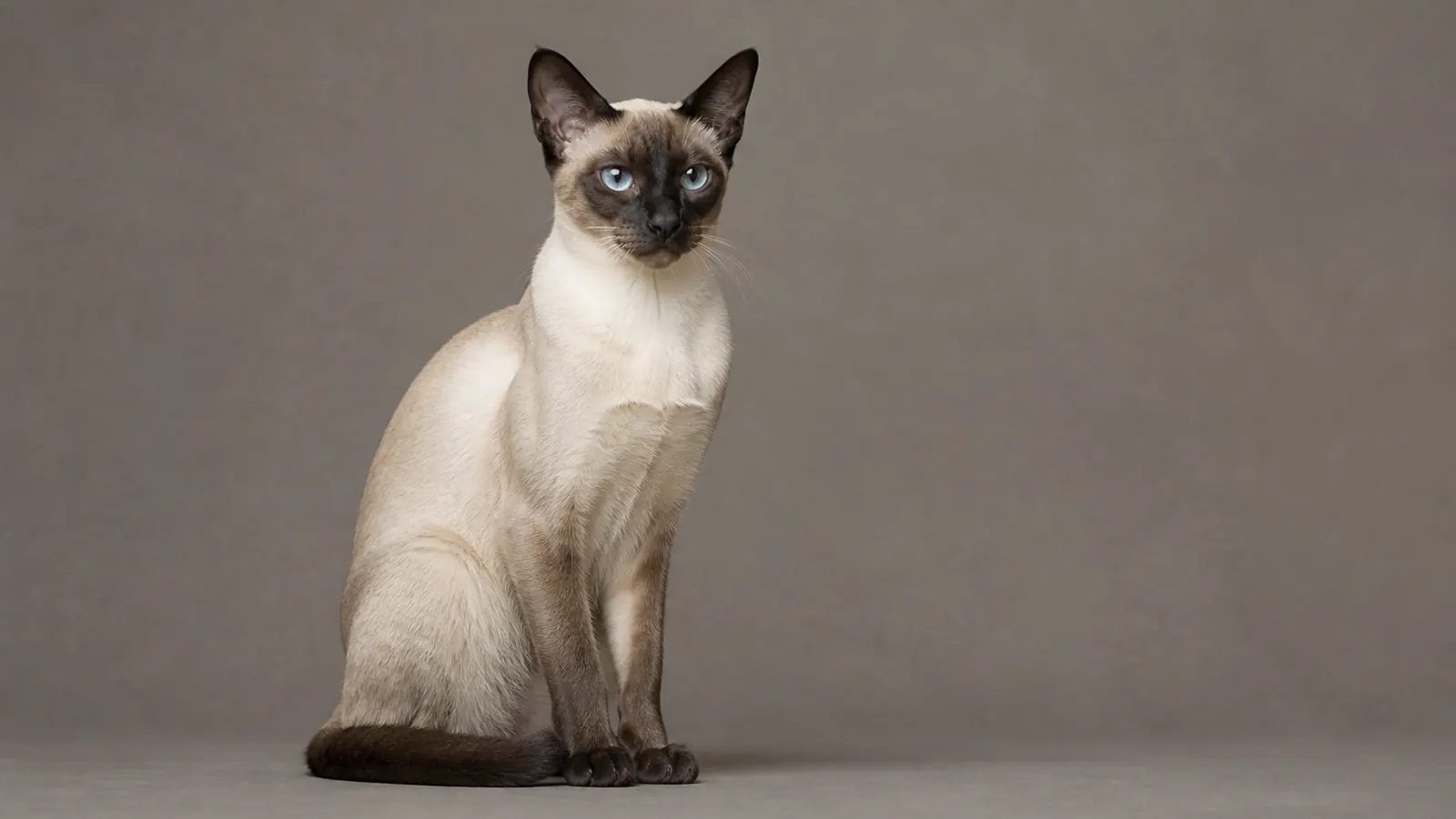
- Short, fine, close lying, with colourpoint markings
- Size
- Slender and long limbed; lighter than it looks
- Typical weight
- Typically 2.5 to 4.5 kg for females, 3.5 to 5.5 kg for males
- Life expectancy
- Commonly 12 to 16 years
- Activity level
- High. Active, curious, and persistent
- Grooming
- Low. A weekly comb is usually enough
- Suits
- Households where someone is home most of the day
The voice is not an exaggeration
Siamese cats are loud, frequent, and persistent in a way that surprises people who only read that they are talkative. The voice is low and carrying, and it is used deliberately to get a response.
The pitch is what makes it a housing problem rather than a noise. Low frequencies pass through walls and floors far better than high ones, so a Siamese is audible in rooms where a normal cat would not be.
The deliberateness is the other half. The calls are aimed at a person, and the cat will wait, repeat, and raise the volume until something answers.
Answering every time has the opposite problem and is how most owners arrive here. A cat that gets a reply on the twentieth attempt has learned that twenty attempts is the price, and that lesson is expensive to unteach.
If a quiet home matters to you, this is the wrong breed, and training will not make it a quiet one.
What the voice is for
A Siamese may call for contact, play or a predictable meal. Respond to the underlying need and reward calm approaches instead of rewarding every louder call.
A change in the vocal pattern matters first, because pain, hearing changes, hunger or distress can make a cat call more, so sudden or persistent changes need veterinary assessment. Getting louder is not proof that an ignore-the-noise plan is working.
When noise is a deciding factor, meeting an adult during ordinary activity tells you more than breed descriptions, which cannot predict one cat's volume or its effect through a shared wall.
Where the breed comes from
The Siamese arrived in Britain and the United States from Siam, now Thailand, in the late nineteenth century, and it was among the first Asian breeds shown in the West.
The cat of those early photographs is noticeably rounder and sturdier than the modern show Siamese. Decades of selection produced the extreme wedge-shaped head and slender body seen in the show ring today.
Both types still exist. Breeders use terms such as traditional or applehead for the older build, and the two differ in appearance rather than in temperament.
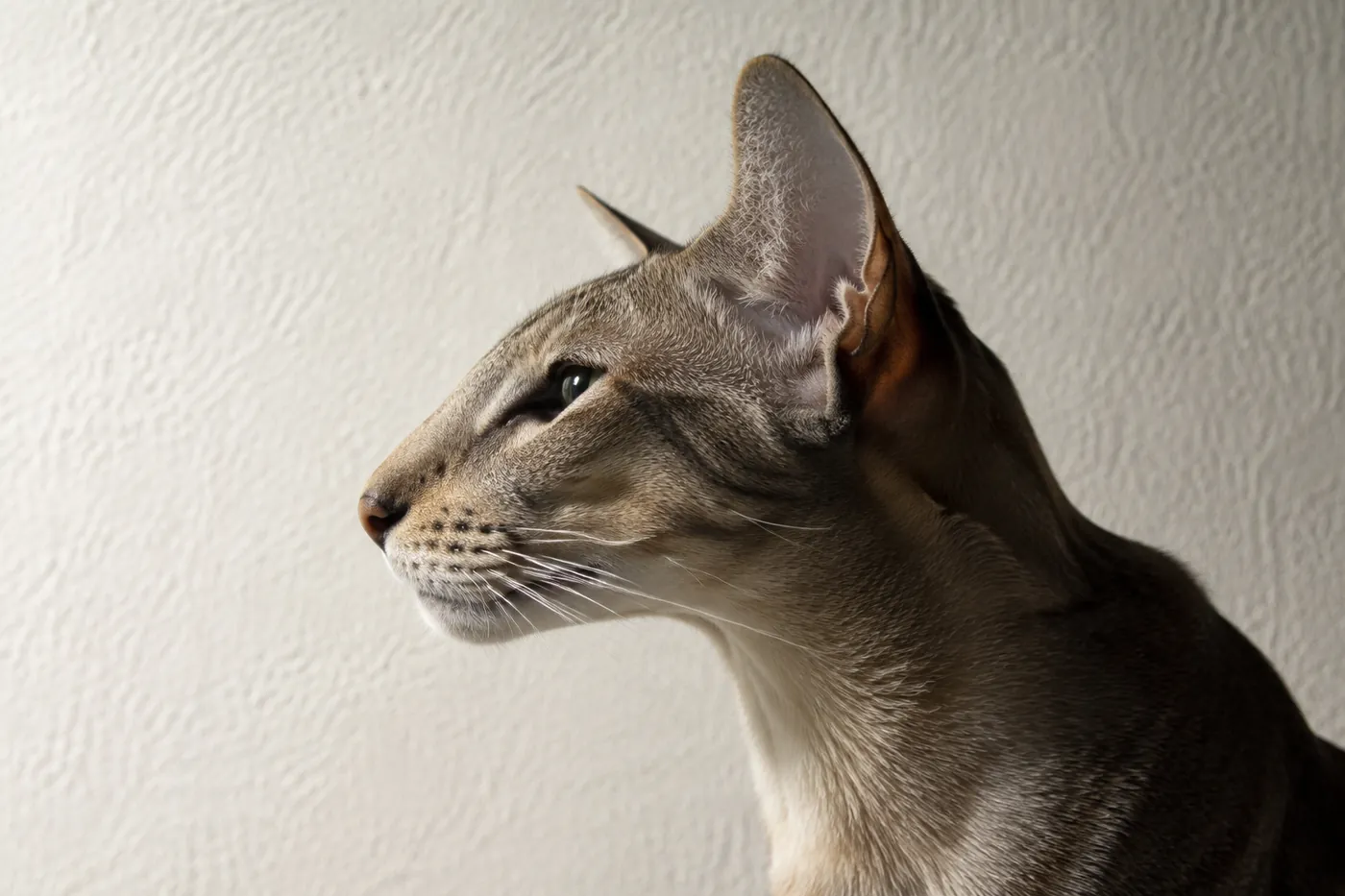
Thailand is also home to the white Khao Manee, but shared geography does not make it a Siamese variety. Its identity rests on its own pedigree, conformation and hearing assessment.
If the modern look is not what you pictured, the older type is worth asking about specifically, because the name alone will not tell you which you are being offered.
The kittens are born white
The colourpoint pattern develops after birth, and the mechanism explains several things about the breed.
The gene involved produces an enzyme that only works below a certain temperature. In the womb the kitten is uniformly warm, so Siamese kittens are born completely white and the points appear over the following weeks as the extremities cool.
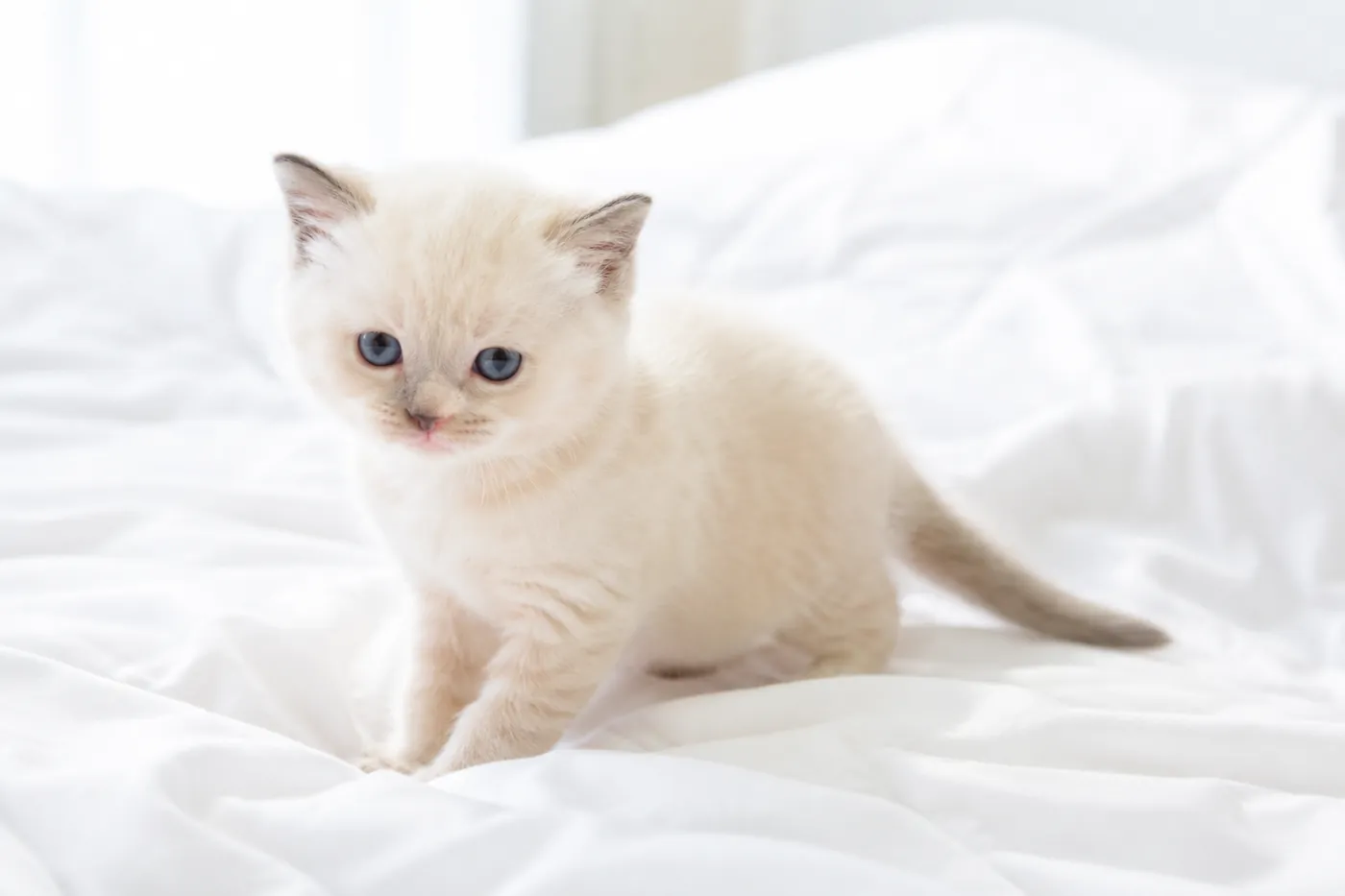
The cooler parts of the body colour first: the ears, the face, the paws, and the tail. Full colour is not settled until around a year old, and it continues to deepen slowly through life.
This is also why a cat kept in a cold house darkens over time, and why fur shaved for an operation grows back darker before lightening again as the coat thickens.
- At birthUniformly warm in the womb, so kittens arrive completely white
- First weeksThe cooler parts colour first, the ears, face, paws and tail
- Around a yearFull colour settled, though not finished
- Through lifeThe coat keeps deepening slowly, faster in a cold house
- After a shaveFur grows back darker, then lightens again as the coat thickens
The same gene affects the eyes, which is why all Siamese have blue eyes, and it is linked to the visual pathway differences that produced the historical squint.
The related breeds
Several breeds are close relatives, and knowing them widens the options for somebody who likes the type but not every part of it.
The Oriental Shorthair is the same build and temperament in a full range of colours and patterns rather than points. Everything below applies to it.
The Balinese is a longhaired Siamese, produced by a recessive gene in the same lines. The coat is silky with little undercoat, so it needs combing but mats far less than a Persian.
The Tonkinese, a Siamese and Burmese cross, is often the useful recommendation for someone who finds the Siamese too extreme. It is sociable and talkative and generally less demanding and less loud.
The Balinese and Oriental Longhair share the health considerations of the Siamese, so the same screening questions apply.
| Breed | Same as a Siamese | Different |
|---|---|---|
| Oriental Shorthair | Build, temperament, voice | Full colour range instead of points |
| Balinese | Build, temperament, voice | Long silky coat, little undercoat |
| Oriental Longhair | Build and temperament | Long coat and full colour range |
| Tonkinese | Sociable and talkative | Quieter, less demanding, sturdier build |
They do not do well alone
A Siamese left alone all day frequently becomes destructive, over-groomed, or extremely vocal, and that is the practical point that decides whether the breed suits a household.
Many owners keep them in pairs for this reason, and a second cat is often a better answer than more toys. In choosing that second cat, matching energy matters more than matching breed. A Siamese paired with a placid, undemanding cat frequently ends up harassing it rather than playing with it.
Two Siamese, or a Siamese with another active oriental breed, tends to work better than the calmer pairing people instinctively reach for. The aim is a cat that will play back rather than one that will tolerate being played with.
Timing is the other variable, and littermates are the easy version. Two kittens raised together skip the introduction entirely, while adding an adult to an adult is a slow structured process measured in weeks.
It is also worth separating two things that look identical from the outside. A bored cat is under-occupied and improves with more to do, while a distressed one is reacting to the absence itself and does not.
Timing is the most useful clue. Trouble that starts as the door closes and stops when somebody returns is about the absence, and trouble spread evenly through the day is about having nothing to do.
CFA's Siamese profile does not describe how the breed gets on with children. What it stresses is a cat that wants to be with you, on you or actively involved in whatever you are doing, so a household where adults and children include the cat in daily life suits it better than one where it is shut out.
What separation looks like, and what helps
Persistent calling, pacing, overgrooming or changes in appetite and toileting need investigation. A camera can show when they occur, but timing alone cannot diagnose separation distress or exclude illness.
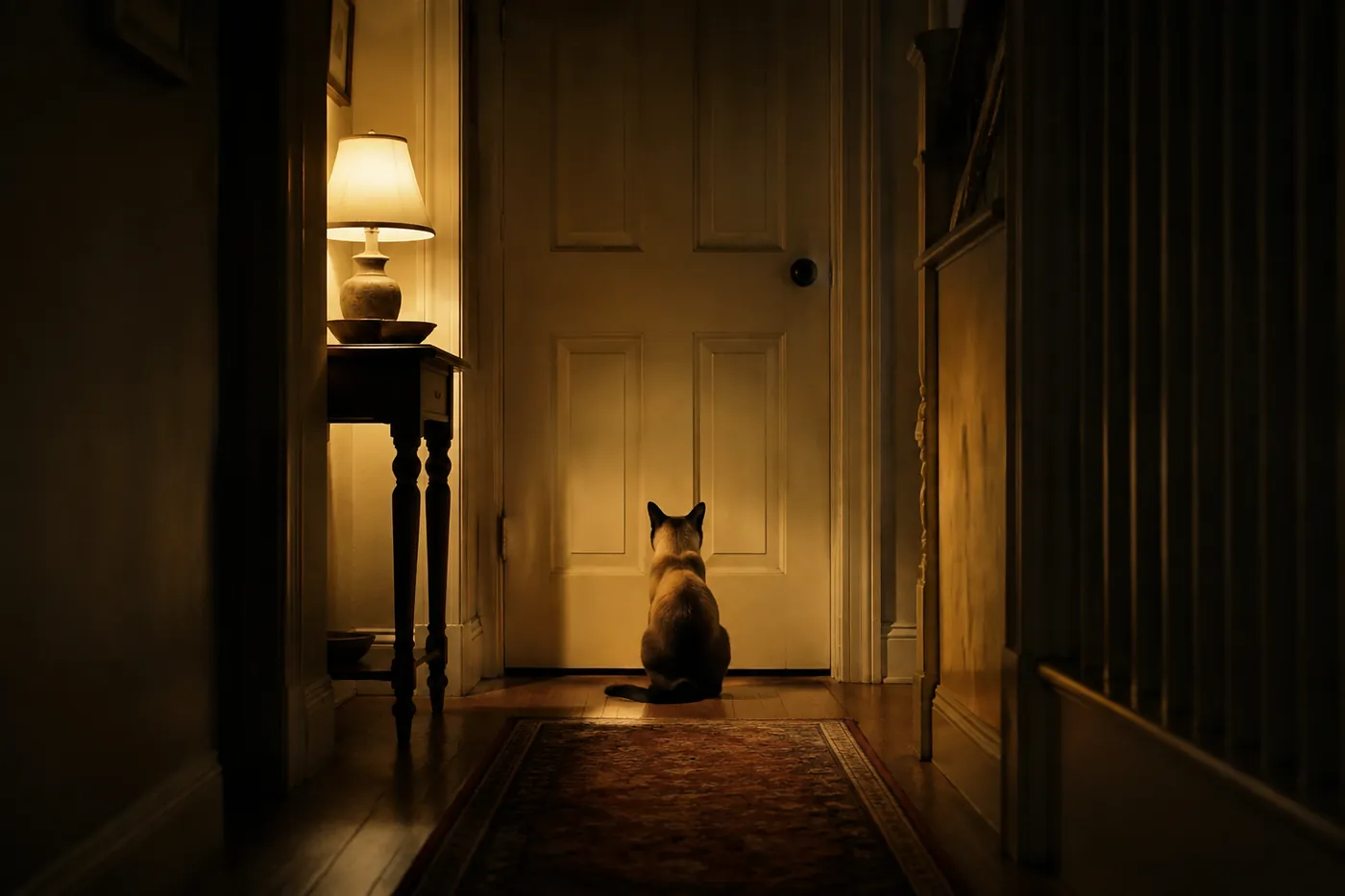
Start with a veterinary check for a new change, then review routine, safe resources, social contact and conflict with other animals. Introduce manageable absences gradually and seek qualified behavioural help when distress persists.
Another cat helps only if the relationship is comfortable. Adding an unfamiliar animal can create tension rather than solve the problem.
Making a working day workable
A predictable routine built around the hours somebody is home does most of the work: interactive play, measured meals and safe resting places, with a midday caregiver when the individual needs more contact or supervision.
- Introduce simple food-search tasks with accessible food available
- Count puzzle and training rewards within the daily ration
- Provide stable height, window views and quiet retreats
- Observe eating, resting and litter use during absences
- Change the care plan if distress persists
A feeder adds a feeding event; it does not supply social care. A kitten, a newly adopted adult and an established older cat may need very different arrangements.
Introducing a second cat
The resident cat's sociability, play style and experience matter more than the newcomer's breed, and even littermates are not guaranteed to remain compatible as adults.
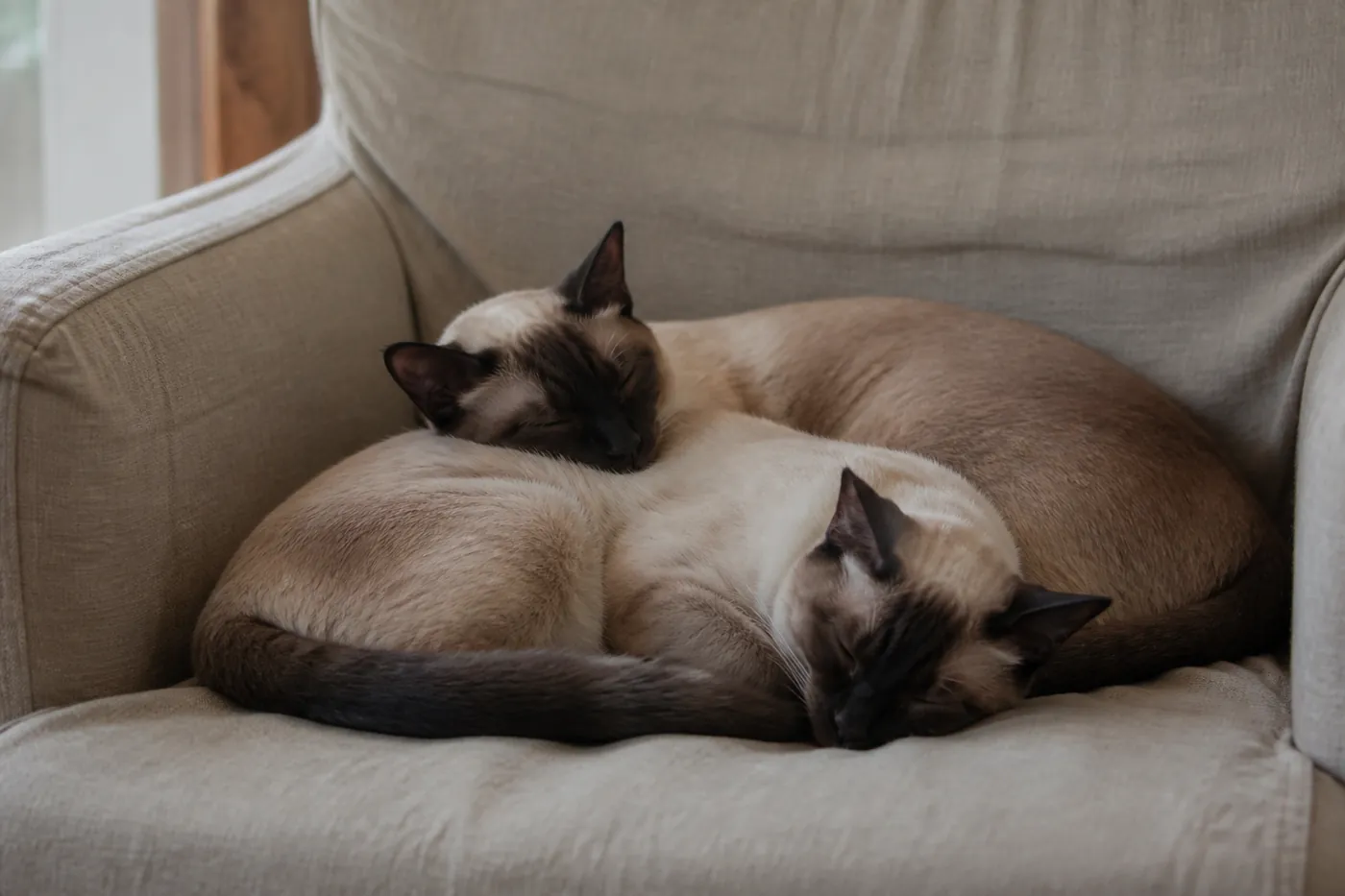
Begin with a separate room, scent exchange and controlled sight before supervised contact. Supply separate food, water, litter and resting places, and move at the pace of the less comfortable cat.
Blocking, staring, chasing and avoidance are signs of tension between cats as much as fights are. Return to an easier stage if either cat cannot eat, rest or use its resources comfortably.
The intelligence, and what to do with it
Siamese cats are among the most trainable of the domestic breeds, and that is a practical fact rather than a compliment.
They learn quickly, they retain what they learn, and they will work reliably for food. Ten minutes of reward-based training genuinely tires a Siamese in a way that chasing a toy does not, because the mental effort is the demanding part.
That cuts both ways. A Siamese learns what works on you at the same speed, which is why the breed produces so many cats that have trained their households to feed them at five in the morning.
The useful behaviours to teach are the ones that make life easier: walking into a carrier, accepting a paw being held, standing still for a check, and coming when called. All are built the same way, in small steps with a marker and a reward.
| Behaviour worth teaching | Why it pays back |
|---|---|
| Walking into a carrier | Removes the struggle from every vet trip for the cat's whole life |
| Accepting a paw being held | Makes claw trims and wound checks routine rather than a fight |
| Standing still for a check | Lets a vet examine a cat that is not braced against them |
| Coming when called | Finds the cat after an open door, and counts it at night |
Many also take to harness walking, which suits a curious indoor cat and needs several weeks of indoor preparation first.
Grooming and daily care
The short, close-lying coat needs very little work. A weekly comb removes loose hair, and that is generally the whole grooming routine.
They are active and curious, so vertical space and puzzle feeders do more for them than another soft bed.
Fabric sucking and wool chewing are more common in this breed than in most, and fabric sucking during kneading becomes a concern once the cat starts swallowing what it chews.
Cold, and the thin coat
The short close coat that makes grooming easy has one practical consequence worth planning for: Siamese cats carry very little undercoat and not much body fat, so they feel the cold more than a densely coated breed does. A Siamese that has taken to sleeping on a radiator or pressing against a person is usually telling you the room is cool.
Heated beds, a bed raised off a cold floor, and somewhere out of a draught are all appreciated more by this breed than by most. Kittens and older cats feel it most.
The same thinness of coat is why the points darken in a cold house, since the pigment enzyme works harder at lower skin temperatures.
Health points
The list for this breed is unusual in that its most serious entry has no test behind it at all.
Amyloidosis is the one to understand first. An abnormal protein is deposited in the liver over months until the tissue is structurally weakened, and the organ can then bleed or rupture with very little warning.
It affects young cats rather than old ones, which is what makes it so out of keeping with a breed that often reaches its late teens. There is no DNA test, so the only useful question is what a breeder knows about early deaths in the line, and whether they will answer it straight.
Progressive retinal atrophy is the opposite kind of problem. It is recessive and testable, the parents' results are definitive, and an untested pairing leaves a preventable blindness risk in place for no reason.
Asthma and bronchial disease show up more often here than in most breeds. A cat that coughs in a crouched position with its neck extended is not bringing up a hairball, and that posture is the thing worth recognising early.
Dental disease is the one that is nearly certain rather than possible. Planning home care from kittenhood is cheaper and easier than starting it on an adult cat that has already decided how it feels about having its mouth handled.
- Progressive retinal atrophy
- A genetic test exists in related lines; ask about parent testing
- Amyloidosis
- Affects the liver in some lines
- Asthma and bronchial disease
- Reported more often in Siamese and related breeds
- Dental disease
- Common enough to plan for, with home care from kittenhood
- Squint and nystagmus
- Historically associated with the breed and now uncommon
The useful question is which tests the parents actually had, because a phrase such as healthy lines names no result.
How long they live, and what that means
Siamese cats are frequently long-lived, and a good many reach their late teens. That length of life is worth thinking about at the point of choosing one, because it is a commitment measured in decades rather than years, and the demands of the breed do not soften much with age.
It also means the conditions of old age matter more here than in a shorter-lived breed. Kidney disease, hyperthyroidism, and dental disease all become likely in a cat that reaches sixteen or eighteen.
Twice-yearly veterinary checks from about eleven are the practical response, with blood, urine, and blood pressure each time. In a long-lived breed that is a great many years of monitoring, and it is what makes the length of life a good thing rather than a difficult one.
Common Questions
Are Siamese cats really that loud?
Yes. The volume and frequency are a defining trait of the breed, not an individual quirk. It is the most common reason people rehome them.
Should I get two Siamese cats?
Many owners do, because the breed struggles with long periods alone. Two cats introduced properly usually works better than one cat with more toys.
Why are Siamese kittens born white?
The colourpoint pattern depends on temperature, and the womb is uniformly warm. The points develop over the first weeks as the cooler extremities darken.
Checked Against
Published 16 April 2026. Last updated .