
What Is a British Longhair, and Where Does the Coat Come From?
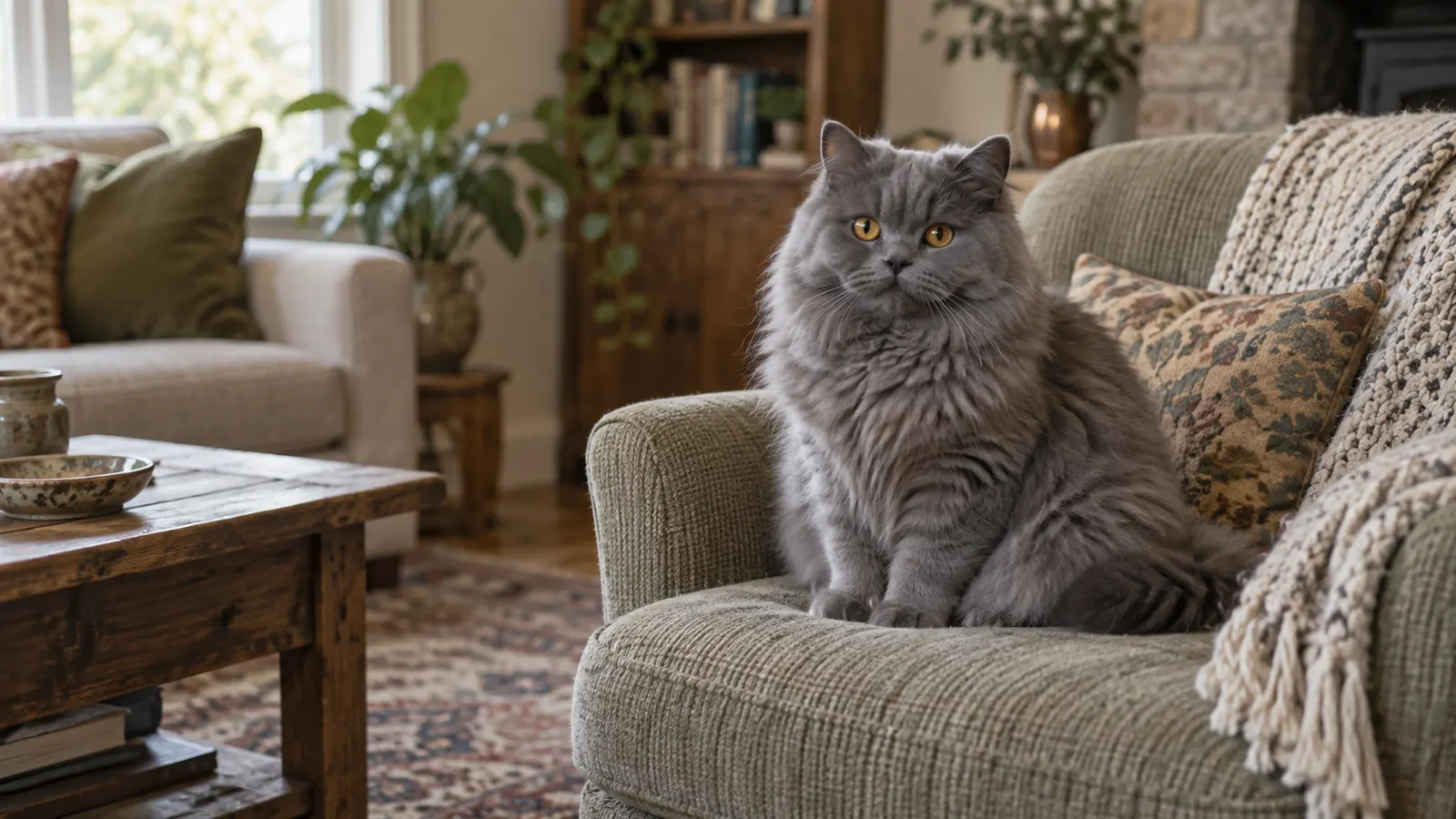
The British Longhair is the same cat as the British Shorthair with one recessive gene switched on, and that gene can surface in an ordinary British Shorthair litter without warning. Some registries list the result as a breed of its own; others list only the British Shorthair.
- Origin
- Emerged from British Shorthair breeding, after Persian crosses made from the Second World War until 1978 left a recessive long-coat gene in the line
- Coat
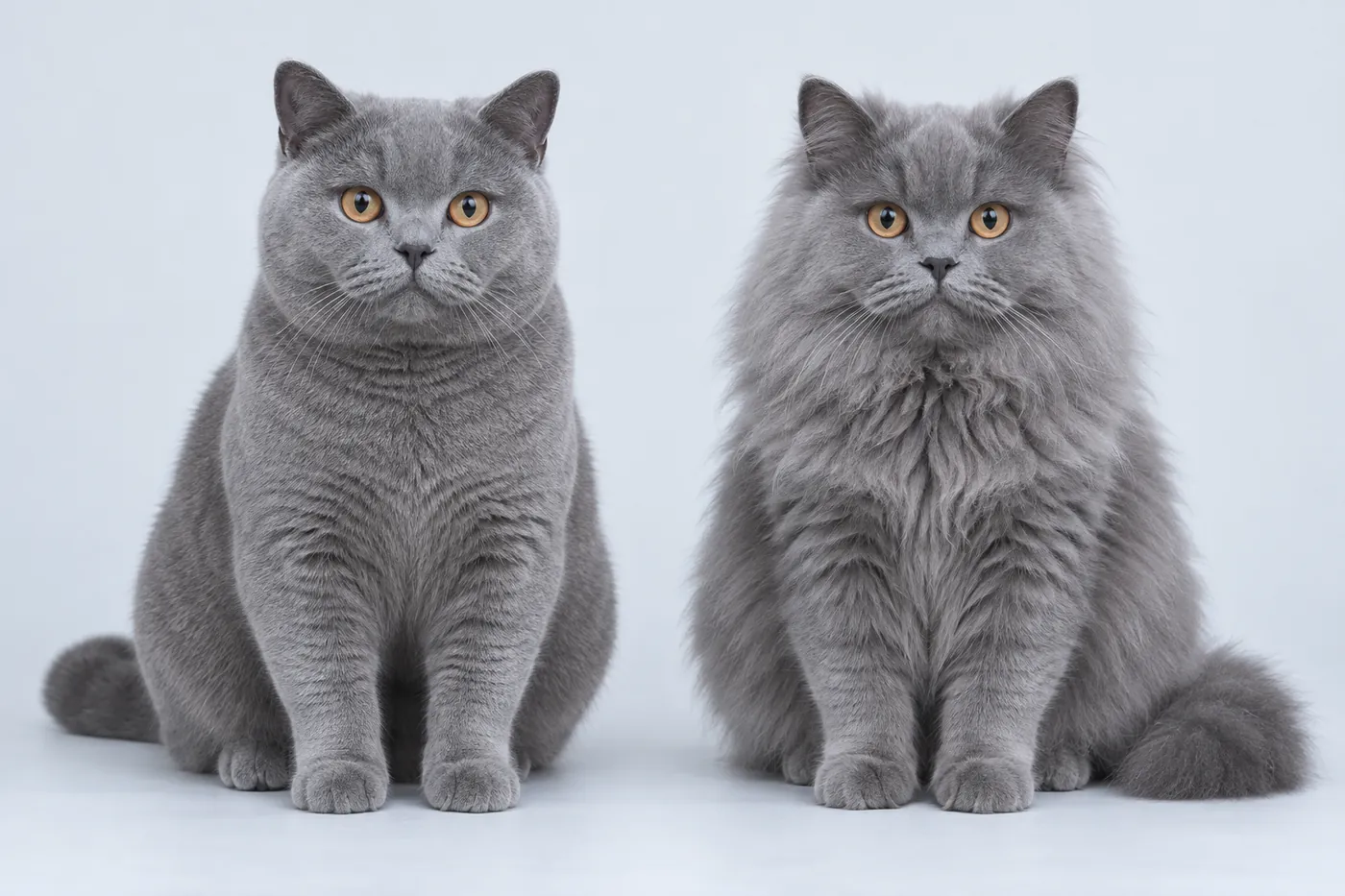
- Semi-long, dense and plush, identical in texture and density to the British Shorthair, only longer
- Size
- Stocky, round-faced and broad-chested, matching the British Shorthair build exactly
- Typical weight
- Males can reach about 17 pounds, roughly 7.7 kg, with females somewhat smaller, going by CFA's description of the British Shorthair whose build it shares
- Life expectancy
- No population study reporting a British Longhair figure was found for this profile; British Shorthair data are the nearest guide, since the two cats share nearly all their ancestry
- Activity level
- Low to moderate. Calm, undemanding and content to settle, like the British Shorthair
- Grooming
- Moderate to high. Noticeably more than the British Shorthair, and the coat mats if it is skipped
- Suits
- Households that want the British Shorthair temperament with a longer coat, and are prepared to groom for it
A British Shorthair breeder can do everything right and still open a nest box to find one kitten with noticeably longer fur than its littermates. The cause is a recessive gene both parents were carrying without anyone knowing, and that gene is the whole reason the British Longhair exists as a distinct cat.
Where did the long coat come from?
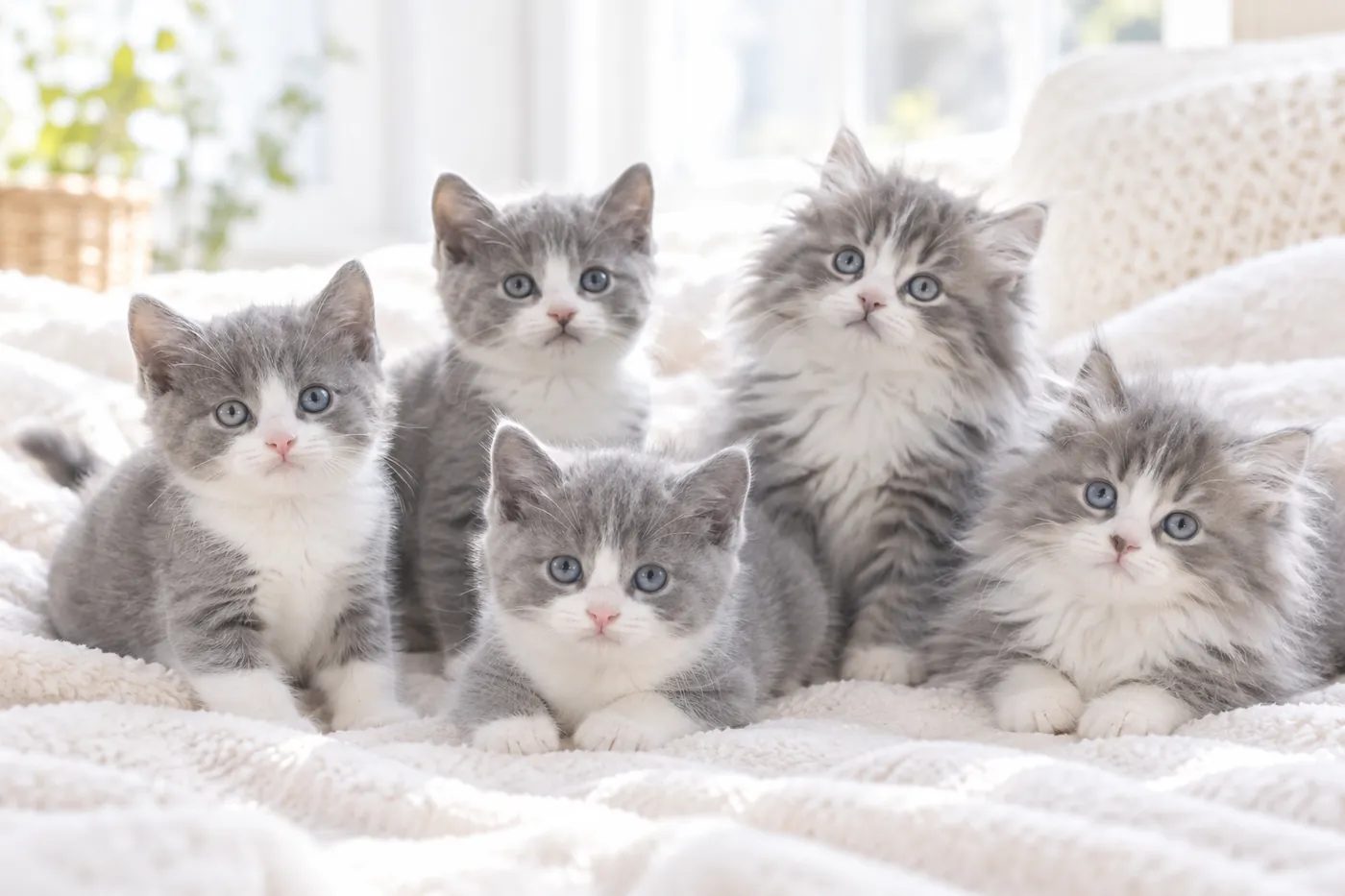
Both World Wars damaged the British Shorthair's gene pool, and breeders kept the breed going by crossing their remaining cats with Persians and with random-bred shorthairs to maintain and then improve the type. The Persian crosses ran, on and off, from after the Second World War until 1978. That kept the breed alive and brought a hidden gene into it.
The Persian contribution carried a long-hair variant of FGF5, the gene that controls coat length in cats, and long-hair variants are recessive. A cat needs two copies to actually grow a long coat, so a cat carrying only one copy looks exactly like an ordinary British Shorthair while passing the variant on. Researchers sampling American British Shorthairs decades later still found one of these variants in the breed.
Every British Longhair is proof that both of its parents were carriers. A carrier mated to a non-carrier never produces a long-coated kitten, so the variant can pass unseen through several generations.
Why can't you predict it from the parents?
A single copy of a recessive gene produces no visible sign in the animal that carries it. Two short-coated British Shorthair parents, both unknowingly carrying one copy of FGF5 each, have a roughly one-in-four chance per kitten of producing a long-coated offspring, following ordinary recessive inheritance. The other kittens in the same litter can be entirely short-coated carriers or non-carriers, indistinguishable from each other by eye.
| Parent genotypes | What a kitten can inherit | What you see |
|---|---|---|
| Both parents short-coated, non-carriers | No copies of the gene | Short coat, cannot produce a long-coated kitten later |
| Both parents short-coated, one copy each | Zero, one, or two copies, by chance | Mostly short coats, occasionally a long-coated kitten in the same litter |
| One short-coated carrier, one British Longhair | A 50 percent chance of two copies per kitten | A mix of short and long coats is likely |
| Two British Longhair parents | Two copies, guaranteed | Every kitten long-coated |
This is the opposite mechanism from the American Wirehair, where the wiring gene is dominant and a litter can still contain straight-coated kittens for a different reason entirely. Here, the surprise runs in the other direction: two ordinary-looking parents can still produce a coat nobody predicted.
A responsible breeder who genuinely wants only short-coated kittens has to either DNA test for the long-hair FGF5 variants, which laboratories report as clear, one copy or two copies, or accept that carrier status is a real possibility in any line descended from the post-war Persian crosses.
A British Longhair kitten in an otherwise short-coated litter is the expected result of an ordinary Mendelian cross between two carriers.
Is the British Longhair a separate breed?
The answer depends entirely on which registry you ask, and the disagreement is genuine rather than a technicality.
FIFe lists the British Longhair as a breed of its own, with its own code, BLH, beside the British Shorthair's BSH. TICA also lists it as a breed, with a breed committee of its own.
CFA takes the opposite position. Its list of recognised breeds includes the British Shorthair and no British Longhair, so a long-coated kitten from British Shorthair parents has no breed class of its own there. The WCF breed lists likewise name the British Shorthair with no separate British Longhair entry.
- FIFe
- Listed as a breed, code BLH, beside the British Shorthair
- TICA
- Listed as a breed, with its own breed committee
- CFA
- Not on its list of recognised breeds
- WCF
- Lists the British Shorthair, with no separate British Longhair entry
Neither position is wrong. They reflect two different, defensible ways of classifying a cat that is genetically identical to its parent breed except for one gene.
For a buyer the difference is practical: the paperwork and the show eligibility depend on which registry a breeder actually shows under. The same long-coated cat can be a British Longhair on FIFe or TICA papers and have no breed class of its own under CFA, so the registry named on the papers decides which classes it can enter.
Does the coat need more work than a British Shorthair's?
Yes, and this is the clearest everyday difference between the two. The British Shorthair's dense coat is famously low-maintenance because it is short enough that loose hair rarely mats before it is shed. The British Longhair carries the same density over a much greater length, and density plus length is exactly the combination that tangles.
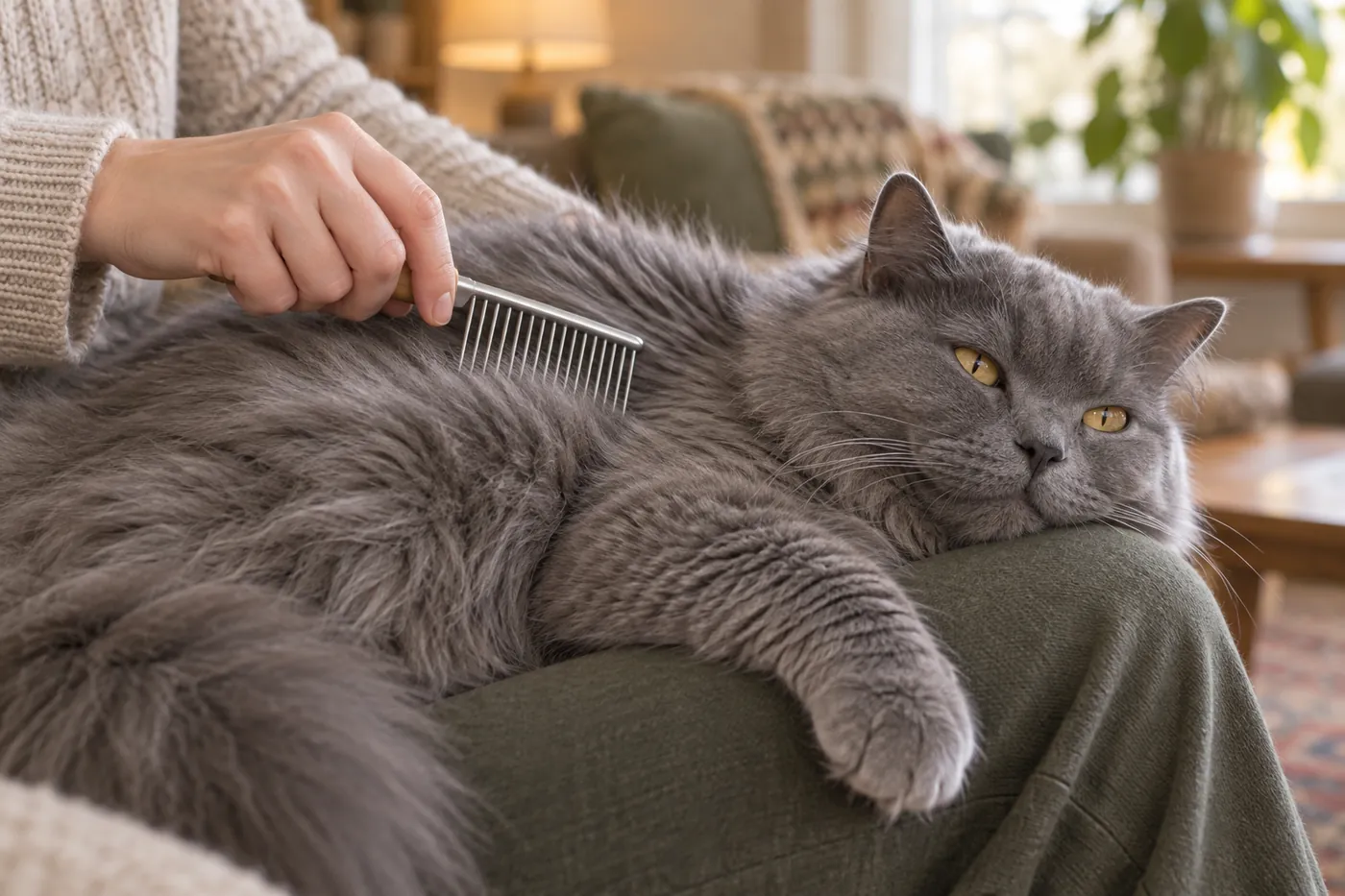
- Comb two to three times a week with a wide-toothed metal comb, working in sections rather than dragging one long stroke.
- Pay particular attention to behind the ears, under the front legs and around the britches, where mats start first.
- Increase to daily combing during a seasonal moult, when the dense undercoat releases in quantity.
- Check the base of the tail and the belly separately, since a cat's own grooming rarely reaches those areas as thoroughly.
- Book a groomer or a vet for any mat that will not comb out, rather than cutting it out at home.
How does the coat actually develop?
The coat develops slowly, and later than most owners expect. A British Longhair kitten is born with soft, fine fuzz that gives little indication of what is coming, and the breed as a whole matures slowly: CFA describes the British Shorthair as not reaching full size until about three years of age.
That slow development matters for two practical reasons. A kitten that looks only moderately fluffy at four months is not necessarily going to stay that way, and grooming demands increase gradually rather than arriving all at once, which gives an owner time to build the combing routine before the coat is at its densest.
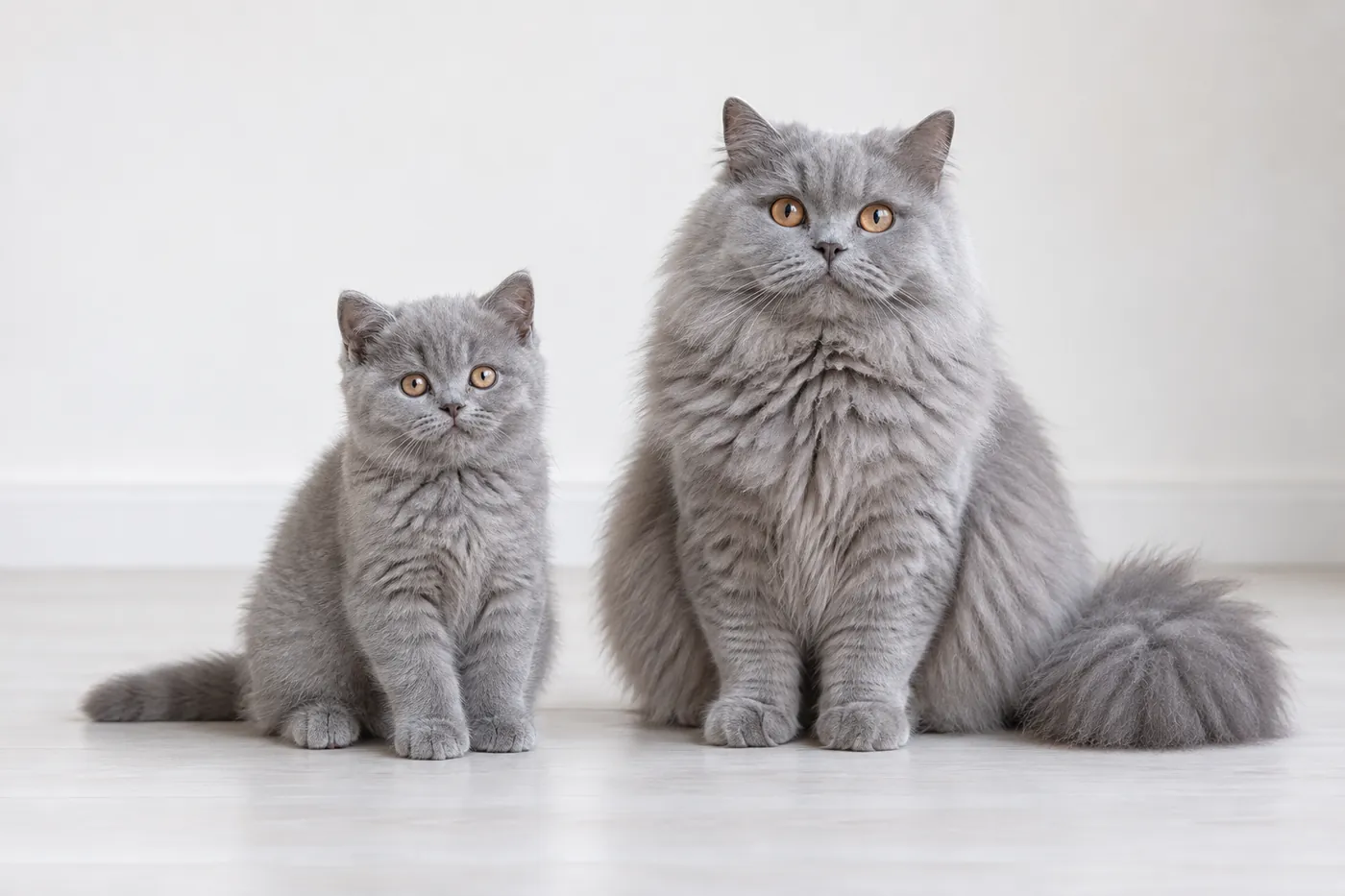
The combing technique is the same as for brushing a long-haired cat of any breed, and a cat that resists benefits from building comfort in small steps.
What is a British Longhair's temperament like?
Calm, observant and usually content to stay near people without demanding constant handling. CFA describes the British Shorthair as preferring to supervise from nearby and to wait for an invitation rather than jump into a lap, and the British Longhair shares that ancestry, but the individual cat still matters more than the coat-length label.
Most adults prefer several short play sessions to continuous high activity. The routine in exercise needs by age is more useful than expecting this stocky cat to entertain itself with long bursts of running.
They can live well with respectful children and other pets when introductions are gradual. Teach children to stop when the cat turns its head, shifts its skin or moves away; petting aggression explains why those small signals matter before a bite.
CFA's British Shorthair profile, which describes the same cat in the shorter coat, says that although these cats are quiet and sedate they are intelligent: they learn the household routine, follow their owner from room to room as it is carried out, and protest with a gentle touch of a paw if something changes significantly. The profile does not describe formal training, so a settled routine and reward-based clicker training are the place to start.
The breed is a weaker fit for someone who wants an athletic, highly interactive cat or one that enjoys being carried for long periods. Its appeal is quiet company.
Which health tests should a British Longhair breeder show you?
The long-coat gene does not create a separate health profile. The stocky build, slow maturation and inherited risks remain the same as in the British Shorthair, because the two populations share nearly all of their ancestry.
Ask for a recent cardiac assessment for hypertrophic cardiomyopathy and a documented PKD result for the breeding cats. Polycystic kidney disease forms inherited cysts that can eventually impair kidney function, while chronic kidney disease describes the broader loss of function an owner may later have to manage.
Weight deserves equal attention even though it is not a genetic test. The broad chest and dense coat can hide gradual gain, so hands-on body-condition checks and measured portion sizes are more reliable than judging the outline from across the room.
Maturation is slow enough that an adolescent can keep filling out after reaching adult height. The general cat growth timeline helps separate normal filling out from weight gain that needs a feeding adjustment.
What colours does the breed come in?
The long coat appears in the colours the British Shorthair is shown in, because coat length and colour are inherited separately. CFA's British Shorthair standard covers solids such as blue, black, red and cream, classic and mackerel tabbies, shaded coats with colour only at the hair tips, smokes, and tortoiseshell and blue-cream, with eyes from gold or copper through green to deep blue.
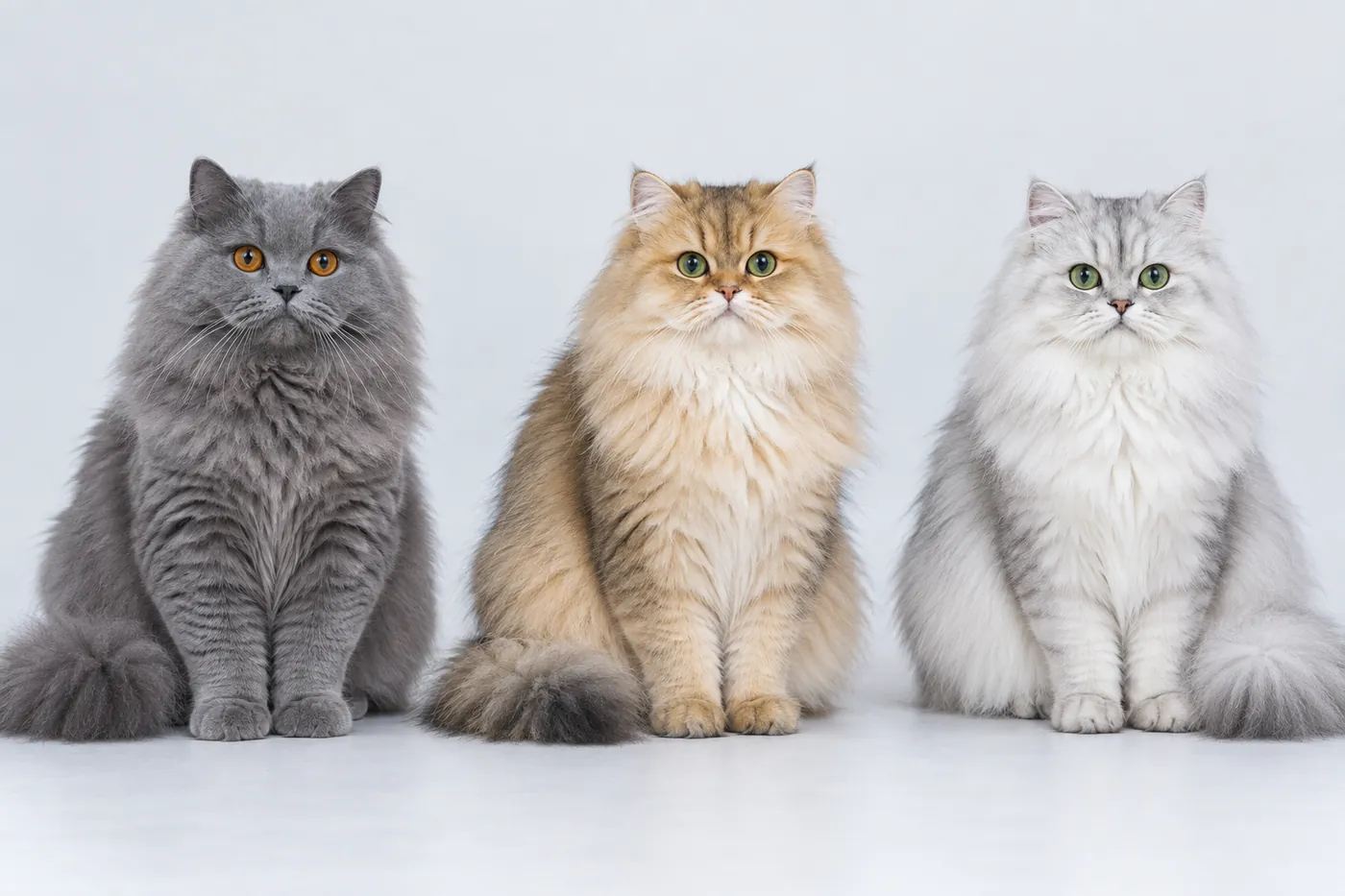
A rare colour or a high price says nothing about lineage on its own. Registration with a registry that lists the British Longhair, such as TICA or FIFe, records the pedigree in a way the price never can.
Should you get one?
If you want the British Shorthair's calm, undemanding temperament and don't mind the extra grooming a longer coat brings, yes, and there is very little else to weigh.
The genuine decision points are narrow: which registry's paperwork you want, and whether you are prepared for a comb two or three times a week rather than an occasional one. Everything else about living with this cat is the British Shorthair experience, just with more hair to manage.
If a breeder cannot explain the FGF5 carrier situation in their own line, or cannot produce the same cardiac and kidney screening a British Shorthair breeder would show you, that is worth treating as seriously here as it would be there.
- Ask whether the parents are known carriers, confirmed clear, or untested for FGF5
- Ask for dated HCM and PKD screening results, exactly as you would from a British Shorthair breeder
- Ask which registry the cattery shows under, and confirm the classification matches what you are being sold
- Expect a kitten to stay with its mother until at least twelve weeks, with a written contract and health guarantee
Common Questions
Why did my British Shorthair litter have a long-haired kitten?
Both parents were almost certainly carrying one copy each of the recessive FGF5 gene without showing any visible sign of it. When a kitten inherits two copies, one from each parent, it grows a long coat. It is not a sign of a different sire or a breeding mistake.
Is the British Longhair a separate breed from the British Shorthair?
It depends on the registry. FIFe and TICA list it as a breed of its own. CFA lists the British Shorthair but not the British Longhair, and the WCF breed lists carry no separate British Longhair entry.
Does a British Longhair need more grooming than a British Shorthair?
Yes, noticeably more. The coat carries the same dense undercoat over a much greater length, which mats far more readily than the short coat does. Combing two to three times a week, more during a moult, is the realistic minimum.
Are British Longhairs prone to the same health problems as British Shorthairs?
Yes. Because they share almost identical genetics aside from the coat-length gene, hypertrophic cardiomyopathy and polycystic kidney disease risk carry over, and the same screening a British Shorthair breeder should provide applies here.
Can two short-coated cats produce a British Longhair kitten?
Yes, if both parents carry one copy each of the recessive FGF5 gene. Neither parent shows any visible sign of carrying it, so the possibility exists in any British Shorthair line descended from the post-war Persian outcrosses.
Checked Against
- The International Cat Association: British Longhair tica.org
- Cornell Feline Health Center: hypertrophic cardiomyopathy vet.cornell.edu
- Cornell Feline Health Center: polycystic kidney disease vet.cornell.edu
- Four independent mutations in the feline FGF5 gene determine the long-haired phenotype pmc.ncbi.nlm.nih.gov
- CFA: British Shorthair breed profile cfa.org
- FIFe: Current breeds fifeweb.org
- CFA: Recognised breeds cfa.org
- Langford Vets, University of Bristol: cat coat length genetic test langfordvets.co.uk
- Langford Vets, University of Bristol: polycystic kidney disease genetic test langfordvets.co.uk
Published 10 September 2026. Last updated .





