
What Is an Egyptian Mau, and What Does a PK-Deficiency Test Tell a Buyer?
An Egyptian Mau suits a home prepared for an active, alert cat and careful pedigree and health checks. PK-deficiency results answer one inherited question; they do not settle temperament, lifelong health or the fit of the household.
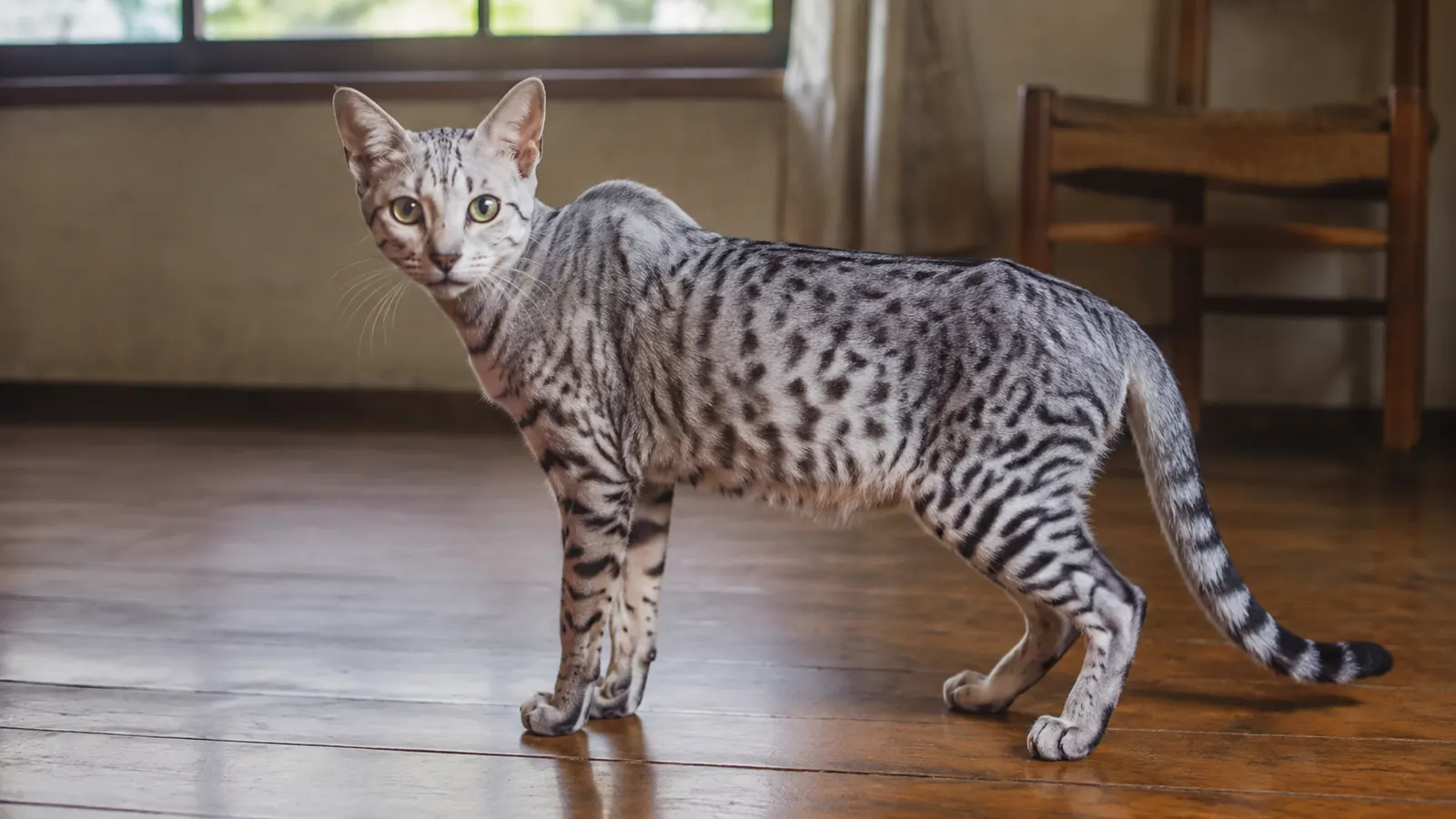
- Origin
- Modern Egyptian street cats, brought to the United States by Nathalie Troubetskoy in 1956
- Coat
- Medium length, close-lying, with a lustrous sheen. Silver and bronze are dense, smoke is silky
- Size
- Medium-sized, with high shoulder blades, longer hind legs, and a skin flap from flank to knee
- Typical weight
- Neither registry standard states one. Males tend to be larger than females
- Life expectancy
- No separate Egyptian Mau estimate in the cited UK life tables
- Activity level
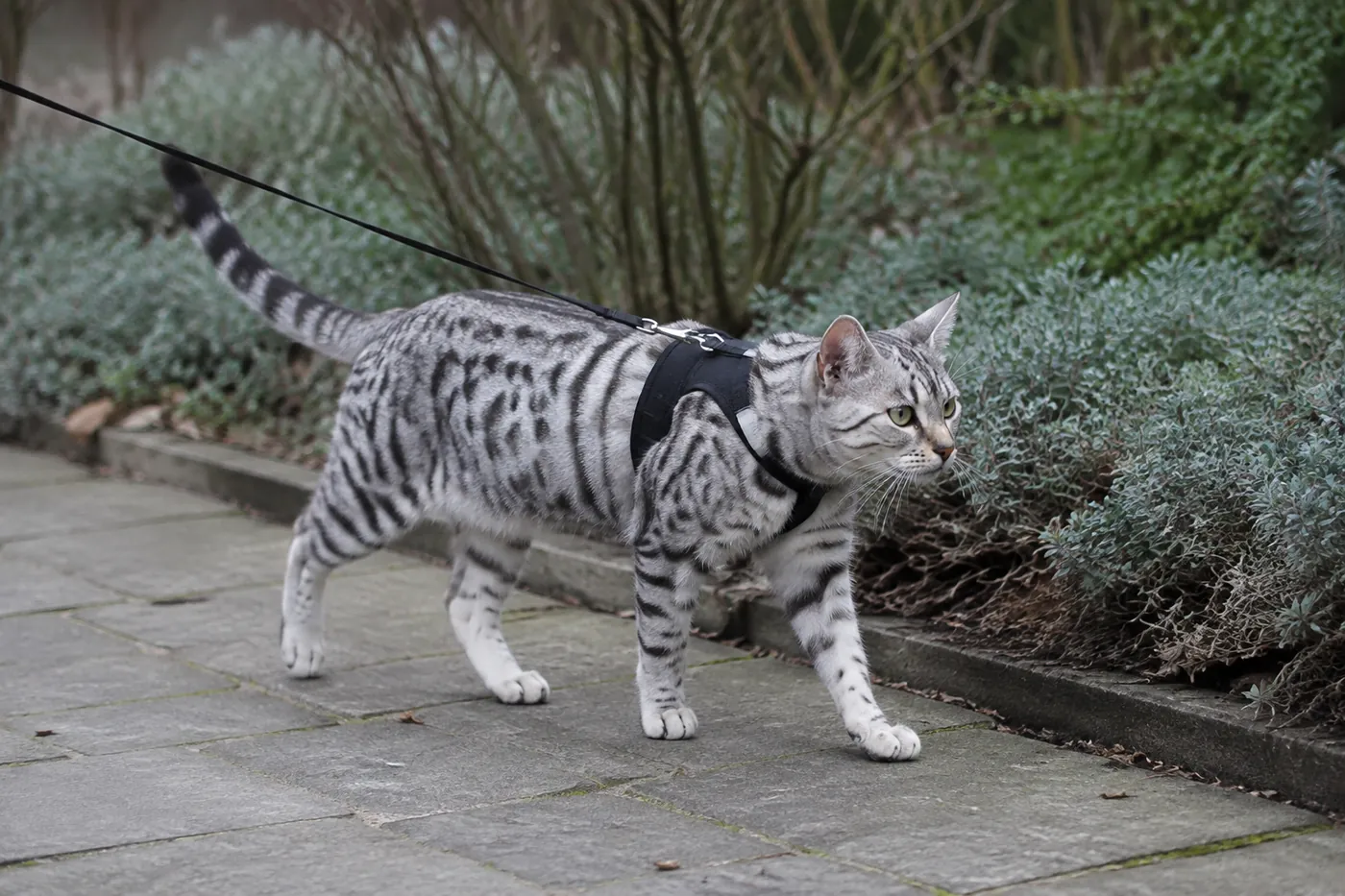
- High and sustained. Active, alert and agile, and often happy on a harness
- Grooming
- A comb once a week, where the real job is the weekly skin check
- Suits
- Households wanting daily interactive play, and buyers willing to ask for both parents' PK results
Most people arrive at this breed because of the spots. The spots are the part of the cat a buyer can see, and almost everything that decides how the next fifteen years go is written down instead.
Is an Egyptian Mau the right cat for you?
Yes, if you want an active cat and are willing to buy on paperwork rather than on the spots. The household most likely to struggle is one that is empty all day, because CFA describes a social cat that becomes bored when it is left alone. The Egyptian Mau is a breed with a named PK-deficiency test and published sample results. Pyruvate kinase deficiency causes anaemia, it is recessive, and a survey of 14,179 cats tested 36 Egyptian Maus for the variant.
Nine carriers in thirty six is what makes asking for both parents' results worth the awkwardness. A carrier is a healthy cat, and a mating in which both parents can transmit the variant can produce affected kittens.
Two figures are missing from the evidence. No study gives a representative Egyptian Mau lifespan, and no registry standard states a weight range for the breed, so any number quoted for either has no study or standard behind it.
What counts as an Egyptian Mau depends on who is asking
A cat is an Egyptian Mau because a register says so, and the two main registers do not say it the same way.
The GCCF rule is the stricter of the two. Every cat it registers as an Egyptian Mau needs at least three generations of registered Maus behind it, and there are no permitted outcrosses at all.
CFA works differently, and GCCF says so in its own policy: unlike CFA, it does not register cats of certified Egyptian origin and Egyptian Mau type.
| GCCF | CFA | |
|---|---|---|
| Generations of registered Maus behind a cat | At least three | Not the deciding test |
| Permitted outcrosses | None | Not applicable in the same way |
| Cats of certified Egyptian origin | Not registered | Registered, per the GCCF policy |
That difference matters because of what the breed is. GCCF describes the Egyptian Mau as a natural breed derived from the modern street cats of Egypt, rather than one built by hybridising established breeds.
So a new Egyptian import is either fresh blood for a small gene pool or a cat outside the register, depending on which country you are standing in.
The name itself has moved before. In the UK in the 1970s, Egyptian Mau was what the Oriental Spotted Tabby was called.
That mix-up left a mark that has never been cleaned up. GCCF notes that Roy Robinson's book Genetics for Cat Breeders describes chocolate and cinnamon Maus, which are Oriental Spotted Tabbies, and the error still stands in the book.
The Egyptian Mau is also regularly confused with the Arabian Mau, an unrelated landrace that happens to share the word.
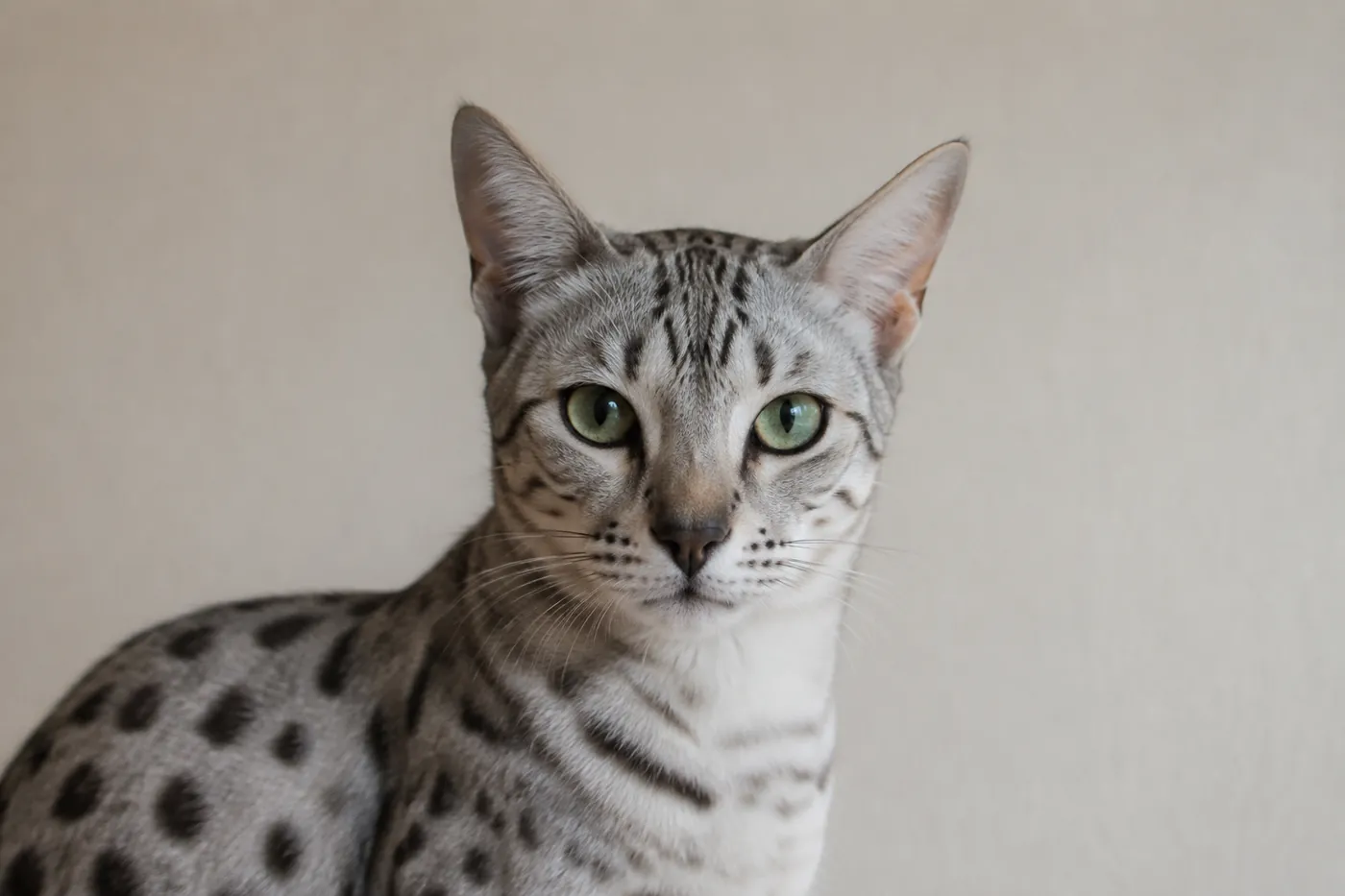
An Egyptian Mau litter produces more than the three show colours
GCCF recognises three colours of Egyptian Mau for showing: bronze, silver and smoke.
A litter does not stop there, and the policy is unusually blunt about it. The black self Mau is an inevitable consequence of breeding the three recognised colours, and it can never be eliminated by selective breeding.
Blue Maus turn up too. They can be registered but not shown, and the pedigrees of their parents and offspring are overstamped to record the dilution gene.
Then there are the blotched ones. A classic tabby kitten, with the butterfly across the shoulders instead of spots, cannot be registered as an Egyptian Mau at all.
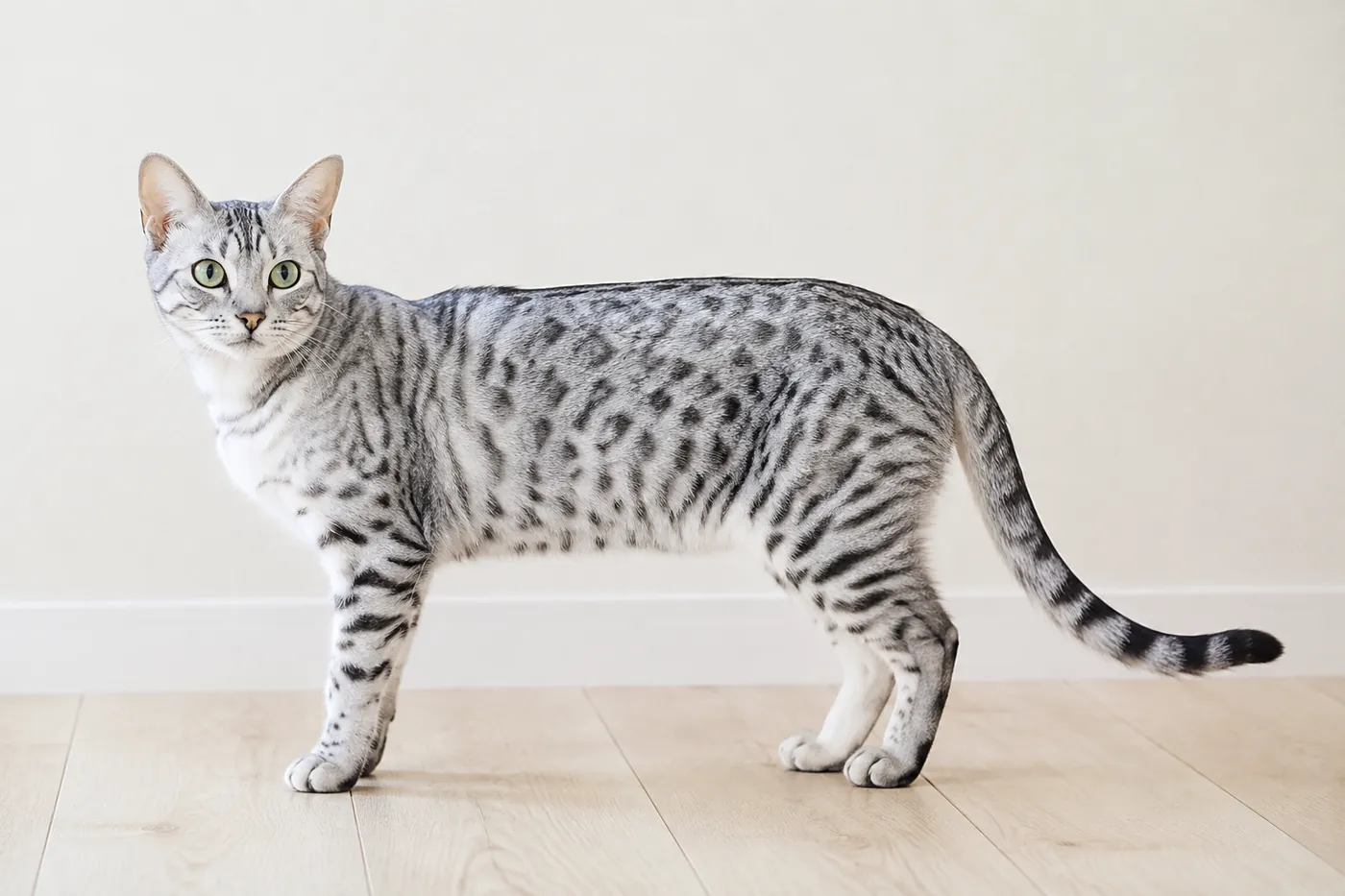
- Bronze, silver and smoke
- The three colours recognised for showing
- Black self
- Registrable, unshowable, and impossible to breed out of the three recognised colours
- Blue
- Registrable, unshowable, and the pedigree is overstamped for the dilution gene
- Classic tabby
- Cannot be registered as an Egyptian Mau at all
- Blue eyes past twelve weeks
- Healthy, but a withholding fault under the standard
Eye colour follows its own timetable. Every Egyptian Mau is born blue eyed, and the colour should start moving towards gooseberry green from around six weeks, sometimes passing through a yellowish stage on the way.
A few never change. If the eyes are still blue at twelve weeks they are staying blue, and the breeding policy is clear that those cats are healthy and simply cannot be shown.
None of this makes a black or a blotched kitten a worse cat to live with. It changes what the paperwork will say, which is worth knowing before somebody sells you one as rare.
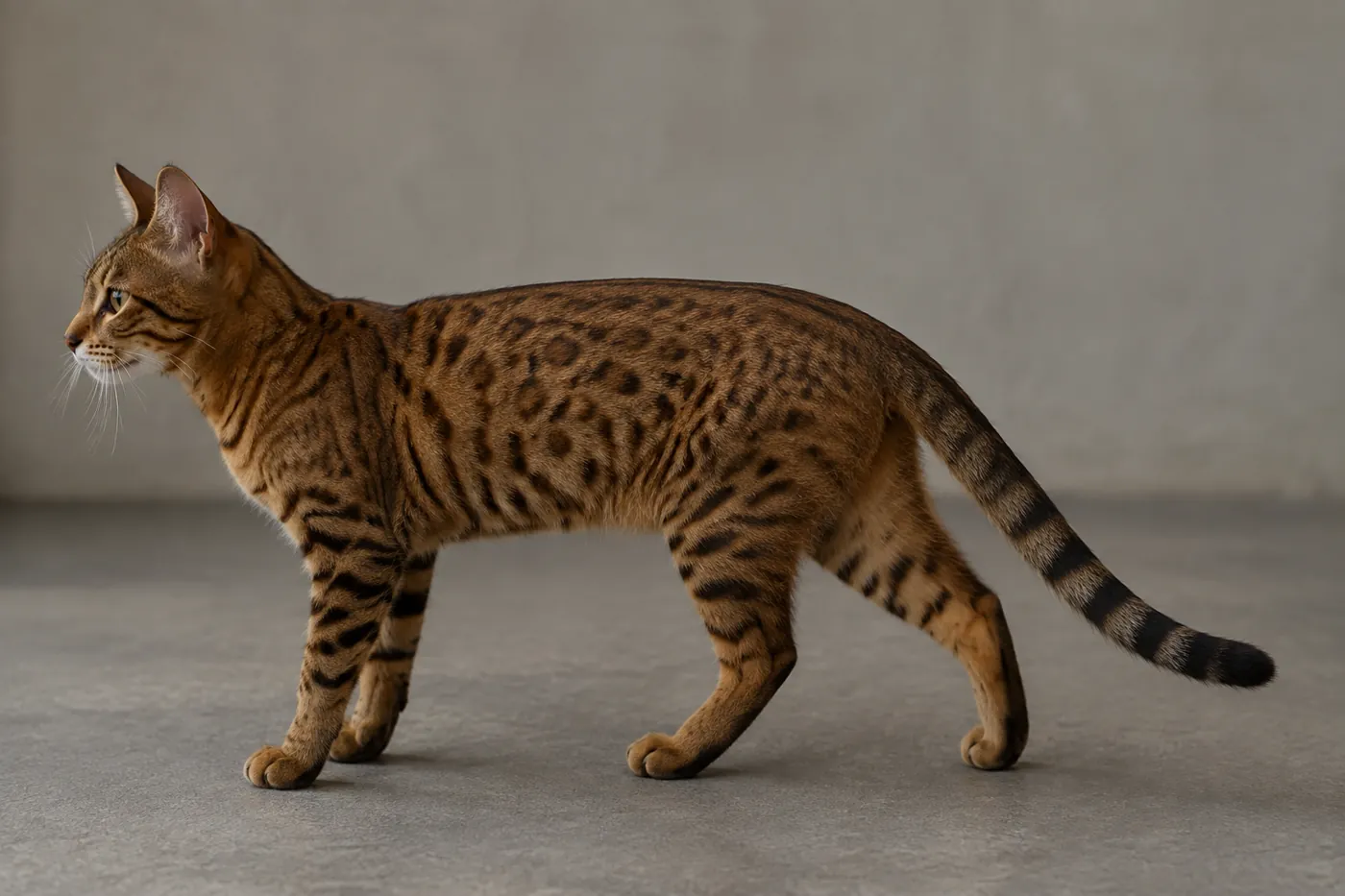
How big is an Egyptian Mau, and what is the flank skin flap?
The standard answers this descriptively rather than numerically. It calls the Egyptian Mau an active, well balanced, medium-sized cat with a strength and hard muscular feel that belie its graceful build.
Males tend to be larger than females, and the standard leaves it there. Neither the GCCF nor the CFA standard gives a weight range, so any figure you read came from somewhere else.
The structure is where this breed stops resembling other spotted cats. A loose skin flap extends from the flank to the knee of each hind leg, and it is normal rather than a sign of a fat cat.
- Shoulder blades sitting high and prominent, felt rather than seen
- Hind legs proportionately longer, which is what produces the tip-toe stance when the cat stands upright
- A loose fold of skin running from the flank towards the knee on both hind legs
- A hard, muscular feel under a build that looks light
CFA puts the high shoulder blades and the longer hind legs together and calls the result a cheetah-like gait. That describes how the cat moves and makes no claim about how fast it goes.
Owners who have not met the breed often ask a vet about the flank fold at the first appointment, although it is normal anatomy for an Egyptian Mau.
The Egyptian Mau temperament nobody can promise you
The CFA description is flattering: a cat intensely devoted to its owners, quiet, and low voiced. That is the picture most buyers arrive holding, and it is a fair one.
The GCCF breeding policy says something more careful. There is considerable variance in Egyptian Mau temperament, and it attributes that variance to nature and nurture together.
The same policy adds the part that turns this into a question you can ask. There is evidence the breed is particularly sensitive to early experience, which is why it asks breeders to handle newborn kittens daily.
| Document | What it says about temperament |
|---|---|
| The CFA profile | Intensely devoted to its owners, quiet, with a low melodious voice |
| The GCCF breeding policy | Considerable variance, from nature and nurture together |
| What follows for a buyer | Ask how often the kittens have been handled, from what age |
Taken together, the two documents change the useful question from what Egyptian Maus are like to what this litter's first eight weeks were like, because the policy says that period does more work in this breed than in most.
Temperament is also a show matter. Extremely aggressive temperament is a withholding fault, which means a judge can decline to award a cat that shows it.
CFA is more specific about the household. Its profile calls the Mau a wonderful family pet, and in the same breath describes a strong-willed cat with definite ideas about who can handle it and when, often cautious or reserved with strangers. A separate CFA article says Maus get along with children, other cats and cat-approved dogs if they are properly introduced, and that the breed is not especially good as the only pet in a home.
In a house with young children, the handling preference is the part to plan around, because children do most of the picking up and a Mau has its own view on when that is welcome.
The breed does have limits worth respecting. A confident cat that does not object is easy to keep handling past the point it stopped enjoying, and the warning signs arrive before the bite does.
Activity, harness walks and the speed claim
Active, alert and agile is how CFA puts it, along with a breed that enjoys interactive play and walking outdoors on a harness and lead.
In practice that means a wand session morning and evening, something to climb and a puzzle feeder, which do more for this cat than an extra room would, and the balance shifts as exercise needs change with age.
Harness walking is worth trying and not worth forcing. It is taught the same way as any other behaviour a cat has no reason to accept, in small rewarded steps with clicker training.
Dropping the number costs nothing, because the structure the standards actually describe explains the breed's movement well enough on its own.
Grooming an Egyptian Mau
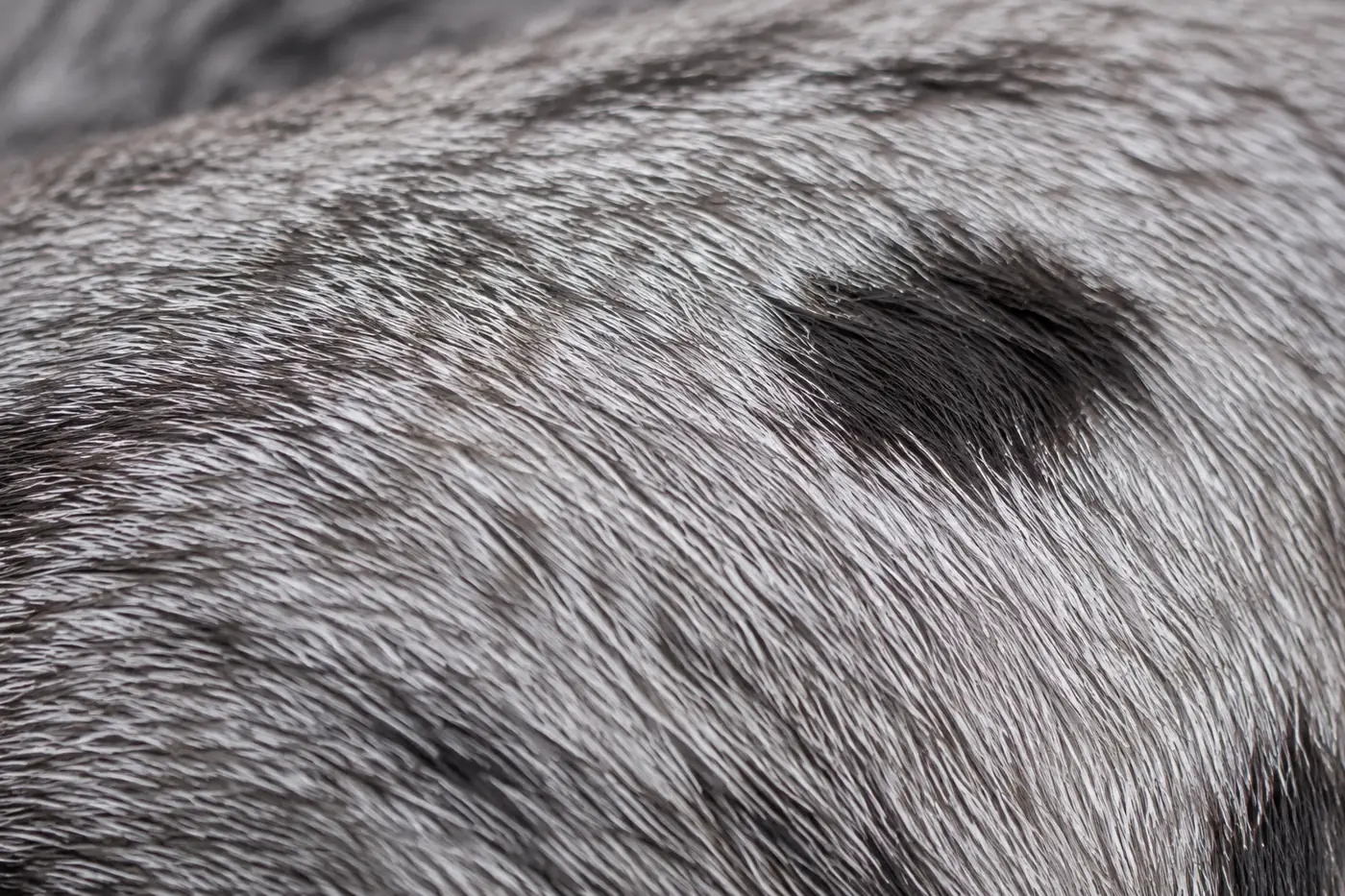
A comb once a week covers it, and CFA says the breed sheds only minimally. The coat is medium length and close-lying with a lustrous sheen, and it does not mat.
Texture varies by colour. Silver and bronze cats carry a dense, resilient coat with two or more bands of ticking on each hair, while the smoke coat is silky and fine.
- Comb through once a week with a fine metal comb, following the lie of the coat.
- Check the neck and behind the ears for scratched or scabbed skin.
- Check the belly and the inside of the legs for thinning fur.
- Book an appointment for any raw patch rather than waiting to see whether it settles.
The weekly job is really the skin check. GCCF names itchy skin conditions as a real problem in some Egyptian Maus, showing as lesions around the neck or overgrooming of the belly and inside the legs.
Those episodes are sometimes triggered by hormonal changes, sometimes by a food allergy, and sometimes by nothing anyone can identify.
The Egyptian Mau problems that have a name
Two conditions are named by CFA as the ones Egyptian Mau breeders screen for: pyruvate kinase deficiency, and urolithiasis, the formation of stones in the kidneys and urinary tract.
Only one of those has a DNA test. A PK result tells you whether a cat carries the variant, and because the disorder is recessive, a carrier bred to a clear cat cannot produce an affected kitten.
| Condition | What exists for it |
|---|---|
| Pyruvate kinase deficiency | A DNA test, and a published carrier frequency in the breed |
| Urolithiasis | Screening by breeders, no genetic test, and water intake to think about |
| Umbilical hernia | A hand on the kitten's belly, and a record the breeder should already keep |
| Itchy skin conditions | No test and no single trigger, so parental history is what you have |
The UK picture adds two more. GCCF reports that its Egyptian Mau population has not shown evidence of many breed-specific health problems, then names umbilical hernias and itchy skin as the two that are relatively common.
Hernias deserve their own line. They are common in the breed and usually minor, but a strangulated hernia can be lethal if it goes unnoticed for a few hours.
The policy tells breeders to check kittens daily for them, to place any kitten with a hernia on the inactive register, and not to repeat a mating that produced more than two.
What can lifespan figures tell you?
The UK life tables give no Egyptian Mau-specific estimate, and their all-cat mean and longest breed-group mean are neither a forecast nor an upper limit for an individual Mau.
A Mau can live long enough that preventive care and later-life illness belong in the plan from the start. Documented ages and causes of death in its relatives are the closest thing to breed data a buyer can get, although a family history is not a population life table.
What to ask before buying an Egyptian Mau
The useful questions are the ones a breeder answers with a document, a record, or by handing you the kitten. None of them predicts the cat's personality, and the breeding policy is honest that nothing does.
- Both parents' PK deficiency results, seen rather than described
- Whether any kitten in this or a previous litter had an umbilical hernia
- How often the kittens have been handled, and from what age
- Whether either parent has had recurring skin trouble, since the policy says those cats should not be bred from
- What colour and eye colour the kitten is registered as, which settles whether it can ever be shown
The hernia question is worth asking even when the kitten in front of you is fine, because GCCF asks breeders to keep records of matings that produced hernias, so a breeder following the policy already has the answer written down.
A repaired hernia matters beyond health. Under GCCF rules a cat whose hernia has been surgically fixed is not eligible for showing, which is worth knowing before you buy a show prospect.
The eyes and the date settle one more question. If the eyes are still blue at twelve weeks, they are not going to change, whatever you are told about them settling later.
Common Questions
How long do Egyptian Maus live?
The UK life tables give no separate Egyptian Mau estimate, and the all-cat mean is neither a breed forecast nor a maximum lifespan. Documented longevity in a kitten's relatives is worth asking about, although neither figure is a guarantee.
Is the Egyptian Mau really the fastest domestic cat?
Neither the GCCF nor the CFA breed standard mentions speed. Both describe the structure behind the claim: high shoulder blades, proportionately longer hind legs, and what CFA calls a cheetah-like gait. The thirty miles per hour figure is repeated across breed pages rather than published by a registry, so it is folklore attached to a real piece of anatomy.
What health test should an Egyptian Mau breeder show me?
Pyruvate kinase deficiency results for both parents. CFA says breeders screen for it, and in a survey of 14,179 cats, 9 of the 36 Egyptian Maus tested carried one copy of the variant and none carried two. The disorder is recessive, so a carrier bred to a clear cat cannot produce an affected kitten. Ask about umbilical hernias in the litter too, since the breeding policy asks breeders to keep records of them.
Why does my Egyptian Mau have loose skin on its flank?
Because the breed standard asks for it. A loose skin flap extends from the flank to the knee of each hind leg on an Egyptian Mau, and it is normal structure rather than a weight problem. It sits alongside the high shoulder blades and the longer hind legs that give the breed its stance.
Checked Against
- The Cat Fanciers' Association: Egyptian Mau breed profile cfa.org
- GCCF: Egyptian Mau Breeding Policy, 2012, including the Standard of Points gccfcats.org
- Grahn et al., Erythrocyte Pyruvate Kinase Deficiency mutation identified in multiple breeds of domestic cats, BMC Veterinary Research 2012 pmc.ncbi.nlm.nih.gov
- Teng et al., Life tables of annual life expectancy and risk factors for mortality in cats in the UK, Journal of Feline Medicine and Surgery 2024 pmc.ncbi.nlm.nih.gov
- VCA Animal Hospitals: Egyptian Mau vcahospitals.com
- The Cat Fanciers' Association: Spots Before Your Eyes?, Laurie Coughlan cfa.org
Published 5 September 2026. Last updated .





