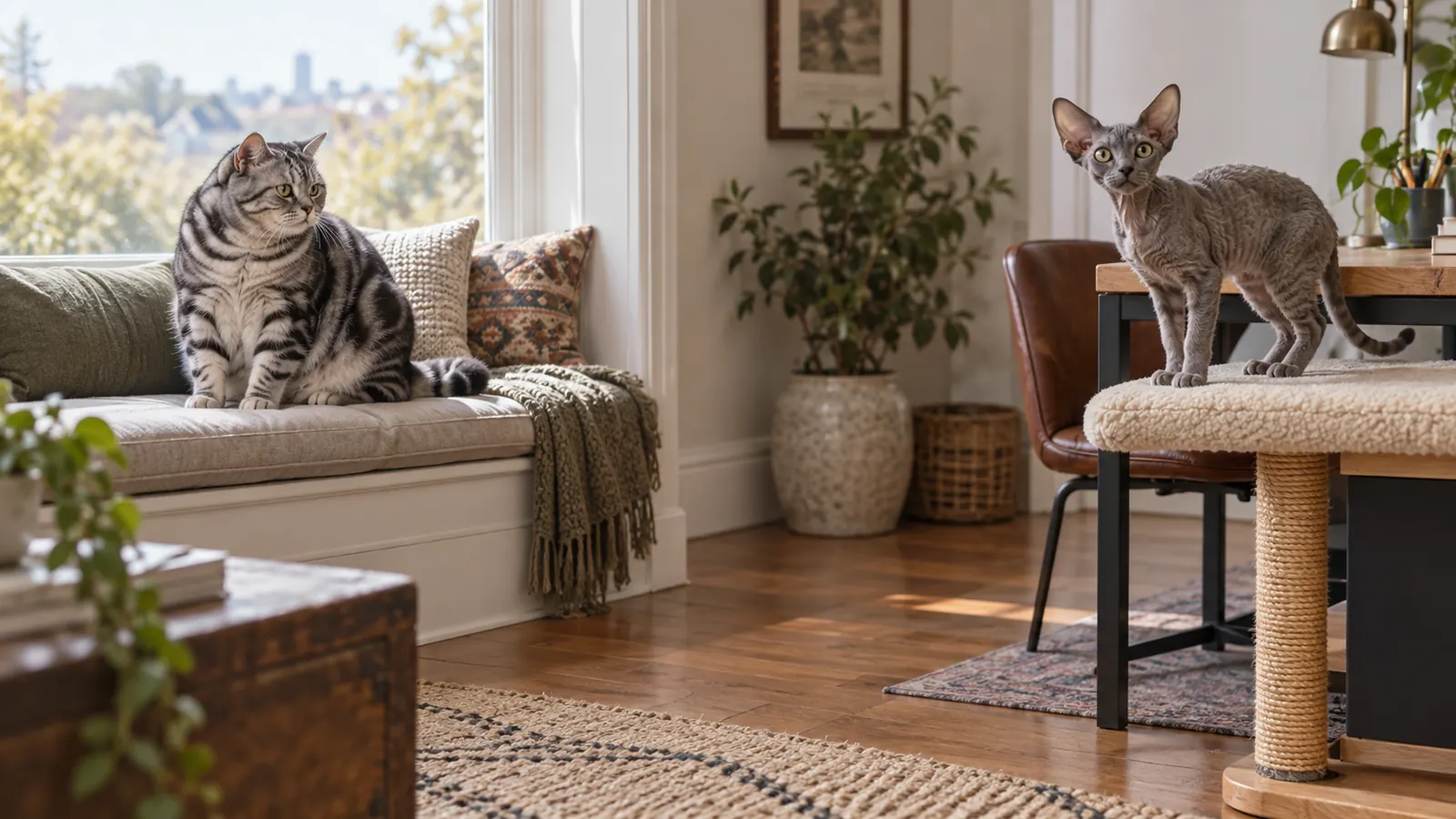
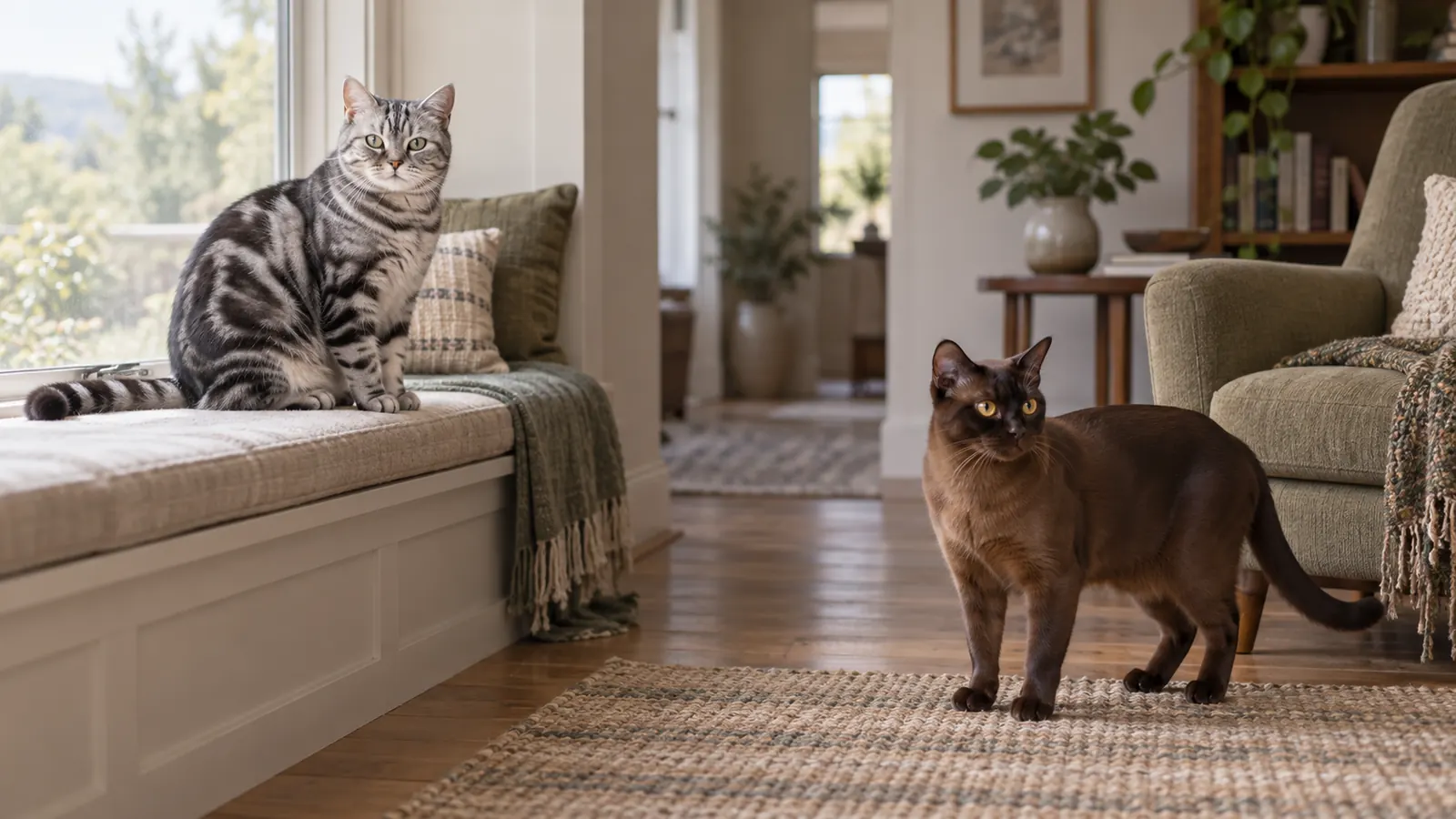
American Bobtail vs Japanese Bobtail: Which Fits Your Pace?
An American Bobtail suits someone who wants a more substantial cat with a moderate, adaptable rhythm. A Japanese Bobtail suits someone who wants a lighter, more animated and interactive cat, and the shared word bobtail says nothing about whether the two share body type or tail genetics.
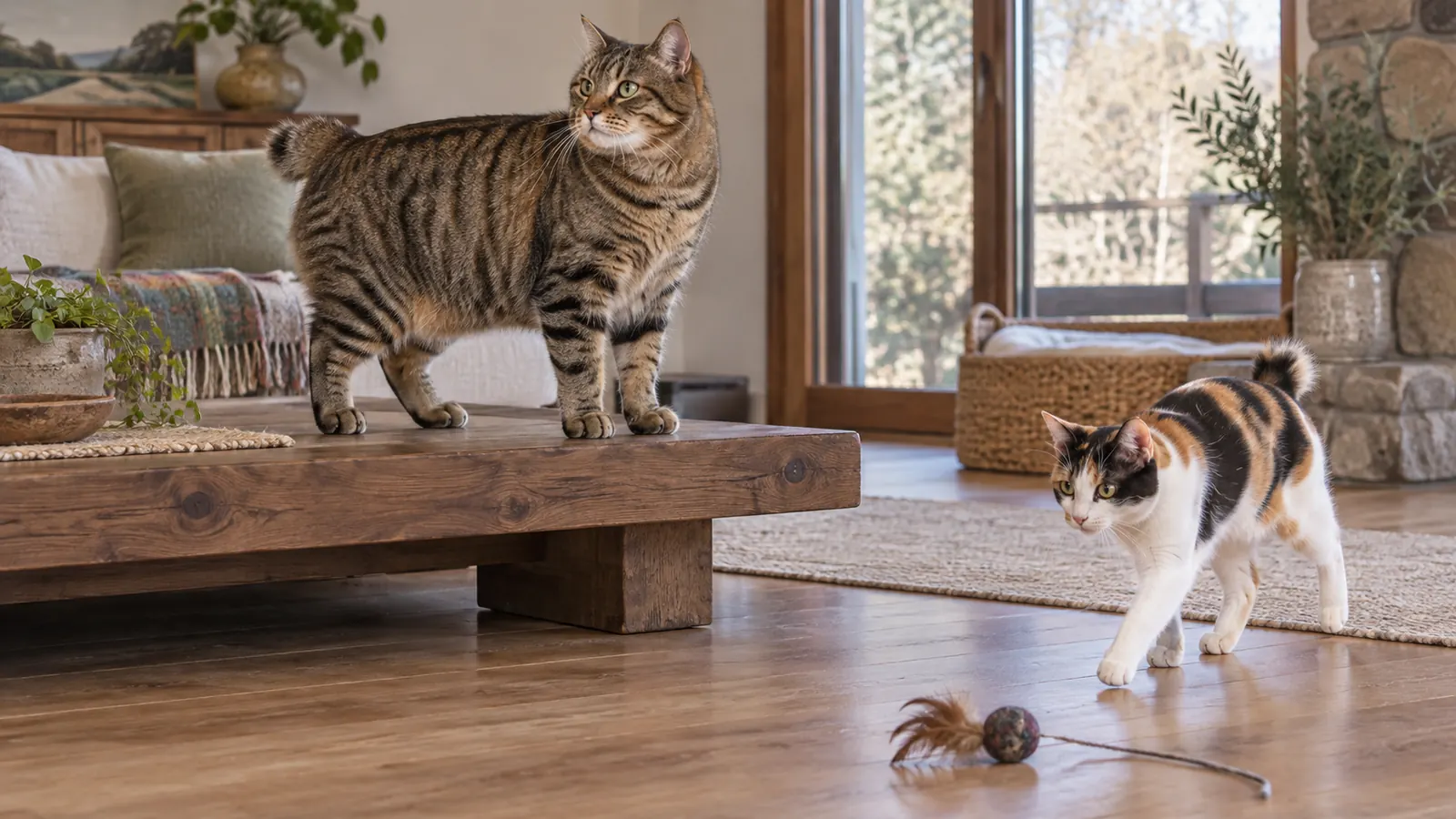
The names invite a shortcut that the cats do not support. Both have short tails, yet the American Bobtail is a muscular rectangular breed developed in North America, while the Japanese Bobtail is a finer, long-legged breed associated with a distinct HES7 tail variant in genetic research.
Whole-cat fit decides the choice far more than tail shape. Activity, body scale, coat texture, handling and checkable records will affect daily life more often than the silhouette that first caught your attention.
Which breed is the easier fit for your household pace?
The American Bobtail is commonly the easier option for a home seeking an adaptable companion with moderate activity. It still plays, learns and needs daily contact, but its substantial body and steadier rhythm can fit owners who do not want the room organised around constant motion.
The Japanese Bobtail suits people who actively enjoy an alert, talkative and highly interactive cat. TICA and CFA descriptions emphasise activity, play and involvement, so the calmer-looking small body should not be mistaken for a low-energy pet.
| Profile | Body and pace | Interaction | Coat | Best fit |
|---|---|---|---|---|
| American Bobtail | Medium to large, muscular and rectangular with moderate activity | Adaptable company with play, learning and periods of rest | Short or semi-long with a seasonal undercoat | A home wanting a substantial companion without the most intense activity level |
| Japanese Bobtail | Medium, fine-boned and long-legged with a distinctly active pace | Vocal, curious and often directly involved in household activity | Short or long, silky and with little noticeable undercoat | A home that wants animated daily interaction and frequent play |

Neither breed is a universal family answer, because confidence, handling history and recovery after surprise can override the expected pattern, and those only show when you meet the individual at rest and during play.
How do their bodies and tails differ?
The American Bobtail has a broad wedge, strong jaw, substantial bone, a long rectangular torso and powerful hindquarters. Its short tail should remain visible above the back when alert and may be straight, slightly curved, kinked or bumped.
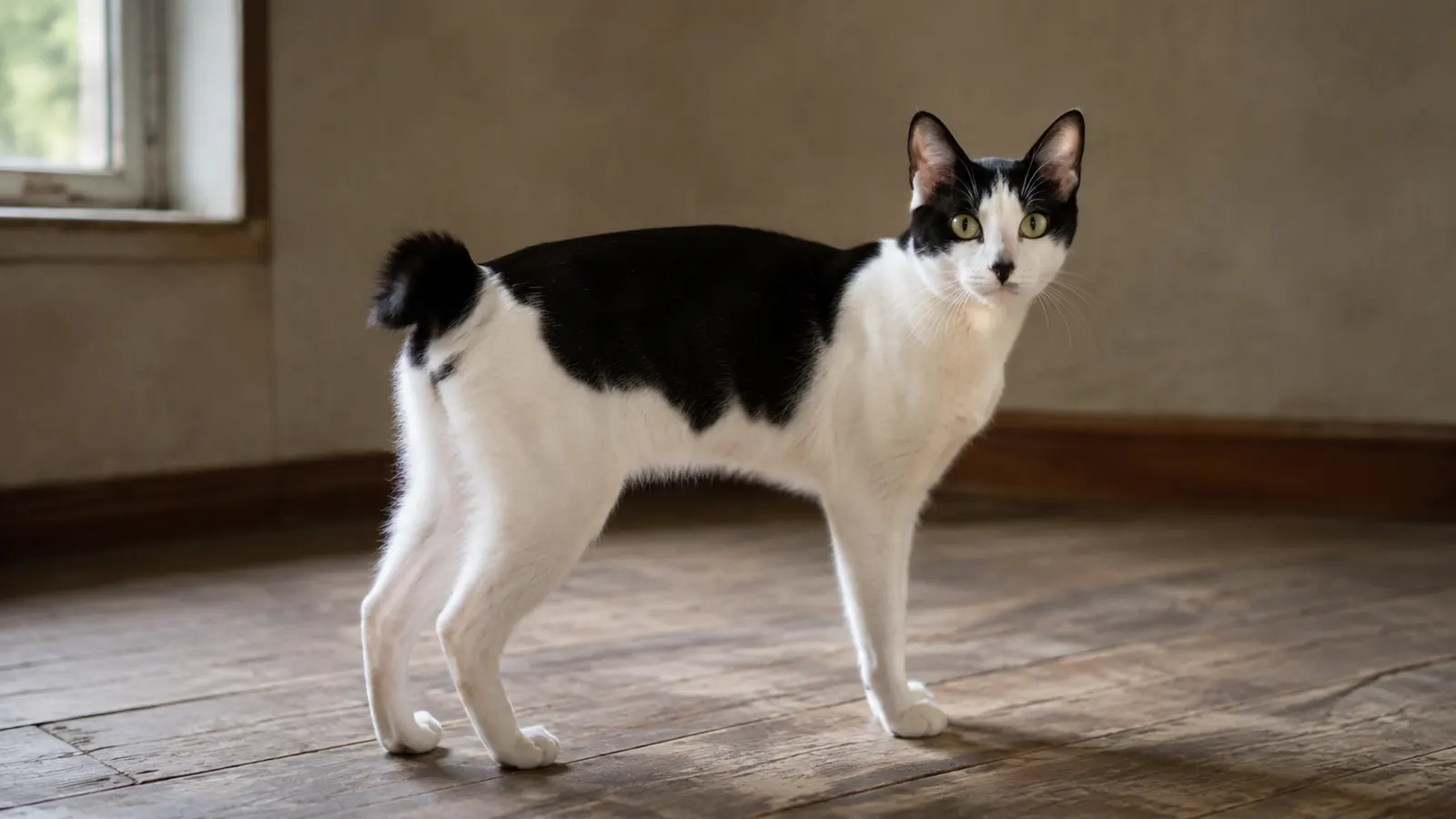
The Japanese Bobtail is more refined. It has a long lean torso, high cheekbones, oval eyes, long slender legs and hind legs that stand higher than the front without making the back appear sharply sloped.
| Feature | American Bobtail | Japanese Bobtail |
|---|---|---|
| Overall body | Medium to large, muscular and rectangular | Medium, fine-boned, long and clean-lined |
| Head | Broad modified wedge with a substantial muzzle | Long equilateral triangle with high cheekbones |
| Legs | Substantial, with powerful hindquarters | Long and slender, with longer hind legs |
| Tail | Short and visible, straight or variously curved and kinked | Several curves, angles or kinks, with the fur creating a pom appearance |
| Coat options | Short and semi-long | Short and long |
| Breed proof | Registration and documented parentage | Registration and documented parentage |
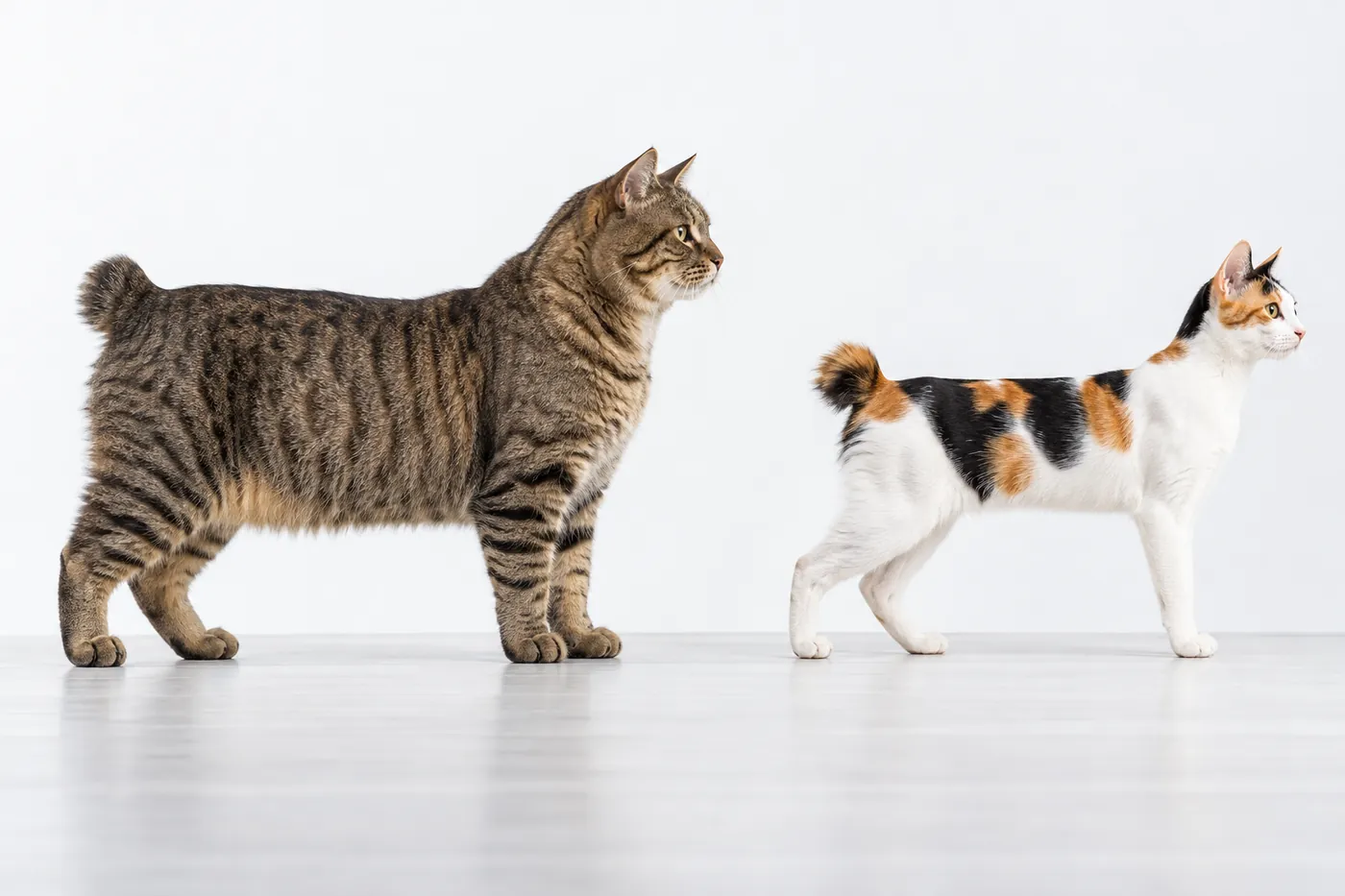
Both tail forms vary between individuals, which makes registration and pedigree especially important. A short-tailed domestic cat is not automatically either breed.
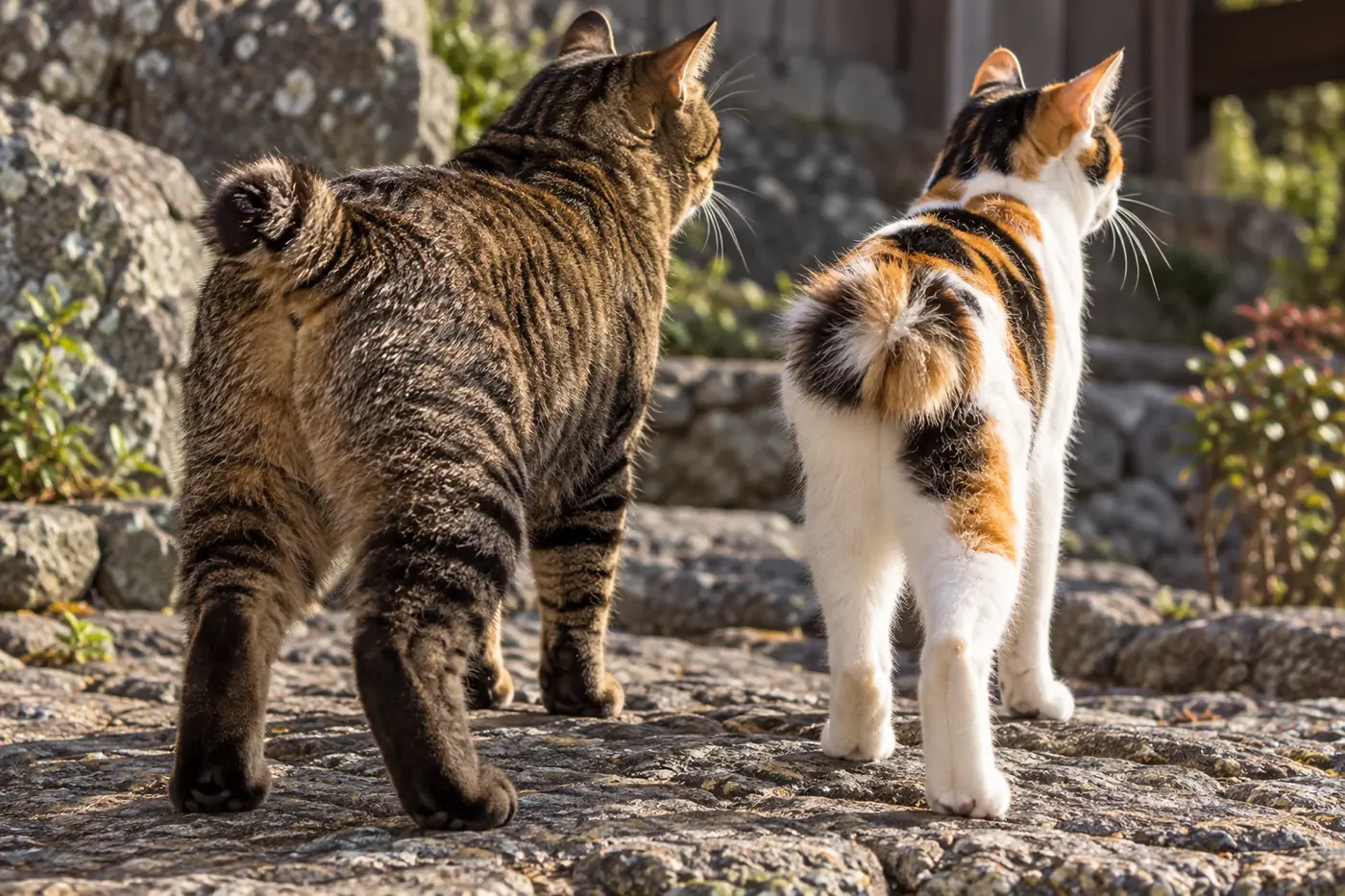
Does bobtail mean the same thing in both breeds?
No. Bobtail describes how the tail looks, and different genetic causes can produce that look.
Research has associated the Japanese Bobtail's shortened kinked tail with a HES7 c.5T>C variant. A separate vertebral study also found that the Japanese Bobtail did not carry the Manx-related T-box mutations examined there. A study of more than 11,000 cats found the derived HES7 variant in the Japanese Bobtails sampled, while also showing that known short-tail variants do not explain every short tail seen across domestic cats, so phenotype alone cannot identify the mechanism.
The American Bobtail standard describes the allowed physical tail range, but the sources used for this comparison do not establish HES7 as the breed's defining mechanism. Applying a Japanese Bobtail result to an American Bobtail would therefore turn a breed-specific finding into an unsupported assumption.
Pedigree remains necessary even when a trait result is available. The result can support one inherited feature, but it cannot establish the complete ancestry recorded by a registry.
Never pull, straighten or repeatedly manipulate a short tail to identify it. Its natural carriage can be watched instead, and the breeder or veterinarian can explain any examination or genetic result.
Which cat needs more play and training?
The Japanese Bobtail usually carries the higher day-to-day activity expectation. It is widely described as active, intelligent and interactive, with interest in retrieving, conversation and household participation.
The American Bobtail is trainable and playful too, but its activity is generally presented as moderate. Puzzle feeding, wand play, a stable climbing route and short learned tasks can fit between longer periods of rest. Moderate activity still requires a plan, because a bored American Bobtail can gain weight or redirect hunting behaviour to hands and ankles when daily play is reduced to a toy left on the floor.
The Japanese Bobtail's vocal and interactive style may become the larger difference during a quiet workday. An owner who enjoys call-and-response, fetching and a cat that re-enters activity may value it, while somebody seeking long uninterrupted periods may prefer the American Bobtail rhythm.
- Japanese Bobtail play
- Plan several short interactive sessions and expect the cat to re-enter household activity
- American Bobtail play
- Combine pursuit, searching and a small task without assuming moderate means inactive
- Shared training
- Teach carrier entry, target following, mat work and brief handling consent
- Reward control
- Count food rewards inside the measured daily ration
- Stop point
- End while the cat can disengage and recover rather than chasing exhaustion
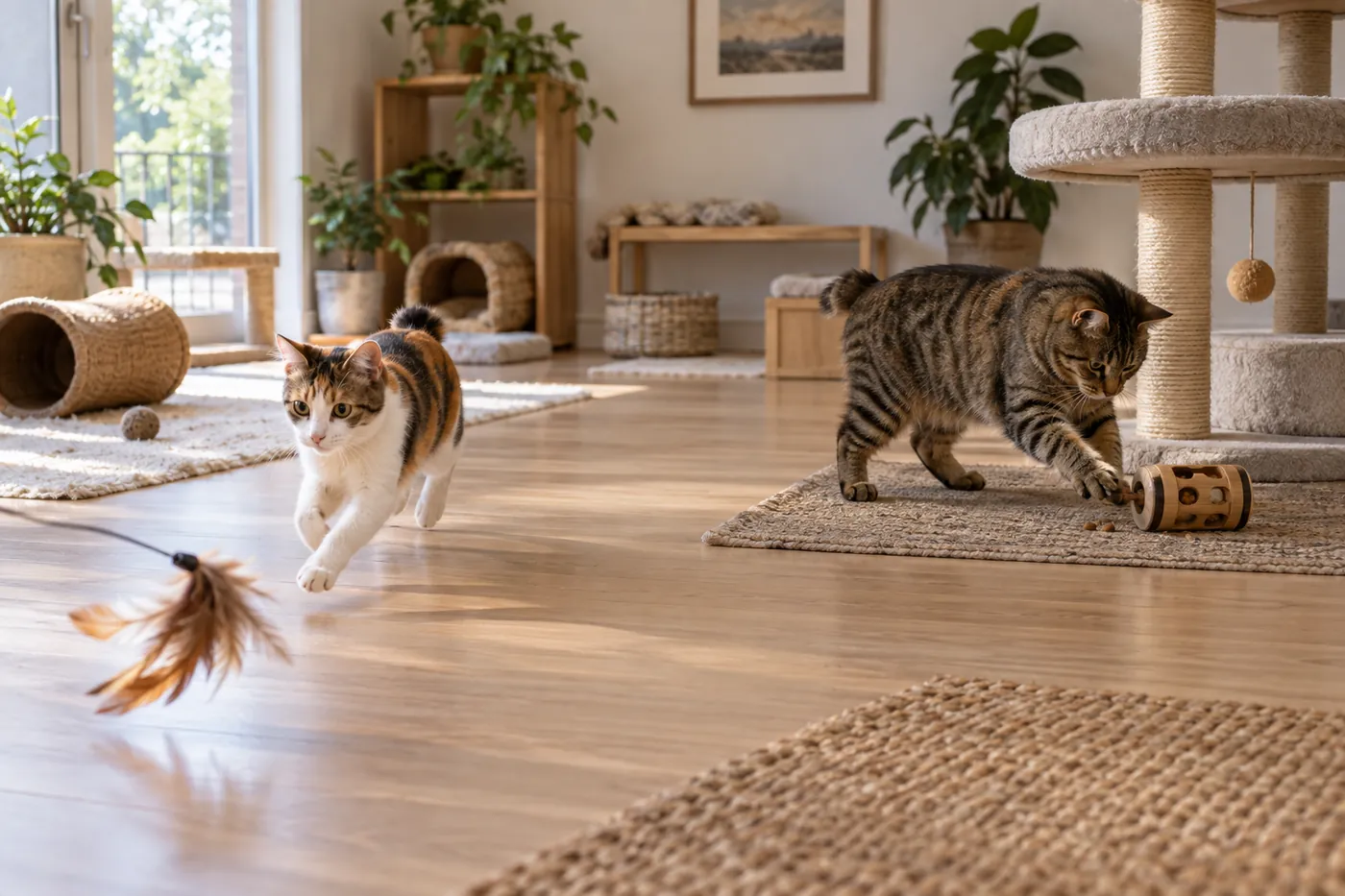
A fast learner may also discover cupboards, schedules and ways to summon attention, so management and consistent rewards remain part of training.
Which is better with children, dogs or another cat?
Either breed can live well in a respectful multi-person home, but their likely pace changes the introduction. A Japanese Bobtail may suit older children who enjoy toy play and can follow a stop signal, while an American Bobtail may offer an easier rhythm for a quieter family.
The American Bobtail's heavier body needs full support during necessary lifting. The Japanese Bobtail's tail should never become a handle or an object for children to test.
- Children use toys rather than hands and let the cat leave contact
- Nobody pulls, unfolds or carries either cat by the tail
- Dogs remain controlled until quick feline movement no longer triggers pursuit
- Each animal receives separate food, water, litter, scratching and resting resources
- High retreats have more than one exit and cannot be blocked by another animal
- Adults stop introductions when either animal cannot eat, rest or disengage
Shared playfulness does not guarantee two cats will match. Turn-taking, pauses and voluntary return show a good match better than how often they occupy the same room.
How different are their coats and grooming?
Both breeds come in short and longhaired forms, but the coat texture and undercoat differ. The American Bobtail has a resilient double coat that can become denser seasonally, while the Japanese Bobtail coat is soft and silky with little noticeable undercoat.
Longhair changes where you look even when the coat is described as low-tangle. The chest, armpits, trousers and the fur around the tail base need checking, because friction and loose coat collect there before the top line looks untidy.
| Coat point | American Bobtail | Japanese Bobtail |
|---|---|---|
| Shorthair | Medium-short resilient coat with undercoat | Medium-short soft silky coat |
| Longhair | Shaggy semi-long coat with furnishings | Medium-long soft coat that lies closer to the body |
| Undercoat | Present and seasonally variable | Little noticeable undercoat |
| Routine | Weekly combing or brushing, increased during coat release | Gentle weekly pass, with extra attention to longhair friction points |
| Common error | Brushing only the surface while loose undercoat remains | Assuming a silky low-undercoat coat never tangles or sheds |
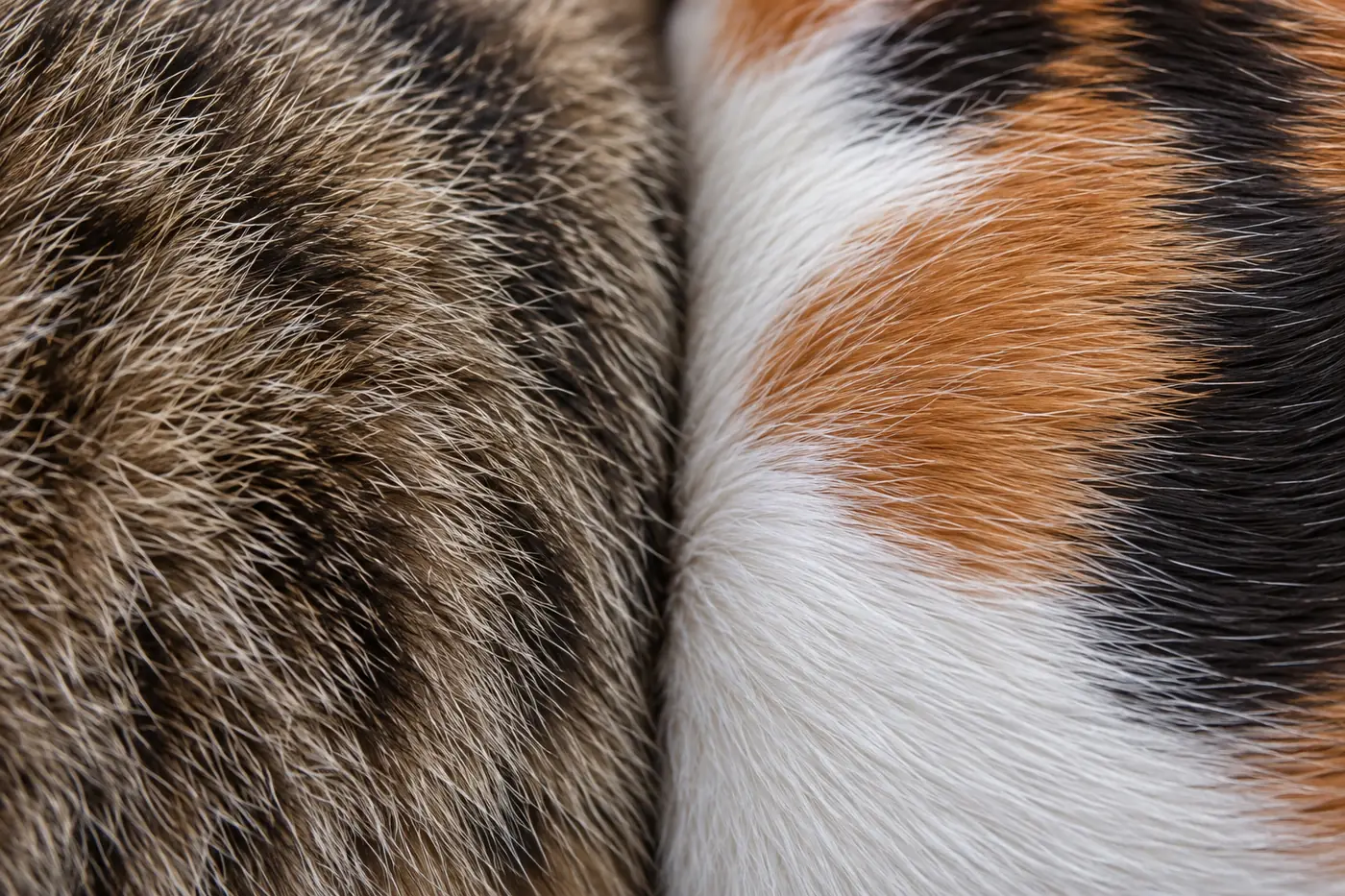
Routine grooming is the moment to look at the tail base without forcing movement. Pain, swelling, discharge, skin inflammation, new hair loss or a change in tail carriage deserves veterinary attention.
What should a breeder show about tail and health?
Registration and pedigree come first, because a short tail does not prove breed identity. After them come the parents' veterinary histories, dated examinations and an honest account of gait, jumping, elimination and tail function across close relatives.
For a Japanese Bobtail, a HES7 result may support the genetic explanation for the short-tail trait. It does not clear the heart, kidneys, eyes, spine or future health, and it does not replace a physical examination.
For an American Bobtail, a Japanese HES7 result is no universal clearance, so the useful questions are which tests the breeder chose, what published breed evidence supports them and how family outcomes are recorded.
Function belongs in the conversation for both cats: whether parents and older relatives walk, jump, use the litter tray and tolerate normal tail-area care comfortably, and whether veterinary records agree where a concern was investigated. A normal tail examination at one visit is valuable but time-bound. New pain, altered carriage, weakness or elimination difficulty still requires assessment even when the original breeder file looked reassuring.
| Evidence | Useful question | What it can tell you | What it cannot tell you |
|---|---|---|---|
| Registration and pedigree | Do names, parents and breed records match the cat offered? | Documented breed identity and ancestry | Temperament or future health |
| Tail and spine examination | Was the whole cat examined, and is the finding available in writing? | Structure and function observed at that visit | Lifetime function |
| Gait and jumping history | Do parents and close relatives move and land normally? | Whether the breeder tracks functional outcomes | A diagnosis for this kitten |
| Bowel and bladder history | Are abnormalities recorded in the cat or close relatives? | Whether elimination function is discussed rather than hidden | Every future problem |
| Japanese HES7 result | What exact variant and identity appear on the report? | Status for the named tail-associated variant | General health or an American Bobtail mechanism |
| Family records | What happened to parents, siblings and older relatives as they matured? | Whether the breeder tracks gait, jumping, elimination and longevity | A diagnosis or guarantee for this kitten |
The strongest breeder can explain both what is known and what remains uncertain. A generic healthy-line assurance is weaker than a dated record with the cat's identity and a clear limit.
Which breed fits your ordinary week?
The American Bobtail fits someone who wants a substantial, adaptable cat with moderate activity and accepts the coat work of the individual variety, and its platforms, litter trays and carriers need to support the adult body.
The Japanese Bobtail fits a home where an animated, vocal and interactive cat sounds welcome on a workday as well as a weekend, which means frequent play and no expectation that the lighter body brings a quieter routine.
- Match the household's preferred activity pace before choosing by tail shape
- Measure equipment for the actual adult body and coat
- Meet the cat during play, quiet observation and brief handling
- Observe natural gait, landing, elimination history and tail carriage
- Read registration, pedigree and original health records
- Ask which claim each genetic result supports and which claims it does not
- Walk away from guaranteed temperament or lifetime health
Checked Against
- TICA: American Bobtail tica.org
- CFA: American Bobtail cfa.org
- TICA: Japanese Bobtail tica.org
- CFA: Japanese Bobtail cfa.org
- Scientific Reports: HES7 and short tails in Asian domestic cats pmc.ncbi.nlm.nih.gov
- Pollard et al.: Japanese Bobtail, vertebral morphology and genetic characterization of an established cat breed (Journal of Feline Medicine and Surgery, 2015) pmc.ncbi.nlm.nih.gov
- PLOS Genetics: genetic epidemiology in more than 11,000 cats pmc.ncbi.nlm.nih.gov
Published 12 September 2026. Last updated .