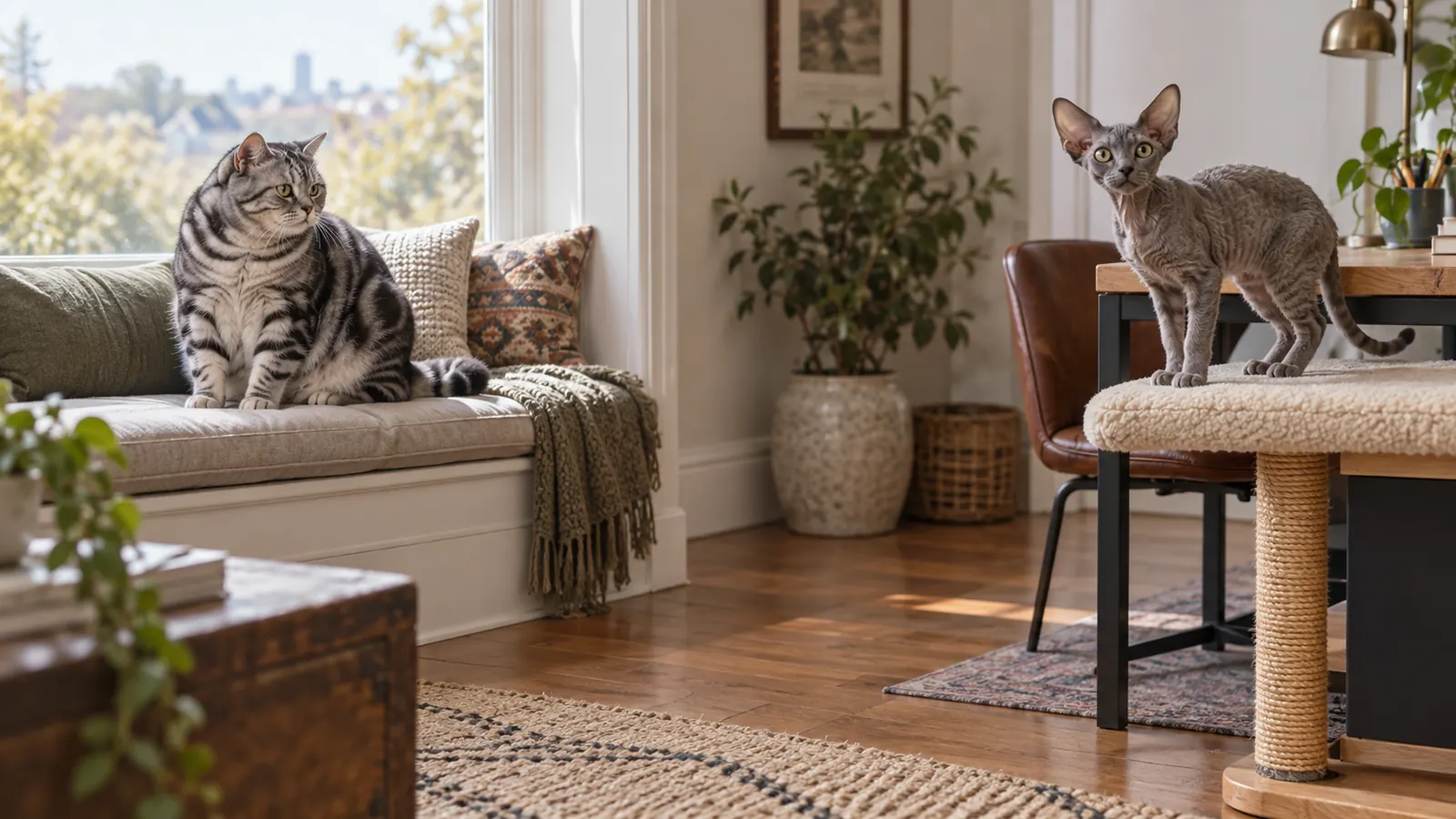
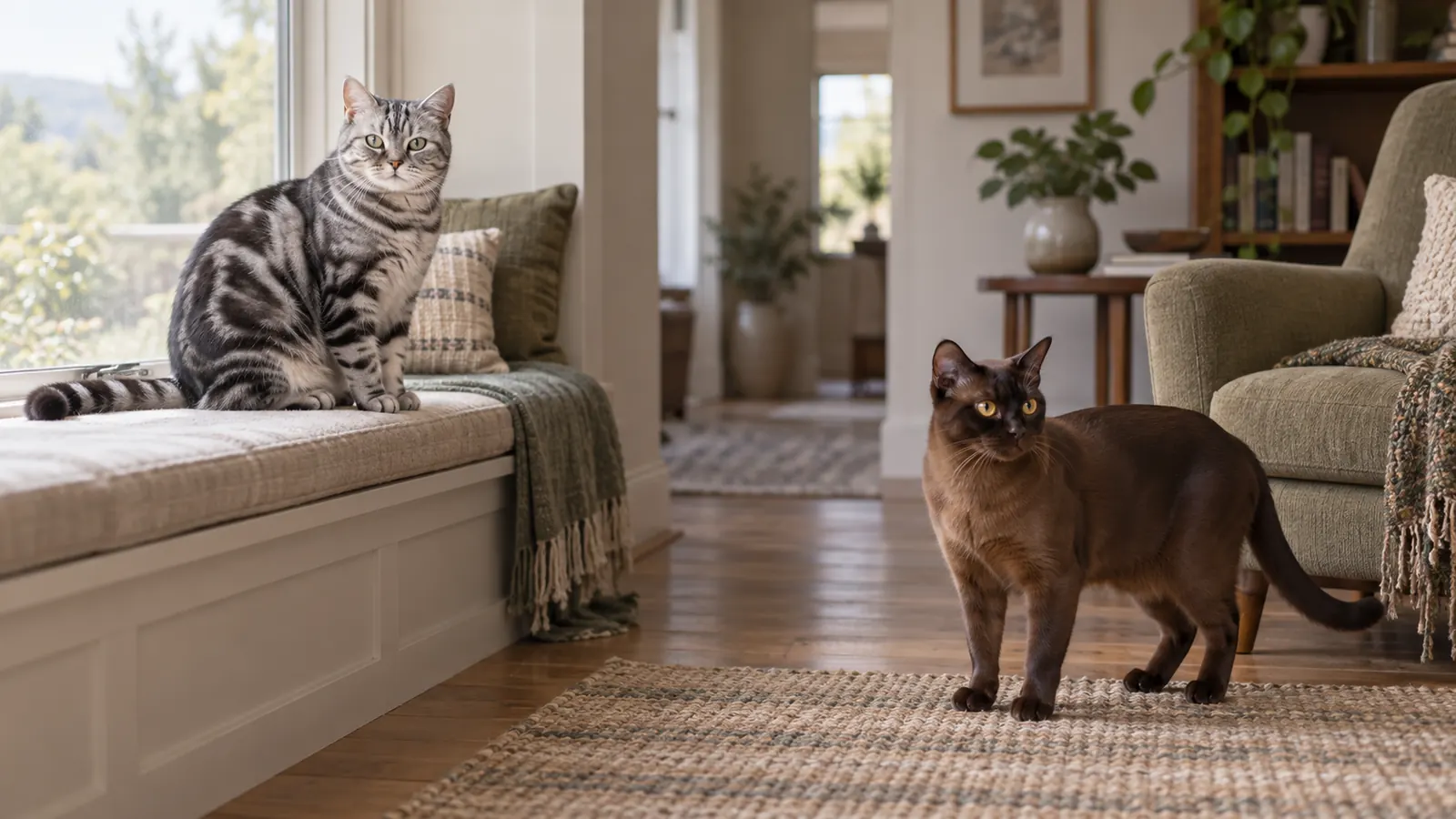
American Bobtail vs Manx: Which Is the Safer Fit?
The American Bobtail is the lower-risk starting recommendation when you simply want a short-tailed companion. A Manx becomes the right choice only once its full tail spectrum is understood and there is clear evidence about gait, spinal development, bowel and bladder function, family outcomes and the individual cat.
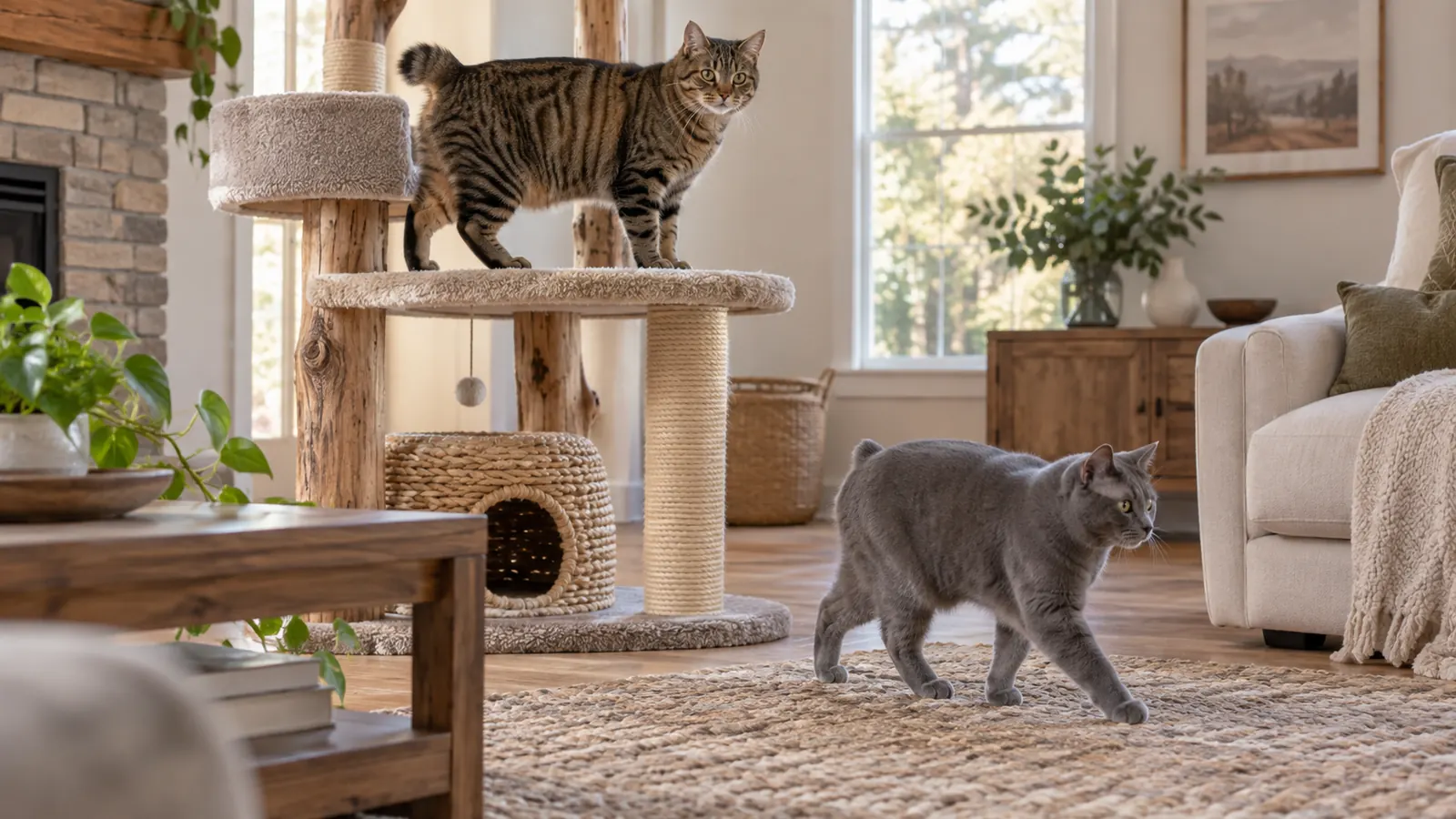
A short tail is the least complete way to compare these cats. The American Bobtail is a muscular rectangular breed whose visible tail can take several forms, while Manx taillessness is associated with variants in the Brachyury gene and can sit beside consequential developmental abnormalities in some cats. Neither point makes every Manx ill or every American Bobtail risk-free, but the Manx decision needs a stronger functional and family-history check before appearance enters the choice.
Which breed is the safer starting choice?
The American Bobtail is the easier starting point when the goal is a substantial, adaptable companion with a naturally short visible tail. Its moderate activity and whole-body structure generally make the household decision easier to evaluate through ordinary temperament, space and care questions.
A Manx can be affectionate, playful and entirely mobile, but the breed's defining tail spectrum overlaps a developmental risk that a photograph cannot resolve. The best-practice choice is therefore conditional on normal function, a thorough veterinary history and a breeder who tracks outcomes rather than discussing only show terminology.
| Profile | Body and activity | Tail range | Evidence priority | Best fit |
|---|---|---|---|---|
| American Bobtail | Medium to large, muscular and rectangular with moderate activity | Short and visible, with straight, curved, kinked or bumped forms accepted | Pedigree, physical function, family history and breeder-selected health records | A home wanting a substantial short-tailed cat without selecting for complete taillessness |
| Manx | Medium, compact and round with powerful hindquarters and a playful gait | Rumpy, rumpy riser, stumpy, longy and tailed cats can occur | Gait, landing, spine, bowel and bladder function, family outcomes and any relevant imaging or genetic result | A fully informed home choosing a functionally sound individual rather than a tail category |
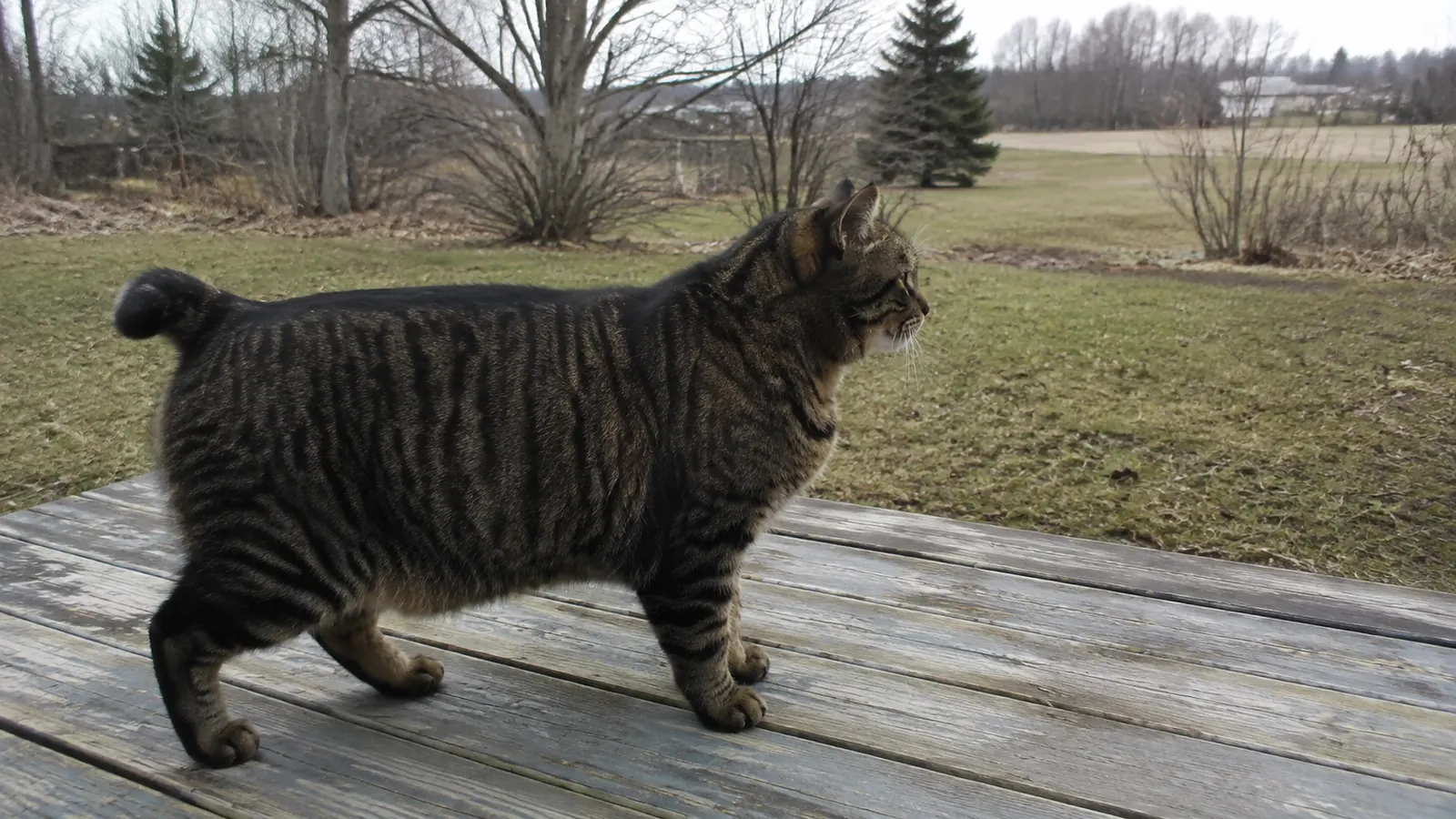
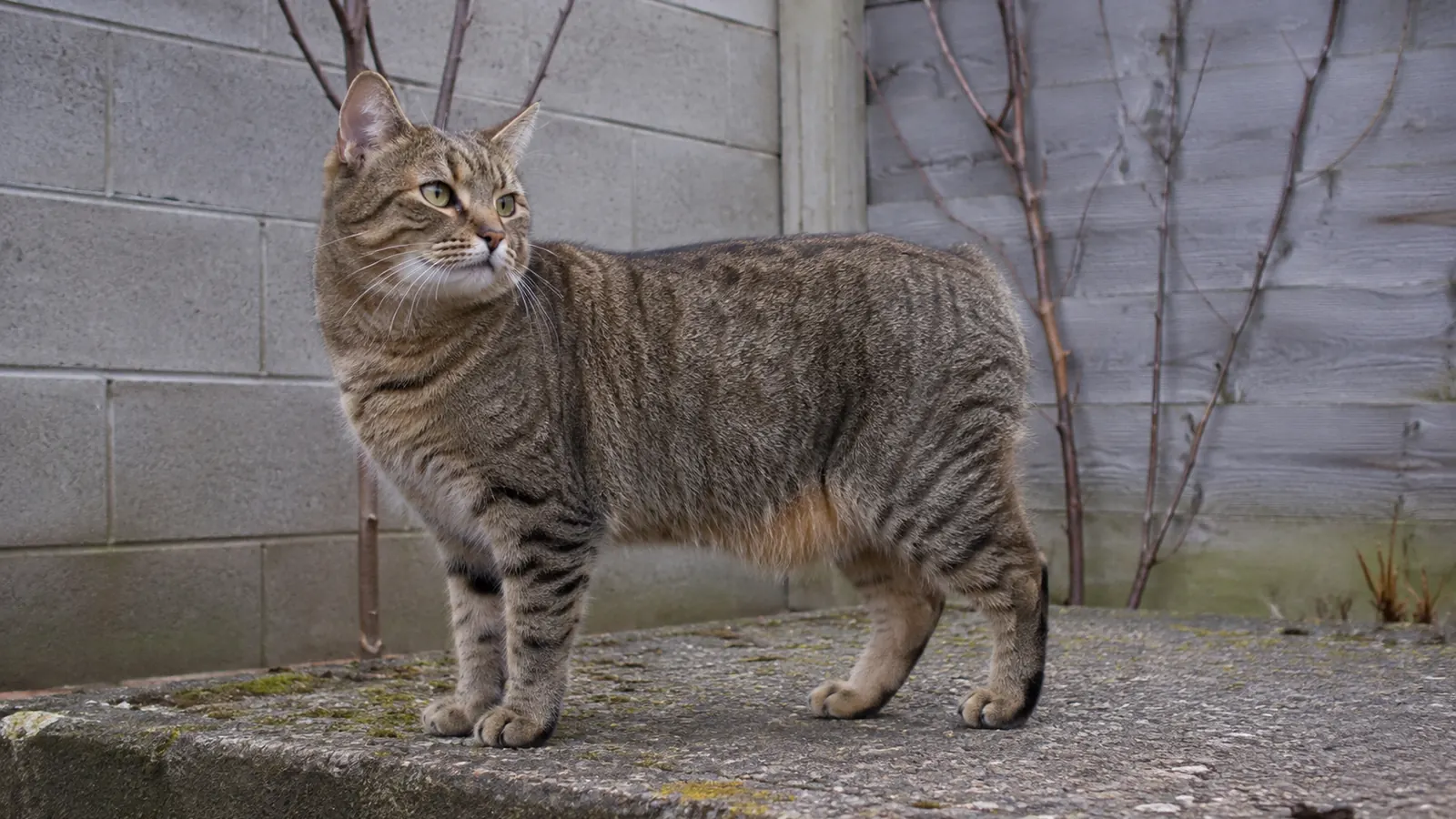
The recommendation concerns uncertainty and consequence. An individual Manx with normal function and transparent records may be an excellent companion, while an American Bobtail with pain or abnormal movement still requires veterinary care.
How do their bodies and natural tails differ?
The American Bobtail has a broad modified wedge, substantial muzzle, strong bone, deep chest and long rectangular torso. The hindquarters are powerful, but the outline remains athletic rather than round. Its tail should be short enough to distinguish the breed while still visible above the back when alert. Standards allow considerable natural variation in direction and shape, so one cat may carry a straighter tail and another a curve or kink.
The Manx is built around roundness. It has a round head, compact body, broad chest, short back and hind legs longer than the front, creating the familiar elevated rump without requiring an abnormal hopping gait.
| Feature | American Bobtail | Manx |
|---|---|---|
| Overall body | Medium to large, muscular and rectangular | Medium, compact, deep and rounded |
| Back and hindquarters | Long torso with powerful rear drive | Short back with higher, substantial hindquarters |
| Natural tail range | Short visible tail in several shapes | No palpable tail through partial or full-length tails |
| Coat | Short or semi-long double coat | Short or long dense double coat |
| Identity evidence | Registration and documented parentage | Registration and documented parentage, plus functional history |
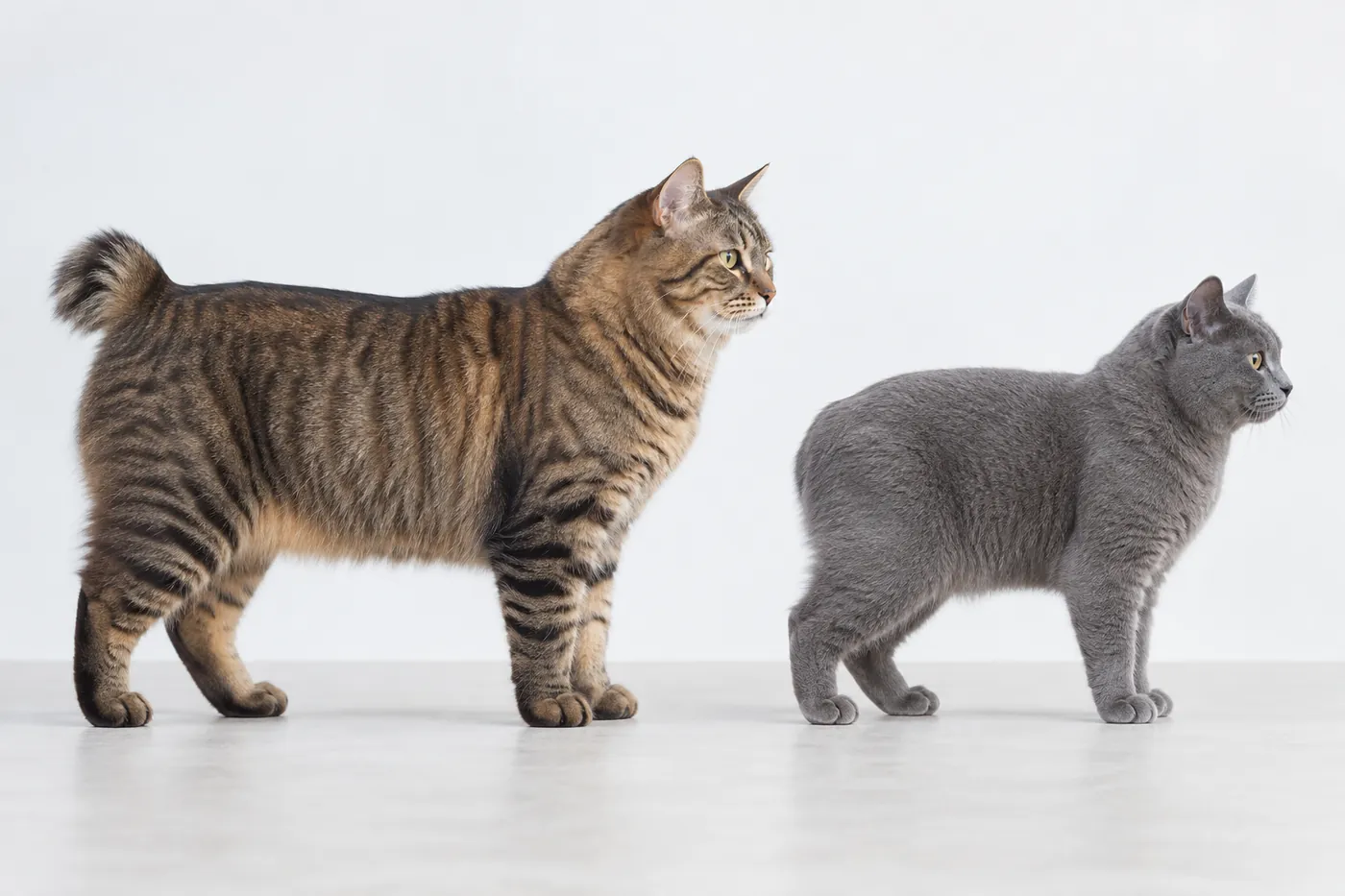
Body condition changes both outlines. A rounded Manx should still have a palpable rib cage under a healthy covering, and a muscular American Bobtail should not be fed toward heaviness.
The Manx tail range is broader: cats may have no palpable tail, a partial tail or full length.
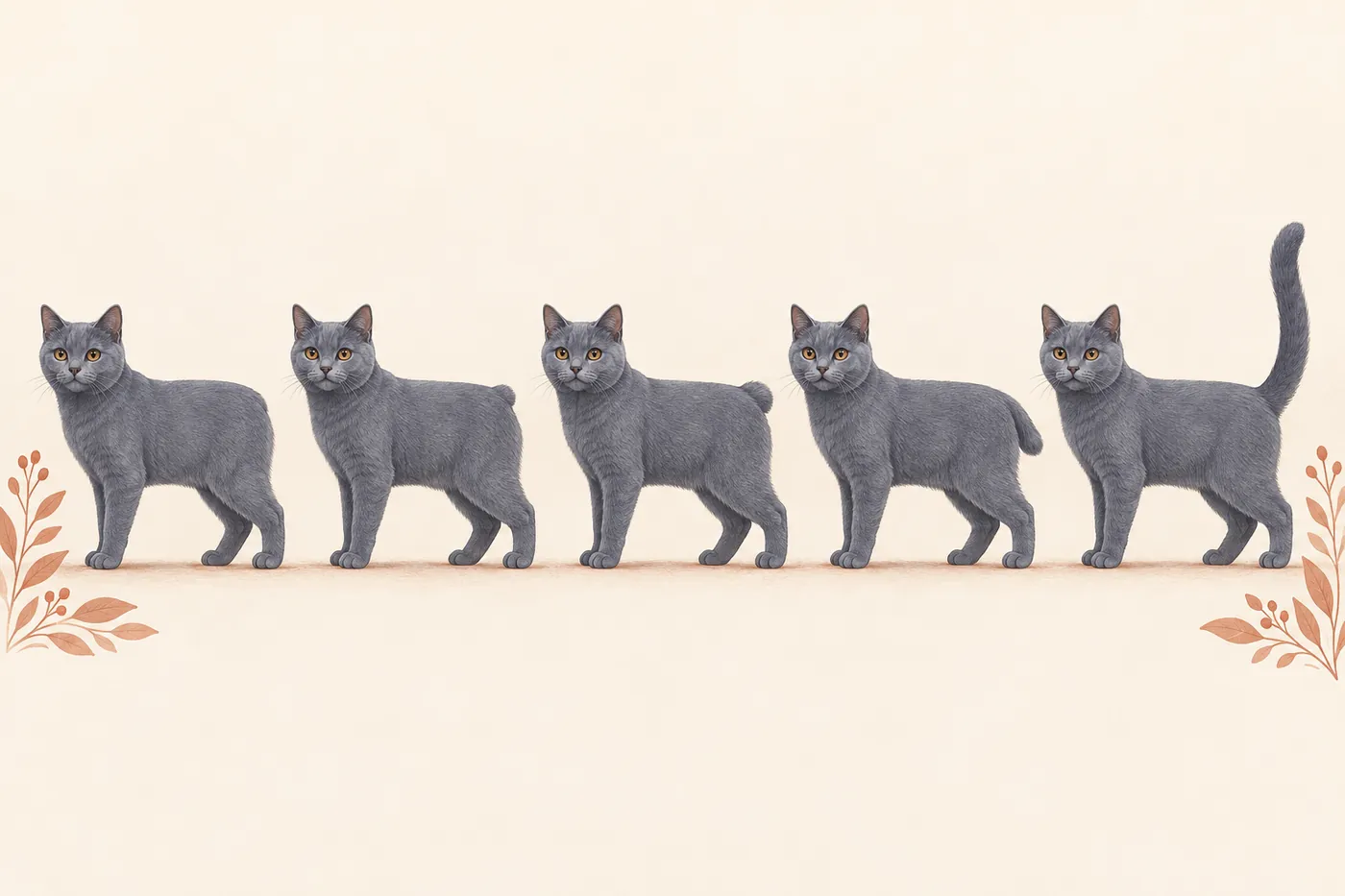
What does the Manx tail spectrum mean?
Manx litters can include more than completely tailless kittens. Traditional labels describe what can be felt or seen, from rumpy cats with no palpable tail through rumpy risers and stumpies to longies and fully tailed cats. Those labels record external anatomy only, and tail length cannot by itself establish whether the sacrum, spinal cord, bowel, bladder and hindlimb function developed normally.
Genetic research identified several short-tail mutations in the feline T or Brachyury gene, now commonly symbolised TBXT, across Manx lineages. In the study, most short-tailed Manx cats carried one mutant copy, and the researchers found no cats carrying two mutant copies among the sampled short-tailed animals. That evidence explains why a breeder should understand the actual mating and lineage. It does not let a buyer calculate one kitten's clinical outcome from tail length or a consumer DNA result alone.
The American Bobtail should not be assigned the Manx mechanism simply because both cats have short tails. Similar appearance can arise through different genetic histories, and the source used here does not establish one Manx-style clearance for the American Bobtail breed.
How should movement and furniture affect the choice?
A healthy cat of either breed should walk, run, turn, jump and land without persistent pain or loss of control. The Manx outline can include longer hind legs, but repeated bunny hopping, weakness, scuffing, falling or reluctance to jump should not be dismissed as a charming breed trait.
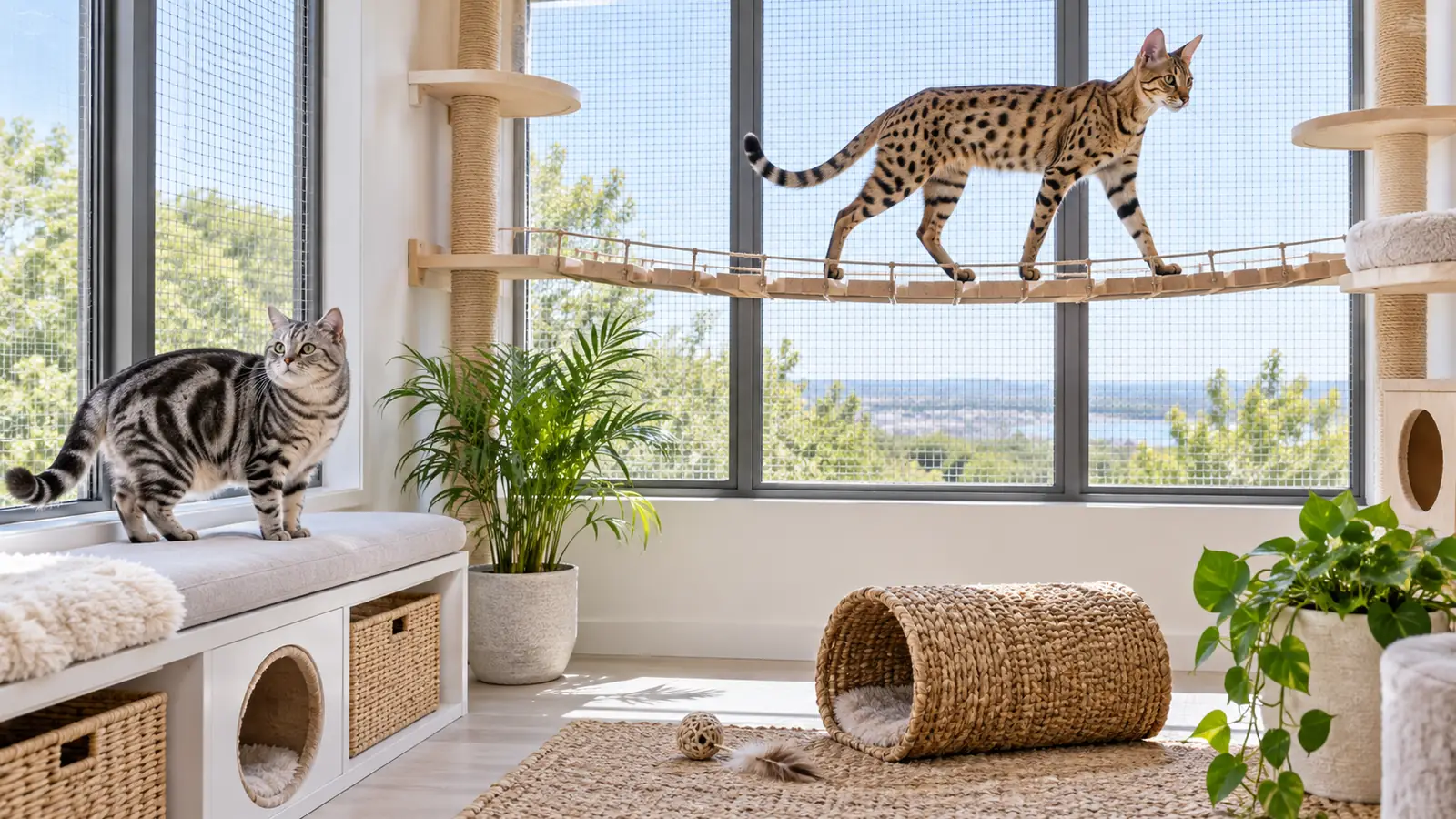
An American Bobtail's larger rectangular body needs broad stable platforms and a carrier sized to the measured adult. A Manx benefits from the same stability, with special attention to traction and an accessible duplicate of valued resources if jumping becomes difficult.
- Stable route
- Use broad fixed platforms with clear landing zones rather than narrow decorative shelves
- Traction
- Add non-slip surfaces where the cat accelerates, turns or lands
- Accessible duplicate
- Keep food, water, litter and rest available without a difficult jump
- Litter entry
- A tray the cat can enter, turn in and posture inside without contacting the rim
- Function check
- Notice gait, tail-area sensitivity, jumping, urination and stool habits as one connected picture
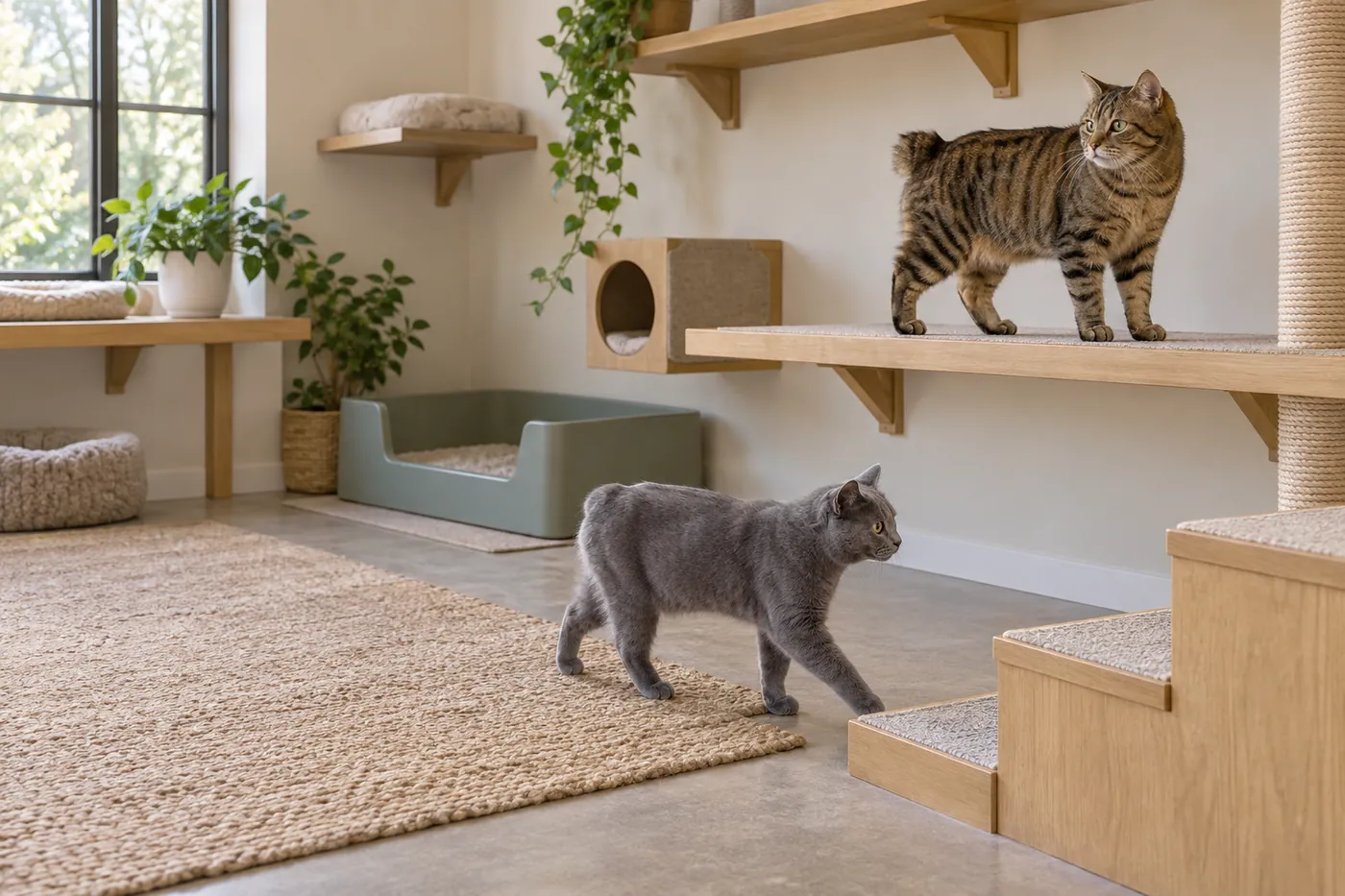
Removing all activity from a sound Manx out of fear takes away exercise it still needs. The route can be adjusted to the individual instead, and the way exercise needs change with age matters when recovery or jumping changes over time.
Which is better with children, dogs or another cat?
The American Bobtail's moderate pace may be easier in a quieter family, while a confident Manx can be playful and highly social. The decisive conditions are handling, pursuit control, escape routes and the health of the individual.
Nobody should tug, straighten or test either tail. A Manx also needs the chest and hindquarters supported during necessary lifting so the lower back is not left hanging.
- Children let the cat approach and leave without restraint
- Nobody manipulates a short tail to identify its shape
- Necessary lifting supports the chest and hindquarters together
- Dogs remain controlled until feline running no longer triggers pursuit
- Each animal receives separate food, water, litter, scratching and resting resources
- Protected retreats have an exit that another animal cannot block
- Adults stop contact if the cat freezes, turns away, vocalises or tries to leave
A disabled or painful cat may need a household with fewer physical conflicts and more predictable resources. That is an individual care decision, and it says nothing about the limits of other cats of the same breed.
How much grooming and shedding should you expect?
Both breeds have double coats in short and longer forms, so coat length on the kitten does not tell the whole workload. The American Bobtail coat is resilient and somewhat shaggy in the longhair variety, while the Manx coat is dense and plush.
| Care point | American Bobtail | Manx |
|---|---|---|
| Short coat | Medium-short double coat with seasonal undercoat | Short dense double coat with a plush feel |
| Long coat | Shaggy semi-long coat with furnishings | Long dense coat, often called Cymric in some registries |
| Routine | Weekly combing or brushing through the coat | Weekly combing through the dense undercoat |
| Peak shed | Increase attention when undercoat releases | Dense loose coat may require more frequent passes |
| Hindquarter check | Inspect skin and tail base without forcing movement | Also check cleanliness, tenderness and any stool or urine soiling around the rear |
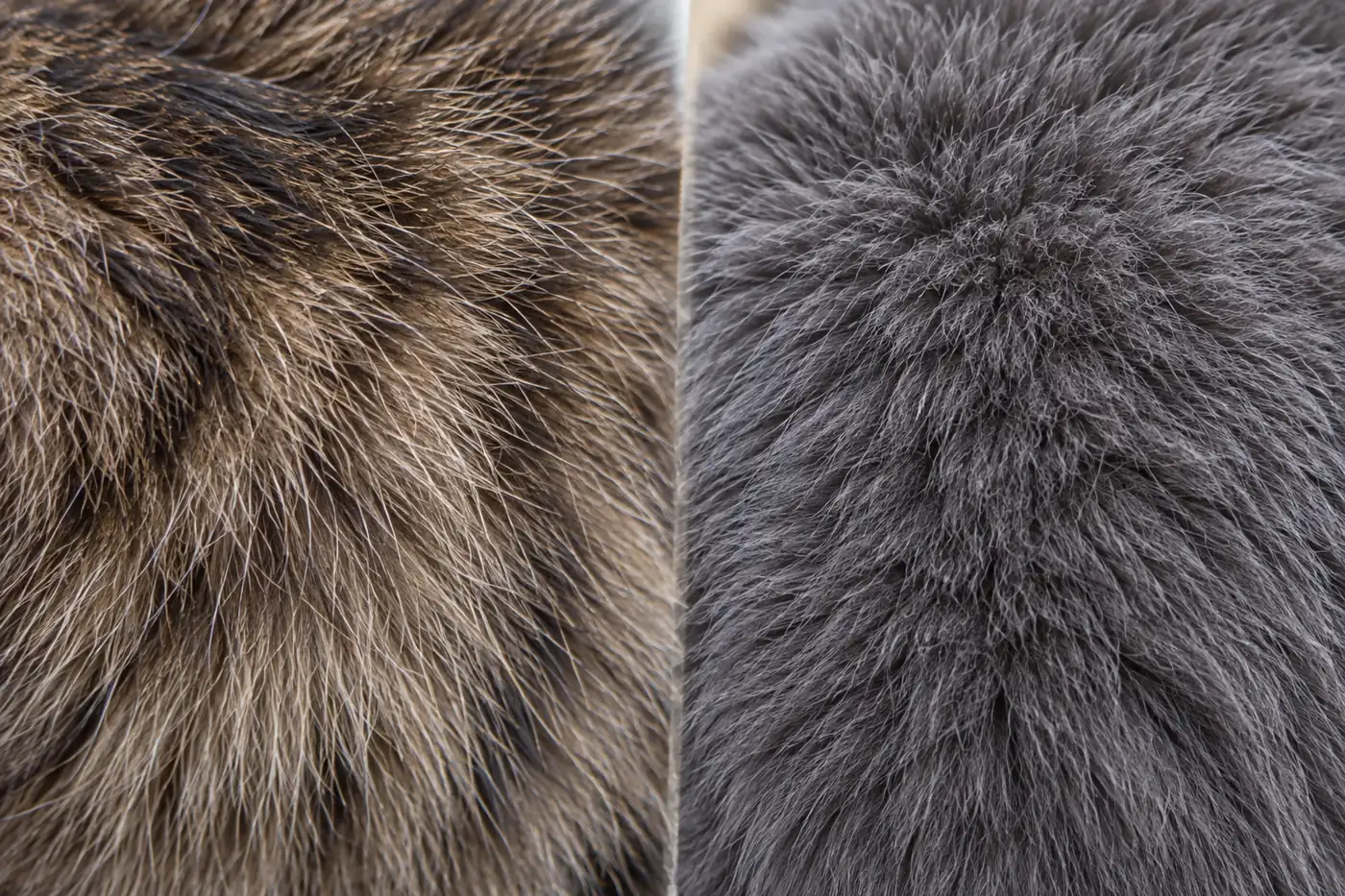
Grooming should never become an attempt to correct tail carriage. Support the skin when working through a tangle, and stop when the cat shows pain or guarding. Coat depth decides which comb or brush suits each cat, and a tool that removes more hair is not automatically safer.
What health evidence matters most for a Manx?
Normal whole-body function matters more than a label such as rumpy or stumpy. Ask how the cat walks, runs, lands, urinates and passes stool, and request the actual veterinary record rather than a breeder's summary.
Manx-associated developmental problems described in veterinary and genetic literature can involve the sacrum, spinal cord and nearby functions. Possible consequences include weakness or abnormal gait, pain, bowel difficulty, urinary problems and congenital abnormalities around the rear.
| Evidence | What to request | Why it matters | Limit |
|---|---|---|---|
| Walking and landing | Observation plus dated veterinary notes for the individual | Shows how the cat coordinates and bears weight | One good video cannot predict future function |
| Urination and stool | Clear history of control, frequency and any treatment | Screens for functions that can be affected near the lower spine | Normal kitten habits still need ongoing observation |
| Tail and spinal examination | Written findings from a veterinarian | Records structure, pain and neurological observations at that visit | Does not guarantee lifetime health |
| Family outcomes | Siblings, parents and earlier litters, including affected kittens and causes of death | Shows whether the breeder tracks consequences across matings | Small families and incomplete records limit certainty |
| Imaging or genetic result | Full report with identity, method and interpretation | Can answer the specific anatomical or variant question tested | Cannot replace examination or clear unrelated disease |
For an American Bobtail, request registration, parent veterinary histories and the breeder's documented rationale for any screening. Do not accept the absence of a Manx-specific concern as proof that the individual cannot have pain, gait or elimination problems.
- Match every report to the cat or parent by registered identity or microchip
- Read the examination finding or variant rather than the phrase health tested
- Ask what changed in breeding decisions when an abnormal result appeared
- Review gait, jumping, urination and stool history together
- Confirm who will provide follow-up care if a problem emerges after placement
A breeder who discusses affected outcomes openly provides more useful evidence than one who claims never to have seen a problem.
Which breed fits your ordinary week?
The American Bobtail fits when you want the short-tailed look with a substantial moderate-activity companion and the individual shows normal comfortable function. Its body still needs strong equipment and its double coat still needs care.
A Manx fits when the individual, records and family outcomes are convincing and you are prepared to monitor mobility and elimination without turning every difference into alarm, judging the whole cat rather than its tail length.
- Judge whole-body comfort and function before tail category
- Observe walking, turning, jumping, landing, urination and stool history
- Read the individual veterinary record and family outcomes
- Ask how any genetic or imaging result changed a breeding decision
- Support the adult body with stable routes, traction and roomy equipment
- Teach children and caregivers never to manipulate the tail
- Walk away when function questions are minimised or records are withheld
The American Bobtail is the best-practice default for a reader whose main preference is a naturally short tail. A Manx can still be the right individual, but the decision earns that confidence through normal function and transparent evidence rather than appearance.
Checked Against
- TICA: American Bobtail tica.org
- CFA: American Bobtail cfa.org
- TICA: Manx tica.org
- CFA: Manx cfa.org
- Buckingham et al.: Multiple mutant T alleles cause haploinsufficiency of Brachyury and short tails in Manx cats (Mammalian Genome, 2013) pmc.ncbi.nlm.nih.gov
- Journal of Feline Medicine and Surgery: practical dos and don'ts for cat genetic testing pmc.ncbi.nlm.nih.gov
- Online Mendelian Inheritance in Animals: Manx taillessness omia.org
Published 12 September 2026. Last updated .