
What Is a Manx Cat, and Why Does Health Come Before Tail Type?
A healthy Manx can be an affectionate, playful family cat, but the gene that shortens the tail can also disrupt development of the lower spine. Choosing one responsibly means judging gait, continence and veterinary history before appearance, and understanding that a full tail does not make a pedigreed Manx less authentic.
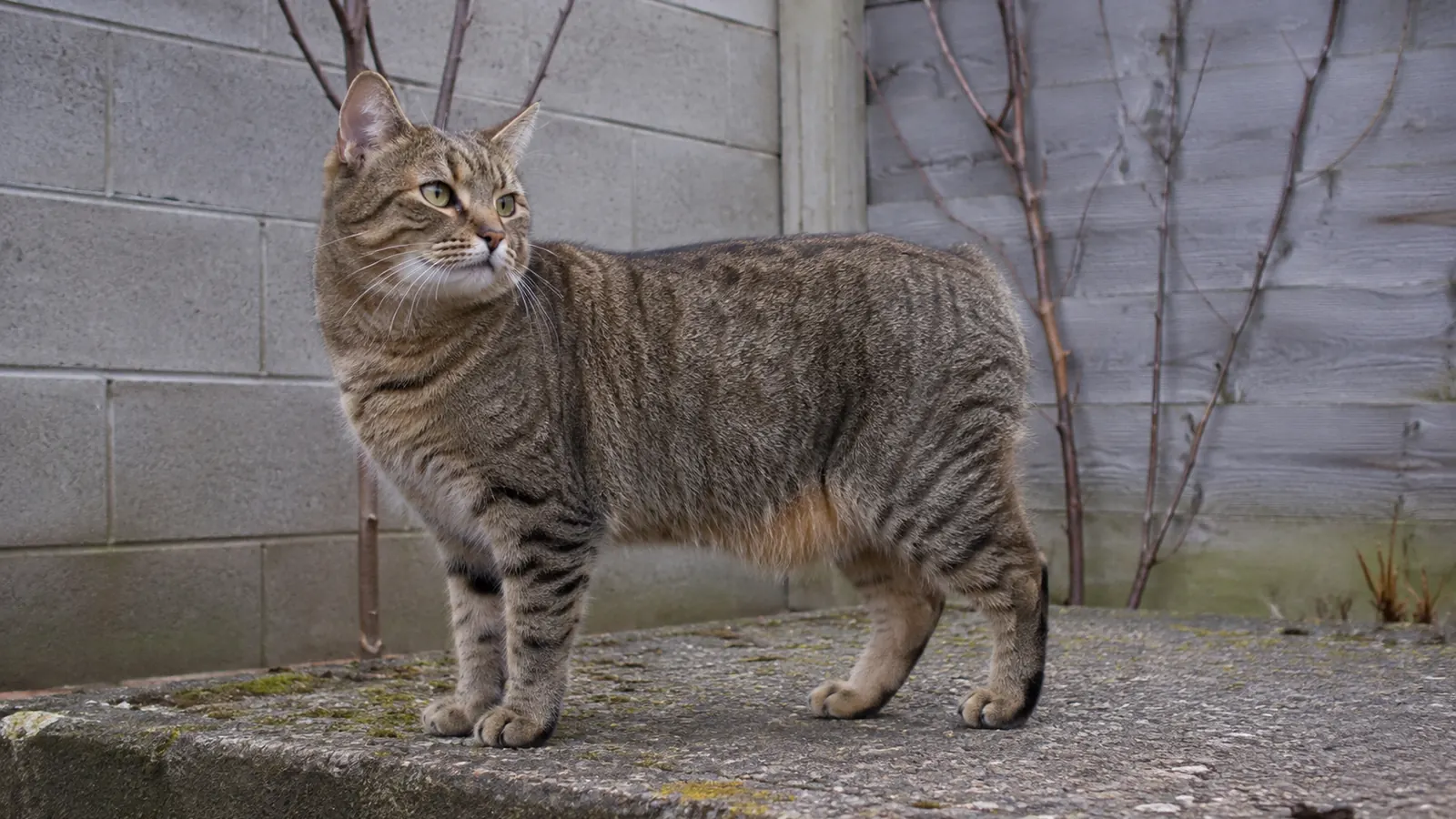
- Origin
- Isle of Man, where a naturally occurring tail-shortening mutation became established
- Coat
- Dense double coat in shorthair and longhair forms; the longhaired form is often called Cymric
- Size
- Medium sized, compact and rounded, with a broad chest and hind legs longer than the front
- Typical weight
- CFA says adult males commonly weigh 10 to 12 pounds, with females generally smaller
- Life expectancy
- No robust breed-specific median is established; individual outlook depends heavily on spinal and urinary health
- Activity level
- Moderate to high. Playful, powerful and often interested in fetching or climbing
- Grooming
- Moderate. The dense undercoat needs regular combing, especially in longhaired cats and seasonal sheds
- Suits
- Households prepared to verify spinal function, protect the tail area and provide routine play
The Manx is more than a cat with no visible tail. It is a compact, athletic breed with several accepted tail lengths, and the same mutation that creates the signature outline can sometimes affect nerves, vertebrae, bowel control and bladder control. That medical connection changes the buying decision. Temperament and grooming matter, but clear evidence of normal movement and elimination matters first.
Is a Manx a suitable family cat?
CFA describes the Manx as affectionate, intelligent and playful, often forming a close bond with one or two people while still taking part in family life. Many learn fetch, follow household routines and use their powerful hindquarters for climbing and short bursts of speed.
This can suit respectful children and compatible pets, provided adults stop anyone poking, pulling or pressing the shortened tail area, because some cats are sensitive where the vertebrae end.
The breed is a harder choice for someone unwilling to monitor litter-box output or discuss congenital risk openly. It may also be unsuitable when young children cannot leave the cat's rear and tail area alone.
An adult Manx from a transparent rescue can offer more observable evidence than a very young kitten. Established gait, toileting history and temperament reduce some uncertainties, although they never replace current veterinary examination.
Are all Manx cats completely tailless?
No. Manx litters can include cats with no external tail, a small rise, a short partial tail or a full-length tail, and registries use descriptive terms such as rumpy, rumpy riser, stumpy and longy. The tailless trait is produced by an incompletely dominant mutation. Historical breeding and anatomical studies connect it with variable development of the lower spine, which is why tail length is not merely cosmetic.
| Common term | Visible tail | Practical point |
|---|---|---|
| Rumpy | No external tail | Check the end of the spine and function carefully |
| Rumpy riser | A small rise of bone or cartilage | May be felt more than seen |
| Stumpy | A short partial tail | Shape and flexibility vary |
| Longy or tailed | A near-full or full tail | Still a pedigreed Manx when ancestry is documented |
| Cymric | Longhaired Manx variety or breed-group name | Describes coat, not a separate spinal guarantee |
A full tail can occur within genuine Manx breeding and does not erase ancestry.
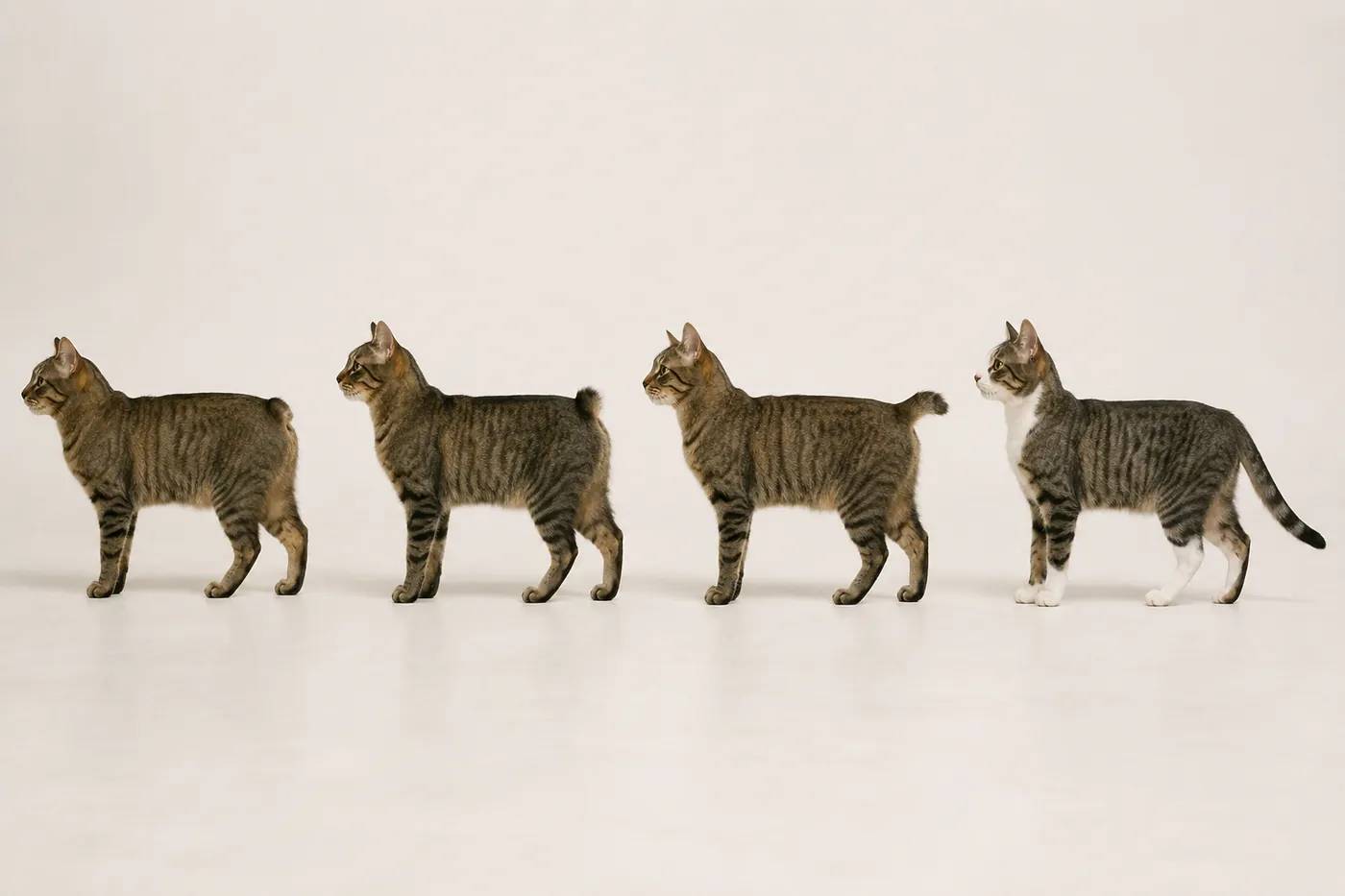
Pedigree records establish identity better than the rump alone. A random-bred cat can also lose a tail through injury or be born with a tail abnormality, and appearance cannot reconstruct the cause.
Responsible breeding uses tailed cats as well as short-tailed cats to manage genetic risk, and a breeder who dismisses tailed kittens as worthless is prioritising a look over the complete breed.
What is Manx syndrome, and when does it appear?
Manx syndrome is a broad informal term for congenital problems associated with abnormal development at the lower end of the spine. Possible effects include weak or uncoordinated hind limbs, an abnormal hopping gait, reduced sensation, urinary incontinence, constipation or loss of bowel control.
CFA notes that serious problems are often evident by about four months of age, which is why some breeders delay placement. The timing helps screening, but it does not turn a birthday into a guarantee that every future neurologic or urinary problem is impossible.
- Birth to early weeksThe tail and spinal outline are examined, but function is still developing
- Weaning periodMovement, litter use and stool quality become easier to observe
- Around four monthsMany severe congenital problems have declared themselves
- Before placementA veterinarian should document gait, rear-end sensation and elimination history
- After adoptionAny weakness, pain, urine leakage or persistent constipation needs prompt care
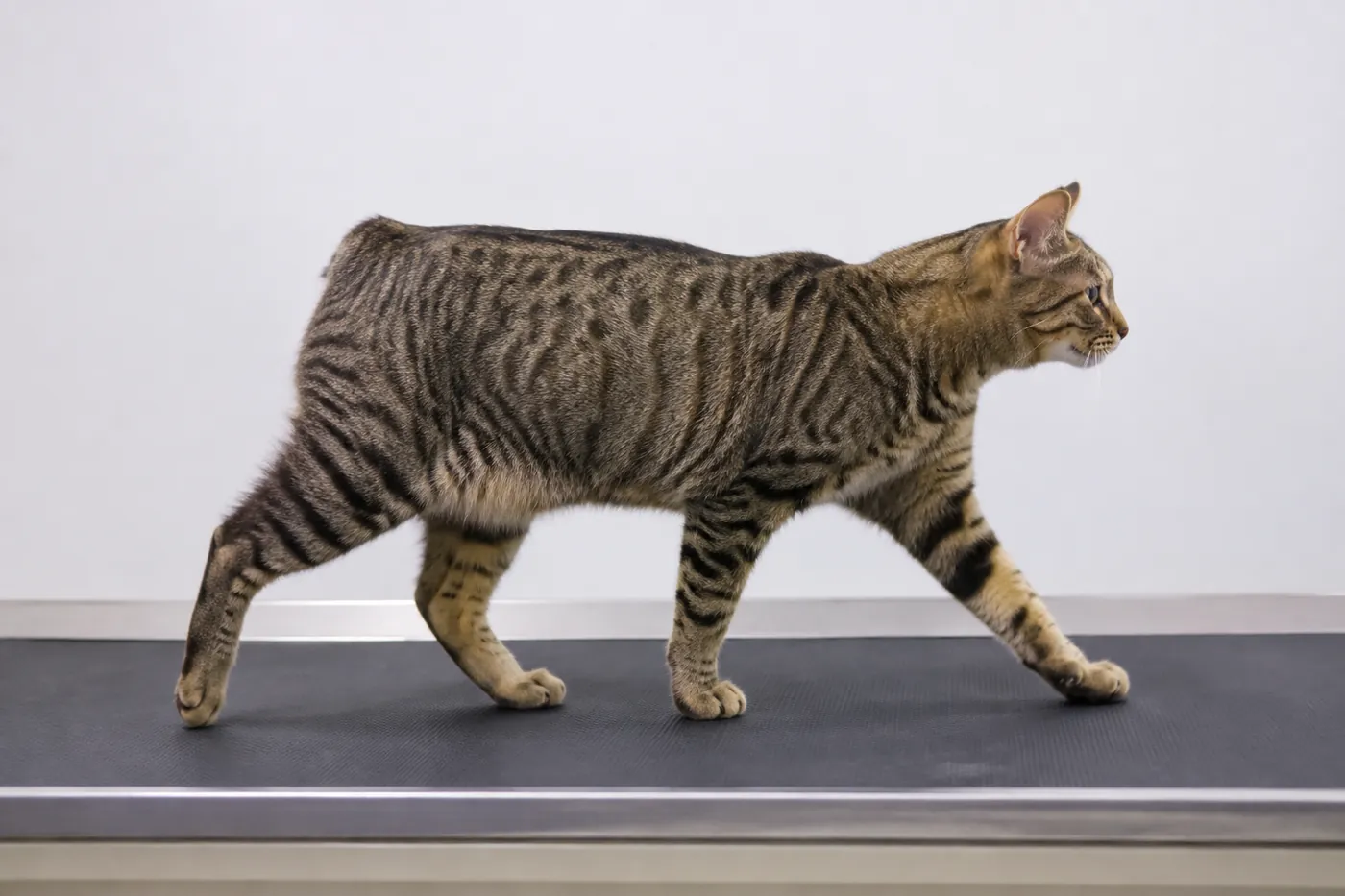
Do not test pain or sensation by squeezing the rump at home. Watch ordinary walking, jumping and toileting, then let a veterinarian perform the physical and neurologic examination.
- Ask whether urine ever leaks during sleep or movement
- Ask about constipation, stool accidents and repeated straining
- Observe walking, turning, jumping and landing on a low surface
- Review examinations performed before the kitten reached four months
- Confirm who pays and what happens if a congenital disorder is found
- Seek urgent veterinary help for inability to urinate or marked weakness
What is a Manx temperament like?
A healthy Manx is often confident, people oriented and surprisingly playful. CFA describes cats that learn household rules, retrieve toys and remain active, while the breed's substantial hindquarters support strong jumping. Those generalisations do not predict every individual. Pain, poor socialisation or a frightening environment can make any cat withdrawn or defensive, so behaviour should be interpreted alongside health, and a playful reputation is useful only after discomfort has been ruled out.
Chase games, food puzzles and low training platforms with secure footing suit this energy. Clicker training can build carrier entry and cooperative handling without forcing the sensitive rear area.
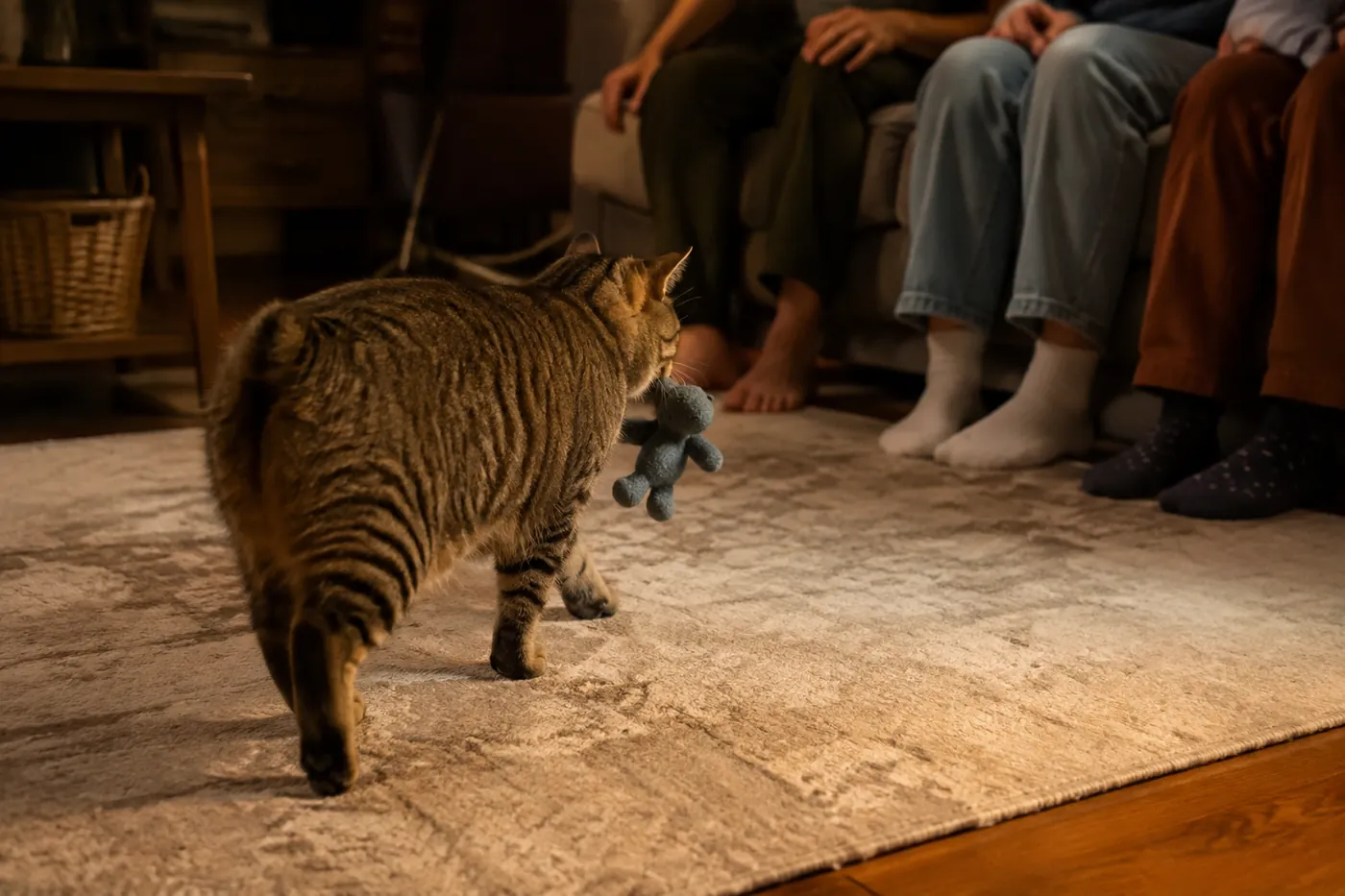
Children should stroke the shoulders and sides and let the cat walk away. Another pet needs gradual scent exchange and enough routes that the Manx never has to leap over or squeeze past an animal to reach food, water or litter.
A sudden change in jumping, play or tolerance of touch deserves attention. Behaviour can be the first visible sign of pain, especially in a cat that cannot explain discomfort around the lower back.
How big is a Manx, and what equipment works?
The Manx is medium sized but dense and rounded. CFA puts adult males around 10 to 12 pounds and describes females as smaller, while the broad chest, short back and muscular hindquarters can make the cat feel heavier than expected.
Equipment is best chosen by measurement rather than breed averages. A carrier needs enough floor length for turning and a wide stable base, particularly if the cat has any weakness or soreness.
- Build
- Compact, broad chested and muscular
- Hindquarters
- Higher than the shoulders because rear legs are longer
- Carrier
- Stable floor, easy entry and enough room to turn
- Litter tray
- Low entry if mobility is limited, with room for a full turn
- Climbing
- Secure intermediate steps instead of one difficult leap
- Weight
- Follow body condition and veterinary measurements
Accessible equipment keeps choices open when movement becomes uncomfortable, and a large open litter tray also makes output easier to monitor. When a cat begins avoiding the box, stubbornness is the weakest explanation, because pain, constipation, urinary disease and difficulty entering the tray can all change toileting.
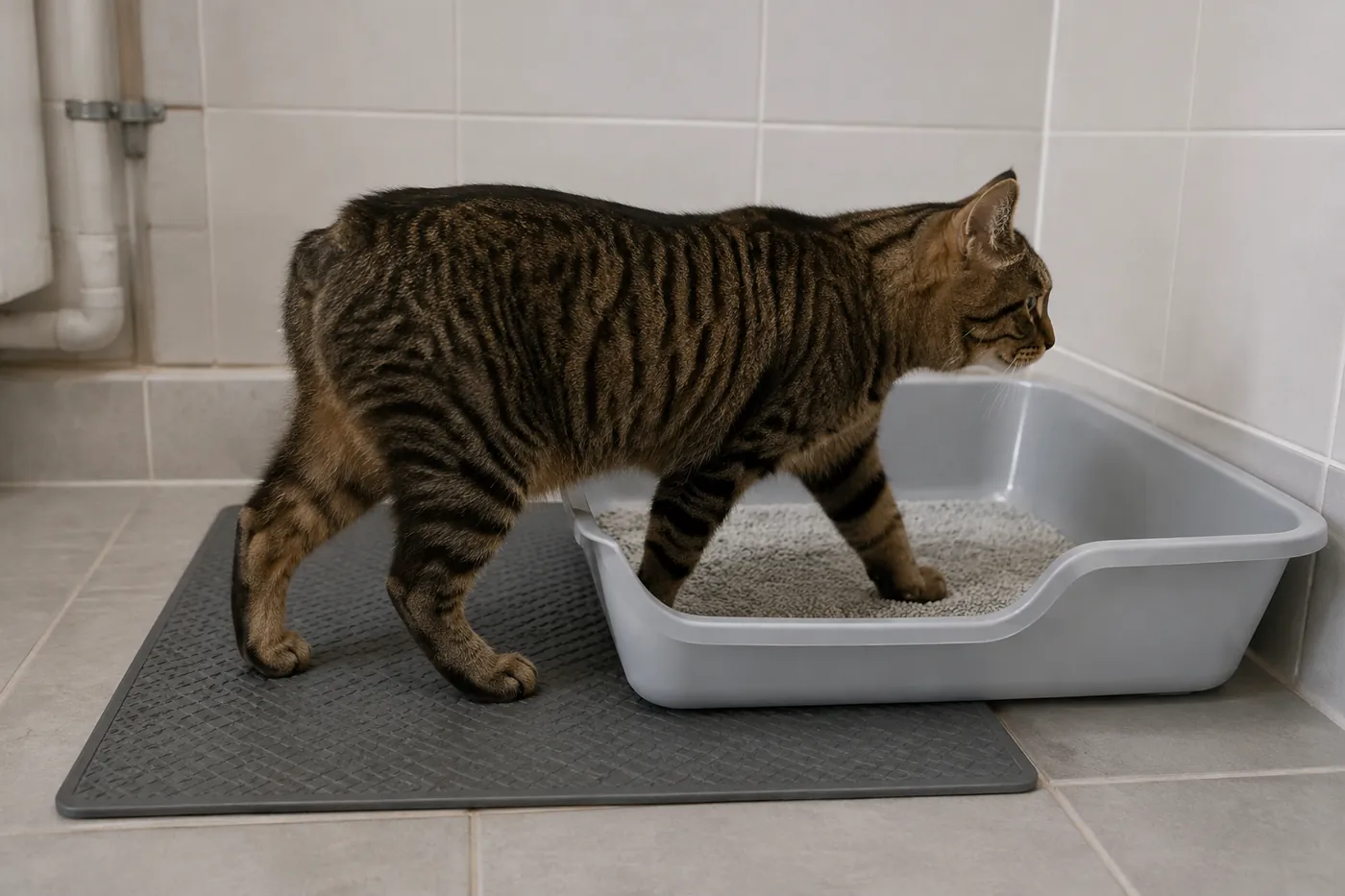
The useful feature is the difference between the entrance and the internal floor area. A tray can have a low doorway yet still be too cramped for a Manx to turn without twisting its lower back or stepping in waste. Place the tray on a level, non-slip route and keep at least one option on every floor the cat uses. High-sided storage boxes and top-entry trays may contain litter well, but they are poor defaults for an individual with weakness, reduced sensation or painful movement.
Food, water and rest belong where the cat can reach them without a mandatory high jump. A healthy cat may enjoy height, but an alternative low route prevents a temporary injury or age-related change from blocking essential resources.
How much grooming does a Manx need?
Both coat lengths have a dense double coat. Shorthairs usually need weekly combing with extra work during seasonal shedding, while longhaired Manx or Cymrics need more frequent attention where friction creates tangles.
Run fingers through the coat before using a comb, especially around the trousers and underside. Avoid pulling the tail or pressing over the end of the spine while positioning the cat.
- Begin at the shoulders where most cats accept touch easily
- Comb a small section in the direction of growth
- Support loose skin rather than pulling through a tight knot
- Work around the rear gently without lifting by the tail
- Stop if the cat flinches, guards the rump or changes gait
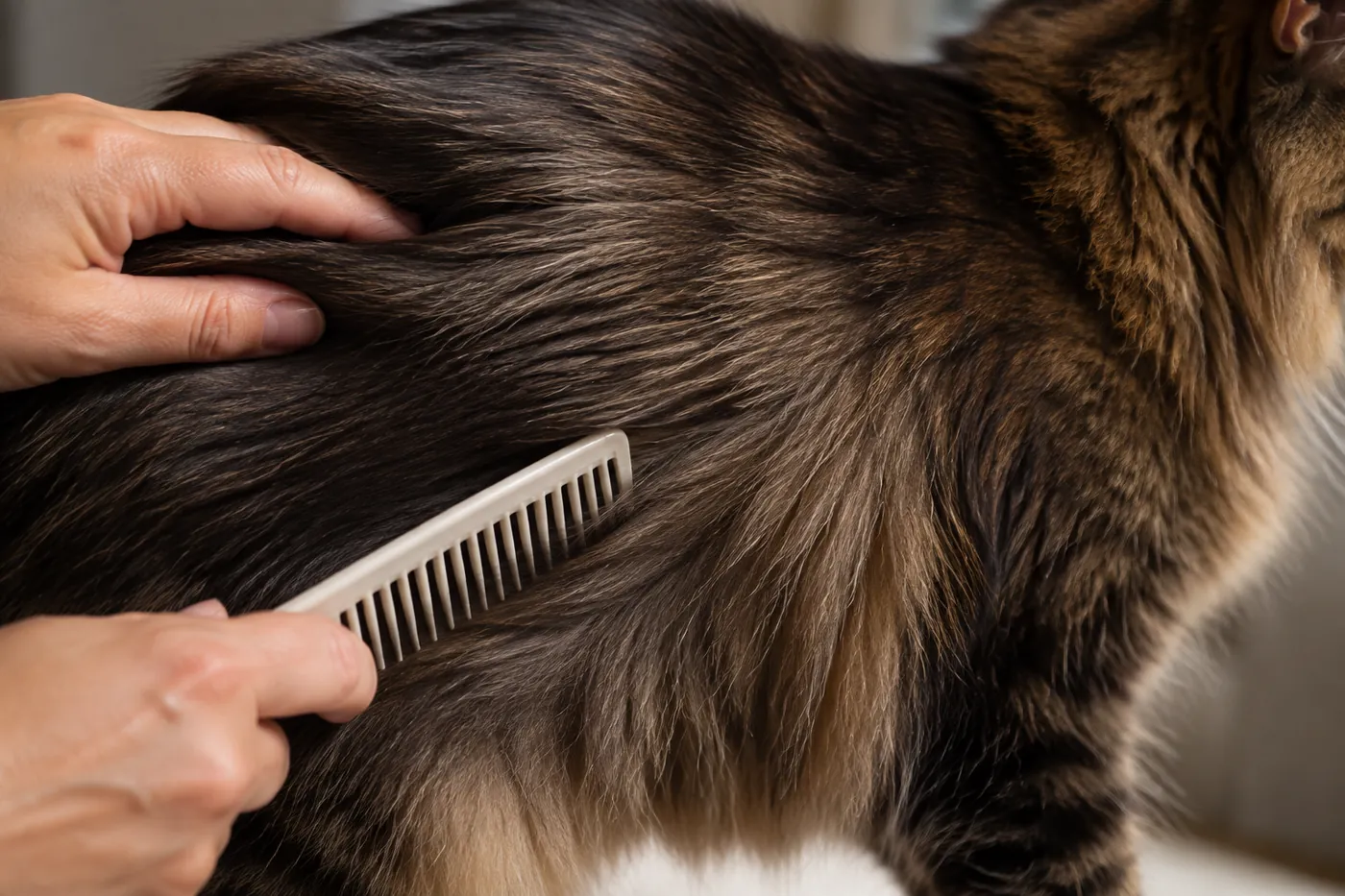
Working from the ends of a tangle is the gentle way through a knot. A mat fixed tightly to skin needs a groomer or veterinary team rather than scissors, which can cut folded skin hidden under the coat.
What does lifelong Manx care involve?
No robust study gives a single breed-specific median lifespan that should drive a purchase. A Manx without major congenital complications may live a normal feline lifespan, while a cat with spinal, bowel or urinary dysfunction can need substantial treatment and daily support.
The practical plan begins with a baseline: normal body weight, gait, jump height, urination, stool frequency and litter-box posture, recorded after adoption so a later change is easier to recognise.
- Urination
- Know the cat's usual frequency and whether the coat or bedding stays dry
- Stool
- Watch consistency, frequency, straining and accidents
- Movement
- Notice symmetry, foot placement and willingness to jump
- Skin
- Check the rear for urine scald, stool contamination and soreness
- Weight
- Follow measured trend because a dense coat hides gradual change
- Emergency
- Inability to pass urine, collapse or marked weakness needs urgent care
Daily observation should be calm and ordinary, with no repeated testing of the spine.
Constipation can become an emergency when a cat repeatedly strains, vomits, refuses food or produces no stool. Urinary obstruction is also urgent, especially in a cat making repeated unproductive trips to the tray or becoming distressed.
Not every toileting change is Manx syndrome. Common urinary disease, diet, dehydration, arthritis, stress and litter setup also alter elimination, so a veterinarian needs the full history rather than a diagnosis chosen from the breed name.
A cat with reduced rear sensation may need help staying clean and protecting the skin. Ask the veterinary team to demonstrate any cleaning, medication or bladder and bowel care rather than improvising pressure or home remedies around delicate nerves.
Weight control protects mobility and makes hands-on assessment easier. Portion sizes worked out from the food's calorie information, then adjusted through measured trends and veterinary advice, keep it on track.
Non-slip surfaces and intermediate steps are easier to add as the cat ages than after a crisis forces the change. A low-entry tray, wide resting surface and carrier with a removable top also reduce difficult lifting when the lower back or hips are sore.
Long-term cost can be unpredictable when congenital disease is present. Review insurance exclusions, emergency savings and access to imaging or neurology services before adopting a kitten with an uncertain examination or a known functional problem.
How does responsible Manx breeding address spinal risk?
The tail-shortening variant is inherited, but the visible tail of one kitten does not provide a complete genetic or medical forecast. Expression varies, and the developmental problem can involve vertebrae and nerves beyond the part an owner can see. That is why a responsible breeding discussion includes the parents, earlier litters and placement age. It should never end with a claim that a kitten is safe because it can walk across a room or because its tail falls into a preferred category.
GCCF's Manx breeding policy advises keeping kittens until roughly 14 to 16 weeks so movement and bowel or bladder problems have more time to declare themselves. CFA similarly notes that serious congenital problems often become evident within the first four months. Observation time reduces uncertainty without removing it. A breeder should still document normal development and explain what support is available if a congenital problem appears after placement.
Repeated rumpy-to-rumpy breeding is discouraged in the GCCF policy, and tailed Manx are valuable breeding animals rather than failed examples of the breed. Including sound tailed cats can help breeders avoid selecting ever more strongly for the shortest outline while retaining registered Manx ancestry.
Ask for a plain explanation of each parent's tail type and the health of kittens produced in earlier pairings. A source who records stillbirths, rear-limb weakness, continence problems and delayed diagnoses gives you more useful evidence than one who discusses only successful show cats.
No current certificate can label a Manx kitten genetically clear of every form of Manx syndrome. The practical evidence is a combination of breeding choices, family history, repeated functional observation, veterinary examination and written responsibility after sale.
The contract matters because congenital exclusions vary. Read whether the seller offers return, refund or treatment support, which veterinary findings trigger it, and whether exercising the agreement would require surrendering a cat after the household has begun treatment. A buyer should also distinguish a health guarantee from an instruction to replace one kitten with another. The animal already in your care may need expensive lifelong support, so the useful agreement explains financial and welfare responsibility instead of treating the cat as interchangeable.
Rescues usually cannot provide parental records, but they can share foster observations, examination results and elimination history. An adult with months of stable movement and toileting may offer a clearer functional picture than a young kitten, while still needing ordinary lifelong monitoring.
Breeding evidence cannot make the risk zero. It can show whether the source understands the mutation, avoids preventable combinations, waits long enough to observe development and remains accountable when a problem is found.
What should you verify before adopting or buying?
Evidence is most useful when it is gathered in a sequence that begins with function. Tail category, colour and coat length can wait until the cat's gait, elimination history and veterinary examination are understood, and that order also gives you a clear record to share with the cat's future veterinary team.
Request dates, not general memories, for constipation, urine leakage, treatment and veterinary visits. A written week of normal litter use before placement gives a clearer baseline than a statement that the kitten has always been fine.
Watch the kitten move freely rather than being placed in a pose. Turning, stopping and landing reveal coordination that one straight walk can miss, while fatigue or fear can also affect performance and should be interpreted by a veterinarian.
Ask how long the breeder keeps kittens before placement and why. Waiting beyond the earliest weeks allows more social development and time for serious congenital problems to become visible, though age alone cannot certify health.
For a cat with a known impairment, arrange a direct conversation with the current veterinary team when permission allows. Clarify medication, cleaning, litter setup, follow-up care and realistic daily cost before agreeing to provide specialist support.
- See pedigree or registration records if the cat is sold as a Manx
- Review a veterinary examination performed near placement age
- Ask for written history of urination, stool quality and accidents
- Observe walking, turning, low jumping and normal litter use
- Ask whether related cats had spinal, bowel or bladder problems
- Read congenital-health and return terms before payment
A careful source welcomes questions about function because those questions protect the cat. There is no honest way to guarantee that every Manx will remain free of spinal or urinary disease. A seller can still reduce uncertainty through age-appropriate placement, transparent family history, veterinary documentation and a contract that explains what happens when a problem emerges.
A healthy tailed kitten may be the strongest fit in a litter. The choice rests on comfort, coordination, temperament and the household's ability to monitor lifelong health, and the shortest visible tail adds nothing to any of them.
Checked Against
- The Cat Fanciers' Association: Manx cfa.org
- The International Cat Association: Manx Tailed tica.org
- Deforest and Basrur: Malformations and the Manx syndrome in cats (Canadian Veterinary Journal, 1979) pmc.ncbi.nlm.nih.gov
- Journal of Pathology: congenital spinal abnormalities in the Manx pubmed.ncbi.nlm.nih.gov
- GCCF: Manx breeding policy gccfcats.org
Published 7 September 2026. Last updated .





