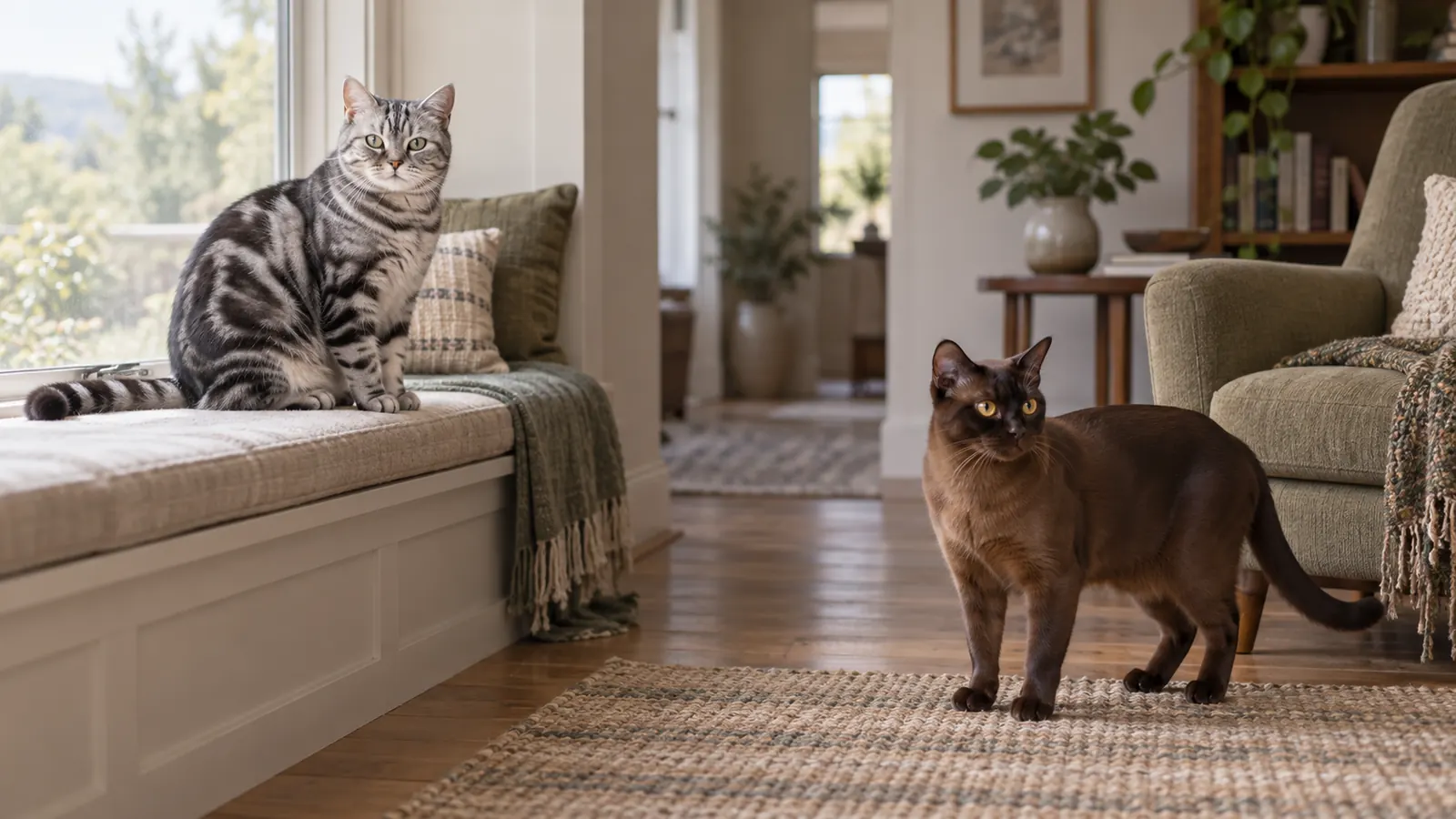
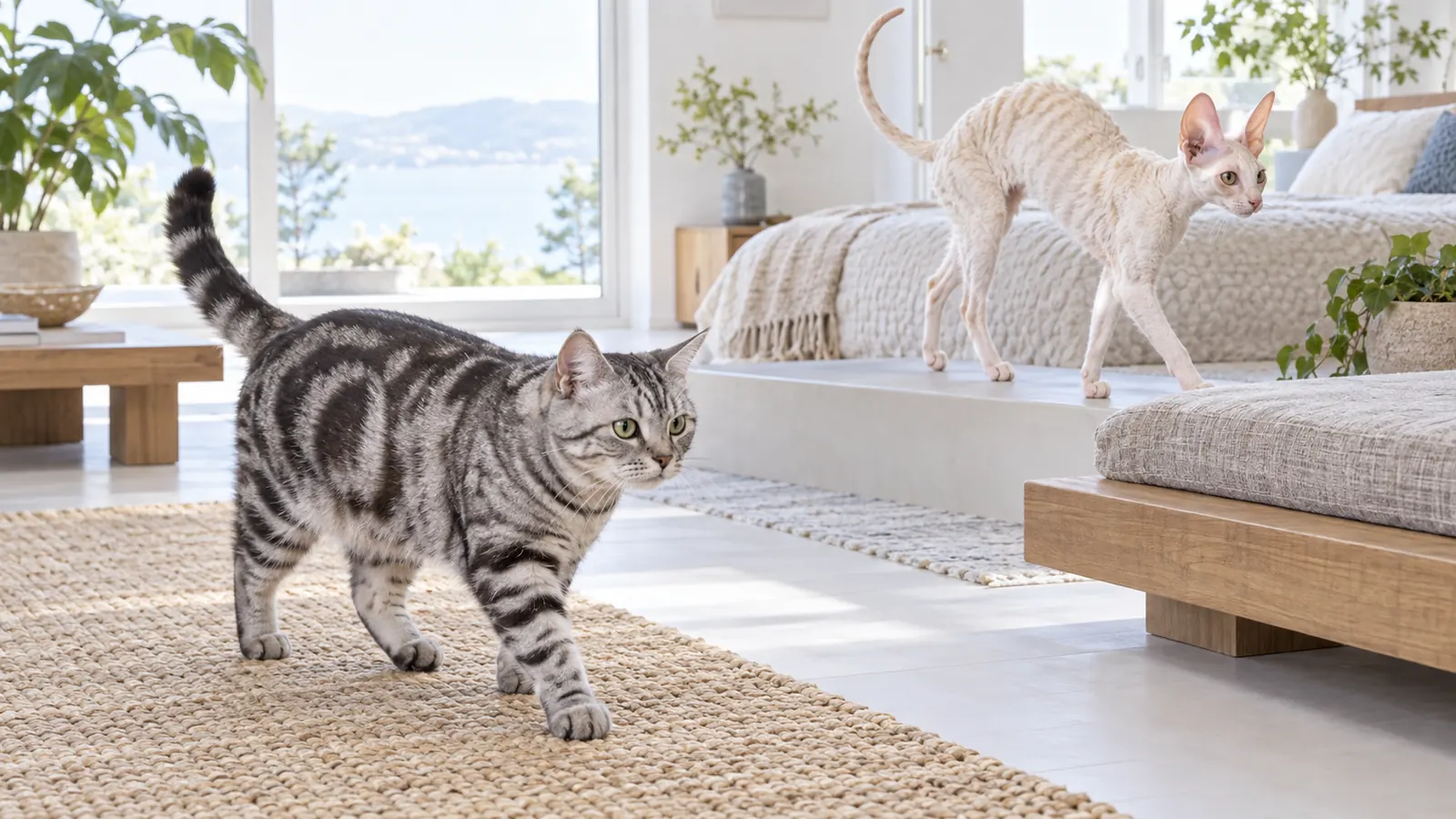
Bengal vs Abyssinian: Which High-Energy Cat Fits Better?
The Abyssinian is usually the simpler choice when you want a highly active, people-oriented cat in a lighter body. Choose a Bengal when you specifically want its larger, more forceful athleticism and patterned coat, and you can provide stronger climbing equipment, deliberate daily activity and clear ancestry and health records.
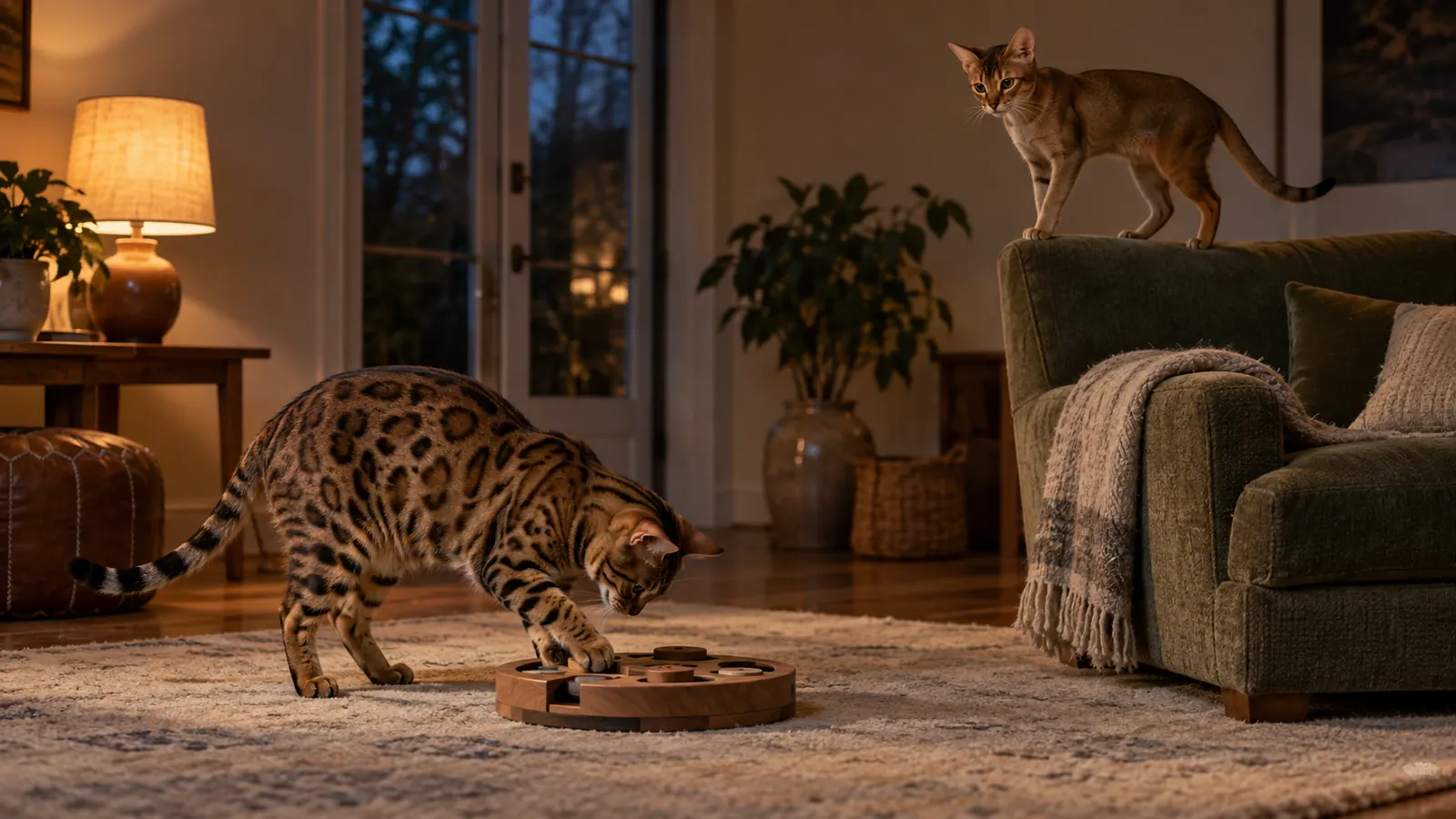
Bengals and Abyssinians both notice what people are doing, seek high places and turn ordinary rooms into routes. Neither is a quiet decorative cat, and choosing between them is less about which breed is active than about what kind of activity your home can support.
An Abyssinian usually brings that intensity in a smaller, lighter package. A Bengal adds more body mass, powerful jumping and a breeding history that makes generation status and local rules part of responsible buying.
The comparison is close enough that the individual cat, early handling and the breeder's choices can outweigh the breed label.
Meet adults as well as kittens and judge the home you can maintain on a busy weekday, not the routine you imagine for the first enthusiastic month.
Which breed is easier to live with?
For most people already committed to an energetic breed, the Abyssinian has the narrower practical burden. It still needs height, play, novelty and company, but its lighter frame makes equipment and handling somewhat easier and there is no recent-hybrid generation paperwork to interpret.
The Bengal is the better fit when the muscular build, bold pattern and intense physical play are central to what you want.
That choice needs stable adult-sized platforms, secure doors and screens, structured outlets for movement, and documented answers about ancestry and breed-specific health screening.
| Profile | Activity and company | Physical setup | Extra checks | Best fit |
|---|---|---|---|---|
| Bengal | Highly active, social and strongly engaged with movement, climbing and training | Broad anchored platforms, secure openings and durable interactive equipment | Generation or registration status, current local rules, PRA-b, PK deficiency and cardiac screening context | An experienced, involved home that actively wants powerful athletic play |
| Abyssinian | Highly active, observant and people-oriented, commonly joining activity from nearby height | Connected climbing routes, safe landing space and frequent changing play | rdAc PRA, PK deficiency and family history including renal disease | A home that wants constant participation in a lighter, agile body |

Neither profile predicts every cat. A confident Abyssinian may be more demanding than a settled Bengal, so use the breed comparison to identify questions and equipment needs rather than to promise temperament.
How different are Bengal and Abyssinian size, build and coats?
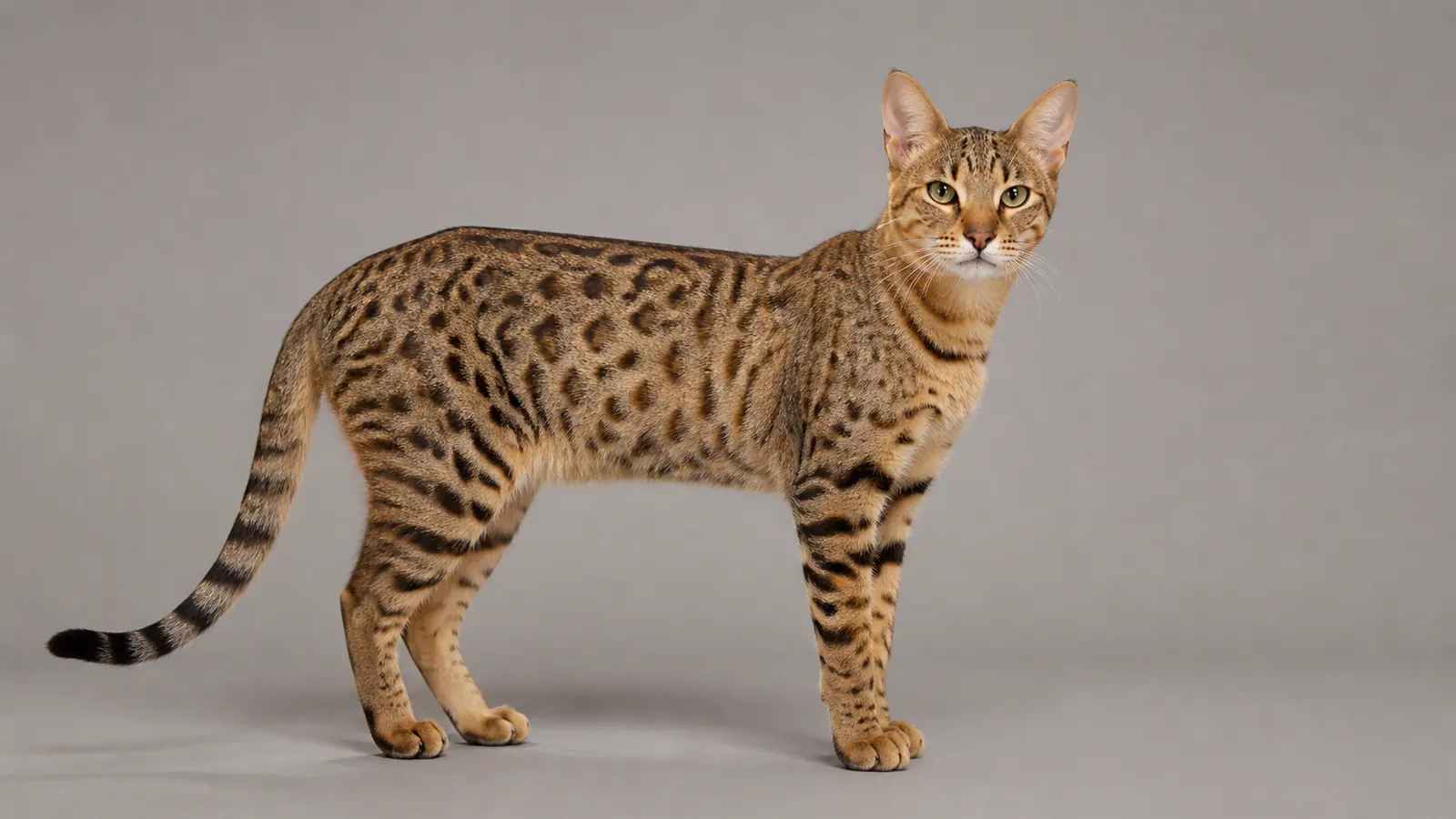
The Bengal is a medium to large, muscular cat with substantial hindquarters and a long, powerful body. TICA gives a broad adult range of about 6 to 12 pounds for females and 9 to 15 pounds for males, with full size often reached around two years.
The Abyssinian is medium-sized and finely built, with long legs, small oval paws and a flexible, athletic outline. TICA places females around 6 to 9 pounds and males around 7 to 12 pounds, so the ranges overlap even though the typical visual effect is lighter.
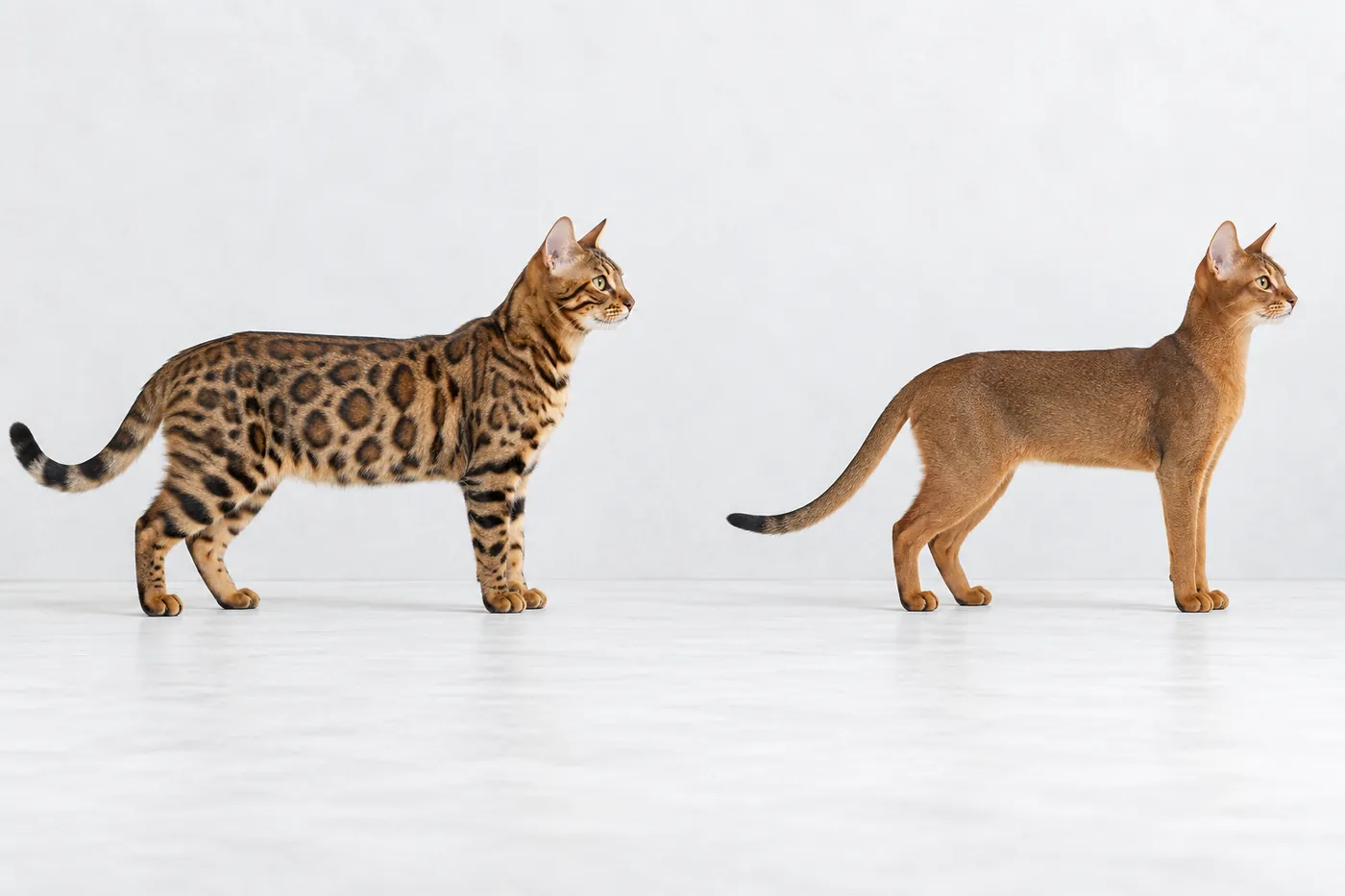
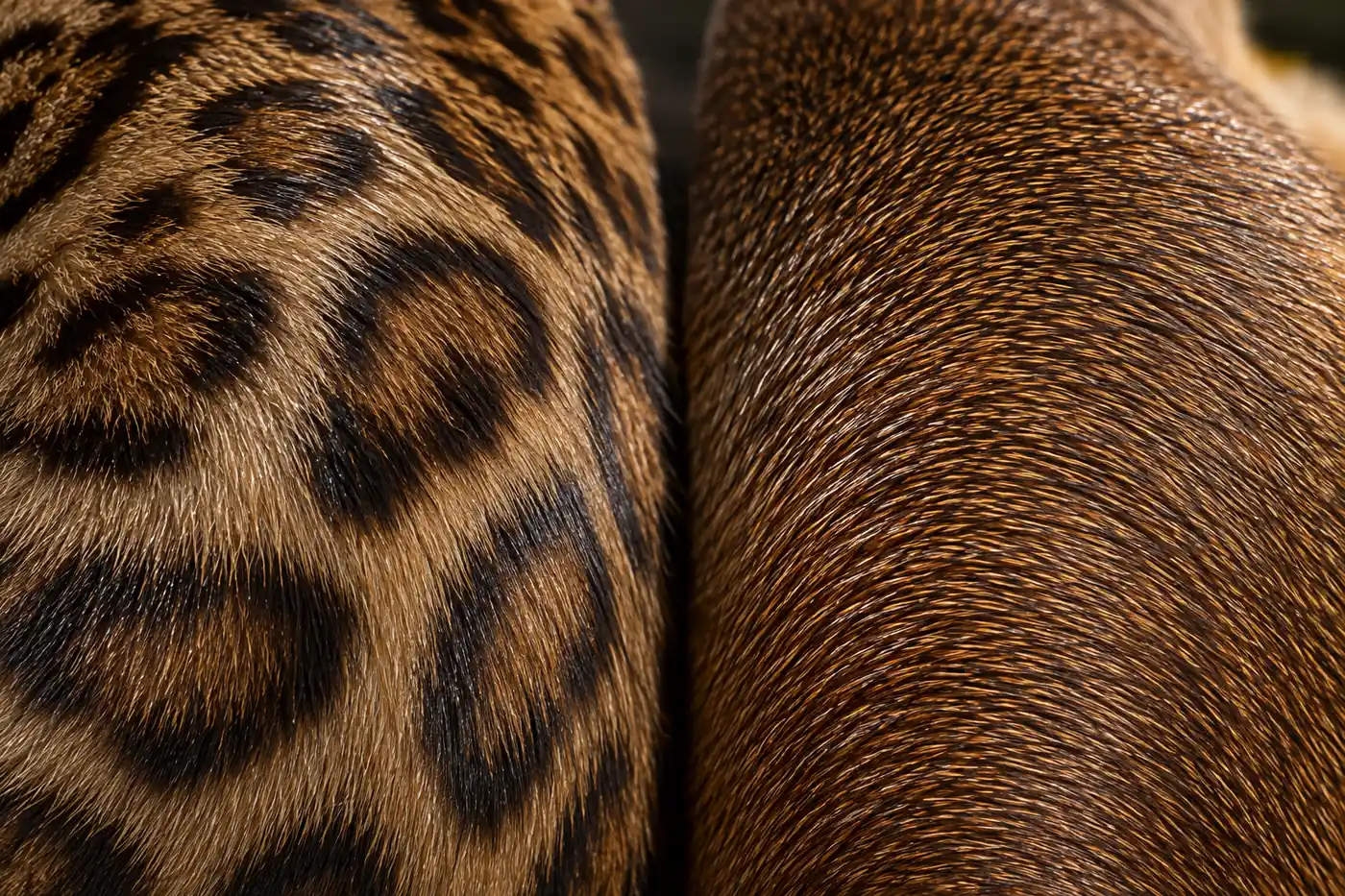
Their coats create an equally clear distinction. A Bengal may be spotted, rosetted or marbled, while each Abyssinian hair carries alternating colour bands that produce an even ticked surface instead of spots or stripes across the body.
| Feature | Bengal | Abyssinian | Why it matters at home |
|---|---|---|---|
| Adult build | Muscular, substantial and powerful | Fine-boned, lithe and agile | A heavier landing needs broader, better anchored furniture |
| Typical weight range | Females 6 to 12 lb; males 9 to 15 lb | Females 6 to 9 lb; males 7 to 12 lb | Sex and the individual matter more than one midpoint |
| Coat pattern | Spotted, rosetted or marbled | Ticked, with colour bands on individual hairs | Pattern identifies the visual type but does not predict personality |
| Maturity | Often reaches full size around two years | Develops into a lean medium adult | Buy carriers and platforms for adult dimensions |
Choose a carrier, litter tray and climbing surface by measured adult space and load rating rather than a breed photograph. Check usable internal room and entry design against the adult cat, not the kitten.
Which cat needs more activity, space and company?
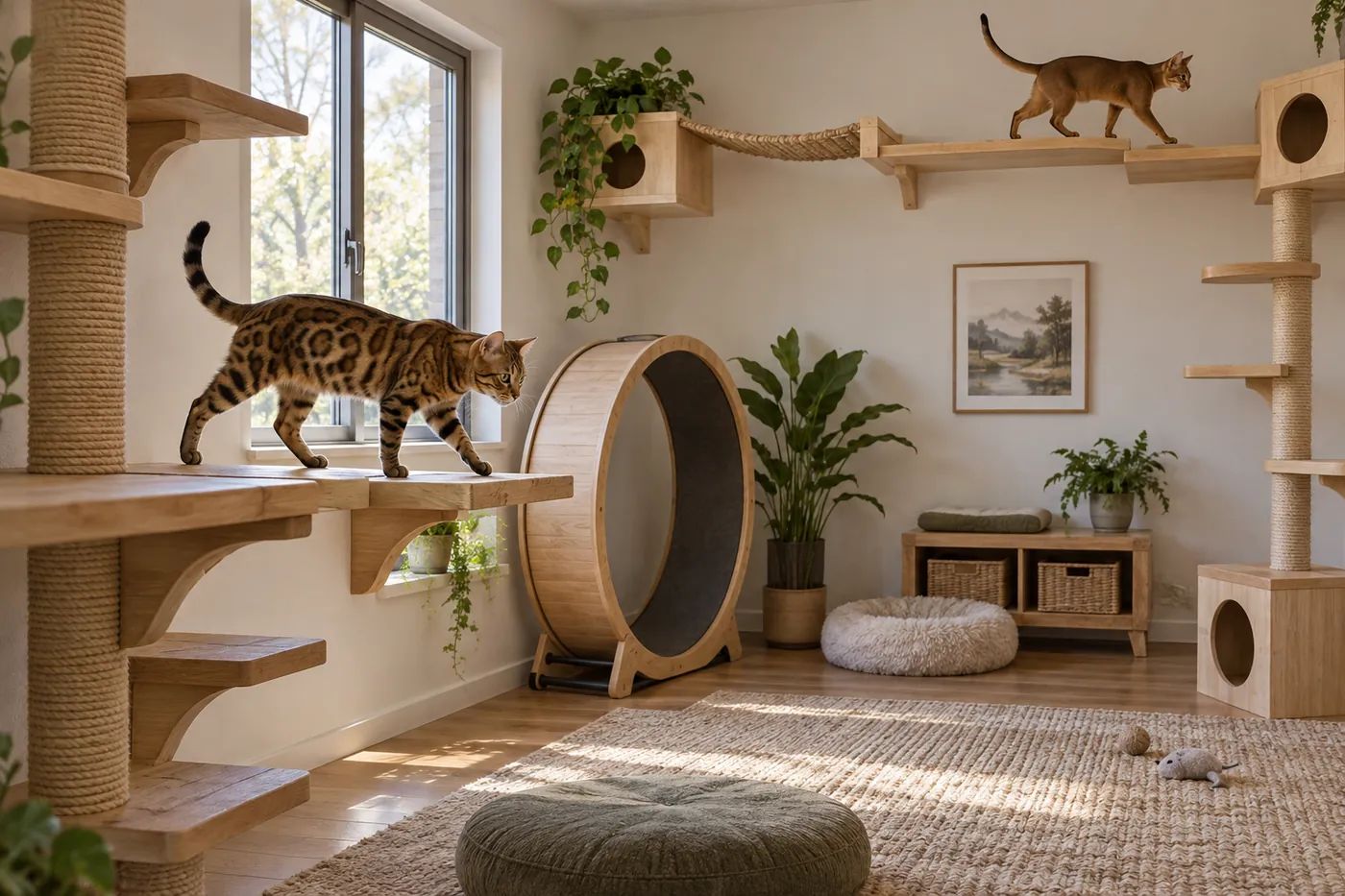
Both breeds need more than an open floor and a basket of static toys. Their useful territory includes vertical routes, lookout points, places to sprint or pounce, and activities that change enough to remain worth investigating.
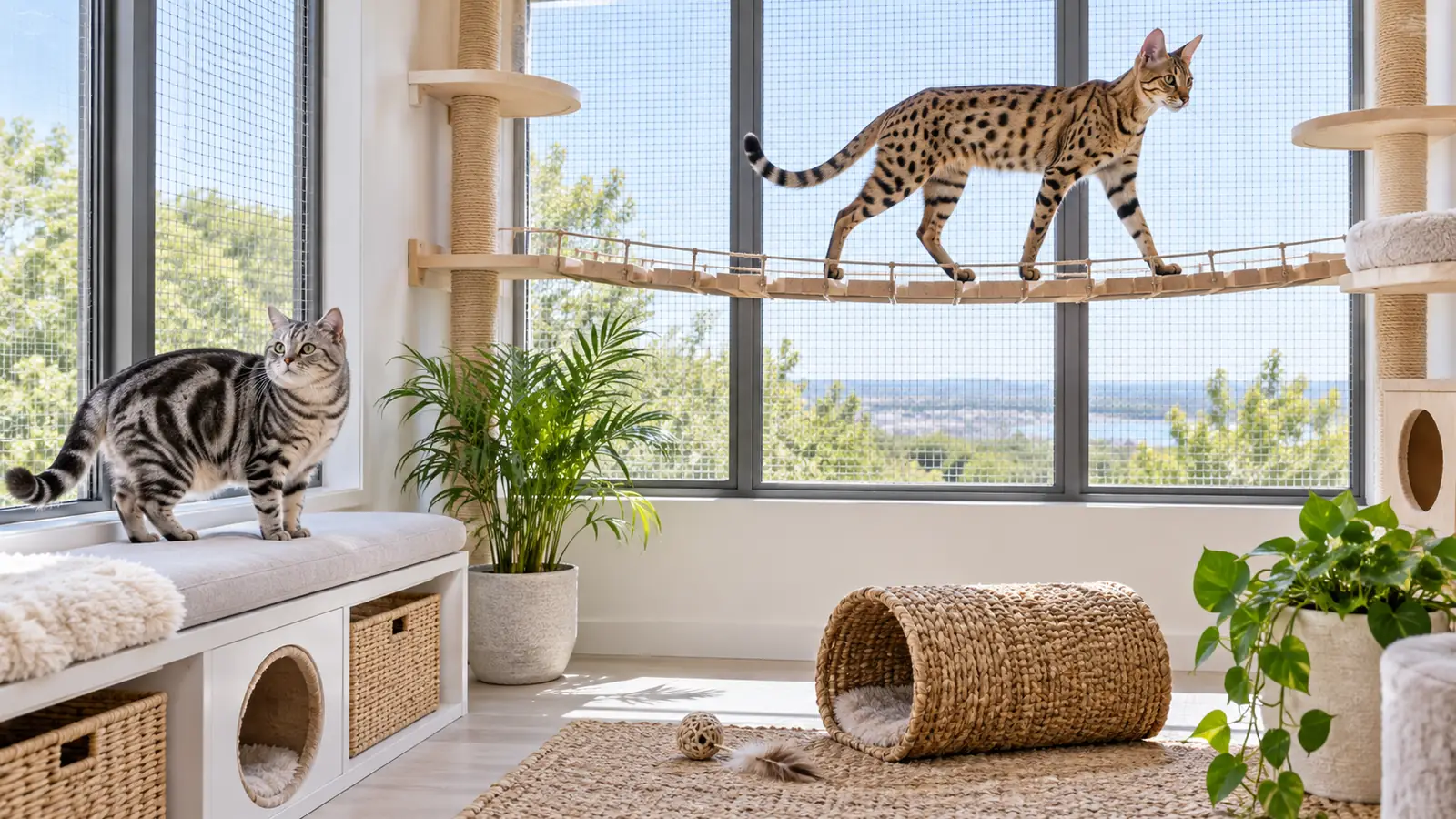
The Bengal's extra mass makes physical setup more consequential. Narrow shelves, freestanding towers with small bases and loose window screens can fail when a strong cat launches, lands or leans against them.
An Abyssinian can exploit smaller gaps and connected upper routes with remarkable speed. Its lighter body reduces impact but does not reduce the need for safe landings, closed hazards and legal places to watch household activity.
TICA describes both as social and people-oriented.
That supports planning regular interaction, but it does not support a universal number of hours either breed can be left alone because age, health, social history and the quality of the environment all change the answer.
| Daily need | Bengal | Abyssinian | Practical response |
|---|---|---|---|
| Movement | Strong jumping, climbing and interactive pursuit | Frequent agile climbing, running and investigation | Use several short active sessions and rotate what the cat can chase or solve |
| Training | Often enjoys learning and puzzle work | Commonly engages quickly with people and novelty | Teach useful behaviours with brief reward-based sessions |
| Vertical space | Broad, rigid and securely fixed surfaces | Connected high routes with reliable footing | Test every route for stability and a safe way down |
| Company | Often seeks participation and interaction | Often follows activity and observes from close range | Arrange care around the individual rather than assuming independence |
| Containment | Strength makes doors, mesh and loose fittings important | Speed and curiosity expose small escape opportunities | Check screens, doors, cords and access to unsafe rooms |
Food puzzles can turn part of a meal into searching and manipulation, but difficulty should rise gradually. A puzzle that repeatedly traps food creates frustration rather than useful work, especially when it replaces a familiar meal without introduction.
Clicker training can also give both breeds a clear shared task. Start with a simple behaviour the cat already offers, reward immediately and stop while the cat is still engaged instead of stretching one session until attention disappears.
Are Bengals or Abyssinians better with children and other pets?
Either breed can live successfully with respectful children, another cat or a cat-safe dog. Breed reputation cannot guarantee the result because socialisation, introductions, resource access and the behaviour of the other household members all shape daily safety.
A Bengal's strength raises the consequence of rough or overexcited play. Children should use wand toys at a distance, leave resting cats alone and never turn hands or feet into moving targets.
An Abyssinian may choose observation from above and can be quick to leave unwanted handling. That escape should remain available rather than being treated as rejection that a child must overcome.
- Give the cat a retreat that children and dogs cannot enter
- Place food, water, litter, scratching and resting resources in more than one location
- Use gates, doors or separate rooms for gradual introductions
- Reward calm observation before allowing closer contact
- Keep high routes wide enough to turn around and descend safely
- End handling when the cat stiffens, turns away, lashes its tail or tries to leave
- Supervise wand toys and put strings away after play
Feline environmental guidance recommends multiple separated resources because cats that share a house do not necessarily belong to the same social group.
One food station, one favourite perch or adjacent litter trays can create conflict even when no obvious fight occurs.
Ask how the individual kitten or adult responds to ordinary sounds, gentle restraint, unfamiliar people and the presence of other animals. A breeder's statement that the whole breed loves children is much weaker evidence than calm observed behaviour and a specific early socialisation routine.
Which coat is easier to groom, and is either breed hypoallergenic?
Both coats are short and generally simple to maintain. A weekly hands-on check and gentle brushing can remove loose hair, reveal skin changes and make nail, ear and dental handling familiar without turning grooming into a major household project.
The Bengal coat lies close and may feel unusually sleek, while the Abyssinian coat is resilient and defined by its ticking. Heavy combing can disturb either short coat and offers little benefit when fingers and a soft brush already pass through cleanly.
| Task | Bengal | Abyssinian | Sensible routine |
|---|---|---|---|
| Loose hair | Short close coat sheds some hair | Short ticked coat sheds some hair | Use hands or a soft brush and adjust to the individual |
| Skin check | Part the coat where a change is felt or seen | Check beneath the dense-looking ticked surface | Look for redness, flakes, lumps, wounds or excessive licking |
| Nails | Strong play makes regular nail checks useful | Active climbing makes nail condition important | Trim only the clear tip and teach handling gradually |
| Bathing | Usually unnecessary without contamination or clinical advice | Usually unnecessary without contamination or clinical advice | Avoid frequent bathing as a cosmetic routine |
Neither breed is reliably hypoallergenic. The major cat allergen Fel d 1 varies substantially between individual cats and within the same cat over time, and a study of domestic cats found no relationship with coat colour or body size.
If allergy affects the decision, spend repeated time with the actual cat before committing and discuss significant asthma or allergy with a clinician.
A short visit cannot guarantee how exposure will feel after the cat shares bedrooms, furniture and air for months.
What health evidence should a breeder provide?
Health testing is strongest when a named result answers a named inherited risk and the identity on the report matches the parent.
A claim such as fully tested tells you nothing until you can see which cats, variants or examinations were involved, when they were assessed and what the breeder did with the findings.
For Bengals, UC Davis describes Bengal progressive retinal atrophy as an autosomal recessive condition caused by a KIF3B variant. A result can identify clear, carrier or genetically affected status for that variant, but it cannot clear every cause of future vision loss.
Pyruvate kinase deficiency is another recessive concern in the breed. Ask for the original laboratory reports for both parents and have the breeder explain how any carrier is paired so kittens are not expected to inherit two copies.
Hypertrophic cardiomyopathy requires a different conversation because the GCCF Bengal policy notes that no commercial DNA test predicts it in Bengals. Echocardiography by an appropriately trained clinician can assess a cat at that time, but a normal examination cannot guarantee that disease will never develop later.
For Abyssinians, ask for parental reports covering the CEP290 rdAc variant associated with progressive retinal atrophy and the PKLR variant associated with pyruvate kinase deficiency. Both are recessive questions, so the status of both parents and the planned pairing matter.
Renal amyloidosis has also been documented in Abyssinian lines, yet current evidence does not reduce it to one simple clearance test. Family health records, ages and causes of death remain useful because a broad commercial panel cannot close that uncertainty.
| Breed and concern | Ask to see | What the evidence answers | What it cannot promise |
|---|---|---|---|
| Bengal PRA-b | Both parents' original KIF3B reports | Status for the named retinal variant | Freedom from every eye disorder |
| Bengal PK deficiency | Both parents' original PKLR reports | Status for the named anaemia variant | Freedom from other causes of anaemia |
| Bengal HCM | Dated cardiac screening records and family history | What was examined and found at that time | Lifetime freedom from later HCM |
| Abyssinian PRA rdAc | Both parents' original CEP290 reports | Status for the named retinal variant | Freedom from every cause of vision loss |
| Abyssinian PK deficiency | Both parents' original PKLR reports | Status for the named anaemia variant | Freedom from other causes of anaemia |
| Abyssinian renal amyloidosis | Multi-generation health history and breeder follow-up | Whether relevant kidney disease is being tracked | One definitive genetic clearance |
Match every report to the registered names or microchip identities of the parents and keep a copy. Results are evidence for a defined question, not a warranty for lifespan, behaviour or every disease that could affect a cat.
Why does Bengal ancestry require an extra check?
The modern Bengal breed descends from crosses involving the Asian leopard cat, but an ordinary registered pedigree Bengal is not interchangeable with an early-generation hybrid.
TICA's breed introduction distinguishes Foundation cats in the first three generations, called F1 through F3, from later Stud Book Tradition Bengals used in the established breed.
Do not accept a percentage claim, a spotted coat or a seller's verbal assurance as a substitute for documents.
If the paperwork is unclear, pause the purchase until the registry or relevant local authority can explain how that individual is classified.
This extra step is a genuine difference between the choices. An Abyssinian buyer still needs pedigree and health evidence, but does not normally need to establish distance from a recent wild ancestor before interpreting ownership rules.
Which breed fits your ordinary week?
Choose the Abyssinian if you want an agile companion that watches, climbs and joins household activity, and if connected height plus frequent interaction can remain part of normal life. Walk away if you hope the cat will become calm and self-entertaining once kittenhood ends.
Choose the Bengal if you actively want a more muscular athlete and are willing to build the home around safe movement. Walk away if secure openings, stable adult-sized equipment, active engagement or clear ancestry records feel like optional extras.
- Picture the busiest weekday rather than the first week with a kitten
- Compare adult body size with your carrier, litter tray and climbing furniture
- Identify several safe routes up, across and back down
- Plan interactive play and food-searching activities that can change over time
- Decide who provides care and engagement during long or disrupted days
- Observe the individual during play, recovery, handling and a mild interruption
- Read original health reports, pedigree and registration documents
- Check current local rules if considering any Bengal with unclear generation status
- Reject guarantees about allergies, temperament, final size or lifetime health
The Abyssinian is the better default for a person choosing between these two because it delivers exceptional activity and social involvement with less physical and administrative complexity.
The Bengal becomes the better answer only when its specific build, movement and appearance are worth the stronger setup and documentation burden to you.
Checked Against
- TICA: Bengal tica.org
- TICA: Abyssinian tica.org
- TICA: Bengal breed introduction tica.org
- UC Davis Veterinary Genetics Laboratory: Bengal progressive retinal atrophy vgl.ucdavis.edu
- UC Davis Veterinary Genetics Laboratory: pyruvate kinase deficiency vgl.vetmed.ucdavis.edu
- GCCF: Bengal registration policy gccfcats.org
- GCCF: Bengal breeding policy gccfcats.org
- GCCF: Abyssinian breeding policy gccfcats.org
- Genova et al.: Multi-omic analyses in Abyssinian cats with primary renal amyloid deposits (Scientific Reports, 2021) pmc.ncbi.nlm.nih.gov
- FelineVMA: environmental needs guidelines catvets.com
- Bastien et al.: Influence of time and phenotype on salivary Fel d1 in domestic shorthair cats (Journal of Feline Medicine and Surgery, 2019) pmc.ncbi.nlm.nih.gov
Published 12 September 2026. Last updated .