
What Is a Khao Manee, and How Do You Check Its Hearing and Ancestry?
A Khao Manee can suit a home that wants an alert, social cat and has time for interactive play. The harder questions concern verified ancestry, individual temperament and hearing in each ear, none of which can be settled by a white coat or odd-coloured eyes alone.
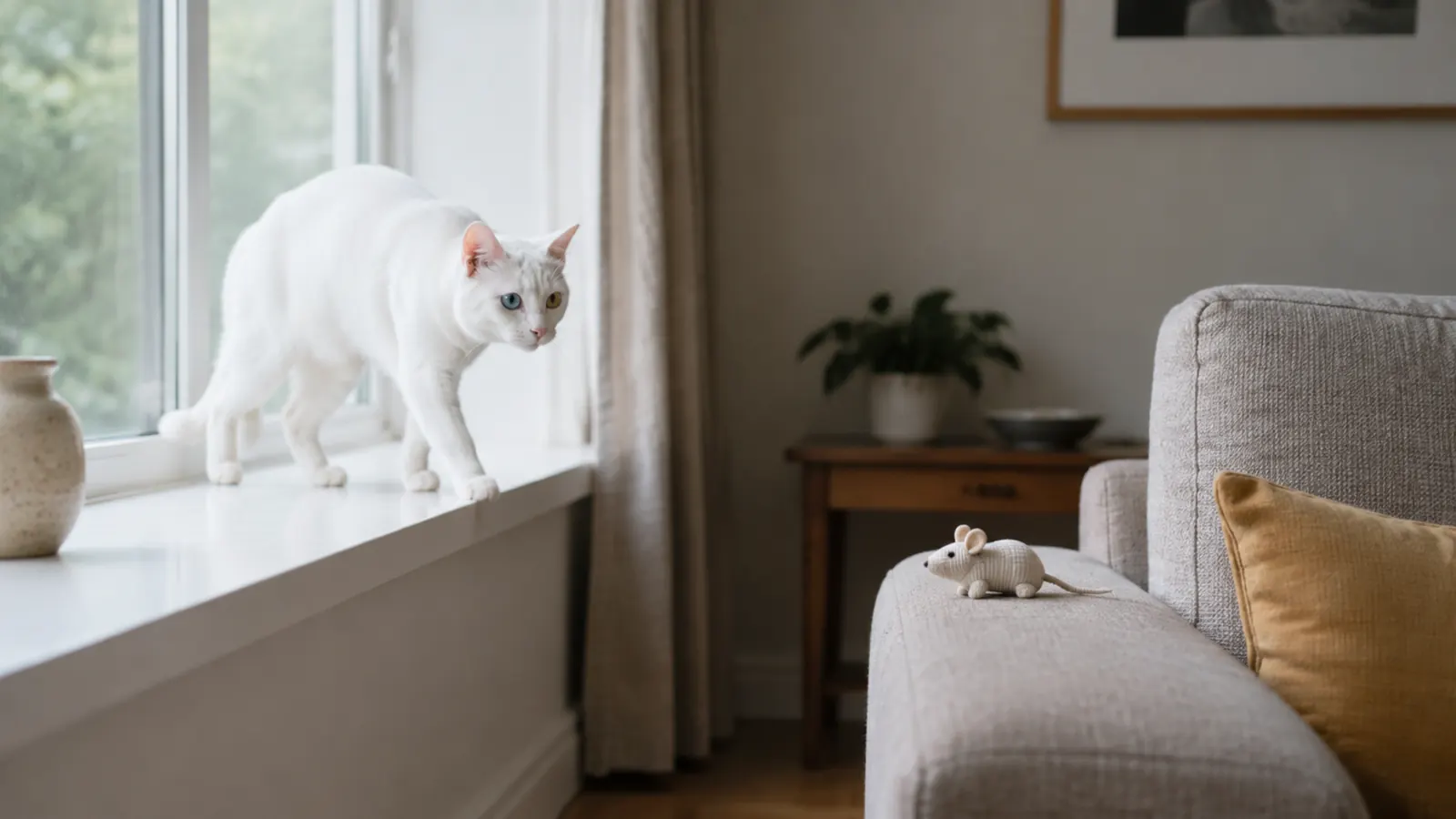
- Origin
- Thailand, where white cats described as Khao Plort appear in the Tamra Maew cat poems
- Coat
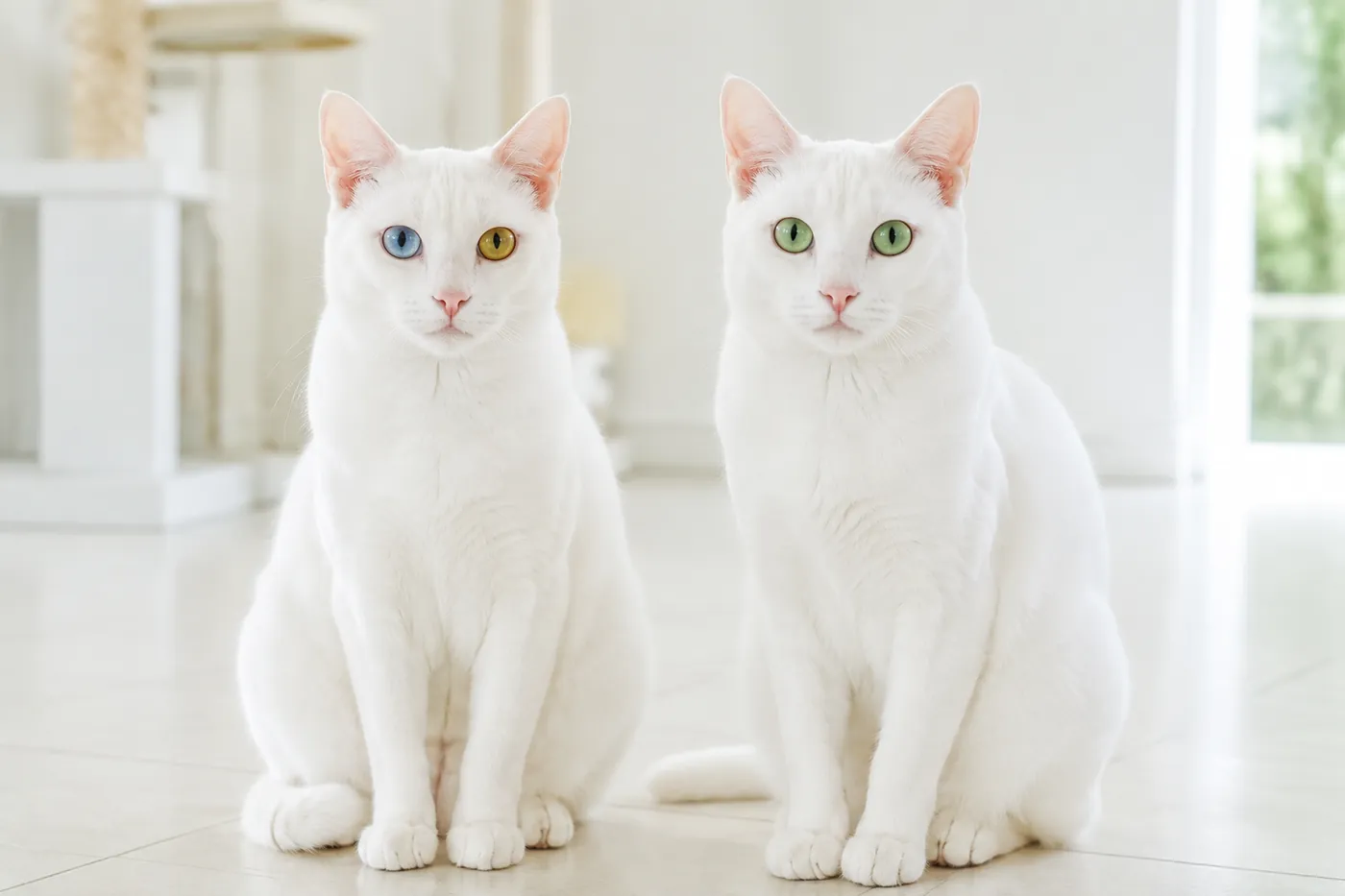
- Short, close lying and pure white, with blue, yellow or green eyes that may match or differ
- Size
- Medium, agile and semi-foreign, with firm musculature rather than a heavy or cobby build
- Typical weight
- No adult weight range is set by the TICA or CFA breed standard
- Life expectancy
- TICA gives an estimated 10 to 12 years, but no breed-specific longevity study establishes a median
- Activity level
- High. Curious, athletic and strongly interested in play with people
- Grooming
- Low. A weekly brush usually removes loose white hair from the short coat
- Suits
- Attentive homes that want an interactive cat and can verify hearing, ancestry and individual temperament
The Khao Manee is easy to notice and surprisingly hard to identify well. A brilliant white coat and mismatched eyes create the first impression, while the decisions that affect daily life sit in the cat's records, hearing and response to people.
Breed descriptions consistently portray an active, sociable cat. Those descriptions are useful for setting expectations, although they cannot predict the personality of the individual kitten or adult in front of you.
Is a Khao Manee right for your home?
This breed is a promising fit when you want a cat that participates in the household. TICA describes the Khao Manee as playful, curious and people oriented, and CFA similarly calls it social, friendly and active. That combination usually means more contact than simply sharing a room. An owner needs time for short play sessions, gentle handling practice and attention that responds to the cat rather than expecting it to remain ornamental.
- Best fit
- Someone home for meaningful parts of the day and willing to play
- Possible fit
- A family that supervises children and introduces pets gradually
- Poor fit
- A household wanting a consistently quiet, independent cat
- Before deciding
- Verify pedigree and hearing records, then meet the individual cat
Long working days do not automatically rule the breed out. They do make the home setup more important, because climbing routes, food puzzles and a compatible feline companion can occupy a cat without replacing human interaction.
A busy home also needs retreat space. Social does not mean endlessly tolerant, so the cat should be able to leave children, visitors or other animals without being followed.
The strongest reason to pause is uncertainty about the individual. If a seller relies on rare eye colour while avoiding questions about records, hearing or behaviour, the visual appeal is being asked to carry evidence it cannot provide.
How can you identify a Khao Manee?
A Khao Manee is a pedigreed Thai breed, and the name does not cover every shorthaired white cat. White coats and blue or odd-coloured eyes occur across the domestic cat population, so appearance can suggest a type without proving ancestry.
TICA and CFA publish breed standards, while GCCF grants the Khao Manee name recognition under its own policy. CFA accepted the breed for registration in 2018 and currently lists it in the Provisional class, which describes recognition status rather than quality or health.
The standards converge on a medium, muscular and flexible cat with a short pure-white coat. The head has prominent cheekbones, the eyes may match or differ, and the body remains agile instead of becoming round or heavily boned.
| Question | What you can observe | What needs a record |
|---|---|---|
| Is the coat correct? | Short, close lying and pure white in an adult | Nothing about ancestry |
| Are the eyes allowed? | Blue, yellow or green, matching or different | Nothing about ancestry |
| Is the build typical? | Medium, muscular, flexible and moderately long | Breed identity still needs pedigree |
| Is this a Khao Manee? | Appearance can be consistent with the standard | Registration and traceable parentage |
The name also carries a Thai history that deserves careful wording. TICA connects the modern breed with the white Khao Plort described in the Tamra Maew cat poems, while stories about exclusive royal ownership are better treated as tradition than as a buyer's proof of origin.
A white domestic shorthair can be just as suitable a companion. The distinction matters because a buyer should not pay for documented breed identity when the seller can document only colour.
Does every Khao Manee have odd eyes?
No. A Khao Manee may have two eyes of the same colour or one eye of each, and TICA's standard accepts blue, yellow and green within that range. Odd eyes are visually distinctive, which makes them overrepresented in photographs and marketing. They remain one accepted expression rather than the feature that defines every member of the breed.
- Matching eyes
- Both eyes may be blue, yellow or green
- Odd eyes
- One eye may differ from the other
- Adult coat
- Pure white and short
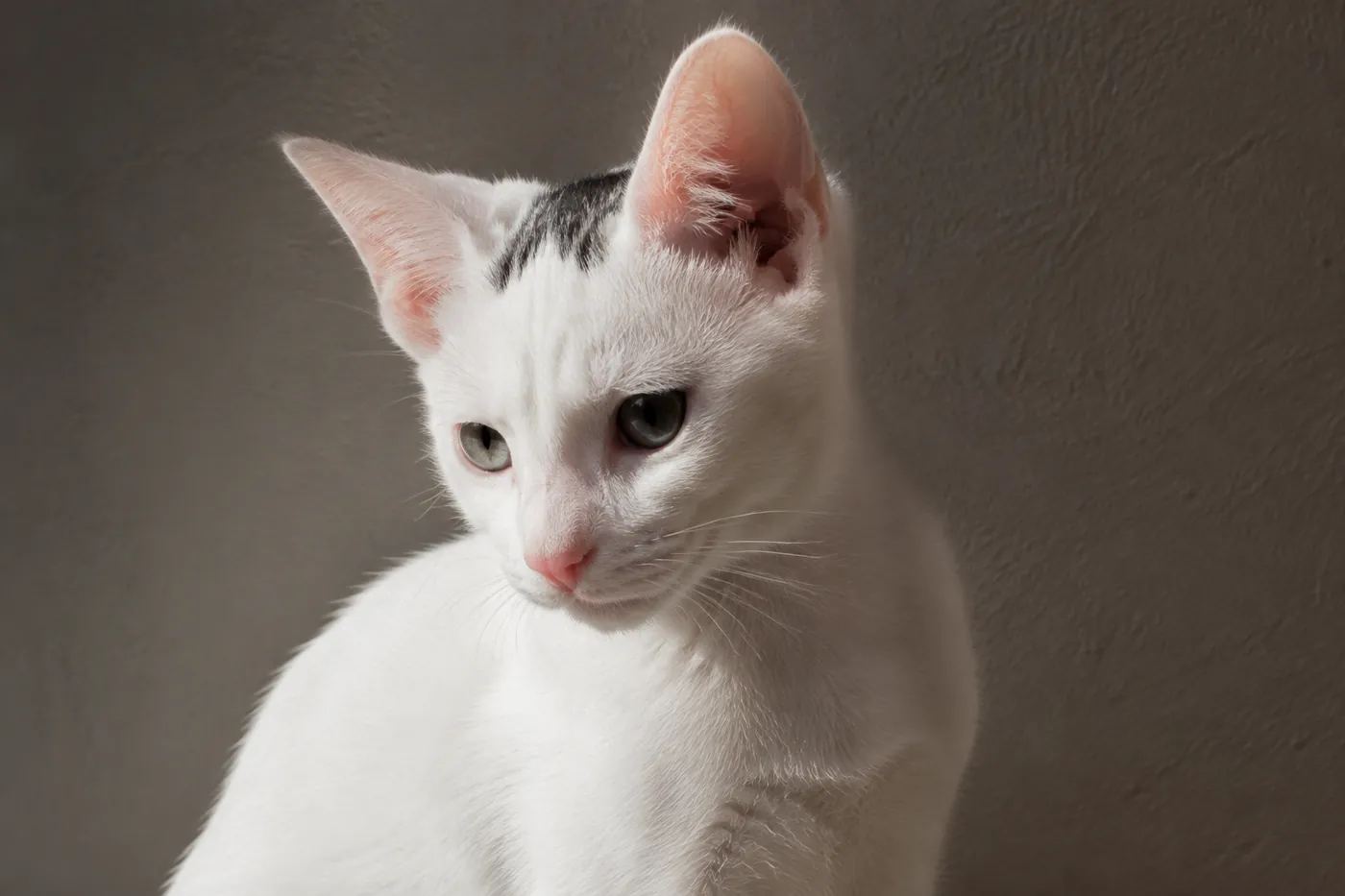
- Kitten head cap
- A temporary coloured patch can occur and usually fades as the kitten matures
- Identity
- Eye colour and coat colour do not replace pedigree evidence
A small coloured cap on a white kitten's head can also be normal. GCCF's recognition material notes that this patch may persist for roughly the first year, so it should be discussed with the breeder rather than read as proof that the adult coat will stay marked.
Eye colour does have a practical connection to hearing risk in white cats, but it is an imperfect clue. A blue eye cannot tell you whether the ear beside it hears, and normal-looking responses cannot reliably exclude hearing loss in one ear.
How big is a Khao Manee?
The official descriptions call the Khao Manee medium sized. TICA uses the term semi-foreign for its proportions, meaning a moderately long, athletic outline that avoids both the compact cobby shape and the extremely slender oriental shape. Firm muscle should be evident beneath the short coat. The legs and tail are moderate, the paws are oval, and males may carry somewhat stronger bone and musculature without losing agility.
Neither the TICA nor CFA standard publishes an adult weight range. That absence matters because a precise internet range can look official even when it was assembled from secondary breed profiles rather than measured population data.
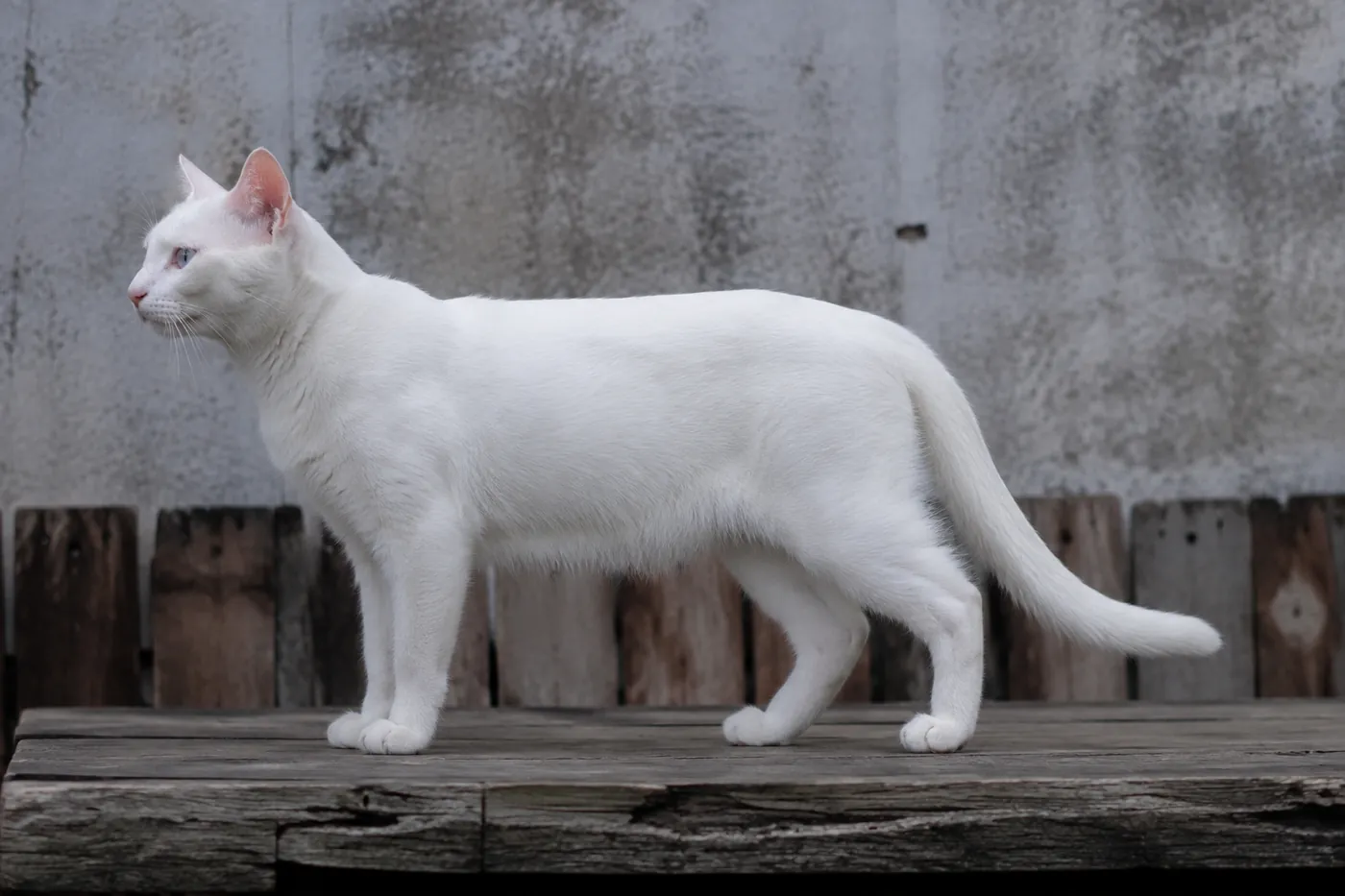
A carrier fits when the standing cat can turn around and lie down without being compressed. Food portions follow current body condition, age, activity and the food's energy density, so two medium-sized cats can need quite different amounts.
Growth also changes the picture. A lightly built adolescent can still fill out through early adulthood, so a veterinarian's body-condition assessment is more useful than comparing the cat with a finished show photograph.
What is a Khao Manee's temperament really like?
Registry descriptions agree on a social, friendly and inquisitive temperament. TICA adds playful and intelligent, while CFA describes a cat that generally enjoys people, children and other animals. These describe breed-level expectations and guarantee nothing about one cat's behaviour. Registry profiles summarize what breeders commonly select and report, but they are not controlled studies that measure every home or separate genetics from early experience.
| Common description | Likely household expression | What can change it |
|---|---|---|
| Social | Follows people and seeks participation | Early handling, routine and individual confidence |
| Curious | Investigates rooms, bags and household activity | Stress can temporarily suppress exploration |
| Playful | Enjoys chasing, retrieving and interactive toys | Age, pain and reward preference affect intensity |
| Friendly | May settle with respectful children and pets | Introductions and escape routes still decide safety |
A breed adjective becomes useful only after the individual cat has been seen in more than one moment. How the cat approaches, recovers from an ordinary sound and handles a pause in attention shows the most. A confident cat may investigate after a brief hesitation, while freezing, persistent hiding or frantic escape tells you that this individual needs more time or a quieter setting.
With children, the useful test is whether adults can protect the cat's choice to leave. With another pet, scent exchange, physical separation and gradual supervised access matter more than a general statement that the breed is good with animals.
A kitten seen only while sleepy provides little behavioural evidence. Seeing the cat play, be handled and recover after a small interruption shows much more, and so does the breeder's or foster carer's account of an ordinary day.
How much activity and training does one need?
Several short periods of interactive play each day suit the breed better than one toy left on the floor. TICA describes the Khao Manee as athletic and notes an interest in fetch, which fits a cat that benefits from chasing, climbing and solving small food problems.
Useful training can grow from the same curiosity. Target touches can lead into recall, stepping onto a mat, entering a carrier and accepting a harness or routine handling.
- Choose a reward the cat actively wants, such as food, a toy or brief touch
- Mark one simple target touch the instant it happens
- Move the target a short distance to begin recall or carrier entry
- Stop while the cat is still engaged and repeat later
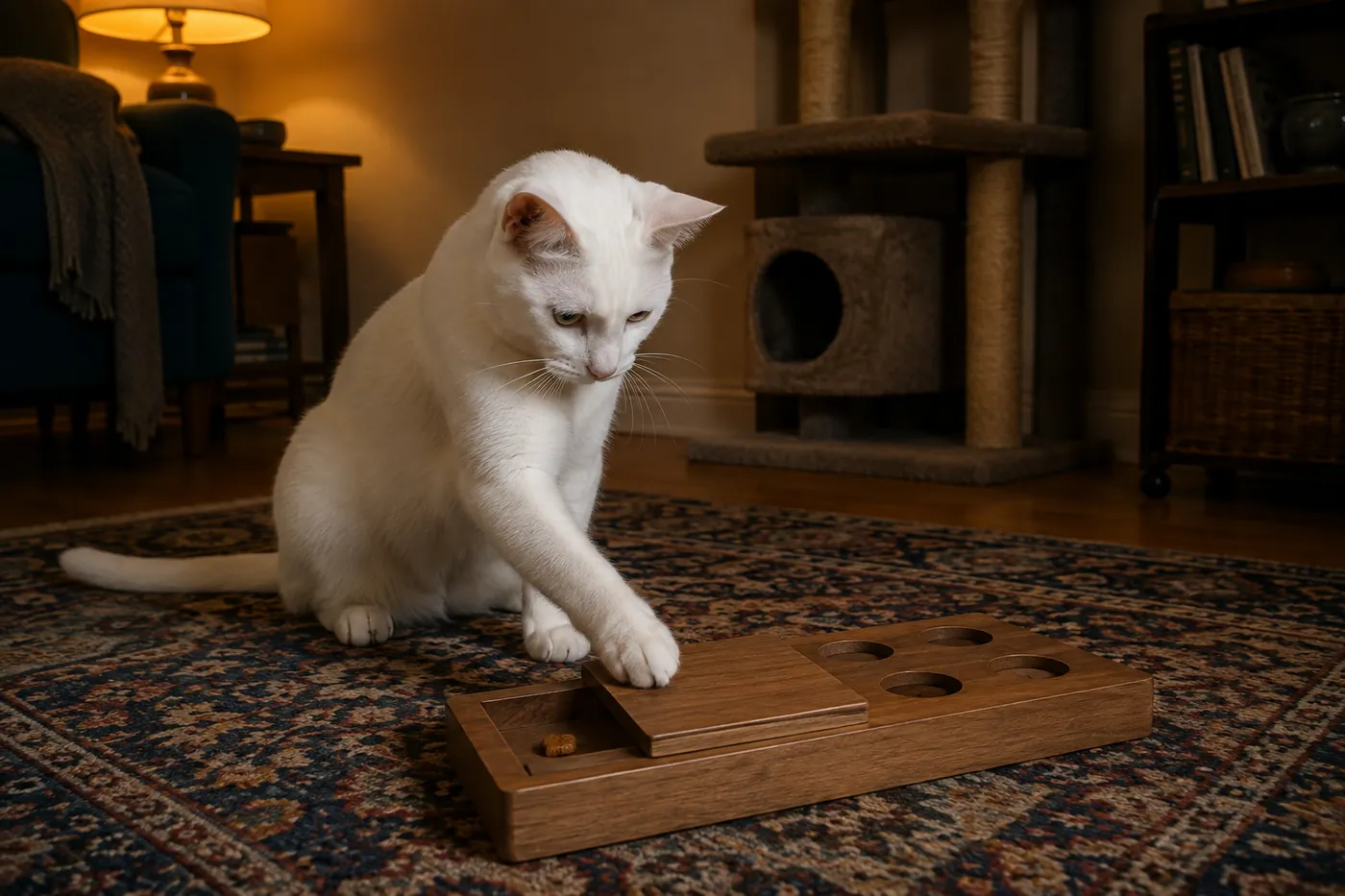
Reward preference varies between individuals and can change with stress or appetite. Training should follow the cat's response, so a cat that turns away has ended the session even when the planned repetitions are unfinished.
Vertical routes add activity without demanding a large floor plan. A stable tree, a clear shelf path and a high resting point let the cat climb and observe, provided every landing is secure and escape from other pets remains possible.
Reduced activity deserves attention when it departs from the cat's normal pattern. A sudden refusal to jump, play or approach familiar routines can reflect pain or illness and warrants veterinary advice rather than harder exercise.
How much grooming and shedding should you expect?
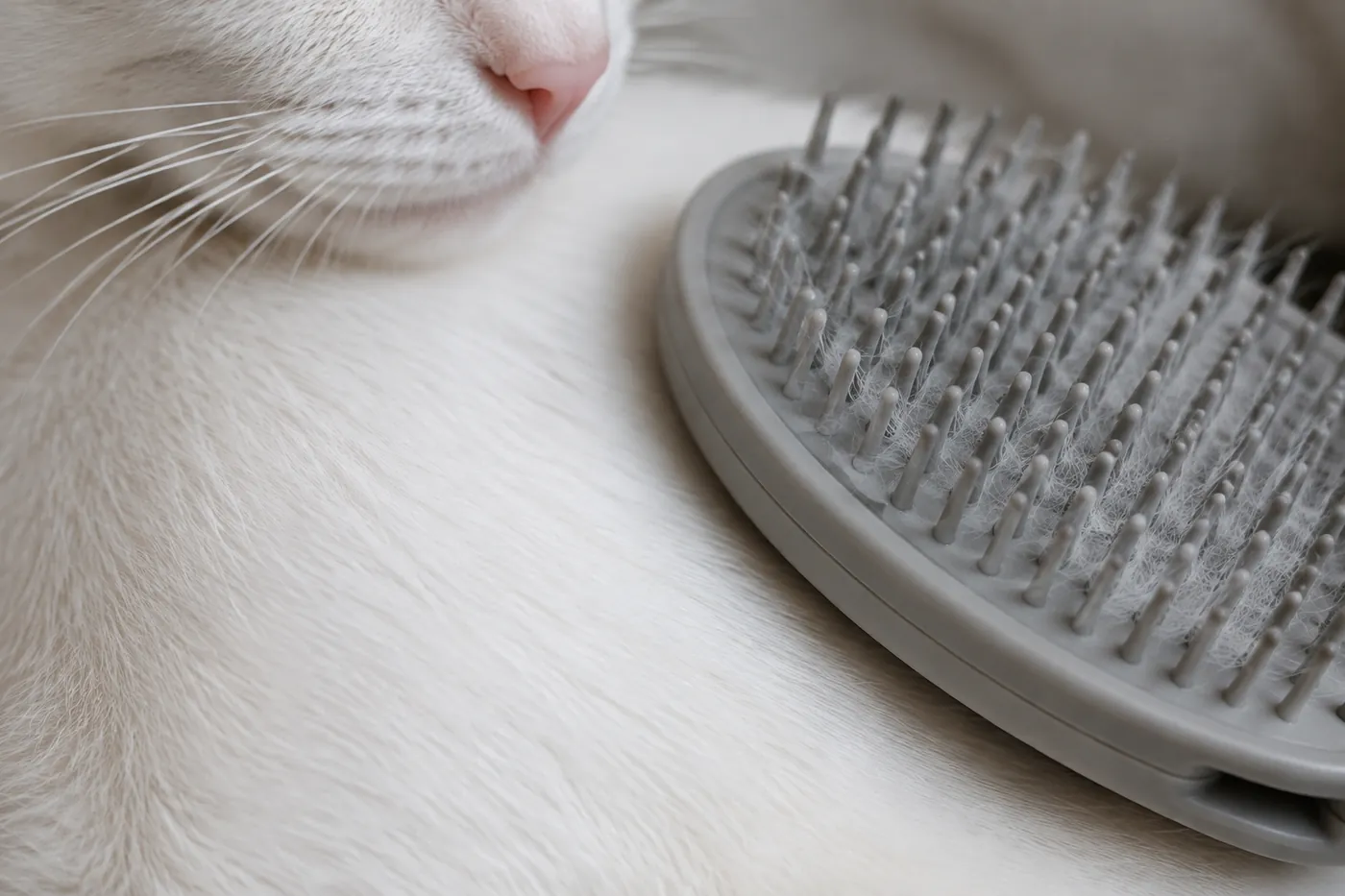
The short, close coat has a low grooming workload. TICA recommends weekly brushing, which is usually enough to lift loose hair and create a regular chance to check the skin. Low maintenance still produces visible shedding. CFA notes that the breed is not considered a heavy shedder, although white hairs can be conspicuous on dark fabric even when the total amount is modest.
- Brush weekly with a soft rubber or fine grooming tool that does not scrape the skin
- Run your hands over the body for new lumps, sore patches or coat changes
- Check the pale ear edges and nose after strong sun exposure
- Trim claws as needed and inspect the mouth during calm handling
- Wash bedding and vacuum soft furnishings to reduce loose hair and allergen load
No cat breed is truly hypoallergenic. Allergy specialists explain that people react to proteins from skin, saliva and urine, so coat length and colour cannot guarantee a tolerable home. When anyone in the household has allergies, time spent around the individual cat before committing is the practical test. A seller's hypoallergenic claim is not evidence, and significant asthma or allergy risk belongs with the relevant clinician.
White skin also has less pigment protection. Shade and an indoor retreat matter during strong sun, and persistent redness, crusting or change on the ear tips or nose needs a veterinarian rather than a human product.
Which health checks matter, and how long do they live?
The clearest breed-related health question is hearing. Congenital deafness is associated with dominant white pigmentation in cats, and blue-eyed white cats have a higher risk, although coat and eye colour still cannot diagnose the hearing of an individual animal. A cat deaf in one ear may orient well enough to appear fully hearing at home. Merck's veterinary guidance identifies brainstem auditory evoked response testing, commonly called BAER, as the definitive way to assess the auditory pathway, with each ear tested separately.
- Useful hearing record
- A BAER result stating the finding for each ear
- What eye colour tells you
- Risk context, not an individual diagnosis
- Unilateral loss
- Easy to miss through ordinary observation
- Everyday protection
- Keep a deaf cat indoors or securely contained outside
- Published lifespan
- TICA estimates 10 to 12 years
- Evidence limit
- No breed-specific cohort establishes a median lifespan
Apparent hearing can hide loss in one ear, which is why a BAER result for each ear matters.
GCCF's Khao Manee recognition policy offers a concrete example of why the distinction matters. Its registration rules use proven hearing status in breeding decisions, showing that a casual clap test does not carry the same information as an ear-by-ear record.
Deaf cats can have good lives with environmental protection. Visual cues, predictable approach, floor vibration and secure indoor living reduce surprise and prevent reliance on sounds the cat cannot hear, especially traffic or a calling owner.
CFA says no specific health problem has been established for the breed beyond the known hearing concern around white cats. For a relatively rare breed, absence of a reported breed disorder is limited evidence, so routine veterinary care and transparent family records still matter. TICA's public profile estimates a lifespan of 10 to 12 years. That is a registry estimate rather than a measured median, because no breed-specific longevity study currently tells us how long a representative Khao Manee population lived.
What should you ask before committing?
The sensible order is records first and the cat in front of you last. A careful breeder or rescue should be able to separate what is documented, what has been observed and what remains unknown.
- Show me the pedigree or registration record that establishes Khao Manee ancestry
- Show me the BAER result for the left and right ear of this kitten or adult
- Which health records are available for the cat and its parents
- How was the cat handled, played with and exposed to ordinary home sounds
- Can I observe the cat awake, playing and recovering from a mild interruption
- What happens if my veterinarian finds a serious undisclosed problem soon after placement
A rescue may reasonably have no pedigree or parent records. In that case the animal is best assessed as an individual white cat, and an ancestry claim nobody can establish is not worth paying for.
For a breeder placement, read the written contract before sending money. Confirm the cat's identity, hearing result, veterinary history, return terms and the support available if the placement fails. Price only means something once those records, the veterinary care and the support are known, because a high price on its own shows nothing about the cat's health or ancestry.
The final decision should feel specific rather than magical. You should know why this individual can live well in your home, what daily attention it needs, and which uncertainties you are accepting.
Checked Against
- The International Cat Association: Khaomanee tica.org
- The Cat Fanciers' Association: Khao Manee cfa.org
- Governing Council of the Cat Fancy: Khao Manee recognition policy gccfcats.org
- Merck Veterinary Manual: deafness in cats merckvetmanual.com
- UC Davis Veterinary Genetics Laboratory: dominant white vgl.ucdavis.edu
- American College of Allergy, Asthma and Immunology: pet allergies acaai.org
Published 6 September 2026. Last updated .





