
What Is a Balinese, and How Much Does It Differ From a Siamese?
A Balinese is closely related to the Siamese and adds silky longhair furnishings to a commonly social, vocal companion. Choose on company, activity, coat care and named family health records rather than assuming every Siamese claim applies unchanged.
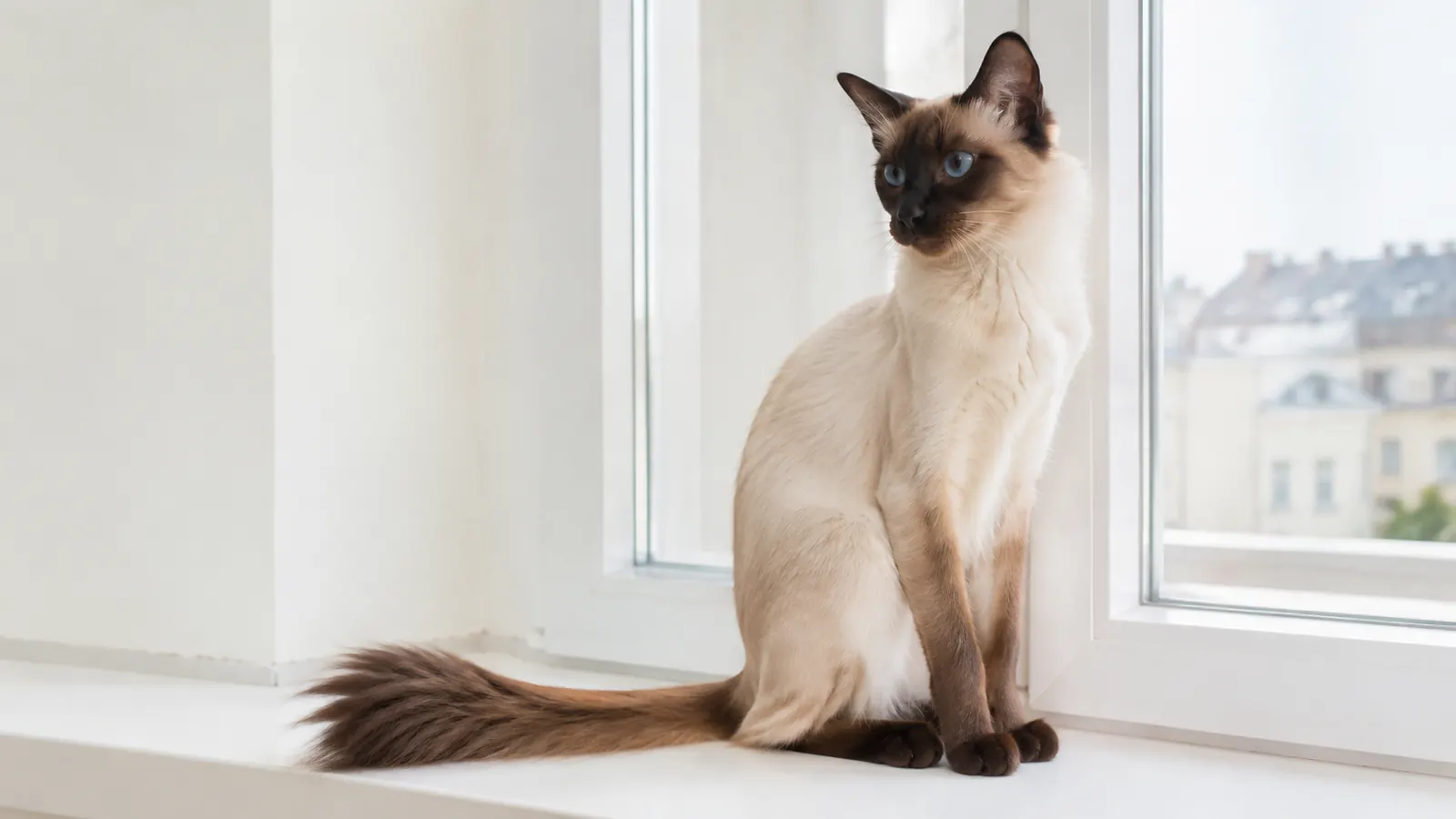
- Origin
- A long-coated kitten appearing in Siamese litters, with no connection to Bali or Java
- Coat
- Medium length and silky, with no undercoat, and the length concentrated in the tail
- Size
- The long tubular Siamese body on fine legs, which reads longer than it weighs
- Typical weight
- Typically 2.3 to 3.6 kg for females, 3.6 to 5.4 kg for males
- Life expectancy
- No published breed figure. The quoted 18 to 22 years has no study behind it
- Activity level
- High and social rather than athletic. Follows people between rooms
- Grooming
- Low. A weekly brush, because there is no undercoat to mat
- Suits
- Full households that are rarely empty, and buyers who ask for the parents' rdAc results
What actually differs from a Siamese?
The difference is one recessive gene, though shared ancestry does not prove identical health or temperament in every line.
- Coat
- Medium length and silky. The only genuine difference
- Body type
- Siamese. Long, tubular, fine boned
- Eyes
- Siamese. Deep blue, almond, set on a slant
- Voice
- Siamese. Loud, low pitched, constant
- Inherited disease list
- Siamese, unchanged
- Grooming
- Barely different, because there is no undercoat
The breed arose inside Siamese litters rather than from any outcross. Long-coated kittens turned up, and breeders kept them.
The mechanism is ordinary. Long hair in cats comes from recessive mutations in FGF5, so a Balinese needs two copies and a Siamese carrying one shows nothing at all.
That is why the breed keeps appearing without warning. Two shorthaired Siamese each carrying a single copy can produce a long-coated kitten neither parent's appearance predicted.
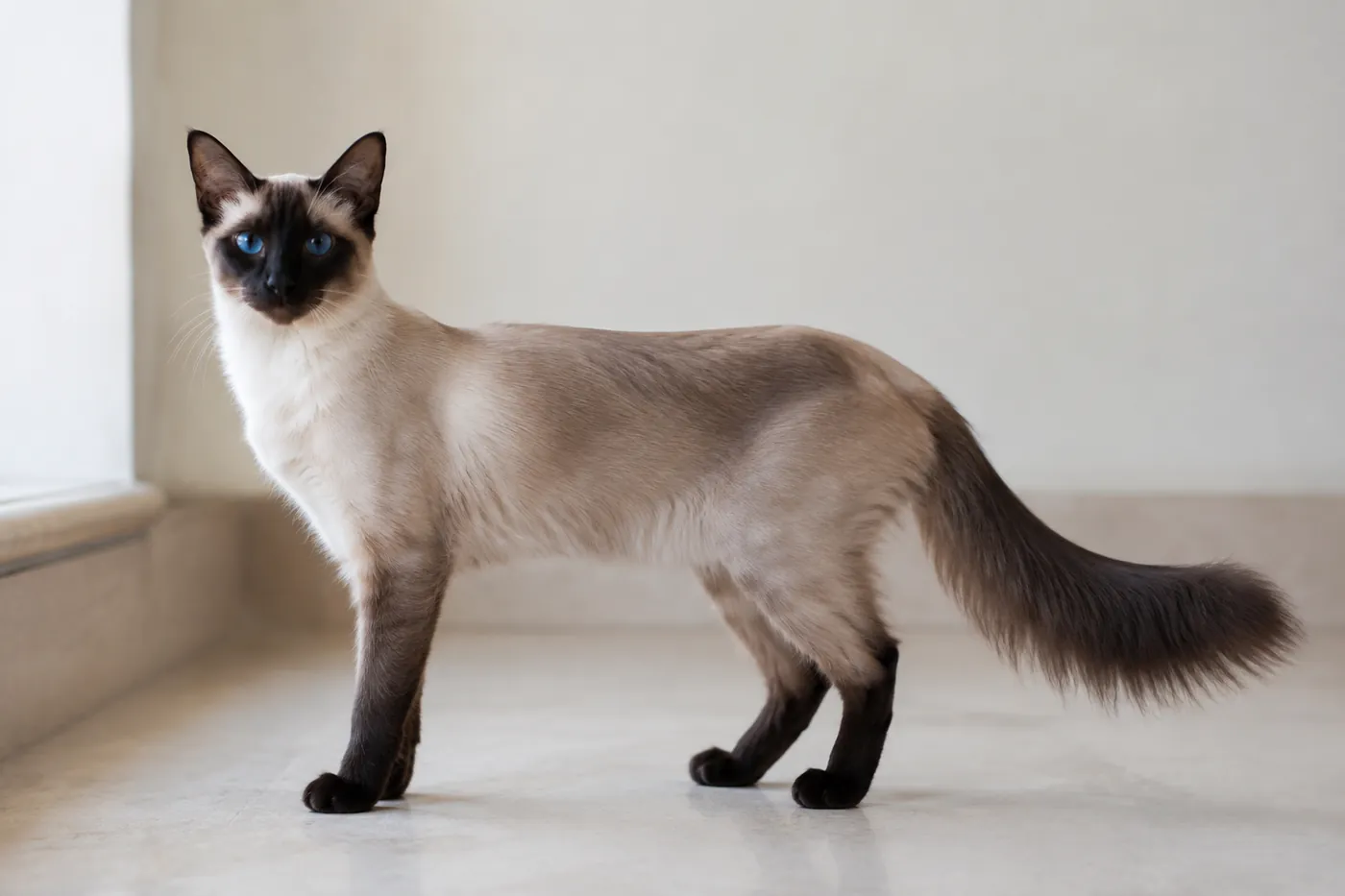
A single recessive gene changed the coat and left the body, the eyes, the voice and the disease list exactly as they were.
That is the whole visible difference, and it is worth being precise about because everything else arrives intact. The body, the head, the eye colour and the voice are the Siamese ones, and so is the health history.
Registries disagree about which colours count, so paperwork wording varies. The coat is also medium rather than deep, which surprises buyers expecting a genuinely longhaired cat.
Why is it called Balinese?
The name has nothing to do with Bali, and there is no connection between these cats and the islands of Bali or Java at all.
The name was chosen for the way they move, which breeders thought resembled temple dancers. The Siamese line behind them reached Britain and America from Thailand in the nineteenth century, and some of those imports carried the recessive coat gene.
One wrinkle reaches paperwork. In the American standard, colours derived from the Colorpoint Shorthair are registered separately as the Javanese, which is a naming line rather than a different animal.
Which Siamese diseases come with the coat?
The one that matters most is named after a different breed entirely, and it is commonest here.
rdAc retinal degeneration is a recessive condition that leaves a kitten seeing normally at birth and blinds it between three and five years old. The allele reached roughly 33 percent in North American and European Siamese populations, and the authors single that group out as carrying a significant health risk.
The comparison is the useful part. The same survey measured 0.07 in United States Abyssinians, and the mutation is named after the Abyssinian.
| Condition | What it does | DNA test | What a buyer can do |
|---|---|---|---|
| rdAc retinal degeneration | Blindness by three to five years | Yes | Ask for both parents' results |
| Familial AA amyloidosis | Organ failure between one and seven | No | Ask about ages and causes of death in the line |
So the single most useful thing a Balinese buyer can do is ask for the parents' rdAc results. The test exists, the frequency in this lineage is high, and a clear pair of parents removes the risk from the litter.
Recessive also means the arithmetic on a certificate is simple. Two clear parents cannot produce an affected kitten, a clear parent bred to a carrier cannot either, while other matings in which both parents can transmit the variant, including affected parents, can also produce affected kittens.
So a breeder pairing a carrier with a clear cat loses nothing and risks nothing. A breeder who has tested neither parent is not managing the risk at all, whatever the line's history sounds like.
Carriers see perfectly well, which is why the frequency can stay high without anyone noticing. The second condition on that table has no test at all, and it needs its own section.
What does the liver amyloidosis do?
It goes for the liver, which is the first thing to say, because the word amyloidosis usually means kidneys.
In Siamese and Oriental lines the amyloid deposits accumulate systemically, and the liver and the thyroid are the main targets. That is a different disease from the renal form that runs in Abyssinians, sharing a name and very little else.
The necropsy picture explains why it presents the way it does. Affected cats show pale, fragile, enlarged livers with capsular rupture and bleeding into the abdomen.
The ages are the part that should change behaviour. Affected cats die between one and seven years old, which is an age at which almost nobody is watching for organ failure.
The thyroid is the second target, and it is part of why this is caught late. A cat under seven sits outside the age band where anyone routinely checks organ values.
That makes the test most likely to find it the test least likely to be run. Asking for bloodwork on a young cat that has gone quiet is not an overreaction in this lineage.
No validated genetic test exists, though candidate variants have been reported in Siamese and Oriental lines. Most Balinese cats never develop it, so this is a reason to ask a breeder about ages and causes of death rather than a reason to avoid the breed.
How much coat is there really?
Less work than the word long implies, and the reason is structural.
A Balinese has no undercoat, and because undercoat is what mats, a single-coated cat has nothing underneath to tangle. The coat lies close and silky against the body instead of standing away from it.
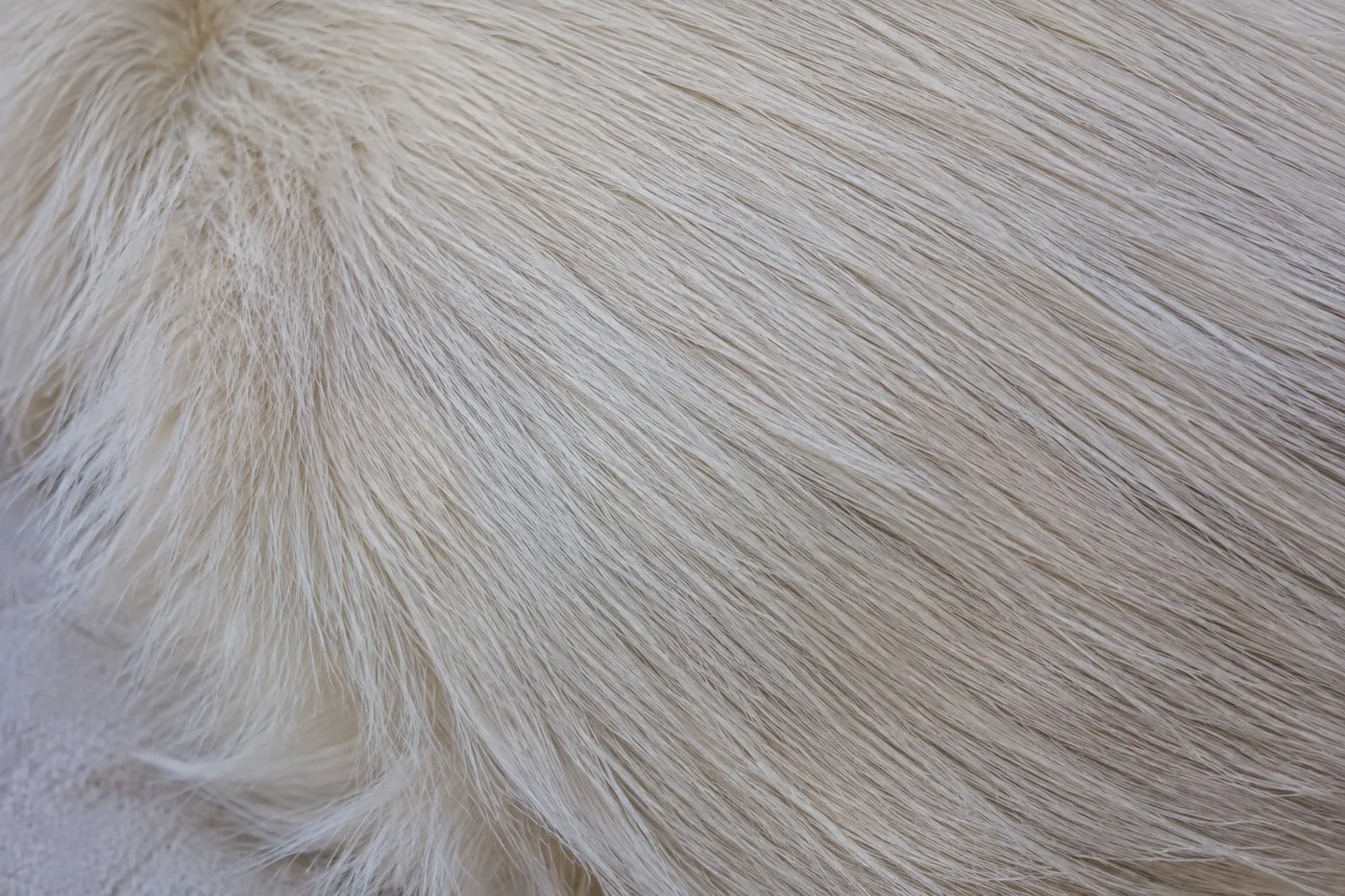
The length is also concentrated rather than spread. Most of it is in the plumed tail, and the body coat is barely longer than a shorthaired cat's.
A weekly brush covers it, which is well short of what a long-coat routine usually demands. None of that makes the breed low-shedding or suitable for an allergy household, and an elderly or overweight cat that stops reaching its own back needs a brush where the young one did not.
What that weekly brush consists of is worth being specific about, because two places on this cat do behave like a longhaired coat.
The tail plume is the first. It holds nearly all the length, it collects litter and debris, and it is the one part of a Balinese that will genuinely mat if it is left through a moult.
The britches are the second. The longer hair on the back of the thighs sits exactly where a cat with a fine frame struggles to reach, and it is where the first tangle usually appears in an older cat.
A fine-toothed comb does more here than a slicker brush. Slickers are built to pull undercoat out of a double coat, and on a single silky coat they mostly break the guard hairs.
Work the comb through the tail and the britches, then run it down the back and flanks, and the whole job is a few minutes. Shedding is moderate and year-round rather than arriving in two heavy moults, so the routine does not change much with the season.
How big is a Balinese?
Smaller than it looks, which is the standing Siamese problem.
An adult female runs about 2.3 to 3.6 kg and a male about 3.6 to 5.4 kg. The body is the long tubular Siamese one on fine legs, and length reads as size when it is not.
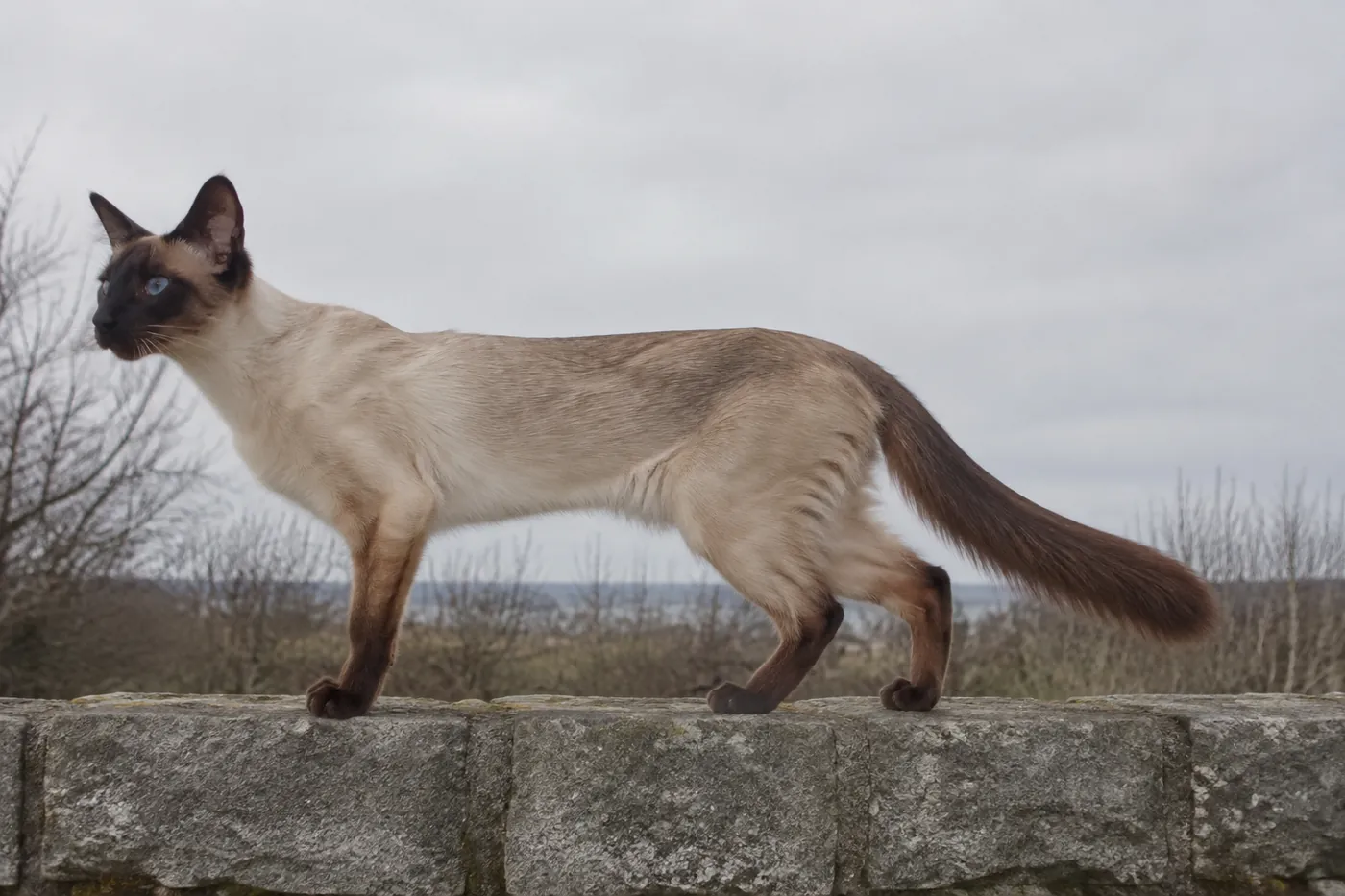
The practical edge of that is feeding. A frame carrying very little spare condition shows a small gain quickly and a small loss faster, so how much to feed is worth getting right rather than estimating.
Males sit well above females, so one average describes neither. A heavy Balinese is an overweight one rather than a big one.
How loud is a Balinese?
Very loud, and for many owners the voice matters more day to day than anything on the health list.
The voice is the Siamese voice: loud, low pitched, and used constantly. It sounds closer to a raised human voice than to chirping or trilling, and it carries through walls.
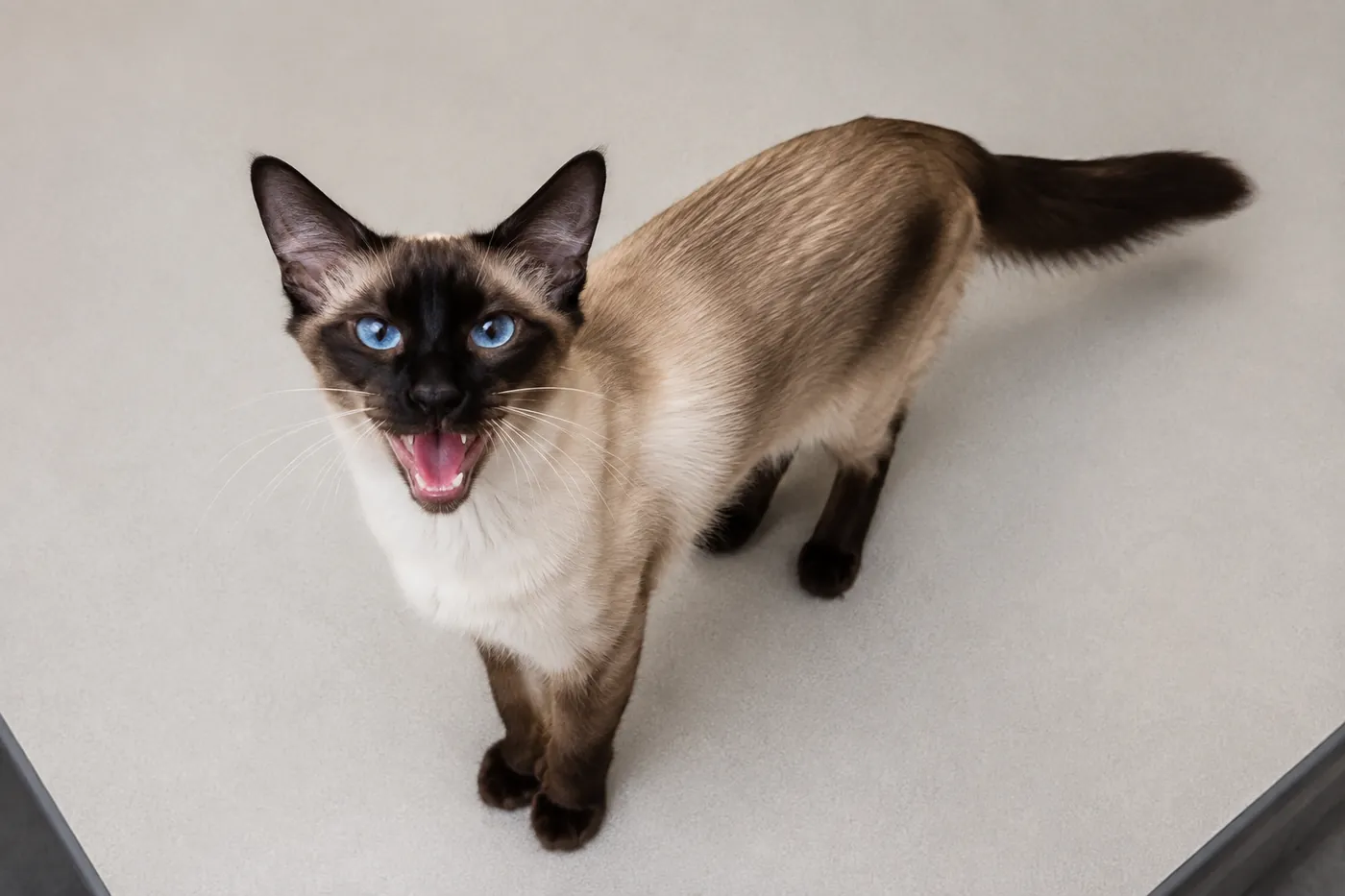
The cat is also talking to you rather than merely vocalising. It expects an answer, follows people between rooms, and escalates when ignored.
So a thin-walled flat, a shift worker or anyone who needs silence to concentrate should think hard. Individual cats vary in volume, though the tendency is consistent enough to plan around, and the one mitigation is that the volume drops when the cat gets the attention it is asking for.
What a full working day does to one
A Balinese commonly wants frequent interaction and may be a poor match for long unpredictable absences. There is no single safe number of hours that describes every adult.
A routine of play and contact built around work, accessible food-search tasks and extra care for a kitten or a distressed cat make the absences easier, and changes in eating, resting, toileting or calling show when they are not enough.
A second cat can offer companionship only when both cats choose the relationship, which depends on gradual introductions and separate resources.
New overgrooming or calling warrants a health check before it is labelled loneliness.
Why do the points change colour?
The pigment enzyme does not work at body temperature.
The pointed pattern comes from a variant of tyrosinase that functions at around 25 degrees and fails at the temperature inside a living cat. Pigment therefore appears only where the skin runs cooler, which is the ears, the mask, the legs and the tail.
- At birthAlmost uniform pale cream, because the womb is evenly warm
- The first moultThe mask, ears, legs and tail begin to darken
- Through adulthoodThe points keep deepening, and the body darkens slowly with them
- In a cold houseDarkening runs faster, so two littermates in different homes diverge
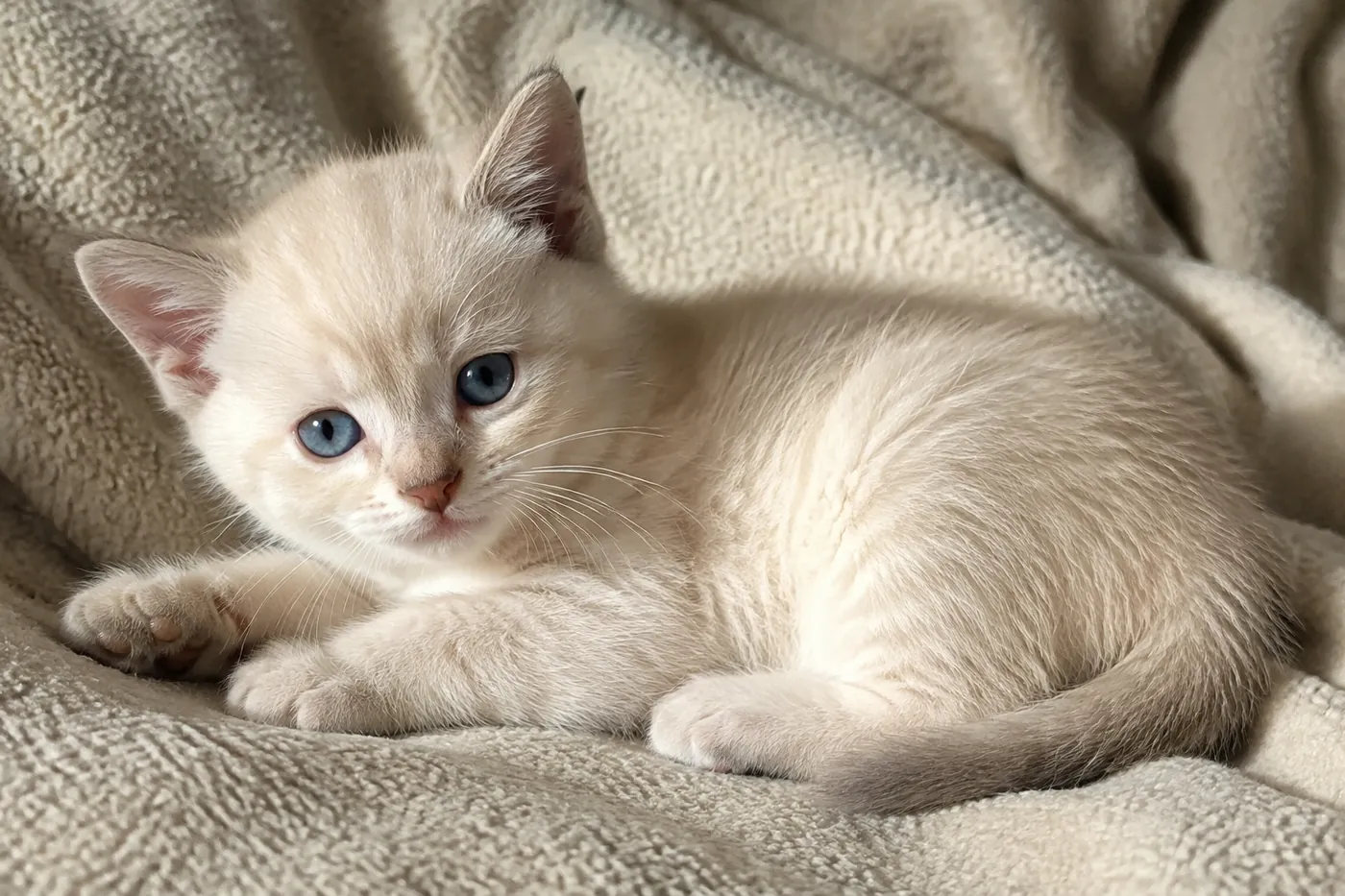
The mechanism has an edge owners meet at the vet. Fur shaved for surgery or a scan regrows over bare skin that runs cooler than usual, so the patch comes back darker than the coat around it.
It fades as the coat cycles and is not a reaction to the procedure. A cat clipped in winter keeps the mark noticeably longer than one clipped in summer.
The buying consequence is direct. Choosing a Balinese on colour at eight weeks means choosing a colour the cat has not finished making, and a darkening body coat later is normal ageing rather than a fault.
How long does a Balinese live?
The figure you have read is 18 to 22 years, and nothing stands behind it.
The cited sources do not establish that range as a measured population result. The largest UK life-table work published a separate figure for only twelve breeds, and this was not among them.
Set it against the amyloidosis literature and the mismatch is uncomfortable. Affected cats in this lineage die between one and seven years old, which is not a number that sits easily beside a claim of twenty-two.
What the UK study did measure is more useful anyway. Neutering and body weight were both associated with how long a cat lived, and watching for the signs of ageing does more than any breed figure could.
Is one good with children and other pets?
Yes, and unusually so. A Balinese bonds closely with people of all ages, with cat-friendly dogs and with other cats.
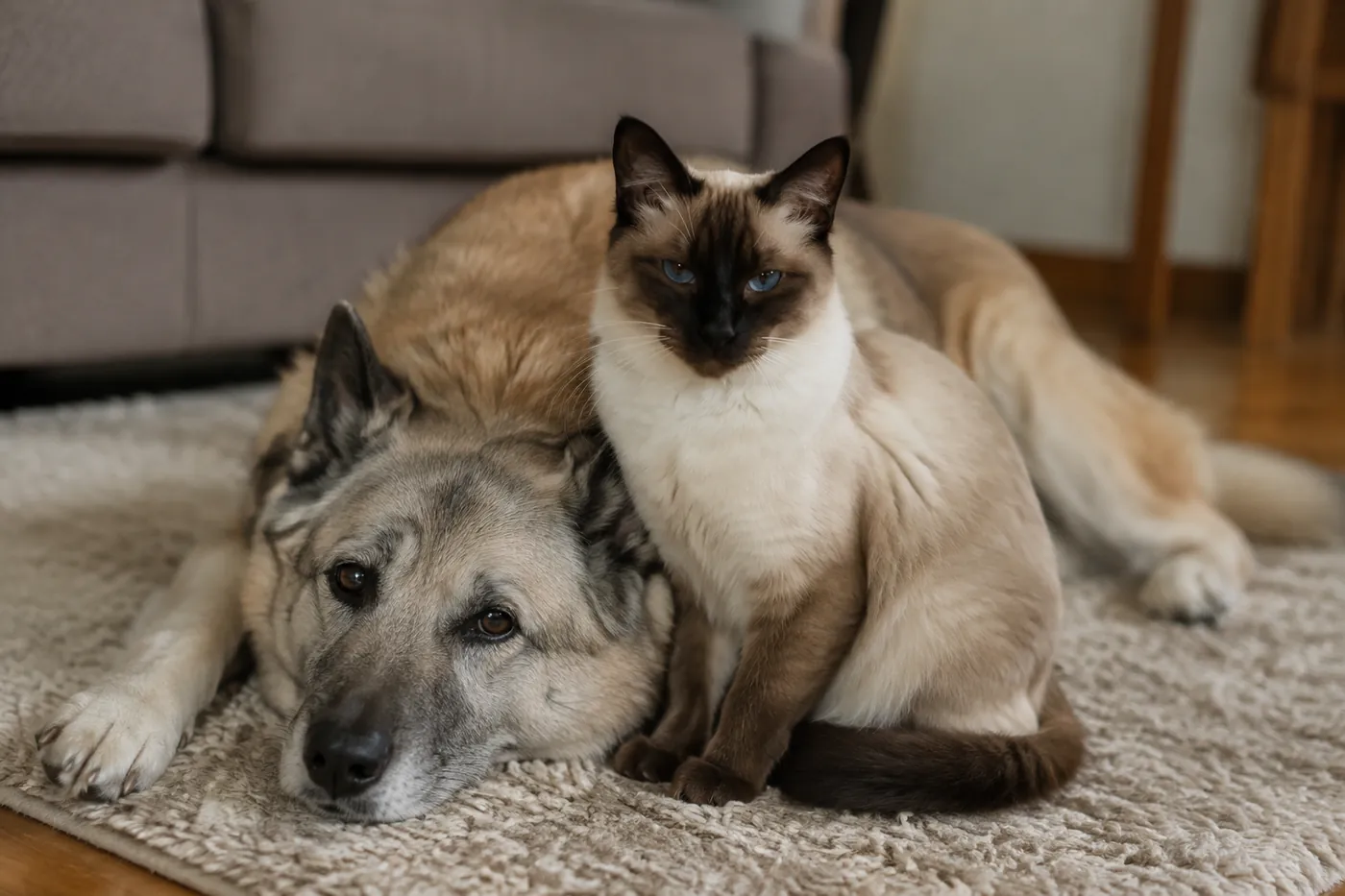
The sociability that makes this cat good company is the same trait that makes it intolerant of an empty house, so a second cat helps far more than extra toys do and the socialisation window still decides how it handles a dog.
Who should think twice about one?
The quiet household, which is exactly the one that reads a long silky coat as a calm cat.
A Balinese is not calm and is not quiet. Somebody who wants an ornamental companion will get a vocal, insistent animal that follows them into every room and objects to closed doors.

The second is an empty house. A cat this social deteriorates when left across a full working day rather than settling into it, and daily play by life stage is a floor rather than an extra.
There is one litter to decline outright. A Balinese litter offered with no rdAc results on either parent leaves the single testable risk in this lineage untested, and that test is cheap, available and conclusive.
Where the household is busy, somebody is usually home, and the breeder produces two certificates and a straight answer about the line, this is a rewarding and unusually engaged cat. Everything that makes it hard work and everything that makes it good company arrived in the same package, and close Siamese ancestry still does not guarantee identical health or temperament in every line.
Common Questions
Are Balinese cats hypoallergenic?
No, despite the claim following this breed around. The allergen is Fel d 1 in saliva and skin, and a single coat with no undercoat changes how much fur you see rather than how much allergen the cat makes.
Can two Siamese produce a Balinese kitten?
Yes, if both parents carry the recessive long-hair allele. Neither parent will look long-coated, which is how the breed appeared in Siamese litters in the first place.
Is a Javanese a different cat from a Balinese?
Not biologically. In the American standard it is the registry name for the colours derived from the Colorpoint Shorthair, and elsewhere the same cat is simply a Balinese.
Checked Against
- Four independent mutations in the feline FGF5 gene determine the long-haired phenotype pmc.ncbi.nlm.nih.gov
- Widespread retinal degenerative disease mutation (rdAc) across popular cat breeds pubmed.ncbi.nlm.nih.gov
- Generalized AA-amyloidosis in Siamese and Oriental cats pubmed.ncbi.nlm.nih.gov
- Tyrosinase mutations associated with Siamese and Burmese patterns in the domestic cat pubmed.ncbi.nlm.nih.gov
- Life tables of annual life expectancy and risk factors for mortality in cats in the UK pmc.ncbi.nlm.nih.gov
Published 4 September 2026. Last updated .





