
What Is an Oriental Shorthair, and Does Its Need for Company Suit Your Home?
An Oriental Shorthair suits somebody who wants an expressive, athletic cat involved in daily life. The short coat is simple to maintain, but the breed's need for company, frequent interaction and documented health screening makes it a poor match for a routinely empty or very quiet home.
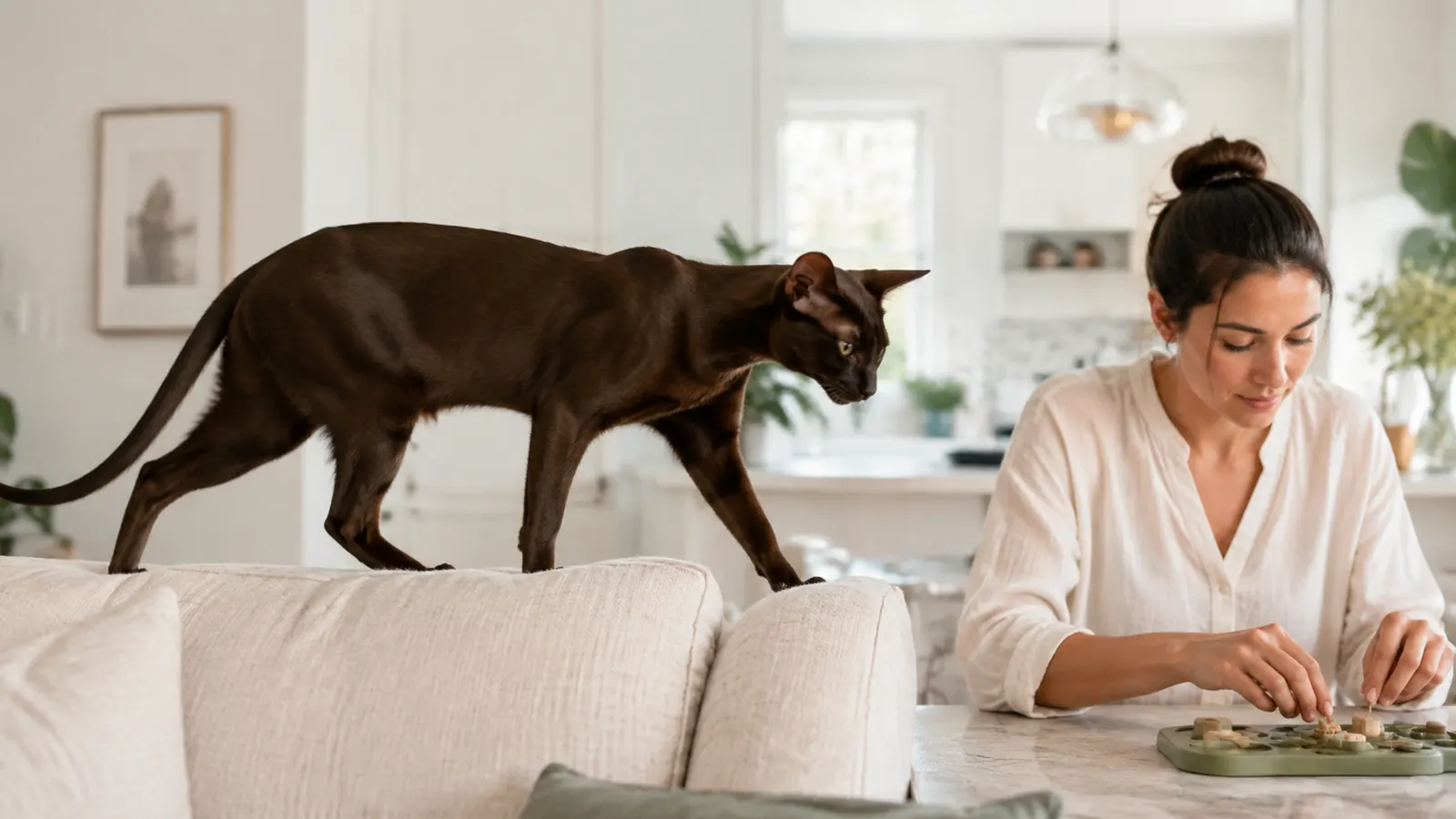
- Origin
- Developed from Siamese-related lines, chiefly in Britain and the United States
- Coat
- Very short, fine and close lying, accepted in a broad range of colours and patterns
- Size
- Medium sized, long and fine boned but firmly muscular rather than fragile
- Typical weight
- TICA gives about 5 to 8 pounds for females and 8 to 12 pounds for males
- Life expectancy
- No robust breed-specific median is available; individual health and care matter more than promotional ranges
- Activity level
- High. Social play, climbing, exploration and training should be part of every day
- Grooming
- Low coat workload, with light combing or a grooming cloth every week or two
- Suits
- Interactive households that enjoy a talkative cat and can provide company, height and health documentation
An Oriental Shorthair brings the long lines and people-focused temperament of the Siamese group into a much wider range of coat colours and patterns. That combination is attractive, but colour is the least important part of the ownership decision. This is commonly a vocal, observant cat that expects access to household life. A good match enjoys that participation and builds a day around it rather than hoping the cat will become more independent after settling in.
Is an Oriental Shorthair a good household fit?
This breed suits someone who wants an active relationship with a cat. Oriental Shorthairs are often described by registries as affectionate, curious and talkative, and many follow familiar people from room to room or answer changes in routine with their voice. That sociability can be delightful in an involved home and exhausting in one that wanted a quiet background companion, and for most Oriental Shorthairs company is a daily need.
- Strong fit
- A household that enjoys frequent interaction, play and a conversational cat
- Possible fit
- Families with respectful children, stable routines and protected retreat space
- Harder fit
- Regular long absences, noise-sensitive neighbours or very limited climbing space
- Daily work
- Interactive play, shared activity, food puzzles and brief coat care
- Health evidence
- rdAc retinal degeneration results plus family health and longevity records
A second compatible cat may provide play and contact, but it does not automatically solve separation distress or boredom. Temperament, introduction quality and resource access decide whether two cats become companions or competitors.
An individual shows more when you meet it awake and again after excitement has passed, because recovery, handling tolerance and willingness to disengage reveal more than a breeder's broad claim that every kitten is outgoing.
Balinese and Oriental Shorthair cats share much of the same social, vocal type. Coat length, point restriction and the individual cat usually matter more to the choice than promises of a calmer personality.
What does the breed look like, and how large does it get?
The body is long, tubular and fine boned, with firm muscle, long legs and a tapering tail. The head forms a long wedge that continues into very large ears, while almond-shaped eyes follow the slant of that wedge.
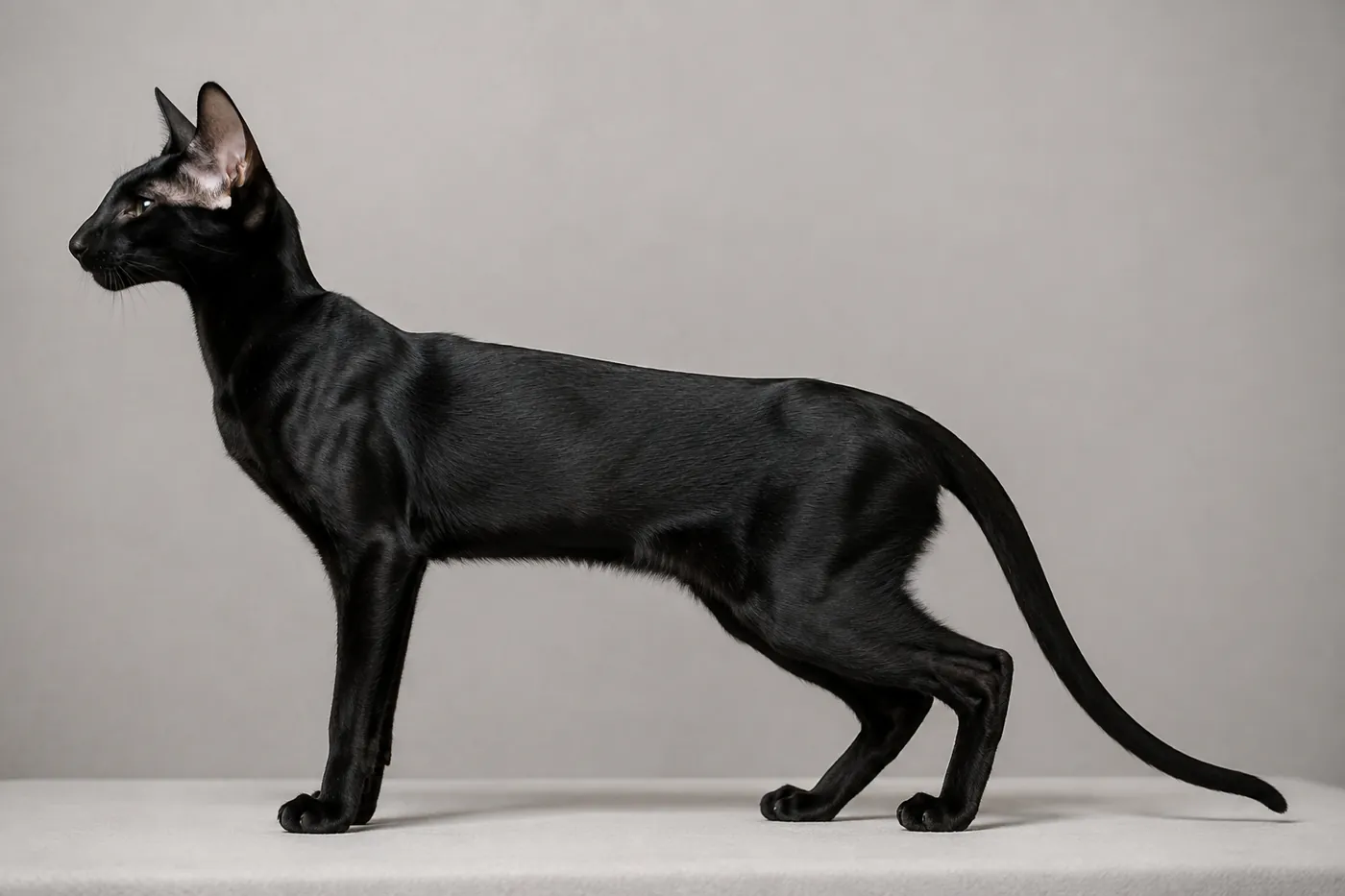
TICA gives roughly 5 to 8 pounds for females and 8 to 12 pounds for males, with physical maturity around 18 to 24 months. Those figures are planning context, because the measured cat determines carrier dimensions, calorie needs and healthy body condition.
| Feature | Typical Oriental Shorthair | What it does not establish |
|---|---|---|
| Head | Long straight-sided wedge with very large ears | Pedigree by itself |
| Body | Long, fine boned and muscular | A healthy weight without hands-on assessment |
| Coat | Very short, fine and close lying | Low allergen exposure |
| Colour | Many colours and patterns | A different temperament from a Siamese |
| Eyes | Almond shaped, colour varies with coat division | Adult health |
Registries count colours and patterns in different ways, so claims about an exact number vary. The stable fact is that the breed covers solids, tabbies, smokes, shaded coats, tortoiseshells and other accepted divisions rather than only pointed colour.
How is an Oriental Shorthair different from a Siamese?
These are close relatives. The breeds share ancestry, body type and much of their behavioural reputation. The practical visual distinction is that a Siamese is defined by pointed colour, while an Oriental Shorthair carries the same svelte type in many non-pointed colours and patterns.
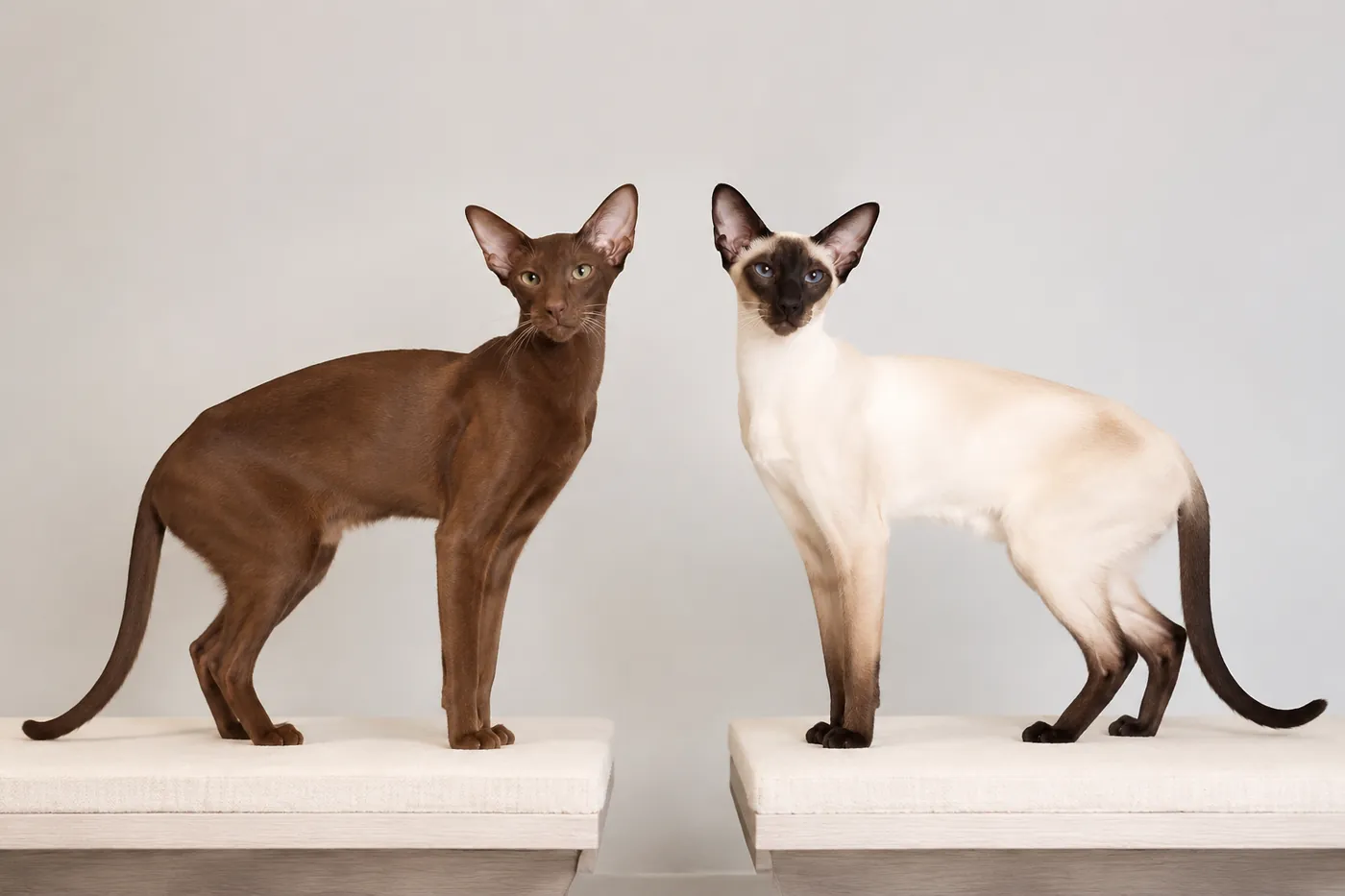
That means an Oriental is not a quieter or less social alternative simply because the coat looks different. If the Siamese temperament would overwhelm your household, a different colour in the same breed group does not remove the underlying mismatch.
The Balinese and Oriental Longhair extend the same family in a longer coat. Coat length changes grooming, while the need for interaction and the inherited health questions remain connected to the lineage. That leaves coat and individual temperament as the useful differences between these cats, since no colour comes with a calmer personality.
How much attention and exercise does the breed need?
An Oriental Shorthair usually benefits from several short sessions spread through the day. Chase, climbing, carrying, target work and food-search tasks exercise different behaviours, while one frantic evening game leaves the social part of the day unresolved.
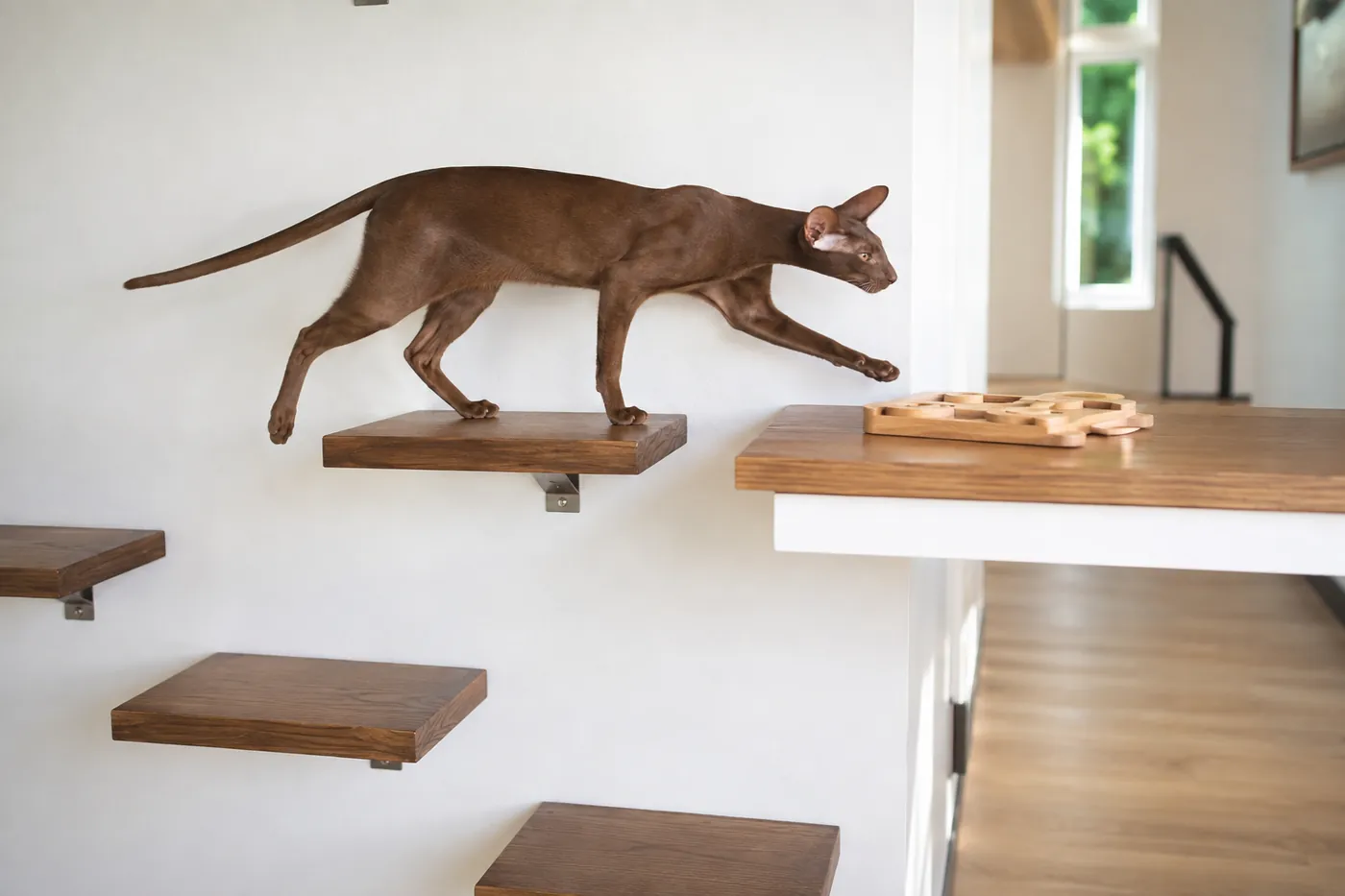
- Anchor tall furniture and provide more than one route down
- Rotate a few toys instead of leaving every toy available continuously
- Use meals in simple puzzles when the cat enjoys working for food
- Teach recall, carrier entry and stationing with short reward-based sessions
- Schedule interactive play around the longest household absence
- Watch for vocalising, overgrooming or elimination changes when routines shift
Clicker training fits the breed's attention and can turn energy into useful skills. Keep the session short enough that the cat finishes successfully, because repeated demands after concentration fades create frustration rather than learning.
Absence tolerance is individual, so time alone is best increased gradually after adoption while eating, sleep and litter habits show how the cat is coping. A camera speaker is no substitute for dependable human care during longer absences.
What is life with a talkative Oriental like?
Vocal behaviour ranges from soft commentary to persistent, carrying calls. The important question is whether the household can accept ordinary communication without punishing it, while still checking for illness when the cat's normal voice changes. Responding does not require providing food each time. Attention, a short game, access to a window perch or a predictable next activity can meet the request without teaching the cat that every call opens the food cupboard.
Children should let the cat initiate and end contact. Other pets need separate food, water, beds and litter resources during a gradual introduction, since an outgoing cat can still feel threatened when a route or valued person is blocked.
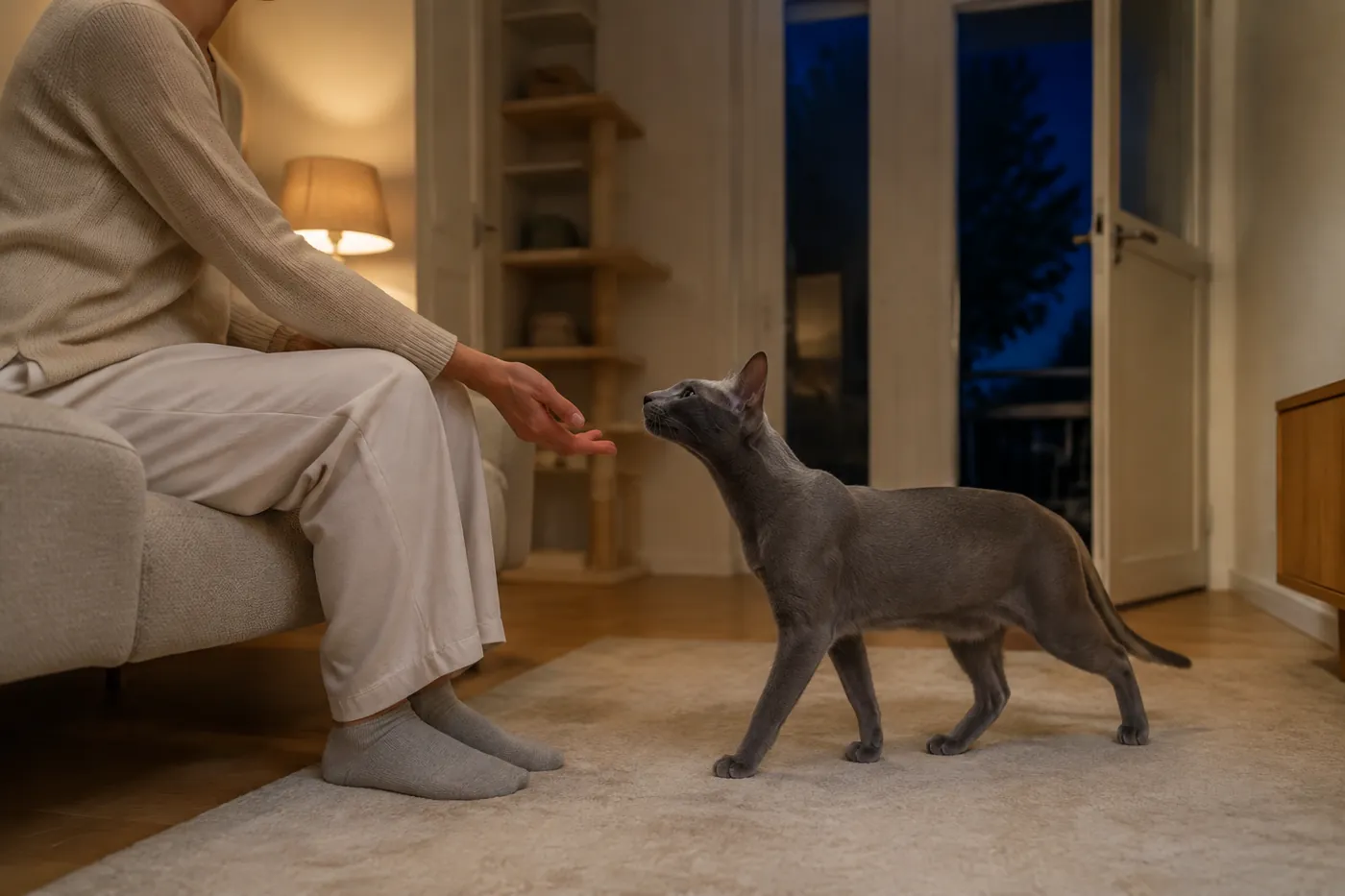
Sudden new vocalising is a health or stress signal, especially when paired with appetite, weight, thirst, sleep or litter-box changes. It should not be dismissed as a breed quirk.
How much grooming and shedding should you expect?
The short, fine coat is straightforward. A grooming cloth, soft rubber brush or fine comb every week or two usually removes loose hair while giving you a chance to inspect the skin and feel the body beneath it.
- Let the cat inspect the tool before it touches the coat
- Work lightly in the direction the hair lies
- Check the neck, shoulders, flanks and base of the tail
- Stop when the cat turns away or the skin begins to ripple
- Note tenderness, bald areas, scale or a new lump for veterinary review
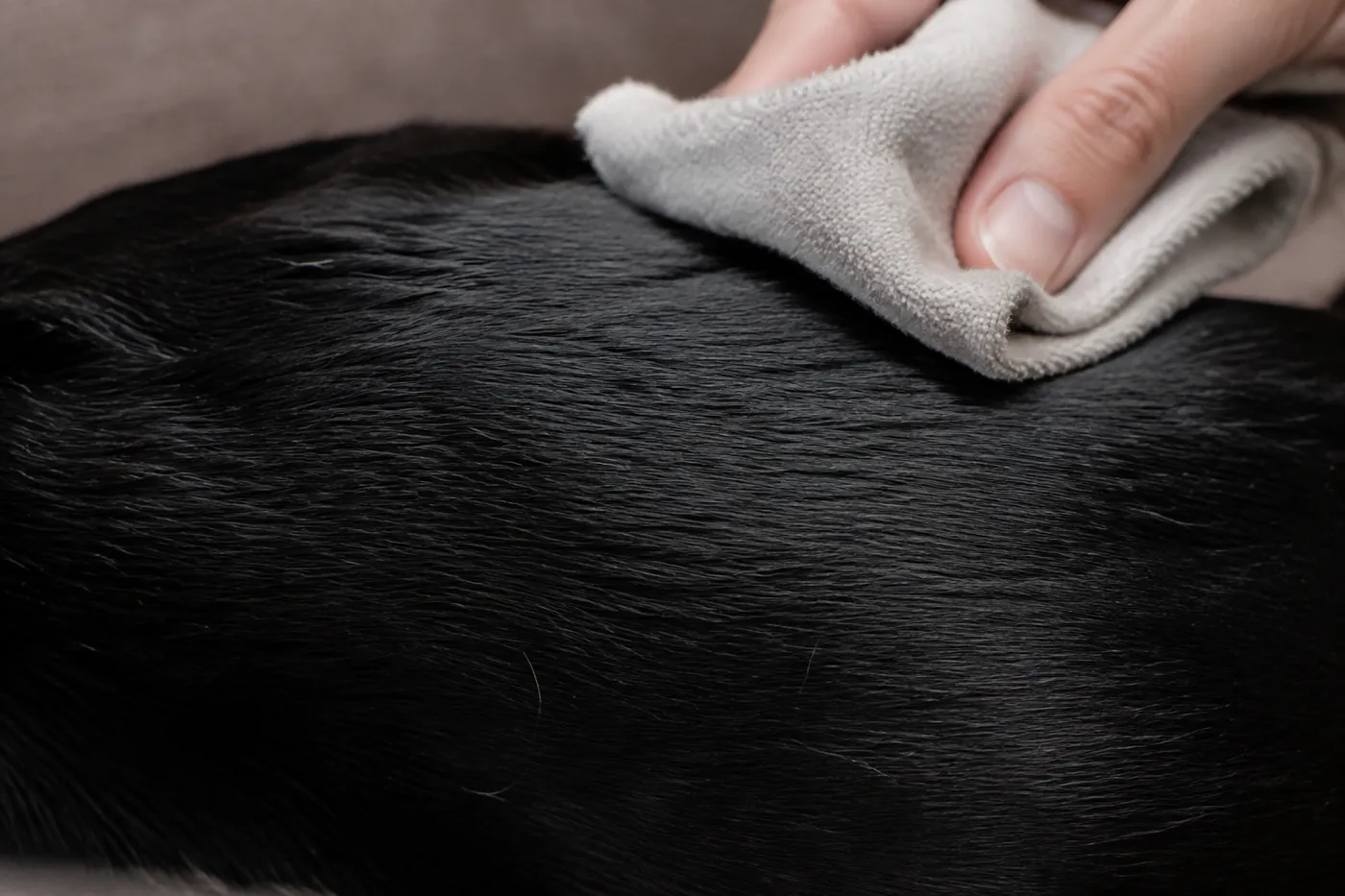
Short hair does not make the breed hypoallergenic. Cat allergens come from proteins carried in saliva and skin material, so an allergic person should spend meaningful time with the individual cat before making a commitment.
The same gentle approach with grooming tools carries over to tooth care and claw handling, so an easy coat still leaves regular hands-on care to do.
Which health questions should a buyer ask?
Progressive retinal atrophy associated with the CEP290 rdAc variant occurs in Siamese-related populations and has a DNA test. An affected cat begins life able to see and later develops progressive vision loss, so results for both parents are valuable before a mating rather than after signs appear.
Familial AA amyloidosis has also been reported in Siamese and Oriental lines. Published cases describe systemic deposits with the liver and thyroid among important sites, but there is no validated DNA clearance that lets a breeder remove the risk with one certificate.
| Question | Useful evidence | Important limit |
|---|---|---|
| rdAc retinal degeneration | Named DNA result for both parents | Covers that variant, not every eye disorder |
| Familial amyloidosis | Ages and causes of death in related cats | No conclusive routine DNA clearance |
| Heart health | Family history and veterinary screening practice | One normal check does not predict every later year |
| General health | Examination, vaccination and parasite records | A young kitten cannot prove lifetime health |
Ages and causes of death across close relatives say more than the health of two young parents. A test result answers one defined genetic question, while family history can expose repeated disease that current tests do not cover.
No reliable breed-specific median lifespan is available from a large veterinary population study. Promotional ranges can help with long-term planning, but insurance, preventive care, indoor safety, weight control and early response to change have more value for the individual cat.
Where did the Oriental Shorthair come from?
The modern Oriental was developed by breeding Siamese-type cats with other cats and then selecting the familiar long wedge and fine body in non-pointed colours. Registry histories place much of that organised development in Britain and the United States during the twentieth century. That origin explains why the resemblance to a Siamese extends far beyond the ears. Body proportions, social intensity and several inherited health questions came through the same breeding family, while the expanded colour palette became the visible distinction.
The name Oriental describes a registry group rather than proof that an individual cat came recently from a particular country, and only a pedigree identifies an individual cat's ancestry. CFA groups shorthaired and longhaired varieties under Oriental, while other organisations may name or organise them differently. The registry that issued the paperwork, and its current standard, decide whether two labels mean the same cat.
How do an Oriental's needs change with age?
Kittens need frequent meals, deep sleep and many brief social experiences rather than one exhausting play period. Safe exposure to grooming tools, carriers, visitors and household sounds helps build routines without flooding a young cat.
Adolescence often brings the most athletic and demanding stage. Long limbs can reach shelves that seemed inaccessible a week earlier, so secure breakables, anchor furniture and continue giving the cat legal routes upward.
Adults benefit from a predictable framework with small changes inside it. Moving a food puzzle, teaching a new target or alternating chase styles adds novelty without removing the reliable meal and rest schedule that helps an observant cat settle.
Senior Orientals may remain socially insistent while jumping less or sleeping more. Bring favourite activities down through intermediate levels, use warm beds and treat new vocalising, night waking or withdrawal as information for a veterinarian rather than inevitable ageing.
- KittenhoodBuild handling, carrier comfort and short positive social experiences
- AdolescenceSecure height and channel expanding reach into safe play
- AdulthoodMaintain daily interaction while monitoring weight and dental health
- Mature yearsNotice small changes in voice, appetite, jumping and recovery
- Senior yearsLower routes and keep social routines within comfortable reach
The long fine outline can make weight loss look subtle at first. Regular weighing and a hands-on body check give you a baseline against which future change becomes visible.
What should you verify before committing?
Household fit comes first, then identity and health. A dramatic colour or unusually large ears should not hurry a decision about a cat likely to share daily routines for many years.
- See registration or pedigree records if the cat is sold as pedigreed
- Meet the mother with the litter when possible and observe ordinary behaviour
- Review the parents' named rdAc reports and match identifying details
- Ask about liver disease, unexplained early deaths and longevity in close relatives
- Read return, congenital-health and support terms before paying
- Measure the intended carrier, litter tray and climbing platforms
- Plan company and care for workdays, travel and emergencies
A responsible source answers specific questions with records and allows time to think. Pressure to pay because a rare colour is available is a sales tactic and says nothing about fit.
Rescue adults may arrive without parental tests, but they offer direct information about voice, handling, sociability and tolerance of other animals. A veterinary examination and foster history can make an adult's practical fit easier to judge than a kitten's future temperament.
Checked Against
Published 7 September 2026. Last updated .





