Why Do Cats Knead, and What Does It Mean in Adult Cats?
Kneading begins during nursing and often continues when an adult cat settles. Read it alongside the cat’s posture and behaviour, especially if the pattern changes.
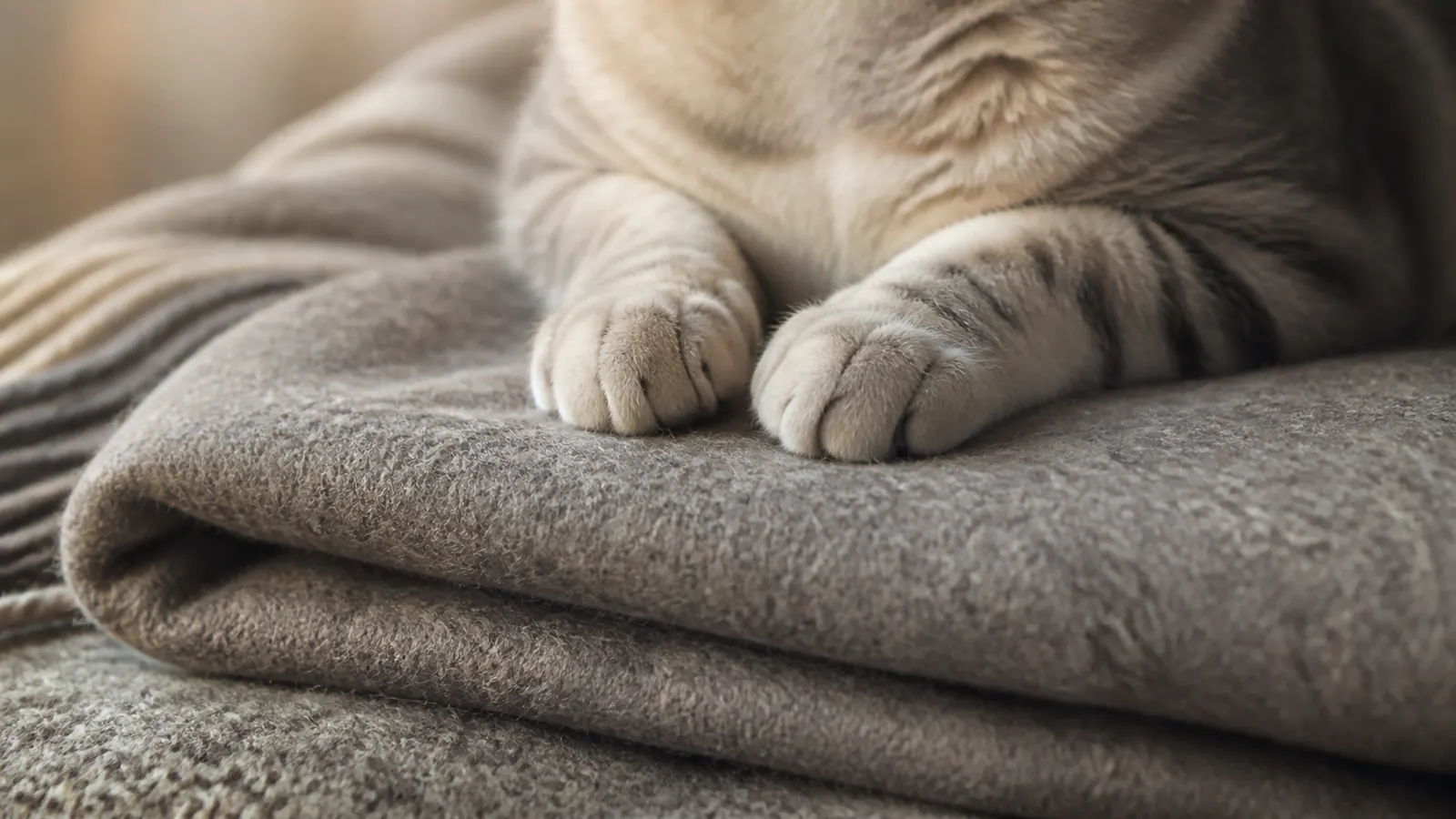
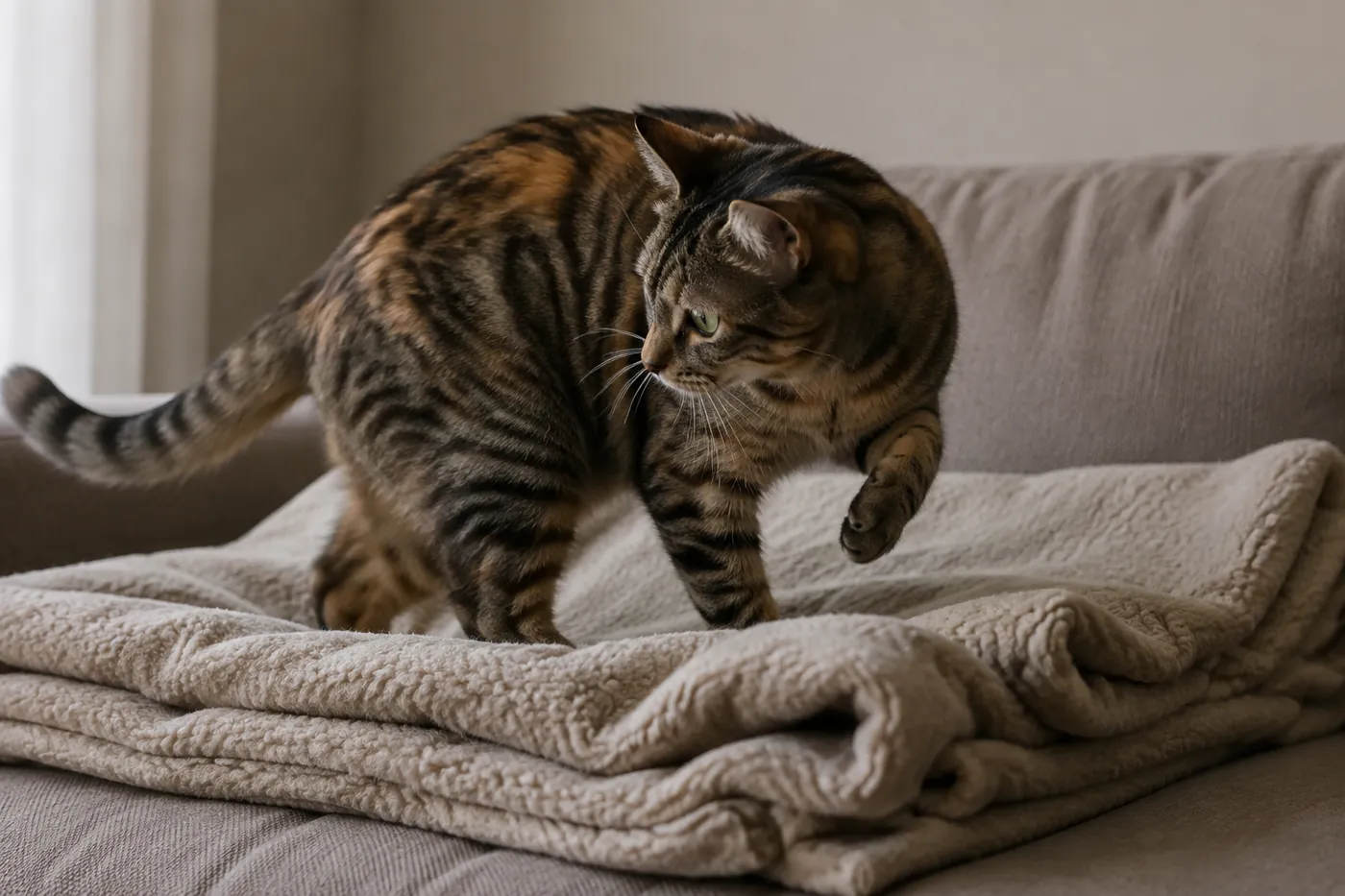
Kneading is the alternating push of a cat's front paws, often against a blanket or lap while settling. Kittens make this movement while nursing, and many retain it as adults.
In a relaxed cat it usually needs no correction, though the exact purpose of each adult kneading episode cannot be known from the paw movement alone.
Why nursing is part of the explanation
Kittens press with their paws at their mother's mammary area while feeding. The leading explanation for adult kneading is retention of that nursing behaviour, with the familiar movement accompanying comfort and settling.
That does not mean an adult thinks you are its mother or needs milk.
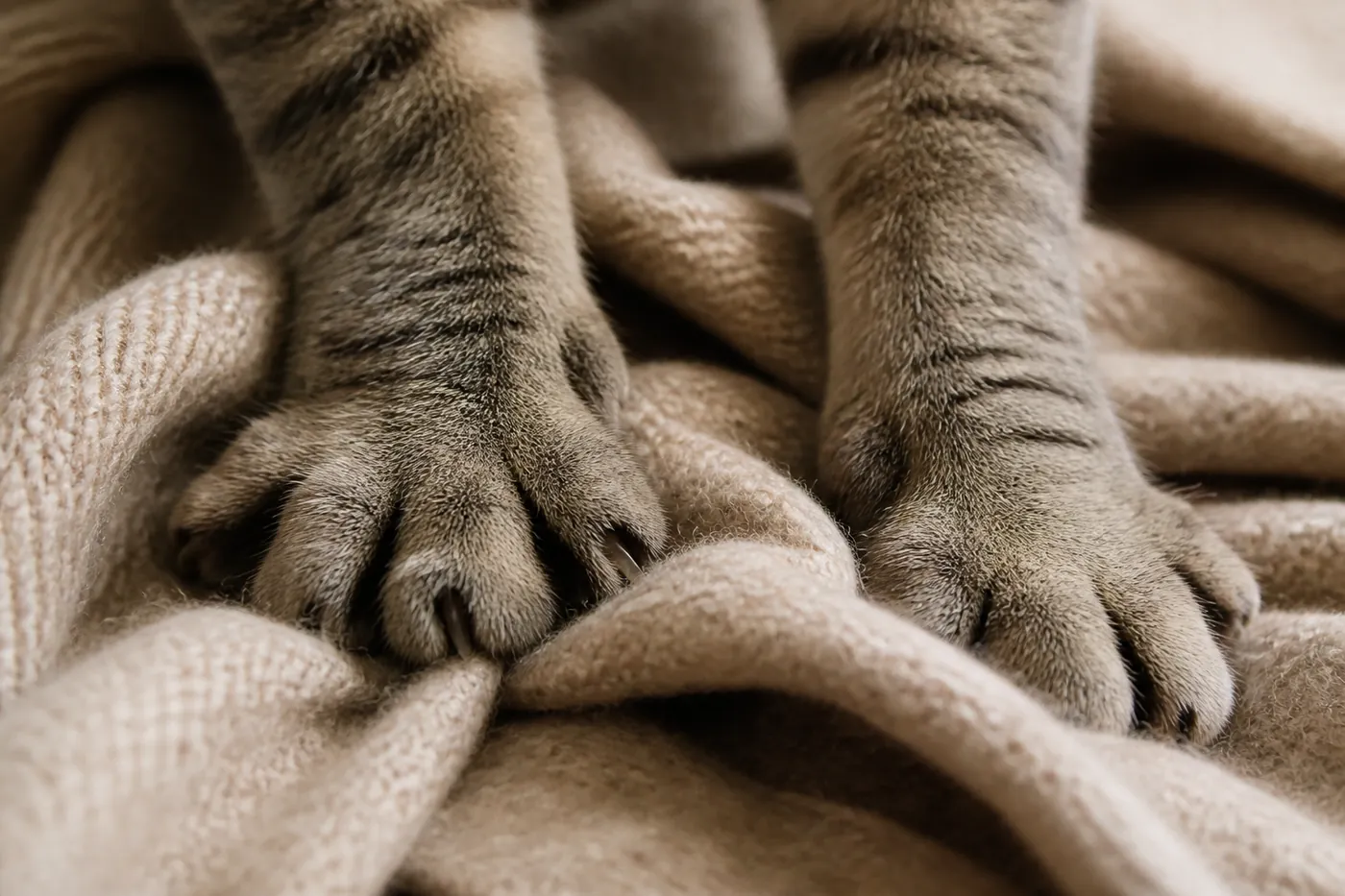
The nursing connection also does not prove that a cat was separated too early. Cats with different early histories knead, and some do it rarely.
You cannot reconstruct weaning age or judge affection by counting how often a cat makes the movement.
Comfort, scent and soft surfaces
Kneading often appears on yielding bedding or a person's lap before rest, sometimes with purring. Read the whole situation: a loose body, voluntary approach and comfortable settling are more informative than a single movement.
Purring itself is not exclusive to contentment.
Paw scent glands may contribute to marking a familiar surface. This is a possible function, not proof that a cat is claiming ownership of a person or maintaining a precise household scent record.
The idea that kneading flattens a nest is another proposed explanation, rather than something an owner needs to assume about every domestic cat.
Kneading, scratching and pawing are different
Kneading usually uses alternating pressure against a surface. Scratching involves hooking and drawing the claws across material and has its own needs for stretching and claw care.
Offer a suitable scratching surface for that job rather than trying to eliminate all paw activity.
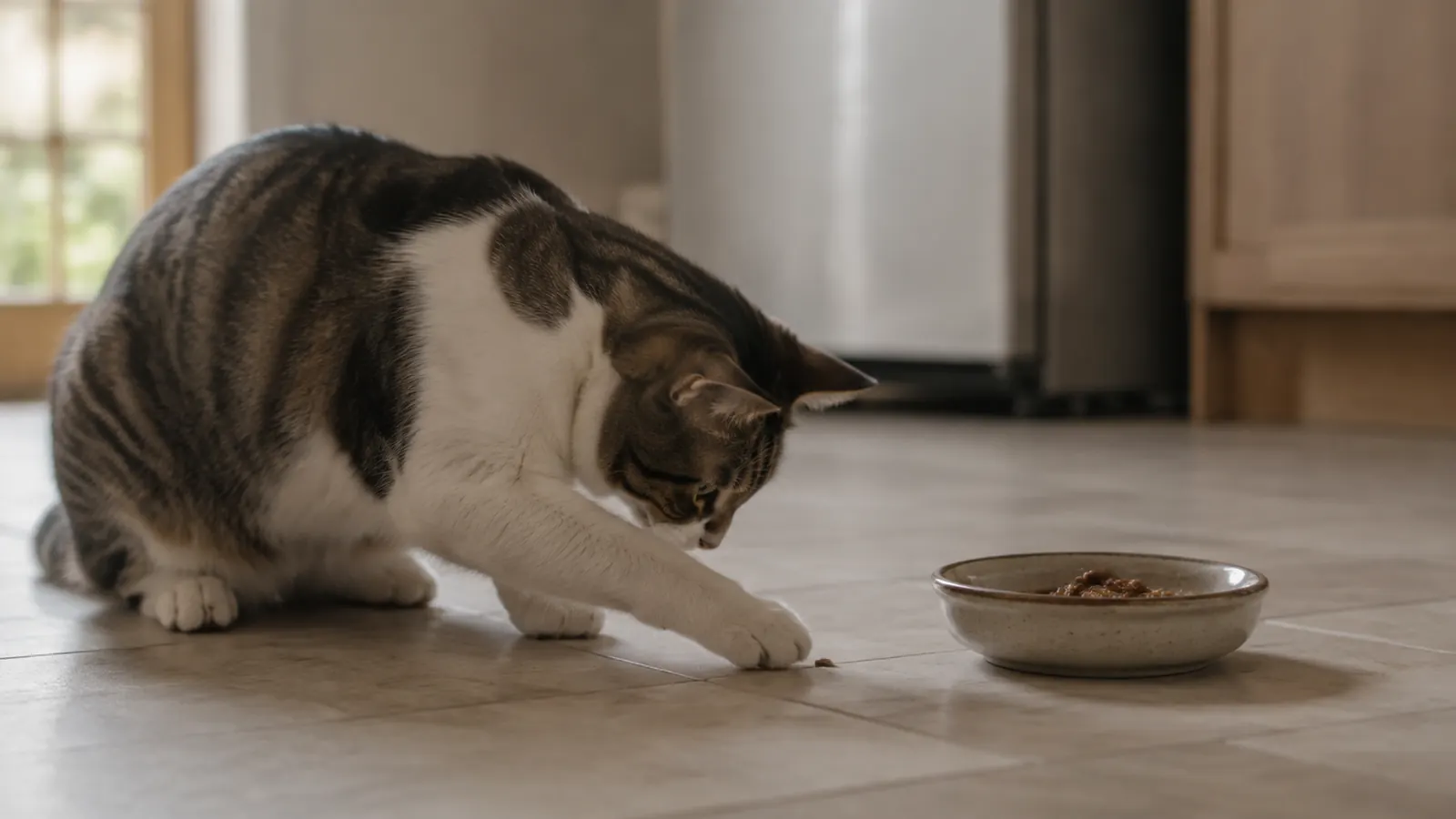
Pawing around food may be covering or caching behaviour. Context helps distinguish it from a cat settling on a blanket.
Individual movements can vary, so a rigid front-paws-only or vertical-surface rule is less useful than watching the complete action.
When the claws hurt
Claws can extend during kneading without the cat intending to injure you. Put a folded blanket between your lap and the paws, or offer an adjacent comfortable place.
You are allowed to end an uncomfortable interaction: move calmly and give the cat room rather than punishing or restraining it.
Keeping claw tips appropriately trimmed can reduce scratches. Claw trimming explains the technique; ask for help if you cannot do it safely.
Do not pull paws into position or hold a cat down to stop kneading.
If kneading wakes you for food, keep feeding predictable and avoid making every interruption produce breakfast. A timed feeder may help some households, but the pattern and response vary.
There is no fixed weekly progression towards earlier waking and no guarantee that a device resolves every night-time disturbance.
Suckling and swallowing fabric
Some cats suck fabric while kneading. Occasional suckling that leaves the material intact differs from chewing and swallowing it.
Inspect favourite blankets for holes or loose threads and remove items that the cat ingests.
Persistent fabric eating deserves veterinary advice because swallowed material can obstruct or injure the digestive tract. If you suspect swallowing and the cat vomits, stops eating or seems unwell, contact a practice promptly.
Never pull a thread protruding from the mouth or anus.
Do not replace an unsafe fabric with another loose object the cat can swallow. Safer access and an assessment of the behaviour matter more than trying to suppress the nursing movement itself.
Changes worth checking
A cat that has always kneaded rarely is not automatically unhappy. A cat that suddenly stops, becomes restless, repeatedly works one painful-looking area or changes other routines may need assessment.
Watch appetite, movement, sleep and grooming rather than diagnosing the cause from kneading.
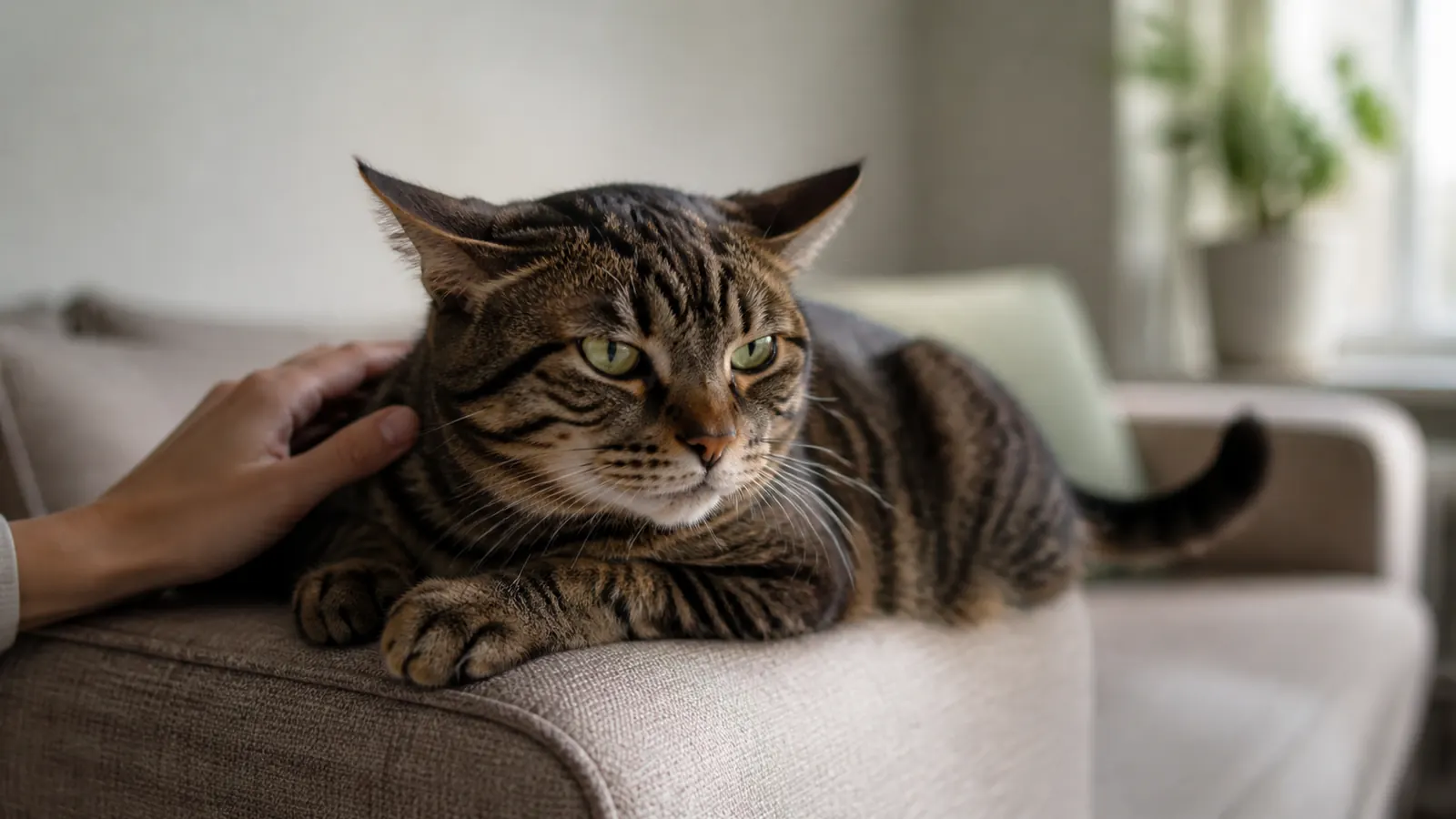
Similarly, a cat that kneads and then bites may be uncomfortable with continued contact. Pause, let it leave and observe the warning signals discussed in petting-related biting.
A bite should not automatically be labelled a harmless nursing habit.
For a new cat, comfortable voluntary contact is encouraging, but kneading is not a required stage of settling in. Give it hiding places, a predictable routine and control over interactions.
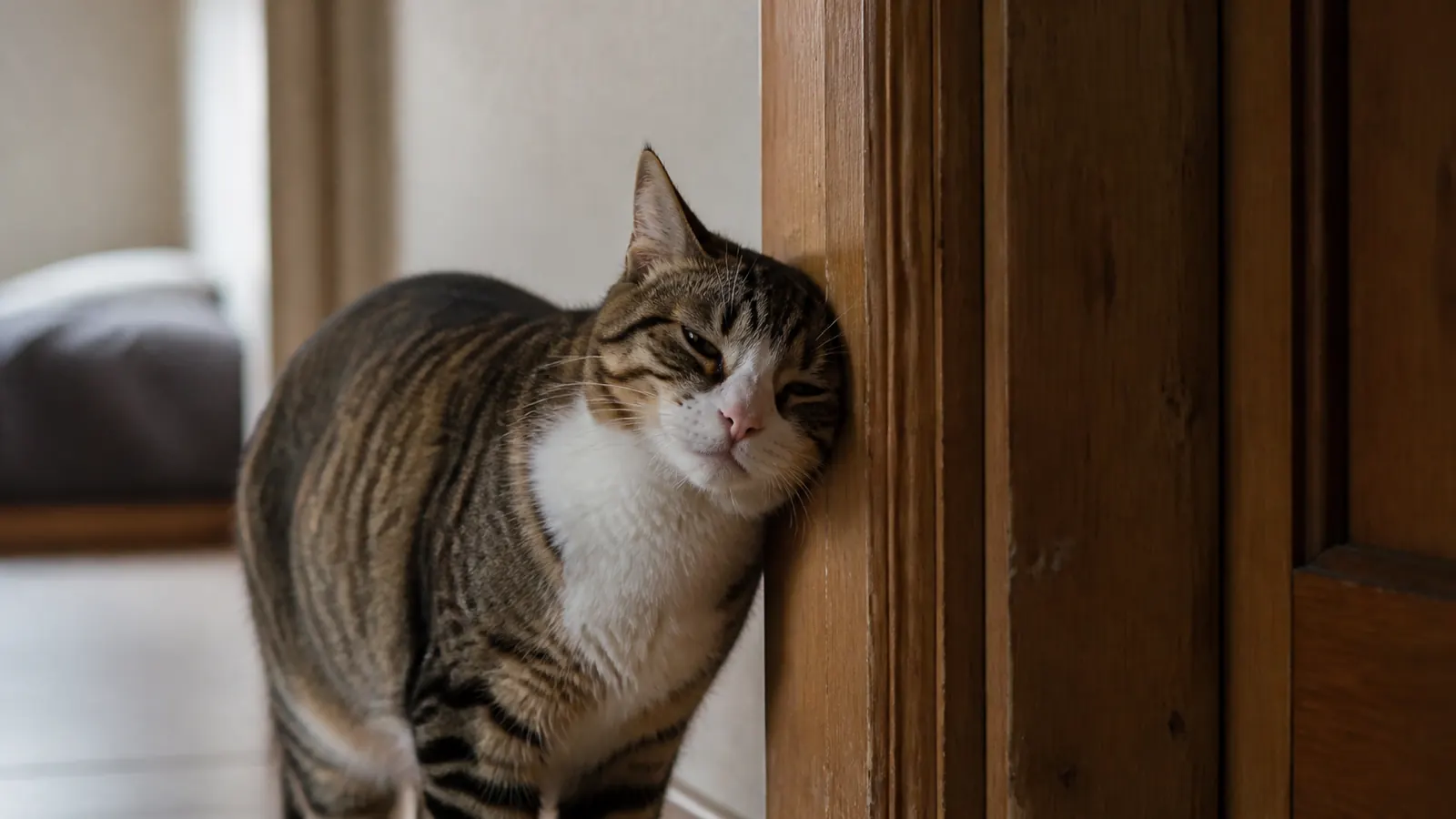
Head bunting is another behaviour to read in context rather than as a test every friendly cat must pass.
Common Questions
Do all cats knead?
No. Frequency differs, and a cat that rarely kneads is not necessarily unhappy. Look at its overall comfort and any change from its own routine.
Does kneading prove early weaning?
No. The movement begins during nursing, but adult kneading alone cannot tell you when a cat left its mother.
Why does my cat knead and bite?
Continued contact may have become uncomfortable. Stop calmly and let the cat leave; new or painful reactions warrant a veterinary check.
Checked Against
Published 19 March 2026. Last updated .