
What Is a Selkirk Rex, and Does the Curly Coat Suit Your Household?
A Selkirk Rex can suit a home that wants a sturdy, affectionate cat with moderate activity, but the curly coat is not maintenance-free. The strongest match is an owner who can adapt grooming to coat length and curl, prevent rough handling of fragile whiskers, and verify kidney and heart screening rather than choosing on texture alone.
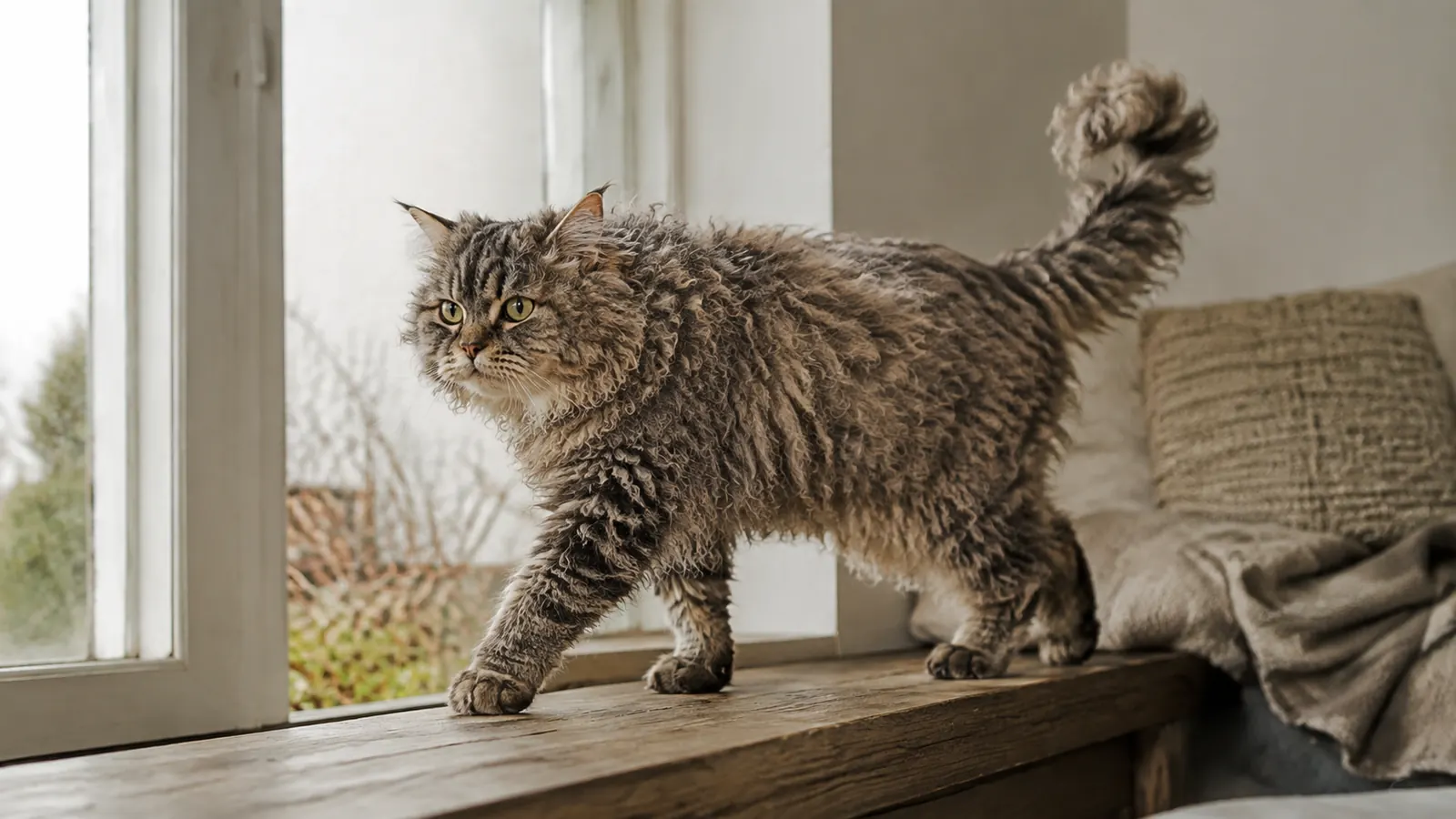
- Origin
- Montana, United States, from a naturally curly kitten born in 1987 and developed by breeder Jeri Newman
- Coat
- Dense, soft, randomly curled coat in shorthair and longhair varieties; guard, awn and down hairs can all curl
- Size
- Medium to large, muscular and heavily boned, with a rounded head and rectangular torso
- Typical weight
- CFA reports adult males commonly around 12 to 15 pounds, with females generally smaller
- Life expectancy
- TICA estimates approximately 10 to 15 years or longer
- Activity level
- Moderate. Playful and interactive, but usually less continuously athletic than the lighter Rex breeds
- Grooming
- Variable. Gentle combing and hands-on coat checks are needed, with more work for longhair and dense individual coats
- Suits
- Homes that want close companionship, can protect retreat time, and will learn curl-preserving coat care
The Selkirk Rex combines a substantial, rounded body with a coat that forms loose, irregular curls.
That pairing sets it apart from the lighter Cornish and Devon Rex, yet the useful ownership question is whether its social style, coat work and health documentation fit your household.
Most Selkirks are described as affectionate and playful without needing constant high-speed activity. The coat is the variable part of the commitment because length, density, age, season and the number of curl-variant copies all change what you see and how you groom it.
Would a Selkirk Rex fit your household?
A Selkirk Rex often fits a household that wants a cat nearby, enjoys interactive play and can provide calm daily contact.
TICA describes the breed as mellow, gentle and affectionate, while CFA notes that many actively seek attention and enjoy laps.
Those are population-level descriptions rather than a promise about one kitten. Meeting the cat while it is alert, resting and being handled, and hearing how both parents respond to visitors, grooming and time alone, shows far more.
- Companionship
- Commonly affectionate and involved in family routines
- Energy
- Moderate, with daily play and exploration still required
- Children
- Often compatible when handling is gentle and retreat is respected
- Other pets
- Often adaptable after slow introductions and separate resources
- Coat workload
- Depends on length, density, curl and the individual cat
- Harder fit
- Long empty days, rough coat handling or preference for a wash-and-wear coat
The breed can live with respectful children and compatible cats or dogs, but a calm reputation does not make grabbing or forced cuddling acceptable. Curly whiskers can be brittle, and a heavy body needs support beneath the chest and hindquarters when lifted.
A home that is empty for most of every day should plan for meaningful company and enrichment. A second animal may help only when temperaments match, introductions are gradual and each cat has its own food, water, litter and resting choices.
The individual cat's temperament comes first, because the coat and health work only matter once the cat suits the household.
What does an authentic Selkirk Rex look like?
The breed standard calls for a medium-to-large cat with heavy bone, a muscular rectangular torso and a broad round head.
Full cheeks, prominent whisker pads, round eyes and medium ears create a soft expression without the extremely flat face seen in some Persian lines.
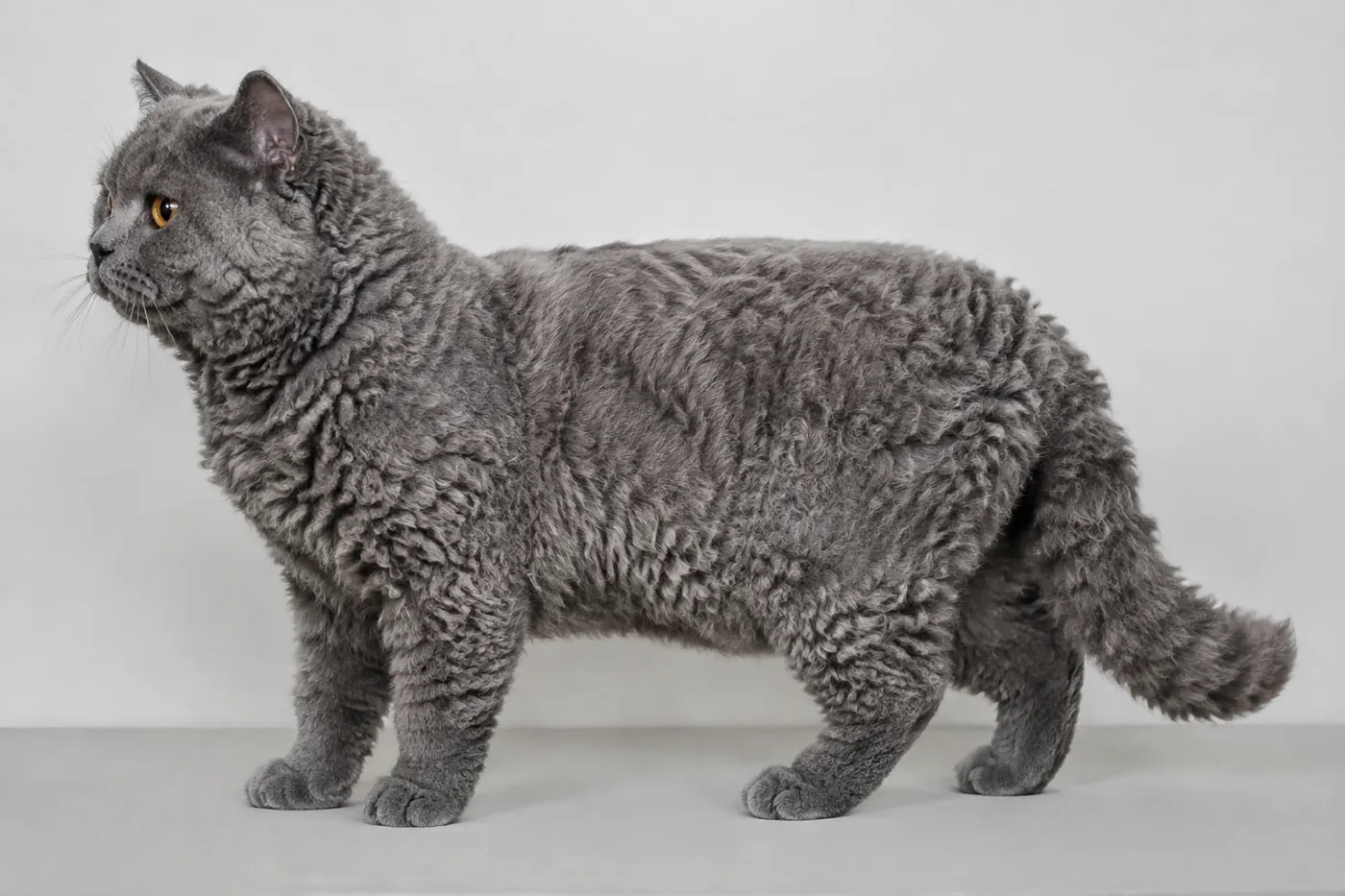
All three hair types can curl: guard hairs, awn hairs and down. The result should look like separate, random clumps or ringlets rather than one uniform wave pressed close to the body.
Shorthairs carry a plush curl over a fairly even length. Longhairs develop a fuller ruff, looser ringlets and a plumed tail, so the two varieties create different silhouettes even though the underlying breed type is the same.
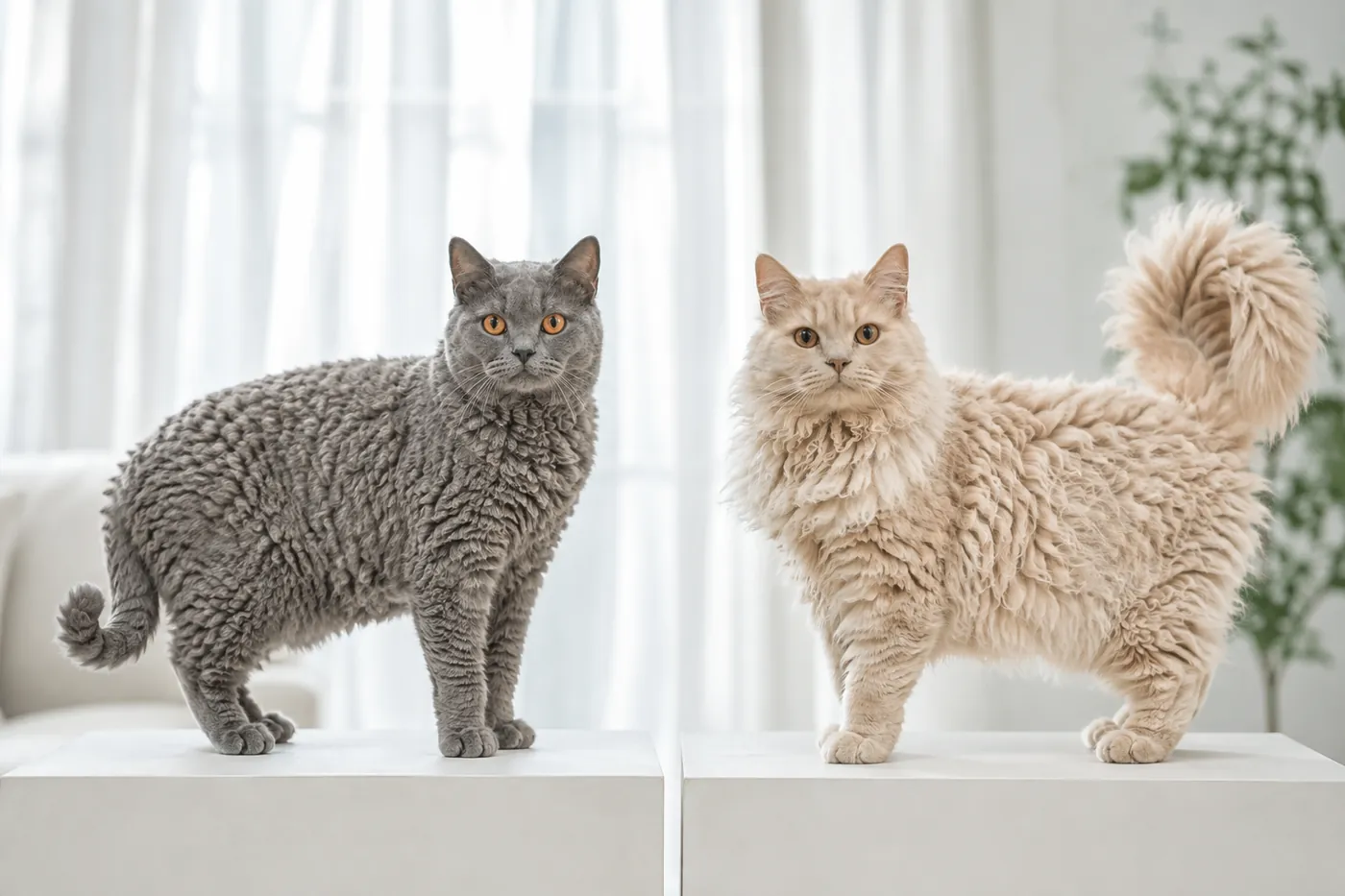
Straight-coated kittens can occur in breeding programs, and a curly-looking shelter cat is not automatically a Selkirk Rex. Pedigree or registration establishes breed identity; texture alone can overlap with a LaPerm or with an individual mixed-ancestry cat.
The Cornish Rex and Devon Rex have different mutations, lighter body types and closer coats. Rex is a coat description shared by several unrelated breeds.
The whiskers may curl or break more easily than straight whiskers, but they are a poor welfare test on their own. Comfortable movement, clear skin, normal breathing and easy navigation and play say more about how the cat is doing.
Photographs can make loose waves look tighter and can hide the heavy frame beneath a long coat. Recent full-body images in ordinary light help, but when pedigree matters they remain observation rather than proof of identity.
Why is the Selkirk Rex coat curly?
UC Davis identifies a KRT71 variant associated with the Selkirk curl. Its inheritance is autosomal incomplete dominant, so one copy generally produces a wavy coat while two copies can produce tighter curl and additional changes in body type.
| Genetic result | Expected coat effect | Breeding meaning |
|---|---|---|
| N/N | Straight coat for this tested variant | Does not transmit the Selkirk curl variant |
| N/SLK | Wavy or curly coat | About half of offspring inherit the variant from this parent |
| SLK/SLK | Often tighter curl | All offspring inherit a copy from this parent |
That test explains the known coat variant; it does not certify health, breed identity or the final appearance of every kitten. Expression also varies with coat length, hormones, climate and the individual hair cycle.
Will the curls change as a Selkirk Rex grows?
Kittens may be visibly curly at birth, lose much of that early coat and then develop a more settled adult curl from roughly eight to ten months onward.
TICA notes that coat development can continue toward two years, which makes an adolescent's temporary straighter phase a poor reason to intensify grooming or change diet.
- BirthCurls and curly whiskers may be obvious
- Early kitten coatTexture can loosen or the coat may thin temporarily
- Eight to ten monthsAdult curl begins becoming clearer in many cats
- Toward two yearsDensity and mature texture continue to settle
- Seasonal changesHumidity, shedding and hormones can alter curl definition
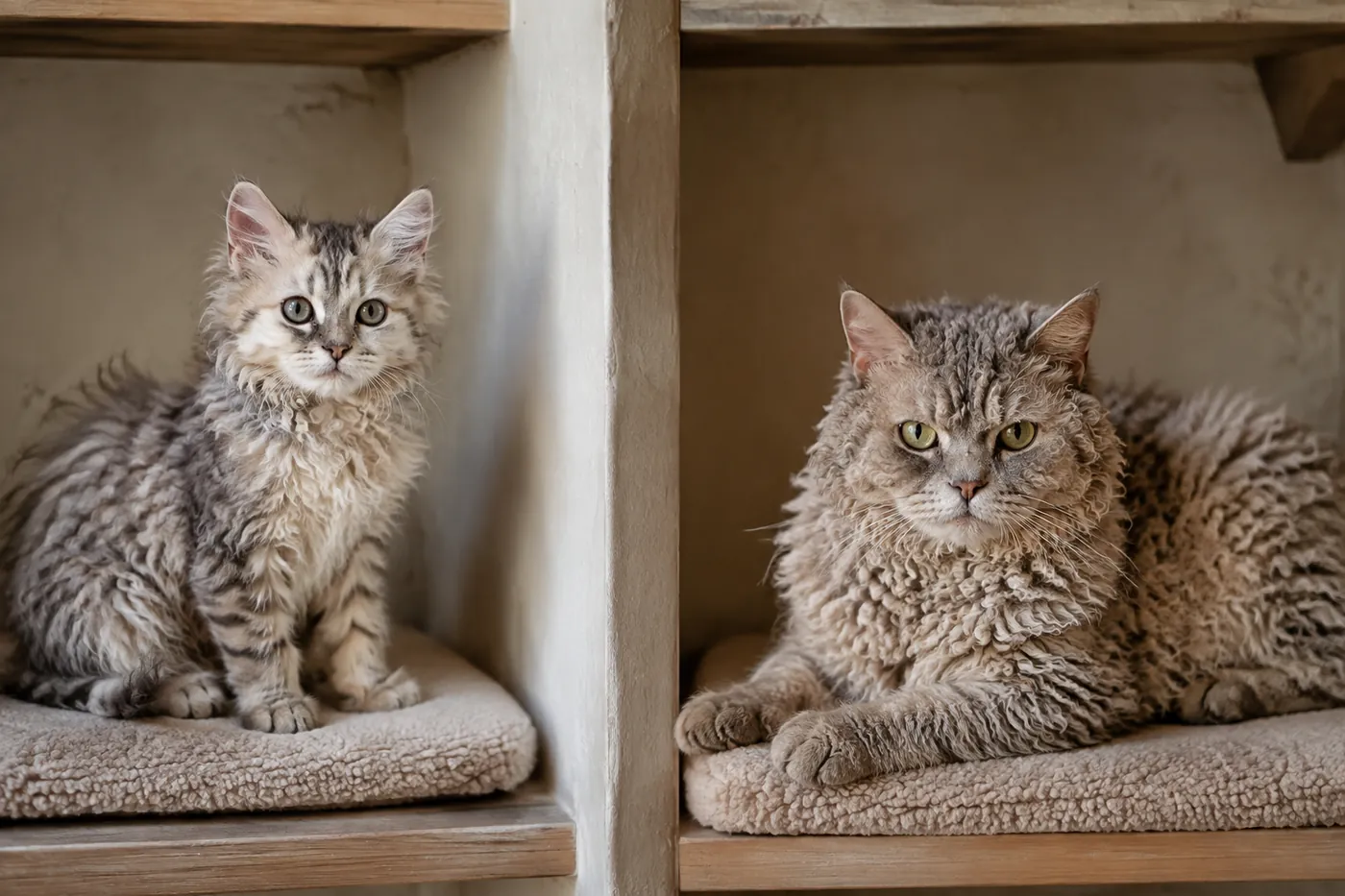
A guarantee that every curl will remain identical is one no breeder can keep. Adults from the same lines show what the coat is likely to become, and records, social development and honest discussion of change say more about the breeder.
Hormonal change can also affect density and texture, especially around maturity or after neutering. That does not mean every coat change is cosmetic; sudden baldness, inflamed skin or intense itching still needs veterinary assessment.
A straight-coated littermate can provide useful information about the breeding program without being a failed Selkirk. What matters is whether its coat result is described honestly and whether the same identity, welfare and health records accompany it.
How should you groom the curls without flattening them?
Start by feeling through the coat with your fingers.
Separate the hair to the skin at the armpits, belly, inner thighs, chest and behind the ears, because a fluffy surface can conceal a tight mat below it.
Use a wide-tooth comb or a tool recommended for that individual coat, moving in small sections from the ends toward the roots. Stop when the skin pulls, since forcing a comb through a clump hurts and can break the curl into frizz.
- Let the cat inspect the comb on a stable mat
- Feel for tangles before introducing the teeth
- Support the skin and work from the hair ends inward
- Comb friction areas in several short sessions
- Mist or reshape only with a cat-safe method your breeder or groomer has demonstrated
- Finish while the cat is still relaxed
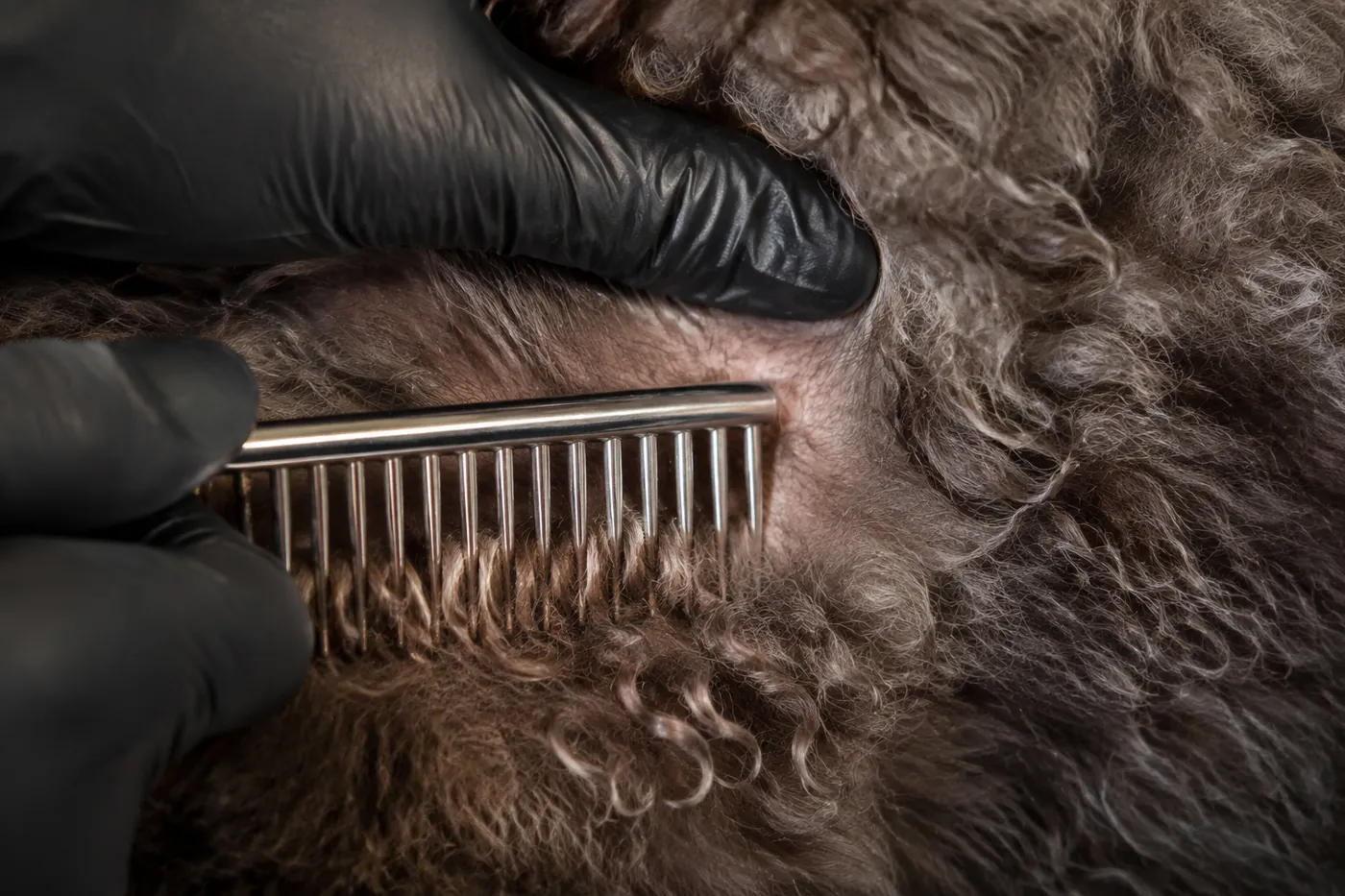
TICA suggests combing a couple of times each week, while CFA describes lighter schedules for some coats. The difference is useful: the coat in front of you sets the interval, and a schedule copied from another Selkirk may suit a different coat.
More frequent checks help during shedding, after humid weather and wherever a longhair rubs against a harness. A shorthair with open plush curls may need far less tool work than a dense longhair that forms clumps around the ruff and trousers.
Bathing is occasional rather than automatic. When grease or contamination requires it, use a suitable moisturising cat shampoo, rinse completely and let curls air dry where temperature is comfortable; forceful brushing or hot blow-drying can distort texture and irritate skin.
Tangles separate the same way as on any long coat, and for a cat that already resists handling, the shorter sessions used with a reluctant cat keep mats from turning every session into conflict.
Hands are the better guide to whether another grooming session is needed. Fingers can find a dense clump close to the skin while leaving open curls alone, which preserves texture and avoids combing the whole body for nothing.
Tool choice can change as the coat matures. A comb that passes easily through a kitten coat may drag through a denser adult ruff, while a longhair and shorthair in the same family may need different widths and schedules.
How much does a Selkirk Rex shed?
Selkirks shed, and loose hair can remain caught inside a dense curled coat before appearing on furniture.
The amount varies by coat length, season and individual density, so neither Rex in the name nor visible curl means low shedding.
A curly coat is also not a reliable allergy solution. Cat allergens are produced in saliva and skin glands, then spread over hair and household surfaces; coat texture does not remove those proteins.
Regular cleaning can reduce accumulated hair and allergen reservoirs, but it cannot make a cat allergen-free. Washing bedding, vacuuming soft surfaces with suitable filtration and keeping the allergic person's sleeping space protected all help within the limits medical advice sets.
Skin redness, bald spots, intense scratching or a sudden coat change are not normal shedding patterns. Those signs need veterinary assessment rather than more frequent combing.
What activity and training does the breed need?
A Selkirk's sturdy body and moderate reputation can hide a playful streak. Daily wand play, rolling prey-like toys, low-to-medium climbing and food-search tasks give the cat movement without requiring a house built for a nonstop aerial athlete.
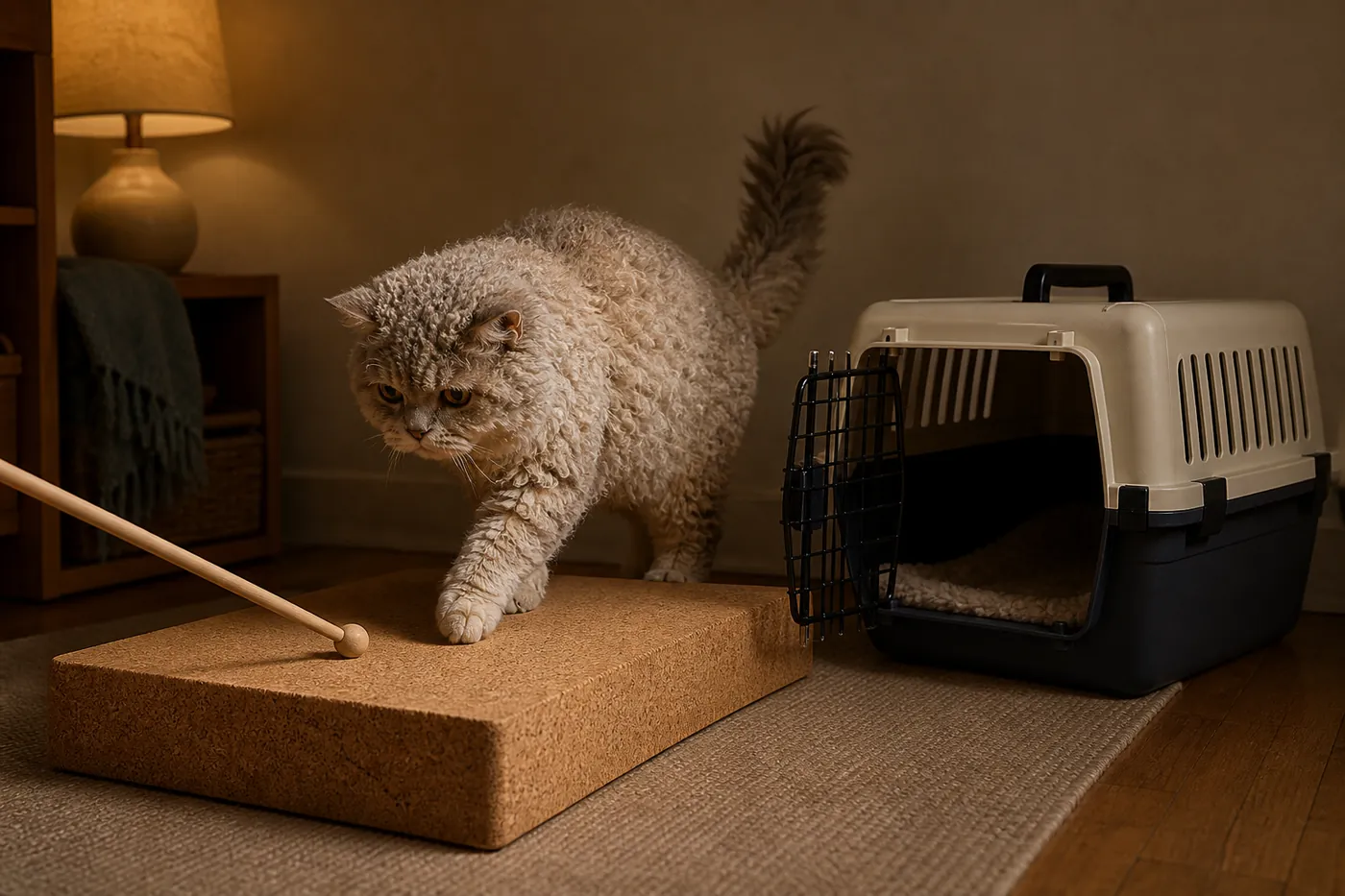
Short reward-based sessions can teach recall, mat stationing, voluntary combing positions and carrier entry. Clicker training is useful because it marks the exact calm action and lets the cat participate without restraint.
Platform depth and rated load matter more than height in climbing furniture, because a heavy adult needs room to turn, land and lie down fully, while a kitten-sized tower may flex long before the cat reaches mature weight.
Play intensity should follow age and condition. Weight gain, arthritis, dental pain or heart disease can reduce activity, so a sudden change deserves examination rather than being dismissed as the breed becoming mellow.
Moderate activity still needs daily opportunity. A short chase followed by food search, a target session for cooperative care and access to a stable observation perch can meet different needs without relying on one long workout.
Recovery says as much as enthusiasm does. A cat that returns to normal breathing and settles comfortably after play provides different information from one that stops abruptly, hides or avoids a movement it performed easily before.
Which health records matter most?
No source supports treating the Selkirk Rex as free from inherited risk.
Its development included breeds in which polycystic kidney disease and hypertrophic cardiomyopathy occur, so a responsible source should explain what was tested, by which method and when.
PKD causes fluid-filled kidney cysts and is associated with a known PKD1 variant in relevant lines. A DNA report can answer whether that tested variant was detected, while an ultrasound may provide additional clinical information about an individual cat.
Hypertrophic cardiomyopathy thickens the heart muscle and can be silent. Heart screening is a separate dated assessment, commonly based on echocardiography by an appropriately trained veterinarian, and a normal result today cannot guarantee every later year.
CFA also notes hip dysplasia and blood-type compatibility among breeder considerations. Blood typing matters to planned matings and neonatal risk, while your ownership decision still needs ordinary veterinary records, vaccination history, parasite control and a physical examination.
An original report is worth more than a summary badge, because the cat's registered name or permanent identifier, the laboratory or examiner, the method, result and date connect the document to the parents and show exactly which question it answers.
Screening ages matter because a young normal result cannot describe every later year. Older relatives with documented kidney and heart histories give context that a kitten's own first examination cannot provide.
Breeding-risk evidence and diagnosis in the cat you own answer different questions. A family history changes what you discuss and monitor, but thirst, weight loss, exercise intolerance or pain still requires an individual veterinary workup rather than an assumption that one named inherited condition is responsible.
- Match each report to the parent's registered identity
- Check the named condition, method, laboratory and date
- Ask what occurred in older relatives, not only the current parents
- Request veterinary records for the kitten or adult offered
- Read congenital-health and return terms before payment
- Arrange your own veterinary examination after placement
Breathing difficulty, collapse, sudden hind-limb weakness or severe lethargy requires urgent veterinary attention. Repeated vomiting, poor appetite, increased thirst or weight loss also deserves evaluation and should not be attributed to swallowed curly hair.
How do size and appetite affect daily care?
CFA describes males around 12 to 15 pounds, with females commonly smaller, but a healthy adult is defined by frame and body condition rather than a target number.
The dense coat and heavy bone can make excess fat difficult to see.
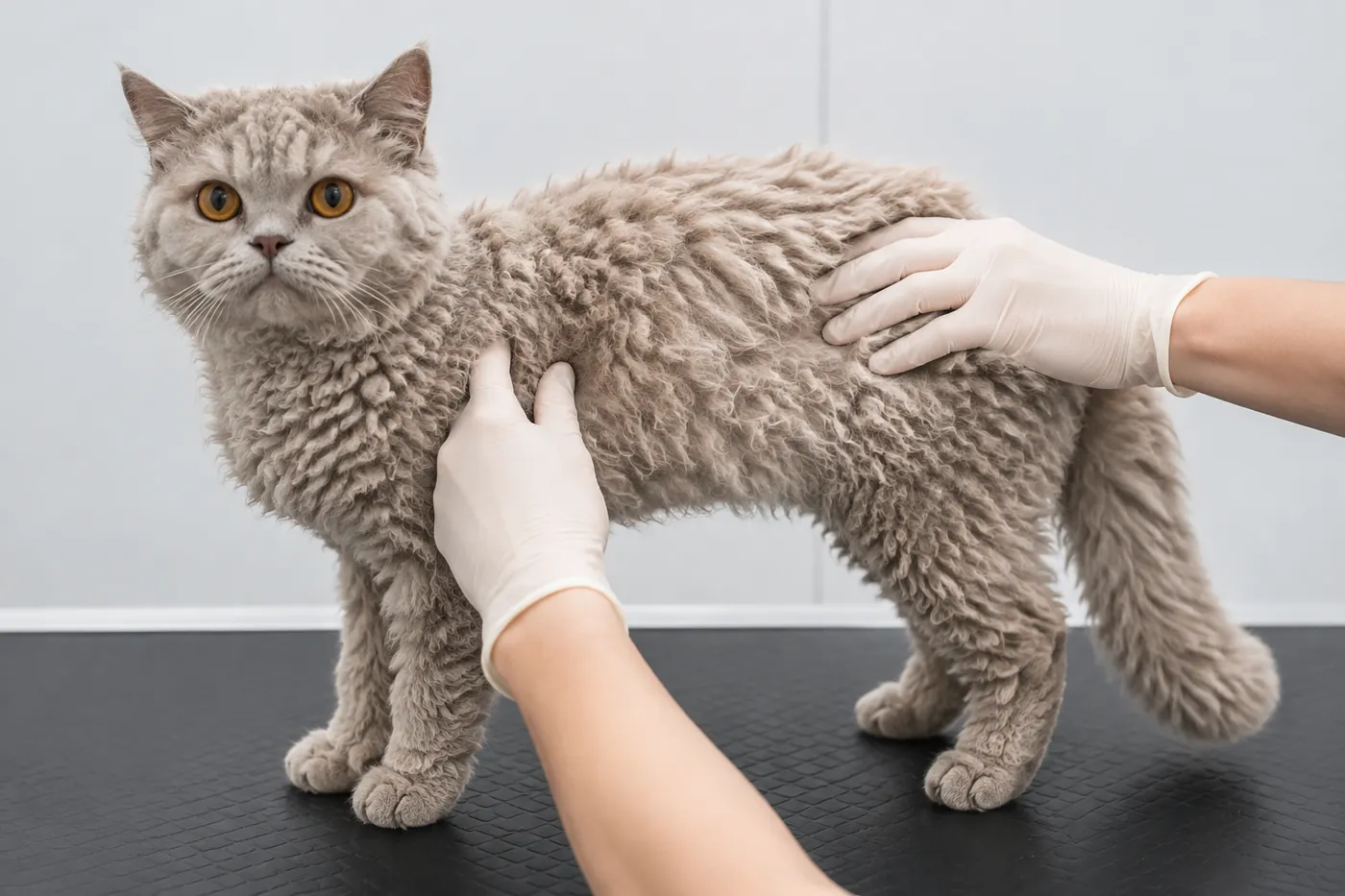
A complete diet suited to the life stage is measured as a daily total that includes treats and food used in puzzles, and two foods can need very different portion sizes for the same calories.
Weighing on the same scale and comparing the trend with hands-on body-condition checks shows which way the cat is moving. A breed weight range describes other cats, and adding calories cannot improve curl or create healthier bone.
A surprisingly heavy adult needs a litter tray, bed and carrier sized for it, with usable interior space, a rigid base and easy door access.
Dense curl can blur the waist and make a heavy cat appear merely plush. Photographs from above in similar conditions, rib checks and the same scale together make gradual change visible before mobility or grooming becomes difficult.
The feeding plan needs rechecking after neutering, reduced activity or a health change. The amount that supported kitten growth should not continue automatically into adulthood, and treats used for grooming practice still belong within the daily total.
What should you verify before choosing a kitten or adult?
Seeing the cat move, play, rest and accept gentle coat handling answers questions a picture cannot. An appealing curl photograph cannot show whether the cat breathes comfortably, recovers from play, tolerates touch or seeks the level of contact your household wants.
How kittens are raised and when they leave matters, because they need time for veterinary care, litter habits, ordinary household exposure and social learning before they go.
A cat sold as a Selkirk Rex should come with a pedigree, and its health documents should match permanent identities. A seller who treats the coat test as a complete health panel, or promises that an early kitten coat will never change, is claiming more than either can show.
| Question | Useful evidence | Weak substitute |
|---|---|---|
| Is this a Selkirk Rex? | Registration and traceable pedigree | Curl alone |
| Will the coat stay identical? | Adult relatives and honest development history | A guarantee based on one kitten photo |
| Were kidneys considered? | Named PKD test or documented veterinary assessment | General claim that the line is healthy |
| Were hearts assessed? | Dated cardiac record with method and examiner | Listening once with no context |
| Will this cat fit? | Temperament observed across ordinary situations | Breed stereotype |
TICA estimates roughly 10 to 15 years or longer, but lifespan figures cannot forecast an individual. A potentially long life brings preventive care, dental work, grooming support and changing mobility.
The best Selkirk choice joins stable temperament, workable coat and transparent records. If you want the curl but dislike ongoing hands-on inspection, the mismatch will persist after the novelty fades.
Checked Against
Published 7 September 2026. Last updated .





