
What Is a LaPerm, and Why Does Its Curly Coat Change?
A LaPerm is a warm, active companion whose loose curls can be easier to maintain than they look, but the coat is not fixed throughout life and does not make the cat hypoallergenic. The right home enjoys close contact, gentle combing and a cat that may alternate between energetic play and settling against a person.
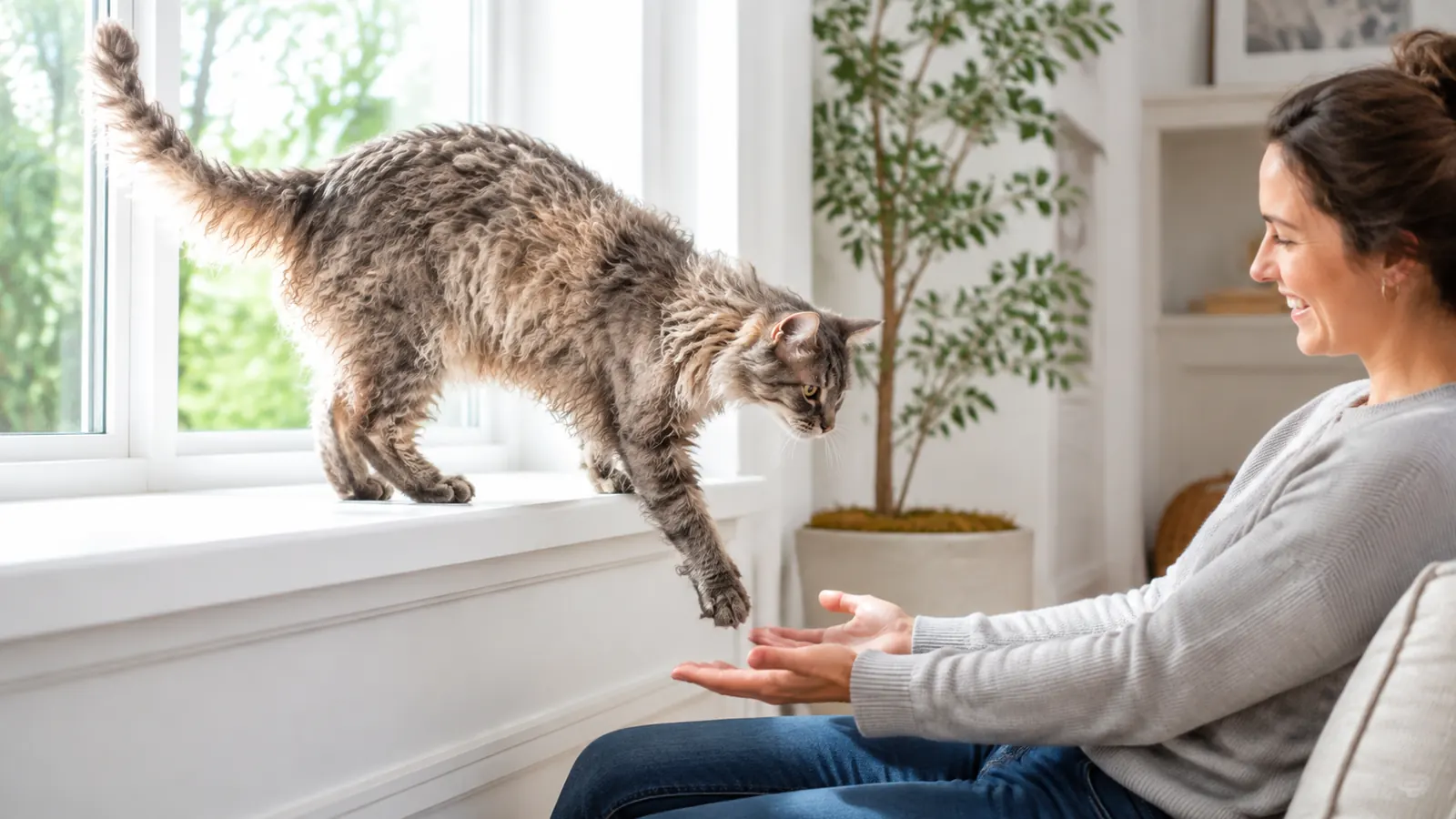
- Origin
- Oregon, United States, from a naturally occurring curly-coated kitten born in 1982
- Coat
- Longhair or shorthair, curly or wavy, with an airy texture and relatively little undercoat
- Size
- Medium sized with moderate bone and a light, athletic rather than bulky outline
- Typical weight
- TICA lists females at 6 to 9 pounds and males at 7 to 12 pounds
- Life expectancy
- TICA estimates 12 to 15 years
- Activity level
- Moderate to high. Playful, inquisitive and strongly people oriented
- Grooming
- Moderate and variable. Gentle combing, occasional washing and coat checks during changes
- Suits
- Homes wanting an affectionate cat and grooming that adapts to coat changes
The LaPerm's curls attract attention, but they are only one part of the decision. This is usually an affectionate, involved cat, and the coat can shift from sparse to full, straight to curly or short to longer-looking as age, hormones and shedding change it.
That variability makes rigid grooming promises unhelpful.
Owners do better when they learn the individual coat, use light tools and judge the cat by health and temperament as well as curl.
Who is a LaPerm likely to suit?
TICA and CFA both describe the LaPerm as people oriented, gentle and playful. Many seek laps or shoulders after activity, which suits somebody who wants an interactive companion and is comfortable with frequent voluntary contact.
A LaPerm can fit a family, a quieter adult home or a household with other pets when introductions protect choice and retreat. Affection works best when the cat can initiate and end it, rather than being carried because its soft coat invites touching.
| Household feature | Why it may work | What still needs planning |
|---|---|---|
| People home often | The breed commonly seeks company | Build tolerance for brief absences |
| Respectful children | Play and sociability can match well | Protect sleep and escape routes |
| Another friendly pet | May provide play and companionship | Use gradual introductions |
| Allergy concerns | The coat may shed modestly | No breed is reliably hypoallergenic |
| Busy grooming schedule | Many coats need only gentle weekly care | Texture and oiliness vary by individual |
Watching the cat during play and a calm period shows what a breed label cannot: whether this individual tolerates noise, enjoys being held or prefers one person over a crowd.
Long days alone can be difficult for a very social cat.
Food puzzles and window views add useful occupation, but a history of distress, overgrooming or appetite change during absence deserves a slower plan and professional advice.
Why is the LaPerm coat curly, and can it change?
Curly was born hairless in 1982. Her later coat grew in wavy on an Oregon farm, beginning the modern LaPerm breed.
For an owner, the practical point is simpler: curl varies. Longhairs may show loose ringlets, a neck ruff and a plumed tail, while shorthairs often have firmer waves and a bottlebrush-style tail.
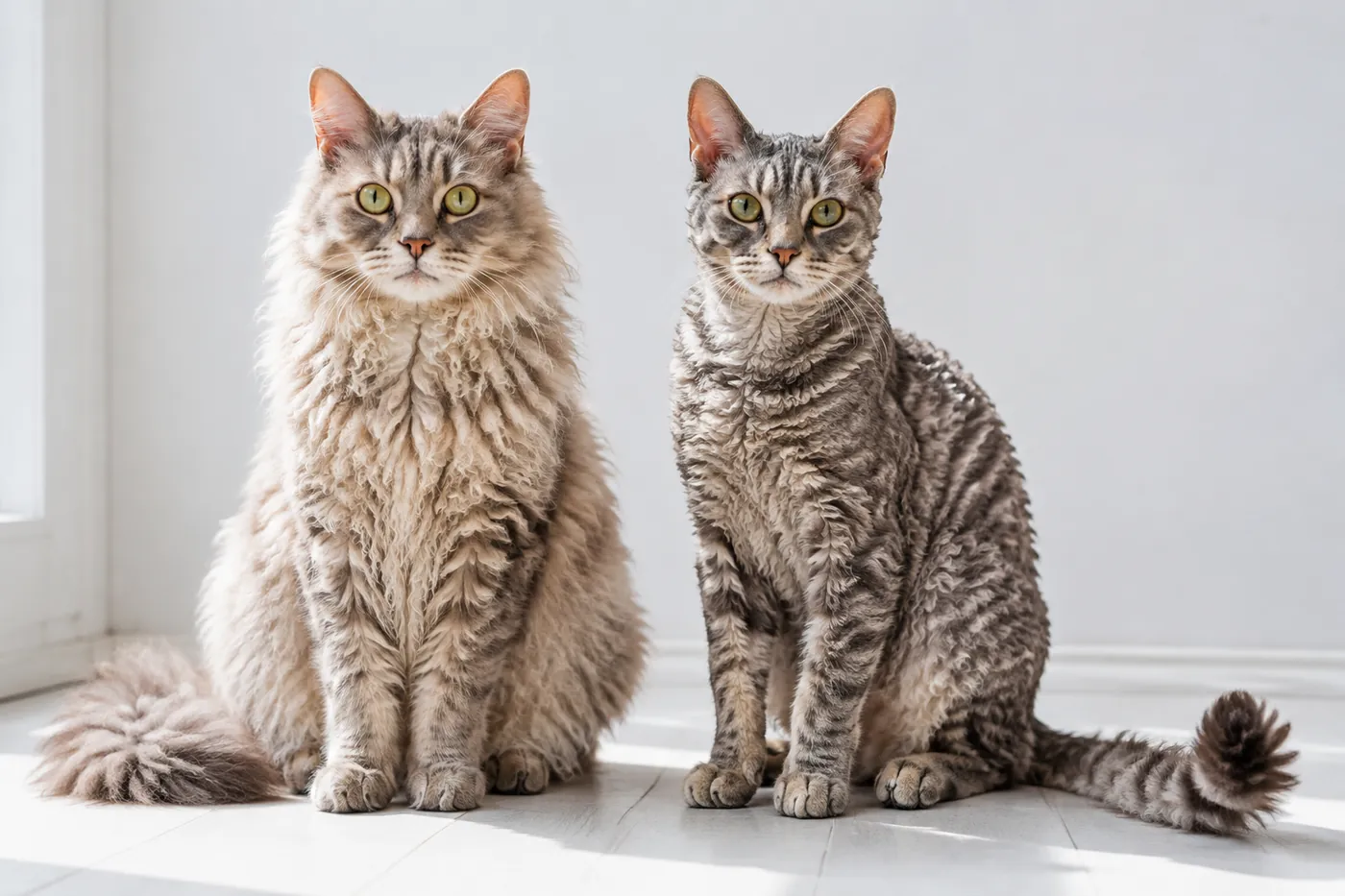
- BirthSome kittens are curly, some are born hairless and some have straight coats
- Early monthsA kitten may lose part or all of its first coat before regrowth
- AdolescenceCurl and density can shift while the adult coat develops
- AdulthoodSeason, hormones and health may alter fullness or texture
- Later lifeNew thinning, matting or skin change still needs investigation
A sparse or straight phase in kittenhood does not reliably predict the adult coat.
Temporary change can be normal, but sudden symmetrical loss, itching, redness or broken skin should not be dismissed as a breed quirk. A veterinary assessment separates coat development from disease when the timing or skin does not look normal.
Colour does not define the breed, and registries accept many colours and patterns.
Pedigree records establish breed identity more reliably than a curly coat, because curls also occur in non-pedigreed cats and other breeds.
What changes in a longhair LaPerm?
The longhair coat is semi-long rather than a heavy curtain. CFA describes a light, springy texture that stands away from the body, with the longest curls in the ruff, at the ear bases and around the base of the plumed tail.
That open texture should let you reach the skin with your fingers. A coat so dense that it cannot be parted, or one packed into a felted layer, needs practical care rather than praise for fullness.
Season and maturity can change the outline. A mature longhair may carry a much fuller neck ruff in one part of the year, then look noticeably lighter after a seasonal shed without losing breed identity.
What changes in a shorthair LaPerm?
The shorthair has waves over much of the body and a crisper texture, while the tail is more bottlebrush than plume. CFA does not require a ruff, ringlets or heavy ear furnishings in this variety.
Short hair does not mean a flat coat. It should still stand away from the body and show movement, although the wave can look less dramatic than the loose ringlets on a longhair.
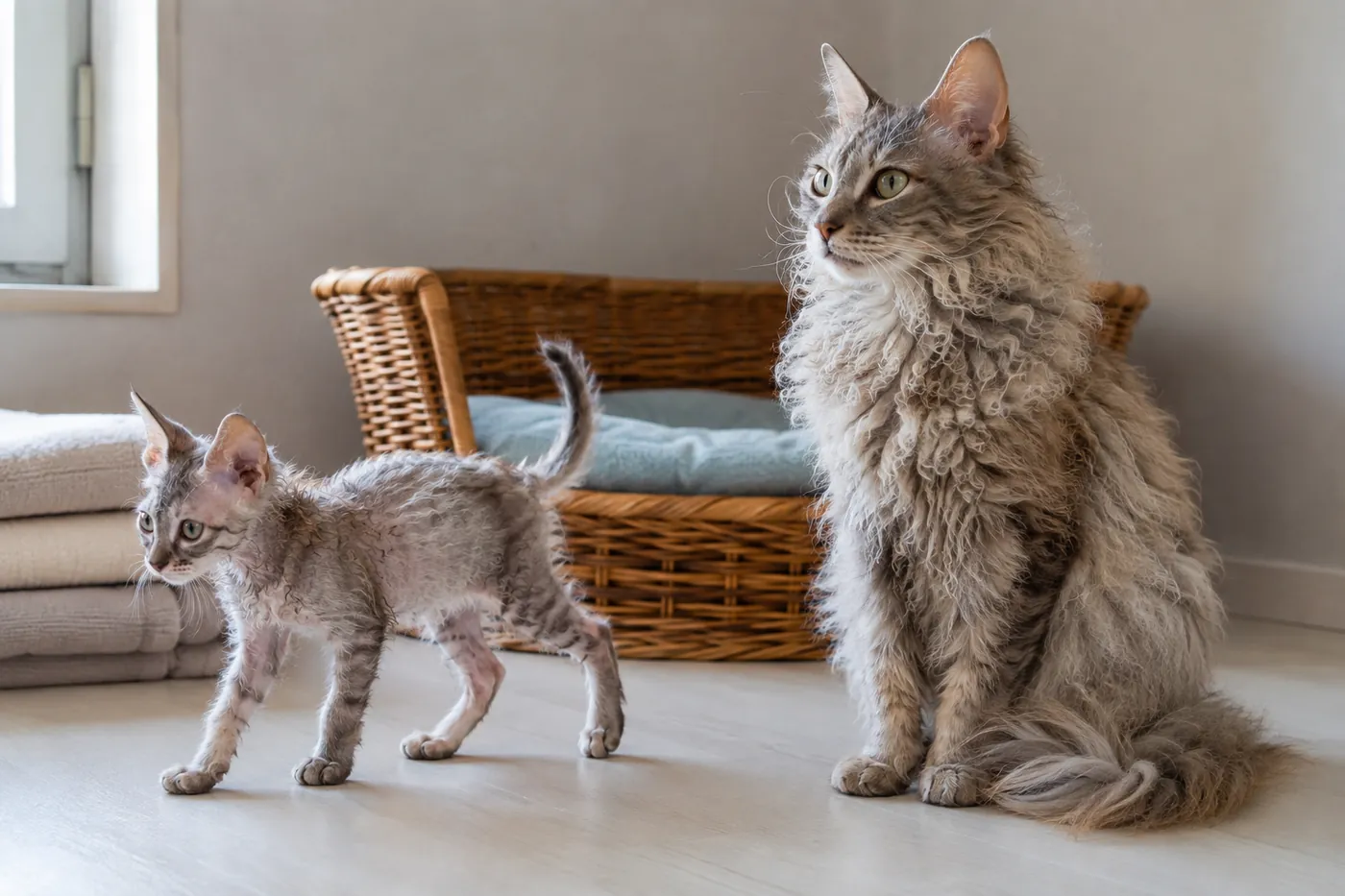
These distinctions help you plan care, but neither coat length predicts temperament or health. How tightly a cat curls says nothing about its quality, and a less dramatic coat can belong to a healthy, well-socialised LaPerm.
Photographs taken several months apart are more informative than one posed image. They show whether the skin stayed healthy through coat change and whether the current seller is describing the same cat across its development.
How do you groom a LaPerm without flattening the curls?
Grooming must preserve the curl. Most LaPerm coats benefit from a wide-toothed or rotating-tooth comb used gently once or twice a week to separate developing tangles and loose hair.
A fine dense brush pulled repeatedly through the coat can stretch curls, create static and make grooming unpleasant without reaching a hidden knot any better.
- Feel through the coat with your fingers before using a tool
- Separate a small tangle from the ends toward the skin
- Comb lightly in the direction the coat falls
- Mist clean water over flattened curls if the individual coat tolerates it
- Let a washed coat air dry or towel it gently instead of blow drying
- Stop and seek help if a mat is tight against the skin
Gentle separation preserves the curl better than forceful de-shedding.
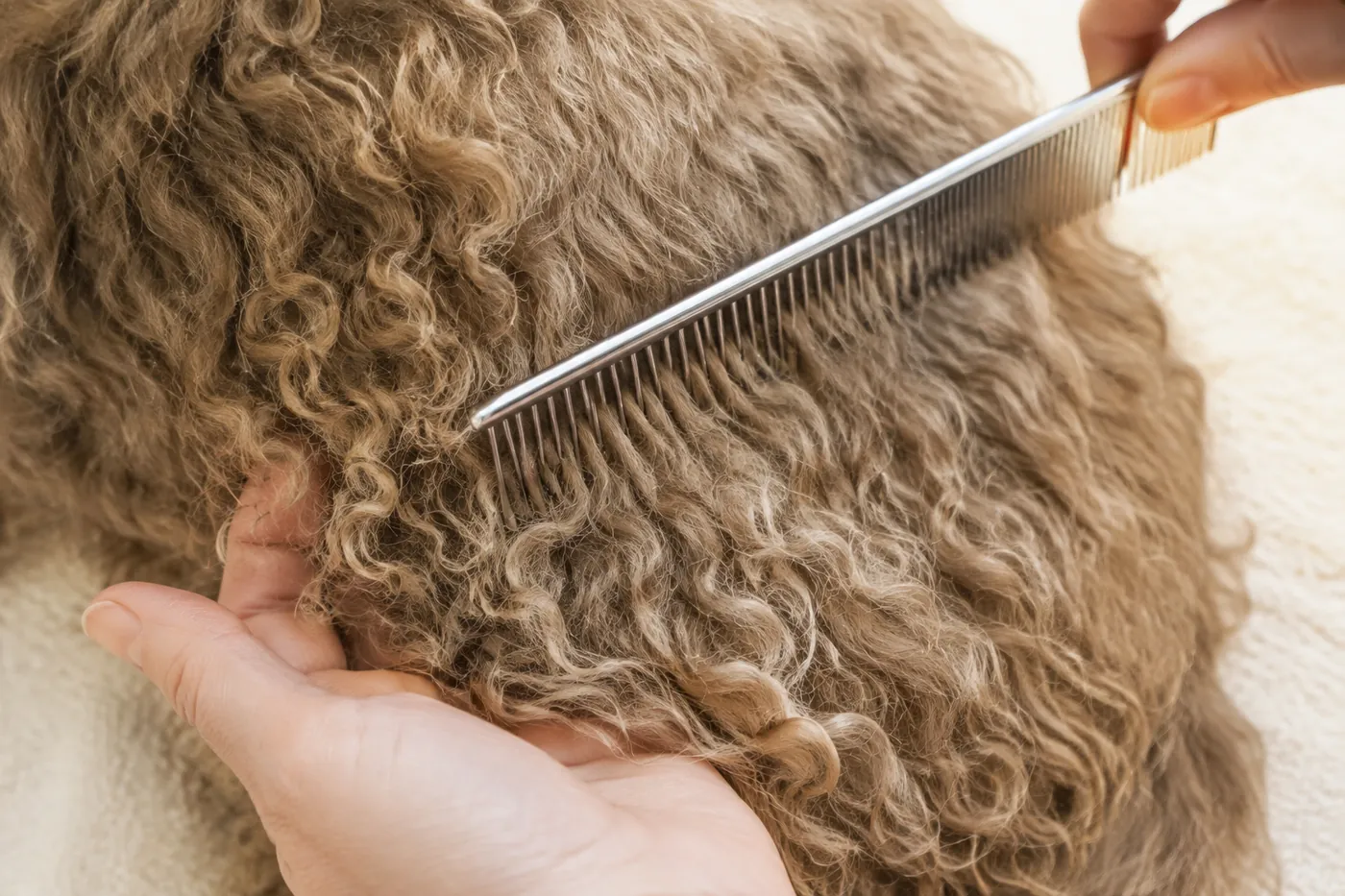
Some cats develop an oily feel and need occasional bathing. Use a cat-safe product, rinse thoroughly and dry without high heat, since residue and vigorous rubbing can leave the coat uncomfortable or tangled.
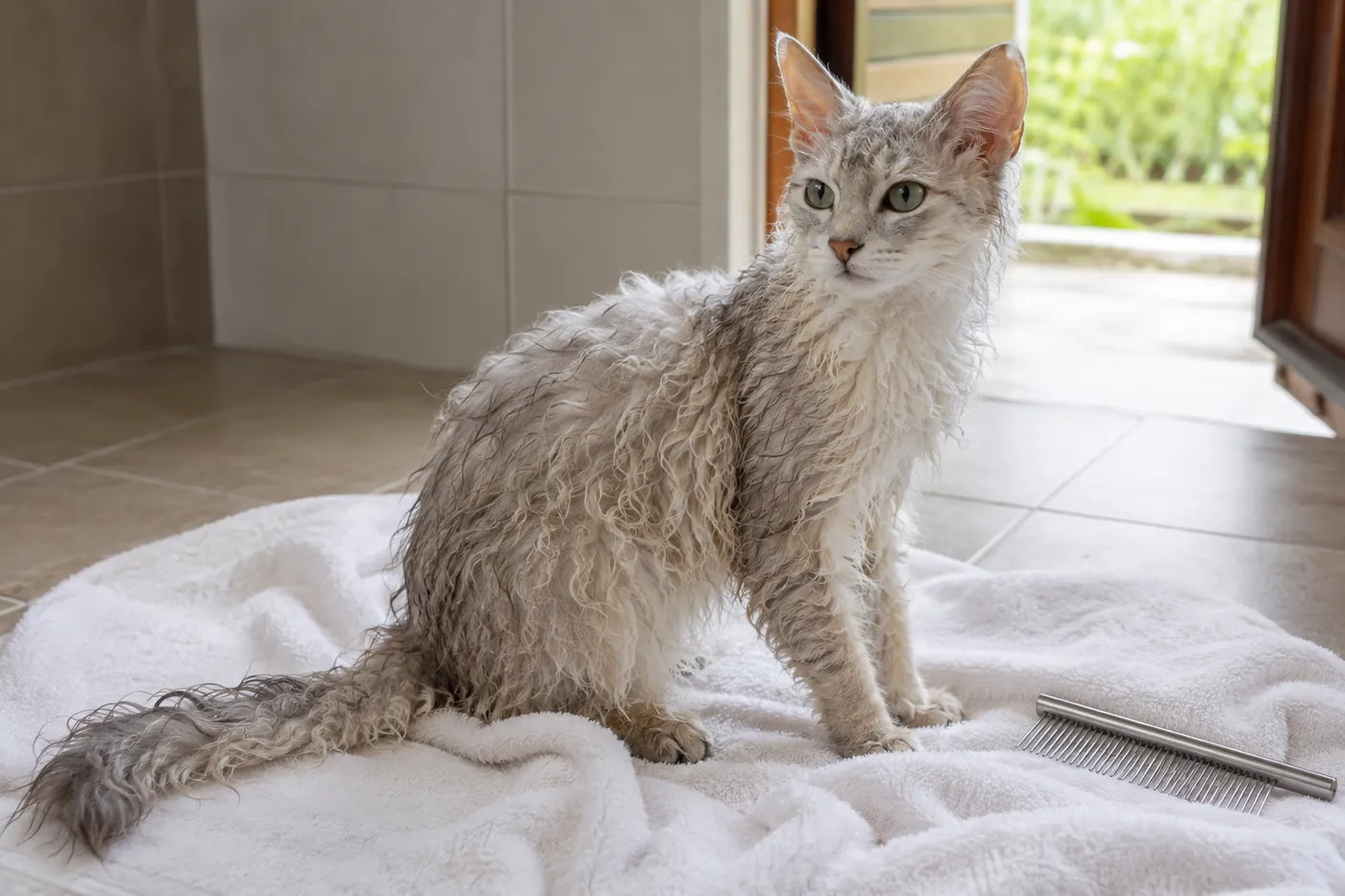
The coat has to dry fully before anyone can judge whether the curl has disappeared. Damp ringlets can hang straighter under their own weight, then regain lift as moisture leaves; repeated combing during that phase can pull apart the pattern you were trying to preserve.
Bathing frequency should respond to the individual coat, not a calendar. An indoor cat with clean skin may rarely need a full wash, while oil, contamination or a prescribed dermatology product creates a different job.
A resistant cat usually copes better with the short sessions used for brushing a reluctant cat, and grooming tools cleaned regularly stop oils and debris returning to a freshly handled coat.
Does a LaPerm shed, and is it hypoallergenic?
LaPerms do shed.
Their relatively light undercoat and curly texture may hold some loose hair until grooming, while seasonal or hormonal coat changes can make the amount uneven rather than consistently low.
No responsible source can promise that a LaPerm is hypoallergenic. People usually react to proteins from saliva and skin secretions, not to straightness or curl, so an attractive coat texture does not remove the allergen.
Curl changes where loose hair collects, not whether the cat produces allergens.
Vacuuming fabric, washing bedding and keeping the cat out of the allergic person's bedroom, where advised, reduce exposure, but they cannot guarantee that symptoms will remain mild.
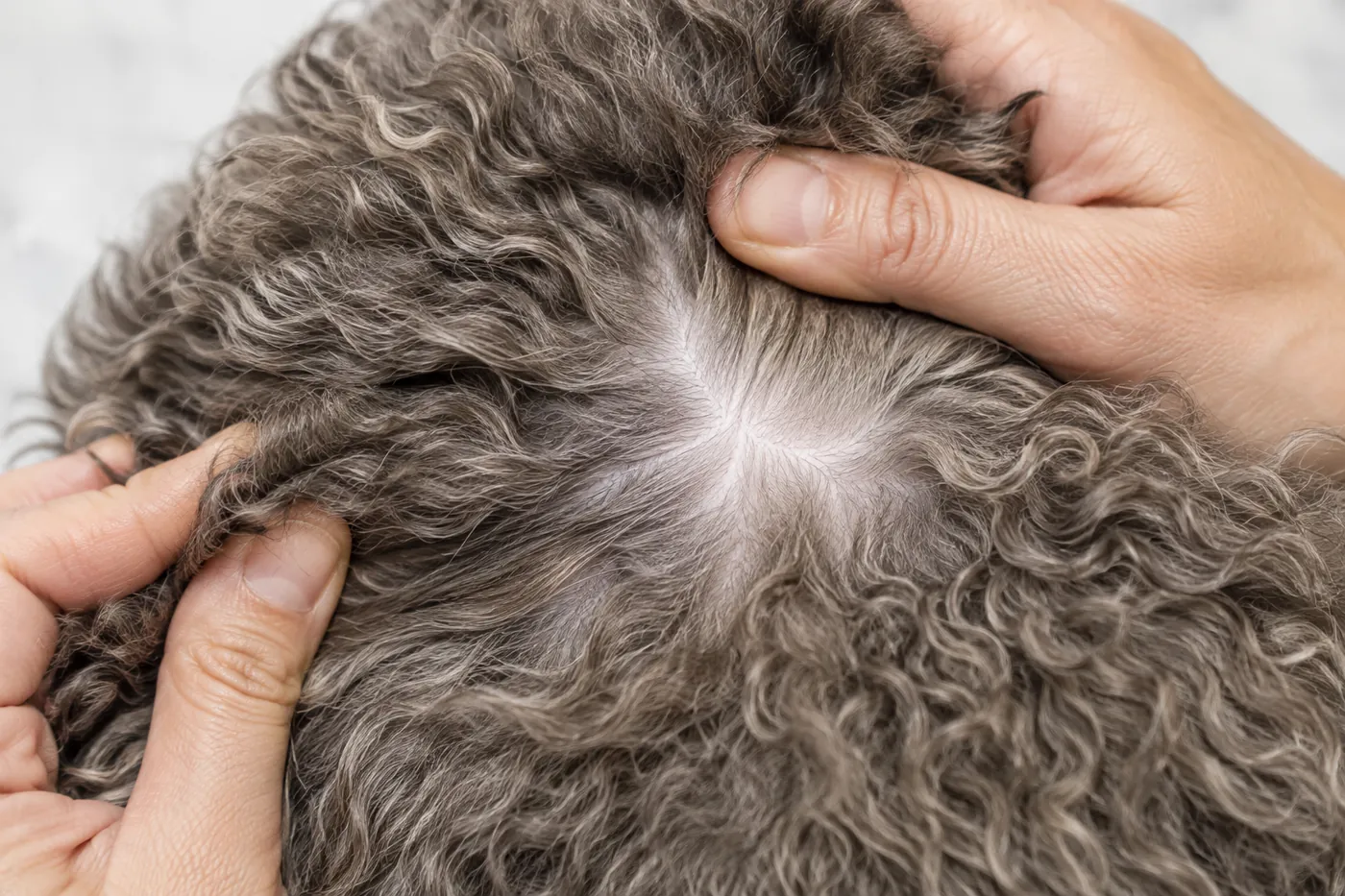
A change from the cat's normal pattern matters more than any single sign. Persistent licking, dandruff, sores, a strong odour or rapid hair loss deserves veterinary attention, especially when the skin underneath is inflamed.
How active and trainable is a LaPerm?
The LaPerm is often described as active and inquisitive without needing constant high-speed exercise.
Many enjoy a burst of chase or climbing, then seek warm contact once the game ends.
Wand play, safe climbing routes and small food puzzles give the cat choices. The best routine changes speed and direction, allows a catch, then ends with a small reward or meal rather than leaving the cat repeatedly unable to complete the sequence.
- Offer two or three short interactive play periods across the day
- Provide a stable perch near ordinary household activity
- Rotate toys instead of leaving every option out continuously
- Teach carrier entry and recall with small rewards
- Let the cat rest after energetic play rather than restarting it immediately
- Adjust activity when age, pain or illness changes normal movement
Clicker training is useful for carrier entry, target work and cooperative grooming. A soft coat does not make restraint acceptable, so reward one small handling step and release the cat before tension builds.
Individual energy still varies, and exercise needs by age only set a starting point; recovery time, body condition and the cat's willingness to continue are the better guide.
What health screening matters for a LaPerm?
CFA does not identify a single disorder as established throughout the breed.
That statement should not be translated into guaranteed health, because every cat can develop common dental, kidney, heart, weight and age-related problems.
UC Davis lists LaPerm among breeds for which pyruvate kinase deficiency testing may be appropriate. PK deficiency is an autosomal recessive disorder that can cause hemolytic anemia, so a documented result can clarify breeding risk when the relevant ancestry is present.
Langford Vets also lists PK deficiency for LaPerms in its breed-based testing guidance. That agreement supports asking the question, but it does not prove that every LaPerm is at equal risk or that a commercial panel has tested the correct variant.
A clear result applies to the named cat and variant on the report. A carrier is not expected to develop PK deficiency from one copy, but two carriers should not be paired because affected kittens can inherit two copies.
A named laboratory result is more useful than the phrase fully health tested.
- PK deficiency
- Ask whether the cat and breeding pair were tested and request the actual report
- Carrier result
- Does not mean the cat is clinically affected, but matters for breeding choices
- General examination
- Still needed because DNA tests cover only named variants
- Skin and coat
- New itching, sores or rapid loss needs examination
- Lifespan estimate
- TICA gives approximately 12 to 15 years
The conditions seen in close relatives and the ages older cats in the line reached are worth asking about. Transparent family history adds context that a short test panel cannot provide, even when all available DNA results are clear.
Routine examination should also include the mouth, heart and body condition. Pale gums, unusual tiredness, rapid breathing, collapse or reduced appetite require veterinary assessment; they should not be attributed to an active day or a seasonal coat change.
TICA estimates a life expectancy of 12 to 15 years. Preventive care, dental attention, safe weight and an indoor or securely contained life influence the years ahead more directly than choosing the upper end of that estimate.
How big is a LaPerm, and what should the home provide?
TICA lists females at approximately 6 to 9 pounds and males at 7 to 12 pounds.
The breed is medium sized and moderately boned, so an adult should look balanced rather than extremely fine, cobby or heavy.
Loose curls can disguise the body's outline, particularly in a longhaired cat with a ruff and plumed tail. Hands and a veterinary body-condition score distinguish coat volume from muscle or fat.
| Home item | Useful feature | Check on the individual |
|---|---|---|
| Carrier | Rigid base and removable or wide-opening top | Standing height and turning room |
| Litter tray | Open interior with room for a full turn | Entry height and coat contact with waste |
| Perch | Stable surface near household activity | Rated load and non-slip landing |
| Grooming station | Firm mat at a comfortable working height | Whether the cat can leave freely |
| Bed | Washable surface that does not snag curls | Stretched sleeping length |
An appropriately sized carrier prevents curls, tail and limbs from being trapped at the door. Left open as a resting place, with voluntary entry rewarded, it stops travel beginning with a chase.
Food portions should follow calorie content, age, activity, reproductive status and body condition. A medium breed label cannot calculate an individual meal, and free access to calorie-dense food can hide weight gain beneath a full coat.
The waist seen from above, the ribs felt with light pressure and weight followed on the same scale give the truer picture, because the coat can make a lean cat look fuller and can also hide gradual fat gain, so the hands-on trend matters more than silhouette alone.
The litter tray needs enough usable floor area that the cat can turn without brushing the sides. Long trousers or tail hair that repeatedly contacts wet litter may need more frequent tray cleaning, but routine sanitary shaving is unnecessary for a healthy coat.
Height works best in several manageable steps. A LaPerm may enjoy shelves and a window perch, while a secure route down reduces hard landings and remains usable if age or injury changes jumping confidence.
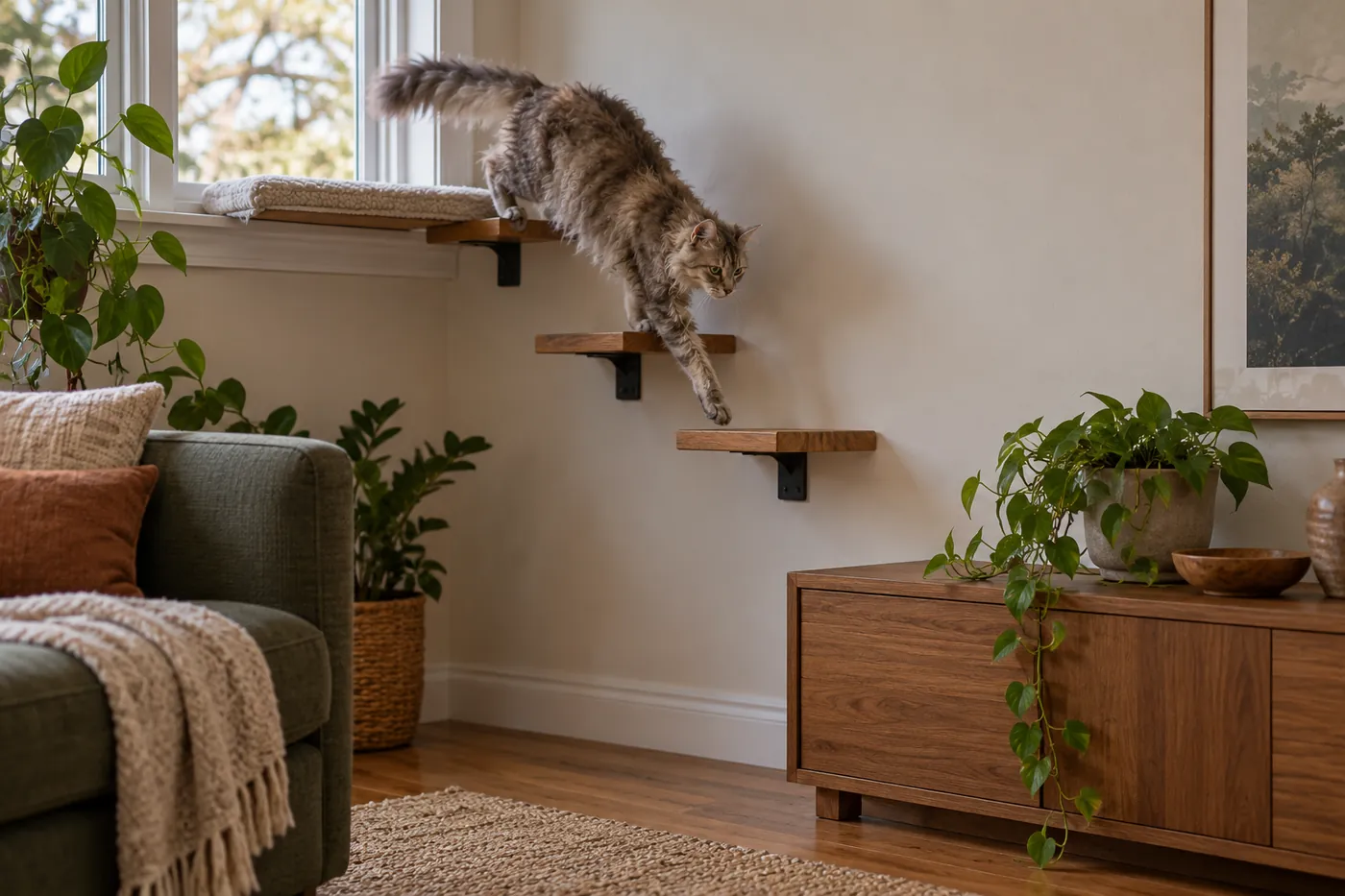
One quiet area that visitors and children do not enter matters as well. Social cats still need uninterrupted sleep, and a reliable retreat can prevent avoidance or defensive behaviour when the household becomes busy.
What should you ask before choosing one?
A good source can explain the cat's coat history without promising a fixed adult curl. It should also provide identity, veterinary and genetic records that can be matched to the cat or its parents.
Photographs across several ages can show how coats in the family develop, though they cannot predict the exact adult curl of one kitten. Whether either parent had recurrent skin disease, unusually difficult matting or grooming intolerance says more than the fullest show coat does.
How the cat reacts when a comb touches the shoulder and flank is worth seeing. Calm recovery after a small pause is more useful than forced stillness, because future care depends on cooperation rather than restraint.
A clean living area, cats able to retreat from one another and every animal adequately nourished are the baseline. Strong odour, untreated skin problems or reluctance to provide records should slow the decision even when the kitten appears outgoing.
If transport is involved, the seller should state the journey length, temperature control and who is responsible at each handoff. The cat should travel in its own secure carrier with identifying paperwork, not as an unverified package passed through several sellers.
- See registration or pedigree records supporting LaPerm identity
- Ask how the coat changed in the parents and earlier litters
- Request the named PK deficiency report when testing is relevant
- Observe the cat during play, handling and a quiet settling period
- Ask which comb, bathing routine and products the current coat tolerates
- Read health commitments and return terms before paying
The better choice is the cat whose needs and behaviour fit your home, even if another has tighter curls.
A rescue with unknown ancestry may still have a beautiful rex-style coat and an excellent temperament. That cat is honestly described as an individual when pedigree evidence is absent, since visual curl cannot identify breed by itself.
A LaPerm's coat will change, so a permanent photograph is the wrong thing to expect. If you can provide social contact, adaptable coat care, play and ordinary preventive health care, the LaPerm's shifting curls become manageable rather than mysterious.
Checked Against
Published 7 September 2026. Last updated .





