
What Is a Devon Rex, and Which Health Records Should Come With One?
A Devon Rex has a light curly coat and substantial social and skin-care needs. Its breeder records, starting with a CMS result, are unusually checkable, and the sparse coat still brings a regular ear and skin routine.
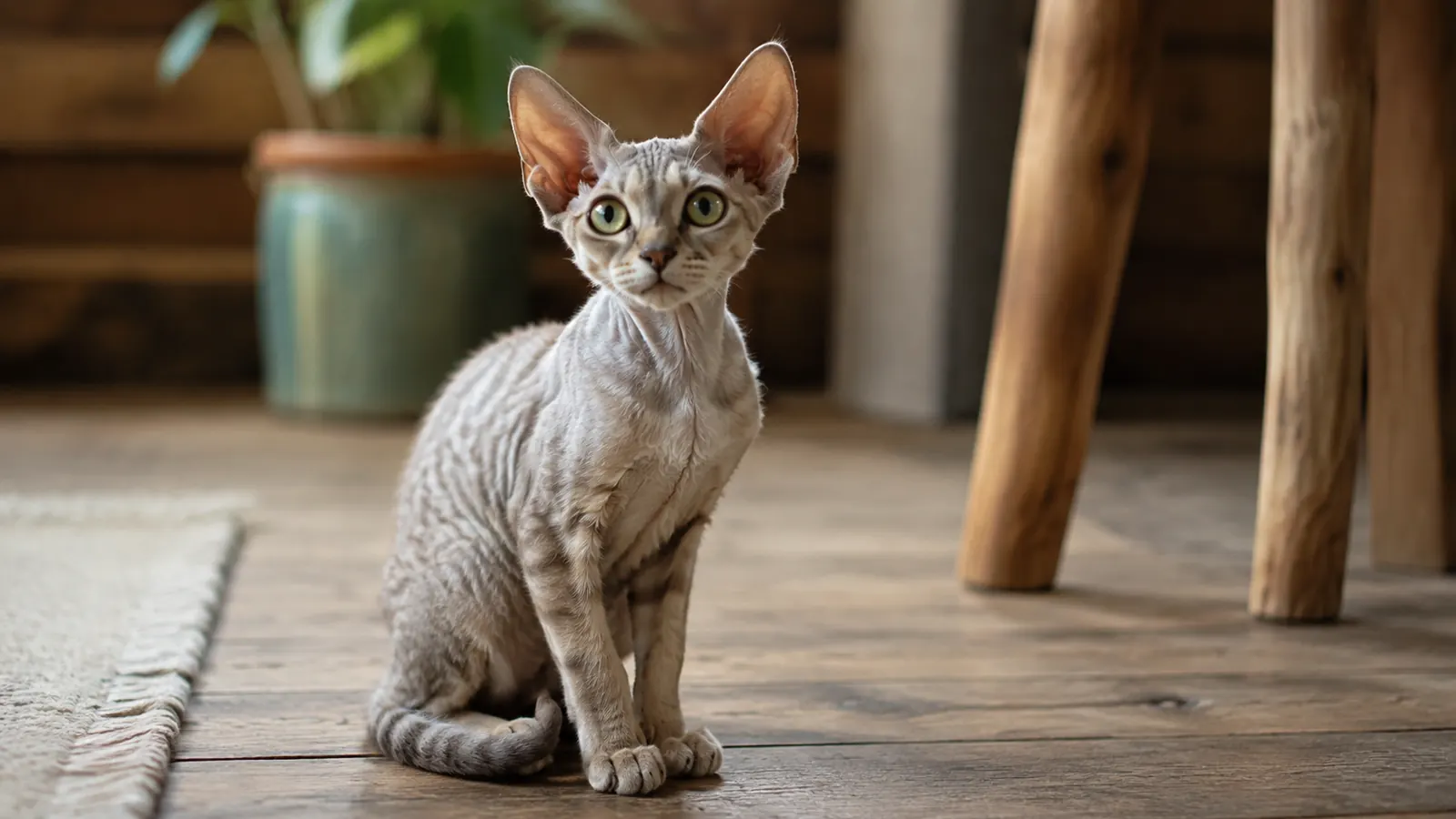
- Origin
- One curly kitten, Kirlee, found in a Devon garden in 1959
- Coat
- Soft and fine in a loose open wave, with very sparse guard hairs
- Size
- Small to medium with surprising heft. Wedge head, wide cheekbones, ears set low
- Typical weight
- Six to nine pounds for a typical adult
- Life expectancy
- No breed figure measured. The UK life tables do not cover the Devon Rex
- Activity level
- Higher than the small frame suggests, and sustained. Intensely loyal and deeply attached to its owners
- Grooming
- Close to nothing, and the breed sheds less than most. Watch for bare patches rather than for mats
- Suits
- Warm homes rarely left empty. Ask for a CMS result and both parents' blood types
Why does GCCF registration of a Devon Rex need a DNA test?
GCCF will place a Devon Rex on its Active Register only if the cat itself has tested normal for the CMS gene, or its parents have, or every line behind it in earlier generations has. That is a registration condition rather than a recommendation.
The disorder behind that rule is congenital myasthenic syndrome. It comes from a missense variant in COLQ, c.1190G>A, which swaps one amino acid at position 397 and leaves the muscle and nerve junction working badly.
- Gene and variant
- COLQ, c.1190G>A, causing a C397Y substitution
- Inheritance
- Autosomal recessive, so a carrier is healthy and only two copies produce an affected cat
- Age signs appear
- Around one month old, which is before most kittens leave
- What it looks like
- Muscle weakness and fatigue that worsen after exertion, with the head and neck held low
- Registration rule
- Active Register status requires a normal result on the cat, its parents, or every line behind it
Because the variant is recessive, a carrier is a perfectly healthy cat, carriers pass unnoticed, and an affected kitten must inherit a copy from each parent. Two carriers can produce affected kittens, as can matings involving an affected cat.
Older writing on the breed calls the same thing spasticity, myopathy, or muscular dystrophy of the Devon Rex. They are the same disorder under three earlier names, which is why sources appear to contradict each other.
For a buyer, the practical result is a document: a CMS result for the kitten, its parents or the lines behind them, which a breeder either has or does not.
How is a Devon Rex different from a Cornish Rex?
For roughly a decade after Kirlee appeared in a Devon garden in 1959, breeders believed they had found a second Cornish Rex and bred him on that assumption.
That assumption shaped the whole founding population. GCCF records that most of the females put to Kirlee were immediate descendants of Kallibunker, the original Cornish Rex, and were closely related to each other besides.
The kittens came out straight coated. Two curly parents producing uncurly young is what tells you the curls are not the same mutation, and modern sequencing has since named them separately.
| Devon Rex | Cornish Rex | |
|---|---|---|
| Gene | KRT71 | LPAR6, a four base pair deletion |
| Founding cat | Kirlee, Devon, 1959 | Kallibunker, Cornwall, 1950 |
| Named by the breed club | Luxating patellae, coagulopathy and CMS | No named condition |
| Mandatory genetic test | CMS normal status gates active registration | None |
The two breeds are now kept formally apart. GCCF states the Devon Rex is not compatible with the Cornish Rex, the Selkirk Rex or the LaPerm, and puts the progeny of any such mating on the Reference Register where it cannot be used in any rex programme.
The positive side of that rule is a short list. GCCF approves five breeds for outcrossing: the Abyssinian, the Asian Shorthair, the British Shorthair, the Burmese and the Korat. Everything else is non-approved.
Health advice does not carry over between the Devon Rex and the Cornish Rex either: the Cornish Rex club names no specific condition, while the Devon Rex club names three.
What is a Devon Rex coat actually like?
The first surprise on touching one is how little coat there is.
CFA describes it as soft, fine, full-bodied and rexed, appearing to be without guard hairs. The word appearing matters: a Devon Rex does have guard hairs, but they are very sparse, short and rexed themselves.
What that produces is an open wave rather than the tight rows of a Cornish Rex. Density, texture and length all vary more between individual Devon Rex cats than in most breeds.
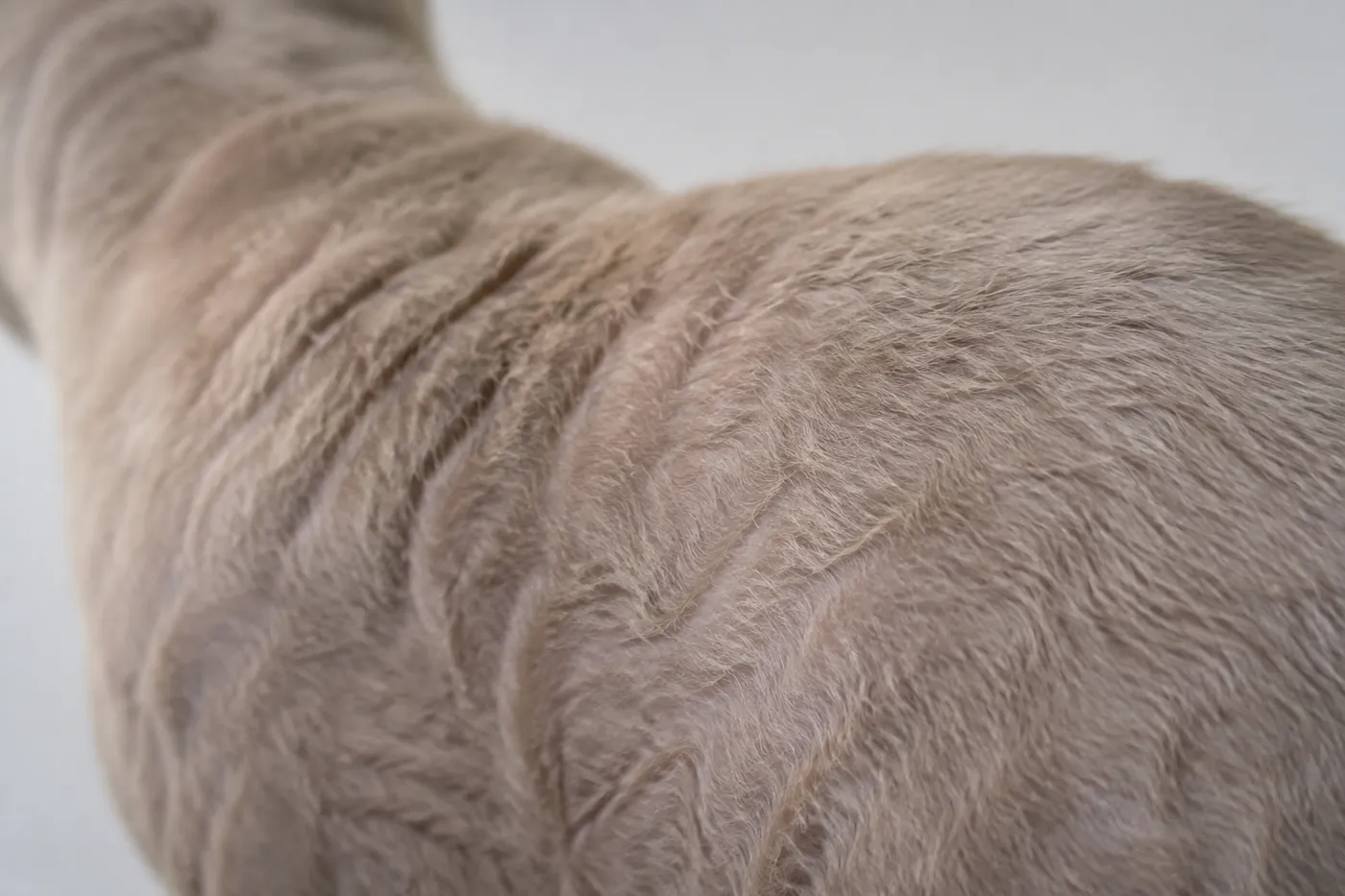
Down on the underparts is normal in a Devon Rex and is not bareness, while bare patches are a fault in a kitten and a serious fault in an adult.
Kitten coats also change. A thin looking eight week old is not necessarily heading for a faulty adult coat, which is a question for the breeder rather than for your own eyes.
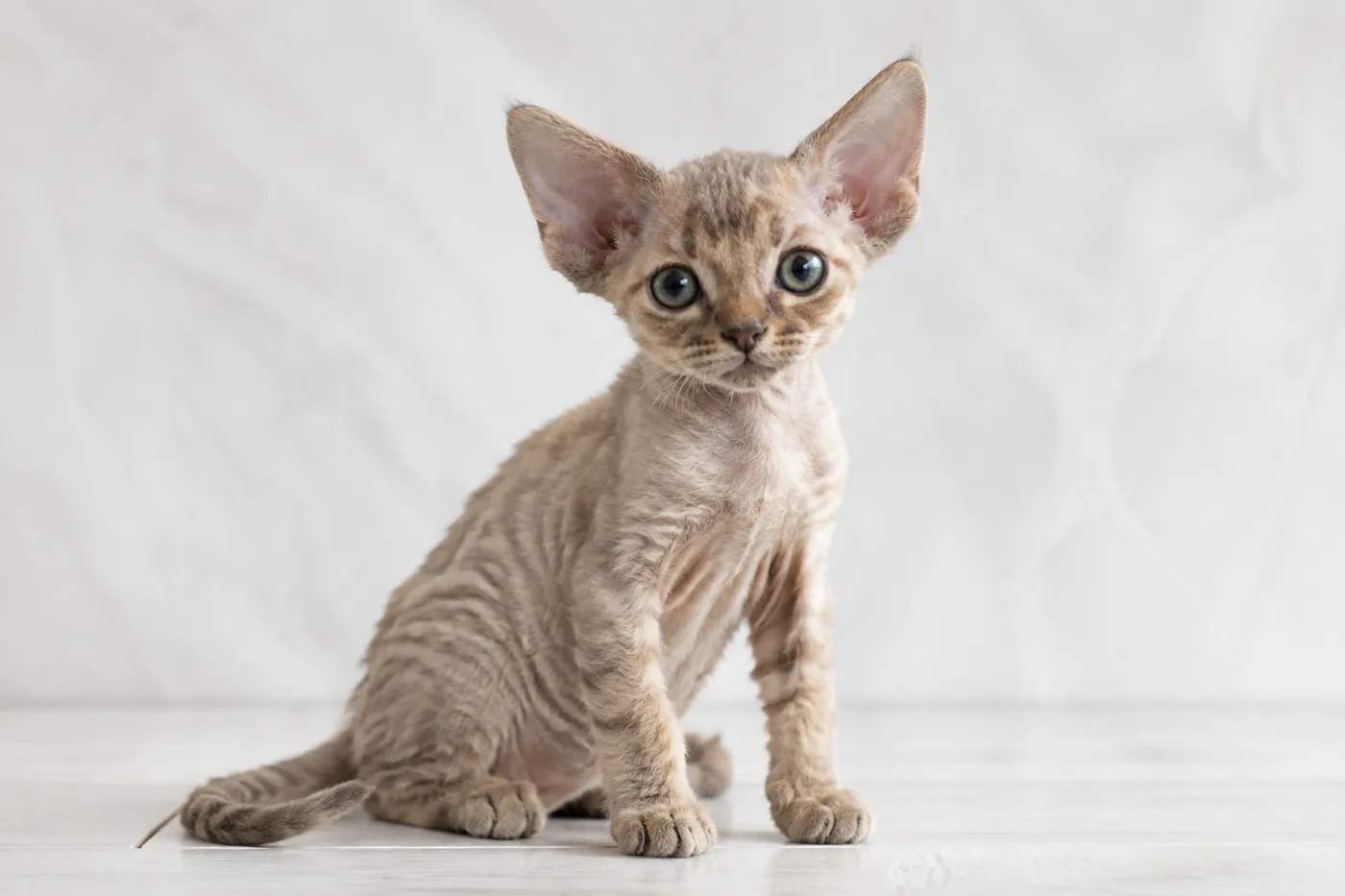
What you are checking for at that age is evenness rather than thickness, and skin that looks healthy underneath.
Why does a Devon Rex feel greasy?
The skin of a Devon Rex often feels faintly oily under the hand.
The oil builds up for a structural reason. A normal coat wicks sebum off the skin and carries it along the hair shafts, and this coat is too short and too sparse to do much of that. The oil stays where it was made, at the base of the follicles, so it gathers in the places where the coat is thinnest and the skin folds against itself.
- The base of the ears, which are large and carry very little fur
- The front of the neck and under the chin
- The armpits and the groin
- Between the toes, and in the folds around the claws
A treatment study examined six Devon Rex cats already affected by greasy seborrhoeic dermatitis in these areas. That selected group shows how the disease was managed and says nothing about how often healthy Devon Rex cats develop it.
The breed is also reported to carry more Malassezia yeast than most cats, alongside the Sphynx, with a greasy film around the claws recognised as one of the signs.
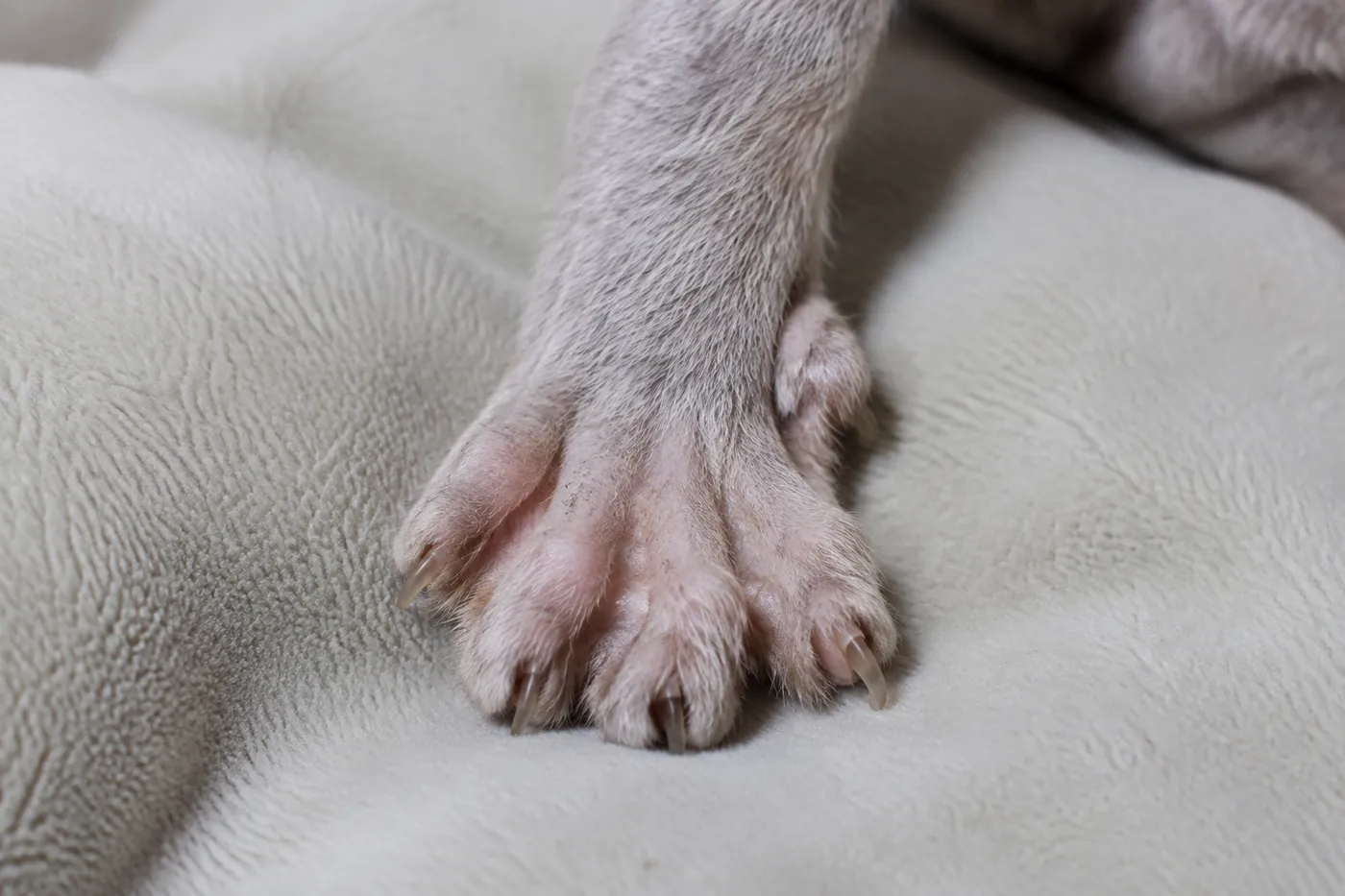
Handling is a chance to look at the skin, and visible buildup can be cleaned gently when it appears. A healthy cat does not need daily washing merely because affected cats appeared in a study, and firm brushing can damage this fine coat.
The outer ears collect the same buildup, and new discharge, odour, redness or discomfort there needs veterinary assessment before repeated cleaning.
Where this stops being grooming is when the skin turns red, itchy or smelly. That is a question for a veterinarian rather than a cleaning problem, and reaching for a human antifungal cream is how a mild case turns into a stubborn one.
Why might a Devon Rex bleed after routine surgery?
Among the serious problems GCCF says have beset the breed from the beginning is coagulopathy. Affected cats are deficient in the vitamin K dependent clotting factors, which are numbers two, seven, nine and ten.
The cause is inherited: a gamma glutamyl carboxylase with reduced affinity for vitamin K, so the clotting factors are made faultily rather than blocked by a poison or lost to liver disease.
In one reported case a Devon Rex bled after castration. The bleeding was controlled with plasma, and oral vitamin K1 brought the clotting factor concentrations back to normal.
This is documented in case reports rather than measured in prevalence surveys, so it is rare rather than expected, and there is no DNA test for it the way there is for CMS.
What does blood typing prevent in a Devon Rex litter?
Type B blood was common in the sampled Devon Rex populations. Those samples inform screening questions, but they do not establish the proportion of every Devon Rex population.
The published figures cluster around that. One series of 288 cats found 49 per cent type B, and another of 71 found 54 per cent.
Because blood-group frequencies vary between populations, only a test of the actual parents, read by a veterinarian, shows whether a mating is compatible; appearance and population percentages cannot.
Neonatal isoerythrolysis is entirely avoidable at the first step for the cost of a blood test.
There is a second reason to know the answer. A type B Devon Rex given the common type A blood in a transfusion can die of it, so the result is worth having on file long before any emergency.
How big is a Devon Rex?
A Devon Rex weighs about six to nine pounds, a small cat by any measure, and CFA calls the breed small to medium. What the number does not convey is the surprising heft the standard also asks for, because a Devon Rex is denser and more muscular than it looks.
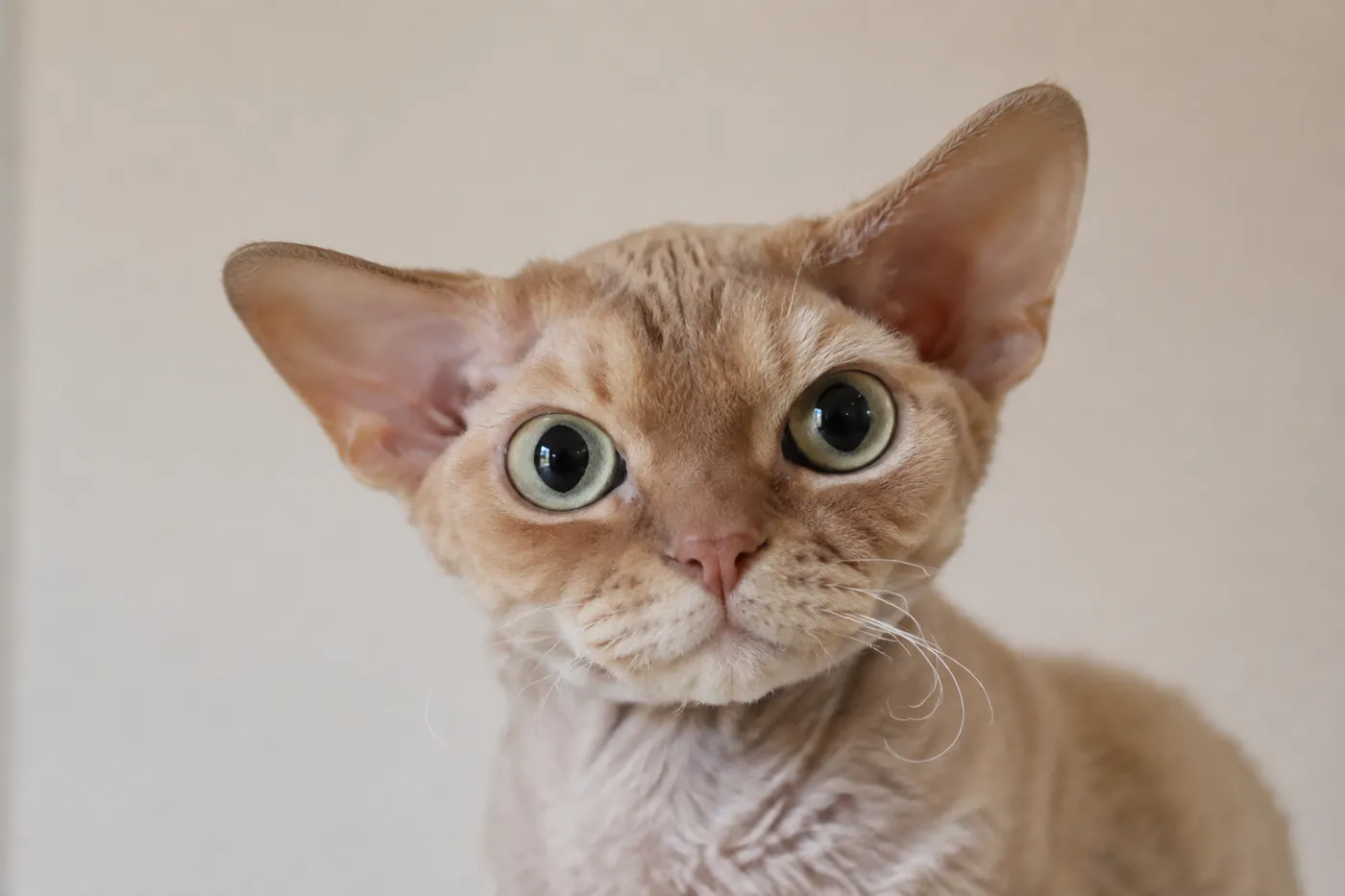
The head is what sells the breed and what misleads about it: a modified wedge, wide cheekbones, large expressive eyes and ears set low on the side rather than high on top together read as delicate. Lifting one corrects that impression immediately.
What is a Devon Rex like to live with?
Attachment is the word the registry reaches for: CFA describes a cat that is intensely loyal and loving and becomes deeply attached to its owners. That is the trait people buy the breed for, and it is also the one that decides whether they should.
- Company
- Strong attachment, so how the individual copes with absences matters
- Warmth
- A warm bed, with cooler resting places to choose between
- Activity
- Climbing, play and short training sessions
- Coat and skin
- A fragile coat that needs gentle handling and regular skin checks
The warmth row is the one people underestimate. A coat this sparse does less insulating, so a Devon Rex will find the radiator, the laptop or your neck, and a cold house is a real objection rather than a minor one.
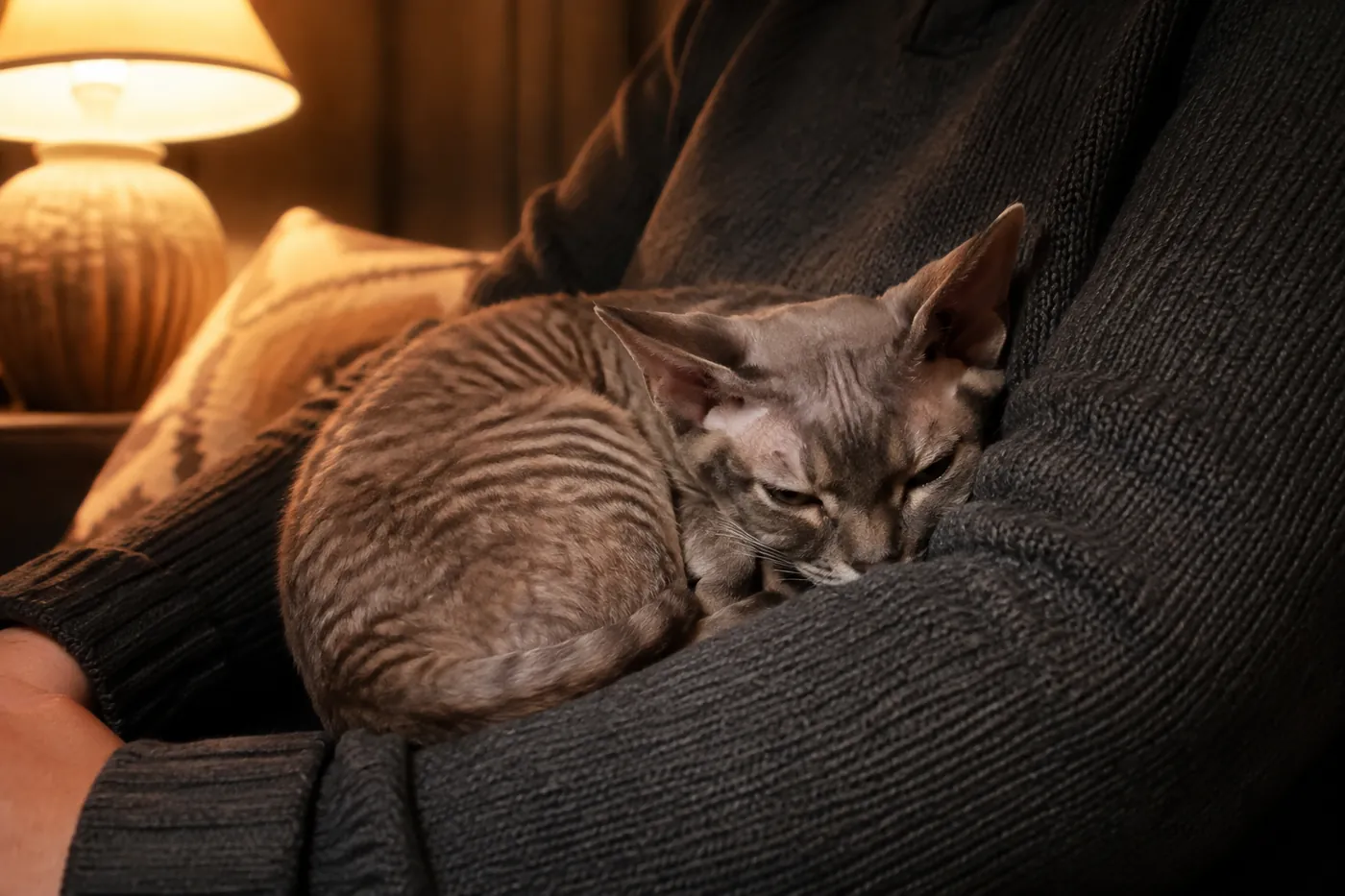
The company row is the serious one. The same attachment that makes this cat good company makes a house that is empty from eight until six a poor place to keep one.
Children and other animals are where the registry description is warmest. CFA says Devons readily accept dogs and other animals as companions and get along very well with children. That describes the breed's sociability rather than a promise about one cat, so a resident dog or cat still needs a gradual introduction. The coat sets the one limit the description leaves out: hair this fine and sparse is easily damaged by rough handling, so a child who lets the cat climb onto a lap suits it better than one who carries it about.
What should you ask a Devon Rex breeder?
Everything above turns into five questions with documents behind them, more than most breeds give a buyer to work with. Each answer is a result that either exists or does not, so it can be checked rather than taken on reassurance.
- CMS status of the kitten and of both parents, since it gates active registration
- Blood type of both parents, because type B was common in sampled populations
- What the line was outcrossed to, against the five approved breeds
- Longhair carrier status, since Kirlee himself carried it
- Whether there has been any bleeding in the line, which the club names as a breed problem
The outcross question checks a line against those five approved breeds. A Burmese in the pedigree is fine and a Persian is not.
One exclusion is absolute rather than merely unapproved. No cat with Sphynx ancestry should be introduced into the Devon Rex at all, which is worth knowing because the two breeds do share the CMS variant through decades of crossing.
A breeder who answers these easily has told you how the litter was planned. One who treats them as an insult has told you something too.
Is a Devon Rex the right cat for your household?
Two things decide this: whether the home suits the cat, and whether you will buy on documents.
The first is whether your house is warm and usually occupied. A Devon Rex in a cold flat that empties at eight in the morning has both of its strongest needs going unmet, so the charm wears thin on both sides.
Abyssinian and Devon Rex cats both need activity and contact, but the Abyssinian expresses more of that need through movement and height while the Devon Rex often seeks closer body contact. American Shorthair and Devon Rex cats differ more strongly in warmth, coat care and tolerance of a household that cannot provide near-constant participation.
The second is whether you are willing to buy on paperwork. The evidence exists for this breed in a way it does not for most, and declining to look at it wastes the single biggest advantage you have.
Good household fit and documented screening provide a stronger start, but neither predicts lifetime health. Ongoing skin, dental and veterinary care, and daily company, still decide how the years go.
Common Questions
How long do Devon Rex cats live?
The cited UK life tables do not provide a separate Devon Rex estimate. Their all-cat mean is not a prediction for this breed or an individual. Plan for long-term preventive care and ask about documented ages and causes of death in relatives.
Are Devon Rex cats hypoallergenic?
No. The allergen is Fel d 1, produced in saliva and skin rather than in hair, so a sparse coat does not remove it. A Devon Rex still grooms saliva across itself and still sheds, just less than most. Spend time with adult cats of the breed before committing.
Can a Devon Rex be bred to a Sphynx?
Not within GCCF. The policy says no cat with Sphynx ancestry should be introduced into the Devon Rex, and the progeny of such a mating goes on the Reference Register rather than becoming a variant. The two breeds do share the CMS variant, which spread from the Devon Rex through crossing in earlier decades.
What is a Devon Rex Variant?
A straight coated cat registered inside the breed and used deliberately in its breeding programme, because the rex coat is recessive and the gene pool needs widening. A normal coated kitten from two variants only counts as a variant itself if DNA testing shows it carries the gene.
Checked Against
- Treatment of Malassezia pachydermatis-associated seborrhoeic dermatitis in Devon Rex cats pubmed.ncbi.nlm.nih.gov
- Malassezia yeasts in veterinary dermatology: an updated overview pmc.ncbi.nlm.nih.gov
- The Cat Fanciers' Association: Devon Rex breed profile and standard cfa.org
- GCCF: Devon Rex Breeding Policy gccfcats.org
- Abitbol et al., A COLQ Missense Mutation in Sphynx and Devon Rex Cats with Congenital Myasthenic Syndrome, PLOS ONE 2015 journals.plos.org
- Maddison et al., Vitamin K-dependent multifactor coagulopathy in Devon Rex cats, JAVMA 1990 pubmed.ncbi.nlm.nih.gov
- Gavazza et al., Feline Blood Groups: A Systematic Review of Phylogenetic and Geographical Origin, Animals 2021 pmc.ncbi.nlm.nih.gov
- Teng et al., Life tables of annual life expectancy and risk factors for mortality in cats in the UK, Journal of Feline Medicine and Surgery 2024 pmc.ncbi.nlm.nih.gov
Published 5 September 2026. Last updated .





