What Is a Javanese Cat, and Why Does the Name Change?
The name Javanese means different things in different registries. CFA uses the name for nontraditional point colours within the Balinese breed, TICA registers the comparable pointed longhair as Balinese, and some countries use Javanese for the non-pointed Oriental Longhair. Only the registry on the pedigree shows which cat the name describes, so the name alone predicts neither appearance nor ancestry.
- Origin
- Developed in North America from Balinese, Siamese and Colorpoint Shorthair lines before CFA merged Javanese into the Balinese breed in 2008
- Coat
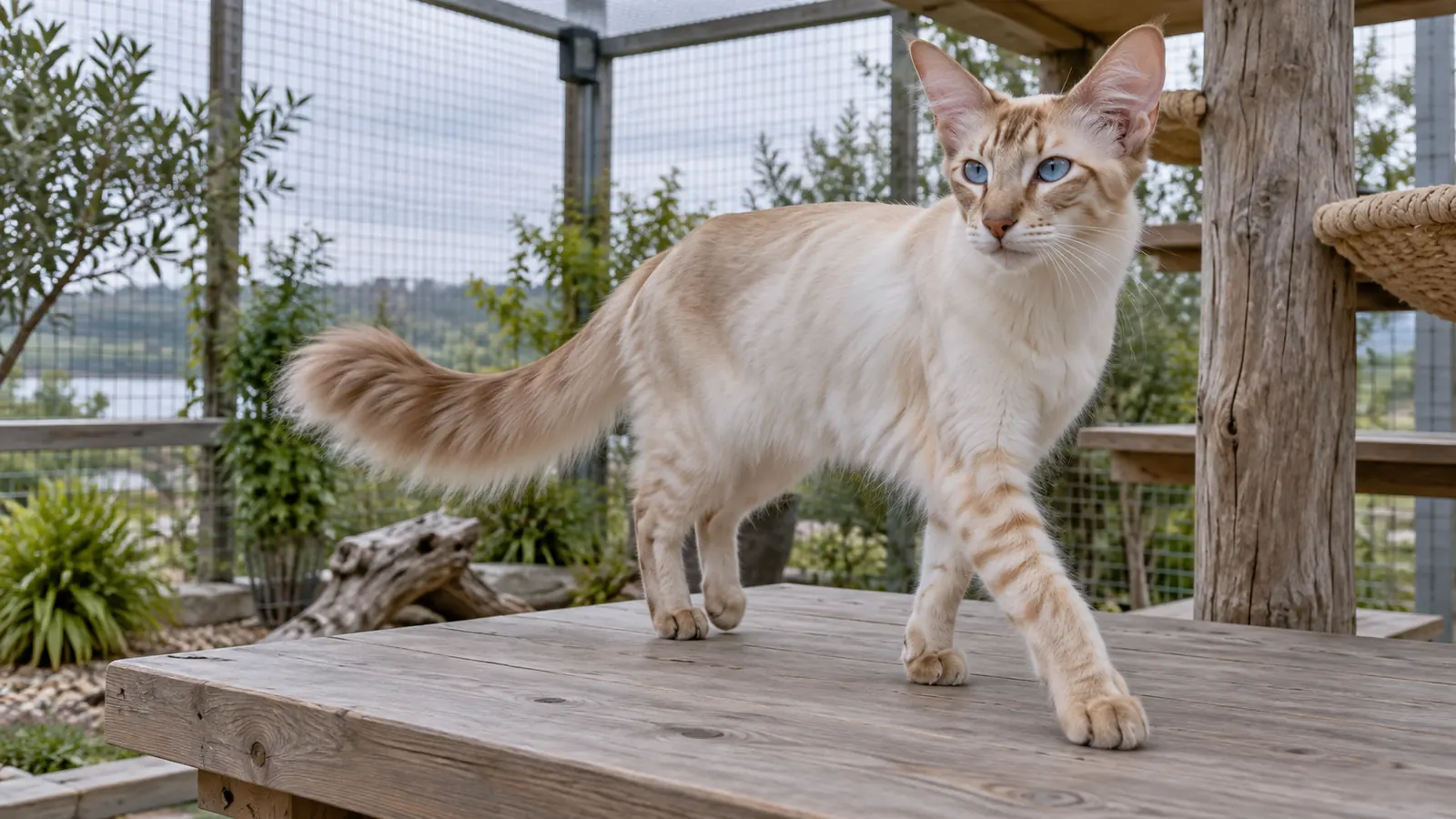
- Fine, silky and semi-long in the CFA usage, with a plumed tail and point colours beyond the four traditional Balinese colours
- Size
- Small to medium, long and fine-boned with firm muscle, a wedge head, large ears and almond-shaped blue eyes in the CFA usage
- Typical weight
- TICA gives about 5 to 8 pounds for female Balinese and 8 to 12 pounds for males. These are related-breed figures, not a separate Javanese population estimate
- Life expectancy
- No robust Javanese-specific population estimate is established
- Activity level
- High. Social, vocal, athletic and strongly interested in people and household activity
- Grooming
- Low to moderate. The fine single coat usually needs a gentle comb-through, with attention to the tail and furnishings
- Suits
- Interactive homes that welcome a vocal companion, can provide daily play and will verify the registry identity and named health evidence
The word Javanese means different things in different registries, so the paperwork matters before coat colour.
In current CFA records, Javanese identifies particular colour divisions inside the Balinese breed. A cat sold under the same word in another country may instead be an Oriental Longhair, so a photo alone cannot settle the identity.
What is a Javanese cat today?
Under CFA rules, a Javanese is a pointed, semi-longhaired cat built to the Balinese standard but shown in point colours and patterns outside the four traditional Balinese colours. CFA made Javanese a division of the Balinese breed on May 1, 2008.
CFA still uses Javanese in its division names and records current winners as Balinese-Javanese, even though litters are registered within the Balinese breed.
TICA registers the expanded point palette within its Balinese breed group and has no separate Javanese division for this colour distinction.
GCCF calls the non-pointed longhaired member of the Oriental family the Oriental Longhair and notes that this cat is known as Javanese in some countries.
North American breeders chose the name from an island near Bali after CFA required a separate name for the developing colour group in 1979. It does not indicate that the breed originated on Java.
| Registry or context | What Javanese usually means | How to verify it |
|---|---|---|
| CFA | The nontraditional colour divisions within the Balinese breed | Read the Balinese-Javanese registration and colour class |
| TICA | The comparable pointed longhair is registered as Balinese | Check the Balinese pedigree and colour description |
| GCCF | Oriental Longhair is the official name, while Javanese may be used elsewhere for that non-pointed cat | Confirm that the paperwork says Oriental Longhair |
| An unregistered advert | A seller's description that may refer only to appearance | Do not infer pedigree from the label or photograph |
Insurance records, health results and breeder comparisons only line up when the registry name, registered parents and colour class belong together. A borrowed label cannot establish all three.
How can you recognise the CFA Javanese type?
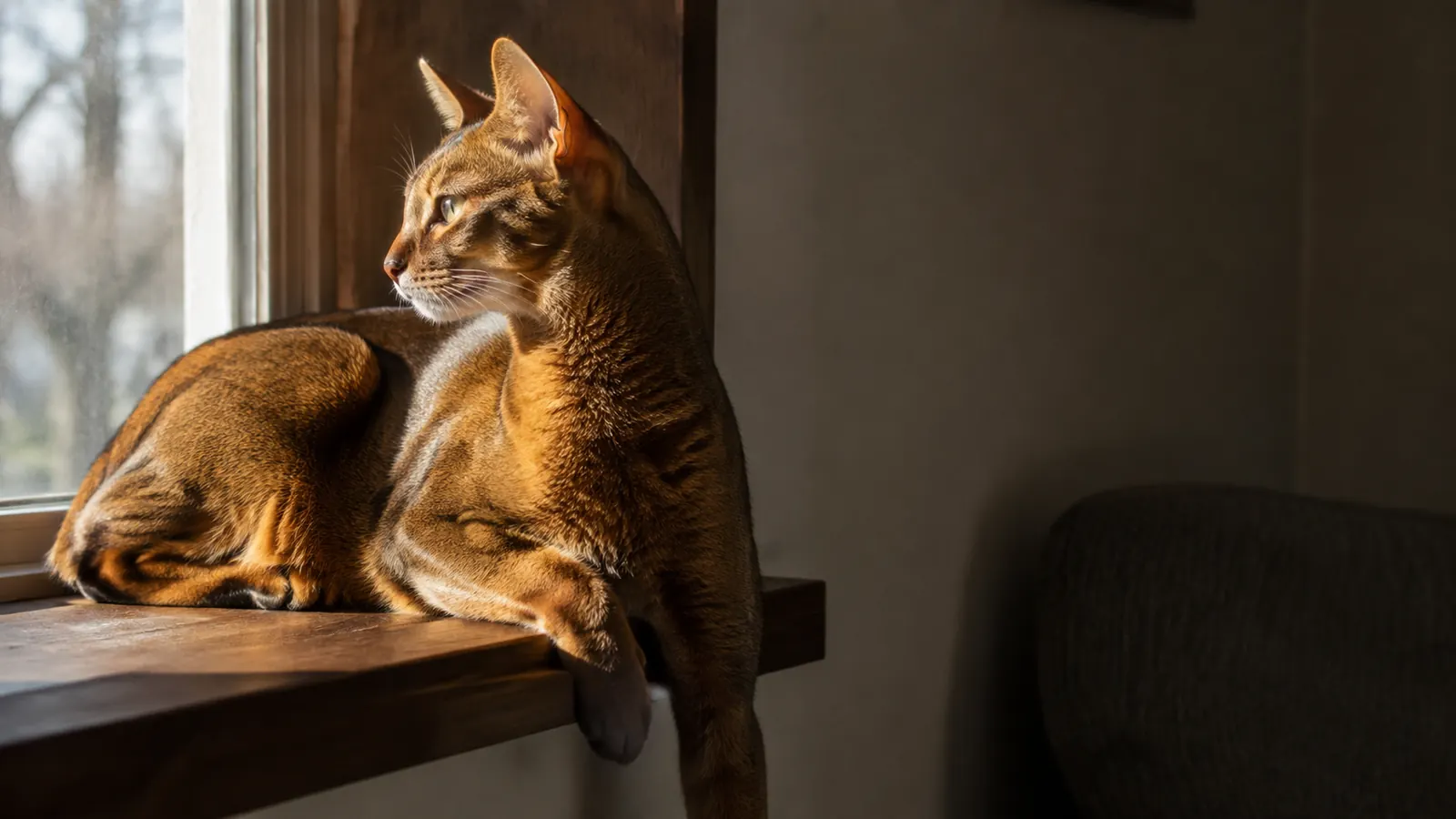
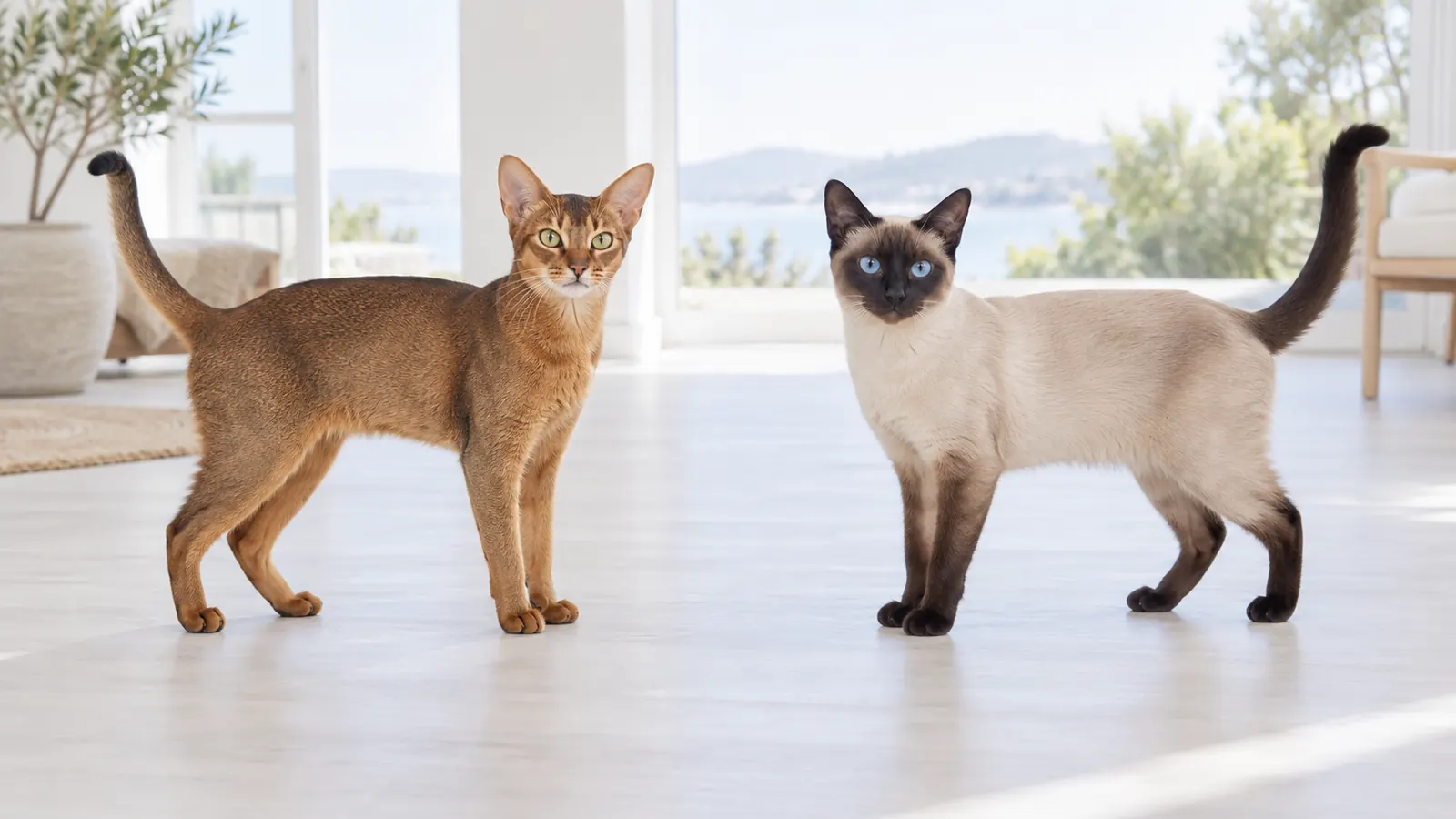
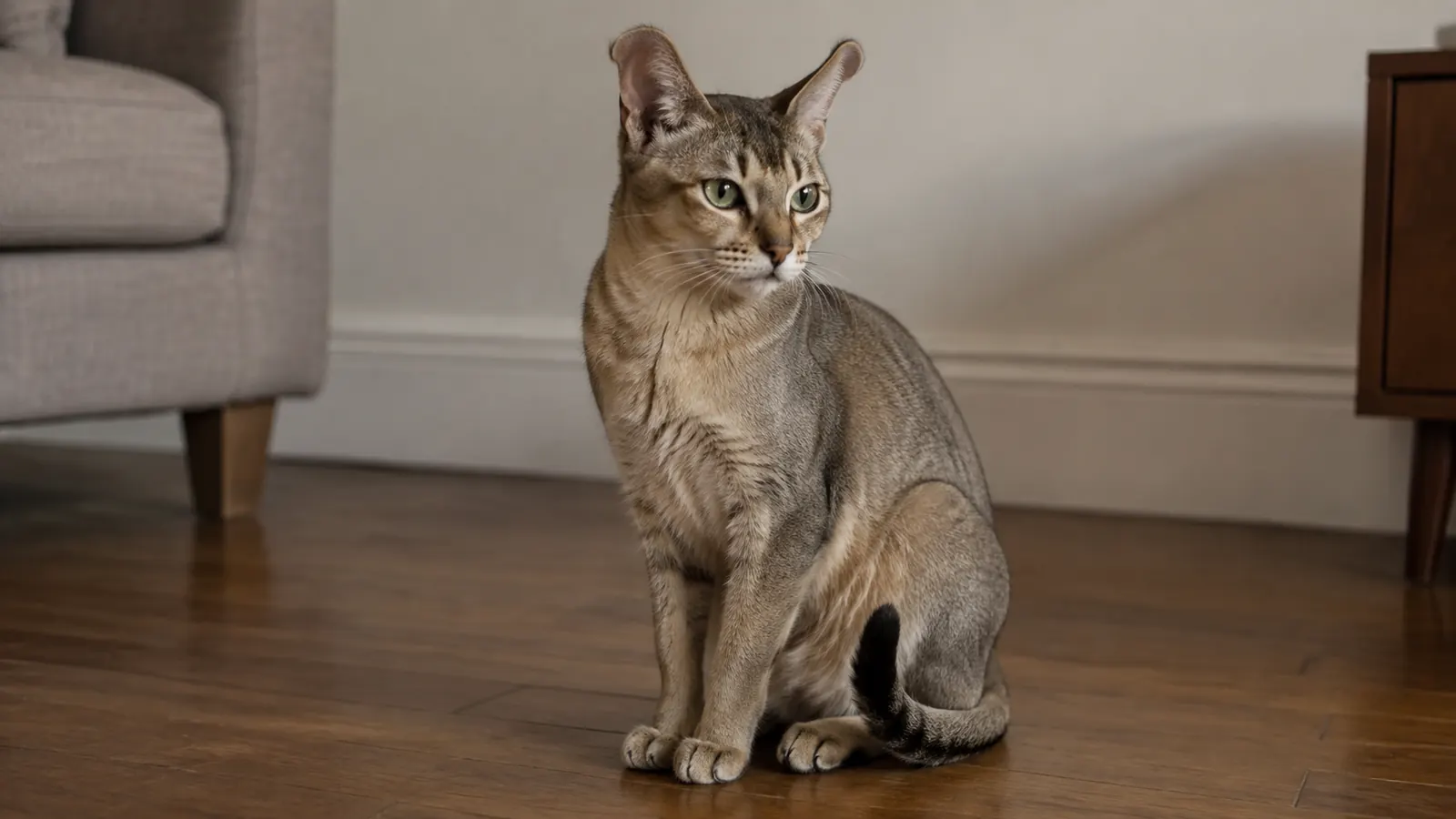
The CFA Javanese shares the Balinese structure. Its body is long, tubular and fine-boned but muscular, the legs and tail continue those long lines, and the head forms a straight-sided wedge into very large ears. The eyes are almond-shaped and blue in the pointed CFA usage.
The close-lying coat has less outward volume than many longhaired coats, while the plumed tail carries the most obvious length.
TICA gives about 5 to 8 pounds for female Balinese and 8 to 12 pounds for males, with development continuing into the second year. That related-breed range can guide rough planning, although it is not a measured Javanese average, and carriers and platforms still need to fit the actual adult.
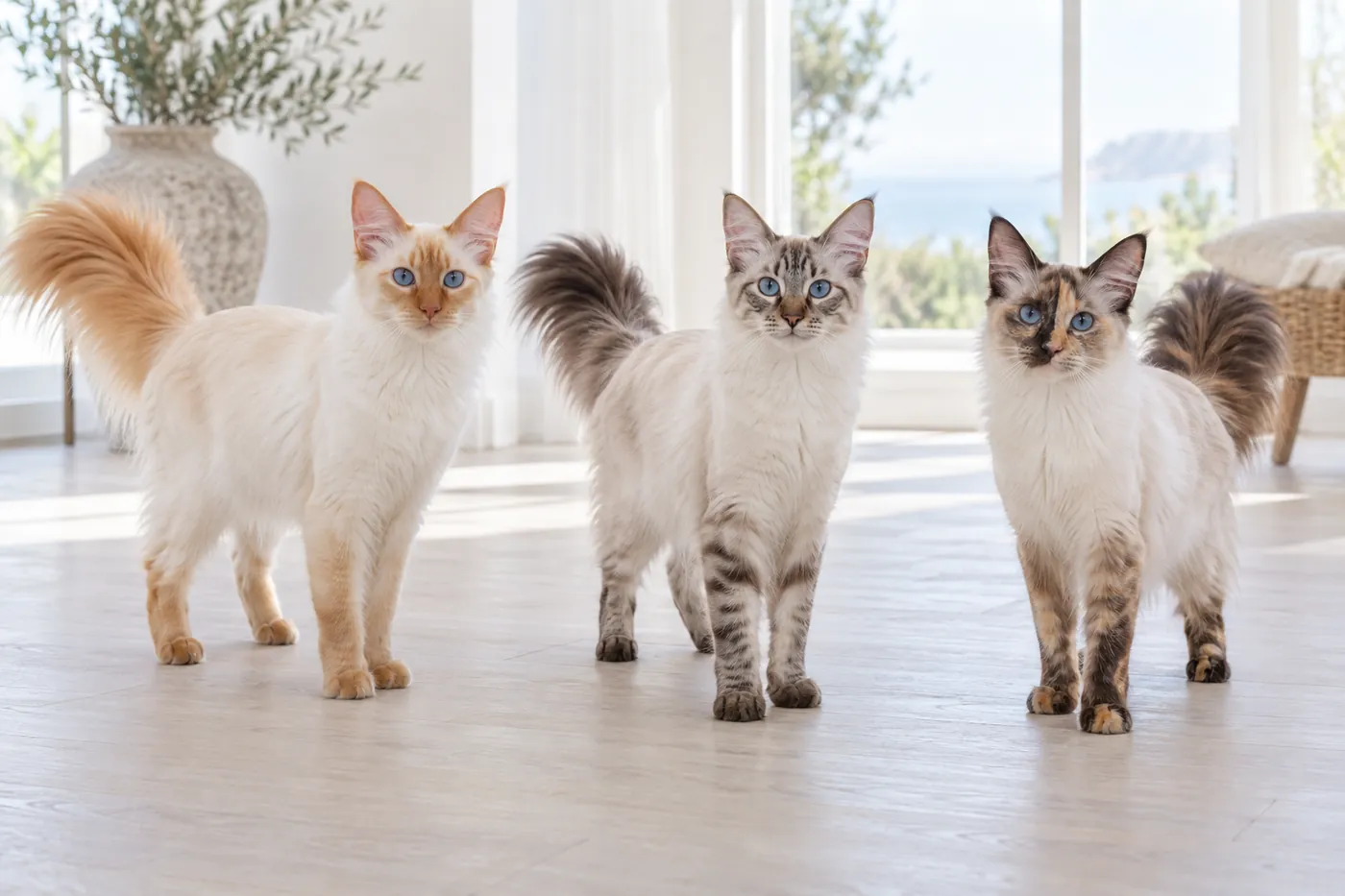
Colour determines the division without changing the body shape. CFA lists solid point, lynx point and parti-colour point classes that include red, cream, cinnamon, fawn, smoke, silver and tortie-related combinations.
Pointed domestic longhairs can share this appearance. Pedigree establishes the breed claim, while coat pattern only begins the identification.
Is a Javanese different from a Balinese?
In current CFA terms, the difference is the colour division. The traditional Balinese division covers seal, chocolate, blue and lilac points, while the Javanese division covers the additional accepted point colours and patterns. Both divisions use the same breed standard for structure and coat.
CFA's own history records that early Javanese breeders first wanted their cats accepted as a Balinese division, and CFA ultimately adopted that arrangement decades later.
- Shared breed standard
- Balinese body, head, eyes and semi-long silky coat
- Traditional Balinese colours
- Seal, chocolate, blue and lilac points
- Javanese division colours
- Additional solid, lynx, smoke, silver and tortie-related point classes
- Current CFA status
- A division of the Balinese breed since 2008
- Practical difference
- Paperwork and colour classification change more than daily care
The Colorpoint Shorthair sits on the shorthaired side of the same naming logic. CFA separates its added point colours from the traditional Siamese palette, while TICA includes the broader palette within the Siamese group.
Temperament varies with the individual and its rearing. The related breed descriptions consistently portray both colour divisions as social and active.
What temperament should you expect?
A Javanese in the CFA sense is likely to share the Balinese and Siamese-family tendency toward frequent interaction, vocal communication and curiosity. This is a cat for someone who enjoys being followed, answered and included in ordinary tasks. Registry descriptions are population tendencies rather than guarantees.
A useful meeting includes time when the cat is alert, after play and during a brief interruption. Recovery and willingness to disengage reveal more than an affectionate first greeting.
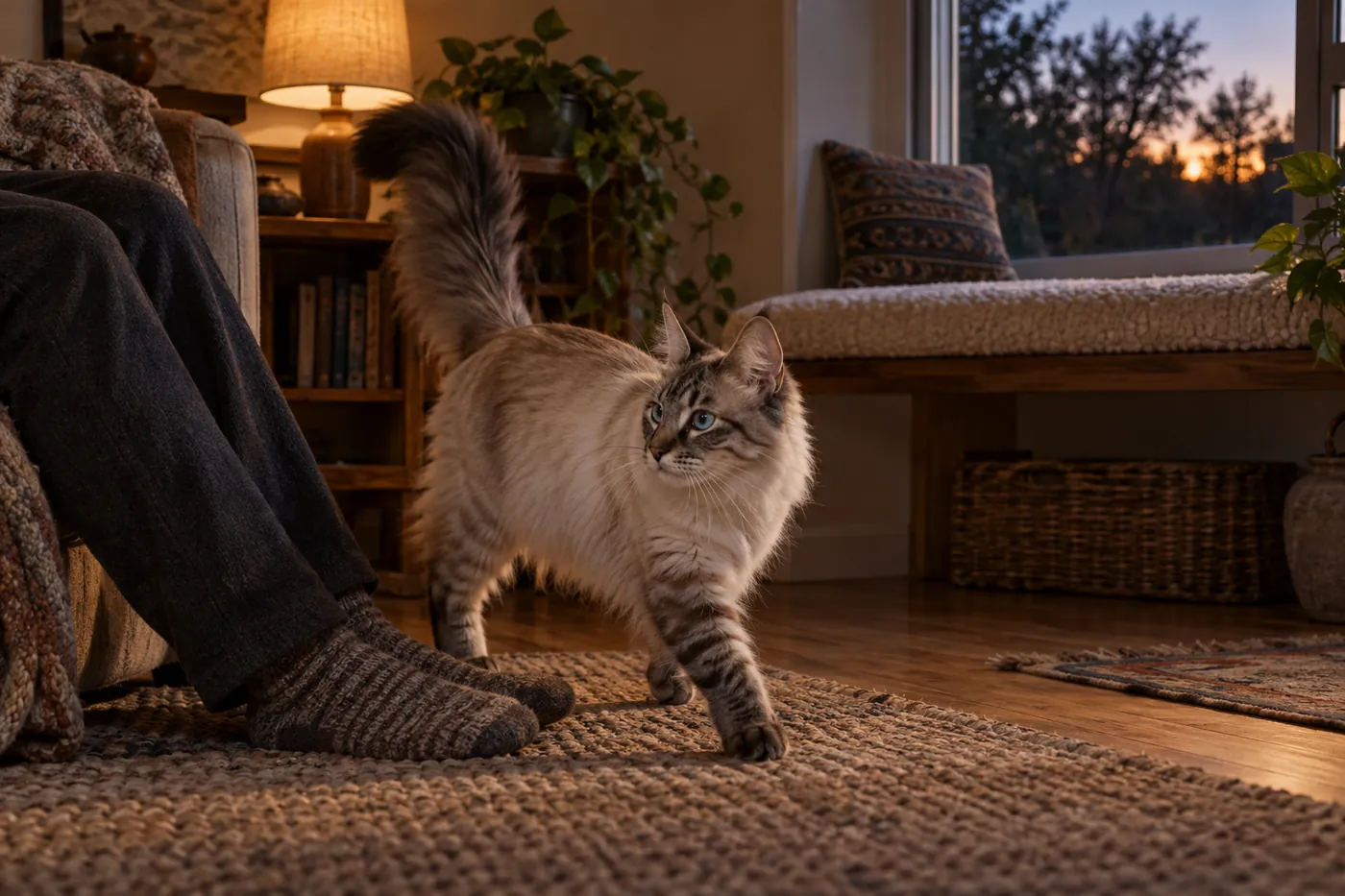
Vocal behaviour may decide whether the fit works in a home with thin walls or long quiet periods. Hearing adult relatives during an ordinary day gives more useful evidence than a kitten's silence during one visit.
Punishment can add fear without addressing the reason for vocal behaviour, and the possible causes include access, food, water, litter, discomfort and a changed routine. Once those needs are met, rewarding quieter requests gives the cat another way to communicate.
Can a Javanese cat be left alone during the day?
An adult may settle through a predictable workday, but long and changing absences are a poor foundation for this social breed family. There is no universal hour limit that separates comfortable solitude from distress.
A workable weekday has contact and play before departure, usable resources while the home is empty, and another period of interaction after the person returns.
A camera can help you observe behaviour, but a speaker is not a substitute for care or companionship.
- Morning and evening contact follows a stable routine on normal workdays
- High observation, hiding places and a sturdy scratching post remain accessible
- Water and the recommended number of litter trays stay available in separate locations
- Food searches are simple enough to complete without frustration
- A dependable person covers travel and unusually long days
- Appetite, sleep, grooming, toileting and vocal behaviour remain stable after schedule shifts
A compatible second cat may provide play and contact, but the relationship has to develop at the cats' pace. Gradual introductions and separate resources keep either cat from controlling the other's food, litter or route to safety.
New withdrawal, overgrooming, house soiling or persistent calling deserves a health assessment before it is labelled loneliness. Behaviour changes often carry information that the breed stereotype can hide.
How much play and training does a Javanese need?
Because Javanese cats are athletic and often learn quickly, short tasks can combine movement with problem-solving.
Connected climbing routes, short chase games, carrying opportunities and food-search tasks serve different needs. A large basket of static toys on the floor provides less movement and problem-solving.
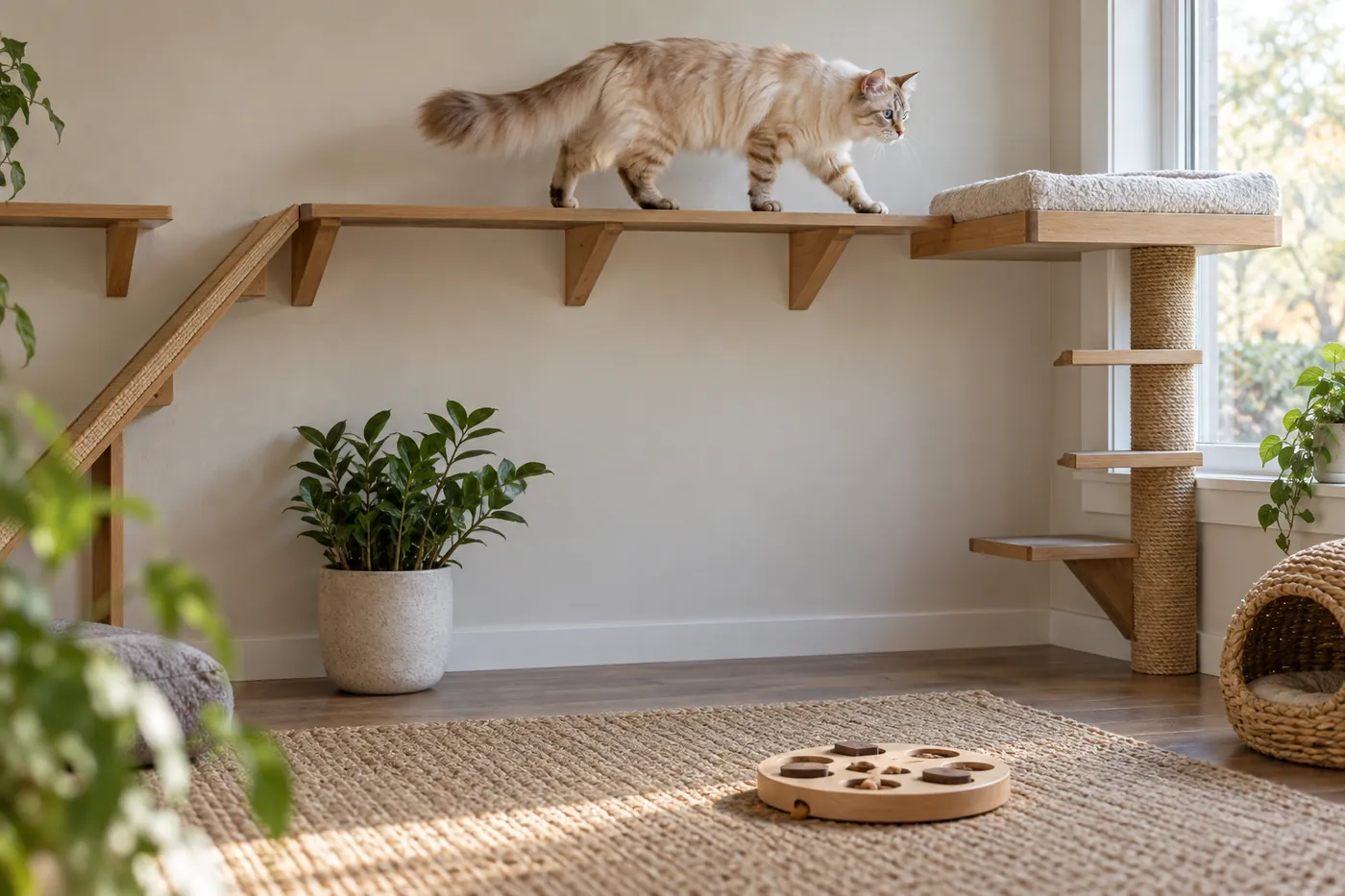
Activity works best in short periods across the day, with intensity and recovery adjusted for age and health, because the exercise needs of each life stage are better met by several short bursts than by one exhausting session.
- Choose one small skill such as touching a target or entering a carrier
- Mark the exact successful movement and deliver a small reward
- Repeat only while the cat remains engaged
- Add distance and distraction separately
- Use the skill in ordinary care before it is needed under pressure
- End on a success instead of demanding one more repetition
Clicker training can support carrier entry, stationing and cooperative grooming. Short, clear sessions give the cat more control, while repeated cues become less useful after its attention has faded.
How much grooming does the silky coat require?
The coat is semi-long, fine and close-lying, with less woolly undercoat than many long coats that mat quickly. Most of the visible length gathers in the tail plume and furnishings.
A gentle comb-through once or twice a week is a reasonable starting point for many adults, then frequency should follow the individual coat. A complete grooming pass reaches behind the forelegs, through the rear furnishings and around the tail as well as the smooth back.
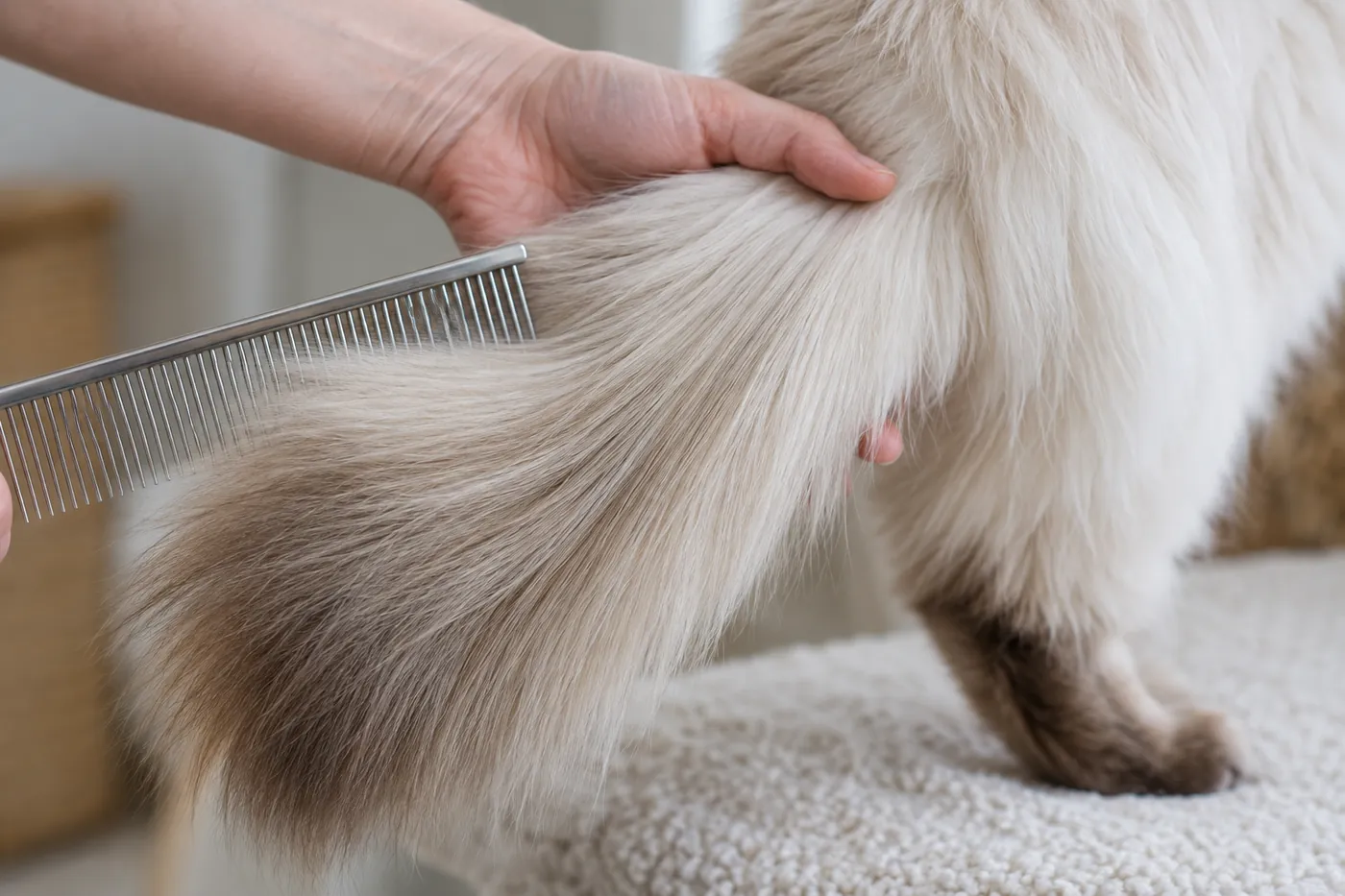
Supporting the skin and working from the end of a small tangle keep combing comfortable, and a wide metal comb usually reveals hidden resistance more reliably than a brush that skims over the surface.
Sudden matting, grease, dandruff or reluctance to groom can reflect pain, weight change or illness. Increasing force or bathing more often may conceal the signal while making handling harder.
Are Javanese cats hypoallergenic?
No Javanese can be guaranteed not to trigger a cat allergy. A fine coat may leave less visible loose hair than a dense double coat, but important allergens are carried in saliva and skin material and can reach furniture, clothing and air on any coat. Allergic response also varies between people and individual cats.
Time with the actual cat gives better evidence than the breed label, although one comfortable visit cannot predict how months of exposure will feel.
Cleaning, ventilation and keeping the cat out of a sleeping room may reduce exposure for some households. Those steps manage the environment without making the breed allergen-free.
Which health records matter for a Javanese?
The strongest named genetic question is progressive retinal atrophy associated with the CEP290 rdAc variant. Langford Vets specifically lists Javanese, Balinese, Colorpoint Shorthair, Oriental Shorthair and Siamese among the breeds at risk, and a DNA test can report normal, carrier or affected status for this variant.
Affected cats begin life with vision and may develop progressive retinal degeneration later. Because the condition is recessive, test results help breeders plan a mating. A normal result addresses this named variant alone, while other causes of blindness remain possible.
| Evidence | Ask to see | What it answers | What remains open |
|---|---|---|---|
| PRA rdAc | Original CEP290 reports for both parents | Status for the named retinal variant | Other eye disease and future injury |
| Pedigree | Registry record connecting kitten, parents and colour division | Recorded identity and ancestry | Health and adult temperament |
| Family history | Ages, diagnoses and causes of death in close relatives | Whether illness is tracked across generations | A guaranteed outcome for one kitten |
| Veterinary record | Examination, vaccination and treatment history | Care and findings already recorded | Conditions not yet present |
| Cardiac claims | The dated report and the method actually used | What was assessed in a named cat on that date | Future heart disease |
Systemic amyloidosis has been documented in Siamese and Oriental family cats. Shared ancestry makes liver disease and unexplained early deaths reasonable family-history questions, although current evidence cannot establish a Javanese-wide prevalence or provide a simple all-clear certificate.
Each report should name the condition tested and match the parent by registered name or microchip number. A panel answers defined questions and cannot guarantee lifetime health.
There is no established Javanese-specific lifespan estimate from a large veterinary population. Preventive care, weight, dental health, indoor safety and prompt attention to change provide more useful planning evidence than a promotional upper age.
How do Javanese cats fit with children and other pets?
A well-socialised individual can enjoy respectful children, other cats and cat-friendly dogs. Interest in company can help a Javanese settle into a busy home. An outgoing cat may still approach before a child or resident animal has learned to give it space.
Children should use toys instead of hands, support the body when lifting is invited and allow the cat to leave every interaction. Sleeping, eating and toileting areas need protection from pursuit.
Introductions to another cat or dog work better with scent exchange, distance and voluntary movement before shared access. Separate resources and unobstructed escape routes matter even when the first greeting seems friendly, because tension between cats can build around food, litter and routes before any fight.
Birds, rodents, reptiles and fish need secure physical barriers. Sociability with people does not remove predatory behaviour or make an open enclosure safe.
What should you verify before committing?
The registration certificate should name the organisation and identify the breed or division. If the seller says Javanese but the paperwork says Oriental Longhair, that can be legitimate regional usage, although the seller should still explain that it describes a different colour presentation from the CFA Javanese division.
- Original registration and pedigree are available instead of a typed summary
- Registered names on health reports match the parents of the litter
- Both parents have named PRA rdAc results
- The mother can be seen with the litter when possible, including during ordinary behaviour
- The source can describe how adult relatives handle voice, attention, grooming and time alone
- Vaccination, examination, return and congenital-health records are available for review
- The carrier, litter area and climbing routes fit the adult cat
- The seller makes no guarantees about silence, allergy safety, final personality or lifetime health
International Cat Care recommends verifying pedigree registration, inherited-disease testing and the kitten's health rather than relying on an online advert. A responsible source provides documents, identifies the limits of each result and gives you time to decide.
An adult in rescue may have no pedigree, so its description should stay with traits that can be verified instead of assigning a breed from appearance. Known behaviour, a veterinary examination and a foster history may still give excellent evidence about household fit.
The fit is strongest when an interactive, vocal and athletic companion suits your ordinary week and the paperwork supports the identity being sold. When registration and health records do not support the claim, the unusual name adds no reliable information about the cat.
Common Questions
Is a Javanese cat a separate breed?
Not under current CFA rules. Javanese became a colour division within the Balinese breed in 2008, while other registries may include the same pointed longhair under Balinese or use Javanese for Oriental Longhair.
What is the difference between a Javanese and a Balinese?
In CFA, both use the Balinese standard and differ by colour division. Seal, chocolate, blue and lilac points are in the traditional Balinese division, while additional solid, lynx and tortie-related point classes are in the Javanese division.
Are Javanese cats vocal?
The related Balinese and Siamese breed descriptions consistently present them as social and talkative, so a quiet companion is not the safest expectation. Individual volume and frequency still vary.
Are Javanese cats hypoallergenic?
No. The fine single coat may be straightforward to groom, but cat allergens come from saliva and skin material as well as hair, and no individual can be guaranteed not to trigger symptoms.
What health test should a Javanese breeder provide?
Ask for the original PRA rdAc reports for both parents and match their identities to the pedigree. That DNA result addresses the named CEP290 variant only, so family and veterinary records still matter.
Checked Against
- CFA: Balinese and Javanese divisions cfa.org
- CFA: Javanese breed history cfa.org
- CFA: Balinese registration rules cfa.org
- TICA: Balinese tica.org
- GCCF: Oriental and Oriental Longhair gccfcats.org
- Langford Vets: progressive retinal atrophy rdAc langfordvets.co.uk
- The Veterinary Journal: rdAc across cat breeds pubmed.ncbi.nlm.nih.gov
- Generalized AA amyloidosis in Siamese and Oriental cats pubmed.ncbi.nlm.nih.gov
- International Cat Care: The Kitten Checklist icatcare.org
- AAFP and ISFM feline environmental needs guidelines pmc.ncbi.nlm.nih.gov
Published 14 September 2026. Last updated .