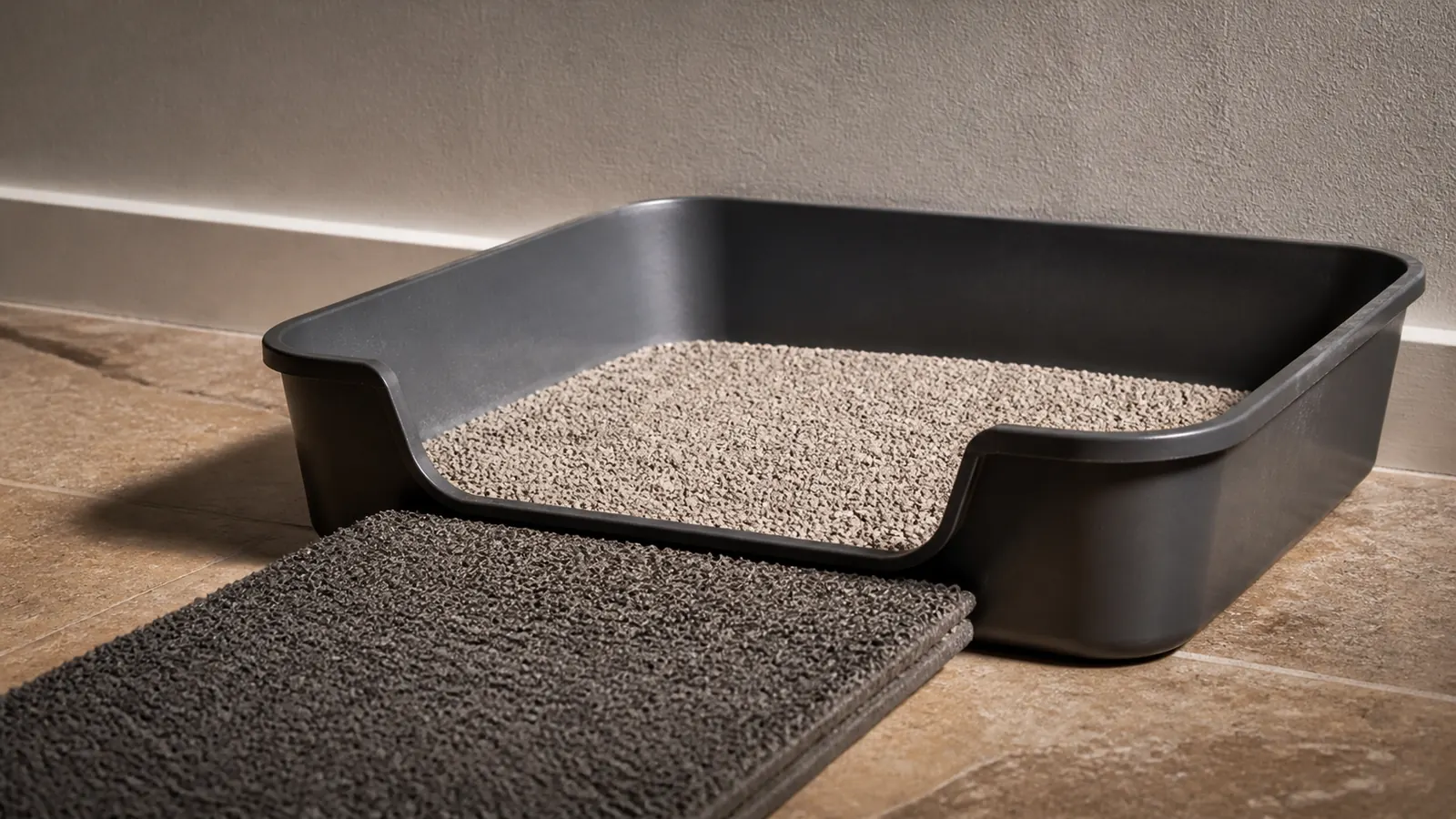
How Many Litter Trays Does a Cat Actually Need?
One tray per cat plus one extra is a useful starting point. Spread trays across accessible locations and adjust the setup to the cats using them.
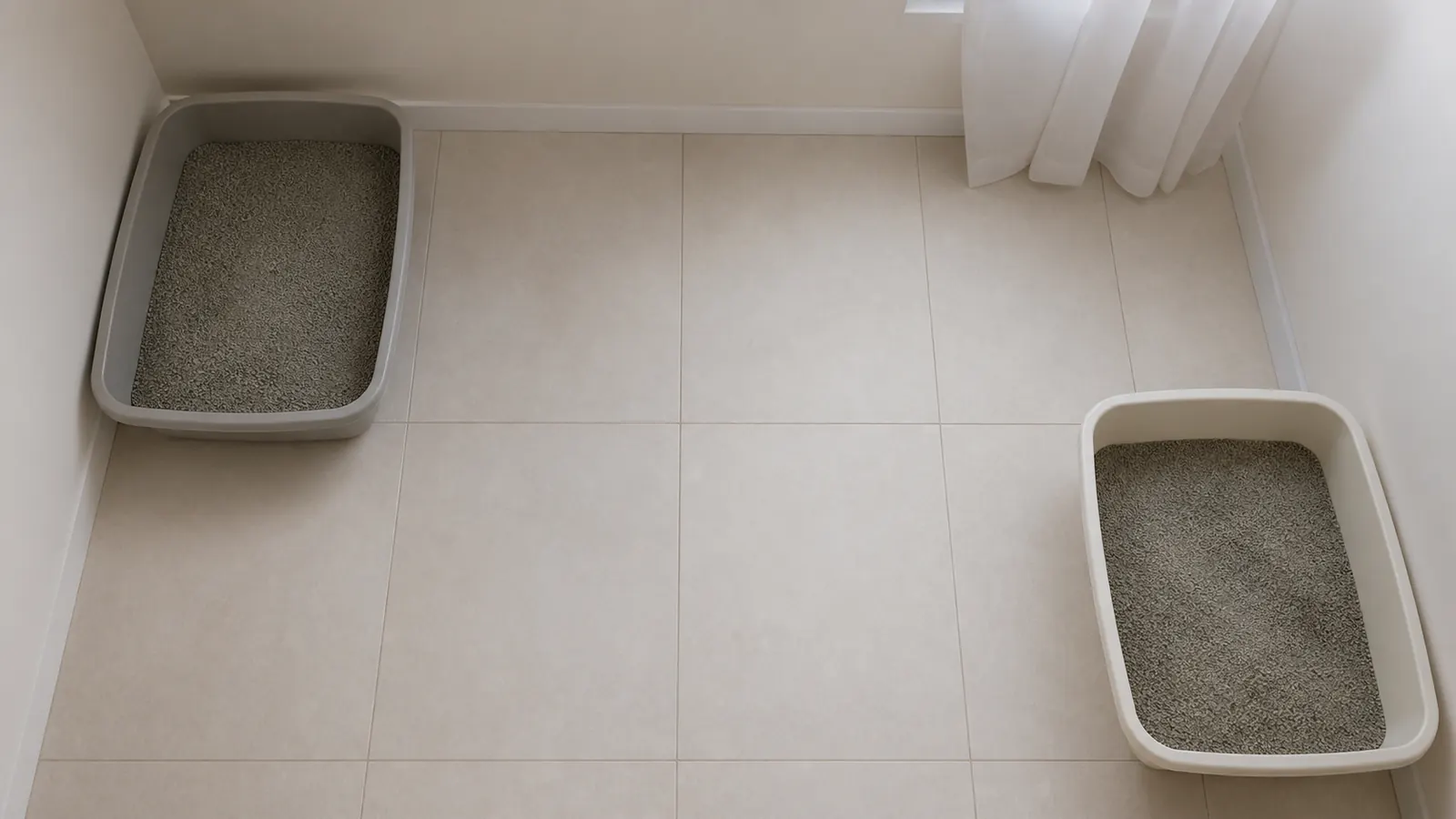
Start with one litter tray per cat, plus one extra, spread through accessible locations. One cat usually means two trays and two cats usually means three.
The rule creates choice; whether the arrangement works depends on the cats, cleaning, mobility and routes through the home.
Why more than one helps
A tray can be occupied, dirty, too far away or difficult to reach past another pet. Some cats also prefer separate places for urine and stool.
An extra option reduces the chance that a single problem removes every acceptable toilet.
This does not mean a tray is automatically unusable after one visit or that every cat refuses to return to a soiled tray. Preferences vary.
Keep all trays clean and assess actual use rather than treating a formula as proof that no problem can occur.
Count locations as well as boxes
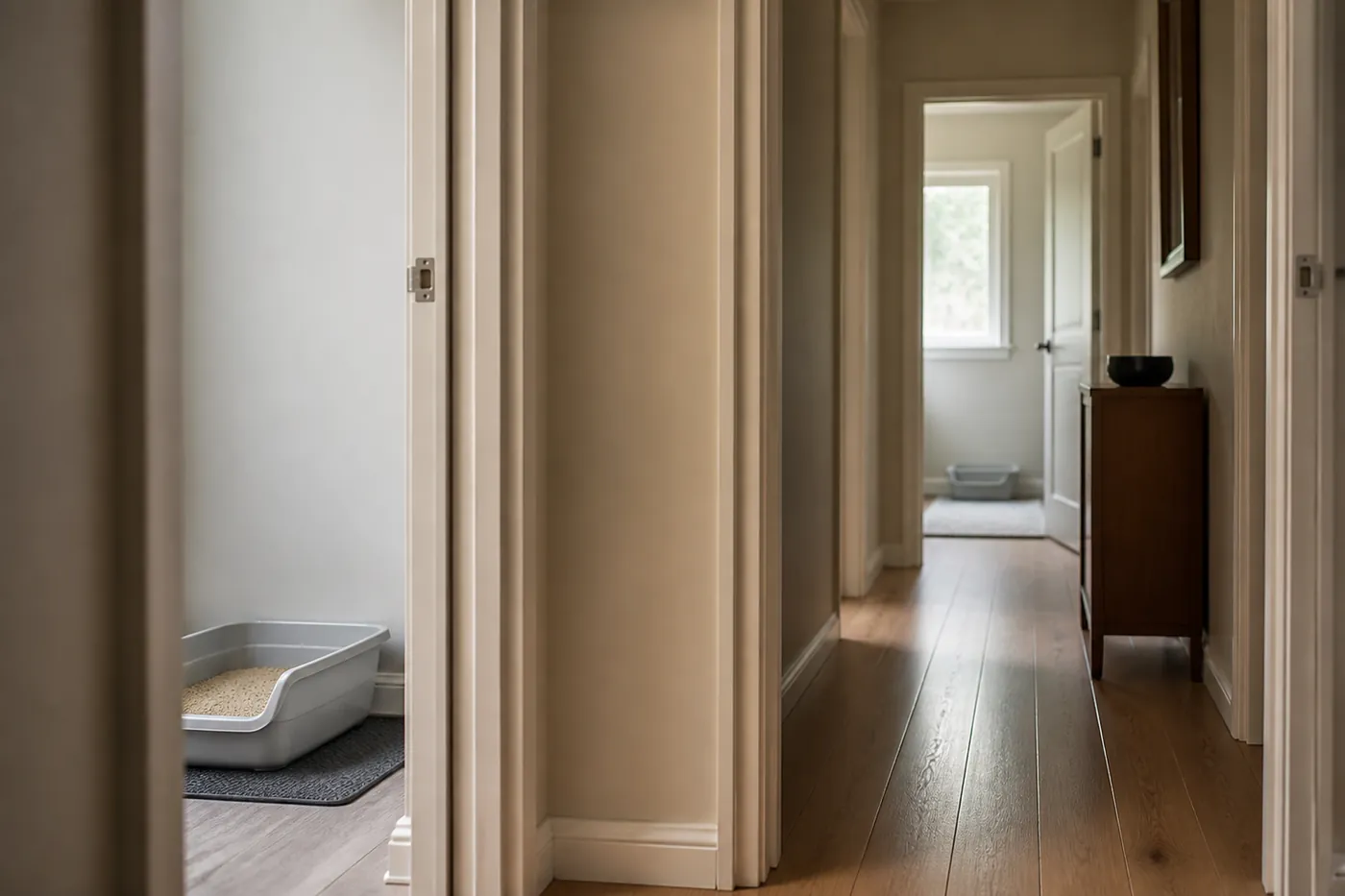
Several trays behind the same doorway may all be inaccessible to a cat avoiding a housemate. Spread them where practical so a cat can choose a different route.
Check that doors stay open, noisy appliances do not startle the cat and another animal cannot corner it at the tray.
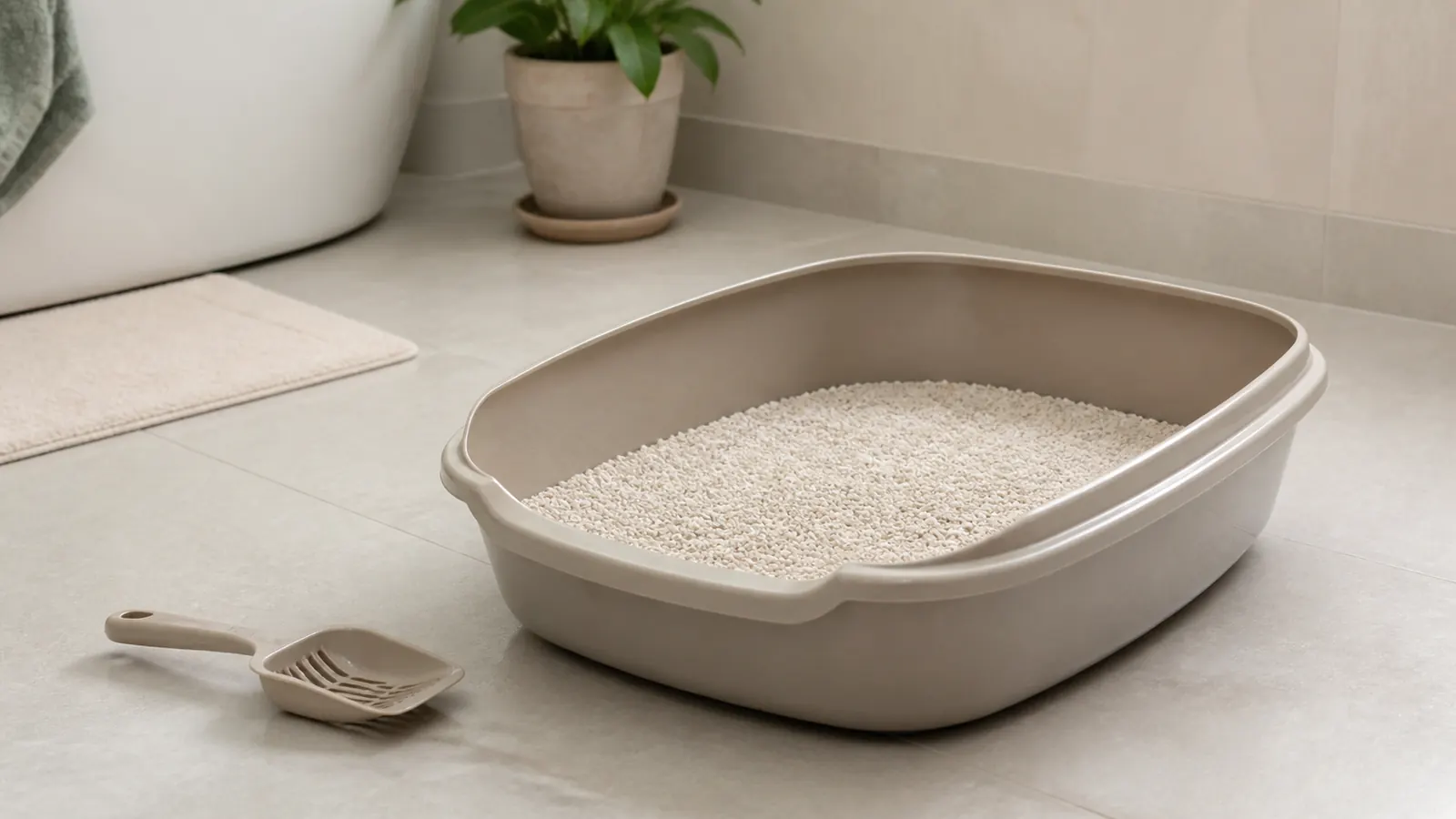
Quiet does not have to mean hidden in a cupboard. Choose a place with enough space to enter, turn and leave, away from food and water.
An enclosed box with a single approach may be a poor fit for a cat already worried about ambushes.
| Home or cat | Useful starting arrangement |
|---|---|
| One cat on one floor | Two accessible trays in different places |
| Several cats | One per cat plus an extra, with independent access |
| Several floors | At least one accessible tray on each floor the cats use |
| Limited mobility | A nearby tray with a low entry and secure footing |
| New cat introduction | A separate tray in the newcomer's own safe area |
Older cats, kittens and outdoor access
An older cat may find a staircase, slippery floor or high entry difficult. Put a tray near its usual resting area without placing it beside food, and use senior-cat adaptations when needed.
Do not wait for a specific birthday or assume all older cats have the same limitations.
Kittens benefit from nearby trays as the area they explore grows. Cats with outdoor access still need an accepted indoor option for bad weather, illness or temporary confinement.
If outdoor access ends, review the whole indoor arrangement rather than expecting one unfamiliar tray to handle an abrupt change.
If the home is small
Look for genuinely accessible alternatives before putting every tray side by side. A bathroom and a separate living-area corner may provide different routes even when the distances are short.
Keep doors usable and check whether the cat can approach without being trapped.
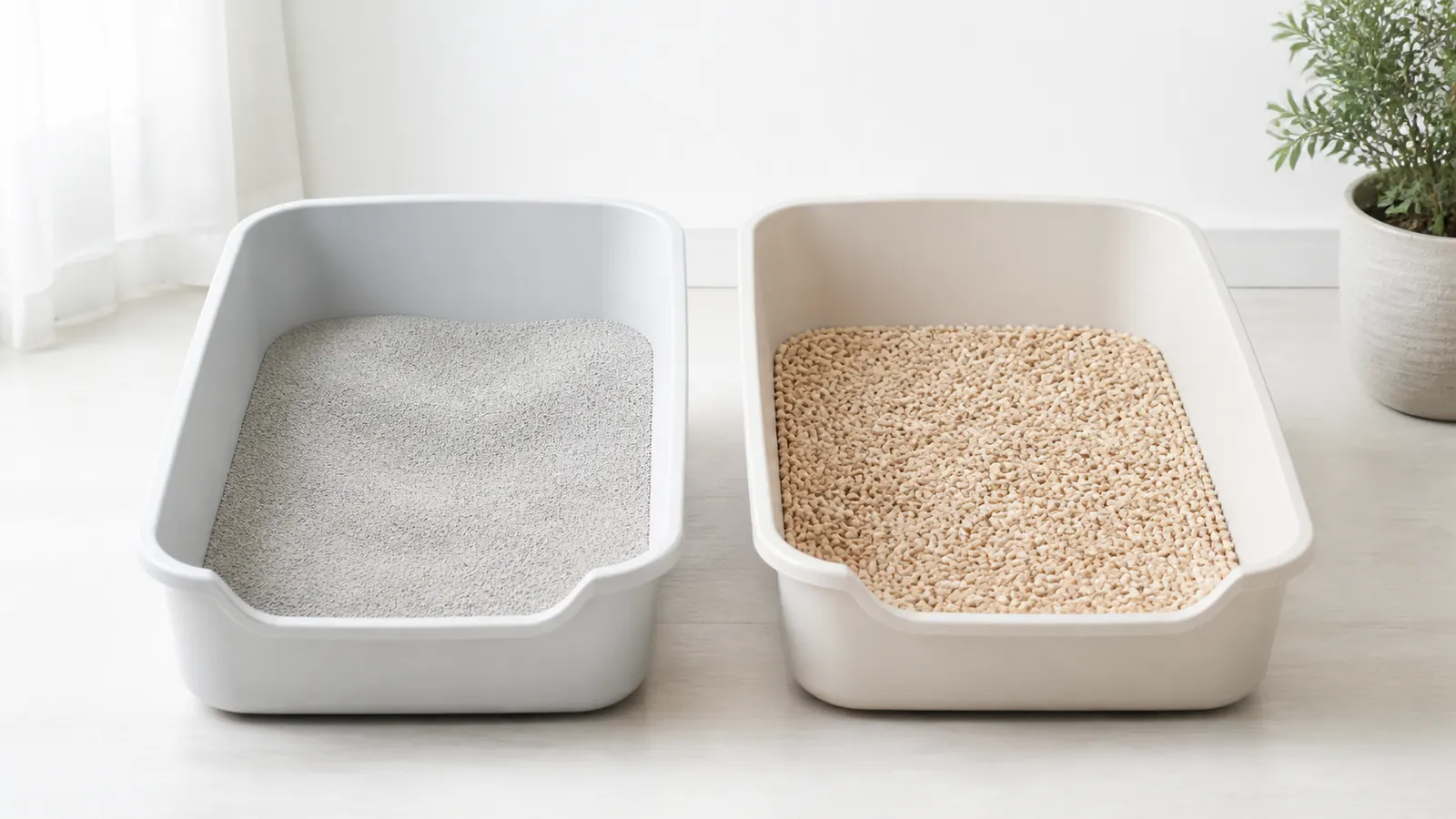
Where space limits the options, use a spacious tray and maintain it well, then watch the cat's response. Adjacent trays can still offer different substrates or more clean space, but they do not solve a guarded doorway.
A layout compromise should be judged by comfortable access and normal toileting, not by hiding the boxes at any cost.
An unused tray can still be useful
A cat may favour one tray but use another when the favourite is unavailable. Do not remove the spare just because use is uneven.
Check its location, substrate, cleanliness and size if it is never chosen, and consider moving it to a more useful place.
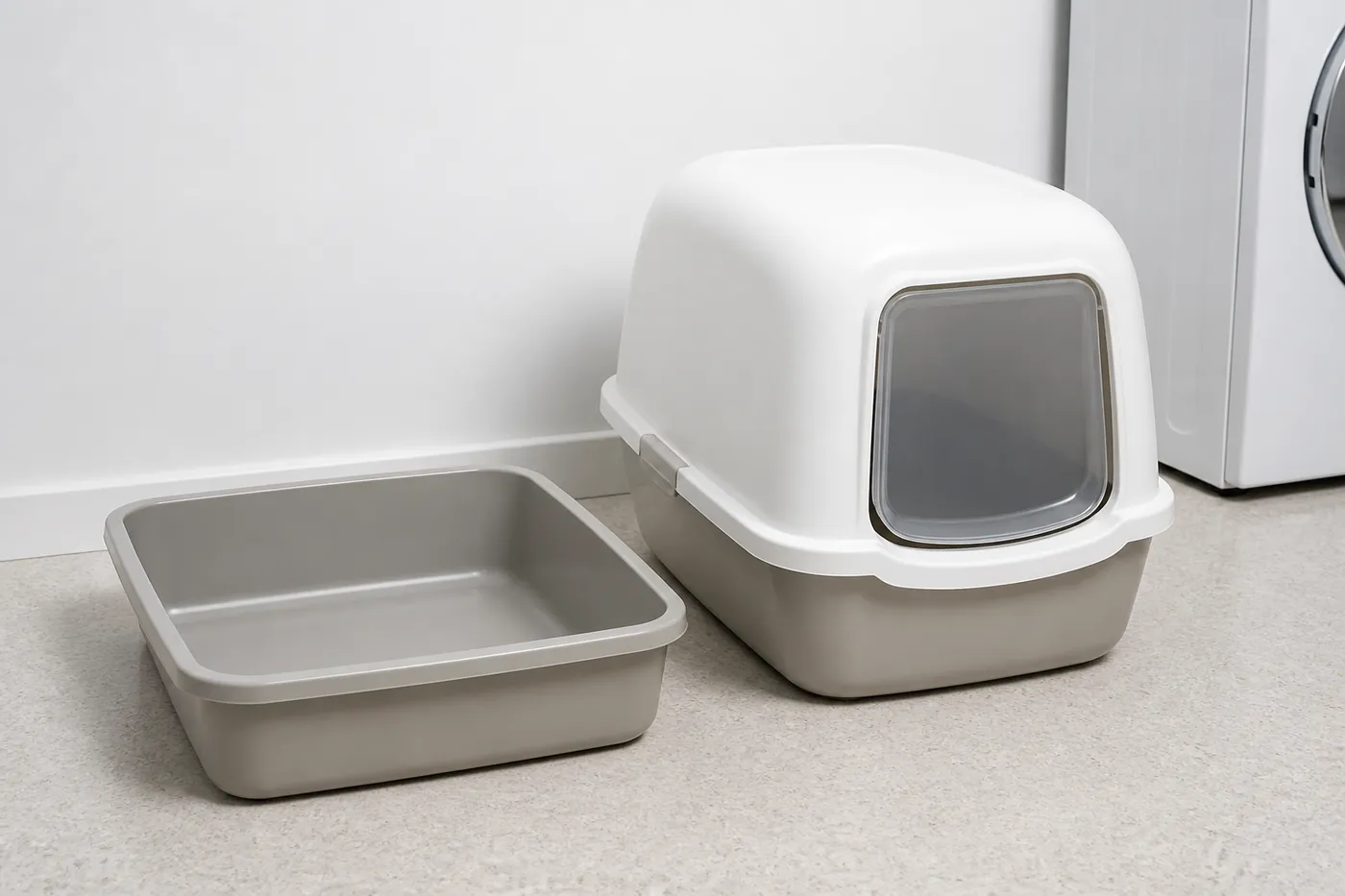
If your cat changes its preferred tray, observe the reason without assuming a conflict. A newly noisy room, a closed door, a sore joint or a simple preference can all change use.
Avoid removing established options while investigating.
Every tray needs maintenance
Scoop at least daily, and more when the amount of use requires it. Maintain the litter depth according to the product and the cat's preference.
When washing, use a suitable cleaner, rinse and dry thoroughly; never infer a product's chemistry or safety from whether it turns cloudy in water.
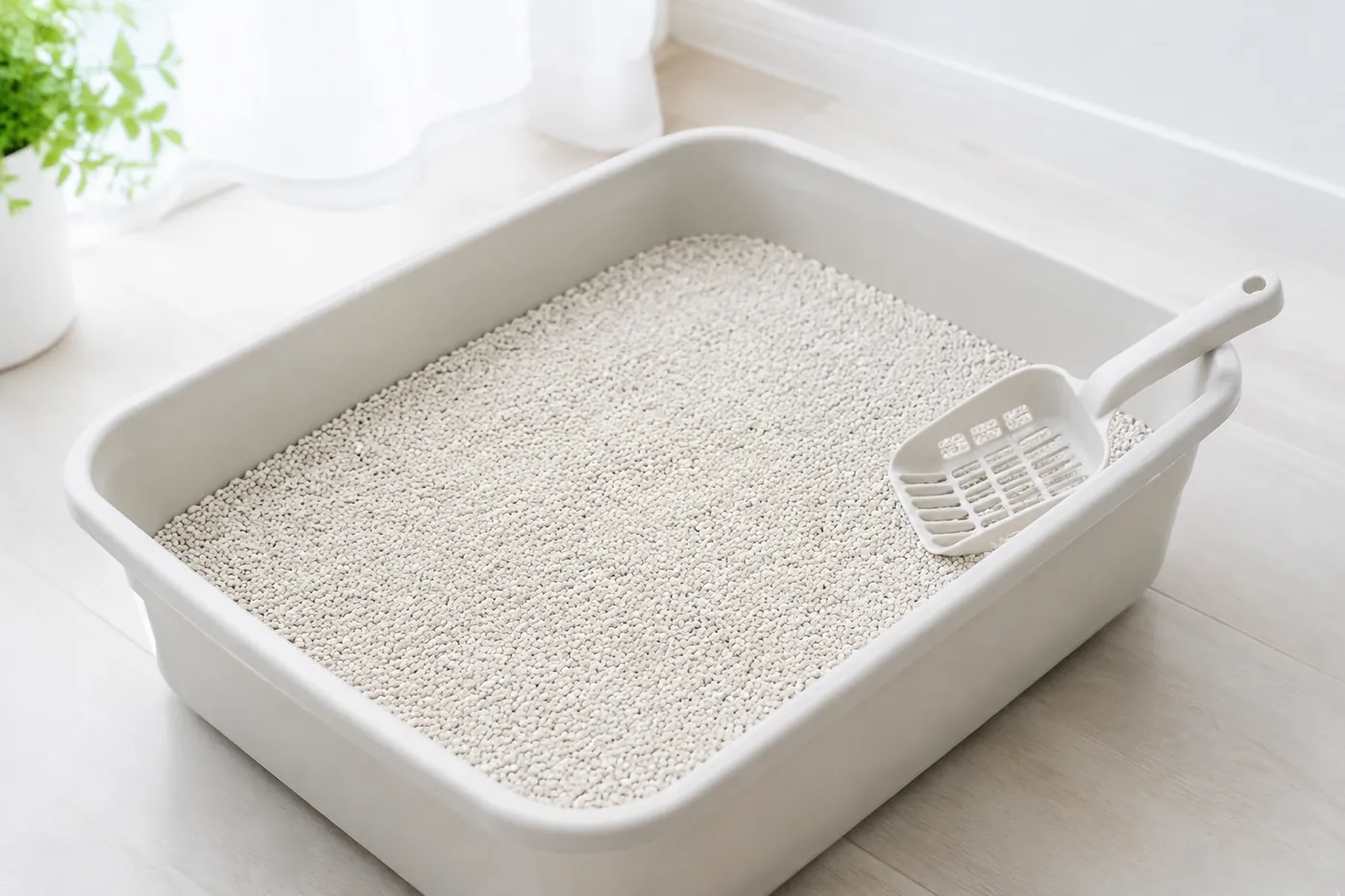
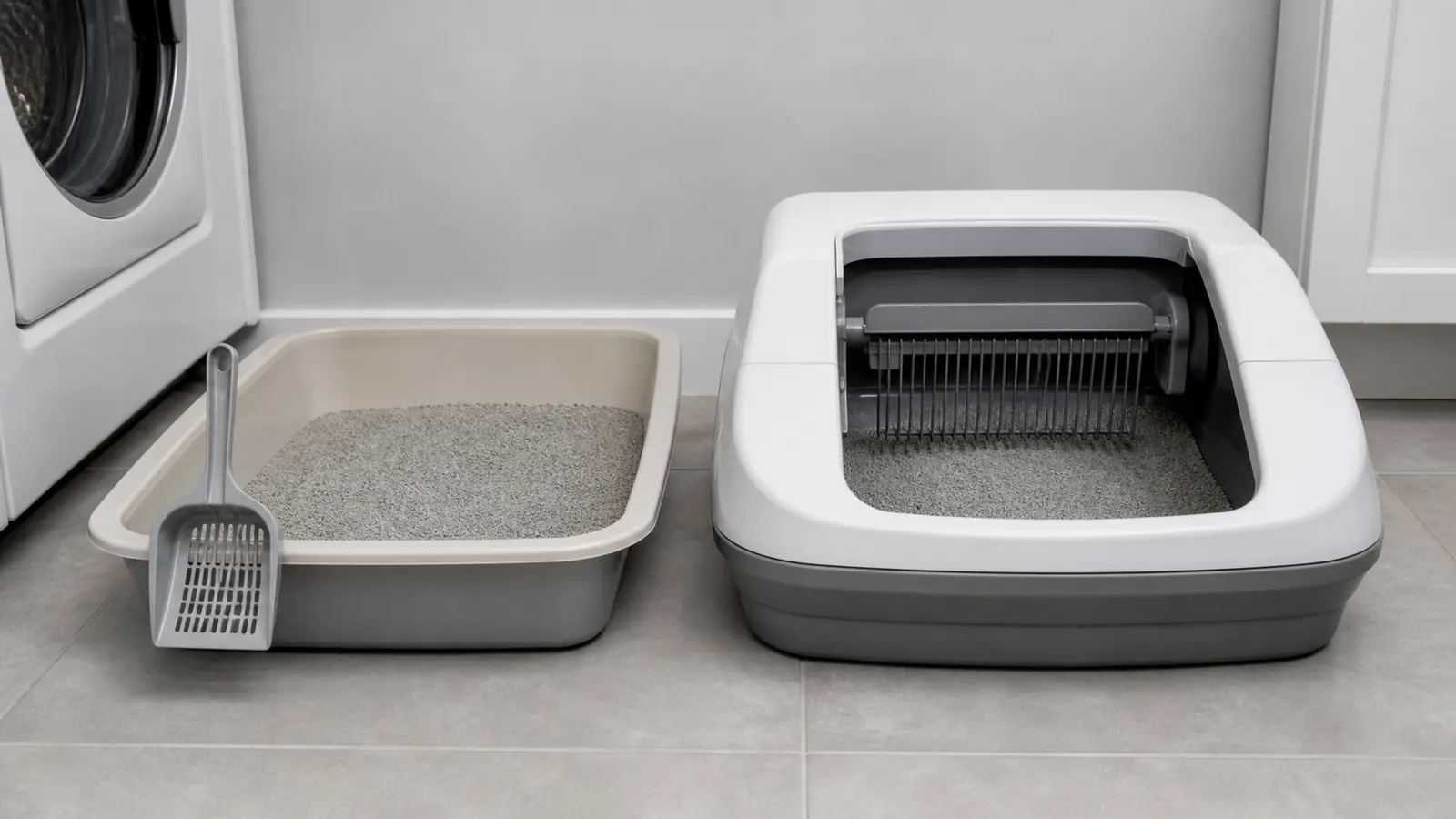
Choose a box large enough for turning and digging, commonly about one and a half times the cat's nose-to-tail-base length. Tray design and litter texture matter alongside count.
An automatic unit remains one location and does not replace independent access elsewhere.
When adding another tray is not enough
Record where accidents happen, which cat is involved and what changed recently. Tray refusal explains the medical and environmental assessment.
Extra boxes can solve an access problem, but improvement does not exclude an intermittent health problem or remove the need to clean accidents properly.
Common Questions
Can two cats share one tray?
They may, but one tray leaves both dependent on the same location and cleanliness. Start with three accessible trays for two cats and watch how they use them.
Can all the trays go in one room?
That offers extra clean space but not independent access if a doorway is blocked. Spread locations where practical.
Should I remove a tray my cat rarely uses?
Check whether it serves as a backup before removing it. Moving an unused tray to a better location may be more useful.
Checked Against
Published 24 January 2026. Last updated .