Home-Cooked Cat Diets: The Risks Worth Knowing
Home cooking needs an individual, complete formulation and consistent preparation. Meat alone and unassessed recipes can leave serious nutrient gaps.

A home-cooked diet can be appropriate when a qualified veterinary nutrition specialist formulates it for the individual cat and you follow the complete recipe. Plain meat, a collection of nutritious ingredients or a generic supplement added by eye is not a reliable complete diet.
For most households, a complete commercial cat food is the simpler starting choice because it avoids the daily work of reproducing a balanced formulation. If home cooking serves a medical need or a strong preference, plan it with your veterinarian before replacing the current diet.
Why meat alone falls short
Cats need more than protein and calories. Muscle meat supplies relatively little calcium compared with phosphorus, and the complete diet also has to provide appropriate vitamins, trace minerals, essential fatty acids and amino acids such as taurine. More liver or a spoonful of an unrelated supplement can create excesses while leaving other needs unmet.
A UC Davis evaluation of published homemade cat-food recipes found that none of the analysed recipes supplied all essential nutrients at recommended levels. That finding concerns the recipes studied; it does not mean a specialist cannot formulate a suitable home-prepared diet, although it does explain why an attractive recipe or an author with veterinary credentials is not enough evidence by itself.
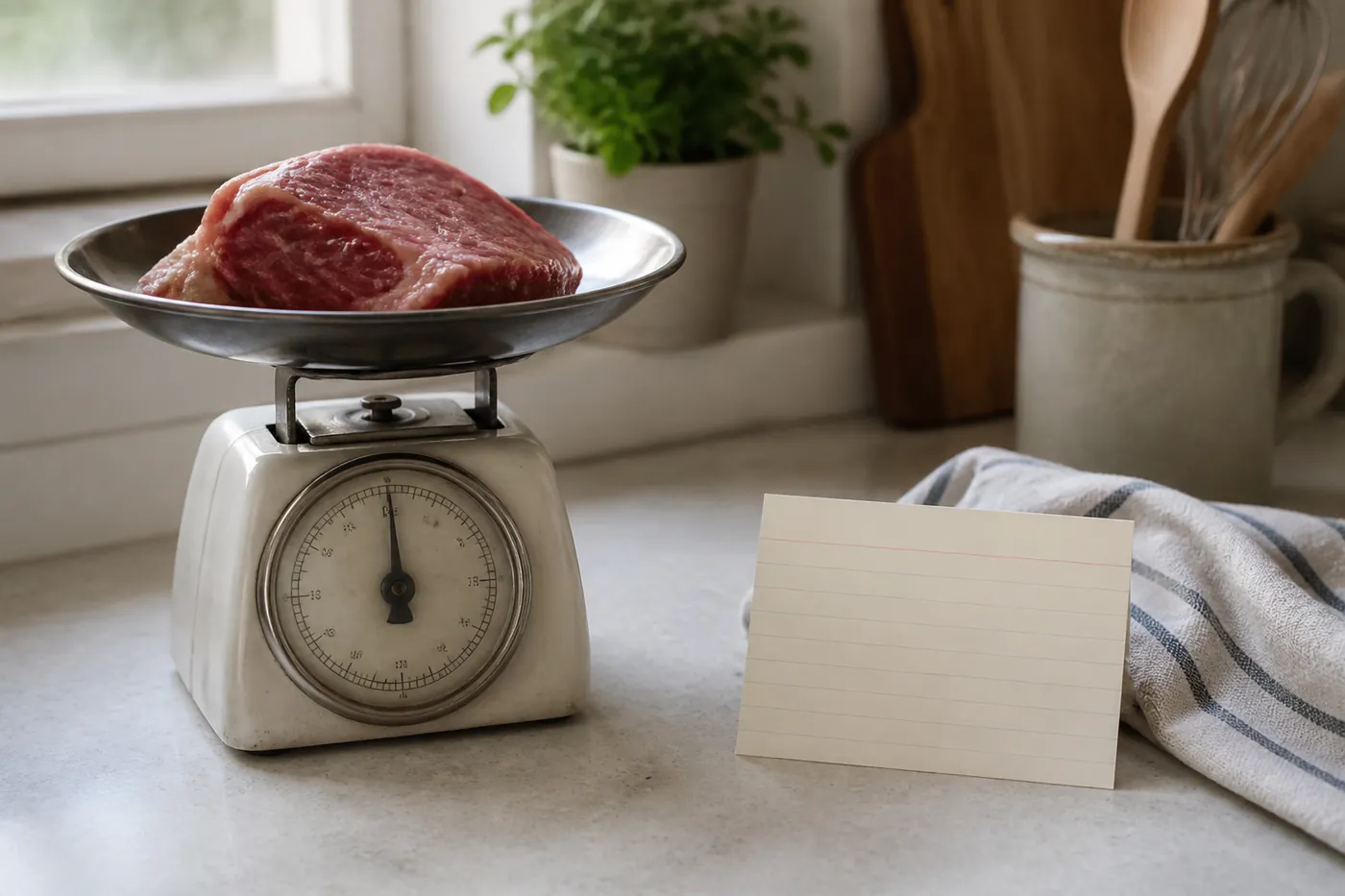
Nutrient deficiency does not follow a reliable month-by-month timetable. A cat may appear well while eating an unsuitable diet, and some consequences can be serious and some damage may not reverse, so waiting for coat changes or lethargy is a poor way to judge adequacy.
Why does a recipe need formulating for the individual cat?
A specialist formulates from the cat's age, weight, body and muscle condition, medical history, current food and supplements, and the reasons you want to cook, because a growing kitten, a nursing cat and an adult with kidney disease have different needs. Ingredient availability, preparation time, cost and whether your cat will accept the food shape the recipe too.
A usable written recipe states ingredient quantities, whether weights are raw or cooked, the cooking method, the exact supplements and how to divide the finished batch. It should also say what substitutions are permitted and when the recipe needs reassessment.
Changing a cut of meat, replacing a supplement or omitting cooking liquid can change the nutrient content, so an unavailable ingredient or supplement is a reason to ask for a reformulation rather than improvise. Taurine and other water-soluble nutrients may be lost with discarded liquid, which is why the recipe's handling instructions matter more than a general belief that cooking destroys taurine.
Why does the recipe have to be made the same way each time?
- Confirm that you have every specified ingredient and the exact supplement before starting.
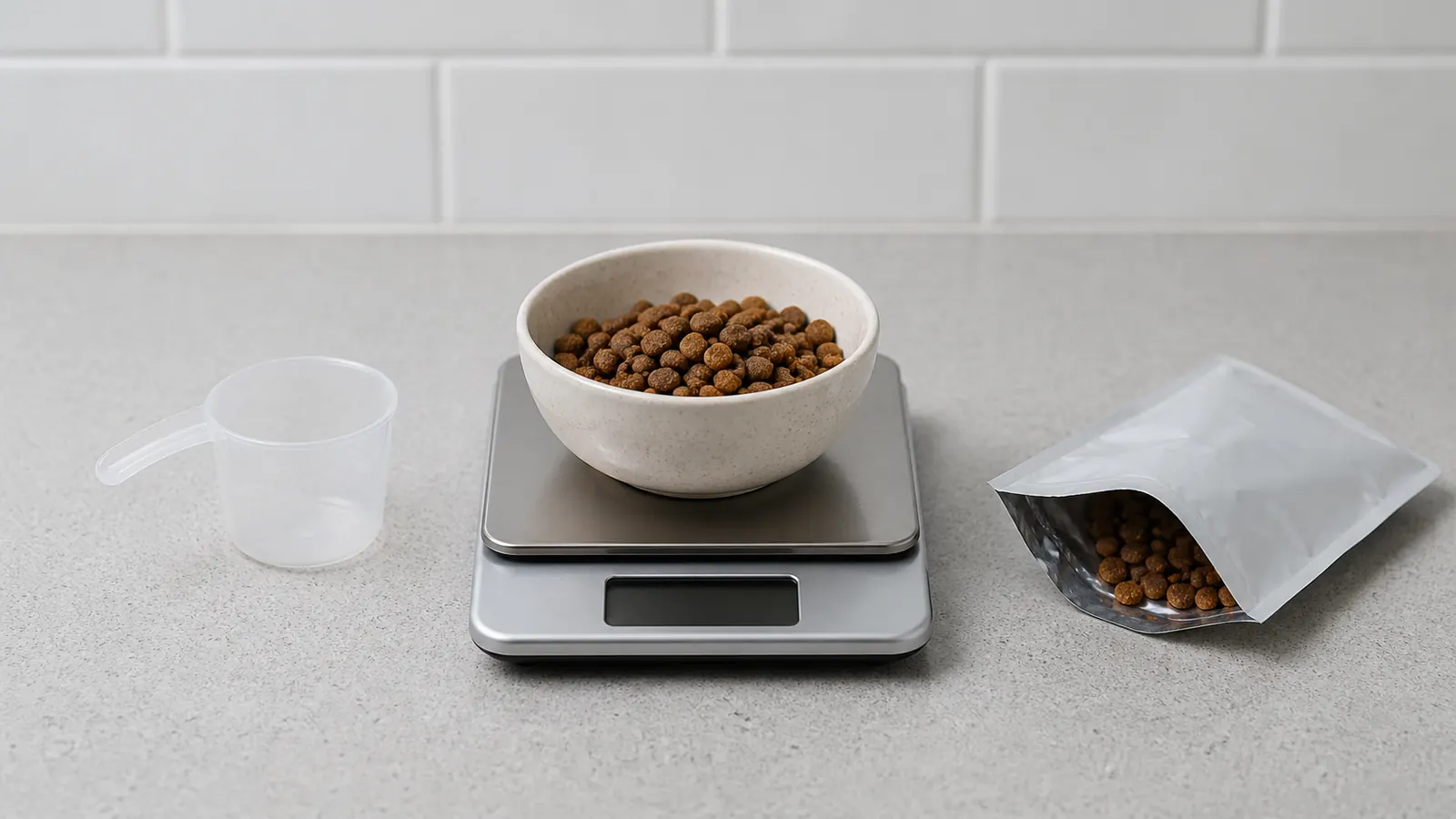
- Weigh ingredients using the raw or cooked state required by the recipe.
- Follow its preparation method, including instructions about cooking liquid and when supplements are added.
- Mix the completed batch thoroughly and divide it by the prescribed finished portions.
- Label portions with the recipe and preparation date so different batches are not confused.
A recipe-specific supplement is dosed for that formulation, so adding a second multivitamin or changing amounts because a supplement sounds beneficial can push some nutrients into excess.
Follow-up appointments work best with the full recipe and the supplement packaging in hand, because the check is of the diet as actually made.
Food safety still matters
Use clean hands, utensils and food-contact surfaces, and keep raw ingredients away from prepared food. Cook, cool, refrigerate or freeze, and thaw according to safe handling instructions for the ingredients and the specialist's recipe.
Do not leave perishable portions standing out for extended grazing or repeatedly warm and cool the same portion.
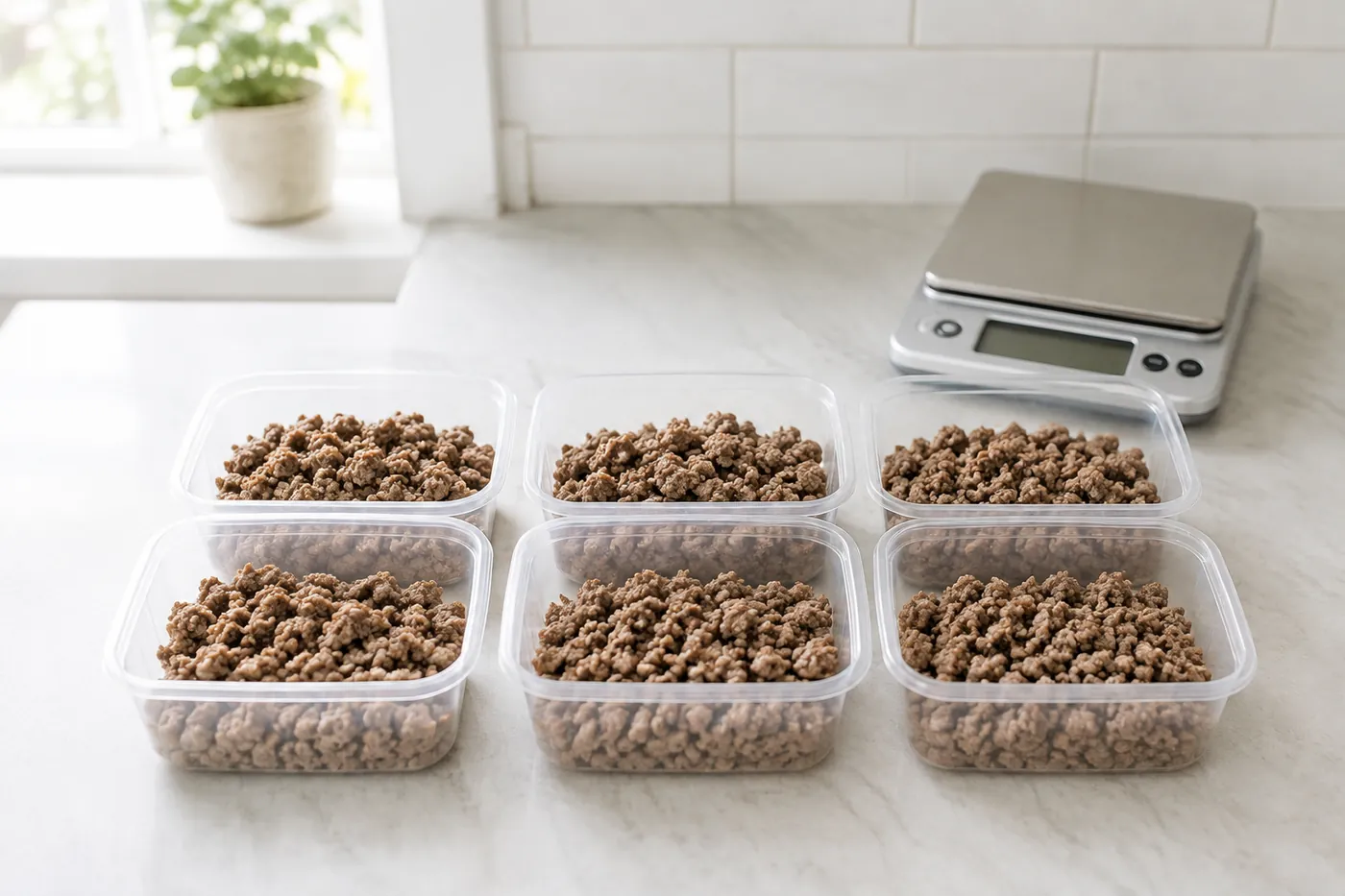
Raw feeding adds exposure to harmful microbes for the cat and people handling its food. A separate chopping board does not eliminate that risk, and raw ingredients are not a shortcut to nutritional completeness, which is why a cooked formulation is the safer form of home preparation.
What shows whether the diet is working?
Introduce the planned food as advised and record how much the cat actually eats. Do not starve a reluctant cat into accepting it.
Poor appetite, vomiting, diarrhoea or unplanned weight loss calls for veterinary advice, with prompt attention for a cat eating little or nothing.
At follow-up, review the recipe as actually prepared, body weight, body and muscle condition, and any relevant clinical tests. Normal routine bloodwork does not prove that every nutrient is adequate, and a change in health, life stage, ingredients or supplements may require a revised formulation.
Treats and extras can also displace the complete ration, so they belong inside the agreed plan and inside the daily portion.
While arranging a consultation, continue an appropriate complete food your cat accepts rather than replacing meals with plain cooked chicken or canned tuna.
Common Questions
Can I balance cooked meat with a general cat supplement?
Only if that exact product and quantity belong to a properly formulated recipe. A generic supplement does not reliably correct any mixture of ingredients.
Can I substitute a different meat or vitamin?
Ask the formulating specialist first. Changes in ingredients, preparation or supplements can alter the nutrient balance.
Does normal bloodwork mean the diet is complete?
No. Follow-up tests can support clinical monitoring, but routine bloodwork does not demonstrate adequacy of every nutrient.
Checked Against
Published 2 September 2026. Last updated .