
What Is a Himalayan Cat, and Is It Really a Persian?
A Himalayan combines Persian type and long-coat care with colourpoint markings. Comfortable breathing, manageable daily grooming, temperament and named health records decide whether one suits a household, and registry names and coat colour settle none of those questions.
- Origin
- United States and Britain, from Persian and Siamese crosses made between the 1930s and the 1950s
- Coat
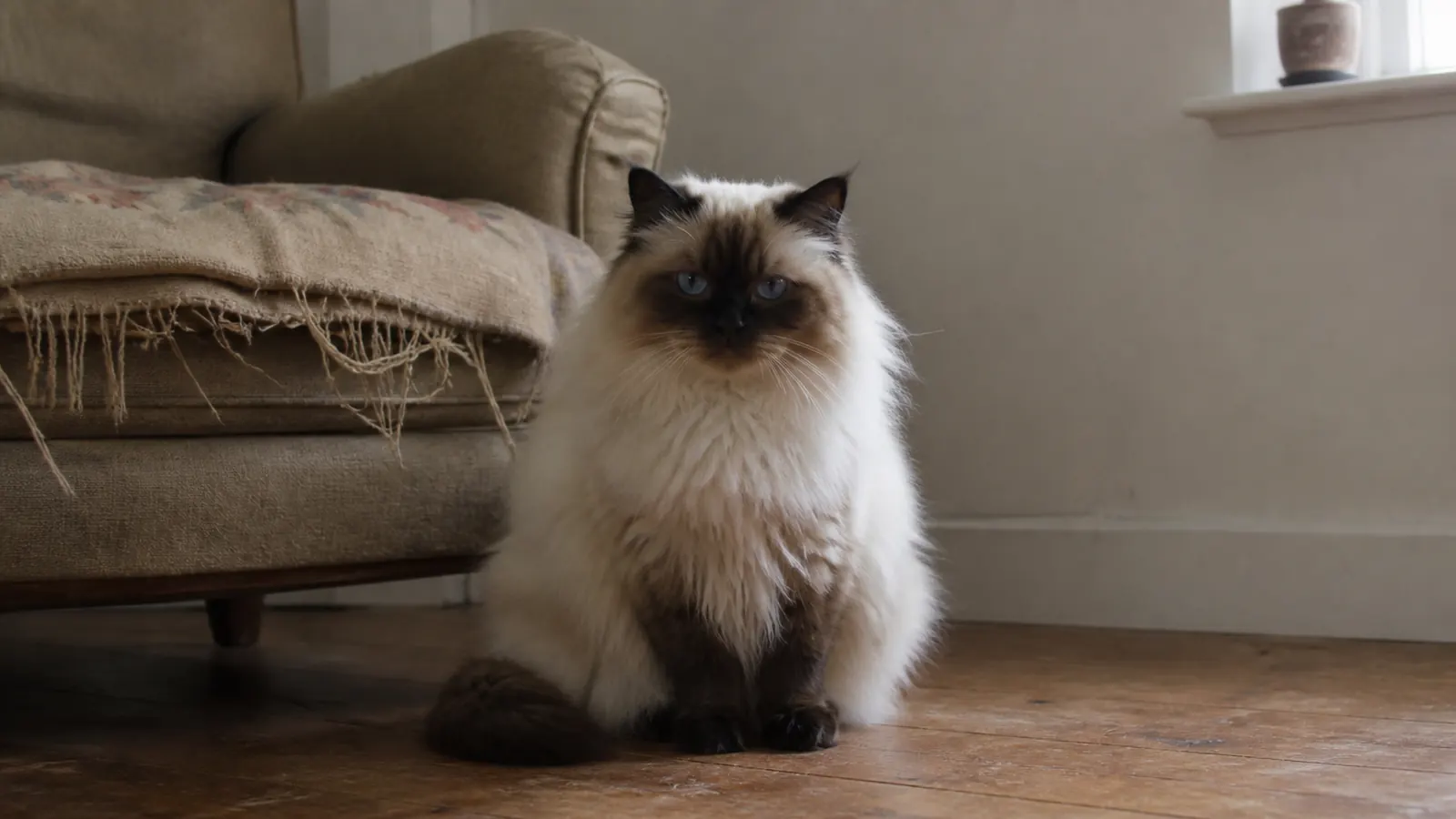
- Long and thick, standing off the body, in a colourpoint pattern with deep blue eyes
- Size
- Cobby and low on the legs, so the coat reads considerably larger than the cat weighs
- Typical weight
- Persians in UK practice average 3.9 kg, with males near 4.2 kg and females near 3.3 kg
- Life expectancy
- Median age at death 13.5 years in UK veterinary records
- Activity level
- Low. Among the least active groups in the largest survey of cat breed behaviour
- Grooming
- High. Daily through the winter coat, and heavier again across the spring and summer moult
- Suits
- Quiet, interactive homes that can sustain daily coat and eye care and veterinary follow-up
A Himalayan is a Persian that carries the Siamese colourpoint pattern, developed through Persian and Siamese ancestry.
Its Persian-type coat and face make daily grooming and careful health assessment central to ownership. Shared ancestry and show standards do not establish identical disease rates or temperament in every line.
Is it a separate breed, or a Persian?
The Cat Fanciers' Association treats the Himalayan as a Persian.
A pointed cat is judged as a Persian, on the same hundred points as a solid black one, and only thirty of those points describe the pattern people buy the cat for.
Head, body, coat, balance and refinement come to seventy points, and a pointed cat is measured on every one of them exactly as a solid Persian is.
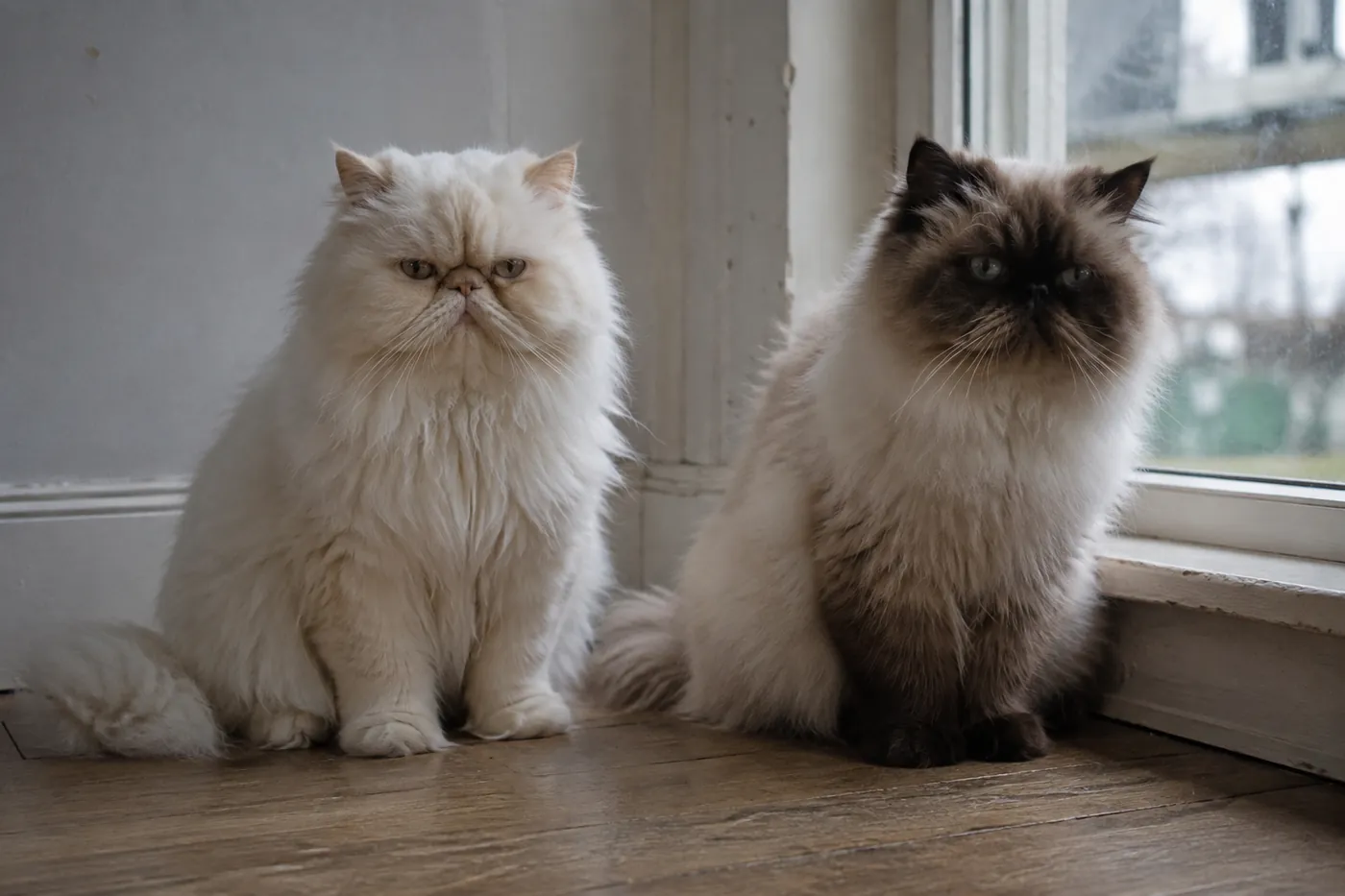
The Himalayan Division is a section inside the Persian standard rather than a document of its own, so there is no separate description of the cat to go and read.
It was not always arranged this way. CFA recognised the Himalayan as a breed in its own right in 1957, then moved it into a division of the Persian in 1984. The shared standard explains why the cat has Persian type, though it says nothing about how much each ancestor contributed genetically.
TICA disagrees and keeps the Himalayan as a breed of its own, inside a group it shares with the Persian and the Exotic Shorthair. That is a genuine difference of opinion, and it is a difference about paperwork rather than about the animal.
Care detail from the Persian profile carries over, but the pointed cat's own family records are what describe its health.
What will the paperwork say?
Three breeders in three countries can send three certificates for a Himalayan with three different breed names printed on them, and none of the three is wrong.
| Registry | What the paperwork says | What follows from it |
|---|---|---|
| Cat Fanciers' Association | Persian, Himalayan Division | Shown within the Persian breed, judged on the Persian standard |
| The International Cat Association | Himalayan | Shown as a breed of its own, inside the Persian breed group |
| Governing Council of the Cat Fancy | Colourpoint Persian | Registered as a Persian, and bound by the Persian registration rules |
Britain got there first. GCCF recognised the cat in 1955 as the Longhaired Colourpoint, two years before the American registries settled on the name Himalayan.
A pedigree reading Persian and a pedigree reading Himalayan can describe littermates.
So the breed name on a document tells you which registry issued it and very little else.
What the same document says about the health testing behind the litter is a separate question, and it is the one worth pressing.
Why does it weigh less than it looks?
On the scales, the number usually disappoints.
The standard describes a cobby cat, low on the legs, broad and deep through the chest, medium to large in size. It reads like a substantial animal.
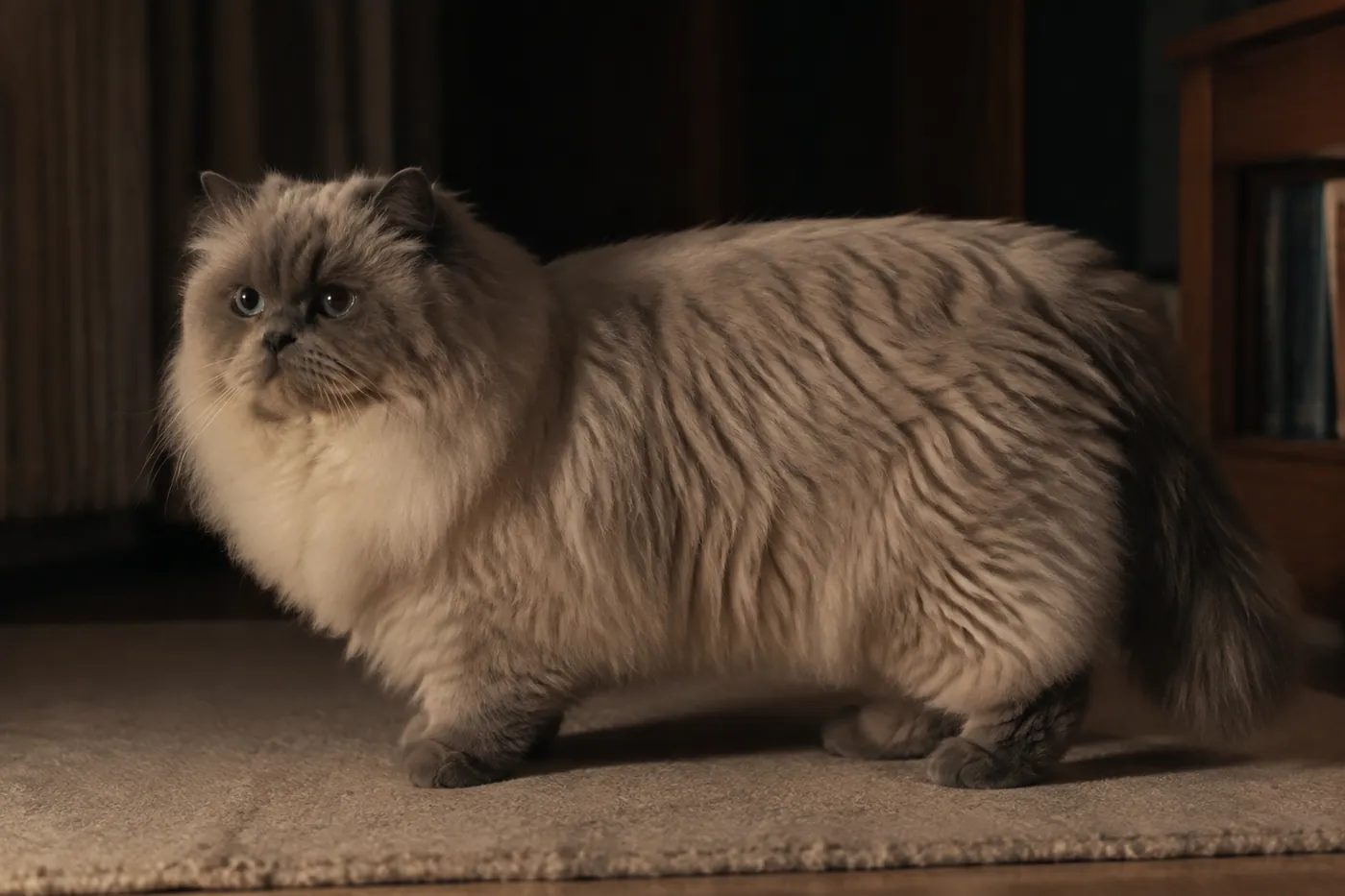
The recorded weights are more modest. Across 3,235 Persians under first-opinion veterinary care in the United Kingdom, mean adult bodyweight was 3.9 kg, with a median of 4.2 kg for males and 3.3 kg for females.
That is an ordinary cat, and a small one at the female end.
Two things open the gap. The coat stands off the body instead of lying flat, and the legs are short, so the animal sits low and wide rather than tall and narrow.
A cat built that way looks larger than the carrier it actually needs, so equipment is best chosen from usable dimensions and load rating rather than from appearance.
Food follows body condition rather than the silhouette, because an owner judging by eye keeps feeding a cat that is already carrying enough.
Weigh the cat before any dose is worked out from its bodyweight, and weigh it again rather than assuming, because this coat hides the loss that matters most.
Why do kittens start pale and darken?
A pointed litter arrives almost white.
The mask, ears, legs and tail fill in over the following weeks, and the colour keeps deepening for years afterwards.
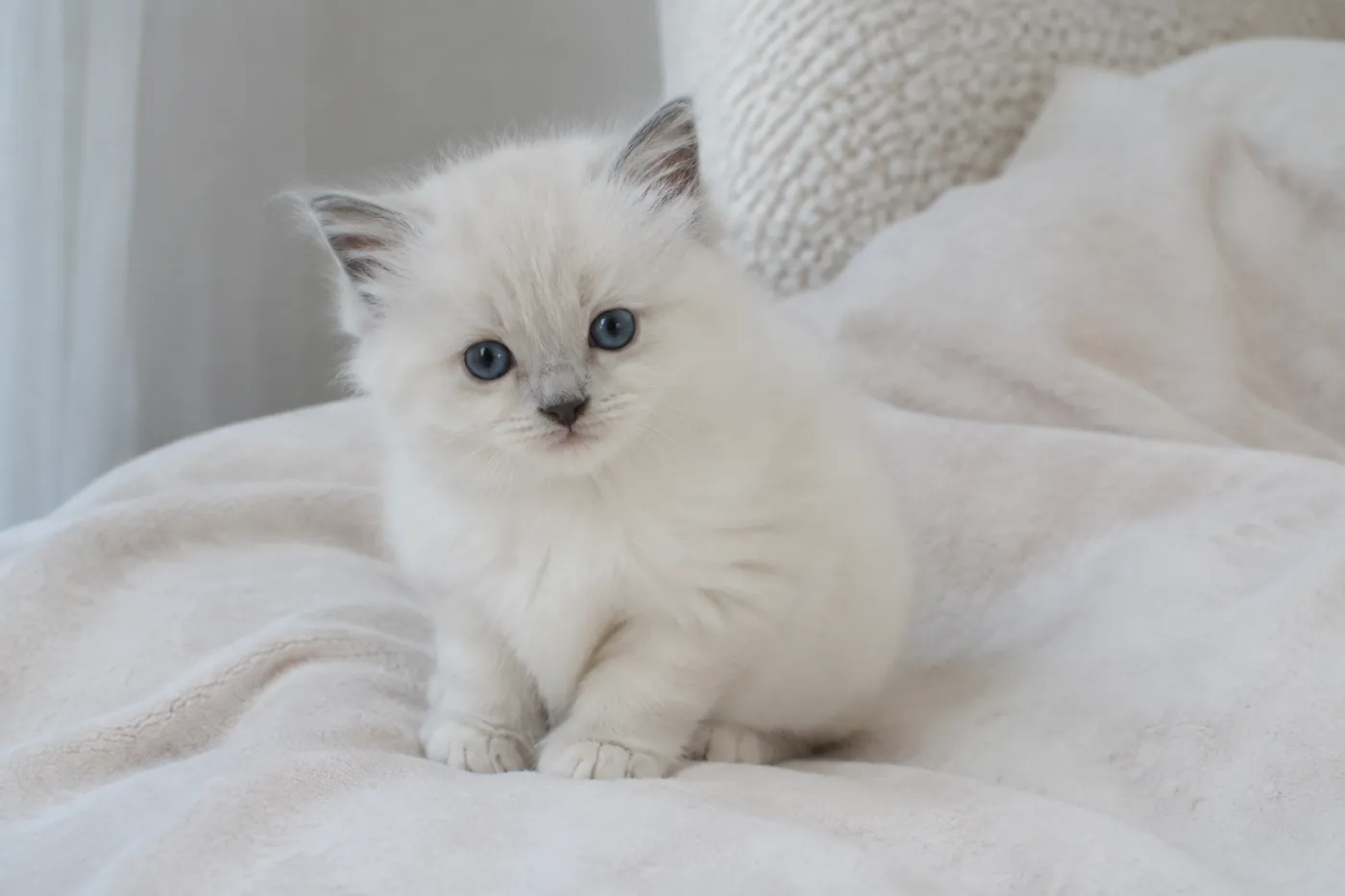
The mechanism is temperature. Pigment in a pointed cat forms only where the skin is cool enough, which is why it collects at the extremities and leaves the warm trunk pale.
The temperature-sensitive pigment process explains the pale newborn coat. Do not change a kitten's safe environmental temperature to alter its colour.
The same effect explains something owners notice when they hold one up beside a Siamese. GCCF states it directly, that the longer body fur of a colourpoint holds a higher temperature at the skin, so the body stays paler than a shorthaired Siamese's does.
The point pattern is a record of where the cat is coldest.
- At birthAlmost entirely white, with no mask at all
- The first weeksColour appears at the ears, nose, paws and tail, the coolest points on the body
- Through adulthoodThe body darkens slowly, and the standard makes an allowance for it in older cats
- After a clipFur regrowing over cooled skin returns darker, then pales again once the coat is deep enough to insulate
CFA builds the ageing into the standard. It allows darker body colour in older cats while still asking for a definite contrast between body and points.
Gradual darkening can accompany age and temperature changes. A sudden skin or coat change accompanied by discomfort still warrants veterinary assessment.
The version that alarms owners is the shaved patch, where fur grows back over skin that was clipped and left uninsulated. The regrowth comes in darker than the coat around it, with a boundary sharp enough to look like an injury.
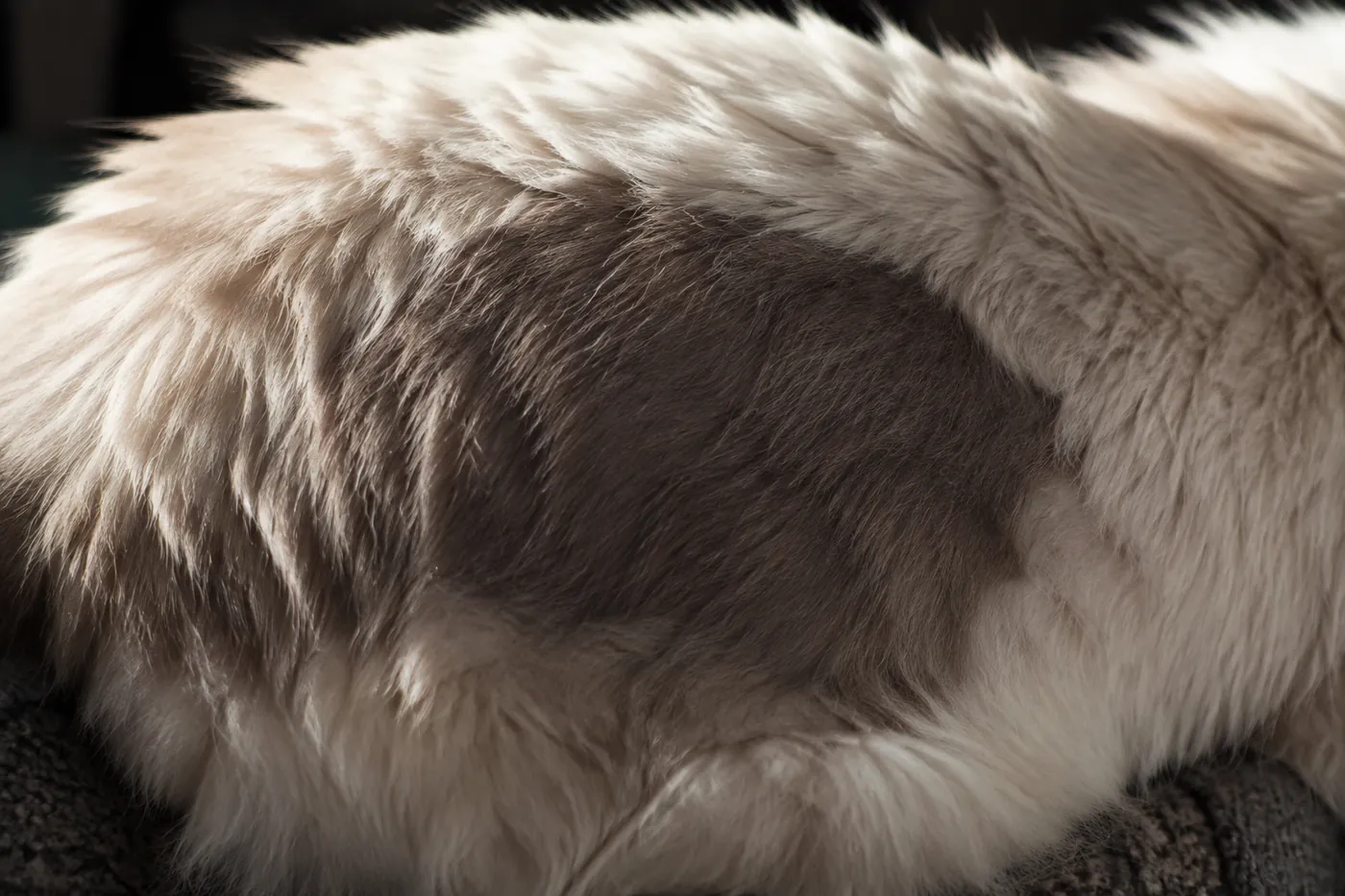
Colour change alone does not diagnose disease; timing, grooming, clipping and any other signs decide whether a veterinary examination is needed.
Do the blue eyes carry any risk?
Blue eyes in a cat carry a warning most owners have heard, which is that blue-eyed white cats are frequently deaf. It does not apply here.
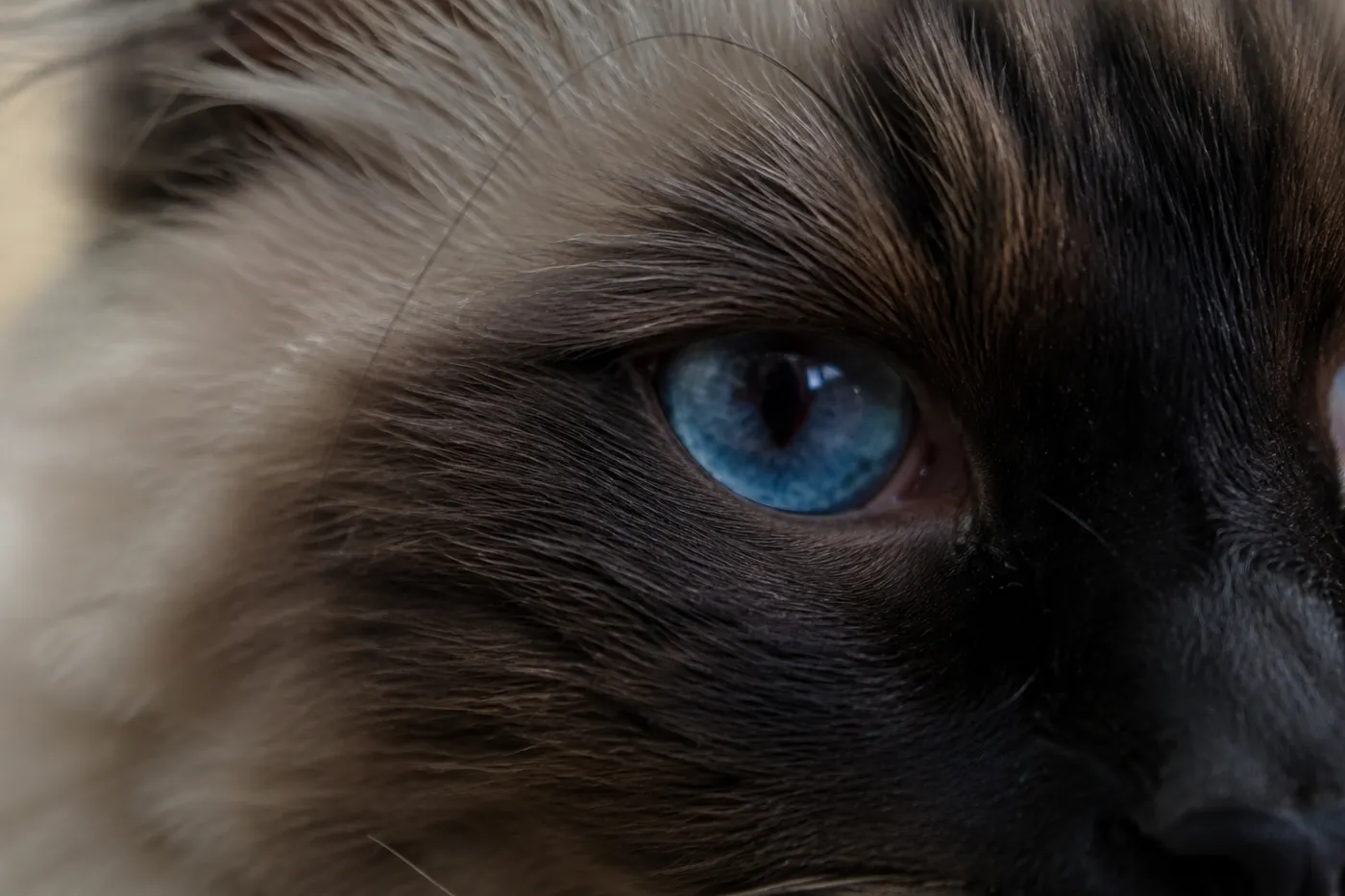
GCCF is explicit. The gene producing blue eyes in a colourpoint is entirely separate from the gene producing them in a white cat, and deafness is not associated with it the way it is with the dominant white gene.
Every pointed cat has blue eyes because the allele restricting pigment in the coat restricts it in the iris too. CFA requires deep vivid blue and disqualifies any other colour, which makes it a fixed breed feature rather than a variable one.
There is a real inherited eye disease in this breed, and it has nothing to do with eye colour.
Progressive retinal atrophy in the Persian is recessive and it is early. Photoreceptor loss begins around five weeks of age, is severe by sixteen weeks, and most affected kittens are blind by seventeen weeks.
Around 4 to 5 per cent of UK and European cats tested carried the mutation.
The deafness rule does not apply, and the blindness risk is invisible without a test.
One eye question is answered by knowing what the gene does, and the other only by a laboratory report.
Does it behave like a Siamese?
Almost every description of this cat says the same thing, that the Siamese ancestry makes it livelier and more talkative than a Persian. The evidence behind that claim is thinner than its repetition suggests.
The largest survey of heritable behaviour in cats gathered data on 5,726 cats across 19 breeds and breed groups, measuring activity, sociability toward people and other cats, shyness, aggression and stereotypic behaviour.
It had no category for this cat. Persian and Exotic were merged into a single group, and no colourpoint or Himalayan group existed to set against it.
So the finding that group produced is a Persian finding. It placed Persians and Exotics among the least active breeds surveyed, and among the least aggressive toward other cats.
Heritability was estimated for three breeds only, the Ragdoll, the Maine Coon and the Turkish Van, at between 0.40 and 0.53. That study did not estimate heritability specifically for pointed Persians.
- Cats surveyed
- 5,726
- Breeds and breed groups
- 19
- Persian and Exotic
- Counted together as one group
- Pointed or colourpoint group
- None
- Heritability estimated for
- Ragdoll, Maine Coon and Turkish Van only
The gap is the fourth line of that list.
This survey did not compare pointed Persians with solid Persians.
The difference may still exist, but the survey cannot show it, which leaves the individual cat as the only evidence of its temperament.
The cat the evidence does describe is quiet, low in activity and unaggressive, one that settles near you rather than performing for you. Extra liveliness in a pointed cat is a bonus rather than something to count on.
How much time does the coat take?
Through the winter the coat needs combing every day. GCCF states that as the requirement, alongside the warning that spring and summer moulting sheds a volume of dead fur which has to be combed out or the coat will mat and knot.
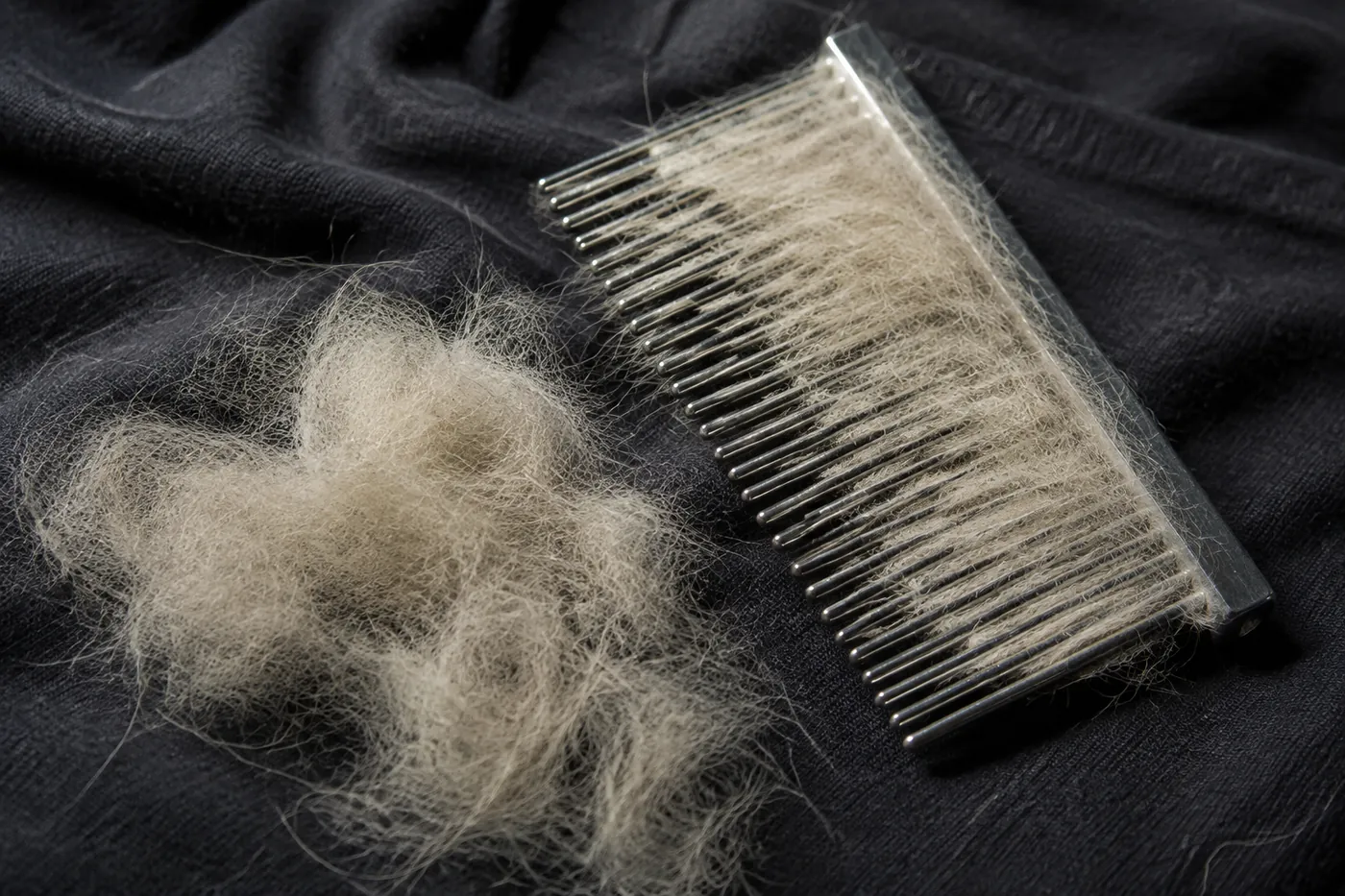
The mechanism is why skipping days compounds. The undercoat sheds continuously, the long guard hairs above it hold the shed fur in place instead of letting it drop, and trapped fur works into a knot wherever movement compresses the coat.
A knot then shrinks as more hair is drawn into it, and a shrinking knot pulls on the skin it is anchored to.
- Behind and below the ears
- The armpits, where skin folds and constant movement work against each other
- The trousers and the base of the tail
- The deep ruff at the chest, where a mat can sit unseen from above for weeks
Those four account for most of what a hurried comb misses, because they are worked hardest by the cat and reached least by an owner in a rush.
The points themselves add nothing to the job. They are the same length as the rest of the coat, and a seal mask mats no faster than a cream flank.
When the routine slips, the result shows up in veterinary records. Haircoat disorders were the most common individual problem recorded in the cited Persian practice study, at 12.7 per cent, although that figure comes from Persians and was not measured in Himalayans.
Roughly fifteen minutes a day, every day, for fifteen years is the honest cost of this coat, and a household that cannot give that time is a poor match for it.
What does a clear kidney test prove?
Two results should already exist before a litter is offered to you, and one of them is misread more often than any other document in cat breeding.
Polycystic kidney disease is the first. It has been reported in around 36 to 49 per cent of Persians across eight separate studies, and GCCF describes it as believed to be the commonest genetic disease in cats.
The mutation is dominant, which is what makes its test so useful. A single copy causes the disease, so a cat testing negative does not carry it and cannot pass it on.
That is why a clear result on both parents genuinely settles this one.
- Polycystic kidney disease
- Dominant, so a negative parent cannot pass it on and two clear parents settle it
- Progressive retinal atrophy
- For the tested recessive variant, one clear parent prevents affected kittens; the other parent can still pass carrier status
- Registration requirements
- Check the issuing registry's current breeding and import rules
- Report identity
- Match each laboratory result to the named parent
- Clinical limits
- A negative variant result does not exclude every kidney or eye disease
For the tested recessive PRA variant, a clear parent cannot transmit the variant. A clear-to-carrier mating therefore cannot produce kittens affected by that variant, although some can be carriers.
A clear result covers that one variant and no other cause of blindness.
The useful documents are the actual laboratory reports for both tests on both parents, because a register category says nothing about health status. Missing reports are a reason to pause before committing to the litter.
Screening in this breed works, which is exactly why its absence tells you something.
The prevalence supports that. GCCF attributes the falling frequency of the kidney disease gene in British Persians to the pre-breeding screening programme, so the paperwork is not a formality and the cats are measurably better for it.
What will it be treated for, and when?
The honest answer is duller than the breed's reputation.
Among 3,235 Persians under first-opinion veterinary care in the UK, the four most commonly recorded problems were the coat, the teeth, the nails and the eyes.
| Recorded in practice | Share of cats | What it costs an owner |
|---|---|---|
| Haircoat disorders | 12.7 per cent | Combing time, and clipping under sedation once it has gone too far |
| Periodontal disease | 11.3 per cent | Repeat dental work under anaesthetic through the middle years |
| Overgrown nails | 7.2 per cent | Regular clipping, easily missed in a cat that moves little |
| Ocular discharge | 5.8 per cent | Daily wiping, and staining that never fully clears |
Grouped by body system the same picture holds, with skin leading at 17.9 per cent, eyes at 15.3 per cent and teeth at 12.3 per cent.
These conditions can be painful and vary in severity, so examination and treatment for some of them belong in the budget, though not every cat develops all four.
The end of life looks different. Renal disease accounted for 23.4 per cent of deaths where a cause was recorded, more than twice the next cause on the list.
Median age at death was 13.5 years, with half of the cats dying between 9.9 and 16.0 years.
One figure in that record needs explaining rather than quoting. Polycystic kidney disease was recorded in only 0.7 per cent of those cats, against a genetic prevalence of 36 to 49 per cent.
The two are not in conflict. Clinical records and historical genetic surveys measure different populations and different outcomes.
Screening practices, study dates and underdiagnosis may all affect the gap; these figures do not measure present-day hidden disease in every Himalayan.
Diagnosed is not the same as present, and kidney disease is where that gap is widest.
In practice, coat, teeth, nails and eyes are running costs from the first year, and kidney function becomes the thing worth checking once the cat moves past ten.
How flat is too flat?
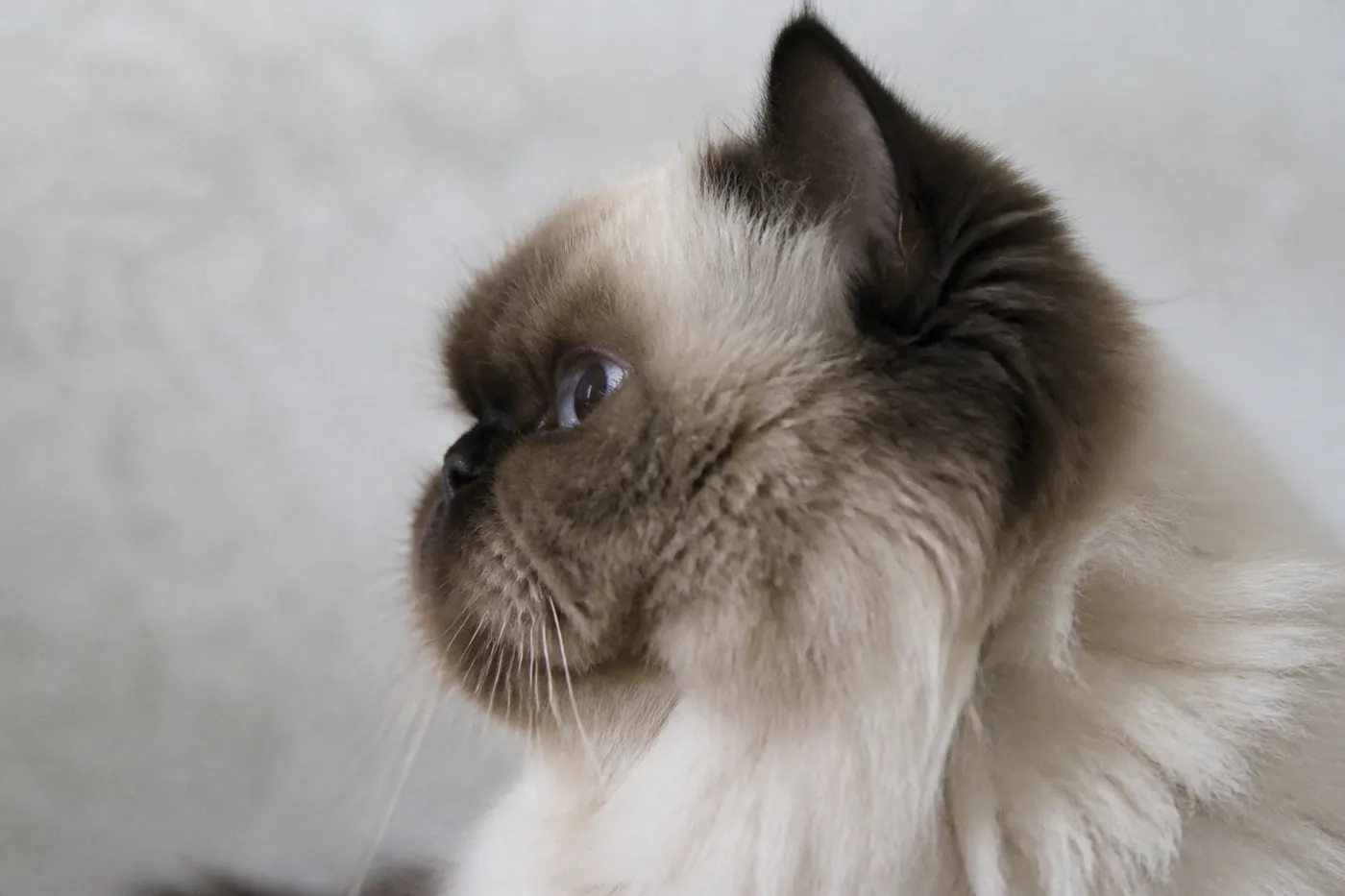
A show-standard measurement is not an airway examination. A cat whose nose meets the standard can still have narrow nostrils, tear-drainage problems, dental crowding or uncomfortable facial folds.
Quiet breathing, eating and normal movement show more than a profile does, and open nostrils and comfortable eyes are good signs. A two-second side view cannot clear the cat's health, and any concern belongs with a veterinarian.
Damp facial folds need gentle cleaning by a method someone has demonstrated, and redness, odour or pain in them needs veterinary advice. Vaccine choice and route belong to the veterinarian's individual plan.
Who should not take on a Himalayan?
A Himalayan suits a household where daily coat checks, regular combing, gentle eye care and veterinary costs all fit. The time varies with the individual coat and health; fifteen minutes is not a promise that every day's work will fit that allowance.
A quiet adult can suit a small home if it has play, suitable climbing and places to retreat. With children, contact works when the child invites it and stops when the cat leaves, and a calm cat is still not one to carry or restrain.
- Observe comfortable breathing, eating and movement
- Practise cooperative combing and brief eye handling
- Read the named PKD and PRA reports for the parents
- Budget for dental, eye, skin and ordinary preventive care
- Keep a return or care-contingency agreement
An adult with known coat and handling needs may be easier to match than a kitten. The complete daily commitment matters far more than coat colour.
Common Questions
What point colours does a Himalayan come in?
CFA recognises seal, chocolate, blue, lilac, red, cream, tortie, blue-cream, chocolate tortie and lilac-cream points, plus a lynx tabby version of each. Body colour is graded against the points, so a chocolate point sits on ivory and a blue point on a bluish white.
Will two pointed parents ever produce a solid kitten?
No. The pointed pattern is recessive, so a cat only shows it when it carries two copies, which means two pointed parents have nothing else to pass on. A solid Persian, on the other hand, can carry one hidden copy and produce pointed kittens with the right mate.
Do Himalayans get on with dogs?
There is no breed-level evidence either way. The behaviour survey measured aggression toward other cats rather than toward dogs, so the answer rests on the individual animal and on how carefully the introduction is handled.
Checked Against
- CFA Persian breed standard cfa.org
- The Cat Fanciers' Association: the Persian and Himalayan cfa.org
- GCCF Persian Longhair Breed Advisory Committee breeding policy gccfcats.org
- Persian cats under first opinion veterinary care in the UK: demography, mortality and disorders pmc.ncbi.nlm.nih.gov
- Breed differences of heritable behaviour traits in cats nature.com
- UC Davis: Persian-derived progressive retinal atrophy vgl.ucdavis.edu
Published 5 September 2026. Last updated .





