How Do You Clean Cat Grooming Tools, and How Often?
Clean grooming tools according to their materials, rinse washable parts and dry them fully. Infection control needs more than an ordinary wash.
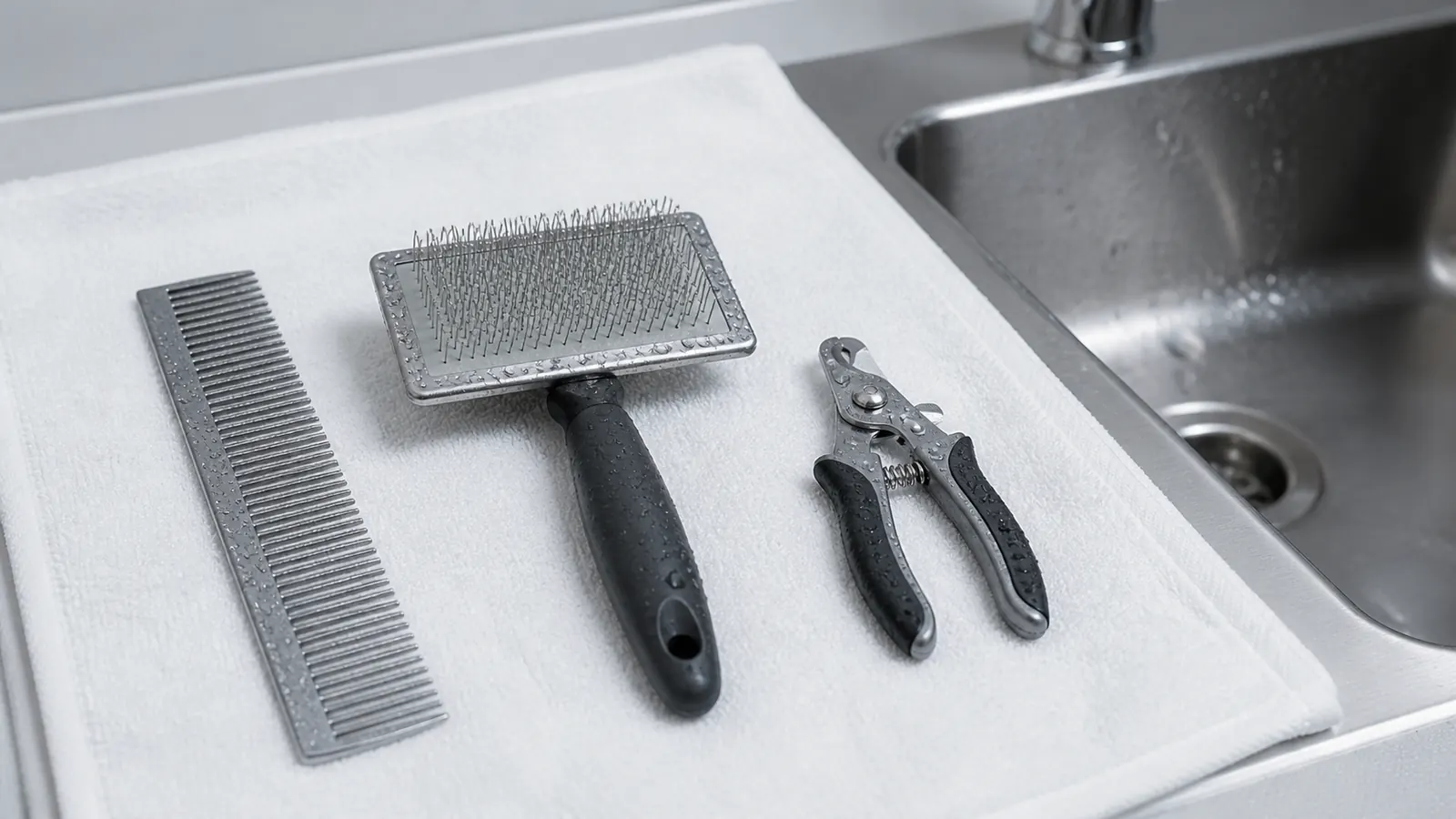
Remove trapped hair after grooming, wash the parts that the manufacturer says are washable, and let tools dry completely before storing them. Routine cleaning removes debris; suspected infection needs a separate veterinary disinfection plan.
Check the tool before putting it in water
A solid metal comb, a wooden-handled brush, a cushioned slicker and an electric clipper cannot all be cleaned the same way. Read the tool's instructions for washable parts, suitable cleaners and drying.
If the instructions are missing, identify the model or ask the manufacturer rather than soaking the whole tool by default.
Unplug electric equipment before cleaning and follow its instructions for removing attachments. Do not immerse a powered body or wet a sealed cushion merely because the teeth are metal, since water trapped inside can damage materials and leave the tool damp after the surface looks dry.
Remove hair and surface debris first
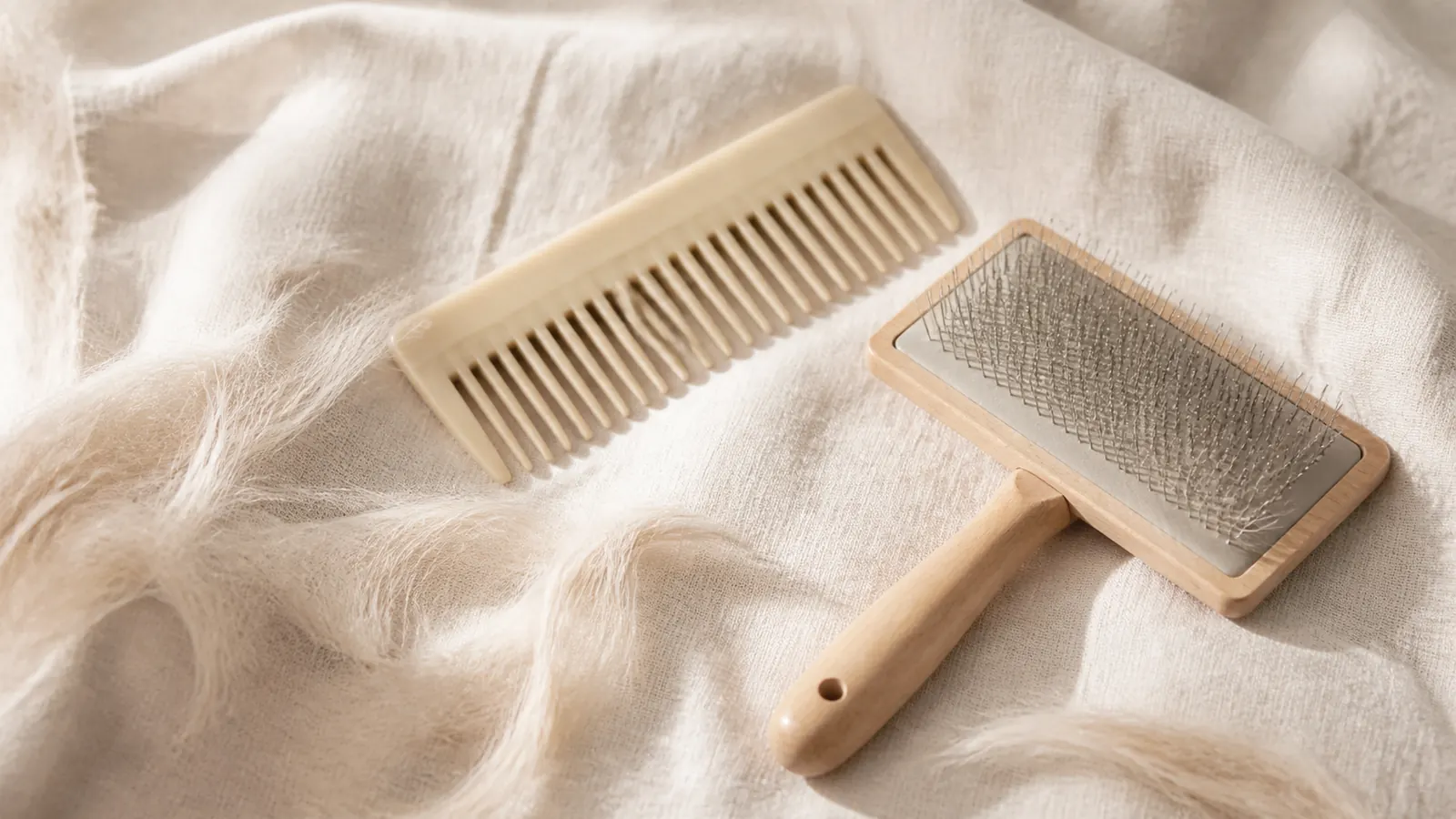
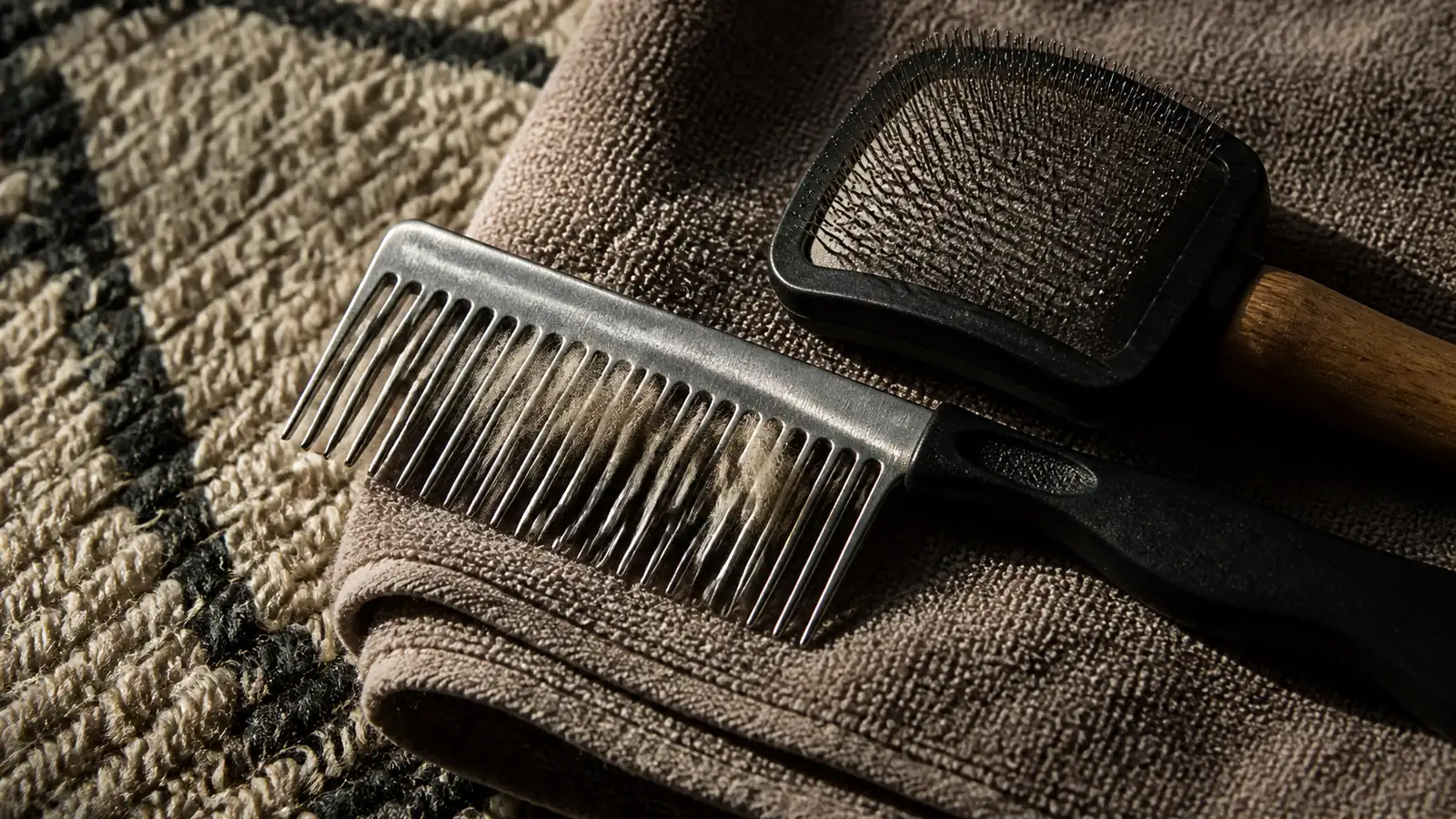
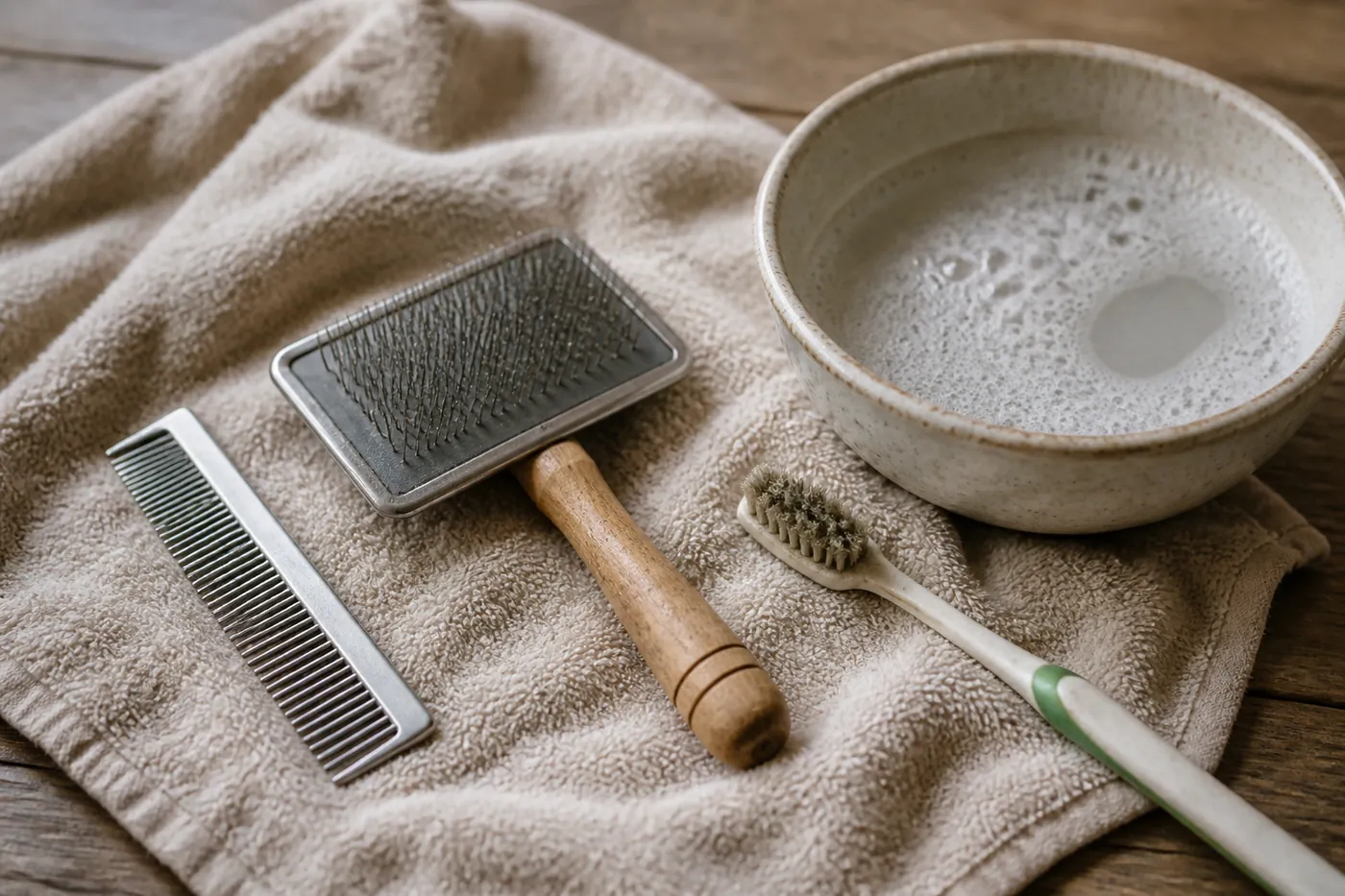
Lift out loose hair carefully, keeping fingers away from sharp pins and blades. A separate small cleaning brush can help dislodge debris between teeth, used gently so that pins do not bend or pull out of their base.
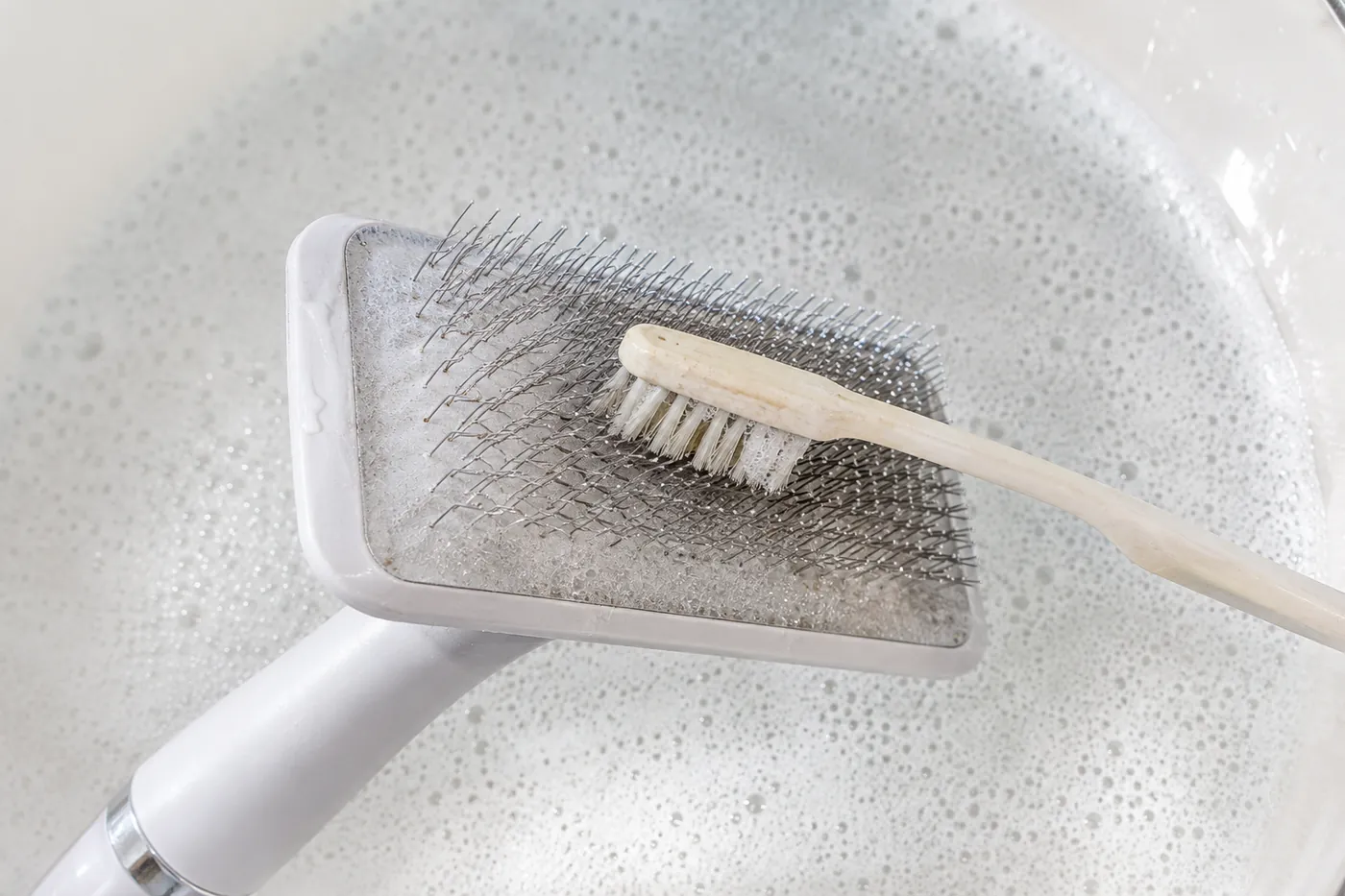
For washable parts, use warm water and a mild detergent compatible with the tool, then rinse thoroughly. A brief surface clean may be sufficient for parts that cannot be soaked, and the maker's method matters more than any fixed soaking time, because materials differ.
Remove greasy residue and visible dirt before considering disinfection. A disinfectant is not a substitute for this physical cleaning, and a tool that looks clean is not necessarily free of an infectious organism.
Dry, inspect and store
Shake or blot off excess water as appropriate, then leave the parts in a ventilated place in the orientation recommended by the manufacturer. Keep them out of the cat's reach while drying, and reassemble or put them in a closed bag only when all parts are dry.
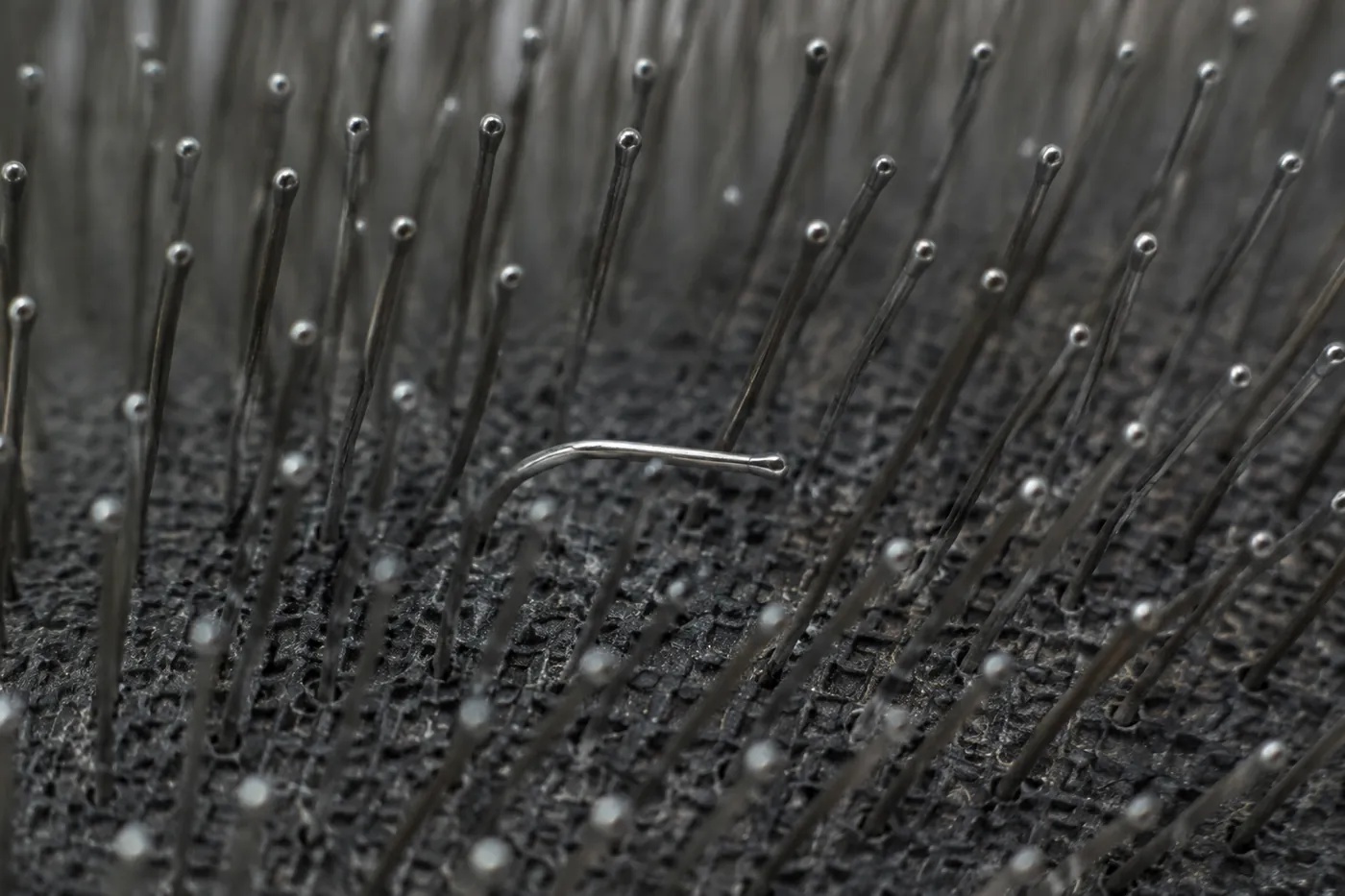
Check for rust, rough teeth, loose or bent pins and damaged handles. Plastic-tipped pins are one design among several, so what matters is whether its intended contact surface remains smooth and intact. Replace a damaged part or tool that can scratch or snag.
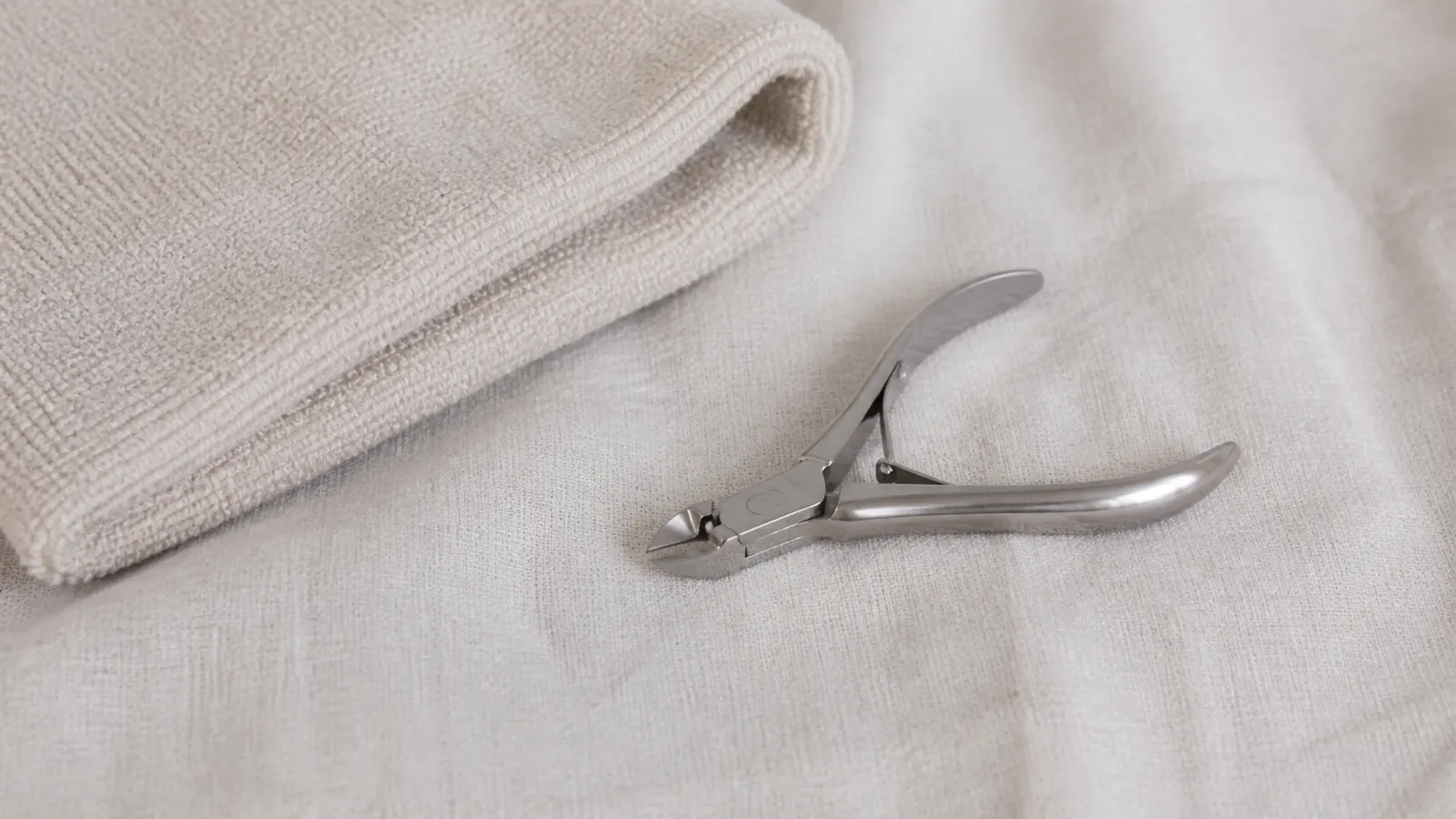
Oil clipper blades only if and as the instructions require, using the specified product and wiping away excess. Prevent the cat from licking residue. General household lubricant is not a substitute, because not every oil is suitable for a tool that touches a cat.
Use a separate plan for infection or parasites
If a cat has suspected ringworm or another contagious skin condition, stop sharing its grooming equipment and ask the veterinarian how to manage it. Ringworm can affect people as well as cats, and the treatment plan may include cleaning the environment and equipment.
The correct disinfectant, dilution, contact time and any required rinsing depend on the organism, product and tool material. Follow that plan and the product instructions; do not mix cleaners or invent a stronger solution. Keep cats away during cleaning and until equipment is safe to use.
Some items may be difficult to disinfect adequately or may be damaged by the required treatment. Ask whether to replace them instead of assuming every porous tool must always be discarded or every metal tool can be made safe by one soak.
A flea comb can reveal debris that merits veterinary advice, but cleaning the comb alone does not treat fleas on the cat or in the home. Parasite products need to be ones made for cats and suitable for the individual animal, never a dog's treatment borrowed for the purpose.
Match the routine to actual use
Remove hair after each session and clean sooner if there is visible dirt, grease or contamination. Check the maker's maintenance schedule for equipment such as clippers. There is no useful single monthly replacement date for all brushes: condition and safe function decide.
Keep equipment for a cat with a suspected contagious problem separate from healthy cats' tools. Clean a secondhand tool before use and check that its contact surfaces and mechanism are intact; an unknown history is a reason to assess whether it is worth keeping.
If your cat objects to brushing, the tool and technique deserve a look as well as the coat, because a reluctant cat may be reacting to discomfort or to handling fear. Clean equipment helps maintenance, but cannot make a painful mat comfortable to pull through.
Common Questions
Can I soak every brush?
No. Wooden parts, sealed cushions, glued components and electrical equipment may need a different method. Follow the instructions for the exact tool.
Does washing disinfect a tool?
Routine washing removes debris but does not guarantee disinfection. A suspected contagious condition needs a veterinary plan with a suitable product and contact time.
When should I replace a grooming tool?
Replace or repair it when damage, rust, rough teeth or a faulty mechanism makes it unsafe. There is no universal replacement interval.
Checked Against
Published 2 September 2026. Last updated .