What Is Hyperthyroidism in Cats, and How Is It Treated?
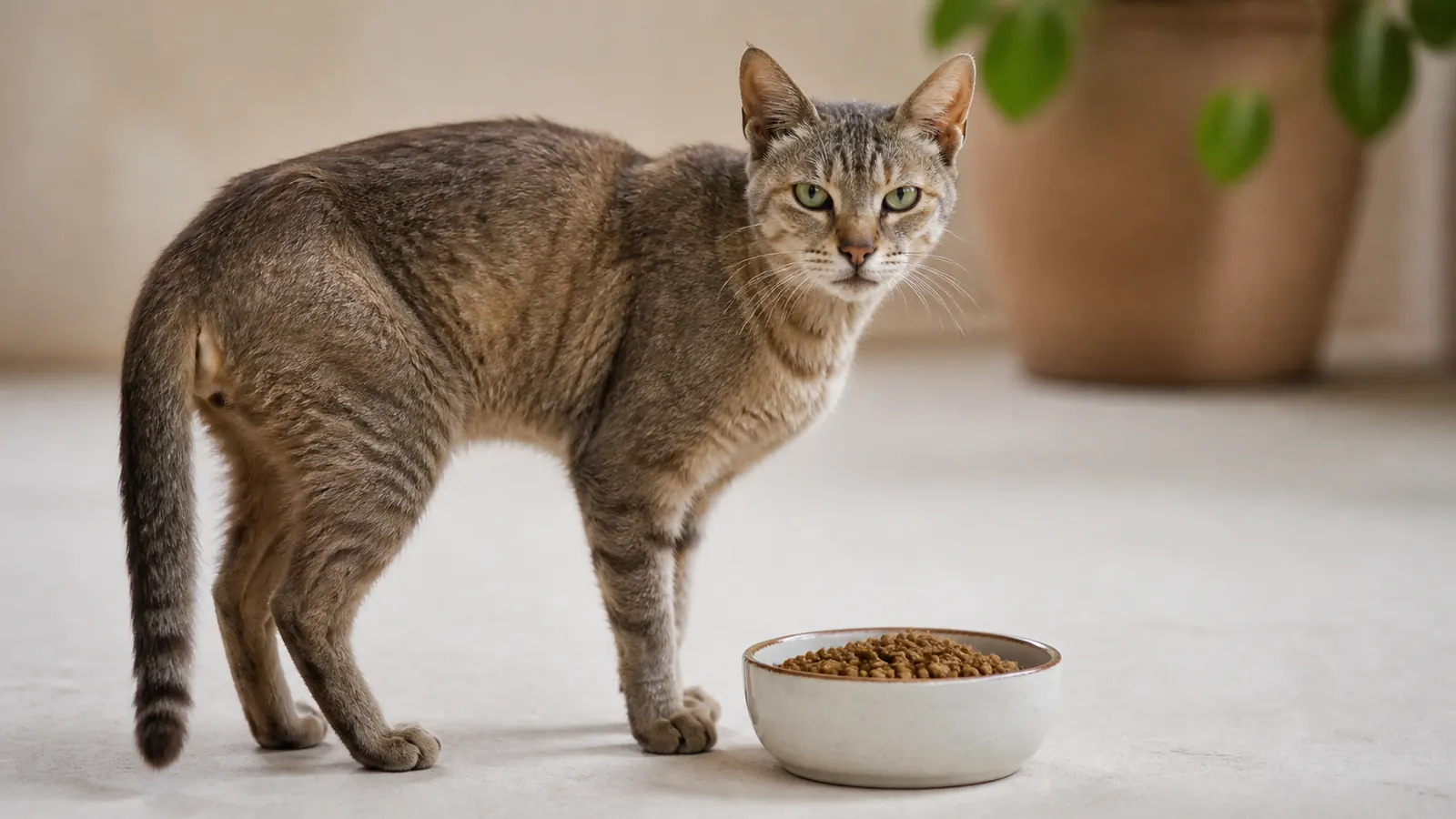
Hyperthyroidism is the classic reason an older cat eats more than ever and gets thinner anyway. It is common, very treatable, and often mistaken for a cat simply getting old.
The thyroid gland sets the body's metabolic rate. In hyperthyroidism it produces too much thyroid hormone, and everything runs too fast.
It is almost always caused by a benign enlargement of the gland, and it is overwhelmingly a disease of older cats, typically over ten.
The pattern is distinctive
Weight loss despite a good or increased appetite should prompt a veterinary appointment. An overactive thyroid increases metabolism, but this pattern is not a diagnosis on its own and other illnesses can cause weight loss.
Other changes can include thirst and urination, restlessness, night vocalising, vomiting, loose stools and an unkempt coat. Your vet may find a rapid heart rate or raised blood pressure.
Record weight and appetite changes if you can do so without delaying the visit. Do not dismiss them as normal ageing just because the cat still wants food.
Why it happens, and why it gets missed
The usual cause is a non-cancerous overgrowth of thyroid tissue that keeps producing hormone regardless of what the body asks for.
Both lobes of the gland are involved in most cats rather than just one, which matters when surgery is being considered. A malignant thyroid tumour is possible but uncommon.
The reason it is so often caught late is that the early picture looks like an ordinary elderly cat becoming lean, restless, and a little scruffy.
Those are also the changes people put down to age, which is why a weight trend recorded at each visit is more useful than a general impression.
The presentation that hides
A small number of cats show the opposite of the classic picture, and they are the ones missed longest.
In apathetic hyperthyroidism the cat is dull, weak, and off its food rather than restless and ravenous. It accounts for a small minority of cases and usually appears in cats that also have heart or kidney disease.
The weight loss is still there, and it is the thread worth pulling. A quiet elderly cat losing weight deserves the same thyroid test as a noisy one.
The heart is the other thing that hides. Long-standing excess thyroid hormone thickens the heart muscle, and that change often improves once the thyroid is controlled, which is one more argument for treating early.
Diagnosis is usually straightforward
A blood test measuring total T4 confirms most cases.
Some cats sit in a grey zone and need a repeat test or a more specific one, particularly when another illness is masking the result.
Because an overactive thyroid strains the heart and the kidneys, a workup normally also checks blood pressure and kidney values.
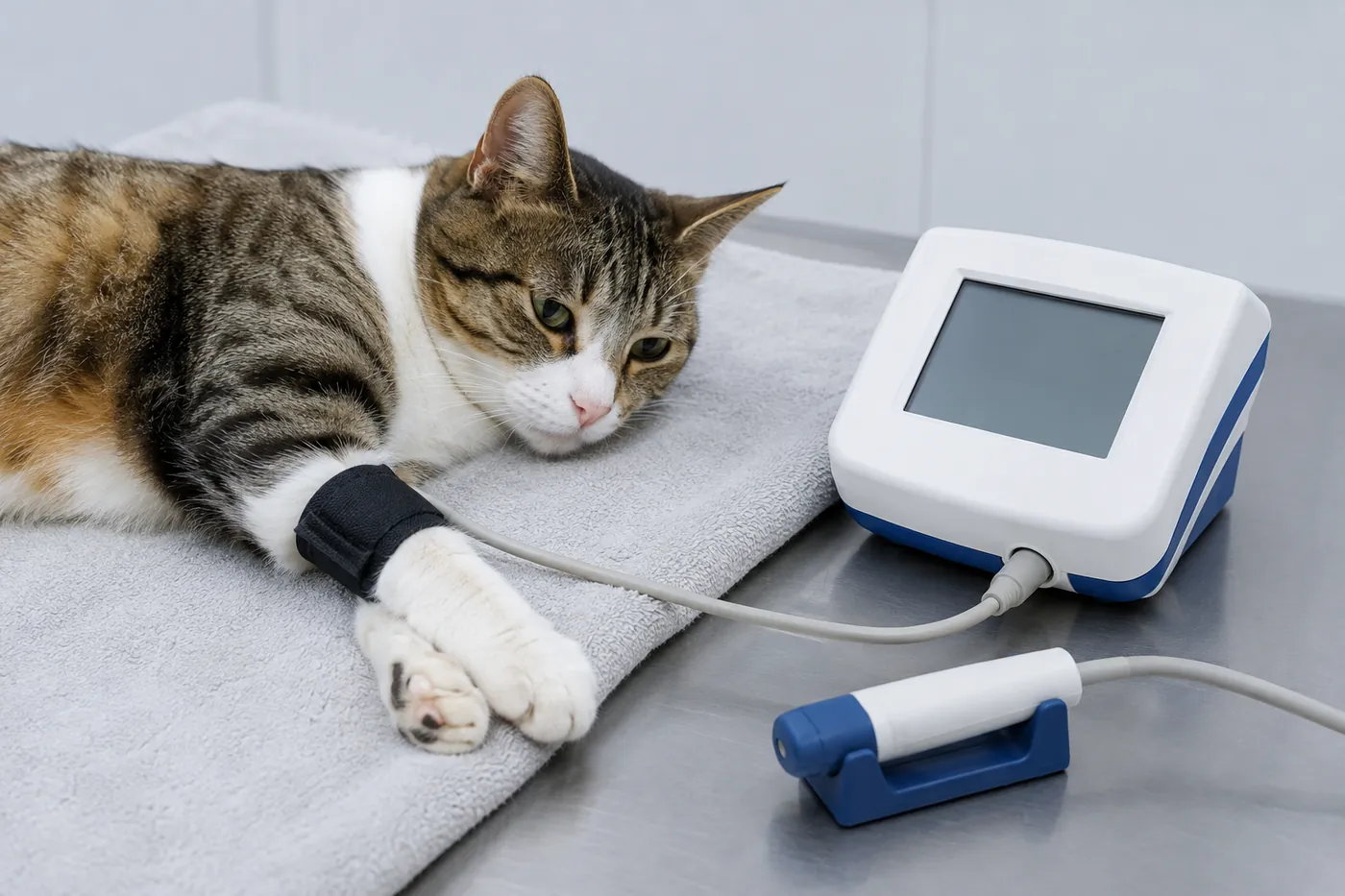
High blood pressure is worth finding on its own. Left untreated it can detach the retina and blind a cat suddenly, and that outcome is largely preventable.
Why the kidneys are part of the conversation
An overactive thyroid pushes more blood through the kidneys than they would otherwise handle.
That extra flow flatters the kidney numbers, so a cat can have chronic kidney disease that stays hidden while the thyroid is running fast.
Controlling the thyroid can reveal reduced kidney function that was previously masked. Over-treatment causing low thyroid levels can also affect kidney function, which is why both need follow-up testing.
Your vet may consider a reversible treatment trial in some cases, particularly when kidney disease is suspected; it is not a compulsory step for every cat.
Four treatment routes
| Option | What it involves | Curative |
|---|---|---|
| Radioactive iodine | One injection at a licensed centre, with a short hospital stay | Yes, in most cats |
| Surgery | Removal of the affected gland or glands | Usually |
| Daily medication | Anti-thyroid tablets or gel, given for life | No, it controls |
| Prescription diet | Strictly iodine-restricted food, nothing else at all | No, it controls |

Radioactive iodine has the highest cure rate and avoids lifelong medication, though it needs a specialist centre and a stay of several days during which visiting is restricted.
Surgery is a single procedure but carries anaesthetic risk in an older cat, and the parathyroid glands sit close enough that calcium needs watching afterwards.
Medication is flexible and reversible, which makes it a common starting point while kidney values are assessed.
What each route costs, and how to choose
Ask for estimates that include treatment, hospitalisation, repeat tests, travel and ongoing medication. Radioiodine usually has a larger initial cost, while medical management spreads costs over time.
Which costs less overall depends on local fees, response and the cat's remaining health needs.
Discuss whether the cat can be medicated reliably, whether a restricted diet is feasible, and whether other disease changes the treatment choice. Radioiodine still requires follow-up testing; a curative treatment is not the end of monitoring.
The iodine-restricted diet in practice
The diet has to be the only thing the cat eats, which makes the wet or dry decision a matter of which format the cat will accept for years rather than a preference.
The prescription diet works by starving the overactive gland of the iodine it needs to make hormone, and it works well in the cats that can actually stay on it.
The food must be fed exclusively for reliable control. Treats, stolen food and hunting can compromise it; discuss practical access to other foods before choosing this route.
This can be difficult in a multi-cat home or for a cat that hunts. Suitability depends on whether you can reliably control that cat's intake, not simply the number of cats in the home.
It also does nothing for the underlying overgrowth, so the gland continues to enlarge while the hormone level is held down. Cats on the diet still need regular blood tests.
If the cat will not eat enough of the prescribed diet, contact the practice promptly about another treatment. Maintaining food intake matters, and an unsuitable diet should not become a prolonged feeding battle.
Living with the daily-medication route
Anti-thyroid medication controls hormone production while it is given. Dosing frequency depends on the medicine and prescription; follow the label and discuss any missed dose with the practice.
A minority of cats react to it. The usual problems are vomiting or reduced appetite in the first weeks, and less often facial itching that the cat scratches raw.
Rarer effects on the blood cells and the liver are the reason the first months include repeat blood tests rather than a single recheck.
An ear gel may be an option where tablets are difficult. Availability, frequency and monitoring depend on the prescription.
Giving the medication without a fight
Ask the practice how the exact medicine can be given. Some tablets can be offered in a small amount of suitable food, but do not crush or alter a product unless the practice confirms it is safe.
Check that the full dose was swallowed.
A transdermal formulation may be an option for a cat that cannot take tablets. Follow its instructions for dose, application site, gloves, cleaning residue and preventing human or other-animal contact.
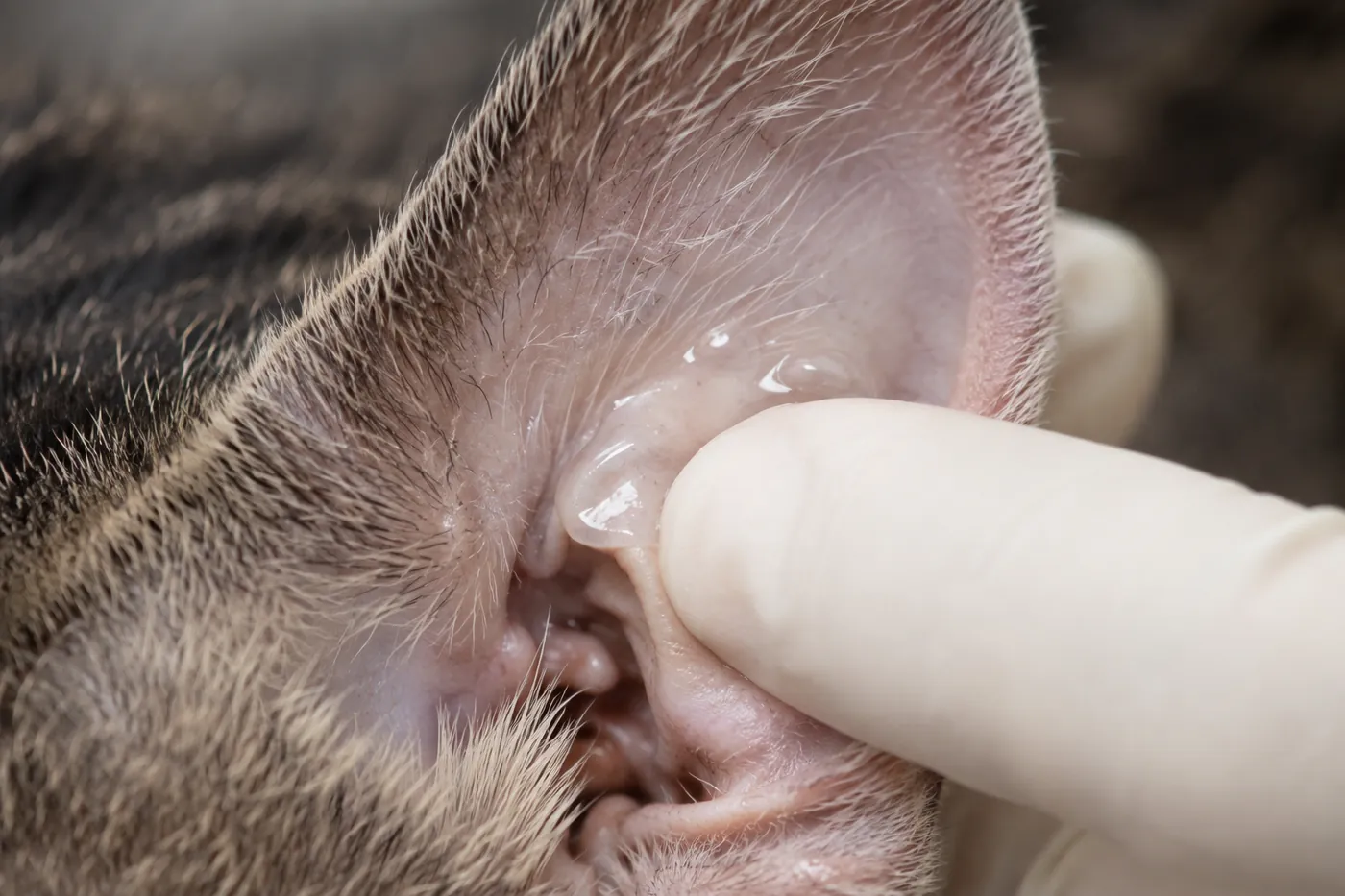
It still needs monitoring and may not suit every cat.
Use a written record when more than one person gives medicine. Ask what to do after a missed or vomited dose rather than doubling the next one.
What the monitoring schedule looks like
Ask for the follow-up schedule when treatment starts. With medication, the first check is usually within a few weeks and may include thyroid hormone, kidney values, blood-cell and liver measurements.
Further checks follow dose changes, then continue periodically once stable.
Radioiodine and surgery also need follow-up testing. Successful treatment can reveal kidney disease or produce low thyroid function, both of which may change the plan.
Weight and blood pressure belong in ongoing monitoring. Hypertension can damage the eyes; sudden sight loss needs urgent care rather than waiting for the next booked blood test.
After treatment
Cats usually regain weight and settle within weeks, and the coat is often the first visible thing to improve.
Follow-up blood tests confirm the level has come down without overshooting, and kidney values are rechecked at the same time. An overshoot into low thyroid function is itself worth correcting.
Once a cat is stable, monitoring typically settles into checks every few months, alongside weight and blood pressure.
A cat treated before the heart and kidneys are damaged generally has a good outlook and can live for years with the condition resolved or controlled.
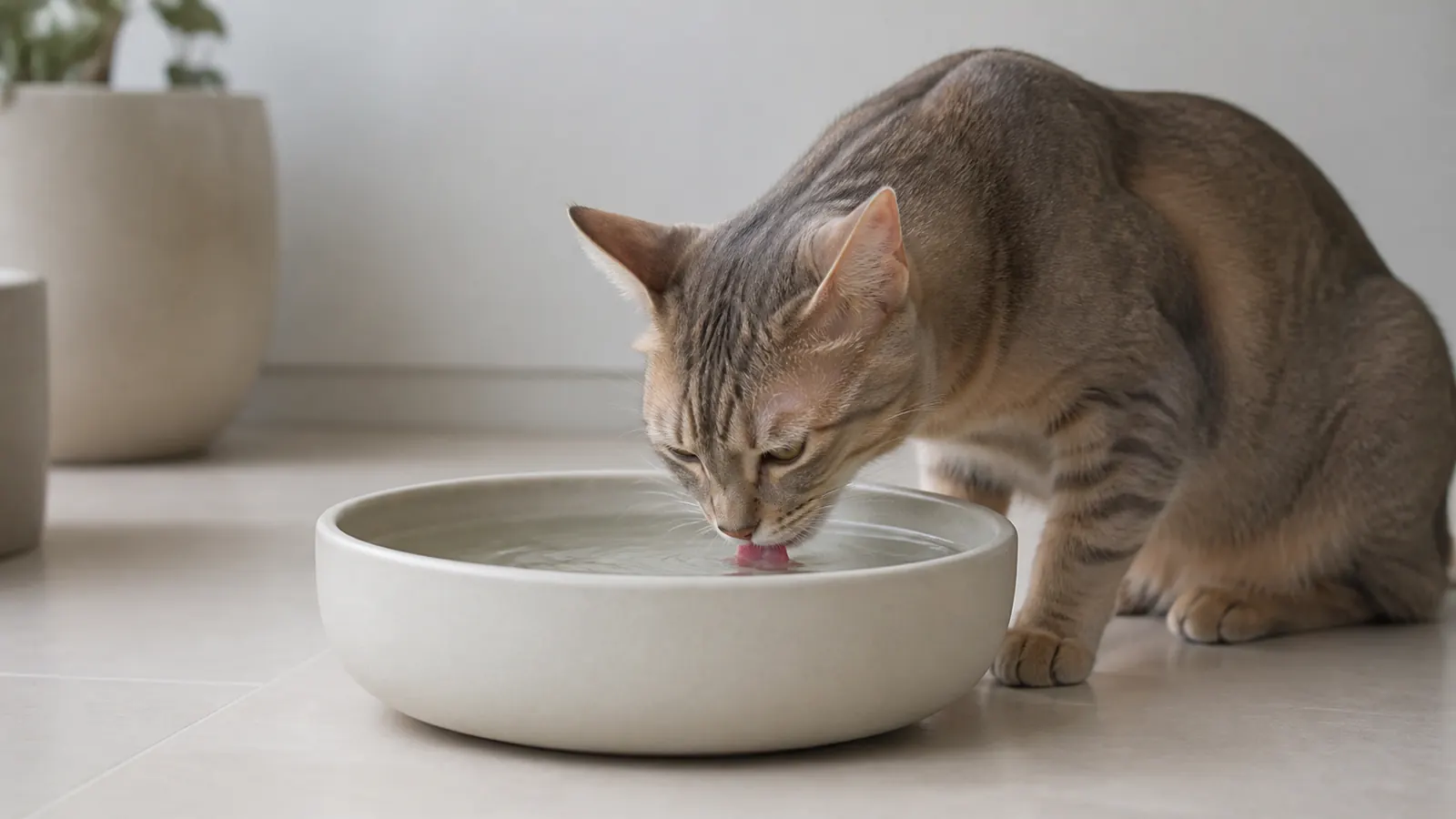
If the first thing you noticed was the water bowl emptying, a cat drinking more than usual explains what else that sign can mean and how to measure it before the appointment.
Common Questions
At what age does hyperthyroidism usually appear?
It mainly affects older cats, often over ten. Weight loss or other concerning changes need assessment at any age; your vet can recommend a suitable screening schedule.
Can hyperthyroidism be cured?
Yes. Radioactive iodine treatment cures most cats, and surgery cures many. Medication and diet control the condition rather than curing it.
Why did my cat's kidney values worsen after treatment?
An overactive thyroid can mask kidney disease by increasing blood flow through the kidneys. Treatment can reveal that disease, while overly low thyroid levels can also affect kidney function. Follow-up tests help the vet distinguish these possibilities.
Checked Against
Published 6 August 2026. Last updated .