How Do You Adapt a Home for a Cat That Is Getting Older?
An older cat usually does not need a different home, it needs the same home with the obstacles taken out. Most of the changes cost very little.
The aim is to keep the cat doing what it already does, for longer, without having to ask for help.
Almost every adaptation is about removing a climb, a stretch, or a distance.
Litter trays are the first fix
A high-sided tray is a climb for stiff hips, and a cat that finds the tray painful will go elsewhere.
Switch to a tray with one low side, or cut a lower entry into a plastic tray and file the edge smooth.
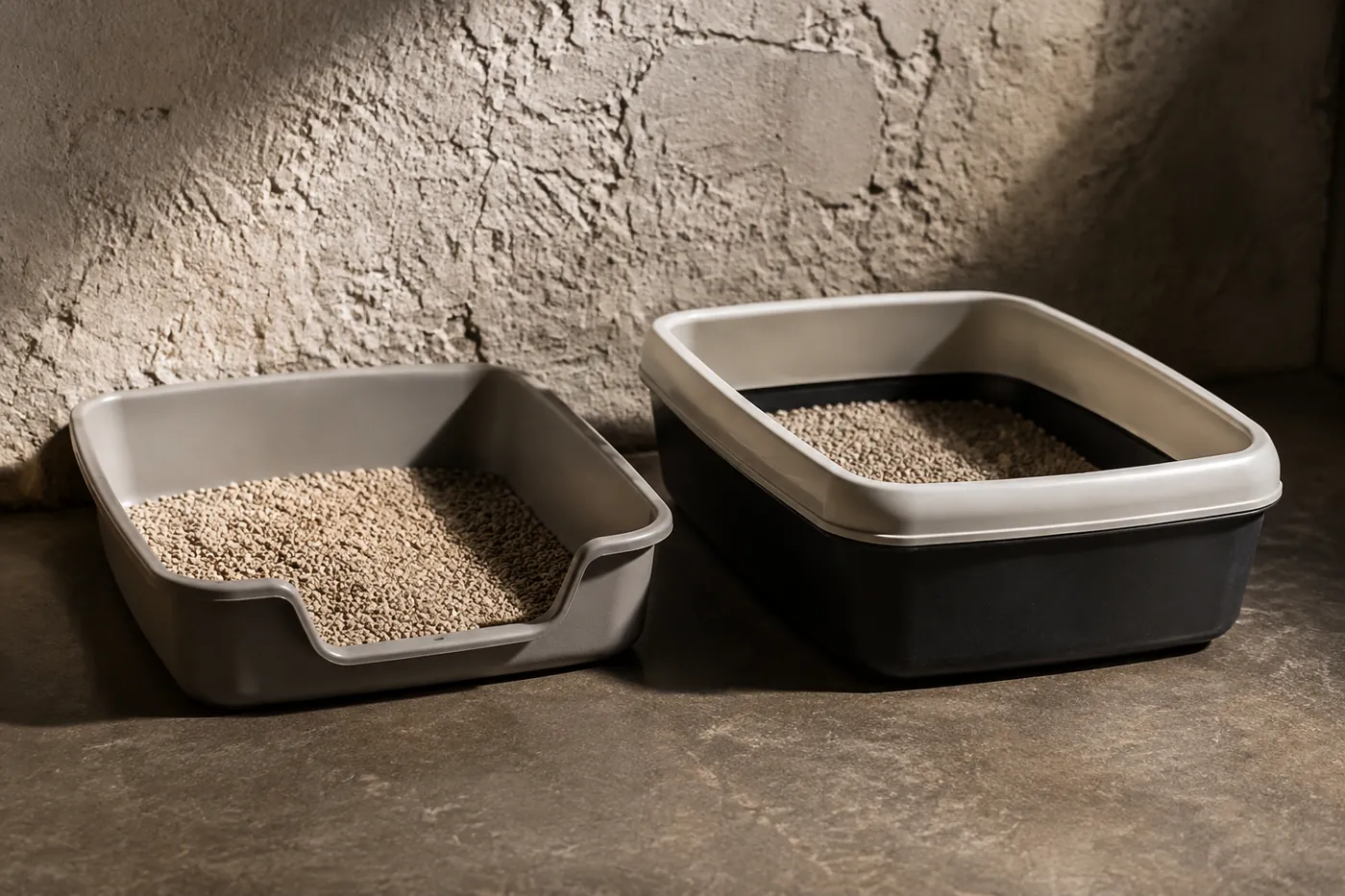
Add a tray so there is one on every floor the cat uses. A nearby tray reduces the need to use stairs when the cat needs to toilet.
New accidents still need medical assessment.
Trays also want to be larger than the one that suited the same cat at five, because a stiff cat turns in a wider arc. Choosing a litter tray covers size and sides in detail.
Put the height back with steps, not jumps
Cats value height for security, and losing it is stressful, and the loss is rarely announced.
Height is a defensive resource rather than a preference. A cat above the floor can see what is approaching and cannot be surrounded, which is why the favourite spot is usually the one with the best view of the room.
An arthritic cat does not decide to give that up. It attempts the jump, lands badly once or twice, and quietly stops trying, and the household reads the change as the cat mellowing.
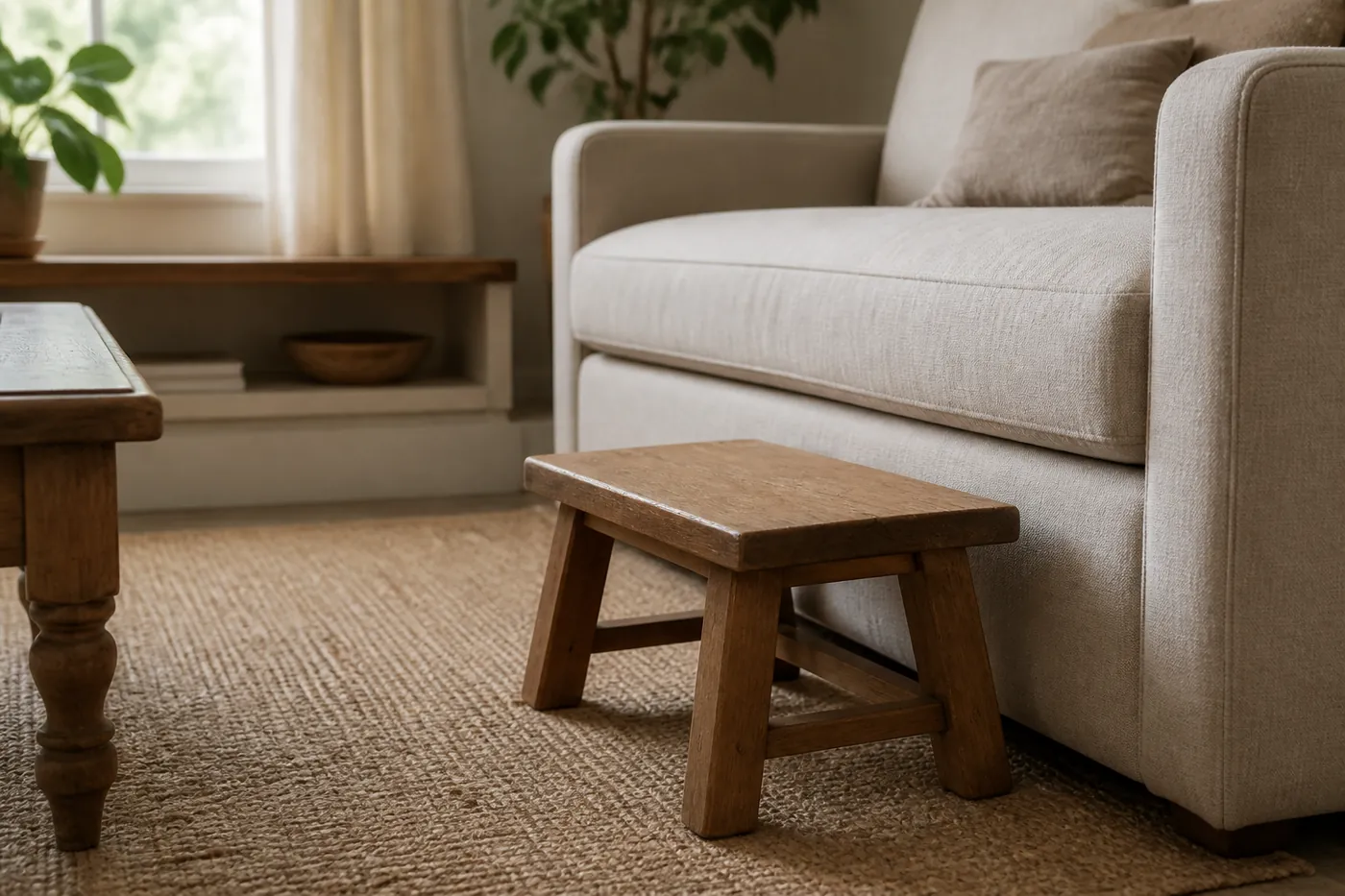
Staging the route restores what was lost without asking for the movement that hurts. Three short hops carry a cat the same total height as one long one and cost its joints a fraction as much.
Traction is the part that gets missed because floors do not change. A cat that could grip a laminate floor at five is pushing off a surface with weaker hindquarters at fourteen, and a failed launch on a slippery floor is what stops the attempts.
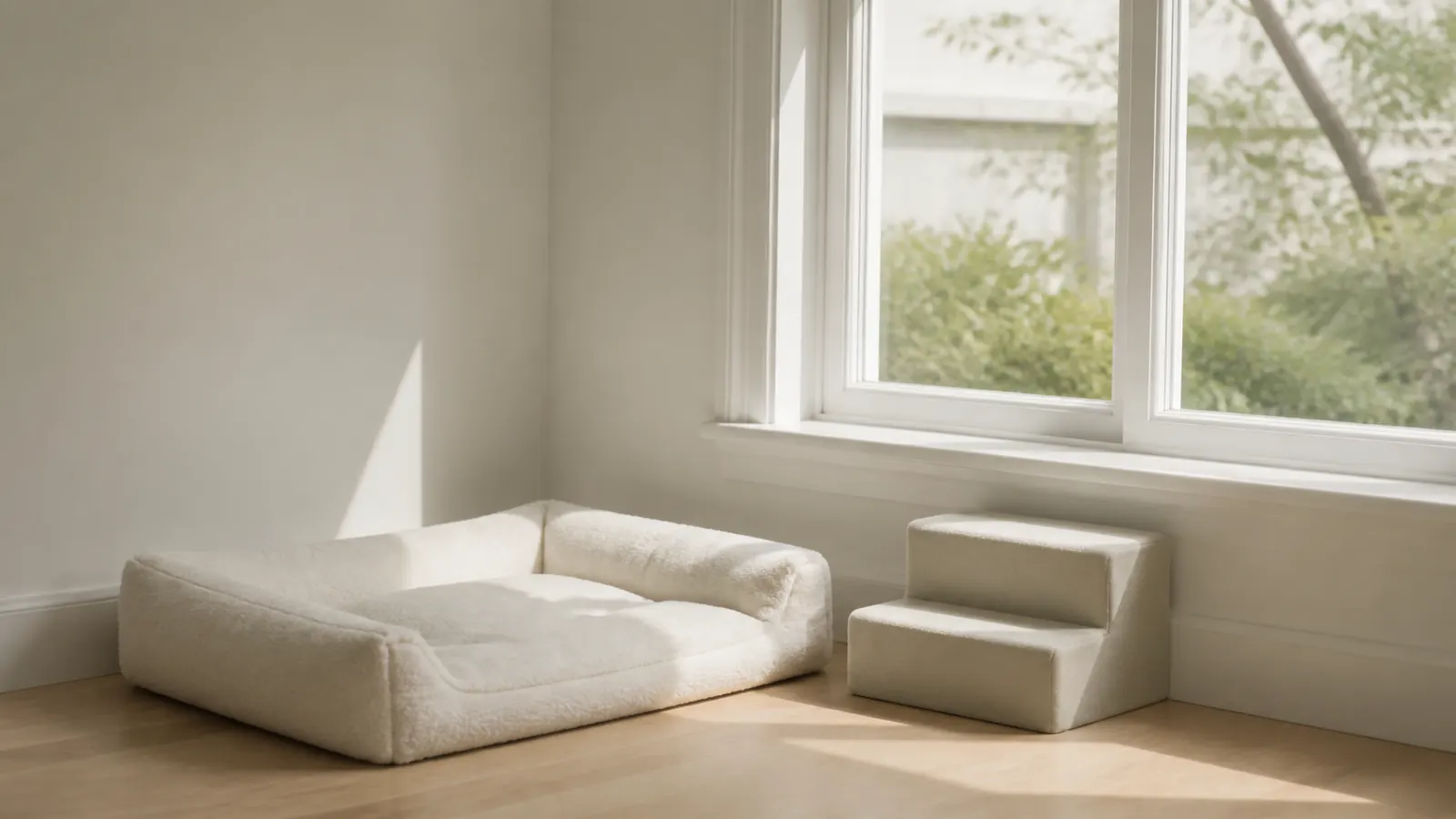
Give a staged route to the favourite spot: a stool to a chair to the windowsill, instead of one long jump.
- A step or ramp up to the bed or sofa
- A low, wide perch by a window rather than a tall tower
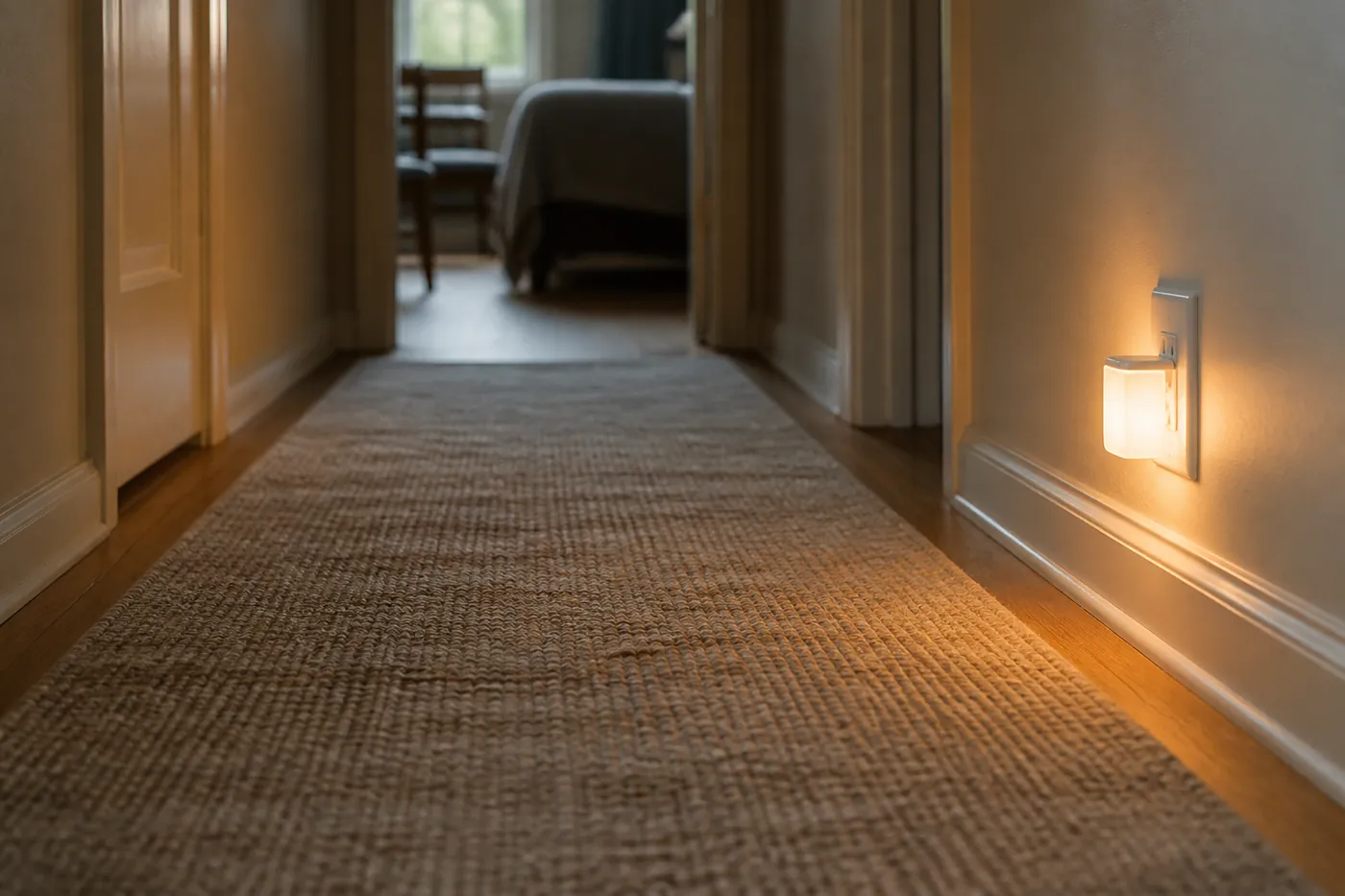
- Non-slip rugs on laminate and tile, where older cats lose grip
- Bedding somewhere warm and out of draughts
- A night light along the route to the tray and water
How do you build a step or a ramp?
Bought pet steps work and cost more than they need to, and most households already have what is required.
A sturdy low stool or purpose-made step can work if it supports the cat without tipping or sliding. Avoid loose stacks hidden beneath blankets.
What matters is that it does not move, since a step that slides is used once and then avoided.
Height is the thing to get right. Choose steps or a ramp the cat can use without jumping or straining, with enough width to turn safely.
The suitable height and slope depend on its mobility.
Cover the surface with something with grip. Carpet offcuts, a rubber-backed mat, or a folded towel taped down all work, and a bare varnished surface does not.
Put it against the furniture rather than near it. A gap between the step and the sofa means the cat is still jumping, just from a higher starting point.
Food and water, brought closer
Eating or drinking can become harder when resources are difficult to reach. Appetite loss or unusual thirst also needs a veterinary check.
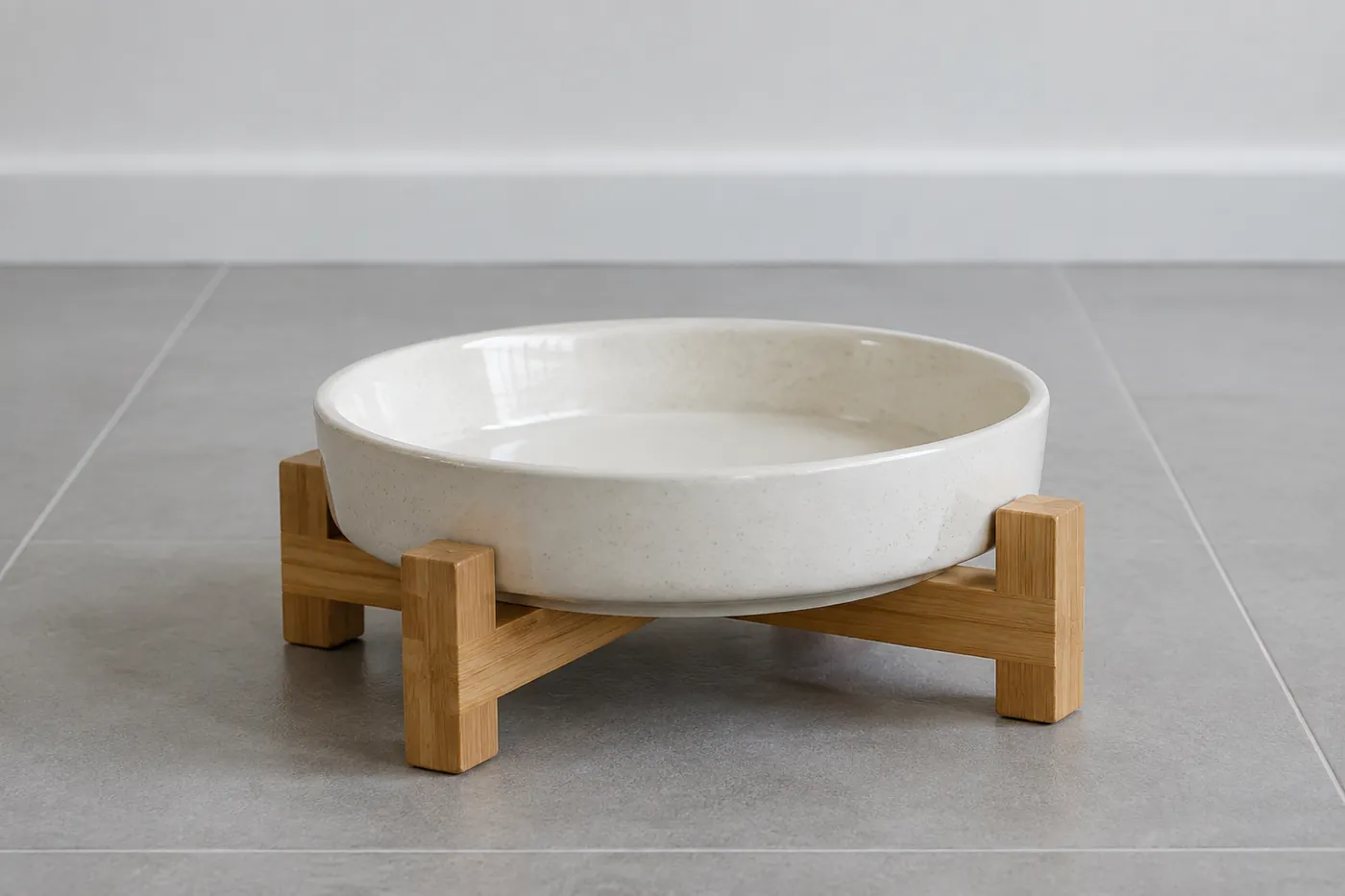
Put water in more places, away from the food, and consider a wider bowl so whiskers do not touch the sides.
Raising the bowl slightly can help a cat with neck or shoulder arthritis eat more comfortably.
Portion size changes with age too, as the feeding guide sets out. Warming wet food a little makes it smell stronger, which matters when a cat's sense of smell has faded.
- Trays
- Accessible on each used level when needed, with comfortable entry and turning room
- Routes
- Steps rather than jumps, non-slip surfaces
- Bedding
- Warm, draught free, easy to step into
- Water
- Accessible choices placed where the cat drinks comfortably
- Food
- Adjust height, temperature and meal pattern to comfort, appetite and veterinary advice
- Grooming
- More help needed as flexibility drops
Why does an older cat feel the cold?
Some older cats seek warmer resting places as body composition, health and activity change. Safe warmth may improve comfort, but it does not treat pain or replace assessment.
Loss of muscle or body fat and reduced activity can make an individual cat less tolerant of cold. New heat-seeking, weight loss or reduced movement should also prompt a health review.
A heated pet bed or veterinary-approved warming option may help a cat that seeks warmth. Use it exactly as directed, protect skin from direct heat and leave an unheated area the cat can move to.
A cat unable to move away needs close supervision and veterinary advice.
Position matters as much as heat. Beds want to be out of draughts, off cold floors, and somewhere the cat can get into without a climb, which usually means low and against a wall.
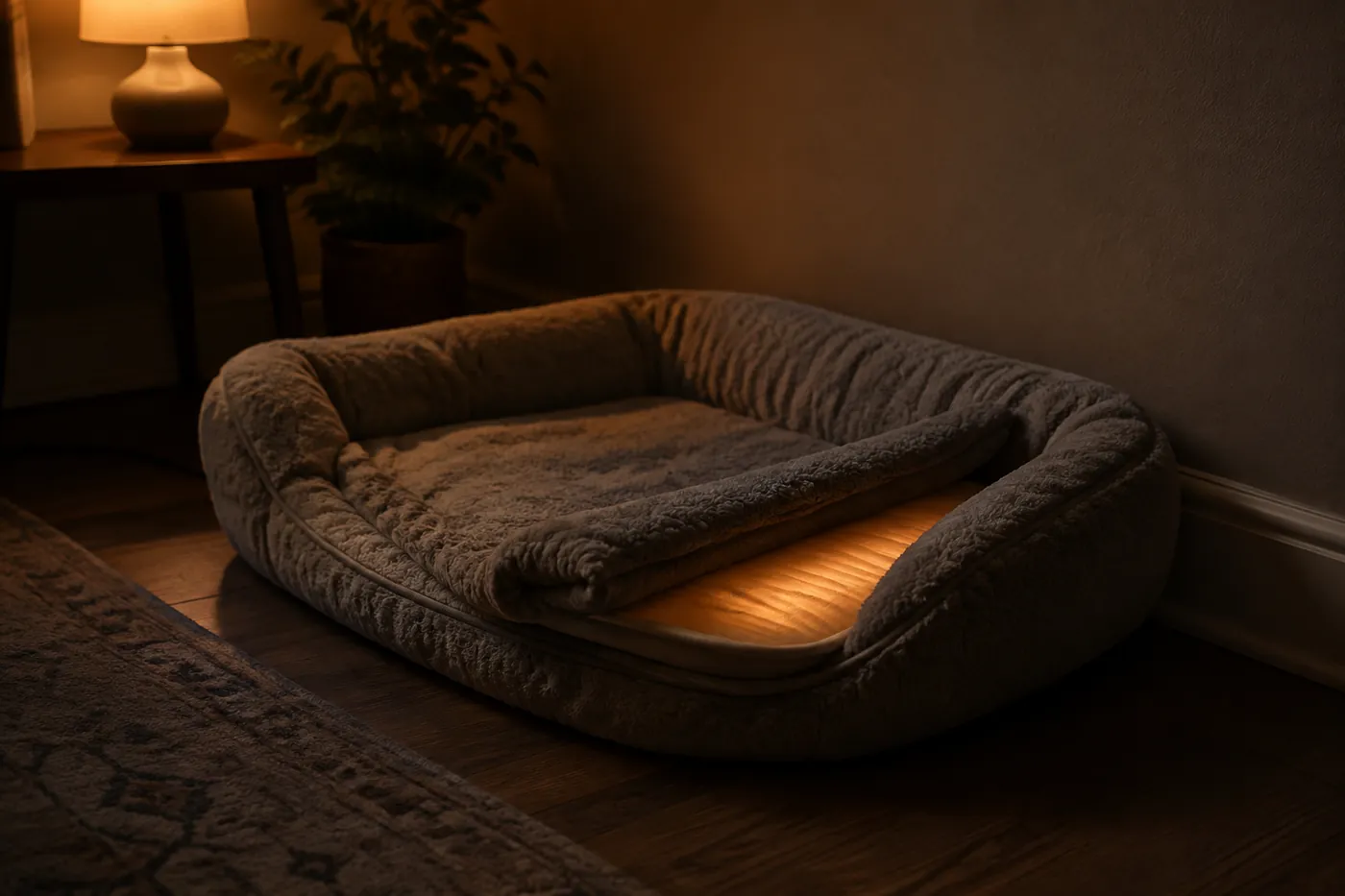
- A heated bed or heat pad, thermostatically controlled or used through a cover
- Placed low, so the cat gets in without a climb
- Out of draughts and off a cold floor, usually against a wall
- Somewhere the cat already chooses rather than where it would look tidy
- Checked by hand for temperature, because reduced sensation stops a cat moving away from heat
Watch where the cat chooses to sleep. A cat that has moved to a radiator, an airing cupboard, or a sunny patch of floor is telling you the rest of the house is too cold for it.
Fading sight and hearing
Both senses decline gradually in many old cats, and both are managed by keeping the world predictable.
For a cat losing its sight, the rule is to leave the furniture where it is. A cat that has memorised a route copes remarkably well until somebody moves a chair, and a rearranged room can leave it stranded.
Keep the tray, the water, and the bed in fixed positions, and add night lights along the routes between them. Talk before you touch, so the cat is not startled by contact it did not see coming.
For a cat losing its hearing, approach within its field of view rather than from behind. A gentle floor vibration may get attention; avoid a loud stamp that startles the cat.
Both changes make outdoor access more dangerous, since a cat that cannot hear a car or see a dog approaching has lost its main defences.
- Leave furniture, trays, and bowls exactly where they are
- Add night lights along the routes between bed, tray, and water
- Speak before touching a cat with reduced sight or hearing
- Approach from the front, within the cat's field of view
- Use floor vibration rather than calling for a deaf cat
- Reconsider unsupervised outdoor access as either sense fades
Why does an old cat stop grooming itself?
A cat that cannot twist properly stops grooming its back and hindquarters, and mats form there first, which the long-coat routine covers.
Claws may thicken or wear less, so inspect them at an interval suited to the cat's growth and mobility. A claw approaching or entering the pad needs prompt professional attention.
If your cat has stopped jumping or started missing the tray, read the signs of ageing guide first: both are commonly arthritis rather than age. Where the tray is being missed repeatedly, work through the causes in order starting with a veterinary check.
Medication, and building it into the day
If medication becomes necessary, a clear routine helps everyone give the prescribed dose consistently.
Attach the dose to something that already happens at a fixed time. A tablet given with the morning feed is remembered, and one given whenever somebody thinks of it is not.
Use a written chart where more than one person is involved. Double dosing because two people each assumed the other had not done it is a common and avoidable problem.
- Attach the dose to something that already happens at a fixed time, such as the morning feed
- Keep a written chart wherever more than one person gives it
- Ask what other formats exist: liquid, transdermal gel, or a long-acting injection
- Use pill pockets or plain cooked meat as the carrier, not cheese
Ask about the format rather than accepting the first one offered. Some medicines have alternative formulations, but they are not automatically interchangeable.
Ask the prescriber which options deliver the correct dose for that drug.
Never hide medication in cheese for a cat that does not digest lactose well, since an upset stomach makes the next dose harder. Purpose-made pill pockets or plain cooked meat are better carriers.
In a multi-cat household
Competition for resources goes quietly against an old cat that once held them easily, and the loss is usually silent.
Younger cats claim the warm spot, the high perch, and the route past the tray, and an arthritic cat gives ground rather than arguing. Nothing looks like fighting, and the older cat simply uses less of the house.
Duplicate the things that matter and spread them out:
- separate feeding stations, far enough apart to eat unwatched
- more beds than cats, including one in a quiet room
- a tray on every floor, none of them in a dead end
- at least one warm resting place the younger cats do not already own
Feeding apart also lets you see what the older cat is actually eating, which is the number that matters most as it ages.
Outdoors becomes a different calculation
Years of outdoor access do not stop mattering because a cat has slowed down, and the risks change rather than the desire.
Failing hearing and slower reactions make roads more dangerous, and a stiff cat that could once escape a confrontation with a neighbouring cat may no longer be able to.
Cat flaps are worth checking. A stiff flap that a young cat shouldered through becomes a real barrier, and a cat that gives up on the flap will find another way to toilet indoors.
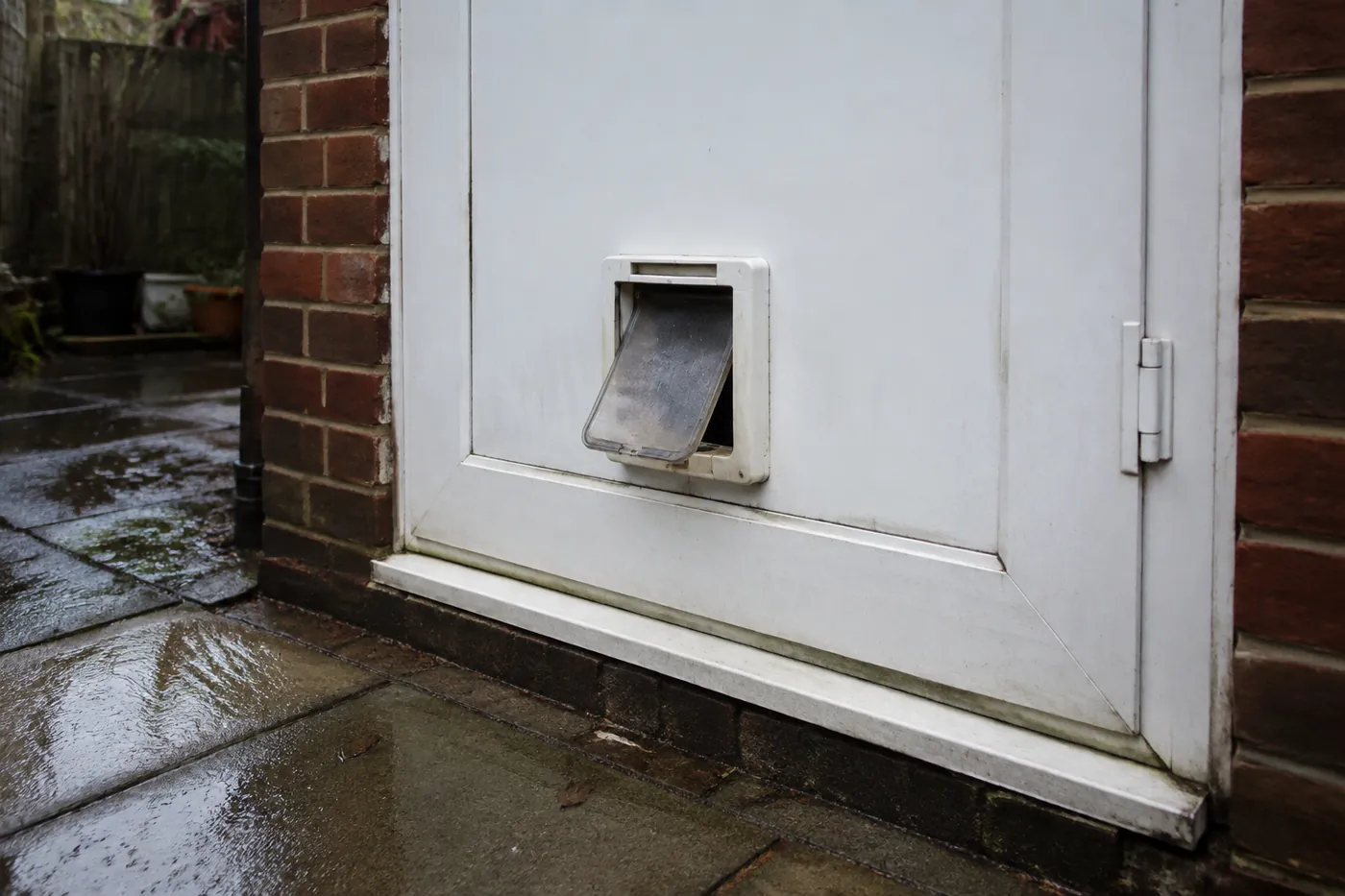
Bringing a cat indoors overnight or improving flap access may help, but does not remove traffic or conflict risks. Reassess unsupervised access as mobility and senses change.
A secure garden or a covered run suits cats that will accept the trade.
Making the changes without unsettling the cat
Older cats cope badly with change, which is the difficulty at the centre of all of this.
The rule is to add rather than replace. Put the new low-sided tray beside the old one, the step beside the jump the cat still makes, and the second water bowl in addition to the first, and remove the original only once the new one is clearly being used.
Introduce changes gradually where practical and watch what the cat uses. Do not delay a necessary safety or access improvement to satisfy a fixed two-week interval.
Keep important locations predictable unless access or safety requires a change. If a tray must move, adjust it gradually while use remains reliable rather than following a universal daily distance.
Watch what the cat actually uses rather than what seems sensible. Cats reject perfectly reasonable adaptations regularly, and the one that gets used is the right one whatever it cost.
- Add the new item beside the old one rather than swapping it.
- Introduce changes at a pace the cat accepts, without postponing urgent access or safety improvements.
- Move anything that must move in small accepted stages, returning to the last usable position if access deteriorates.
- Leave bed, tray, food, and water in fixed positions otherwise.
- Watch which option the cat chooses, and remove the loser.
- Go back to the previous arrangement if the cat stops using something.
Comfort at the end
Adaptations continue to matter when a cat is no longer going to get better, and the goals change.
At that stage the aim is that everything a cat needs is within a few steps of where it is lying. A tray, water, food, and a warm bed in one quiet room removes every journey.
Waterproof bedding and washable mats under the favourite spots make accidents a small matter rather than a crisis, and keeping the fur around the back end trimmed keeps a cat that cannot groom itself comfortable.
Keep a simple written note of the good days and the difficult ones. The trend is what tells you how things are going, and memory smooths it out in a way that is not helpful.
- Everything in one room
- Tray, water, food and a warm bed within a few steps of where the cat lies
- Waterproof bedding
- Accidents become a small matter rather than a crisis
- Trimmed rear
- Keeps a cat that can no longer groom itself comfortable
- A written note
- The trend is what matters, and memory smooths it out unhelpfully
- Quality of life
- Ask directly. Most practices use a structured scale
Ask the vet about quality of life directly. Most practices use a structured scale, and having the conversation early usually makes it less frightening rather than more.
Common Questions
Should I stop an older cat from using stairs?
Not necessarily, but give it alternatives. Trays, water, and a resting place on each floor mean the cat chooses the stairs rather than being forced onto them.
Is a heated bed a good idea for an older cat?
Safe warmth may help a cat that seeks it, but it does not treat pain. Use a pet product or warming method approved by the veterinarian, follow its directions and leave room to move away.
Checked Against
Published 20 August 2026. Last updated .